Article Contents:
- Types of Ceiling Molding: From Modest Cornices to Architectural Symphonies
- Ceiling Cornices and Baseboards: The Boundary Between Worlds
- Chandelier Rosettes: A Majestic Frame for Light
- Ceiling Coffers: Three-Dimensional Geometry Overhead
- Decorative Beams: The Warmth of Pseudo-Structures
- Domes and Vaults: Architectural Sculpture Inside the Room
- Molding on Stretch Ceilings: The Technology of Combining the Incompatible
- Cornices with Hidden Lighting for Stretch Ceilings
- Rosettes and Overlays: Embedded Constructions
- Ceiling Design Ideas by Style: From Palace Classicism to Brutalist Loft
- Classicism and Neoclassicism: Symmetry and Orderly Harmony
- Baroque and Rococo: boundless luxury
- Modern and Art Deco: Geometry and Stylization
- Scandinavian Style and Minimalism: Invisible Decor
- Loft and Industrial Style: Contrast of Textures
- Ceiling Molding Installation: Step-by-Step Guide from Marking to Painting
- Preparation Stage: Calculation and Purchasing
- Surface Preparation
- Marking: Precision is the Key to Beauty
- Cornice Installation
- Installing the Rosette
- Final finishing
- Painting and Decorating: From Monochrome to Golden Accents
- Monochrome Painting to Match the Ceiling Color
- Contrasting paint
- Gilding and Patination
- Modern effects
- Photos of Completed Projects: Inspiration from 2026 Practice
- Frequently Asked Questions About Ceiling Molding: Detailed Answers
- How much does polyurethane ceiling molding weigh?
- Can molding be installed independently or are specialists needed?
- What adhesive should be used for ceiling molding?
- How long does it take to install molding in a room?
- How to care for ceiling molding?
- Can molding be painted after installation?
- Is polyurethane molding suitable for wet rooms?
- What is the cost of ceiling molding in 2026?
- Does molding visually increase or decrease ceiling height?
- Can plaster molding be used on ceilings in modern interiors?
- STAVROS Company: craftsmanship proven by thousands of ceilings

The ceiling is the fifth wall of a room, most often overlooked. A smooth white plane seems sufficient until you see how a properly designed ceiling with elegant decorative elements transforms the space. Ceiling molding can create a true architectural revolution: turning a standard room into a ceremonial hall, visually raising low vaults, organizing a complex lighting system, and creating an impression of palace luxury without major renovation.
Why doesCeiling moldingis experiencing a new renaissance in 2026? The answer lies in a technological breakthrough: modern polyurethane elements weigh dozens of times less than classic plaster ones, are installed in just hours, and last for decades without the slightest signs of aging. At the same time, they reproduce historical ornaments with such precision that it's impossible to distinguish a polyurethane copy from an antique original at arm's length. Add to this the possibility of painting in any color, complete moisture resistance, and a price five to seven times lower than plaster alternatives — and it becomes clear why designers are massively returning to ceiling decor.


Types of ceiling molding: from modest cornices to architectural symphonies
Variety of Elementsceiling decor with moldingastounds the imagination. The modern catalog includes hundreds of profiles, shapes, ornaments — from barely noticeable minimalist strips to monumental Baroque compositions. Understanding this typology is critically important: an incorrectly chosen element will not only fail to decorate the ceiling but can visually 'weigh down' the space, create a sense of clutter, or stylistic dissonance.




Ceiling cornices and baseboards: the boundary between worlds
A ceiling cornice is a basic element of any ceiling decor system. It is a profiled strip installed at the junction of the wall and ceiling, creating a clear boundary between vertical and horizontal planes. It seems like the simplest detail, but it sets the tone for the entire composition.
Polyurethane Crown Moldingare classified by profile width: narrow (3-7 centimeters), medium (8-15 centimeters), wide (16-25 centimeters), and monumental (over 25 centimeters). Narrow cornices are suitable for rooms with ceilings 2.4-2.7 meters — they mark the boundary without stealing precious height. Medium ones work in standard apartments with ceilings 2.7-3.2 meters, creating noticeable but not overwhelming decor. Wide and monumental ones require a height of 3.5 meters and above — in such spaces, they look proportional and majestic.
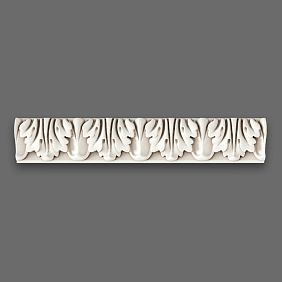
By profile character, cornices are divided into smooth, profiled, and ornamented. Smooth ones are simple strips with concise bevels — an ideal solution for modern interiors where line purity is valued. Profiled ones have complex reliefs of rolls, coves, shelves — classical order geometry, universal for most styles. Ornamented ones feature plant motifs, geometric meanders, Art Nouveau weavings — the pinnacle of decorative complexity, requiring spacious rooms for adequate perception.
A separate category — cornices with a built-in shelf for hidden lighting. Their profile is designed so that a niche forms between the cornice and the ceiling, where an LED strip is placed. The light is directed at the ceiling, creating an effect of a floating plane and soft diffused glow. This is one of the most sought-after techniques in modern design: it visually raises the ceiling, adds air to the space, and organizes an additional lighting scenario.
Our factory also produces:


Rosettes for chandeliers: a majestic frame for light
A ceiling rosette is a round or oval decorative element mounted on the ceiling at the point where a chandelier or central light fixture is attached. Historically, rosettes served two purposes: they concealed the mounting point of a heavy chandelier and visually enlarged the light center of the room, making it more significant.
Rosettes under chandeliers made of polyurethanevary in diameter from 20 centimeters (for compact fixtures in small rooms) to 150 centimeters (for luxurious chandeliers in high halls). The proportion rule states: the diameter of the rosette should be approximately two-thirds of the chandelier's diameter. A too-small rosette will be lost under a large fixture; a too-large one will look like an independent object overwhelming the chandelier.
By style, rosettes are divided into several families. Classic round ones with concentric relief rings — a timeless solution, working in interiors from Baroque to Neoclassicism. Rosettes with plant ornamentation — acanthus leaves, grapevines, roses — for lush historical styles. Geometric rosettes with radial symmetry, meanders, strict profiled rings — for Empire, Art Deco, Modernism. Minimalist rosettes with barely noticeable relief — for modern interiors where only a hint of decor is needed.
There are also composite rosettes, assembled from several elements. The central part is complemented by removable segments, corner overlays, allowing variation in size and configuration. This is especially convenient for non-standard fixtures or when wanting to create a unique composition.
Get Consultation
Coffers for ceilings: volumetric geometry overhead
A coffer is a recess in the ceiling, framed by profiled strips or beams and often decorated in the center with a rosette or ornamental insert. A coffered ceiling creates a powerful architectural effect: a flat surface turns into a volumetric structure with rhythm, scale, and play of light and shadow.
The classic coffered system is a grid of square or rectangular recesses, evenly distributed across the ceiling. The size of one coffer usually ranges from 60 centimeters to 1.5 meters depending on the room's area. In a 5x6 meter room, coffers of 1x1 meter are optimal (6x5 pieces respectively); in a large hall of 10x12 meters, coffers of 1.5x1.5 meters are appropriate.
Coffers are formed in two ways. The first — using applied beams or wide moldings, which are mounted on a flat ceiling, creating a protruding grid. The second — using recessed structures made of drywall or wood, where the coffers are truly sunk into the ceiling plane. Polyurethane elements are more often used in the first option: applied beams imitate a massive structure while remaining light and safe.
The interior space of a coffer is played with in different ways. Minimalist approach: smooth painted surface, contrasting or tone-on-tone with the frame. Classic: a rosette in the center of the coffer or an ornamental overlay. Modern: built-in spot lighting or LED strip along the coffer's perimeter, turning it into a glowing box.
Important point: a coffered ceiling requires a height of at least 3 meters, preferably 3.5 and above. In low rooms, applied beams will create a feeling of pressure, visually lowering the space. However, in high rooms, coffers work as an architectural modulator: they structure too large a volume, making it more human, cozier, without losing grandeur.
Decorative beams: the warmth of pseudo-structures
Ceiling beams are elongated volumetric elements imitating load-bearing wooden or stone structures. Unlike real beams bearing the load of the floor,decorative beams on the ceilingperform an exclusively aesthetic function but create a powerful visual effect.
Beams are made from various materials. Polyurethane — the lightest and most versatile, with texture resembling wood or stone, paintable in any color. Wooden — massive or hollow, made of pine, oak, larch, with natural wood texture and scent. MDF with veneer — a compromise between price and appearance, imitation of valuable wood species at an affordable cost.
Beams are placed differently depending on the task. Parallel placement — several beams run in one direction across the entire ceiling with a spacing of 80-150 centimeters, visually elongating the space along their direction. Cross placement — beams form a grid, breaking the ceiling into rectangular cells, creating a coffered-like structure. Accent placement — one or two beams highlight a functional zone (e.g., above a dining table or bed).
Color solution is critically important. Dark beams (wenge, walnut, stained oak) on a light ceiling create contrasting graphics, effective but visually reducing height — suitable for rooms from 3 meters. Light beams (bleached oak, ash, white enamel) on a white or light gray ceiling form a subtle volumetric relief that doesn't steal height — works even in standard apartments with 2.7-meter ceilings.
Beams are functional: electrical wiring, ventilation ducts, and pipes can be routed inside the hollow structure. Spotlights are mounted on the beams, and decorative elements are hung from them. Fabric is stretched between the beams, creating a tent-like effect. The possibilities are endless.
Domes and vaults: architectural sculpture inside a room
A dome is a hemispherical or segmental recess in the ceiling, creating a powerful vertical accent. Vaults are curved surfaces that replace a flat ceiling with arched structures. These elements create a sense of monumentality, linking the space to the historical architecture of cathedrals and palaces.
Polyurethane domes are sectional structures: the hemisphere is divided into segments (usually 4-8 pieces), which are mounted separately and joined on the ceiling. The diameter of domes ranges from 60 centimeters (for local accents above niches, alcoves) to 3 meters (for the central part of spacious halls). The depth of a dome is typically 1/4 to 1/3 of its diameter.
Domes are decorated in various ways. Minimalism: a smooth inner surface with a circular rosette at the zenith. Classic: coffers inside the dome, radial ribs, stucco garlands descending from the center to the edges. Luxury: a multi-tiered structure with several concentric rings of relief, floral motifs, gilding.
Vaults are more complex to install: either the ceiling structure must be modified (suspended drywall systems), or segmental overlay elements that mimic the shape of a vault must be used. The second option is simpler and cheaper: polyurethane arches and profiled beams are installed on a flat ceiling, creating a visual illusion of a vault when viewed from below.
Domes and vaults require significant ceiling height — at least 3.5 meters, and preferably 4 or higher. They are practically not used in standard apartments due to the risk of creating a feeling of pressure. However, in private houses, double-height living rooms, and public interiors, these elements become the focal point around which the entire design is built.
Stucco on a stretch ceiling: the technology of combining the incompatible
Stretch ceilings are one of the most popular solutions in recent years. They are perfectly smooth, quick to install, and hide utilities. But a question arises: how to combine a flexible stretched fabric with rigid decorative elements? Direct gluing is impossible — the fabric is too thin and elastic. A solution has been found, and it is elegant.
The main principle: the stucco is attached not to the stretch ceiling itself, but to the wall slightly below the ceiling level or to specially installed mounting elements. Visually, it creates the impression that the decor frames the ceiling, although physically it is held by the wall.
Cornices with hidden lighting for stretch ceilings
Ceiling cornices with a shelf for lighting— is the most popular solution for stretch ceilings. The technology is as follows: the cornice is glued to the wall 5-10 centimeters below the level of the future stretch fabric. Its top plane remains free, not glued to the base ceiling. Then the stretch ceiling is installed — the fabric passes over the cornice and is attached to the profile near the base ceiling. A niche is formed between the cornice and the stretch fabric.
An LED strip is placed into this niche. The light is directed upward, onto the stretch fabric. The fabric reflects the light, and a soft glowing ring forms around the perimeter of the room. The ceiling appears to float, the space visually expands, and the height increases. The effect is impressive, the technology is simple.
It is critically important: the cornice must completely hide the strip from view from below. If the strip is visible, the 'hidden' effect is lost, and instead of magical glow, you get a technical detail. The width of the cornice for lighting is a minimum of 8 centimeters, optimally 10-15.
The color of the lighting is chosen based on the task. Warm white (2700-3000K) creates a cozy evening atmosphere. Cool white (4000-5000K) provides clear daylight, visually expands the space. RGB strips allow you to change the color according to mood, create color scenarios for different situations.
The lighting is controlled by a dimmer or smart system: you can adjust the brightness, turn it on/off independently of the main lighting. This is an additional lighting scenario, especially valuable in the evening and at night when a bright chandelier is excessive.
Rosettes and overlays: mounting structures
For installing rosettes or other overlay elements on a stretch ceiling, mounting plates are used — rigid bases that are mounted to the base ceiling before the fabric is installed. These can be wooden blocks, plastic platforms, plywood panels.
The process looks like this: the location of the future rosette is marked on the base ceiling, a mounting plate of the required size and shape (circle, square) is installed and securely fastened to the slab. Then the stretch fabric is installed — it passes under the mounting plate. A hole is made in the fabric at the location of the mounting plate, and the edges are treated with a thermal ring (to prevent the fabric from tearing). Through this hole, the rosette is glued to the mounting plate, completely covering the hole with its diameter.
The result is that the rosette is held by a rigid base (mounting plate), but visually appears to be glued to the stretch ceiling. This technology requires precision and preliminary planning: mounting plates are installed before stretching the fabric, and mistakes are practically impossible to correct later.
Large overlays (panels, medallions, friezes) are mounted similarly: a mounting structure of the required configuration is made for each element. This complicates and increases the cost of installation, which is why complex decor on stretch ceilings is less common than on conventional ones.
Ceiling design ideas by style: from palace classicism to brutal loft
Ceiling molding— is a style-forming tool. Properly selected elements are instantly recognized as markers of a certain era, direction, mood. Let's look at how ceiling decor works in the main interior styles of 2026.
Classicism and neoclassicism: symmetry and order harmony
A classic interior is built on the principles of order architecture: symmetry, proportionality, hierarchy of elements. The ceiling in classicism is a ceremonial plane requiring appropriate decoration.
Basic set: a wide profiled cornice around the perimeter (12-20 cm), a large central rosette (diameter 60-120 cm depending on the room area), optionally — corner overlays at the cornice joints, friezes (horizontal ornamental strips) between the cornice and the ceiling.
Color scheme: traditionally white (milky white, ivory) with gilding on the protruding details of the ornament. Modern interpretation allows for monochrome (white on white) or a light tint (light gray, cream, pale blue).
Neoclassicism simplifies the classical scheme: cornices become slightly narrower (8-15 cm), the ornament is more restrained, rosettes are more geometric. Moldings appear, creating framed compositions on the ceiling — squares, rectangles, symmetrical relative to the center. This adds additional structure without overloading the space.
Baroque and Rococo: Luxury Without Limits
A Baroque ceiling is a celebration of decor. Multiple elements, rich ornaments, curvilinear forms, an abundance of gilding. Wide cornices with floral motifs, large rosettes with acanthus and putti, corner cartouches, stucco garlands stretched from the corners to the center are appropriate here.
Rococo introduces asymmetry and lightness: instead of strict symmetrical schemes, free compositions appear where decorative elements seem to be scattered across the ceiling. Characteristic features include rocailles (stylized shells), elegant scrolls, and light floral garlands.
Color: white with gold or silver. Sometimes the ceiling is painted in pastel tones (pink, blue, mint), while the molding remains white, creating contrast.
Important: Baroque and Rococo require high ceilings (from 3.5 meters) and large areas. In small rooms, an abundance of decor will create a museum-like atmosphere rather than a living space.
Modern and Art Deco: Geometry and Stylization
Art Nouveau (Art Nouveau) prefers smooth organic lines. Ceiling cornices have wavy profiles, rosettes are decorated with stylized plants (irises, lilies), overlays repeat natural forms. Asymmetry and rejection of strict axial composition are characteristic.
Art Deco, on the contrary, gravitates towards strict geometry: stepped forms, radial compositions, zigzags, trapezoids. The ceiling is often organized with concentric frames narrowing towards the center where the chandelier hangs. Cornices are profiled with strict edges without plant decor. Rosettes have radial symmetry with clear rhythm.
Color: for Art Nouveau, muted natural tones (beige, ochre, swamp green) with bronze or copper accents are characteristic. Art Deco loves contrasts: black with gold, dark blue with silver, chocolate with cream.
Scandinavian style and minimalism: invisible decor
Scandinavian interior values simplicity, naturalness, and abundance of light. Ceiling molding is present here, but in minimal volume and maximally laconic execution.
Typical solution: a narrow smooth cornice (5-8 cm) in the color of the ceiling, barely outlining the boundary with the wall. A rosette is either not used at all, or the simplest one is chosen—a smooth ring with a diameter of 25-35 cm. No ornaments, scrolls, or decorations.
Minimalism goes even further: in radical projects, molding is completely absent, the ceiling remains absolutely flat. In moderate versions, a cornice with hidden lighting is used—not for decoration, but to create an additional lighting scenario.
Color: exclusively white (cool pure white, without warm shades). The molding blends with the ceiling, noticeable only by the shadow line.
Loft and industrial style: texture contrast
Loft, seemingly incompatible with molding—this is a style of brick walls, exposed pipes, rough textures. But modern designers have found a way to integrate ceiling decor into this aesthetic as well.
The technique is based on contrast: against the backdrop of a deliberately rough interior, an elegant classical rosette under the chandelier or a profiled cornice appears. This contrast creates an unexpected effect, emphasizing both poles—the roughness of the walls and the sophistication of the decor.
Molding in a loft is usually painted in a non-standard way: graphite, concrete-gray, even matte black. Sometimes a patina effect, aging is used, as if the elements have been preserved from previous times when the building was a luxurious mansion.
Installation of ceiling molding: step-by-step guide from marking to painting
Self-installation of ceiling elements is quite feasible for a person with basic repair skills. Polyurethane molding is lightweight, adheres reliably, and forgives minor mistakes. The main thing is the sequence of actions and accuracy.
Preparatory stage: calculation and purchase
The first step is measuring the room and creating a layout diagram for the elements. For the cornice, the perimeter of the room is measured, adding 10% for trimming and possible errors. For example, a room 4x5 meters has a perimeter of 18 meters, we purchase 20 meters of cornice (10 planks of 2 meters each).
For the rosette, the diameter is chosen according to the rule: 2/3 of the chandelier's diameter. A chandelier with a diameter of 60 cm requires a 40 cm rosette. If a coffered system is planned, the number of beams or moldings for forming the grid plus corner elements is calculated.
Also purchased: polyurethane adhesive (usually MS-polymer or acrylic mounting adhesive like 'liquid nails'), white acrylic sealant for sealing joints, acrylic primer, paint (if a color other than white is required), sandpaper P180-P220.
Surface preparation
The ceiling must be clean, dry, and relatively even. Peeling paint, whitewash are removed with a spatula. Significant unevenness (bumps larger than 5 mm, depressions deeper than 5 mm) are leveled with putty.
The surface is primed with deep-penetration acrylic primer. The primer strengthens the base, binds dust, and improves adhesive adhesion. Drying time—2-4 hours. If the ceiling was previously painted with glossy paint, it is lightly sanded with sandpaper P120-P150 to create roughness.
Correct marking is the foundation of quality installation. Even minor inaccuracies at this stage can lead to serious problems during installation and operation.
Marking is a critical stage. Even millimeter deviations from the horizontal over a length of 4-5 meters give a noticeable visual slope. A laser level (the most reliable option) or a water level with a chalk line is used.
For the cornice, a line is marked on the wall along the entire perimeter at a distance from the ceiling equal to the width of the cornice. The lower edge of the cornice will run along this line. The line must be strictly horizontal.
For the rosette, the center of the ceiling is marked (intersection of the room's diagonals), then a circle with the diameter of the rosette is outlined with a compass or string with a pencil. This is a control contour to check the correctness of placement.
For a coffered system, the ceiling is drawn into rectangles or squares with millimeter precision. A long ruler or stretched string, laser level is used to control the parallelism of lines.
Cornice installation
The cornice is cut to the required lengths with a fine-toothed saw or miter saw. Corner joints are cut at 45 degrees (a miter box or miter saw with a rotating platform is used). Before gluing, all elements are laid out on the floor, and the fit is checked.
Adhesive is applied to the back of the cornice in two lines: one at the upper edge (will press against the ceiling), the second at the lower edge (against the wall). The amount of adhesive—so that when pressed, it slightly squeezes out but does not flow abundantly.
The cornice is applied to the wall and ceiling according to the markings, pressed firmly along the entire length. Holding time—30-60 seconds. For long planks, an assistant may be needed. Squeezed-out adhesive is immediately removed with a damp sponge.
The joints of adjacent planks, end-to-end, are coated with glue, pressed tightly together, aligning the relief. A properly executed joint is practically invisible. Corner joints at 45 degrees are also coated and pressed.
If the cornice is heavy or wide, self-tapping screws are additionally used: through the cornice into the wall with a spacing of 40-50 cm. The screw heads are countersunk and then filled with putty.
Mounting the medallion
The ceiling medallion weighs little (from 200 grams to 2 kilograms) and is held only by glue. The glue is applied in a thick bead around the back of the medallion. The medallion is placed on the ceiling precisely at the central mark and pressed. Holding time is 1-2 minutes (the medallion is heavier than the cornice and requires longer pressing).
If there is a chandelier, its hook or mounting bracket must pass through the central hole of the medallion. The hole is widened with a knife to the required diameter if necessary.
For very heavy medallions (over 3 kg), self-tapping screws with decorative heads or countersunk screws with subsequent filling are additionally used.
Final finishing
After the glue has completely dried (24 hours), all joints between elements and gaps between the molding and the surface are filled with acrylic sealant. The sealant is applied in a thin line and smoothed with a wet finger or rubber spatula.
Excess sealant is immediately removed with a damp sponge. After the sealant dries (4-6 hours), if necessary, finishing putty is applied to the joints and sanded after drying with P220 sandpaper.
If painting in a color other than white is required, an acrylic primer is applied, followed by two coats of paint (preferably interior acrylic) with intermediate drying of 3-4 hours.
Painting and decorating: from monochrome to gold accents
Polyurethane molding is supplied primed with white primer, ready for painting. However, the final decorative solution defines the character of the interior.
Monochrome painting in the ceiling color
The most popular modern technique: the molding is painted in the exact color of the ceiling and blends with it. The decor is perceived only by volume and shadow lines. This creates a subtle, sophisticated effect without color contrasts.
It is important to use the same paint as on the ceiling. If the ceiling is painted with a matte acrylic paint of a specific shade, the molding is painted with the same paint. This guarantees a perfect color match under any lighting.
Technique: two thin coats of paint with intermediate drying of 3-4 hours. The first coat can be slightly diluted with water (5-10%) for better penetration into the relief. The second coat is undiluted paint.
Contrast painting
White molding on a colored ceiling or colored molding on a white ceiling is a classic technique that emphasizes architectural decor. Works in interiors with a clear stylistic position (classic, neoclassical, art deco).
Popular combinations: white molding on light gray, beige, blue, mint ceilings. Graphite or black molding on a white ceiling (dramatic modern effect). Golden or bronze on dark blue, emerald, burgundy (luxurious classic).
Gilding and patination
The traditional way to highlight relief is to apply gilding to the protruding parts of the ornament. Acrylic paint with metallic pigment (gold, silver, bronze, copper) or imitation gold leaf (imitation of gold leaf) is used.
Technique: the base of the molding is painted in a base color (white, ivory, light gray). After drying, metallic paint is applied with a thin brush or sponge only to the raised parts of the relief. The effect of antique gilded molding is achieved.
Patination is the creation of an aging effect. Two colors are used: a light base and a dark patinating color (usually umber, sienna, gray). The molding is painted light, then dark paint is applied into the recesses of the relief and partially wiped off, remaining only in the deep areas. This creates the impression of the patina of time.
Modern effects
Metallic - solid painting in silver, gold, copper, bronze. Works in modern glamorous interiors, art deco, fusion. Matte metallics look more noble than glossy ones.
Concrete effect - painting in gray shades with texturing. The molding looks as if cast from concrete. An unexpected solution for loft, industrial style.
Color accent - bright painting in unconventional colors (blue, green, red, black). Works in eclectic modern interiors where classical forms are reinterpreted through color.
Photos of completed projects: inspiration from 2026 practice
Thousands of 2026 interiors demonstrate the diversity of approaches to ceiling decor. Here are several trending directions recorded in completed projects.
Minimalist classic: white ceiling with a thin profiled cornice (10 cm) and a small geometric medallion (40 cm). The chandelier is modern, not classic. Walls are smooth, furniture is laconic. The molding is the only reference to classicism, creating a bridge between modernity and tradition.
Coffered ceiling in a study: dark wooden beams form a grid of 9 coffers (3x3). Inside each coffer is a light gray painted surface with a recessed spotlight. The effect is solidity, structure, masculine energy.
Floating ceiling with hidden lighting: matte stretch fabric, a wide white cornice with a shelf for LED strip around the perimeter. The lighting is warm white, creating a soft glow. The ceiling appears to float, the space is airy.
Baroque living room: high ceiling (4.2 m) with a wide ornamented cornice (22 cm), a large medallion with acanthus leaves (1 m diameter), and corner cartouches. The molding is white with gold accents. Luxury, solemnity.
Loft with contrast: concrete walls, exposed pipes, wooden shelves. On the ceiling is an elegant classic medallion painted in matte graphite. The chandelier is industrial. The contrast emphasizes both styles.
Popular Questions About Ceiling Molding: Detailed Answers
How much does polyurethane ceiling molding weigh?
Weight depends on the size of the element. A linear meter of a 10 cm wide cornice weighs approximately 300-500 grams. A rosette with a diameter of 50 cm — about 800 grams, with a diameter of 1 meter — approximately 2.5 kilograms. A decorative beam 2 meters long with a cross-section of 15x10 cm — about 3 kilograms. This is 7-10 times lighter than gypsum counterparts.
Can molding be installed independently or are specialists needed?
Installing cornices and rosettes is quite accessible for independent execution with basic repair skills. It requires care, precise marking, and adherence to technology. Complex structures (coffered ceilings, domes, multi-level compositions) are better entrusted to professionals.
What glue should be used for ceiling molding?
Specialized polyurethane adhesives based on MS polymers or high-quality acrylic mounting adhesives like 'liquid nails' are optimal. Do not use silicone sealants — insufficient strength. The adhesive should be white or transparent, set quickly (30-60 seconds), and remain elastic after polymerization.
How long does it take to install molding in a room?
For a standard 4x5 meter room, installing a cornice around the perimeter and a rosette in the center takes an inexperienced person approximately 4-6 hours: 1 hour for marking, 2-3 hours for installation, 1-2 hours for finishing the joints. A professional will complete it in 2-3 hours. Plus the adhesive drying time (24 hours) before painting.
How to care for ceiling molding?
Minimal care: every 2-3 months dry cleaning with a soft brush or a vacuum cleaner with a brush attachment. Every six months, you can wipe it with a slightly damp microfiber cloth. Do not use abrasive products. With proper care, the molding retains its appearance for 20-30 years.
Can molding be painted after installation?
Yes, and this is preferable to painting before installation. Installation inevitably leads to minor adhesive stains and creates joints that require putty. Painting after the work is fully completed (after 24-48 hours) gives a neater result.
Is polyurethane molding suitable for wet rooms?
Absolutely. Polyurethane is inert to moisture, does not absorb water, does not deform, and does not develop mold. Polyurethane molding is suitable for bathrooms, kitchens, and swimming pools. The only condition is the use of moisture-resistant paint for the final coating.
What is the cost of ceiling molding in 2026?
Prices vary: cornices from 350 to 3000 rub/m depending on width and profile complexity. Rosettes from 800 to 8000 rubles per piece depending on diameter and ornament. Decorative beams from 1200 to 5000 rub/m. For a 4x5 m room, basic decoration (cornice + rosette) will cost 12-20 thousand rubles for materials.
Does molding visually increase or decrease ceiling height?
It depends on the type and color. A narrow cornice in the color of the ceiling practically does not affect the perception of height. A wide contrasting cornice visually lowers the ceiling by its width. A cornice with hidden lighting, on the contrary, creates a floating ceiling effect, increasing the visual height. The correct choice of profile is critical for low rooms.
Can molding be used on ceilings in modern interiors?
Certainly. Modern design actively uses ceiling molding, but in restrained forms: narrow smooth cornices, minimalist rosettes, cornices with hidden lighting. It is important to choose laconic profiles without ornaments and paint them to match the ceiling color. This creates volume without visual overload.
STAVROS Company: Craftsmanship Proven by Thousands of Ceilings
The choice of manufacturer of decorative elements determines the quality, durability, and final result of your project. The STAVROS company has specialized in the production ofpolyurethane molding decoration, offering the Russian market products of European level at fair prices.
STAVROS's production facilities are equipped with advanced equipment from Germany and Italy, allowing the creation of elements with perfect geometry and clarity of relief. The catalog of ceiling molding includes over two hundred items: from compact 5-centimeter wide cornices to monumental 25-centimeter profiles, from modest 20-centimeter diameter rosettes to majestic one-meter medallions, from simple smooth beams to carved ornamental structures.
All products are made from high-density polyurethane (300-330 kg/m³), guaranteeing strength, clarity of details, and resistance to deformation. Elements are supplied primed, ready for installation and painting. Precision casting ensures perfect joining of elements without steps or gaps.
STAVROS offers not only standard items but also comprehensive solutions. If you are planning to createCoffered Ceiling, the company's specialists will select coordinated beams, corner elements, and internal overlays that perfectly match in style and proportions. Want to organizehidden lighting? The assortment includes over thirty models of cornices with special shelves for LED strips — of different widths, depths, for different types of lighting.
Customer technical support is a particular point of pride for STAVROS. Consultants will help calculate the exact amount of material, suggest optimal profiles for a specific room, and explain the nuances of installation on different types of ceilings (standard, stretch, suspended). In the Moscow and St. Petersburg showrooms, you can see all samples in real size, assess the quality of the relief, and touch the material.
Production within Russia ensures short delivery times (2-7 days to any region), competitive prices, and the ability to manufacture custom elements for individual projects. Reliable packaging prevents damage during transportation, even for fragile ornamental parts.
Choosing STAVROS means you get not just a material, but a partner who is invested in making your ceiling a true interior decoration. High-quality polyurethane, impeccable casting, a well-thought-out assortment, and professional support at all stages—all this makes working with STAVROS products comfortable, predictable, and effective. Create ceilings that inspire admiration with molding you can trust.