Article Contents:
- Why polyurethane molding has won over designers and homeowners
- Where molding is appropriate: from classic to contemporary
- Varieties of polyurethane molding: a wealth of choice
- Cornices and baseboards: the foundation of composition
- Moldings: universal designer assistants
- Rosettes and decorative overlays: accents and highlights
- Columns, Pilasters, Capitals: Architectural Monumentality
- Trims and comprehensive solutions
- How to choose the right molding for your interior
- Step one: determine the interior style
- Step two: consider the scale of the room
- Step three: plan the color scheme
- Step four: calculate the amount of material
- Step five: choose a reliable supplier
- Advantages of buying molding in an online store
- Widest selection without limitations
- Convenience of selection and ordering
- Detailed product information
- Competitive prices and promotions
- Delivery to your door
- Guarantees and return options
- Practical tips for installing polyurethane molding
- Surface preparation — the key to success
- Marking and Planning
- Choosing adhesive and application technique
- Joining elements and seam finishing
- Finishing
- Stylistic solutions: from baroque luxury to minimalist simplicity
- Classic styles: baroque, rococo, empire
- Minimalist solutions: minimalism in form
- Art Deco: Geometry and Luxury
- Minimalism and Scandinavian style: beauty in simplicity
- Loft: contrast and eclecticism
- Questions and answers: everything you wanted to know about polyurethane molding
- How Does Polyurethane Moldings Differ from Gypsum?
- Can polyurethane molding be installed in a bathroom?
- Is it difficult to install molding yourself?
- How Long Does Polyurethane Stucco Last?
- Can molding be painted any color?
- How to Care for Moldings?
- What to do if an element is damaged?
- How to calculate the required amount of material?
- Does molding affect sound insulation?
- Can molding be installed on a stretch ceiling?
- Is polyurethane molding safe for health?
- How to combine molding with modern lighting fixtures?
- Can you buy molding whose prices are affordable on a limited budget?
- Molding in interior design: real transformation examples
- Living room: solemnity and elegance
- Bedroom: comfort and romance
- Kitchen and dining room: practicality and style
- Entryway: First Impression
- Bathroom: water-resistant luxury
- Children's room: safety and fantasy
- 2025 Trends: modern tendencies in molding usage
- Minimalist molding
- Painting to match wall color
- Hidden Lighting
- Large architectural elements
- Eclecticism and style mixing
- Color Moldings
- Molding on facades
- Conclusion: time to create beauty
- About the Company STAVROS

A modern interior is not just a functional space, but a true work of art where every detail plays its role. Want to turn an ordinary room into a luxurious hall? Dream of ceilings that inspire admiration and walls that captivate guests' gazes? Then you should pay attention to one of the most elegant decoration methods - using molding. And we're not talking about the heavy plaster finishes of the last century, but about modern solutions that combine classical beauty with new-age technology.
TodayBeautiful moldingstransforms thousands of homes and apartments, and its popularity is only growing. Why? Because modern materials, particularly polyurethane, allow implementing the boldest design ideas without colossal expenses or complex installation. If you're planningbuy polyurethane moldings online, this article will become your guide to the world of architectural decor.




Why polyurethane molding has conquered designers and homeowners
Let's start with the main question: what makes polyurethane molding such a sought-after material? The answer lies in the unique combination of aesthetics and practicality. Polyurethane is a modern polymer material that possesses a whole range of advantages over traditional plaster or expensive wood.
First, polyurethane is incredibly lightweight. This means even massive decorative elements don't create critical load on walls or ceilings. You can safely install voluminous cornices, rosettes, or moldings without worrying about structural load-bearing capacity. Second, the material is completely moisture-resistant - it can even be used in bathrooms and kitchens where plaster would quickly lose its appearance. Third, polyurethaneMolding to buy onlinewhich can be delivered throughout Russia, doesn't require special skills for installation - just quality adhesive and basic tools.
But most importantly - it's about aesthetics. Modern casting technologies allow creating incredibly detailed elements with the finest ornamentation work. Floral patterns, geometric motifs, classical Greek meanders - all this is available in polyurethane form. At the same time, the products can be easily painted any color, opening limitless possibilities for design experiments.




Where molding is appropriate: from classic to contemporary
Many believe that molding is an attribute exclusively of classical interiors in the spirit of Baroque or Empire style. This is a misconception! Yes, in luxurious historical stylesBeautiful moldings on wallsplays a key role, creating an atmosphere of palatial solemnity. But modern design has long learned to use stucco decoration in the most unexpected contexts.
Minimalism? Simple cornices without ornamentation will emphasize the purity of lines and the geometry of the space. Scandinavian style? Snow-white moldings will create cozy intimacy and add visual volume. Loft? Even here you can find a place for stucco — it will become a contrasting element that softens industrial austerity. The main thing is to choose the right shape and scale of the decoration.
looks especially strikinga beautiful stucco ceilingdecorated. The ceiling is the fifth wall, which is often unfairly ignored. Yet it can become the main highlight of the interior! Cornices that create a floating effect when using hidden lighting, rosettes around the chandelier, coffers dividing the surface into elegant sections — all this turns an ordinary ceiling into a work of architectural art.
Our factory also produces:


Varieties of polyurethane stucco: a wealth of choice
When you decidepolyurethane moldings buy, a whole world of diverse elements opens up before you. Let's figure out what types of decoration exist and what each of them is intended for.
Get Consultation
Cornices and baseboards: the foundation of the composition
Cornices are horizontal elements installed at the junction of the wall and ceiling. They perform several functions at once: they hide technological irregularities, visually increase the height of the room, and create compositional completeness. There are cornices of simple, laconic forms and richly ornamented options with floral motifs, rosettes, and scrolls.
Baseboards — floor or ceiling — work on the same principle, but at floor level. They protect walls from damage, hide the joints of flooring, and add completeness to the interior. Wide, tall baseboards visually raise the ceiling, while narrow and elegant ones are suitable for compact spaces.
Moldings: the designer's universal helpers
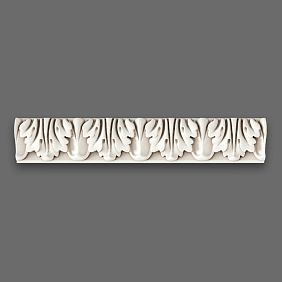
buy moldingswhich can be used for a wide variety of purposes — these are narrow decorative strips. Their application is practically limitless: framing door and window openings, creating decorative panels on walls, zoning space, decorating furniture. Moldings can be smooth, with relief, rounded, angular — to suit any taste and style.
The technique of creating wall panels using moldings looks especially impressive. Rectangular frames made of molding are glued onto a plain wall and then painted in a contrasting or close to the main color tone. This creates volume, depth, aristocratic elegance — a classic technique that remains relevant in modern interiors.
Rosettes and decorative overlays: accents and highlights
Ceiling rosettes — round or polygonal decorative elements — are traditionally installed at the chandelier mounting point. They serve as a visual accent, draw the eye upward, and create a sense of height and solemnity. Rosettes range from the simplest with minimal relief to luxurious Baroque ones with multi-level ornamentation.
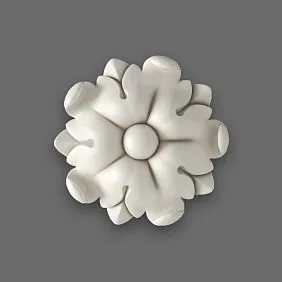
Decorative overlays are small relief elements that can be placed in the corners of molding frames, on door panels, or on furniture fronts. They add detail, sophistication, and individuality. Corner elements allow for beautiful finishing of joints, avoiding complex cutting of moldings.
Columns, pilasters, capitals: architectural monumentality
For spacious rooms with high ceilings, larger architectural elements are an excellent choice. Columns and half-columns (pilasters) visually structure the space, create vertical accents, and can even perform a structural function, hiding utilities or load-bearing beams.
Capitals — the upper parts of columns — come in different orders: Doric, Ionic, Corinthian. Each style creates its own atmosphere — from strict and masculine to elegant and airy. Polyurethane capitals are significantly lighter than plaster ones, which simplifies their installation and expands application possibilities.
Molding and comprehensive solutions
buy decorative moldingscan be purchased both as individual elements and as entire collections. Many manufacturers offer series of decorations where all elements — cornices, moldings, rosettes, overlays — are executed in a unified style. This significantly simplifies selection and guarantees compositional harmony.
Molding products are elements sold by the linear meter and can be cut to any size of your room. These include cornices, baseboards, moldings of various widths and profiles. This approach minimizes waste and allows for precise calculation of the required material quantity.
How to choose the right stucco for your interior
So, you've decided to transform your home with stucco decoration. Where to start? How not to get lost in the variety of shapes, styles, and sizes? Let's break down a step-by-step selection algorithm.
Step one: determine the interior style
First of all, it's important to understand what style your interior is designed in or how you want it to look. This determines the choice of shape and degree of ornamentation of the stucco.
Classical styles (Baroque, Rococo, Empire) require abundant decoration — lush cornices with scrolls, rosettes with multi-level relief, columns and pilasters. Here, designer moldingswith rich floral ornamentation, gilding, and patination is appropriate.
Neoclassicism and modern classicism lean towards more restrained forms. Stucco is present here, but it is more laconic, elegant, without excessive opulence. Clear lines, symmetry, moderate ornamentation — these are its features.
Minimalism, high-tech, and Scandinavian style prefer simple geometric forms. Cornices without ornamentation, smooth moldings, laconic baseboards. But even here, stucco works to create volume and structure in the space.
Loft and industrial style can include stucco as a contrasting element. Snow-white classical moldings against a backdrop of brickwork or concrete create interesting tension between historicity and modernity.
Step two: consider the scale of the room
The size of the stucco elements should correspond to the scale of the room. In spacious halls with high ceilings, wide cornices, large rosettes, and massive moldings are appropriate. In compact spaces, it's better to choose elegant, narrow elements that won't visually overload the space.
There is a simple rule: the higher the ceiling, the wider the cornice can be. For standard ceilings 2.5-2.7 meters high, cornices 8-12 cm wide are optimal. For ceilings 3 meters and higher, you can choose elements 15-20 cm wide or more.
It is also important to consider the area of the room. In narrow, long rooms, horizontal elements (cornices, moldings) can further emphasize the elongation. Vertical accents will help here — pilasters, vertical moldings, which will visually expand the space.
Step three: think through the color scheme
Traditionally, stucco is painted white — this is a classic that always works. White stucco is universal, it goes with any wall and ceiling colors, visually makes the room brighter and more spacious.
But modern design offers other options. Stucco can be painted to match the walls — this creates a monochrome, sophisticated effect, especially popular in interiors with gray, beige, and pastel tones. The decor becomes textured but not contrasting, which looks very elegant.
Contrasting solutions — dark stucco on light walls or vice versa — create a dramatic effect, drawing attention to architectural details. Gilding, silvering, patination — techniques for luxurious classic interiors.
An important nuance: polyurethane is easily painted with any paints — acrylic, water-based, alkyd. Before painting, it is enough to prime the surface, and you can create any effects — from gloss to matte velvetiness.
Step four: calculate the amount of material
Beforestore to buy moldingsTo start placing an order, you need to accurately calculate how much material you will need. To do this, measure the perimeter of the room (for cornices and baseboards), the length of sections where moldings will be installed, determine the number of corners (for corner elements).
Add 10-15 percent to the resulting figure as a reserve — for trimming, possible errors, damage during transportation. It is better to have a small reserve than to discover a shortage of material during the work.
If you plan to create decorative panels from moldings, draw a diagram on paper or in a graphic editor. This will help accurately calculate the number of frames and their sizes, as well as visually assess how the result will look.
Step five: choose a reliable supplier
The quality of polyurethane stucco directly depends on the manufacturer. European polyurethane is characterized by high density, clarity of relief, and durability. It does not yellow over time, does not deform, and retains its original shape for decades.
When choosing a supplier, pay attention to several factors: breadth of assortment, availability of quality certificates, delivery conditions, possibility of return, customer reviews. A good online store provides detailed product descriptions with sizes, photos, and application options.
It is also important to clarify installation conditions — some stores offer professional installation services or specialist consultations. This is especially relevant if you are working with stucco for the first time and want to avoid mistakes.
Advantages of buying stucco in an online store
Why more and more people preferbuy stucco in an online storeinstead of going to a regular construction hypermarket? There are several reasons, and they are quite convincing.
Widest selection without limitations
Offline stores are limited by the area of the sales floor. They can display only a small part of the assortment — a few types of cornices, a dozen moldings, a couple of rosettes. An online store, however, presents a full catalog — hundreds of items of different styles, sizes, shapes.
You can calmly study all the options, compare them, look at photos in interiors, read descriptions and technical specifications. There is no need to rush under the gaze of a salesperson or limit yourself to what is available at a specific point of sale.
Convenience of selection and ordering
You can choose stucco online at any time — in the morning over a cup of coffee, in the evening after work, on weekends in a calm home environment. You are not tied to store hours, do not waste time on travel, do not get tired from walking around sales floors.
Modern online stores offer convenient filtering and search systems. You can sort products by price, size, style, availability. You can save favorite items to a wishlist, compare them with each other, return to the selection later.
Detailed product information
Quality online stores provide maximum information about each product. You will see not only photos but also exact dimensions, manufacturing material, weight, installation recommendations, application options in interiors.
Many stores publish video reviews where you can examine the product in all details, assess the quality of the relief, the depth of the ornament detailing. Reviews from real customers who have already used this decor in their projects are also available.
Competitive prices and promotions
Online stores often offer more favorable prices than traditional points of sale. This is due to lower costs — no need to maintain expensive sales floors in the city center, pay a large staff of salespeople, bear other offline expenses.
Moreover, online retailers regularly run promotions, sales, and offer discounts on certain product categories or for purchases above a certain amount. This allows for significant savings, especially if you are decorating a large area and purchasing a lot of material.
Door-to-door delivery
One of the main advantages of online shopping is delivery. Molding, especially in large volumes, is quite bulky. Transporting several dozen meters of cornices, moldings, and baseboards in a passenger car is problematic. You need freight transport and helpers for loading and unloading.
Online stores take care of these concerns. The goods are properly packaged, delivered to the specified address, and sometimes even brought into the apartment. You save time, effort, and nerves. At the same time, delivery is often free for orders above a certain amount.
Warranties and return options
Reputable online stores value their reputation and provide all necessary warranties. If the product doesn't fit, is damaged during delivery, or doesn't match the description — you can return or exchange it.
Before ordering, carefully study the return conditions. Usually, consumer protection laws allow 14 days to return goods of proper quality for distance purchases. This is another argument in favor of online shopping — you are legally protected.
Practical tips for installing polyurethane molding
So, you've made your choice, placed your order, and received the long-awaited package. Now comes the most interesting part — turning a set of decorative elements into an elegant interior. The good news: installing polyurethane molding does not require special professional skills. Basic care, patience, and adherence to technology are enough for an excellent result.
Surface preparation is the key to success
Before starting work, it is necessary to thoroughly prepare the surface on which the molding will be installed. Walls and ceilings must be level, clean, dry, and degreased. Any dirt, dust, or grease stains reduce the adhesive's adhesion and can lead to the decoration peeling off.
If the surface is painted with glossy paint or covered with wallpaper, it is advisable to lightly sand it with sandpaper to improve adhesion. This is especially important for ceiling elements — cornices and rosettes — which bear the load of their own weight.
It is recommended to prime the surface with a special deep-penetration primer. This will strengthen the base, improve adhesion, and prevent mold formation (especially relevant for rooms with high humidity).
Marking and Planning
Before starting to glue the elements, it is necessary to carefully mark their placement. For cornices, draw a horizontal line around the perimeter of the room at the desired height from the ceiling. Use a laser or water level — it is important that the line is strictly horizontal.
For moldings creating wall panels, mark the position of each frame. Ensure symmetry, uniform spacing, and alignment relative to doors and windows. You can first place the elements without glue, assess the overall picture, and adjust the placement if necessary.
Pay special attention to corners. Moldings and cornices are joined at a 45-degree angle in corners. For precise cutting, use a miter box — a special tool that allows cutting at the desired angle. For complex angles (not strictly 90 degrees), an adjustable miter box or a miter saw may be needed.
Choosing adhesive and application technique
Special polymer adhesives based on MS polymers or polyurethane are used for installing polyurethane molding. They provide strong adhesion, remain elastic after drying (compensating for thermal expansion), and contain no solvents (odorless).
Apply the adhesive to the back of the element in dots or a zigzag pattern (depending on the size of the part). Do not apply too much — excess will squeeze out when pressed and will need to be removed. The optimal adhesive layer thickness is 2-3 mm.
After applying the adhesive, the element is placed against the marked surface and pressed firmly. For light parts, holding for a minute or two is enough. For heavy cornices and large rosettes, temporary fastening may be needed — props, painter's tape, small nails (which are later removed).
Joining elements and sealing seams
When installing long cornices and moldings, several pieces need to be joined. It is important that the joints are as inconspicuous as possible. To achieve this, the ends are cut strictly at a right angle with a sharp knife. The joint areas are coated with adhesive.
After the adhesive dries (usually 24 hours), all joints and gaps between the molding and the surface are sealed with acrylic sealant. It is applied from a gun and smoothed with a wet finger or spatula, creating a perfectly smooth transition. Acrylic can be painted after drying — it won't stand out against the painted molding.
Final finishing
After sealing the seams, the molding is ready for finishing. If the elements were purchased unpainted, they need to be painted. First, apply a layer of primer (preferably acrylic), then 1-2 coats of paint. Use high-quality paints — they provide even coverage without streaks.
For classic interiors, you can add decorative effects: gilding (rubbing gold powder into the relief), patination (creating an aging effect with dark paint in the recesses of the ornament), glazing (semi-transparent colored coatings). These techniques require some skill, but the result is impressive.
Important: paint the molding before wallpapering (if planned). If wallpaper is already on the walls, protect it with painter's tape where it meets the molding.
Stylistic solutions: from Baroque luxury to minimalist laconicism
Molding is an incredibly flexible tool in the hands of a designer. It can create completely different atmospheres depending on the chosen forms and application method. Let's look at how to use molded decor in various stylistic directions.
Classical styles: Baroque, Rococo, Empire
Here, molding reigns supreme. The more, the better — luxurious wide cornices with multi-tiered relief, large ceiling rosettes with floral swirls, wall panels, pilasters, capitals.Russian Stuccooften draws inspiration precisely from these styles, adding traditional ornaments.
Color scheme — white with gold, cream with patina, milk with silvering. Ornaments — acanthus leaves, rosettes, garlands, putti (cherubs), meanders. Forms — voluminous, rich, solemn.
Baroque is luxury and excess. Every surface is decorated, with no empty space. Rococo is lighter and more playful, dominated by asymmetrical rocaille scrolls, floral motifs, shells. Empire style is stricter and more monumental, with antique motifs, columns, laurels, heraldic elements.
Neoclassicism: elegant restraint
Modern interpretation of classicism avoids excess. Moldings are present here, but in moderate amounts. Elegant narrow cornices, slender moldings creating wall panels of simple geometric shapes, understated rosettes.
Colors are monochromatic, often with moldings matching the wall color, creating a relief texture without color contrast. Ornaments are minimal or absent altogether. Preference is given to clean lines, symmetry, harmonious proportions.
Neoclassicism is an excellent choice for modern apartments where one desires classical elegance without palatial pomp. Moldings here are a subtle accent, emphasizing the architecture without overwhelming with their massiveness.
Art Deco: geometry and luxury
A style of the 1920s-30s, combining classical symmetry with modernist geometry. Moldings in Art Deco are distinguished by clear lines, stepped forms, zigzags, solar motifs. Multi-level ceiling cornices creating a 'stepped' effect are popular.
Color solutions are contrasting, often using metallic shades (gold, silver, bronze, copper). Forms are strict but decorative, with elements of luxury. Ornaments are geometric, ethnic, exotic.
Art Deco is the choice for those who value luxury but prefer modern aesthetics.designer moldingsin this style looks current and fresh, without creating a museum-like feel.
Minimalism and Scandinavian style: the beauty of simplicity
It might seem that moldings and minimalism are incompatible. But that's not the case. Simple, laconic moldings and cornices without ornament work perfectly in minimalist interiors. They create structure, volume, a light shadow that makes a monochrome space more interesting.
In Scandinavian style, snow-white moldings on equally white walls is a classic technique. The relief is barely noticeable, but it adds coziness, warmth, and sophistication to the room. No excess — only functional beauty.
Forms are maximally simple, rectangular profiles, rounded edges. Color — white, cream, light gray. Sizes are moderate, corresponding to the scale of the room. The task of moldings here is to delicately emphasize the architecture without drawing attention to themselves.
Loft: contrast and eclecticism
Loft gravitates towards industrial aesthetics — brick, concrete, metal, exposed utilities. But precisely for this reason, classic white moldings can become a stunning contrasting element. Elegant moldings against a backdrop of rough brickwork, an elegant rosette on the ceiling with a concrete texture — these combinations create tension, interest, surprise.
This technique is called eclecticism — a mixing of different styles. Moldings in a loft can refer to the building's history (many lofts are created in old factories and manufactories where decorative finishes might have existed before), add residential coziness to industrial severity, and create individuality.
It's important not to overdo it — there should be little molding in a loft; it should work precisely as an accent, not turn the space into a classic interior. One decorated cornice, a frame of moldings around a mirror, a rosette above the dining area — that's enough.
Questions and answers: everything you wanted to know about polyurethane moldings
How does polyurethane molding differ from gypsum molding?
Polyurethane is significantly lighter than plaster, which simplifies installation and reduces the load on structures. It is completely moisture-resistant, while plaster is afraid of moisture. Polyurethane elements are more durable, do not crumble or break during transportation and installation. At the same time, modern technologies allow creating decor visually indistinguishable from plaster.
Can polyurethane moldings be installed in a bathroom?
Yes, this is one of the key advantages of the material. Polyurethane does not absorb moisture, does not swell, does not mold. It is ideal for bathrooms, kitchens, swimming pools, saunas. The main thing is to use moisture-resistant adhesive and paint.
Is it difficult to install moldings yourself?
For simple elements (straight cornices, moldings), installation is not difficult with basic skills and tools. Difficulties may arise with corner joints — precise cutting is needed here. For large and heavy elements (large rosettes, columns), assistance from a second person and temporary fastenings may be required.
How long does polyurethane molding last?
With proper installation and care — decades. High-quality European polyurethane does not yellow, deform, or lose its relief. It is not susceptible to biological effects (mold, insects) and is resistant to mechanical damage.
Can moldings be painted any color?
Yes, polyurethane can be painted with any paints — acrylic, alkyd, water-based. Any effects can be created — from glossy shine to matte velvet, from monochrome to gilding. It is recommended to apply a primer before painting for better adhesion.
How to care for stucco?
Care is minimal — it is enough to periodically remove dust with a dry or slightly damp cloth. A vacuum cleaner with a soft brush attachment can be used. If the molding gets dirty, it can be washed with a mild soapy solution. Avoid abrasive cleaners and stiff brushes that can damage the relief.
What to do if an element is damaged?
Minor damage (chips, scratches) can be filled with acrylic putty, sanded, and repainted. If the damage is significant, it is easier to replace the element entirely — thanks to the modularity of moldings, this is not a problem.
How to calculate the required amount of material?
For cornices and baseboards, measure the perimeter of the room. For moldings — the length of all sections where they will be installed. Add 10-15% for cutting and possible errors. Corner elements are counted individually — by the number of corners. Rosettes, overlays — also individually, by the number of installation locations.
Does molding affect sound insulation?
Minimally. Polyurethane molding is too thin to significantly affect room acoustics. If sound insulation is needed, use special acoustic materials, and use molding as a decorative covering over them.
Can stucco be mounted on a suspended ceiling?
Cornices are not installed on the stretch ceiling itself, but on the wall below the fabric attachment line. There are special cornices for stretch ceilings — lighter, with an increased area for gluing to the wall. Rosettes are not mounted on stretch ceilings — imitations or special applications are used for them.
Is polyurethane molding safe for health?
High-quality polyurethane from European manufacturers is absolutely safe. It does not emit toxic substances, has no odor after polymerization, and is hypoallergenic. The material is certified for use in residential premises, including children's rooms.
How to combine molding with modern lighting fixtures?
Molding combines perfectly with modern lighting. Cornices with hidden lighting (LED strip in the niche between the cornice and ceiling) are especially effective, creating a floating effect. Rosettes suit chandeliers of any style — from classic crystal to minimalist LED.
Can it bebuy stucco pricesavailable on a limited budget?
Yes, polyurethane molding is available in a wide price range. Simple smooth elements are inexpensive, complex ornamented ones are more expensive. But even with a small budget, you can create a spectacular interior by choosing 2-3 key elements (for example, a perimeter cornice and a chandelier rosette).
Molding in interior design: real examples of transformation
Theory is good, but nothing inspires like real examples. Let's look at several scenarios for using molding in different rooms.
Living room: solemnity and elegance
The living room is the formal room of the house, the place for receiving guests. Molding is especially appropriate here. A wide ornamented cornice around the perimeter visually raises the ceiling, creating a sense of height and spaciousness. The ceiling rosette around the chandelier becomes the central element, attracting attention.
Walls can be decorated with moldings, creating rectangular panels. Inside the panels, paste wallpaper with a pattern or decorative plaster of a contrasting color. Such finishing adds volume, luxury, and aristocracy.
If there is a fireplace in the living room (even electric or bio-fireplace), its portal can be decorated with molding — pilasters on the sides, a cornice on top, decorative overlays. The fireplace will turn into a true architectural masterpiece, the focal point of the interior.
Bedroom: comfort and romance
The bedroom is a private space, a place for rest and relaxation. Molding here should be delicate, unobtrusive, creating a peaceful atmosphere. A narrow cornice with elegant relief, a small rosette above the bed (if a chandelier or sconce hangs there), a frame of moldings highlighting the bed's headboard.
The decoration of the wall behind the headboard looks especially effective. A molding in the shape of a rectangle or arch, inside — wallpaper with a delicate pattern, textile upholstery, or painting in a contrasting color. This creates a visual center, emphasizing the sleeping area.
In classic bedrooms, more saturated decor can be used — cornices with plant motifs, wall panels, corner pilasters. The main thing is to maintain balance, not overloading the space.
Kitchen and dining room: practicality and style
In the kitchen, molding should be not only beautiful but also practical. Polyurethane is ideal — it is not afraid of moisture, temperature fluctuations, and is easy to clean. A cornice around the perimeter, molding as a border between upper and lower cabinets, decorating facades with overlays.
In the dining area (if it is combined with the kitchen or separate), molding can be more decorative. A rosette above the dining table if a chandelier hangs there, wall panels made of moldings, framing a niche or shelving unit.
Especially interesting looksbuy facade moldingkitchen furniture. Overlays on cabinet doors turn a simple set into a designer one, adding classic elegance to a modern kitchen.
Entryway: first impression
The hallway is the first thing guests see when entering the house. It is here that the first impression of the owners' taste is formed. Molding sets the tone, hinting at the style of the other rooms.
A cornice that visually raises the often low ceilings of hallways, moldings framing the mirror, decorative overlays on doorways. If the hallway is spacious, you can add pilasters in the corners, create wall panels.
In narrow hallways, avoid overly massive decor — it will visually narrow the space. Choose elegant narrow elements in light tones, which will add lightness and airiness.
Bathroom: waterproof luxury
The bathroom is a space with extreme conditions for finishing: high humidity, temperature fluctuations, direct contact with water. Polyurethane molding handles this perfectly.buy moldings in Moscowfor the bathroom — an excellent solution for creating a luxurious spa interior.
Cornices around the perimeter, moldings framing the mirror above the sink, decorative panels around the bathtub. You can create the illusion of a classic bathroom with columns, pilasters, multi-level cornices.
Important: use waterproof adhesive and paint designed for wet areas. Ensure good ventilation to avoid moisture stagnation.
Children's room: safety and fantasy
In a child's room, molding can be not only decorative but also functional. Moldings creating frames on the walls, inside which chalkboard or magnetic paint is applied — a space for a child's creativity. A ceiling cornice concealing soft lighting — a nightlight creating a cozy atmosphere before sleep.
Molding is safe (contains no toxic substances), durable (withstands active play), easy to clean (important for a child's room). It can be painted in bright colors that complement the room's overall color scheme.
As the child grows, the decor can easily be repainted to adapt to changing tastes. The molding grows with the child, remaining relevant at all stages.
Trends 2025: modern trends in the use of molding
Interior design is constantly evolving, and molding is no exception. Let's look at the trends that are relevant now and will be popular in the near future.
Minimalist molding
One of the main trends is the simplification of forms. More and more designers are using molding without ornamentation, with clean geometric lines. Such elements create structure and volume without overloading the interior with details. They are universal, suitable for any style, from classic to high-tech.
Painting to match the walls
Monochromatic interiors are at the peak of popularity. Molding painted the same color as the walls creates a sophisticated effect — the decor is perceived through relief, the play of light and shadow, not color contrast. This looks especially impressive in gray, beige, and pastel interiors.
Hidden lighting
LED technology has revolutionized lighting design. Cornices with a niche for hidden LED strips create the effect of a floating ceiling, soft diffused light. This is not only beautiful but also functional — such lighting can be primary or additional, it's easy to dim, change color.
Large architectural elements
Simultaneously with minimalism, opposite solutions are also popular — large-scale architectural details. Tall pilasters, large rosettes, wide cornices. They create a dramatic effect, turning an ordinary apartment into a space with character.
Eclecticism and mixing styles
Mixing classical molding with modern furniture, industrial materials, ethnic accents. Such eclecticism creates unique, one-of-a-kind interiors that reflect the individuality of the owners.
Colored molding
Molding doesn't have to be white. Colored options — from pastel pinks and mint greens to deep blues and emeralds — add character, freshness, and surprise to an interior. This is a bold solution for creative individuals.
Molding on facades
Decorating not only interiors but also exteriors.to buy facade moldingstrive for owners of private houses who want to give the building individuality. Facade polyurethane is resistant to weather conditions, lasts for decades, while visually indistinguishable from traditional stone or plaster finishing.
Conclusion: time to create beauty
We've come a long way — from understanding what polyurethane molding is to specific ideas for its use in different interiors. I hope this article has convinced you:beautiful molding— is not a luxury accessible only to palace owners, but a very real tool for transforming ordinary housing.
Modern materials and technologies make decorative molding accessible, practical, and durable.buy polyurethane moldings onlinetoday is easier than ever — a wide selection, convenient delivery, competitive prices, detailed information about each product.
Molding transforms space, makes it more voluminous, taller, more interesting. It adds character to neutral interiors, emphasizes the style of thematic projects, creates a sense of completeness and thoughtfulness. It's an investment in beauty that will delight you for many years.
Don't be afraid to experiment. Molding is plastic not only physically but also stylistically—it fits organically into any interior; you just need to choose the right shape, scale, and color. Start small—a cornice in one room, moldings around a mirror—evaluate the effect, gain installation experience, and then continue transforming other rooms.
The quality of molding directly affects the result. Choose reputable manufacturers, study reviews, don't chase excessively low prices—they often indicate low-quality material, unclear relief, rapid yellowing, and deformation.Buy polyurethane molding in Moscowor any other city—it's an investment that should last for decades.
About the company STAVROS
When it comes to high-quality architectural finishing, the name STAVROS sounds like a synonym for reliability and excellent quality. The company specializes in the production and sale of decorative elements for interiors and exteriors, offering one of the widest ranges in Russia.
In the STAVROS catalog, you'll find everything you need to create an exquisite interior: from classic cornices and baseboards to exclusive collectionsof designer moldingThe company works directly with European manufacturers, ensuring the highest quality of materials and detailing of each element.
STAVROS offers not just products, but comprehensive solutions. Professional consultants will help select elements for your project, calculate the required amount of material, and provide installation recommendations. If you're planningBuy polyurethane molding in St. Petersburgor Moscow, the company will ensure fast delivery and provide warranties on all products.
A special pride of STAVROS iscustom molding productionfor individual orders. If among thousands of catalog items you don't find exactly what you need, the company will manufacture the element according to your sketches. This opens limitless possibilities for implementing unique design projects.
Over the years, STAVROS has earned the trust of thousands of clients—from private homeowners to major design studios and construction companies. Interiors created using the company's products adorn houses, apartments, hotels, restaurants, and offices across the country. When you decidewhere to buy moldings, choosing STAVROS means choosing quality, reliability, and impeccable service.
Create beauty. Craft spaces that inspire. Let your home become a reflection of your taste, character, and aspiration for beauty. And molding from STAVROS will help bring your boldest dreams to reality. Your perfect interior starts here.