































































Article Contents:
- Buy a classic solid wood chair: choice for dining room, kitchen and living room
- What is a classic solid wood chair
- Where to use a classic solid wood chair: seven scenarios
- Dining room: the main place for classics
- Kitchen: function comes first
- Living room: accent or function?
- Study: working classics
- Restaurant, hotel, meeting room
- Vanity area
- Oak or beech: which solid wood to choose for a classic chair
- Oak: character that shows
- Beech: evenness and versatility
- How to understand what you need
- Soft seat, backrest and armrests: three levels of comfort
- Open wooden seat
- Soft seat
- Soft backrest
- Chair with armrests
- How to choose a classic chair for a table: ten rules
- 1. Table height
- 2. Backrest height
- 3. Seat width
- 4. Number of chairs and spacing between them
- 5. Armrest width
- 6. Wood color
- 7. Leg and carving style
- 8. Upholstery to match interior
- 9. Buy classic table and chairs as a set
- 10. Check the construction before purchase
- White, walnut, natural wood: how to choose the color of a classic chair
- White chair: neoclassicism and Provence
- Walnut: warmth and maturity
- Dark wood: cherry, wenge, mocha
- Natural oak: without embellishment
- Light beech: Scandinavian classic
- Classic chair for kitchen and dining room: what is the fundamental difference
- Classic kitchen chair: priorities
- Dining chair: priorities
- Model Versailles 003-001: flagship classic chair STAVROS
- Mistakes when buying a classic wooden chair: a case analysis
- Why STAVROS: honest reasons for choosing
- FAQ: Answers to the Most Popular Questions
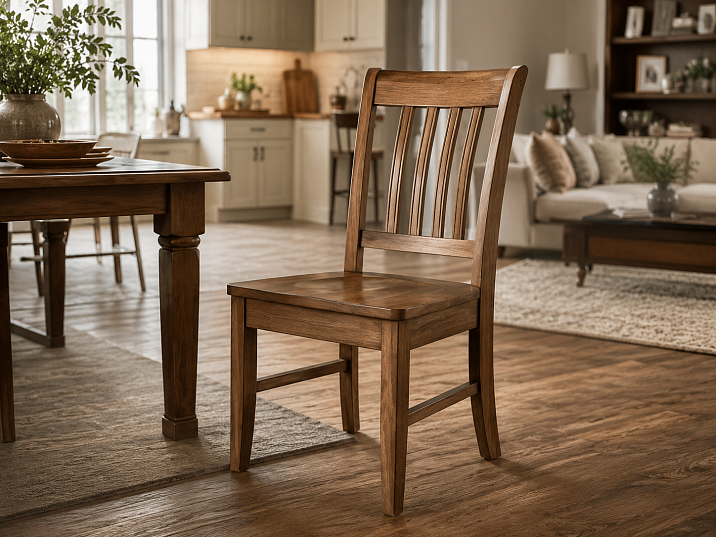


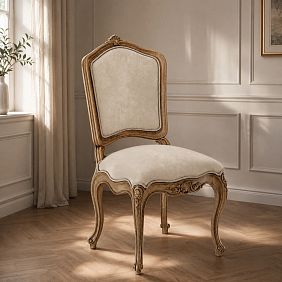
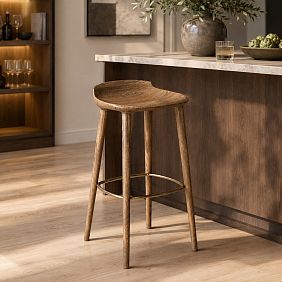


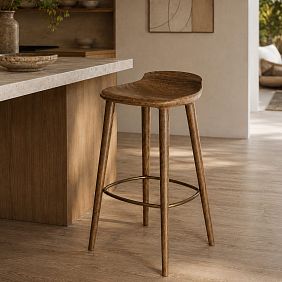
Buy a classic solid wood chair: choice for the dining room, kitchen, and living room
A chair is an object we use more often than we realize. Breakfast, workday, family dinner, hosting guests, long conversations at the table — all this time we are sitting. And that is why choosing a chair is not a formality. It is a decision that directly affects the quality of life: comfort, the aesthetics of the space, and how you feel in your own home every day.
Buying a classic solid wood chair means choosing an item that has stood the test of centuries. The classic form of a wooden chair did not originate in a 20th-century design studio. It was shaped in the carpentry workshops of France, England, and Russia over three hundred years — and it survived because it works. Anatomically, aesthetically, structurally.
But the 'classic chair' is a vast world with many options within it. A chair for the dining room and a chair for the kitchen are different tasks. Oak and beech are different characters. A soft seat, a soft back, armrests — different levels of comfort. This article provides a complete practical breakdown: how to choose a classic wooden chair, what to look for, and what mistakes to avoid.




What is a classic solid wood chair
Let's clarify the concepts so as not to waste time searching for 'the wrong one.'
A classic solid wood chair is a piece of furniture made from a single piece of wood (oak, beech, ash, cherry, walnut), with characteristic elements of the classic style: shaped legs, turned back details, profiled aprons, possibly carved decor and a soft seat on a wooden frame.
What it is not:
-
not a kitchen chair made of metal tube with plastic seat
-
not a Scandinavian minimalist plywood chair
-
not a stool — it has no backrest
-
not an armchair — it has a different depth and purpose
-
not a counter stool — it has a different height
A classic solid wood chair is primarily a structure: front and back legs connected by stretchers into a frame, a backrest with one or more horizontal or shaped crossbars, a seat on a wooden frame — open, upholstered, or semi-upholstered. Strength is ensured by a system of tenons, grooves, and glue, and in high-quality products, also by metal brackets in hidden areas.
Buying a classic solid wood chair means getting an item with a living wood texture, tactilely warm, visually rich, and structurally durable. This is not 'furniture for three years.' A properly made and properly used wooden chair lasts for decades.
More details on why the historical design of the classic chair is still relevant — in the article anatomy of a classic chair.
Our factory also produces:


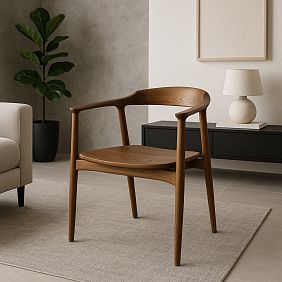
Where to use a classic wooden chair: seven scenarios
Before moving on to choosing specific parameters, you need to understand: for which location are you choosing a chair? Because a "classic chair" for the kitchen and for a formal dining room are different requirements, different priorities, and possibly different models.
Get Consultation
Dining Room: The Main Place for Classics
The dining room is the most organic scenario for a classic wooden chair. Here it works in an ensemble: table, chairs, sideboard, mirror, chandelier. All objects "talk" to each other, and the chair is one of the main participants in this dialogue.
In the dining room, the following are important: an expressive silhouette, a beautiful backrest, upholstery that matches the interior, and stability when several people are seated. This is a formal area, and the chair here is not just furniture, but also a decorative element.
Kitchen: Function First
In the kitchen, a classic chair works differently. Here it is constantly moved, leaned on, feet are put on it (yes, that happens too), and it is subjected to splashes, grease, and temperature changes. Therefore, for the kitchen, a classic chair is chosen with a more practical coating, without unnecessary decor in hard-to-reach places, and with a stable base.
Buying a classic kitchen chair means finding a balance between aesthetics and practicality. Don't sacrifice either one.
Living Room: Accent or Function?
In the living room, a chair appears in two roles. The first is an additional seating place: a pouf or chair by the coffee table, by the side table, by the fireplace. The second is an accent element: a chair by the window with a book and a blanket, an armchair-chair by the floor lamp.
In the living room, the chair should work organically with the sofa, classic consoles and other furniture. Here, form is no less important than function.
Study: working classics
In a classic study, the chair at the desk is no longer just furniture; it's an image. Solid dark oak, leather or dense fabric upholstery, a high back — an item that conveys seriousness and concentration. Buying a classic solid wood chair for a study means assembling a workspace with character.
Restaurant, hotel, meeting room
A commercial scenario imposes special requirements: resistance to repeated use, ease of upholstery care, and consistency with the establishment's interior style. Classic wooden beech chairs are one of the most popular choices for restaurants with classic interiors: durable, repairable, and visually appropriate.
Vanity table area
A small classic chair with a soft seat at the dressing table in the bedroom is a detail often overlooked, but it creates a sense of a complete space. The right height (42–45 cm), compact size, upholstery matching the bedspread or curtains — and the makeup area turns into a real boudoir.
Oak or beech: which solid wood to choose for a classic chair
The question of material is one of the first to start with when choosing. Oak and beech are the two main woods for classic furniture. Both are worthy, both are used in the production of classic chairs STAVROS. But each has its own scene, its own character, its own weight.
| Material | When to choose | Strengths | Nuances |
|---|---|---|---|
| Oak (solid) | Dining room, study, premium living room | Expressive texture, high density, prestigious look | Higher price, heavier |
| Beech (solid) | Light classic, enamel, restaurant | Uniform structure, density, paints well | Less pronounced texture |
| Solid wood for enamel | Neoclassical, white interior, Provence | Clean classic line, any color | Requires quality primer |
| Solid wood for varnish | Natural interior, warm classic | The wood structure is visible, a living material | More maintenance requirements |
Oak: character that is visible
Oak is dense (750–950 kg/m³) and heavy — you feel it when you pick up an oak chair. It is heavier than a beech chair. Is this a downside? No — it is an argument for stability. An oak chair does not wobble, does not creak with proper joinery, and maintains its geometry under load.
The texture of oak is coarse, with pronounced annual rings and characteristic mirror flashes on the radial cut. Under oil or clear varnish, oak fully reveals this texture: you see living wood, not just a "wood-like color."
Buying a classic solid wood chair, specifically oak, is the right choice for a rich interior: a dark dining room in English style, a "library-style" study, a living room with large-pattern wallpaper.
Beech: evenness and versatility
Beech is a more "quiet" material. Its density is comparable to oak (620–750 kg/m³), and its strength is sufficient for furniture of any class. But the texture is fine-grained, uniform, almost without a pronounced pattern. Under natural varnish, beech looks a bit "faceless" compared to oak. However, under enamel, it is ideal: a smooth surface, minimal "noise" from the structure, clear profile edges.
A white or ivory beech chair with gold patina in the recesses of the carving is the absolute classic of Provence and French neoclassicism. This is why beech is loved by manufacturers of classic furniture.
Buying a classic wooden beech chair is a good solution for light bedrooms, bistro-style restaurants, and meeting rooms with white interiors.
How to understand what you need
Three questions to help you choose:
-
Is the interior dark or light? Dark — oak. Light — beech under enamel.
-
Is visible wood texture important? Yes — oak or ash. No — beech or MDF.
-
Is it a gift or an everyday purchase? Gift — oak (looks more expensive). Everyday use in a large family home — beech (more practical and affordable).
Soft seat, backrest, and armrests: three levels of comfort
A wooden chair is not always hard. The classic design provides several levels of softness: from an open wooden seat to a fully soft option with upholstered backrest and armrests.
Open wooden seat
The strictest option. Suitable for short seating: breakfast, coffee, work break. No additional care for upholstery. Durable. Not the best choice for long dinners.
Soft seat
A seat with padding (foam, spring block, coconut coir) and upholstery in fabric, leather, or eco-leather. This is the main option for classic dining chairs: comfortable enough for a two-to-three-hour meal, easy to clean with the right fabric choice.
Buying a classic wooden chair with a soft seat means ensuring comfort for family dinners without transitioning to 'upholstered furniture'.
Soft backrest
Adding upholstery to the backrest increases comfort even more—especially during prolonged sitting. This is already a 'semi-armchair': the back gets soft support, shoulders don't tire. A good option for a dining room where people spend more than an hour at the table.
Chair with armrests
A chair with armrests takes up more width (10–20 cm wider than a standard chair). It is more 'ceremonial', creating the feel of an honored seat at the head of the table. Traditionally, the host's place in a classic dining room is a chair with armrests, while the rest are without.
Buying a classic chair with armrests is a good solution for the head of the table in a formal dining room or for a single 'armchair' at a desk in a study.
It's important not to confuse: a chair with armrests is a chair with rigid or soft wooden armrests and a dining-height seat. An armchair is deeper, with a lower seat, designed for a relaxed body position. Buying a classic chair with armrests is not the same as buying an armchair.
For more details on the relationship between chair design and seating comfort, see the article classic chair and ergonomics.
How to choose a classic chair for a table: ten rules
This is perhaps the most practically important section. Because a beautiful chair that doesn't match the table is money down the drain.
1. Table height
The standard height of a dining table is 74–76 cm. The seat height of a chair is 44–46 cm. The gap between the seat and the tabletop should be 27–30 cm: this allows you to sit freely without your knees hitting the underside.
Measure the height of your table before buying chairs. If the table is non-standard (e.g., 72 or 80 cm), choose a chair with a corresponding seat height.
2. Backrest height
The backrest of the chair should not hit the tabletop when pushed in. To do this, the height of the backrest at the lowest point (the place that first contacts the table when pushed in) should be below the tabletop level. This is relevant for chairs with a high backrest and tables with a protruding apron.
3. Seat width
The minimum seat width for a comfortable adult seating is 42–44 cm. Chairs with a width of 38 cm are cramped. Chairs with a width of 50+ cm take up a lot of space at the table.
4. Number of chairs and spacing between them
The standard spacing per seat at a table is 60–65 cm (from the center of one chair to the center of another). This allows sitting without touching your neighbor's elbows. When planning a table for 6 people (3 on each side), you need a tabletop at least 180 cm long.
5. Armrest width
If you choose chairs with armrests, make sure they fit under the tabletop or at least allow the chair to be pushed in close enough. Some armrests hit the table apron and prevent the chair from being pushed in properly.
6. Wood color
A chair and table made of the same material and with the same stain is a classic solution. A chair and table in different tones is acceptable if it is a deliberate design choice. Mixing warm and cool wood tones (e.g., walnut and gray oak) without design intent creates visual discomfort.
In the STAVROS catalog classic solid wood tables и Classic chairs are available in coordinated finishes — this simplifies the selection task.
7. Leg and carving style
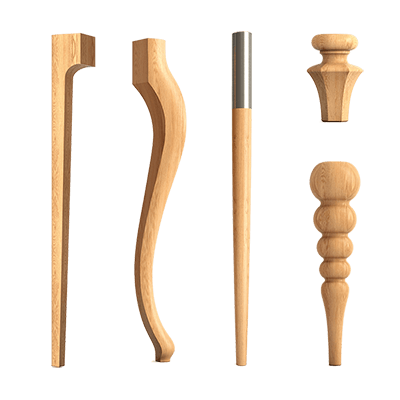
The legs of the chair and the legs of the table should speak the same stylistic language. Baroque curved chair legs with a strict rectangular table in the Empire style create dissonance. Solid wood furniture legs The catalog helps you understand which profiles exist and which styles they belong to.
8. Upholstery to match the interior
The color and texture of the seat upholstery are part of the room's color scheme. Upholstery can be neutral (beige linen, milky cotton) — and then it suits any interior. Or accent (burgundy, dark blue, emerald) — and then it requires support in other details: curtains, tablecloths, pillows.
9. Buy a classic table with chairs as a set
The most reliable way to ensure visual unity is to buy a classic table with chairs in one set. The manufacturer has already selected compatible proportions, finishes, and style. STAVROS offers classic furniture in a single assortment — chairs, tables, consoles, cabinets — which simplifies coordination.
10. Check the construction before purchasing
A quality chair does not creak or wobble when rocked. All angles are straight or consistent with the design. The stretchers are tightly fitted. If you have the opportunity to inspect the chair in person — do so.
White, walnut, natural wood: how to choose the color of a classic chair
Color is the first thing a person sees. And the last thing they realize. It is color that determines whether the chair "fits in" or "stands out" from the interior.
White chair: neoclassicism and Provence
White or ivory is the most popular color for classic chairs in light interiors. Buying a white classic wooden chair means choosing versatility. It matches any wall color, suits a white table and a natural wood table.
Nuance: white requires cleanliness. Scratches, chips, and stains are clearly visible on white enamel. For the kitchen — only with a high-protection coating or with annual coating renewal.
Walnut: warmth and maturity
The "walnut" tint is a warm brown tone with a yellowish or reddish hue. This is a classic for a dining room in a warm palette: wood, brick, leather, copper. Such a chair works organically next to natural oak-colored parquet and warm-toned walls.
Dark wood: cherry, wenge, mocha
Dark tints are for office and representative classics. A dark chair at a dark table in a classic office is an image that needs no additions. But in a small room, dark furniture "absorbs" space — consider the room area.
Natural oak: without embellishment
Natural oak under clear oil or matte varnish is for those who appreciate the honesty of the material. No tinting, no masking — only living wood with its own color and pattern. Each chair will be slightly different from another: this is a feature, not a flaw.
Light beech: Scandinavian classic
Beech with matte light varnish or oil — slightly lighter and "quieter" than oak. For modern classics with Scandinavian elements, for a white-toned kitchen, for a bright dining room with large windows.
Classic chair for kitchen and dining room: what is the fundamental difference
This seems obvious — but in practice, people regularly buy a "dining room" chair for the kitchen and wonder why it's uncomfortable. Or they take a "kitchen" chair into a formal dining room and suffer from its lack of expressiveness.
Classic kitchen chair: priorities
Buying a classic chair for the kitchen is a task with specific constraints:
-
Compactness. The kitchen is rarely spacious. A chair with armrests 60 cm wide in a 10 m² kitchen is too much of a sacrifice. The optimum is 40–48 cm in width.
-
Ease of movement. A kitchen chair is moved a lot: pushed in, pulled out, rearranged during cleaning. Lightweight, with a well-balanced center of gravity — is better.
-
Coating durability. Kitchen odors, splashes, grease, temperature changes — the coating must withstand this. For the kitchen: varnish or enamel with a high level of protection, not oil.
-
Ease of upholstery care. If you choose a soft seat, the upholstery should be made of easily cleanable material: eco-leather, dense microvelvet, waxed cotton. Natural linen in the kitchen is beautiful but inconvenient in use.
Dining room chair: priorities
A classic dining chair is a different story:
-
Expressive silhouette. In the dining room, the chair is seen in full height, from all sides. A beautiful carved back, shaped legs, well-thought-out proportions — this is important.
-
Comfort for long sitting. A family dinner is 40 minutes. A festive dinner with guests is two to three hours. A dining chair should provide good back support.
-
Ceremonial appearance. The dining room is a ceremonial space. Here, the chair works for the owner's image and the home's status. This is not a place for aesthetic compromises.
-
Set completeness. In the dining room, chairs stand in a row on both sides of the table. Their mismatch with each other is immediately noticeable. Buy all chairs in one set from the same batch.
Model Versailles 003-001: flagship classic chair STAVROS
It is worth talking about a specific model when there is something relevant to say. chair Versailles 003-001 — one of the flagship items of the STAVROS classic furniture collection.
This is a chair with a "French classic" character: a soft upholstered seat, shaped back stiles with a smooth profile, turned front legs, a wooden frame with neat aprons. Style — Louis XV, with characteristic softness of silhouette and avoidance of rigid straight lines.
Available finish options — check in the product card: as a rule, these are several tinting options and the possibility of choosing upholstery fabric.
Versailles 003-001 works well paired with the corresponding classic table and pairs with classic armchairs from the same collection — for a living room area or at the end of the table.
Mistakes when buying a classic wooden chair: a practical breakdown
Mistakes when buying a classic chair fall into three groups: selection errors, calculation errors, and usage errors. Let's break down the most common ones.
1. Didn't check the table height. A chair 48 cm high with a table 72 cm high — uncomfortable, knees will hit. A chair 42 cm high with a table 80 cm high — too low, you'll have to reach. Measure your table before choosing a chair.
2. Chose only by photo. A catalog photo doesn't convey proportions in a space. A chair that looks elegant on an isolated white background may seem bulky in a small kitchen. Focus on actual dimensions — width, depth, height in centimeters.
3. Didn't consider the upholstery. Buying a chair with a beige linen seat for the kitchen — beautiful for the first month. Then — a problem. For the kitchen, you need practical upholstery: eco-leather, microvelour with a protective coating.
4. You bought chairs that are too wide for a small kitchen. A chair with armrests 62 cm wide and four such chairs at a table 90×150 cm is a crowd. Choose the width of the chair based on the actual length of the table and the number of seats.
5. You mixed different wood shades. Two chairs made of natural oak and two made of stained "walnut" around one table is not contrast, it's a mistake. All chairs in one set should have the same finish.
6. You bought without understanding the number of seats. "I'll buy two for now, then buy more later" is a common story that ends with the same model being discontinued a year later or the batch of wood changing and the shade not matching. Buy the entire set at once.
7. You confused a chair with armrests and an armchair. An armchair is deeper (60+ cm) and lower in seat height (40–42 cm). Placing an armchair at a dining table means sitting lower than the tabletop. Classic armchairs — for living rooms and work areas, not for the dining table.
8. You didn't check the construction for durability. When buying a wooden chair, shake it, sit on it, create a load. A well-assembled chair does not creak or wobble. Creaking from the first day is a bad sign.
9. You chased cheapness. A classic solid oak or beech chair is not a cheap item. If the price seems too low, then you are looking at either veneer, weak solid wood, or poor-quality joints. The rule: a good wooden chair costs enough — not because the manufacturer is greedy, but because wood, joinery, and finish cost money.
10. You bought a chair without furniture handles and details that match the style. This is not a mistake of the chair, it's a mistake of the ensemble: when there is a sideboard with inappropriate handles or a cabinet with details of a different style nearby, the image falls apart. Think about the chair in the context of the entire space.
Why STAVROS: honest reasons for choosing
In the classic furniture STAVROS — a separate section with a filter by product type "Chair". This means that classic solid wood chairs are presented as an independent product group, not as a random item in the general catalog.
Key facts:
-
Chairs are made from solid oak and beech — real, not imitation
-
The assortment includes specific models with cards, including the chair Versailles 003-001
-
Next to them are compatible items: Tables, chair, consoles — to form a complete interior ensemble
-
Related accessories are available: Solid wood furniture legs и wooden furniture handles — for those involved in restoration or customization
-
All items are from a single collection of furniture and interior items, which ensures stylistic compatibility
FAQ: answers to the most popular questions
Which classic chair is best to buy for the dining room?
For the dining room — a wooden classic chair made of solid wood with a soft seat, seat height 44–46 cm, stable construction, and a finish that matches the tone of the table and other furniture. For long dinners — with a soft backrest. For the end of the table — with armrests.
What is better for a classic chair: oak or beech?
Oak — for dark and rich interiors, for a study and a stately dining room. Expressive texture, high density, durability. Beech — for light classics and enamel coatings, for restaurants and meeting rooms. Even structure, paints well, practical in use.
Can I buy a classic chair for the kitchen?
Yes, but for the kitchen it is important to consider: compact size (no more than 48 cm in width), a coating resistant to splashes and grease, and practical upholstery — eco-leather or dense microvelvet. For a very small kitchen, a chair with armrests is not recommended — it will take up too much space.
How is a classic armchair different from a chair with armrests?
A chair with armrests has a dining seat height (44–46 cm) and standard depth (40–45 cm). An armchair is deeper (55–65 cm), with a lower seat designed for relaxed, prolonged sitting. A chair with armrests is placed at a table; an armchair goes in the living room.
How to choose a classic chair to match a table?
Check: table and chair height (gap 27–30 cm), chair width relative to table length, color and style of legs, width of armrests (if any), wood tone. The most reliable way is to buy a table and chairs from the same collection by the same manufacturer.
How many chairs are needed for a dining table?
Calculation: 60–65 cm per seat along the table length. A 140 cm table — 4 seats (2 on each side). A 180 cm table — 6 seats. A 220 cm table — 8 seats. Two additional chairs for the ends — with or without armrests.
Where to buy a classic solid wood chair?
In the STAVROS catalog — section classic solid wood chairs with a filter by product type, specific models (including Versailles 003-001) and compatible items to form a complete dining set. Delivery across all of Russia.
How to check the quality of a wooden chair?
Sit on the chair and rock it — there should be no creaking. Inspect the joints of the legs with the stretchers — no gaps or cracks. Lift the chair — it should feel noticeably heavy (solid wood has weight). Examine the cut end of a leg — real solid wood has no visible layers. Check the upholstery — tension is even, without wrinkles or sagging.