





















































































Article Contents:
- Buy classic furniture: what you need to understand before browsing the catalog
- What is included in classic furniture for different rooms
- Living Room
- Bedroom
- Office
- Entry Hall
- What determines the price of classic furniture
- Material
- Complexity of facades and carving
- Quality of handles and legs
- Finish
- Configuration and size
- Custom execution
- Classic style furniture: checklist before purchase
- How to choose classic furniture for the living room
- Define the main piece
- Build the set gradually
- Connect furniture with the room's architecture
- Handles and legs are not a trifle
- How to choose classic furniture for the bedroom
- Bed: proportions are key
- Nightstands: height = mattress level
- Light or dark furniture?
- Carved details: in moderation
- How to choose classic furniture for a study
- The desk is the central piece
- The library as a dominant feature
- Dark wood is for a large study
- Panels and moldings
- What details make furniture truly classic
- Furniture handles
- Furniture legs
- Carved Inlays
- Furniture decor
- Solid wood moldings
- How to update classic-style furniture without buying a new set
- Mistakes when buying classic furniture
- What to buy along with classic furniture
- How to buy classic furniture and details without mistakes: the final algorithm
- About the Company STAVROS
- FAQ: answers to popular questions about classical furniture
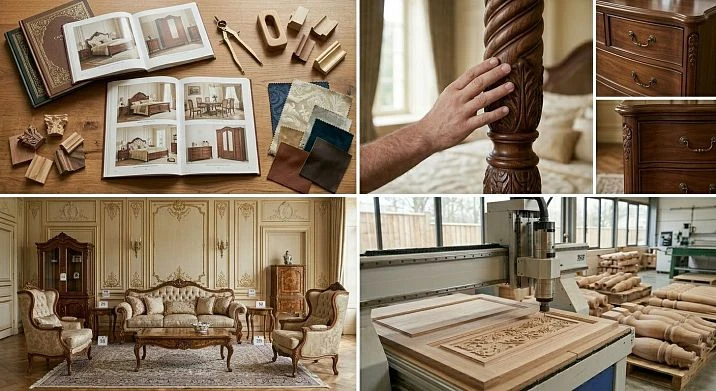
Deciding to buy classic furniture is always more than just choosing a sofa or bed from a picture. It is a decision about the character of the entire space: about what the first impression of the living room will be, how convincing the study will look, whether the bedroom will create a feeling of genuine peace. That is why classic furniture requires a systematic approach — not "like it or not," but a consistent analysis of the configuration, proportions, material, and details.
Why details? Because in classic style, details are everything. The body and facade set the shape, but furniture handles, wooden legs, carved overlays, and moldings define the character. Furniture with a flawless body but cheap stamped fittings and plastic legs is not classic. It's an imitation. And the difference between the two is visible immediately, from three meters away.
This guide provides a complete breakdown: how to choose classic furniture for the living room, bedroom, study, and hallway, what determines the price, what exactly to check before purchasing, and how wooden details turn an ordinary set into a true classic interior.
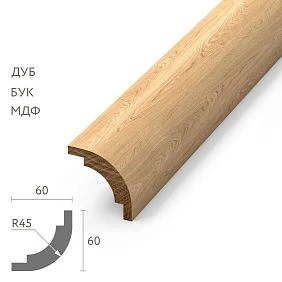
Buy classic furniture: what you need to understand before browsing the catalog
Before opening the catalog, it's worth answering a few questions. They will save time, money, and prevent disappointment.
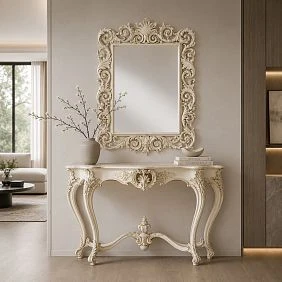
For which room? Living room, bedroom, study, and hallway are fundamentally different scenarios. In the living room, visual impact and the combination of items are important. In the bedroom, proportions and bed size matter. In the study, status and functionality of the desk and cabinets are key. In the hallway, compactness, hooks, a console, and a mirror are essential.
What is the scale of the room? Classic furniture knows how to fill space — that's its strength. But it can also turn a small room into a cramped storage area. Ceiling height of 2.8 m is the minimum comfort for full-fledged classic style. With a ceiling of 2.5 m, it's better to choose lighter forms: light colors, less voluminous profiles, less carving.
What is the budget? The price of classic furniture depends on many parameters — more on this in the next section. But it's important to understand right away: cheap "classic" usually looks flat precisely because the manufacturer saves on details: legs, handles, overlays, finish. It is these elements that create the very image that draws a person to the classic style.
Do you need a full set or individual pieces? You don't have to buy the entire suite at once. Sometimes it's better to choose one main piece — for example, a console or a bed with a carved headboard — and build everything else around it. A gradual approach helps avoid mistakes with balance and prevents overloading the space.




What is included in classic furniture for different rooms
Classic Furniture — this is not a monolithic "suite," but a set of items that should create a unified architectural image of the room. The composition of the set depends on the purpose of the space.
Our factory also produces:
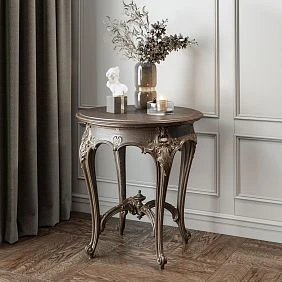
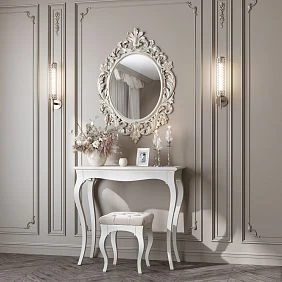
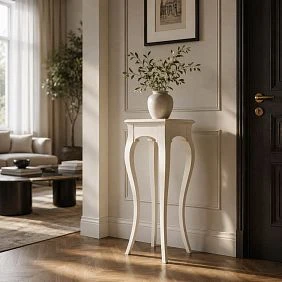
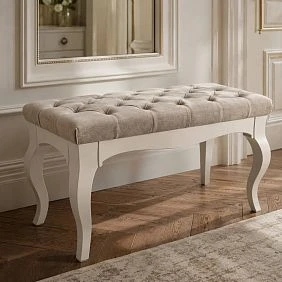
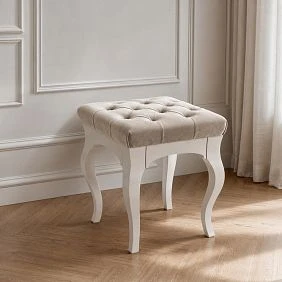
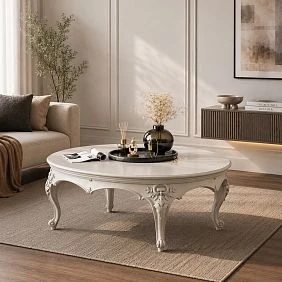
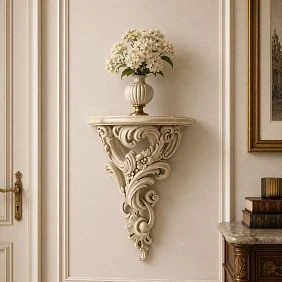
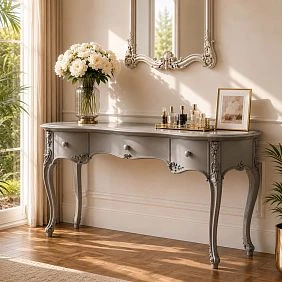
Living Room
The living room is the main room of the house, and it is here that classic style works with maximum expressiveness.
-
A sofa with a high back, carved legs, or wooden armrests is the central piece of the upholstered furniture group;
-
Armchairs in the same style — at least one, ideally two;
-
A chest of drawers — a functional piece with drawers and classic fronts;
-
A display cabinet — for books, dishes, collections; glass doors with a wooden frame;
-
A console — a wall-mounted piece for decor, a mirror, or a lamp;
-
A TV cabinet in a classic style with doors and legs;
-
A coffee table — with carved legs or a shaped tabletop;
-
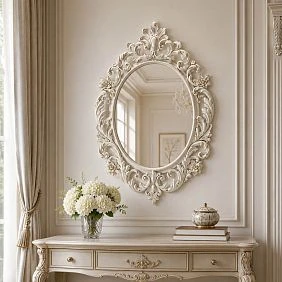
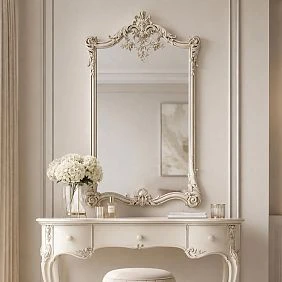
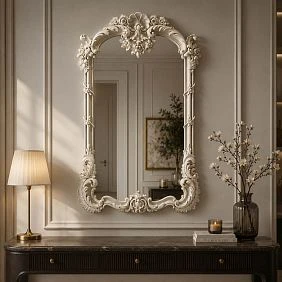
Mirrors in carved frames — an important element that visually unifies the entire space.
Get Consultation
Bedroom
-
A bed with a carved headboard — the central dominant of the bedroom;
-
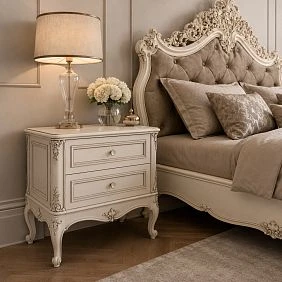
Bedside tables — height should match the mattress height;
-
Chest of drawers with drawers and classic handles;
-
Wardrobe with fronts in the style of the rest of the furniture;
-
Dressing table with mirror;
-
Bench by the bed;
-
Mirror in a frame.
Office
-
Desk — the main item; width, depth, and height are important;
-
Library or bookcase — with carved details and glass or solid fronts;
-
Cabinets for documents and storage;
-
Armchair — for work or reading;
-
Console or side table;
-
Wooden wall panels — complete the office look.
Entryway
-
Console — a compact piece with a drawer or shelf under the mirror;
-
Bench or ottoman for shoes;
-
Mirror in a carved frame — above the console;
-
Cabinet with classic fronts;
-
Hooks and decorative hardware — handles, hinges, plates.
What determines the price of classic furniture
Classic style furniture prices — this is one of the most common questions, and the answer is not as simple as it seems. The price of classic furniture is formed from many components, and understanding them is important to compare offers correctly.
Material
This is the main pricing factor. Furniture made of solid oak, beech, walnut, or ash costs significantly more than a structure made of MDF with a veneered front. At the same time, solid wood is not only about price but also durability, the possibility of restoration, and the feeling of weight and solidity.
Solid Wood Items — legs, overlays, handles, moldings — are made from the same wood species as the main furniture. This preserves the unity of material and texture throughout the interior.
Complexity of facades and carving
A flat facade with a milled profile is one cost level. A facade with hand carving, three-dimensional ornament, and multi-level profile is another. Carved details require manual labor by skilled craftsmen, and this is an honest component of the price.
Quality of handles and legs
This is where many manufacturers save money. Solid wood furniture legs with a profiled turned shape are one story. Plastic or stamped metal supports coated to look like wood are a completely different one. The difference may be invisible in photos. In person, it is obvious at first glance.
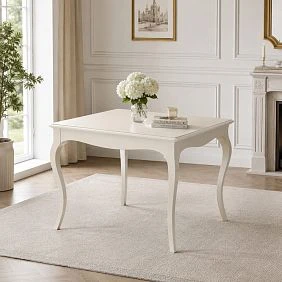
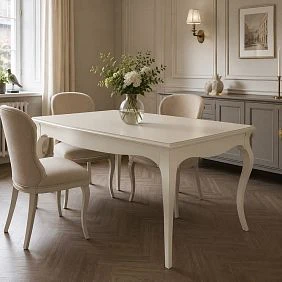
Furniture legs made from natural solid oak and beech are produced by turning and milling — each shape features a characteristic classic silhouette: twisted column, cabriole, cone with fluting. These are the legs that give furniture that very "classic stance" that is unmistakable.
Finish
Varnish, oil, wax, stain, patina — each coating affects the final color, texture depth, and surface durability. High-quality multi-layer coating with polishing is both the cost and the result that will last for decades.
Configuration and size
A full set of 8–10 items costs several times more than a single item — this is obvious. But it is important to understand: the price of a set is not always proportional. Often it is more advantageous to order items from the same series — this ensures stylistic unity and often provides a discount.
Custom execution
Non-standard sizes, a special stain color, a specific wood species for the project — all of this adds to the price. But it is the custom order that allows you to get furniture that fits the room perfectly, rather than 'almost perfectly'.
Classic-style furniture: a checklist before purchasing
Before clicking 'order', go through this list. It will save time on returns and disappointments.
-
Room dimensions: length, width, ceiling height — taking into account passages and zones;
-
Ceiling height: it determines the permissible height of cabinets, headboards, and cornices;
-
Floor color: dark parquet requires light or contrasting furniture; light floors open up possibilities for any tones;
-
Color of doors and door trims: furniture and doors should not conflict in wood color;
-
Baseboards and moldings: Pogonazh iz massiva — baseboards, trims, moldings — should be in the same tone as the furniture;
-
Handle style: metal, wooden, with patina, minimalist or ornate — all of this needs to be chosen before the purchase, not after;
-
Leg shapes: turned, straight tapered, cabriole — different shapes give a different feel of weight and style;
-
Facade types: flat, with routing, with carving, with applied details;
-
Balance of decor: classic loves symmetry, repetition, and hierarchy — the main piece, secondary pieces, accents.
How to choose classic furniture for a living room
Buying classic furniture for a living room means not just picking a sofa and a couple of armchairs. The living room lives in a system: the soft seating group, case goods, mirrors, consoles, decorative elements must work together.
Define the main piece
In a living room, the main piece is most often a sofa, or, if the room is large, a console with a mirror above it. Everything else is built around this center.
Assemble the set gradually
You don't have to buy everything at once. Start with the soft seating group and one or two case pieces. Then add a console, then a mirror and decor. This approach allows you to see the room evolve and not overload it.
Connect the furniture with the room's architecture
Classic Furniture and interior items they work great in pairs with moldings, cornices, and wooden baseboards. If the walls are decorated with moldings, the furniture style should support them — the same level of profile complexity, the same wood tone.
Handles and legs are not a trifle
In the living room, the chest of drawers, console, and display cabinet all have handles. wooden furniture handles in one series on all items — this is visual coherence that everyone feels but not everyone can explain. Different handles on different items break the unity.
How to choose classic bedroom furniture
Classic bedroom furniture revolves around the bed. It is the bed that sets the scale, tone, and style of the entire space.
Bed: proportions are key
The height of the headboard should match the ceiling height. For a 3 m ceiling, a headboard of 1.4–1.6 m looks organic. For a 2.6 m ceiling, it should be 1.0–1.2 m, otherwise the bed will feel oppressive. The bed width should be at least 160 cm for a double bed, with passages of at least 60 cm on both sides.
Nightstands: height = mattress level
Nightstands should be level with the mattress surface — this makes it convenient to reach for a book or phone. The standard nightstand height is 50–60 cm, but with a high mattress (25–30 cm or more), you should choose nightstands of 65–70 cm.
Light or dark furniture?
Light classic furniture — white, ivory, milky — visually expands the space. This is a good choice for apartments with a modest bedroom area. Dark wood — walnut, wenge, dark oak — requires space, good lighting, and high ceilings. In a dark, cramped bedroom, such furniture will feel oppressive.
Carved details: in moderation
In the bedroom, carving works differently than in the living room. Peace is needed here, not luxury. Accent carving on the headboard is enough. Carved decorative inserts for furniture can be used selectively: on the central element of the dresser, on the cabinet doors. Overloaded carving in the bedroom creates anxiety, not coziness.
How to choose classic furniture for a study
A classic-style study is a space that should speak of status, composure, and professionalism. Here, classic works in a special way: not as decoration, but as an environment.
The desk is the central piece
The writing desk for a classic study should be massive — not in the sense of bulky, but in the sense of substantial. A width of 150 cm is the working minimum. Side cabinets or drawers provide functionality. Solid wood legs with profiled turning are a must.
The library as a dominant feature
Bookcases or a library with carved details, glass doors, and classic handles set the tone for the entire study. In a small study, two sections are enough. In a spacious one, a full library along the entire wall.
Dark wood — for a large study
Dark walnut, dark oak, or wenge look magnificent in a spacious study with large windows. In a 10–12 sq.m apartment study, it's better to choose a light or neutral tone — otherwise the room will turn into a "box."
Panels and Moldings
Solid Wood Items — wooden panels, moldings, trim — work especially expressively in a study. Walls decorated with wooden panels and moldings complement the cabinet furniture and create a unified architectural image of the room.
What details make furniture truly classic
Here's a question rarely asked — but it's exactly what separates a successful interior from an unsuccessful one. Why does one piece of furniture look like true classic, while another looks like "similar to classic"?
The answer is almost always in the details.
Furniture handles
uncoated wooden handles allow you to independently choose the finish for a specific furniture color. This is especially valuable for non-standard shades. Handles with Finish — white, black, brown, clear lacquer — ready for installation without additional treatment.
The shape of the handle should match the style of the facade: for a classic facade with routing — a handle with a profile curve or a classic bracket; for neoclassicism — a concise elongated shape with rounded edges; for modern classic — a strict rectangular or round "shell."
Furniture Legs
Furniture legs made of oak or beech wood — it is both a load-bearing structure and a visual element. Turned shape with a profile: fluting, twisting, cone — each shape has its own classic association. Cabriole (curved leg with a "knee") — Baroque and Louis. Straight tapered leg — Empire and Classicism. Twisted column — Neo-Renaissance.
The height of the leg is also important: a sofa on short 10 cm legs looks heavy and squat; a sofa on 20–25 cm legs looks light and airy.
Carved Appliqués
Carved decorative inserts for furniture — these are solid wood overlay elements that are attached to the fronts of chests of drawers, cabinets, headboards, and nightstands. They can be central medallions, corner rosettes, ornamental strips along the perimeter of a door, or point accents.
Usage principle: on the main piece — expressive, on secondary pieces — restrained. If a chest of drawers has a large central overlay, then on the nightstands small corner rosettes are sufficient.
Furniture decor
decor for furniture — carved details for fronts, drawers, cornice shelves. They allow you to turn a neutral body into a classic piece without replacing the entire furniture.
Solid Wood Molding
Pogonazh iz massiva — baseboards, architraves, moldings — connects furniture with the room's architecture. A wooden baseboard of the same tone as the furniture legs visually "roots" the pieces in the space. Moldings on the walls in the same style as the carved furniture details create a unified ensemble.
How to update classic-style furniture without buying a new set
This is a practical and very important section — for those who want a classic look but are not ready to change the entire interior.
The good news: very often it is small changes that give a noticeable result.
Replace the handles. This is the fastest and cheapest change. Plastic or cheap metal handles replaced with wooden ones — and the furniture immediately takes on a different character. Work time — a few hours, tool — a screwdriver.
Install wooden legs. If your sofa or armchair has plastic supports, they can be replaced with turned wooden legs. Most sofas and armchairs have a bottom frame that allows this.
Add carved overlays to the facades. The overlays are attached with double-sided tape and glue. A central medallion on a dresser door, corner rosettes on a cabinet — and the piece starts to look different.
Decorate the facades with moldings. Simple solid wood strips, nailed or glued along the perimeter of the door, imitate a classic profile. This is one of the most common techniques in furniture restoration.
Replace the furniture baseboard. If the furniture has a plinth panel, replace it with solid wood trim — this immediately adds a sense of solidity.
Add a mirror in a carved frame. A mirror is a powerful decorative item that connects different interior elements and adds depth. A carved solid wood frame acts as an architectural accent on the wall.
Connect the furniture with the baseboard and moldings. Pogonazh iz massiva — baseboards, architraves, moldings — in the same tone as the furniture create an effect where the furniture is "built into" the interior, not just placed in the room.
Mistakes when buying classic furniture
Analyzing mistakes means saving several readers from costly disappointments. Here are the most typical ones.
Buying furniture only from photos. A photo in a catalog is the best angle, the best lighting, studio conditions. In a real room, furniture looks different — and you need to consider that.
Don't ignore dimensions. It seems obvious, but it happens all the time. A sofa that "looked compact" on the website turns out to be 2.5 m wide. A chest that "should have fit" takes up the entire free wall space.
Choosing too large a set for an apartment. Classics love space. A full set of 8 pieces in an 18 sq. m room is not classic, it's a warehouse. For a small apartment, choose 2–3 pieces and complement them with decor.
Not considering ceiling height. A tall cabinet with a cornice and lush profile in a low room visually crushes the ceiling. For ceilings up to 2.6 m, choose furniture without upper cornice extensions.
Mixing different wood shades. Light oak, dark walnut, golden beech — three different tones in one room create chaos. Choose one main tone and stick to it in all items, handles, legs, and moldings.
Choosing furniture without considering doors and baseboards. If doors are dark and furniture is light, a well-thought-out solution is needed, otherwise the interior will conflict with itself.
Choosing random handles. Handles "from stock" are a common mistake when finishing an interior. Handles are the final touch that is noticed first. They should match the style and color of the furniture, not be "good enough."
Not looking at legs and supports. Plastic legs on a classic sofa are like sneakers with a tuxedo. Details matter.
Overloading a room with carving. If carving is everywhere — on the bed, chest, nightstands, frames, baseboards — it ceases to be an accent. Carving works as an accent only when there is "quiet" nearby.
Buying "classics" without a unified style of details. Different series of legs, different handles, different profile levels on different items — and the room looks like a sample display, not an interior.
Comparing prices without considering material and configuration. A chest for 40,000 made of MDF with plastic legs and a chest for 90,000 made of solid wood with turned legs and wooden handles are not "twice as expensive," they are two different products.
What to buy together with classic furniture
A full classic interior consists not only of case and upholstered furniture. Here's what you should order together:
-
wooden furniture handles — in a single series for all items;
-
uncoated wooden handles — for self-painting to match the furniture color;
-
Handles with Finish — white, black, brown, ready for installation;
-
Furniture legs — turned from solid wood for sofas, armchairs, chests of drawers, nightstands;
-
Carved decorative inserts for furniture — central medallions, corner rosettes, ornamental strips;
-
decor for furniture — carved elements for facades and drawers;
-
Mirrors in carved frames — from the catalog classic furniture;
-
Pogonazh iz massiva — baseboards, architraves, moldings for architectural framing of the interior;
-
Solid Wood Items — full range of wooden parts for interiors and furniture.
How to buy classic furniture and parts without mistakes: the final algorithm
If you put everything said into sequential steps, the algorithm looks like this:
-
Determine the room: living room, bedroom, study, hallway — each has its own scenario.
-
Measure the room: length, width, ceiling height, passages, zones.
-
Decide: full set or individual items — you don't always need everything at once.
-
Choose a color scheme: light, dark, natural — and stick to it for all furniture, handles, legs, moldings.
-
Compare configuration and price: not the price per unit, but the price for the quality level of parts — legs, handles, overlays, coating.
-
Check handles and legs: they should be made of solid wood and from the same series for all furniture in the room.
-
Choose solid wood decor: overlays, supports, moldings, trim — they will connect the furniture with the room's architecture.
-
Go to catalog classic furniture и of solid wood — select a set of items and details in a unified style.
About the company STAVROS
STAVROS is a Russian manufacturer of classic furniture and handmade wooden decor. The company produces a full range: classic sets for living room, bedroom, study and hallway, as well as wooden furniture handles, turned legs, carved overlays, moldings and solid oak, beech and walnut products. Production is in-house, with hand carving and multi-stage quality control. STAVROS works with private clients, designers and architects, accepts custom orders by size, color and configuration, and delivers throughout Russia.
FAQ: answers to popular questions about classic furniture
Where to buy classic furniture?
It is better to contact the manufacturer directly — this way you can choose not only ready-made items, but also details: handles, legs, overlays, moldings. The catalog classic furniture STAVROS features solid wood items of our own production with a full description.
What determines the price of classic furniture?
The price consists of the material (solid wood or MDF), complexity of facades, presence of carving, quality of handles and legs, finish, size and custom modifications. Cheap "classics" usually save on details — legs, handles, overlays — and this is what makes it visually weak.
What is included in a classic living room furniture set?
The basic set is a sofa, armchairs, chest of drawers, display cabinet, console, TV cabinet, coffee table, framed mirror. You don't have to buy everything at once: start with the upholstered group and one case piece, then add more.
Is it possible to make furniture more classic without buying a new set?
Yes. Replacing handles with wooden ones, installing turned legs, adding carved overlays to facades, and decorating walls with moldings — these steps radically change the perception of furniture without a full replacement.
What is important to check before purchasing?
The dimensions of the items and the room, the material of the legs and handles, the color of the wood relative to the floor and doors, the style of the facades, the presence of a unified series of parts. If the handles and legs are from different series, the furniture will not look like a single set.
How to choose handles for classic furniture?
Focus on the style of the facade: a complex facade with carving — a profiled handle; a flat facade — a minimalist bracket handle or "shell". The color of the handle should match the tone of the wood or be slightly darker. All handles in the room should be from the same series.
Is classic furniture suitable for an apartment?
Yes, if you choose the scale correctly. For an apartment with a ceiling up to 2.8 m, it is better to choose light colors, fewer items, and lighter forms. Full-fledged "palace" classic style requires space — from 25–30 sq.m for a living room and ceilings from 3 m.
Get Consultation
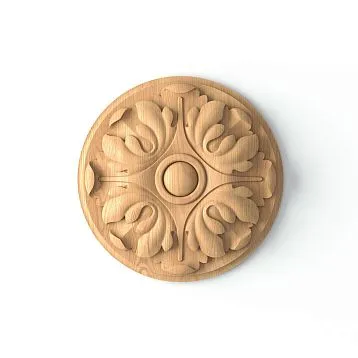
Wooden socket R-001
from 6.34 $
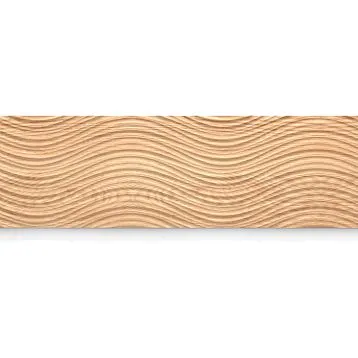
● Universality. The wooden trim K-017 is suitable for any style and room, whether it's a living room, bedroom, office, kitchen, bathroom, or hallway. The wooden trim K-017 can be used for various purposes and tasks, such as framing, cladding, decorating, or zoning. The wooden trim K-017 easily complements other decorative elements, creating a harmonious and cohesive look.
from 19.52 $
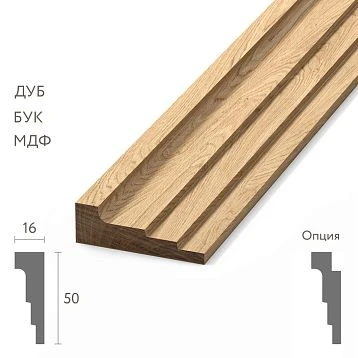
Wooden Molding / Baseboard MLD-052
from 12.20 $
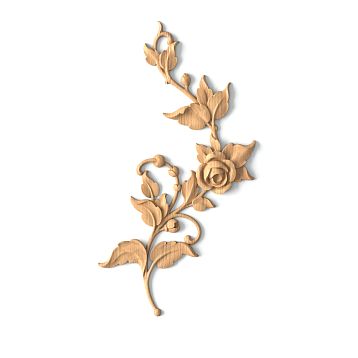
Wooden Decor N-468L
from 40.01 $



