Article Contents:
- Why ceiling height is the first thing you need to know before buying stucco molding
- The scale rule: how stucco molding works with height
- What else affects the perception of stucco molding in a room
- 2.5 meter ceiling: stucco molding is allowed, but the rules are stricter
- Moldings for a 2.5 m ceiling: what width to choose
- Molding profile: smooth or embossed
- Frames on walls with a low ceiling: how to do it right
- Ceiling rosette for a 2.5 m ceiling
- Decorative stucco on walls with a ceiling height of 2.5 m
- What to buy for an apartment with a 2.5 m ceiling: recommended set
- Ceiling 2.7 meters: the sweet spot for stucco in an apartment
- Moldings for a 2.7 m ceiling: width and profile
- Frames on walls with a 2.7 m ceiling: rules and scenarios
- Ceiling rosette for a 2.7 m ceiling
- Decorative stucco with a 2.7 m ceiling: where and how much
- Ceiling cornice at 2.7 m: choosing the profile height
- Recommended set for a 2.7 m ceiling
- Ceiling 3 meters and above: space opens up new possibilities
- Ceiling moldings 3 m: width and character
- Wall frame decor for 3 m ceiling height
- Ceiling rosette for 3 m ceiling
- Ceiling stucco for 3 m height: cornice, coffers, stucco friezes
- Decorative stucco for 3 m height: accent scale
- Recommended set for 3 m and higher ceiling
- Ceiling 3.5 meters and higher: full-height architecture
- Table: stucco for ceiling height
- How to correctly "read" ceiling height before purchase
- Interior style and ceiling height: how they are related
- Frequently asked questions about choosing molding for ceiling height
- Question: Can I use molding with a 2.5 m ceiling in a Khrushchev-era apartment?
- Question: What width of molding is universal for most apartments?
- Question: Should I buy moldings or a ceiling rosette first?
- Question: How do I know if a rosette won't be too large?
- Question: Does molding work in modern apartments with minimalist design?
- Question: What is more important — the width of the molding or its profile?
- FAQ: Quick answers before purchasing
- About the Company STAVROS
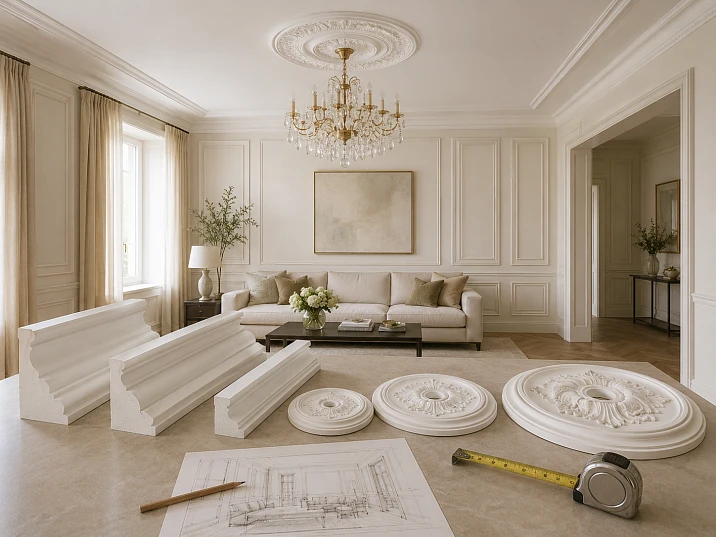
There is one question that torments everyone who opens a molding catalog for the first time: won't it be too much? Too wide, too ornate, too bulky for my apartment with a 2.5 meter ceiling? Or, on the contrary, too modest — a narrow molding that no one will notice in a three-meter living room of a country house?
This is not paranoia or perfectionism. This is an absolutely correct question asked by a person with a sense of space. Because molding is about working with proportions. It either enhances a room or weighs it down. And the boundary between these two states runs precisely through ceiling height, wall scale, and the size of decorative elements.
This article provides specific guidelines for the three most common situations: ceilings of 2.5 m, 2.7 m, and 3 m and above. No general phrases. Only what actually works.
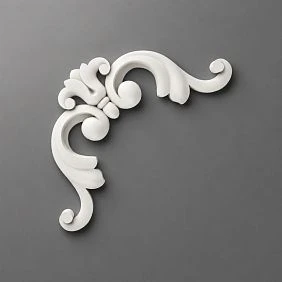
Why ceiling height is the first thing you need to know before buying molding
Before to buy molding, you need to understand one fundamental thing: molding does not exist in isolation from the space. It interacts with it. A wall molding is not perceived on its own — it is perceived against the backdrop of ceiling height, wall width, furniture size, and lighting design.
The same 50 mm wide molding on a wall with a 2.5 m ceiling creates a feeling of heaviness and constriction. The same molding on a wall with a 3.2 m ceiling is restrained classicism, elegant and appropriate. A rosette with a diameter of 70 cm in a bedroom with a 2.6 m ceiling covers the entire visible ceiling and overwhelms the space. In a living room with a 3.5 m ceiling, the same rosette looks proportionate.
This is not a matter of taste. It is a matter of physical proportions.




The Law of Scale: How Molding Works with Height
There is a simple rule that helps you choose molding without mistakes: the size of the decorative element should be no more than 5–8% of the ceiling height. For a 2.5 m ceiling, this is 12.5–20 cm. For a molding, this means its width should be in the range of 20–30 mm. For a cornice, the profile height is up to 50–60 mm. For a ceiling rosette, the diameter is based on the area, but without overloading.
In practice, this means the following: with a 2.5 m ceiling, a molding 60–70 mm wide already begins to create the effect of a "lowering" ceiling. With a 3 m ceiling, the same molding is an excellent solution. Understanding this relationship once means never making a mistake in your choice again.
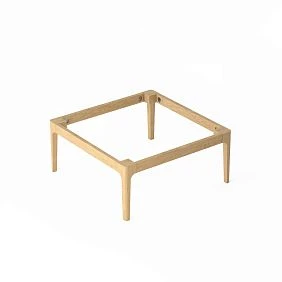
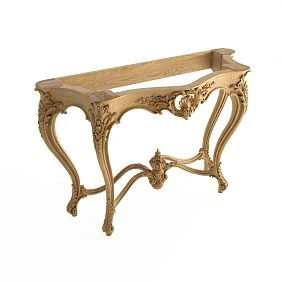
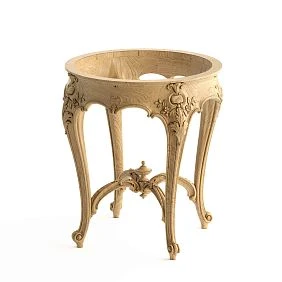
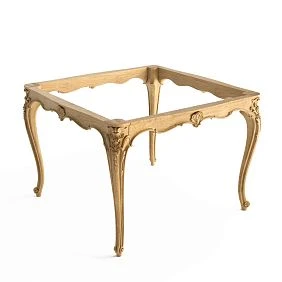
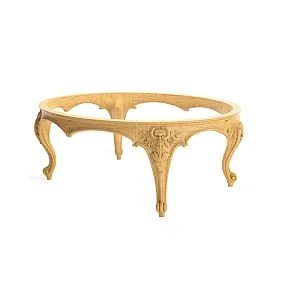
Our factory also produces:

What else affects the perception of molding in a room
Ceiling height is the main, but not the only parameter. Additionally, the following are important:
Room area. In a small room, any decor appears larger than in a spacious one. A rosette with a diameter of 50 cm in a 12 sq. m room is a lot. In a 25 sq. m room, it's normal.
Wall and ceiling color. Dark walls visually reduce space — molding on them appears larger. On light walls, the same molding looks lighter.
Amount of furniture. A rich interior with large furniture does not require much decor. A minimalist room, on the contrary, can accommodate more expressive elements.
Lighting. Accent lighting emphasizes the relief of stucco. Uniform diffused light smooths it out. This should be considered when choosing the depth of the molding relief: in a room with soft diffused light, a deep relief works better — it is "readable."
Get Consultation
Ceiling 2.5 meters: stucco is allowed, but the rules are stricter
A ceiling of 2.5 meters is the standard for typical apartment buildings of Soviet and post-Soviet construction. A huge percentage of Russian apartments have this size. And it is here that there are the most fears: "Won't it press down? Won't it be cramped? Is stucco even appropriate with such a ceiling?"
It is appropriate. Absolutely. But — with rules. Violating these rules turns elegant decor into a burden.
Moldings for a 2.5 m ceiling: what width to choose
For a room with a 2.5 m ceiling Moldings made of polyurethane are selected in the width range of 20–35 mm. This is the optimal zone where the molding is noticeable enough to create a decorative effect, and at the same time does not overload the low space.
What happens if you take it wider? With a 50 mm molding, the frames on the wall will visually occupy a significant portion of the height — especially if the gaps from the ceiling and floor are small. The space inside the frame will shrink. The room will feel cramped — even if its area is quite comfortable.
What happens if you take it narrower? A 12–15 mm molding on a wall with wallpaper or a painted surface practically gets lost. From a distance, it's simply not visible. The frames are there, but the effect is minimal.
The optimum for a 2.5 m ceiling is 25–30 mm when painted in the same color as the wall, 20–25 mm when painted in a contrasting color.
Molding profile: smooth or embossed
For low ceilings, a smooth or lightly embossed profile is preferable. The reason is simple: a deep, rich relief on a small molding width looks overloaded — like too many details in a small area. A smooth profile or a profile with minimal ornamentation provides a clean line that organizes the space without pressure.
buy polyurethane moldings for an apartment with a 2.5 m ceiling — means choosing a smooth or thinly profiled molding with straight edges, without deep ornamental protrusions.
Frames on walls with a low ceiling: how to do it right
Frames made of moldings on walls with a 2.5 m ceiling are possible — but with several limitations.
Indentation from the ceiling. Minimum 15 cm, optimal 20 cm. If the frame comes too close to the ceiling, the ceiling visually "drops" to the level of the molding.
Indentation from the floor. Minimum 30 cm if there is no baseboard. If there is a baseboard — at least 15 cm from its top edge.
Frame width. On a wall 3.5 m wide with a ceiling of 2.5 m, two or three frames 80–100 cm wide work well. One wide frame across the entire wall creates a feeling of a heavy frame — it's better to have several moderate ones.
Number of frames. With a low ceiling, you should not make frames on all walls of the room. One accent wall is enough — usually the one opposite the entrance or behind the sofa. This creates a decorative accent without overload.
Ceiling rosette with a ceiling of 2.5 m
A rosette for a ceiling of 2.5 m should be chosen with caution. The recommended diameter is no more than 35–45 cm for a bedroom (12–16 sq. m) and no more than 50–55 cm for a living room (18–22 sq. m). A larger rosette with a low ceiling begins to visually "press" on the head — especially if the chandelier is hanging, not flush-mounted.
Another rule: a rosette with a low ceiling should be neat — without excessively deep relief. A thin ornament, a laconic profile. A lush baroque rosette with high relief protrusions on a 2.5 m ceiling creates the illusion of a lowering ceiling.
Decorative stucco on walls with a height of 2.5 m
Decorative stucco — overlays, medallions, cartouches — with a low ceiling should be small and pointwise. One well-chosen element above a mirror or in the center of a frame is enough. Several large overlays on different walls in a room with a 2.5 m ceiling will create a feeling of overload.
Rule for decorative stucco at 2.5 m: maximum one or two accent elements in the room. Size — small or medium (up to 35–40 cm in width). Relief — moderate. Color — matching the wall or ceiling.
What to buy for an apartment with a 2.5 m ceiling: recommended set
-
Moldings made of polyurethane 20–30 mm wide, smooth or low-relief profile
-
Ceiling rosette with a diameter of 35–50 cm depending on the room area
-
Decorative overlay (1–2 elements for an accent zone)
-
Cornice along the perimeter — optional, profile height no more than 40–50 mm
-
Installation adhesive, sealant, paint to match
Painting moldings to match the wall color with a 2.5 m ceiling is a particularly important technique. A contrasting white molding on a colored wall appears larger than it actually is. A molding matching the wall color creates an embossed effect — elegant and unobtrusive.
Ceiling of 2.7 meters: the sweet spot for stucco in an apartment
A 2.7 m ceiling is the sweet spot. High enough to allow medium moldings and a decent-sized rosette. Yet still 'homey' enough not to require monumental solutions. It is with a 2.7 m ceiling that stucco works most organically and predictably.
Most new comfort-class and business-class buildings have ceilings of exactly this height. If you bought an apartment in a recently built house, you are likely in the 2.7–2.8 m range. This is your scenario.
Moldings for a 2.7 m ceiling: width and profile
With a 2.7 m ceiling, the range of molding choices expands: 30–50 mm. In this range, moldings are sufficiently noticeable, create expressive frames, read well from a distance — and do not overwhelm the space.
For wall frame decor, the optimum is 30–40 mm. For a perimeter ceiling cornice, it is 50–65 mm. Such a cornice provides a clear transition from wall to ceiling, organizes the space, and creates a feeling of quality finishing.
With a ceiling height of 2.7 m, the profile can be either smooth or moderately textured. Here, moldings with an ionic profile, light meander, or pearl string are possible — restrained classics that work well in neoclassical and modern interiors.
Frames on walls with a ceiling height of 2.7 m: rules and scenarios
With a ceiling height of 2.7 m, wall frame decor is the optimal solution. Frames can be made on one accent wall or on several, without fear of overloading.
Indentation from the ceiling — 20–25 cm. This creates "air" between the frame and the ceiling.
Indentation from the floor — 35–40 cm. The lower frame should not "sit" on the baseboard.
Width of frames — on a 4 m wall with a 2.7 m ceiling, three frames of 90–110 cm work well.
Height of frames — with a 2.7 m ceiling and indentations from the ceiling and floor, a frame height of 130–140 cm looks proportional.
Buy polyurethane moldings For creating frames with a 2.7 m ceiling, this is an order with a calculation of the total perimeter of all frames plus a 15–20% reserve. Don't forget corner overlays if you want to decorate the corners of the frames with ornamental elements.
Ceiling rosette for a 2.7 m ceiling
With a ceiling height of 2.7 m, the range of rosette diameters is 45–65 cm for standard living rooms. For a small bedroom (12–15 sq. m) — 45–55 cm. For a living room (20–25 sq. m) — 55–65 cm.
With a ceiling height of 2.7 m, the rosette profile can be more expressive than with 2.5 m. Moderate ornamentation — leaves, petals, geometric motifs — works well. Lush Baroque rosettes with very deep relief should still be reserved for rooms with ceilings of 3 m or higher.
Buy ceiling stucco molding For an apartment with a ceiling height of 2.7 m, it is worth using a cornice around the perimeter of the room plus a rosette in the center. These two elements create a finished ceiling without overloading it.
Decorative stucco molding with a ceiling height of 2.7 m: where and how much
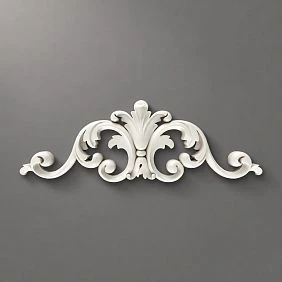
With a ceiling height of 2.7 m, decorative wall appliqués can already be more noticeable. A medallion 45–55 cm wide above a mirror, a cartouche in the upper part of an accent wall, corner appliqués within frames — all of this works organically.
The number of decorative elements with a ceiling height of 2.7 m: up to 4–6 elements in one room (including corner appliqués within frames), without overloading. The main rule remains the same: one strong accent plus supporting details, not a chaotic set of appliqués.
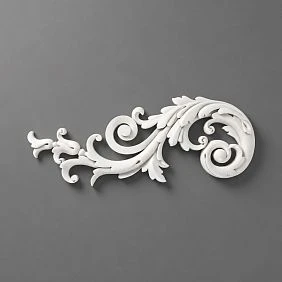
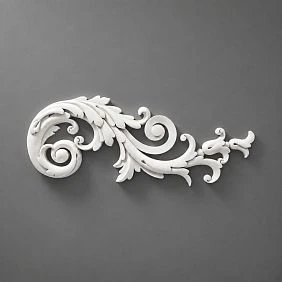
buy decorative moldings For an apartment with a ceiling height of 2.7 m, this is already a wide field of choice. Here, paired L/R appliqués on either side of a mirror, a large medallion above a console, and corner appliqués within a frame system all work.
Ceiling cornice at 2.7 m: choosing the profile height
A cornice is a ceiling stucco element that is attached at the junction of the wall and ceiling and decorates this transition. With a ceiling height of 2.7 m, the height of the cornice profile is 50–70 mm. This allows you to choose a cornice with moderate ornamentation: an egg-shaped profile, a stepped profile, a profile with light leaves.
A cornice is not mandatory with wall frame decor — but in classical and neoclassical interiors, it completes the theme, 'stitching' the walls and ceiling into a single system. With a ceiling height of 2.7 m, this is especially noticeable: without a cornice, the wall 'breaks off' at the ceiling. With a cornice, it transitions smoothly.
Recommended kit for a 2.7 m ceiling
-
Moldings made of polyurethane 30–45 mm for frames
-
Ceiling cornice 50–70 mm high along the perimeter
-
Ceiling rosette 50–65 cm
-
Decorative overlays for accent zones (1–4 elements)
-
Corner overlays for frames (optional)
-
Glue, sealant, paint
With a 2.7 m ceiling, you can afford to paint moldings in contrast — white on a colored wall. This creates a bright, expressive decorative effect without the risk of overloading.
Ceiling 3 meters and higher: space opens up new possibilities
A 3 m ceiling is a different register. A country house, an apartment in a Stalin-era building, business-class apartments, an office, a hall, formal rooms. Here, small decor gets lost, and what would seem large with a 2.5 m ceiling looks organic and appropriate.
And here, solutions that would be impossible at standard height start to work. Wide moldings. Large rosettes. Multi-level ceiling cornices. Expressive stucco decorative overlays. A decor system that speaks at full volume.
Moldings for a 3 m ceiling: width and character
With a 3 m ceiling, moldings for frame decor can be 45–70 mm wide. For a ceiling cornice — 70–100 mm or more. This is already a serious architectural detail, visible from a distance, creating a strong visual effect.
With a ceiling height of 3 m, the profile can be richly embossed: acanthus ornament, laurel garlands, Ionic profile, double stepped cornice. All of this works at the scale of a high space, adding depth and historicity to the interior.
buy polyurethane moldings for a room with a 3 m ceiling — means moving into a different price and decorative segment. Here you can afford both wide profiles and complex ornamental moldings that would look heavy at standard height.
Wall frame decor with a 3 m height
With a 3 m ceiling, frames made of moldings can be larger and more complex. Indent from the ceiling — 25–35 cm. Frame height — 160–180 cm or more. Wide, monumental frames with large moldings and corner pieces create a sense of real architectural finishing.
With a high ceiling, a two-level frame system is possible: lower frames of the same size, the upper strip of the wall above them — a separate narrow strip with an additional molding. This is a classic technique for decorating formal rooms, dining rooms, and living rooms in historical interiors.
Ceiling rosette for a 3 m ceiling
With a ceiling height of 3 m, the diameter of the ceiling rosette is 65–90 cm for most residential rooms. For halls, living rooms, formal rooms — from 80 cm to 120 cm or more.
With a 3 m ceiling, a lush relief ornament already works: deep leaves, petal rosettes, acanthus curls. This is not overload — in a high space, rich relief is perceived as decorative luxury, not as pressure.
Important point: with a ceiling height of 3 m and a large rosette, you need to check the distance from the edge of the rosette to the cornice. With a rosette 90 cm in diameter and a room of 5 × 5 m, this distance should be at least 30–40 cm — otherwise the ceiling will look overloaded.
Ceiling stucco at a height of 3 m: cornice, coffers, stucco friezes
With a ceiling height of 3 m, opportunities open up that are not available in a standard apartment. First of all — Ceiling molding not only in the form of a simple cornice, but also in the form of a complex, multi-layered design.
Double cornice. Two parallel moldings around the perimeter — main and additional, at a distance of 10–15 cm from each other. Between them is a clean strip of wall. This is an architectural technique that visually raises the ceiling and adds depth to the interior.
Coffered decor. Decorative panels on the ceiling, framed by moldings. With a ceiling height of 3 m or more, a coffered ceiling looks monumental and expensive. Especially in combination with stucco rosettes inside each coffer.
Stucco frieze. A wide horizontal strip of stucco ornament at the top of the wall — between the cornice and the frames. This is a classic technique that requires a height of at least 3 m. With a ceiling height of 2.5 m, the frieze visually lowers the ceiling. With a ceiling height of 3 m, on the contrary, it structures the vertical.
Decorative stucco at a height of 3 m: scale of accents
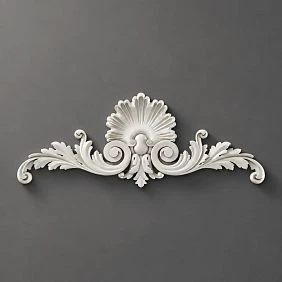
With a ceiling height of 3 m, decorative overlays can be larger and more complex. A medallion 60–80 cm wide, a cartouche with an elaborate ornament, large corner elements in frames. All this works at the scale of a high space.
Buy Moldings for a study, formal living room, or hall with a ceiling height of 3 m — this is a completely different story compared to a standard apartment. Here, solutions in the spirit of Empire, Classicism, or Art Deco are possible — with large elements, rich relief, and elaborate ornament.
Recommended kit for ceilings 3 m and above
-
Moldings made of polyurethane 45–70 mm for frames
-
Cornice made of ceiling molding 70–110 mm high
-
Ceiling rosette 70–100 cm and larger
-
Decorative overlays large and medium size
-
Optional: double cornice, coffered panels, stucco frieze
-
Material reserve 20%
-
Glue, sealant, paint, brush
Ceiling 3.5 meters and above: architecture at full height
A ceiling above 3.5 m is already a special case. Stalin-era high-rises, historical buildings, elite country houses. Here, stucco molding is not an option, but a requirement. Bare high walls without decoration in such a space look empty and unwelcoming.
With ceilings of 3.5 m and higher, the width of molding for frames is 60–90 mm. The cornice is 100–130 mm or more. The rosette is from 100 cm. Decorative overlays are correspondingly large, with rich ornamentation.
A feature of tall spaces: vertical wall division works here. The lower zone (up to 1.2–1.5 m from the floor) is the panel part with molding frames. The upper zone (from 1.5 m to the ceiling) is the main field with larger frames and ornamental accents. This is the classic three-part wall division (baseboard — field — cornice), which has been used in formal interiors for centuries.
Table: stucco molding according to ceiling height
| Ceiling Height | Width of molding for frames | Cornice height | Socket diameter | Size of overlays |
|---|---|---|---|---|
| 2.5 m | 20–30 mm | Up to 50 mm | 35–50 cm | small, up to 35 cm |
| 2.7 m | 30–45 mm | 50–70 mm | 50–65 cm | medium, up to 50 cm |
| 3.0 m | 45–65 mm | 70–100 mm | 65–90 cm | medium and large |
| 3.5 m+ | 60–90 mm | 100–130 mm | from 90 cm | large |
How to correctly "read" ceiling height before purchasing
Before placing an order, do the following. Take a tape measure and measure the actual ceiling height — not the design height, but the actual one. Keep in mind that after finishing (screed, final floor covering, stretch ceiling), the actual height is often 5–10 cm less than the design height.
If you have a stretch ceiling planned, this is important. The stretch fabric "eats" 5–7 cm of height. In this case, the cornice is installed before the stretch ceiling — and its height must be coordinated with the contractor.
If recessed lights are planned in the room without a stretch ceiling, the socket is mounted on the main ceiling, and its diameter is calculated based on the final room height.
Interior style and ceiling height: how they are related
Ceiling height affects not only the size of the molding but also the choice of style. Some styles require height — without it, they don't work.
Classic and Baroque are styles with high decorative saturation. They work with ceilings from 2.8–3 m. At 2.5 m, classic solutions need to be simplified: smooth moldings instead of relief ones, moderate rosettes instead of lush ones.
Neoclassical is a more flexible system. It works starting from a ceiling height of 2.6–2.7 m with the correct choice of sizes.
Provence and romantic style — small decor, delicate ornament. Works well at any height, including 2.5 m. The main thing is small elements.
Modern neoclassical and transitional style — smooth moldings, minimal ornament, one accent. Works at any ceiling height from 2.5 m.
Art Deco requires a height of 2.8–3 m to unfold geometric motifs. At 2.5 m, geometric moldings work, but the scale needs to be reduced.
Frequently asked questions about choosing stucco molding for ceiling height
Question: Can stucco molding be used with a 2.5 m ceiling in a Khrushchev-era apartment?
Yes. Key conditions: narrow molding 20–25 mm, a neat small-diameter rosette, painting in the color of the wall or ceiling. Frames — on one accent wall, not all. The result will be pleasant and unobtrusive.
Question: What width of molding is universal for most apartments?
Molding 25–30 mm is the most universal size that works in the ceiling range of 2.5–2.8 m. It is noticeable enough to create a decorative effect, yet does not overwhelm standard apartments.
Question: Should I buy moldings or a rosette first?
It is better to order everything together, in one order. This ensures stylistic compatibility and allows you to choose elements from the same series with a coordinated pattern. Different series may slightly differ in the shade of white.
Question: How to know that the rosette will not be too large?
Draw a circle of the required diameter on the ceiling using a string and a pencil. Look from different points in the room. This is the best way to check the scale before purchasing.
Question: Does stucco molding work in modern apartments with minimalist design?
Yes, on one condition: choose smooth or minimally profiled moldings, a laconic rosette without complex ornamentation, and use them sparingly — one accent, not a system. Then stucco works as a sculptural detail, not as historical decor.
Question: what is more important — the width of the molding or its profile?
For the scale of the room, width is more important. For the stylistic feel — the profile. Width affects whether the molding overloads the space. Profile affects the style in which it speaks.
FAQ: quick answers before purchase
Which stucco to choose for a 2.5 m ceiling?
Moldings 20–30 mm, smooth profile, rosette up to 50 cm, minimal applied decor, painted to match.
Which stucco to choose for a 2.7 m ceiling?
Moldings 30–45 mm, cornice 50–70 mm, rosette 50–65 cm, medium-sized decorative overlays.
Which stucco to choose for a 3 m ceiling?
Moldings 45–65 mm, cornice 70–100 mm, rosette 65–90 cm, large decorative elements, complex ceiling solutions possible.
Moldings matching the wall color or contrasting?
With low ceilings — matching. This makes the decor delicate. With ceilings 2.7 m and higher, contrasting white molding works well and creates a striking effect.
What is a cornice made of ceiling stucco?
A linear profile installed at the junction of the wall and ceiling. It organizes the transition between planes, structures the space. Selected based on ceiling height.
Is it necessary Ceiling molding, if there is a stretch ceiling?
The cornice is installed before the stretch ceiling on the main ceiling. This is standard practice. The rosette is also on the main ceiling, with an opening in the stretch ceiling for the chandelier.
How many decorative overlays are enough for one room?
With a 2.5 m ceiling — 1–2 elements. With a 2.7 m ceiling — 2–4. With a 3 m ceiling — depending on the task and scale, the principle of 'one strong accent' is always relevant.
Which one You can buy ready-made stucco matching the Baroque style. Calculate the quantity: linear meters of cornices and moldings, number of rosettes, pilasters, consoles, corner elements. Add a ten to fifteen percent allowance for trimming. for the first time?
Start with moldings for one accent wall and one ceiling rosette. This is the minimum set that will give a clear and quick result. Then you can add a cornice and decorative overlays.
About the company STAVROS
Choosing stucco for a specific ceiling height is a task that requires product knowledge and an understanding of interior proportions. STAVROS is a Russian company that produces and sells decorative polyurethane products: Moldings, ceiling rosettes, ceiling molding, Decorative Inserts and a full range moldings from polyurethane for apartments, houses, and commercial interiors.
The STAVROS catalog features products in a wide range of sizes — from minimalist profiles for standard apartments to monumental elements for tall, grand spaces. All products are made of high-quality polyurethane with a clear relief, stable dimensions, and are ready for installation and painting. Delivery is available throughout Russia.
If you are unsure which size suits your ceiling height, STAVROS specialists will help you choose the right set, calculate the footage, and assemble the order without errors. Stucco looks expensive only when it is precisely selected. STAVROS does exactly that.