Article Contents:
- When furniture can be updated without full replacement
- Wooden furniture handles: the fastest way to change facades
- Cabinet handles
- Handles for dresser and nightstand
- Handles for kitchen
- Handles for painting
- Furniture legs: how to change height, style, and fit of furniture
- Legs for nightstand and dresser
- Legs for cabinet and sofa
- Legs for coffee table
- Legs for stool
- Legs for table and chair: beauty and stability at the same time
- Table legs: what to look for besides shape
- Legs for kitchen table
- Chair legs: load in motion
- Furniture supports: when legs aren't enough
- How a support differs from a leg
- How to choose a support for heavy furniture
- Connecting supports to the overall style
- Undertable: when you have a tabletop but need to choose a base
- What is an undertable and why is it needed
- Base for Dining Tables
- Base for Kitchen Tables
- Table base for a coffee table
- How to choose wooden details in a single style
- Rule of material consistency
- Matching with floor, doors, and baseboard
- Detail style and furniture style
- Furniture update scenarios: specific solutions
- Update a dresser
- Update a wardrobe
- Update a kitchen
- Assemble a table from a tabletop
- Update a nightstand or chair
- Mistakes when choosing wooden furniture parts
- Where to buy wooden handles, legs, supports, and under-tables
- FAQ: Answers to Key Questions
- About the company
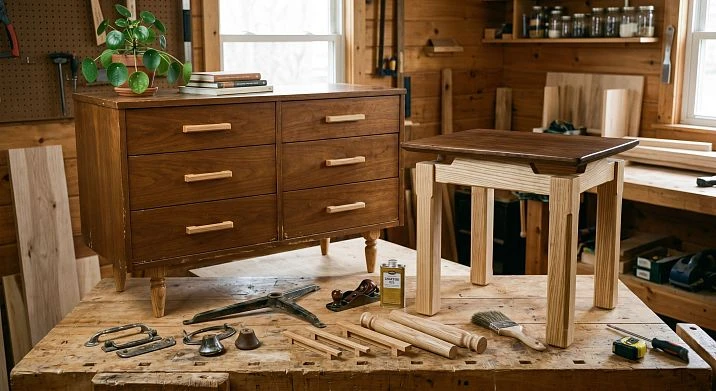
There is a moment familiar to everyone: you look at a dresser, wardrobe, or kitchen set and realize — it's not the same anymore. It's not broken, not worn out, but something is off. The interior has changed, your taste has evolved, but the furniture remains the same. Buying everything new is expensive and troublesome. But replacing furniture handles, installing new furniture legs, or choosing the right table underframe is realistic, quick, and significantly cheaper.
When furniture can be updated without full replacement
Full furniture replacement is a radical solution that requires budget, time, and effort. But in most cases, it doesn't come to that. Furniture rarely wears out all at once: more often, the body is intact, the facades are whole, and the problem lies in the details.
The hardware is visually outdated. Plastic handles from the 2000s on a wooden dresser in 2026 create a temporal gap that is physically noticeable. The facades are good, the body is sturdy, but the handles ruin the look. Replacement wooden furniture handles solves the problem in one day without tools or mess.
The furniture looks heavy. A dresser or cabinet without legs sits tightly and heavily on the floor — especially in a modern interior where everything strives for lightness. Add Legs for chests with a height of 80–120 mm — and the body 'lifts,' air appears between the furniture and the floor, and the room immediately feels fresher.
The tabletop exists, but the base does not. A common situation: a wooden slab, a live-edge piece, solid wood — but it's unclear what to place it on. That's exactly why there is Buy a pedestal as a ready-made solution: a stable, stylish base for any tabletop without assembling 'from whatever is available.'
The interior has changed, but the furniture hasn't. You renovated, changed the floor, doors, added new upholstered furniture — but the old wardrobe or dresser from the previous life now stands out. Wooden details — handles, legs, supports — allow you to 'pull' the old furniture into the new context without replacing the body.
A table or chair has lost stability. The legs are loose, one is broken, the height doesn't match the tabletop. The problem is solved by replacement: buy legs for a table from an array with correct dimensions and load characteristics.




Wooden furniture handles: the fastest way to change facades
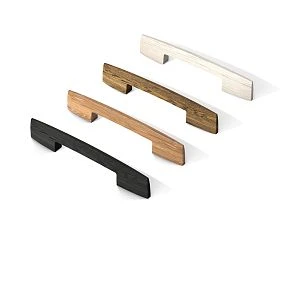
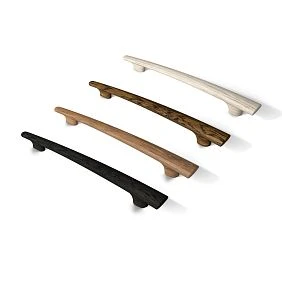
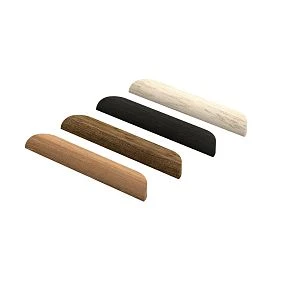
If among all wooden parts you choose the one that gives maximum effect with minimal effort, it's the handle. Replacing handles does not require professional tools, no carpenter is needed, and you don't have to remove the facades. Unscrew the old ones, install the new ones. Thirty minutes — and the furniture is different.
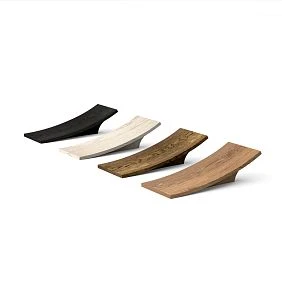
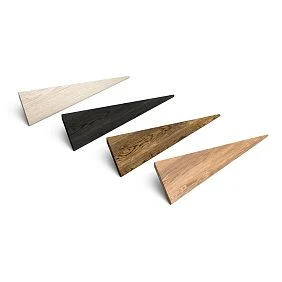
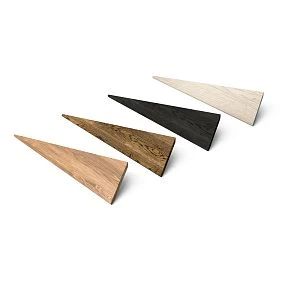
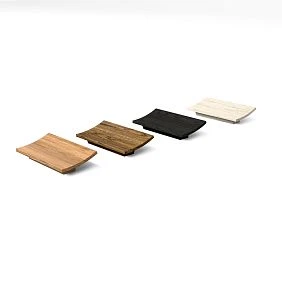
But "just different" is not the goal. The goal is furniture that looks organic in a specific interior. That's why Wooden furniture handle solid wood is the right choice in most cases: a natural material that can be painted any color, tinted to match the facade, or left in its natural shade.
Our factory also produces:
Cabinet handles
A wardrobe is the largest piece of furniture in a bedroom or hallway. Its doors are opened every day, hands get used to the handle — and this is tactile contact that shapes the attitude towards the furniture. An elongated solid wood bracket 120–160 mm long with a center distance of 96–128 mm is the optimal option for a hinged wardrobe. It is comfortable to grip, looks substantial and noble.
Get Consultation
Handles for a chest of drawers and bedside table
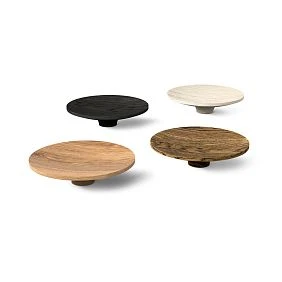
On a chest of drawers, the handles form a row — they become a decorative pattern on the surface. Eight identical handles on the drawer fronts create a rhythm that visually structures the chest of drawers. Wooden furniture handles for a chest of drawers, choose proportionally to the drawer width: about 1/3 of the width is the optimal bracket length. For a bedside table, a compact knob or a short bracket with a center distance of 32–64 mm.
Handles for the kitchen
A kitchen set is the furniture that is used most often. Here, wooden handles work as a warm counterpoint to cold materials: white MDF, metal surfaces, glass, artificial stone. Wood in the kitchen softens the atmosphere, adds life, and makes the space less sterile.
For the kitchen, moisture resistance of the coating is important: oil with hard wax or varnish. The length of handles for wall cabinets is 96–128 mm, for floor cabinets — 128–160 mm. Professional tip: handles for wall cabinets are slightly smaller than for floor cabinets — this maintains the visual proportion of the facades.
Handles for painting
A separate story is handles without coating. These are solid wood blanks that you paint yourself — in the exact color of the facade, in a contrasting accent shade, or with natural oil. This is exactly the option offered by STAVROS: the manufacturer deliberately does not impose a finish coating, giving freedom in decision-making. In Provence — white enamel. In country style — natural oil. In a modern interior — tinting in a gray-beige tone. The same handle, but three completely different looks.
Furniture legs: how to change the height, style, and fit of furniture
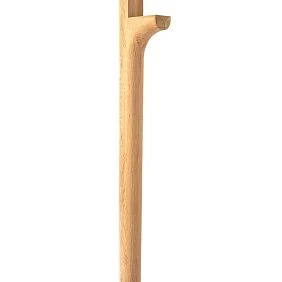
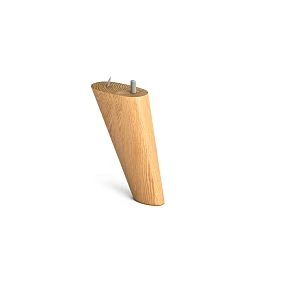
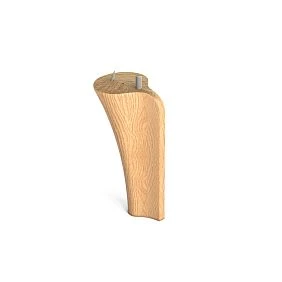
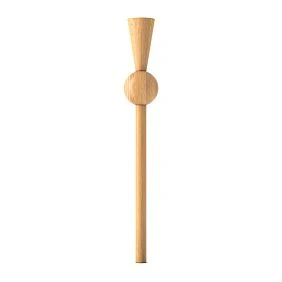
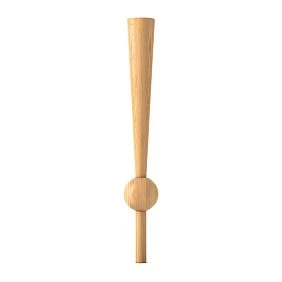
A leg is not just a support. It is a statement of style. A turned leg in the shape of a "wine glass" says: this is classic. A straight conical leg at 45° says: mid-20th century Scandinavian style. A straight square leg without decoration says: minimalism. furniture legs — this is the first stylistic decision that is read when looking at an object.
Replacing legs changes furniture in three dimensions: height (function), visual lightness (aesthetics), and style (belonging to the interior). These are three tasks in one action — and that is why replacing furniture legs often changes furniture more convincingly than repainting the facades.
Legs for a cabinet and chest of drawers
A cabinet on legs is light, modern, "floating." A cabinet without legs is heavy, pressed to the floor. This simple contrast explains why Legs for chests — the most sought-after type of furniture legs for home renovation.
The optimal height for bedside table legs is 80–120 mm. For a TV stand — 60–100 mm. For a chest of drawers in the living room or bedroom — 80–150 mm, depending on the owners' height and comfortable access to the drawers. Material — solid oak or beech, without coating for self-finishing.
Legs for a wardrobe and sofa
A wardrobe on legs is a technique that makes cabinet furniture less monolithic. This is especially important in small rooms: a wardrobe raised 80–100 mm above the floor does not "press" on the space as much as the same wardrobe standing on the floor.
A sofa on wooden legs is a classic image of Scandinavian and neoclassical furniture. Here, the legs not only bear the load but are also a visible element of the structure. Buy legs for furniture for a sofa means choosing a shape that matches its style: turned for classic, straight for modern.
Legs for a coffee table
A coffee table is an item where the legs are "in the leading role": the tabletop is small, and the legs are clearly visible. Legs for coffee tables made of solid wood is a separate story: they must be elegant enough not to overload the lightweight item, but strong enough to withstand the load considering the support area. The optimal height for a coffee table is 35–45 cm.
Legs for a stool
Legs for a stool to buy — a task with an important nuance: the stool experiences bending load when sitting. The legs must have sufficient cross-section and reliable fastening. For a stool 45–50 cm high — legs with a cross-section of at least 30×30 mm or turned ones with a diameter of at least 35 mm at the thinnest point. The thinner the leg, the shorter it should be — a long thin leg bends under the load of a seated person.
Legs for table and chair: beauty and stability at the same time
Table legs: what to look for besides shape
Table legs — this is a loaded structural element. A dining table bears the weight of the tabletop plus the load from plates, utensils, and resting hands. The load can be 50–100 kg or more. That is why when choosing table legs, not only the shape and height are important, but also the type of wood, cross-section, and method of attachment.
For a dining table — legs made of hardwoods: oak or beech. The cross-section of square legs is from 50×50 mm, turned legs — diameter from 50 mm at the thinnest point. Standard height is 710–720 mm for a tabletop thickness of 20–40 mm (final table height is 750–760 mm).
An important point: the legs must come with four or the correct number of fasteners and must allow installation without complex carpentry operations. Ideally, with pre-drilled mounting holes or a bolt-on attachment system.
Legs for a kitchen table
buy legs for a table for the kitchen — means considering another parameter: moisture resistance of the coating. In the kitchen, the table is periodically wiped with a damp cloth, there is steam and splashes nearby. Solid wood legs with the right coating — oil or varnish — are durable. Uncoated legs in the kitchen will darken from moisture and dirt within the first few months.
Chair legs: load in motion
chair legs — the most loaded type. A chair experiences dynamic load: a person sits down abruptly, rocks, leans on the back legs. According to standards, the load on a chair during tests is from 100 to 160 kg with an impact nature. This requires maximum reliability of the connection between the leg and the seat and frame.
When replacing chair legs yourself, it is critical: ensure that the mounting diameter or mounting shape matches the existing sockets in the seat structure. A non-standard socket will require modification — milling or additional fasteners.
| Furniture type | Recommended leg height | Cross-section / diameter | Load |
|---|---|---|---|
| Bedside table | 80–120 mm | 30×30 or turned 35+ mm | Medium |
| Commode | 80–150 mm | 35×35 mm and above | Medium |
| Dining table | 710–720 mm | 50×50 mm and above | High |
| Kitchen chair | 430–450 mm (along the seat) | 35–40 mm turned | Very High |
| Coffee table | 350–450 mm | 30–40 mm | Medium |
| Sofa | 100–180 mm | 40×40 mm and above | High |
| Stool | 430–470 mm | 35×35 mm | High |
Furniture supports: when legs aren't enough
How a support differs from a leg
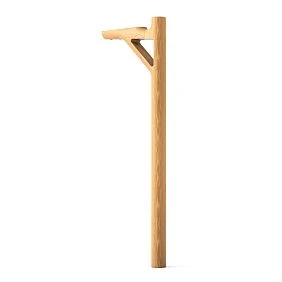
The question may seem scholastic at first glance, but it's practically important. furniture leg — is a load-bearing structural element that takes on significant weight from the furniture and its contents. A leg is a narrower concept, often implying a decorative function under moderate load.
The difference becomes apparent in practice: for a heavy bookcase filled with books or a massive slab dining table, you need furniture leg a support with a large cross-section and a reliable fastening system. For a lightweight bedside table, a decorative leg of medium strength is sufficient.
How to choose a support for heavy furniture
Three parameters matter when choosing Furniture Supports a support for high load:
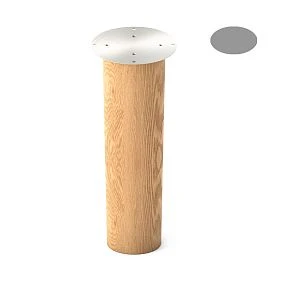
Section. For furniture weighing more than 50 kg with four supports — the cross-section of each support is from 50×50 mm for square ones, from 50 mm in diameter for turned ones. For furniture weighing 100–150 kg — from 60×60 mm and above.
Wood species. Oak — density about 750 kg/m³, high bending strength. Beech — 700 kg/m³, excellent strength. Both options are suitable for load-bearing supports. Pine — significantly softer, not recommended for load-bearing supports under heavy furniture.
Attachment. The support must be securely attached to the furniture body: with a dowel and glue, with a bolted connection and bushing, or on a special plate. Simple placement in a socket without fixation under heavy load is unreliable.
Connection of supports with the overall style
Furniture Supports should work together with handles and facades as a single stylistic signal. A turned support with decoration at the base + a shaped handle = classic. A straight square support + a minimalist button handle = minimalism. A tapered support with an angle + a short elongated handle = Scandinavian style.
A mismatch between the style of handles and the style of supports is one of the most common mistakes when updating furniture independently. A person chooses handles and supports separately, at different times, without a unified concept — and ends up with furniture with a "patchwork" character.
Table base: if there is a tabletop and the base needs to be selected
What is a table base and why is it needed
Buy table base — a request that arises in several typical situations. You bought a beautiful solid wood or slab tabletop — but haven't decided what to put it on. You placed an order with a carpenter who made the slab but not the base. Or you found an old tabletop you want to restore.
A table base is a ready-made table frame without a tabletop. It includes four legs connected by crossbars or a frame, with a system for attaching the tabletop on top. The table base ensures the stability of the entire structure, the correct table height, and load distribution.
How does a table base differ from four separate legs? First of all, in stability: four legs installed directly into the tabletop without cross braces provide significantly less structural rigidity than a frame base. Under lateral load or rocking, a table on separate legs "wanders." A base with crossbars does not.
Table base for a dining table
Countertop substructure For a dining table — a product with high strength requirements. Standard height of the base for a tabletop thickness of 30–40 mm: total table height 750–760 mm minus tabletop thickness = base height 710–730 mm.
The width and length of the base should be smaller than the tabletop size: usually by 100–150 mm on each side. This creates an overhang of the tabletop, which is convenient to grip when pulling out a chair, and visually looks correct.
For massive tabletops made of oak or slab — a base made of the same type of oak. Matching the material of the tabletop and base is a mandatory condition for visual consistency.
Table base for a kitchen table
Buy a pedestal For a kitchen table — a task with an additional strength requirement, since the kitchen table is used intensively: people eat at it, work on it, and lean on it during food preparation. The base connections must be reinforced — with bolt ties or joinery tenons with glue.
For a round kitchen table — a base with a central support or a cross-shaped base. For a rectangular one — a traditional frame of four legs with crossbars.
Underframe for a coffee table
Solid wood furniture frames For coffee tables — this is a lighter structure with a height of 35–45 cm. The load here is significantly lower than for a dining table, so the leg cross-section can be smaller: 35×35 or 40×40 mm. However, aesthetics are especially important here: the coffee table is clearly visible in the living room, and its legs are a decorative element of the space.
How to select wooden parts in one style
This is not just a theoretical section — it is a practical guide for those who have already decided on replacing parts but do not know how to make everything "fit together."
Rule of material consistency
All wooden parts in one piece of furniture must be from the same species. Oak handles + beech legs in different tints create a texture conflict visible in daylight. One species, one finish — a system.
Solid Wood Items STAVROS is primarily made from oak and beech. If you are assembling furniture, choose all parts from one catalog — this guarantees a unified system.
Coordination with floor, doors, and baseboard
Wooden legs and handles do not exist in a vacuum — they are in a room with a wooden floor, doors, and baseboard. Three coordination strategies:
-
Tone-on-tone with the floor — legs and handles in the same color as the flooring. Furniture "grows into" the interior, becoming its organic part.
-
Tone-on-tone with doors — handles match the trim and doors. Creates a continuous wood theme throughout the interior.
-
Contrast accent — dark details on light furniture or vice versa. A deliberate decision that requires consistency: if you choose contrast, it must be everywhere.
Style of details and style of furniture
This seems obvious, but in practice it is constantly violated. Classic Furniture requires turned legs with profile decor and shaped handles. Modern Furniture — straight legs and laconic handles without ornament. Mixing is not recommended without a clear design rationale.
A good test: take a photo of the furniture and mentally 'try on' the selected details. If the detail looks like it belongs, it's the right choice. If the detail seems random, look for another shape.
Furniture update scenarios: specific solutions
Update a dresser
An old dresser with heavy plastic handles and no legs is a classic candidate for an update. Scenario: remove old handles, screw on Wooden furniture handles — brackets with a center distance of 96 mm or buttons, depending on the width of the drawers. Add furniture legs height 100–120 mm — four pieces at the corners. Tint everything in one color.
Result: the same dresser, but with air under the body, with a living wooden detail on the facades, tied to the overall wooden theme of the room. The cost of the update is several times less than a new dresser.
Update a wardrobe
A wardrobe in the hallway or bedroom — replacing handles and, if necessary, adding legs. The main task: to tie the wardrobe to the doors and baseboard. If the doors are dark, the handles are dark. If the doors are light, painted white, the handles are in the same white color or neutral natural wood.
Update the kitchen
The kitchen is a space where changing handles gives the maximum psychological effect. The entire set is the same, but wooden kitchen handles they completely change its character. A white set + natural wooden handles = Scandinavian kitchen. A gray set + dark wooden handles = modern kitchen with character. A beige set + handles in "cappuccino" tone = Provence.
Assemble a table from a tabletop
You bought a slab or ordered a solid wood tabletop — and the question of the base arose. Two ways: buy wooden table base a ready-made frame — fast, no assembly required, stable. Or buy legs for a table four pieces and install them directly into the tabletop — cheaper, but requires careful installation and does not provide the same rigidity as a frame underframe.
Update a cabinet or chair
Cabinet: new legs 100 mm high + new handles. Result — different furniture. Chair: Buy chair legs of suitable diameter and height, install with glue and bolts into standard sockets. If the sockets are damaged, bore them out to the next standard diameter and use a larger cross-section leg.
Mistakes when choosing wooden parts for furniture
Handles were purchased without checking the center-to-center distance. Center distance 96 mm instead of the required 64 mm — and the handle does not fit the old holes. You will have to drill new ones or change the handles.
Legs were chosen only by shape, without considering the load. A thin decorative leg 25×25 mm under a heavy cabinet is an accident in slow motion. The load is distributed to the fasteners, and they begin to fail.
Table height was not checked. Tabletop 30 mm + legs 710 mm = table 740 mm — below the ergonomic standard. Before purchasing legs or an underframe, calculate the final height considering the tabletop thickness.
Different styles of handles and legs. Carved classic legs + modern minimalist handles = visual conflict. Update furniture within a single style.
The color of the parts is not coordinated with the floor. Legs in a warm oak tone on a cold gray-white floor — dissonance. Check the tone of the parts next to real samples of the floor and doors.
The underframe does not match the shape of the tabletop. A rectangular underframe under a round tabletop is technically possible but aesthetically awkward: the corners of the underframe protrude under the round slab. For a round tabletop, use a cross-shaped or central base.
Parts were purchased only from photos. Size is the only protection from disappointment. Photos do not convey the real scale. Always check the length, cross-section, height, center-to-center distance before ordering.
Three or four different wood shades are mixed. Oak legs + beech handles without tinting + dark walnut baseboard + light ash doors — this is not an interior, but a sample warehouse. One tone for all wood in one room.
Where to buy wooden handles, legs, supports and table bases
If the goal is to update furniture without replacement using wooden parts, it is most convenient to work with a catalog where handles, legs, supports and table bases are made from one material and available in a unified stylistic key.
The STAVROS catalog offers a full range of wooden parts for furniture renovation:
-
wooden handles from solid wood — elongated brackets, knobs, shaped forms, without coating for self-finishing;
-
furniture legs without coating — turned, straight, tapered, in several heights and cross-sections;
-
Furniture Supports made of solid oak — for heavy furniture and load-bearing structures;
-
table bases from solid wood — ready-made bases for tabletops of various sizes.
All solid wood products are supplied without coating — for self-finishing to match a specific interior. It is possible to select a set of parts by style, size and load characteristics. Contact us to confirm shipping to your destination., pickup from Moscow and St. Petersburg.
FAQ: Answers to Key Questions
What is easier to replace in old furniture: handles or legs?
Handles are simpler and faster. Replacement requires no tools more complex than a Phillips screwdriver and takes 20–30 minutes. Replacing legs requires turning the furniture over and often drilling new holes. But in terms of visual effect, both replacements are equivalent.
How to know which furniture legs will fit a cabinet or dresser?
Measure the distance from the bottom of the body to the floor that suits you — that's the required leg height. Check the weight of the furniture and its contents — that's the required load category. Decide on the style — and choose furniture legs from the corresponding category.
Can wooden handles be painted to match the facade color?
Yes. handles without coating Solid wood accepts any finish coating: enamel, oil, tinting, wax. You can match the exact color to a facade sample.
How is a furniture support different from a leg?
A leg is a broader concept, often implying a decorative function. furniture leg is a load-bearing element designed for high load. The difference lies in cross-section, wood species, mounting type, and load characteristics.
What to choose for a tabletop: legs or an underframe?
For lightweight tabletops (up to 20 kg) and light loads — four separate legs. For massive tabletops made of slab or glued panel — Buy table base as a single rigid frame. The underframe provides better stability and durability of connections.
Which legs to choose for a chair or stool?
Made of hardwoods (oak, beech). Cross-section — at least 35 mm in minimum diameter or cross-section. Height — for a standard seat of 45–50 cm. Buy chair legs taking into account the method of attachment to the frame — make sure the mounting size matches.
How to combine wooden handles and legs in one interior?
One species, one coating tone, one style of shape. Everything else — coordination with the floor, doors, and baseboard. By choosing from one catalog Solid Wood Items, you automatically guarantee material consistency.
Where to buy wooden parts for furniture renovation?
In the STAVROS catalog: Furniture Handles, Furniture legs, Furniture Supports и Aprons made of solid wood — all in one place, from one material, in an unpainted form for self-finishing.
About the Company
STAVROS is a Russian manufacturer of wooden furniture components and decor from solid oak and beech. Full production cycle, wide range of products: furniture handles, legs, supports, underframes, frames, moldings, cornices, baseboards, slats, beams, and decorative elements. All products are supplied unpainted for self-finishing. Custom orders by parameters. Contact us to confirm shipping to your destination., pickup from Moscow and St. Petersburg. Special conditions for furniture manufacturers, designers, and construction companies.