












































































Article Contents:
- Introduction: The Significance of Framing
- Psychology of Framing Perception
- Historical Evolution of Framing
- Functional significance
- Creating Visual Hierarchy
- Linking Space
- Moldings for Wall Painting
- Molding Typology
- Creating Wall Panels
- Framing of functional elements
- Space zoning
- Correcting Room Proportions
- Color solutions
- Decorative Corner Elements
- Functional significance
- Typology of Corner Elements
- Placement and Composition
- Combining with moldings
- Installation and finishing
- Decorative Accents for the Home
- Wall Outlets and Medallions
- Pilasters and Half Columns
- Consoles and Brackets
- Decorative appliqués
- Uniting Elements into a System
- Conclusion: The Craft of Details

Interior, as an artwork, requires not only an overall concept but also meticulous attention to detail. It is precisely framing — moldings, cornices, door casings, corner elements — that creates the refinement and completeness distinguishing professional design from amateur work.paintable wall moldingsThey become a universal tool for creating architectural structure of space, allowing walls to be divided into panels, forming frames for paintings and mirrors, establishing visual hierarchy.Decorative corner elementsThey transform utilitarian joints into decorative accents, adding elegance to every detail.decorative home ornamentsThey unite all elements into a single composition, where each detail contributes to creating harmony and beauty.


Introduction: The Significance of Framing
Framing in interior design is not merely a decorative technique but a fundamental principle of space organization. Just as a painting requires a frame to stand out on a wall, so too do interior elements require framing to achieve completeness and expressiveness. Moldings, cornices, and door casings create a visual structure that helps the eye orient within space, perceiving it as ordered and harmonious.




Psychology of Framing Perception
The human brain is structured to better perceive structured information. An empty wall without divisions is perceived as an incomplete plane that does not evoke emotional response.paintable wall moldingsThey break this plane into segments, create rhythm, proportions, hierarchy — all of which make space understandable and comfortable for perception.
Studies in spatial psychology show that people feel more comfortable in spaces with clear architectural structure. The presence of moldings, cornices, and baseboards creates visual boundaries that are subconsciously perceived as order, stability, and reliability. In spaces lacking architectural details, people often experience subconscious discomfort and a sense of incompleteness.
Framing also functions as visual anchors — points where attention is fixed.Decorative corner elementsIn corner compositions, moldings become such anchors, attracting the gaze and creating rhythmic structure. Properly placed accents guide the eye through space, creating visual pathways, making the interior interesting to observe.
Our factory also produces:


Historical Evolution of Framing
The art of framing has evolved over millennia. In antiquity, architects used complex systems of profiled beams, cornices, and friezes to create architectural expressiveness. The order system — Doric, Ionic, Corinthian — essentially is a system of framing, where each element has its place and significance.
The Middle Ages added Gothic verticality — pointed arches, ribbed vaults, pinnacles created an upward thrust. The Renaissance revived classical principles, enriching them with a new understanding of proportions and perspective. Baroque and Rococo pushed the art of framing to unprecedented complexity — multi-tiered cornices, broken pediments, volutes and cartouches created lavish ornamentation.
Neoclassicism simplified forms, returning to strict geometry and clear proportions. Modernism reinterpreted framing, creating smooth organic shapes reminiscent of plant tendrils. Art Deco introduced geometric clarity and stepped forms. Each era contributed its own element to the development of framing art.
Modern design uses all this rich historical experience, adapting classical forms to modern materials and technologies.paintable wall moldingsThey reproduce historical profiles with millimeter precision, but are manufactured from modern materials — MDF, polyurethane, composites.
Get Consultation
Functional Value
In addition to their aesthetic role, moldings perform important practical functions.paintable wall moldingsThey conceal joints between different materials — wallpaper and paint, tiles and plaster. They mask wall irregularities, cracks, traces of old fasteners. In old buildings, where perfect surface alignment is impossible, moldings allow creating the impression of flawless finishing.
Cornices cover the junction between wall and ceiling, hiding gaps formed by building settlement. Baseboards protect the lower part of the wall from impacts, abrasion, and dirt. Door casings conceal mounting foam in doorways. Each framing element solves specific technical tasks while simultaneously decorating the interior.
Decorative corner elementsThey simplify the installation of molding compositions. Without them, moldings require precise 45-degree beveling, which demands professional skills and special tools. Corner elements cover joints, turning them into decorative accents.
Creating visual hierarchy
Moldings create visual hierarchy in the interior, highlighting important elements and subordinating secondary ones. A formal living room may have rich framing withdecorative home ornaments— carved rosettes, ornamented cornices, complex molding compositions. A bedroom — more restrained framing with simple profiles. Technical rooms may suffice with minimal baseboards and cornices.
Within the room, hierarchy is also created. An accent wall may have a complex molding composition withcorner decorative elements, while other walls — simple uniform covering. The fireplace area, framed by a rich portal, becomes a compositional center. The TV zone, highlighted by a molding frame, attracts attention.
The size of the framing also creates hierarchy. Wide, heavy cornices emphasize ceiling height in formal rooms. Narrow, minimalist cornices in private rooms create intimacy. Proper use of molding scale — a sign of professional design.
Linking space
Moldings work as visual glue, connecting various interior elements into a unified whole. Repeating profileof paintable wall moldingscreates visual rhythm, perceived as harmony. Cornices, casings, baseboards, painted in one color, form a unified system of white or colored accents.
In galleries of rooms, repeating framing of doorways creates rhythmic structure, guiding the viewer’s gaze through space. A unified molding system on walls of all rooms links disparate rooms into a cohesive interior. Even if rooms are painted in different colors, uniform framing creates stylistic unity.
decorative home ornamentsThey are distributed in space to create visual connections. A ceiling rose in the living room may repeat the motif of a rose in the dining room, but in a different scale. Corner molding elements may vary one ornament, creating thematic unity.
Moldings on walls for painting
Moldings are a universal designer’s tool, allowing to create architectural structure on flat wall surfaces.paintable wall moldingsThey provide maximum freedom in color selection, allowing to integrate them into any interior palette.
Molding typology
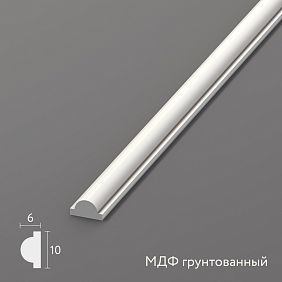
Moldings differ by profile — cross-sectional shape. Simple rectangular moldings with minimal beveling suit modern minimalist interiors. Their simplicity does not overload space, creating clear geometric lines. Width of such moldings is usually 3–8 centimeters, sufficient to create visible structure without bulkiness.
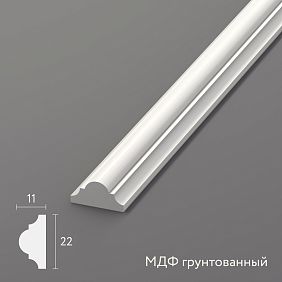
Profiled moldings have complex sections with grooves, rounded edges, and ridges, creating play of light and shadow.paintable wall moldingsWith classic profile, they suit traditional interiors where decorative richness and form complexity are valued. Width may reach 15–20 centimeters to create expressive relief.
Ornamented moldings are decorated with repeating ornament — rows of ovals, dentils, palmettes, plant motifs. Such moldings are characteristic of luxurious classical interiors, where every detail must demonstrate craftsmanship and refinement. Ornament may be fine and frequent or large and sparse, creating various visual effects.
Flexible polyurethane moldings allow creating curved compositions — framing arches, bay windows, round niches. They bend without preheating, taking the required shape. This opens opportunities for complex architectural solutions unattainable with rigid moldings.
Creating wall panels
Main application: creating wall panels. Classic scheme — dividing the wall into three horizontal tiers. Lower tier — panels 90–120 cm high from the floor, middle tier — main wall surface, upper tier — frieze under the ceiling, 30–50 cm high. Each tier is separated by a horizontal molding.of paintable wall moldingsVertical divisions are created within each tier, forming rectangular or square panels. Panel proportions follow the golden ratio or other classical proportions. Vertically oriented panels visually increase room height. Horizontally elongated panels expand the space.
The number of panels depends on the wall size. On a 4-meter-long wall, 3–4 vertical panels are optimally placed. Too fine division creates clutter; too large panels lose elegance. The distance between moldings should be sufficient so that the internal space of each panel is perceived as an independent element.
Placed at the corners of each panel, transforming utilitarian joints into decorative accents. Four identical corner outlets create a symmetrical composition. A more complex option — using different elements in upper and lower corners, creating compositional direction.
Decorative corner elementsUsed to create frames around mirrors, paintings, televisions, and switches. A mirror in a molding frame appears more significant than simply hanging on the wall. Frame size depends on mirror size — for a large mirror 100x150 cm, a molding frame 8–12 cm wide is needed. For a small mirror 60x80 cm, molding 5–7 cm is sufficient.
Framing functional elements
paintable wall moldingsA television framed with molding integrates into a classic interior, not appearing as an alien technical element. The frame is slightly larger than the screen, with a 5–10 cm setback around the perimeter. It is possible to create an imitation of a picture frame with inner and outer molding lines, with a contrasting-colored wall strip between them.
Groups of switches and outlets framed with thin molding transform from technical elements into parts of a decorative system. A small rectangular frame around a group of switches visually organizes them, making them part of the wall’s architectural structure.
Niche areas in walls framed with molding become architectural elements that attract attention. The interior of the niche can be painted in a contrasting color, lighting can be installed, creating an eye-catching accent.
Adding decorative elements at the corners enhances elegance.Decorative corner elementsHelp to zone space without physical partitions. Different wall treatments with molding in different zones visually separate them, creating the impression of separate rooms.
Space Zoning
In open floor planspaintable wall moldingsLiving room zone may have classic wall panels with
, creating grandeur. Dining area — vertical divisions with molding, emphasizing height. Kitchen zone — practical minimalist treatment with simple horizontal moldings. This difference creates visual separation while preserving spatial openness.corner decorative elementsThe height of horizontal moldings also contributes to zoning. In one zone, molding may be placed at 100 cm, in another — 120 cm. This difference is subconsciously perceived, creating the feeling of different spaces.
Can visually alter the perceived proportions of a room. In low rooms, vertically oriented panels create an illusion of greater height. Vertical lines of molding direct the gaze upward, making the ceiling appear higher than it actually is.
Correction of room proportions
paintable wall moldingsIn square rooms, asymmetrical placement of moldings can make proportions more interesting. One wall is divided into three vertical panels, the opposite wall — into two wider ones. This creates dynamism, eliminating the static nature of a square.
In narrow, elongated rooms, horizontal division visually expands the space. Horizontal moldings on long walls create transverse divisions, perceived as increased width. On end short walls, moldings are placed vertically, not emphasizing narrowness.
In rooms with very high ceilings, a horizontal molding at 2.4–2.7 meters visually lowers the ceiling, creating more intimate proportions. The space above the molding is painted in a lighter color or ceiling tone, visually perceived as an upper zone.
. Classic solution — white moldings on colored walls. White color creates a clear panel outline, emphasizes architecture, visually lightens walls. This is a universal solution suitable for any wall color.
Color Solutions
Paintability - the main advantageof paintable wall moldingsCorner decorative elements
Painting moldings in wall tone creates a more restrained effect. Panels are perceived only through molding relief without color contrast. This solution visually expands space, creates a sense of continuous surfaces. Suitable for small rooms where one wants to avoid visual overload.
Contrasting solutions create a dramatic effect. Black moldings on white walls - bold modern solution, emphasizing architectural graphics. Dark gray moldings on light gray walls - softer option. Gold or silver moldings create a luxurious effect in glamorous interiors.
Colored moldings - bold trend.paintable wall moldingsin bright colors - blue on white, pink on gray, emerald on beige - transform classic shapes into modern art objects, creating individuality.
Corners in molding compositions — critical points requiring special attention.
Solve both technical and aesthetic tasks, transforming problematic joints into decorative details.Decorative corner elementsMain technical function
Get Consultation
Functional Value
— simplifying the installation of molding compositions. Traditional method of connecting moldings at corners — beveling at 45 degrees using a miter box or circular saw. This requires high precision — even a one-degree error creates a visible gap. Room corners often do not form exactly 90 degrees, complicating the task.of decorative corner elementsCorner element covers the joint, hiding possible inaccuracies in trimming. Moldings simply connect with the corner element, requiring no precise beveling. This significantly simplifies the work, making it accessible to non-professionals. Time is saved — no multiple fittings and adjustments are needed. Waste is reduced — damaged elements from unsuccessful trimming are avoided.
Second function — creating a decorative accent. The corner of a molding composition naturally attracts the gaze as a point where directions meet.
With ornamentation, this point becomes an elegant detail enriching the composition.Decorative corner elementsThird function — creating rhythmic structure. Four corner elements in a rectangular panel form four rhythmic points organizing the perception of the composition. The gaze moves from one corner to another, covering the entire panel. If multiple panels are in the room, repeating corner elements create a unified rhythm.
Types of corner elements
Differ by shape, size, and ornamentation. Simplest — smooth square or rhombus elements without ornamentation. They create a minimalist accent suitable for minimalist interiors. Size corresponds to molding width — for 8 cm molding, a square element 8x8 cm.
Decorative corner elementsGeometric elements are decorated with regular patterns — concentric circles, squares, rhombuses, stars. Such ornamentation is characteristic of neoclassicism and art deco, where geometric clarity is especially valued. Size may be 1.5–2 times wider than molding width, creating a pronounced accent.
Geometric elements are adorned with regular patterns—concentric circles, squares, rhombuses, stars. Such ornamentation is characteristic of neoclassicism and art deco, where geometric clarity is especially valued. The size can be 1.5–2 times wider than the molding, creating a pronounced accent.
Plant motifs are decorated with stylized leaves, flowers, rosettes. Classical motifs — acanthus leaves, palmettes, roses — are characteristic of traditional interiors. Baroque elements are more ornate with deep relief. Neoclassical elements are restrained with clear symmetry.
Figurative elements have a complex shape — not square, but polygonal, with protrusions and recesses. They create a more complex composition and require more space around them. Size can reach 15–20 centimeters for large moldings in spacious rooms.
Placement and Composition
Standard placement — one element in each corner of a rectangular panel. Four identical elements create a symmetrical composition, calm and orderly. This is a classic solution suitable for most interiors.
Asymmetric placement — different elements in different corners — creates a more dynamic composition. Upper corners may have larger, more ornate elements, lower corners — more restrained. Or left corners — one type of element, right corners — another. This solution requires good compositional sense but creates originality.
Additional elements placed in the middle of the panel’s sides create a more complex composition.Decorative corner elementsIn the corners, they are complemented by rosettes at the center of horizontal and vertical moldings. This creates a nine-point composition — four corners, four midpoints of sides, and the center of the panel.
Concentration of elements — placing several elements close to each other — creates a zone of heightened decoration. Above a fireplace, above a bed headboard, around a mirror, one can create a rich composition ofdecorative home ornaments.
Combination with moldings
Decorative corner elementsThey must harmonize with moldings in style, size, and level of decoration. For simple smooth moldings, suitable are minimalist geometric elements. For richly ornamented moldings — ornate plant elements with deep relief.
The size of the element is proportional to the width of the molding. Rule: the diameter or side of an angular element is 1.5–2 times the width of the molding. For an 8 cm molding, the element is 12–16 cm. Too large an element overwhelms the molding, too small an element gets lost.
The relief of the element should correspond to the relief of the molding. If the molding has a protruding relief of 5–10 mm, the angular element may have a relief of 10–15 mm. A greater relief of the element creates a visual accent, but should not be excessive.
The color of the corners can match the color of the moldings or differ, creating an additional accent. Gilded corner elements on white moldings create a luxurious effect. Patinated elements add noble antiquity. Contrasting colored elements attract attention.
Mounting and Finishing
Installationof decorative corner elementsIt is done with a special adhesive — polymer for polyurethane elements, carpentry PVA for wooden ones. The adhesive is applied to the back of the element in dots or a thin snake-like line. The element is pressed onto the wall in the desired location and held for a minute until the adhesive sets. Excess adhesive is immediately wiped away with a damp sponge.
For heavy wooden elements, additional fixation with finish nails without heads may be required. Nails are driven into inconspicuous places — into ornament recesses, sunk 1–2 mm below the surface. Holes are spackled to match the element’s tone.
After mounting, elements are painted together with moldings. Primer ensures paint adhesion. Acrylic paint is applied in 2–3 layers with a brush, carefully coloring all ornament recesses. Special attention — deep recesses, where paint may accumulate, creating drips.
To create a patina effect, after the base coat, dark paint or wax is applied into recesses and partially wiped off from protruding parts. This creates a play of light and dark tones, emphasizing relief depth and adding a noble antiquity effect.
Decorative Home Ornaments
Besides moldings and corner elements, there are many otherdecorative home ornamentsthat enrich interiors, create individuality, and transform space into a work of art.
Decorative rosettes and medallions
Rosettes — round or oval elements with ornamentation — are used as standalone wall decorations or as central elements in molding compositions. A rosette in the center of a wall panel becomes a compositional focal point, drawing attention. Size should be proportional to the panel — for a 100x150 cm panel, a rosette with a diameter of 25–40 cm is suitable.
Medallions — oval elements — are placed above doorways, above mirrors, in pilasters between windows. Their elongated shape emphasizes horizontal or vertical orientation depending on orientation. A vertically oriented medallion between windows visually increases the height of the pilaster.
Rosette ornamentation is diverse. Classical acanthus leaves, palmettes, roses create traditional decoration. Geometric patterns — concentric circles, stars, meanders — suit neoclassicism. Abstract modern motifs are used in modern interpretations of classicism.
Rosette placement follows compositional laws. Symmetrical placement creates order — two identical rosettes on either side of a fireplace, four rosettes in the corners of a large wall. Asymmetrical — dynamism and modernity. A group of three rosettes of different sizes creates an interesting composition.
Pilasters and half-columns
Pilasters — flat vertical protrusions imitating columns — create vertical accents in interiors. They can frame doorways, highlight a fireplace, structure long walls. A pilaster consists of a base, shaft, and capital, each part should be proportional to the others.
Base — an expanded base 15–30 cm high — creates a visual transition from skirting to the pilaster shaft. Shaft — main part — may be smooth or decorated with fluting. Height usually corresponds to wall height from skirting to cornice. Capital — finishing element 20–40 cm high — has a shape corresponding to the chosen order.
Half-columns — volumetric elements protruding from the wall by half or a third of the diameter — create a more expressive relief. They are used in luxurious interiors where special monumentality is required. The diameter of a half-column is usually 20–40 cm.
decorative home ornamentsIn the form of pilasters and half-columns, they create a classical architectural structure, transforming an ordinary room into a grand space.
Consoles and brackets
Cantilevers are decorative elements that mimic supporting structures, placed under shelves, cornices, beams. They create the illusion that a horizontal element rests on a cantilever, although in reality it is attached to the wall independently. This is purely decorative technique, creating visual logic.
Cantilever shapes are diverse. Classic S-shaped cantilevers with volutes are characteristic of baroque interiors. Simple triangular cantilevers suit more restrained styles. Carved cantilevers with floral motifs create luxury.
Brackets are smaller elements used under small shelves, under cornices, in ceiling compositions. A row of brackets under a cornice creates a characteristic rhythmic structure known in architecture as a modillion cornice.
Decorative appliqués
Appliques are small carved elements used to decorate furniture, doors, wall panels. A carved applique on a cabinet facade transforms simple furniture into a piece of joinery art. Appliques on door panel corners add elegance.
decorative home ornamentsAppliques can have any shape - rosettes, cartouches, heraldic elements, stylized plants. Size is usually small - 5-15 centimeters, allowing placement in various locations without overloading.
Appliques are mounted with glue or small nails, painted in the base tone or contrasting color. Gilded appliques on dark furniture create a luxurious effect. Patinated appliques add antique value.
Combining elements into a system
Alldecorative home ornamentsmust be coordinated with each other, forming a unified system. Ornamental motifs repeat across various elements - a rosette on the ceiling, corner moldings, appliques on furniture may vary within one motif.
Stylistic unity is critically important. All elements must belong to one style or closely related directions. Baroque ornate elements do not combine with minimalist geometric forms. Classical symmetrical forms conflict with asymmetrical modernist ones.
Scale consistency ensures harmony. Large elements - ceiling rosettes, pilasters - set the primary scale. Medium-sized elements -paintable wall moldings- support it. Small elements -Decorative corner elements, appliques - add detail without overloading.
Conclusion: mastery of details
The art of framing is the ability to see beauty in details, understand their role in creating a cohesive space.paintable wall moldingscreate architectural structure, organize space, form visual hierarchy.Decorative corner elementstransform utilitarian joints into refined accents.decorative home ornamentsadd individuality, create richness of visual impressions.
A professional approach to framing requires understanding of proportions, sense of style, knowledge of materials and technologies. Each detail must be in its place, each element the correct size, all together coordinated and harmonious. Neglect of details destroys the impression of even the most expensive finishing, whereas attention to small details transforms a modest interior into a work of art.
Modern materials and technologies make classical beauty accessible. MDF and polyurethane reproduce the most complex historical profiles with perfect accuracy. The ability to paint allows integrating classical forms into any color palette. Ease of installation makes creating refined interiors accessible not only to professionals.
The result of properly executed framing is a space that pleases the eye, creates a sense of completion and harmony. An interior where every detail is thought out, where framing elements do not merely decorate, but create architectural logic of space. A home that becomes a source of daily aesthetic enjoyment.
STAVROS offers a full range of elements for creating perfect framing. The widest assortmentof paintable wall moldingsincludes profiles of all sizes and styles. The collectionof decorative corner elementscovers classical and modern forms. Varietydecorative accentsallows creating unique compositions.
STAVROS's own production guarantees stable product quality, precise dimensions, flawless surface. Modern equipment creates elements with perfect detailing, reproducing historical samples or creating new original forms. Eco-friendly materials ensure health safety.
STAVROS professional consultants help select optimal solutions for a specific project. Calculating required element quantities, recommendations on placement schemes, selecting coordinating details, installation and painting consultations - full support at all project implementation stages.
Flexible pricing policy makes quality decor accessible for projects of any scale. Wholesale discounts for professionals, special offers for retail buyers, individual pricing for exclusive orders - STAVROS ensures that beauty is accessible to everyone.
Create interiors where every detail is perfect, where framing transforms space into a work of art, together with STAVROS - your reliable partner in the world of decorative elements and classical beauty!


