










































































Article Contents:
- Why the material question matters more than it seems at the start
- Gypsum stucco molding: beauty with caveats
- Strengths of gypsum stucco molding
- Limitations of gypsum stucco molding
- Foam plastic stucco molding: budget with consequences
- Strengths of foam plastic stucco molding
- Limitations of foam plastic stucco molding
- Polyurethane stucco molding: a practical balance for those who want results
- What is polyurethane for stucco molding
- Why choose polyurethane stucco molding
- The only conditions for a correct result
- Complete material comparison: objective table
- What to choose for walls: moldings and decorative decor
- What to buy for walls
- Special case: moldings for painting
- What to choose for the ceiling: weight matters
- Polyurethane ceiling system: what's included in the kit
- For which rooms is lightweight ceiling decor especially important
- What to choose for decorative overlays and accent elements
- Where overlay detailing is especially important
- Special topic: stucco for painting — which material to choose
- Purchase navigator: task — material — page
- Soft conclusion: what is most often chosen and why
- FAQ: answers to key questions about stucco materials
- About the Company STAVROS

Imagine: you found the perfect ornament. A photo from the catalog caught your eye — clean relief, beautiful lines, even profile. You've already mentally placed it above the fireplace or around the ceiling perimeter. But then — purchase, delivery, installation. And everything turns out not quite right: too heavy, too fragile, looks too simple in reality, paints poorly, cracked at the joint.
Familiar? This happens when you choose to buy molding based on a picture, without understanding the material.
The material of the stucco matters as much as the shape. On the ceiling, weight is critical. On walls, relief stability during painting. For moldings, geometric precision over long spans. For decorative overlays up close, detailing and the ability to hold thin edges. The same architectural concept in the wrong material is a failure not in design, but in execution.
In this article — an honest, no-frills comparison of three main materials: plaster, foam, and polyurethane. Where each is appropriate, where it works, and where it fails. And how to make a choice you won't have to correct later.




Why the question of material is more important than it seems at the start
When a person starts looking Relief Decoration, they usually first look at the form. This is natural: the eye reacts to the pattern, silhouette, proportion. The ornament on the screen looks the same, no matter what material it is made of. The difference begins where the screen ends and the actual installation begins.
There are five key parameters by which materials fundamentally differ:
-
Weight — especially critical for ceiling elements and large overlays
-
Mechanical strength — for moldings in contact zones
-
Precision and clarity of relief — for decorative overlays in close inspection zones
-
Behavior during painting — uniformity of absorption, surface porosity
-
Ease of installation — requirements for fasteners, need for a specialist
It is along these five axes that each of the three materials should be evaluated. Not abstractly — "beautiful or not" — but specifically: where this material wins, where it loses, for what task it is created.




Plaster stucco: beauty with reservations
Plaster is historically the first material for decorative molding. The great interiors of Europe, the ceremonial halls of imperial palaces, the classic mansions of the 19th century — all of this is plaster stucco. The tradition is deep, authoritative, and unquestionable.
Therefore, one must speak about the limitations of plaster with respect for the material — but one must speak.
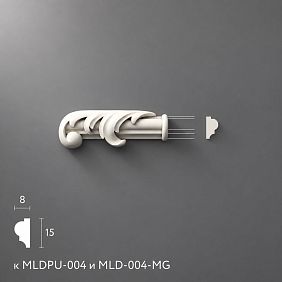
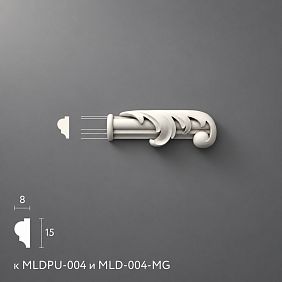
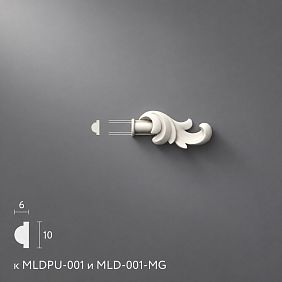
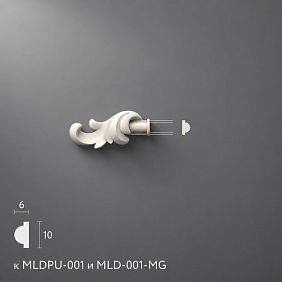
Our factory also produces:
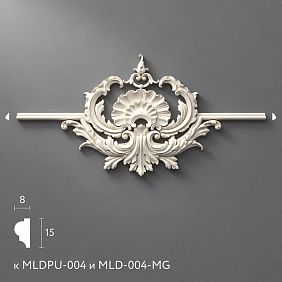
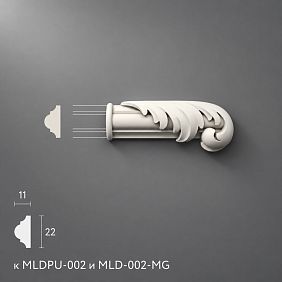
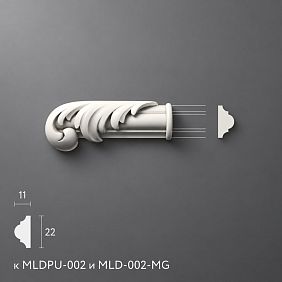


Strengths of plaster stucco
Historical authenticity. If the task is restoration or creating an interior with literal historical accuracy, plaster is irreplaceable. Gypsum molding reproduces classical sculptural plasticity with a surface texture that no other material can imitate. In restoration projects and cultural heritage sites, this is not up for debate.
Heft and "stone-like" character. Plaster is dense, cold to the touch, and heavy. In an interior, this is felt: the element seems "serious," not theatrical. This psychological effect is real and works in interiors that require monumentality.
Possibility of manual finishing. A plaster element can be additionally processed by hand: deepen lines, adjust the ornament, eliminate minor molding defects. For restorers, this is an important advantage.
Get Consultation
Limitations of plaster stucco
Weight. This is the main problem with plaster during installation. A standard decorative plaster cornice with a cross-section of 100×80 mm weighs 8–15 kg per linear meter. A ceiling rosette with a diameter of 50 cm weighs 4–7 kg. A large ornamental overlay weighs 2–5 kg. This means: anchor mounting, metal embedded parts, specialized fasteners, a qualified craftsman.
Self-installation of plaster stucco is a task with serious limitations. On the ceiling, without proper fastening, a heavy element does not hold on glue. This is not an assumption — this is physics.
Brittleness. Plaster is brittle: a sharp blow — a chip. Transporting plaster elements requires careful packaging and special handling. During installation, there is a risk of chipping a corner or edge when cutting. On stairs, in narrow corridors, near doorways — plaster stucco is vulnerable.
Requirements for the craftsman. Properly installing plaster stucco is a professional job. Joints need to be rubbed with a special plaster solution, leveled, and treated. Errors at joints in plaster are noticeable and difficult to fix.
Moisture sensitivity. Plaster is a hydrophilic material. In damp rooms (bathroom, kitchen) or with unstable humidity, it absorbs moisture, changes geometry, and delaminates. Buy plaster stucco for the bathroom or for outdoor use — a mistake.
Summary for plaster: an excellent choice where historical accuracy is needed and there is a professional craftsman. For standard modern renovations, the material is demanding in terms of conditions and specialists.
Foam stucco: budget with consequences
Foam stucco is the most common "folk" decor for ceilings. It is sold in every hardware store, it is light, cheap, and easy to install. So why don't designers like it?
Strengths of foam stucco molding
Minimal weight. Foam is lighter than air — almost. A foam ceiling cornice weighs 100–300 g per linear meter. This means: installation with regular mounting adhesive, without anchors, without a specialist. Anyone can handle it.
Low price. This is an honest advantage. Foam stucco molding — the most affordable solution on the market. For temporary housing, for a summer house, for budget renovations — this is an argument.
Wide availability. Foam cornices are available at any hardware store in any city.
Limitations of foam stucco molding
Weak relief. This is the main issue. Foam is a foamed material with open porosity. Fine details of the ornament become softened, "collapsed" during molding. Sharp edges are unclear. Lines are slightly "floating." From a distance, this is barely noticeable. Up close, it is immediately visible.
After painting, this effect intensifies: paint fills the smallest pores unevenly, creating a nervous, "grainy" surface texture. Monochrome painting in one color — exactly how "expensive" stucco is done — works worse on foam than on dense materials.
Mechanical unreliability. Foam is easily deformed by mechanical impact: a dent from a finger, a scratch from a nail, an accidental hit from a furniture corner — a mark remains. At the baseboard level, near a doorway, in high-contact areas, foam stucco molding "lives" less than desired.
Geometry instability. A long linear foam element may have slight warping — a minor deviation from the plane over long spans. This makes it difficult to create smooth molding frames on walls: the molding line "drifts."
"Cheap" effect up close. This is subjective — but important. Foam molding in areas of close inspection (near a mirror, console, headboard, or in the hallway) gives a feeling of "temporary decor." This effect is hard to describe with a formula, but it exists — and guests notice it.
For a kitchen in a rental apartment or a seasonal-use dacha, foam is quite suitable. For permanent housing, formal areas, or a "photo shoot" interior, it's worth considering other options.
Polyurethane molding: a practical balance for those who want results
Now — about the material that occupies the position of optimal choice in most modern renovation tasks. Not because it's "advertising," but because polyurethane has specific physical characteristics that make it the best for most interior and facade scenarios.
polyurethane molding more affordable. Local manufacturers often offer customized solutions and are willing to work with non-standard orders. — this is the main demand today from those who already understand the difference between materials.
What is polyurethane for molding
Extruded and cast polyurethane is a polymer material with a closed-cell structure. It has no open pores on the surface. This fundamentally distinguishes it from foam (open porosity) and from plaster (high water absorption).
The density of polyurethane for interior products is 400–600 kg/m³, for facade products — 550–700 kg/m³. This is about 3–5 times lighter than plaster with comparable strength to relief loads.
Why choose polyurethane molding
Relief precision. Cast polyurethane reproduces the shape of the master model with submillimeter accuracy. Thin lines of ornament, sharp edges of the profile, complex plant relief — everything comes out of the mold clearly. That's why Decorative polyurethane molding it works well in close inspection areas: near a mirror, near a console, in a hallway.
Low weight with high strength. A polyurethane ceiling rosette with a diameter of 50 cm weighs 400–600 g. The same element made of plaster weighs 4–7 kg. A 10-fold difference. Installing a polyurethane rosette requires assembly adhesive, one person, no anchors, no waiting for setting under pressure.
Moisture resistance. The closed cellular structure of polyurethane means it does not absorb moisture. This is critically important for ceiling elements — especially in rooms with air conditioning, where moisture can condense on the surface. For bathrooms, kitchens — polyurethane moldings buy and it can be installed without concerns about durability.
Behavior when painting. The pore-free surface of polyurethane accepts paint evenly. One coat of primer + two coats of acrylic or water-based paint — an ideal monochrome result. No 'graininess', no uneven absorption. This is what creates the effect of a 'stone' relief with monochrome painting.
Elasticity. Polyurethane is an elastic-plastic material. When struck or compressed, it deforms and recovers its shape, rather than cracking like plaster. At the baseboard level, near a doorway, near a molding in an active contact zone — this is practically important.
Ease of trimming. Polyurethane is cut with a regular knife or hacksaw. Angle trimming of molding at 45° is precise and fast. No chips, no dust, as when working with plaster.
Completeness. molded decoration made of polyurethane is produced in system lines: cornice + molding + corner element + central rosette — all in one style, in coordinated profiles. This allows you to assemble a set for a specific task without stylistic inconsistency.
The only conditions for a correct result
Polyurethane requires two things:
-
The right adhesive. The mounting compound must be compatible with polyurethane — it should not dissolve the material and must ensure a reliable bond. MS polymer-based adhesive or a specialized mounting adhesive for polyurethane is the optimal choice.
-
The right painting. Without painting, polyurethane is not a final solution in the interior. Unpainted white polyurethane looks cheaper than its potential. After painting — a transformation: a cheap element and an expensive one look equally good because the difference is in the relief, not the material.
buy polyurethane molding without considering painting — an incomplete solution.
Complete material comparison: objective table
| Parameter | Gypsum | Polystyrene | Polyurethane |
|---|---|---|---|
| Weight per linear meter of cornice | 8–15 kg | 0.1–0.3 kg | 0.3–1.5 kg |
| Relief accuracy | High | Medium | High |
| Installation | Anchors + master | Adhesive, independently | Adhesive, independently |
| Moisture resistance | Low | Medium | High |
| Behavior upon impact | Chipping | Dent | Elastic deformation |
| Painting | Requires primer | Complex, porosity | Uniform, no pores |
| Trimming | Difficult, dust | Simple | Simple, precise |
| Application near water | No | Caution | Yes |
| Application on facades | Special compounds | No | Yes (facade PU) |
| Historical accuracy | Yes | No | Close, but not authentic |
| Price | High | Low | Medium to high |
The conclusion from the table is simple: each material has its own niche. But the niche of polyurethane is the widest for modern renovation.
What to choose for walls: moldings and decorative decor
Wall stucco has special requirements. First, wall elements are in the active viewing zone — closer to the eyes than ceiling ones. The quality of the relief is much more noticeable here. Second, wall moldings and frames are about geometry: straight lines, correct angles, even spans. Any warping or unclear profile is immediately noticeable.
Third, wall elements are in the contact zone. Baseboards, moldings near doorways, architraves — all of these are periodically bumped, rubbed, or accidentally hit. Fragile material is not the best choice here.
Polyurethane is optimal for all three parameters.
What to buy for walls
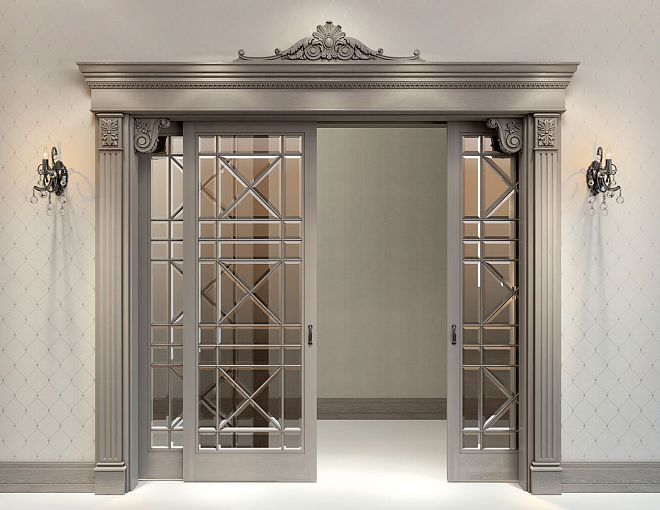
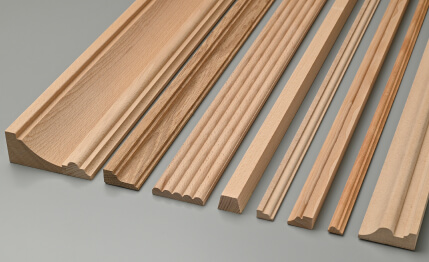
Moldings made of polyurethane — the basis of wall decor. These are horizontal and vertical profiles for creating frames, belts, dividers, and architraves. The profile maintains geometry over long spans — up to 2.5–3 m without sagging or warping.
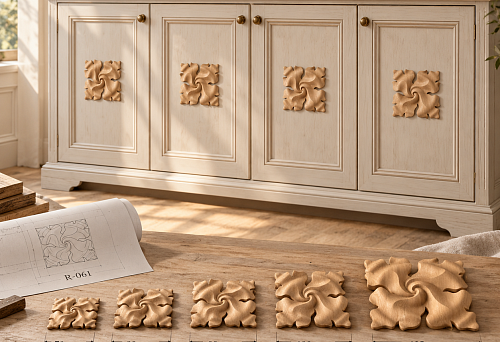
Decorative stucco — overlays in the central areas of frames, above doorways, near mirrors, and near the fireplace. These are accents that "enliven" the molding geometry.
Polyurethane baseboards are the lower horizontal element that completes the wall system. They match the style of moldings.
buy polyurethane moldings for walls is to purchase horizontal profiles (for belts and frames), vertical profiles (for trims and dividers), and corner elements for junction points.
Special case: moldings for painting
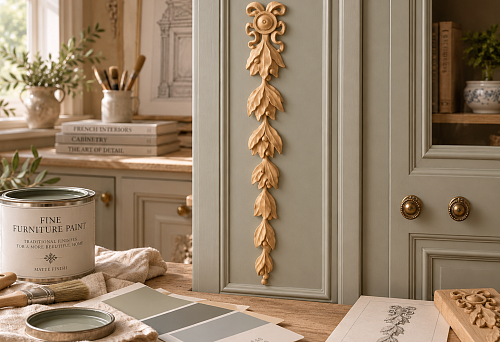
If wall moldings are to be painted the color of the wall (monochrome scheme), polyurethane is the only choice. Gypsum molding sometimes gives unevenness in porous areas when painted monochrome. Foam molding gives a grainy texture. Buy polyurethane moldings and paint it the same color as the wall — that is the effect of a "sculptural wall" that creates the feeling of an expensive interior.
What to choose for the ceiling: weight matters
On the ceiling, the main issue is weight. A heavy element requires reliable fastening: anchors into the ceiling, embedded parts, special adhesive with a long setting time. A light element is attached with mounting adhesive — reliably, quickly, without drilling the ceiling.
ceiling molding Polyurethane can be installed independently — this is a key practical advantage. A rosette, cornice, molding frames, corner elements — all of this is installed by one person with minimal tools.
Ceiling system made of polyurethane: what's included in the kit
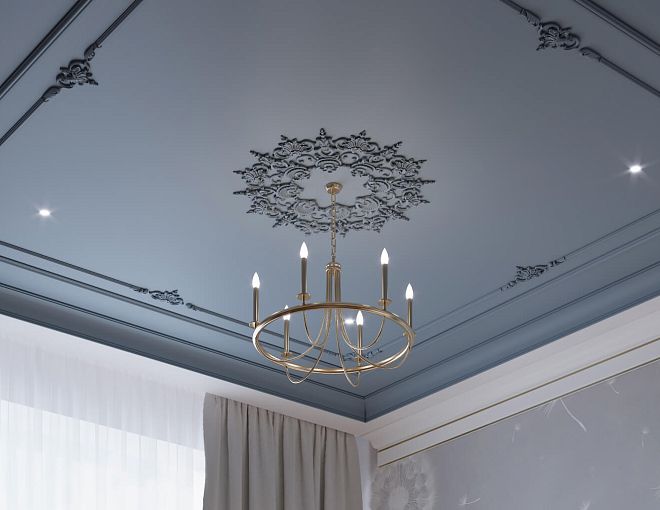
A professional approach to ceiling decor is not a single rosette, but a system. Cornice around the perimeter + molding contour + corner overlays + central element for the chandelier = architectural ceiling zone.
STAVROS offers Buy ceiling stucco molding The ready-made sets of the CPU-P series: six sets with varying decorative richness, designed for a 3200×3200 mm area. Each set is designed as a single system: the scale of the cornice, the profile of the moldings, the proportions of the overlays, the central element — everything is coordinated by a professional designer. There is no need to select elements individually and risk mismatched scales.
The cornice of the series — A130V1 (100×83 mm, HIWOOD polystyrene with a density of 680 kg/m³) — has a groove behind the rear edge for an LED strip. Contour lighting at 2700K behind the cornice creates an evening light effect, where ornamental overlays cast volumetric shadows.
Buy ceiling molding as a ready-made set — means getting a proven system, not a collection of random parts.
For which rooms is the lightness of ceiling decor especially important
Bedroom. The heaviest elements are mounted above the bed — a socket for a chandelier, a central decorative contour. If the ceiling is drywall with an insufficient number of profiles under the installation point, a heavy plaster element creates a real risk. A polyurethane element weighing 400–600 g is safe for any drywall ceiling.
Children's room. Here, the lightness of the decor is a matter of safety, not just ease of installation.
Living room with a stretch ceiling. Many modern interiors have a stretch ceiling on part of the surface. The decor in the area adjacent to the stretch ceiling is mounted on the main ceiling — and here the lightness of the elements is critical.
What to choose for decorative overlays and accent elements
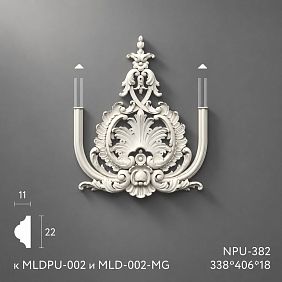
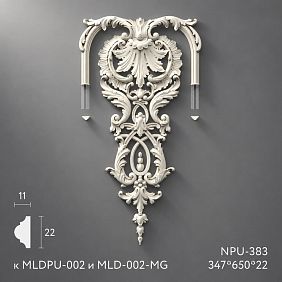
Relief Decoration — overlays, medallions, cartouches, rosettes, ornamental inserts — these are what are seen up close. It is these elements that "hold" the reputation of the entire interior decor. A cheap-looking overlay near a mirror in the hallway is the first impression of the entire home.
For decorative overlays, detailing is critical. Polyurethane works best here:
-
Thin leaves of the ornament do not "sag" like in foam plastic
-
Sharp edges of the petals do not "soften" during molding
-
Complex relief with deep undercuts is reproduced accurately
Buy Molded Decoration made of polyurethane for accent zones — it's an investment in the place that everyone sees.
Where detailing of overlays is especially important
Hall. The first zone that the guest sees. An overlay near the mirror, a decorative element above the console, an ornament near the lamp — all of this is in the area of active inspection from a distance of 50–100 cm.
Mirrors. The frame of a mirror in the bedroom or bathroom is an element that is examined daily. Here, the detailing of the relief works constantly.
Fireplace portal. The gaze lingers for hours above the mantelpiece. Buy Moldings for a fireplace portal — means providing a detailed ornament where it will always be examined from close range.
Headboard. The decorative element above the bed is the first thing you see when you open your eyes. And the last — before sleep.
Special topic: stucco for painting — which material to choose
One of the most popular search queries is "stucco for painting — what to choose." This is an important practical task: the interior is designed in a monochrome style, all stucco is painted in the color of the wall or ceiling, and the result should look like a "sculptural surface" rather than "glued white details."
For monochrome painting, the most important parameter is the uniformity of paint acceptance. This is a direct consequence of the material's surface structure.
Gypsum: high water absorption. The paint is absorbed unevenly — deeper areas of the ornament "drink" paint differently than protruding planes. Result: sometimes 3–4 coats are needed to achieve an even color.
Polystyrene foam: open porosity. The paint covers the surface with "graininess" — small pores create a texture noticeable up close. Not the best choice for monochrome painting.
Polyurethane: closed cell structure, no pores. One coat of primer (for adhesion) + two coats of paint — perfectly smooth, monochrome result. That is why Buy decorative stucco from polyurethane and properly painted — this is an "expensive" result, achievable without expensive material.
Purchase navigator: task — material — page
| Task | Best material | What to buy |
|---|---|---|
| Wall moldings | Polyurethane | Moldings made of polyurethane |
| Ceiling cornice + rosette | Polyurethane / HIWOOD | Ceiling molding |
| Decorative overlays | Polyurethane | Relief Decoration |
| Restoration / historical accuracy | Plaster | Upon request to the master |
| Temporary / budget decor | Polystyrene foam | Construction stores |
| Complete interior set | Polyurethane | Moldings |
Soft conclusion: what is most often chosen and why
Plaster is appropriate where historical accuracy is needed and there is a professional craftsman ready for anchor mounting and precise grouting of joints. This is a narrow but important niche.
Polystyrene foam is suitable for the most budget-friendly tasks — temporary housing, a summer house, a quick decorative solution where the interior's lifespan is measured in a few years.
But if you need a beautiful interior result without the heavy installation of plaster and without the 'cheap decor' effect of polystyrene foam — polyurethane moldings buy remains the most logical choice for most modern interior tasks. Moldings, Ceiling molding, Decorative Inserts, rosettes — the entire assortment covers the needs of any interior, from a city apartment to a country house.
FAQ: answers to the main questions about stucco materials
Which is better: gypsum or polyurethane stucco?
It depends on the task. Gypsum stucco is for restoration projects, historical interiors, and tasks requiring literal authenticity. It requires a skilled craftsman and anchor installation. buy polyurethane molding — for most modern renovations: 10 times lighter than gypsum, moisture-resistant, installed without anchors, provides precise relief with monochrome painting.
Can gypsum stucco be replaced with polyurethane?
Yes, in most interior scenarios. The exception is restoration projects with requirements for historical authenticity. In ordinary renovations, polyurethane provides a comparable visual result with significantly easier installation.
Why can foam stucco look cheap?
Foam has open porosity: paint absorbs with a "grainy" texture, fine details of the ornament "collapse" during molding. This is noticeable up close. Additionally, the mechanical unreliability of foam — dents from contact — spoils the appearance over time.
Which stucco molding should I buy for the ceiling?
For the ceiling, the optimal choice is Ceiling molding polyurethane: its low weight eliminates installation risks, moisture resistance is important for air-conditioned rooms, and monochrome painting provides a "stone" relief effect. STAVROS offers ready-made sets of the CPU-P series — a system of cornice + molding + overlays + central element in one coordinated solution.
What should I buy together with polyurethane stucco molding?
Moldings made of polyurethane, Relief Decoration for accent zones, decorative molding for overlays, MS polymer-based construction adhesive, primer, and acrylic paint. For ceiling systems — Buy ceiling molding included with the cornice and rosette.
Which stucco molding looks more expensive after painting?
Polyurethane: its closed pores provide a perfectly smooth monochrome surface without textural artifacts. When properly painted to match the wall or ceiling color, polyurethane molding and overlay look like "sculptural relief" rather than a "glued-on decoration."
About the company STAVROS
The entire range for creating an architectural interior — molding, Moldings made of polyurethane, decorative molding, ceiling molding и Relief Decoration in coordinated styles and proportions — is offered by STAVROS.
STAVROS is a manufacturer and supplier of products made from extruded and cast polyurethane, HIWOOD polystyrene, and decorative elements for interiors and facades. STAVROS products are available as ready-made kits for ceiling systems, individual moldings, cornices, baseboards, decorative overlays, and facade decor. Delivery across all of Russia, pickup from showrooms in Moscow and St. Petersburg.
Buy molding at STAVROS means getting a material where not only the ornament but also the physics is correctly chosen.