Article Contents:
- New philosophy of living space: the living room as a personality manifesto
- Death of universality
- Multi-scenario usage
- Trend one: biophilic maximalism
- Nature enters the home
- Organic forms versus right angles
- Color palette of living nature
- Trend two: neoclassicism with digital accent
- Classicism as a platform for experiments
- Architectural decor as sculpture
- Symmetry plus chaos
- Trend three: brutal minimalism with delicate decor
- Power of simplicity
- Spot application of decor
- Materiality and Tactility
- Scenario one: "Urban Estate"
- Concept
- Furniture solution
- Relief decoration
- Color scheme and materials
- Scenario two: "Loft with History"
- Concept
- Furniture solution
- Relief decoration
- Color scheme and materials
- Scenario three: "Scandinavian Serenity with Baroque Accent"
- Concept
- Furniture solution
- Relief decoration
- Color scheme and materials
- Scenario four: "Futuristic Classicism"
- Concept
- Furniture solution
- Relief decoration
- Color scheme and materials
- Practical aspects of scenario implementation
- Professional Assistance
- Working with space
- Style combination
- Lighting as a transformation tool
- Material selection: investment in quality
- Furniture: solid wood versus composites
- Moldings: plaster, polyurethane or wood
- Textiles: natural fabrics make a comeback
- Psychology of color in the 2026 living room
- Warm shades for intimacy
- Cool tones for energy
- Achromatic palette for versatility
- Living room technologies in 2026
- Smart home as standard
- Ecology and energy efficiency
- Mistakes in interior creation: what to avoid
- Following trends without considering personality
- Ignoring scale
- Saving on quality of key elements
- Lack of individuality
- Popular Questions and Answers
- How to understand which design scenario suits me?
- Can molding be used in modern interiors?
- How much does implementing a custom living room interior cost?
- How to combine antique furniture with modern?
- Is a designer needed to create a custom interior?
- How to care for decorative molding?
- What molding colors are trending in 2026?
- Can molding be installed independently?
- How often should a living room interior be updated?
- What plants are suitable for living rooms in 2026?
- Conclusion: creating the space of the future
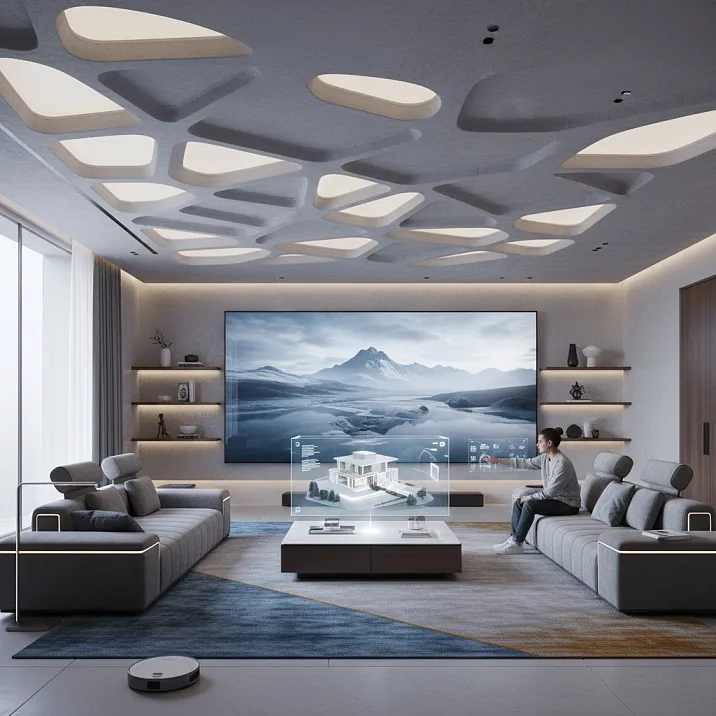
What will define the aesthetics of living spaces in a year? Where is the world of interior design heading? What ideas will captivate the minds of architects and homeowners? 2026 is approaching rapidly, bringing a transformation in perceptions of beauty, comfort, and functionality of the living room—the central space of any home.
furniture design solutionsIn the near future, they will become a symbiosis of technology and emotional depth. We observe a remarkable paradox: the faster digital technologies develop, the stronger the human desire for tactility, naturalness, and craftsmanship.designer moldingsIs experiencing a renaissance, but no longer as an attribute exclusive to classical interiors, but as a universal tool for creating spatial dramaturgy in any style.




New philosophy of living space: the living room as a manifesto of personality




The death of universality
Forget the concept of 'beautiful for everyone.' 2026 will finally bury the idea of a universal interior that could suit anyone. The living room ceases to be just a functional space for entertaining guests and family leisure—it becomes a declaration of values, a visualization of the owner's inner world.
Beautiful moldings on wallsIs no longer perceived as an attribute of any specific style. Architectural decor is gaining new life: it is used to create emotional accents, for space zoning, for managing the perception of room scale. Molding on a wall in a minimalist loft? Easily! The main thing is concept and boldness.
Our factory also produces:


Multi-scenario usage
The living room of 2026 is a transformer. In the morning, it's a home office; during the day, a play area for children; in the evening, a cinema; on weekends, a space for entertaining friends. Such multifunctionality requires a new approach to furnishing.Furniture must be mobileTransformable, yet maintain aesthetic value in any configuration.
Get Consultation
Trend one: biophilic maximalism
Nature enters the home
The main trend of 2026 is total biophilia. This is not just potted houseplants. It's a philosophy of integrating natural forms, materials, and textures into the very fabric of the interior.furniture design solutionsmade from solid wood with an emphasized natural, untreated texture become central elements of the composition.
Imagine: a living room where a massive coffee table appears to be carved from a single piece of wood, preserving its natural curves and cracks. Around it—a sofa upholstered in moss-colored fabric, rattan armchairs. And on all of this—designer moldingswith plant patterns, but not traditional Empire-style, rather stylized, with large, almost grotesque leaves and flowers.
Organic forms versus right angles
Rectangles and squares are losing ground. Furniture acquires soft, flowing lines. A sofa has no clear boundaries—it seems to grow from the floor. An armchair resembles a cocoon or a nest. A coffee table mimics the shape of a water puddle or a cloud.
Beautiful moldings on wallssupports this plasticity. Moldings cease to be straight—they curve, creating wave-like compositions. Cornices resemble vines. Ceiling rosettes imitate blooming flowers. All this creates a feeling that you are not in an urban space, but in a futuristic forest.
The color palette of living nature
Shades of earth, water, and plants dominate. Terracotta, deep green, indigo blue, ochre-yellow, beige-gray. These colors are not just present in upholstery or wall paint—they manifest in the material itself. Wood is tinted with natural oils that emphasize its grain. Moldings are painted in complex, multi-layered shades with patination and a weathered effect.
Trend two: neoclassicism with a digital accent
Classicism as a platform for experimentation
Classical forms are not disappearing, but they are being radically reinterpreted.Classic Furnitureof 2026 retains recognizable silhouettes—fluted legs, curved backs, carved decor—but is executed in unexpected materials and colors. Or vice versa: traditional materials, but radically simplified forms.
A Chesterfield sofa might be upholstered in rose gold metallic leather. A Louis XVI-style console—painted in graphite black. A throne chair—upholstered in techno-fabric with a holographic effect. This is provocation, a dialogue of eras, irony and admiration simultaneously.
Architectural decor as sculpture
designer moldingsbecomes an art object. It no longer modestly frames the space—it captures it, becomes the main hero of the interior. A huge molded composition can occupy an entire wall, turning into a three-dimensional painting. A ceiling rosette expands to the scale of a panel, from which rays of moldings radiate, creating a complex geometric structure.
At the same time, the manufacturing technology can be ultra-modern. Moldings are created using 3D printing based on custom designs, but imitate classic handcraft. Or vice versa—traditional plaster moldings, but enhanced with integrated LED lighting that creates fantastic chiaroscuro effects.
Symmetry plus chaos
A classic interior is built on symmetry. The neoclassicism of 2026 plays with this principle. One half of the living room might be perfectly symmetrical—two identical armchairs flanking a fireplace, symmetrically placed light fixtures, a mirrored composition of moldings on the walls. But the second half is deliberately asymmetrical—chaotically arranged furniture, an abstract composition of molded elements, asymmetrical lighting.
Trend three: brutal minimalism with delicate decor
The power of simplicity
A paradoxical combination: rough concrete surfaces, untreated brick, metal structures—and elegant carved moldings. It is precisely the contrast that creates the magic.Beautiful moldings on wallsmade of white plaster against a backdrop of gray concrete looks like a jewel in a rough setting.
Furniture in such an interior is extremely laconic. A monolithic sofa without visible legs, as if carved from a single block. A coffee table—a glass top on an industrial base of black metal. A shelving unit—a simple system of metal shelves. But amidst this austerity—one armchair, luxurious, carved, in the Baroque spirit, upholstered in teal-colored velvet.
Targeted application of decor
In such an interior, every decorative element must be impeccable, because there are few of them and they are on display.designer moldingsis used sparingly—perhaps only one wall is decorated with moldings creating a geometric abstraction. Or only the ceiling cornice, but of exceptional beauty and complexity.
A molding can be the only one, but huge, running along the perimeter of the entire room at a height of two meters, visually dividing the wall into zones.Ceiling rosette— the only one, but a meter in diameter, with filigree detailing. Quality over quantity.
Materiality and tactility
In a brutalist interior, the materiality of objects is especially important. Every item must be 'real'. Wooden furniture is made from solid wood, not particleboard. Moldings are plaster or high-quality polyurethane, but with impeccable detailing. Textiles are natural: linen, cotton, wool, leather.
Contrast of textures creates interest: smooth polished concrete and rough untreated brick; cold metal and warm wood; hard molding and soft upholstery. The hand should want to touch every surface.
Scenario one: 'Urban Manor'
Concept
An apartment in the center of a metropolis, but with the atmosphere of a country residence. High ceilings, large windows, a light-filled space.furniture design solutionsare based on classical forms, but adapted to modern proportions.
Furniture solution
Sofa — monumental, on curved carved legs, upholstered in linen fabric of a noble gray-beige hue. Two armchairs — with high backs, reminiscent of a throne, but with simplified lines. Coffee table — a massive top of stained oak on carved legs. Console against the wall — made of solid wood with a carved frieze, on it — lamps with shades made of natural silk.
Bookcase — floor-to-ceiling, covering an entire wall, made of dark wood, with glass doors and carved pilasters on the sides. Inside — a collection of books in leather bindings, interspersed with decorative objects: antique clocks, sculptures, vases.
Relief Decoration
Beautiful moldings on wallscreates the structure of the room. A high ceiling cornice with a classical profile — egg and dart, modillion, acanthus. Wall moldings form a paneling system: the lower third of the wall is separated by a horizontal molding, creating a boiserie effect. Inside the panels — wallpaper with a delicate floral pattern or painted in a darker shade.
Doors are framed by architraves with carved corner elements — rosettes or cartouches. Above the door — a pediment or small cornice on brackets, giving the portal a ceremonial feel. A fireplace (real or electric) is framed by a molded portal with columns and a pediment.
On the ceiling — a medium-sized rosette, from which descends an elegant chandelier made of crystal or Murano glass. From the rosette, thin molded garlands radiate to the corners of the room, creating a sense of a floating ceiling.
Color palette and materials
Base — light cream shades of walls, snow-white moldings, floor of light oak or bleached parquet. Accents — deep blue, emerald, burgundy in textiles and decorative cushions. Gold details in lighting fixtures and mirror frames. A must — a large mirror in a carved gilded frame, multiplying space and light.
Textiles — heavy velvet curtains, gathered with tassels; a carpet with a classical pattern, but in muted tones; decorative cushions made of brocade and silk.
Scenario two: 'Loft with a History'
Concept
A space in a former industrial building converted into housing. Open floor plan, high ceilings with visible utilities, brick walls. But not sterile minimalism, rather a space filled with artifacts and stories.designer moldingshere acts as an ironic commentary on the building's industrial past.
Furniture solution
Furniture — a mix of vintage, contemporary design, and custom projects. Sofa — ultra-modern, modular, upholstered in high-tech, stain-resistant fabric. But next to it — an antique armchair, perhaps even a bit worn, with a patina of time, found at a flea market.
Coffee table — made from a solid wood slab on an industrial base of black metal. Dining table (if the living room is combined with a dining area) — a long plank of untreated wood on metal trestle legs. Chairs — mismatched: modern designer plastic, antique wooden, industrial metal.
Shelving unit — an open system of metal pipes and wooden shelves, on which — a chaotic but artistically organized collection of books, records, art objects, plants in industrial planters.
Relief Decoration
white in color, creating a classical panel structure. But next to it — exposed brickwork and open ventilation pipes. The contrast is mesmerizing.cornices and moldingsHere, molding is an intentional oxymoron. On one wall, painted dark gray or deep blue, —
An option is possible where molding is used not on the wall, but as a standalone decorative element. For example, a molded rosette or panel is simply leaned against the wall, like a painting, emphasizing its object-like, sculptural character.
Or a molding cornice can be fragmentary — not running along the entire perimeter, but only on one wall, abruptly ending, like an unfinished project or a ruin. This is a postmodernist play with classical decor, its deconstruction.
Color palette and materials
Base — gray concrete, red brick, black metal, dark wood. Accents — bright, almost acidic: neon pink, electric blue, poisonous yellow — in contemporary art pieces on the walls, in textiles, in furniture elements.
Contrasting white molding on a dark background. Possibly patinating the molding to look like bronze or copper to enhance the industrial effect. Lighting — industrial fixtures, perhaps neon lighting, track systems.
Scenario three: 'Scandinavian Serenity with a Baroque Accent'
Concept
A living room in Scandinavian style — light, spacious, minimalist. But not cold and faceless, rather with unexpected Baroque accents that add drama and individuality.furniture design solutionsThey gravitate towards simplicity, but one or two items break this rule.
Furniture solution
The main furniture is in the spirit of Scandinavian minimalism. The sofa has a laconic form, on thin wooden legs, upholstered in light gray or ash-blue fabric. The chairs have simple lines, possibly iconic designer models like the Egg Chair or Wishbone Chair.
But amidst this restraint is one Baroque armchair, carved, gilded, with blue velvet upholstery. This is not kitsch, it is a deliberate accent that breaks the predictability of the interior and creates a point of emotional tension.
The coffee table is made of light wood, simple in form, but possibly with one curved element referencing classical furniture. The shelving unit is open, made of bleached oak, with books arranged with spatial intervals (not crammed shelves, but free breathing).
Relief Decoration
designer moldingsIt is used in a targeted and unexpected way. Perhaps it is only one wall, where instead of the usual Scandinavian white paint, there is a complex composition of moldings creating a Baroque panel system. The moldings are painted the same color as the wall (for example, deep gray-blue), but a shade lighter, creating an exquisite tonal relief.
Or the ceiling is strictly white, but with a Baroque rosette in the center, from which a laconic modern chandelier descends—an interesting clash of eras. The rosette may be the only decorative element in the entire living room, but it sets the tone, creates complexity, and turns the space from simply beautiful to memorable.
An option with a fireplace is possible, framed by a stucco portal of Baroque complexity, while the fireplace itself is modern—a bio-fireplace or a minimalist electric model.
Color palette and materials
The base is white, light gray, beige. The floor is light wood or bleached boards. Accents are muted, complex shades: dusty pink, gray-blue, mint, terracotta. The Baroque armchair can be a bright spot—golden, or upholstered in rich-colored velvet.
Textiles are natural, simple: linen curtains, knitted throws, decorative pillows made of cotton and wool. But there may be one pillow made of luxurious brocade or velvet—again, this contrast of Scandinavian democracy and Baroque luxury.
Scenario four: "Futuristic Classicism"
Concept
An interior where classical forms are reinterpreted through the lens of futurism.Beautiful moldings on wallsIt coexists with LED panels and smart systems. The furniture has recognizable classical silhouettes but is made from unexpected materials and enhanced with technology.
Furniture solution
The sofa is of the classic Chesterfield form but upholstered in metallic eco-leather in a dusty silver color. The tufting is done so that the buttons are illuminated by LEDs, creating a starry sky. The chairs are throne-shaped but made of transparent polycarbonate, like ice sculptures.
The coffee table has a levitation effect: the tabletop made of white marble or artificial stone seems to float above the base thanks to a system of magnets and hidden fastening. The console is mirrored, reflecting the space and multiplying it.
The shelving unit is a classic bookcase but with built-in LED lighting for each shelf, automatic doors that open with a gesture, and a climate control system for book preservation.
Relief Decoration
Stucco in this scenario is technologically advanced. [Moldings and cornices](https://www.stavros.ru/products/izdelhave classical profiles, but an LED strip is built inside, creating soft perimeter lighting on the ceiling. The ceiling rosette is not just decoration but part of a smart home system: it integrates motion sensors, voice control microphones, and a projector for creating visual effects on the ceiling.
A stucco panel on the wall can be made using 3D printing—a classical Baroque ornament but with futuristic detailing, with elements that could not be made by hand due to geometric complexity.
Interactive stucco is possible—panels that respond to touch, changing lighting or even shape (thanks to built-in shape-memory materials).
Color palette and materials
The base is monochrome: white, gray, black. Metallic accents are silver, chrome, titanium. Glass and mirrors are maximally used to multiply light and space.
Color accents are cold and technological: neon blue, purple, emerald, created mainly by LED lighting that can change color depending on mood or time of day.
Textiles are technological: fabrics with a metallic effect, holographic shine, and heat-regulating properties. Projections onto textiles are possible—digital patterns, animated pictures.
Practical aspects of implementing scenarios
Planning and budget
Creating an authorial living room interior requires careful planning. Start by determining the budget and divide it into categories: furniture, finishes, stucco decor, lighting, textiles, decorative elements. Typically, furniture accounts for 40-50% of the budget, finishes (including stucco) 30-35%, and the rest for lighting and decor.
furniture design solutionsCustom orders require time: from project approval to manufacturing and delivery, it can take 2-4 months depending on complexity. Plan ahead.
Working with space
The living room of 2026 requires thoughtful zoning. Even in a small space, several functional zones need to be allocated: a relaxation zone (sofa, armchairs, coffee table), a storage zone (shelving units, dressers), possibly a work zone (if the living room combines office functions).
Stucco decor helps with zoning. Different zones can be highlighted by different characters of stucco or its absence. For example, the relaxation zone can be decorated with moldings creating a panel composition, while the work zone is left laconic.
Style mixing
2026 has finally legitimized eclecticism. It is possible and necessary to mix different styles, but this requires a sense of proportion and artistic taste. The rule: choose one dominant style (60-70% of the interior) and add elements of a contrasting style (30-40%).
If the foundation is minimalism, add a few luxurious Baroque elements. If the foundation is classicism, introduce modern technological accents.designer moldingsIt can be a bridge between eras—classical forms, modern execution.
Lighting as a Transformation Tool
The living room of 2026 is unthinkable without multi-level, scenario-based lighting. Forget about a single chandelier in the center of the room. You need: general diffused lighting, accent lighting (for highlighting art objects, architectural details), local lighting (table lamps, floor lamps), and decorative lighting (highlighting moldings, niches, shelves).
A smart home system allows you to create lighting scenarios for different situations: bright light for cleaning and active tasks, soft diffused light for evening relaxation, colored lighting for parties, and subdued light for watching movies.
Beautiful moldings on wallsis especially expressive with proper lighting. A hidden LED strip behind a cornice creates a floating ceiling effect. Directional spotlights installed in the ceiling highlight the relief of a stucco panel, creating a dramatic play of light and shadow.
Material Selection: An Investment in Quality
Furniture: Solid Wood versus Composites
The trend towards naturalness makes solid wood the undisputed leader. Oak, ash, walnut, beech — these are the species that will dominate in 2026. They are durable, eco-friendly, and have expressive textures. Yes, solid wood furniture is more expensive, but it's an investment for decades.
Composite materials (high-quality MDF, particleboard) are acceptable for case furniture — cabinets, shelves — especially if they are hidden or painted. But for furniture that is visible and frequently used (sofas, armchairs, tables), choose solid wood or quality metal frames.
Molding: Plaster, Polyurethane, or Wood
Each material has its advantages. Plaster molding is traditional, with unparalleled detail and a noble matte surface. Ideal for classic interiors, but requires professional installation, is sensitive to moisture and mechanical damage.
polyurethane moldingsis a modern alternative: lightweight, moisture-resistant, easy to install, and more affordable. Modern technology allows for creating polyurethane decor with detail that rivals plaster. Ideal for high-humidity areas and for DIY installation.
Wooden carved molding is an elite option. Each element is unique, crafted by hand. The warm texture of wood, its tactility, and natural beauty make such decor especially valuable. Suitable for interiors where wood is the dominant material.
Textiles: Natural Fabrics Are Making a Comeback
Synthetics in 2026 are high-tech fabrics for special tasks (water-repellent upholstery, thermal-insulating curtains). But for creating emotional comfort, natural fabrics are irreplaceable: linen, cotton, wool, silk, velvet.
Linen is the main protagonist. Its natural texture, ability to drape, and eco-friendliness make it ideal for curtains, upholstery, and decorative pillows. Velvet is for accents, for creating luxury and depth of color. Wool is for throws and rugs, for tactile warmth.
Psychology of Color in the 2026 Living Room
Warm Shades for Intimacy
If your living room is a place for solitude, relaxation, intimate family evenings, choose a warm palette. Terracotta, ochre, honey, warm gray-beige create a sense of a cocoon, safety, and relaxation.
furniture design solutionsin dark shades of wood — walnut, mahogany, stained oak — enhance the effect. Moldings can be painted not in traditional white, but in cream, ivory, or even the same color as the walls, creating a soft relief without sharp contrast.
Cool Tones for Energy
A living room as a space for activity, socializing, and creativity requires a different palette. Blue stimulates thinking, green refreshes and balances, gray creates a sense of modernity and urbanism.
Furniture can be light, made from bleached or light wood.designer moldingsof white color on cool gray-blue walls creates graphic quality, clarity, and structure in the space.
Achromatic Palette for Versatility
Black, white, gray — colors that never go out of style. They create a neutral background on which any accents look expressive. This is the choice for those who love to change the mood of an interior with textiles and decor, without touching the base.
An achromatic living room withbeautiful wall moldingsof white color is a blank canvas on which you can create any composition. Today, bright pillows and a rug create a boho atmosphere; tomorrow, replace them with monochrome ones — and you get strict minimalism.
Technology in the 2026 Living Room
Smart Home as a Standard
Voice control of lighting, curtains, multimedia. Climate control with automatic temperature and humidity regulation. An acoustic system integrated into the architecture (speakers hidden in moldings or behind wall panels). This is no longer a luxury, but an expected standard for modern housing.
It's important for technology to be invisible. Wires, sockets, and switches should be hidden or minimized. Charging stations for gadgets are integrated into furniture—into the tabletop of a coffee table, into the armrests of a sofa.
Ecology and energy efficiency
2026 is a time of heightened environmental consciousness. Choose furniture made from certified wood from sustainable forests. Give preference to local manufacturers, minimizing the carbon footprint from transportation.
Lighting — only LED, with minimal energy consumption. Natural light regulation systems — smart curtains, blinds that automatically open and close depending on the sun's position, reducing the load on air conditioning in summer and on heating in winter.
Mistakes when creating an interior: what to avoid
Following trends without considering personality
The biggest mistake is creating an interior 'like in a magazine,' without considering your own lifestyle, habits, and preferences. Trends are a source of inspiration, not a guide to action. Your living room should be comfortable for you, not for an abstract design expert.
Ignoring Scale
Bulky furniture in a small room creates a cluttered effect. Small furniture in a large space looks forlorn.designer moldingsshould also match the scale: wide cornices and large rosettes — for high ceilings, delicate moldings — for standard apartments.
Saving on the quality of key elements
Furniture you use daily (sofa, armchairs) should be of high quality. Cheap furniture quickly loses its appearance, sags, and creaks. This is false economy. It's better to buy one quality sofa than three cheap ones over the same period.
The same goes for moldings: cheap, low-quality polyurethane looks exactly that — cheap, a plastic imitation of a noble material. Invest in quality decor from trusted manufacturers.
Lack of individuality
A living room assembled from standard furniture store elements is indistinguishable from thousands of others. Add individual elements: a designer armchair, custom-made furniture, a unique plaster panel, artworks created by local artists, vintage finds.
Popular questions and answers
How to understand which design scenario is right for me?
Ask yourself questions: how do you use the living room (for relaxation, for receiving guests, as a multifunctional space)? What atmosphere is comfortable for you (intimate and cozy or spacious and formal)? What colors calm you? Do you love minimalism or prefer an abundance of details? The answers will point you in the right direction.
Can moldings be used in a modern interior?
Absolutely!Beautiful moldings on wallsworks perfectly in any style if you choose the right shape and scale. For a modern interior, choose geometrically strict profiles, minimalist moldings, use moldings as accents, not covering all surfaces with them.
How much does it cost to implement an author's living room interior?
The range is huge: from 500 thousand rubles for a medium-sized room with quality but mass-produced furniture and polyurethane moldings to several million for a project with custom designer furniture, handmade plaster moldings, and expensive finishing materials.
How to combine antique furniture with modern?
The key is in the balance of scale and color. There should be one or two antique pieces; they become accents. The rest of the furniture is modern but chosen so as not to clash: either by color, shape, or material.furniture design solutionsallow creating modern pieces that echo the antiques.
Do you need a designer to create an author's interior?
If you have a clear vision, artistic taste, and time for detailed planning — you can manage on your own. But a professional designer will save time, suggest solutions you haven't thought of, and help avoid costly mistakes. At least a specialist consultation at the planning stage is very useful.
How to care for molded decor?
Regular dry cleaning with a soft brush or a vacuum with a delicate surface attachment. Plaster moldings can be gently wiped with a slightly damp sponge (if painted with moisture-resistant paint). Polyurethane ones can be washed. Repainting may be required every few years.
What colors of moldings are relevant in 2026?
Besides classic white — complex shades: ivory, light gray, beige. Painting moldings to match the wall color, creating a soft relief, is popular. For bold projects — dark moldings (graphite, black) on light walls or, conversely, white on dark ones. Patination, aged gold or bronze effects.
Can molding be installed independently?
Polyurethane moldings — yes, if you have basic repair skills. Plaster ones — more difficult, they are fragile and heavy, requiring experience. Wooden carved moldings also require professional installation. If unsure — it's better to hire specialists. Poorly installed decor is worse than no decor at all.
How often should you update your living room interior?
A quality interior withfurniture design solutionsanddesigner moldinglasts for decades without changes. However, you can refresh the interior with minimal investment every 3-5 years: change textiles (curtains, pillows, rugs), repaint walls, add new decorative elements. This updates the space without major capital investments.
What plants are suitable for a living room in 2026?
Large architectural plants: Monstera, Fiddle-leaf Fig, Bird of Paradise, Palms. They create a biophilic effect and add living plasticity. Place them in large floor planters. Avoid many small plants on the windowsill—this visually clutters the space. It's better to have 2-3 large, impressive plants than a dozen small ones.
Conclusion: Creating the space of the future
The living room of 2026 is a space where past and future converge, where technology serves beauty, where individuality is valued above all.furniture design solutionsanddesigner moldings— are not just furnishings, but tools for creating an emotional experience, a space that tells the story of its owner.
For decades, the company STAVROS has been creating interior elements that become part of these stories. Full-cycle production—from design to finishing—allows for quality control of every product. Carved decor made from solid wood, manufactured at their own facility in Saint Petersburg, continues the traditions of Russian furniture art, adapting them to modern demands.
STAVROS offers over 4000 models of decorative elements: from classic cornices and moldings to avant-garde design solutions.furniture collectionincludes both ready-made models and the possibility of creating unique items based on custom projects. Selected wood species are used—oak, beech, ash, walnut—processed using both traditional craft techniques and modern CNC technologies.
Every STAVROS product is the result of work by a team of professionals: designers, carvers, technologists, finishing masters. 19 CNC machines ensure geometric precision, while hand finishing gives each element individuality and soul.
By choosing STAVROS, you choose the reliability of a proven manufacturer whose products adorn interiors not only in Russia but also in the USA, Canada, and Europe. You choose quality confirmed by time. You choose the opportunity to create an interior that will be relevant not only in 2026 but for decades to come—because true beauty is timeless.
Create your living room of the future together with STAVROS—where tradition meets innovation, where every detail is thoughtfully designed, where your vision is realized with maximum craftsmanship.