












































































Article Contents:
- Revival of Traditions: How Russian Molding Regained Its Status
- From Plaster to Polyurethane: A Technological Revolution
- Why a Local Brand is an Advantage, Not a Compromise
- First Advantage: Proximity to the Manufacturer
- Second Advantage: Adaptation to Russian Realities
- Third Advantage: Individual Approach
- Fourth Advantage: Fair Price
- Fifth Advantage: Support for the Local Economy
- How Designer Molding is Created: From Idea to Finished Product
- Stage One: Design Development
- Stage Two: Creating the Master Model
- Stage Three: Mold Making
- Stage Four: Casting
- Stage five: finishing
- Stage Six: Quality Control
- Collections of Russian Molding: From Classic to Avant-Garde
- Classic: Imperial Heritage
- Russian Modern: Elegance of Lines
- Neoclassic: Reserved Elegance
- Minimalism: beauty of simplicity
- Author's Collections: Uniqueness on Order
- Russian Designer Furniture: Synergy with Molding
- Comprehensive Approach: From Walls to Furniture
- Furniture Decor Made from Solid Wood
- Furniture in Classic Style
- Modern Furniture with a National Accent
- Ecological and natural properties
- Geography of Russian Production: From St. Petersburg to the Regions
- St. Petersburg: The Capital of Molding Art
- Moscow Region: Large-Scale Serial Production
- Development in the Regions: Getting Closer to the Customer
- Technical Innovations: Russian Developments in Production
- 3D modeling and scanning
- Advanced materials
- Automation and Robotics
- Questions and answers: all about Russian stucco
- How does Russian stucco differ from European?
- Can I Order Custom Molding from a Sketch?
- How Long Does Polyurethane Stucco Last?
- Is it difficult to install molding yourself?
- Where to buy quality Russian stucco?
- How to paint polyurethane stucco?
- How eco-friendly is polyurethane stucco?
- Can stucco be used on facades?
- How to distinguish quality stucco from cheap imitations?
- How much does Russian stucco cost compared to imported?
- Do manufacturers provide warranties?
- Can Russian stucco be combined with Russian furniture?
- Conclusion: Russian stucco as a symbol of revival
- About STAVROS: 23 years of creating beauty

There are things that cannot be faked. Craftsmanship passed down through generations. Attention to detail that distinguishes true art from mass-produced goods. A genuine desire to create beauty, not just stamp out products. This is precisely the approach at the heart of Russianstucco production— an industry that has experienced a true revival over the past twenty years.
Today we'll talk about whyRussian Stuccohas become synonymous with quality, how domestic production of decorative elements is developing, and why choosing a local brand isn't just patriotism but a conscious decision in favor of reliability, service, and uniqueness. Ready to dive into a world where traditions of Russian architecture meet modern technology? Let's begin.

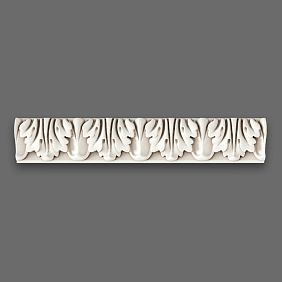

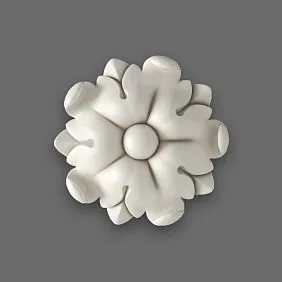


Revival of traditions: how Russian stucco regained its status
Let's travel back a few decades. The 1990s and early 2000s in Russia were a time when the market was flooded with imported products. European and Chinese brands offered ready-made interior solutions, and it seemed domestic production was hopelessly behind. But it was precisely during this time that the foundations were laid for what we now call the revival ofRussian stucco.
Why did this shift occur? Several reasons worked simultaneously. First, there emerged a demand for individuality. Standard European patterns are beautiful, of course, but they appear in thousands of homes. People wanted something of their own, unique, reflecting our cultural identity. Second, technology became more accessible. CNC machines, 3D modeling, modern casting equipment—all this allowed Russian manufacturers to create products not inferior in quality to European ones.
But the main factor is people. Craftsmen, artists, woodcarvers who preserved traditional skills even in the most difficult times. It was their experience, combined with modern capabilities, that created the phenomenon ofof designer moldingRussian production. Now it's not just copying Western models, but creating original collections where motifs of Russian Art Nouveau, classicism, and even wooden architecture can be discerned.




From plaster to polyurethane: a technological revolution
Traditionally, stucco was made from plaster—a material known since ancient times. Plaster elements adorned palaces and estates, churches and public buildings. But plaster has many drawbacks: fragility, heaviness, moisture sensitivity, and difficult installation. For modern construction and design, these are serious limitations.
The advent of polyurethane changed everything. This polymer material combines the best qualities: lightness, strength, moisture resistance, and ease of processing. But simply using polyurethane isn't enough. What matters is the specific material used, how the equipment is calibrated, and how accurately the original model is reproduced. And here Russian manufacturers made a qualitative leap.
European two-component high-density polyurethane, Italian and German casting equipment, proprietary mold developments—all this ensures detailing unattainable with simplified production. Every curl, every leaf, every line of the ornament is reproduced with museum-like precision.designer moldingsRussian production now successfully competes with European not only in price but also in quality.
Our factory also produces:


Why a local brand is an advantage, not a compromise
There is a stereotype: domestic means worse. Like, if you want quality, buy imported. This myth was actively promoted in the nineties and the 2000s, but now the situation has changed radically. The choicestucco productionof a Russian brand offers a number of advantages that are not available when buying imported products. Let's examine them in detail.
Get Consultation
First advantage: proximity to the manufacturer
Imagine a situation: you ordered a batch of molding from Europe. Delivery took a month. You unpacked it — found a defect or a size discrepancy. What to do? Contact the foreign supplier, prove the claim, wait another month for a replacement? Or accept the defect?
With a Russian manufacturer, everything is simpler. Production is located in St. Petersburg or another city in Russia — this means direct, operational communication. Questions arose — you called, got a consultation. Need a replacement — received it within a week, not months. Need a non-standard size — discussed with technologists, manufactured to order. This proximity is not an abstract concept, but real savings in time, nerves, and money.
Second advantage: adaptation to Russian realities
European molding was created for European construction standards. Ceiling height, opening width, installation features — all of this differs from Russian conditions. A standard European apartment with 2.4-meter ceilings requires one set of solutions, while a Russian one with 2.7-3 meter ceilings requires a completely different one.
Domestic manufacturers are initially oriented towards our market. The sizes of cornices, proportions of moldings, configurations of rosettes — everything is thought out taking into account typical Russian layouts. Plus climatic features: sharp temperature fluctuations, heating season with dry air, wet off-season.Russian Stuccois designed and tested precisely under these conditions.
Third advantage: individual approach
Large European brands operate on the principle of mass production. They have a catalog of several hundred items, but custom manufacturing is either impossible or costs astronomical sums and takes six months.
Russian manufacturers are more flexible. Need an element based on your sketch? No problem, they will create a master model, make a mold, cast the required number of copies. Need to change the size of a standard product? Not a problem. Want a unique ornament combining several styles? Designers will work out the concept, artists will create a sample. Such flexibility is the hallmark of domesticstucco production.
Fourth advantage: honest price
The cost of imported molding includes not only the cost of the product itself, but also logistics across the border, customs duties, distributor expenses, and retailer markups. As a result, the final price can exceed the production cost several times over.
Buying from a Russian manufacturer, you eliminate intermediate links. The price is more transparent and fair. At the same time, quality does not suffer — on the contrary, the same European materials and equipment are used, but without the multiplication of cost due to logistics and intermediaries. Savings can reach 30-50% with equal or even better quality.
Fifth advantage: support for the local economy
This may sound pompous, but it's true: buyingRussian stucco, you support jobs in Russia, technology development, training of new craftsmen. Money stays in the country, goes towards modernizing production, scientific research, social programs for employees.
This is not a call for blind patriotism. If a Russian product were inferior in quality, it wouldn't be worth buying for ideological reasons. But when quality is comparable or higher, and the price is lower, choosing a local manufacturer becomes not a sacrifice, but a reasonable decision that also helps develop the industry in the country.
How designer molding is created: from idea to finished product
Many think thatcustom molding productionis simply pouring liquid polyurethane into a mold, waiting a bit — and it's ready. In reality, it's a complex multi-stage process that combines the manual labor of artists, the precision of engineers, and the capabilities of modern equipment. Let's walk this path from start to finish.
Stage one: design development
Everything starts with an idea. Designers study historical samples, museum archives, albums of classical architecture. If it's about recreating a historical element (for example, molding from the Hermitage or a 19th-century estate), thorough research work is conducted. Every detail must match the original.
If an author's element is being created, the designer develops a concept: defines the style, proportions, ornamental motifs. It's important that the element not only looks beautiful on its own, but also harmoniously combines with other details of the collection.designer moldingsis always a system, not a set of disparate elements.
Then a drawing is created — a detailed blueprint with dimensions, cross-sections, projections. Modern production uses computer programs, but a stage of manual drawing is always present. This allows capturing nuances that are lost in the digital environment.
Stage two: creating the master model
The next step is making the master model, the sample from which molds will be taken. Previously, this was done exclusively by hand: an artist sculpted from plasticine or carved from wood. Now, CNC machines have been added to manual labor, cutting the blank from polystyrene foam or wood based on a digital model.
But automation hasn't replaced masters. After CNC, the model is necessarily refined by hand — sanded, detailed, corrected. Wood carvers, sculptors with experience in restoring museum interiors add those subtleties that cannot be programmed. This is precisely the secret ofRussian stucco— a combination of technology and human craftsmanship.
The master model is thoroughly checked: all dimensions, symmetry, relief depth, surface quality. If anything is unsatisfactory — the model is remade. Only when the sample is perfect is it sent to the next stage.
Stage three: mold making
A mold — a negative copy — is taken from the master model, into which polyurethane will be poured. Molds are made from silicone or special polymer compounds. This is a very responsible process: the mold must accurately reproduce all details of the original, be durable (to withstand hundreds of pouring cycles), and easily separate from the finished product.
For complex elements, composite molds consisting of several parts are created. This increases labor intensity but allows reproducing details with undercuts, volumetric elements, and complex geometry. A high-quality mold lasts for years, ensuring production stability.
Stage four: casting
Finally, the actual custom molding production begins. Two-component polyurethane (consisting of resin and hardener) is mixed in precise proportions. Automatic dispensers are used, ensuring perfect accuracy. The slightest deviation in proportions — and the material will be either too brittle or not cure properly.
The mixture is poured into the mold under high pressure. This is important: pressure ensures filling of all the smallest recesses of the relief, expels air bubbles, and creates a dense, homogeneous structure. Polymerization time — from a few minutes to half an hour depending on the thickness and complexity of the product.
After curing, the element is removed from the mold. In modern production, this process is automated, but manual control is mandatory. Each product is inspected: for defects, cavities, irregularities. Rejects are mercilessly sent for recycling. designer moldings does not allow compromises in quality.
Stage five: finishing
The finished product undergoes finishing. Technological seams (marks from mold joints) are removed, irregularities are sanded, dimensions are checked. For some elements, factory painting is provided — priming, painting, patination, gilding.
Elements requiring assembly (e.g., columns from several parts) are kitted, and joint accuracy is checked. Then the products are packaged — carefully, with protection against damage during transportation. And only after that are they sent to the warehouse or to the client.
Stage six: quality control
At each stage, multi-level quality control operates. Raw materials are checked (European polyurethane must have certificates), equipment settings, parameters of finished products. Measuring tools are used, tests for strength, moisture resistance, shape retention under temperature fluctuations are conducted.
This approach ensures consistently high quality stucco production. The client receives products that last for decades without losing their original appearance. These are not marketing promises, but the result of an established production and control system.
Collections of Russian stucco: from classic to avant-garde
When talking aboutRussian stucco, many imagine exclusively classical ornaments in the Empire or Baroque style. But modern Russian production offers much more. Let's get acquainted with the main stylistic directions.
Classic: imperial heritage
Classical collections are inspired by the architecture of Russian palaces and estates of the 18th-19th centuries. This is the period when stucco reached the peak of perfection. Floral ornaments with acanthus leaves, rosettes, meanders, palmettes, garlands — all this wealth of forms is reproduced with museum accuracy.
A feature of Russian classical stucco is slightly smoother lines compared to European, less geometricity, more natural motifs. These are echoes of Russian Art Nouveau, which introduced elements of national ornament into strict classicism. designer moldings in the classical style is perfect for luxurious interiors, recreating a historical atmosphere.
Russian Art Nouveau: elegance of lines
Art Nouveau of the turn of the 19th-20th centuries is an amazingly beautiful style where classical monumentality combined with natural fluidity. Smooth curves, plant motifs, asymmetrical compositions, refinement of details. Russian Art Nouveau has its own characteristics: it is less decorative than French or Belgian, but more subtle and elegant.
Stucco in the Art Nouveau style — these are cornices with wavy profiles, rosettes in the form of stylized flowers, moldings with climbing plants. It fits perfectly into modern interiors, adding sophistication without heaviness. Russian Stucco of the Art Nouveau direction is in growing demand among designers.
Neoclassicism: Reserved Elegance
Modern interpretation of classicism — neoclassicism — avoids excess, leaving only the essentials. Laconic cornices with minimal relief, strict moldings, simple rosettes. Ornament is present, but delicately, without overloading the space.
Neoclassical custom molding productionPerfect for modern apartments where elegance is desired without palatial opulence. It harmonizes with any furniture—from classic to Scandinavian—creating a sense of interior completeness.
Minimalism: the beauty of simplicity
It may seem paradoxical, but molding finds its place even in minimalism. Simple geometric profiles without ornamentation, rectangular moldings, smooth cornices. They create structure, volume, work with light and shadow, but do not attract excessive attention to themselves.
Minimalistdesigner moldings—is a tool for zoning space, visually altering room proportions, creating relief on monochrome surfaces. It emphasizes architecture rather than decorating it.
Author collections: uniqueness on demand
Custom author collections are gaining increasing popularity—elements created from individual sketches for a specific project. An architect or designer develops the concept, and a Russian manufacturer brings it to life in material. The result is an absolutely unique Russian Stuccothat exists nowhere else.
This could be an ornament incorporating elements of a family crest, stylization for a specific historical period, a combination of seemingly incompatible styles, or futuristic forms. The flexibility of Russian production allows for the realization of the boldest ideas.
Russian designer furniture: synergy with molding
Speaking ofRussian stucco, one cannot fail to mention another pride of domestic production—Russian designer furniture. These two industries develop in parallel and often intersect, creating comprehensive interior solutions.
Comprehensive approach: from walls to furniture
Many Russian molding manufacturers also produce furniture and furniture components. This is logical: wood and polyurethane processing technologies are similar, design skills are universal, and customer bases overlap. The result is a unique offering—a turnkey interior where all elements are maintained in a unified style.
Imagine: cornices, moldings, and rosettes executed in the Russian Art Nouveau style with a specific ornamental motif. And the exact same ornament is repeated on furniture fronts, table legs, and decorative overlays. This creates incredible harmony, where the interior is perceived as a cohesive work of art.
Furniture decor from solid wood
Russian designer furniture often uses carved decor from solid wood. Furniture legs, handles, overlays, cabinet cornices—all are created by the same craftsmen who work on molding. Identical technologies are applied: CNC for creating blanks, manual finishing for detailing, multi-stage quality control.
Handcrafted furniture handles are especially valued. Each is a small work of art. Carved patterns, noble wood species (oak, beech, ash), professional tinting and finishing. Such details transform an ordinary wardrobe or chest of drawers into an exclusive interior piece.
Furniture in classic style
Classic furniture from Russian production is an alternative to expensive Italian brands. Quality is comparable, while the price is significantly lower. Carved bed headboards, elegant table legs, Baroque-style furniture with gilding and patina—all are produced in Russia using traditional joinery techniques and modern equipment.
A key advantage is the possibility of custom sizing. European manufacturers work with standard dimensions, while Russian ones easily adapt furniture to specific spaces. Need a wardrobe exactly the width of a niche? A table of a specific height? A non-standard size bed? Not a problem.
Modern furniture with a national accent
An interesting direction is modern furniture that integrates elements of traditional Russian decor. A minimalist chest of drawers with carved handles, a Scandinavian table with legs featuring Russian ornamentation, a sleek armchair with wooden armrests adorned with carving.
This approach creates a unique aesthetic—modern yet rooted, without blindly copying Western trends. Russian designer furniture with national accents is finding more and more admirers among those who value individuality.
Ecological and natural
Both molding and furniture from Russian manufacturers emphasize eco-friendliness. Solid wood instead of particleboard, natural stains and oils instead of synthetic paints, high-quality European polyurethane without harmful emissions. This is especially important for families with children, people with allergies, and anyone concerned about health.
Russian environmental safety standards are constantly being tightened, and manufacturers undergo mandatory certification. custom molding production and furniture in Russia is not only beautiful and high-quality but also safe.
Geography of Russian production: from St. Petersburg to the regions
Russian Stucco is produced not only in the capitals. Although the largest enterprises are concentrated in St. Petersburg and the Moscow region, production facilities are distributed across the country. Let's look at how the industry is developing in different regions.
St. Petersburg: the capital of molding art
The Northern capital is traditionally considered the center of architectural decor production. The largest enterprises operating for export are concentrated here. Production areas measure thousands of square meters, staff numbers range from dozens to hundreds of specialists, from carvers to engineers.
Why St. Petersburg? First, historical traditions: the city has been and remains a center of classical architecture, restoration schools, and museums. Specialists here grow up in an atmosphere imbued with respect for architectural beauty. Second, logistics: proximity to ports ensures convenient import of European raw materials and export of finished products.
St. Petersburgcustom molding productiondistinguishes itself with the highest quality. Many enterprises work not only with private clients but also fulfill state orders for the restoration of palaces, museums, and historical buildings. This requires impeccable precision and compliance with strict standards.
Moscow Region: large-scale serial production
Moscow region enterprises are focused on the mass segment and fast logistics to the central region. Popular collections are produced hereof designer moldingfor standard interiors. The assortment is extensive, but the emphasis is not on exclusivity, but on affordability and order fulfillment speed.
The advantage of Moscow production is proximity to the largest sales market. Delivery to Moscow and the region takes mere hours, which is critical for construction companies working on tight deadlines. Many Moscow design studios and architectural bureaus collaborate specifically with Moscow region manufacturers.
Development in the regions: getting closer to the client
is developing increasingly activelycustom molding productionin the regions: Tatarstan, Krasnodar Krai, the Urals, Siberia. Regional manufacturers work for local markets, ensuring fast delivery and service. The assortment is usually narrower than that of capital giants, but prices are more competitive due to logistics savings.
Interestingly, regional manufacturers often offer elements with national flavor. In Tatarstan — with Islamic ornaments, in the Caucasus — with traditional Caucasian patterns. This enriches the all-Russian assortment, makingRussian stuccomore diverse and multifaceted.
Technical innovations: Russian developments in production
custom molding productionin Russia is not only about preserving traditions but also implementing innovations. Russian enterprises actively develop their own technologies, patent solutions that improve production quality and efficiency.
3D modeling and scanning
Modern manufacturers actively use 3D technologies. Historical stucco is scanned with high-precision laser 3D scanners, obtaining a digital model with detail down to fractions of a millimeter. The model is then processed in special programs, adapted for serial production, and based on it, a master model is cut on a CNC machine.
This is a revolutionary approach. Previously, recreating historical stucco required months of manual labor by sculptors, taking casts from museum samples (which is not always possible). Now the process has accelerated, become more precise and accessible.designer moldingscreated using 3D technologies, is absolutely identical to historical originals.
Improved materials
Russian chemists, together with manufacturers, work on improving the properties of polyurethane. Compositions with increased strength, UV resistance (for facade application), and special fire-resistant compounds are being developed. Some enterprises have their own laboratories conducting tests and experiments.
The goal is to create a material maximally adapted to Russian conditions. Frost resistance for outdoor use, stability under humidity fluctuations, durability in aggressive urban environments.Russian Stuccoof the new generation surpasses imported ones in these parameters precisely due to local developments.
Automation and robotics
At advanced enterprises, automated lines, robotic pouring systems, and automatic quality control using computer vision are being implemented. This increases productivity, reduces the defect rate, and ensures stability in the characteristics of each product.
But automation does not mean the disappearance of humans. Robots perform routine operations, while craftsmen concentrate on creative tasks: developing new models, manual finishing, controlling aesthetic parameters.custom molding productionremains a synthesis of technology and human craftsmanship.
Questions and answers: all about Russian stucco
It's time to answer the most common questions asked aboutRussian stuccoand Russian production.
How does Russian stucco differ from European?
High-quality Russian stucco is in no way inferior to European, as it is produced on similar equipment from the same European raw materials. The difference lies in design: Russian collections often include elements of national ornamentation and are adapted to Russian room standards. Plus, the price is lower due to the absence of international logistics costs.
Can molding be ordered according to an individual sketch?
Yes, this is one of the key advantages of Russian manufacturers. You provide a sketch or description, specialists create a 3D model for approval, and after approval, they produce the master model and mold. The timeline depends on complexity—from two weeks to two months. The cost is higher than for mass-produced items but lower than that of European manufacturers.
How long does polyurethane molding last?
With proper installation and use—decades. Polyurethane does not rot, mold, crumble, or absorb moisture. It is resistant to temperature fluctuations and does not yellow over time (when using high-quality European raw materials).designer moldingsRussian-made {name} is designed for a service life of 50+ years.
Is it difficult to install moldings yourself?
Simple elements (straight cornices, moldings) are not difficult to install with basic skills. You will need special adhesive, a miter box for angled cuts, and a level. Complex elements (large rosettes, columns, facade decor) are best entrusted to professionals. Many manufacturers provide detailed instructions and offer installation consultations.
Where to buy quality Russian molding?
It's better to contact manufacturers directly or their official dealers. This way, you are guaranteed to receive original products, not cheap copies. Check for certificates, review portfolios of completed projects, and read reviews. Major manufacturers have showrooms where you can see the products in person.
What to use to paint polyurethane molding?
Polyurethane can be painted with any paints: water-based, acrylic, alkyd, oil-based. Be sure to prime the surface before painting. For classic interiors, matte paints are used; for modern ones, satin or glossy finishes are acceptable. Decorative effects can be created: patination, gilding, marble imitation.
What is the environmental friendliness of polyurethane molding?
High-quality European polyurethane is absolutely safe. It does not emit toxic substances, has no odor after polymerization, and is hypoallergenic. Russian manufacturers are required to provide certificates of compliance with sanitary standards.Russian Stucco%s made of polyurethane is approved for use in children's and medical institutions.
Can molding be used on a facade?
Yes, there is special facade polyurethane with increased density and UV stabilizers. It withstands frost, rain, and solar radiation without deformation or fading.custom molding production%s for facades is a separate field requiring special materials and technologies. Facade molding is heavier and stronger than interior molding.
How to distinguish quality molding from a cheap counterfeit?
Quality molding has a smooth surface without pits or bubbles, clear deep relief, and even geometry. It is sufficiently dense and heavy (but not excessively). When lightly tapped, the sound is dull, not hollow. Cheap products often have blurred relief, porous structure, and warping. Check the manufacturer's certificates.
How much does Russian molding cost compared to imported?
On average, it is 30-50% cheaper with comparable quality. The difference is even greater when ordering custom elements: Russian manufacturers charge 2-3 times less for exclusivity than European ones. Savings are especially noticeable with large volumes—decorating a cottage, restaurant, or hotel.
Do manufacturers provide a warranty?
Serious manufacturers provide a warranty on their products—usually from one to three years. The warranty covers manufacturing defects: material delamination, deformation, changes in geometry. Damage from improper installation or use is not covered. Keep receipts and warranty cards.
Can Russian molding be combined with Russian furniture?
Not only can it be, but it is highly recommended! Many manufacturers produce both molding and furniture decor in a unified style.Russian designer furniture%s with carved elements perfectly harmonizes withdesigner molding, creating a cohesive interior. It's like a puzzle where all the pieces fit together perfectly.
Conclusion: Russian Molding as a Symbol of Revival
The journey ofRussian stucco%s from the decline of the nineties to the flourishing of today is a story about how traditions, craftsmanship, and modern technology can create something unique. Russiancustom molding production%s has proven: we are capable of creating world-class products, not by blindly copying the West, but by developing our own identity.
Choosingornamental moldingsWhen you choose %s of Russian production, you are not just getting a finishing material. You are getting a piece of the craftsmanship of people passionate about their work. The result of the efforts of engineers, artists, carvers, and technologists who put their soul into every product. Flexibility, proximity to the manufacturer, the possibility of creating unique elements, fair pricing—all this makes local brands not a compromise, but a conscious choice.
Russian designer furnitureand molding go hand in hand, creating comprehensive solutions for interiors of any complexity. From a modest apartment to a luxurious mansion, from the restoration of a historical building to a futuristic project — Russian manufacturers are ready to bring any idea to life.
FutureRussian stucco— is the further development of technologies, expansion of production geography, and entry into new markets. Russian architectural decor is already being exported to Europe, America, Asia — the world has recognized its quality. But the main thing is not export, but that in every Russian city, more and more interiors are being decorated with domestic molding. Beautiful, high-quality, durable.
About STAVROS: 23 years of creating beauty
When it comes to the benchmarkstucco productionin Russia, the name STAVROS is spoken with special respect. This is not just a commercial brand — it is a history spanning almost a quarter of a century, a story of how a small creative workshop grew into the largest manufacturer of architectural decor.
STAVROS was founded in 2002 in St. Petersburg. At that time, the market was just forming, and competition with imports seemed unequal. But the company's founders believed: high-qualityRussian Stucco, created with soul and professionalism, would find its buyer. And they were right.
Today STAVROS is a production complex covering 6000 square meters, equipped with the most modern equipment. 19 CNC machines, Italian and German high-pressure casting machines, its own quality control laboratory. But the company's main wealth is its people. 150 professionals: engineers, technologists, wood carvers, artists, many of whom have experience in restoring museum interiors.
The STAVROS catalog includes over 4000 items. This includesdesigner moldingsmade of polyurethane, carved decor from solid wood, furniture components, premium-class doors, wall panels. For each product, a 3D model has been created, allowing clients to visualize how the element will look in the interior.
A special pride of STAVROS is its author's collections, created by its own designers. Here, they do not copy European catalogs but develop original patterns inspired by Russian architectural tradition, Art Nouveau, and classicism.Russian Stuccofrom STAVROS is a recognizable signature, a unique aesthetic.
The company works not only with private clients. STAVROS fulfills state orders for the restoration of historical buildings, collaborates with leading architectural bureaus, and supplies products for hotels, restaurants, and public buildings throughout Russia and abroad. STAVROS decor adorns interiors in the USA, Canada, and European countries. This is international recognition of quality.
Production is organized with maximum efficiency. A large warehouse program allows shipping popular items on the day of order. Complex elements are manufactured within a week. Custom orders are completed from two weeks to two months depending on complexity. The company is renowned for meeting deadlines — this is one of the pillars of STAVROS's reputation.
Special attention is paid to environmental friendliness. Only certified European polyurethane, solid wood from legal sources, safe stains and coatings are used.custom molding productionat STAVROS fully complies with the strictest environmental standards.
The company actively develops theRussian designer furnituredirection. The catalog includes classic Baroque-style furniture, modern collections, handcrafted furniture legs and handles. Everything is created in the same production facility, by the same craftsmen, ensuring perfect compatibility between molding and furniture decor.
STAVROS is not just a manufacturer; it is a partner for designers and architects. The company provides consultations, helps with element selection, calculates the required amount of material, and offers installation recommendations. Special cooperation programs, bonus systems, and technical support at all project stages have been developed for professionals.
Visiting the STAVROS showroom in St. Petersburg, you will immerse yourself in a museum-like atmosphere. Hundreds of molding samples, furniture decor, entire interior compositions. Here, you can not only see the products but also feel their quality, appreciate the detailing, and imagine how the elements will look in your home.
Over 23 years, STAVROS has become a symbol ofRussian stuccothe highest quality. Thousands of completed projects, tens of thousands of satisfied clients, hundreds of publications in professional journals. The company continues to develop: implementing new technologies, expanding the assortment, entering new markets. But the main thing remains unchanged — the pursuit of perfection, respect for craftsmanship traditions, and a sincere desire to create beauty.
Choosing STAVROS means choosing reliability, proven by two decades of work. Quality, confirmed by thousands of reviews. An individual approach that makes every project special.designer moldings, custom molding production, Russian designer furniturefrom STAVROS is the choice of those who are not ready to compromise, who value true craftsmanship, who create interiors for decades.
Your home deserves the best. And this best is created in Russia, by the hands of Russian craftsmen, in Russian production that can be proud of. STAVROS is aRussian Stuccothat has conquered the world while remaining true to its roots.


