












































































Article Contents:
- Technological Features of MDF Detail Production
- Innovative Processing Methods
- Advantages of MDF in Architectural Applications
- Moldings and Profile Elements: Foundation of Architectural Composition
- Variety of Profiles and Their Applications
- Technical Specifications and Standards
- MDF Skirting Boards: The Final Touch of Interior Design
- Functional Purpose and Aesthetic Role
- Structural Features and Installation
- Cornices and Ceiling Elements: Creating a Three-Dimensional Space
- Architectural Role of Ceiling Cornices
- Installation and Operational Features
- Plinths and Frames: Accentuating Architectural Elements
- Traditions and Modernity in Design of Plinths
- Technology of Manufacturing Complex Profiles
- Corner and Decorative Elements: Details That Create Style
- Functional Significance of Corner Elements
- Decorative overlays and sockets
- Painting Systems and Final Finishing
- Surface Preparation for Painting
- Modern coatings and paints
- Application of MDF Details in Various Interior Styles
- Classic Style and Its Variations
- Modern Design Directions
- Technical Requirements and Quality Standards
- Geometric Parameter Control
- Physical and mechanical properties
- Logistics and Storage Conditions
- Packaging and transportation
- Warehouse Storage
- Ecological Aspects and Safety
- Formaldehyde Emission and Safety Class
- Waste Management and Ecological Cycle
- Installation and Mounting: Professional Secrets
- Preparatory work
- Fastening Systems and Adhesive Compositions
- Economic Aspects of MDF Application
- Comparative cost analysis
- Long-Term Economic Efficiency
- Frequently Asked Questions
- Conclusion: choice of professionals

The world of modern architecture and design cannot be imagined without carefully thought-out details that transform ordinary space into a work of art. became a revolutionary solution for those striving for a flawless result that combines aesthetic appeal with practicality and affordability. What makes MDF such an attractive material for creating architectural details? The answer lies in the unique properties of this composite material, which, thanks to modern manufacturing technologies, surpasses many traditional solutions across a range of characteristics.
The technological features of MDF detail production


Technical Features of MDF Part Production




Innovative Processing Methods
Production of high-quality MDF details Production begins with understanding the structure of the material itself. Medium Density Fiberboard is a medium-density wood fiberboard obtained by dry pressing wood fibers at high temperature and pressure using urea resins as a binding agent.
Modern CNC machines allow creating details of the most complex configurations with precision down to fractions of a millimeter. Milling, turning, profiling — each technological process requires a special approach and deep understanding of material behavior under various mechanical influences.
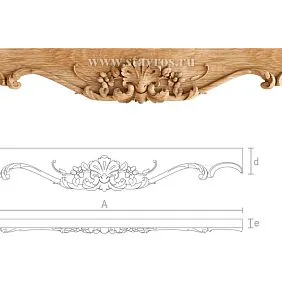
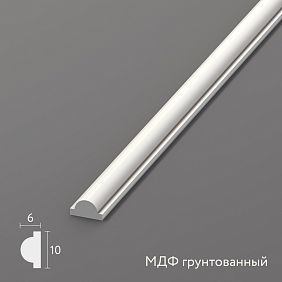
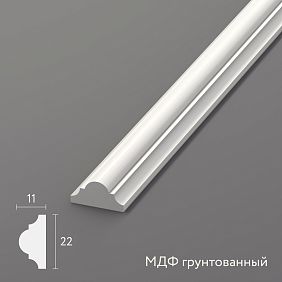
Our factory also produces:



Advantages of MDF in architectural applications
The density of MDF, ranging from 600-800 kg/m³, ensures an optimal balance of strength and workability. The material does not contain knots, resin pockets, or other natural wood defects, making it ideal for creating high-class decorative elements.
The homogeneous structure of MDF allows for fine milling, creating complex profiles and ornaments that would be impossible using solid wood. This opens up limitless possibilities for designers and architects striving to realize the most daring creative ideas.
Get Consultation
Moldings and profile elements: the foundation of architectural composition
Variety of profiles and their applications
MDF ceiling moldings for painting occupy a special place among decorative interior elements. These linear details serve not only as decoration but also perform an important constructive function, concealing joints between different finishing materials and creating clear architectural lines.
Classic molding profiles include a variety of options: from simple rectangular cross-sections to complex multi-step forms with alternating rounded, rounded, and flat elements. Each profile has its own purpose and affects the perception of space in a specific way.
Convex profile elements create a play of light and shadow, adding depth to flat wall surfaces. Concave sections, on the contrary, create a sense of depth and visually expand the space. Combining different elements within a single profile allows creating truly unique decorative solutions.
Technical Specifications and Standards
When selecting MDF moldings, it is important to consider not only aesthetic but also technical parameters. The standard length of molding products is 2400-2700 mm, which is determined by the dimensions of original MDF panels and logistics requirements.
Molding thickness varies from 8 to 40 mm, and width can reach 200 mm and more for large cornice profiles. The moisture content of finished products should not exceed 8-10%, ensuring dimensional stability under normal operating conditions.
MDF baseboards: the finishing touch of interior design
Functional purpose and aesthetic role
— is a horizontal element that frames the room at the bottom of the walls where the wall meets the floor. Skirting boards perform several functions: they hide the technological gap between the wall and floor covering (necessary for thermal expansion), protect the lower part of the wall from mechanical damage, create visual completion, and may conceal wiring. performs a dual function in interior design. Technically, it covers the deformation joint between the floor covering and the wall, which is necessary to compensate for thermal and moisture expansion of materials.
The aesthetic function of the baseboard is equally important. A properly selected profile creates a visual boundary between vertical and horizontal surfaces, giving the interior a sense of completeness and architectural expressiveness. The height of the baseboard should correspond to the scale of the room — in high rooms, wide baseboards of 100-150 mm height are appropriate, while in standard rooms, an optimal height of 60-80 mm is recommended.
Structural features and installation
Modern MDF baseboards often have a complex structure, including a cable channel for laying electrical and low-voltage wiring. This is especially relevant in the era of smart homes, when the amount of wiring in rooms is constantly increasing.
Baseboard mounting systems can vary: from traditional screws to modern clip connections that allow quick and high-quality installation without visible fasteners. Corner joints are performed using special hardware elements or by precise beveling at a 45-degree angle.
Cornices and ceiling elements: creating a volumetric space
Architectural role of ceiling cornices
MDF Cornices for Painting play a key role in forming the architectural appearance of the interior. These elements create a transition between the wall and the ceiling, visually altering the proportions of the room and adding grandeur.
Classic cornices have a complex stepped profile, creating a rich play of light and shadow. Each step of the profile has its own purpose: the lower part is often decorated with carved ornament or milled patterns, the middle serves as the main load-bearing part, and the upper part ensures a smooth transition to the ceiling surface.
Installation and operational features
Installing MDF cornices requires special attention to marking accuracy and surface preparation quality. Wall and ceiling irregularities may result in gaps that spoil the final appearance of the product.
Mounting is done using self-tapping screws to wooden frames or anchors to concrete and brick bases. The mounting spacing should be 400-600 mm depending on the size and weight of the cornice. After installation, mounting points are filled with putty and sanded to achieve a perfectly smooth surface for painting.
Moldings and trim: accentuating architectural elements
Tradition and modernity in molding design
MDF skirting board for painting Represents a modern interpretation of a classical architectural element. In traditional wooden architecture, moldings served not only decorative purposes but also protected joints between window and door frames and walls from moisture penetration.
Modern MDF moldings retain this functionality while adding the ability to implement the most diverse design solutions. Router profiles can imitate classical wood carving or create abstract geometric patterns in the spirit of contemporary minimalism.
Technology of manufacturing complex profiles
Creating moldings with complex profiles requires the use of special equipment and highly skilled operators. Multi-stage routing allows obtaining profiles with variable cross-sections, creating a sense of perspective and volume.
Special attention is paid to surface processing quality. After routing, all parts undergo careful sanding with abrasive materials of various grits. Final sanding is performed with abrasive grit 220-320, ensuring a perfectly smooth surface for subsequent painting.
Corner and decorative elements: details that create style
Functional significance of corner elements
Corner decorative elements Play an important role in forming a cohesive architectural image. These small details ensure quality connection of linear elements at various angles, concealing joints and giving the structure a finished look.
External corners experience increased mechanical loads and require special attention to manufacturing quality. The geometric accuracy of corner elements must be maximum — even minor deviations will be noticeable after installation and painting.
Internal corners are less loaded, but equally important for the overall perception of the interior. They must precisely match the profile of main elements, ensuring smooth transition of decorative lines.
Decorative overlays and rosettes
Decorative Accents for Furniture MDF moldings open up vast opportunities for interior customization. Carved inserts, routed sockets, three-dimensional ornaments — all these elements are created using modern high-precision equipment.
3D routing allows creating inserts with complex spatial geometry, imitating hand-carved wood. Relief depth can reach 15-20 mm, ensuring expressive play of light and shadow.
The theme of decorative elements is extremely diverse: from classical floral ornaments to modern geometric compositions. The choice of a specific variant depends on the interior style and the client's personal preferences.
Painting systems and final finishing
Surface preparation for painting
The quality of the final coating directly depends on the thoroughness of surface preparation MDF for PaintingThe first step is priming with special compositions designed for MDF. Primer ensures good adhesion of subsequent coating layers and prevents paint absorption into the material surface.
After the primer dries, the surface is sanded with fine-grit abrasive to remove raised fibers and achieve a perfectly smooth surface. Special attention is paid to end surfaces, which have higher absorbency.
Modern paint and coating materials
Selection of paint and coating materials for MDF details depends on operating conditions and requirements for appearance. For interior use, water-based acrylic enamels are optimal, providing durable coatings with excellent decorative properties.
Polyurethane enamels have increased resistance to mechanical impacts and are suitable for elements subjected to intensive use. Alkyd compositions provide deep coverage with a classic gloss, but require longer drying times.
Application of MDF details in various interior styles
Classic style and its variations
In classical interiors MDF furniture details Serve as carriers of historical architectural traditions. Molding and cornice profiles replicate classical orders, creating the atmosphere of palace halls and aristocratic mansions.
Baroque interiors require abundant decoration with rich carving and complex multi-stage profiles. Empire style implies strict geometric forms with military symbolism elements. Classicism favors restrained proportional forms based on ancient models.
Modern design directions
Minimalist interiors use MDF details as a means to create clear architectural lines. Simple rectangular profiles of moldings and baseboards emphasize the geometry of the space without distracting from the main volumes.
Scandinavian style prefers natural light tones and simple forms. MDF details are painted white or coated with transparent finishes that mimic the natural wood of northern species.
Technical requirements and quality standards
Geometric parameter control
Quality MDF details buy Only manufacturers ensuring strict control of geometric parameters of products can provide this. Deviations in length should not exceed ±2 mm, and in width and thickness – ±0.5 mm for profiled items.
The curvature of trim items is controlled on special stands and should not exceed 2 mm per meter for moldings and 1 mm per meter for baseboards. The quality of profiling is assessed visually and using templates – the profile must exactly match the standard along the entire length of the item.
Physical and mechanical properties
The strength of MDF details is determined by the characteristics of the original panel and the quality of mechanical processing. The static bending strength should be at least 20 MPa, and the modulus of elasticity – at least 2000 MPa.
Special attention is paid to strength at the locations of minimum cross-sections of profiled details. Sharp edges and deep rounded corners are stress concentrators and require careful handling during transportation and installation.
Logistics and storage conditions
Packaging and transportation
Proper packaging of MDF details ensures their preservation during transportation and storage. Long items are packed in special cardboard profiled boxes or polyethylene film with foam polyethylene padding.
Loading and unloading operations must be performed carefully, avoiding impact loads and mechanical damage. Items with complex relief profiles and thin decorative elements require especially careful handling.
Warehouse Storage
MDF details are stored in dry, heated rooms at a temperature of 18–22°C and relative humidity of 60–70%. Items are laid horizontally on flat pallets with padding between layers to ensure ventilation.
Storage duration under proper conditions is practically unlimited, but it is recommended to use the material within 12 months from the date of manufacture. This is due to gradual changes in surface properties that may affect the quality of painting work.
Ecological aspects and safety
Formaldehyde emission and safety class
Modern MDF details are manufactured from panels of emission class E1, which meets safety requirements for use in residential spaces. The content of free formaldehyde does not exceed 0.1 mg/m³, which is significantly lower than permissible concentrations.
Additional coating of MDF details with primers and paints creates a barrier layer that practically eliminates emission. When using high-quality lacquer and paint materials, painted MDF details are not inferior to solid wood items in terms of ecological safety.
Waste disposal and ecological cycle
MDF is a material suitable for secondary recycling. Production waste and items out of use can be used as fuel for heat energy or reprocessed into new wood-composite materials.
MDF production uses wood processing waste, contributing to rational use of forest resources. The coefficient of wood raw material utilization in MDF production reaches 95%, which is significantly higher than in lumber production.
Installation and mounting: professional secrets
Preparation Work
Quality installation of MDF details begins with careful surface preparation. Walls and ceilings must be leveled and treated with primer compositions. Deviations from flatness should not exceed 2 mm per meter of item length.
Marking is performed using a laser level or hydrolevel to ensure strictly horizontal or vertical positioning of elements. Special attention is paid to corner joints – they must be executed with maximum precision.
Fastening systems and adhesive compositions
The choice of fastening method depends on the size of the details and the material of the base. Lightweight profiles can be fastened with adhesive, while heavier elements require mechanical fastening with self-tapping screws or anchors.
Modern polyurethane adhesives provide strong bonding with most construction materials and allow compensation for minor irregularities in the base. The adhesive sets in 15–30 minutes, and full polymerization occurs within 24 hours.
Economic aspects of MDF application
Comparative cost analysis
Using MDF details ensures an optimal price-to-quality ratio. Compared to solid wood of valuable species, MDF is 3–5 times cheaper while providing comparable operational characteristics.
Economic savings are achieved not only due to lower material cost but also due to reduced labor costs for processing. MDF details are supplied ready for painting, eliminating the need for additional mechanical processing.
Long-term economic efficiency
Properly installed and painted MDF details serve for at least 15–20 years without loss of appearance or functionality. The possibility of repainting allows updating the interior without replacing decorative elements.
Repairability of MDF details also contributes to long-term savings. Local damage can be repaired by spackling and repainting the damaged areas without dismantling the entire structure.
Frequently asked questions
How does MDF differ from MDF when producing decorative details?
MDF has higher density and a more uniform structure, allowing for fine milling and clear profiles. MDF is less suitable for creating complex decorative elements due to its coarse structure and tendency to chip during processing.
Are MDF parts suitable for rooms with high humidity?
Standard MDF parts are not recommended for environments with humidity above 70%. For such conditions, moisture-resistant MDF grades or additional protection with special coatings should be used.
What paint is best for painting MDF parts?
The optimal choice are water-based acrylic enamels, providing durable coverage and health safety. For elements subjected to intensive use, polyurethane enamels are recommended.
How long does it take to manufacture custom MDF parts?
Manufacturing time depends on the profile complexity and order volume. Standard profiles can be produced within 3-5 working days, while complex decorative elements require 7-14 days.
How to correctly calculate the material quantity for a project?
Calculation is based on the room's perimeter with an additional 10-15% for trimming and potential damage during installation. For complex projects, consultation with specialists is recommended.
Is it possible to reuse MDF parts?
With careful disassembly, MDF parts can be reused after appropriate surface preparation. However, damage from fasteners should be considered.
Conclusion: Choosing professionals
The modern architectural decor market offers many solutions, but MDF parts remain a choice of professionals who value reliability, beauty, and economic efficiency. This material successfully combines the best qualities of natural wood with the advantages of modern composite materials.
For many years, STAVROS has specialized in producing high-quality MDF parts, offering a wide range of profiles and decorative elements. Our production is equipped with modern equipment, and our team of experienced specialists guarantees flawless quality for every item.
Choosing MDF parts from STAVROS means investing in long-term quality, aesthetic excellence, and a professional approach to creating unique interiors. Our products will serve as a strong foundation for realizing the most ambitious design projects, highlighting your impeccable taste and pursuit of perfection.


