








































Article Contents:
- Why the slatted ceiling should be connected to the walls
- Architectural system: what it means in practice
- When wooden slats on the ceiling are appropriate: spaces and scenarios
- Living room: accent and depth
- Kitchen-living room: zoning without partitions
- Bedroom: Intimacy and Coziness
- Entryway: First Impression
- Study and commercial interior
- How to combine a slatted ceiling with stucco decor on the walls
- Slats on the ceiling + moldings on the walls in the color of the wall
- Slats on the ceiling + stucco frame on the accent wall
- Slats on the ceiling + smooth walls and high baseboard
- Slats on the ceiling + wooden moldings matching the ceiling color
- Slats on the ceiling + polyurethane cornice around the perimeter
- Ceiling cornice for slatted ceiling: is it necessary or not
- Without a cornice: when it works
- Polyurethane cornice: neat transition between two surfaces
- Wooden cornice: unified material system
- Thin molding instead of a cornice: lightness for small spaces
- How to design the transition from a slatted ceiling to a wall: five technical solutions
- Wooden corner: laconic abutment
- Wooden beam: voluminous transition
- Shadow gap: modern minimalist technique
- Ceiling cornice: architectural frame
- Recess from wall with backlighting
- How to choose a baseboard for a slatted ceiling: lower horizontal as part of the system
- Wooden baseboard: unity of material vertically
- MDF baseboard for painting: calm lower line
- Baseboard in wall color: maximum conciseness
- Wide wooden baseboard for classic and country house
- Which walls to make under a slatted ceiling: seven working solutions
- Smooth painted wall
- Moldings in wall color: subtle architecturality
- Stucco frames without ornament
- One accent wall with slats
- Decorative panel made of moldings
- Vertical composition of moldings
- Neutral wall with textured plaster
- Best material combinations: ready-made schemes
- Scheme 1: Oak slats on ceiling + white polyurethane moldings
- Scheme 2: Wooden ceiling + wooden baseboard of the same series
- Scheme 3: Slatted ceiling + MDF baseboard for painting
- Scheme 4: Wooden slats + polyurethane ceiling cornice
- Scheme 5: Wooden slats + matching trim pieces
- Scheme 6: Slats on the ceiling + moldings on the walls in the paint color
- Scheme 7: Slatted ceiling + stucco decor for walls and ceiling included
- Mistakes when combining slatted ceilings, stucco, and baseboards
- Too frequent slat spacing in a small room
- Unplanned joint between slatted ceiling and wall
- Massive cornice next to an active slatted ceiling
- Baseboard not connected to either slats or walls
- Mixing several wood shades
- Active stucco on walls with an active slatted ceiling
- Forgotten linear profiles for ends and corners
- What to choose from the STAVROS catalog for a slatted ceiling and wall connections
- About the Company STAVROS
- Frequently Asked Questions
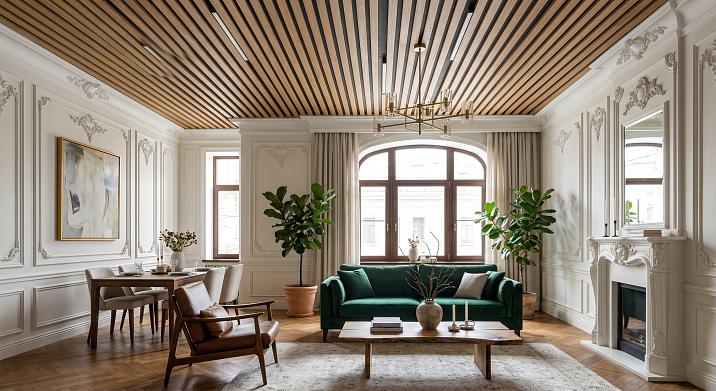
The ceiling is the fifth wall. That's what designers say when they want to explain why the horizontal plane above your head deserves no less attention than all four vertical ones. And when wooden slats appear on this fifth wall, the interior changes radically. Depth, rhythm, and the warmth of natural wood appear where there is usually just white plaster.
But a slatted ceiling is not the end of the story. It's the beginning of a question: what to do with the walls now? How to connect a ceiling made of wooden slats with a cornice, moldings, and baseboard? How to make the ceiling and walls speak the same language, rather than compete for attention? And which baseboard to choose so that the lower horizontal supports the upper one?
This article answers these questions. In detail, to the point, with specific schemes and examples — because abstract advice like "combine harmoniously" without practical solutions helps no one.


Why a slatted ceiling needs to be connected with the walls
Wooden slats on the ceiling are a strong visual move. They immediately set the tone for the entire room: natural material, horizontal rhythm, wood texture overhead. The eye fixes on the ceiling first, then the walls, then the floor. And if each of these elements "speaks" in its own separate register, the impression falls apart.
A ceiling made of wooden planksbecomes a system only when the walls, cornice, moldings, and baseboard support its logic. Not copying it verbatim — that would be monotonous. But precisely supporting: picking up the wood theme or, on the contrary, creating a deliberate contrast with the warm wooden ceiling.
The most common mistake is to install a slatted ceiling and leave the walls untouched: white, smooth, without a single architectural element. In this case, the ceiling looks like randomly nailed boards, not a design solution. It is the well-thought-out transition from the ceiling to the walls — through a cornice, moldings, or an angle — that turns a set of materials into an architectural system.




Architectural system: what it means in practice
An "architectural system" refers to a set of interconnected horizontal and vertical lines that organize space vertically. At the bottom —Wooden baseboardorMDF Skirting Board. In the middle of the walls — moldings, frames, or a smooth surface. At the top — a cornice or a thin transition profile. Above all this — a slatted ceiling. Each element in its place, each continues the logic of the previous one.
Our factory also produces:





When wooden slats on the ceiling are appropriate: spaces and scenarios
Before discussing the connection between the ceiling and walls, it's worth clearly understanding: where a slatted ceiling made of natural wood works best. Because in some rooms it will be organic and expressive, while in others — excessive and heavy.
Get Consultation
Living room: accent and depth
The living room is an ideal space for a wooden slatted ceiling. There is enough area here for the horizontal rhythm of the slats to create depth rather than overwhelm. Slats above the sofa area — an accent part of the ceiling, a visual "extension" of the wall behind the sofa. Or slats across the entire living room ceiling, uniting the lounge area and dining area into one cohesive space.
In the living roomCeiling wooden railworks well with white walls and neutral moldings — the contrast of warm wood and white architectural lines creates a modern, light interior.
Kitchen-living room: zoning without partitions
An open-plan kitchen-living room is a space where zones need to be delineated without physical walls. A slatted ceiling above the dining table or above the kitchen island creates a visual "roof" for the zone — it psychologically separates from the rest of the space.
In such an interiorWooden rails for decorationon part of the ceiling are combined with molding decor on the walls, and the lower line of the space is united by a singleMDF baseboardaround the entire perimeter.
Bedroom: Intimacy and Coziness
A bedroom with a slatted ceiling is an interior where natural wood creates a sense of a natural shelter. The slats work especially organically above the headboard: the slatted ceiling zone directly above the bed visually "covers" the sleeping area, creating a sense of intimacy in a large room.
In a bedroom, a slatted ceiling is best combined with laconic walls without active stucco decoration — a thin horizontal molding at the "picture line" level and a delicateWooden baseboardat the bottom — and that's enough.
Entryway: first impression
The hallway is the first thing a guest sees. A slatted ceiling in the hallway is an unexpected, memorable move. With a ceiling height of 2.5 m or more, the slats "stretch" the space horizontally and make the hallway wider than it is.
In a narrow hallway, the slats on the ceiling run across the short axis — this visually widens the corridor. Along the long axis — they lengthen it. The choice of slat direction depends on the geometry of the room.
Study and commercial interior
In a study, a wooden slatted ceiling creates intimacy and concentration — a feeling of a "serious space." In a commercial interior — a cafe, hotel lobby, showroom — it sets the brand and mood. HereRafter panelsthey are mounted as ready-made modular structures with a fixed pitch.
How to combine a slatted ceiling with stucco decoration on the walls
This is the central question of the article. The ceiling already "speaks" with wood — warm, textured, alive. What should the walls "say"? Here are several fundamentally different approaches.
Slats on the ceiling + moldings on the walls in the color of the wall
One of the most elegant options: the walls are decoratedpolyurethane moldingsin the color of the wall. The molding is painted in the same shade as the wall surface — it does not contrast, but creates a relief architectural pattern.
Wooden ceiling — warm, rich, with texture. Walls — calm, neutral, with fine relief geometry of moldings. Two different rhythms, two different materials, but a single mood.
An important condition: the moldings on the walls should have a simple profile — rectangular frames without ornament. Complex stucco molding next to a wooden ceiling is a conflict of two active systems.
Slats on the ceiling + stucco frame on the accent wall
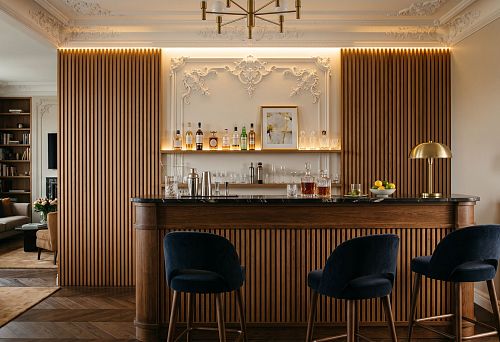
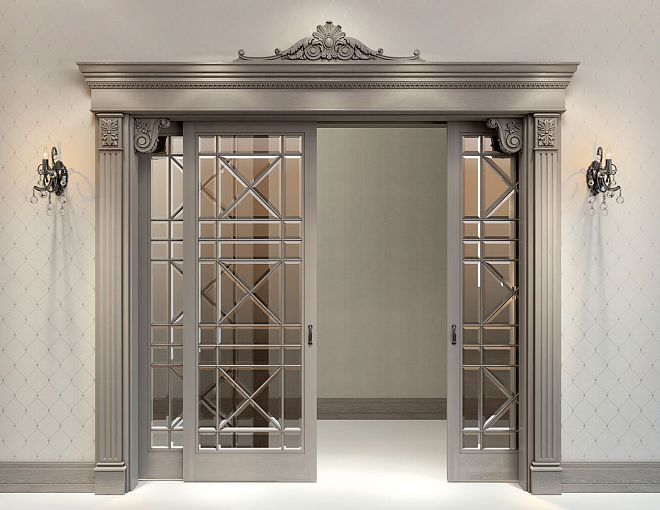
An accent wall with a stucco frame or a small panel made of. Clear lines, created using modern technologies, emphasize the strict aesthetics of the room. Each decorative element harmoniously fits into the overall concept, creating a sense of order and thoughtfulness.is a good addition to a wooden ceiling if there is one wall. One accent wall — not all four. The rule of 'one active surface' in an interior with a slatted ceiling is mandatory.
Slats on the ceiling + smooth walls and high baseboard
Sometimes the best solution is maximum simplicity: smooth walls without decoration, without moldings. All attention is on the wooden ceiling. And the lower horizontal is supported by a high wooden baseboard of 100–120 mm: it gives 'weight' to the lower part of the wall, balancing the warm ceiling above.
with a classic profile creates a sense of solidity, reliability.of the same breed as the ceiling slats — an ideal solution for interiors in the «natural wood» style: oak slats on top, oak baseboard at the bottom, with calm walls in between.
Slats on the ceiling + wooden moldings matching the ceiling tone
WoodenDecorative wooden moldingson the walls in the same tint as the ceiling slats — a subtle designer technique. The walls and ceiling become part of a unified wooden system, while the white paint on the walls between the moldings creates a neutral background.
Moldings on the walls should be thinner and lighter than the slats on the ceiling — otherwise, the walls compete with the ceiling in terms of the «mass» of the wooden element.
Slats on the ceiling + polyurethane cornice around the perimeter
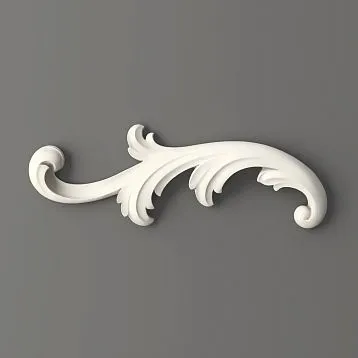
polyurethane ceiling decorin the form of a cornice around the perimeter — a transitional element between the wooden ceiling and the walls. A white polyurethane cornice clearly outlines the slatted ceiling around the perimeter, creating a «frame» for the wooden plane.
This visually «raises» the ceiling: the wooden plane appears as an insert in a white frame. It is especially effective if the walls and cornice are a single white color, and the ceiling slats are a dark tone.
Ceiling cornice for a slatted ceiling: needed or not
The question of a cornice with a slatted ceiling divides designers into two camps. Some believe that slats and a cornice are unnecessary details together, while others think a cornice is mandatory. The truth depends on the specific interior.
Without a cornice: when it works
The absence of a cornice is justified in modern interiors — minimalism, Scandinavian style, Japanese. Here, the slats are mounted flush against the walls, and the ceiling-wall joint is coveredwooden corner pieceor with a shadow gap of 5–10 mm. The shadow gap — a delicate dark line at the joint — is a deliberate design technique, not an unfinished look.
Polyurethane cornice: a neat transition between two surfaces
When you need to create a clear transition between a wooden ceiling and walls without a feeling of heaviness —Moldings made of polyurethanein the form of a ceiling cornice gives the best result. Light, white, with a precise profile — the polyurethane cornice does not compete with the wooden ceiling but creates a neutral frame for it.
Cornice profile for a slatted ceiling: no more than 50–60 mm for ceilings up to 2.7 m. A too-wide cornice "compresses" the ceiling and reduces the sense of height.
Wooden cornice: a unified material system
wooden corniceof the same wood species and tint as the ceiling slats — a solution for interiors where wood is the main material leitmotif. The cornice as a "frame" for the slatted ceiling made from a single material is architectural completeness.
The full rangewooden cornicesSTAVROS covers profiles from 35 to 120 mm — for a slatted ceiling, it is recommended to choose profiles of 40–70 mm.
Thin molding instead of a cornice: lightness for small spaces
In small rooms — a bedroom of 15 sq. m, hallway, study — a full ceiling cornice next to a slatted ceiling can "overload" the perimeter. Alternative: a thinwooden molding15–25 mm, mounted around the perimeter at the junction of the slatted ceiling and the wall. It covers the joint and creates a horizontal line without extra bulk.
How to design the transition from a slatted ceiling to a wall: five technical solutions
This is the most practical section — about how to physically solve the joint between a wooden ceiling and a wall. Each solution has its own application conditions.
Wooden corner: a laconic abutment
Wooden angleis mounted at the junction of the slat and the wall. It covers the end of the outermost slat and creates a clear horizontal line around the perimeter. Selection rules:
-
Corner width: at least the width of the slat end
-
Wood species: same as the slats
-
Finish: unified with the slats (tinting, oil, or paint)
Corner — the most concise and universal solution. Works in any style — from Scandinavian to classic.
Wooden block: volumetric transition
Wooden blockaround the perimeter of the slatted ceiling creates a more volumetric transition than a corner. It is mounted on the wall flush with the ends of the outer slats and serves as a horizontal "shelf" completing the slatted field.
A 30×40 mm block around the perimeter of the slatted ceiling is no longer just a technical element, but a decorative horizontal accent. When tinted dark, it looks like a wooden frame "inserting" the slatted ceiling into the interior.
Shadow gap: a modern minimalist technique
A shadow gap — a 5–10 mm gap between the ends of the outer slats and the wall — is a deliberate design tool. The slatted ceiling seems to "float" above the walls without touching them. The dark gap around the perimeter emphasizes the boundary of the wooden plane.
This technique requires careful installation: the gap must be strictly uniform around the entire perimeter. An uneven gap looks worse than its absence.
Ceiling cornice: architectural frame
A cornice mounted around the perimeter of the room flush with the ends of the slatted ceiling creates a horizontal architectural "frame". The wooden ceiling appears to be inscribed within the cornice frame — this visually highlights it as an independent decorative element.
Installation order: first the cornice around the perimeter, then the slatted ceiling flush with the bottom line of the cornice. Or first the ceiling with a gap, then the cornice overlapping the ends of the slats by 10–15 mm.
Indentation from the wall with backlight
The most technically complex but visually striking solution: a slatted ceiling is installed with a 15–30 cm gap from all walls. In this gap, an LED strip illuminates the ceiling from below. The effect is a wooden ceiling that literally floats, lit by contour lighting around the perimeter.
In this case, the vertical walls in the indentation area are painted in a dark color (black, dark gray, deep blue) — the backlight works contrastingly.wood trim itemsfor this option — a decorative profile around the perimeter inside the niche, hiding the LED strip.
How to choose a baseboard for a slatted ceiling: the lower horizontal as part of the system
A slatted ceiling creates a strong upper accent. The lower horizontal — the baseboard — should either support it or delicately "fade into the shadows." Both scenarios are valid, depending on the style.
Wooden baseboard: unity of material vertically
Wooden baseboardof the same species as the ceiling slats — the most organic lower finish. Oak on the ceiling — oak baseboard below. Ash on the ceiling — ash baseboard below. A single material on two horizontals creates the feeling that the interior "embraces" the person.
buy wooden skirting boardneeds to be from the same series as the slats — one species, one tint, a single standard of surface treatment.
Height of the baseboard for a slatted ceiling:
| Ceiling Height | Baseboard Height | Style |
|---|---|---|
| Up to 2.5 m | 60–70 mm | Modern, Scandinavian |
| 2.5–2.7 m | 70–100 mm | Modern, neoclassical |
| 2.7–3.0 m | 100–120 mm | Neoclassical, classic |
| Over 3 m | 120–150 mm | Classic, country house |
MDF baseboard for painting: calm lower line
MDF Skirting Boardwhite color — when the wooden ceiling already creates enough "warmth" and the lower horizontal line doesn't need another wood tone. WhiteBaseboard MDFa straight profile 60–80 mm creates a neutral lower line that doesn't compete with the slatted ceiling for attention.
This is a "Scandinavian" scheme: the wooden ceiling is warm and rich, the walls are white, the baseboard is white — all attention is above.
Baseboard in wall color: maximum conciseness
When the ceiling of wooden slats is the absolute dominant, and the walls and baseboard should be "invisible",buy MDF skirting boardpaintable and painted in the same color as the walls — the most concise solution. The baseboard blends with the wall, the lower horizontal line "doesn't exist" — there is only the wooden ceiling and a neutral background around.
Wide wooden baseboard for classic and country house
In a classic interior, neoclassical, or country house —with a classic profile creates a sense of solidity, reliability.a height of 120–150 mm made of oak or walnut creates a "heavy base" for the wall. This is an architecturally sound solution: a massive slatted ceiling + a massive baseboard below = a sense of solidity and aristocratic dignity of the space.
What walls to make under a slatted ceiling: seven working solutions
A slatted ceiling is already an active decorative plane. The walls should work in a system with the ceiling, without competing. Here are proven wall solutions.
Smooth painted wall
The simplest and most universal. The wall is a neutral background, all visual emphasis is on the ceiling. Wall color: white, light gray, beige, dusty green, blue — any unsaturated shade. Saturated dark walls + a wooden ceiling work like an "embrace" — intimacy and coziness. But only if the ceiling is not dark.
Moldings in the color of the wall: subtle architecturality
Moldings made of polyurethaneordecorative wooden moldingsin the color of the wall create a relief geometry without an additional color accent. The walls are "alive" in texture but calm in tone. This solution works well in neoclassical and modern interiors.
Stucco frames without ornament
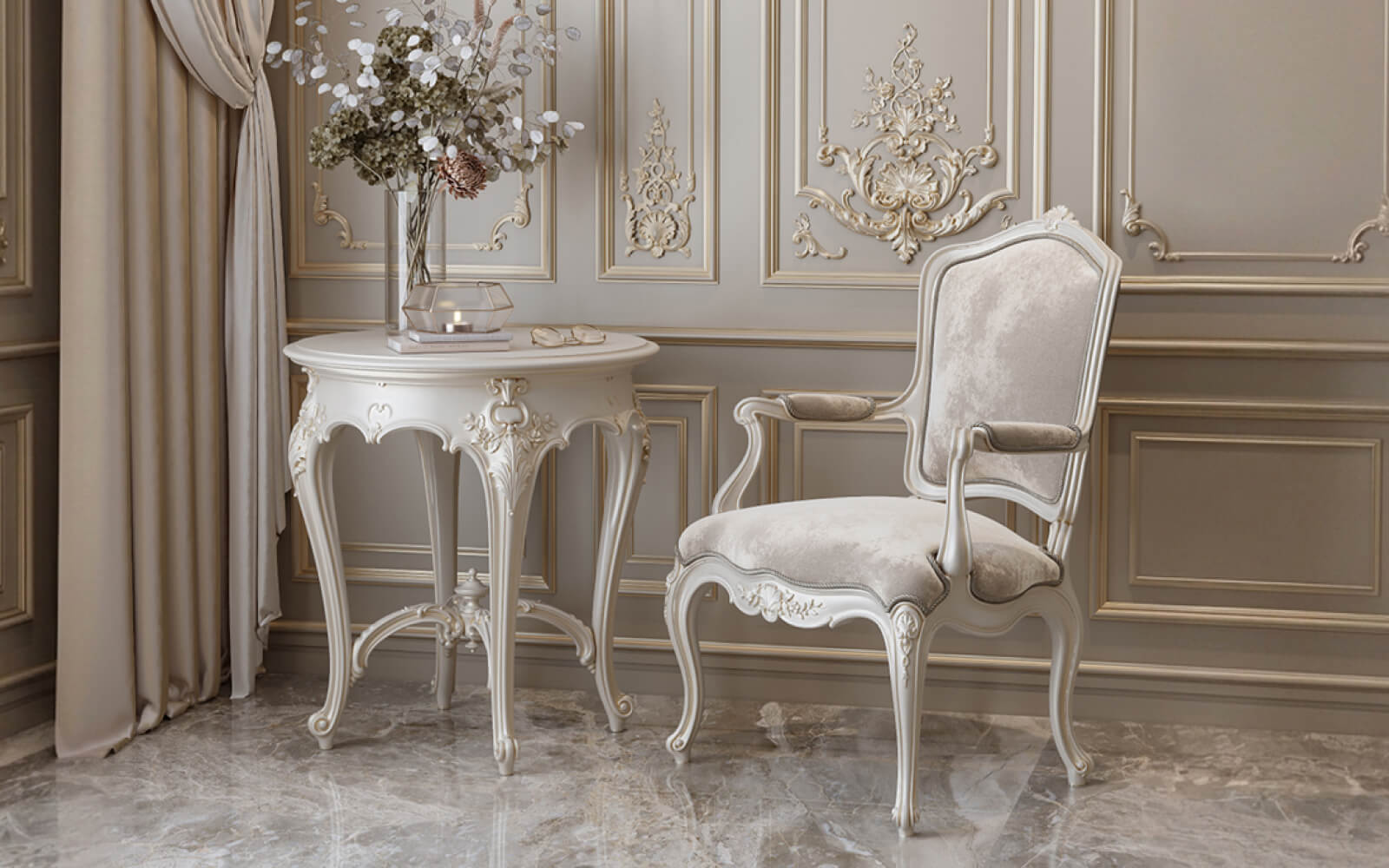
Polyurethane wall decorin the form of simple rectangular frames — suitable for interiors with a slatted ceiling if the frames are of a small profile (20–30 mm) and painted in the wall color. Molded frames create an architectural rhythm along the walls but do not draw attention to themselves.
One accent wall with slats
Slatted ceiling + slatted accent wall — a bold solution that only works with a deliberate approach. Slats on the wall are vertical, slats on the ceiling are horizontal. The perpendicular rhythm of the two slatted planes creates a dynamic geometric interior.
Rafter panelsfor an accent wall — a ready-made solution with a fixed spacing. They are installed quickly and give a predictable result.
Decorative panel made of moldings
One wall with a decorative panel of moldings — frames of different sizes creating a geometric pattern. The other walls are smooth. Wooden ceiling + molding panel on one wall + neutral other walls — a complete, non-trivial combination.
Vertical composition of moldings
If the slatted ceiling is horizontal, vertical moldings on the walls create a perpendicular rhythm. ThinWooden moldings15–20 mm, running vertically along the entire height of the wall with a spacing of 40–60 cm, is a Japanese and Scandinavian technique that works well next to a wooden ceiling.
Neutral wall with textured plaster
Textured plaster — concrete effect, Venetian, travertine — creates surface interest without adding decorative elements. Wooden ceiling + textured plaster on walls + straight— is a horizontal element that frames the room at the bottom of the walls where the wall meets the floor. Skirting boards perform several functions: they hide the technological gap between the wall and floor covering (necessary for thermal expansion), protect the lower part of the wall from mechanical damage, create visual completion, and may conceal wiring. — this is a strong loft or industrial scheme.
Best material combinations: ready-made schemes
Sometimes there's no time for a long search — you need a quick and working solution. Here are seven proven combinations.
Scheme 1: Oak slats on the ceiling + white polyurethane moldings
Oak slats with oil impregnation — warm, golden tone. WhiteMoldings made of polyurethane on the walls in the form of frames. WhiteMDF Skirting Board 80 mm. Walls — light gray or white. Result: a light, modern, warm interior with a pronounced architectural structure.
Scheme 2: Wooden ceiling + wooden baseboard of the same series
Ash slats on the ceiling +Wooden baseboardash 100 mm + smooth walls in linen shade. No moldings. Minimalism and naturalness. Single wood species on two horizontals — a designer-clean solution.
Scheme 3: Slatted ceiling + MDF baseboard for painting
Pine slats with gray oak tint on the ceiling +Baseboard MDF70 mm, painted white + light green walls. Scandinavian freshness with a natural wood note.
Scheme 4: Wooden slats + polyurethane ceiling cornice
Birch slats with white paint on the ceiling (horizontal rhythm of white planks) + whitepolyurethane ceiling decoraround the perimeter. White ceiling of different textures. Walls — warm, painted. Result: light, space, subtle relief.
Scheme 5: Wooden slats + trim in matching tone
Slats on the ceiling +Wooden corner bracketaround the joint perimeter +Wooden blockas a horizontal divider on walls + wooden baseboard. All from the same wood species, the entire system —wood trim itemsfrom a single series. A natural, warm, cohesive interior.
Scheme 6: Slats on the ceiling + moldings on the walls in the paint color
Dark-toned slats on the ceiling + dark blue walls + polyurethane moldings in the same blue + white MDF baseboard. A rich, library-like tone — a masculine, serious interior.
Scheme 7: Slatted ceiling + stucco decor for walls and ceiling as a set
Slats on the ceiling in the central zone +polyurethane ceiling decoraround the perimeter (cornice + corner elements) +Polyurethane wall decoron the walls + high wooden baseboard. Neoclassicism with a wooden accent — a rich, architecturally saturated interior.
Mistakes when combining slatted ceilings, moldings, and baseboards
Practical experience provides a clear picture: the same mistakes repeat from project to project. Knowing them in advance means avoiding them.
Too frequent slat spacing in a small room
Slats 20 mm with 25 mm spacing in a 12 sq m room — the ceiling feels 'closed in', heavy and oppressive. In small spaces, slat spacing should be at least 50–60 mm, slat width 25–30 mm. The smaller the room, the more sparse the rhythm should be.
The joint between the slatted ceiling and the wall is not thought out
The ends of the outer slats face the wall without covering — unfinished wood cuts are visible. The solution to this issue isWooden angleor a shadow gap — this needs to be planned before installation.
A massive cornice next to an active slatted ceiling
Cornice 120 mm + slatted ceiling with 30 mm spacing = two powerful horizontal elements competing for attention. With a slatted ceiling, the cornice should be delicate: 30–50 mm for a light profile.
The baseboard is not connected to either the slats or the walls
A random baseboard — the first one found at a hardware store — is not connected in material or tone to the slatted ceiling. The baseboard should be chosen as part of the system: either the same wood species as the slats, or white MDF matching the wall and cornice color.
Mixing several wood shades
Oak slats on the ceiling + pine cornice + birch baseboard — three different wood tones. Each material reacts differently during tinting. A single wood species for all wooden elements is a mandatory condition.
Active stucco on walls with an active slatted ceiling
Large stucco with ornament + slatted ceiling = two active decorative elements without a visual pause. In an interior with a slatted ceiling, stucco on the walls should be delicate: thin frames without ornament, moldings in the wall color.
Forgotten trim for ends and corners
Corner joints of the slatted ceiling to walls withoutwooden corner pieces — open ends of the outer slats. Trim for closing corners and ends must be included in the estimate from the start, not 'we'll figure it out later'.
What to choose in the STAVROS catalog for a slatted ceiling and connection with walls
Creating a slatted ceiling as part of a cohesive interior means selecting not one product, but a system of materials. The STAVROS catalog has everything you need.
Wooden slats for the ceiling —Buy wooden skirting board from oak, ash, pine, birch. Width 20–60 mm, thickness 15–30 mm. Surface ready for painting, tinting, oil.
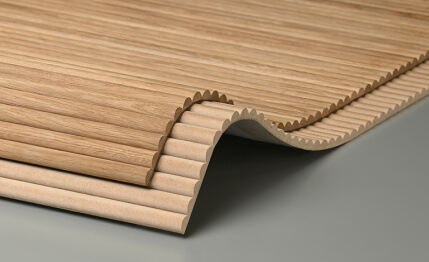
Slat panels —Rafter panelswith a fixed pitch of slats on the base for quick ceiling installation without individual marking.
Wooden corner — Wooden corner bracketfor closing the ends of the outer slats along the ceiling perimeter.
Wooden block — decorative blockfor a volumetric perimeter finish of the slatted ceiling.
Solid wood moldings — full series wood trim: slats, corners, blocks, moldings, baseboards, cornices in a single wood species.
Wooden cornices — wooden corniceand the full range wooden cornicesfor the architectural transition of a slatted ceiling to the walls.
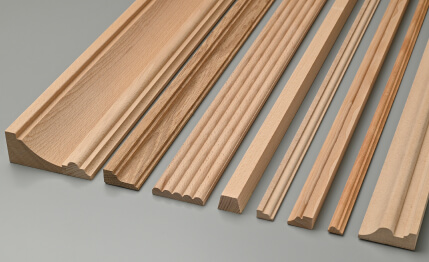
Wooden moldings —Decorative wooden moldingsfor wall frames, horizontal dividers, and vertical accents next to the slatted ceiling.
Polyurethane moldings —Moldings made of polyurethanefor white cornices and frames creating a neutral architectural framework next to the wooden ceiling.
Ceiling decor —polyurethane ceiling decorfor a perimeter cornice and accent elements on the white part of the ceiling next to the slatted field.
Wall decor —Polyurethane wall decor— frames and molding panels for neutral walls next to the slatted ceiling.
Wooden baseboard —Wooden baseboardof a unified series with slats for the lower finish of an interior with a slatted ceiling.
MDF baseboard —MDF Skirting Boardstraight profile for painting for modern and Scandinavian interiors with a wooden ceiling.
About the company STAVROS
STAVROS is a Russian manufacturer of decorative interior products made from solid wood and polyurethane. All company products are produced in unified series by material and surface treatment, allowing you to select ceiling slats, transition trims, wall moldings, cornices, and baseboards as a single set of materials with a predictable result.
STAVROS understands the client's task not as "buy a slat," but as "create an interior" where the ceiling, walls, cornices, and baseboards form an architectural system. That is why the company's assortment covers all key elements of this system — from a single slat to a complete setpolyurethane productsfor ceiling and wall decor.
Frequently asked questions
Can you combine wooden slats on the ceiling with polyurethane stucco on the walls?
Yes, with a clear distribution of roles: the wooden ceiling is the main accent, the polyurethane moldings on the walls are a delicate background. The stucco should be thin, without complex ornamentation, in the color of the wall.
Which cornice should I choose for a ceiling made of wooden slats?
For a wooden slatted ceiling — either a thin polyurethane cornice 30–50 mm (contrast of white and wood), or a wooden cornice of the same species 40–70 mm (unified material). In small rooms — a thin molding 15–25 mm instead of a full cornice.
How to close the joint between a slatted ceiling and a wall?
A wooden corner of the same species and tinting — the most universal solution. An alternative is a shadow gap of 5–10 mm (modern minimalism) or a wooden block around the perimeter (volumetric transition).
Which baseboard to choose for wooden slats on the ceiling?
Wooden baseboard of the same species — for material unity. White MDF baseboard — for Scandinavian lightness. Baseboard in the color of the wall — if the ceiling should be the only accent.
Can a slatted ceiling be installed in a small room?
Yes, if the slat spacing is chosen correctly — at least 50–60 mm in a room up to 15 sq. m. Light-toned slats and a light oil-wax coating instead of dark tinting will visually increase the space.
Is it necessary to coordinate the direction of the slats on the ceiling with elements on the walls?
It is advisable. Horizontal slats on the ceiling + vertical moldings on the walls create a perpendicular rhythm — dynamic, modern. Horizontal slats on the ceiling + horizontal moldings on the walls — monotonous.
How to choose a wooden baseboard for a slatted ceiling made of a different species?
Focus on the tone, not the species. Light slats — light baseboard. Dark slats — dark baseboard. Or a deliberate contrast: dark ceiling + white MDF baseboard.