Article Contents:
- Why a table starts not with the tabletop, but with the base
- What is a wooden table base and how it differs from individual legs
- Quick guide: what parameters to check before buying
- What can be assembled using a wooden table base
- Dining table for home
- Conference table for office or studio
- Console table for hallway
- Coffee table for living room
- Table for a showroom, boutique, or restaurant
- By interior style
- By room size
- By visual mass
- By material and future finish
- Furniture Legs and Supports
- Decorative elements
- Wooden constructor for accent details
- Hardware and materials for installation
- Quick solution
- Designer project
- Item with character
- Commercial interior
- Need a dining table for a kitchen-living room
- Need a desk for an office
- Need a conference table
- Need a table for a restaurant or cafe
- Need a table for the showroom
- Need a small coffee table
- Can I make a custom table from a ready-made table base?
- What is better to choose: a table base or separate furniture legs?
- How to choose a wooden table base for a table?
- Is the STL-026-2 table base suitable for a dining table?
- What material can STL-026-2 be made of?
- What to buy together with a wooden table base?
- Can the table base be used for a round table?
- How to calculate the final table height?
- Can the wooden table base be painted or stained?
- How is a table base different from a table frame?
- Is the wooden table base suitable for a restaurant or showroom?
- Does a designer need to order samples?
- Can decorative elements be added to the table?
- What to check before placing an order?
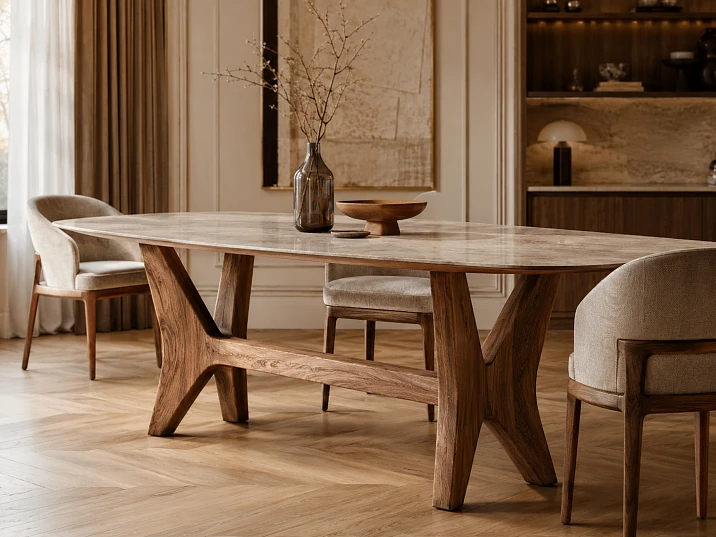
Buying a wooden table base is worth it not only when you need a technical foundation for a tabletop. More often, behind such a choice lies a more interesting task: assembling a table for a specific interior, room size, home style, usage scenario, and the character of the future piece. The same table can be a calm dining center in the kitchen, an expressive piece in the dining room, a work surface in the study, a conference table in a studio, or an accent zone in a showroom. The difference starts not only with the tabletop but with the base.
The base sets the table's silhouette, height, stability, visual mass, and mood. The tabletop is often perceived as a surface, while the base is the architecture of the piece. If the foundation is weak or random, even a beautiful tabletop won't save the impression. If the foundation is chosen precisely, the table looks assembled, confident, and connected to the interior.
For a designer, the base is convenient because it helps quickly move from idea to project. There's no need to start from scratch with full construction development each time. You can choose a ready-made foundation, select a tabletop, coordinate material, finish, hardware, and additional details. For a craftsman, this saves time and reduces the risk of errors. For a private buyer, it's a clear path to a table that doesn't look standard.
At STAVROS you can Buy wooden base as a foundation for a dining, work, coffee, conference, or project table. The main thing is to look at the base not as a separate detail but as the beginning of a future piece: what the tabletop will be, where the table will stand, what material is needed, what finish suits, and what accompanying items should be ordered together.


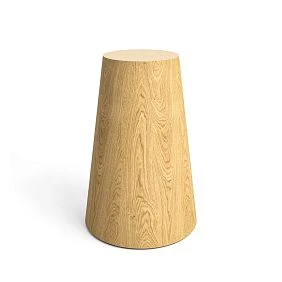
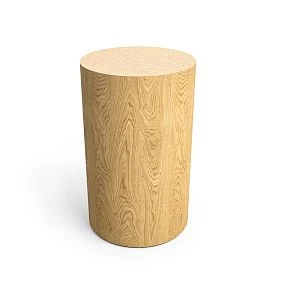
Why a table starts not with the tabletop but with the base
A buyer often starts choosing a table with the tabletop. This is understandable: the tabletop is visible from above, and dishes, laptops, decor, documents, and material samples are placed on it. But when talking about a table as an interior piece, the base is no less important. It determines how stable, light or substantial, strict or decorative, modern or more classic the table will be.
The base forms the lower part of the table. It is responsible for how the piece stands in the space. With a massive foundation, the table looks fundamental. With a lighter one, it appears airier. With a wooden foundation, a warm, natural character emerges, which can be linked to the floor, doors, furniture, staircase, wall panels, or other interior details.
The tabletop can be replaced, changed in color, matched by thickness or material. But if the foundation is chosen randomly, the table will look disjointed. A base that is too weak under a heavy tabletop creates a feeling of instability. A base that is too massive under a small surface overloads the piece. A base that is too neutral in an expressive interior gets lost. A base that is too active in a calm room clashes with the furniture.
A good base helps avoid these mistakes. It sets the proportions in advance. The designer immediately understands what table can be built on this foundation. The craftsman sees what to work with. The buyer gets not an abstract idea but a concrete foundation that can be complemented with a tabletop, hardware, finish, and decorative details.
Therefore, the question 'how to choose a table base' is better asked before selecting the final coating and decor. First the base, then the tabletop, then finish, hardware, and additional elements. This order gives a more assembled result.




What is a wooden underframe and how is it different from individual legs
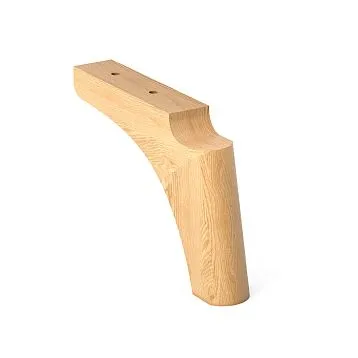
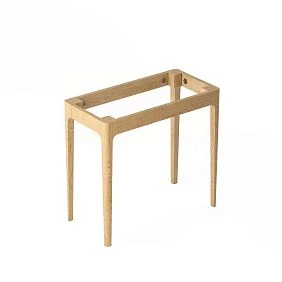
A wooden underframe is the load-bearing base of a table. It is not equal to a set of four random legs. The underframe already incorporates the logic of the structure: supports, connections between them, height, overall geometry, and the ability to serve as a base for the tabletop. That is why, for a solid table, an underframe is often more convenient than purchasing separate supports without a project.
Individual legs are good for many tasks: cabinets, dressers, benches, bed benches, small tables, items with a simple structure. But when you need a full-fledged table with a confident base, it is better to look not just at legs, but at a frame or underframe. Such a base already has a structure that helps hold the tabletop and shape the item as a whole.
An underframe is especially useful when the table should look not randomly assembled, but designed. For example, a dining table in a private home, a conference table in a studio, a table for a showroom, a large desk in an office, a wooden table for a restaurant. In all these scenarios, not only the surface matters, but also how the table stands, how it looks from below, how it is perceived from different sides.
If a buyer is looking for an underframe for a solid wood table, they should determine several parameters in advance: tabletop size, table purpose, installation location, desired visual mass, finish, and operating conditions. Then the underframe is chosen not based on the principle of "liked it," but for a specific task.
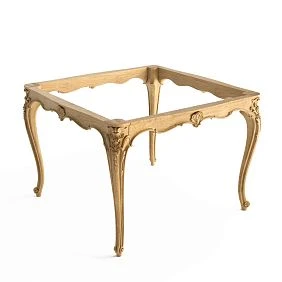
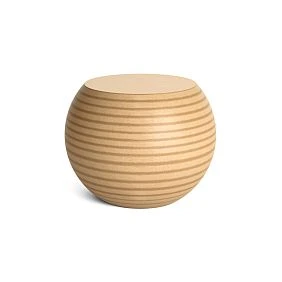
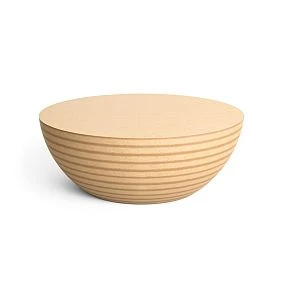
Our factory also produces:


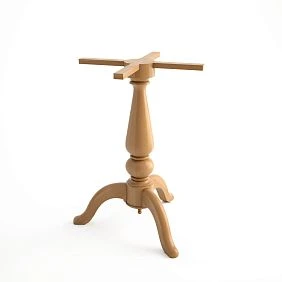
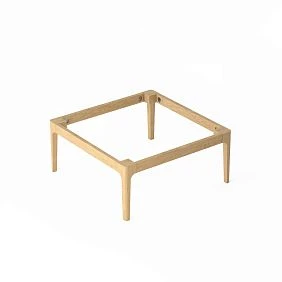

Quick guide: what parameters to check before purchasing
Before ordering an underframe, it is useful to break down the choice into clear points. Even if the product looks suitable visually, you need to check the size, material, purpose, compatibility with the tabletop, and future finish.
| Parameter | Why it's important | What to check before ordering |
|---|---|---|
| Product type | The underframe must match the table's task, not replace random supports | This is a ready-made base, frame, individual legs, or decorative detail |
| Size | The size affects fit, stability, scale, and comfort | Dimensions of the underframe and the intended tabletop size |
| Height | The table should be comfortable for sitting, working, or serving | The final height considering the thickness of the tabletop |
| Material | The material affects appearance, finish, and coordination with the interior | Up-to-date information in the product card |
| Finishing | The underframe should match the future style and color of the table | Ready-made coating or option for further processing |
| Load | The base must match the tabletop and usage scenario | Weight of the tabletop, fastening, operating conditions |
| Hardware | Without proper fastening, a good base will not yield a neat result | Compatibility of fasteners and mounting materials |
| Installation location | A table for the kitchen, office, restaurant, and showroom is used differently | Passages, room dimensions, frequency of use |
| additional elements | Decor can enhance an object but should not interfere with the structure | Are decorative elements, a designer, samples, or finishing needed |
The base cannot be chosen separately from the future tabletop. If the surface will be heavy, the base needs particularly careful evaluation. If the tabletop is light and visually thin, the base can become the main decorative element. If the table should be as calm as possible, the base should not draw attention.
Get Consultation
What can be assembled based on a wooden base
A wooden base provides not just one scenario, but a whole group of solutions. Based on it, you can create a table for home, workspace, commercial interior, or exhibition area. The main thing is to choose the right tabletop, finish, proportions, and additional details.
Dining table for home
The dining table is the center of the kitchen, dining room, or living room. People sit at it every day, host guests, serve dinners, discuss plans, work on laptops, sometimes do children's homework or spread out documents. Therefore, the base must be not only beautiful but also convenient to use.
Proportions are especially important for the home. The base should not interfere with legs, conflict with chairs, visually weigh down the room, or get lost under the tabletop. If the room is small, a too-massive base can make the table feel heavy. If the dining room is spacious, a weak base will look out of place.
A wooden base works well in private homes, kitchen-living rooms, dining rooms with natural materials, interiors with wooden floors, doors, stairs, or solid wood furniture. It helps connect the table to its surroundings and make it part of the space, rather than a separately purchased item.
Conference table for an office or studio
In a design studio, architectural bureau, showroom, office, or meeting room, the table works as an object of trust. People discuss projects, sign documents, show samples, and spread out drawings and materials on it. Here, not only a convenient surface is important, but also the appearance.
A wooden base makes the conference table warmer and more solid than a random metal base. It is well-suited for interiors where you want to avoid a cold office feel. This is especially important for companies working with design, interiors, furniture, finishing, architecture, and private clients.
For a conference table, you need to carefully consider the size of the room, the number of seats, the width of aisles, the weight of the tabletop, and the stability of the structure. If the table will be used actively, the base must match the load, and the fastening must be well thought out.
Console table for a hall
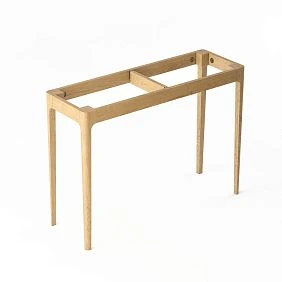
A console table in a hall, entryway, or corridor often serves both a decorative and practical purpose. A vase, key holder, lamp, tray, seasonal decor, and small items are placed on it. It welcomes guests and sets the tone for the home.
For a console, it is important that the base is expressive but not too bulky. In a narrow space, a heavy structure can obstruct passage. In a spacious hall, on the contrary, a too-light table will get lost. The base allows you to assemble an object of the desired visual mass: make it calm, strict, or more decorative.
If the console is being created for an interior, it's worth choosing the countertop and finish in advance. In the hallway, it works well in connection with doors, baseboards, stairs, mirrors, frames, wooden panels, or flooring.
Coffee table for the living room
The coffee table is located in the relaxation area and is clearly visible from above and from the side. It should match the sofa, armchairs, rug, cabinets, and lighting. If the base is interesting, even a small tabletop can look like a full-fledged piece.
Height is especially important for a coffee table. The final height should be calculated together with the tabletop. A table that is too tall will be uncomfortable near the sofa. One that is too low may get lost or look like a decorative stand. The base should match the scenario: cups, books, remote, magazines, decor, laptop.
Here, a more expressive base can be used because the coffee table is often perceived as an accent. But if the living room already has many active details, it's better to choose a restrained base and make the accent through the tabletop material or finish.
Table for a showroom, boutique, or restaurant
In a commercial interior, the table works not only as furniture but also as part of the impression. In a showroom, it displays samples, products, catalogs, and accessories. In a boutique, it can become an island for display. In a restaurant, it's part of the atmosphere. In a hotel, it's a waiting or meeting area.
For such projects, durability, ease of maintenance, scale, and appearance are important. The base should look confident from all sides because a commercial table often stands in an open space. It is seen by guests, clients, employees, and photographed for social media and advertising materials.
Wood adds warmth to such areas. It makes the interior less cold and helps show attention to detail. But commercial use requires particularly careful checking of the tabletop, finish, fastening, stability, and maintenance.
How a designer can choose a table base for a project
The designer chooses the table base not in isolation, but in the context of the interior. It is necessary to consider the room's style, the size of the room, the role of the table, the surrounding materials, lighting, neighboring furniture, and the client's expectations. The same table can look appropriate in a private house and too heavy in a small apartment. Or vice versa: in a spacious dining room with high ceilings, a too light table base will get lost.
By interior style
In a modern interior, the table base should support clean lines. Calm shapes, natural texture, neat finishing, and the absence of unnecessary decor work well here. Wood softens the modern space and makes it warmer.
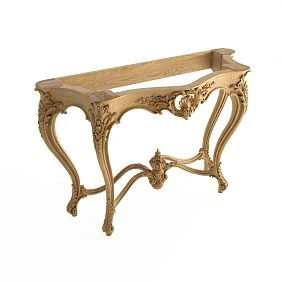
In classic and neoclassical styles, the base can be more expressive. But it is important not to overload the table. If the room already has carved doors, decorative panels, a fireplace area, active chairs, or a chandelier, the table base should support the style, not compete with it.
In art deco and interiors with accent geometry, proportions and expressive form are important. Here, a wooden base can work together with a contrasting tabletop, dark finish, glossy surfaces, or metal details, if they are provided for by the project.
In a country interior, wood often sounds natural. The table base can be warmer, more substantial, connected to the timber, beams, staircase, floor, doors, or kitchen group.
By room size
For a kitchen or small dining room, a too massive table can hinder movement. Here, it is important to leave passages, space for chairs, and seating comfort. The table base should be chosen so that it does not visually occupy the entire volume.
For a spacious dining room or living room, a larger base can be used. In a large room, a small table base under a large tabletop looks weak. The table should match the scale of the room.
In a study, the table often combines a working and representative function. The base should be stable and calm, so as not to distract from work, but at the same time look dignified.
In the meeting room, it is important to consider the number of people. The base should not interfere with seating, and the tabletop should provide enough space for documents, laptops, and samples.
By visual mass
Visual mass is how heavy or light an object appears. A light tabletop and an expressive base create an accent in the lower part. Such a table can become the main object of the room. A massive tabletop and a calm base look more restrained and confident.
If all elements are active, the table can become too heavy. For example, a massive tabletop, a complex base, bright finishes, and decorative elements simultaneously often overload the interior. It is better to choose what will be the main focus: the surface, the base, the material, or the finish.
For a design project, it is useful to show the client not only the top of the tabletop in advance but also the silhouette of the table from the side. It is from the side that you can see how the base works in the space.
By material and future finish
The material of the base affects the appearance and method of finishing. In the scheme of this topic for the specific model STL-026-2, solid oak or beech is indicated. Oak is often perceived as more expressive in texture and substantial, while beech is a good option for painting and calm projects. But the exact parameters, available options, and current conditions should be checked in the product card.
If the table is to be tinted, you need to understand in advance how the material will accept the finish. If enamel is planned, surface preparation is important. If the interior already contains wood, the base should match it in shade or be a deliberate contrast.
The finish should be thought out together with the tabletop. You cannot choose the base separately, then a random surface, and then try to tie them together with color. A good table looks cohesive because the material, shape, and finish are chosen together.
Specific base: STL-026-2 base made of solid wood
When an idea moves to purchase, a specific product is needed that can be studied by parameters. For this topic, such a base is the STL-026-2 solid wood table base. It can be considered as a foundation for a dining, work, or coffee table, if the dimensions and purpose match the project.
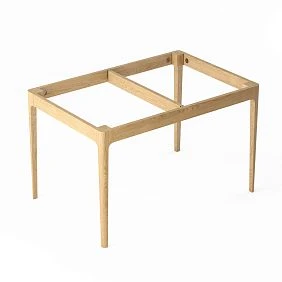
According to the diagram, for STL-026-2 the material is solid oak or beech, dimensions are 1200 × 800 × 740 mm, application is dining, work, or coffee table, style is modern minimalism and natural aesthetics. These parameters help immediately visualize the item: it is not a small support or a random set of legs, but a ready-made base around which a table can be designed.
| Parameter | STL-026-2 |
|---|---|
| Product type | Table base / frame |
| Material | Solid oak or beech |
| Size | 1200 × 800 × 740 mm |
| Possible application | Dining, work, or coffee table |
| Style direction | Modern minimalism, natural aesthetics |
| What to additionally select | Countertop, fittings, materials for installation and finishing |
| What to check before ordering | Current parameters, compatibility with countertop, finishing, fastening, purpose |
| Product card | the STL-026-2 solid wood table base |
The size 1200 × 800 × 740 mm provides a clear basis for design. But the final table depends not only on the underframe. The thickness and size of the countertop will change the visual mass and final height. The countertop material will affect the load. The finish will determine whether the table looks soft, contrasting, light, dark, modern, or closer to natural aesthetics.
STL-026-2 is especially interesting for those who want to get a table without complex development of the base from scratch. You can take a ready-made wooden base, think through the countertop, select fittings and finishing materials. As a result, the item remains individual because the surface, color, combination with the interior, and additional details change.
How to choose a countertop for a wooden underframe
The countertop must match the base in size, weight, style, and purpose. You cannot choose it only by beautiful material. If the surface is too heavy, the underframe must withstand the load and be properly secured. If the countertop is too light or thin, a massive base can visually overwhelm.
For a dining table, practicality is important. The surface must withstand daily use, serving, cleaning, contact with dishes and household items. For a desk, evenness, comfortable depth, space for equipment, and comfort during long sitting are important. For a coffee table, the height relative to the sofa, proportions, and stability matter.
If the table is made for a designer or client, the countertop should be selected together with finish samples. The color of the underframe and countertop can match or contrast. But the contrast must be intentional. For example, a light countertop on a dark wooden base creates an accent. A countertop and underframe in a similar tone give a more cohesive and calm item.
Before purchasing, it is important to check the method of attaching the countertop to the underframe. This may require Furniture hardware and suitable mounting solutions. The specific set depends on the project, the material of the countertop and the base. You should not assume that any surface can be easily placed on any underframe without preparation.
What components can strengthen a table
The base and tabletop create the foundation. But sometimes a table needs extra character: a decorative detail, an unusual joint, an accent finish, special support, or a design connection with other furniture. In such cases, it's useful to look at related categories.
Furniture legs and supports
If the project requires not a ready-made base but a separate support system, you can consider Buy furniture legs for a 200-room hotel project — this is not an ordinary deal, but a partnership requiring a special approach.. This is especially useful for small tables, nightstands, consoles, benches, or items where a solid base is not needed.
But for a full table, it's important not to confuse legs and the base. Legs are separate supports. The base is a ready-made foundation. If the buyer wants to quickly and reliably assemble a table with a clear structure, the base is often more convenient. If the task is more flexible and the structure is designed by a craftsman, separate legs may be suitable.
For projects with custom finishing, you can look at from STAVROS open boundless possibilities for designers, furniture makers, and anyone striving to create unique high-quality furniture.. They help match the color of the tabletop, cabinet, or other wooden parts, if the material and chosen coating allow it.
Decorative elements
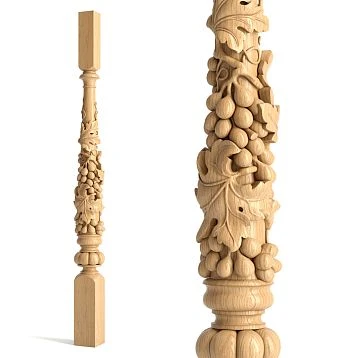
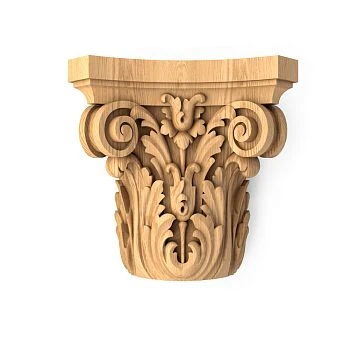
Sometimes a table needs not only a functional base but also an expressive detail. In this case, you can use wooden decorative elements. They help support the style, add an accent, connect the table with nearby furniture, or enhance the individual character of the piece.
It is important not to overload the table. If the base is already expressive, decorative elements should be calm and sparse. If the base is minimalist, a decorative accent can appear elsewhere: on the end, in the connection area, on adjacent furniture, or in an interior group.
Wooden construction set for accent details
For non-standard posts, rods, transitions, and decorative nodes, the following may be useful wooden constructor elements. This is not a replacement for the base, but an additional tool for a craftsman or designer assembling unusual details.
For example, the construction set can help design a decorative element next to the table, a post, a small partition, an accent node, or part of a composition. But such details must be chosen carefully: holes, dimensions, fit, and purpose must match the task.
Hardware and materials for installation
Without hardware and finishing materials, even a good base may not yield a neat result. For fastening, assembly, and the technical part of the project, it is worth checking in advance Furniture hardware. For preparation, installation, painting, tinting, or final finishing — Mounting and finishing materials.
Finishing materials are especially important if the table must fit into a specific interior. The color of the base, tabletop, and adjacent furniture must be coordinated. Sometimes natural finishing is enough. Sometimes enamel is needed. Sometimes tinting. But the decision must be made before assembly, not after.
Commercial selection block: which path suits the buyer
Quick solution
The easiest way is to buy a ready-made wooden table base, choose a tabletop, and select the hardware. This option is suitable for a customer who needs a straightforward table without developing a complex base. It is especially convenient for a home, office, small studio, or workshop.
Here it is important not to rush with the tabletop. First, check the dimensions of the table base, then calculate the final height, and then choose the surface. If finishing is planned, immediately add materials for installation and treatment.
Project for a designer
A designer needs to consider not only the product but also the interior. The table base is selected according to the room style, usage scenario, room size, tabletop, color, lighting, and neighboring furniture. In such a project, it is especially useful STAVROS product samples, because it is easier for the client to approve the material and shade when they see them not only on the screen.
For professional work, it is also worth studying conditions for designers and architects. This helps to build the selection of components as part of a project, rather than as a one-time purchase.
Item with character
If the goal is to make the table a noticeable element of the interior, the table base can become the foundation of an item with character. Such a table does not have to be complex. Individuality can appear through the tabletop material, non-standard finishing, decorative details, color, proportions, or a combination of wood with other elements.
In such a scenario, it's important not to overload the piece. The base, tabletop, and decor should work together. If the base is expressive, it's better to keep the tabletop calmer. If the surface is active, the base can be more restrained.
Commercial interior
For restaurants, showrooms, boutiques, and meeting rooms, a wooden base helps create a piece that looks warmer and more noticeable than standard furniture. The table can become part of the atmosphere, a communication zone, product display, sample demonstration, or guest reception area.
A commercial interior requires practicality. It's necessary to consider frequency of use, maintenance, stability, fastening strength, passage size, ease of service, and appearance from all sides. Before ordering, it's especially important to carefully check all parameters.
Comparison: base, legs, frame, and decorative elements
To avoid mistakes when purchasing, you need to understand how similar products differ from each other.
| Element | What it is for | When to choose | When it doesn't fit |
|---|---|---|---|
| Wooden base | Ready-made table base | When a solid table with a clear base is needed | If only separate supports for other furniture are needed |
| Solid wood table underframe | Base with natural wood character | For dining, work, conference, and project tables | If a metal or fully concealed structure is required |
| Furniture legs | Individual supports | For cabinets, dressers, benches, small tables | If a ready-made connected base for a large table is needed |
| Table frame | Wider load-bearing structure | When a base for a tabletop or item assembly is needed | If only a decorative detail is needed |
| Decorative elements | Visual accent | When you need to enhance individual character | If a load-bearing base is required |
| Construction set | Parts for posts, rods, and assemblies | For non-standard accent solutions | If a ready-made table base is needed |
| Hardware | Mounting and assembly | In almost any table project | Does not replace the base and does not solve the design issue |
| Finishing materials | Color, protection, installation, finish | When the underframe and tabletop must be connected | Do not replace checking dimensions and construction |
The main rule: load-bearing parts cannot be replaced with decorative ones. Decor enhances the appearance but does not bear the main load. Legs can be supports, but they do not always replace the underframe. Hardware is needed for fastening, but it does not compensate for incorrect size or a weak base.
What to buy together with a wooden underframe
The underframe is just the beginning of the table. To make the project ready for assembly, you need to think in advance about the tabletop, fastening, finishing, possible decorative elements, and material coordination. If you buy everything piecemeal without an overall logic, it's easy to end up with a mismatch in color, size, and style.
| Main purchase | What to add | Why this is needed | Where to look |
|---|---|---|---|
| Wooden base | Tabletop for the project | To assemble a complete table | Select size and material according to the project |
| Table base STL-026-2 | Hardware for fastening | To connect the base and tabletop neatly | Furniture hardware |
| Solid wood underframe | Materials for installation and finishing | To match the base with the tabletop in color and protection | Mounting and finishing materials |
| Table for design project | Product samples | To coordinate the material and shade with the client | STAVROS product samples |
| Table with an additional accent | Decorative elements | To enhance the object character | wooden decorative elements |
| Non-standard table or adjacent area | Construction kit elements | To assemble stands, transitions, or accent nodes | wooden constructor elements |
| Project with separate supports | Furniture legs | If the structure requires separate supports instead of an underframe | Buy furniture legs for a 200-room hotel project — this is not an ordinary deal, but a partnership requiring a special approach. |
| Professional selection | Terms for designers | To work with the project systematically | conditions for designers and architects |
A good cart is built from the task. For a quick home solution, you need an underframe, tabletop, hardware, and finishing. For a design project, samples may be needed. For a commercial interior, especially careful checking of materials and fasteners is required. For a custom item, decorative elements or a construction kit are needed if they are really required by the project.
How not to confuse an underframe with similar products
An underframe is a ready-made load-bearing base of a table. It is chosen when a table is needed, not just a set of parts. It defines the shape, height, stability, and lower architecture of the item.
Furniture legs are separate supports. They are good for different types of furniture, but do not always replace an underframe. If the table is large, the tabletop is heavy, or a solid structure is needed, legs alone may not be enough without calculation and connecting elements.
A table frame is a broader concept. It can include the entire load-bearing structure. In some cases, a frame and an underframe are similar in function, but the buyer still needs to look at the purpose of the specific product card.
Decorative elements do not bear the main load. They are needed for visual accent, connection with the interior, detailing. A decorative element cannot be used as a table base if it is not intended for that.
A construction kit includes parts for posts, rods, transitions, decorative nodes, and custom solutions. It helps assemble accent parts but does not replace an underframe for a full table.
Hardware is the technical part of the project. It is needed for assembly and fastening but does not solve the issue of proportions. Even good hardware will not save a table if the underframe does not fit in size, load, or purpose.
Practical selection for specific situations
Need a dining table for a kitchen-living room
Start with the room size. Account for walkways, space for chairs, distance to the kitchen, sofa, wall, or window. Then choose a base according to scale. If the kitchen-living room is small, the base should not visually occupy the entire center. If the room is spacious, a too-light base will get lost.
Select the tabletop after the base. The final height should be comfortable, and the weight should match the construction. It's best to coordinate the finish with kitchen fronts, flooring, doors, or other wooden elements.
Need a desk for an office
In an office, the desk should be calm, stable, and comfortable for long work. The base should not interfere with seating, and the tabletop should provide enough depth. If the office is used for meetings, the appearance of the base becomes especially important: the desk is seen not only by the owner but also by guests.
Natural materials and restrained finishes work well for such a project. Decorative elements can be used sparingly if they support the interior rather than distract.
Need a conference table
A conference table requires scale. It's important to know in advance how many people will sit at it, where the chairs will be placed, how cables will run, and whether samples, documents, or equipment will be used. The base should be stable and not interfere with legs.
In a design studio or architectural office, a wooden base helps create a warmer atmosphere than standard office furniture. But practicality and calculation are especially important here.
Need a table for a restaurant or cafe
A commercial table must withstand frequent use. The base should be stable, the finish practical, and the fastening reliable. In a restaurant, the table is seen from all sides, so the lower part should not look random.
If the interior is built on natural materials, a wooden base helps maintain the atmosphere. For a hall with many tables, it is important that all items are coordinated in height, color, and visual weight.
Need a table for a showroom
In a showroom, the table often serves not only as furniture but also as a stage for the product. Samples, catalogs, decor, and accessories are laid out on it. The base should look expressive but not compete with what is placed on top.
Here it is especially useful to think through the finish. The table should support the brand, interior, and product display. To coordinate materials, it is worth using samples.
Need a small coffee table
A coffee table requires precise height. It should be comfortable next to the sofa and armchairs. The base should not be too heavy if the tabletop is small. But a base that is too weak will also spoil the impression.
For such an item, you can emphasize wood, shape, or finish. If the living room is calm, the table can become an expressive detail. If there is a lot of active furniture around, it is better to choose a more restrained base.
What not to make from scratch if there are ready-made STAVROS elements
When a buyer thinks about how to assemble a table from a base and tabletop, it is easy to imagine that the entire foundation needs to be developed independently. But this is not always necessary. A ready-made base helps skip the most difficult stage — creating the basic structure from scratch.
There is no need to redesign the load-bearing base if a suitable base is already available. This saves time and reduces the risk of errors in proportions. The designer can focus on the tabletop, finish, and matching the interior. The craftsman can focus on assembly, fastening, and final finishing.
There is no need to look for random legs, crossbars, and decorative details in different places if the goal is a solid table. Different elements may not match in material, scale, fit, and style. A ready-made base sets a unified character.
It's not worth manually cutting decorative accents if they can be selected from ready-made categories. Decorative elements and the constructor help enhance the project, but only where they are truly needed. Their task is not to replace the base, but to complement it.
Don't put off hardware and finishing until the last moment. Often, these details determine how neatly the table will be assembled. If the base and tabletop are chosen, immediately think about fastening, surface preparation, coating, and care.
Ready-made STAVROS elements help make a project not less individual, but more manageable. Individuality arises not from chaos, but from a precise combination: base, tabletop, finishing, hardware, decorative details, and placement in the interior.
Installation, finishing, and preparation for assembly
Before assembly, you need to check all dimensions. The dimensions of the base, the size of the tabletop, the final height, attachment points, surface thickness, chair placement — all of this affects comfort. An error in one parameter can make the table beautiful but uncomfortable.
The tabletop must be prepared for fastening. You cannot assume that any surface automatically fits the chosen base. The material, thickness, weight, and method of fixation require verification. This is especially important for heavy tabletops and commercial projects.
Finishing is best planned before final assembly. If the base and tabletop should be the same color, materials need to be selected in advance. If contrast is needed, it should be checked on samples or at least on similar materials. The color on the screen and the real shade of wood may differ.
If solid oak or beech is used, the character of the material must be considered. Oak can give a more pronounced texture, beech a smoother surface. But the exact options for material and finishing should be checked in the specific product card and clarified before ordering.
Installation must account for operating conditions. A home dining table, a conference table, and a restaurant table work differently. The more intensive the use, the more carefully you need to approach fastening, coating, and care.
Mistakes when buying a wooden table base
The first mistake is choosing only by photo. The underframe may look beautiful but not fit in size, height, load, or style. The photo shows the shape but does not replace checking the parameters.
The second mistake is buying an underframe without understanding the tabletop. The base and surface must work together. The weight, size, thickness, and material of the tabletop affect the choice of underframe.
The third mistake is not calculating the final height. The height of the underframe plus the thickness of the tabletop gives the actual table height. If this parameter is not checked, the table may be uncomfortable.
The fourth mistake is confusing an underframe with legs. Legs are not suitable for all tasks. If you need a solid table with a ready-made base, an underframe is often more logical. If you need a simple support for other furniture, you can look at legs.
The fifth mistake is forgetting about hardware. The underframe and tabletop need to be connected. The fastening must match the material, size, and purpose of the table.
The sixth mistake is not thinking through the finish. Even a good wooden base can look out of place if it does not match the interior and tabletop in color. The finish should be part of the project.
The seventh mistake is overloading the table with decorative elements. If the base, tabletop, and additional details are all too active, the piece becomes heavy. It is better to choose one main accent.
The eighth mistake is not considering the room. The table should fit not only on its own but also with the room: passages, chairs, lighting, neighboring furniture, and the purpose of the area.
The ninth mistake is expecting decorative elements to have a load-bearing function. Decor adorns but does not replace the structure. For the base, you need an underframe or frame, not a random decorative detail.
The tenth mistake is not clarifying the parameters before ordering. If the project is complex, it is better to check the product card in advance and contact the STAVROS manager.
Who is a wooden table base for a project table suitable for
For interior designers, the table base is suitable as a ready-made foundation for a project item. You can agree with the client on the style, size, finish, tabletop, and additional elements. This is faster than developing the entire base from scratch and more precise than searching for a standard table.
For furniture makers and carpentry workshops, such a base helps reduce work on the structure and focus on the tabletop, fastening, finish, and details. A ready-made table base is convenient when you need to create an item with a custom look but without fully developing the base.
For furniture manufacturers, the table base can be useful for small-batch solutions, showroom samples, project tables, and interior sets.
For homeowners and apartment dwellers, this option is suitable if you want a table that fits your interior rather than choosing a ready-made standard item. This is especially relevant for kitchen-living rooms, dining rooms, studies, and halls.
For restaurants, boutiques, and showrooms, a wooden table base helps create furniture that looks warmer and more expressive than standard solutions. However, a commercial project requires particularly careful checking of load, finish, and operating conditions.
This approach is not suitable for those looking for the cheapest standard table, who are not ready to agree on dimensions, do not understand the future tabletop, do not want to think about fastening and finishing, or expect a ready-made table without project involvement. The table base is a foundation for assembly, not a fully finished item with a tabletop, unless otherwise specified in the specific product card.
How to buy on STAVROS and assemble an order without surprises
Start with the task. Do you need a dining table, work table, coffee table, conference table, console, or commercial table? The size, visual mass, tabletop, finish, and hardware depend on the answer.
Then open the category where you can select a wooden table base or table frame. Compare sizes, purpose, material, and appearance. If you are interested in a specific base, study the STL-026-2 card and check the parameters: material, dimensions, application, and compatibility with the future tabletop.
After selecting the base, move on to related products. For fastening, you need hardware. For processing and finishing, materials for installation and finishing. For a design project, product samples. If the project includes additional accents, you can look at decorative elements or the configurator.
Before ordering, check the entire set: base, tabletop, mounting, finish, installation location, load, final height, and interior style. If any parameter raises doubts, it's better to clarify it with a STAVROS manager before purchase.
This approach helps you buy not just a separate wooden base, but a prepared set for a future table. This is what distinguishes a project item from a random assembly.
FAQ
Can I make a custom table from a ready-made base?
Yes. The base sets the foundation, while individuality comes through the tabletop size, material, color, finish, hardware, and additional elements. A ready-made base does not hinder a project approach but simplifies it.
What is better to choose: a base or separate furniture legs?
For a solid table, a base is often more convenient because it already forms the foundation. Separate legs are suitable for cabinets, dressers, benches, and some simple tables, but require separate structural calculations.
How to choose a wooden base for a table?
First, determine the table's purpose, room size, intended tabletop, final height, and interior style. Then check the dimensions, material, finish, and mounting in the product card.
Is the STL-026-2 base suitable for a dining table?
According to the diagram for STL-026-2, it is indicated for use as a dining, work, or coffee table. Before ordering, you need to check the dimensions 1200 × 800 × 740 mm, material, tabletop, and conditions of future use.
What material can STL-026-2 be made of?
For this model, the diagram specifies oak or beech array. Current parameters, options, and availability should be checked in the product card before ordering.
What to buy together with a wooden underframe?
Usually, you need a tabletop, mounting hardware, materials for installation and finishing. For a design project, product samples may be needed, and for a custom solution, decorative elements or a constructor.
Can the underframe be used for a round table?
This depends on the specific model, size of the round tabletop, load, and mounting method. Before ordering, you need to check the compatibility of the underframe with the chosen tabletop shape and clarify the parameters.
How to calculate the final table height?
Add the height of the underframe and the thickness of the tabletop. Then compare the resulting height with the scenario: dining table, work table, coffee table, or conference table. Seating comfort should be checked in advance.
Can the wooden underframe be painted or tinted?
The possibility of finishing depends on the material and the specific product. Before processing, you need to check the product card and select suitable materials for installation and finishing.
How is an underframe different from a table frame?
An underframe is the base under the tabletop. A table frame is a broader concept that may include the entire load-bearing structure. When purchasing, you need to look at the purpose of the specific product card.
Is a wooden underframe suitable for a restaurant or showroom?
Yes, if it matches the load, tabletop size, operating conditions, and room style. For commercial interiors, fastening, finish, and ease of maintenance are especially important.
Does a designer need to order samples?
For project work, samples help coordinate material, shade, and texture with the client. This reduces the risk of errors when choosing the finish and matching the underframe with the tabletop.
Can decorative elements be added to the table?
Yes, if they do not interfere with the structure or overload the item. Decorative elements should complement the underframe and tabletop, not replace load-bearing parts.
What should be checked before placing an order?
Check the underframe dimensions, material, purpose, tabletop, final height, fastening, hardware, finish, load, and installation location. If the table is being assembled for a project, it is better to clarify the compatibility of parts in advance.
Result: the underframe turns the idea of a table into a project
A wooden underframe is not a secondary detail, but the foundation of a future table. It sets stability, silhouette, character, height, and visual mass. Based on the underframe, you can assemble a dining, work, coffee, conference, or commercial table that will look not standard, but tailored to the interior.
For a successful result, you need to choose the underframe together with the tabletop, hardware, finish, and installation location. For a specific project, you can consider STL-026-2 made of solid oak or beech with the dimensions specified in the diagram: 1200 × 800 × 740 mm, as well as related categories: hardware, finishing materials, decorative elements, wooden construction set, and product samples.
STAVROS helps you move from the idea of "I need a table for the interior" to a clear purchase: choose a wooden base, check the parameters, select components, and assemble an item with character. Before ordering, it is worth carefully studying product cards, comparing dimensions, material, finish, and fastening. Then the table will turn out not as a random assembly, but as an expressive piece that truly works in the interior.