Article Contents:
- What is a wooden knob handle and how it differs from other types of handles
- Where wooden knob handles are used
- Commodes and cabinets
- Desk and work furniture drawers
- Cabinets, display cases, and sideboards
- Kitchen fronts
- Children's Furniture
- Furniture after restoration
- How a wooden knob handle differs from a pull handle
- How to choose the size of a wooden knob handle
- Small diameter (25–32 mm)
- Medium diameter (33–45 mm)
- Large diameter (46–55 mm and above)
- Practical rule of proportions
- Material: why wood feels warmer than metal and plastic
- Wood species for knob handles
- Wooden knob handle for dresser and nightstand: how not to make a mistake
- How many handles per drawer?
- How to achieve symmetry?
- How not to overload the facade?
- Knob handle for the kitchen: when it is appropriate and when it is not
- Wooden knob handle coating: varnish, enamel, tinting, or no coating
- Handle without coating (for finishing)
- Handles with factory coating
- Wood Toning
- Enamel
- How to match handle color with the facade
- How to properly install a knob handle: technical nuances
- Standard mounting bolt
- Marking
- Marking multiple handles
- Important: spare
- Wooden knob handles and interior styles
- Classic and neoclassic
- Provence and Country Style
- Scandinavian Style
- Modern and contemporary
- Loft and Industrial
- Mistakes when buying a wooden knob handle
- How to choose wooden knob handles to match other furniture elements
- Caring for wooden knob handles
- Where to buy a wooden knob handle for furniture
- FAQ: Answers to Popular Questions
- About the manufacturer
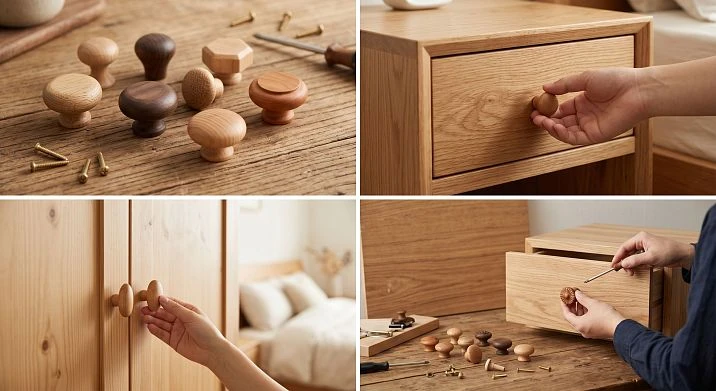
There are details that don't catch your eye at first glance, but they determine how finished the furniture looks. A wooden knob handle is one of them. Small, compact, point-like — it can completely change the look of a chest of drawers, nightstand, or kitchen front without requiring repainting or replacing the set. Just properly selected wooden button handle — and the furniture starts to look different: warmer, richer, more alive.
This article is written for those who choose consciously. Not just "some wooden thing for a drawer," but a specific type of hardware with an understanding of format, size, material, finish, and application. We'll break it all down step by step — from typology to installation, from color selection to common mistakes.
What is a wooden knob handle and how it differs from other types of handles
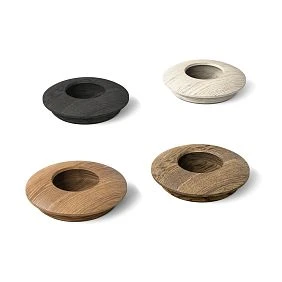
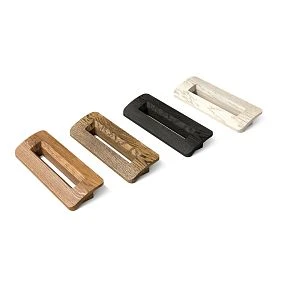
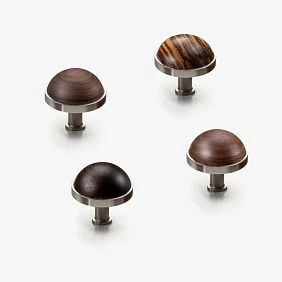
Before talking about selection, you need to clearly understand what we're dealing with. A knob handle is a compact furniture handle with a single attachment point. Unlike a pull handle, which is held by two screws and has an arched shape, a knob is mounted through one central hole in the front and secured with a nut from the inside.
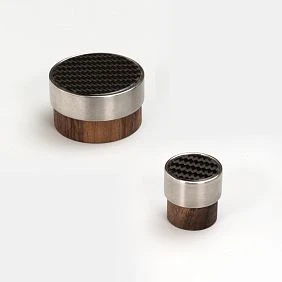
In shape, a knob handle is a small protruding element, usually round, mushroom-shaped, conical, or slightly elongated. Its diameter typically ranges from 25 to 55 mm. It doesn't take up much space, doesn't disrupt the symmetry of a small front, and provides enough grip for easy opening of a drawer or door.
That is why Wooden knob handle — a separate furniture fitting type, not a variation of a regular handle. It has its own area of application, its own aesthetics, and its own selection rules. Confusing it with a pull handle, as many do, means risking both inconvenience and visual mismatch.




Where are wooden knob handles used?
The range of applications is wider than it seems. Let's go through each furniture type — with an explanation of why a knob, and not another type of handle.
Our factory also produces:
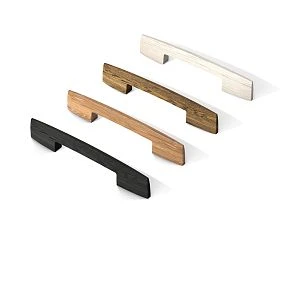
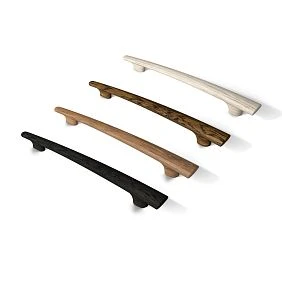
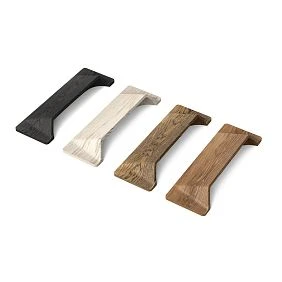
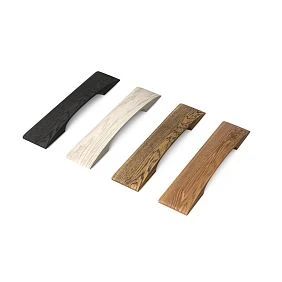
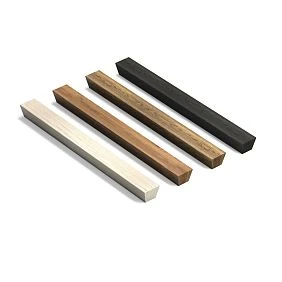
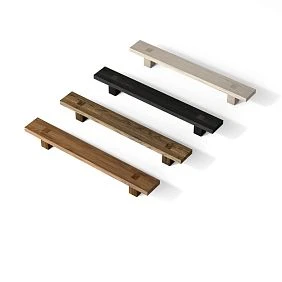
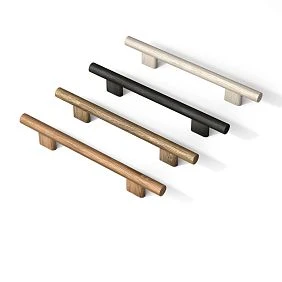
Chests of drawers and cabinets
A classic of the genre. A multi-section chest of drawers with four to six drawers requires a handle that won't visually overload the facade. A knob handle in the center of each drawer is a concise, symmetrical, and stylish solution. It doesn't protrude, doesn't catch the eye, but is always at hand.
It looks especially advantageous a knob handle for a chest of drawers in classic and neoclassical interiors: when the facade is decorated with moldings and decorative overlays, the knob fits in as a final accent — restrained and precise.
Get Consultation
Desk drawers and office furniture
Small desk drawers are an ideal place for a wooden knob. Compactness is important here: the drawer is low, there is little space for a pull, and the knob takes up exactly as much as needed. Plus, the wooden texture on the desk creates a calm, warm atmosphere — especially in an office with natural finishes.
Cabinets, display cases, and sideboards
Small cabinet doors, glazed display doors, sideboard sections — in all these cases, a knob handle is appropriate and functional. Especially when it comes to lightweight doors without significant weight: for them, a single attachment point is more than sufficient.
wooden furniture handles In button format, they work well on sideboards in Provencal, country, or classic styles: they emphasize the naturalness of the wood and the softness of the interior solution.
Kitchen fronts
In the kitchen, a knob handle is appropriate where it concerns upper cabinets, small facades, decorative sections, or a kitchen island. For lower cabinets with heavy doors and deep drawers that require force to open, it is better to use a pull or a profile handle. But for lightweight facades, a wooden knob is an organic, warm, and non-trivial choice.
Children's furniture
A small wooden handle is a safe and aesthetic option for children's dressers, nightstands, and cabinets. No sharp corners, no cold metal. Wood is warm to the touch, natural, and ecologically neutral. It is pleasant for a child to reach for such a handle — and pleasant for you to look at it.
Furniture after restoration
One of the most sought-after scenarios. An antique chest, a vintage nightstand, a grandmother's sideboard — after restoration, they need new hardware that matches the character of the piece. Solid wood knob handle with an aged look, patina, or dark stain — this is exactly what organically fits into a restoration project without feeling like a new build.
How a wooden knob handle differs from a pull handle
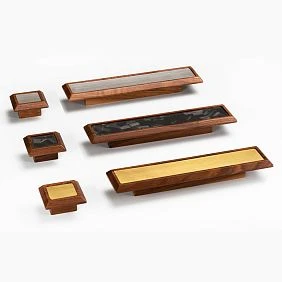
This is a fundamental question that eliminates many mistakes when purchasing. Both types are wooden furniture handles, both can be made from the same wood species and with the same finish. But functionally and visually, they are different tools.
| Parameter | Button handle | Bracket handle |
|---|---|---|
| Mounting points | 1 | 2 |
| Grip type | One-handed finger grip | Palm grip |
| Suitable for | Drawers, light doors, small fronts | Large fronts, heavy doors |
| Visual weight | Light, point | More noticeable, horizontal |
| Installation difficulty | One hole | Two holes with center distance |
wooden hook handle is appropriate where a confident full-hand grip is needed — for example, on a large sliding wardrobe door, on lower kitchen fronts, or on heavy drawers with archival documents. A knob, on the other hand, works where movement is light and the front is small.
Mixing both types on the same piece of furniture is acceptable in a well-thought-out design, where the bracket handles function and the knob serves as a decorative accent. But chaotic mixing creates visual clutter.
How to choose the size of a wooden knob handle
It might seem that a knob is a small detail, and size isn't that important. This is a misconception. An incorrectly chosen diameter will turn a neat detail into visual dissonance.
Small diameter (25–32 mm)
Suitable for the smallest drawers: a nightstand drawer, a small cosmetic chest drawer, a section of a children's nightstand. Such a knob is almost unnoticeable on the facade — it is delicate and appropriate where any increase would be excessive.
Medium diameter (33–45 mm)
The optimal universal size. Suitable for most dressers, cabinets, desks, and upper kitchen cabinets. It reads well on the facade, is comfortable to grip, and does not overwhelm the space. This format is most often chosen for standard interior solutions.
Large diameter (46–55 mm and above)
For cabinets with a more spacious facade, sideboards, display cases, and decorative sections where a more confident grip is needed. Such a knob already becomes an independent decorative accent — it is visible and works as a design element, not just a functional one.
Practical rule of proportions
The width of the box is divided by eight — and you get the maximum recommended button diameter. A box 40 cm wide: maximum 50 mm. A box 20 cm wide: maximum 25 mm. This is a rule of thumb, but it works well in practice.
Material: why wood feels warmer than metal and plastic
The furniture fittings market today offers buttons made of metal, ceramic, plastic, glass, and resin. They all have their niche. But a wooden knob holds a special place — and here's why.
Warm to the touch. Wood has low thermal conductivity — it doesn't cool your hand like metal, and it doesn't slip like polished plastic. This feeling of comfort with every touch.
Natural texture. The texture of wood is a living pattern that cannot be fully replicated in a factory. Each solid wood handle is slightly different from another: in pattern, in shade, in the play of the grain. This is not a defect — it is a sign of naturalness.
Organic combination with wooden furniture. Wooden fittings on wooden furniture is a tautology that sounds right. The unity of material creates a feeling of wholeness and thoughtfulness.
Possibility of finishing in any color. Wood is a neutral "canvas." It can be tinted, painted, coated with varnish, wax, or oil. This is a huge advantage over metal or plastic: handles without coating they are bought specifically for subsequent painting — to exactly match the tone of the facade.
Durability with proper care. A wooden handle made of dense species — oak, beech, ash — lasts for decades. It does not oxidize, delaminate, or lose its shape under normal humidity.
Wood species for knob handles
Beech — dense, uniform, with fine texture. Holds its shape perfectly, stains and tones well. The most popular material for mid-range furniture handles.
Oak — heavy, hard, with expressive texture. Oak knobs look solid and rich. Well suited for classic and hunting-style furniture.
Pine — soft, light, warm amber tone. Good for rustic, country, and cottage styles. Less durable under high load, but sufficient for light furniture.
Birch — white, uniform, easy to paint. Neutral in character, fits well into Scandinavian and minimalist interiors.
Wooden knob handle for dresser and cabinet: how to avoid mistakes
A dresser with several drawers is the most common scenario for buying knob handles. And this is where the most questions arise.
How many handles per drawer?
For a small drawer (up to 50–60 cm wide) — one knob in the center. For a wide drawer (over 60 cm) — two options are possible: one large knob in the center or two knobs symmetrically. The second option is more functional, the first is more concise. The choice depends on the interior style.
How to achieve symmetry?
Before installation, mark all mounting points using a tape measure and a level. The horizontal center of the drawer is a fixed point. The button installation height is usually at the level of the lower third of the drawer front height. This visually "raises" the handle and makes gripping more comfortable.
How not to overload the facade?
If there are many drawers — say, six to eight on one dresser — make sure the buttons are not too large. On a multi-section dresser, it is better to choose a small diameter so that the handles form a rhythmic visual row, rather than turning into a chaos of spots.
By the way, Furniture Decoration from Wood — overlays, sockets, frame trims — pairs well with wooden buttons of the same tone. If the dresser is decorated with wooden overlays, a button made of the same wood will create a unified ensemble.
Button handle for the kitchen: when it is appropriate and when it is not
The kitchen is the most demanding environment for furniture fittings. Humidity, temperature changes, grease deposits, active use — all this places high demands on the material and coating.
A wooden button in the kitchen is appropriate in the following scenarios:
Upper cabinets with lightweight doors. Here the load is minimal, and the button complements the kitchen style with naturalness and warmth.
Kitchen in Provence, country, or rustic style. These are interiors where wood is the main material and the main language. Metal handles here would be foreign bodies. Wooden buttons are an organic continuation of the concept.
Kitchen island with decorative sections. The island's small decorative doors, which are rarely opened, are an ideal place for a beautiful wooden knob.
Facades for painting. If you are repainting your kitchen and want to update the hardware — handles without coating made of wood allow you to paint them exactly to match the facade.
It is not recommended to install wooden knobs on lower kitchen cabinets near the sink or stove — constant humidity and heat flows damage the wood coating faster than in other areas.
Wooden knob handle coating: varnish, enamel, tinting, or no coating
Coating is not only about aesthetics but also protection. The coating determines how long the handle will maintain its appearance and how easy it is to care for.
Handle without coating (for finishing)
handles without coating — these are blanks made of sanded wood, ready for independent painting, tinting, or varnishing. They are chosen in two cases: when you need to match the facade color exactly, and when you want full control over the result.
Painting a wooden knob yourself is not difficult. Primer → tinting paint or stain → finishing varnish. Result: the handle matches the tone of the cabinet or dresser exactly.
Handles with factory coating
Handles with Finish are produced in several standard options: natural wood under clear varnish, dark tinting (walnut, wenge, ebony), light tinting (bleached oak, vanilla, milky), enamel painting in neutral colors (white, gray, anthracite).
The advantage of a ready-made coating is time: you receive a product ready for installation. The disadvantage is less freedom in color selection.
Wood toning
Water-based or oil-based stain penetrates the wood structure and changes its tone while preserving the texture. Ideal for creating an aged or "noble" wood effect.
Enamel
An opaque coating that hides the texture. Used when a specific color is needed and the wood species is secondary. Popular in modern and Scandinavian interiors, where knob handles are painted the same color as the facade — an "invisible" effect.
How to match the handle color with the facade
Three proven strategies:
Tone-on-tone. Handle the same color as the facade. Creates unity and minimalism. Works well in modern interiors.
Contrast. Dark knob on a light facade or vice versa. The handle becomes an accent. Works in classic, art deco, Scandinavian style.
Ensemble with details. Knob of the same tone as wooden furniture legsoverlays or moldings. All wooden details are connected by a common tone — this is a professional approach to interior design.
How to properly install a knob handle: technical nuances
Installing a wooden knob is a simple operation, but a few rules are worth knowing.
Standard mounting bolt
Most knobs come with an M4 or M5 bolt of standard length (usually 25–40 mm). The bolt length should match the thickness of the facade plus the depth of the mounting hole in the handle. If the facade thickness is non-standard, check with the seller or use a bolt of the required length.
Marking
Determine the mounting point, drill a through hole for the bolt, insert the bolt from the outside, put on the handle, and tighten the nut from the inside. Make sure the knob sits evenly and does not rotate. If it rotates, apply a drop of furniture glue to the bolt neck or use a rubber washer.
Marking multiple knobs
For a chest with several drawers, use a template: cut a rectangle from cardboard the size of the drawer, mark the center, and apply the template to each drawer. This takes 10 minutes and guarantees perfect symmetry.
Important: spare
Always order 1–2 more knobs than the calculated quantity. Reasons: possible defects during drilling, spare replacement in the future, difficulty matching the same model from a different batch after a year.
Wooden knob handles and interior styles
Different styles impose different requirements on hardware. Let's see how a wooden button works in each of them.
Classicism and neoclassicism
Furniture with cornices, moldings, turned legs — here a wooden button with a figured profile or a slightly elongated shape looks organic. Dark tinting (walnut, wenge) or gilding gives the product a ceremonial feel.
Please note: in classic interiors, a combination of a wooden button with wood furniture decor — overlay rosettes, corner ornaments, frame overlays. All of this forms a unified decorative language.
Provence and country
Here the button is appropriate in its natural color or with a slight antique tint. The shape is simple, without unnecessary details. Patination adds the right feel of "lived-in" furniture. wooden furniture handles in these styles — is almost a mandatory element.
Scandinavian style
Minimalism, clean forms, light wood species. The button here is simple, round, without ornament, in the color of the facade or slightly lighter. Birch, ash, pine under a clear matte varnish — ideal.
Modern and Art Nouveau
Here a wooden button is a non-trivial choice. Most use metal or matte plastic. But if the interior has wooden elements — open shelves, a table, floor, slats — a wooden button will add liveliness and warmth to an environment of glass and metal.
Loft and industrial
Here wooden buttons work in combination with dark metal elements. A button made of dark tinted oak or burnt pine on a metal or laminate facade — unconventional and expressive.
Mistakes when buying a wooden knob handle
These mistakes occur regularly — equally among beginners and experienced people. Let's examine each without condescension.
Choosing too small a knob for a heavy facade. A small knob with a diameter of 25 mm does not provide a comfortable grip for a heavy cabinet door. The hand slips, the facade opens with effort. For heavy doors — a pull handle or a large knob.
Not considering the mounting diameter and grip comfort. The diameter of the knob is not just about aesthetics, but also comfort. A too thin neck — uncomfortable to hold with fingers. A too wide head — uncomfortable to grasp. The optimum is a knob with a wide base and a moderately protruding head.
Buying handles from different batches. The same model in different batches may differ in wood tone — especially for handles without coating. This is critical for a chest of drawers with six drawers: the handles will noticeably differ in color. Always buy the entire set at once.
Do not check the fastening. Specify the bolt length and hole diameter. The standard M4×25 bolt is suitable for facades with a thickness of 16–18 mm. For thicker ones, a different length is needed. If you didn't check, you'll get a handle that wobbles or doesn't tighten.
Not matching the color with the facade. An 'approximately similar' tone in reality looks like a random mismatch. The color of the handle should be checked against the facade sample in daylight — not by monitor or from memory.
Putting a knob where a pull handle is needed. A heavy cabinet door, a lower kitchen facade, a drawer with heavy contents — all of this requires a wooden pull handle, providing a secure grip with two attachment points.
Don't forget about spare parts. One extra fastener and one spare handle is not wastefulness, but reasonable foresight. Furniture lasts for years, and finding the same model two years later can be difficult.
How to choose wooden knob handles in ensemble with other furniture elements
A knob handle is a detail. But details don't work in isolation, they work in a system. If you are updating furniture or decorating a room from scratch, it's important to establish a unified line of wooden elements.
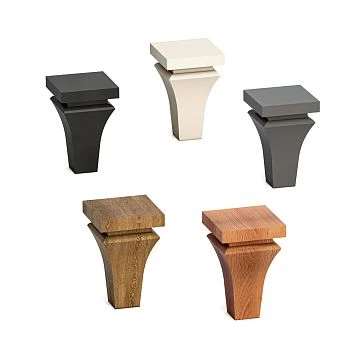
Handles + furniture legs. wooden furniture legs and wooden knobs in the same tone and same wood species is a professional technique. A chest of drawers with dark beech legs and the same dark knobs on the drawers looks like a single whole, not a set of random details.
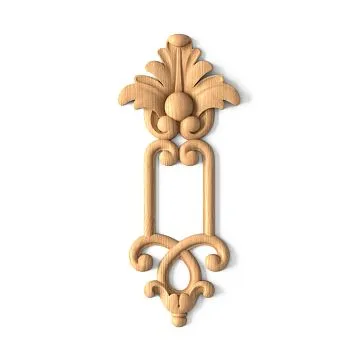
Handles + overlays. Decorative wooden overlays and moldings on the fronts of a wardrobe or chest of drawers create a frame. A knob handle in the center of such a frame is a focal point that completes the decor.
Handles + shelves. Open wooden shelves of the same tone as the knob handles on the cabinet drawers are a connecting element of the interior. All wooden items in the room should echo each other in color and wood species.
Care for wooden knob handles
Wooden fittings do not require specific care, but a few rules will help preserve their appearance for many years.
Wipe with a dry soft cloth. This is a basic rule. Dust and light dirt are removed without moisture.
For more serious dirt — a slightly damp cloth, immediately wiped dry. Never leave moisture on the surface.
Do not use solvents. Acetone, white spirit, and aggressive cleaning agents destroy the lacquer coating.
Once a year, renew the coating of handles without factory lacquer — a light layer of furniture wax or oil is enough. This restores color and protects the wood.
In the kitchen, wipe the handles after each cooking session — grease vapors settle on the surface and gradually destroy the coating.
Where to buy a wooden knob for furniture
When choosing where to buy a wooden knob, it is important to focus not on the low price, but on the reliability of the product information. The manufacturer must specify the wood species, coating, dimensions, hole diameter, and mounting bolt length. The absence of this data is a sign of an irresponsible approach.
In the STAVROS catalog Wooden knob handle is presented with full technical specifications: wood species, size, mounting, coating. In the section wooden furniture handles you will find both knobs without coating — for self-finishing — and Handles with Finish in several standard finishes.
If you are updating furniture comprehensively — handles, legs, overlays, shelves — all Carved wooden decoration and furniture accessories can be selected in a single catalog, maintaining unity of style and wood species. And if you need a wide range wooden products for interiors — from handles to architectural decor — everything is available in one place.
FAQ: Answers to popular questions
What is a wooden knob handle?
This is a compact furniture handle with a single mounting point. It differs from a pull handle in shape and number of mounting points. Suitable for small fronts, drawers, doors of lightweight cabinets, and decorative furniture sections.
Where are wooden knob handles used?
On dressers, nightstands, desk drawers, cabinets, sideboards, display cases, upper kitchen fronts, children's furniture, and restored items. Everywhere where a point-like delicate grip is needed, not a pull.
How is a knob handle different from a pull handle?
A knob is attached at one point, a pull at two. A knob is compact and delicate, a pull provides a more secure grip for heavy fronts. These are different tools for different tasks.
Is a knob handle suitable for a dresser?
Yes, this is one of the best options for a dresser. One knob in the center of each drawer — concise, symmetrical, convenient. It works especially well on dressers in classic and neoclassical styles.
Can you install a knob handle on a kitchen cabinet front?
Yes, but with caveats. On upper cabinets with lightweight doors — excellent. On lower cabinets near the sink or stove — not recommended due to exposure to moisture and heat.
How to choose the size of a wooden knob?
Focus on the proportions of the front. For small drawers — diameter 25–32 mm. For standard dressers and chests — 33–45 mm. For cabinets and sideboards — 45–55 mm. The knob should not exceed 1/8 of the front width.
Can you paint a wooden knob handle?
Yes. Uncoated handles are specifically produced for DIY finishing. The scheme: primer → paint or stain → final varnish or wax. The result is an exact match to the front tone.
Which handles are best for small drawers?
A small wooden knob handle with a diameter of 25–32 mm is the optimal choice for small drawers. It does not overload the front and provides sufficient grip for easy opening.
How to match the handle color to the furniture?
Three approaches: tone-on-tone (unity), contrast (accent), or ensemble with other wooden furniture details — legs, overlays, shelves. Always check the sample in daylight.
Where to buy a wooden knob handle?
The STAVROS catalog features wooden knob handles in various formats — with and without coating. Go to section: wooden furniture handles or directly to the knob handle page.
About the manufacturer
STAVROS is a Russian manufacturer of wooden wooden products for interiors: furniture handles, legs, overlays, moldings, carved decor, and church items. The company's catalog includes wooden knob handles solid wood — in unfinished and factory-finished versions. All STAVROS hardware is made from stabilized dry wood with quality control at every production stage. If you are looking for a wooden knob handle for a chest of drawers, nightstand, cabinet, kitchen front, or furniture restoration — in the catalog STAVROS you will find the right size, wood species, and coating for your task.