Article Contents:
- The magic of moldings: transforming space through details
- Evolution of Molding: From Functionality to Art
- Architectural expressiveness: how moldings change the perception of space
- Variety of moldings: shapes, materials, functions
- Typology of decorative profiles: from cornices to rosettes
- Materials of manufacture: from traditional to innovative
- Design solutions: moldings in various interior styles
- Classic Style: Elegance and Symmetry
- Neoclassicism: modern interpretation of traditions
- Modern style: geometry and minimalism
- Scandinavian style: naturalness and functionality
- Art Deco: luxury and geometry
- Provence and country: coziness and naturalness
- Practical guide: selection and installation of moldings
- How to choose the perfect moldings for your interior
- Where to buy quality moldings: criteria for selecting a supplier
- Installation technology: from preparation to finishing
- Innovative solutions and trends in molding design
- Technological innovations: new materials and functions
- Current trends in molding design and application
- Economic aspects: moldings as an investment in interior
- Price-to-Quality Ratio: What You Can and Cannot Save On
- Long-Term Economic Efficiency

Interior design is the art of creating a harmonious space, where every detail plays its part in forming a cohesive image. Among the many decorative elements, moldings occupy a special place — architectural profiles capable of radically transforming the appearance of a room. These elegant details not only give the interior a sense of completion and elegance, but also solve numerous practical tasks: from zoning space to correcting visual proportions. In this article, we will delve into the world of decorative moldings, reveal their potential in creating unique interiors, and, of course, tell you, where to buy moldings for decoration of the highest quality.


The magic of moldings: transforming space through details
Decorative moldings are not just decoration, but a powerful designer's tool capable of completely changing the perception of a space. These architectural elements have a rich history and continue to remain relevant in modern interior design.




Evolution of Molding: From Functionality to Art
The history of moldings spans millennia. Initially, these elements served a purely practical function — concealing joints between different materials and structures. In ancient Greek and Roman architecture, moldings were used to decorate columns, cornices, and friezes, giving buildings monumentality and grandeur.
During the Renaissance, decorative profiles became an indispensable part of palace and mansion interiors. Masters of that time created complex compositions from moldings, demonstrating virtuosity in technique and artistic taste. Baroque and Rococo brought opulence and refinement to molding design — profiles became more voluminous, with rich floral ornamentation and gilding.
Classicism returned moldings to sobriety and geometric clarity, emphasizing the proportionality and symmetry of space. In the Victorian era, decorative profiles once again became more ornamental, reflecting the eclectic nature of the style.
Modernism of the early 20th century introduced flowing, organic lines inspired by natural forms into molding design. Meanwhile, mid-20th century minimalism temporarily pushed decorative profiles to the background, favoring clean surfaces and functionality.
Today we are witnessing a true renaissance of moldings in interior design. Modern manufacturing technologies allow creating profiles of various shapes, sizes, and styles, opening up boundless creative possibilities. Moldings seamlessly fit into both classic and modern interiors, becoming a link between tradition and innovation.
Our factory also produces:


Architectural expressiveness: how moldings change the perception of space
Decorative profiles possess an amazing ability to transform the visual perception of a room. They can visually alter proportions, correct the geometry of space, and create an illusion of volume where it is lacking.
Ceiling height correction
In rooms with low ceilings, vertical moldings on walls create an illusion of greater height, directing the gaze upward. An additional effect is achieved by using narrow ceiling cornices painted in the ceiling's color.
For rooms with high ceilings, wide cornices with rich relief and horizontal moldings on walls visually "ground" the space, making it more proportionate to human scale.
Correction of room proportions
In narrow, elongated rooms, horizontal moldings on walls visually expand the space. In overly wide rooms, vertical profiles help create more harmonious proportions.
Space zoning
In modern open-plan interiors, moldings become an elegant way to visually divide space into functional zones without erecting walls. Different combinations of wall profiles can mark the boundaries of living, dining, or work areas while maintaining spatial unity.
Creating architectural accents
Moldings allow creating expressive architectural elements even in the most ordinary rooms. Decorative wall panels, finished with profiles, can imitate classical architecture or create modern geometric compositions. Such accents instantly transform the interior, giving it individuality and character.
Get Consultation
Variety of moldings: shapes, materials, functions
The modern market offers an impressive variety of decorative profiles, differing in shape, size, material, and functional purpose. Understanding the features of each type of molding will help make the optimal choice for a specific interior.
Typology of decorative profiles: from cornices to rosettes
Ceiling cornices (copes)
These profiles are installed at the junction of wall and ceiling, visually smoothing the transition between surfaces. Ceiling cornices can be simple, with minimalist design, or richly decorated with floral ornamentation or geometric patterns.
Cornice widths vary from 2-3 cm to 20 cm and more. The choice of specific size depends on ceiling height, interior style, and desired visual effect. In classical interiors with high ceilings, wide cornices with complex profiles are appropriate, while in modern spaces with low ceilings, more modest-sized elements are preferable.
Wall moldings
These profiles are used to create decorative wall panels, frame mirrors, paintings, or doorways. Wall moldings can have varying widths and relief depths, from flat strips 2-3 cm wide to volumetric profiles 10 cm wide or more.
In classical interiors, wall moldings are often used to create symmetrical compositions from rectangular or shaped panels. In modern spaces, these elements can form abstract geometric patterns or asymmetrical compositions.
Baseboards
Installed at the junction of wall and floor, protecting the lower part of the wall from damage and concealing technological gaps. Modern baseboards may be equipped with cable channels for concealed wiring.
Baseboard heights typically range from 5 to 15 cm. In classical interiors with high ceilings, tall baseboards with profiled surfaces are appropriate, while in modern spaces, more minimalist models are often used.
Corner Elements
Used to decorate external and internal corners, giving structures completeness and aesthetic appeal. Corner elements can be simple or decorative, with relief ornamentation or carving.
Rosettes
Round or polygonal decorative elements installed on ceilings around chandeliers or light fixtures. Rosettes create a striking accent and emphasize the importance of the lighting fixture.
Rosette diameters can vary from 30 cm to 1 meter or more, depending on room size and chandelier scale. In classical interiors, rosettes are often adorned with complex floral ornamentation, while in modern spaces, more geometric, minimalist models are used.
Coffers
Volumetric decorative elements creating a relief structure on the ceiling composed of recessed square, rectangular, or polygonal shapes. Coffered ceilings impart a distinctive expressiveness and monumentality to the interior.
Pilasters and columns
Vertical decorative elements imitating architectural details of classical orders. Pilasters are flat protrusions on walls, while columns are volumetric elements that can be load-bearing or purely decorative.
Materials for manufacturing: from traditional to innovative
Polyurethane
One of the most popular modern materials for manufacturing moldings. Polyurethane profiles have a range of advantages:
- Lightweight (weight 3-4 times less than gypsum analogs)
- Strength and resistance to mechanical damage
- Water resistance (do not deform upon contact with water)
- Resistance to temperature fluctuations
- High relief detail
- Easy installation (attach with special adhesive)
- Ability to paint in any color
Polyurethane moldings are ideal for use in any room, including bathrooms and kitchens. They do not yellow over time, do not crack, and retain an attractive appearance for many years.
If you are wondering, where to buy moldings for decoration Made from quality polyurethane, pay attention to specialized companies that offer a wide range of products in various shapes and sizes.
Wood
Classic material for manufacturing moldings, possessing natural beauty and eco-friendliness. Wooden profiles create a warm, cozy atmosphere and especially well complement parquet floors and wooden furniture.
For making moldings, various types of wood are used:
- Pine - an affordable material with an expressive texture
- Oak - strong, durable wood with a beautiful pattern
- Beech - dense, uniform wood with a fine texture
- Ash - a strong material with an expressive texture
- Exotic woods (mahogany, wenge, teak) - for exclusive interiors
Wooden moldings require more careful maintenance and protection from moisture. They can be painted, varnished, or stained for protection and to achieve the desired shade.
Gypsum
Traditional material for making decorative elements. Gypsum moldings are characterized by high detail and plasticity, allowing the creation of complex, refined profiles.
Advantages of Gypsum Moldings:
- Ecological safety
- Ability to create complex, unique shapes
- Good sound insulation
- Fire safety
Disadvantages:
- Significant weight (requires secure mounting)
- Brittleness
- Sensitivity to moisture
- Complex installation
Gypsum moldings are often used in the restoration of historical buildings or in creating interiors in a classical style.
MDF
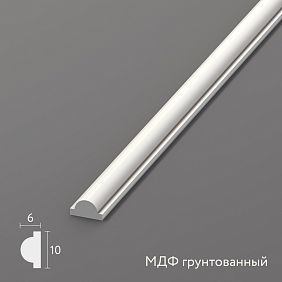
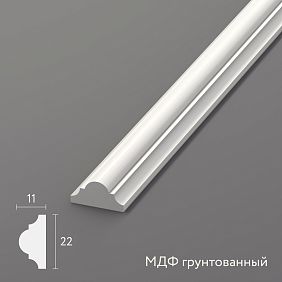
MDF (medium-density fiberboard) moldings are an affordable alternative to wooden profiles. They are easy to process and paint, have a stable shape, and do not crack.
MDF moldings are often used in modern interiors due to their versatility and affordable price. They can be painted in any color or covered with a film that imitates various materials.
Polystyrene
Lightweight and inexpensive material suitable for creating simple profiles. Polystyrene moldings have minimal weight and easy installation, but they are less strong and durable compared to other materials.
Such profiles are often used for quick and budget-friendly interior updates or in rooms where high resistance to mechanical impacts is not required.
Composite materials
Modern technologies allow creating moldings from various composite materials, combining the advantages of different components. For example, profiles made from polymer composite with added wood flour combine the lightness and moisture resistance of polymers with the aesthetics and eco-friendliness of wood.
Design solutions: moldings in various interior styles
Decorative profiles are remarkably versatile — they fit organically into interiors of various stylistic directions, from classic to modern minimalism. Let's examine how moldings are interpreted in different styles and what characteristics their use has.
Classic style: elegance and symmetry
In classical interiors, moldings play a key role, creating an atmosphere of luxury and elegance. Here, richly decorated profiles with floral ornamentation, acanthus leaves, meanders, and other traditional motifs are appropriate.
Ceiling cornices in a classical interior usually have a substantial width (from 10 cm) and a complex profile with multiple relief levels. They are often complemented by corner elements and ceiling rose surrounds around chandeliers.
Walls in a classical style are adorned with decorative panels created using moldings. These panels may be rectangular or have more complex shapes with rounded corners or decorative elements. A key principle of classical style is symmetry and proportionality of all elements.
Door and window openings are framed with molded casings with profiled surfaces, often featuring decorative elements at the top (sashings). Skirting boards have significant height (from 10 cm) and a complex profile that harmonizes with the rest of the moldings.
The traditional color solution for classical moldings is white or cream, which contrasts effectively with more saturated wall tones or harmonizes with them in monochromatic interiors. In particularly luxurious interiors, moldings may be partially or fully gilded.
Neoclassicism: modern interpretation of traditions
The neoclassical style offers a more restrained interpretation of classical motifs. Moldings here have a simpler profile but retain elegance and refinement. They are used more selectively, creating clear spatial geometry without excessive ornamentation.
In neoclassical interiors, ceiling cornices have moderate width (5-10 cm) and moderate relief. Wall moldings create geometrically correct panels, often with straight angles and minimal decoration.
An interesting feature of neoclassicism is using moldings as color accents. They can be painted in a contrasting color to the walls (graphite, dark blue, emerald) or, conversely, blend in with them, creating a refined monochromatic look.
Modern style: geometry and minimalism
In modern interiors, moldings acquire a new sound. Here, profiles with clear, minimalist lines, without complex decoration, are used. They can create geometric compositions on walls and ceilings, playing with proportions and rhythm.
Ceiling cornices in a modern style usually have a small width (3-5 cm) and a simple profile, often with straight angles. Wall moldings can form abstract compositions, asymmetrical patterns, or minimalist panels.
The color solution for moldings in modern interiors can be the most diverse — from traditional white to bright accent colors or deep dark shades. An interesting effect is achieved by painting moldings in the same tone as the walls, where the decorative effect is achieved solely through the play of light and shadow on relief surfaces.
Scandinavian style: naturalness and functionality
In Scandinavian interiors, where naturalness and functionality are valued, moldings are used sparingly. Here, simple ceiling cornices and baseboards are appropriate, emphasizing the purity of lines and proportionality of space.
Ceiling cornices in a Scandinavian style usually have a small width (3-5 cm) and a minimalist profile. Wall moldings are used rarely, mainly to create functional elements, such as frames for photos or paintings.
The color palette of moldings in a Scandinavian style is usually limited to white, which harmonizes with light walls and creates a sense of airiness and spaciousness. In some cases, moldings may be painted in pastel shades or natural wood tones.
Art Deco: luxury and geometry
The Art Deco style, with its love for geometry and luxurious materials, offers a special interpretation of moldings. Here, profiles with clear, graphic lines are used, creating expressive geometric compositions on walls and ceilings.
Ceiling moldings in the art deco style often have a stepped profile, reminiscent of skyscrapers from the 1920s-30s. Wall moldings create panels with motifs characteristic of this style — zigzags, sun rays, geometric shapes.
The color solution for moldings in the Art Deco style can be contrasting and striking — black-and-white combinations, use of gold or silver to accentuate individual elements. Such an approach creates a dramatic, theatrical effect, characteristic of this stylistic direction.
Provence and country: coziness and naturalness
In interiors in the Provence or country style, moldings create an atmosphere of coziness and naturalness. Here, profiles with soft, smooth lines are used, often with a slight aged effect.
Ceiling moldings in these styles have a medium width (5-8 cm) and a subtle relief. Wall moldings can create simple panels or frame functional zones, for example, a kitchen backsplash or a zone above the bed.
The color palette of moldings in the Provence or country style includes soft pastel shades — white with a slight beige tint, light blue, lavender, olive. Often, techniques such as artificial aging — patina, craquelure, wear — are used.
Practical Guide: Choosing and Installing Moldings
Choosing and installing decorative profiles — a process requiring attention to detail and understanding of technical nuances. Let's consider the main stages of this process, from selecting suitable moldings to their final finishing.
How to choose the ideal moldings for your interior
Considering style and proportions of the room
Choosing moldings should begin with analyzing the interior's stylistic solution and the room's proportions. In classical interiors with high ceilings, wide, ornate profiles are appropriate, while in modern spaces with low ceilings, more minimalist elements are better suited.
It is important to maintain proportionality — the width of the ceiling molding should correspond to the ceiling height (approximate ratio: 1 cm of molding width for every 30 cm of ceiling height). Similarly, the height of the baseboard should be proportional to the room's dimensions.
Material selection
When selecting material for moldings, consider the operating conditions, budget, and desired aesthetic effect:
- For rooms with high humidity (bathrooms, kitchens), the optimal choice will be polyurethane moldings, which do not deform upon contact with water.
- For creating a warm, cozy atmosphere, wooden profiles are suitable, especially if wooden elements are already present in the interior.
- For restoring historical interiors or creating an authentic classic ambiance, choose plaster moldings.
- For modern interiors with limited budgets, a good solution will be profiles made of MDF or polystyrene.
Choosing design and size
The design of moldings should harmonize with the overall interior style and other decorative elements. In classical interiors, profiles with floral ornamentation or geometric patterns are appropriate, while in modern spaces — more minimalist elements with clear lines.
The size of moldings depends on the room's area and ceiling height:
- In small rooms with low ceilings (up to 2.5 m), it is recommended to use ceiling moldings 3-5 cm wide and baseboards 5-7 cm high.
- In medium-sized rooms with ceilings 2.5-3 m high, moldings 5-10 cm wide and baseboards 7-10 cm high are suitable.
- In spacious rooms with high ceilings (from 3 m), moldings 10-20 cm wide and baseboards 10-15 cm high can be used.
Calculating the required quantity
To calculate the required quantity of moldings, measure the room's perimeter (for ceiling moldings and baseboards) or the length of wall sections where wall profiles are planned to be installed. Add 10-15% to the obtained figure for trimming and possible defects.
When ordering moldings, it is important to note that they are usually sold in segments of a certain length (most often 2-2.5 m). It is necessary to calculate the number of segments, rounding up.
Where to buy quality moldings: criteria for selecting a supplier
Choosing a supplier of decorative profiles is a responsible step that affects not only the aesthetic result but also the longevity of the decoration. What should be considered when selecting a company where you plan to to purchase moldings for decoration?
Product assortment and quality
A reliable supplier offers a wide range of moldings in various shapes, sizes, and styles. This allows you to select the optimal solution for any interior, whether it’s a classical palace style or a minimalist modern design.
The quality of the product must be confirmed by certificates of conformity and manufacturer warranties. A good supplier is always ready to provide this information upon request from the client.
Company reputation and experience
The company's experience in the market and customer reviews are important indicators of the supplier's reliability. Companies proven over time usually value their reputation and offer products of consistently high quality.
Before purchasing, it is advisable to study reviews about the company online, view examples of completed projects using their products, and possibly talk to customers who have already purchased moldings from this supplier.
Consultative support
Professional consultations on selecting and installing moldings - a valuable advantage that a reliable supplier can offer. Experienced specialists will help choose profiles matching the interior style, calculate the required amount of materials, and provide installation recommendations.
Delivery and Return Conditions
Convenient delivery terms and the possibility of returning or exchanging goods in case of defects are important factors to consider when choosing a supplier. Reliable companies usually offer flexible cooperation terms and are willing to resolve arising issues in favor of the client.
Additional Services
Molding installation technology: from preparation to finishing
If you are looking for where to buy moldings for decoration high quality, pay attention to specialized companies with a good reputation and a wide range of products.
Installation technology: from preparation to final finishing
Preparation Work
Before starting installation, it is necessary to carefully prepare the surfaces on which the moldings will be installed. Walls and ceilings must be flat, clean, and dry. All old finishing materials that may interfere with secure fixing of the profiles should be removed.
An important preparation stage is marking. Using a level, plumb bob, and pencil, lines must be drawn on the surfaces along which the moldings will be installed. This ensures even and symmetrical placement of decorative elements.
Before installing moldings, they should be left indoors for at least 24 hours to adapt to the temperature and humidity.
Molding Cutting
Moldings must be cut into pieces of the required length, taking into account the room's configuration. Special tools — a try square and a fine-toothed hacksaw, or an electric miter saw — are used for this purpose.
Special attention should be paid to corner joints — they must be made at an exact angle for perfect element alignment:
- For internal corners (90°), each molding piece is beveled at a 45° angle so that when joined, they form a right angle.
- External corners also use a 45° bevel, but in the opposite direction.
- For non-standard angles (not 90°), measure the exact angle using a protractor and divide it in half to determine the bevel angle for each molding piece.
Molding Installation
The method of attaching moldings depends on their material and weight, as well as the type of surface they are installed on:
- Light polyurethane and polystyrene profiles are usually attached using special mounting adhesive (acrylic, polyurethane, or hybrid). The adhesive is applied to the back of the molding in a zigzag line or dots spaced 10–15 cm apart.
- For heavier elements (wooden, plaster), additional fastening with screws or anchors may be required. In this case, holes are pre-drilled into the molding, which are then filled with putty after installation.
During installation, it is necessary to ensure that moldings are properly aligned with the markings and tightly fit against the surface. Any excess adhesive protruding from under the profile should be immediately wiped away with a damp cloth.
Joint Treatment and Final Finishing
After installing all elements, it is necessary to treat the joints between individual molding segments. For this, putty is used, which is sanded with fine-grit sandpaper after drying to achieve a smooth surface.
Finishing Molding Work Includes Priming and Painting:
- Primer ensures better paint adhesion to the surface and uniform coloring. Acrylic primer is used for polyurethane and polystyrene moldings, while special wood primer is used for wooden moldings.
- Acrylic or alkyd paints are typically used for painting moldings, applied in multiple layers with intermediate sanding. The choice of paint type depends on the molding material and usage conditions.
In some cases, moldings may be coated with decorative finishes — patina, gold leaf, silvering, or other special coatings that create an aged effect or unique texture.
Innovative Solutions and Design Trends in Moldings
The world of decorative profiles is constantly evolving — modern technologies and new design approaches continuously expand the possibilities of using moldings in interior design. Let's consider the most interesting innovations and current trends in this field.
Technological Innovations: New Materials and Features
3D Moldings
3D decorative profiles are one of the most interesting directions in the development of this field. Thanks to modern manufacturing technologies, it has become possible to create moldings with complex three-dimensional structures that create impressive visual effects.
3D moldings can imitate various textures - from natural (wood, stone, leather) to futuristic abstract patterns. They become not just decorative trim, but a standalone artistic element that attracts attention and creates a unique atmosphere.
Illuminated Moldings
Integration of LED lighting into decorative profiles is another innovative solution that has been actively developed in recent years. Illuminated moldings can create an eye-catching backlight for walls and ceilings, highlight architectural elements, or serve as a source of soft diffused light.
Such profiles are usually made from translucent materials that evenly diffuse light, creating a glowing effect. Modern LED technologies allow adjusting the brightness and color of backlighting, creating various lighting scenarios depending on mood or functional purpose of the room.
Eco-Friendly Materials
In response to growing demand for eco-friendly materials, molding manufacturers offer profiles made from recycled or renewable resources. Such moldings not only minimize environmental impact but also ensure a healthy microclimate in the room.
Among eco-friendly materials for molding production, one can highlight biodegradable polymers, wood fiber-based composites, recycled plastic, and even innovative materials based on agricultural waste.
Digital Design and Manufacturing
Modern digital technologies allow creating moldings with unprecedented accuracy and complexity. Computer modeling and 3D printing open opportunities for manufacturing unique profiles based on individual projects.
Such an approach is especially valuable in restoring historical buildings, where it is necessary to recreate lost decorative elements with maximum accuracy. Digital scanning of preserved fragments allows creating an exact three-dimensional model, from which new moldings are manufactured, indistinguishable from the originals.
Current Design and Application Trends in Moldings
Minimalism and Geometry
One of the main trends in modern molding design is minimalist profiles with clear geometric lines. These elements create a structured, orderly space without excessive ornamentation.
In minimalist interiors, moldings are often used to create abstract geometric compositions on walls — rectangles, squares, rhombuses, or more complex shapes. These compositions can be symmetrical or asymmetrical, creating a dynamic, modern look.
Contrasting color solutions
Traditionally, moldings were painted white, contrasting with darker walls. Modern designers experiment with color, creating unexpected, striking combinations.
Current trends include:
- Painting moldings in dark, saturated colors (black, dark blue, emerald) against light walls
- Using bright, accent colors to highlight individual elements
- Creating tone-on-tone compositions where moldings blend with walls, creating an effect through play of light and shadow
- Combining various shades within a single color palette to create a multi-layered, deep effect
Mix of styles and eras
Modern design moves away from strict adherence to one stylistic direction, preferring eclectic, individual solutions. This trend is reflected in molding usage — designers boldly combine elements from different styles and eras, creating unique interiors.
For example, classic ceiling rosettes can coexist with minimalist wall panels, and traditional cornices can complement modern furniture and lighting. This approach allows creating interiors with character, reflecting the owners' individuality.
Functionality and multi-purpose use
Modern moldings increasingly serve not only decorative but also practical functions. For example, profiles with built-in lighting serve as light sources, and special cornices can be used for hidden curtain mounting or concealing technical elements (wires, ventilation grilles).
This approach responds to the modern desire for functionality and rational use of space, where each interior element must be not only beautiful but also useful.
Economic aspects: moldings as an investment in interior design
Decorative profiles are not just decorative elements, but a long-term investment in the aesthetics and functionality of space. Let's consider the economic aspects of using moldings and factors influencing their cost and return on investment.
Price-to-quality ratio: where you can and cannot save
The cost of moldings can vary significantly depending on the material used, the complexity of the profile, and the brand of the manufacturer. However, it is important to understand that saving on quality may lead to additional expenses in the future.
Material of manufacture — one of the key factors determining the cost of decorative profiles:
- Polyurethane moldings usually occupy a mid-price category, offering optimal quality-to-cost ratio
- Wooden profiles from precious wood species can be significantly more expensive
- Handmade plaster moldings belong to the premium segment
- Profiles made of MDF or polystyrene represent a more affordable alternative
Profile complexity - the more complex and detailed the molding's relief, the higher its cost. Simple smooth profiles are usually more affordable than elaborately decorated elements with floral ornamentation or other complex motifs.
Dimensions - the width and height of the profile also affect its cost. Large moldings with impressive dimensions usually cost more than their more modest counterparts.
Brand and country of manufacture - products from well-known brands with a long history and reputation usually have a higher cost. However, such manufacturers typically guarantee consistently high quality and compliance with stated characteristics.
Where you can save money:
- Choosing a simpler profile instead of an elaborate decorated one (while maintaining material quality)
- DIY installation of moldings (if you have the necessary skills and tools)
- Purchasing moldings during seasonal sales or promotions
Where you cannot save:
- Material quality (cheap moldings made from poor-quality raw materials may deform, crack, or yellow over time)
- Professional consultation on selecting and calculating the required amount of materials
- Quality tools and consumables for installation (adhesive, putty, paint)
Long-term economic efficiency
Investments in quality moldings can be economically efficient in the long term for several reasons:
Increased property value — a well-designed interior using decorative profiles can significantly increase the market value of residential or commercial property. Moldings create an impression of expensive, high-quality finishing and enhance the attractiveness of the property to potential buyers or tenants.
Durability — quality moldings, purchased from reliable suppliersdo not require frequent replacement or repair, reducing long-term maintenance costs. When properly installed and maintained, they retain their attractive appearance for many years.
Versatility - classic moldings remain relevant regardless of fashion trends, allowing you to avoid frequent interior updates. They easily adapt to changes in color scheme or room style through repainting.
Energy efficiency - some types of moldings, especially ceiling cornices with built-in lighting, can help