












































































Article Contents:
- Philosophy of a holistic approach: architecture as a language
- Material as a unifying factor: the nobility of wood
- Ornamental kinship: when details speak the same language
- Practical scenarios: from entryway to attic
- Grand entrance area
- Living room with view of the staircase
- Bedroom on the second floor
- Types of balusters: from simple to sculptural
- Precision classic
- Flat carved
- Square geometric
- Staircase components: a systematic approach
- Door decoration: an important connecting element
- Ceilings: the fifth wall demands attention
- Furniture as an extension of architecture
- Color strategies: from monochrome to contrast
- White monochrome
- Natural Wood
- Contrast of dark and light
- Practical aspects of implementation
- Design Stage
- Supplier Selection
- Coordination of contractors
- Create classic harmony with STAVROS

A classic interior is not a set of random elements, but a thoughtfully composed symphony, where each detail resonates with others, creating a harmonious whole. From wall decor to staircase balusters, from ceiling moldings to furniture carved appliqués — everything must speak the same language, tell one unified story.Unified interior styleis formed through repetition of motifs, unity of scale, consistency of materials and colors. And precisely in this contextwooden balustersbecome not just a functional element of the staircase, but a key component of the overall composition.
Imagine a home where walls are adornedwith carved wooden panels, whereMoldingscreate an elegant architectural division of space, wheredecorative rose outletsthe staircase withstair balusterswhose ornament echoes the wall decor, scale corresponds to the overall proportional system, and material and tone create visual kinship. This is the mastery of creatingclassic room decoration— when everything is connected by invisible threads of stylistic unity.


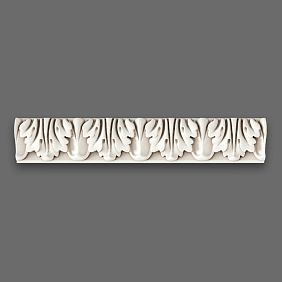


Philosophy of holistic approach: architecture as a language
Classical architecture developed a universal language of forms, which remains relevant for centuries. This is a system of orders with their proportions, ornamental motifs with deep symbolism, principles of symmetry and rhythm, tested over centuries. When we createclassical room decoration, we are not simply copying old samples, but speaking this architectural language, adapting it to modern living conditions.
Wooden balusterIn the classical sense — this is a vertical support for balusters, with a complex, finely carved profile. Its shape is not random. Bulges and tapers, convexities and concavities create a play of light and shadow, making the object visually interesting from any viewing angle. A classical baluster usually consists of three parts: base (baza), body (stem with decorative carving), and top part (capitel). This three-part structure reflects the fundamental principle of classical architecture — division into plinth, main body, and capital.
This same three-part logic should be evident indecorative wall claddingLower zone —Wooden baseboardMiddle section — main wall area withcarved inlaysUpper zone —Crown Moldingand friezes, echoing the capital. When these parallels are consciously constructed, the interior acquires an internal logic that is subconsciously perceived, creating a sense of correctness and harmony.




Material as a unifying factor: the nobility of wood
Wood — a natural choice for classical interiors. Its warmth, texture, and ability to be finely worked make it ideal forcarved elements for the home. But it is important to understand that not every wood is equally suitable for different elements.
Forwooden balustersHardwoods — oak, beech, ash — are preferred. They withstand mechanical loads, do not crack over time, and hold fine carving well. Oak is especially valuable — its dense structure allows creating the finest carving details that do not break during use.Oak balustersThey serve for decades, gradually acquiring a noble patina.
beechIt has a more uniform, fine-grained structure, making it ideal for intricate carving with small details.Beech balustersAfter staining, they provide a perfectly smooth surface, without visible pores. Ash combines strength with a beautiful, expressive grain pattern, especially effective when finished with natural oil.
For wall decoration, softer woods — pine, linden — can be used.carved appliquésOn walls, they do not experience mechanical loads, so here the material's plasticity is more important, allowing for complex carving. Linden is a favorite of carvers — it cuts like butter, enabling the creation of delicate ornamentation. Pine is economical and accessible, providing excellent results with proper processing.
But the key point — all wooden elements must be painted or stained in a single color palette. Ifwooden balustershave a natural oak tone, thendecorative elementson the walls must also be in the same tone. Or all elements are painted white — a classic solution, creating a sense of lightness and airiness. Color harmony is critically important fora unified interior style.
Our factory also produces:


Ornamental kinship: when details speak the same language
Classical ornamentation has a rich history and symbolism. Each motif carries meaning, a certain energy. Acanthus symbolizes immortality, rosettes — the sun and divinity, grapevines — abundance and joy of life, oak leaves — strength and longevity. Using these motifs consciously, we create not just beautiful decoration, but a space filled with meaning.
Carved elements for homeshould use a common ornamental vocabulary. If onbalusters of the staircasethe motif of twisted rope is present, this same motif can be repeated incarved appliquéson door casings, in ornamentcrown moldings, in decorationfurniture legs. This creates visual rhymes, linking different parts of the interior into a unified composition.
Important is not only the motif itself, but its scale. Large elements —pilasters, Columns, Posts for staircase— carry large ornament. Medium elements —balusters, Moldings— have medium-detail ornament. Small elements —applique, Outlets— feature delicate, jewel-like carving. This hierarchy of scales creates visual organization and compositional readability.
Get Consultation
Practical scenarios: from entryway to attic
Consider specific options for creatinga unified interior stylethrough combining wall decor and staircase elements.
Grand Entrance Area
The staircase often begins from the entrance area, making it visually complex and an important part of the house. Hereclassical room decorationshould be especially impressive. The hall walls are adornedwooden panelswith panels about one meter high featuring carved vertical elements. Above — a smooth painted surface with symmetrically placeddecorative inlays.
Balusters for staircaseare selected so that their polished profile corresponds with the vertical elements of the panels. If the panels have a framed structure with protruding frames, the balusters may have similar ringed bulges.Railings and balusters for wooden staircasesare painted in the same shade as the wall panels — often dark walnut or mahogany, contrasting with light walls.
The entrance door is framedCarved casingswith decoration repeating the motifs of the wall panels and balusters.Ceiling cornicecompletes the composition from above, its profile coordinated withcornicesin other rooms. The result — an entrance area where each element reinforces the overall impression of classic elegance.
Living Room with View of Staircase
In an open-plan layout, where the staircase is visible from the living room, it is important to create a visual connection between these spaces. One of the living room walls may be decoratedwooden planks, installed vertically with even spacing. Their rhythm corresponds with the rhythm ofbalusters on the staircase, creating visual unity.
Classic Furniturecompletes the architectural solution.Legs for tablesmay repeat the polished profile of balusters in miniature.Legs for chairswith similar decoration create additional visual connections.Decorative brackets for shelveswith carving correspond with wall appliqués.
Bedroom on the second floor
The staircase leads to the second floor, where the bedrooms are located. Here,classical room decorationthe walls are adorned with delicatemoldingscreating rectangular frames — a classic boulangerie technique.
the color palette is lighter and more delicate than downstairs, butWooden elementsmaintains connection with the overall concept. If dark wood dominates downstairs, in the bedroom it is used as an accent — in the headboard,furniture legs, handles. balustersvisible from the second-floor corridor, creating a visual link with the lower level.
Types of balusters: from simple to sculptural
wooden balusterscome in different types, each dictating its own logic for the rest of the interior design.
Precision classical
the more complex the baluster profile, the more detailed theWall decorshould be, to avoid a stylistic disconnect.
Flat carved
Flat balustersare boards cut along the contour and decorated with carving or through-cutting. They have a pronounced frontal view, designed for perception from a specific point. Such balusters are characteristic of Russian wooden architecture, with an ethnic character. They suit correspondingwall decorationcarvedCasingsmoldings with vegetal ornament,House Carving.
Square geometric
A modern interpretation of classicism — balusters with square cross-sections and minimal processing or geometric chamfers. They create a more strict, graphic image. They suitdecorative wall finishingwith clear geometric profiles, without excessive ornamentation.Moldingsrectangular cross-sectionBaseboardsstrict forms, minimalistapplique.
Staircase components: a systematic approach
balustersis merely one element of the staircase structure.components for wooden staircasesinclude posts (supporting columns), handrails, baluster supports, treads, risers. All these elements must be coordinated with each other and with the overall decor of the room.
Supporting posts are the most powerful vertical elements of the staircase, often adorned with carving or turning at the top. Their decoration should be the most elaborate, corresponding to their significance. The shape and ornament of the posts set the tone for the entire staircase and should harmonize with major architectural elements —columns, pilasters, doorways.
Handrails and balustersmust form a unified composition. The handrail has a specific profile — usually rounded for ease of grip, but with decorative elements at the ends and at turns. The baluster support (lower plank to which balusters are attached) may be simple or profiled, complementing the overall composition.
Door decoration: an important connecting element
Door Decorationplays a critical role in creatinga unified interior style. Doors are transitional elements between spaces, and their design should connect different rooms into a unified whole.wooden casingframes the door opening, creating an architectural frame. Its profile and ornamentation should match the overall style.
Ifwooden balustershave a classic turned profile; door casings may have similar moldings and grooves. The upper part of the casing (the pediment) may be decoratedcarved insertorrosewith paneling, where the panels are framed by the samemoldingsas those used in wall panels.
Ceilings: the fifth wall requires attention
Plaster ceilingcompletes the composition from above. In a classical interior, the ceiling cannot be merely a plain white surface — it requires decorative detailing.Ceiling Moldingcreate a transition from wall to ceiling; their profile should match the wallmoldingsandbaseboards.
The center of the ceiling may be accentuated by a rose — a round or oval decorative element, often aligned with the chandelier's position. The shape and ornamentation of the ceiling rose should correspond with the decor on the walls and balusters. If the balusters have a botanical ornament, the rose may be decorated with similar motifs. If the balusters are strictly geometric, the rose should also have a geometric character.
Furniture as an extension of architecture
Classic Furniture— an indispensable part ofa unified interior style. Furniture legs— the tables, chairs, armchairs, sofas must correspond with the balusters of the staircase. This does not mean they must be identical — furniture elements are smaller in scale, but stylistically related.
Legs for tablesmay repeat the main elements of baluster turning — rings, moldings, tapers.Legs for chairsare usually thinner and more elegant, but retain the overall character.furniture legsfor heavy furniture — buffets, chests — may be more substantial, approaching the staircase columns.
Furniture Handlesmade of wood complement the theme of natural materials. Their shape may be simple or carved, depending on the overall decorative level of the interior.the base for a table— a frame structure connecting legs — may be adorned with carved elements corresponding to wall decor.
Color strategies: from monochrome to contrast
Choosing a color scheme is critical for creatingclassic room decoration. There are several proven strategies.
White monochrome
White classic furnitureand white architectural elements — eternal classic, creating a sense of lightness, purity, elegance.balusters, Moldings, Casings, Baseboards— everything is painted white or cream. Background walls may be light gray or beige, creating a soft contrast.
Natural wood
The opposite approach — preserve the beauty of natural wood, covering it with transparent oil or wax.wooden balustersmade of oak, beech, ash have beautiful texture that should not be hidden by paint. Similarly treated areWooden Skirting Boards, Crown Molding, applique.
Contrast of dark and light
The most dramatic solution — darkWooden elementson a light background.balustersColors of dark walnut or wenge against white walls create a powerful graphic effect. This contrast emphasizes the shape of each element, making the interior architecture more expressive.
Practical aspects of implementation
Creationa unified interior stylerequires planning and coordination.
Design stage
Start by developing a concept on paper or in 3D. Define key architectural elements, select the main ornamental motif that will repeat across different elements. Prepare specifications for all required items —balusters, molding, appliqués, baseboards.
Supplier selection
It is important to find a supplier who has a complete rangesolid wood productsin a unified style. The company STAVROS offers more than 5900 itemsof carved elements, staircase components, trim, furniture elements— everything necessary to realize the project inclassic style.
Coordination of installers
Stairs, wall decor, doors can be installed by different crews. It is important to coordinate their work to ensure details are assembled in the correct sequence and according to unified quality standards. Final painting of all elements should be done by one craftsman using the same materials — this guarantees color harmony.
Create classic harmony with STAVROS
Decorative finishing in classic style— it is the art of creating a cohesive space where each element, fromof staircase balusterstowall appliquésto the architectural language. This requires knowledge, taste, understanding of classical proportions and modern possibilities.
The company STAVROS has helped create interiors whereCarved elements for homework as a unified system. Our catalog includes everything necessary:wooden balustersmore than 200 models,staircase components, Decorative Insertsthousands of options,Moldings and cornices, furniture elements.
which perfectly complement each other, creatingUnified interior style. We provide samples, create 3D visualizations, advise on installation. We work with noble wood species — oak, beech, ash — guaranteeing durability and beauty of the items for decades.
Visit our showroom in Moscow or Saint Petersburg, where hundreds of samplesof classic decor. See firsthand howbalusters- combined withmoldings, howcarved appliquéscreate visual harmony withwith matching legs. Feel the quality of natural wood, appreciate the precision of carving.
Your home deservesof classic decor, which will delight generations. STAVROS will help turn this dream into reality, providing materials of the highest quality, professional consultations, and full support at every stage of the project. Contact us today — start creating an interior where the harmony of classic forms creates an atmosphere of eternal beauty and nobility.


