





































Article Contents:
- What is a slatted panel: definition, structure, logic
- What slatted panels are made of: materials and their characteristics
- Types of slatted panels by placement and function
- Why slatted panels are needed at all: function and aesthetics
- What is stucco decor: history, modernity, and types
- Categories of Stucco Decor: Complete Classification
- Stucco decor terminology: terms everyone should know
- Why polyurethane is the best material for stucco decor today
- Comparison: slatted panels vs. stucco decor
- Where are slatted panels used, and where is molding used?
- Living Room
- Bedroom
- Kitchen
- Children's room
- Bathroom
- Commercial spaces: offices, restaurants, hotels
- Differences in installation: slatted panels and molding
- Installation of slatted panels: steps and tools
- Installation of polyurethane molding decor: simple and fast
- How to choose a solution: a specific algorithm
- Step 1: Define the interior style
- Step 2: assess the ceiling height
- Step 3: determine the room's function
- Step 4: determine the finishing budget
- Step 5: assess readiness for self-installation
- Five Typical Mistakes When Choosing and Installing
- Mistake 1: 'I'll Buy the Slats and Figure It Out on Site'
- Mistake 2: Outlet 'Above the Hook'
- Mistake 3: Silicone Sealant for Molding
- Mistake 4: Too Large Slats in a Small Room
- Mistake 5: Molding 'Out of Place'
- FAQ: Answers to Popular Questions
- What Are Slat Panels — Is It Cladding?
- Can Slat Panels Be Installed on an Uneven Wall?
- Polyurethane Molding Decor — Doesn't It 'Look Cheap'?
- Can Types of Slat Panels Be Used on a Bathroom Ceiling?
- How to choose a polyurethane cornice profile?
- How to combine slatted panels with molding to avoid conflict?
- Conclusion
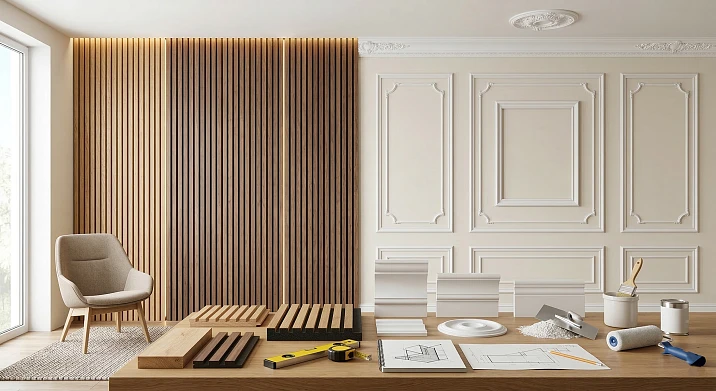
Two most frequently asked questions when choosing finishes: what are slatted panels and what is molding decor? Every day, thousands of people encounter these concepts for the first time — on construction sites, online, in conversations with designers. Some hear 'slats' and imagine something rustic. Others hear 'molding' and think of old-regime palaces. Both images are outdated stereotypes that have nothing to do with modern reality.
Today, slatted panels are an architectural finishing system with a natural rhythm that works in minimalism, Scandinavian style, Japandi, loft, and eco-concepts. And molding decor consists of lightweight polyurethane elements that are installed in an hour, weigh grams, can be painted any color, and create a classic architectural 'frame' for any interior. No villages, no palaces. Only precise work with space.
This guide is honest, detailed, without fluff — it answers all questions:what are slatted panels, what is included in the concept of molding decor, where each solution is applied, what are the fundamental differences — and how to choose what your space specifically needs.
What is a slatted panel: definition, structure, logic
Let's start with the foundation.What is a slatted panel— and how does it fundamentally differ from regular cladding, a drywall box, or decorative facing?
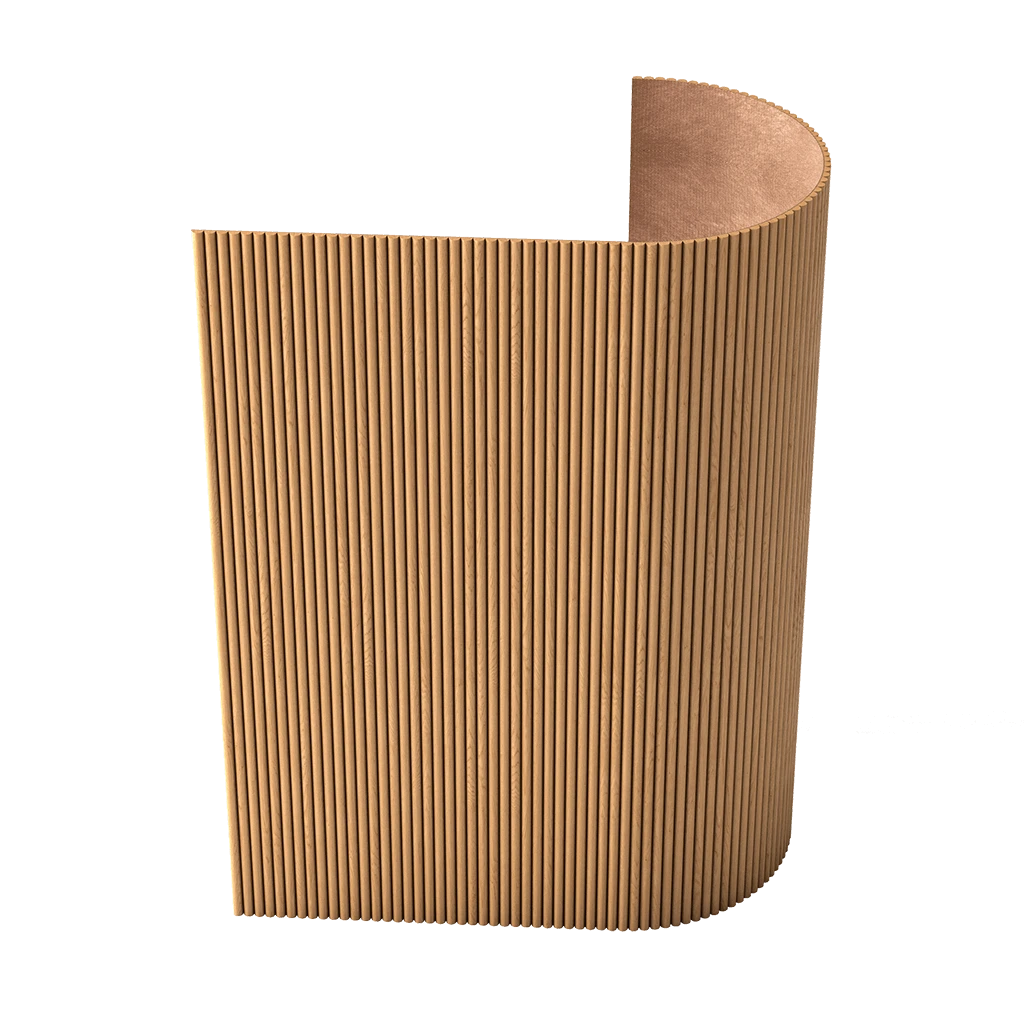
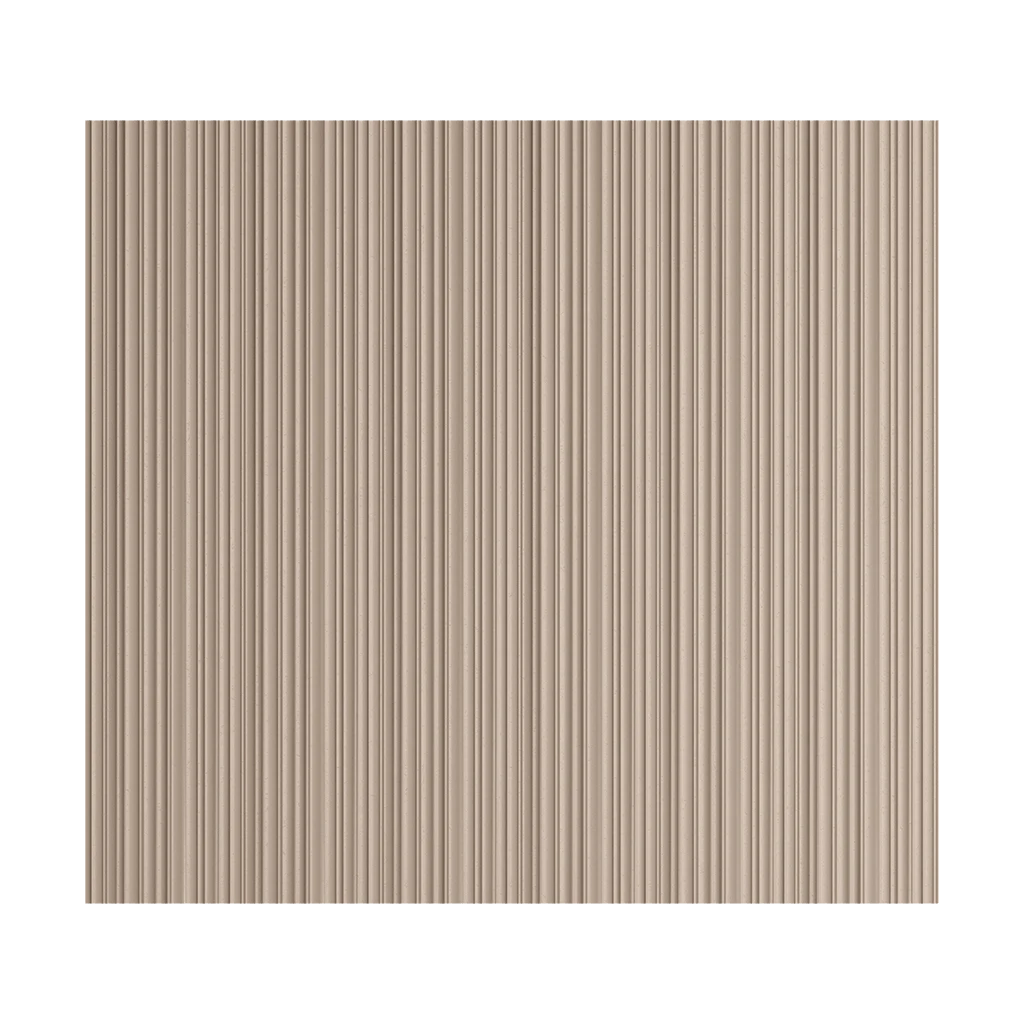
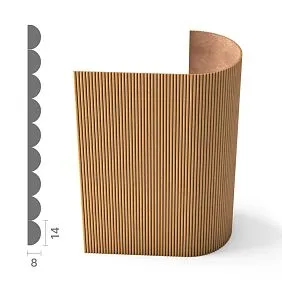
A slatted panel is a surface finishing system (for walls or ceilings) based on the principle of rhythmic repetition of a linear element—the slat—with a specific gap between them. The key word here is 'gap.' It is precisely this that distinguishes a slatted panel from solid cladding. It is through the gap that shadow, volume, and 'breathing' of the surface are created.
Structurally, a slatted panel is arranged as follows:
-
Battens—a wooden or metal frame attached to the wall or ceiling.
-
Slats—linear elements of a specific width, thickness, and profile, attached to the battens.
-
Gap—the distance between the slats, determining the 'density' of the rhythm.
-
Finishing elements—moldings, cornices, corner profiles that frame the slatted field around the perimeter.
This is not a 'decorative sticker' or a 'film.' It is a three-dimensional structure with real depth—40–80 mm. It is precisely this depth that creates the play of shadows, without which a slatted panel loses half of its expressiveness.

What slatted panels are made of: materials and their characteristics.
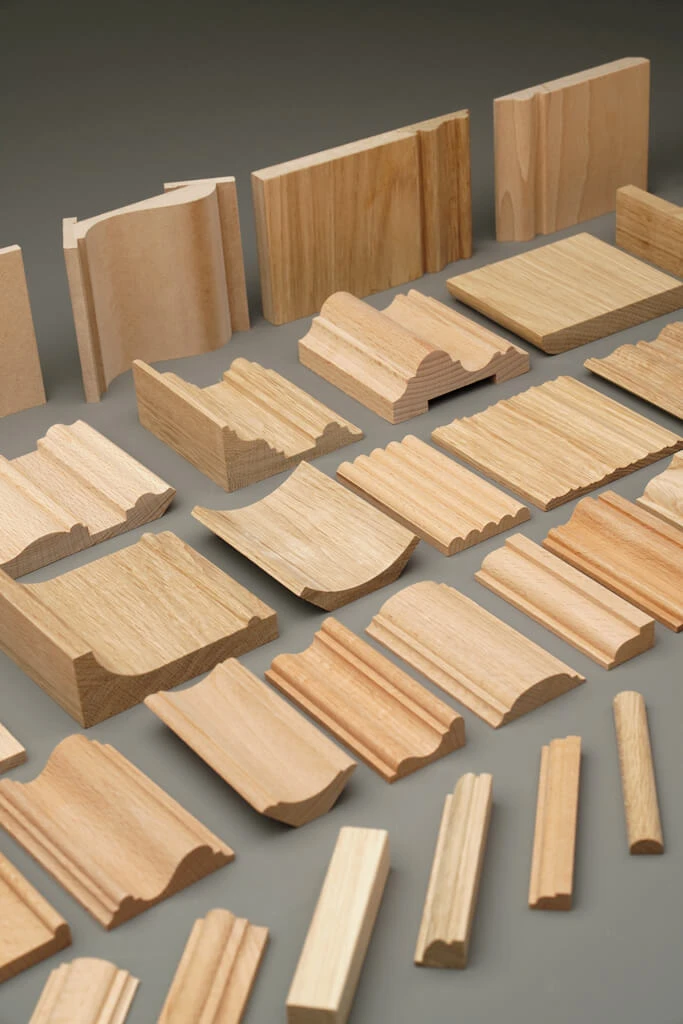
Types of slat panels— by material—this is the first classification to master. Because the material determines not only aesthetics but also the conditions of application, care, and durability.
50-100 years
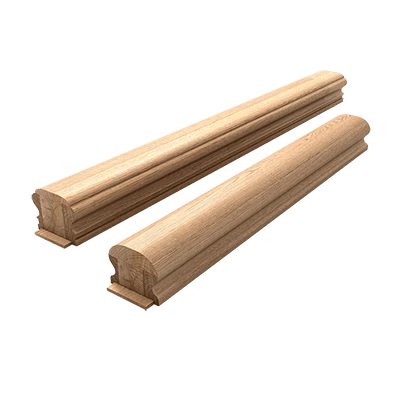
Oak, ash, pine, thermowood, larch — living natural material. Warm, aromatic (especially at first), biophilic. Wood "breathes," reacts to humidity — minimal deformations in dry rooms are acceptable. Natural slats — the most "premium" feeling choice.
Parameters:
-
Density: 450–750 kg/m³ (depends on wood species)
-
Standard widths: 25–100 mm
-
Coating: oil-wax, varnish, heat treatment
-
Application: dry residential rooms, commercial interiors
MDF for painting
MDF Plank Panels— wood fiber board with a density of 750–850 kg/m³. Homogeneous structure, geometrically precise dimensions, easy milling, ability to paint in any color. Natural grain is not "visible" — only the profile relief and shadow from the gap.
Parameters:
-
Density: 750–850 kg/m³
-
Standard widths: 20–120 mm
-
Coating: factory acrylic primer + any finish paint
-
Application: residential and commercial spaces, monochrome concepts
MDF with veneer
MDF base + natural wood veneer on the front surface. Natural texture — without the instability of solid wood. Cost is higher than primed MDF but significantly lower than solid wood.
Thermowood
Natural wood treated with steam at high temperature. Dark, almost chocolate color — without dyes. High stability: does not swell in humidity, resistant to microorganisms. Used in bathrooms, kitchens, open terraces.
Our factory also produces:
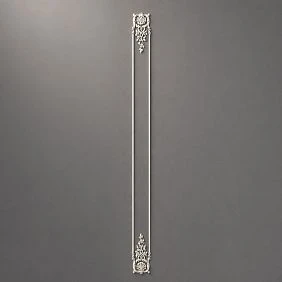
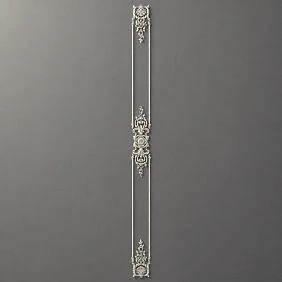
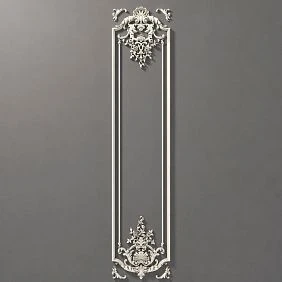
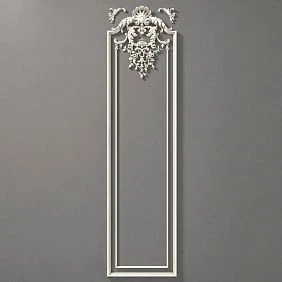
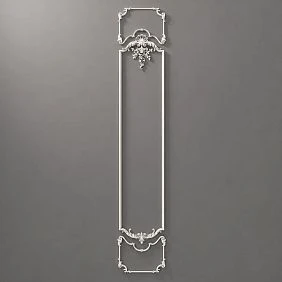
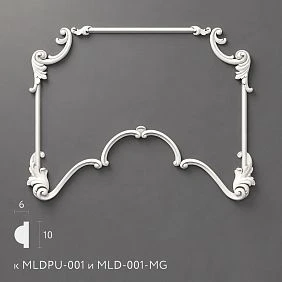
Types of slatted panels by location and function
Slatted panels — not just for walls. Classification by location:
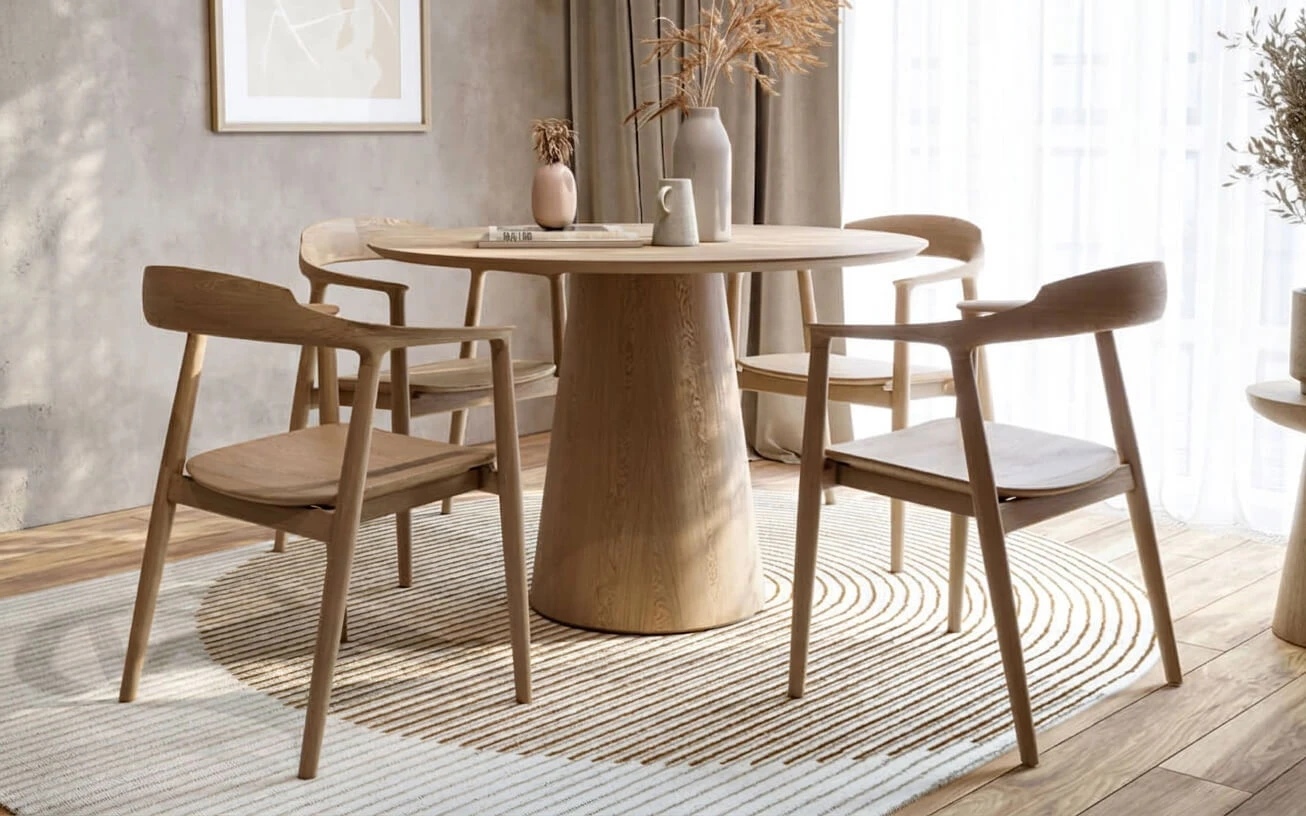
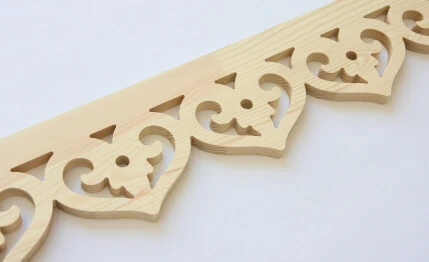
Wall vertical slats — the most common type. Slats are mounted vertically on the wall surface, creating a rhythm of 'columns'. Visually raise the ceiling, structure the surface, create an architectural 'background'.
Wall horizontal slats — slats parallel to the floor. Visually 'expand' the room, reduce perceived height. Used for 'grounded' cozy concepts or to accent the lower part of the wall (similar to wainscoting).
Ceiling slats — mounted on the ceiling across or along the long axis of the room. Create a 'forest canopy' over the space, hide utilities, allow placement of LED lighting in the gaps.
Diagonal slats — slats at a 45° angle for an accent surface. A bold architectural solution, used in a targeted manner.
Acoustic slats — with acoustic felt or absorbing material behind the slats. Reduce reverberation by 30–50%. For home theaters, meeting rooms, restaurants.
Get Consultation
Why slatted panels are needed at all: function and aesthetics
The question 'why' is the most honest one. Slatted panels solve several tasks at once:
-
Architectural surface structure. A bare plaster wall is 'empty'. A slatted surface is 'speaking': it has rhythm, shadow, depth, direction.
-
Acoustic comfort. A textured surface absorbs and scatters sound better than a smooth one. With acoustic filling — professional acoustic result.
-
Thermal inertia. The air gap behind the slats creates an additional thermal insulation layer. Small, but noticeable in country houses.
-
Hiding defects. Uneven, 'beaten-up' wall? The lathing levels the plane, the slats hide everything underneath them.
-
Space zoning. A slatted wall visually separates functional zones without building partitions.
-
Biophilic effect. Natural materials in the interior — a scientifically confirmed factor in reducing stress and improving well-being.
What is stucco decor: history, modernity and types
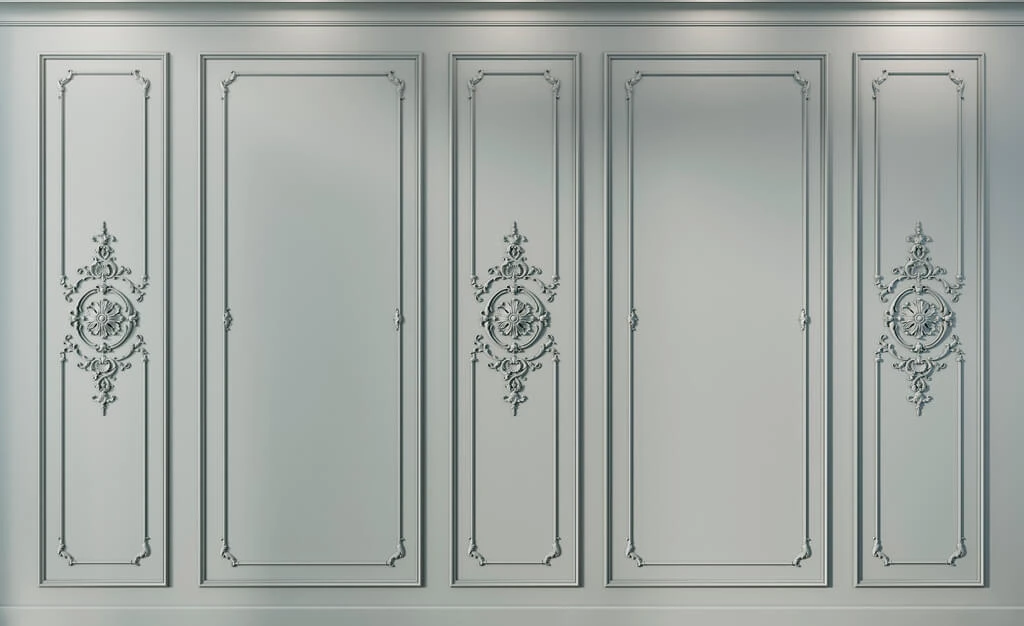
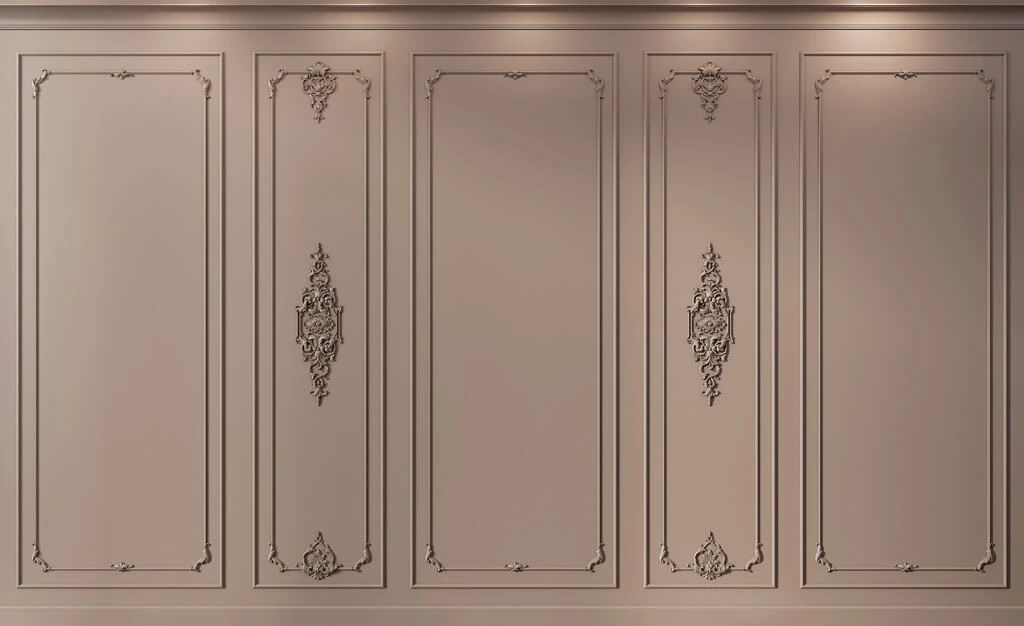
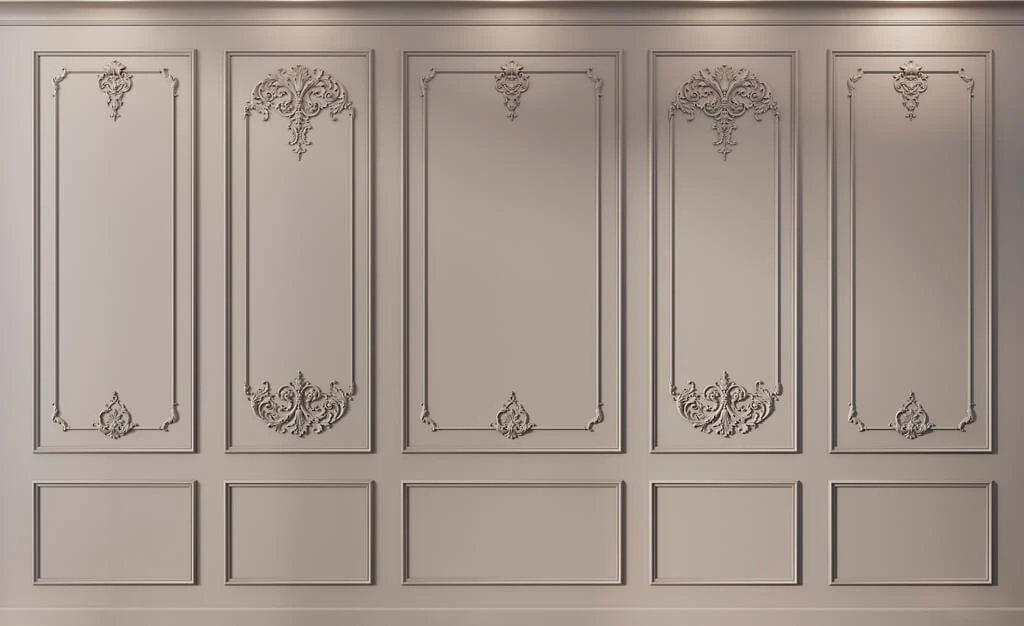
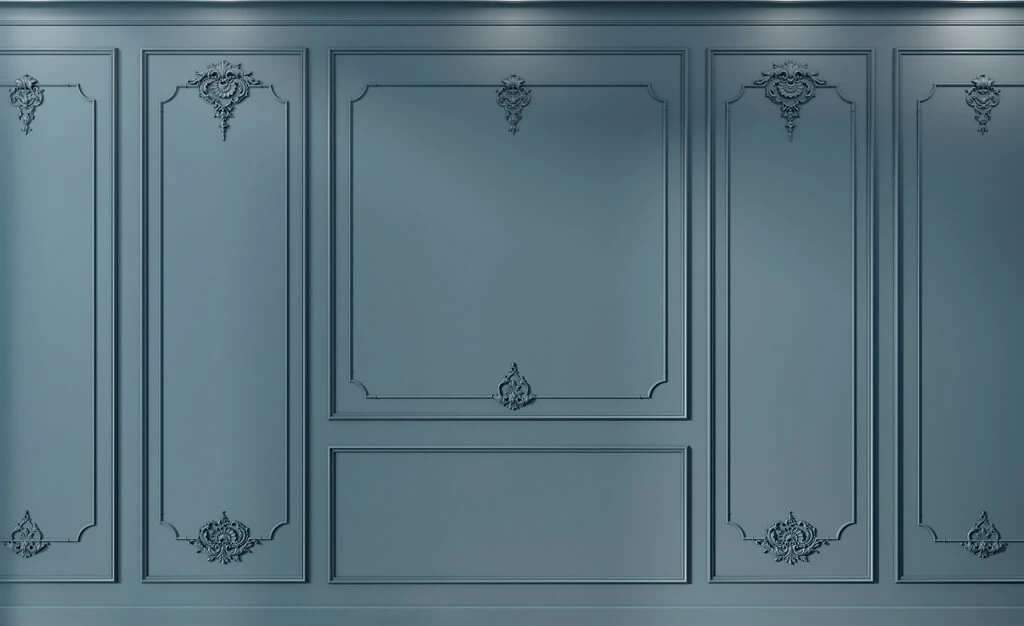
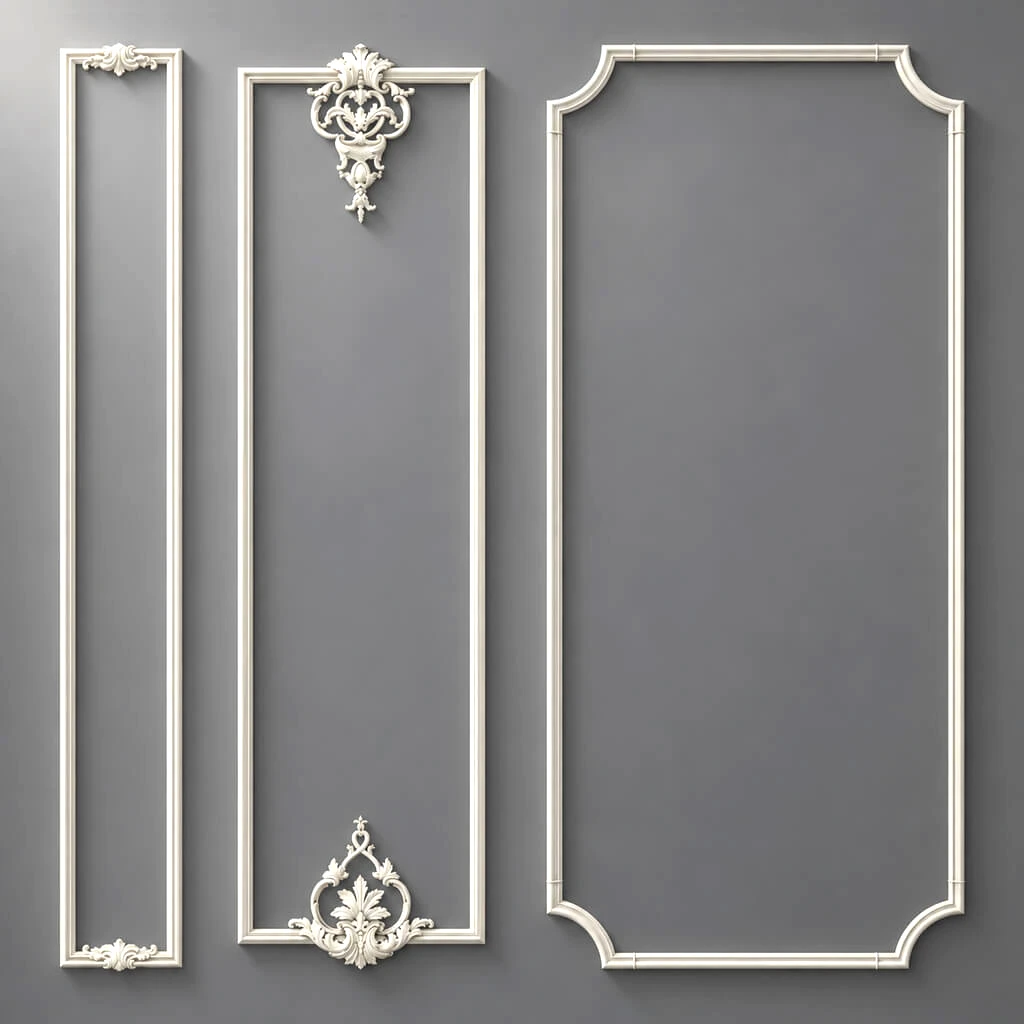
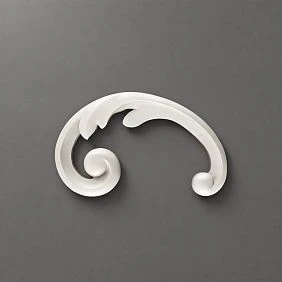
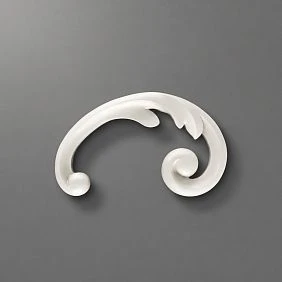
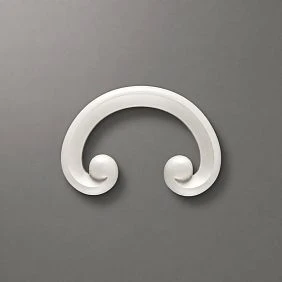
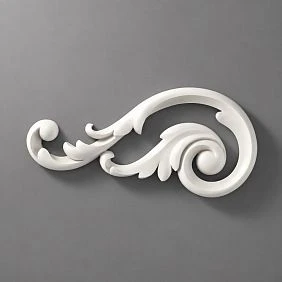
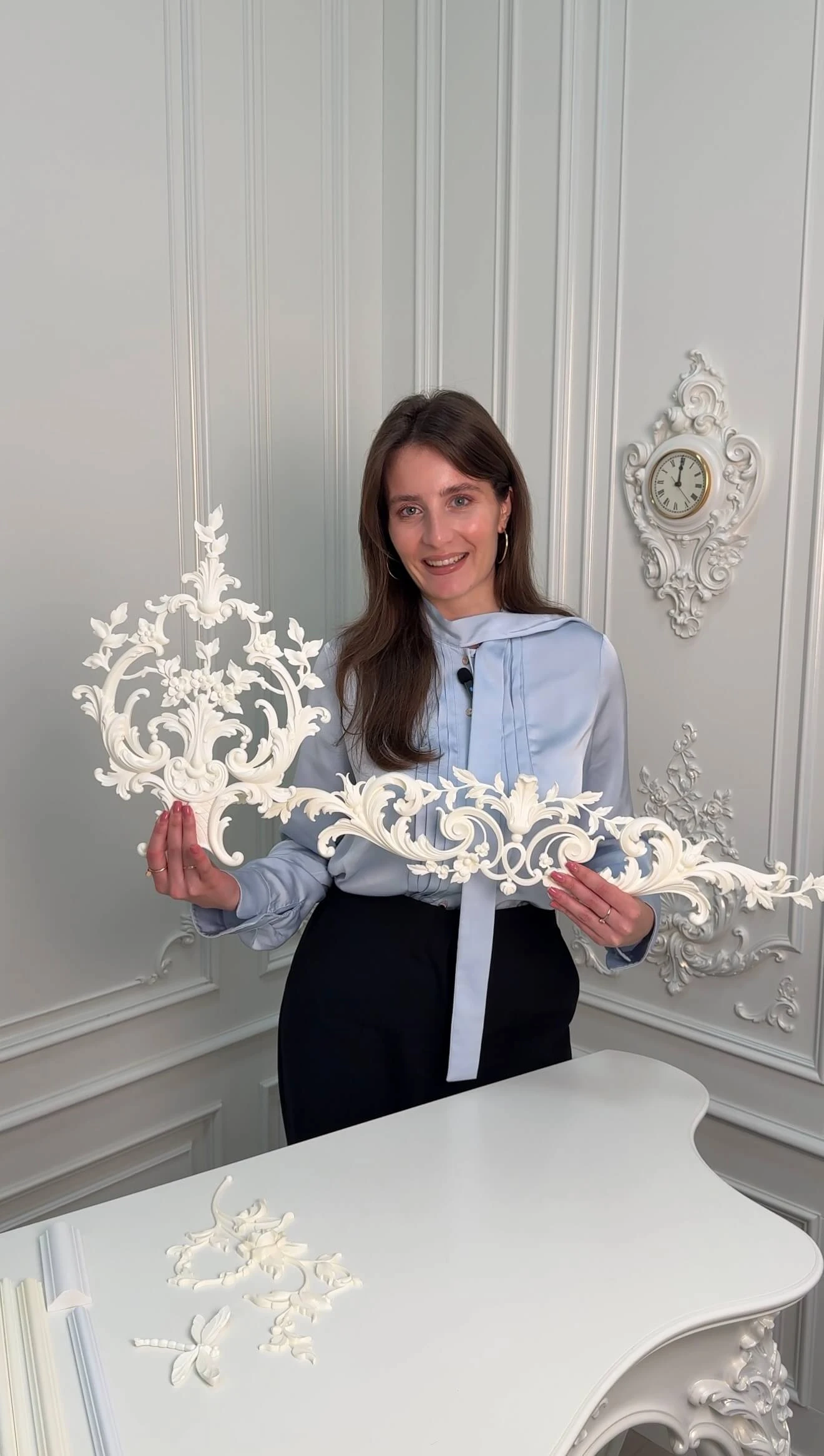
Now — the second hero of our guide.types of molded decoration— is an entire architectural system with a thousand-year history. But it is today that it is experiencing a second heyday — thanks to polyurethane.
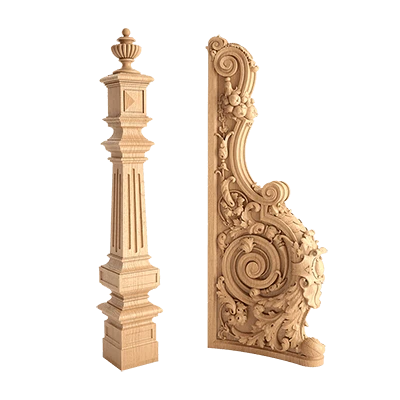
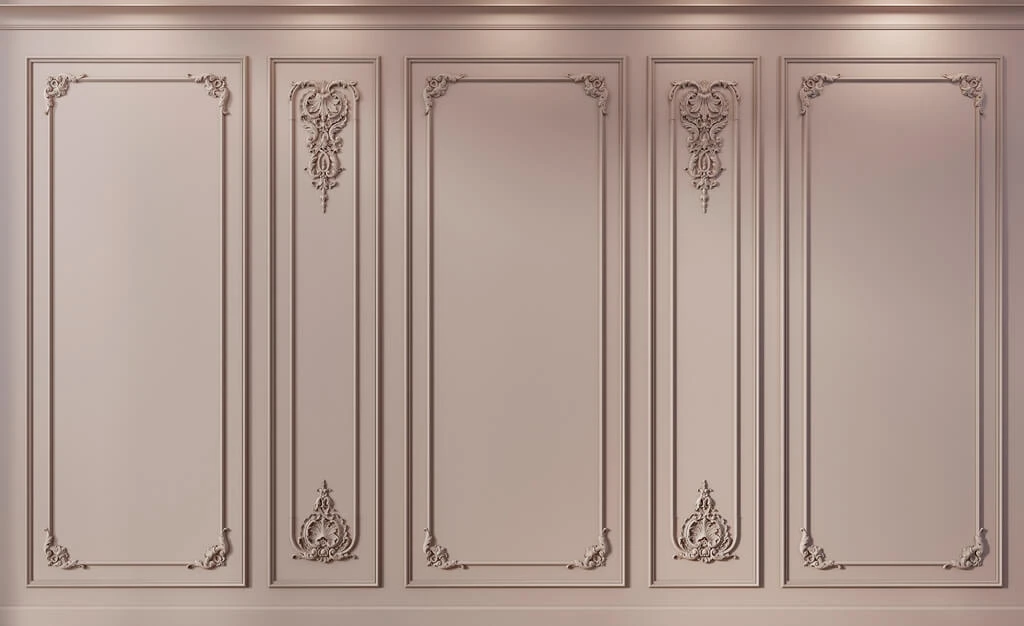
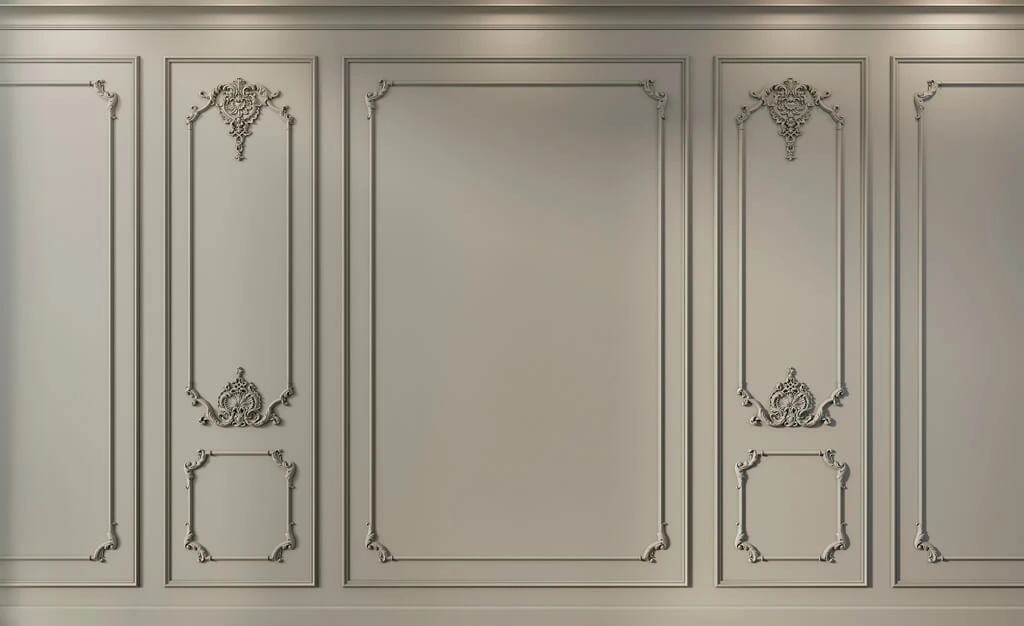
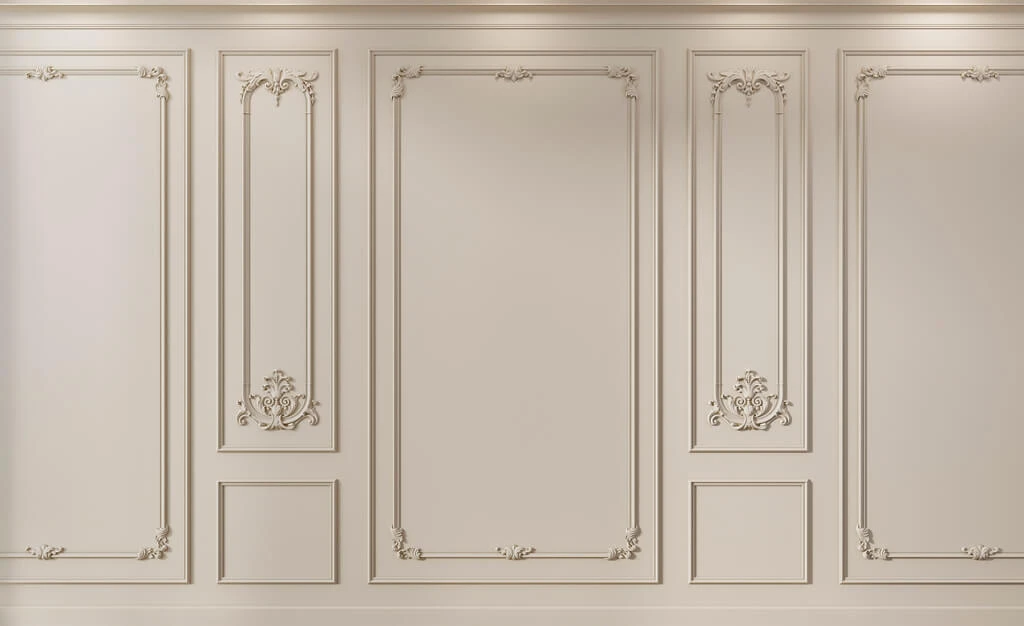
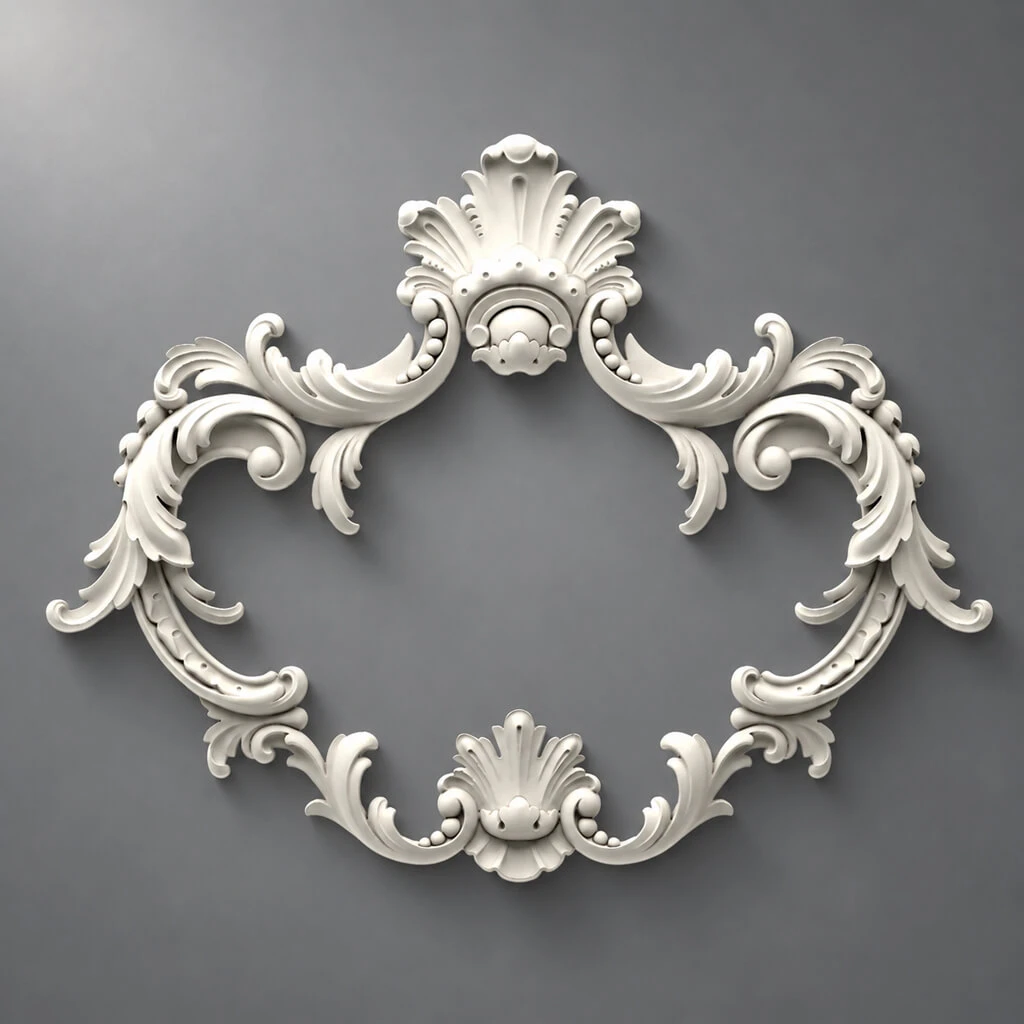
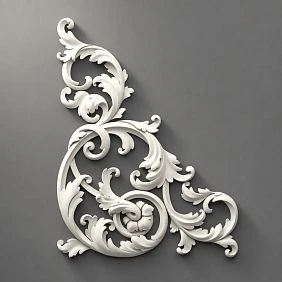
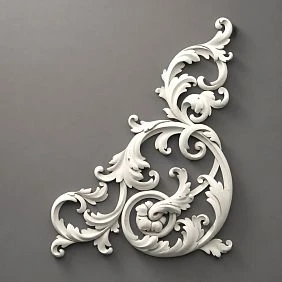
Molded decor consists of three-dimensional architectural elements mounted on walls, ceilings, and building facades. Historically, they were made from gypsum, alabaster, papier-mâché. In modern interiors, the vast majority of molded elements are made from expanded polyurethane — a material that combines the lightness of plastic with the precision of reproducing classical architectural forms.
The principle of molded decor is fundamentally different from that of slatted panels. If slats create rhythm — a repeating structure — then molding creates an accent: a center, a frame, an ornamental belt, a finishing element. Molding is not a 'background' but a 'point'. Not 'movement' but a 'pause for the eye'.
Categories of stucco decor: complete classification
categories of relief decorationare divided according to several criteria — by function, by place of application, by form.
By place of application:
-
Ceiling decor: cornices, rosettes, medallions, coffer inserts, decorative beams
-
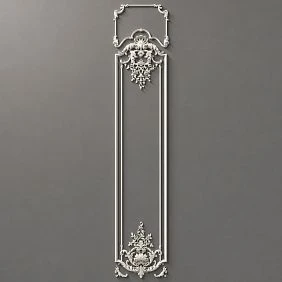
Wall decor: moldings, pilasters, capitals, panels, niches, frame profiles
-
Transitional (junction of wall and ceiling): ceiling cornices — this is where molding is most often applied
-
Floor decor: baseboards with profile, plinth moldings
By functional type:
-
Linear elements — cornices, moldings, baseboards, belts: installed along the length of a surface
-
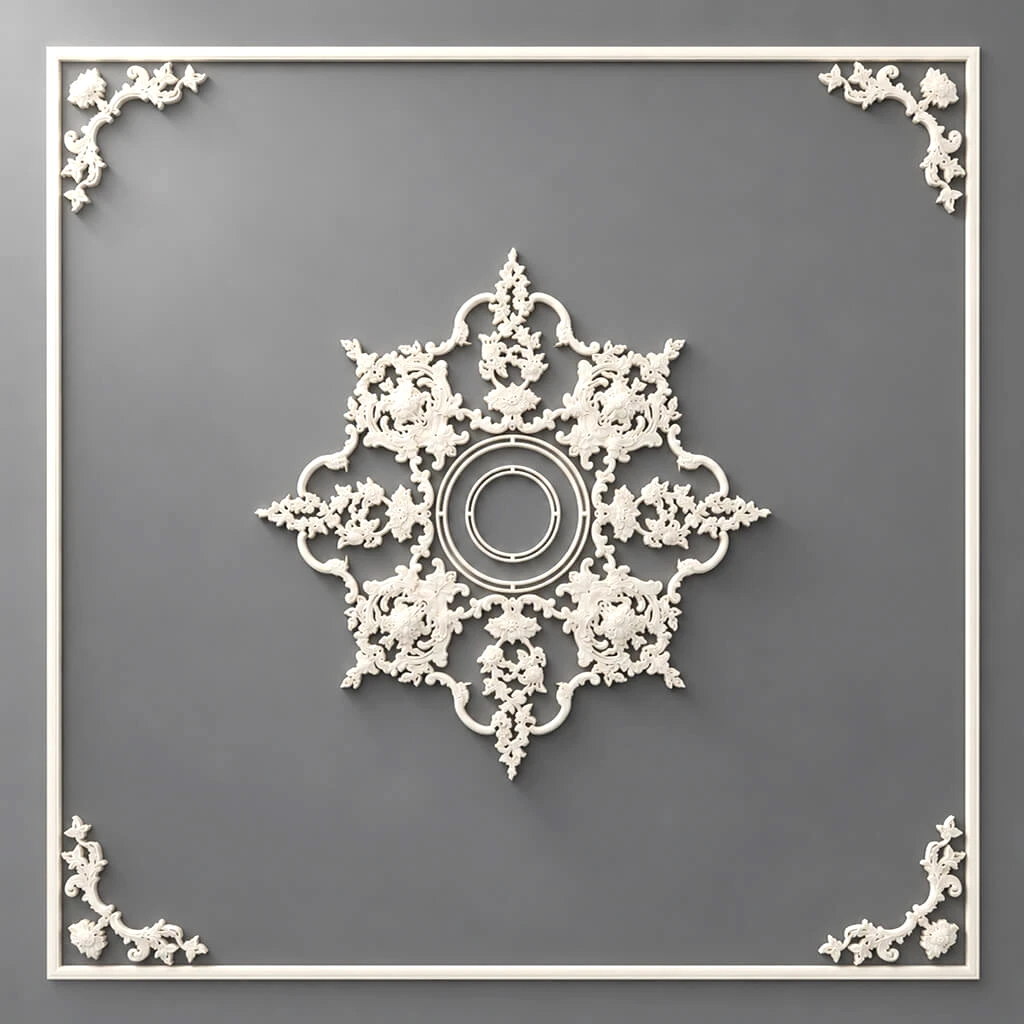
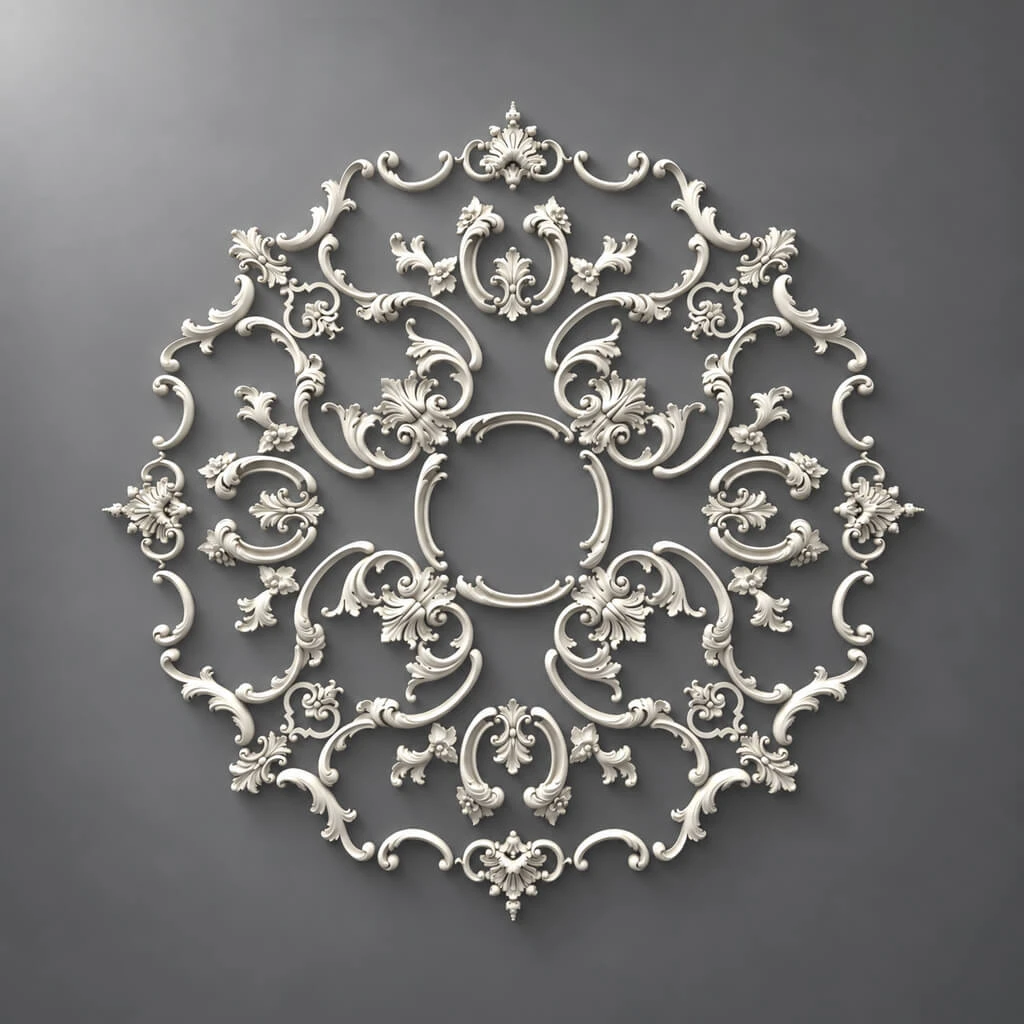
Central elements — rosettes, medallions, cartouches: installed at a specific point (center of the ceiling, center of a panel)
-
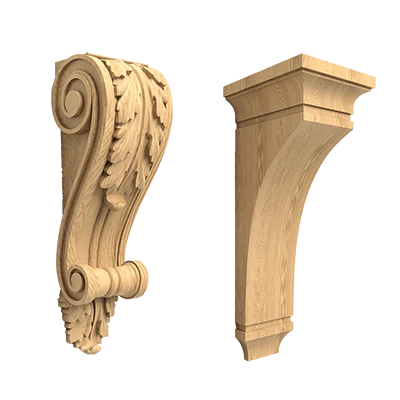
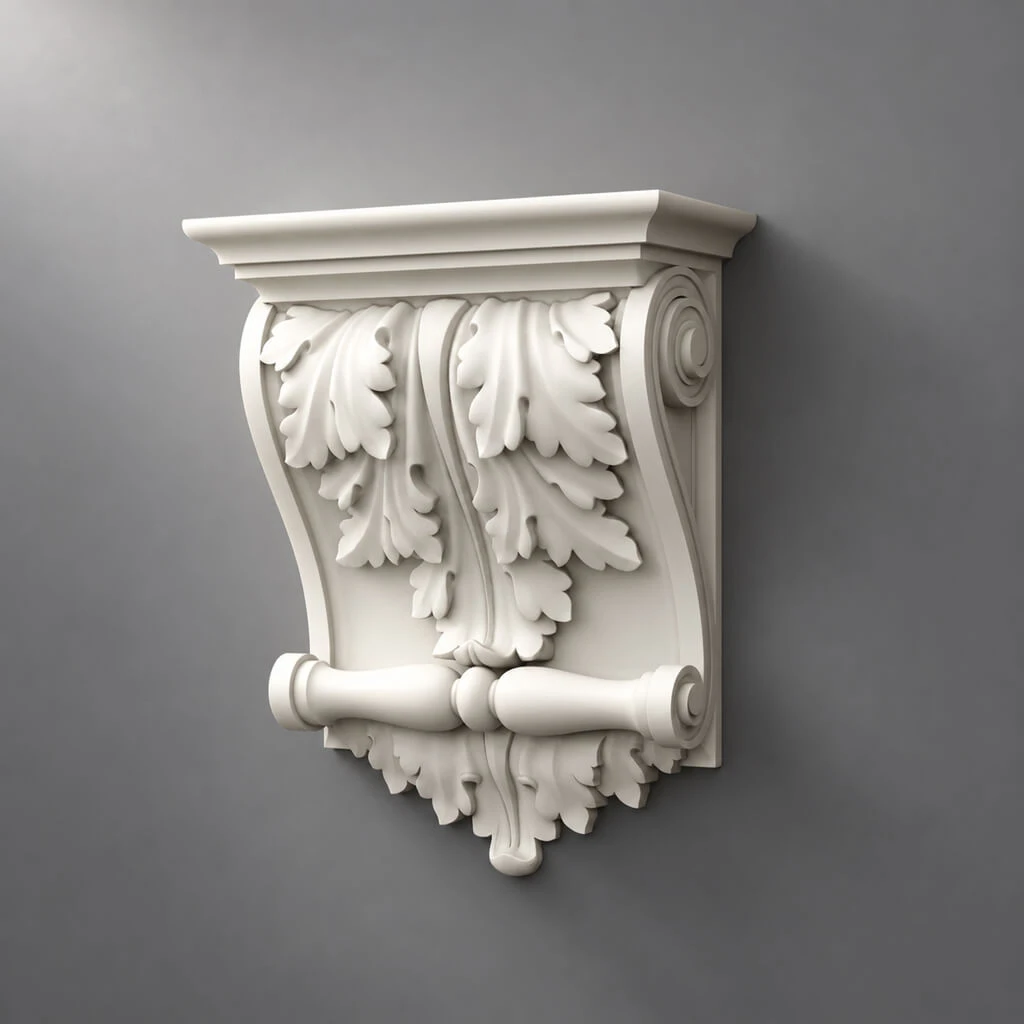
Corner elements — corner blocks, brackets, consoles: installed in corners and at junctions
-
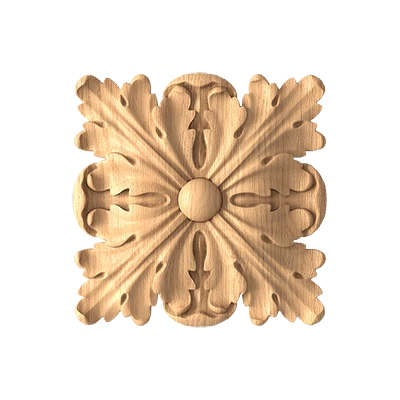
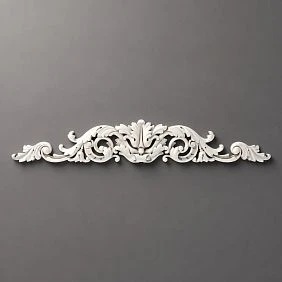
Decorative inserts — ornamental panels, garlands, reliefs: installed on a flat surface
Names of stucco decor: terms everyone should know
name of molding decor— this is the professional language, without which it is difficult to understand catalogs and talk with a designer. Let's break down the key terms.
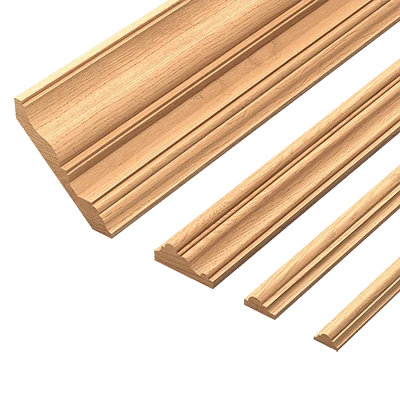
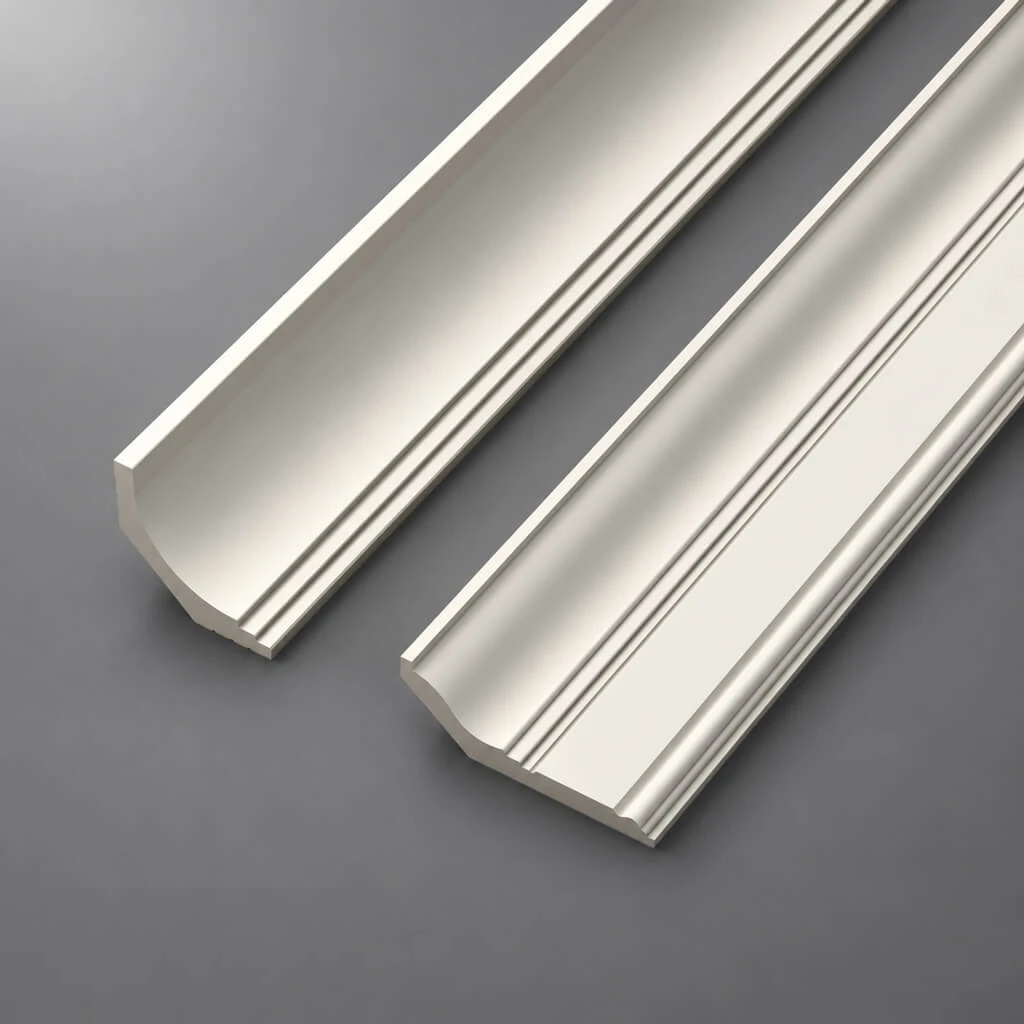
Cornice — a horizontal profile element running along the perimeter of a room at the junction of the wall and ceiling. Its function is dual: architectural (creates a 'frame' for the ceiling, visually 'detaches' it from the walls) and practical (conceals the joint). Sizes: from 40×30 mm (minimalist) to 200×150 mm (monumental).
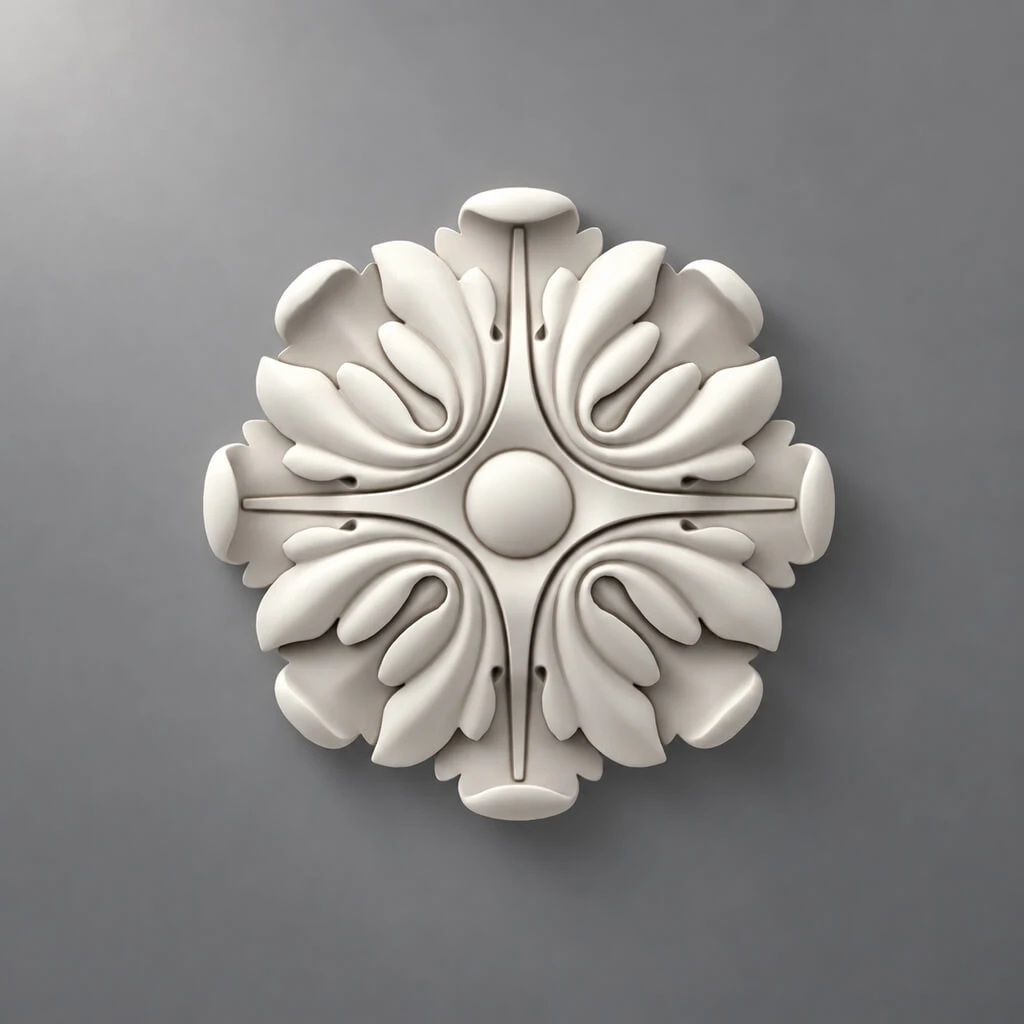
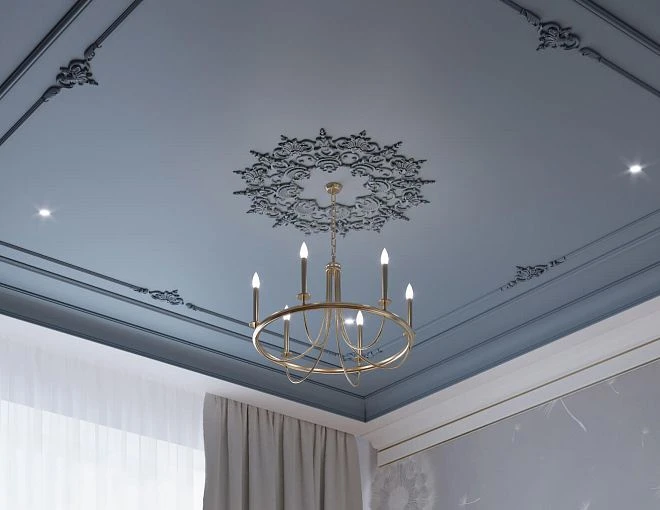
Rosette — a round (less often — oval) decorative element installed in the center of the ceiling around the chandelier suspension point. Diameter: from 150 to 1200 mm. Profile: from a simple 'ring' to a multi-tiered medallion with ornamentation.
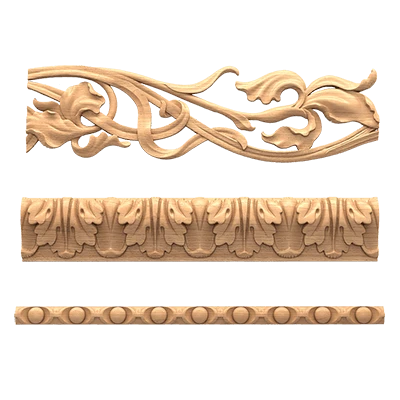
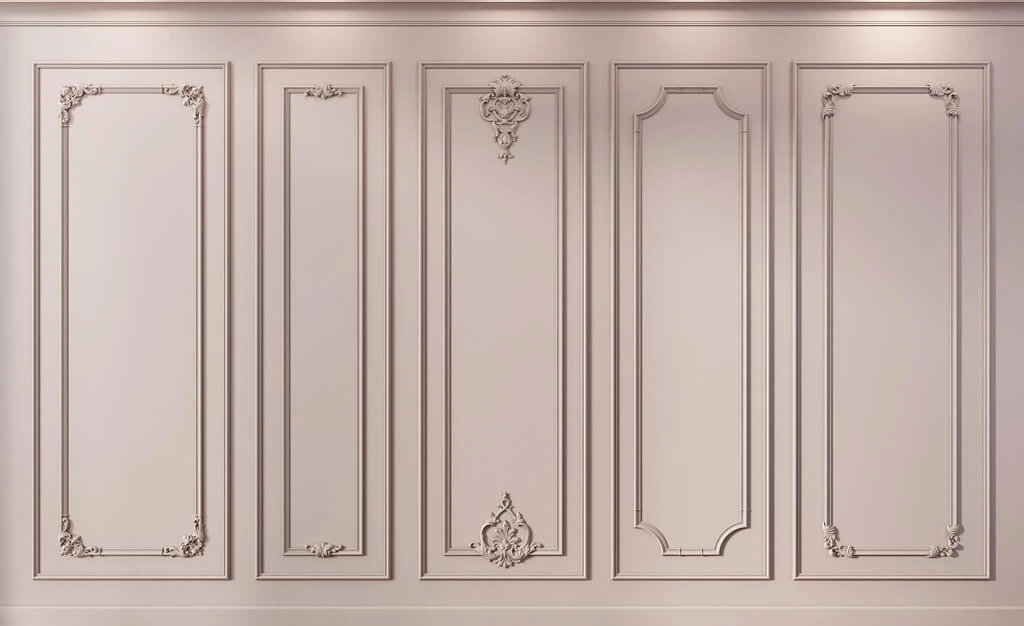
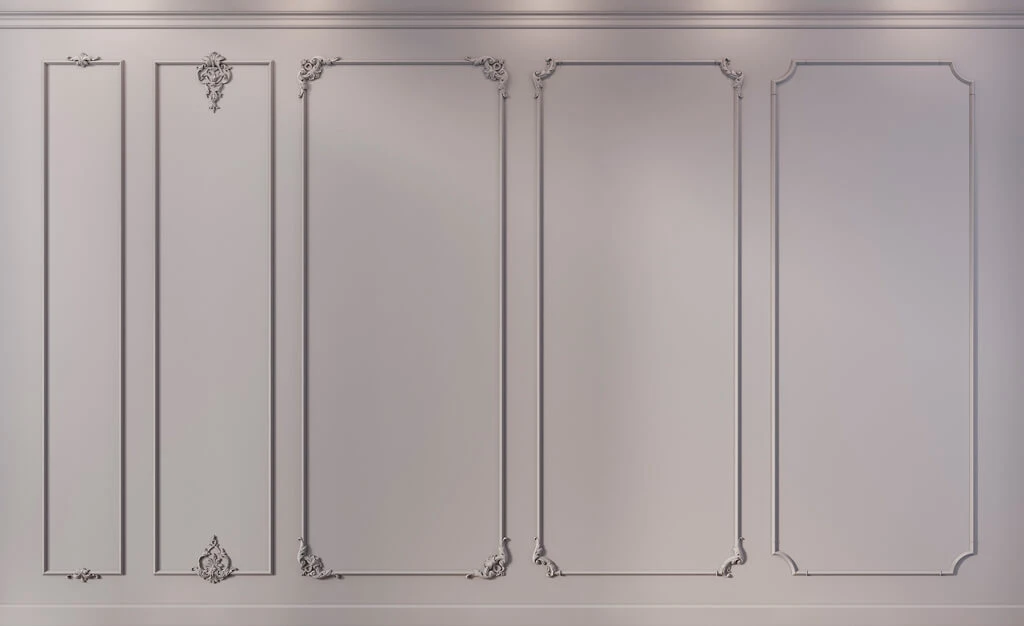
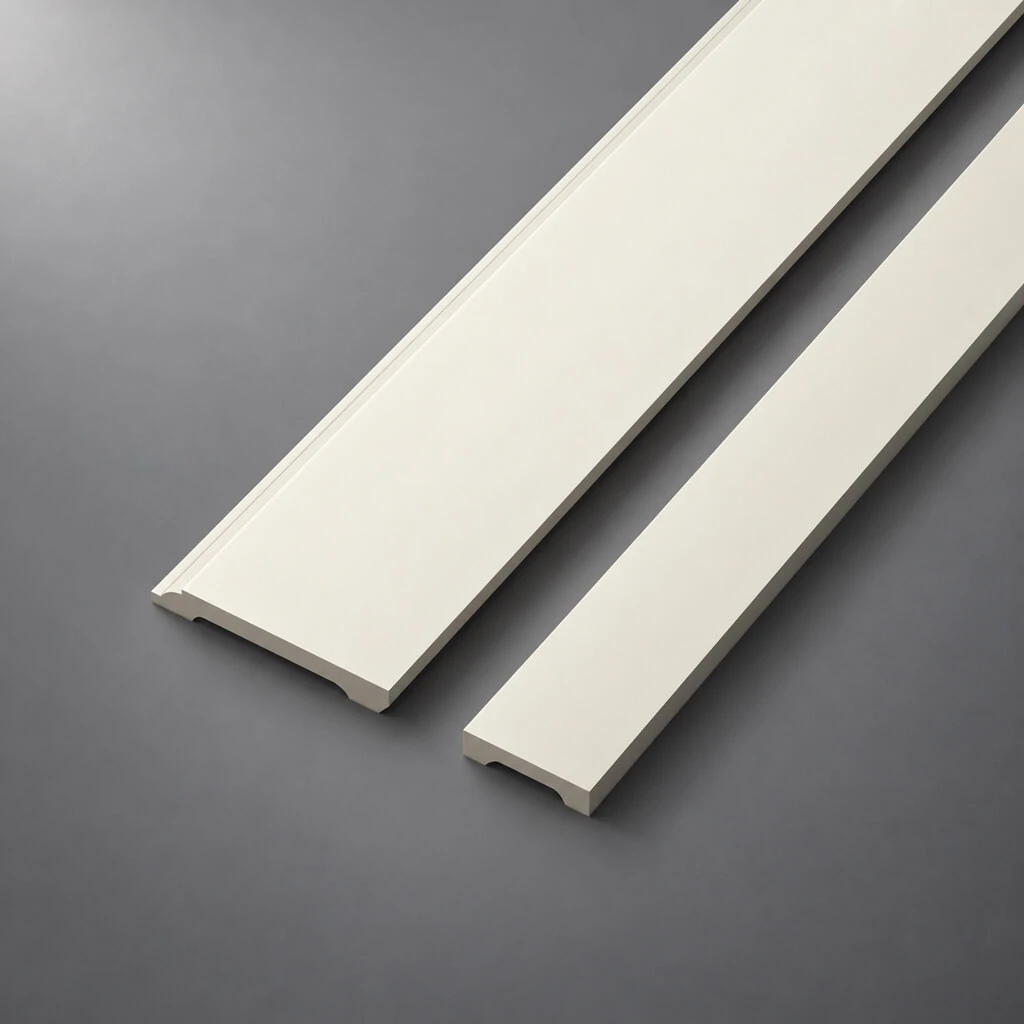
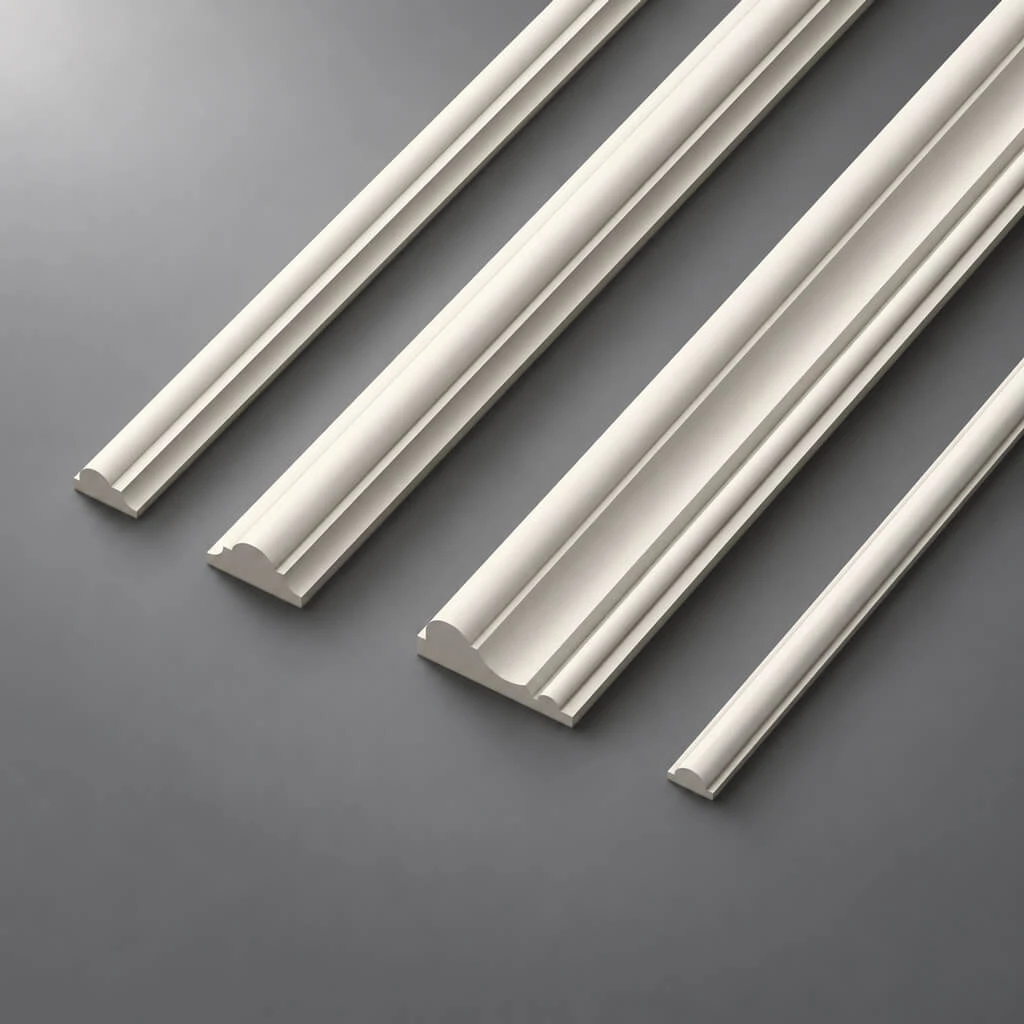
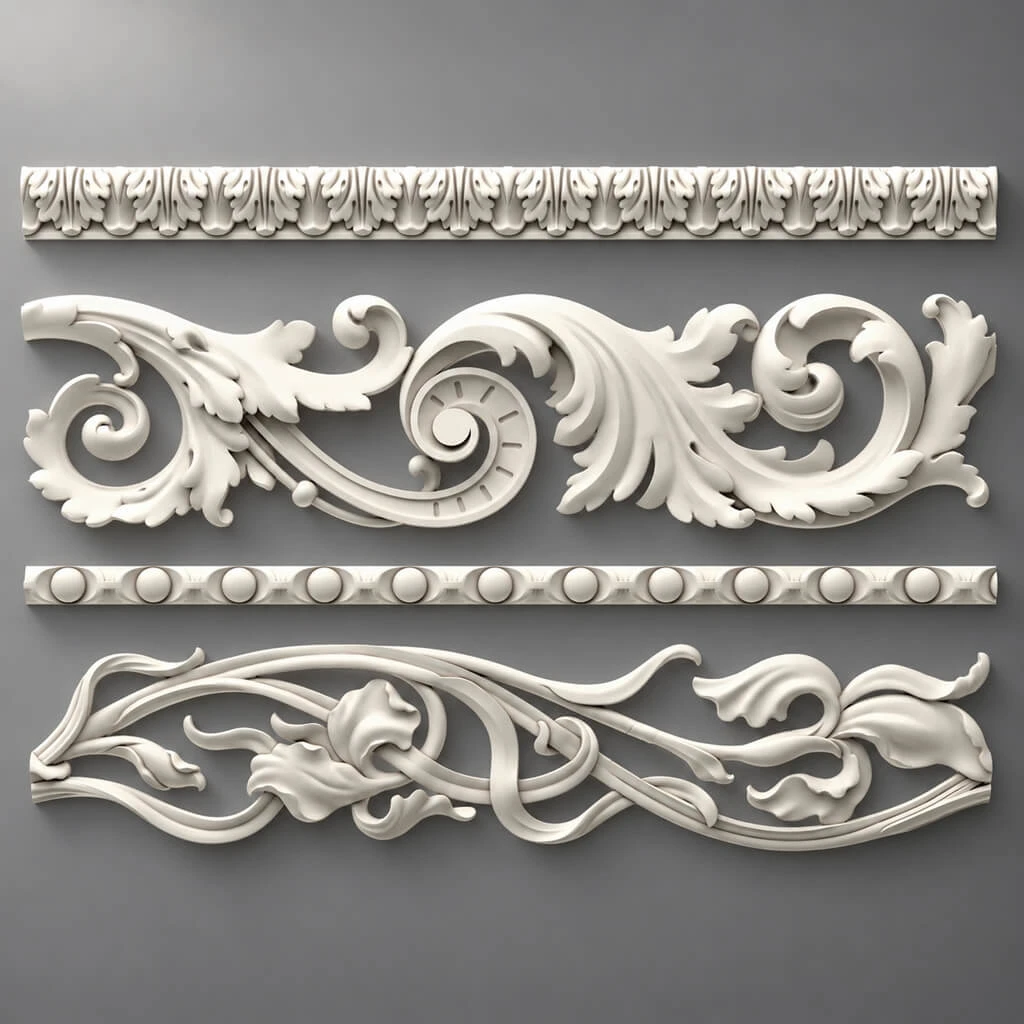
Molding — a linear decorative element used for dividing walls into 'fields,' creating framed panels, and framing architectural details. Narrower and simpler than a cornice. Width: 15–80 mm.
Baseboard — a lower decorative element that covers the joint between the wall and the floor. Height: 60–150 mm. In the classical approach, the profile of the baseboard 'rhymes' with the profile of the cornice.
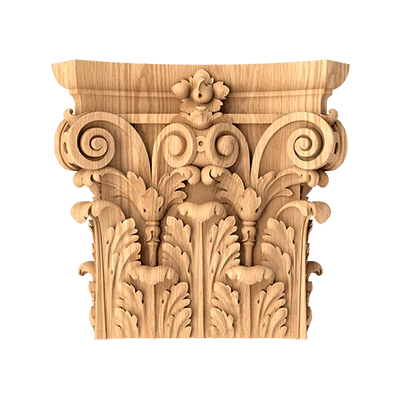
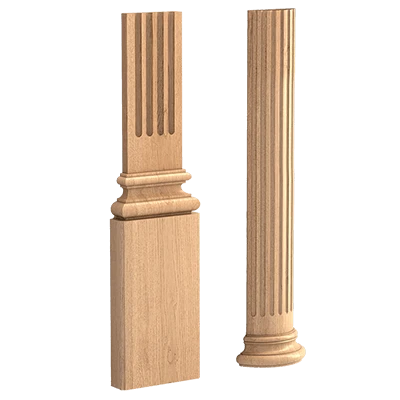
Pilaster — a vertical decorative element that imitates a column attached to a wall. It has a base (lower element), a shaft, and a capital (upper element). A monumental architectural accent on the wall.
Capital — the decorative top of a pilaster or column. Ionic (with scrolls), Doric (strict), Corinthian (with acanthus) — three historical orders, all reproduced in polyurethane.
Frieze — a horizontal decorative strip between the cornice and the main 'field' of the wall. It can be smooth or ornamental.
Coffering — a recessed rectangular or square 'cell' in the ceiling, framed by moldings. A coffered ceiling — a grid of such cells — is a monumental classical solution.
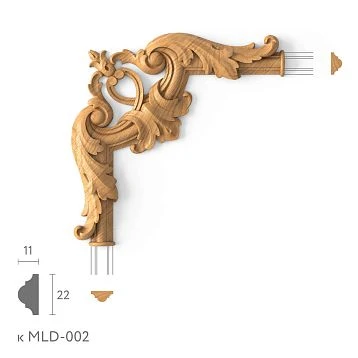
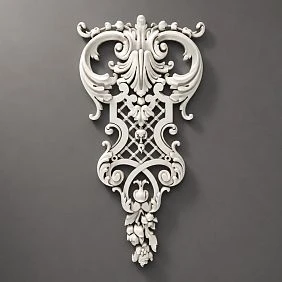
Cartouche — a decorative insert, often in the shape of an unfurled scroll or shield. Used as a 'frame' for ornamentation, inscriptions, or coats of arms.
Why polyurethane is the best material for stucco decoration today
The question everyone asks: 'What makes polyurethane better than plaster?' The answer lies in four properties.
Weight. Polyurethane — 3–8 kg/m³. Plaster — 1200–1500 kg/m³. A linear meter of polyurethane cornice 80×60 mm weighs 150–300 g. The same plaster one — 1.5–3 kg. The lightness of polyurethane means installation with adhesive without dowels, without load on the ceiling, without complex fastening systems.
Moisture resistance. Plaster absorbs water — it swells, deforms, crumbles. Polyurethane is a water-resistant material. Polyurethane decor is used in bathrooms, kitchens, on open balconies.
Reproduction accuracy. Polyurethane elements are cast using precise molds — they reproduce the finest details of historical profiles. Acanthus, ionic, dentils, meander — all are reproduced with architectural precision.
Paintability. Polyurethane accepts acrylic and latex paint. The decor can be painted in any color from the catalog — white, cream, gold, anthracite — directly on the wall.
Comparison: slatted panels and molded decor
Now — a direct and honest comparative analysis. Not 'what is better,' but 'what is for what.'
| Parameter | Slat panels | Molded decor |
|---|---|---|
| Principle of impact | Rhythm, movement, texture | Accent, frame, ornament |
| Constructive depth | 40–80 mm | 15–50 mm (element only) |
| Materials | Wood, MDF, Thermowood | Polyurethane, plaster |
| Installation | Battens + slats | Adhesive + trimming |
| Paintability | Yes (MDF) | Yes (polyurethane) |
| Acoustics | Yes (with content) | No |
| Concealing utilities | Yes | No |
| Moisture resistance | Thermowood, HMR MDF | Polyurethane — yes |
| Styles | Scandinavian, minimalism, loft, Japandi, eco | Classic, neoclassical, art deco, modern |
| Visual effect | Surface "moves" | Surface "concentrates" |
| Repairability | Individual slat is replaced | Individual element is replaced |
Where slatted panels are used, and where — molding
This is the most practical question. Let's go through each space one by one.
Living Room
The living room is the most "public" area of an apartment or house. Here, the interior "works" at its maximum.
Slatted panels in the living room: accent wall behind the TV or sofa — vertical slats made of natural oak or MDF. Creates a 'natural backdrop' for the main area of the room. Slatted ceiling above the sofa group — an 'island' of slats with LED lighting.
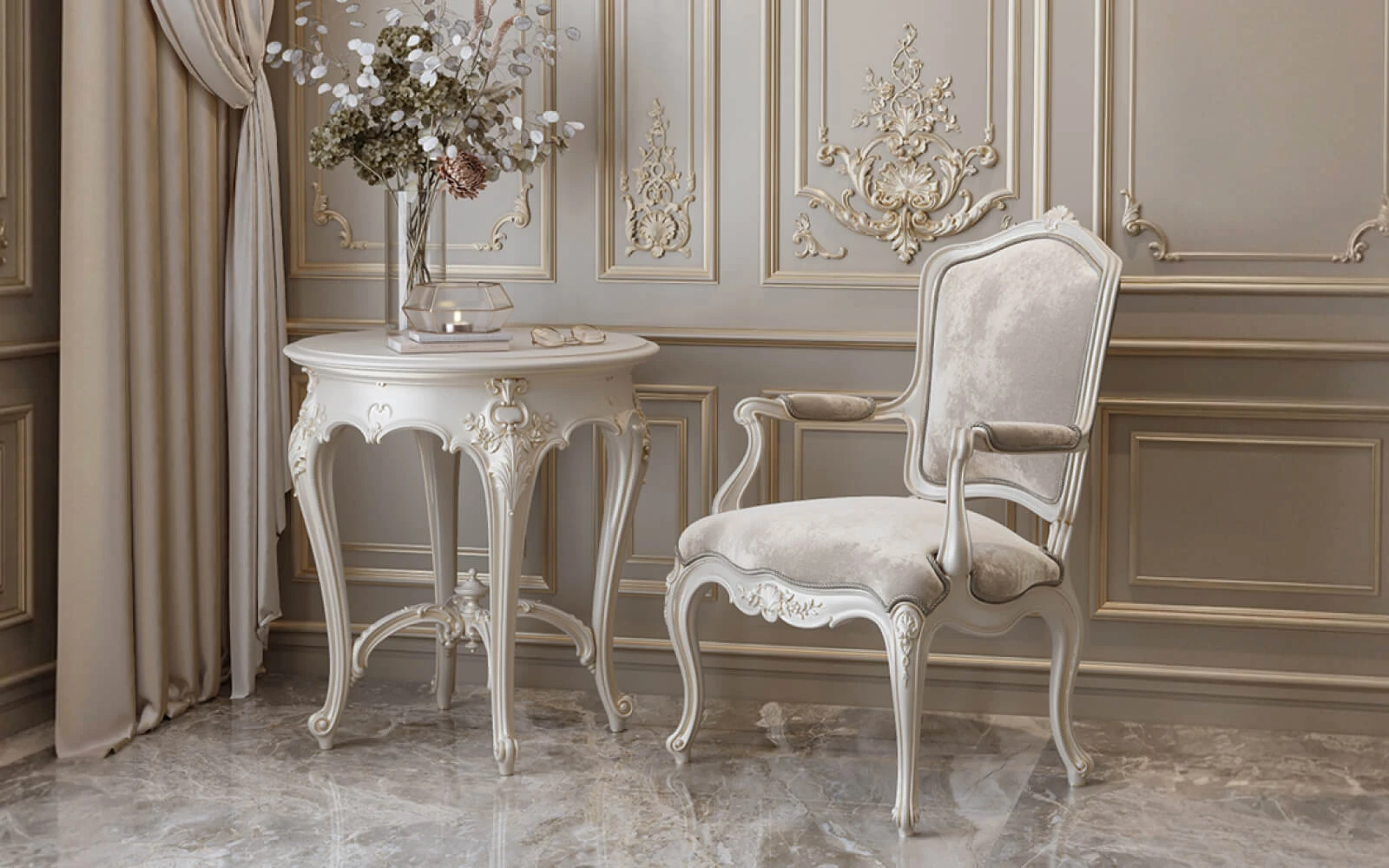
Moldings in the living room: cornice around the perimeter (a mandatory element for classic concepts), ceiling rosette in the center, molding frames on the walls. It is in the living room that moldings work to their full potential — there is scale for architectural expression here.
Combination: slatted accent wall + cornice with LED around the perimeter + rosette in the center of the ceiling. Slats — a 'natural' accent, moldings — an 'architectural' frame.
Bedroom
In the bedroom, priorities are different: peace, intimacy, quiet.
Slatted panels in the bedroom: slatted 'headboard' — vertical slats on the wall behind the bed, the width of the bed opening + 40–60 cm on each side. Creates an architectural 'canopy' without a physical structure. Slats are delicate — 25–35 mm / gap 10–12 mm — natural backdrop, not an accent.
Moldings in the bedroom: 50–65 mm cornice with LED groove — 'floating' ceiling, soft warm lighting instead of the main chandelier. 400–550 mm rosette in the center with minimal relief — a delicate central element.
Kitchen
Kitchen — a 'working' area with high humidity and grease vapors.
Slatted panels in the kitchen: only thermowood or moisture-resistant MDF (HMR) with varnish coating. Slatted backsplash (behind the countertop) — an atypical but effective solution. Slatted ceiling above the kitchen 'island' — zoning and concealing the exhaust duct.
Moldings in the kitchen: polyurethane ceiling cornice — moisture-resistant material is not contraindicated for the kitchen. Simple 50–60 mm profile in the color of the ceiling — a delicate finishing touch. Molding frames on the walls above the dining table — a 'Provence' or 'Mediterranean' accent.
Children's room
Children's room — a space for imagination. Here the interior should 'play', not overwhelm.
Slatted panels in a child's room: horizontal slats are more 'friendly' to a child's perception than strict vertical ones. Pastel-painted MDF slats offer the possibility to easily change the color after a few years. A slatted 'house'—slats on an accent wall in the shape of a house outline—is an architectural play for a child's room.
Molded decor in a child's room: simple, smooth molding frames painted in a bright accent color serve as 'picture frames' on the wall. A small ceiling rosette in the center—without complex ornamentation.
Bathroom
Bathroom—the area of maximum humidity. Material requirements are the strictest.
Slatted panels in the bathroom: only thermally modified wood with an oil-wax finish or moisture-resistant HMR MDF with a 3+ layer lacquer finish and primed edges. A slatted wall behind the bathtub creates a 'spa' effect of natural wood over water.
Molded decor in the bathroom: polyurethane is a moisture-resistant material and can be used in bathrooms without restrictions. A 45–60 mm ceiling cornice finishes the tiled wall at the ceiling. Molding frames that break up the ceramic tiles into 'panels' is an architectural technique familiar from luxury hotels.
Commercial spaces: offices, restaurants, hotels
In commercial interiors, materials act as 'silent salespeople'—they create an impression that conveys the brand's values.
Restaurant: dark wooden slats on walls and ceiling create a 'forest' atmosphere, warmth, and coziness. Cornices with LED lighting create a floating ceiling effect. Decorative beams made of polyurethane offer a 'farmhouse chic' look without real wooden beams.
Office: monochrome MDF slats with acoustic felt combine function and aesthetics. In the meeting room: a slatted accent wall behind the 'head of the table' plus a cornice around the perimeter. Architectural 'seriousness' without pretentiousness.
Hotel: molded decor in the lobby and halls signals 'class'. Ceiling rosettes, cornices with ornamentation, molding frames in corridors. Guest rooms feature slatted accent walls behind the bed headboard for natural coziness.
Boutique: white monochromatic slats — a 'gallery-style' neutral background for merchandise. Slatted ceiling with track lighting in the gaps — spot lighting without separate ceiling fixtures.
Differences in installation: slatted panels and molding
Understanding installation is not a 'technical' question, but a question of planning the entire renovation.
Installation of slatted panels: stages and tools
The process of installing slatted panels consists of several mandatory stages:
1. Acclimatization. Natural wood slats require 72–96 hours in the room before installation. MDF — 24–48 hours. Skipping this stage leads to deformation after installation.
2. Marking. A laser level is a mandatory tool. The first slat is the 'key' one: the entire surface rhythm depends on it. A 1–2° error in the first slat results in a noticeable 'staircase' effect by the end of the wall.
3. Battens. Wooden or metal 'joist' battens are attached to the wall (or ceiling) at a distance of 40–60 cm from each other. Battens are perpendicular to the slats: vertical slats — horizontal battens, and vice versa.
4. Installation of slats. Slats are attached to the battens with screws through the side edges (concealed fastening) or through the front surface with subsequent puttying. Spacer shims ensure an even gap.
5. Finishing elements. Corner profiles, cornices, and moldings are installed last — they cover the ends of the slats and joints with adjacent surfaces.
6. Painting (for MDF). If necessary: primer on the ends, two finish coats of paint with intermediate drying.
Required tools: hammer drill, laser level, miter saw, screwdriver, spacers.
Installation of polyurethane decorative molding: simple and fast
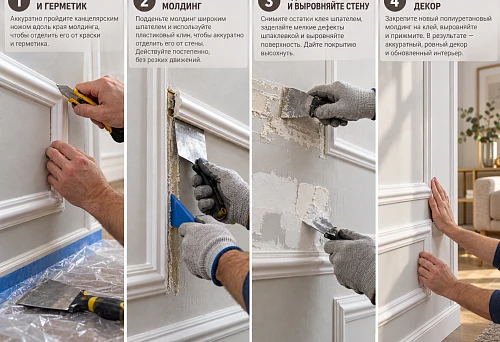
Installation of polyurethane decorative molding is one of the most accessible processes for DIY execution.
1. Marking. For cornices — a line along the perimeter on the wall (laser level). For a ceiling medallion — the geometric center of the ceiling (two diagonals from the corners). Shifting the medallion even by 10–15 cm from the center is a gross error, noticeable immediately.
2. Surface preparation. Cleaning from dust, priming with acrylic primer.
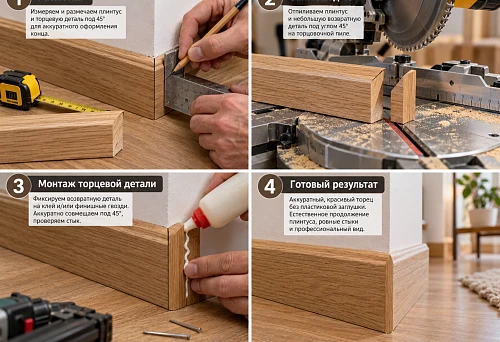
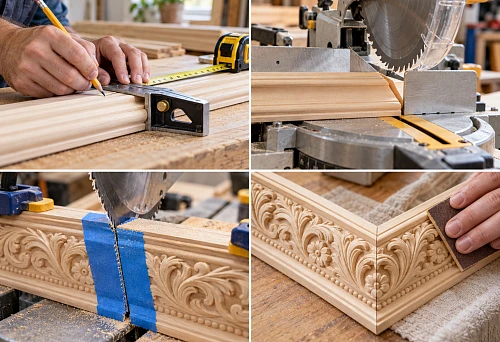
3. Cutting elements. Cornices and moldings are joined at a 45° angle — miter saw with a rotating table. Corner joints are the most 'visible' moment of installation: a precise 45° angle hides the joint, an 'approximate' one creates a gap.
4. Applying adhesive. Mounting adhesive on a polyurethane base or acrylic — along the back edge of the element. Silicone — not used: not paintable.
5. Pressing and fixing. The element is pressed against the surface for 30–60 seconds. For long cornices — temporary fixation with painter's tape until the adhesive fully sets (1–3 hours).
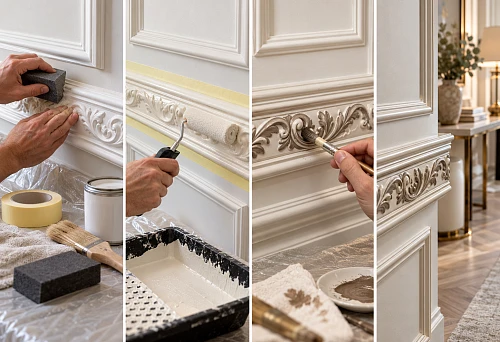
6. Sealing joints. All corner joints and end connections — acrylic sealant for painting. After drying — sanding, painting.
7. Painting. Primer + 1–2 coats of acrylic paint. Without primer — uneven coverage.
How to choose a solution: a specific algorithm
Now — the most important thing. Not 'what looks nice,' but 'what is right for your space.'
Step 1: Define the interior style
Style — the first and main filter:
-
Scandinavian, Japandi, minimalism, eco, loft → slatted panels (wooden or MDF for painting)
-
Classic, neoclassical, art deco, 'French charm,' 'English club' → stucco decor
-
Modern classic, eclectic, 'natural classicism' → both in combination
If the style is not yet defined — ask yourself: 'What is closer to me — a forest or a palace?' This is not a joke. It is an architectural choice between natural rhythm and classical order.
Step 2: assess the ceiling height
-
Up to 2.5 m → stucco (cornice 40–50 mm around the perimeter without losing height) + slatted 'island' maximum 30% of the ceiling area
-
2.5–2.7 m → moderate slatted ceiling (delicate rhythm, slats 25–35 mm) + cornice 50–65 mm
-
2.7–3.0 m → full slatted ceiling or plaster ceiling with cornice 65–90 mm
-
3.0+ m → monumental solutions of both types, coffered ceilings, large rosettes
Step 3: determine the function of the room
-
Living room, study, representative space → plasterwork creates 'status'; slats — coziness and naturalness
-
Bedroom → slats (natural tranquility); plasterwork — only delicate
-
Bathroom → thermally modified wood or polyurethane plasterwork (both moisture-resistant)
-
Kitchen → moisture-resistant slats, polyurethane cornice
-
Children's room → slats (safe natural material, easy repainting)
-
Office, meeting room → acoustic slats + cornice
Step 4: Determine the finishing budget
Approximate data for planning:
| Solution | Material cost (per m²) | Installation Difficulty |
|---|---|---|
| MDF slats for painting | Low–medium | Medium |
| Natural wood slats | Medium–high | Medium |
| Thermowood | High | Medium |
| Polyurethane cornice (linear meter) | Low | Low |
| Polyurethane rosette | Low | Low |
| Polyurethane moldings (linear meter) | Low | Low |
Polyurethane stucco decor is one of the most budget-friendly architectural solutions. A cornice around the perimeter of a 20 m² room costs significantly less than slat finishing for the same room.
Step 5: Assess your readiness for independent installation
Polyurethane molding decor — DIY level: beginner–intermediate. Installing a cornice and rosette takes one day with a miter saw and laser level.
Slatted panels — DIY level: intermediate. Requires precise marking, work with battens, and skills with a miter saw.
Five typical mistakes when choosing and installing
Mistake 1: "I'll buy the slats and figure it out on-site"
Installing slatted panels without a preliminary project is the source of most problems. Slat width, gap spacing, orientation, placement of the first slat, batten height, electrical outlet locations — all of this is determined beforehand, not during the process.
Mistake 2: Rosette "above the hook"
The hook in the ceiling for a Soviet-era chandelier is not the geometric center of the ceiling. Installing a rosette "above the hook" without checking with a level means risking an obvious misalignment. Always use a laser level, always check two diagonals from the corners.
Mistake 3: Silicone sealant for molding
Silicone cannot be painted. Silicone squeezed out during installation becomes a permanent glossy "stain" after painting. Use only acrylic sealant, only polyurethane-based mounting adhesive.
Error 4: Too large slats in a small room
80 mm slats in a 12 m² room — a scale conflict. Monumental rhythm in a miniature space creates a feeling of claustrophobia. Rule: slat width ≤ 1/40 of the room perimeter.
Error 5: Molding "out of place"
Ornamental cornice with acanthus in an apartment in the style of hard minimalism — a stylistic dissonance that is impossible "not to notice". If the style is modern or Scandinavian, the molding should either be extremely simple (one ledge, no ornament) or absent.
FAQ: Answers to popular questions
What are slatted panels — is it clapboard?
No. Clapboard is a solid "tongue-and-groove" cladding without a gap.Rafter panels— a system with a gap between the slats. It is the gap that creates shadow and volume — the main decorative effect. Clapboard creates a "wooden box", slats — "architectural rhythm".
Can slatted panels be mounted on an uneven wall?
Yes — that's exactly what the lathing is used for. The lathing battens are aligned to a single plane (laser level), creating a flat base for the slats regardless of the wall curvature.
Polyurethane molded decor — doesn't it "look cheap"?
With proper installation and painting — no. The quality of polyurethane elements is determined by the precision of the molds and the purity of the surface. A delicate, high-quality profile, properly painted to match the ceiling color, is visually indistinguishable from its plaster counterpart. 'Cheapness' is a result of poor installation or incorrect proportions, not the material.
Can it beTypes of slat panelsuse on the ceiling in the bathroom?
Yes — but only thermowood or moisture-resistant HMR MDF with 3-layer lacquered end coatings. A mandatory condition: ventilation of the gap between the slats and the base ceiling — moisture must not accumulate.
How to choose a polyurethane cornice profile?
Basic rule: the cornice profile should match the interior style, not just 'look nice in the catalog'. One step — modern minimalism and contemporary classic. Two-three steps — developed classic. Ornamental profile (acanthus, dentils) — neoclassical, art deco, historical concepts. The most common mistake is choosing a 'beautiful' ornamental cornice for a minimalist apartment.
How to combine slatted panels with molding to avoid conflict?
Neutralization rule: molding is painted to match the ceiling color (not the slats), slats — in a natural color or monochrome. Molding and slats are in different 'zones': slats on the walls, molding on the ceiling. Or slats on the ceiling in an 'island', with the cornice as a 'frame' around the perimeter of this island.
Conclusion
Now you know,what are slatted panelsand what molded decor is — not as abstractions from catalogs, but as specific architectural tools with clear application logic. Slatted panels are rhythm and nature. Molded decor is order and tradition. The former says 'I live here among nature'. The latter says 'I live here in architecture'. The best interiors know how to speak both languages simultaneously.
Full rangeslatted panels made of wood and MDFall formats andtypes of polyurethane stucco decor— cornices, rosettes, moldings, beams, pilasters, coffered elements — are presented in the STAVROS company catalog.
STAVROS is a Russian manufacturer of architectural finishing materials with a full production cycle: slatted systems made of natural wood and MDF, a wide range of polyurethane stucco decor, cornices, moldings, baseboards, decorative beams. Own production, professional design consultation, Contact us to confirm shipping to your destination. For those who create interiors as architecture — precisely, consciously, for years to come.