

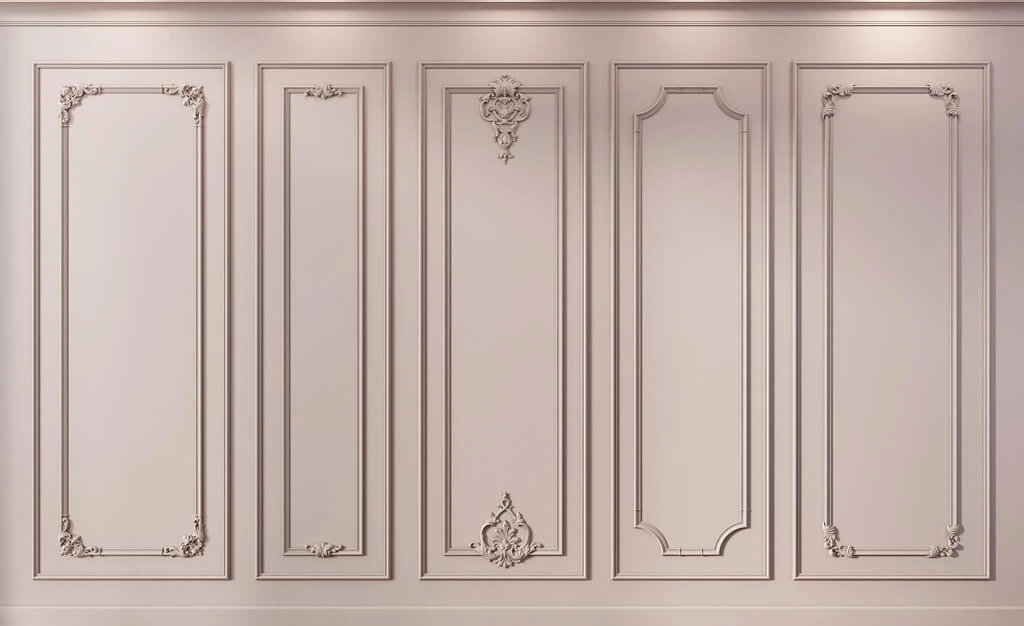
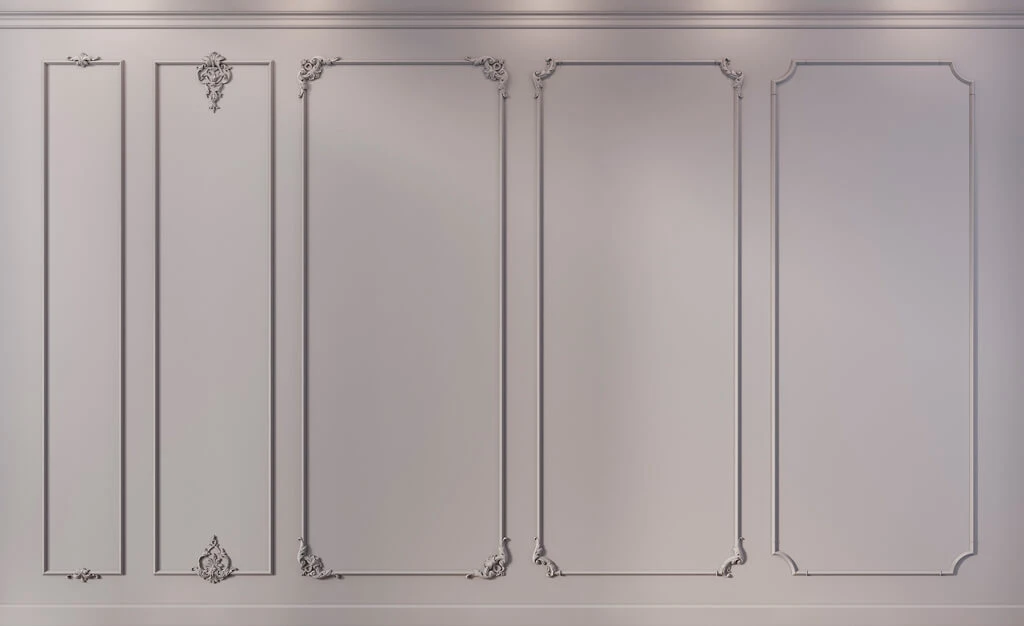
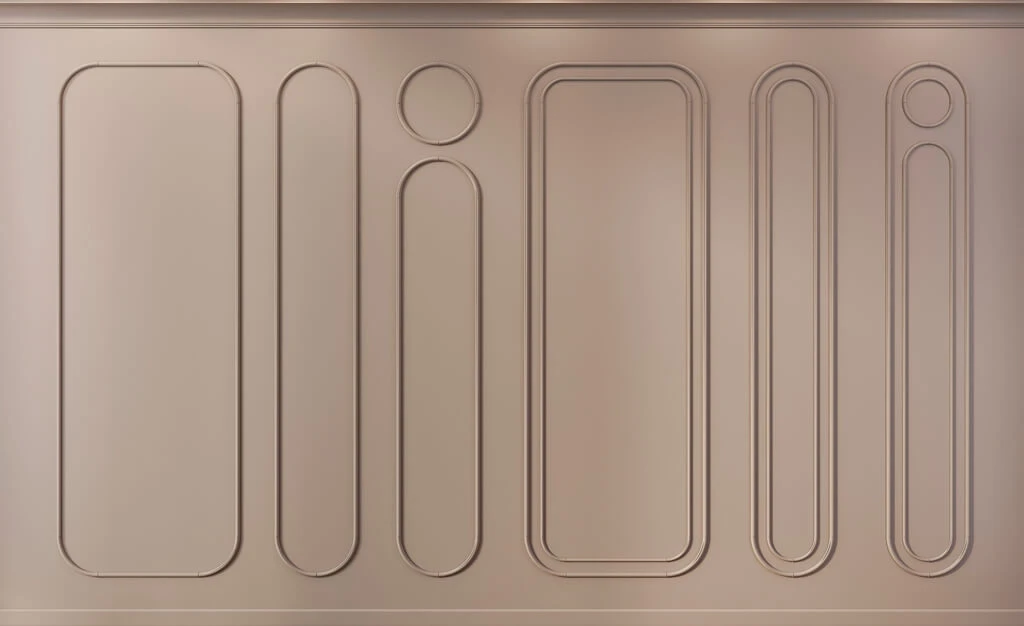
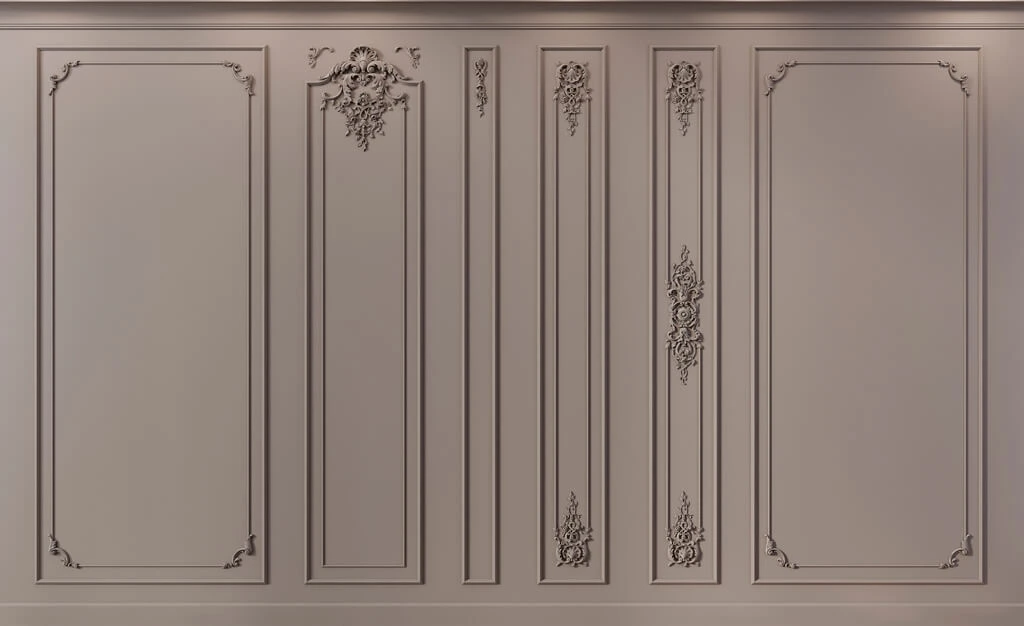
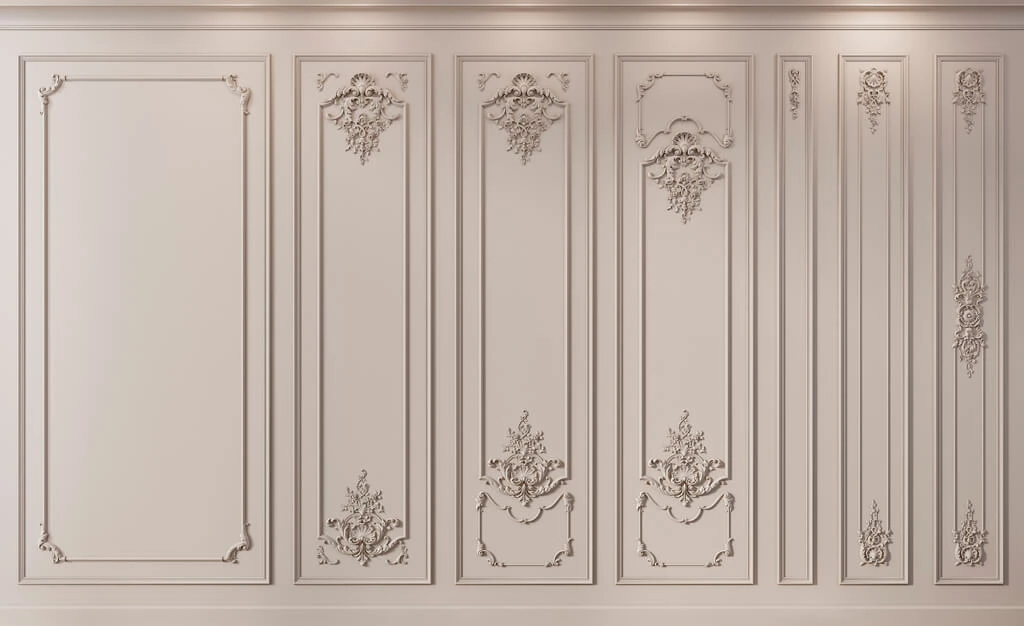
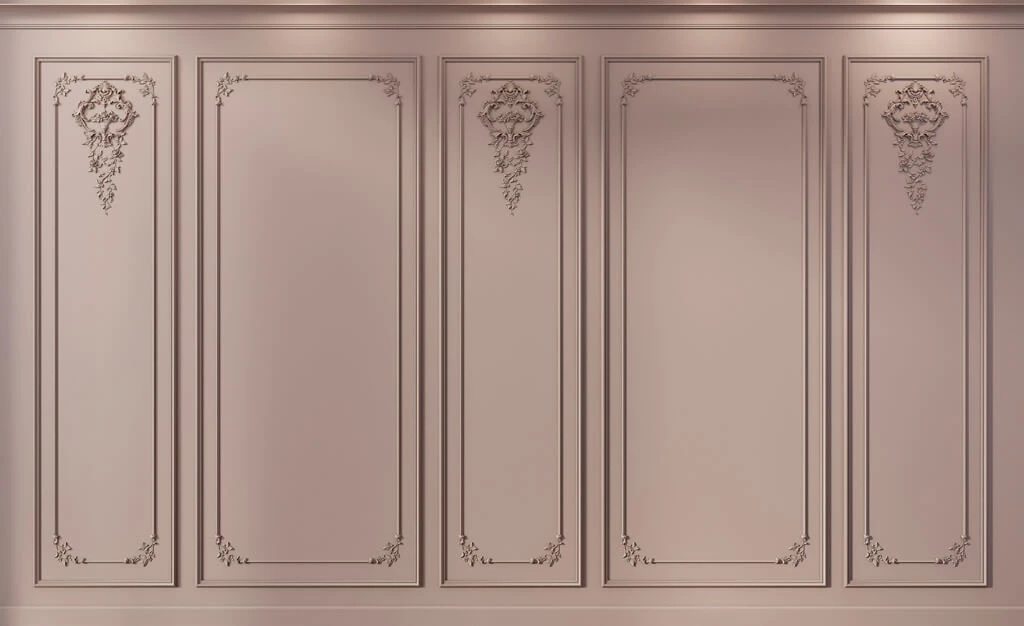
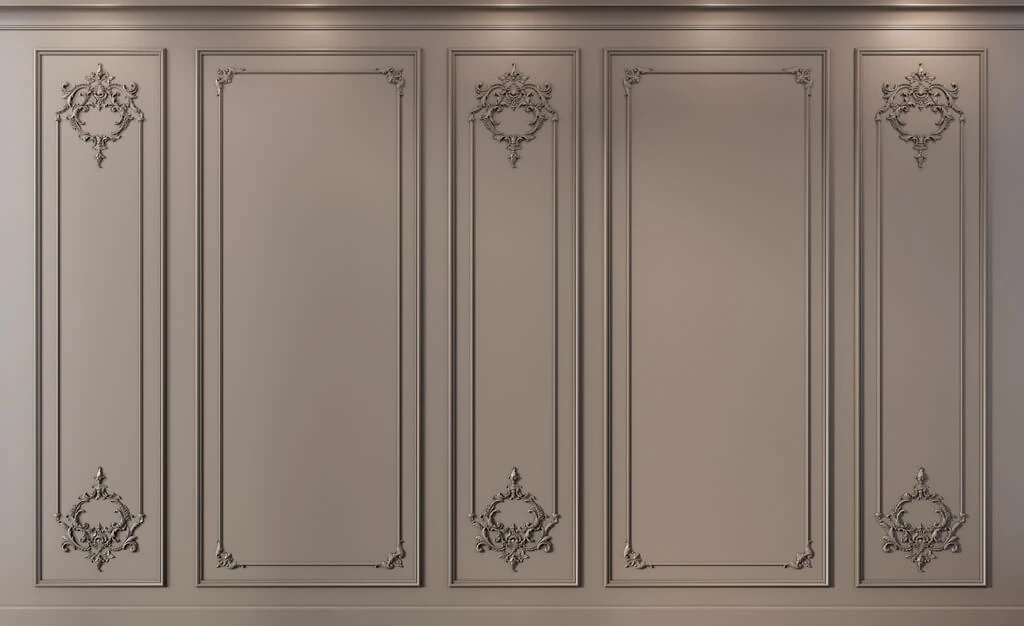
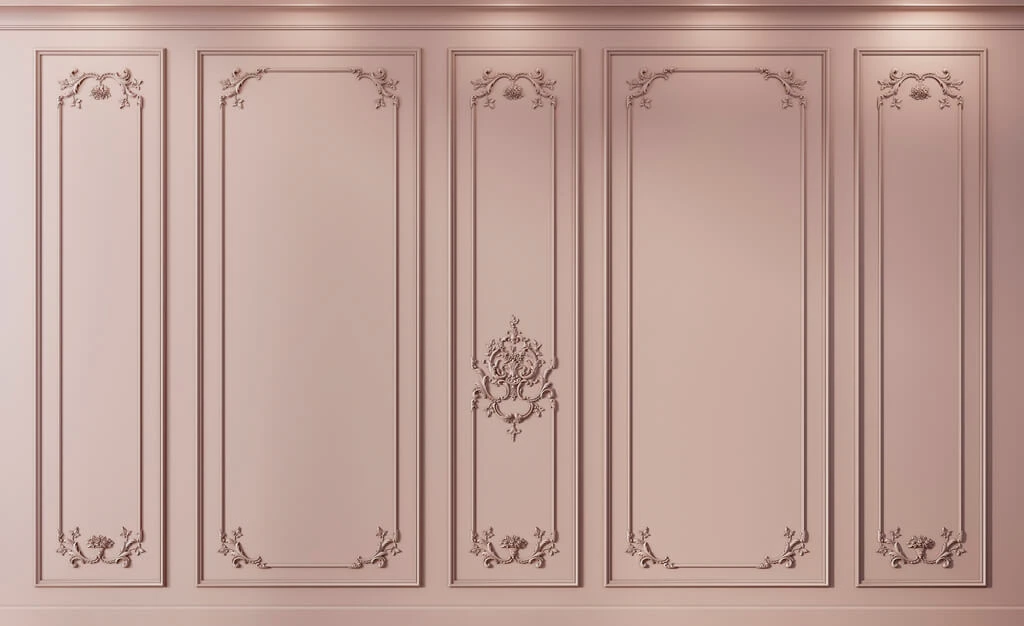
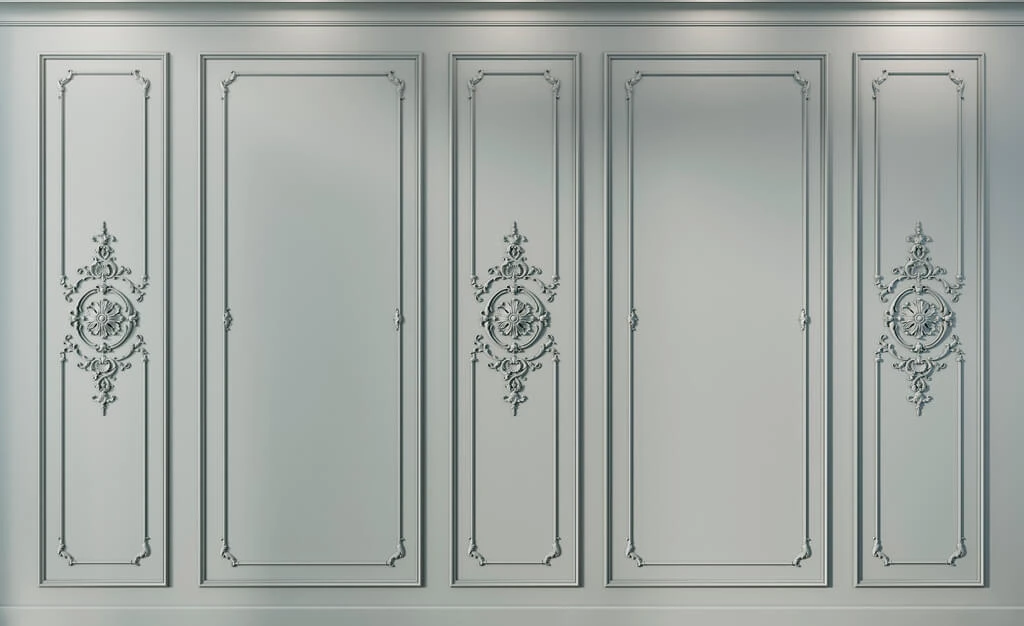
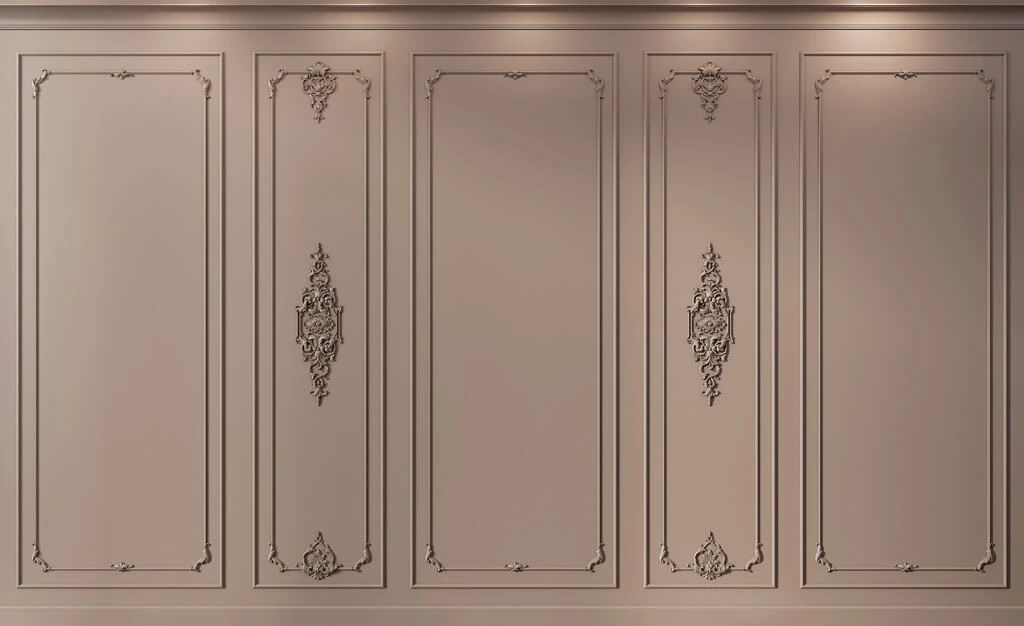
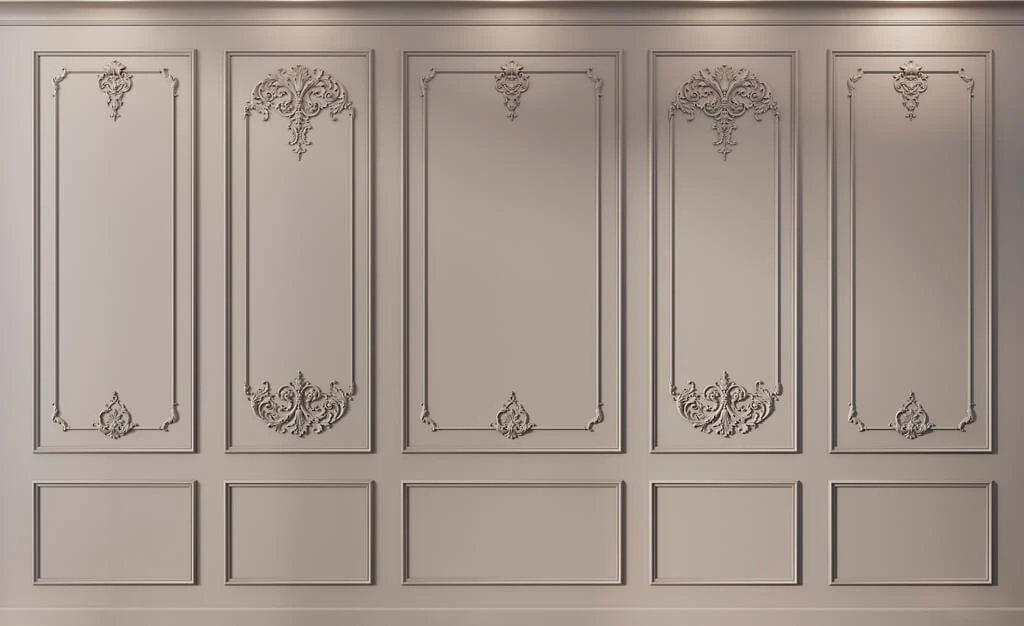
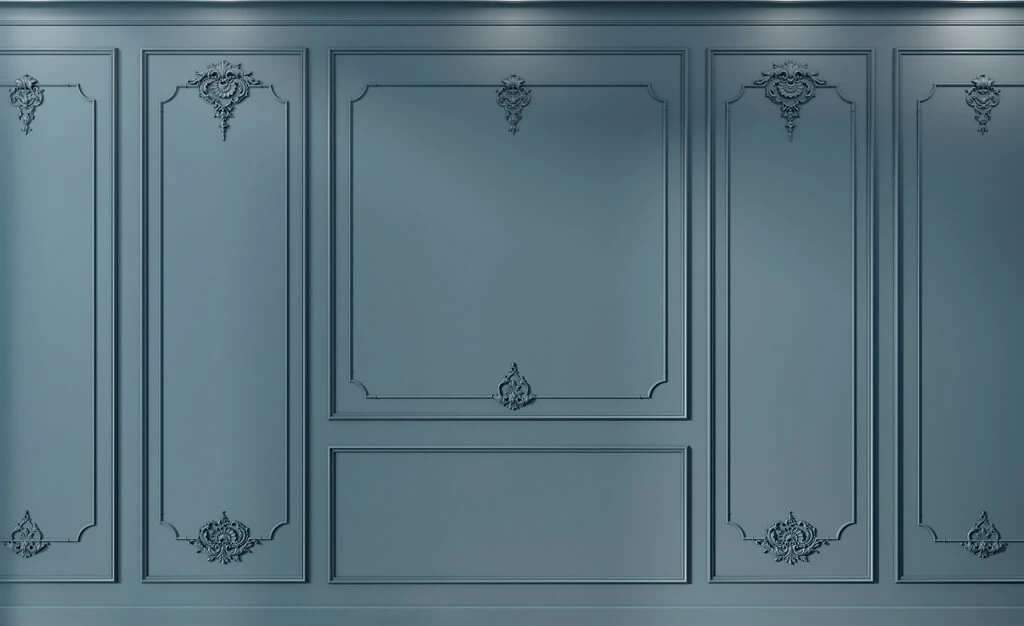
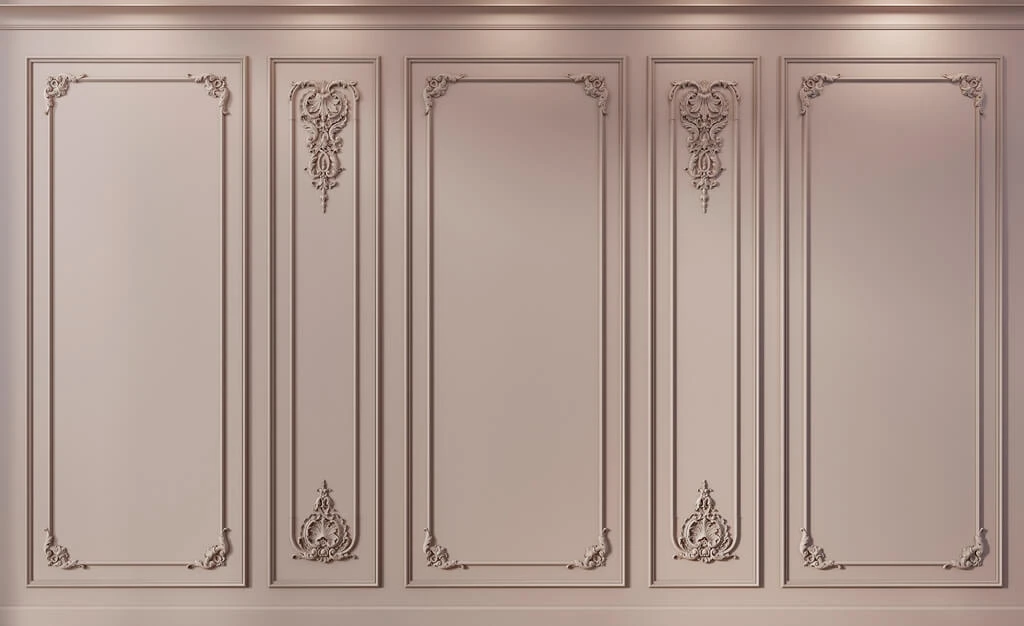
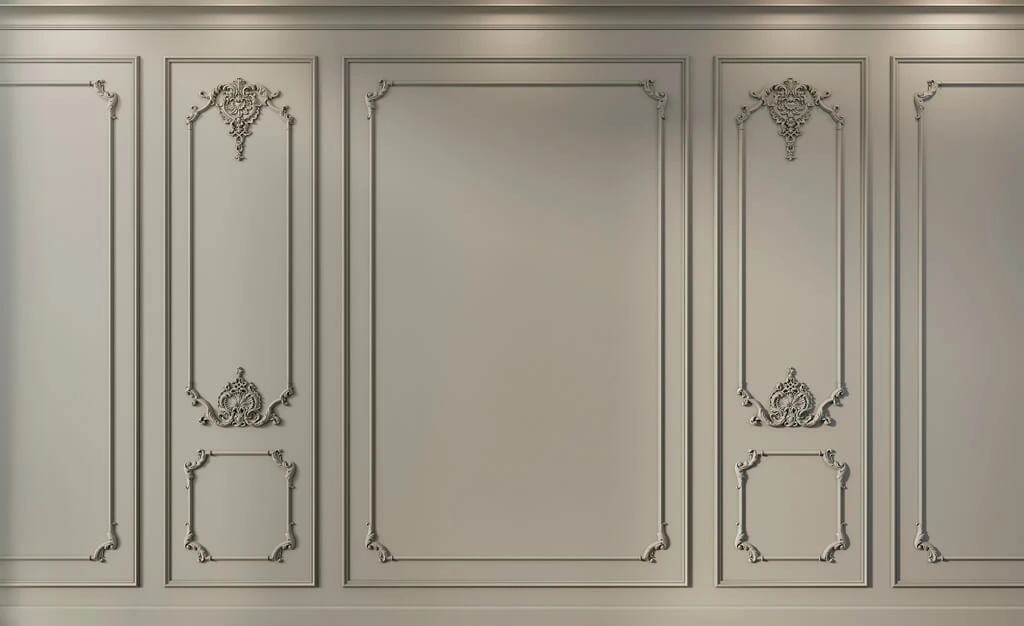
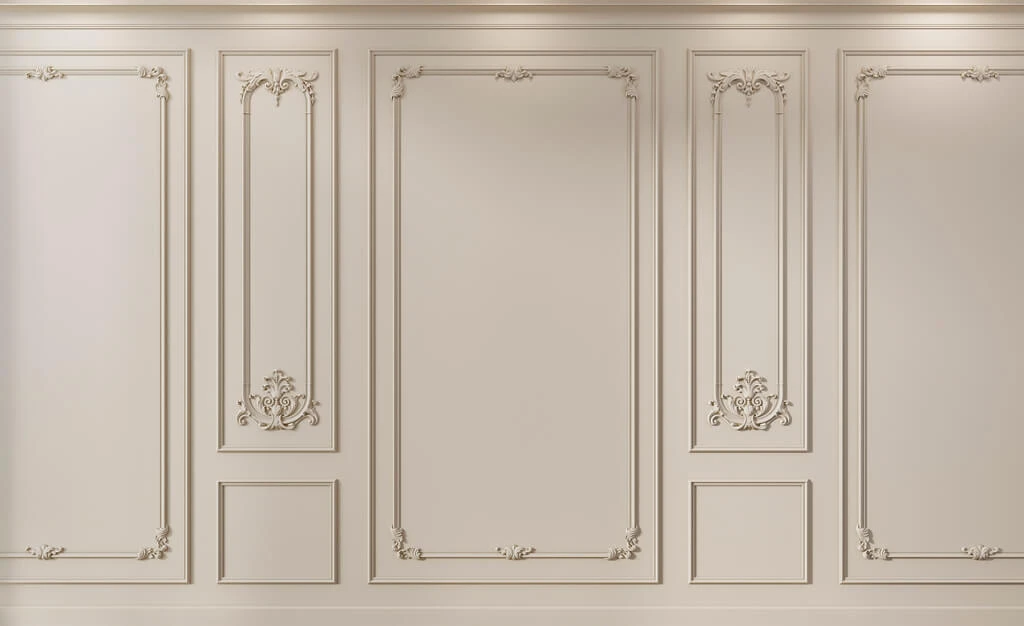
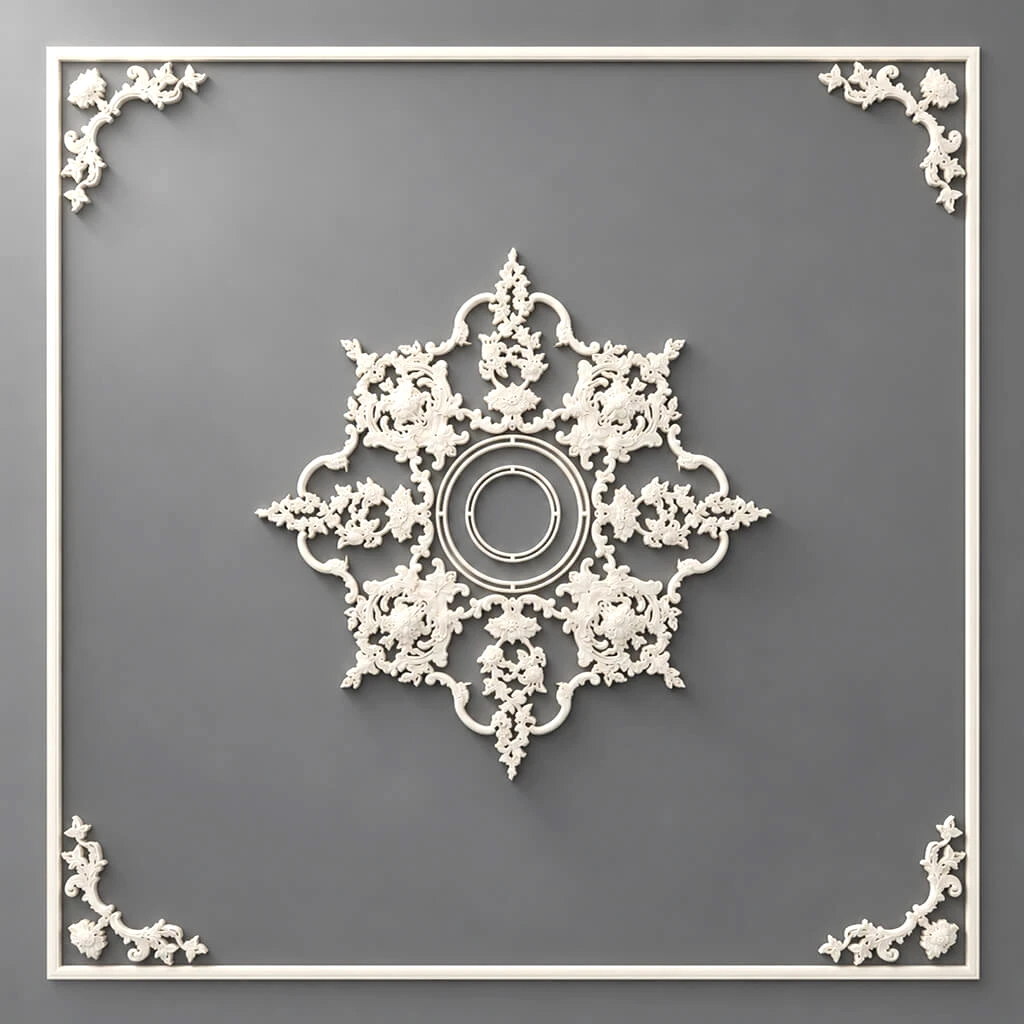






















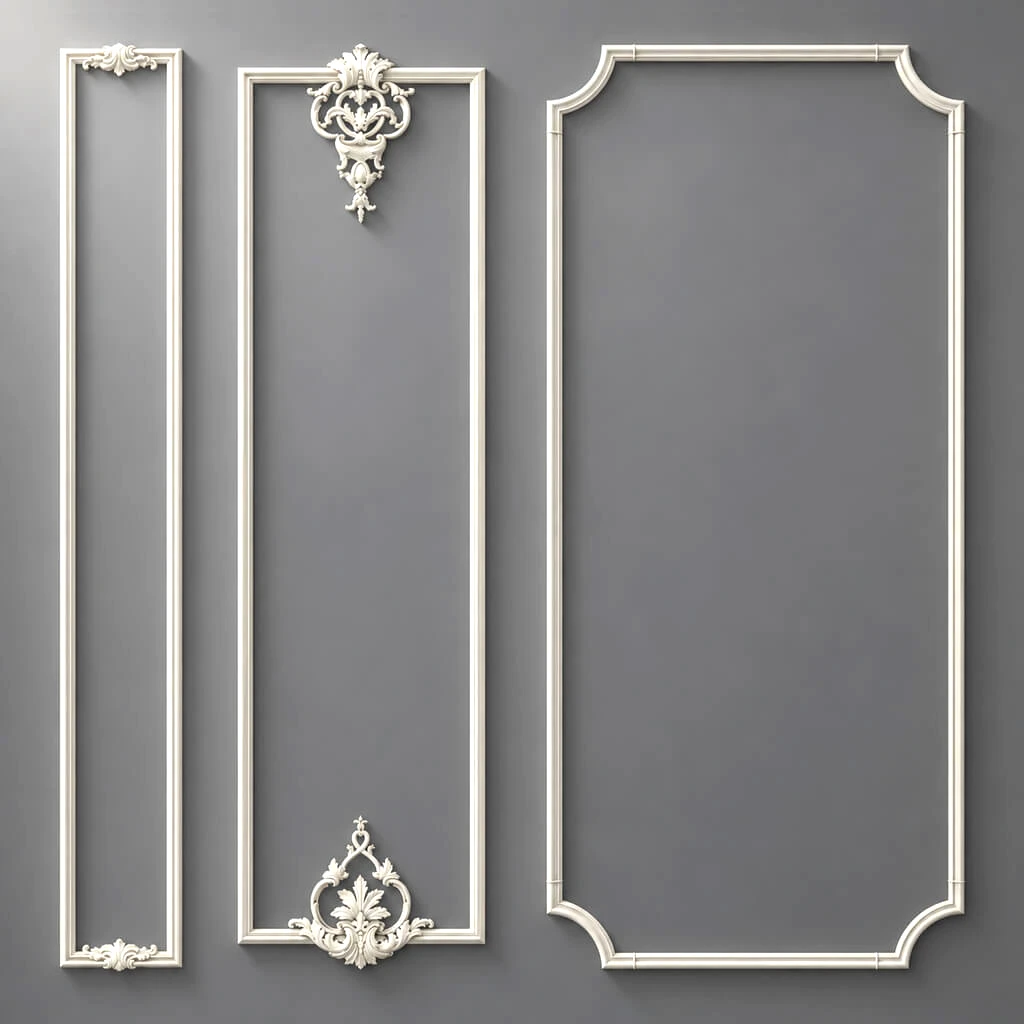
Decorating idea for wall panels "Verona" INTPU-031
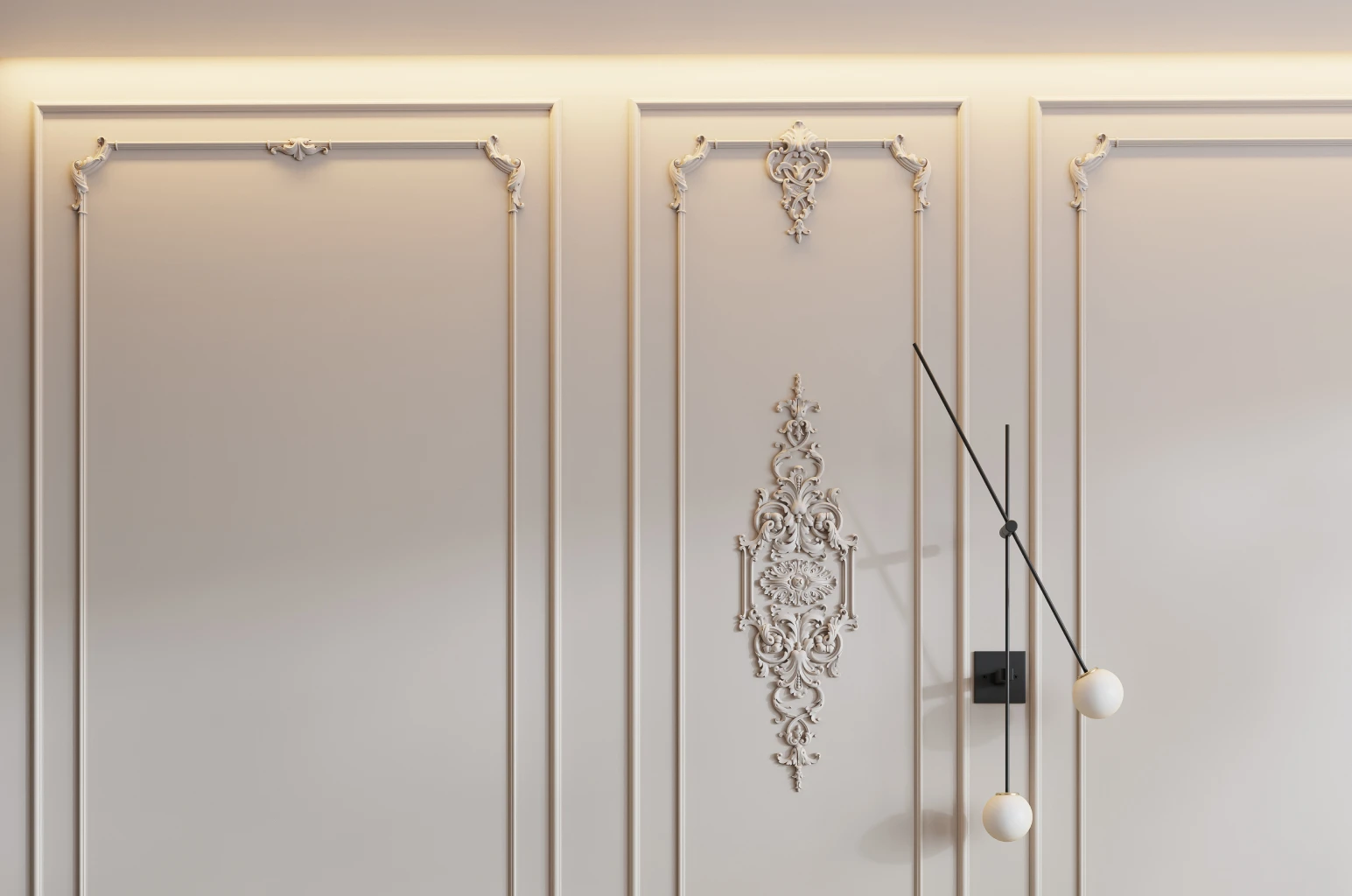
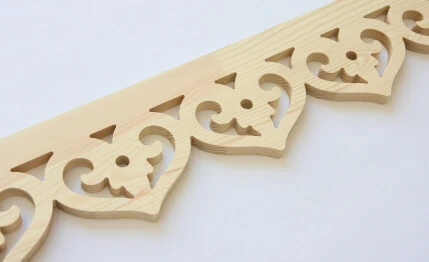
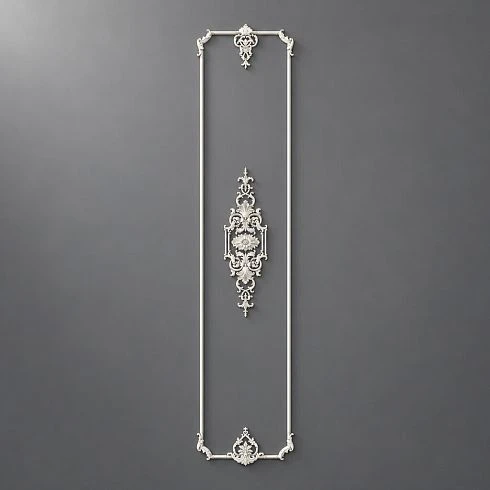
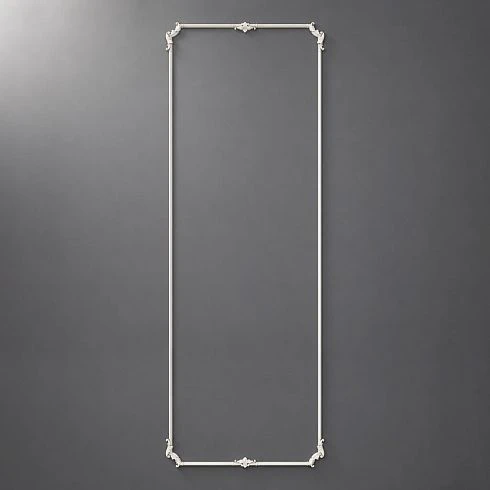
Used elements from the STAVROS array
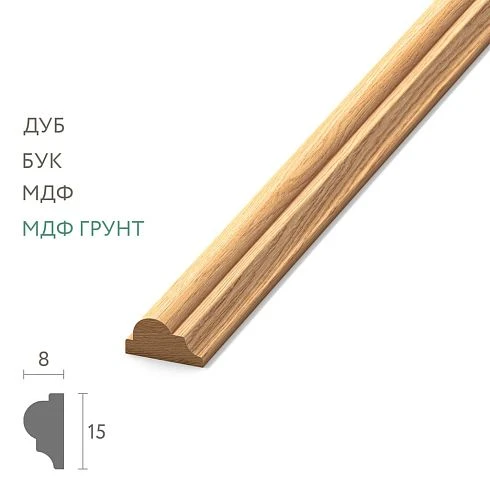
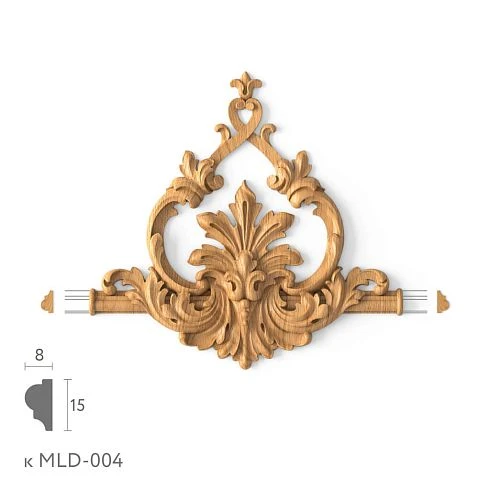
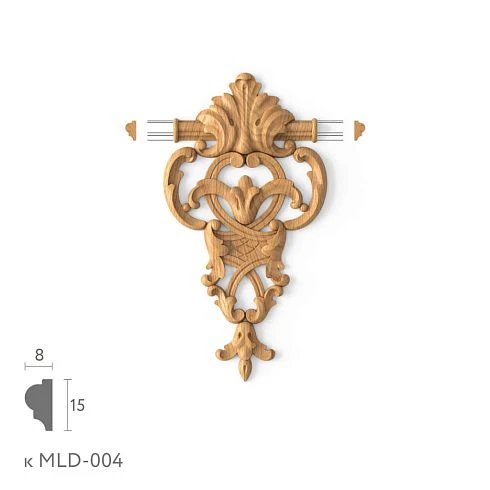
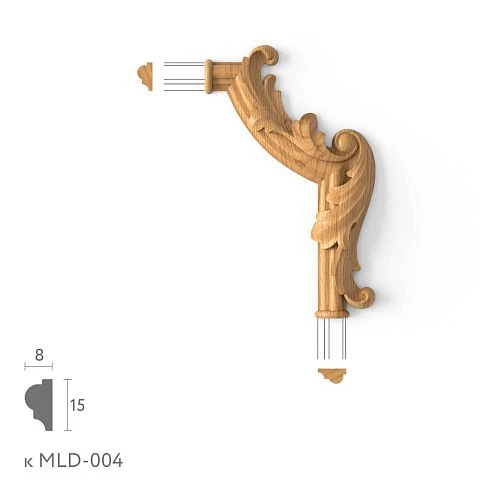
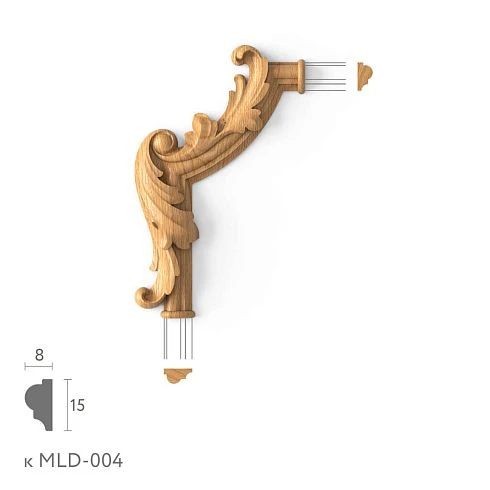
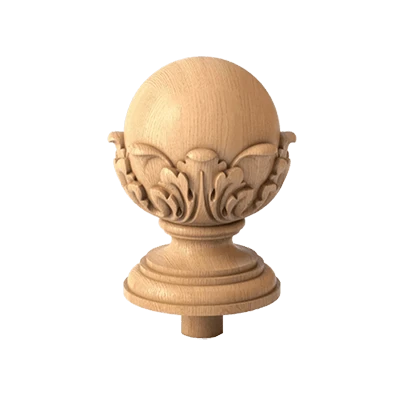
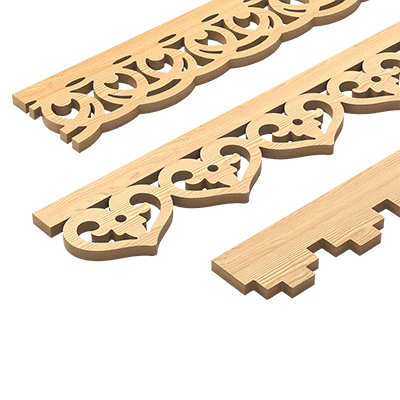
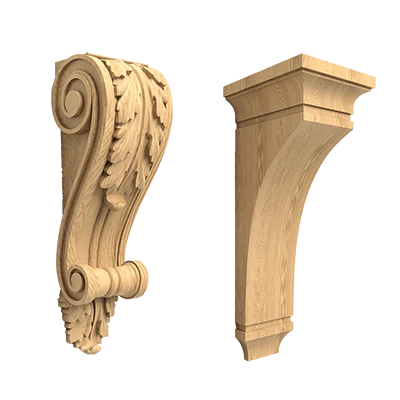
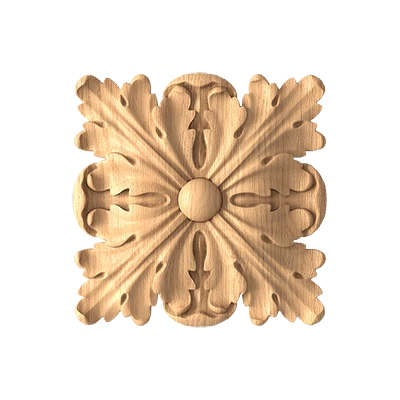
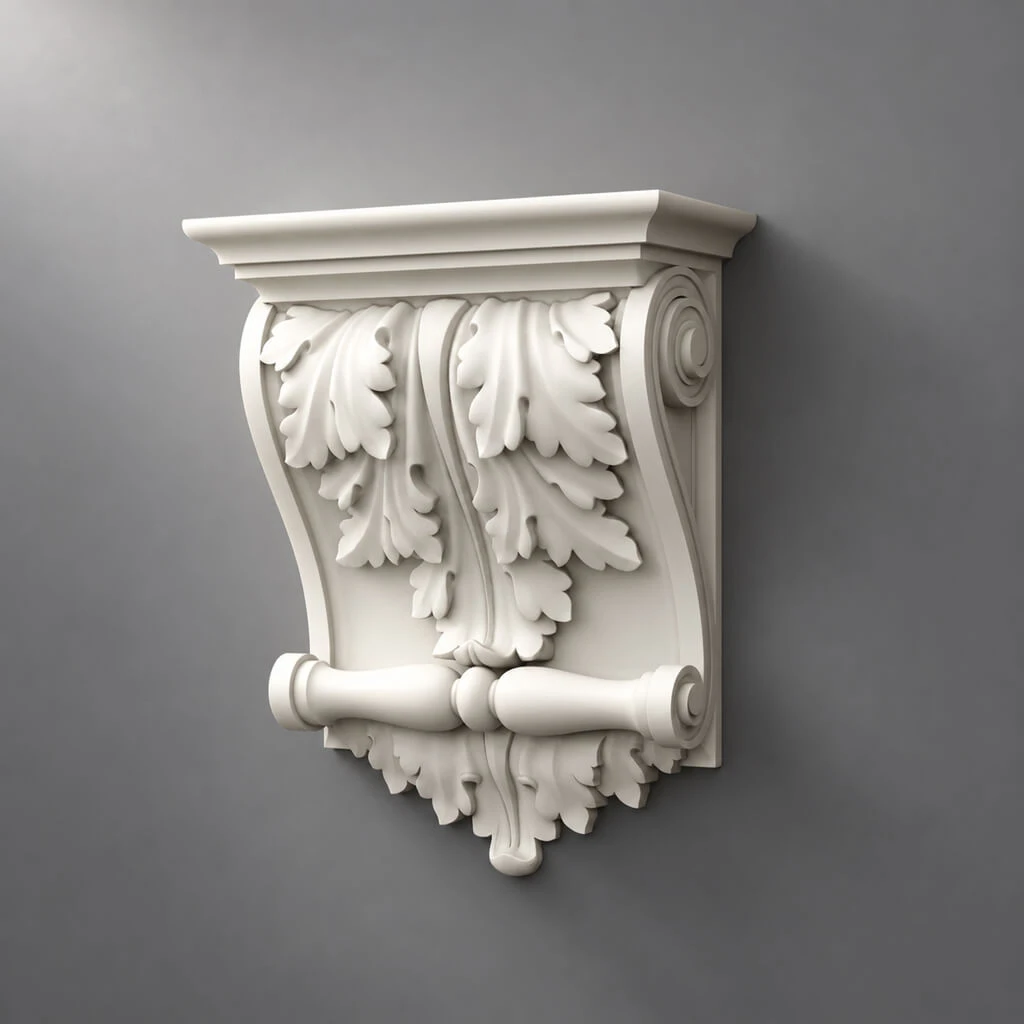
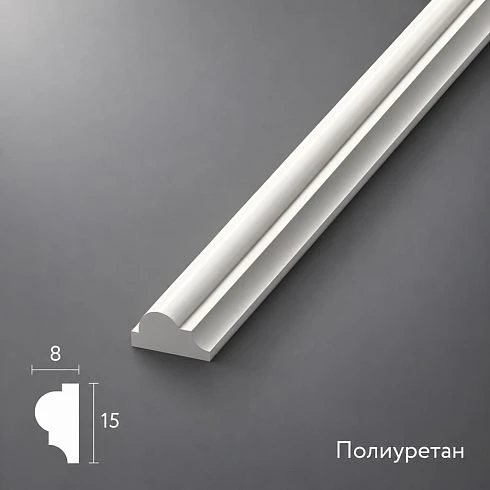
Polyurethane elements used: STAVROS
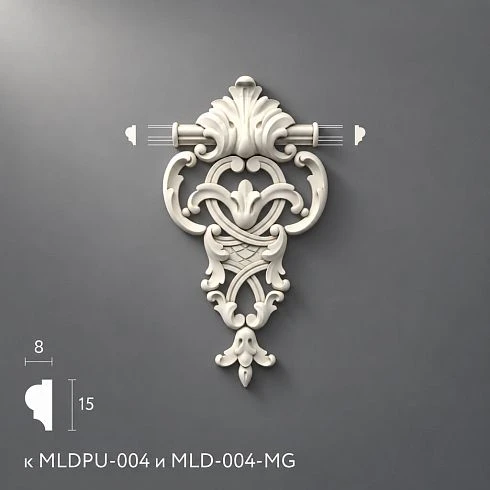
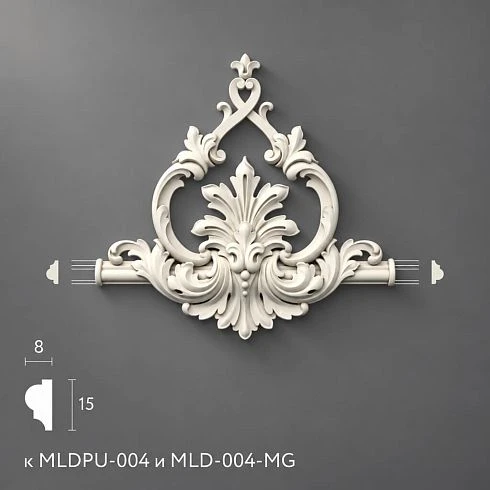
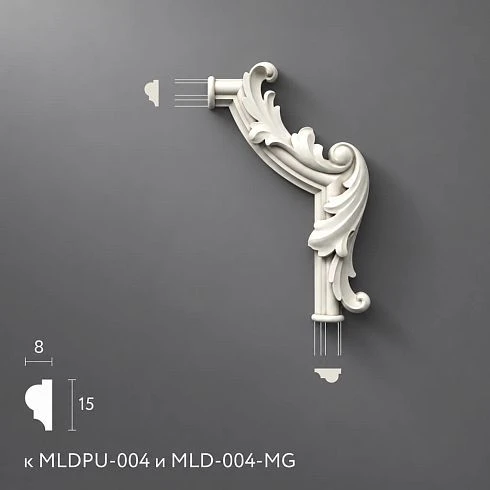
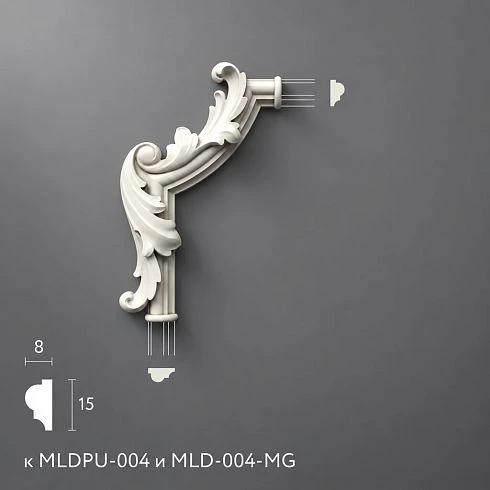
We will help you implement the project
Measurements
You send us furniture, interior, and preferences dimensions
Design
Our specialists will create a project (paid service, from 2000 rub.)
Kitting
After project approval, you receive a specification
Implementation
We will select partners in your city for painting and mounting decor
You may also be interested in
Frequently asked questions
Our showrooms are located in Saint Petersburg and Moscow. Production is located in Saint Petersburg.
Moscow contacts: /contacts_all/
Contacts of Saint Petersburg: /contacts_all/
Send us the product codes, quantities and delivery destination. Contact our team to confirm availability and order details.
Please contact us to confirm shipping availability, costs and delivery times for your destination.
Delivery cost depends on the size, weight of the item, and delivery address.
Please ask our team to confirm shipping costs and delivery arrangements for your destination before placing an order.
Prices and availability of items on the website are always current. Data is updated daily.
Note: items in stock are stored on the warehouse in unpolished form and shipped within 3 working days.
If the item is not in stock, average production time: 5–10 working days.
This is the quality of polishing of the items.
Standard — machine polishing, at a more attractive price.
Prestige — detailed hand polishing, items do not require further work.
More details: /information/kachestvo/
This is the type of veneer of the items.
Under enamel: produced by gluing wooden laminates without color and texture matching. Contrast tonal and textural differences are noticeable. This blank should be chosen if the item is intended for opaque coating.
Under tinting: produced by gluing wooden laminates with color and texture matching. Tonal and textural differences may occur. This blank should be chosen if the item is intended for semi-transparent finish.
More details: /information/kachestvo/
Beech — dense, non-porous wood, most often used for items covered with enamel.
Oak — dense, porous wood with clearly visible natural grain. Due to its strength and decorative properties, it is often used in items with semi-transparent coating, highlighting the wood pattern.
Custom-made, if non-standard items are required, we can produce products from other types of wood, including blanks provided by the customer, manufactured according to our technical specifications.
All our furniture legs can withstand a vertical load of at least 100 kg.
Average production time for custom-made items: 5–10 working days.
Most items are stored on the warehouse in unpolished form. We need time to polish and pack orders.
Yes, we manufacture non-standard items according to individual projects, but we only accept orders with a minimum quantity.
We can manufacture items of the desired size, but we only work with bulk orders. For details, please consult the sales department manager.
Yes, some of our products can be used outdoors. For example, polyurethane items, as well as carved door casings made of pine.
Other items are produced to order using PUR glue, if minimum quantity is available. No warranty is provided for such products, as outdoor conditions are considered aggressive.
Please contact our team to confirm available finishes, minimum quantities and a quotation for your order.
- Dust removal. After sanding, the surface must be dusted.
- Priming. Apply primer in an even layer.
- Matting. After the primer has fully dried, the surface should be matted (lightly sanded for better adhesion).
- Finish coating. Apply finish coating: lacquer or enamel, in 2 layers, with interlayer drying.
More details: /information/sovety/
Apply adhesive to the decor. Attach to the surface and press briefly. Then, remove the decor from the surface and leave it open for 3–5 minutes. Press the decor firmly onto the surface and hold for 5–10 seconds.
More details: /information/sovety/
Ideally, you should prepare a design project before placing an order.
You can do this yourself by downloading drawings of our products from our website, or you can order a project from us.
If the number of decorative elements and fittings is small, our company's manager can assist you with selection.
Unfortunately, this service is not provided.
The packaging method depends on the type of items, but in each case, we ensure sufficient protection for safe transportation.
We most often use corrugated cardboard and stretch film. Fragile items are additionally secured on a rigid base to prevent damage during transport.
Please confirm the minimum order quantity for your selected products and finishes with our team.
Please contact our team to discuss measurement and installation requirements for your project and destination before ordering.
Also see
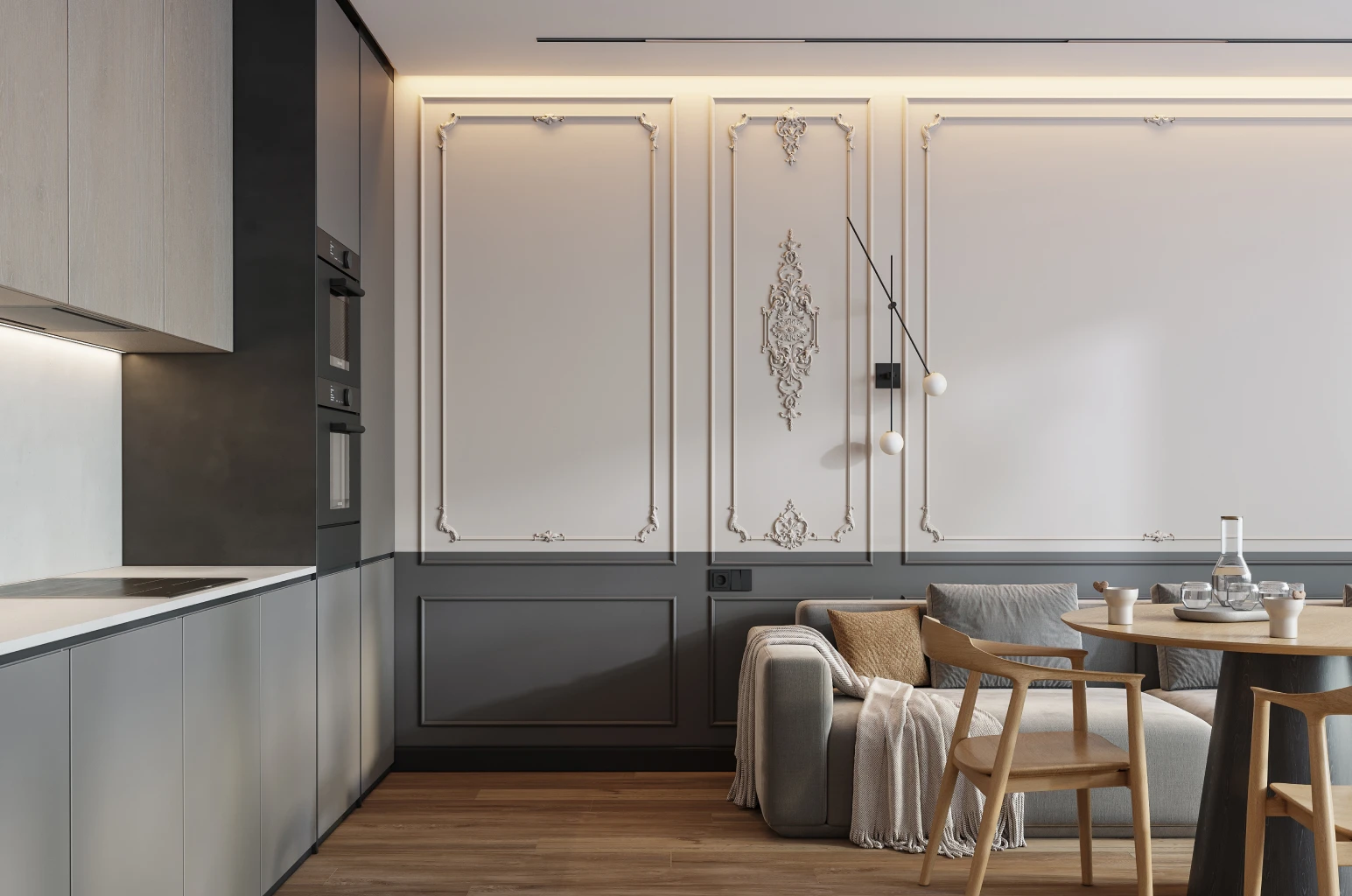
Idea for decorating wall panels Verona INTPU-031 for kitchen-living room and dining area
A kitchen-living room is the most lively, most loaded, and most complex space in a modern apartment. Here, people simultaneously cook, eat, entertain guests, watch movies, work, and simply live. That is why the walls of a kitchen-living room bear a double load: they must be practical and at the same time look like a well-thought-out interior, not a collection of items gathered in one room. INTPU-031 "Verona" is designed to solve this problem using architectural means.
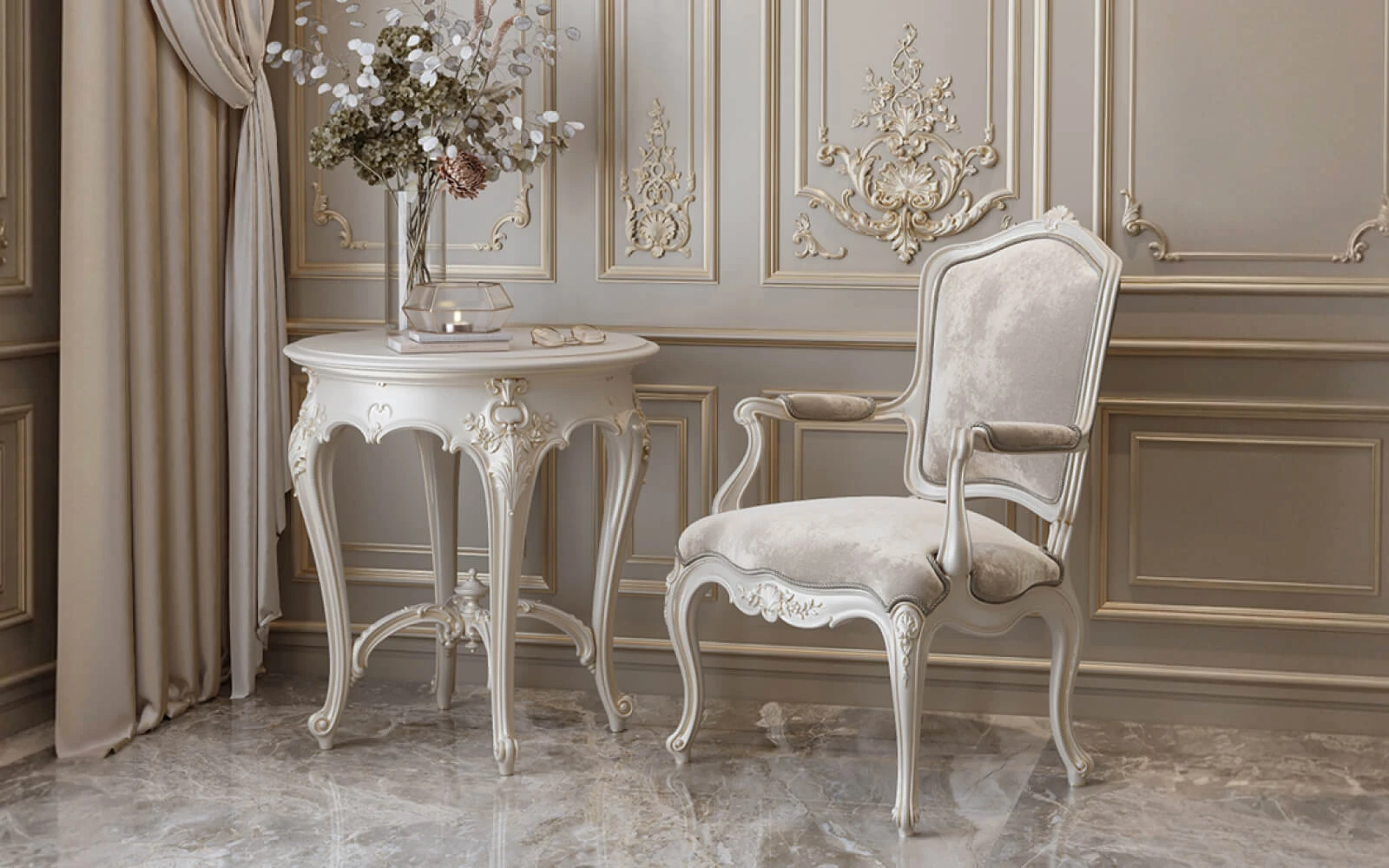
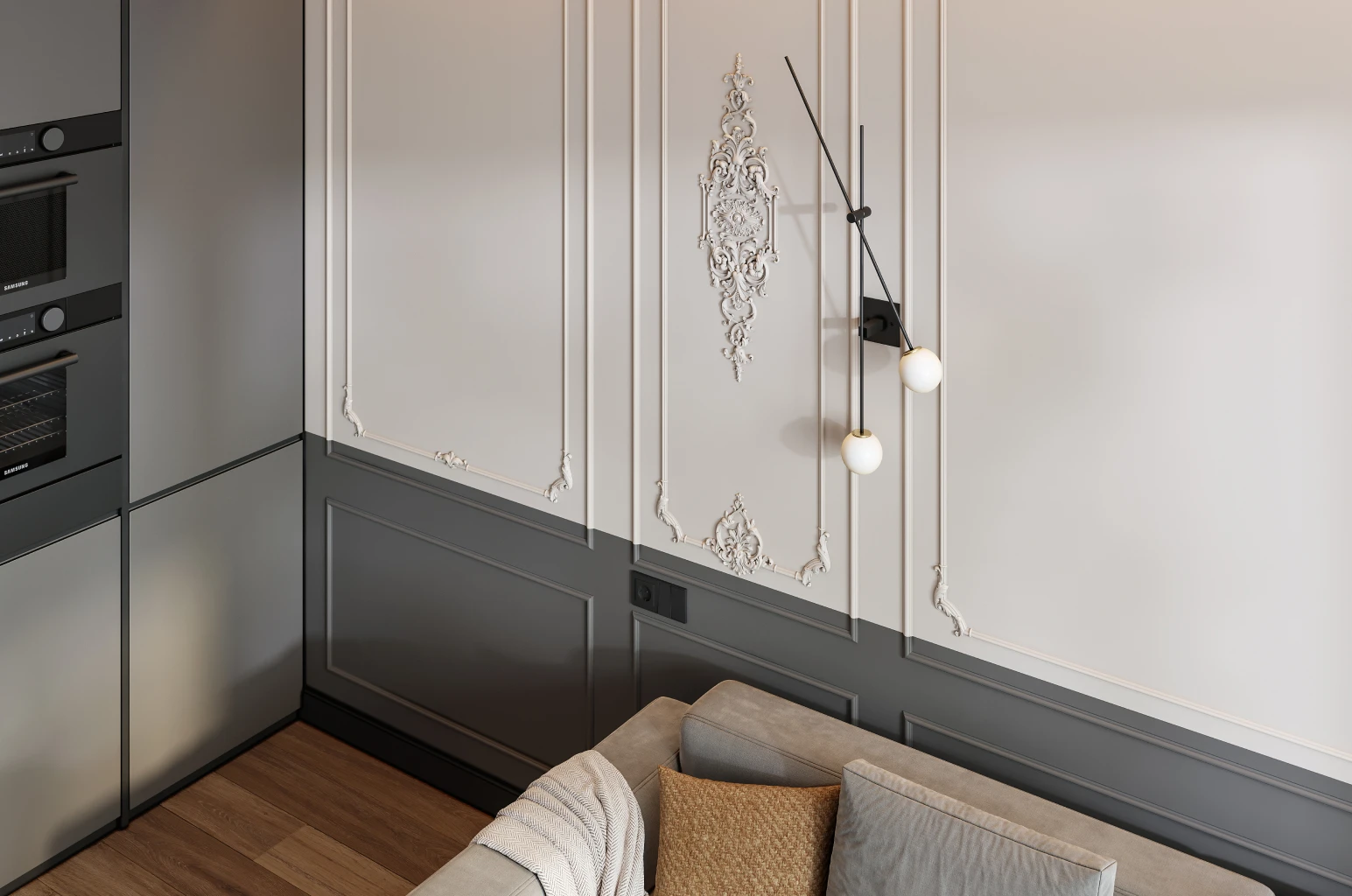
The idea for decorating wall panels "Verona" INTPU-031 is a ready-made solution for a kitchen-living room, dining area, and modern interiors in the neoclassical style. A light upper part of the wall, a dark gray lower belt, vertical panels made of of polyurethane moldings, decorative frames, corner elements, and an ornamental stucco overlay — all this creates a two-level, two-color architectural system in which classical relief organically coexists with a modern kitchen set, dining table, and soft sofa.
This is a rare idea: stucco without palace heaviness, classics without conflict with modernity, Polyurethane wall decorwhich works in a real apartment, not just in formal interiors from magazines.
What is the idea of INTPU-031
Before breaking down INTPU-031 into elements, it is important to understand its concept. This is not just "moldings in the kitchen." It is a fundamentally different approach to decorating a multifunctional space — an approach in which classical decor is adapted to the realities of modern life.
Two-level wall structure
The main distinguishing feature of INTPU-031 is the two-color, two-level horizontal division of the wall. The lower belt, approximately 90–110 centimeters high from the floor, is painted in dark gray, graphite, or rich gray-beige. The upper part of the wall up to the cornice is light, milky, or neutral white.
This boundary between the levels runs along a molding profile, which simultaneously serves as a horizontal divider and a decorative element. The molding at the border of two colors creates an architectural line — clear, cultured, professional. Without the molding, the border of two colors looks random. With the molding, it looks intentional and correct.
Vertical decorative panels
Against the background of the two-level wall, vertical molding frames are placed. They organize the surface vertically, creating a panel rhythm: wide and narrow modules alternate along the wall. The molding frames cover both levels — both the dark lower and the light upper — creating a single vertical system that connects both colors into one architectural system.
This is a fundamentally important detail: precisely because the moldings pass through the horizontal dividing line, the wall with two colors looks like a single whole, rather than two separate painted sections.
Ornamental overlay as an accent center
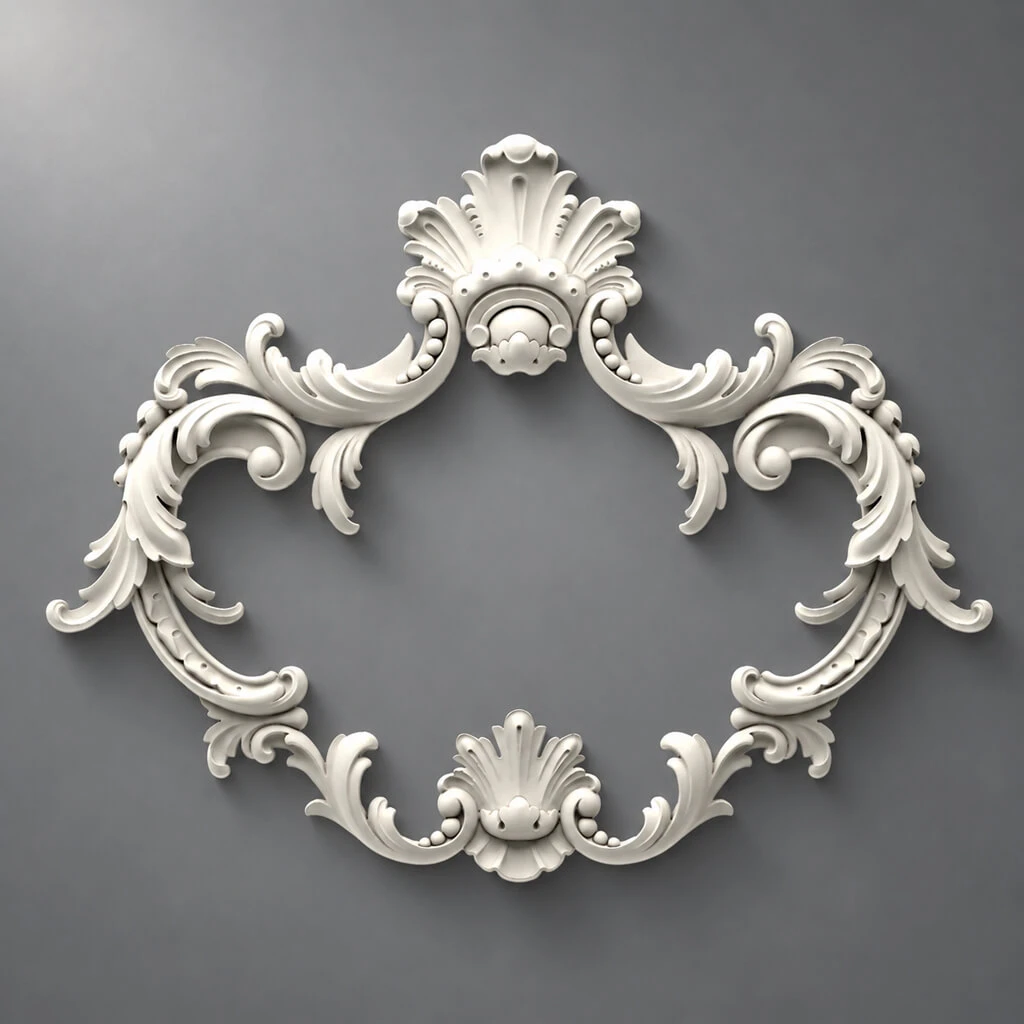
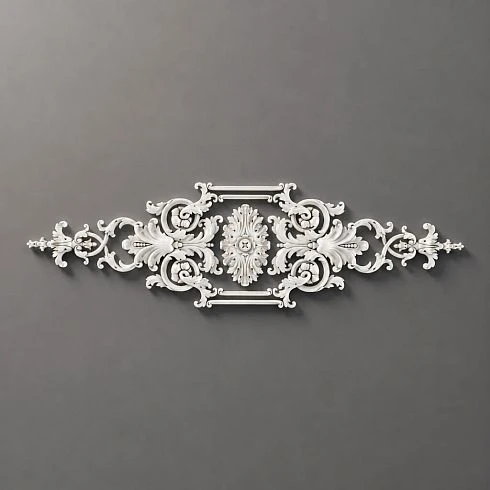
On one of the narrow vertical panels — usually in the center or near the accent zone of a sofa or dining table — an ornamental a decorative polyurethane overlay. An elongated vertical shape, a classic ornament in a strict frame. It adds classical depth to the wall without overloading the wide panels with unnecessary details.
Modern sconce as a light accent
The designer sconce in INTPU-031 is not a random light fixture. It is mounted above the horizontal molding divider or in the upper part of the lower belt, next to the ornamental overlay or symmetrically on both sides of the accent panel. The warm directional light of the sconce makes the relief of the overlay and moldings voluminous and lively.
Where to use Verona INTPU-031 wall panels
INTPU-031 is an idea born specifically for multifunctional spaces. Where one wall simultaneously "looks" at the kitchen, the dining table, and the sofa.
Kitchen-living room in a modern apartment
Main scenario. The wall that separates or unites the kitchen area and the relaxation area receives INTPU-031 as an architectural solution. The dark lower belt protects the lower part of the wall — the one next to furniture, the dining table, the sofa, children, and cats. The light top preserves airiness and lightness.
For a kitchen-living room in an apartment of 40–60 square meters, INTPU-031 is especially valuable: it visually organizes the wall, breaks the long plane into rhythmic sections, and makes the space more multi-layered — and therefore more interesting.
Studio apartment
In a studio, the wall is almost everything. There are no closed rooms, no partitions hiding one functional block from another. Zoning is done with furniture, light, and wall decor. INTPU-031 creates a decorative "frame" for each zone: dining — behind the table, relaxation — behind the sofa, kitchen — next to the set. Not a physical division, but a visual one — and that is enough for a sense of order.
Dining area in a house
A separate dining room or dining area in a country house with INTPU-031 receives decor that combines solemnity and everydayness. The wall behind the dining table is what all guests see during dinner. Two-color molding panels with an ornamental overlay create the right background here: expressive enough to be remembered, calm enough not to distract from conversation.
Apartments, commercial interior
Hotel rooms with a kitchen area, apart-hotels, serviced apartments — all spaces where the kitchen and living room are combined into a single room. INTPU-031 creates an atmosphere of a residential, warm, habitable space here — unlike faceless hotel rooms with bare walls.
For a showroom of a furniture brand or kitchen manufacturer, INTPU-031 is the ideal context: decorative wall panels demonstrate what a kitchen looks like "in real life," in an actual interior with classic decor.
Wall decor in a kitchen-living room with moldings
The wall in a kitchen-living room is not just a surface. It is an architectural tool that either unifies the space or destroys its integrity. Look at most kitchen-living rooms in standard apartments: the walls are either empty (boring and bare) or overloaded with decor (noisy and chaotic). INTPU-031 offers a third way.
Moldings as an organizing principle
Moldings made of polyurethane In a kitchen-living room, they work as an architectural framework that organizes different functional zones on one wall. Imagine: on the left is the entrance to the kitchen, on the right is the sofa, in the center is the dining area. Without moldings, it's just a wall with furniture. With molding panels, it's an architectural stage where each zone has its own place and its own design.
Molding frames create "cells" — visual units that a person perceives as independent elements, not as a homogeneous mass. This means that the large space of the kitchen-living room stops pressing with its length and begins to be perceived as a sum of cozy, human-scaled fragments.
Lower panels: practicality + architecture
The dark lower belt in INTPU-031 is not just an aesthetic solution. It is a functional choice. The lower part of the wall in a kitchen-living room receives maximum load: touches from hands and furniture, splashes near the dining table, contact with the sofa back. Dark coloring at this level is more practical: traces of touches are less noticeable, surface care is easier.
Polyurethane wall decor In the lower belt, it is painted together with the wall in a single dark shade. Moldings, frames, baseboards — all in one tone. The surface becomes monolithic, deep, and durable.
Why it works next to a kitchen set
A kitchen set is an object with clear horizontals: countertop, upper cabinets, lower cabinets. Molded vertical panels create a perpendicular to these horizontals — and this geometric interaction makes the kitchen-living room more complex and interesting in spatial terms. Vertical and horizontal in balance is the principle of good architecture.
The dark lower belt on the wall visually "continues" the countertop level along the entire length of the room — even where there is no kitchen set. This creates a single horizontal line that connects the kitchen and living areas.
Two-tone wall panels: light top and dark bottom
Two-tone horizontal division of the wall is one of the oldest decorative techniques in architecture. It was used in medieval cathedrals (lower part of dark stone, upper part of light), in Victorian residential houses (dark wooden panel at the bottom, light wallpaper at the top), in Art Deco interiors of the 1920s. INTPU-031 reinterprets this traditional technique in the context of modern neoclassicism.
Psychology of two-tone division
The upper light part of the wall is associated with air, space, height. The lower dark part is associated with stability, earth, security. An interior where the wall is dark at the bottom and light at the top is perceived as more stable and solid. This is a psychological effect that works regardless of whether a person knows about it.
The opposite situation — light bottom and dark top — creates an uncomfortable feeling of overhang, which most people intuitively dislike. The correct order is always: heavy at the bottom, light at the top.
Height of the dividing line
One of the key technical details of the INTPU-031 two-tone scheme is the height of the horizontal molding that separates the two levels. Optimal options:
90–95 centimeters — at the level of the kitchen countertop. Creates a single horizontal line around the entire perimeter of the room. A strong, cohesive solution.
100–110 centimeters — slightly above the countertop. The lower belt is slightly more substantial, visually stable. Suitable for rooms with ceilings of 3.0 meters and higher.
120–130 centimeters — maximum height of the lower belt. Creates an almost "wainscoting" system — like in classic European interiors with wooden panels. A monumental, quite strong solution requiring higher ceilings.
Choosing shades
Dark lower belt in INTPU-031: rich dark gray (like "volcanic ash", "wet asphalt", "graphite slate"), dark taupe, dark beige-gray. Important: the color of the lower belt should be dark enough to create a noticeable contrast with the upper part, but not too dark so as not to "overwhelm" the room. The optimal shade is one that is 4–5 tones darker than the upper part while maintaining a single color family.
Light upper part: milky, white, warm white, light gray-beige.
Ornamental overlay as a composition accent
In INTPU-031, the ornamental overlay appears singly or in a pair — and it is this measured use that makes it truly valuable. It does not get lost among uniform decor but works as a real accent.
Where exactly the overlay is placed
On a narrow vertical panel — the one that is the semantic center of the decorated wall section. In a kitchen-living room, such a center could be:
— A narrow wall section between the window and the balcony door, visible from the dining area
— Vertical between the sofa zone and the dining zone — a "border" between two functional blocks
— The wall opposite the entrance to the room — so the overlay catches the eye when entering the kitchen-living room
— Vertical next to the sconce — then the overlay is illuminated and its relief becomes especially expressive
Vertical form as an architectural tool
Vertical ornamental polyurethane overlay in INTPU-031 passes through a horizontal dividing molding — partially in the dark zone of the lower belt, partially in the light zone of the upper part. This creates an interesting coloristic effect: the ornament is read in two tonalities simultaneously. On a dark background, it is a light accent. On a light one, it is a subtle relief detail. One overlay creates two different visual sensations.
With monochrome painting (overlay in the tone of the wall of the corresponding zone), both effects work through chiaroscuro, not through color contrast — and this is the most sophisticated, most professional option.
Proportions of the overlay for the kitchen-living room
For rooms with ceilings of 2.7 meters: overlay length 130–150 centimeters, width 20–26 centimeters. The overlay is centered on the vertical axis of the narrow panel. Placement: the central axis of the overlay coincides with the horizontal dividing molding or is 10–15 centimeters above it.
A combination of classic decor and a modern kitchen
The question everyone asks when they see INTPU-031: "Won't the stucco look strange next to a modern kitchen set?" The answer: it won't. If you follow a few principles.
Principle 1: Moderation
Classic decor in a modern space only works when there's a little of it. In INTPU-031, there are one or two stucco overlays. The moldings have a strict, laconic profile. The corner elements have a restrained, geometric ornament. Nothing extra. The minimum necessary amount of decor to create the desired character.
If you overload the kitchen-living room with molded decoration — it will conflict with the modern kitchen. If you use it precisely and in moderation, it will create the right dialogue between classic and modern.
Principle 2: Unified palette
Moldings, overlays, the lower belt, and the upper part of the wall — all in a unified palette of gray-beige and gray. No gold moldings, no white overlays on a dark background (the contrasting option requires very precise execution and is not suitable everywhere). A monochrome or near-monochrome scheme connects the classic decor with the modern kitchen through color unity.
Principle 3: Kitchen facades as an extension of the palette
A kitchen set with matte facades in gray, anthracite, or beige tones is an ideal partner for INTPU-031. Glossy white facades also work — they create a clear contrast with the dark lower belt of the wall, which reads as an intentional design solution.
Kitchens with bright facades (green, blue, red) require a more careful approach: in this case, the moldings and the lower wall belt should be neutral, not accent — to avoid visual overload.
Principle 4: Modern furniture as a starting point
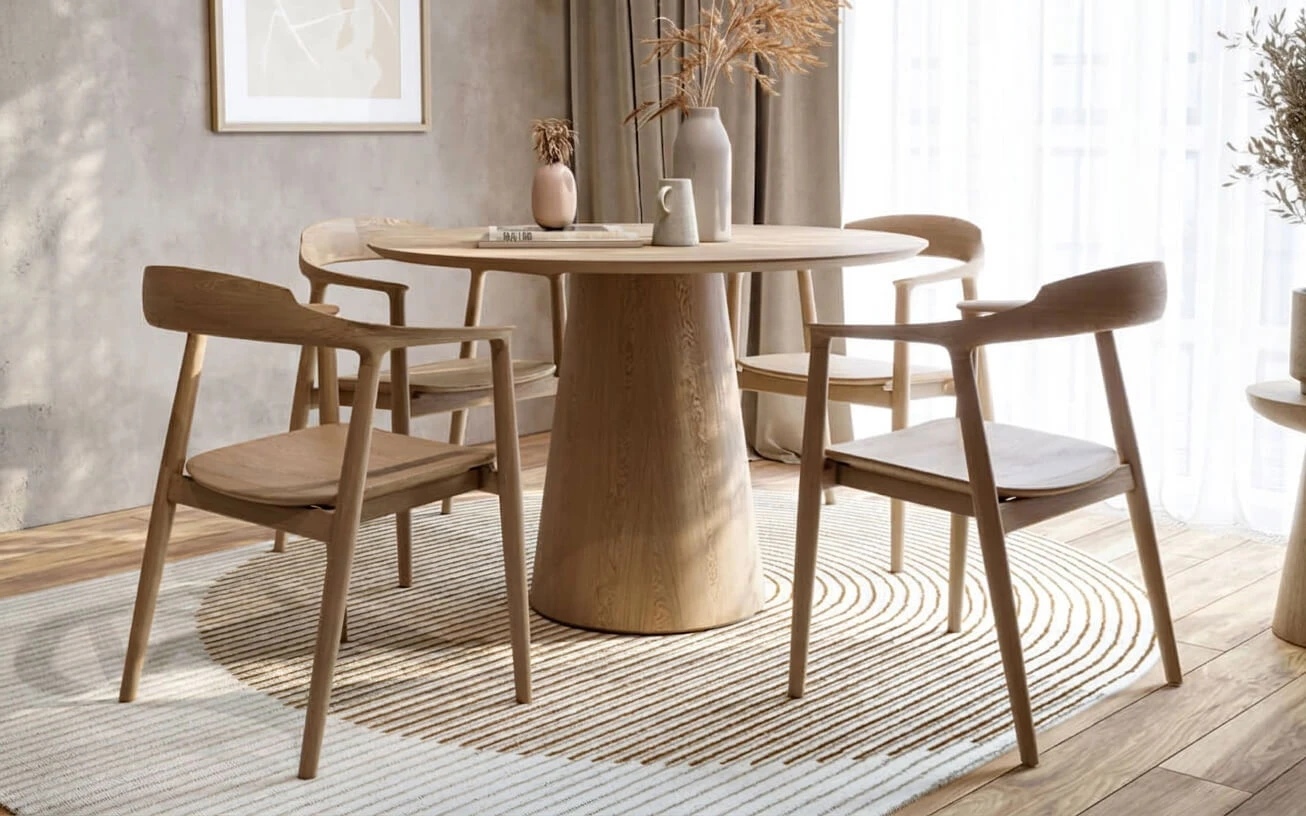
Sofa, dining chairs, lighting — all furniture in the kitchen-living room with INTPU-031 should be "modern classics": concise forms with classic proportions. Wooden chair legs, soft upholstery, a round or rectangular table with clear lines. This furniture serves as a "translator" between the classic wall decor and the modern kitchen set.
What elements are used in the INTPU-031 composition
The full composition of INTPU-031 components is built on the same principles as other versions of "Verona", but taking into account the specifics of the kitchen-living room space.
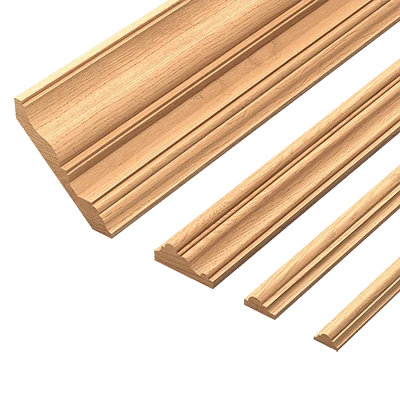
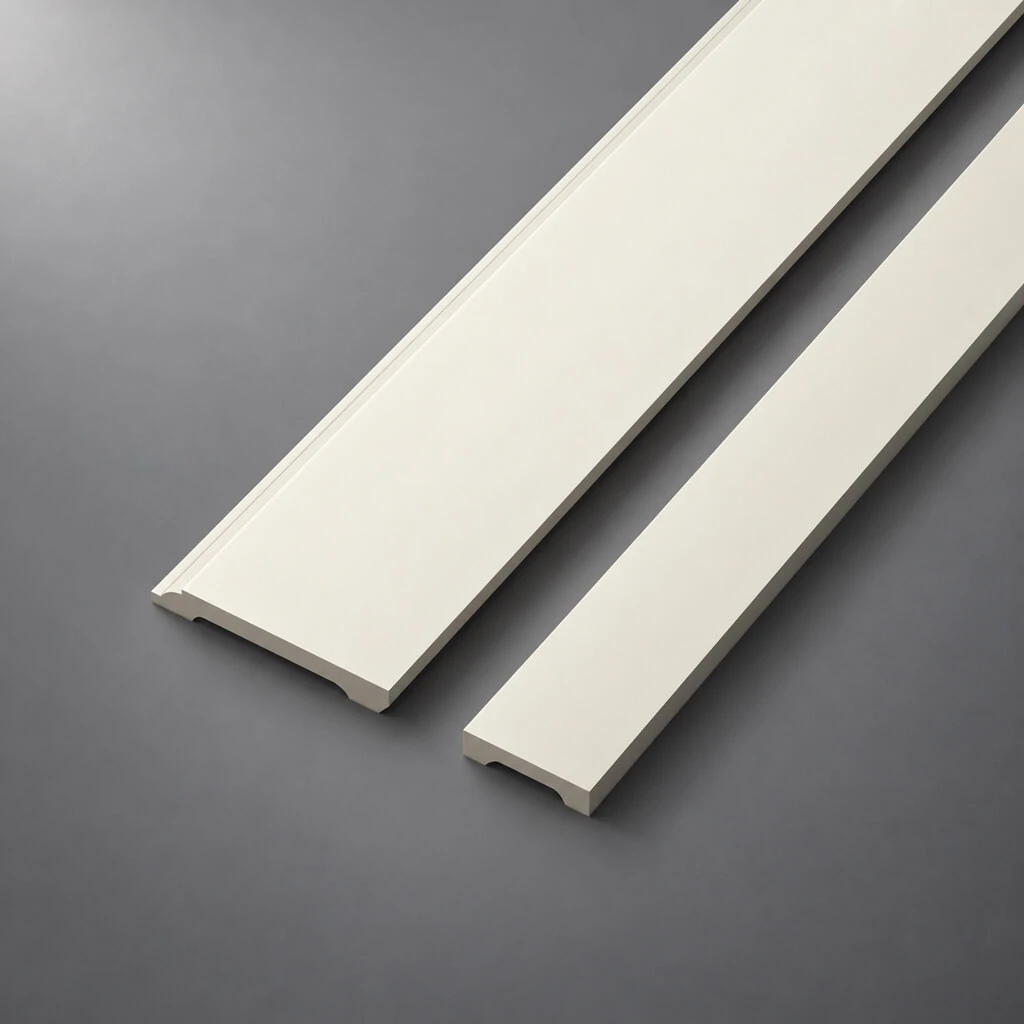
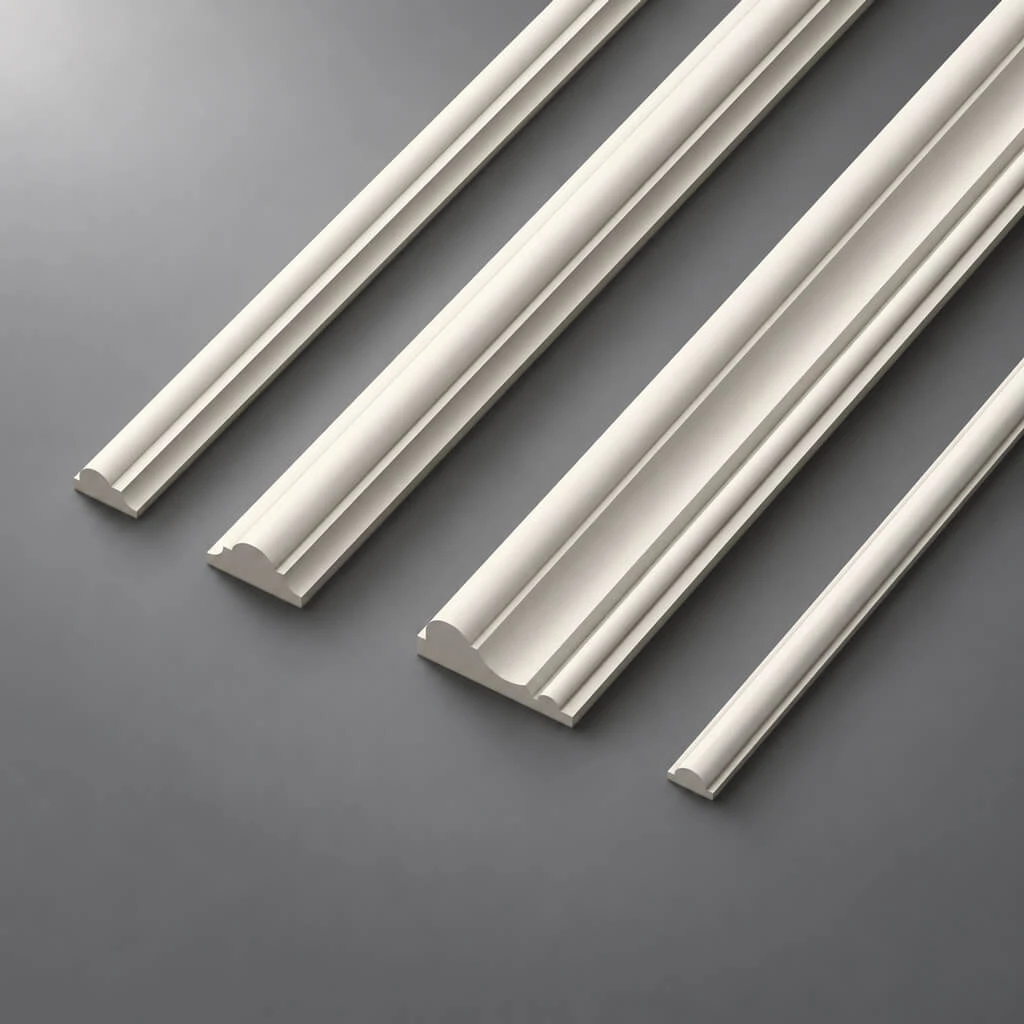
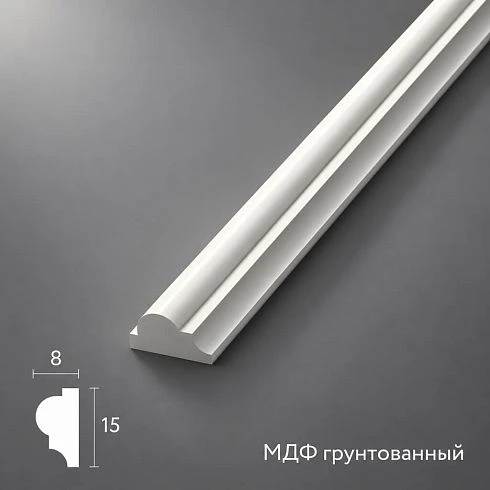
Moldings made of polyurethane — straight profile strips for assembling decorative frames. Recommended profile for kitchen-living room: 30–40 mm. A larger profile is appropriate with high ceilings, a thinner one with standard ceilings. The horizontal dividing molding between the lower belt and the upper part — of the same profile or one step larger to create an accent horizontal line.
Corner decorative elements — applique for corners of molding frames. Square or geometric ornament. 4 pieces per frame.
The horizontal dividing molding is a key architectural element that creates a boundary between the dark lower belt and the light upper part. It is mounted horizontally at a height of 90–130 centimeters from the floor.
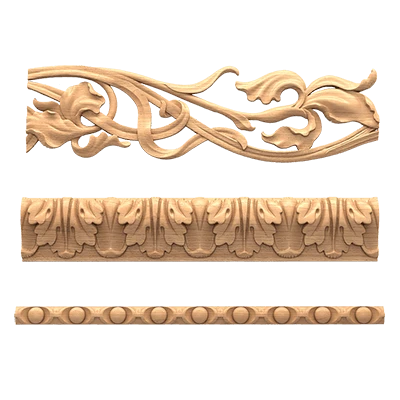
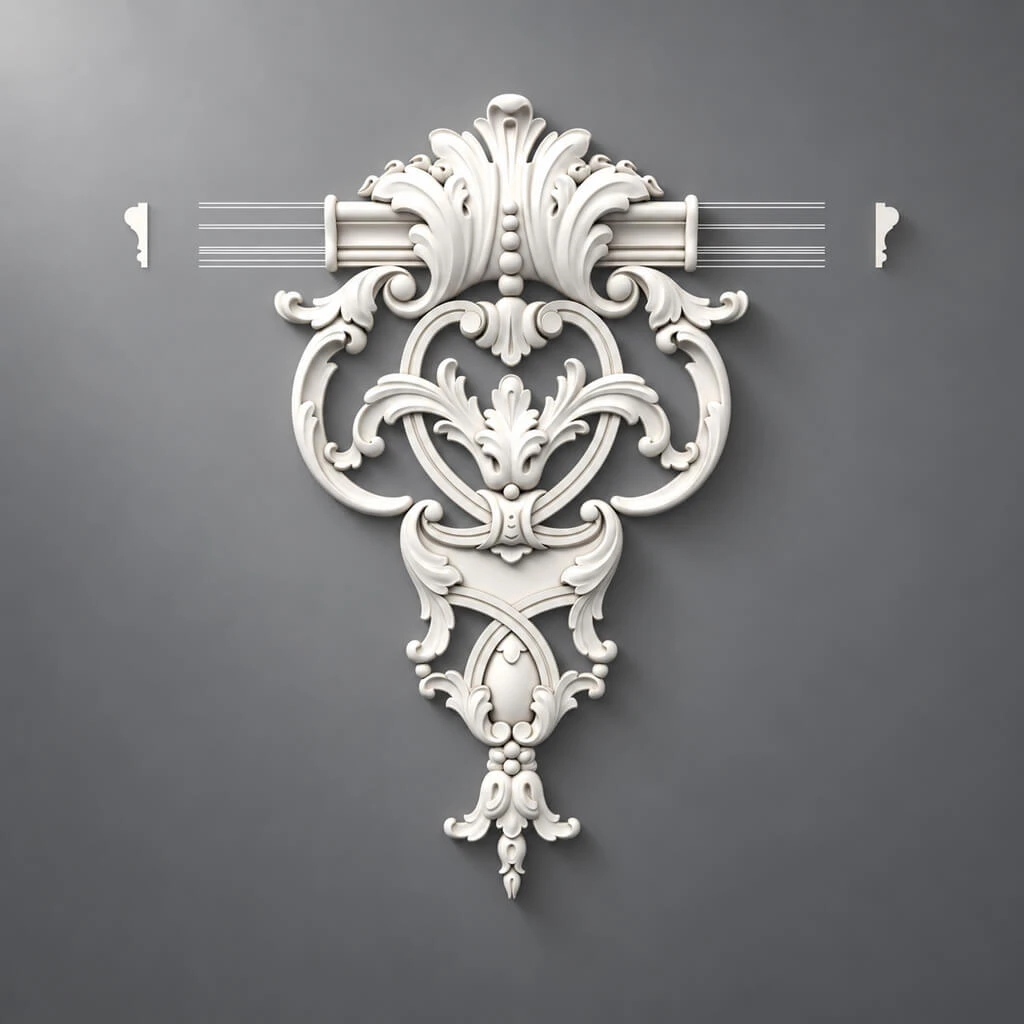
Vertical ornamental overlay — one or two pieces on accent narrow panels. a decorative polyurethane overlay with a classic vertical ornament.
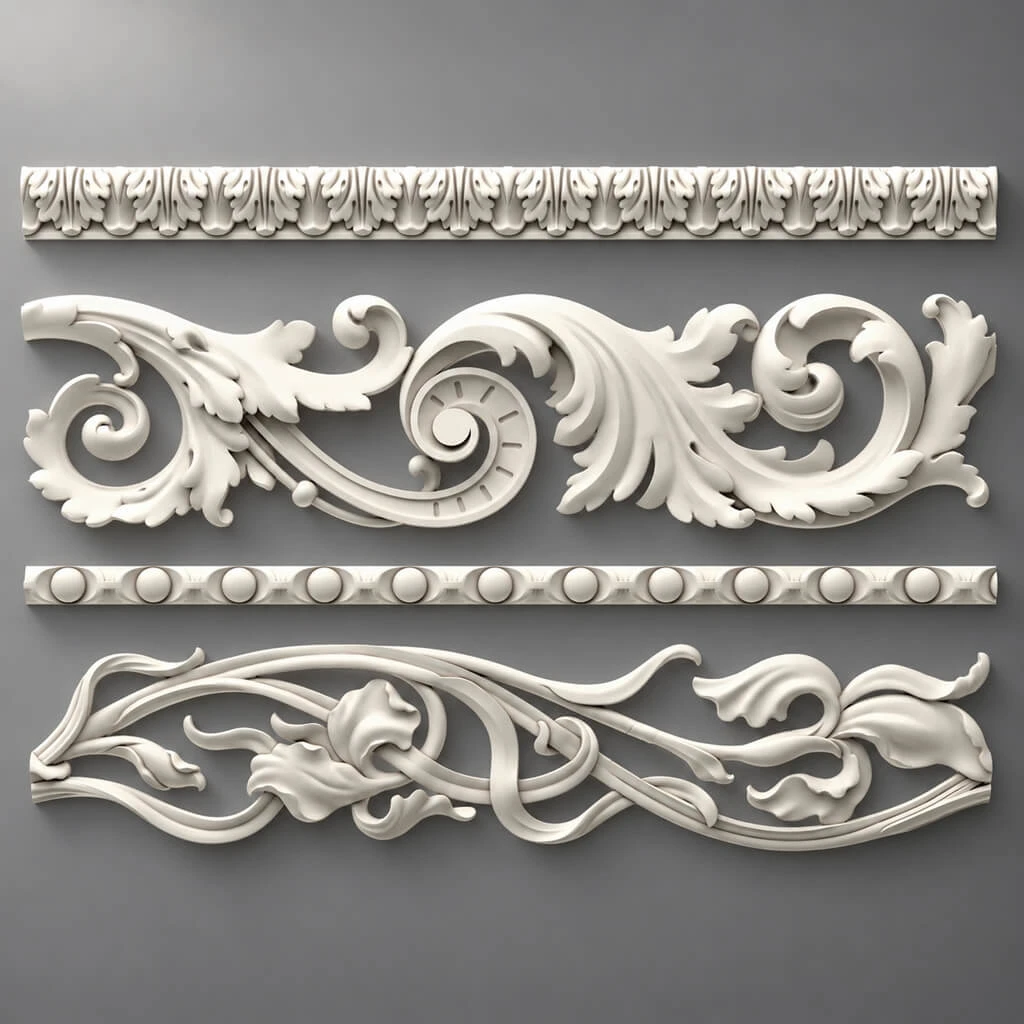
Decor for Molding — additional linear ornamental elements for the horizontal dividing molding. They add extra decorative detailing to the main horizontal line — appropriate when higher requirements for richness of detailing are needed.
High baseboard — 12–18 centimeters. Painted in the same dark tone as the lower belt. Creates a monolithic base.
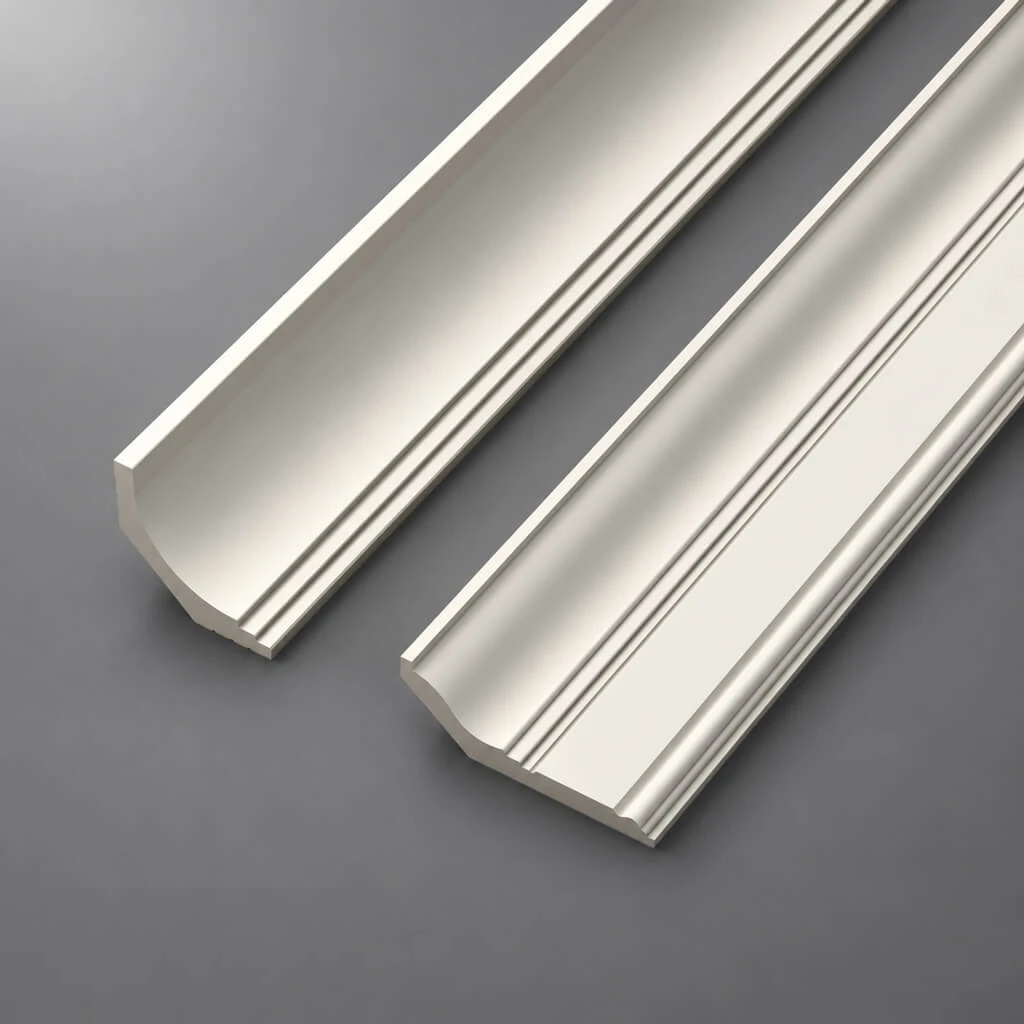
Ceiling cornice — a light profile. Painted in the same light tone as the upper part of the wall. Connects the decorated wall with the ceiling.
Lower wall panels — sections of molding frames in the lower dark belt. Moldings inside the dark belt are painted in the same dark tone.
What to combine with Verona INTPU-031 decor
Interior color palette
For a kitchen-living room with INTPU-031, the optimal color scheme includes no more than three main tones: a light neutral (milky, warm white, light gray-beige) — for the upper part of the walls and ceiling; a dark neutral (dark gray, graphite, dark taupe) — for the lower belt and baseboard; a third accent tone — for furniture, kitchen facades, or textiles.
Introducing a fourth and fifth color sharply complicates space management. Interior design masters know: three colors is the maximum for a multifunctional space if you want to achieve a sense of wholeness.
Wooden surfaces
Wooden floor — a mandatory warm element in a kitchen-living room with INTPU-031. Light oak, natural walnut, or ash — shades that balance the cool graphite lower belt with a warm wood texture. Without wood, the interior with INTPU-031 risks becoming too cold and intellectual. Wood adds warmth and life.
A wooden dining table or wooden chairs — another source of warm texture. Chairs with wooden legs matching the floor tone and soft upholstery in neutral tones work especially well.
Textiles
Sofa cushions are an important color accent. For INTPU-031, the following are ideal: dense linen in milky or sand tones, velvet in dark blue or pine (the only bright accent that is appropriate in this scheme), natural wool in a checkered pattern with gray and beige tones.
Curtains in the kitchen-living room with INTPU-031: light linen in a milky tone to the floor. They soften the architectural strictness of the molding panels and add coziness to the space.
Lighting fixtures
Sconces — matte black or dark bronze. Warm light (2700–3000 K). Placement: above the horizontal dividing molding, next to the ornamental overlay.
Chandelier above the dining table — minimalist, with a geometric or organic silhouette. Fittings in dark metal or matte brass. Warm color temperature.
Built-in lighting under the upper cabinets of the kitchen set — warm, directional. Illuminates the work surface and softly highlights the wall with decor.
Warm LED lighting along the horizontal dividing molding — hidden, directed upward. Creates a soft light accent that emphasizes the architectural horizontal line. This is a technique designers use to "revitalize" molding systems in the evening.
Kitchen set
Matte facades in anthracite or dark gray tone — maximum visual unity with the dark lower belt of the wall. Light gray or milky matte facades — a more contrasting solution. Wooden inserts in the facades — a warm accent that connects the kitchen with the wooden floor.
Sink, faucet, handles — matte black or matte nickel. A unified metal concept with sconces and lighting fixtures.
How to replicate the INTPU-031 idea in your interior
A practical guide for those who have decided to implement INTPU-031 in their kitchen-living room.
Step 1. Measurements. Take precise measurements of all walls in the kitchen-living room. Record the location of windows, doors, kitchen cabinets, ventilation ducts, radiators, electrical outlets, sockets, and switches. All of these will affect the layout of the molding panels.
Step 2. Wall selection. Determine which wall (or walls) will be decorated using the INTPU-031 system. Typically, this is the wall visible upon entering the kitchen-living room, or the wall behind the sofa/dining table.
Step 3. Determining the height of the horizontal division. Choose the height of the horizontal divider molding: 90, 100, 110, or 120 centimeters. Base this on the height of the kitchen countertop (if the wall is near the kitchen) or on the ratio of dark and light areas considering the ceiling height.
Step 4. Dividing the wall into panels. Draw a diagram of vertical panels on the measurement drawing. Alternate wide and narrow modules. Narrow panels (width 25–40 centimeters) are for ornamental overlays. Wide panels (60–100 centimeters) provide a calm background. Use a symmetrical layout relative to the central axis of the wall.
Step 5. Selecting moldings. In the catalog moldings from STAVROS polyurethane select a profile that matches the room height and desired level of detail. For a kitchen-living room, choose a profile of 30–40 mm.
Step 6. Choosing an ornamental overlay. In the catalog polyurethane decorative overlays select a vertical ornamental overlay of the required size and pattern. The size should be 55–65% of the narrow panel height, and the width should be 60–75% of the panel width.
Step 7. Material calculation. Calculate the linear meters of molding, the number of corner elements, and the number of overlays. Add a 10% margin. Include the horizontal divider molding along the entire length of the decorated walls.
Step 8. Electrical preparation. Before starting decorative work, provide electrical outlets for sconces. The outlet is in the upper part of the lower dark belt, next to the planned location of the ornamental overlay.
Step 9. Installation. Follow the installation guide for polyurethane moldings. Marking with a laser level. Start installation with the horizontal dividing molding: this is the main axis from which the entire system is built. Then, vertical frame moldings. Corner elements. Finally, the ornamental overlay according to installation guide for polyurethane stucco.
Step 10. Priming and two-color painting. Prime all surfaces. First stage: the lower belt in a dark shade. The horizontal molding is in a dark shade or the same tone as the upper part (depends on the design solution). Second stage: the upper part in a light shade. The moldings of the lower frames are in the dark tone of the lower belt. The moldings of the upper frames are in the light tone of the upper part.
Step 11. Installation of lights and final styling. Sconces after the paint has completely dried. Furniture arrangement. Decorative pillows, flowers, items on the dining table. Turning on the lighting scenario in the evening — checking how the relief works under artificial lighting.
Who the INTPU-031 idea is suitable for
Owners of modern apartments with a kitchen-living room who want to give the space architectural expressiveness without major renovations.
Those who live in studios and are looking for a way to visually zone an open space without building partitions.
Interior designers working in the "modern neoclassicism" segment — a style that continues to gain popularity in Russia and Europe precisely because it combines classical architectural order with modern minimalism.
For architects designing residential and commercial open-plan spaces.
For mid-range renovation studios: INTPU-031 is a reproducible, systematic solution with predictable quality results and moderate material costs.
For showrooms and kitchen manufacturers — as an exemplary interior context for showcasing kitchen furniture.
For apartment hotels and serviced apartments — as a solution that creates the atmosphere of a residential, warm, livable space.
For those who fear moldings — it is for these people that INTPU-031 is the ideal first experience: there is exactly enough decor to create the desired character, and not a single extra element.
Buy decor for Verona INTPU-031 wall panels
To realize the INTPU-031 concept, all necessary components are presented in the catalog polyurethane products from STAVROS. The system base — Moldings made of polyurethane for vertical panels and horizontal dividing molding. Decorative accents — ornamental overlays and corner elements from the catalog polyurethane overlays. Additional detailing of the horizontal divider — Decor for MoldingFull catalog . Clear lines, created using modern technologies, emphasize the strict aesthetics of the room. Each decorative element harmoniously fits into the overall concept, creating a sense of order and thoughtfulness. allows you to assemble the entire system within a single collection and adapt it to the parameters of a specific room.
The INTPU-031 composition adapts to any kitchen-living room dimensions, ceiling height, layout of the kitchen set, dining table, and sofa area. It is a ready-made architectural idea that turns an ordinary wall into the main design element of a modern living space.
FAQ — Frequently Asked Questions
Will INTPU-031 fit a kitchen-living room in a standard apartment?
Yes. The molding panel system scales to any wall length. For a small kitchen-living room — a simplified scheme with fewer modules, a two-color wall division, and one ornamental overlay. The architectural effect is preserved at any scale.
Can stucco decor be used next to a modern kitchen?
Yes — provided three conditions are met: dosed amount of decor, a unified palette, and a laconic molding profile. INTPU-031 works exactly this way: classic and modern are united by a calm two-color scheme and a minimally necessary set of decorative elements.
Why is a dark lower wall band needed?
The dark lower band performs three functions: practical (protecting the lower part from dirt), architectural (creating a 'base' — a stable wall foundation), and aesthetic (adding depth and graphic quality). In a kitchen-living room, where the lower part of the wall is most heavily used, this is a particularly valuable solution.
At what height should the horizontal dividing line be drawn?
Optimally — at a height of 90–110 centimeters. For a kitchen with a set, at countertop level (85–90 centimeters): this creates a single horizontal line around the entire perimeter of the room. With ceilings above 3.0 meters, the line can be raised to 110–120 centimeters.
What elements are needed to replicate the idea?
Moldings for vertical frames and horizontal divider, corner decorative elements, one or two ornamental overlays, baseboard and ceiling cornice, paint in two shades for the dark lower belt and light upper part.
Can I decorate only one wall or do I need all walls?
One accent wall is a standard and sufficient option for INTPU-031. Decorating all walls is possible but requires careful planning of the panel layout on each wall, considering doors, windows, furniture, and fixtures.