








































































Japandi wall panel decoration idea INTPU-012
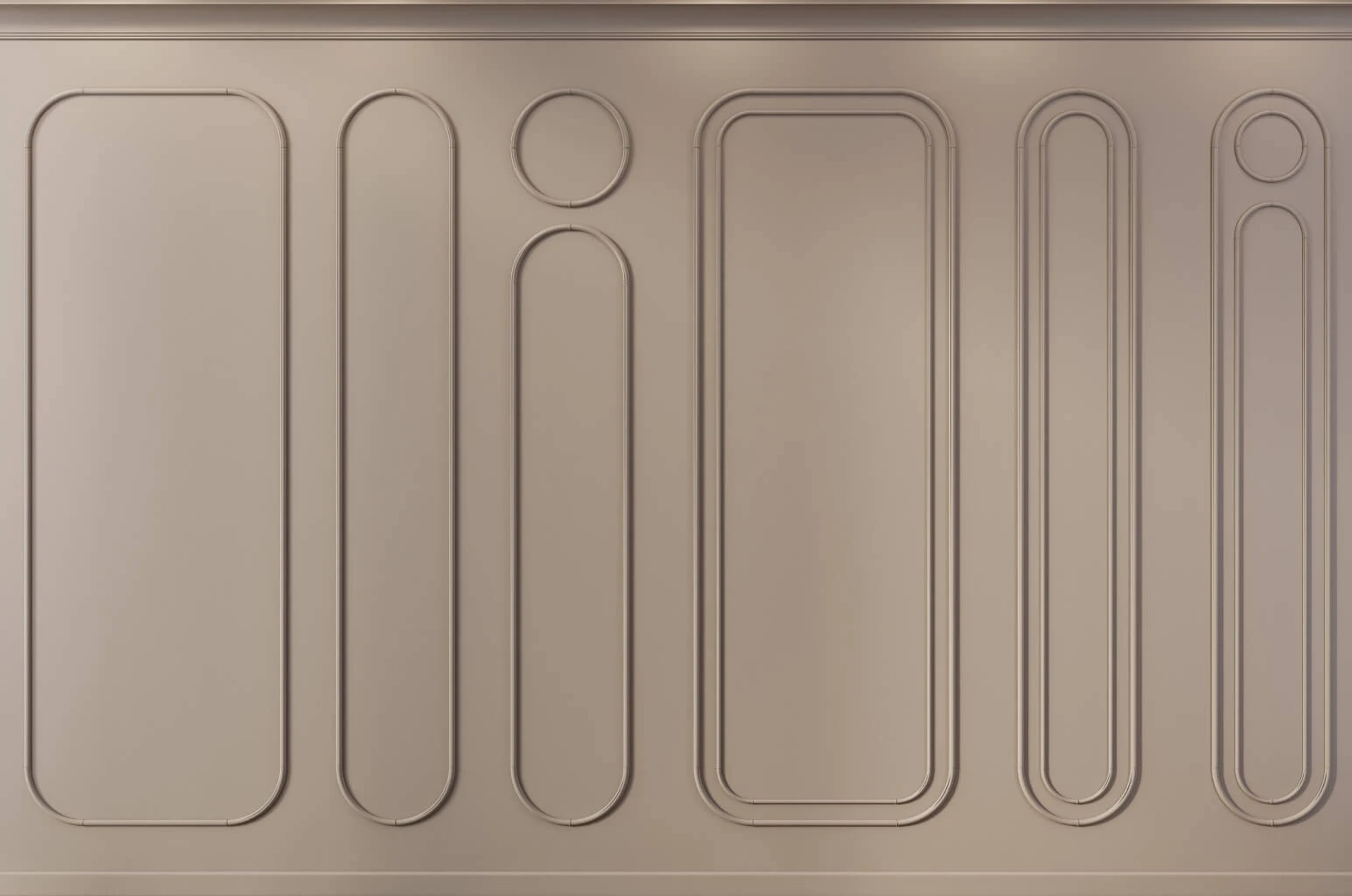
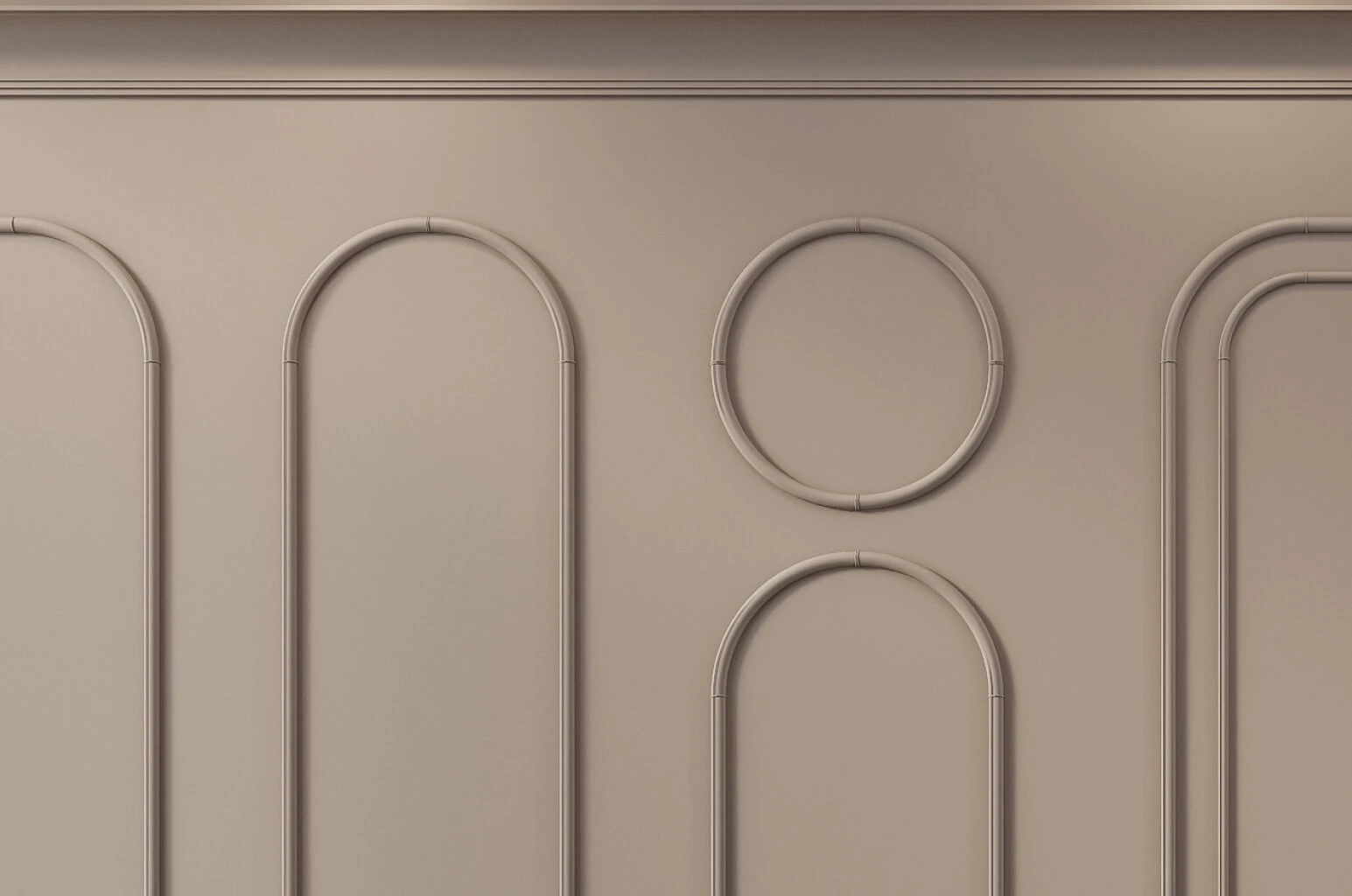
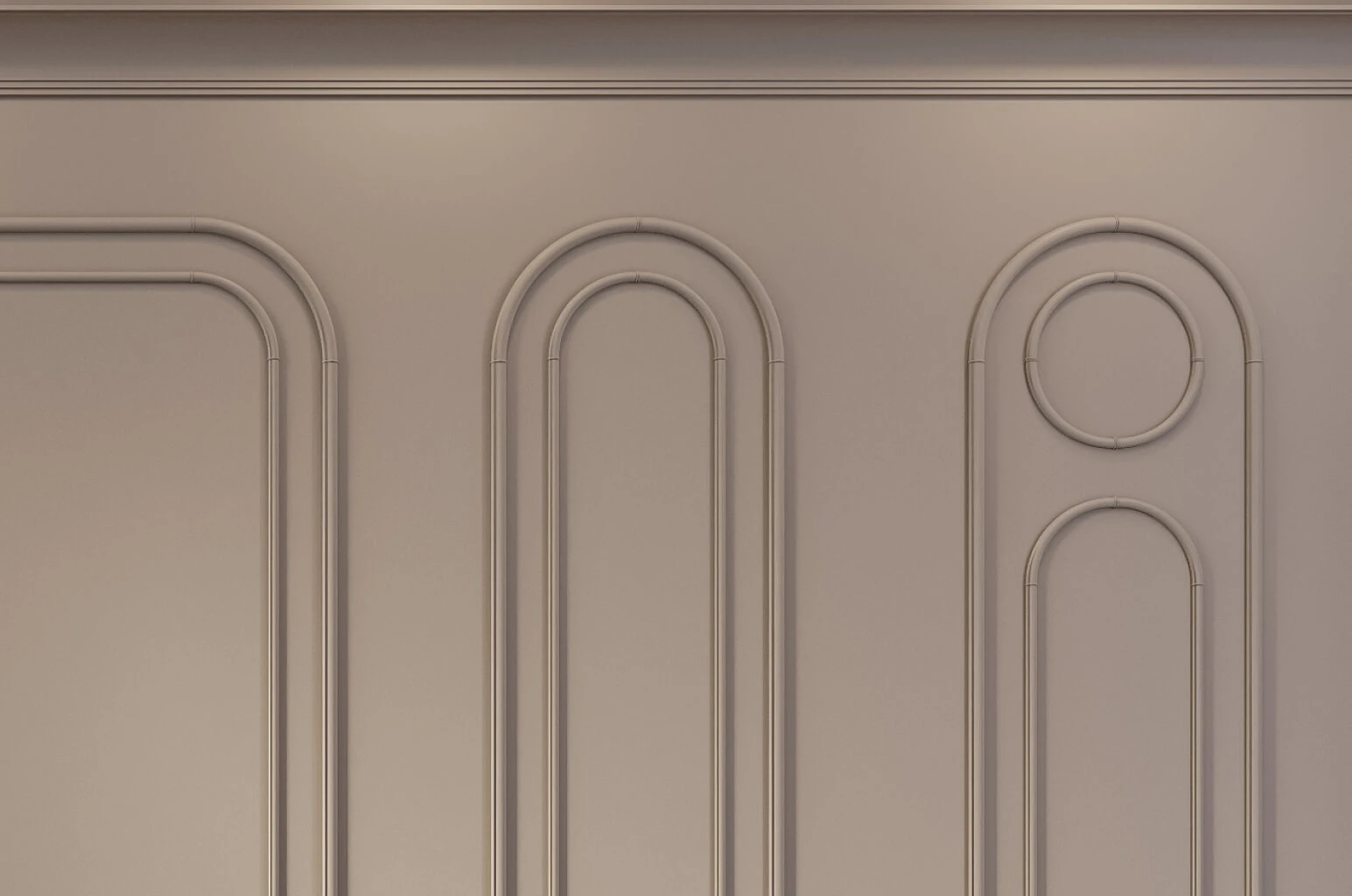
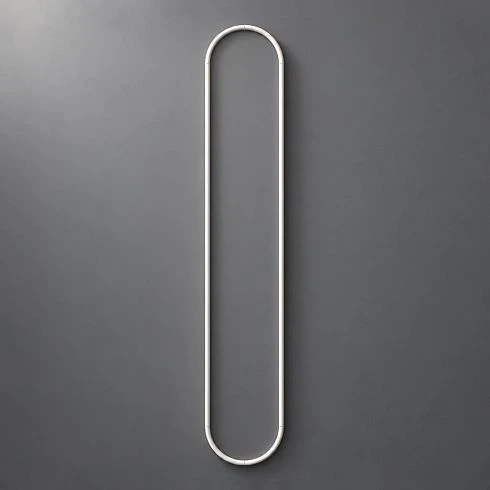
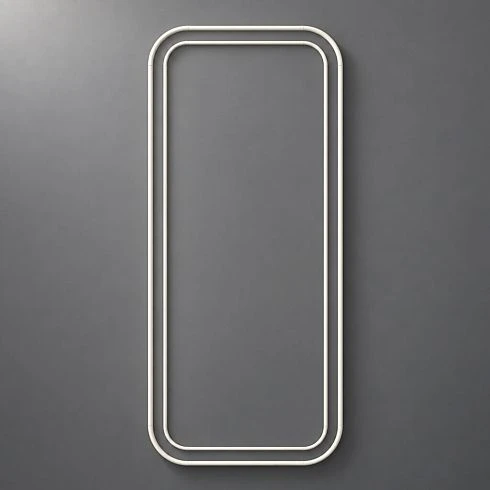
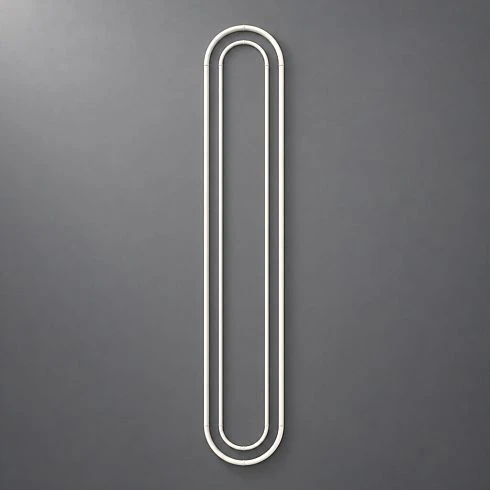
Used elements from the STAVROS array
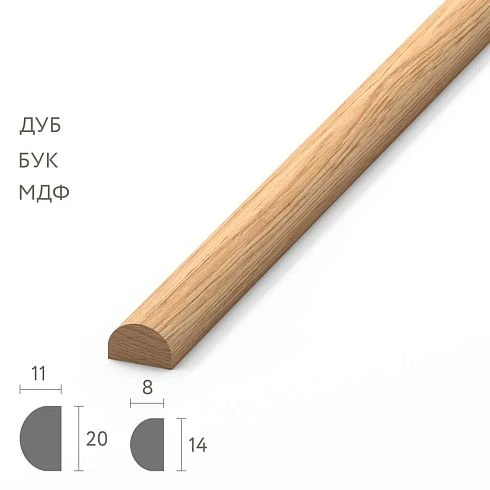
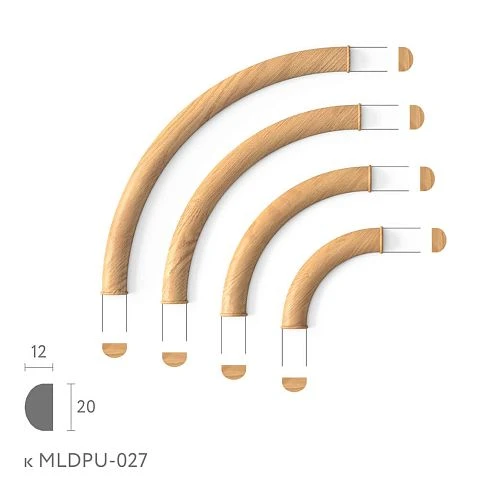
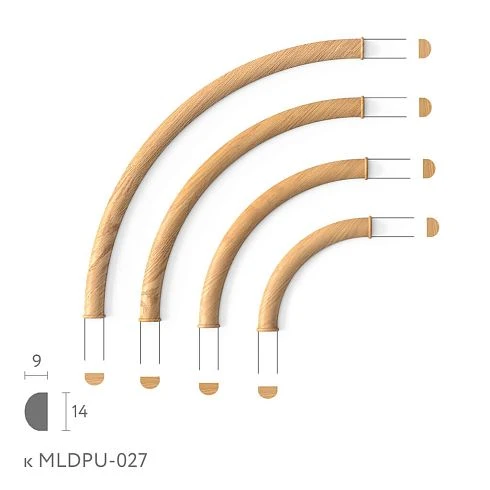
Polyurethane elements used: STAVROS
We will help you implement the project
Measurements
You send us furniture, interior, and preferences dimensions
Design
Our specialists will create a project (paid service, from 2000 rub.)
Kitting
After project approval, you receive a specification
Implementation
We will select partners in your city for painting and mounting decor
You may also be interested in
Frequently asked questions
Our showrooms are located in Saint Petersburg and Moscow. Production is located in Saint Petersburg.
Moscow contacts: https://www.stavros.ru/contacts_all/?tab=msk
Contacts of Saint Petersburg: https://www.stavros.ru/contacts_all/?tab=spb
- Send request by email [email protected]
- Write to us at Telegram
- Write to us at WhatsApp
- Order by phone +7 (800) 555-46-75
- Visit our showroom in Saint Petersburg and Moscow
Yes, we ship orders throughout Russia and to CIS countries.
We cooperate with transportation companies such as СДЭК and DPD.
You can also arrange pickup of your order through any convenient transportation company for you.
Delivery cost depends on the size, weight of the item, and delivery address.
When placing an order, the delivery cost is calculated automatically and displayed as a separate line on our website.
Prices and availability of items on the website are always current. Data is updated daily.
Note: items in stock are stored on the warehouse in unpolished form and shipped within 3 working days.
If the item is not in stock, average production time: 5–10 working days.
This is the quality of polishing of the items.
Standard — machine polishing, at a more attractive price.
Prestige — detailed hand polishing, items do not require further work.
More details: https://www.stavros.ru/information/kachestvo/
This is the type of veneer of the items.
Under enamel: produced by gluing wooden laminates without color and texture matching. Contrast tonal and textural differences are noticeable. This blank should be chosen if the item is intended for opaque coating.
Under tinting: produced by gluing wooden laminates with color and texture matching. Tonal and textural differences may occur. This blank should be chosen if the item is intended for semi-transparent finish.
More details: https://www.stavros.ru/information/kachestvo/
Beech — dense, non-porous wood, most often used for items covered with enamel.
Oak — dense, porous wood with clearly visible natural grain. Due to its strength and decorative properties, it is often used in items with semi-transparent coating, highlighting the wood pattern.
Custom-made, if non-standard items are required, we can produce products from other types of wood, including blanks provided by the customer, manufactured according to our technical specifications.
All our furniture legs can withstand a vertical load of at least 100 kg.
Average production time for custom-made items: 5–10 working days.
Most items are stored on the warehouse in unpolished form. We need time to polish and pack orders.
Yes, we manufacture non-standard items according to individual projects, but we only accept orders with a minimum quantity.
We can manufacture items of the desired size, but we only work with bulk orders. For details, please consult the sales department manager.
Yes, some of our products can be used outdoors. For example, polyurethane items, as well as carved door casings made of pine.
Other items are produced to order using PUR glue, if minimum quantity is available. No warranty is provided for such products, as outdoor conditions are considered aggressive.
Yes, we paint items when ordering products for a total amount of 150,000 rubles or more.
- Dust removal. After sanding, the surface must be dusted.
- Priming. Apply primer in an even layer.
- Matting. After the primer has fully dried, the surface should be matted (lightly sanded for better adhesion).
- Finish coating. Apply finish coating: lacquer or enamel, in 2 layers, with interlayer drying.
More details: https://www.stavros.ru/information/sovety/
Apply adhesive to the decor. Attach to the surface and press briefly. Then, remove the decor from the surface and leave it open for 3–5 minutes. Press the decor firmly onto the surface and hold for 5–10 seconds.
More details: https://www.stavros.ru/information/sovety/
Ideally, you should prepare a design project before placing an order.
You can do this yourself by downloading drawings of our products from our website, or you can order a project from us.
If the number of decorative elements and fittings is small, our company's manager can assist you with selection.
Unfortunately, this service is not provided.
The packaging method depends on the type of items, but in each case, we ensure sufficient protection for safe transportation.
We most often use corrugated cardboard and stretch film. Fragile items are additionally secured on a rigid base to prevent damage during transport.
We ship all items starting from 1 piece.
Room measurements and item installation can be performed by our partners — carpentry companies represented in most regions of Russia.
Also see
Wall panel decor idea in Japandi style INTPU-012
helps create an accent wall without overloading the interior — exactly what most modern apartments lack, where the golden mean between "empty" and "too much" is never found. Polyurethane wall decor What is the INTPU-012 idea
What is the INTPU-012 idea
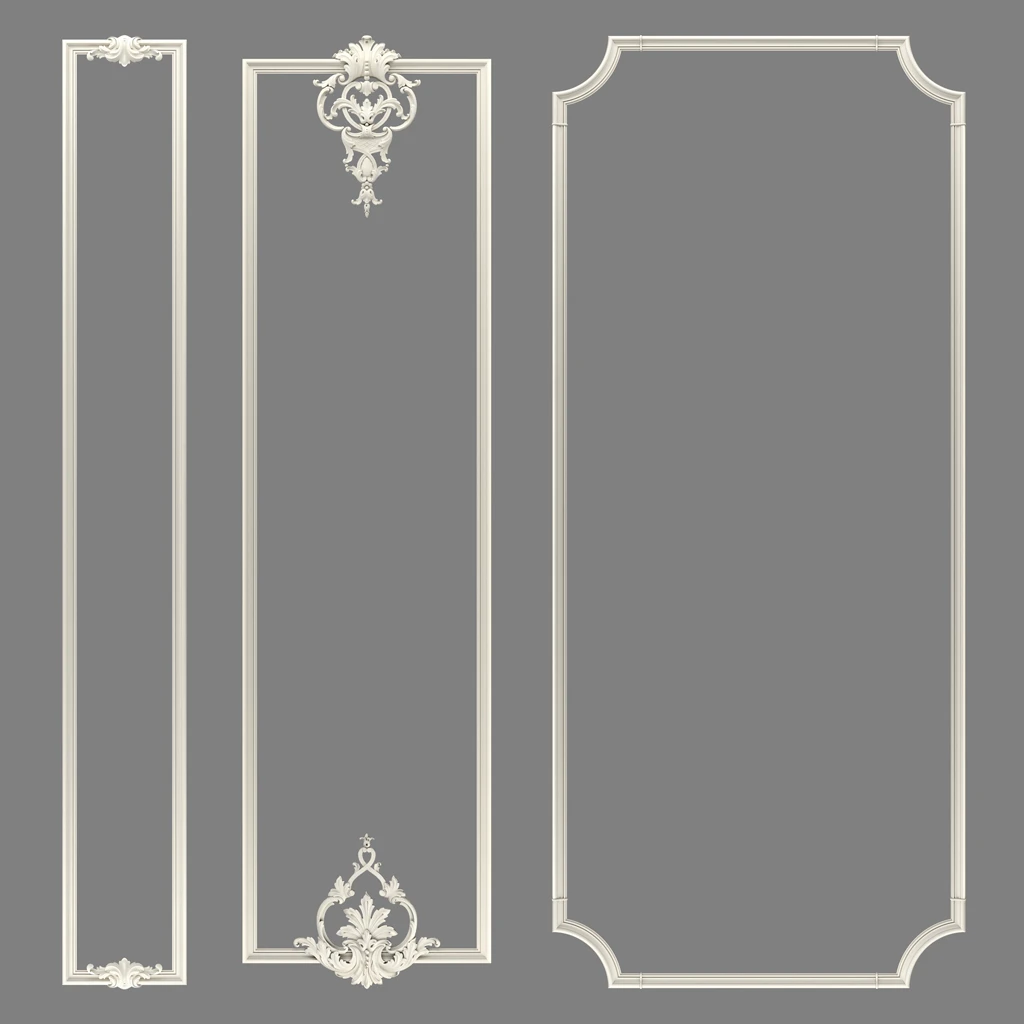
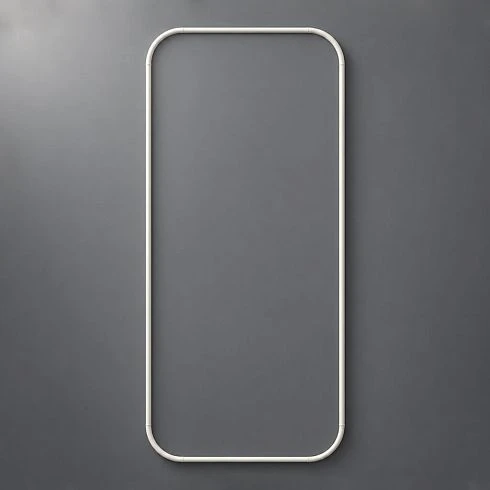
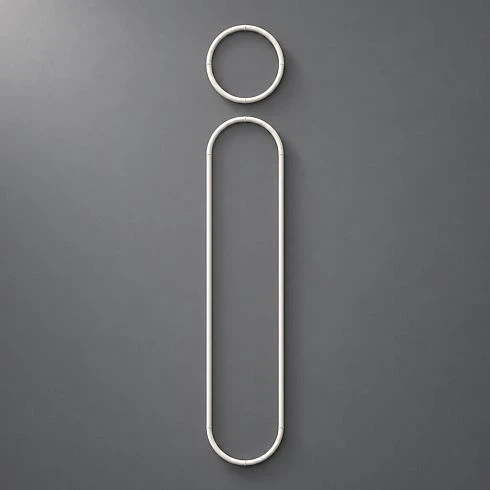
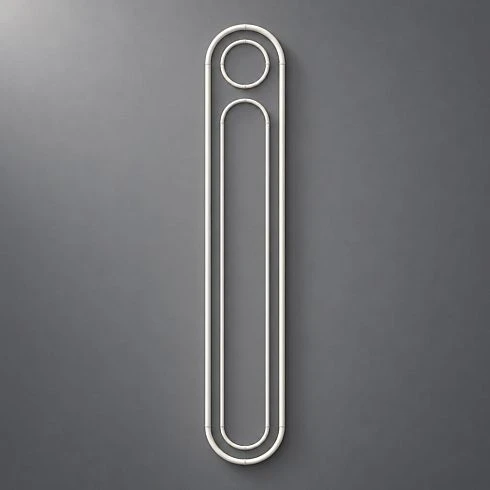
When people say "Japandi wall panels," they often mean something abstract — like a wall in neutral tones with wooden slats. But INTPU-012 is a specific and well-thought-out composition with a clear structure, a list of elements, and assembly logic. The idea is based on the principle of vertical rhythm: moldings create an orderly frame on the wall, corner decorative elements fix it at key points, and the space inside the frames acts as "breathing" — it is empty but not random.
Vertical lines in Japanese aesthetics are not just a technique. They are a symbol of upward aspiration, lightness, and order. In Scandinavian design, the vertical is also a functional tool: it visually raises the ceiling, makes the space airier, and structures the wall without unnecessary load. It is this combination that makes the idea of INTPU-012 so precise. It does not try to be either a Japanese rock garden or Scandinavian hygge — it stands at the intersection of both traditions, and this intersection is called Japandi.
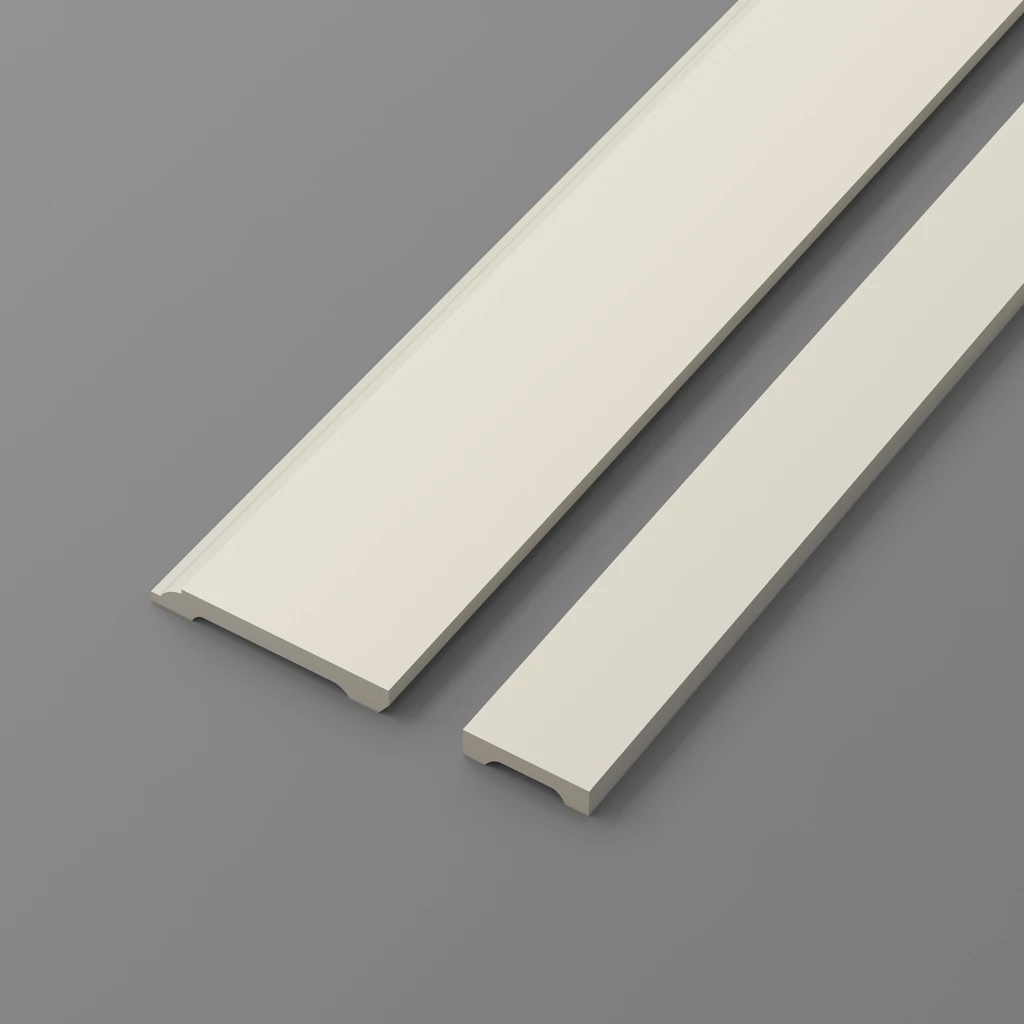
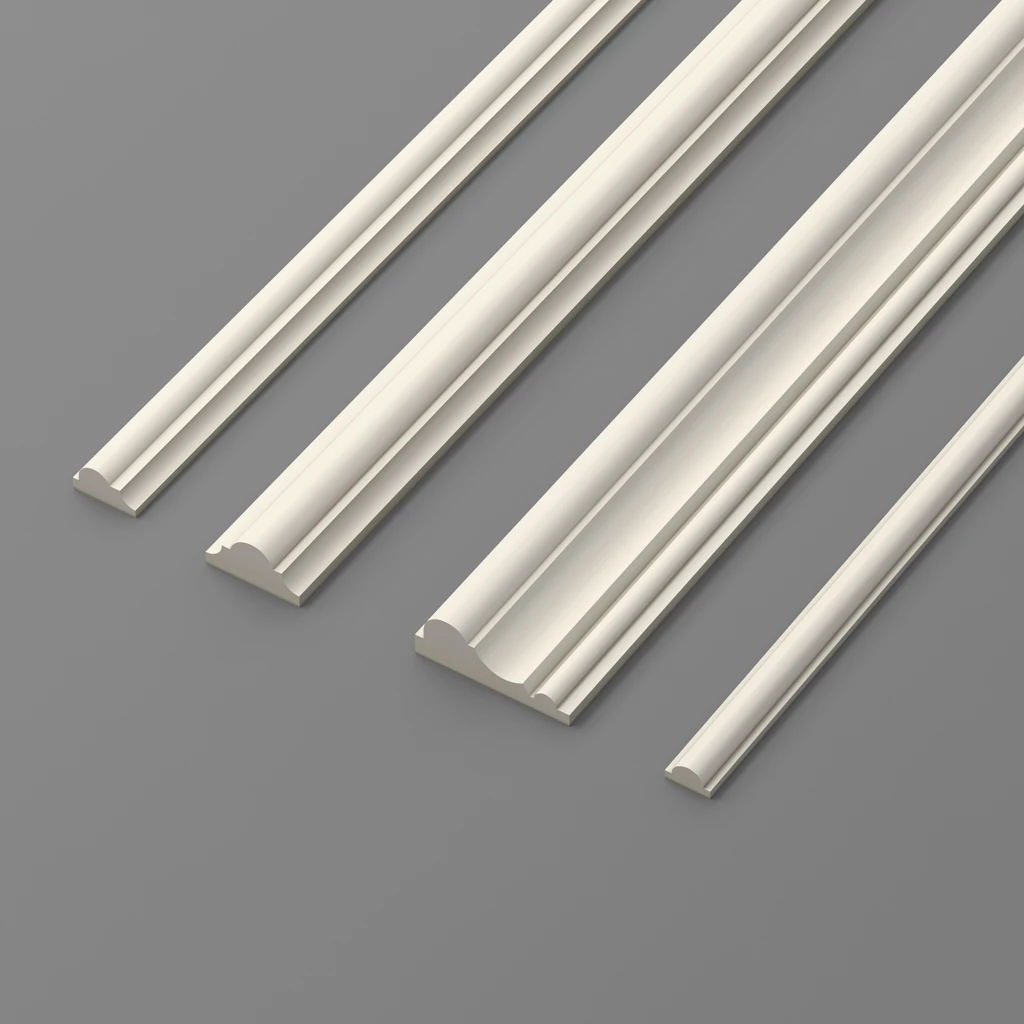
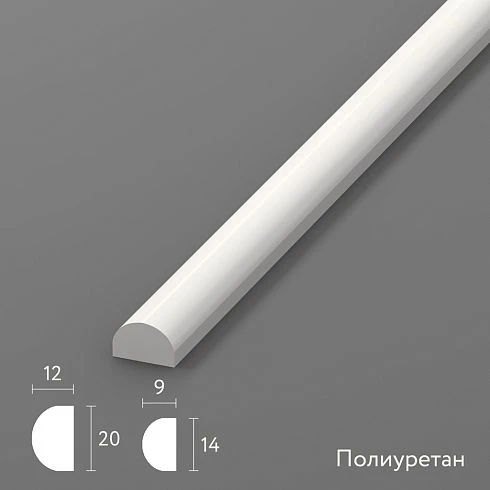
The geometry of the composition remains strict but not cold. The molding MLDPU-027 sets the main contour: thin, clear, with minimal relief. The corner elements MLDPU-027U-1 and MLDPU-027U-2 place accents — they are slightly larger, a bit more voluminous, and it is they that turn a set of lines into an architectural composition. All together — this is not stucco in the classical sense, not Baroque, and not Empire. This is modern Japandi wall decor that lives by its own rules.
The key principle on which INTPU-012 is based: no element exists for its own sake. The molding structures. The corner accent fixes the gaze. The empty field inside the frame works like a pause in music — without it, the rhythm is lost. It is this approach that makes wall decoration in the Japandi style not a decorative gesture, but a conscious design solution.
Ready-made sets CPU-3-1, CPU-3-5, and CPU-3-6 from the Japandi STAVROS collection allow you to implement the idea of INTPU-012 without searching for individual elements from different sources. The dimensions of sets CPU-3-5 and CPU-3-6 are 408 × 2300 × 13 mm, the material is polyurethane. These are full-format wall panels that immediately set the scale and rhythm of the entire composition.
For which rooms is Japandi wall panel decor suitable?
The first question that arises when getting acquainted with the idea of INTPU-012 is: can I do this? The answer is almost always yes. The Japandi style itself is universal: it does not require high ceilings, huge spaces, or special architecture. It needs something else — a correct understanding of space and a willingness to give up the unnecessary.
Bedroom. This is perhaps the most organic scenario for the idea of INTPU-012. An accent wall behind the headboard in Japandi style is not a trend of the season, it is already a stable design practice. The vertical rhythm of the moldings creates a feeling of security and coziness that is so important for a relaxation area. Wall decor behind the bed in Japandi style using STAVROS elements works exactly like this: it doesn't overwhelm, doesn't distract, but at the same time creates a clear architecture. Paint the moldings the same color as the wall — and you get a restrained relief. Create a soft half-tone contrast — and the wall comes to life.
Living room. The large wall plane behind the sofa is a classic focal point of Japandi wall decor. Here INTPU-012 can work in two ways: as a single large-scale composition across the entire wall or as a local accent above the sofa, framing an art object, mirror, or shelf. In both cases, the moldings and corner elements set the order — and it is precisely this order that large living rooms often lack, where there is a lot of furniture, textiles, and details, but no single architectural backbone.
TV zone. Decorating the TV zone in Japandi style is a separate story. The TV is always a visual dominant that is hard to compete with. A molding frame made of MLDPU-027 elements around the TV panel turns a technical device into part of the overall composition. When the screen is off — the wall remains beautiful. When it's on — the frame gives it an architectural context. This is smart decor that works for the interior constantly, not just during viewing moments.
Entryway and hallway. The entrance area sets the tone for the entire home. Vertical composition of moldings on the wall in a narrow hallway — this is not boldness, it's a rule. Vertical lines visually raise the ceiling, making the space taller and lighter. Even in a hallway 90 centimeters wide, molding frames on one wall will create a sense of a thoughtful, cohesive interior.
Study. A workspace requires special discipline. Wall design in Japandi style in the office creates that very "working silence" — when the wall doesn't distract thinking but forms a professional, neat background. It works especially well behind the chair — the wall that appears in frame during video calls. A geometric molding panel against such a background is the best professional backdrop you can imagine.
Commercial spaces. Showrooms, beauty salons, meeting rooms, apartment receptions, boutique hotel lobbies — everywhere where it's important to create a sense of premium without pretension, the INTPU-012 concept works flawlessly. Ready-made wall decor set allows you to quickly and technologically implement a project without lengthy selection of individual elements.
Why Japandi style works so precisely on wall panels
Before answering this question, it's worth understanding what Japandi really is. It's not about cream walls and beige blankets, although that's how it's often interpreted in mass blogs. Japandi is a way of thinking about space. The Japanese philosophy of wabi-sabi says: beauty lives in imperfection, in simplicity, in silence. Scandinavian design adds: functionality is also beauty. At the intersection of these two traditions, an interior is born where every element is justified, every line is meaningful, and nothing is there "just because."
That is why decorative Japandi panels are not about decorating walls. They are about wall architecture. Molding doesn't hang on the wall as an ornament — it structures the wall, divides it into zones, sets a rhythm. A corner element doesn't protrude as decoration — it fixes the intersection point of lines, where the eye can pause and rest. This is a fundamentally different logic compared to classic stucco, which says "look how rich." Here the message is different: "look how calm and precise."
Japandi moldings are also good because they don't compete with the rest of the interior. Simple-shaped furniture, neutral textiles, warm wooden accents, live plants — this entire ecosystem of a Japandi interior coexists beautifully with molding panels. The wall becomes part of the overall ensemble, not its opponent. This is a rare quality for decor.
Another important point: Japandi stucco decor It has the ability to work with different shades. Paint the moldings the color of the wall — you get a soft, almost sculptural relief. Create contrast — you get a graphic architectural pattern. Use warm natural shades — and the wall begins to breathe. This flexibility makes INTPU-012 not a template, but a living idea that everyone adapts in their own way.
The "Japandi" collection by STAVROS is built around this very logic: moldings, wall decor sets, and corner elements that together create not just a decorative set, but a complete wall design system.
What elements are used in the INTPU-012 composition
A good idea is not just a picture. It is a list of items that can be taken and purchased. This is what distinguishes INTPU-012 from an ordinary "inspiring photo." Every element of the composition is specific, has an article number, size, and material.
The basis of the structure is formed by Moldings made of polyurethane MLDPU-027. These are thin, geometrically precise profiles with minimal relief — exactly the kind of line character needed for the Japandi style. The molding does not shout about itself, but confidently forms the panel contour, builds a vertical rhythm, and sets the scale of the entire composition.
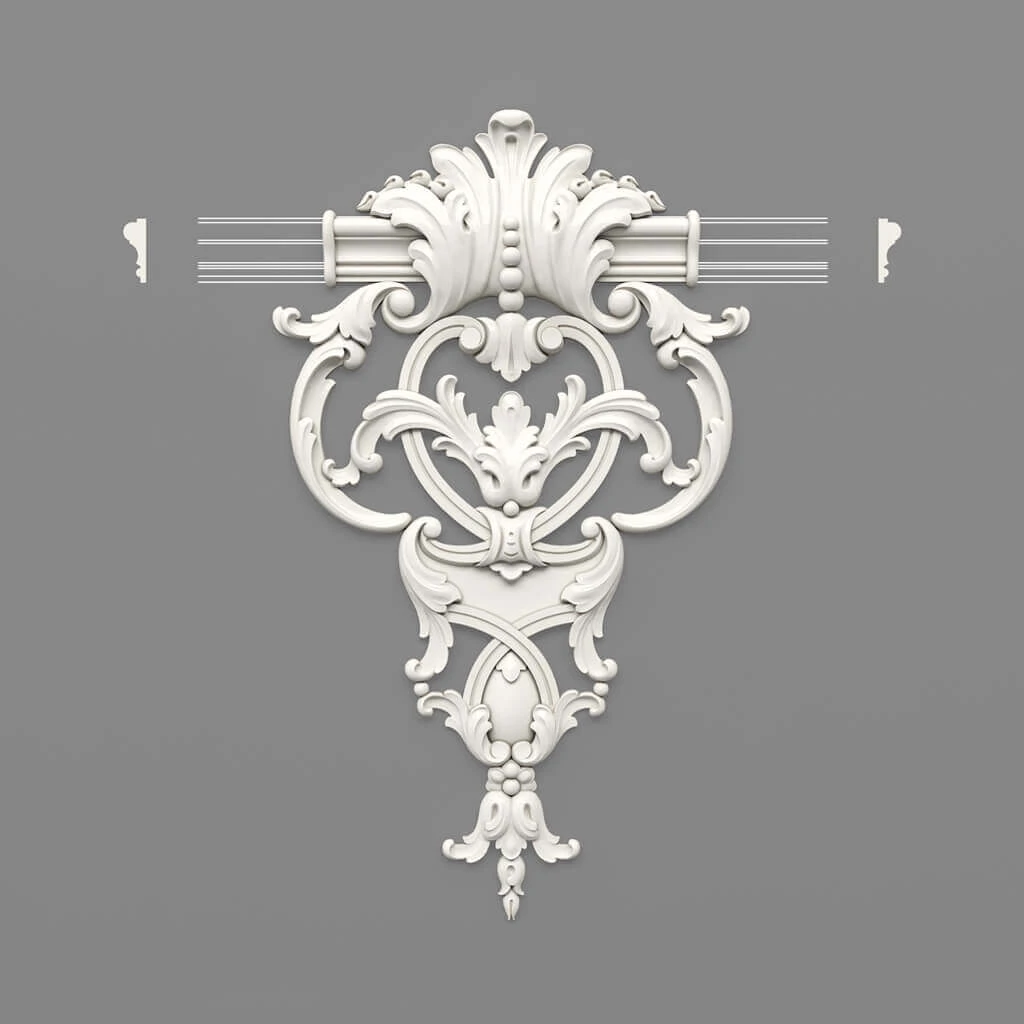
The corner decorative elements MLDPU-027U-1 and MLDPU-027U-2 are key accents without which the molding frame remains just a frame. They are placed in the corners of panels or at line intersection points and add volume, depth, and completeness to the composition. The difference between them is in size: MLDPU-027U-1 is larger, works as a dominant accent; MLDPU-027U-2 is thinner, used for detailing and secondary gaze fixation points.
Ready-made collection sets — CPU-3-4, CPU-3-5 и CPU-3-6 — these are pre-assembled solutions for a specific wall format. Each size is 408 × 2300 × 13 mm, material — polyurethane. This means the panel is designed for a standard room height and requires no additional vertical adjustments: you take the set, determine the horizontal step — and the system assembles itself.
If you need a warmer, natural version of the same idea — STAVROS has solid wood elements in its arsenal. The wooden molding MLD-027 and corner elements MLD-027U-1 and MLD-027U-2 fully replicate the geometry of the polyurethane versions, but offer a different tactile and visual experience: natural texture, live wood, the warmth of natural material. This combination — solid wood for corner accents and polyurethane for the main contour — opens up interesting mix solutions in the spirit of true Japandi, where natural and man-made meet at one point.
Full list of elements used in the INTPU-012 idea:
-
Polyurethane molding MLDPU-027 — main structural profile
-
Corner element MLDPU-027U-1 — large accent
-
Corner element MLDPU-027U-2 — small accent
-
Set CPU-3-1 / CPU-3-5 / CPU-3-6 — ready-made full-size panels
-
Wooden molding MLD-027 — natural alternative
Why polyurethane is convenient for the Japandi idea
Someone might say: "Why not wood? Not plaster? Not MDF?" Good question. And the answer lies not in marketing, but in the physical properties of the material and the logic of application.
Polyurethane is lightweight. Not just "tolerably light," but truly light — the density of STAVROS products ranges from 150 to 420 kg/m³. This means a long molding can be held with one hand, and a corner element can be applied to the wall without an assistant. For DIY installation, this is critically important: all work on marking, fitting, and gluing is done alone, without movers or a construction crew.
Polyurethane is mounted with adhesive. No dowels, no drilled walls, no marks on the plaster. The specialized adhesive sets quickly, holds securely, and after installation, the wall looks as if the molding was designed by the architect during the construction phase. This is especially important for renters and those who want to preserve the ability to change the interior without renovation.
Polyurethane can be painted. Not just once, but as many times as you like. This means that a ready-made solution for wall decor does not tie you to one color forever. If you want to change the shade, just repaint it. Moved? Take the idea with you in a new color. This is an amazing freedom that wood does not have (it is not so easy to paint) and that gypsum certainly does not have (it is fragile and sensitive to moisture).
Polyurethane is moisture resistant. Polyurethane moldings is not afraid of condensation, wet cleaning, or even the bathroom. This opens up the possibility of using Japandi wall decor not only in the bedroom and living room but also in the bathroom — which is completely organic for Japanese aesthetics: in Japanese culture, the bathroom is not just a utility room but a place of restoration and ritual.
Polyurethane is ideal for combining with painted walls, decorative plaster, wallpaper, MDF panels, and natural veneer. It is neutral in texture before painting, accepts any shade, and with proper paint application, it is visually indistinguishable from gypsum or wood stucco — but is many times more convenient in installation and maintenance.
Special attention deserves installing polyurethane molding: clean corners, hidden joints, and proper painting — these three points determine whether the result will look professional. The STAVROS website has a detailed guide that walks you through the entire process step by step.
How to replicate the decor idea at home: step-by-step logic
This is the most practical block, and this is where many make a mistake: they look at a beautiful photo and don't know where to start. Let's break down the process honestly and step by step.
Step 1. Define the wall. Not "some wall," but a specific one — the one visible when entering the room, the one you sit opposite, or the one behind the bed. An accent wall works precisely because it is one. If accent is everywhere, it is nowhere.
Step 2. Take measurements. Wall width, height from floor to ceiling, location of outlets and switches, presence of niches or protrusions. All of this affects how and where the finished molding composition on the wallwill fit. Measurements are not a formality; they are the foundation of everything. Without them, any decor advice turns into guesswork.
Step 3. Determine the application area. Is it the area behind the bed? Behind the sofa? TV panel? Console in the hallway? The entire wall in the study? The answer to this question determines the scale of the composition and the choice between individual moldings and ready-made CPU-3 kits.
Step 4. Choose the height and width of the panels. For a bedroom with a 2.7 m ceiling, the optimal height of the molding frame is from 1.8 to 2.3 m. This provides visual slenderness and does not create a feeling of heaviness. The width of the panel depends on the width of the wall: as a rule, one wide frame plus two narrow ones on the sides provide the best balance.
Step 5. Decide on color. For Japandi, three basic scenarios work:
-
Moldings in the color of the wall — maximally restrained, sculptural effect
-
Moldings half a tone lighter or darker — soft contrast, works in all scenarios
-
White moldings on a colored wall are a classic, suitable for more graphic interiors
Step 6. Select the elements. If you want to replicate the INTPU-012 idea exactly, buy the kits CPU-3-5 or CPU-3-6 as a base, add corner elements MLDPU-027U-1 and MLDPU-027U-2 to taste. If you want a more flexible assembly, start with MLDPU-027 moldings and assemble the frames yourself.
Step 7. Installation. Marking with a laser level is mandatory. Joining moldings at 45 degrees is critical. Puttying and sanding the joints is not optional but mandatory. After that, primer and two coats of paint. If you want a perfect result, study the materials on installation of polyurethane molding the STAVROS website: all technical nuances are detailed there.
Step 8. Consultation and specification. If the dimensions are non-standard, the wall configuration is complex, or you need help with selection, STAVROS specialists will help you create an accurate specification. It's free and saves time: you don't need to calculate the molding footage manually and guess if one kit is enough.
What to combine with Japandi wall panels: materials and details
Japandi style is an ecosystem. A molding panel on the wall is just one element of this ecosystem. To make it truly work, you need to understand what it coexists with in the same space.
Wood and wooden slats. Polyurethane moldings for wall panels They go perfectly with wooden slats, horizontal or vertical. The slats create a warm natural backdrop, while the moldings provide clear geometry. This is precisely the contrast between natural and man-made that is the essence of Japandi.
Natural veneer and wooden panels. The lower part of the wall, clad in dark oak or ash veneer, the upper part painted with a molding frame — a classic panel division in the Japandi style. Decor for Molding at the transition between zones completes this division architecturally.
Decorative plaster. Textures like 'wet silk', 'Japanese concrete', or simple Venetian plaster within a molding frame create an amazing tactile contrast with the smooth polyurethane surface. Wabi-sabi in action: the imperfect texture of the plaster is beauty, not a defect.
Matte paint. For Japandi, only matte or velvety-matte finishes. No gloss, no lacquer finishes. A matte surface diffuses light softly, creating a warm, living atmosphere.
Warm lighting. Warm LED light (2700–3000K) around the perimeter of the molding frame or directed at it from below — this is a whole different dimension of Japandi wall decor. Light reveals relief, creates depth, and turns an ordinary wall into a scenography.
Simple-shaped upholstered furniture. A sofa without twisted legs and complex decor, a bed with a low headboard, wooden side tables — all of this fits organically into the logic of an interior with INTPU-012 molding panels. Furniture does not compete with wall decor but complements it.
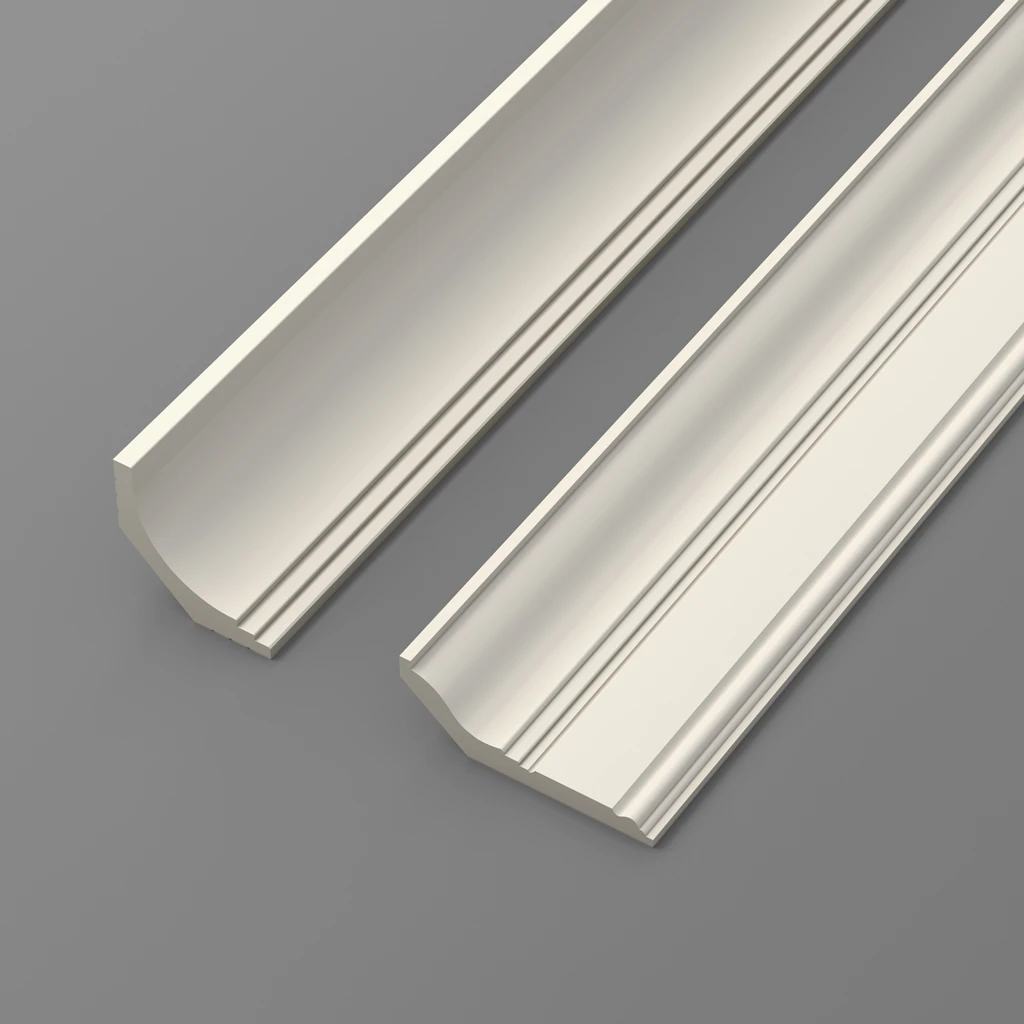
Baseboards and cornices without ornamentation. If the wall is designed in the Japandi style, the baseboard should also follow this logic: simple geometry, minimal profile, no classic ornamentation. From the assortment moldings from STAVROS polyurethane it is easy to choose items that will create a stylistically unified room perimeter.
Living plants. In a Japandi interior, greenery is not a decorative element but a living participant in the space. Tall floor plants, horizontally arranged branches in vases, moss in frames — all of this creates a natural pause next to the geometry of molding panels. The natural and the man-made meet again.
Who the INTPU-012 idea is for
It seems like a simple question. But the answer is broader than it seems — and it's important for those considering a purchase to understand this.
Apartment and house owners. First and foremost, of course, those who are furnishing their home and want a calm, modern, and visually clean interior. INTPU-012 is an idea for those who are tired of "just painted walls" but don't want classic stucco or baroque decor.
Interior designers. A ready-made idea with a list of elements is a professional tool. There's no need to reinvent the logic of wall decor every time: INTPU-012 provides a ready-made concept that can be easily adapted to a specific project and client budget.
Kit suppliers and renovation studios. A complete set from one source — moldings, corner elements, ready-made CPU-3 panels — is convenient logistics. One supplier, clear specifications, predictable quality.
Apartment developers. For developers working in the "Japandi apartments" and "minimalist lofts" segment, buying a ready-made wall decor kit means getting a replicable solution for standard finishing of several apartments. The cost per unit decreases, while the result remains consistent.
Owners of commercial spaces. Premium brand showrooms, beauty salons, yoga and meditation studios, corporate office receptions — everywhere where the first impression shapes brand perception, Wall Decorative Elements from the Japandi collection work as a precise stylistic tool.
How Japandi differs from classic stucco: architectural logic
This is an important question that often arises among those familiar with traditional stucco and look at the moldings of the Japandi collection with some skepticism: "Isn't this just frames on the wall?"
No. This is a completely different architectural logic.
Classic stucco says: "Look at me." Rosettes, capitals, garlands, scrolls, rocailles — each element competes for attention, each screams about its value and richness. This is not bad — it's just a different aesthetic, a different time, a different message.
Japandi stucco is silent. It structures without announcing it. The molding frame creates order — but does not require you to notice it every second. The corner element adds a focal point — but delicately, almost in a whisper. The entire vertical wall decor in Japanese-Scandinavian style works like background music: it is heard, it creates atmosphere, but it does not interrupt the conversation.
That is why moldings for a minimalist interior are not a simplified version of classic stucco. This is a fundamentally different discipline, requiring no less skill: here you cannot hide mistakes behind an abundance of details. Every line is visible, every proportion matters. This is a rigor that respects the viewer.
Buy elements for wall decor in Japandi style
When the idea is clear and the decision is made, the next step is to correctly formulate the request and make the purchase. Here are a few important guidelines.
If you need a ready-made "all-inclusive" solution, choose kits. Stucco Decor Set CPU-3-6 и CPU-3-5 contain everything needed for one span. Size: 408 × 2300 × 13 mm. This is the standard width of one panel section and the height for a standard ceiling. Buy — install — paint — done.
If you need a custom assembly, start with the molding MLDPU-027 as the main profile, add corner accents MLDPU-027U-1 and MLDPU-027U-2. Then it's arithmetic: calculate the perimeter of each frame, add 15% for trimming, and you'll get the exact number of linear meters of molding.
If you need a consultation, STAVROS specialists will help you create a specification. It's fast, free, and reliable: you get an accurate list with article numbers, quantities, and cost.
Also, pay attention to the section Decor for Molding — there are additional elements that allow you to complicate and enrich the basic idea of INTPU-012: central medallions, intermediate rosettes, horizontal dividers.
buy japandi wall decor — this is not just a transaction. It's the start of a project with a clear result: a calm, architecturally balanced wall that will delight you every day.
Final selection logic: why INTPU-012 is not just an idea, but a working tool
Let me state the main point without unnecessary words. Most wall decor ideas remain just ideas. A beautiful photo, a beautiful pin on Pinterest, a beautiful dream — and that's it. Because it's unclear: what exactly to buy, where, how many, how to assemble.
INTPU-012 is designed differently. It's an idea with a specific composition. Molding MLDPU-027. Corner elements MLDPU-027U-1 and MLDPU-027U-2. Kits CPU-3-5 and CPU-3-6. Style — Japandi. Material — polyurethane. Installation — glue and a laser level. Painting — matte acrylic paint in the wall color or contrasting. And all of this is available in one place — in Japandi STAVROS collection.
This is the value of a ready-made idea: not inspiration, but a route. Not a picture, but a specification. Not a dream, but a project that can be realized.
FAQ: Answers to popular questions
Where to use wall panels in Japandi style?
The INTPU-012 idea is organic in a bedroom (accent wall behind the bed), living room (wall behind the sofa), TV area, hallway, study, and any commercial spaces — showrooms, salons, apartments, meeting rooms. The best result is where one wall is a visual dominant and needs architectural framing without overload.
Can the INTPU-012 idea be replicated in a different size?
Yes. The CPU-3 kits have standard sizes, but the MLDPU-027 molding is sold by linear meter and can be easily cut to any size. The corner elements MLDPU-027U-1 and MLDPU-027U-2 are independent accents that are placed at the desired points regardless of the overall frame scale. For custom projects, we recommend requesting a consultation and specification.
What elements are needed for wall decor in Japandi style?
Basic set: MLDPU-027 molding for the main contour, corner elements MLDPU-027U-1 and MLDPU-027U-2 for accents. For quick implementation — ready-made kits CPU-3-4, CPU-3-5, or CPU-3-6. To add natural warmth — wooden versions MLD-027 and MLD-027U.
How is Japandi different from classic stucco molding?
Classical stucco demonstrates richness through an abundance of details and ornaments. Stucco in the Japandi style works through minimalism, geometric purity, and vertical rhythm. There are no floral garlands or Baroque curls here—only precise lines, well-thought-out proportions, and a calm architectural pattern. These are fundamentally different aesthetics with different tasks.
Can the elements be painted the same color as the wall?
Yes—and this is one of the best options for the Japandi style. Monochrome painting (moldings in the same tone as the wall or 1–2 shades lighter) creates a sculptural effect: the decor is visible due to light and shadow but does not 'pop out' from the surface. This approach best aligns with the Japanese principle of restraint and visual silence.
How long does installation take?
For an experienced craftsman, a 3×3 m wall with molding frames is installed in one working day. For DIY installation with surface preparation, marking, gluing, and finishing work—2–3 days, accounting for glue and paint drying time. Detailed instructions are available in the article about installing polyurethane moldings.
Is polyurethane decor suitable for a bathroom?
Yes. Polyurethane is moisture-resistant and not afraid of condensation. This makes it Polyurethane wall decor an excellent choice for Japandi-style bathrooms—spaces where the Japanese tradition of respectful attitude toward water and the ritual of cleansing is especially relevant.
How to order a consultation and specification?
Through the STAVROS website—just leave a request for a callback. A specialist will help select elements, calculate the amount of molding and kits, and provide a specification with article numbers and cost. This is free and takes minimal time.