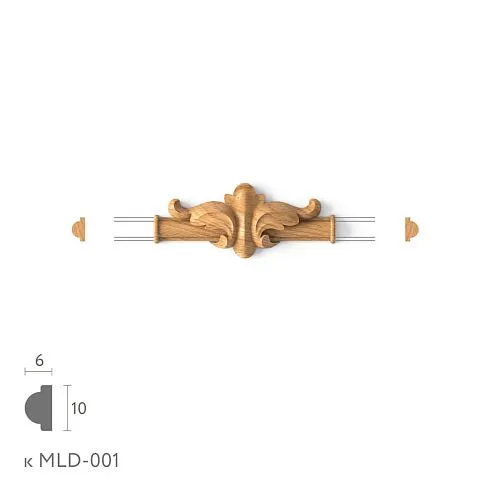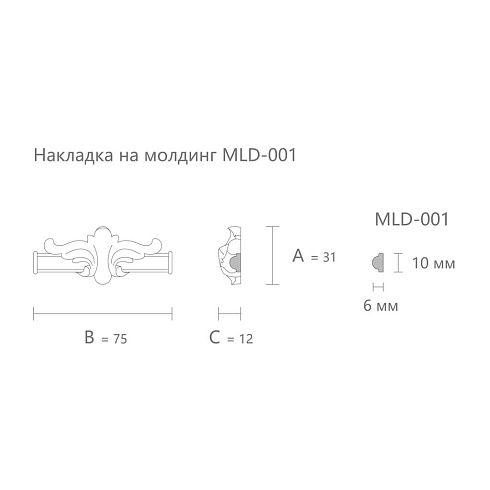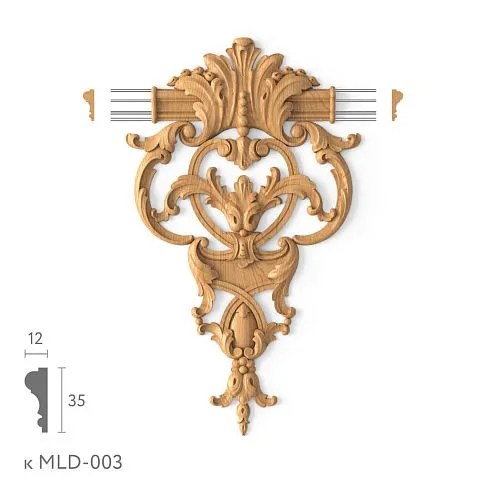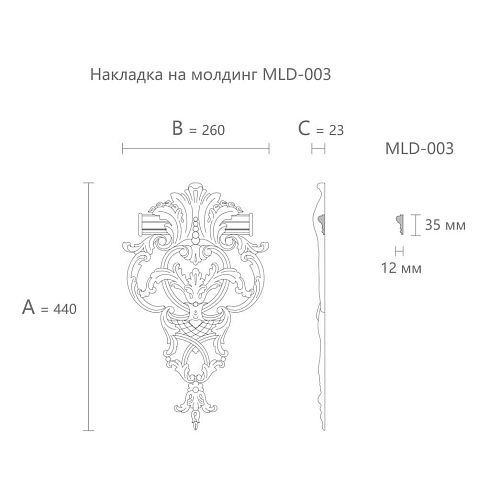



































































 Bestseller
In stock
Bestseller
In stock
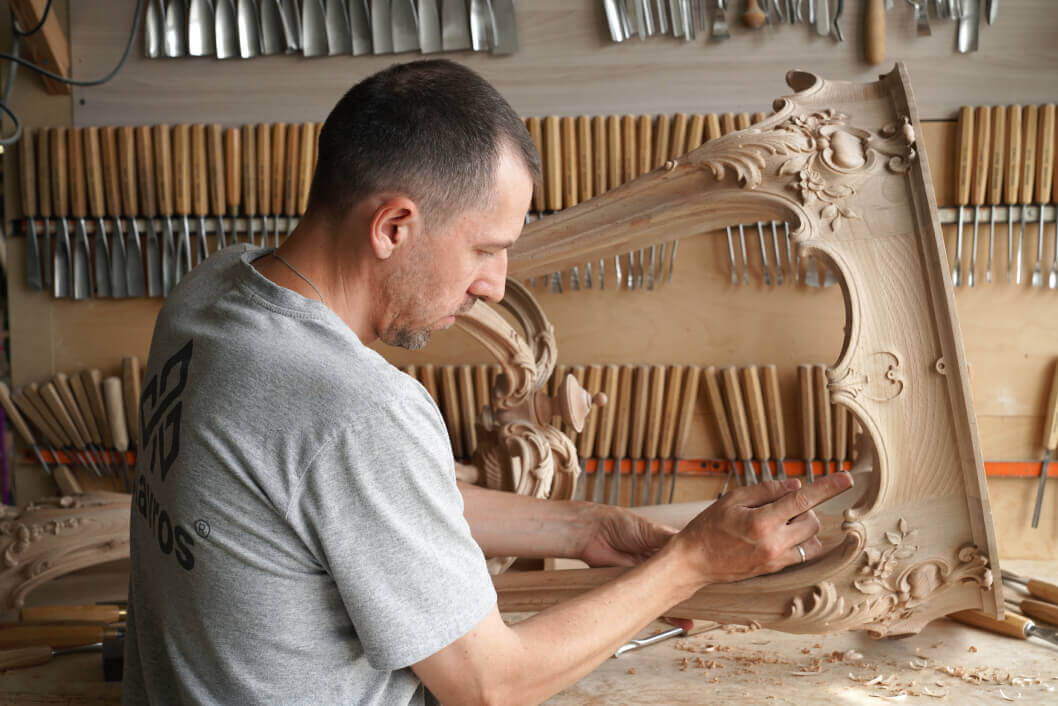
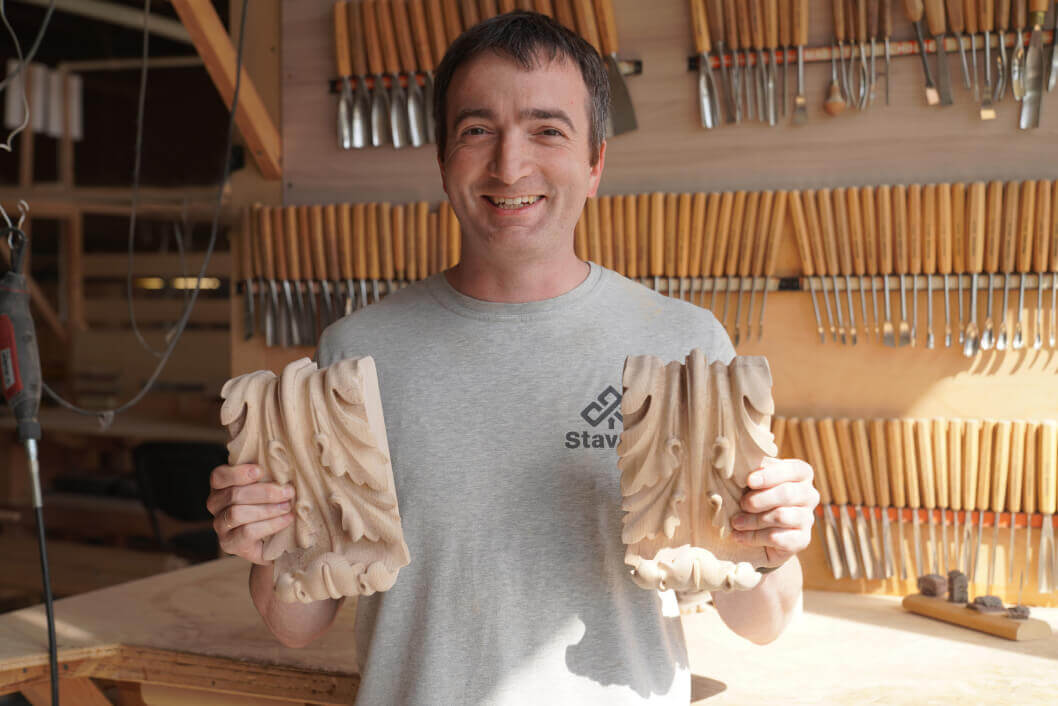
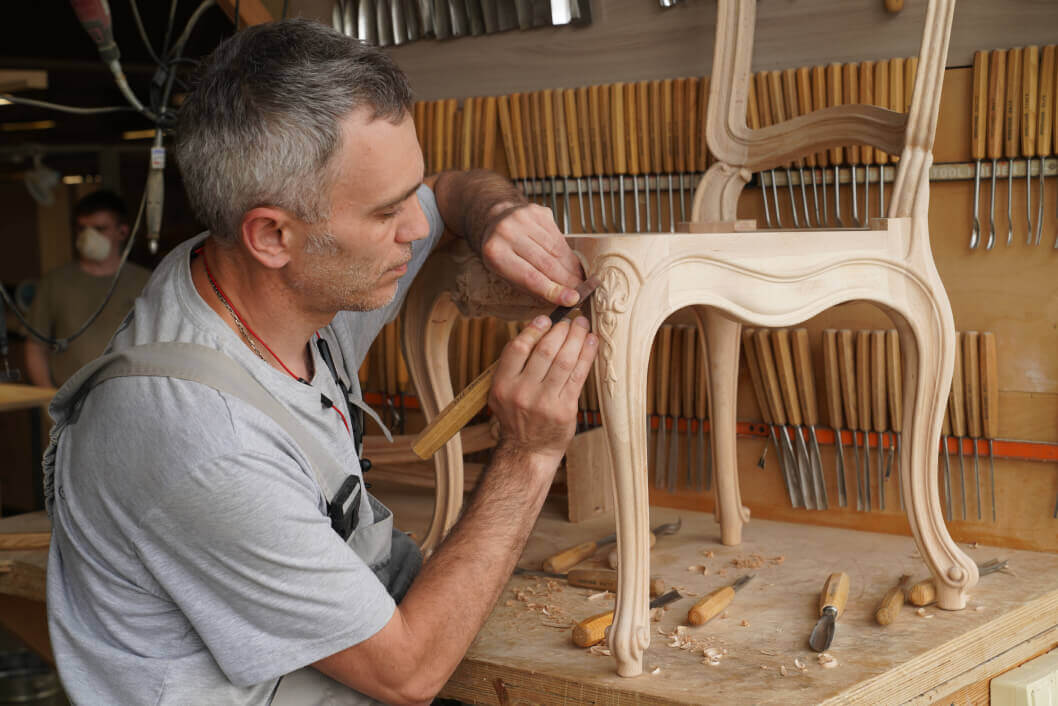
The company's success began in 2002, when two artists — Andrey Ragozin and Evgeny Tsapko — created a small creative workshop for producing wooden carved items. The masters' work was quickly noticed, and within a year they were invited to participate in the reconstruction of the Konstantinovskiy Palace in Strelna.
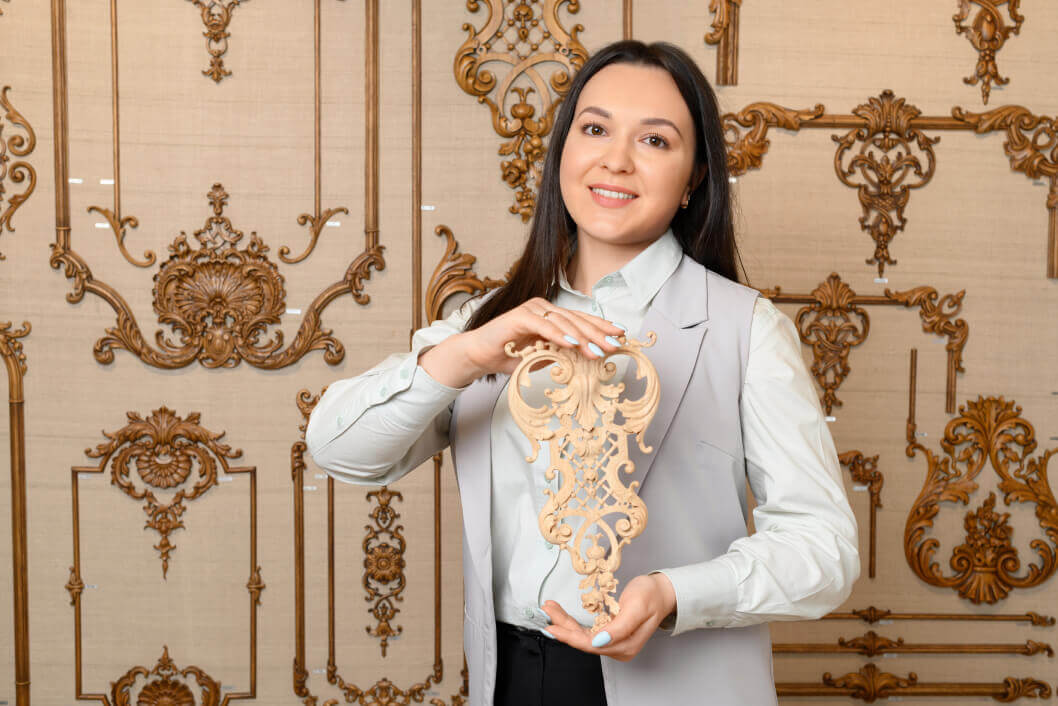
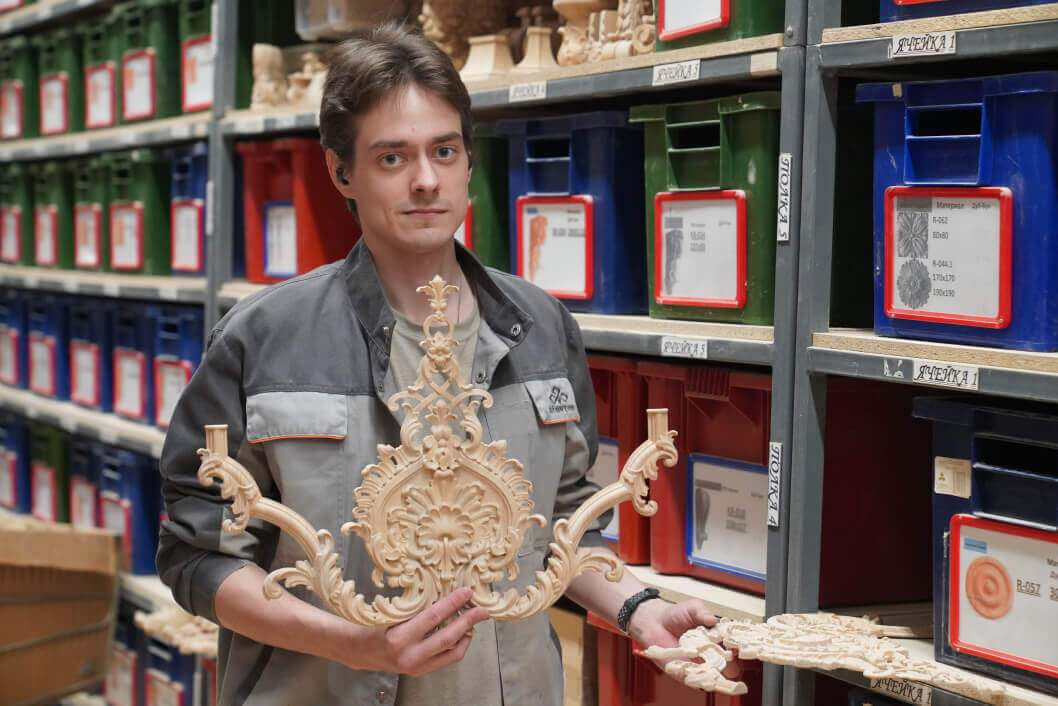
After the success of this project, the company focused on recreating palace interiors, furniture, church furnishings, and carved decorations in various artistic styles. They worked with cultural heritage sites: The Hermitage, the Alexandrovsky Palace, the Troitsko-Izmaylovsky Cathedral, the Sheremetyevsky Mansion, and many others.
The masters' task — and still is — to create wooden items with the highest level of detail and understanding of every element, based on impeccable knowledge of artistic laws and interior styles.
We save your time, peace of mind, and budget
We solve your tasks with maximum speed
Streamlined process reduces all risks
Quality service regardless of order volume
Reliable partner — the foundation of your business
Our showrooms are located in Saint Petersburg and Moscow. Production is located in Saint Petersburg.
Moscow contacts: /contacts_all/
Contacts of Saint Petersburg: /contacts_all/
Send us the product codes, quantities and delivery destination. Contact our team to confirm availability and order details.
Please contact us to confirm shipping availability, costs and delivery times for your destination.
Delivery cost depends on the size, weight of the item, and delivery address.
Please ask our team to confirm shipping costs and delivery arrangements for your destination before placing an order.
Prices and availability of items on the website are always current. Data is updated daily.
Note: items in stock are stored on the warehouse in unpolished form and shipped within 3 working days.
If the item is not in stock, average production time: 5–10 working days.
This is the quality of polishing of the items.
Standard — machine polishing, at a more attractive price.
Prestige — detailed hand polishing, items do not require further work.
More details: /information/kachestvo/
This is the type of veneer of the items.
Under enamel: produced by gluing wooden laminates without color and texture matching. Contrast tonal and textural differences are noticeable. This blank should be chosen if the item is intended for opaque coating.
Under tinting: produced by gluing wooden laminates with color and texture matching. Tonal and textural differences may occur. This blank should be chosen if the item is intended for semi-transparent finish.
More details: /information/kachestvo/
Beech — dense, non-porous wood, most often used for items covered with enamel.
Oak — dense, porous wood with clearly visible natural grain. Due to its strength and decorative properties, it is often used in items with semi-transparent coating, highlighting the wood pattern.
Custom-made, if non-standard items are required, we can produce products from other types of wood, including blanks provided by the customer, manufactured according to our technical specifications.
All our furniture legs can withstand a vertical load of at least 100 kg.
Average production time for custom-made items: 5–10 working days.
Most items are stored on the warehouse in unpolished form. We need time to polish and pack orders.
Yes, we manufacture non-standard items according to individual projects, but we only accept orders with a minimum quantity.
We can manufacture items of the desired size, but we only work with bulk orders. For details, please consult the sales department manager.
Yes, some of our products can be used outdoors. For example, polyurethane items, as well as carved door casings made of pine.
Other items are produced to order using PUR glue, if minimum quantity is available. No warranty is provided for such products, as outdoor conditions are considered aggressive.
Please contact our team to confirm available finishes, minimum quantities and a quotation for your order.
More details: /information/sovety/
Apply adhesive to the decor. Place it on the surface and press briefly. Then, lift the decor from the surface and leave it open for 3–5 minutes. Press the decor firmly onto the surface and hold for 5–10 seconds.
More details: /information/sovety/
Ideally, you should prepare a design project before placing an order.
You can do this yourself by downloading drawings of our products from our website, or you can order a project from us.
If the number of decorative elements and fittings is small, our company's manager can assist you with selection.
Unfortunately, this service is not provided.
The packaging method depends on the type of items, but in each case, we ensure sufficient protection for safe transportation.
We most often use corrugated cardboard and stretch film. Fragile items are additionally secured on a rigid base to prevent damage during transport.
Please confirm the minimum order quantity for your selected products and finishes with our team.
Please contact our team to discuss measurement and installation requirements for your project and destination before ordering.
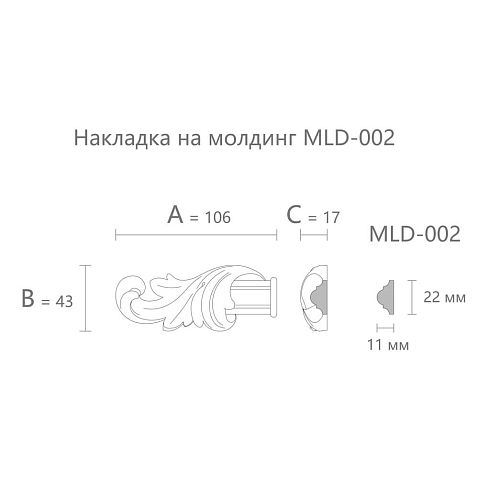
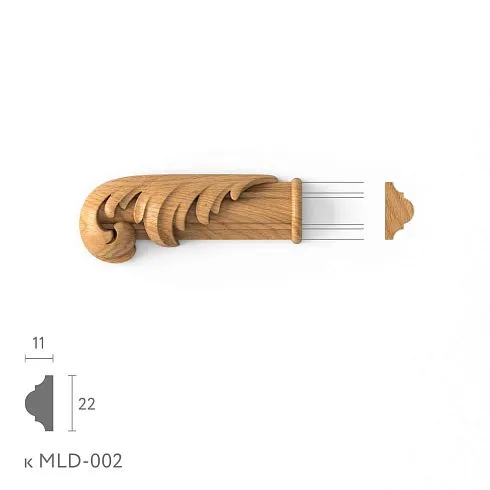
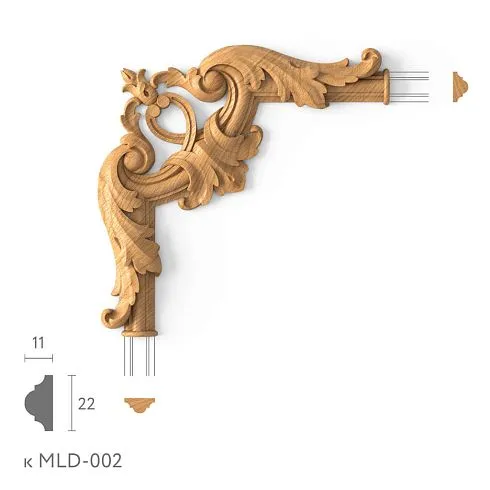
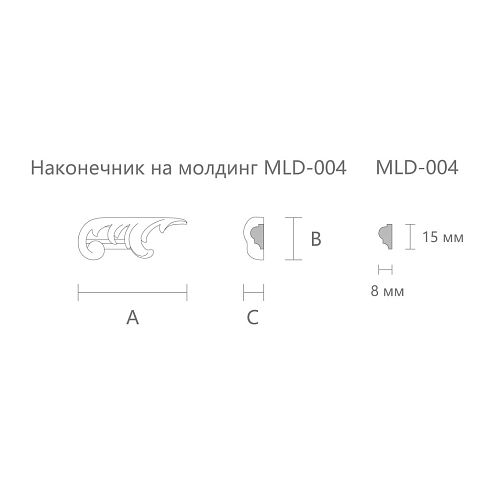
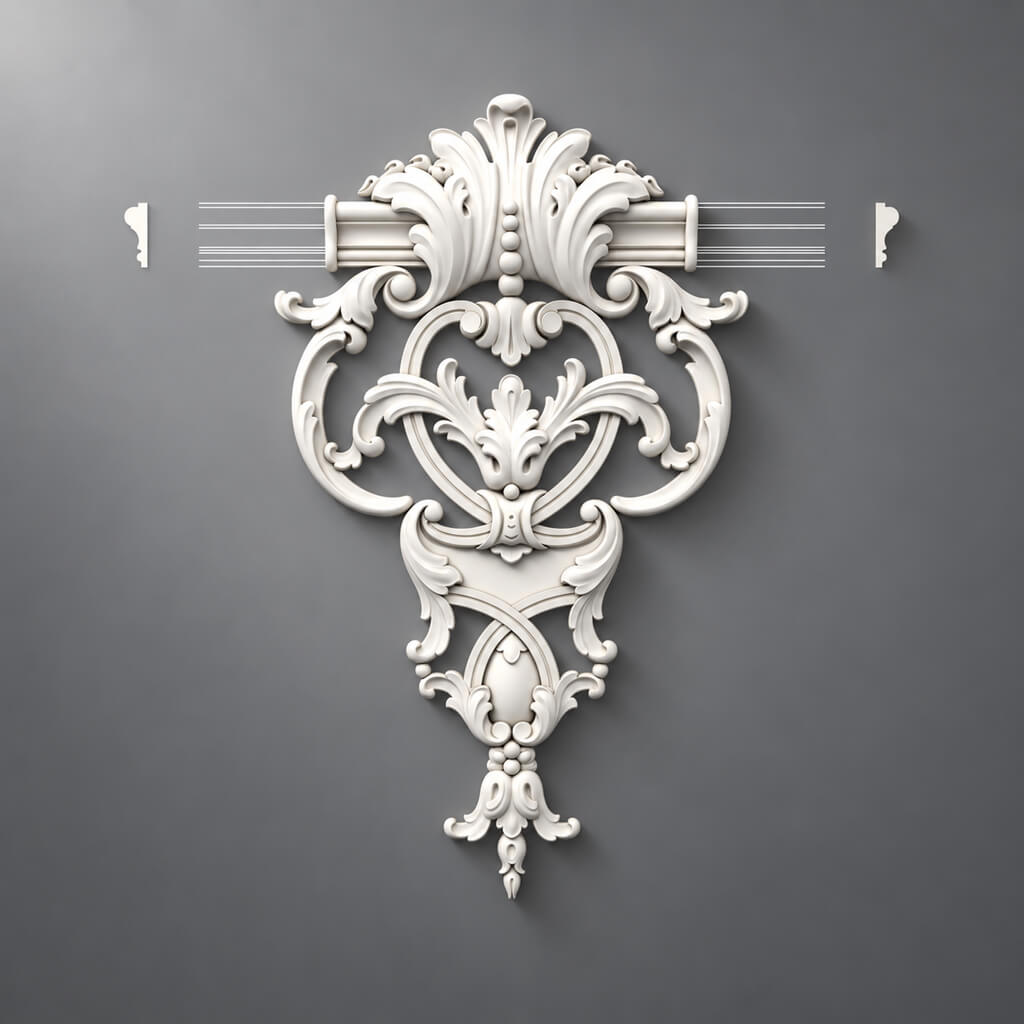
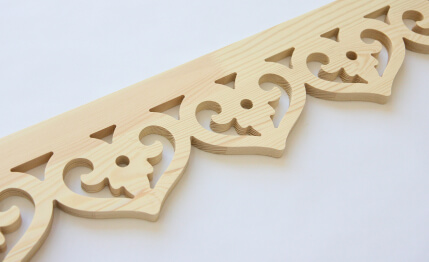
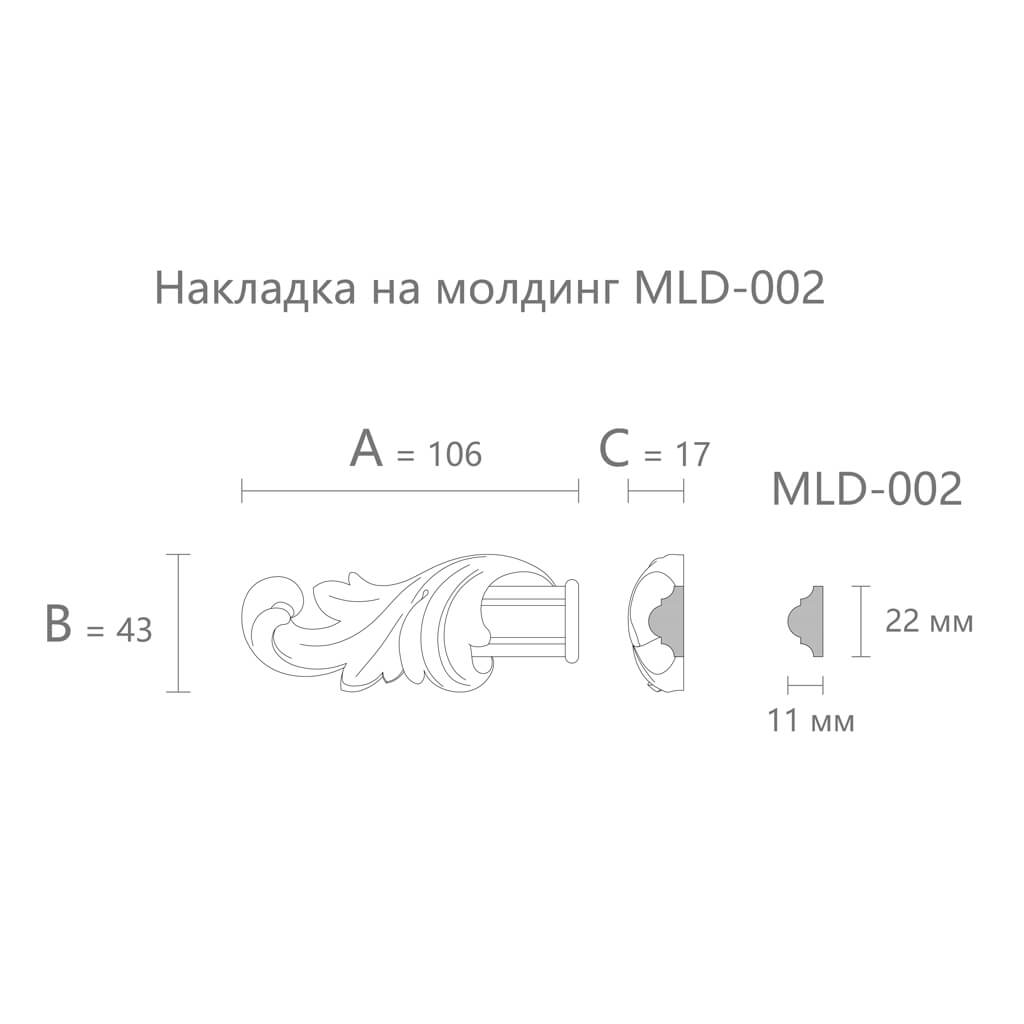
Details make all the difference. This is understood by craftsmen working with classic furniture and designers who know the value of a finished composition.Carved molding tip N-363.1L— this is precisely the detail that transforms a molding layout from technically correct to artistically complete. The molding tip covers the profile end with a carved ornament, eliminates the feeling of a broken line, and adds a final decorative accent. The product is included in the set for MLD-002 and is made from natural solid wood — beech or oak — for enamel finishing.
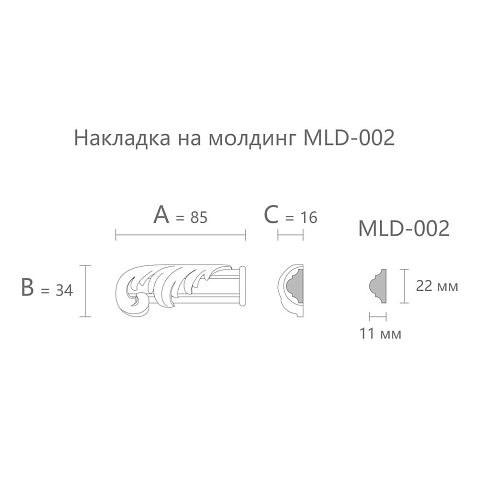
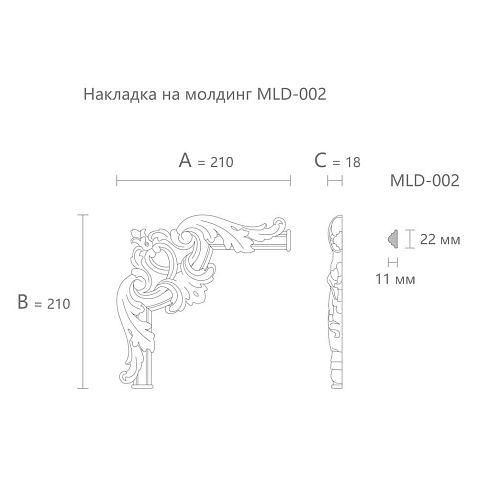
Size 106 × 43 × 17 mm — compact, precise, proportionate. This exact format is needed to complete a molding line on a furniture front, cabinet door, or decorative wall panel without overload and without loss of expressiveness.
The first thing to understand:Carved molding tip N-363.1L— is not a standalone decor. It is a component element that works in tandem with a specific molding. Its task is highly specialized: to finish the end of a molding line so that the profile termination looks not like a technical break, but like a decorative period at the end of a sentence.
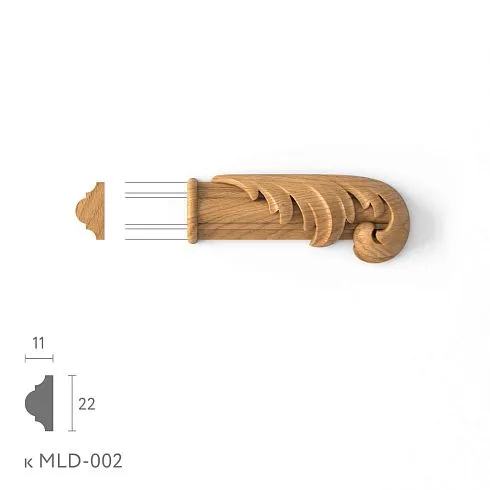
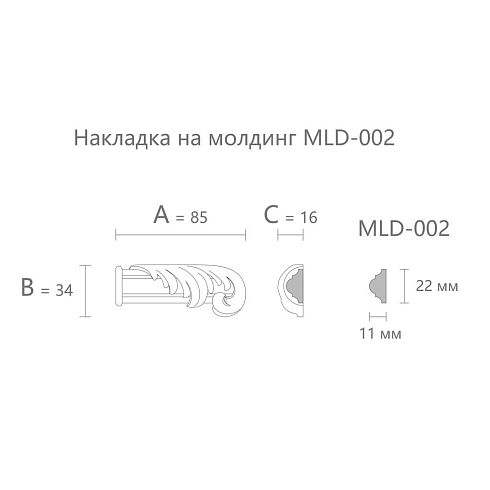
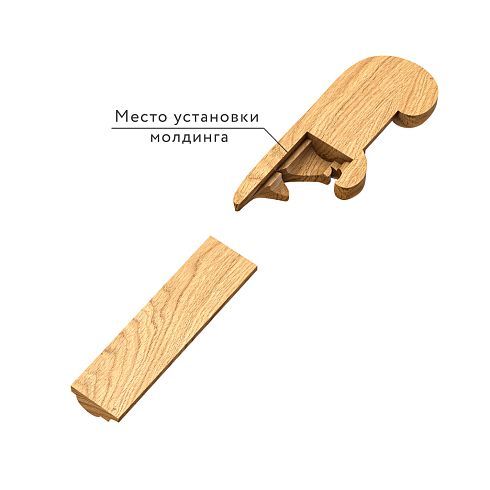
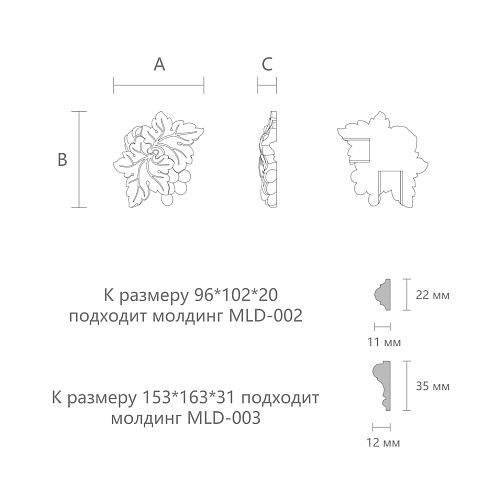
The product is made from natural solid wood — beech and oak are available. The back side of the tip has a recess that precisely replicates the cross-section of the moldingMLD-002— a profile with a quarter-round cross-section of 22 × 11 mm. This is not a random product 'for any molding' — it is an exact match for a specific profile.
The letter L in the article number indicates orientation: this is a left tip. For the right side of the molding, N-363.1R is used. For a complete symmetrical layout where the molding extends in both directions, both will be needed.
Finish — "Standard", surface — enamel-like. Made to order. This is a tool for professional furniture and interior work, not souvenir decor from a display case.
Ask yourself: what happens to the molding where it ends? On most furniture fronts and wall layouts — nothing good. The profile end is cut, sanded, painted — and still looks like a technical cut. A professional eye notices this instantly. An inexperienced one senses something is "off" without understanding exactly what.
This is precisely where the decorative molding tip appears. It covers the molding end with a carved ornament, creating a finishing decorative element that is perceived as part of the intended system. The molding line no longer breaks off — it concludes. This is a fundamental difference.
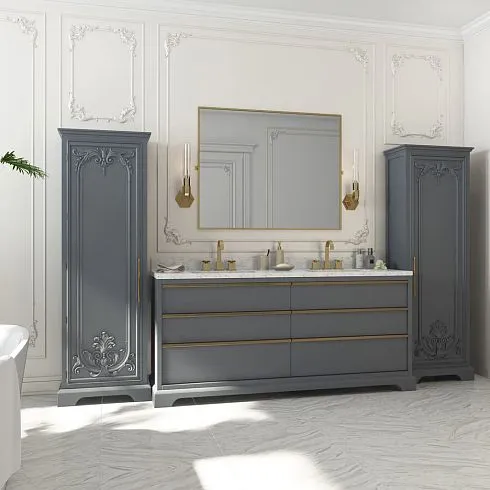
The second effect is the visual enhancement of the frame composition. When a molding layout has not only corner accents but also finishing tips on the ends, the entire system begins to read as a unified artistic whole. This is especially noticeable on furniture with open sides — buffets, secretaries, display cabinets — where the molding is visible not only from the front but also from the side.
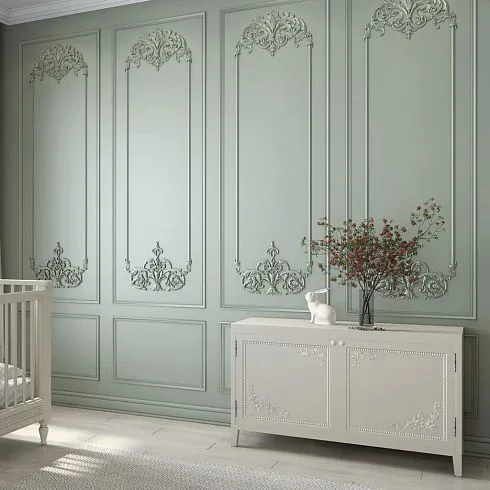
The third function is the decorative termination of molding on wall panels. When a wall molding layout ends not at a corner but in open space — without a tip, it looks unfinished. A finishing element for molding made of carved solid wood turns this point into a deliberate accent.
And finally: the carved tip N-363.1L works as an indicator of the quality of the entire work. Its presence signals that the craftsman thought about the details. And details are what distinguish good furniture from outstanding furniture.
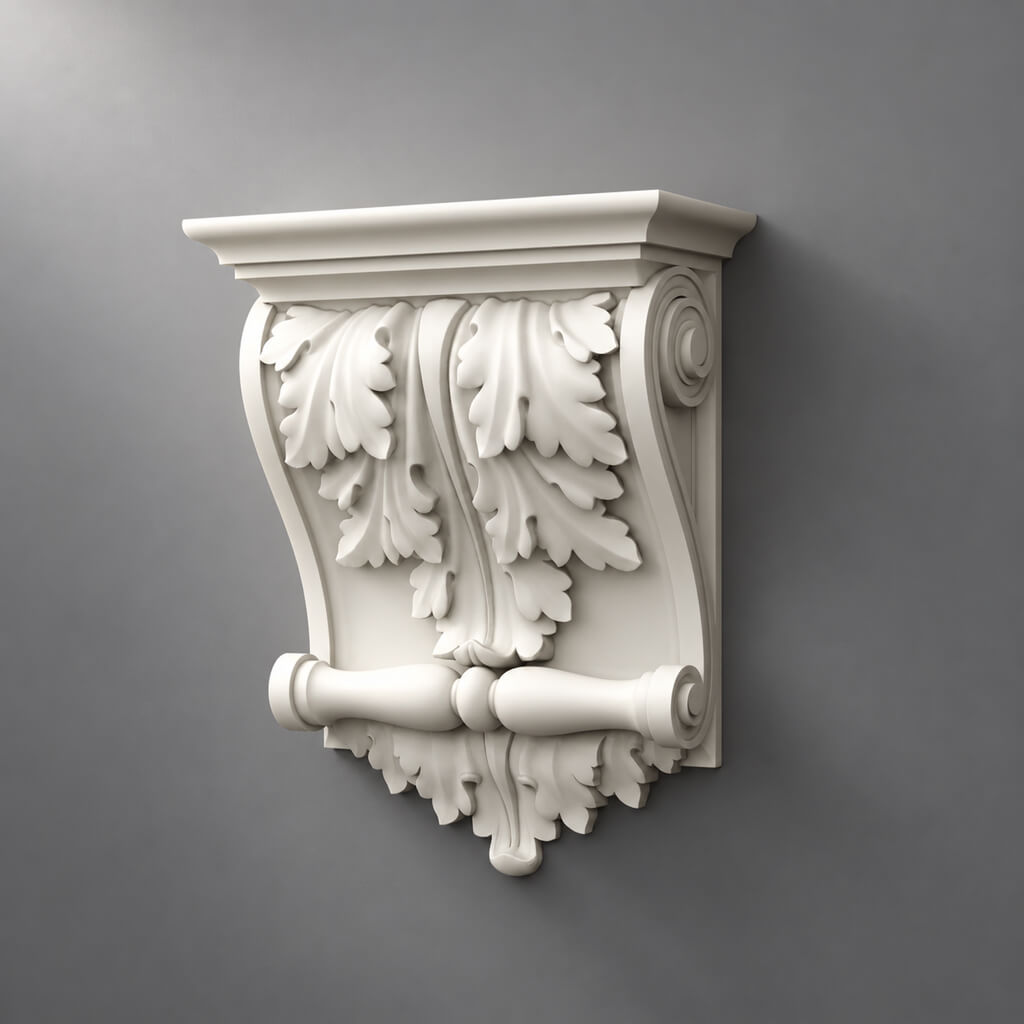
The finial form is not just a 'carved detail.' It is an ornamental ending that continues the molding's plasticity and concludes it at a single point. The composition is based on a smooth botanical motif—leaves, scrolls, organic transitions from solid mass to openwork relief.
The product's relief is active yet proportionate. With dimensions of 106 × 43 mm, it does not aim to draw all attention to itself—its task is more delicate: to place a period, to formalize the conclusion. It is precisely this proportionality that makes thecarved finialversatile in application: it works both on the large cabinet's furniture front and on the delicate drawer front.
The left orientation of the ornament (L) means the scroll and pattern are directed to the left. This is important for symmetrical layouts: theN-363.1Ris placed on the right end of the molding, mirroring it in form. Together they create a symmetrical finish on both sides of the molding line.
Style—pure classicism and neoclassicism. No geometric abstractions, no minimalism. This product is for interiors with a historical character: French classicism, Italian Renaissance, English style, Russian classicism. Where molding is not an accidental detail but part of a well-thought-out decorative system.
An important technical detail: the reverse side of the product features a mounting recess for the MLD-002 molding. This means the finial fits onto the molding end as a cap—and sits without gaps, without adjustment, without additional processing. It is precisely this precise fit that ensures a professional result.
Many buyers overlook the clarification 'kit for MLD-002' in the article number. And in vain. This is not a marketing label—it is a functional specification.
Molding MLD-002— is a wooden profile with a quarter-round cross-section measuring 22 × 11 mm. It is used for framing furniture fronts, frame layouts, doors, and wall panels. This is one of the most popular profiles in classic furniture production—concise, clean, and well-suited for any finish.
The N-363.1L tip is specifically designed for this profile. The recess on the back side matches the 22 × 11 mm cross-section. This means: take the MLD-002, cut it at the desired point, attach the tip—and you get a neat decorative finish without gaps or cracks.
If you try to fit N-363.1L onto a molding with a different cross-section—the fit will be imprecise. That's why, when choosing a decorative tip for molding, you always need to clarify: which profile it is suitable for.Tip for molding MLD-002— is a precise answer to a specific question, not an attempt to find something similar.
For those building a molding layout system around MLD-002, it makes sense to add to the kit:
Corner element MLD-002U— for framing the corners of the frame
tip N-363.1R — for the right end
Central overlays from the seriesdecoration for moldingsStavros
The question of material seems simple, but it has nuances. Especially when it comes to decor for opaque finishes.
Beech is a dense, fine-grained wood without a pronounced grain pattern. This very feature makes it an ideal choice for items that will be coated with enamel. When the surface is painted with an opaque composition, the wood texture doesn't matter — only the smoothness of the surface after processing is important. Beech provides this smoothness.
Beech tipFor enamel — this is the most technological and predictable option: primer lays evenly, enamel doesn't 'break through' the pores, the relief of the ornament is read clearly and without foreign inclusions.
Oak is a more open, porous species with a pronounced grain pattern. Under transparent and semi-transparent coatings — oil, wax, tinted varnish — it reveals its full potential and looks noble. If the project involves visible wood grain — interiors in natural tones, English style, eco-classic —Oak tipwill be the right choice.
Oak is also applicable for enamel, but requires an additional step: pore-filling primer before the final coating. Without it, the paint may look uneven.
The 'Standard' finish is the basic level of processing: milling to shape, machine sanding of the surface. The product is ready for further finishing. This is the professional norm for production and construction tasks — no manual finishing work, only a prepared surface for primer and paint.
This indicates the final finish: the product is intended for coating with opaque enamel paint. When applied correctly, the enamel preserves all the relief of the ornament and gives the product an elegant classic appearance—matte or glossy depending on the chosen composition.
There are several application scenarios, and each is interesting in its own way.
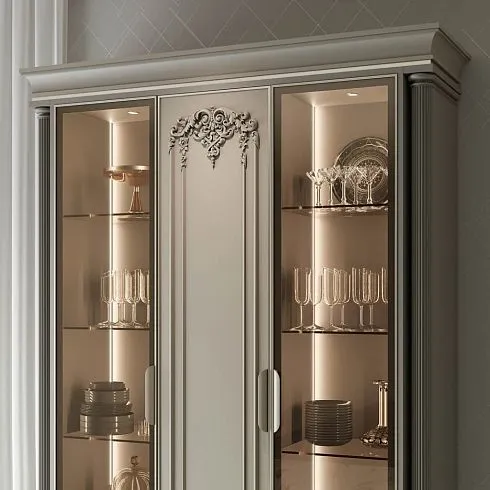
Furniture facades with molding trim are the primary habitat for this tip. Cabinets, dressers, buffets, display cases, cabinets—in any classic-style case piece where molding runs along the perimeter or forms frame elements, there comes a moment when the line must end. And how to finish this line is a fundamental question.
Carved tip for the facadeN-363.1L answers this question specifically and beautifully. The molding line reaches the end and concludes with an ornamental point. No abrupt profile cutoff, no 'forgotten' detail. Only a deliberate decorative gesture.
The compact format of 106 × 43 mm makes the tip proportional for both small dresser doors and medium-sized cabinet facades. It is a universal dimensional point that does not overload the trim and does not get lost on it.
A cabinet door with a molding frame is one of the most classic formats of furniture aesthetics. The perimeter molding creates a frame, corner elements cover the corners, and the N-363.1L tip completes the horizontal or vertical run at an open point.
This is especially relevant for doors with complex trim, where molding lines run not only along the perimeter but also inside the surface—forming multiple nested frames or a decorative lattice. In such cases, the number of molding 'ends' increases manifold, and each requires a proper decorative tip.
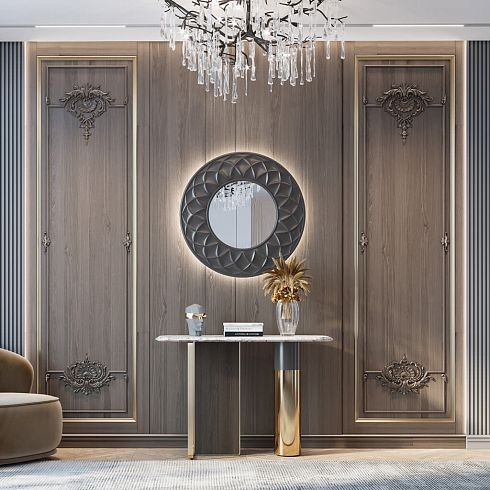
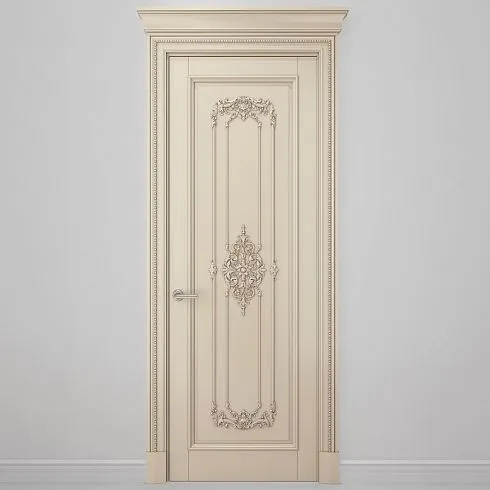
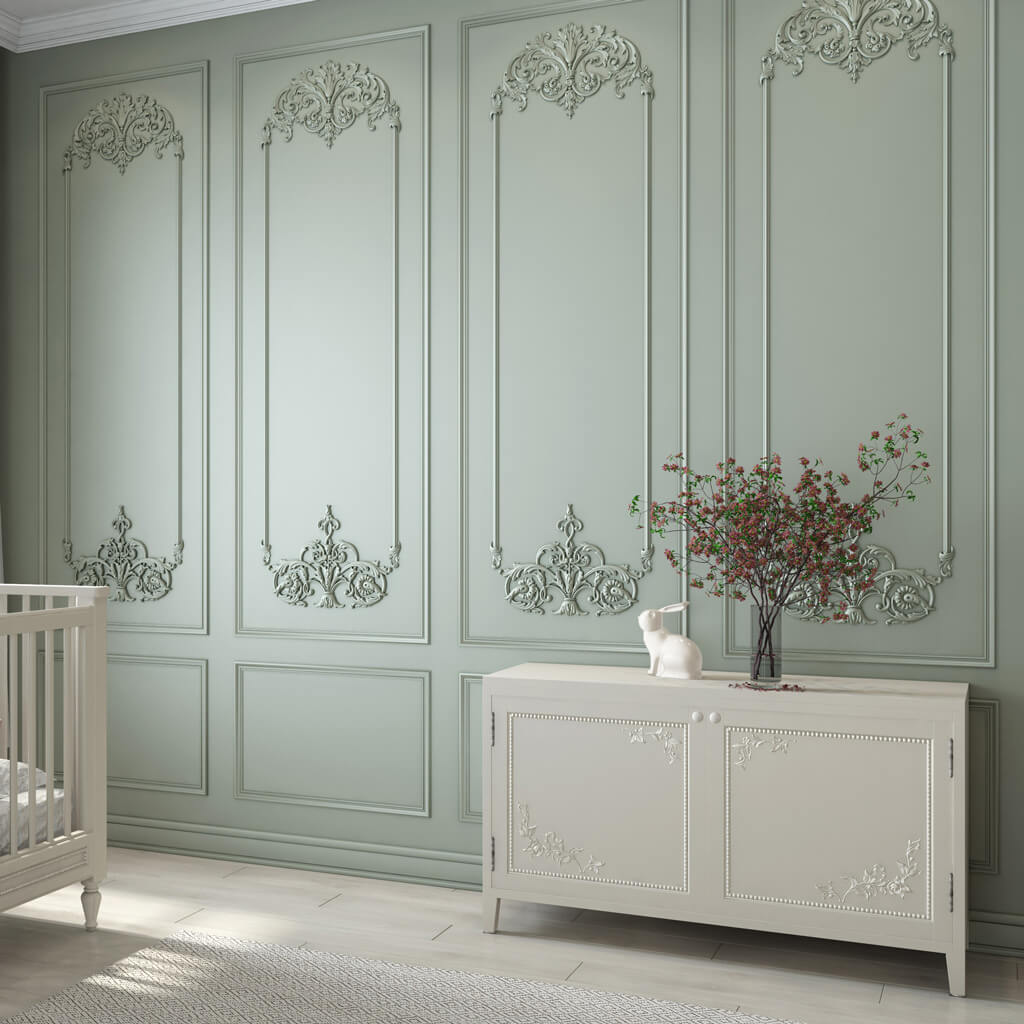
Wall panels with molding are a powerful interior tool that has remained relevant for centuries. The rhythmic geometry of frames on the wall creates depth, structure, and a sense of architecturality. When such trim ends at a door, window, or corner, the molding stops—and it is here that the tip turns a technical end into a decorative finale.
Decorative molding endOn a wall panel, it's a detail noticed by professionals and felt by all. Its absence leaves a sense of incompleteness. Its presence creates an impression of expensive, thoughtful work.
N-363.1L is a product with a pronounced classical character. Floral ornament, smooth relief, organic transitions—all this is the language of classicism. That is why the finial is organic in interiors where decor is perceived not as an embellishment, but as the norm.
Classicism, neoclassicism, Empire, Hamptons, Provence with notes of classicism—this is where this decor works to its full potential. In modern minimalist interiors, its use is limited—there, a different logic and different solutions apply. But where molding is perceived as an architectural detail, the finial becomes its essential completion.
Compactness is not a drawback. For a finishing element of molding, it is, on the contrary, an advantage. The finial must match the scale of the molding—not overwhelm it with its size and not get lost next to it.
With the MLD-002 molding width of 22 mm, the finial width of 43 mm is double. This is the correct proportion: the finial is slightly wider than the profile, allowing the ornament to be read as an unfolding, a blossoming of the line at the final point. If the finial were equal in width to the molding, it would be perceived as a continuation of the profile, not as its completion.
A length of 106 mm is optimal for the ornament to fully unfold. For comparison: shorter finials (up to 70 mm) provide a modest decorative ending. A length of 106 mm is already a full-fledged decorative accent, noticeable from a distance.
A thickness of 17 mm is sufficient for volumetric relief. This is not a flat overlay with engraving, but a genuine carved element with active plasticity. Under side lighting, shadows are visible on it—and this is precisely what creates the feeling of handcraft and mastery.
Compact carved finial106 × 43 × 17 mm is a precise tool, not just a 'pretty detail.' Precise in size, precise in proportion, precise in function.
Carved finial N-363.1L — one element in the system. If you build the system correctly, the result will be an order of magnitude greater than the sum of its individual parts.
Molding MLD-002. This is the base. Quarter-round profile 22 × 11 mm — classic, universal, with clean geometry. It runs as trim along the entire layout length, and the finial caps its end.Wooden Moulding MLD-002Available in beech, oak, and MDF — it's important that the material of the molding and finial match, especially if both will be enamel-coated.
Paired finial N-363.1R. For symmetrical layouts — essential.N-363.1R— the mirrored right finial of the same series. Together they cap both sides of the molding line.
Corner element MLD-002U. If the molding forms a frame with corners — one is needed for each cornerDecorative corner element MLD-002U. It caps the frame corner and matches the finial in style and profile.
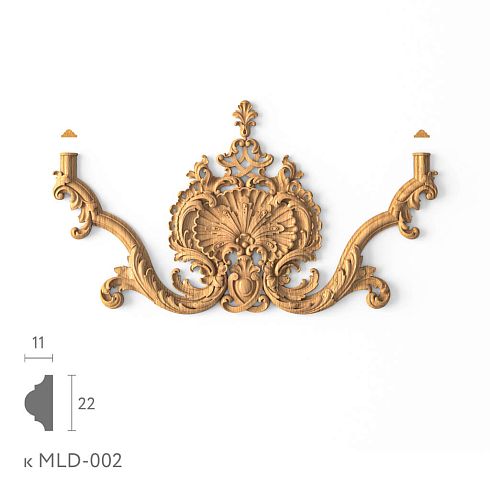
Central decorative overlays. If the frame is large and calls for additional decoration inside or along the sides —central overlays from the MLD serieswill complement the system and enhance its decorative appeal.
Enamel finish. All system elements must be coated with a single enamel composition of the same tone. Classic solutions: white RAL 9003, cream RAL 9001, warm white RAL 9010. For modern neoclassicism — gray tones RAL 7044 or RAL 7035.
Classical hardware. Cast handles in bronze or brass, overlay hinges, decorative locks — all of this continues the stylistic concept initiated by the molding layout with finials.
Proper installation is quick in time but fundamental in results. Here is how to do it correctly.
Step one. The molding MLD-002 is mounted in the desired position on the surface of the facade or wall panel. The end of the profile where the finial will be placed is cut strictly perpendicular — no bevels.
Step two. The mounting recess of the finial is aligned with the end of the molding. The piece should fit tightly, without gaps. If the fit is loose — this is a sign of profile mismatch: ensure the molding is indeed MLD-002.
Step three. Fixation with wood glue PVA or wood adhesive. Additionally — thin finishing nails or pins with a pneumatic stapler. Do not overtighten: solid wood may crack under point overload.
Step four. Wood filler at the joint areas — minimal layer, only to conceal the seam. Light sanding.
Step five. Priming. For beech — universal primer for enamel. For oak — pore-filling primer + finishing layer. Two to three coats of enamel with intermediate sanding using 320-grit sandpaper between coats.
Installing the tip on the molding— is not a complicated operation with experience in working with wooden decor. But there is no need to rush: it is the finishing details that require maximum care.
Among allcarved molding tipsin the Stavros catalog, the N-363.1L holds its clearly defined place. Here's why it's the right choice:
Specifically designed as a set for MLD-002 — precise fit without adjustment
Closes the left end of the molding line — functional and beautiful
Classical floral ornament — works in any interior with historical character
Natural solid beech or oak — durable, eco-friendly, noble
Optimal format 106 × 43 × 17 mm — proportional to the MLD-002 molding
Perfect for enamel—especially in beech finish
Made to order — a fresh product for your project
Works within the system — compatible with N-363.1R, MLD-002U, and MLD series decor.
This decorative molding tip is not an attempt to embellish something insignificant. It is a professional tool for finishing a molding line that changes the perception of the entire layout.
Is this a standalone decor or a component element?
N-363.1L is a component for the molding system. It is not used independently, without the MLD-002 molding. Its purpose is strictly defined: to finish the profile end with a decorative ornament.
Which molding is the N-363.1L suitable for?
Exclusively for of molding MLD-002 with a 22 × 11 mm cross-section. The recess on the back of the tip precisely matches this profile. For moldings of other cross-sections, other tips from the 'Stavros' catalog are needed.
Why is a molding tip needed at all?
Without a tip, the molding end looks like a technical break—a profile cut, unfinished. The tip turns this break into a decorative point, giving the layout completeness and visual value.
Is the N-363.1L suitable for furniture fronts?
Yes. This is one of the main application scenarios. Cabinets, dressers, sideboards, display cases — wherever the MLD-002 molding is used in a horizontal or vertical layout, the N-363.1L tip finishes the left end of the profile.
Can the tip be installed on wall panels and doors?
Yes, without restrictions.Decoration for wall paneland furniture doors — fully compatible application. The installation technology is the same for all surfaces.
What to choose for enamel: beech or oak?
For opaque enamel painting — beech. The fine, non-porous structure of beech ensures a smooth coating without pore filling. Oak for enamel is also applicable but requires an additional step — applying a pore-filling primer before the final painting.
What does 'Standard' mean?
This is the basic execution: milling to shape and machine sanding. The surface is ready for priming and painting. Manual finish sanding is not provided, but it can be performed independently before applying the primer.
How does the tip differ from a regular carved overlay?
Carved overlay is a general concept. A tip is a specialized type of overlay with a mounting recess for a specific molding. Its shape and geometry are designed so that it covers the end of the profile, not just overlays the surface. This is a functional difference, not a stylistic one.
How many tips are needed for one molding layout?
Depends on the number of open ends of the molding. Linear molding has two ends, meaning one N-363.1L on the left and one N-363.1R on the right. If there are several molding lines, the number of tips is multiplied accordingly.
Where to buy carved tip N-363.1L?
The product is available in the Stavros online store —stavros.ru. Made to order. Pickup in Moscow and St. Petersburg, Contact us to confirm shipping to your destination. and CIS countries.
Our manager will contact you within 5 minutes