
























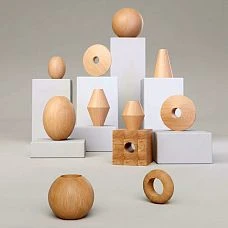
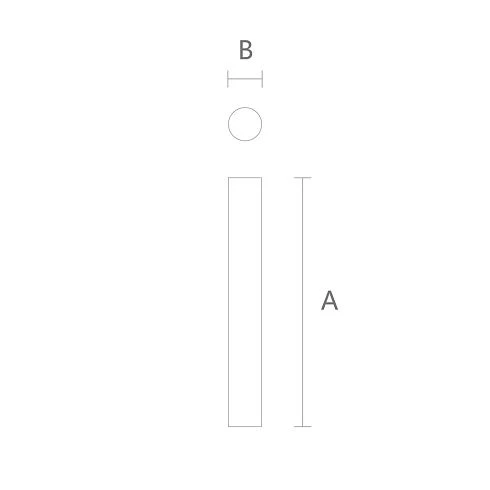
Dimensions and Options
Description
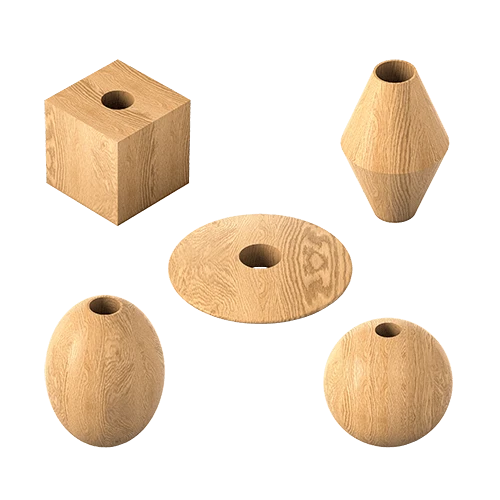
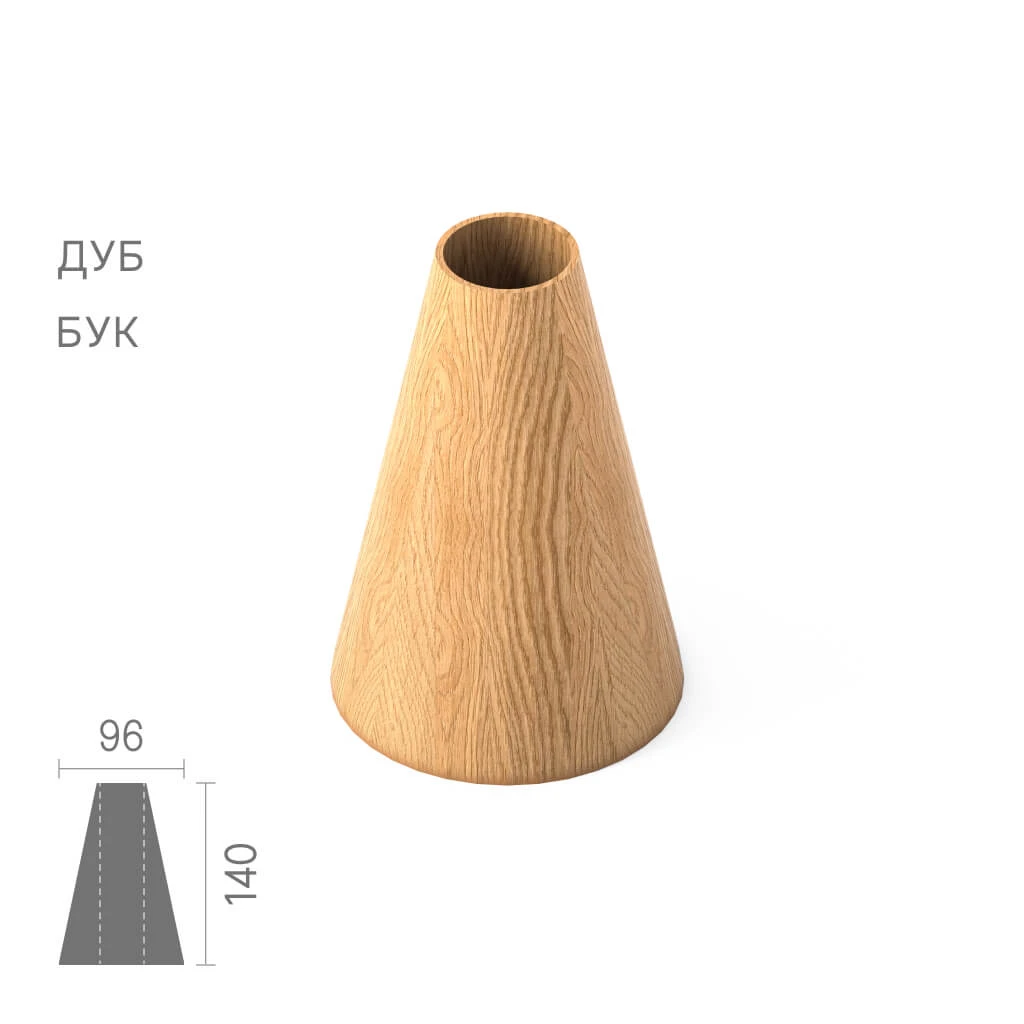
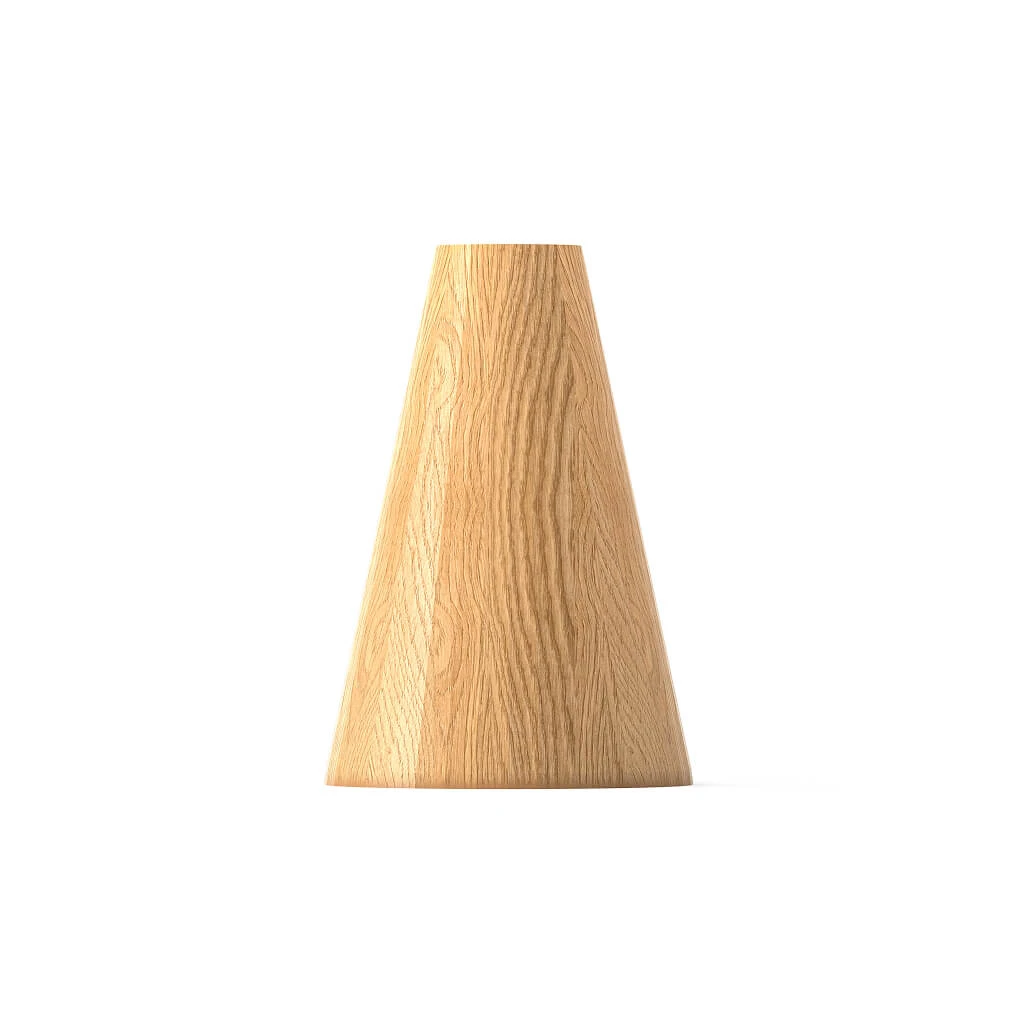
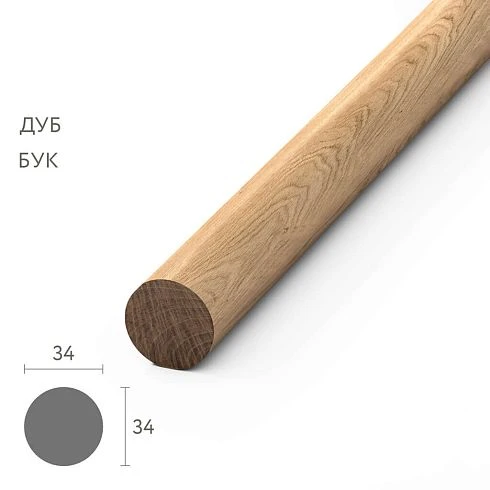
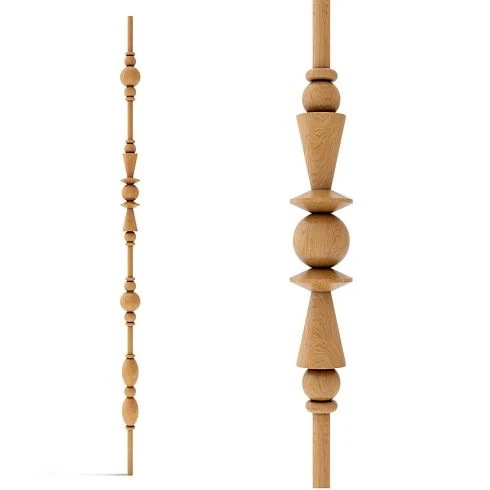
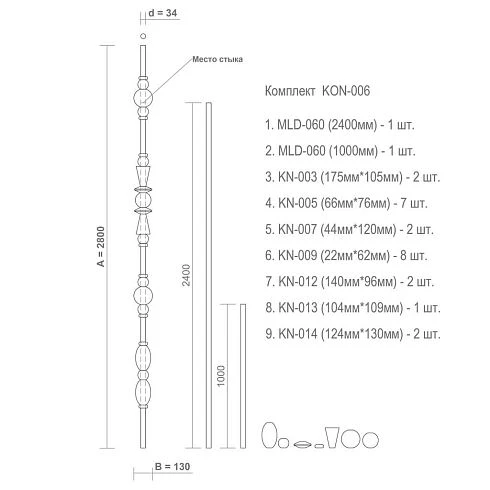
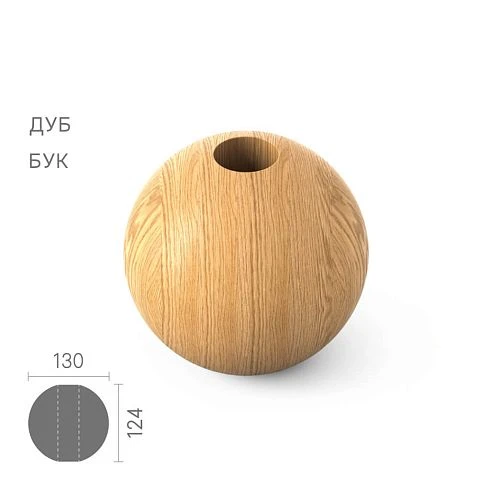
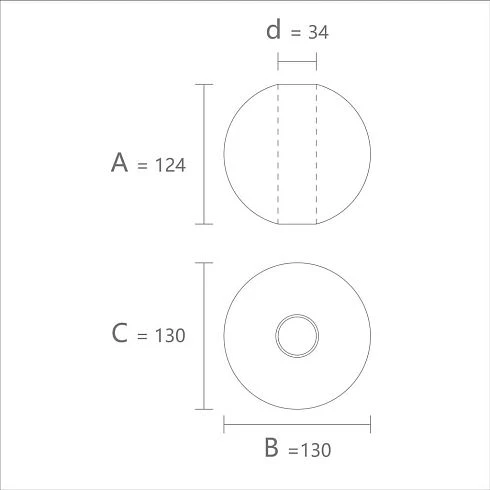
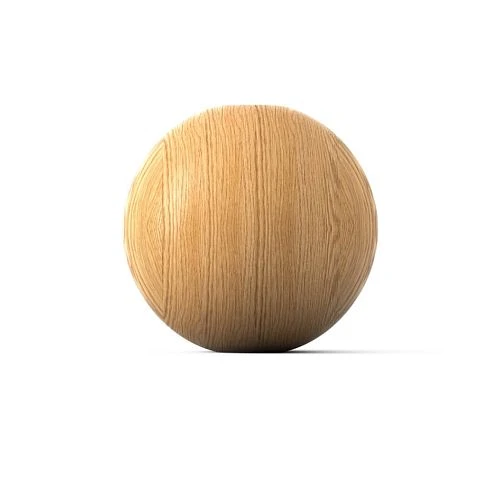
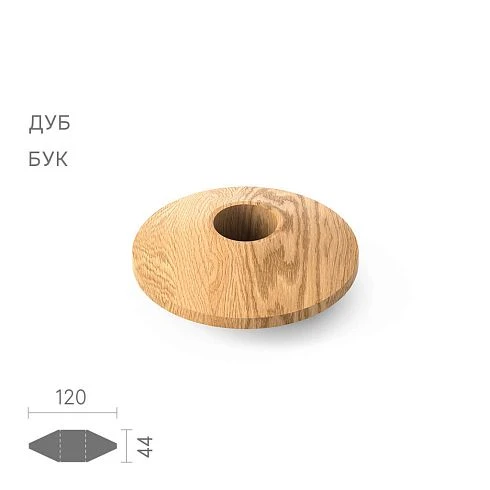
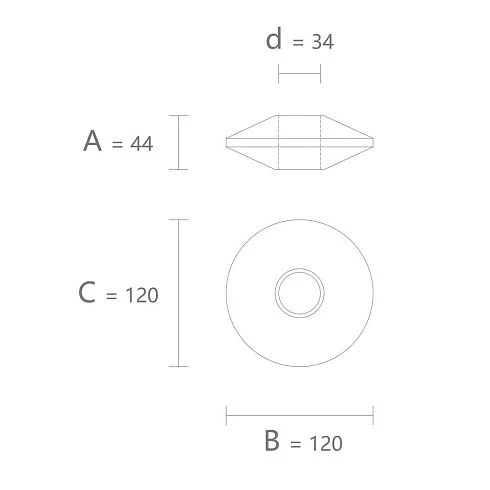
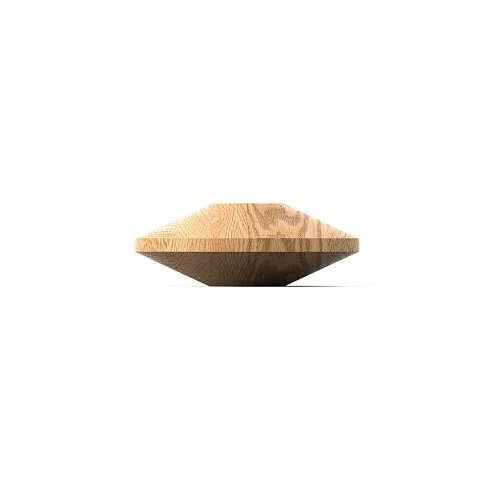
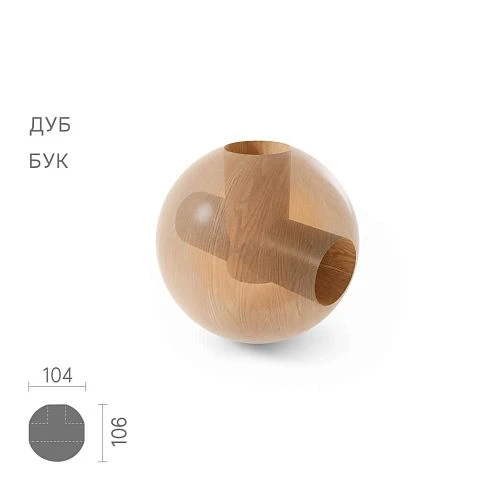
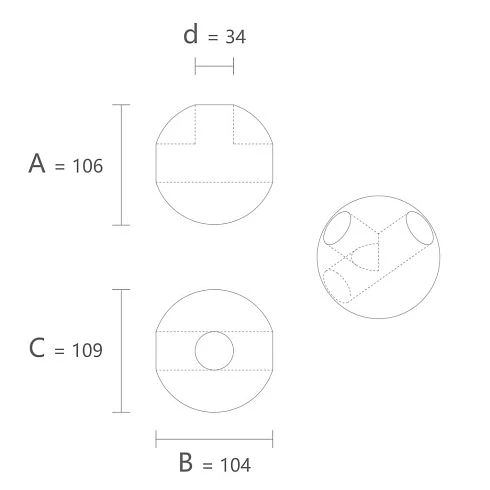
Geometric figure KN-012 made of beech or oak array with a through mounting hole of 34 mm. Designed for mounting on a wooden axle MLD-060 or a polished stainless steel pipe with a diameter of 34 mm.
An excellent solution for creating unique interior products from natural wood.
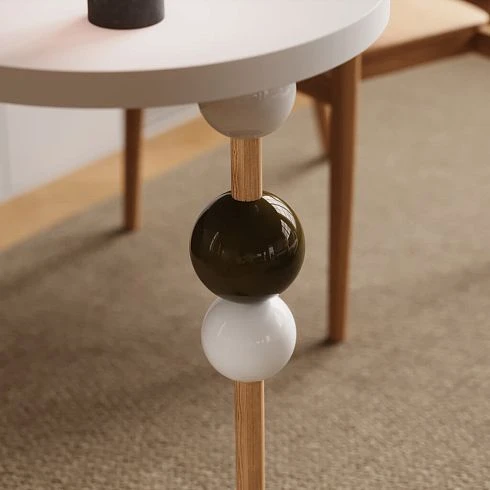
In combination with other construction elements and bases (wood or metal), you can create:
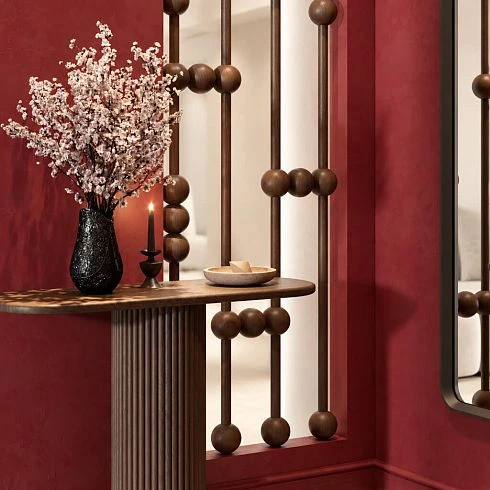
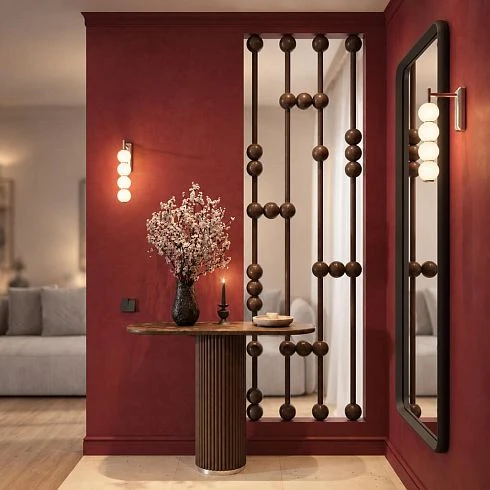
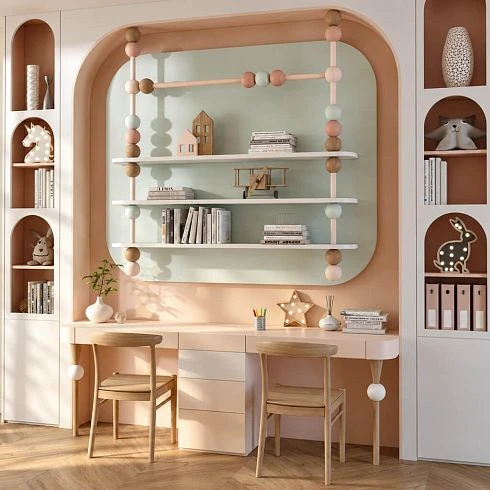
• interior decorative partitions and screens;
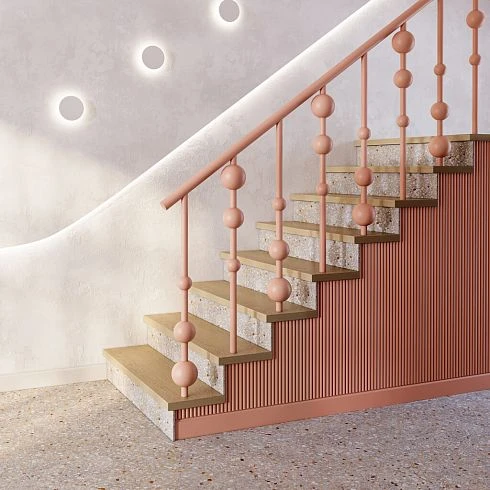
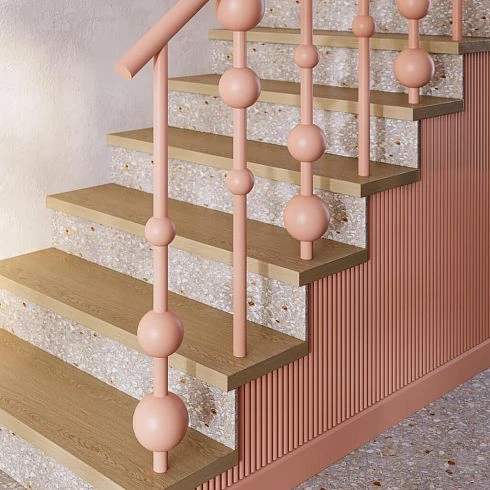
• balusters, posts, and supports;
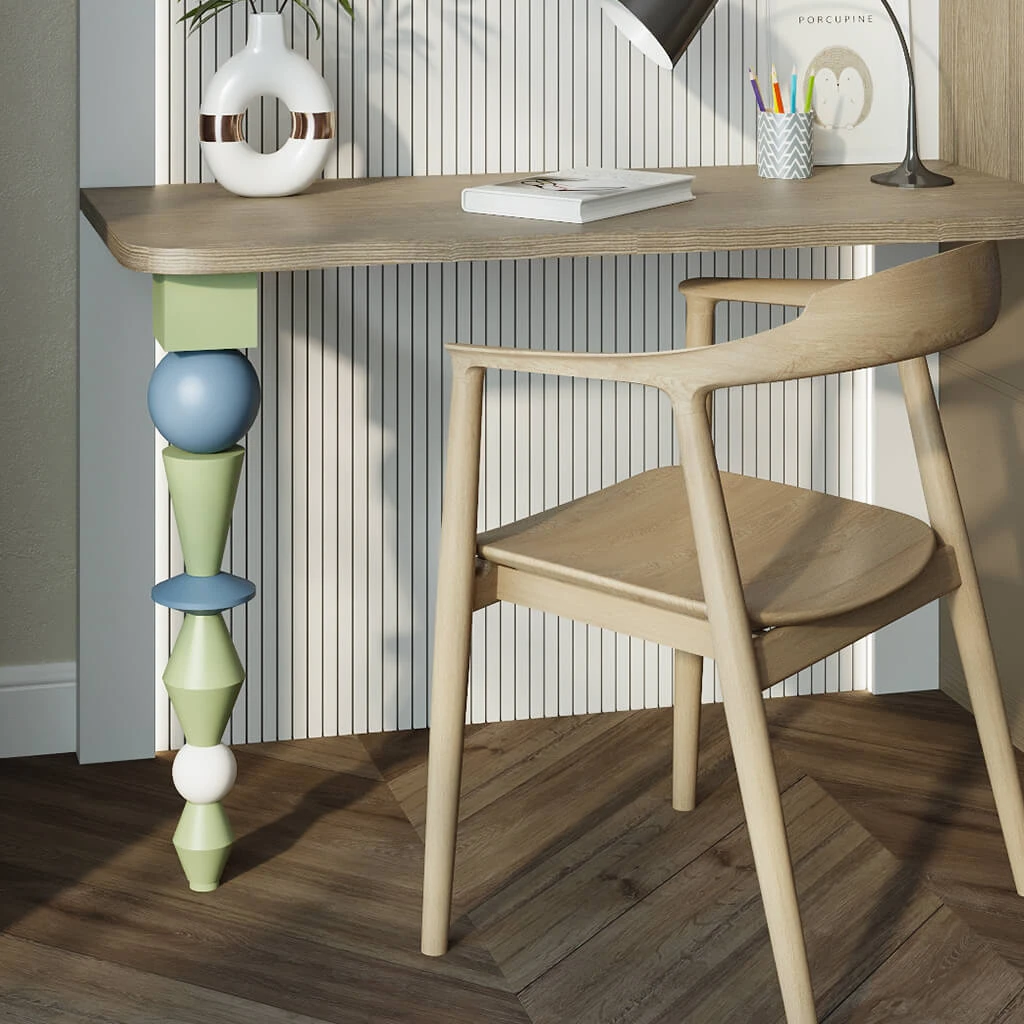
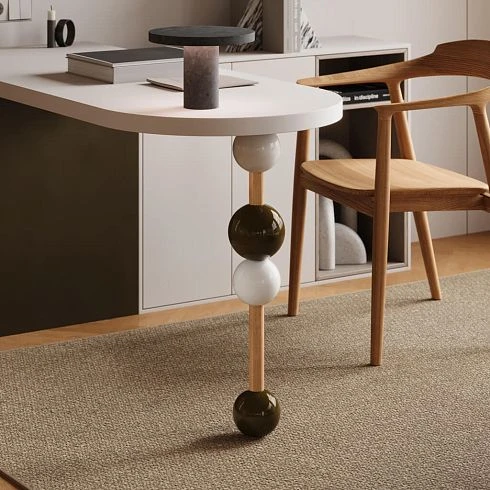
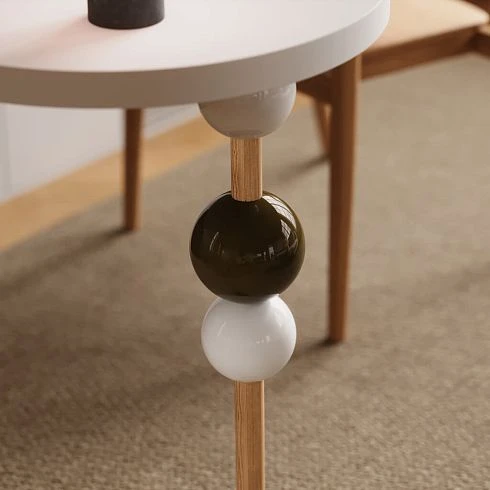
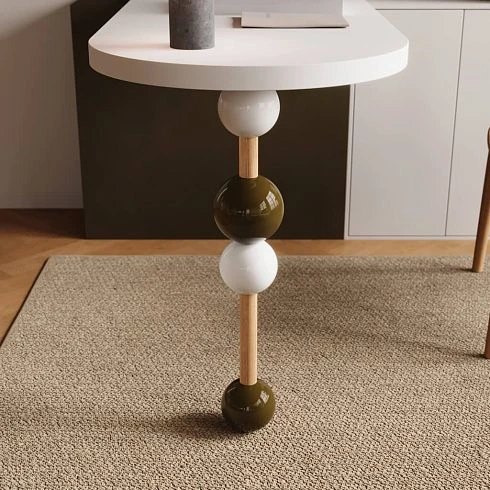
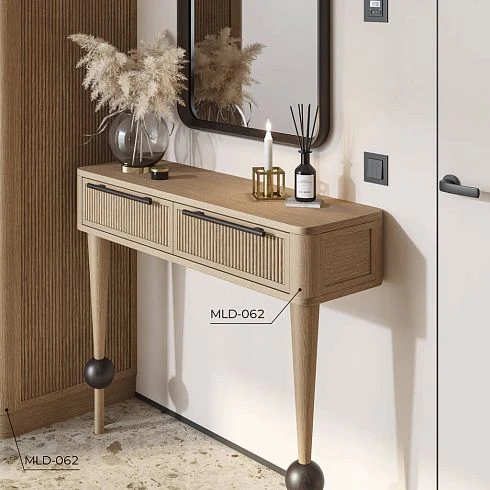
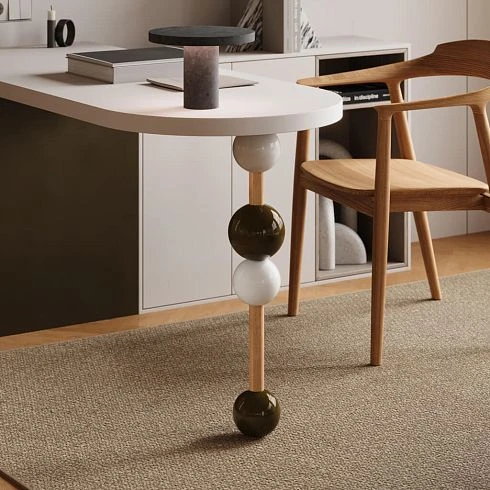
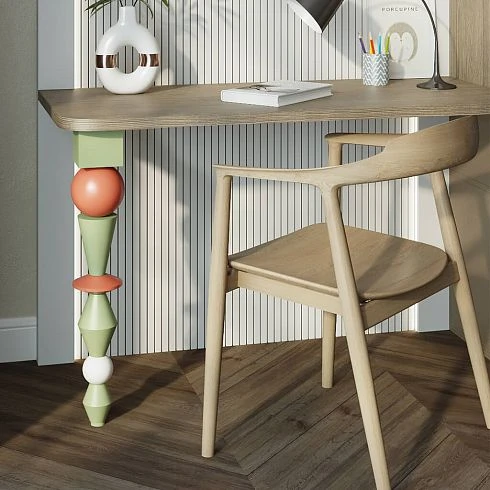
• furniture legs and bases;
• columns, decorative rods, and any custom compositions.
Installation
On the wooden axle MLD-060:
• the figure is fixed with wood glue (we recommend PVA D3 glue);
• it is also possible to fix KN-012 using masking tape during the polymerization of the glue;
• additionally, micro pins can be used during installation.
For a 34 mm polished stainless steel pipe:
• we recommend fixing the figure with TYTAN Professional Classic Fix mounting adhesive;
• it is also possible to fix KN-012 using masking tape during the polymerization of the glue.
We recommend painting or tinting after complete assembly and installation of all elements. The paint layer may increase the diameter of the hole and complicate installation. On shaped elements, we advise masking the mounting channel before painting.
Finishing Options
• wood oil is the simplest and most beautiful method, highlighting the natural wood grain;
• enamel in various colors (for bright colored compositions);
• tinting with stains, finishing with clear varnishes, applying patina.
Have questions?
Customers also buy

Ekaterina Y.
October 5, 2026
An excellent team! A huge selection of products! I recommend that craftsmen, designers, decorators, and home stagers take a tour of the production facility to immerse themselves and be inspired.
Alexander U.
October 2, 2026
I have been working with Stavros since 2024, and the quality of the products is top-notch. Customers are happy!!!
Elena G.
September 29, 2026
Daria is a very competent specialist; she provided consultation and helped us select items. They were sent promptly.
More than 20 years on the market
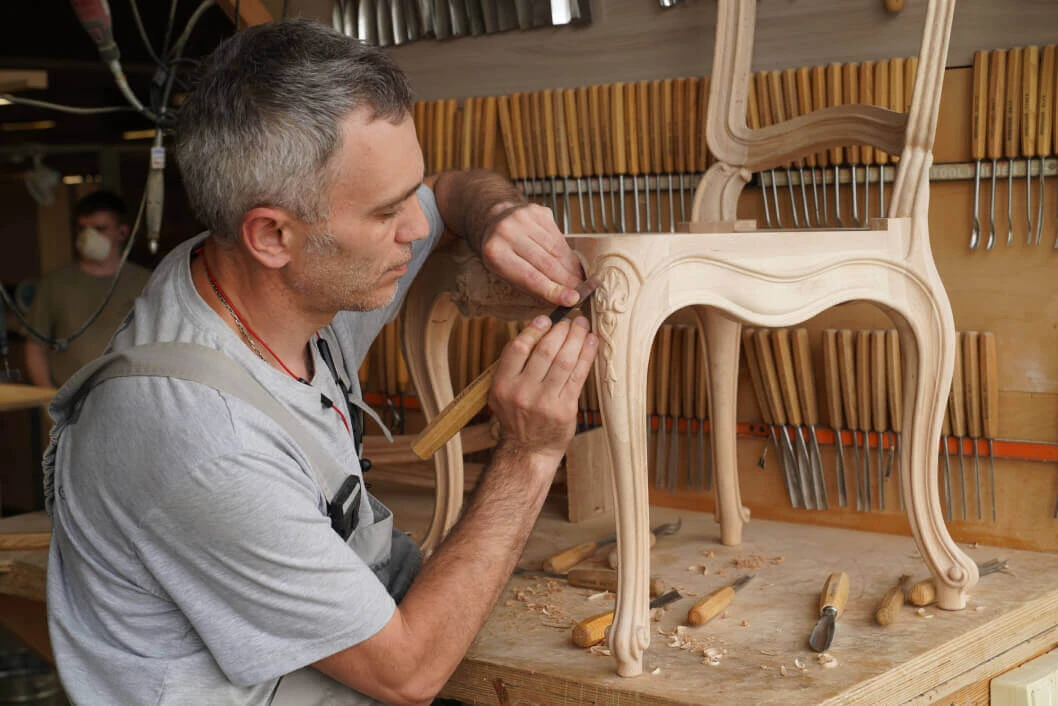
The company's success began in 2002, when two artists — Andrey Ragozin and Evgeny Tsapko — created a small creative workshop for producing wooden carved items. The masters' work was quickly noticed, and within a year they were invited to participate in the reconstruction of the Konstantinovskiy Palace in Strelna.
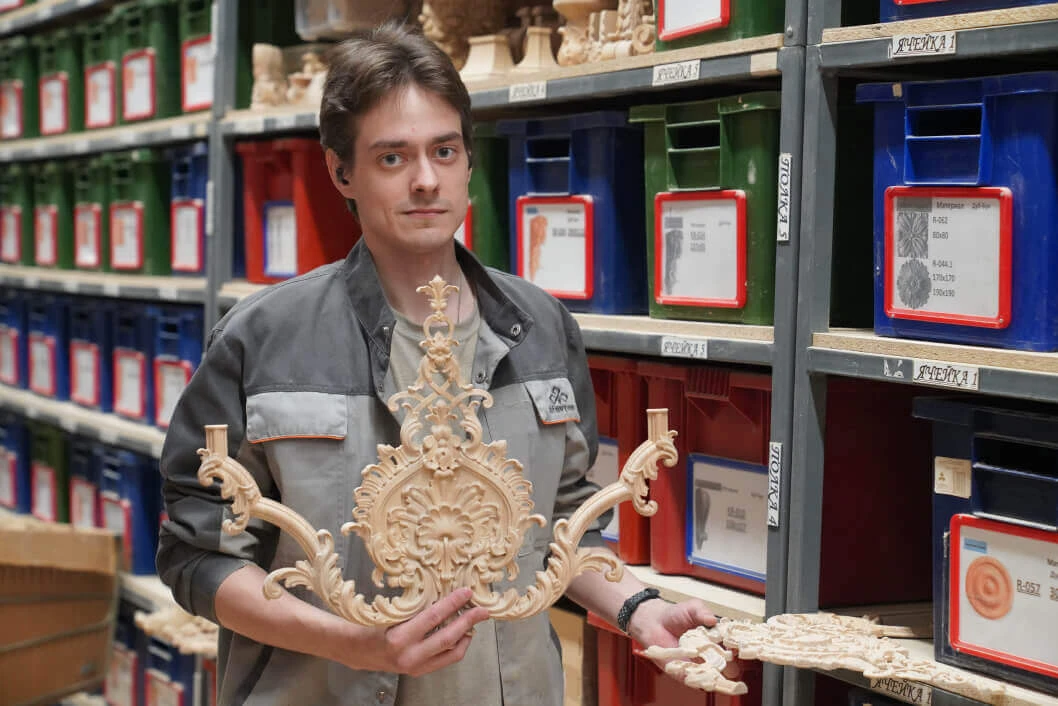
After the success of this project, the company focused on recreating palace interiors, furniture, church furnishings, and carved decorations in various artistic styles. They worked with cultural heritage sites: The Hermitage, the Alexandrovsky Palace, the Troitsko-Izmaylovsky Cathedral, the Sheremetyevsky Mansion, and many others.
The masters' task — and still is — to create wooden items with the highest level of detail and understanding of every element, based on impeccable knowledge of artistic laws and interior styles.
STAVROS Guarantees
Quality of products without complaints
We save your time, peace of mind, and budget
Large warehouse program
We solve your tasks with maximum speed
Adherence to production deadlines
Streamlined process reduces all risks
Delivery from 1 piece throughout Russia
Quality service regardless of order volume
Your positive business reputation
Reliable partner — the foundation of your business
More products in the constructor category
Frequently asked questions
Our showrooms are located in Saint Petersburg and Moscow. Production is located in Saint Petersburg.
Moscow contacts: https://www.stavros.ru/contacts_all/?tab=msk
Contacts of Saint Petersburg: https://www.stavros.ru/contacts_all/?tab=spb
- Send request by email [email protected]
- Write to us at Telegram
- Write to us at WhatsApp
- Order by phone +7 (800) 555-46-75
- Visit our showroom in Saint Petersburg and Moscow
Yes, we ship orders throughout Russia and to CIS countries.
We cooperate with transportation companies such as СДЭК and DPD.
You can also arrange pickup of your order through any convenient transportation company for you.
Delivery cost depends on the size, weight of the item, and delivery address.
When placing an order, the delivery cost is calculated automatically and displayed as a separate line on our website.
Prices and availability of items on the website are always current. Data is updated daily.
Note: items in stock are stored on the warehouse in unpolished form and shipped within 3 working days.
If the item is not in stock, average production time: 5–10 working days.
This is the quality of polishing of the items.
Standard — machine polishing, at a more attractive price.
Prestige — detailed hand polishing, items do not require further work.
More details: https://www.stavros.ru/information/kachestvo/
This is the type of veneer of the items.
Under enamel: produced by gluing wooden laminates without color and texture matching. Contrast tonal and textural differences are noticeable. This blank should be chosen if the item is intended for opaque coating.
Under tinting: produced by gluing wooden laminates with color and texture matching. Tonal and textural differences may occur. This blank should be chosen if the item is intended for semi-transparent finish.
More details: https://www.stavros.ru/information/kachestvo/
Beech — dense, non-porous wood, most often used for items covered with enamel.
Oak — dense, porous wood with clearly visible natural grain. Due to its strength and decorative properties, it is often used in items with semi-transparent coating, highlighting the wood pattern.
Custom-made, if non-standard items are required, we can produce products from other types of wood, including blanks provided by the customer, manufactured according to our technical specifications.
All our furniture legs can withstand a vertical load of at least 100 kg.
Average production time for custom-made items: 5–10 working days.
Most items are stored on the warehouse in unpolished form. We need time to polish and pack orders.
Yes, we manufacture non-standard items according to individual projects, but we only accept orders with a minimum quantity.
We can manufacture items of the desired size, but we only work with bulk orders. For details, please consult the sales department manager.
Yes, some of our products can be used outdoors. For example, polyurethane items, as well as carved door casings made of pine.
Other items are produced to order using PUR glue, if minimum quantity is available. No warranty is provided for such products, as outdoor conditions are considered aggressive.
Yes, we paint items when ordering products for a total amount of 150,000 rubles or more.
- Dust removal. After sanding, the surface must be dusted.
- Priming. Apply primer in an even layer.
- Matting. After the primer has fully dried, the surface should be matted (lightly sanded for better adhesion).
- Finish coating. Apply finish coating: lacquer or enamel, in 2 layers, with interlayer drying.
More details: https://www.stavros.ru/information/sovety/
Apply adhesive to the decor. Place it on the surface and press briefly. Then, lift the decor from the surface and leave it open for 3–5 minutes. Press the decor firmly onto the surface and hold for 5–10 seconds.
More details: https://www.stavros.ru/information/sovety/
Ideally, you should prepare a design project before placing an order.
You can do this yourself by downloading drawings of our products from our website, or you can order a project from us.
If the number of decorative elements and fittings is small, our company's manager can assist you with selection.
Unfortunately, this service is not provided.
The packaging method depends on the type of items, but in each case, we ensure sufficient protection for safe transportation.
We most often use corrugated cardboard and stretch film. Fragile items are additionally secured on a rigid base to prevent damage during transport.
We ship all items starting from 1 piece.
Room measurements and item installation can be performed by our partners — carpentry companies represented in most regions of Russia.
Often searched in category Wooden and MDF items
7628
3332
2639
2610
2017
1608
1325
Geometric shape KN-012 made of wood 140×96 mm — conical wooden bushing with a 34 mm hole
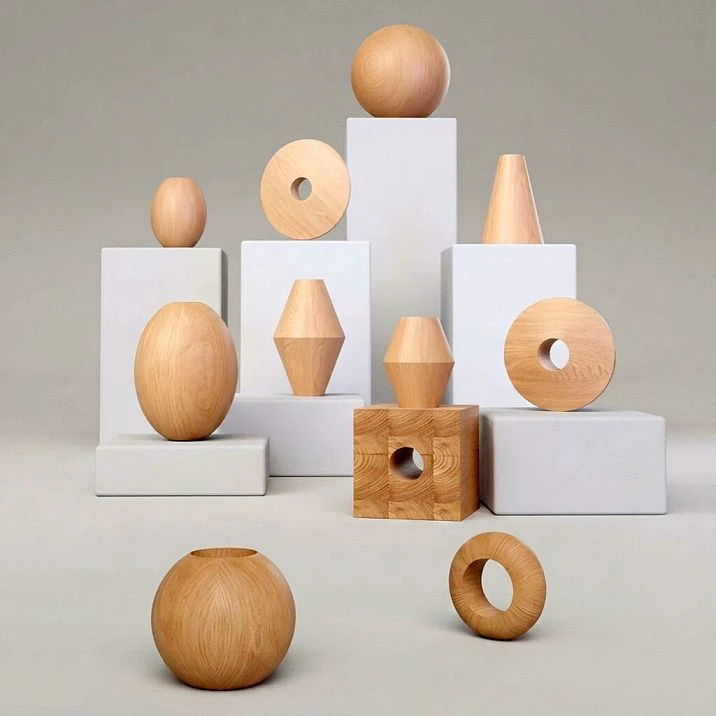
In the KN series, each shape carries its own visual logic: the sphere creates roundness and fullness, the cube — strictness and geometric purity, the disc — horizontal stability. KN-012 — the truncated cone shape — introduces a fundamentally new principle into this system: directionality. The cone is the only geometric shape with a pronounced "movement": it narrows in one direction and widens in the other, creating a sense of dynamics, aspiration, and vertical tension. On the axis of a decorative rod, post, or leg, this effect works flawlessly: the conical part "guides" the eye along the structure, making it visually slimmer and more expressive.
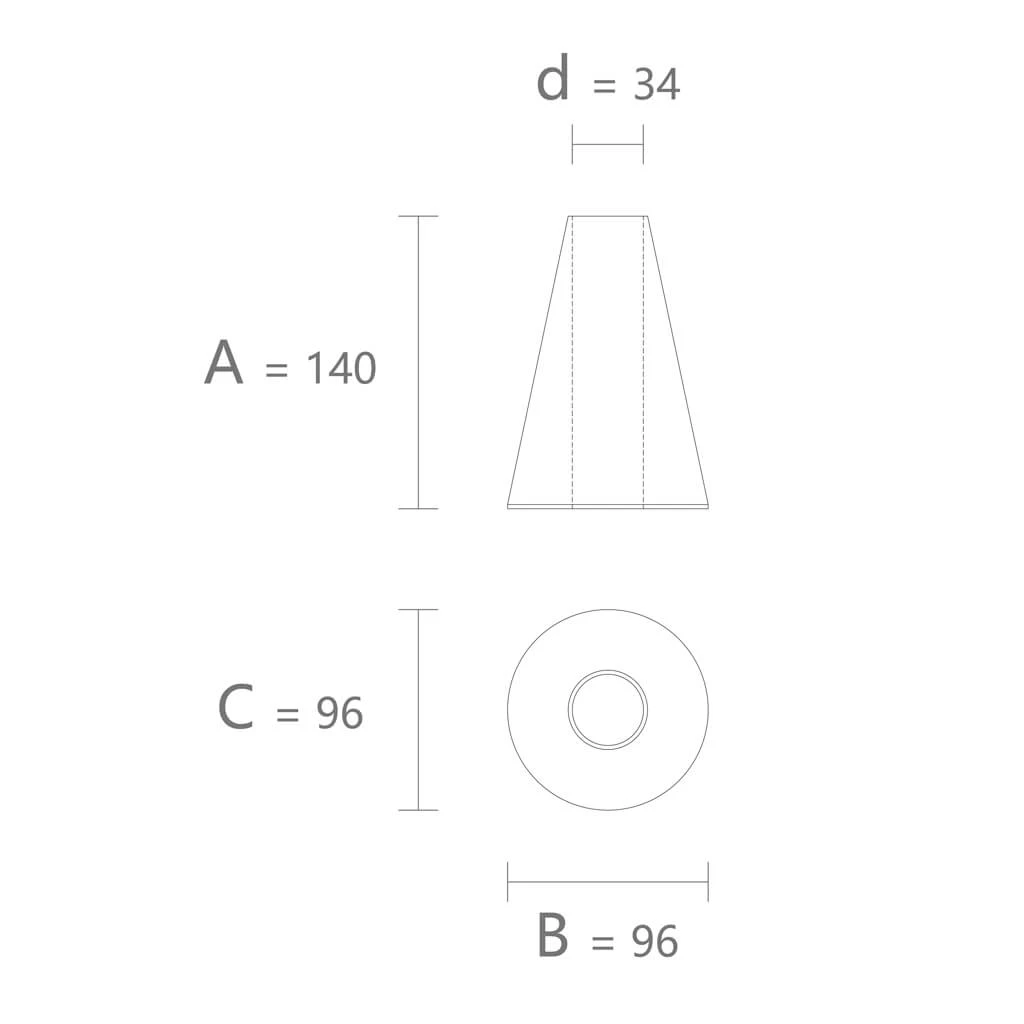
The size 140 × 96 × 96 mm describes an elongated conical shape: a height of 140 mm with a maximum diameter of 96 mm creates a proportion of 1.46 — slender, directional, architecturally convincing. This is not a squat truncated cone with a wide "skirt" — it is a tall, elongated cone whose silhouette is vertically oriented and reads well as part of any vertical structure.
Geometric shape KN-012 for furniture and interior structures
KN-012 — decorative part made of solid wood with a mounting hole D 34 mm and a truncated cone shape 140 × 96 × 96 mm. In STAVROS constructor system With a uniform mounting diameter of D 34 mm, KN-012 takes on the role of a "guide element" — a part that not only creates volume but sets direction, creates dynamics, and visually "stretches" the structure upward or downward depending on orientation.
The main task of KN-012: to create an expressive conical accent 140 mm high on a rod, post, leg, or baluster with a smooth transition from a wide base to a narrow apex — where a round shape would look too "soft" and a cubic one too "angular" for the project's character.
The part is installed when the actual diameter of the supporting element matches the mounting hole D 34 mm. Before ordering, measure the diameter of the rod, post, or other axis and compare it with this value. The mounting hole runs along the axis of the cone part, so the part can be correctly mounted with either the wide end down (expansion toward the base) or the wide end up (expansion toward the apex).
Three main roles of KN-012 in the structure
Conical decorative bushing — transition between sections. On a vertical axis, KN-012 "transfers" the gaze from one element to another: the wide end receives the visual "flow" from a large volume, and the narrow end smoothly "leads" it into a thin straight section. This is the classic architectural principle of "entasis" — a smooth tapering of the support, creating a sense of aspiration and lightness.
Base or top of the post — conical "plinth" or "apex." KN-012 with the wide end down creates a conical base for a post or leg, stable and expressive. Inverted — with the wide end up — it creates a conical top, "receiving" the load with a wide plane. Both options are architecturally convincing and read well in any style.
Accent element with a directional silhouette. On a horizontal rod, the KN-012 cone creates an "arrow" — a directional accent indicating movement along the axis. One or two cones oriented toward each other create a symmetrical "diamond-shaped" composition — one of the most expressive decorative techniques in horizontal structures.
Where KN-012 is used: areas and scenarios
Decorative rods: conical accent on a horizontal axis
wooden element for a rod in the form of a cone 140 mm high on a horizontal rod — a dynamic, directional accent. One cone in the center of the rod creates an "arrow": a wide end on one side, a narrow end on the other. Two cones facing each other (wide ends outward, narrow ends toward the center) create a symmetrical "V-shaped" composition with a pronounced center of attraction.
Two cones facing the same direction (both with the wide end to the left or right) create a directional "flow" along the axis of the rod — a dynamic rhythmic pattern that creates a sense of movement. On a decorative rod in an open shelving system or partition, this technique gives the structure a distinct authorial character.
Furniture posts: cone "adapter" in a vertical system
On vertical posts KN-012 creates a smooth transition between elements of different diameters or different characters. The wide end of the cone "receives" the volume from a large part (ball, disc), and the narrow end smoothly "releases" it into a thin straight section — and this transition is perceived as architecturally motivated, not as a technical joint.
On a post 600–800 mm high, the KN-012 cone 140 mm high occupies about 17–23% of the height — this is a significant accent that defines the character of the entire post. In combination with a disc or ball above along the axis, KN-012 creates an "architectural adapter": ball (or disc) — cone — straight section — a complete, finished sequence of forms with a clear logic.
Furniture legs: conical body or transition
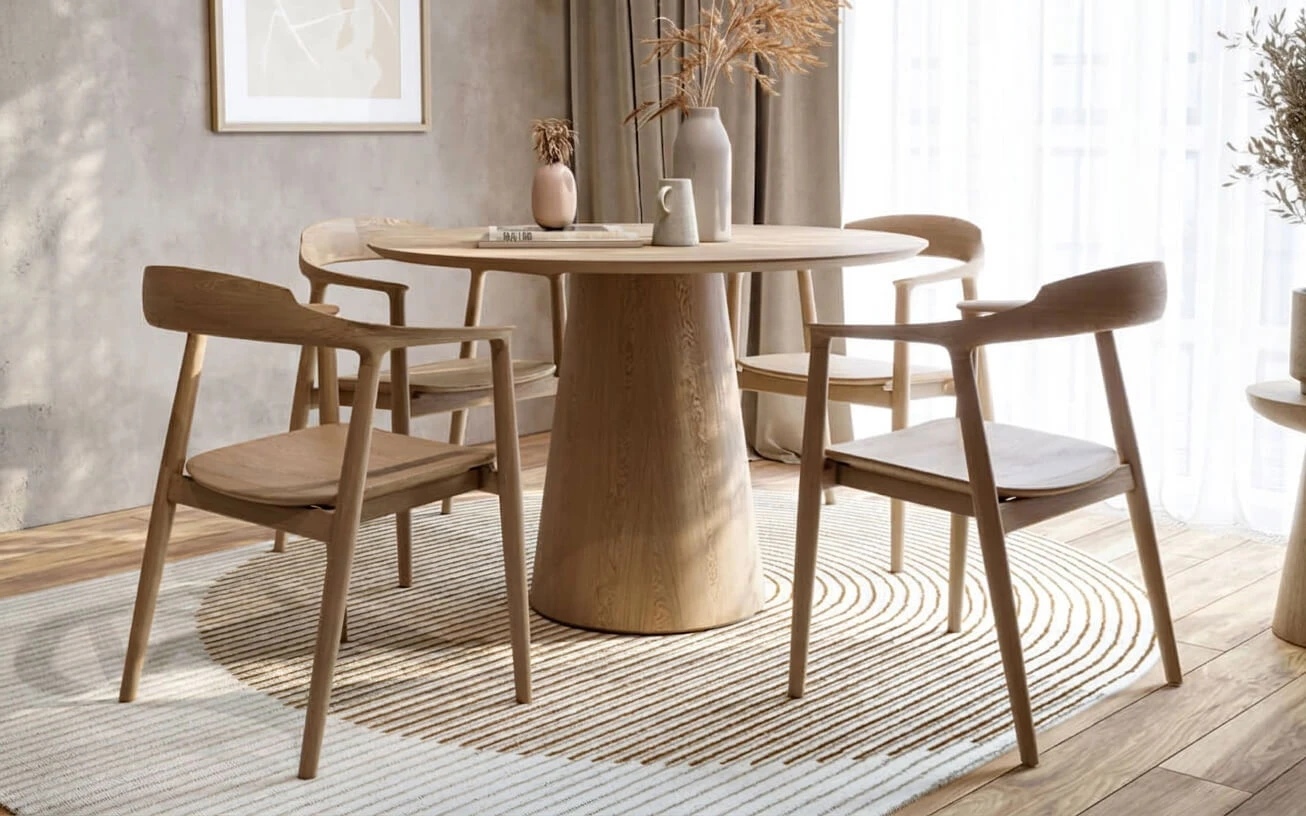
Wooden furniture leg with KN-012 as the main body — this is a classic conical leg, well known from furniture in retro, Scandinavian modernism, and neoclassical styles. A cone with the wide end up (at the base of the product) creates a leg body that widens downward — visually stable, solid. A cone with the wide end down creates a body that tapers downward — more slender, "sharp", dynamic.
On a nightstand, console table, or chair 400–500 mm high, a conical leg with KN-012 as the main body creates a concise, stylish look — without unnecessary details, with a clear, recognizable silhouette. This is especially relevant for projects in the retro-modernist style, where the conical leg is one of the iconic elements.
Balusters and staircase structures
on wooden balusters for stairs KN-012 works as a cone-shaped "adapter" between a straight section and a larger accent element. The wide end of the cone "receives" the visual weight of a ball or disc, while the narrow end "leads" to the thin straight section of the baluster. This smooth transition — unlike an abrupt joint — makes the baluster visually more elegant and professionally crafted.
On a baluster 900–1000 mm high, one or two KN-012 create cone-shaped "adapters" at the top and bottom of the baluster — a traditional element of complex multi-part balusters in classical and neoclassical style.
Wooden partitions: cone as a "finial" of the rod
On vertical rods of wooden partitions, KN-012 with the wide end facing down creates a cone-shaped "finial" of the rod — an elegant, slender completion of the vertical. This is a significantly more expressive solution than a simply cut rod end, and visually lighter than a ball finial. On a partition with several rods, a row of identical cone-shaped finials creates a rhythmic, professional-looking crowning cornice.
Custom furniture: cone as a design form
In custom projects, KN-012 opens up wide possibilities: the cone is one of the most "design-charged" forms, instantly read as a designer choice. A bed with cone-shaped finials on the headboard posts, a console with cone-shaped wooden supports, a cabinet with cone-shaped wooden legs — each of these images has a distinct, memorable silhouette that sets the piece apart from standard solutions.
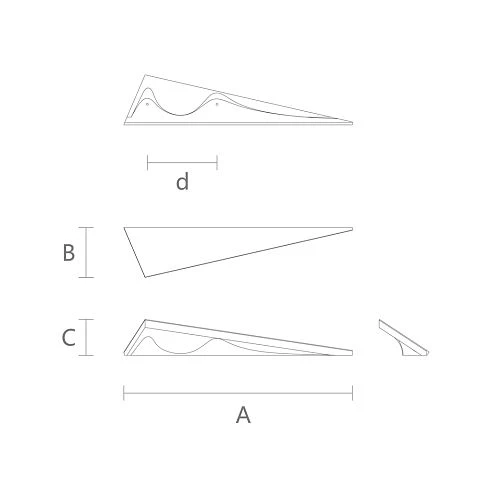
Size 140 × 96 × 96 mm and hole 34 mm: cone geometry
Parameter breakdown
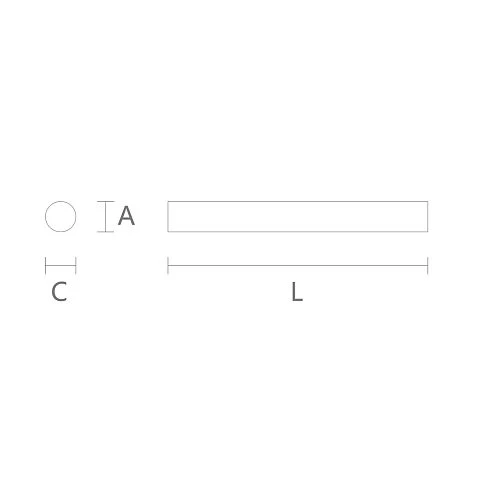
A = 140 mm — height of the cone along the axis. 140 mm is a significant height, giving KN-012 a pronounced vertical character. For comparison: the elongated KN-008 has a height of 150 mm, KN-003 — 175 mm. KN-012 is in the same "weight class" of elongated accent elements, but with a fundamentally different silhouette — conical, not spherical.
B = C = 96 mm — maximum transverse dimension (wide end of the cone). The diameter of the wide end is 96 mm with a height of 140 mm, creating a proportion A/B = 1.46 — an elongated, slender shape. The cone "wall" at the wide end: (96 − 34) / 2 = 31 mm — sufficient for reliable seating and forming an expressive conical profile.
D = 34 mm — mounting diameter, a unified standard for the KN series. The axial hole with a diameter of 34 mm runs through the entire height of the cone — from the wide end to the narrow end. At the narrow end, the cone "wall" is significantly thinner than at the wide end — this is taken into account during installation.
Cone angle: visual slenderness
For a cone with a height of 140 mm and a diameter difference between the wide end (96 mm) and the narrow end (approximately 34–40 mm at the base of the axis), the generatrix angle is about 10–14° from the vertical axis. This is a slender, almost cylindrical cone — it does not expand aggressively, but smoothly and delicately. This angle is most organic for decorative parts in vertical structures: sufficient for the taper to be clearly visible, but not so steep that the shape appears bulky.
Place of KN-012 in the KN series lineup
| Element | Shape | Height (A) | Width (B) | Proportion A/B |
|---|---|---|---|---|
| KN-009 | Ring | 22 мм | 62 мм | 0,35 |
| KN-007 | Round disc | 44 мм | 120 мм | 0,37 |
| KN-001 | Ball | 110 мм | 88 мм | 1,25 |
| KN-011 | Cube | 105 мм | 105 мм | 1,00 |
| KN-008 | Elongated | 150 мм | 96 мм | 1,56 |
| KN-012 | Cone | 140 мм | 96 мм | 1,46 |
| KN-003 | Elongated | 175 мм | 105 мм | 1,67 |
KN-012 and KN-008 have the same maximum diameter of 96 mm, but KN-008 is a symmetrical elongated shape, identical on both sides, while KN-012 is an asymmetrical cone with a pronounced directionality. This is a fundamental difference: KN-008 creates a neutral vertical accent, KN-012 creates a directed, dynamic one.
Cone shape as a decorative transition and architectural accent
The cone is one of the oldest architectural forms. Stelae, obelisks, finial tops of towers and pillars, cone-shaped supports in Art Deco and Scandinavian modernist furniture — all are variations of the same principle: a form that directs the gaze, visually 'leading' it to a single point, thereby creating a sense of lightness, slenderness, and dynamism.
Directed silhouette as a decorative tool
Unlike cubic or spherical models, KN-012 creates a directed silhouette and makes the structure visually taller and slimmer. A ball 'holds' the gaze at its location, evenly distributing attention across its surface. A cone 'leads' the gaze from the wide base to the narrow top, creating vertical dynamism even in a static structure.
On a baluster or post, a cone 140 mm high with a maximum diameter of 96 mm creates an 'elongating' effect: the post visually appears taller and slimmer than if a ball of the same diameter were in its place. This is an important design principle when working with vertical structures.
Smooth transition between different diameters
The cone is an ideal adapter between elements of different diameters. The wide end of KN-012 (96 mm) adjoins the large element, while the narrow end smoothly "tapers" to the shaft diameter. This transition looks architecturally motivated — like the transition from a capital to a column shaft, from a base to a plinth. Decorative wooden part in the shape of a cone fits organically into both classical and modern structural schemes.
Cone orientation: two different looks
A key feature of KN-012 compared to all other elements in the series: the part is not symmetrical about the horizontal plane. With the wide end down, the cone creates a "narrowing" upward — a dynamic, vertically directed look. With the wide end up — an "expansion" upward, a stable base that accepts load. The ability to change the character of the part by simply rotating it during installation is a unique property of KN-012 among all construction kit elements.
Beech and oak: material on an elongated conical surface
On a conical surface 140 mm high, the wood grain appears in a special way: the fibers run along the cone and, as the diameter gradually decreases, "converge" toward the narrow end, creating a characteristic perspective effect.
Part made of solid beech for enamel
On an elongated conical surface, beech under enamel creates a monochrome, sculpturally clean volume: the cone shape is read with maximum clarity without textural "interference." The light reflection on the conical surface creates a smooth gradient — from a bright highlight on the convex part of the cone to a gradual darkening at the base. Beech part under enamel — a choice for projects where the cone shape must be expressed as purely as possible: a white cone on a white stand in a Scandinavian interior, a black cone on a matte black rod in a loft.
Solid oak part for tinting
Oak fibers running along the conical surface 140 mm high create a characteristic "converging" pattern: the fiber lines smoothly converge from the wide end to the narrow one. On a tinted oak surface, this effect is especially expressive — the natural wood pattern enhances the dynamics of the conical shape, making it even more "directed" and lively. Oak part for tinting — a choice for projects where the combination of natural texture and strict geometric shape is important.
The oak KN-012 is especially expressive in combination with metal elements — brass or bronze fittings, matte black pipes. A dark oak cone on a cold metal rod — a contrast of warm organic matter and strict geometry, one of the most sought-after in modern furniture and interior design.
"Prestige" sanding quality: clean conical surface
On a conical surface 140 mm high, sanding defects appear as horizontal "belts" — traces of changing grit or uneven tool pass. On such an elongated surface as KN-012, these defects are especially noticeable under oblique lighting and when applying tinting, which makes the surface relief more contrasting.
The "Prestige" quality for KN-012 means sequential multi-stage grinding of the conical surface with gradually decreasing grit, final manual finishing of the end zones, and surface quality control. Special attention is paid to the transition zones: the wide end, where the cone surface transitions into a plane, and the narrow end, where the cone "tapers" to the minimum diameter.
For the conical shape, a neat edge on the wide end is also critical: this is the most visible boundary of the part, which must be sharp, uniform, and free of chips. Furniture construction element with "Prestige" quality arrives ready for final coating without additional preparation.
KN-012 in the STAVROS construction system: combinations and schemes
"Cone — sphere — cone" scheme (rhombic symmetry)
Two KN-012s turned towards each other (narrow ends to the center) with a sphere KN-001 or KN-004 between them — a classic "spindle-shaped" structure. The cones "guide" the visual flow to the central sphere from both sides, creating the impression that the sphere is the culmination point of the entire construction. This is one of the most expressive schemes for wooden balusters and decorative posts.
"Two cones facing each other" scheme without a central element
Two KN-012s turned towards each other (narrow ends to the center), placed closely together — a symmetrical "double arrow" or bipyramidal shape. Two cones connected by their narrow ends create a shape resembling a "rhombus" or "bead" with sharp poles — an expressive, unusual accent atypical for most furniture constructions.
Scheme "cone as final point"
KN-012 with narrow end down as the last element of a vertical structure — a conical finish, the "tip" of a post or baluster. The sharp conical tip of the rod is a recognizable architectural motif that gives the structure an elegant, finished look.
Combination with other catalog sections
С with matching legs: KN-012 as the main conical body of a leg — a classic conical leg in the style of Scandinavian modernism or retro design.
С balusters for staircases: KN-012 as a conical "adapter" between a straight section and a spherical accent — a professional architectural technique that gives the baluster an elegant multi-part character.
С carved wooden decor: conical geometry and carved ornament from the same wood species — geometrically directed form and ornamental decor, two complementary decorative languages.
С decorative elements made of solid wood overall: KN-012 fits organically into any wooden system, providing dynamics and direction where rounded and cubic forms create static.
Who is KN-012 suitable for: audience and tasks
Furniture workshops and designers of custom furniture. KN-012 is a ready-made conical block with precise dimensions, eliminating the need for self-manufacturing of conical parts. Turning a correct cone with an axial hole requires adjusting the tool rest angle, several passes, and final sanding of the profile — the finished part removes all these operations.
Interior designers. A decorative cone made of solid wood with a mounting hole as a standard catalog item is a rarity in available offerings. KN-012 is included in the specification by article number and arrives with predictable dimensions and quality.
Staircase manufacturers. For staircases balusters In classical and neoclassical styles, cone adapters are an essential element of multi-part construction. KN-012 provides a professional, architecturally convincing transition between straight sections and spherical baluster accents.
Restorers. Cone decorative bushings and adapters are among the most common elements in historical furniture and architectural decor. KN-012 can serve as a basis for recreating lost cone parts or be used as a ready-made element where the historical counterpart matches in proportions.
Private customers. STAVROS accepts orders from a single piece — the entire catalog of decorative elements made of solid is available with no minimum order quantity.
Frequently Asked Questions (FAQ)
What is the geometric shape KN-012 used for?
KN-012 is used as a decorative wooden part in the shape of a truncated cone for furniture and interior structures: decorative rods, posts, legs, balusters, supports, and partitions. The cone shape, 140 mm high with a maximum diameter of 96 mm, creates a directed, dynamic accent that visually "stretches" the structure upward.
How does KN-012 differ from spherical and cylindrical elements in the series?
KN-012 is the only asymmetrical shape in the KN series: the cone has a distinct direction, with a narrow and wide end. The sphere creates a static volume, identical from all sides. KN-012 creates dynamics and directionality — a structure with cone elements looks visually slimmer and taller.
How should KN-012 be oriented during installation?
KN-012 is mounted in two orientations: with the wide end down (the cone expands toward the base — stable and monumental) or with the wide end up (the cone expands toward the top — dynamic and aspiring). The orientation is chosen based on the project's design solution.
Can KN-012 be installed on a decorative rod?
Yes, if the rod diameter matches the mounting hole D 34 mm. On a horizontal rod, the cone creates an "arrow" — a directional accent. Two cones turned toward each other form a symmetrical "V-shaped" or "diamond-shaped" decorative composition. The full range is in the "Constructor" section.
Is KN-012 suitable for a baluster or furniture leg?
Yes. On wooden baluster KN-012 works as a conical "adapter" between a straight section and a spherical accent — a professional architectural technique in multi-part construction. On chair leg — as a conical leg body in the style of Scandinavian modernism or neoclassicism.
What to choose — beech or oak for KN-012?
Beech — for enamel, when the conical shape should be perceived as a pure geometric object with a smooth light reflection on the surface. Oak — for tinting, when the wood grain should "accompany" the cone shape: fibers smoothly converging toward the narrow end enhance the dynamics of the conical form and create a lively, natural texture on each piece.
Where to find related categories?
Full catalog of the KN series — in "Constructor" section. Related sections: Furniture Legs and Supports, wooden balusters for staircases, Carved wooden decoration и Solid wood decorative elements.
Your request has been sent!
Our manager will contact you within 5 minutes