





































Article Contents:
- What is a narrow floor skirting board: defining the concept
- How narrow skirting differs from standard and wide skirting
- When to choose a narrow skirting board: scenarios and motivation
- Small room and low ceilings
- Laconic interior without complex decor
- Furniture close to the wall
- Studio apartment
- Modern interior with clean geometry
- Materials for narrow floor skirting
- Narrow MDF skirting
- Narrow wooden skirting
- Narrow polystyrene and polyurethane skirting
- What size narrow skirting to choose
- What height is considered narrow
- Relationship with doors and furniture
- Which profile is better for narrow skirting
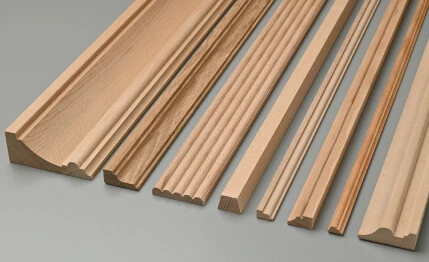
- Straight Profile
- Flat profile
- Smooth without relief
- Minimalist profile
- Classic, yet compact
- Narrow skirting board for various floor coverings
- For laminate
- For quartz vinyl
- For parquet
- For engineered board
- For tile and porcelain stoneware
- For linoleum
- How to choose the color of a narrow skirting board
- White narrow skirting board
- Matching the floor color
- Matching the wall color
- Wood-look
- For painting: narrow skirting board in any color
- Contrasting dark skirting board
- Narrow MDF or wooden skirting board: an honest comparison
- What MDF wins at
- What a wooden skirting board wins
- When to choose what
- For which rooms is a narrow skirting board especially appropriate
- Entry Hall
- Kitchen
- Bedroom
- Living Room
- Office
- Studio apartment
- How to buy a narrow skirting board without mistakes: checklist
- What STAVROS offers for the query "narrow skirting board"
- FAQ: answers to popular questions about narrow skirting boards
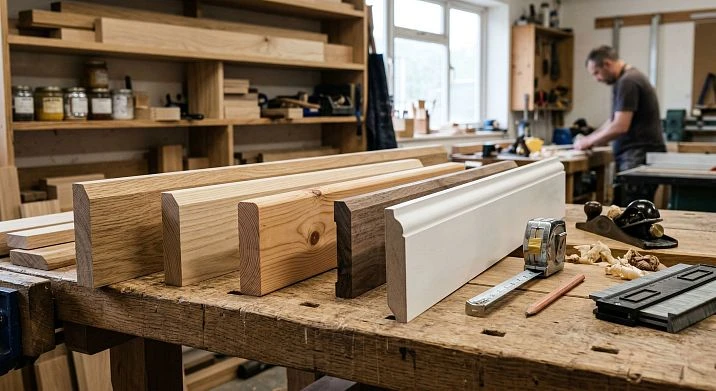
There is a moment in renovation when everything is almost ready — the floor is laid, the walls are painted, the furniture is arranged. And then a question arises that can either beautifully complete the space or ruin everything with one detail. It's about the skirting board. And if you're looking specifically for a narrow floor skirting board — you're already thinking correctly. You understand: a massive high profile would be excessive here. It needs to be neat, clean, modern. Without unnecessary emphasis, without visual heaviness.
A narrow floor skirting board is not a compromise or a budget simplification. It's a conscious choice. For an apartment with low ceilings, for a small room, for a minimalist-style interior, for a space where furniture stands almost flush against the walls — a compact floor skirting board works better than any other.
This article provides a complete breakdown: what to choose, from what material, what height, for what flooring, and in what color. And — where to go for the right result.
Select a narrow skirting board for your interior in the STAVROS catalog:
-
MDF Skirting Board— compact profiles for painting, in white and neutral
-
Skirting made of solid wood— narrow wooden skirting board for parquet and engineered board
-
floor skirting boards— full range for any scenario
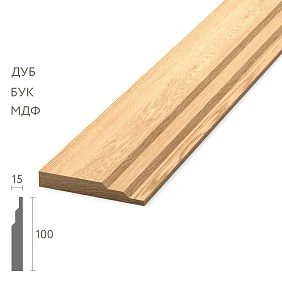
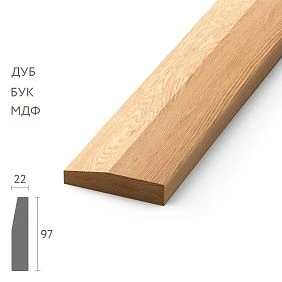
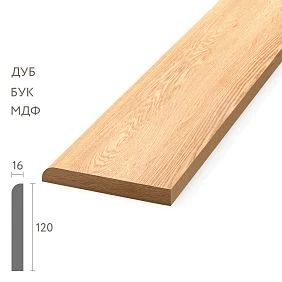
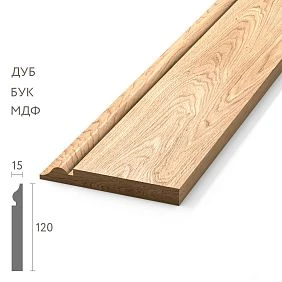
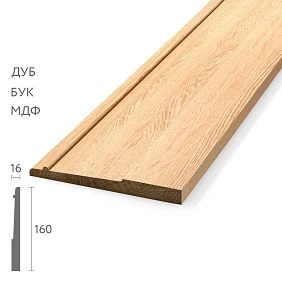
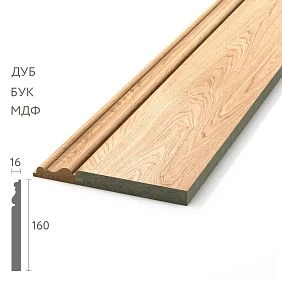
What is a narrow floor skirting board: defining the concept
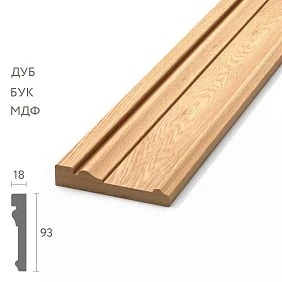
First of all—what exactly do people mean by a 'narrow' skirting board? This is important because the word 'narrow' in relation to a skirting board can mean different things depending on the context.
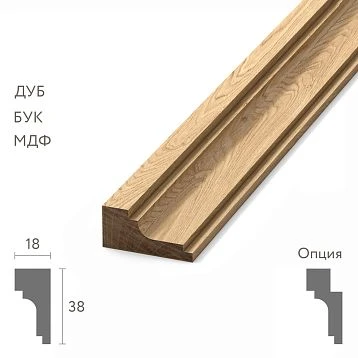
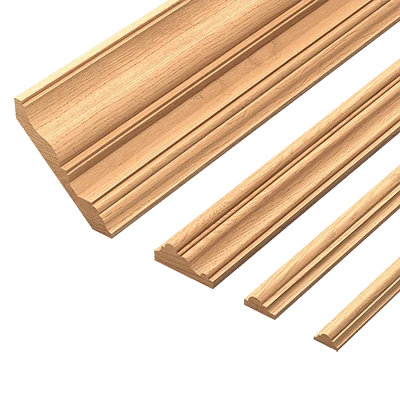
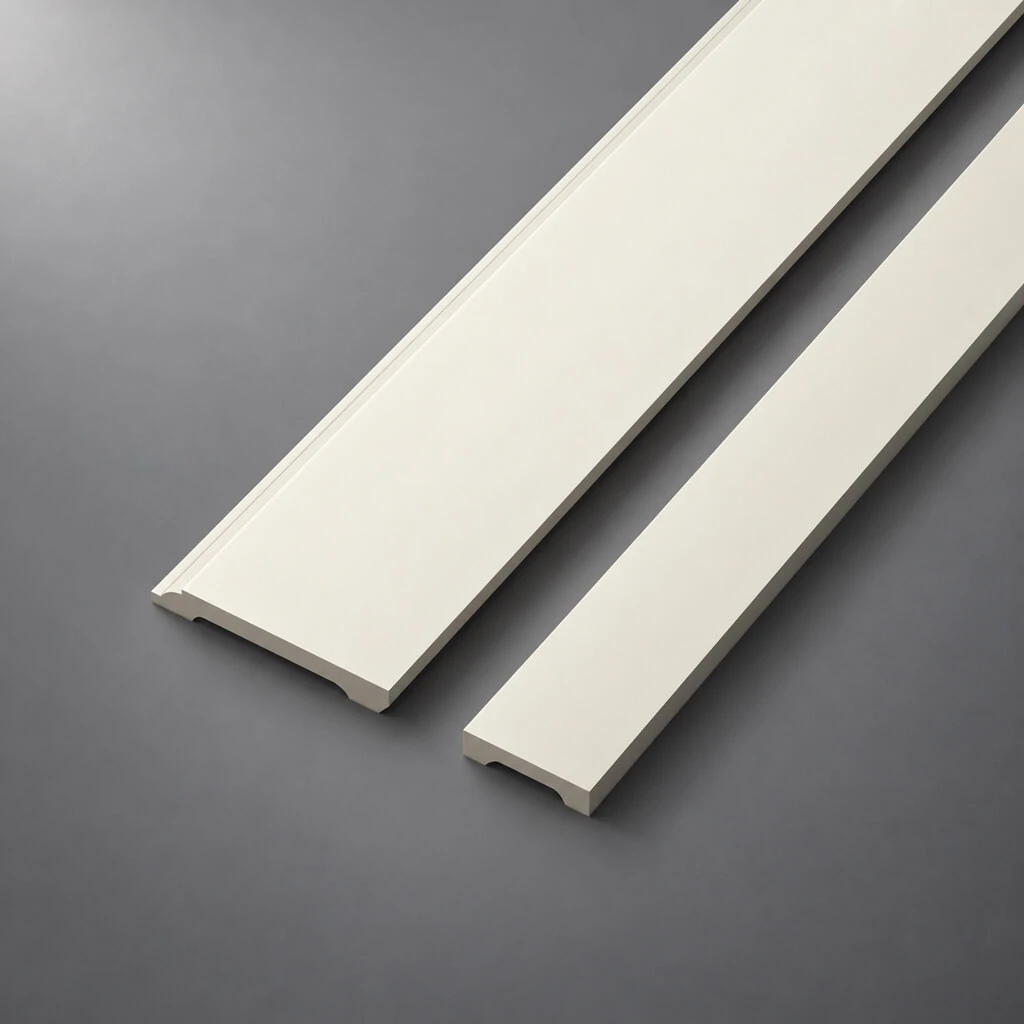
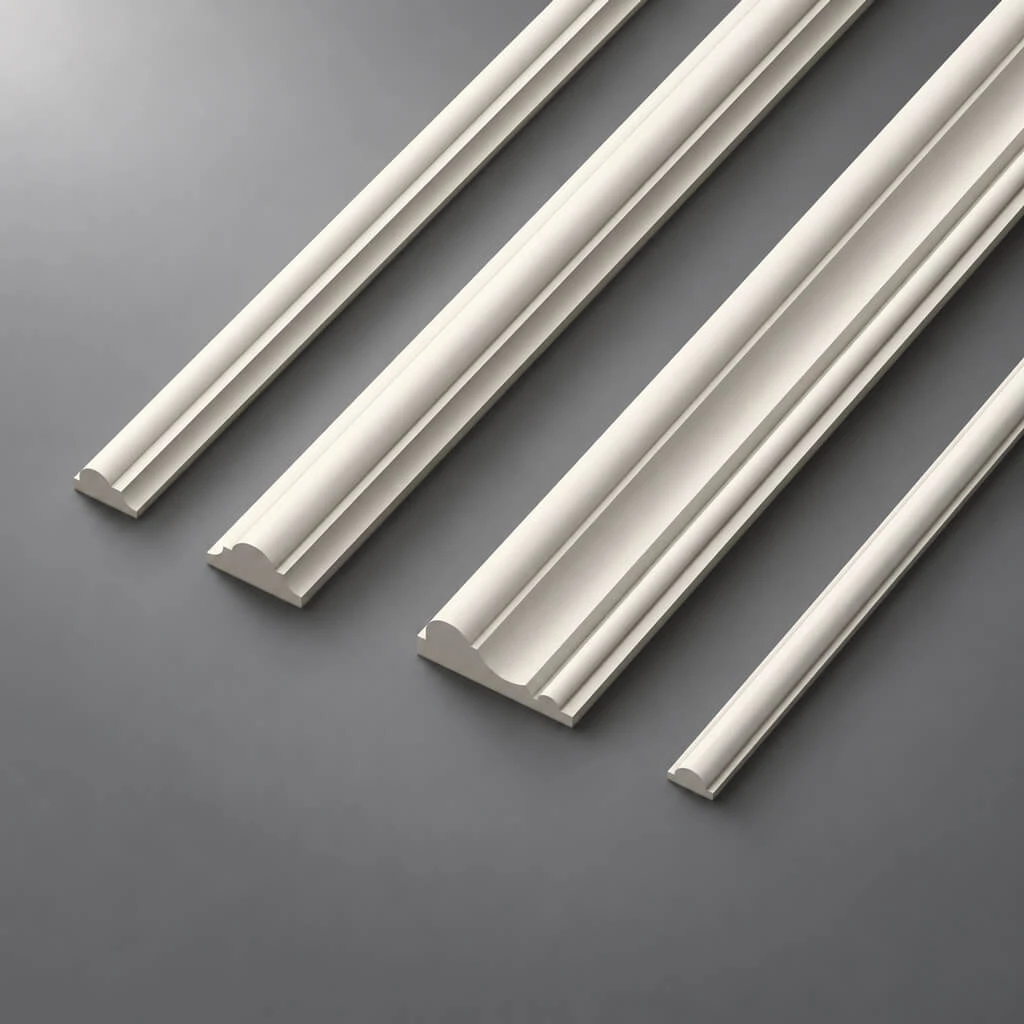
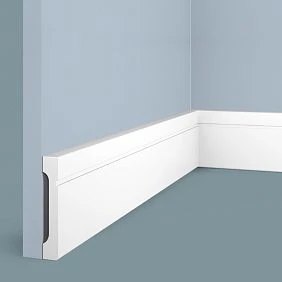
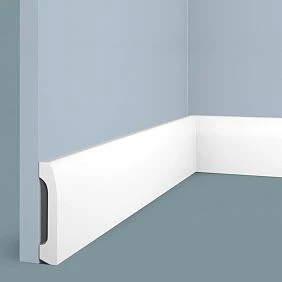
In most cases, 'narrow' is a synonym for a low, compact, small skirting board. Height 40–65 mm versus standard 70–80 mm and especially versus high 100–150 mm. It is precisely the small height of the profile that creates the feeling of 'narrowness', lightness, neatness.
The second meaning is thin in projection from the wall. When the skirting board fits as tightly as possible, does not overhang the floor, does not create a noticeable shadow. A straight or flat profile with minimal body thickness—visually 'narrower' than a classic rounded profile of the same height.
The third meaning is minimalist: without relief, without decorative elements, with the pure geometry of a rectangle.
All three meanings are united by one thing: a narrow floor skirting board is a choice in favor of restraint, purity, and modernity. It does not draw attention to itself but serves as the lower neutral line of the space.

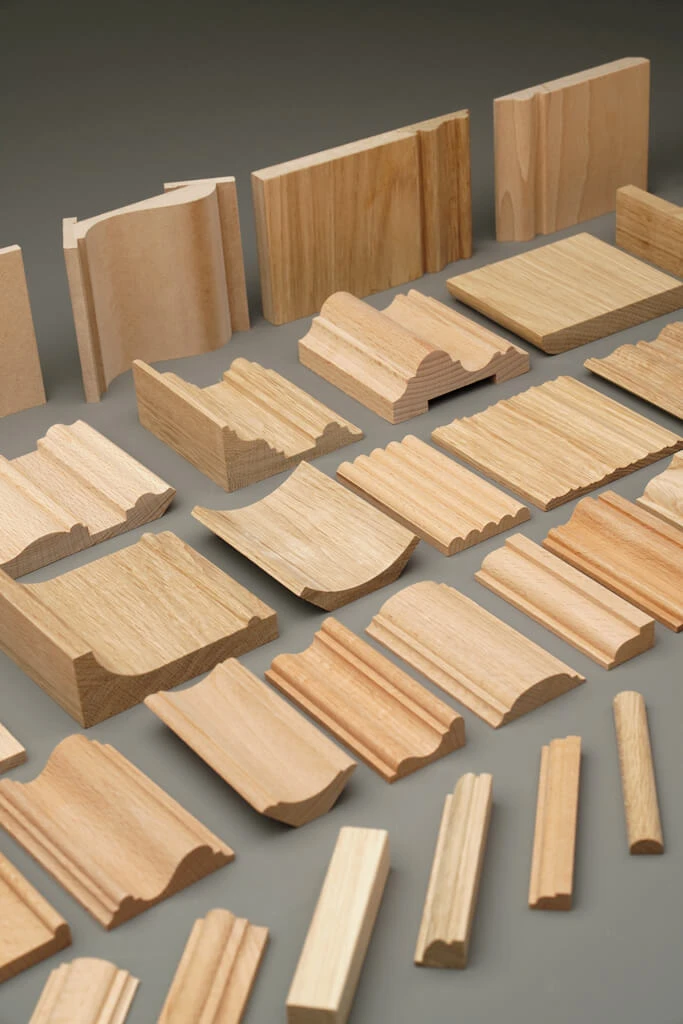


How a narrow skirting board differs from standard and wide ones
| Parameter | Narrow (40–65 mm) | Standard (70–80 mm) | Wide (100–150 mm) |
|---|---|---|---|
| Visual effect | Lightness, unobtrusiveness | Neutral | Architectural accent |
| Ceilings | up to 2.6 m | 2.6–3 m | 3 m and above |
| Interior | Minimalism, Scandinavian | Any universal | Classic, neoclassic |
| Place by furniture | Optimal | Acceptable | May interfere |
| Expansion gap | Covers up to 10 mm | Up to 15 mm | Up to 25 mm |
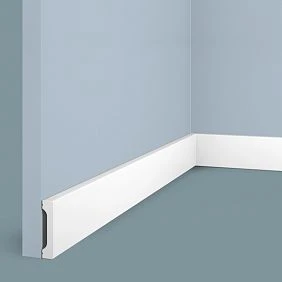
Our factory also produces:


When to choose a narrow skirting board: scenarios and motivation
There are specific situations wherenarrow floor skirting boardis not just a preference, but a technically and visually correct solution.
Get Consultation
Small room and low ceilings
This is the most obvious scenario. In a room of 10–16 sq. m with a ceiling height of 2.4–2.6 m, a tall 100 mm baseboard feels oppressive. It 'steals' visual height and makes proportions heavy. A narrow, compact 50–60 mm baseboard works in the opposite way: the lower boundary of the space remains light, and the ceiling visually 'rises'.
Rule: the height of the baseboard in a room with a ceiling up to 2.6 m should not exceed 60 mm.Narrow MDF skirting board55–60 mm in white or wall color is the ideal solution.
A laconic interior without complex decor
A minimalist space with white walls, no cornices, no moldings, with simple furniture — here every detail is visible. A wide profile with relief will look out of place.Narrow straight baseboard50–60 mm with a flat, smooth front surface — an element that completes the interior without disrupting its logic.
Furniture close to the wall
Built-in wardrobes, sofas against the wall, a bed in a niche — where furniture fits flush against the wall, a tall baseboard creates a gap or forces the craftsman to make a cut in the lower part of the furniture. A narrow and thin profile allows placing furniture without trimming and without unsightly gaps.
Studio apartment
In the studio, space flows from one zone to another without rigid transitions. A unifiednarrow floor skirting boardaround the entire perimeter creates visual continuity. A wide profile in a small studio space makes the walls appear 'heavier'.
Modern interior with clean geometry
Scandinavian style, Japanese minimalism, modern loft, Nordic style — in all these directions, the lower line of the space should be strict, clear, and without decoration. A narrow flat skirting board of 50–65 mm is a perfect fit.
Materials for narrow floor skirting boards
Narrow MDF skirting board
MDF Skirting Boardin a compact format — the most common choice for a modern apartment. Why exactly MDF?
First, geometric precision. MDF is pressed under pressure — each skirting board has an identical cross-section along its entire length. When joining two skirting boards in a corner — a perfect gap, no 'steps'.
Second, stability. MDF does not react to seasonal humidity changes. In an apartment with radiators in winter and air conditioning in summerNarrow MDF skirting boardit maintains a straight line without gaps at the joints.
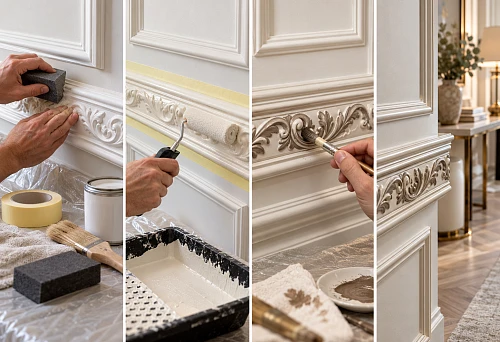
Third, painting. The MDF surface is non-porous and fiber-free—paint applies evenly in one or two coats.Narrow MDF skirting board for paintingCan be painted any RAL color: precise white wall, gray, dusty blue, anthracite—no limitations.
Narrow white MDF skirting board—the best-selling format. Produced with a factory white coating, ready for installation. Suitable for any flooring and any wall color.
Narrow straight MDF skirting board and narrow flat MDF skirting board—for those who appreciate strict modern geometry without relief.
Narrow wooden skirting board
Wooden baseboardIn a narrow format—it's a different class. Not better or worse than MDF, but with a fundamentally different character.
The living texture of wood under clear varnish—an organic note in the lower zone of the space. A narrow wooden skirting board 50–65 mm for oak parquet in the same tint—this is a unity of the material environment that cannot be achieved by any other means.
Narrow wooden floor skirting boardMade of beech for painting white—it's a natural material with a neutral fine-porous surface. Beech paints more evenly than any other wood species.
NarrowSkirting made of solid woodAllows for complete restoration: sanding and repainting after 10–15 years without replacement. MDF, if the face coating is damaged—only replacement.
Narrow polystyrene and polyurethane skirting board
Polyurethane BaseboardsIn a compact format — a specialized solution for wet areas: bathroom, toilet, balcony. Water-resistant, lightweight, installed without special tools.
For living rooms — it's a compromise. Over time, the polystyrene profile may lose its geometry, yellow in white color, and does not allow restoration. For permanent housing in rooms, MDF or solid wood is better.
Application area: kitchen, bathroom, hallway with variable humidity, country house, rental accommodation.
What size of narrow skirting board to choose
This is a practical question that requires specific numbers.
What height is considered narrow
-
Up to 40 mm — micro skirting board, minimalist format. Covers an expansion gap of up to 6–8 mm. Sufficient for quartz vinyl and tiles. For laminate with a 12 mm gap — risky.
-
40–55 mm — narrow compact skirting board. Optimal for quartz vinyl, thin laminate, tiles, porcelain stoneware. Looks good in rooms with ceilings 2.4–2.6 m.
-
55–65 mm — lower boundary of standard, upper boundary of 'narrow'. Universal compromise: covers the gap of most coverings and still looks neat.
Practical rule for height selection: skirting board height = maximum expansion gap × 1.5 + 20 mm aesthetic allowance. For laminate with a 12 mm gap — minimum skirting board height 38 mm, recommended 55–60 mm.
Relationship with doors and furniture
The height of the skirting board should be coordinated with the height of the door casing. A standard casing is 70 mm wide. With a narrow 50 mm skirting board, the casing noticeably protrudes in width — this is normal, but it should be considered that visually the casing will become the dominant element. If you want a unified system — take— is a horizontal element that frames the room at the bottom of the walls where the wall meets the floor. Skirting boards perform several functions: they hide the technological gap between the wall and floor covering (necessary for thermal expansion), protect the lower part of the wall from mechanical damage, create visual completion, and may conceal wiring.and casings made of the same material with the same color.
Which profile is better for a narrow skirting board
Straight profile
Strict rectangle. The front surface is vertical, without bevels. The most modern and universal option.Straight narrow MDF skirting board— the main profile for Scandinavian minimalism, modern loft, Japanese style.
Flat profile
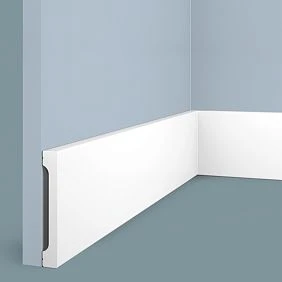
Flat means thin in projection from the wall. It fits as close as possible, with minimal shadow at the floor.Flat narrow MDF skirting board— for rooms where furniture is placed flush against the wall, and for interiors where visual weightlessness in the lower zone is important.
Smooth without relief
No milled grooves, coves, or shelves. Clean smooth surface. Easy to clean, does not collect dust in recesses.Narrow smooth skirting board— a practical choice for the kitchen, hallway, bathroom.
Minimalist profile
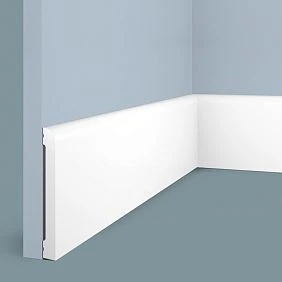
Straight or flat, with a softly rounded top edge — not sharp, but without decorative bevel. Narrow minimalist skirting board — the language of modern design: inconspicuous yet impeccable.
Classic, but compact
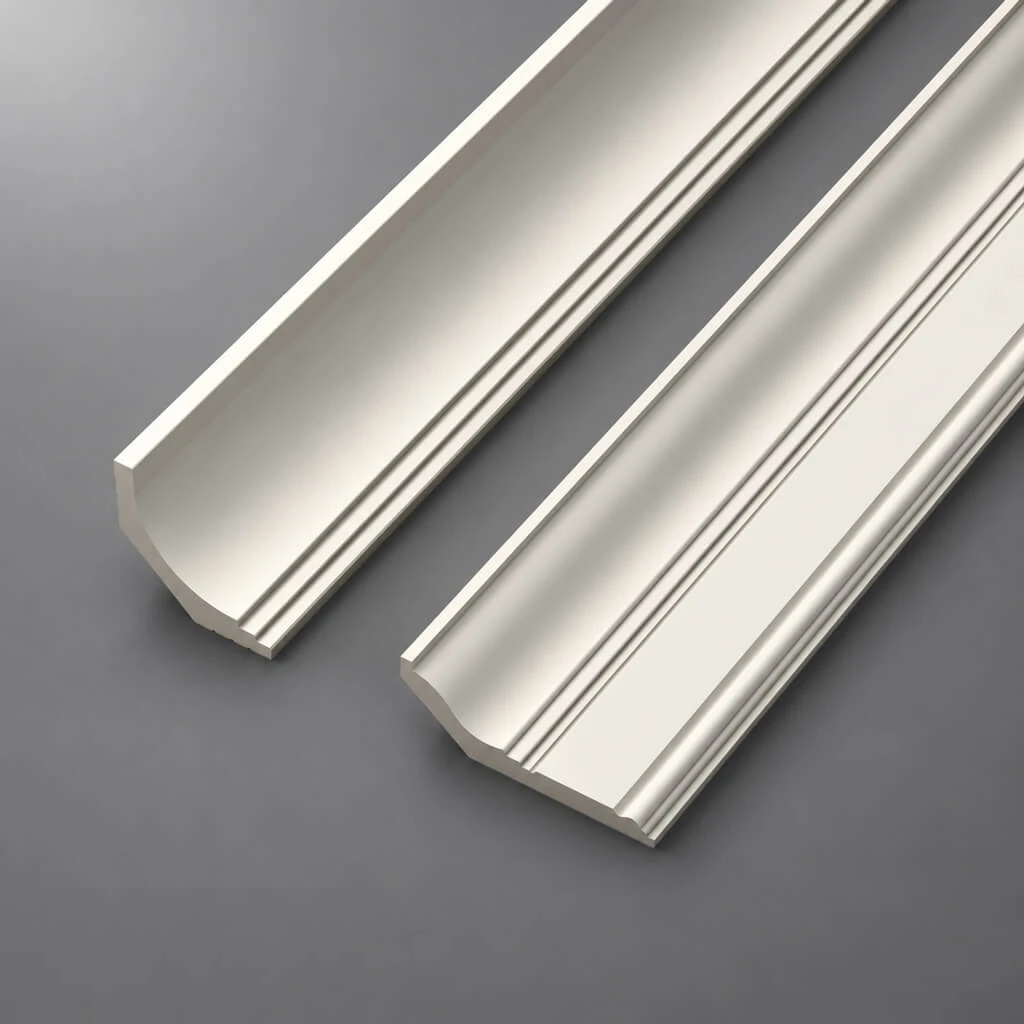
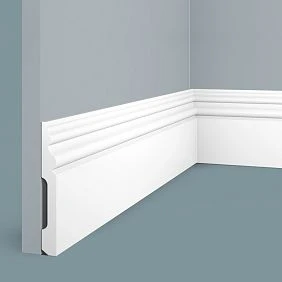
Coved profile, but small: a soft bead in the upper part, a smooth transition to the base. Narrow solid wood skirting board 55–60 mm with a soft figured section for parquet — classic in a compact format.with a classic profile creates a sense of solidity, reliability.with light relief and natural varnish.
Narrow skirting board for different floor coverings
For laminate
Laminate is laid using the floating method with an expansion gap of 8–15 mm. For laminate with a thickness of 8–10 mm, anarrow MDF skirting board60–65 mm is sufficient: it will cover the standard gap with a margin. Installation is only to the wall, not to the laminate.
Best choice:narrow skirting board for laminatemade of MDF, 60 mm, in white or matching the floor color.
For quartz vinyl
Quartz vinyl expands minimally — the expansion gap is 5–8 mm. This opens up the possibility to use a truly narrow profile:narrow skirting board for quartz vinyl45–55 mm will cover the gap with a margin and visually create a light, airy bottom line.
Straight narrow MDF in white under quartz vinyl 'wood-look' — a contrast that works.
For parquet
Solid wood parquet requires a large expansion gap — up to 20 mm. A 'narrow' skirting board for parquet is 65–75 mm: it covers the gap while looking visually neater than the standard 80 mm.
Narrow wooden skirting board for parquetmade from the same wood species (oak, beech) — a unified material environment with a compact character.
For engineered wood
Engineered board expands less than solid wood. Gap 8–12 mm. Narrow skirting board 55–65 mm — optimal.Narrow wooden skirting board for engineered boardmade from the same top layer species orMDF for Paintingtoned to match the color of the board.
For tile and porcelain stoneware
There is no functional gap here — tile is laid with a minimal technological joint. The skirting board's role is decorative. A narrow profile 40–50 mm is preferable: it does not 'weigh down' the floor-wall transition.
Narrow tile skirting board— a moisture-resistant solution for bathrooms and toilets orMDF in white enamelfor kitchen and living room with porcelain stoneware.
For linoleum
Linoleum is a practical flooring for hallways, kitchens, offices. For linoleum, the optimal choice isnarrow compact MDF skirting boardor polystyrene 50–60 mm. Wooden here is an excess that is not justified financially or visually.
How to choose the color of a narrow skirting board
White narrow skirting board
White is the absolute leader among color solutions for narrow skirting boards. Suitable for any flooring, any wall color, and any style.Narrow white MDF skirting board— the best-selling item. A white bottom line adds lightness and visually 'lifts' the floor.
In a dark interior, a narrow white skirting board creates a light stroke near the floor—an accent that enlivens the lower zone. In a light interior—a neutral border that doesn't demand attention.
Matching the floor color
A skirting board matching the floor color blends in: the floor visually 'continues' to the wall. The space appears larger. NarrowWooden baseboardmatching the parquet orMDF for Paintingmatching the exact color of quartz vinyl—this is a professional designer technique.
Matching the wall color
The skirting board 'disappears' into the wall—the bottom border vanishes, and the floor and wall merge into a single surface. Works especially effectively in small rooms: the space is perceived as cohesive.
Wood-look
Narrow wooden skirting board— either natural solid wood with varnish or MDF with decorative wood-grain film. Suitable for interiors with wooden floors, wooden furniture, and warm color schemes.
For painting: narrow skirting board in any color
Narrow MDF skirting board for painting— maximum freedom of color choice. Gray, graphite, dusty pink, dark green, anthracite — any shade by RAL or NCS. Exact match to the color of walls, trims, furniture.
Contrasting dark skirting board
Dark gray or black narrow skirting board on a light floor — a graphic bottom stroke. A bold modern solution.— is a horizontal element that frames the room at the bottom of the walls where the wall meets the floor. Skirting boards perform several functions: they hide the technological gap between the wall and floor covering (necessary for thermal expansion), protect the lower part of the wall from mechanical damage, create visual completion, and may conceal wiring.in a dark tone: a professional designer move, most often found in modern business-class projects.
Narrow MDF or wooden skirting board: an honest comparison
This question arises for everyone who choosesbuy narrow skirting boardconsciously.
What MDF wins at
-
Geometric stability – does not warp with humidity fluctuations. Especially important for narrow profiles: the thinner the skirting board, the more noticeable any warping becomes.
-
Painting – ideal surface for enamel.Narrow MDF skirting board for paintingPaints to an exact color in one or two coats without prior pore sealing.
-
Price – 1.5–2.5 times cheaper than a similar solid wood profile.
-
Installation speed – does not require acclimatization. Delivered – we install.
What a wooden skirting board gains
-
Living texture – under clear varnish, wood does not imitate any other material. This is a unique appearance.
-
Restoration –buy narrow wooden skirting boardonce and sand it down again after 15 years. MDF with mechanical damage – only replacement.
-
Naturalness – wood breathes and does not release chemicals when heated (for example, from underfloor heating nearby).
-
Unity with the flooring –Narrow wooden skirting board for parquetmade from the same wood species – this is a solution that MDF cannot achieve, no matter how much one might wish.
When to choose what
Choosenarrow MDF floor skirting board, if:
-
laminate, quartz vinyl, linoleum;
-
painting in a specific color is required;
-
a room with variable humidity;
-
the budget is limited.
ChooseNarrow wooden baseboard, if:
-
parquet or engineered board made from natural wood species;
-
The living texture of wood is important;
-
Interior with exposed wooden surfaces;
-
Restoration capability is needed.
For which rooms is a narrow skirting board especially appropriate
Entryway
The hallway is the first thing a guest sees. Here, a narrow, compact skirting board works on two levels: visually, it doesn't 'clutter' the small corridor space, and practically—it remains neat under loads.Narrow MDF skirting board for the hallway60 mm in white—a proven solution.
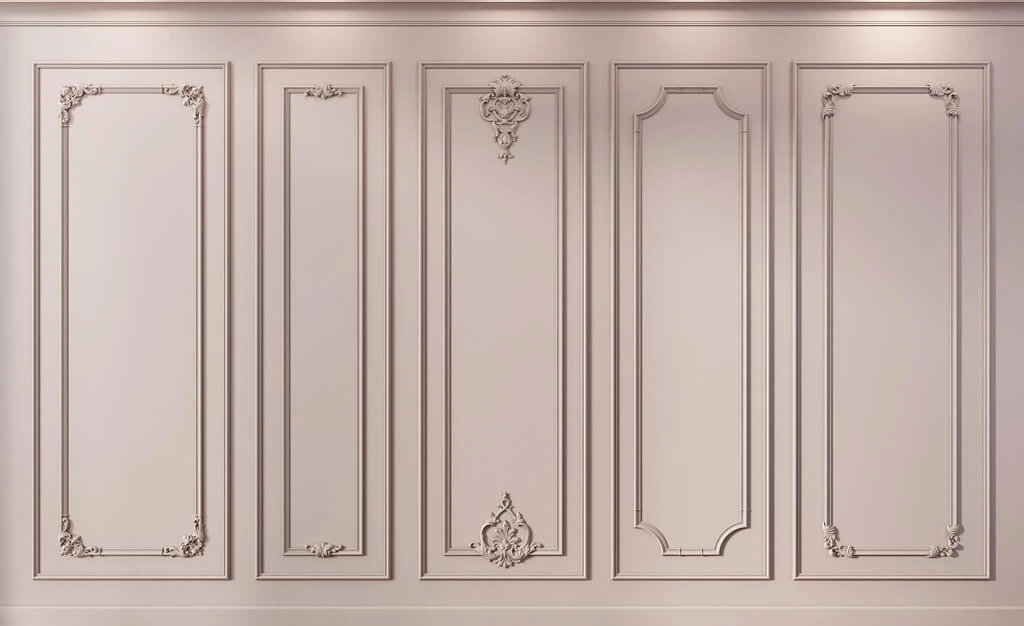
An interesting move: in the hallway, where the walls are decoratedplank panels, a narrow straight skirting board of the same material at the bottom creates a unified system—from the floor to the middle of the wall.
Kitchen
In the kitchen, the skirting board should be compact and easy to clean. A narrow, smooth profile of 50–60 mm without relief grooves—doesn't collect grease and dust.Narrow skirting board for kitchenmade of MDF with white enamel or moisture-resistant polyurethane.
Bedroom
In the bedroom, there are no high loads, but there is a requirement for atmosphere. NarrowWooden baseboard55–60 mm made of beech in white enamel for parquet or engineered board — a warm lower note in a bedroom with natural materials. In a white bedroom — white MDF 55 mm, which 'dissolves' into the wall.
Living Room
Living room — a representative space. Here, a narrow skirting board is justified in modern interiors: Scandinavian, minimalist, Japanese, Nordic style.Narrow straight MDF skirting board60–65 mm for quartz vinyl or engineered board — a clean horizontal line at the floor without emphasis.
Office
In the study, there is often a lot of furniture against the walls: shelves, cabinets, desk. A compact skirting board allows placing them flush without trimming.Buy narrow MDF skirting boardfor the study in white or dark color to match the overall tone of the furniture.
Studio apartment
In the studio, every centimeter counts. Narrowcompact floor skirting board50–55 mm around the entire perimeter creates a single, inconspicuous bottom line. The space looks cohesive and spacious.
How to buy a narrow skirting board without mistakes: a checklist
Go through this list before placing your order — and avoid typical disappointments.
-
Height — corresponds to the expansion gap of your flooring (minimum × 1.5) and the room ceiling (up to 2.6 m — no more than 65 mm)
-
Thickness — for straight or flat profile 12–16 mm, for profile with relief 16–22 mm
-
Material — MDF for laminate and quartz vinyl, solid wood for parquet and engineered board, polyurethane for wet areas
-
Color — white is universal, for painting —MDF for Painting, for wood — solid wood or film-coated MDF
-
Surface coating — enamel or varnish on MDF must be factory-applied, without chips or stains
-
Compatibility with flooring — ensure the baseboard's foot does not press against the floor covering: the baseboard attaches to the wall, allowing the flooring to 'breathe' freely
-
Cutting allowance — purchase with a 10–15% surplus of the calculated linear footage
-
Accessories — internal and external corners, end caps. When buying a narrow profile, ensure the range includes ready-made corners in the same color and format
-
Care — smooth MDF or solid wood with varnish can be wiped with a damp cloth without effort. A relief profile requires brushing in the grooves
What STAVROS offers for the 'narrow baseboard' request
For those looking for buy narrow floor baseboard— a ready, precise, beautiful solution — STAVROS company offers several directions.
MDF Skirting Boardin compact profiles — straight and flat formats for modern interiors. White factory coating, ready for installation straight from the packaging.
— is a horizontal element that frames the room at the bottom of the walls where the wall meets the floor. Skirting boards perform several functions: they hide the technological gap between the wall and floor covering (necessary for thermal expansion), protect the lower part of the wall from mechanical damage, create visual completion, and may conceal wiring.— an ideally primed surface for any enamel color. For those who want an exact match to the interior color.
Skirting made of solid wood— narrow profiles made of oak and beech for interiors with parquet, engineered wood, and wooden surfaces. For varnish, oil, or white enamel.
polyurethane baseboards— moisture-resistant compact profile for bathrooms, toilets, kitchens.
When you need not just the bottom floor line, but a unified wall finishing system —slatted panels for walls— made from the same material create a complete modern look from the floor to the middle of the wall.
FAQ: answers to popular questions about narrow skirting boards
Which narrow skirting board is best for an apartment?
For most apartments with 2.6 m ceilings and laminate or quartz vinyl —Narrow MDF skirting board— 55–65 mm in white. For an apartment with parquet —Narrow wooden baseboard— 60–70 mm to match the same wood species.
Narrow or wide skirting board: what to choose?
Depends on ceiling height and style. Up to 2.6 m — narrow, 50–65 mm. From 2.6 to 3 m — standard, 70–80 mm. Above 3 m and classic interior — wide from 100 mm. For contemporary minimalism at any ceiling height, a narrow profile is always correct.
Which narrow baseboard is best for laminate flooring?
Narrow MDF skirting board60–65 mm. Covers the expansion gap, maintains geometry with humidity fluctuations, installed only to the wall.
MDF or wood for a narrow baseboard?
MDF — for laminate, quartz vinyl, painting. Wood — for parquet, natural interior, long-term restoration. Details — in the comparison section above.
Can I use a white narrow baseboard with a dark floor?
Yes, and it's a very successful solution. A white bottom line on a dark floor creates a visual accent that 'lifts' the space. Works especially well in small rooms.
Which profile looks contemporary?
Straight or flat, without relief. Smooth front surface.Straight narrow MDF skirting boardIn white or paintable — the most contemporary option.
Is a narrow baseboard easier to clean?
A smooth profile without relief or grooves—yes, definitely easier to clean. Any baseboard with a factory enamel coating can be wiped with a damp cloth.
Is a narrow baseboard suitable for a small room?
It's the best choice for a small room. A compact 50–60 mm profile doesn't weigh down the walls and visually preserves the ceiling height.
Which narrow baseboard to choose for quartz vinyl?
Narrow straight MDF45–55 mm—quartz vinyl has a minimal gap, so even 45 mm is quite sufficient. In white or paintable to match the quartz vinyl tone.
Can a narrow baseboard be painted?
Yes.Narrow MDF skirting board for painting—specifically designed for painting. The surface is primed, paint applies evenly. A wooden beech baseboard—also paints excellently after sanding.
How to avoid mistakes with length when ordering?
Measure the room perimeter in linear meters, add 15% for corner and joint trimming. Standard batten length is 2.5 m. Check in advance if corners and end caps for your profile are available in the assortment.
What is the most popular narrow skirting board format?
Narrow white MDF skirting boardStraight profile, 60 mm height — this is the absolute sales leader in the modern apartment segment. Universal, neat, easy to install and maintain.
Narrow floor skirting board is the choice of those who know how to see space in details. Not to fill it with accents, but to build clean, precise geometry. A neat bottom line, compact profile, correct material and color — and the room begins to 'sound' differently.
STAVROS company offersbuy narrow floor skirting boardin several materials and profiles:MDF Skirting Boardfor modern interior,solid wood baseboardfor natural coverings,Paintable skirting boardfor precise color matching. Made in Russia, natural materials, real assortment with sample selection option. STAVROS — where details decide everything.