











































































Article Contents:
- Why a flat wall loses: the anatomy of a boring interior
- Psychology of surface perception
- Flatness and value: why 'expensive' is always textured
- How wall panels set the rhythm: the work of line in space
- Vertical: height, strictness, monumentality
- Horizontal: width, calmness, intimacy
- Rhythm of gaps: frequent and sparse
- Slat width and room scale
- What polyurethane stucco decor offers: plasticity that cannot be painted
- What is included in polyurethane wall decor
- Advantages of polyurethane over plaster and wood
- How stucco decor interacts with light
- The 'panel + stucco' system: how it works together
- Basic scheme: panel + cornice + baseboard
- Extended scheme: panel + molding + cornice + frame decor
- Principle of scale coordination
- Which rooms reveal the combination most strongly
- Living room: the main stage
- Bedroom: Depth and Tranquility
- Entryway: First Impression
- Study and Library: Rigor and Prestige
- Restaurant, Cafe, Lobby: The Commercial Magic of Atmosphere
- How to Choose the Scale of Elements: Proportion as the Main Tool
- Ceiling Height and the Scale of Decor
- Room Area and the Scale of Slats
- Visual Weight and Tone
- Styles and Their Solutions: From Classic to Japandi
- Modern classic and neoclassic
- Scandinavian Style and Northern Minimalism
- Japandi: The Balance of Two Cultures
- Loft and Industrial Style
- Mistakes in selecting relief and texture: an honest breakdown
- Mistake 1: decor on all four walls
- Mistake 2: mismatch in profile scale
- Mistake 3: mixing style profiles
- Mistake 4: ignoring the ceiling boundary
- Mistake 5: decor in the wrong room scale
- Mistake 6: uncoordinated tone of slat and decor
- Mistake 7: self-painting polyurethane decor without primer
- Mistake 8: slat panels from different wood species in one room
- Installation: from preparation to result
- Surface for batten panels
- Mounting of polyurethane decor
- Installation sequence: what comes first
- STAVROS: wall panel and molding decor system from a single source
- FAQ: Answers to Popular Questions

There are walls — and there are walls. Some exist as a background: whitewashed, faceless, unnoticed. Others become part of the architectural statement: they speak, organize, hold the gaze. The difference between them is not in the cost of renovation or square meters. The difference is in the presence of relief, rhythm, and plasticity.
Wall Panelsin combination withmolded decoration made of polyurethane— is precisely the duo that transforms an ordinary flat wall into an architectural surface. One provides rhythm and linear structure. The other — volume, classical plasticity, and completeness. Together they make the interior what it should be: thoughtful, deep, visually expensive.
Let's examine this union in detail — from principles to specific scenarios. Without fluff, without repetition, with respect for your time and project.




Why a flat wall loses: the anatomy of a boring interior
Ask yourself: why do some interiors seem expensive even in modest square footage, while others feel empty despite all the expensive furniture? The answer almost always relates to the walls.




Psychology of surface perception
The human brain is wired to recognize structure. A smooth, homogeneous surface provides minimal information for perception. The brain processes it instantly, 'discards' it as uninteresting, and moves on. This is precisely why a room with smooth whitewashed walls feels empty even with good furniture: the eye has nowhere to linger.
A textured surface — with the rhythm of slats, the plasticity of molding, the play of light and shadow — is information that holds the gaze. The brain 'reads' it longer, scans the details, finds depth. The room becomes interesting.
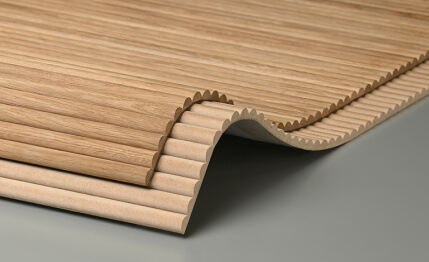
This is not subjective aesthetics — it's the basic mechanics of visual perception. And it's precisely on this that the work is built.decorative slatted panelsandpolyurethane decor.
Our factory also produces:




Plane and value: why 'expensive' is always textured
Observe interiors that are intuitively perceived as expensive — be it a classic mansion or a minimalist penthouse. They always have architectural plasticity: the profile of a cornice, wall articulation with molding, ceiling relief, wood texture. No truly 'expensive' interior is built on completely flat surfaces.
Texture is the language of architectural value. And it's accessible not only with million-dollar budgets.
Get Consultation
How wall panels set the rhythm: the work of line in space
Line in interior design is one of the most powerful tools. It directs the gaze, manages the perception of space, creates a rhythm that people intuitively read.
Vertical: height, strictness, monumentality
VerticalWall Panels— slats directed from bottom to top — work to increase the perceived height of a space. A room with a 2.6 m ceiling with vertical slat panels on an accent wall is visually perceived as 2.9–3.0 m. This is not an illusion in the common sense — it's precise work with perspective: the eye follows the vertical slat upward and 'completes' the height.
Additional effect: vertical rhythm creates a sense of architectural strictness, composure, monumentality. A wall with vertical slats is a wall with a 'spine'.
Horizontal: width, calmness, intimacy
Horizontal panels have the opposite effect: they expand the space, lower the height (visually), and create a sense of 'horizon' and stability. In narrow rooms (hallway, entrance), the horizontal rhythm of the slatted panel literally 'pushes' the walls apart.
In wide, spacious rooms, horizontal panels create intimacy — they reduce the scale to a human, lived-in one.
Gap rhythm: frequent and sparse
Frequent slat spacing with a small gap (35–45 mm) creates a dense, 'fabric-like' surface. The eye perceives it as a single mass with texture. Sparse spacing with a wide gap (65–90 mm) creates a graphic, transparent structure through which the surface behind the panel is visible.
The combination of the wall tone behind the slat and the tone of the slat itself adds an extra layer — contrast or unity. A dark wall behind a light slat creates expressive graphics. The same slat on a wall of the same tone creates a subtle, textured, non-obvious effect.
Slat width and room scale
| Batten width | Character | Optimal room |
|---|---|---|
| 25–40 mm | Light, delicate, lacy | Small rooms, intimate spaces |
| 45–65 mm | Balanced, universal | Living rooms, bedrooms, hallways |
| 70–90 mm | Monumental, architectural | Large halls, high ceilings, commercial spaces |
| 95 mm+ | Strong architectural accent | Premium projects, representative spaces |
What polyurethane stucco decor provides: plasticity that cannot be painted
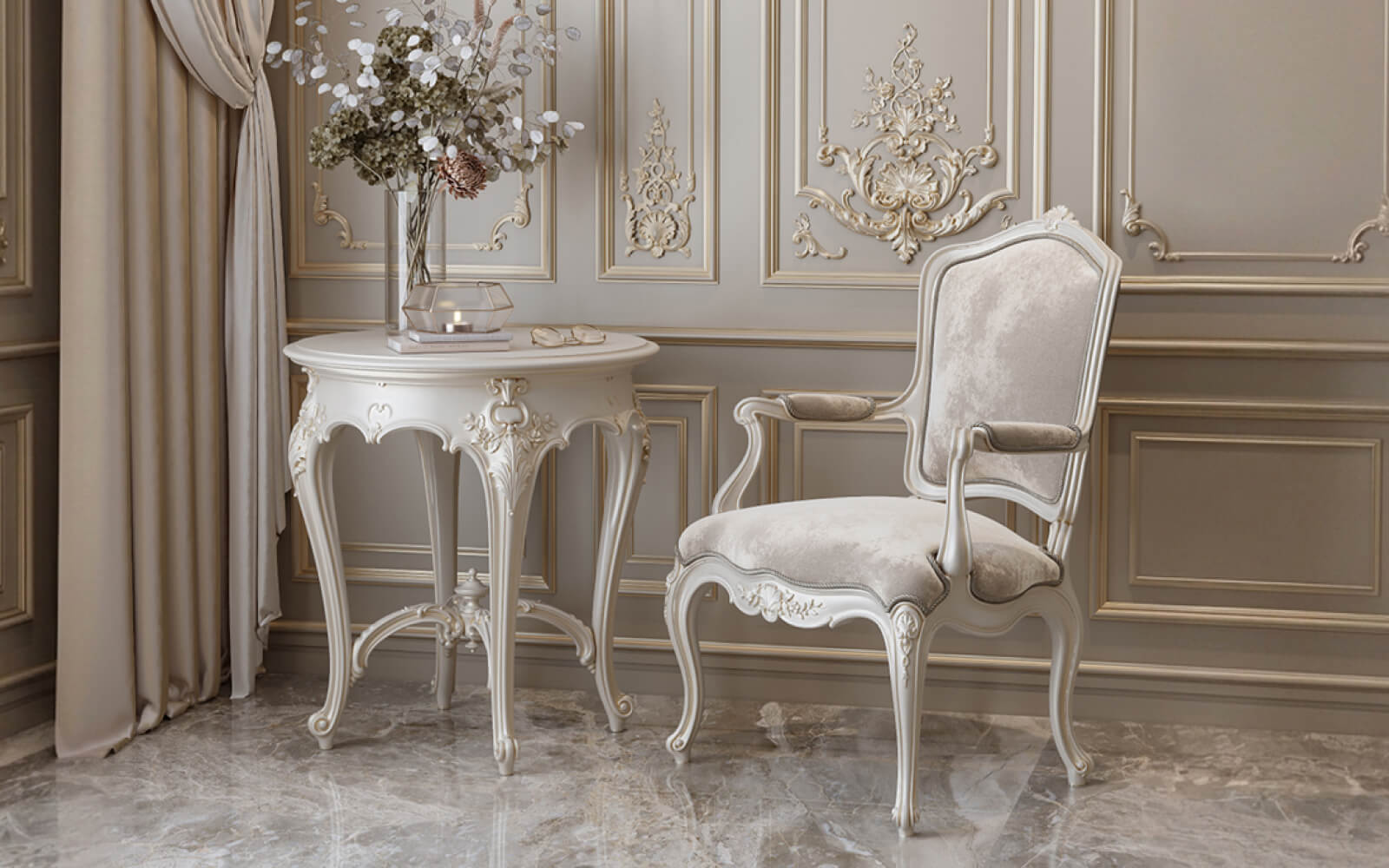
You can imitate volume with paint as much as you want — and get a flat illusion. Only real relief creates genuine plasticity.molded decoration made of polyurethane— it's authentic three-dimensional volume that works with light, casts shadows, changes with shifting lighting angles.
What's included in polyurethane wall decor
STAVROS produces a complete rangepolyurethane molding decorationfor walls and ceilings:
-
Moldings — horizontal and vertical profiles for wall articulation
-
Cornices — ceiling profiles that cover the joint between wall and ceiling
-
Baseboards — floor profiles that finish the wall at the bottom
-
Frame profiles — for creating decorative panels and cartouches on walls
-
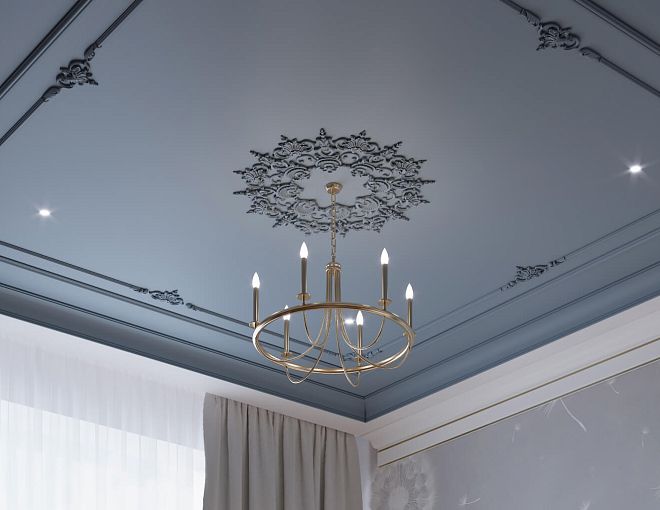
Ceiling rosettes — central ceiling accent
-
Pilasters and capitals — architectural vertical wall elements
-
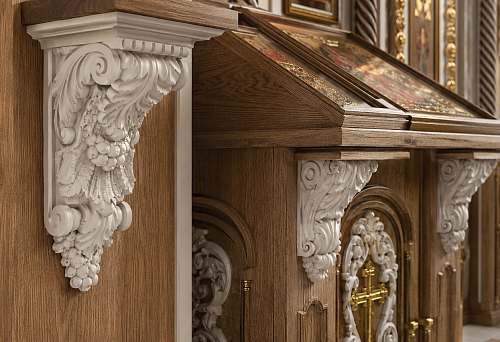
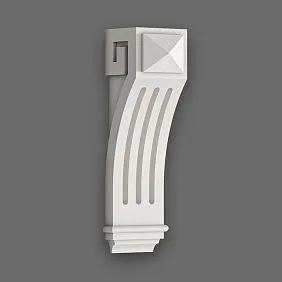
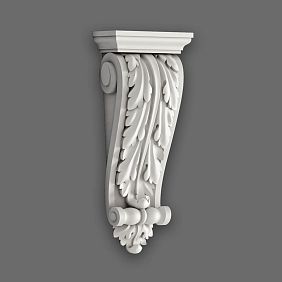
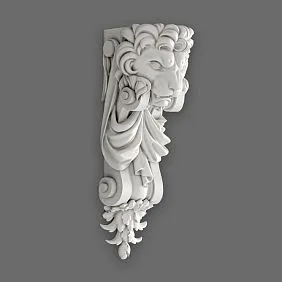
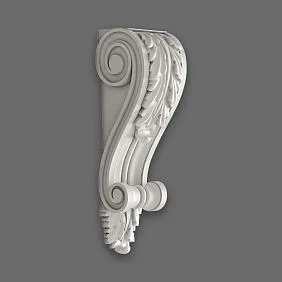
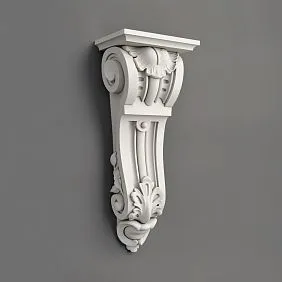
Corbels — decorative consoles
-
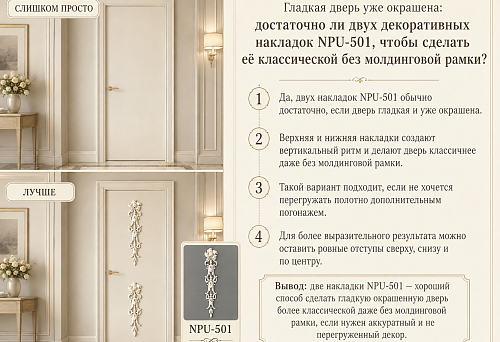
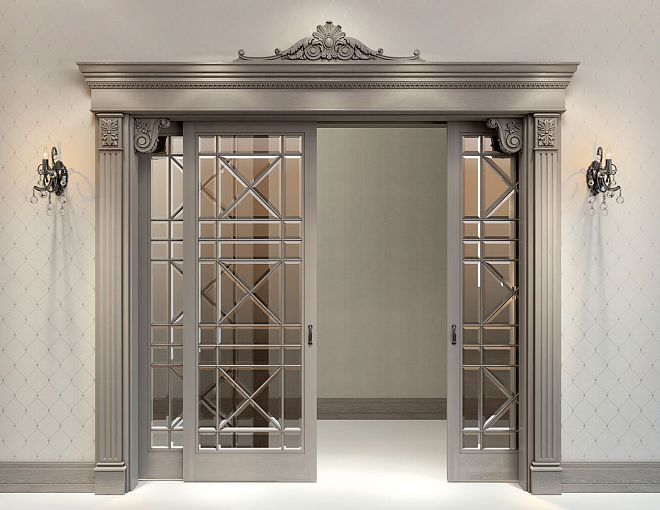
Casing — framing for door and window openings
Each of theseof stucco elementsperforms its own architectural function and can be used both independently and as part of a system.
Advantages of polyurethane over plaster and wood
Polyurethane as a material for interior decor has fundamental technical advantages:
Weight. Polyurethane molding is 6–8 times lighter than similar plaster molding. A large polyurethane cornice weighs 800–1200 g/m — no anchors, no dowels, installation with adhesive.
Strength. Unlike plaster, polyurethane does not crack upon impact. Accidental contact does not leave a chip — the material elastically deforms and returns to its shape.
Moisture resistance. Polyurethane does not react to humidity — it can be used in bathrooms and kitchens, where plaster irreversibly deteriorates.
Precision of relief. Pressure casting reproduces the pattern with micron accuracy. Each element is identical to the sample, without manual intervention.
Paintability. Any water-based paint, enamel, decorative compositions — patina, bronzing, aging.Decorative stuccomade of polyurethane adapts to any stylistic solution.
How molded decor interacts with light
The relief profile of a molding under side or directional lighting creates a shadow system that 'reads' as architectural volume. The same molding looks different under different lighting: soft and delicate under morning side light, contrastive and monumental under evening directional light.
Hidden backlighting behind a polyurethane cornice enhances this effect: warm light emerging from behind the relief profile creates a play of shadows impossible with a smooth surface.
The 'panel + molding' system: how they work together
Slatted panel and polyurethane decor are two different languages of relief. One is linear, rhythmic, natural (wood). The other is classical, architectural, geometrically precise (polyurethane). Their combination creates a multi-layered, richly textured surface.
Basic scheme: panel + cornice + baseboard
Simplest system:wall slatted panelon an accent wall, polyurethane cornice along the ceiling perimeter, polyurethane baseboard along the floor perimeter. Three elements—and the wall achieves architectural completeness: the upper boundary fixed by the cornice, the lower by the baseboard, the center by the slatted rhythm.
This is a minimal yet highly effective system. It works in any style and any room.
Extended scheme: panel + molding + cornice + frame decor
A more complex system: slatted panels occupy the lower third or half of the wall. Along the top edge of the panel is a horizontal molding, separating the 'slat field' and the 'upper wall field'. The upper field is neutral plaster or decorative finish. On the upper field — framedpolyurethane decor: rectangular cartouches made from profile. Along the ceiling — a cornice.
Result: a wall structured along its entire height. Each zone has its own texture, its own scale, its own significance.
Principle of scale coordination
The main principle for combining two types of decor: the scale of the slat and the scale of the polyurethane profile must be coordinated.
A thin 40 mm slat + a massive 160 mm cornice = a disproportion that is subconsciously perceived as an error. A small, lightweight profile with monumental, wide slats is equally inappropriate.
Guideline: cornice height in mm ≈ (slat width × 2) ± 20%. For a 60 mm slat — cornice 100–140 mm. For a 45 mm slat — cornice 70–100 mm.
Which rooms showcase the combination most strongly
Living room: the main stage
The living room is the space where the interior 'shows itself' to the maximum.Slatted panels in the living room interiorbehind the sofa or on the TV wall in combination with polyurethane cornice and moldings around the perimeter — this is a classic statement of the modern living room.
Scenario A: TV wall. Slatted panels from floor to ceiling on the TV wall. Cornice along the ceiling throughout the entire room. Polyurethane moldings on the side walls — horizontal division into two fields. The lower field matches the tone of the slatted wall, the upper one is neutral. Unity of the system with visual diversity.
Scenario B: sofa zone. Slatted panel behind the sofa — an accent, a 'frame' for the relaxation area. Frame decor made ofpolyurethane moldingson the side walls — cartouches that add a sense of classic coziness without baroque overload.
Bedroom: depth and tranquility
slatted panels in the bedroomat the headboard + white ceiling cornice with lighting — this combination creates that very 'luxury hotel' feeling in the bedroom. The wooden rhythm of the slats provides warmth and naturalness, the polyurethane cornice with hidden light — soft, relaxing illumination.
On the side walls of the bedroom — frame decor made of polyurethane profile. Rectangular or elongated cartouches with a slightly different tone inside. This is not loud decor — it's a subtle relief that is noticeable up close and creates a sense of 'composed' wall from a distance.
Entryway: first impression
Hallway with slatted panels— the task is not so much decorative as architectural. The hallway is often narrow, with low ceilings, and an abundance of doors. Vertical slatted panels on one of the long walls instantly solve the problem: the space 'stretches' upward. Ceiling cornice around the perimeter — fixes the upper boundary, adds completeness. Polyurethane door trims on doorways — unite all openings into a single stylistic system.
Result: the hallway ceases to be a 'transit zone' and becomes the first architectural statement of the apartment.
Study and library: strictness and representativeness
A study is a space where the interior should inspire trust and convey seriousness. Wide slatted panels made of solid oak in a dark tone on the wall behind the desk + a classic polyurethane cornice with an elaborate profile + pilasters at the edges of the same wall — this is the image of a study that is immediately perceived as 'expensive' and 'authoritative'.
Polyurethane DecorIn a study, it can include elements that would be excessive in a living room: a cornice with a rich profile, framed panels between pilasters, a ceiling rosette. In a study, monumentality is appropriate.
Restaurant, cafe, lobby: the commercial magic of atmosphere
In commercial spaces, the combination ofwall panelsand polyurethane decor works as a tool for atmosphere creation. A restaurant with slatted panels on the walls and cornices around the perimeter — this is intimacy, warmth, 'handcrafted' feel, a sense of quality. It is this feeling that makes guests return.
A hotel lobby with slatted panels and polyurethane pilasters — this is architectural scale that instantly signals: this is a serious level.
How to choose the scale of elements: proportion as the main tool
Choosing specific sizes is not a matter of personal taste. It is a calculation that follows the principles of classical architectural proportion.
Ceiling height and scale of decor
The first parameter that everything depends on is ceiling height.
| Ceiling Height | Crown Molding | Molding | Skirting board | Rail |
|---|---|---|---|---|
| 2.5–2.7 m | 55–80 mm | 35–55 mm | 60–80 mm | 45–65 mm |
| 2.7–3.0 m | 80–110 mm | 45–65 mm | 80–100 mm | 55–75 mm |
| 3.0–3.5 m | 110–150 mm | 55–75 mm | 90–120 mm | 65–90 mm |
| 3.5 m and above | 150–200 mm+ | 65–90 mm | 110–150 mm | 75–100 mm |
Violating this proportion is the most common mistake made when choosing a profile. A small cornice in a high room 'gets lost' and looks random. A large cornice at a standard height 'lowers' the ceiling and creates claustrophobia.
Room area and rail scale
Small rooms (up to 15 m²) — rail 40–55 mm. Medium (15–35 m²) — rail 55–70 mm. Large (35 m² and above) — rail 70–100 mm and more.
This is not a strict rule, but violating the proportion is 'felt' immediately: a wide rail in a small room makes the space fragmented and 'heavy'.
Visual weight and tone
A dark-toned batten is visually 'heavier' than a light one. In small or dark rooms, darkRafter panelsrequires compensation: a light ceiling, a light floor, powerful lighting. In spacious rooms with high ceilings, dark battens create the desired monumentality without compensation.
Whitepolyurethane decorwith dark battens is a classic contrast, powerful and unmistakable. Tinted decor (patina, bronze, antique) with dark battens is a more restrained, less contrasting option.
Styles and their solutions: from classic to Japandi
Modern Classicism and Neoclassicism
Natural or tinted oak (width 60–75 mm) on an accent wall. A white cornice with a classic profile (100–140 mm) along the ceiling. Frame decor frommoldingon neutral walls. White door casings. Everything is in a system, everything is proportional.
This scenario works in living rooms, dining rooms, studies. It doesn't require historical references and doesn't slide into pomposity: modern profiles with moderate relief plus natural wood — this is the neoclassicism of the 2020s, not the 19th century.
Scandinavian style and northern minimalism
Whitewashed ash or ash with gray oil (40–55 mm) on one wall. A thin geometric polyurethane cornice (55–75 mm) — white, almost without relief. No frame decors, no rosettes. Minimum elements, maximum purity.
Scandinavian-style molding is not baroque swirls, but extremely concise profiles: a straight molding with a bevel, a flat baseboard with a thin step.— everything must correspond to the chosen era.here they exist as an architectural boundary, not as a decorative object.
Japandi: a balance of two cultures
Japandi is a fusion of Japanese minimalism and Scandinavian functionality. In this styledecorative slatted panelswith a narrow step (30–40 mm) made of light ash create an almost 'fabric-like' surface. Polyurethane decor is extremely restrained: a thin baseboard, a light ceiling transition. No classical molding, only geometry.
Loft and industrial style
Thermo-oak or brushed dark-toned oak (70–90 mm) with an open wood grain structure. Metal lathing, if visible, is a design element.polyurethane decorin a loft is an unconventional choice, but it works: when a white cornice is added to an industrial space, it is an intentional, ironic contrast of cultures. A loft with molding is eclecticism done consciously.
Mistakes in selecting relief and texture: an honest breakdown
Mistake 1: decor on all four walls
Slatted panels on all walls + polyurethane decor around the entire perimeter is visual overload. The eye has nowhere to rest. One accent wall with slats. Neutral walls with moderate polyurethane framing. This rule has no exceptions.
Error 2: Profile scale mismatch
Thin slat + monumental cornice — proportional dissonance. Large slats + toy-like baseboard — the same problem. The scale of all elements must be coordinated. Select using the proportion table, not by visual 'liking'.
Error 3: Mixing stylistic profiles
Baroque cornice with acanthus leaves + minimalist thin slats — a stylistic conflict. EachRelief Decorationbelongs to a specific stylistic group. Mixing elements of different styles in one space — without an intentional eclectic concept — looks like design illiteracy.
Error 4: ignoring the ceiling limit
A slatted panel without a ceiling cornice is an unfinished structure. The top end of the slat 'hangs' in the air, unfixed. A ceiling cornice is a mandatory element that completes a slatted wall. It is not an option, it is a requirement of architectural logic.
Error 5: Decor in the wrong room scale
A ceiling rosette with a diameter of 600 mm in a 12 m² room — an oppressive central accent. A 200 mm rosette in a 60 m² hall — a lost detail. Rosette scale: diameter ≈ 1/10 of the smallest room dimension (with a ceiling height of 2.7–3.0 m).
Error 6: Uncoordinated tone of slat and decor
Warm golden oak + cool gray tinted molding — a tonal conflict. All material tones in a space should belong to the same temperature group: warm (gold, amber, cream, coffee) or cool (gray, ash, white with a bluish tint).
Mistake 7: Self-painting polyurethane decor without primer
Polyurethane is a dense, low-absorbency material. Paint without primer adheres poorly and begins to peel after a few months. Mandatory priming before painting is a technical requirement, not a recommendation.
Mistake 8: Slatted panels made from different wood species in one room
Ash in one zone, oak in another — visual dissonance. Different wood species have different tonal temperatures and different texture characters. Within a single space — one wood species. Or — an intentional contrast of species with a clear design concept.
Installation: from preparation to result
Surface for slatted panels
The base must be level, dry, and clean. Drywall or plastered wall with a tolerance of up to 5 mm/2 m — installation with direct adhesive or via battens. With a deviation of more than 5 mm — only on a metal profile frame.Slatted wall panelsSTAVROS are installed using mounting adhesive, headless finish nails, or screws through a backing.
Installing polyurethane decor
Decorative polyurethane moldingis attached with liquid nails or specialized polyurethane mounting adhesive. Base — any: plaster, drywall, concrete, wood. The mounting area is pre-degreased. Long-length cornices are additionally secured with finish nails every 400–500 mm.
Profile joints on straight sections — straight 90° cut. On internal and external corners — 45° cut (miter box or miter saw). Joint gap — filled with putty, sanded, painted to match. With careful installation, joints completely disappear under paint.
Installation sequence: what comes first
-
Base preparation (plaster, putty, primer)
-
Installation of slatted panels
-
Installation of polyurethane cornice on the ceiling
-
Installation of baseboard
-
Installation of moldings and frame decor on neutral walls
-
Puttying joints of all elements
-
Final painting (walls, cornice, moldings)
-
Final treatment of slatted panels (oil or varnish, if not done before installation)
STAVROS: wall panel and molding decor system from a single source
Creating an interior with relief and plasticity doesn't mean visiting a dozen suppliers and guessing whether elements will match. It means working with a unified, coordinated system.
STAVROS producesSlatted wall panelsmade from solid oak and MDF — with a wide selection of slat widths, gaps, and finishes, for any style and scale. And simultaneously — a complete rangepolyurethane molding decoration: cornices, moldings, baseboards, frame profiles, rosettes, pilasters, architraves. All system elements are coordinated in scale, style groups, and tonal solutions.
You don't assemble from disparate sources — you take a ready-made architectural system. And get an interior where every detail is in its place.
Consultation on selecting elements for your project, finish samples, material calculation. Delivery throughout Russia.
A wall is not a background. It's architecture. And STAVROS helps you feel that.
FAQ: Answers to popular questions
Can MDF slatted panels and polyurethane decor be combined in one room?
Yes. MDF for painting in the same color as polyurethane decor creates a unified monochrome system with relief. Or — a contrasting combination: painted MDF (dark) and white polyurethane cornice.
Is special wall preparation needed for polyurethane molding?
Standard preparation: surface clean, free of dust and grease. Priming the surface under molding improves adhesive bonding. Polyurethane decor does not require additional operations (puttying, leveling).
How are slatted panels attached in bathrooms or kitchens?
In high-humidity areas — only moisture-resistant materials (moisture-resistant MDF or thermowood). Installation — via a ventilated frame with a gap from the wall. Panel ends — treated with moisture-resistant coating before installation.
Can a polyurethane cornice be painted a dark shade?
Yes. Any paint, including dark shades. Preliminary — primer for polyurethane. A dark cornice with dark walls — relief decor of a single tone, a very elegant solution.
Which slatted panels are suitable for commercial spaces?
Solid oak panels with varnish coating — high wear resistance, resistance to mechanical impact. MDF for painting — for spaces with lower load, with the possibility of local repainting if needed.
Where to buy slatted panels and polyurethane molded decor in Saint Petersburg?
STAVROS produces both types of products and delivers throughout Russia, including Saint Petersburg. Consultation on selection — before placing an order, calculation for a specific project.
Is a designer needed for selecting a panel system and decor?
Not necessarily. STAVROS specialists provide consultation on selection and help create specifications for your space. With a floor plan and photos, the selection will take one consultation.