




































Article Contents:
- Panel connectors for slatted ceilings: function, form, visibility
- When a connector is needed at all
- How a connector affects the ceiling's appearance
- Scenario one: the connector is unnoticeable
- Scenario two: the connector is noticeable but reads as a system element
- Scenario three: the connector conflicts with the decor
- Ceiling molding: when it is appropriate next to a slatted ceiling
- When molding is appropriate next to a slatted ceiling
- When Molding with a Slatted Ceiling Doesn't Work
- Technical Ceiling vs. Decorative Ceiling: The Fundamental Difference
- Light Panels for Slatted Ceilings: Another Complex Variable
- How Not to Overload the Upper Plane: A System of Principles
- The Principle of a Single Accent
- The Principle of Material Compatibility
- The Principle of Connector Visibility
- The Principle of Uniform Detail Height
- Practical Scenarios: Ceilings in Different Rooms
- Living Room with a Two-Level Ceiling
- Bedroom with a wooden ceiling above the bed
- Kitchen with a slatted ceiling and molding in the dining area
- Hallway with a long slatted ceiling
- Slatted ceiling in interior design and molding placement: a compatibility table
- Mistakes in ceiling design planning: what to avoid
- First mistake: making decisions piecemeal
- Second mistake: ignoring room height
- Third mistake: focusing on secondary elements
- Fourth mistake: molding without a base
- Fifth mistake: mixing styles without a transitional element
- Mistake six: adding details after finishing the installation
- Choosing one strong element instead of several weak ones
- STAVROS: ceiling molding and decor — for those who know why
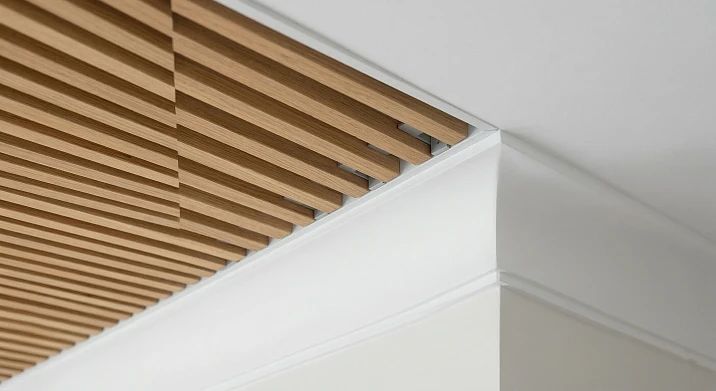
There is a phenomenon in renovation that can be called 'overloaded ceiling syndrome.' A person installs a slatted ceiling, then adds connectors for sections, inserts light panels between the slats, attaches ceiling molding around the perimeter, screws in a curtain cornice — and ends up looking at the result with a sense of unease: something is wrong, but they can't explain exactly what.
And the explanation is simple. The ceiling is a surface that works for the space as a whole. It sets the scale, sets the mood, defines the relationship between the top and bottom of the room. When there are too many details on it, each speaking for itself — the ceiling stops working as a system and turns into a set of elements, each visible separately. This is visual noise.
The topic of slatted ceiling panel connectors and ceiling molding is not just about technical installation. It's about design thinking: how decisions are made before the slats go to the store.
Slatted ceiling panel connectors: function, form, visibility
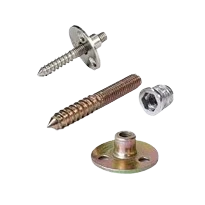
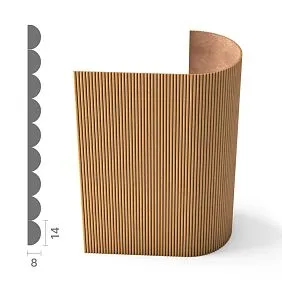
Let's start with the dry facts. A slatted ceiling panel connector is an element of the fastening system that joins two slats lengthwise when one panel is insufficient to cover the distance. It is an engineering element, not decorative. Its task is to ensure the mechanical continuity of the system.
Connectors come in several types:
-
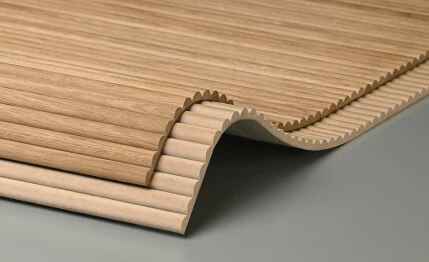
Internal connectors — built into the slat groove and not visible from the front side when installed correctly. The joint is practically unnoticeable.
-
Surface connectors are a small plate or bracket visible from the front side. They are functional but create a visual accent at the joint.
-
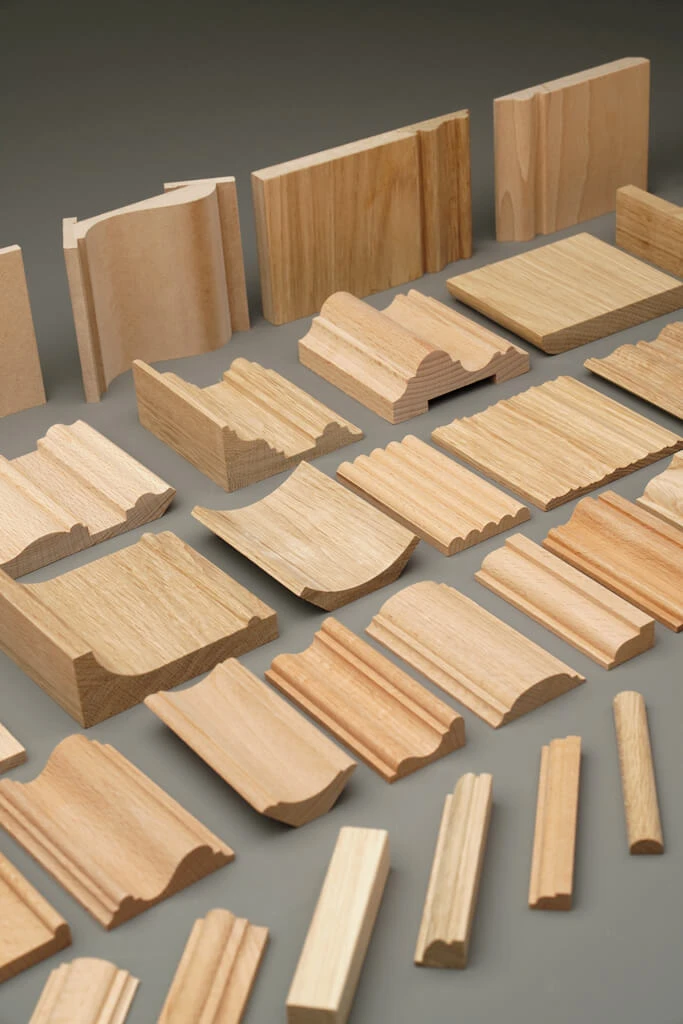
Special transition strips are wider decorative elements that cover the joint and turn it into an intentional architectural band.
The key question when choosing a connector type is: how visible will this joint be, and do you want to hide or highlight it? This is not a technical question—it's a design one.
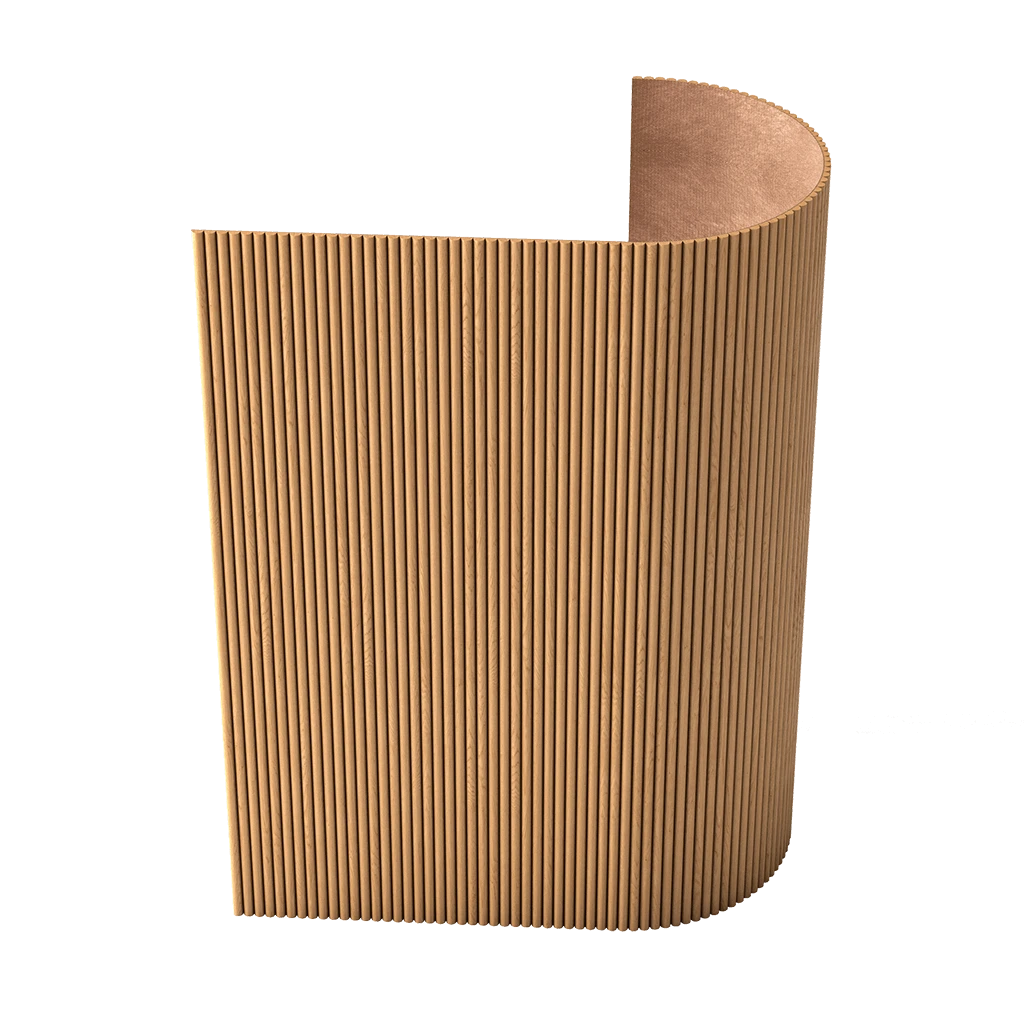
In most residential interiors, the answer is obvious: the joint needs to be hidden.Batten panels for ceilingsshould be perceived as a single plane—a continuous rhythmic pattern from one wall to the other. Any visible joint interrupts this rhythm. Therefore, an internal invisible connector is the priority choice.

When a connector is needed at all
The standard length of a slatted panel is 2400 mm, 2700 mm, 3000 mm, and less commonly 3600 mm. In a room with a width (or length—depending on the installation direction) exceeding these values, a connector is essential. In standard-layout apartments, connectors are most often needed in corridors, long living rooms, and rooms with non-standard configurations.
A slatted ceiling panel connector is also needed in another scenario: when the ceiling is installed in stages—for example, in sections with different levels or height variations. In this case, the connector serves as a transition element between sections.
An important installation condition: the joint of the slats must align with an element of the supporting frame—a cross batten of the lathing or a hanger. A connector hanging in the air without support is a source of sagging and future deformation.
Our factory also produces:

How the connector affects the appearance of the ceiling
The influence of the connector on the visual result can be described through three scenarios.
Get Consultation
First scenario: the connector is unnoticeable
An internal connector, precisely fitted into the batten groove with a correctly selected gap, is invisible. The joint between two battens is perceived as a continuation of a single panel. The pattern (texture, color) matches on both sides of the joint. The ceiling is perceived as a monolithic surface.
This is the ideal scenario. It is achieved under the condition: the correct connector for the specific batten profile, high-quality fitting of the ends, pattern matching.buy slatted panelsFrom the same batch is an important condition: the pattern of material from the same production matches, but may differ between different batches.
Second scenario: the connector is noticeable but reads as a system element
An overlay connecting strip creates a visible horizontal line across the batten rhythm. If there are several such lines and they are spaced with the same interval, they are perceived as an intentional rhythmic element: an additional transverse rhythm against the main longitudinal one. This works in geometrically complex interiors where the decorative lattice is part of the design.
Important: such a scenario must be planned in advance. If overlay connectors are placed randomly where the battens ended, it's not rhythm, it's chaos.
Third scenario: the connector conflicts with the decor
This is where the main problem begins. Overlay connectors for batten ceiling panels create transverse lines. Ceiling molding around the perimeter creates a closed frame contour. Light panels for batten ceilings create their own visual accents. If all this exists simultaneously, the ceiling is overloaded. The eye doesn't know where to stop: it jumps from the connector to the rosette, from the rosette to the cornice, from the cornice to the light insert.
This is visual noise. And it is precisely this that must be prevented at the design stage of the ceiling assembly.
Ceiling molding: when is it appropriate next to a slatted ceiling?
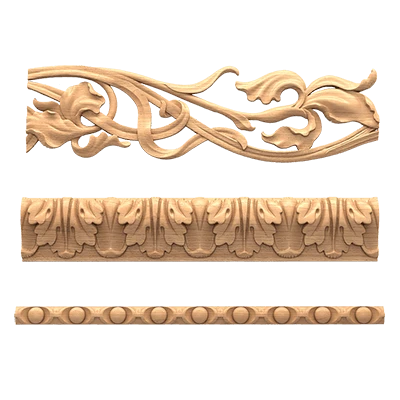
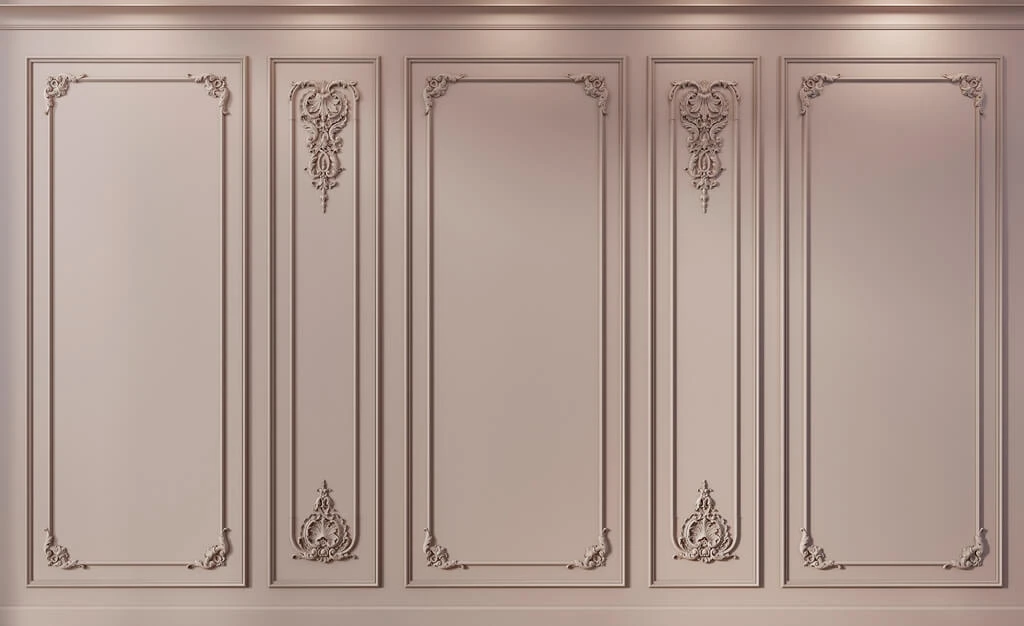
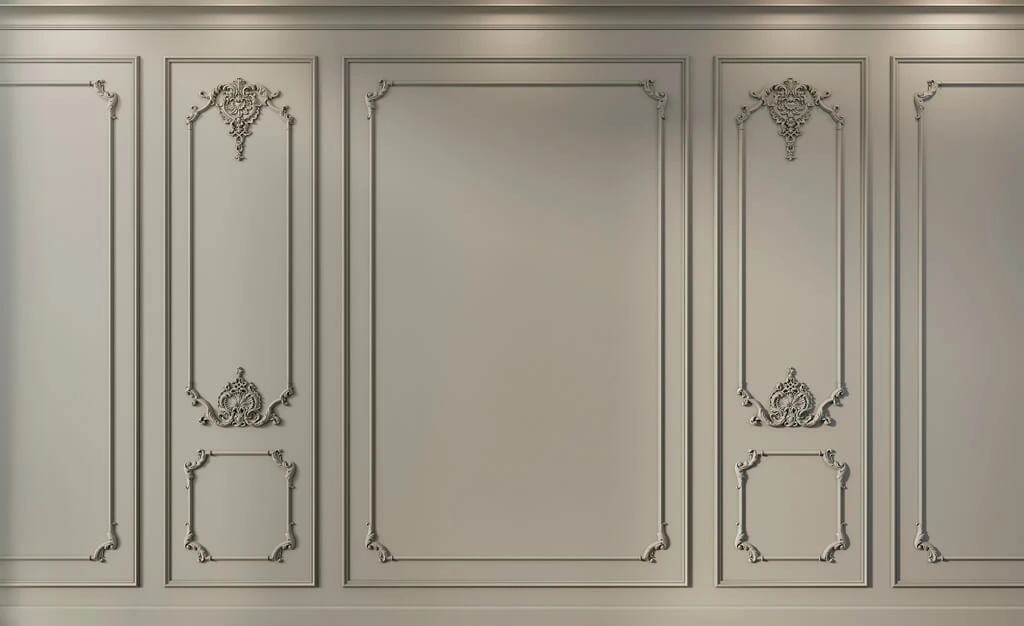
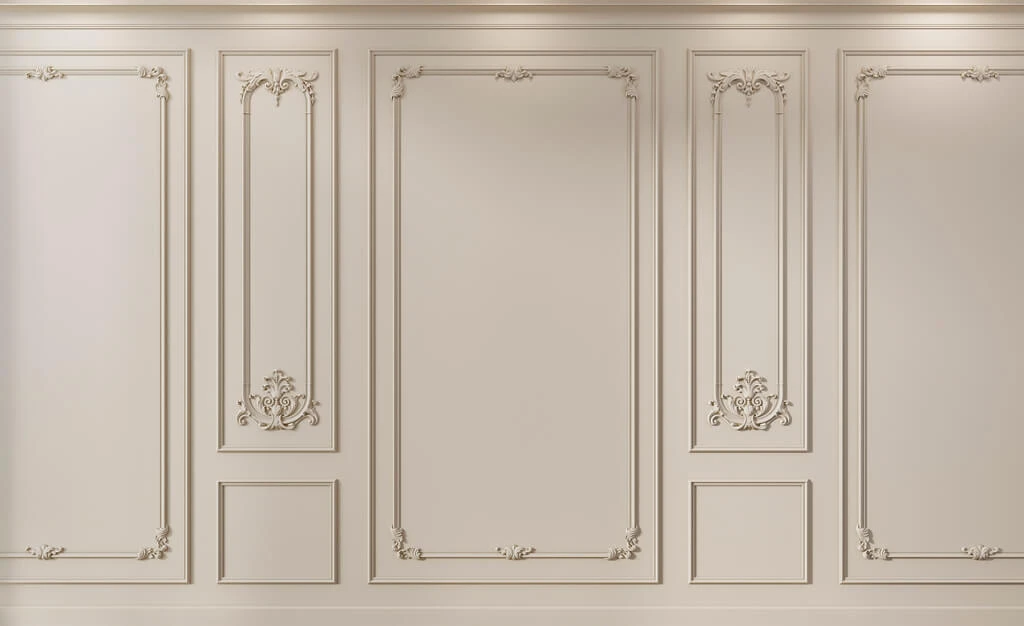
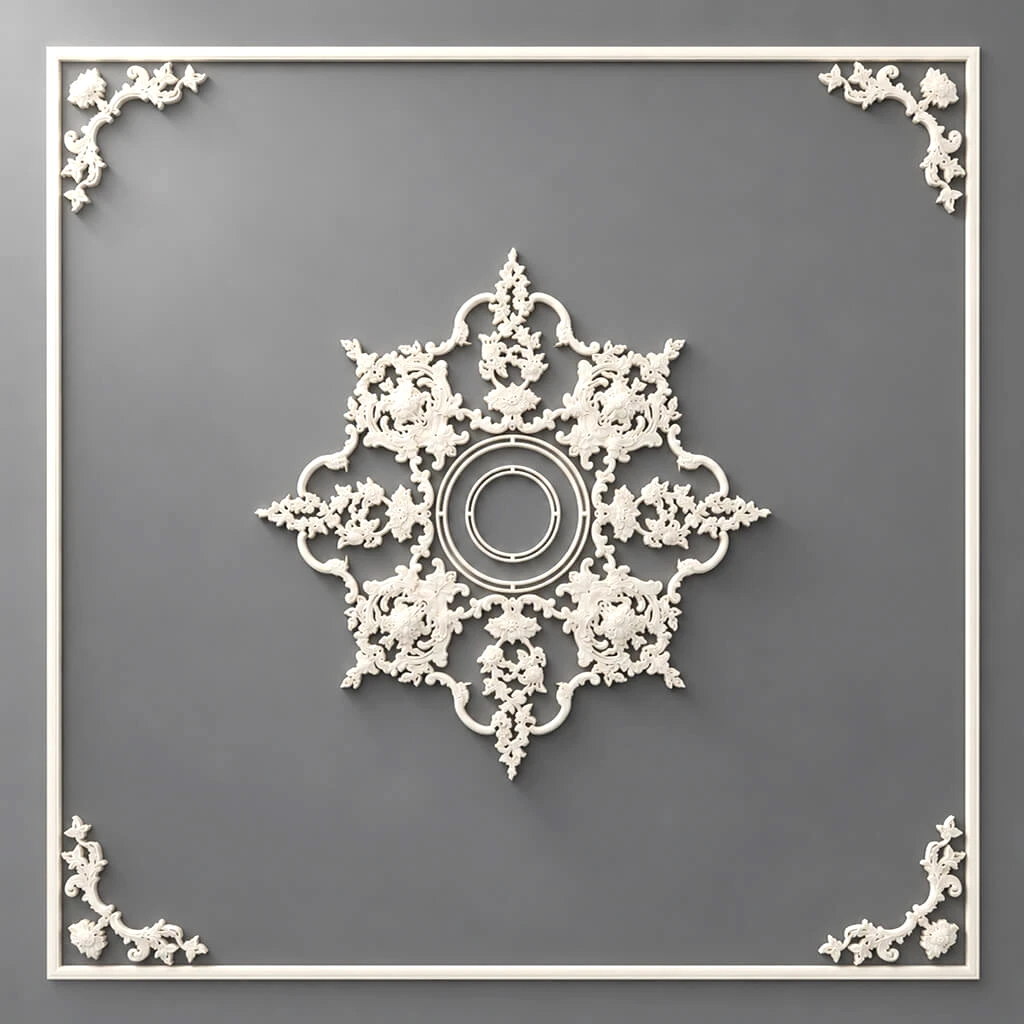
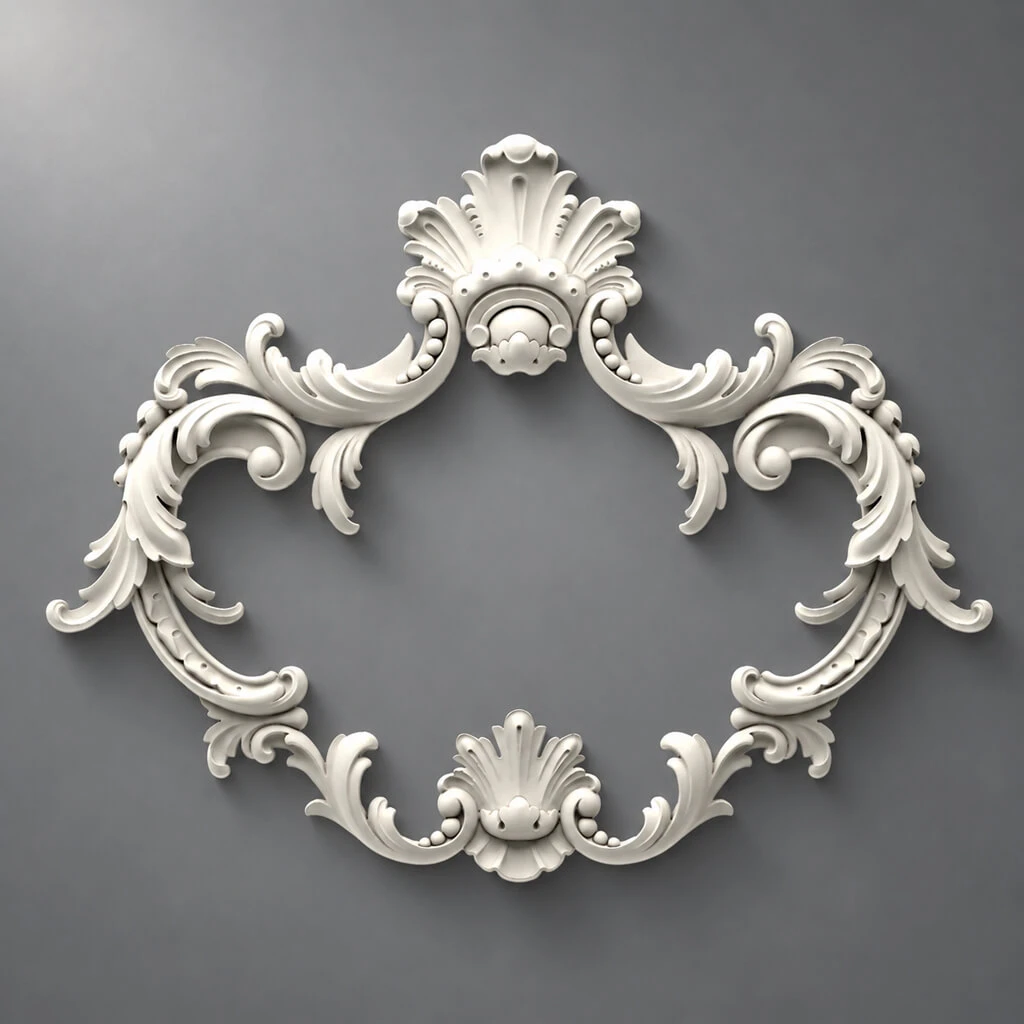
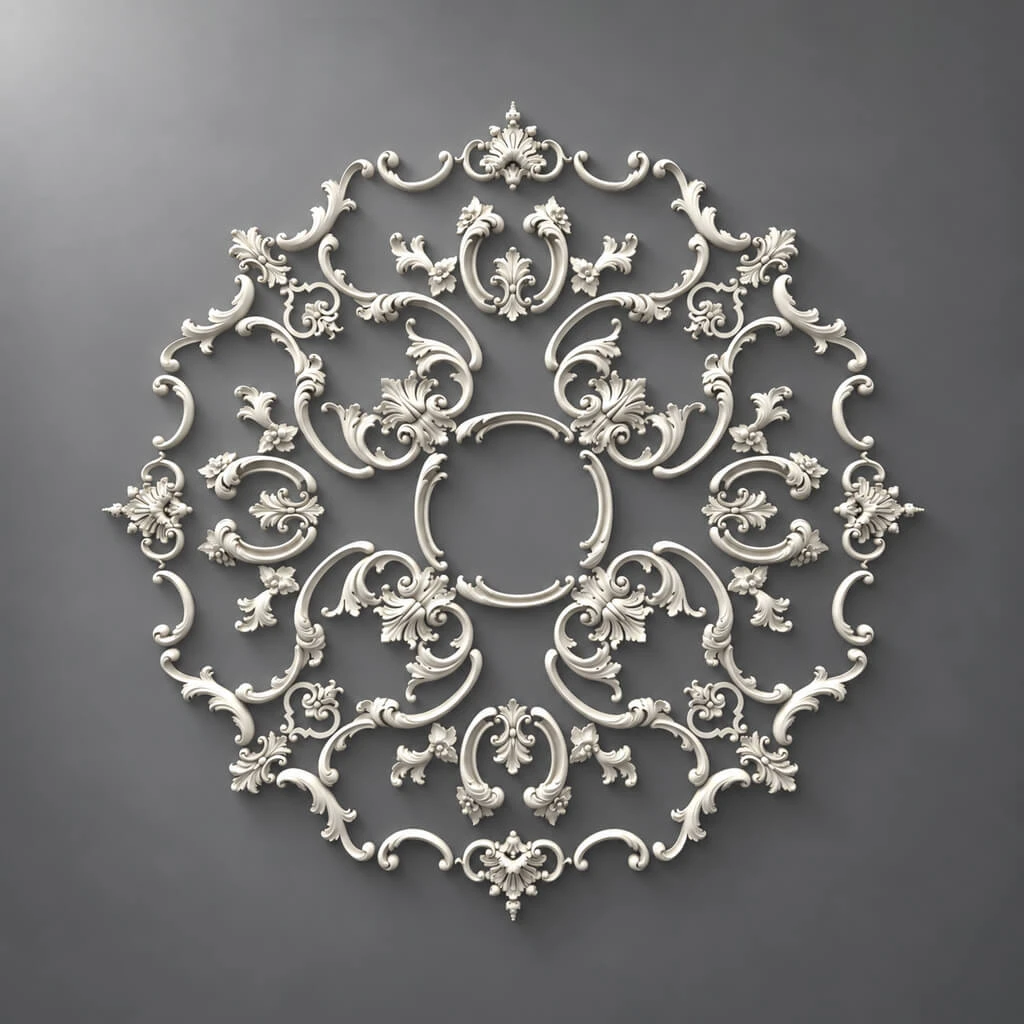
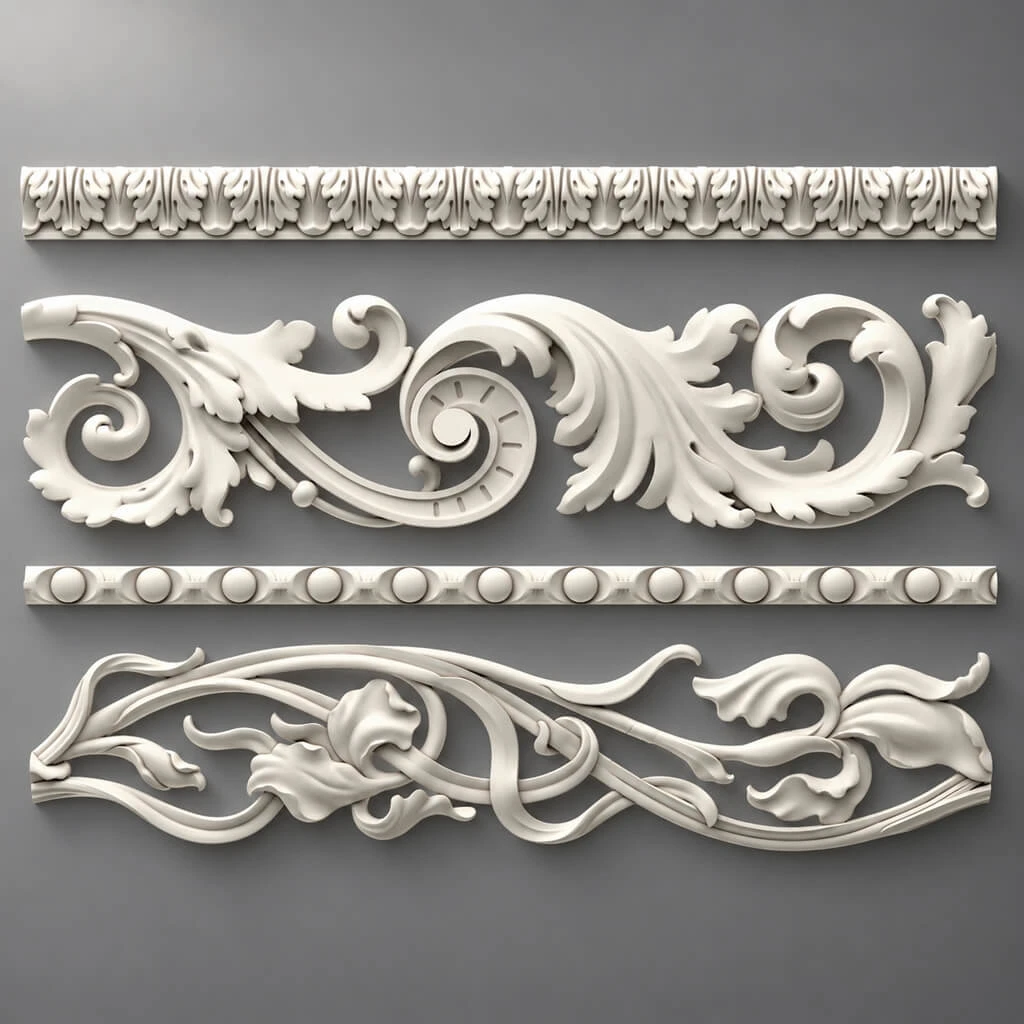
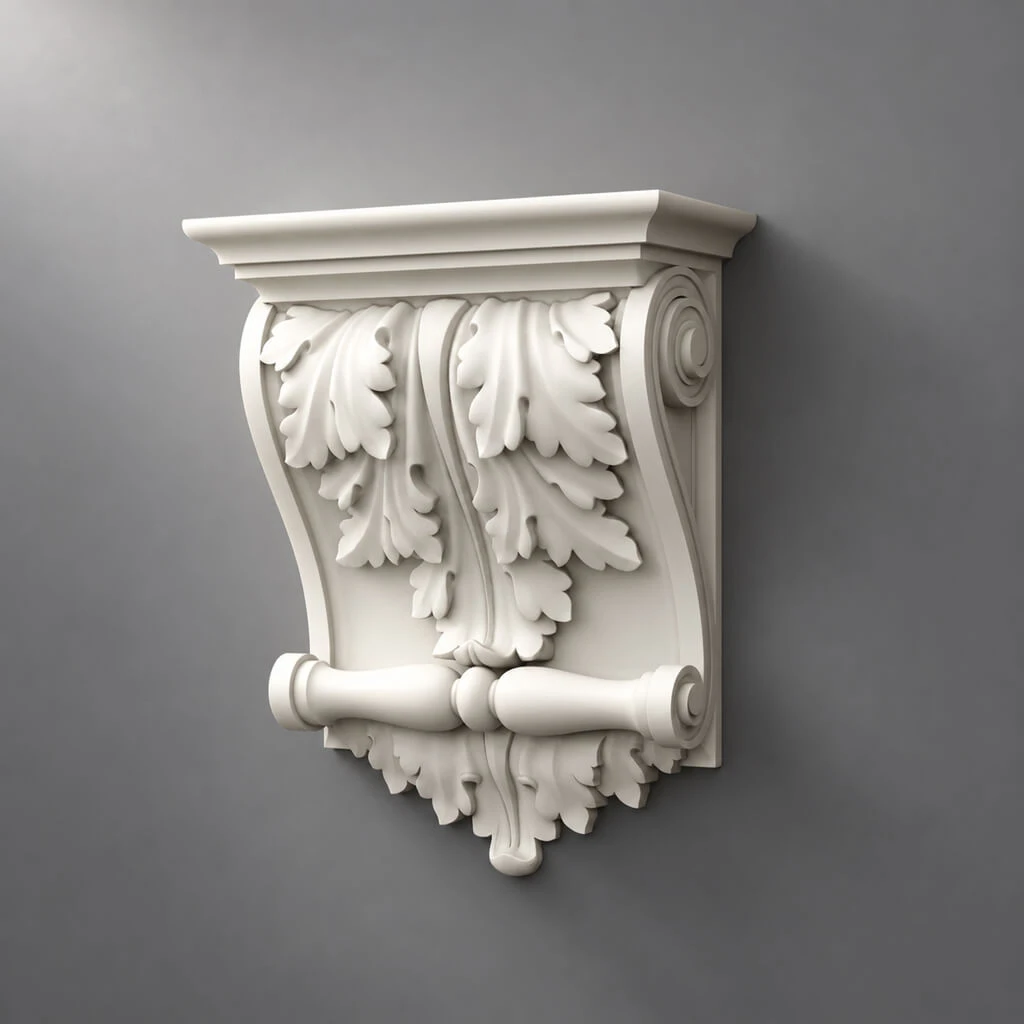
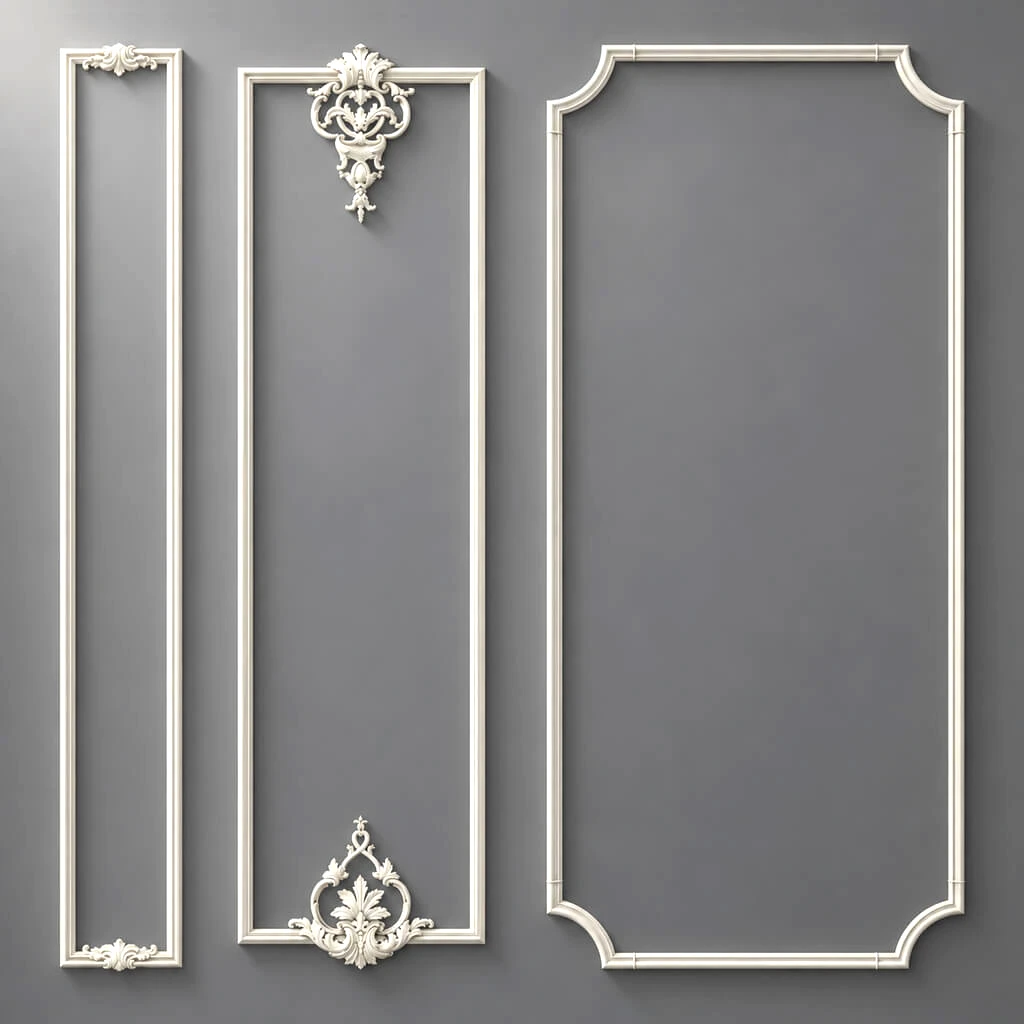
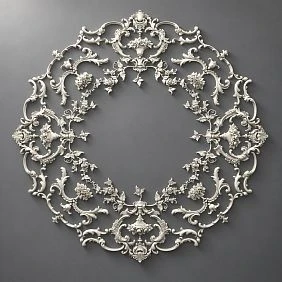
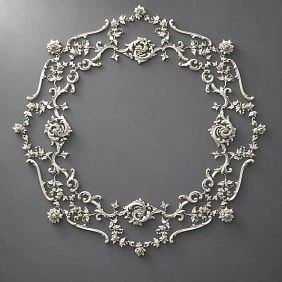
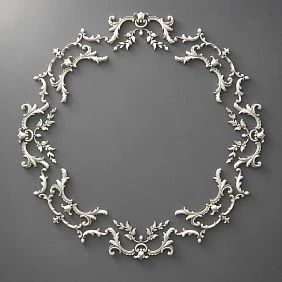
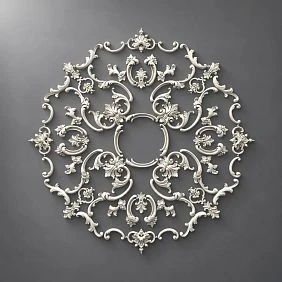
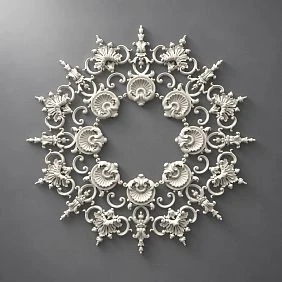
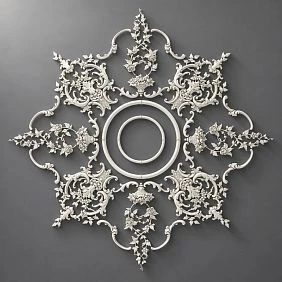
Ceiling molding— is an element with a rich history and powerful architectural significance. A cornice around the perimeter of the ceiling, a rosette for a chandelier, a decorative belt, a coffered frame — all this creates a classic system for decorating the upper plane of a space. And in this system, each element follows a common logic: it enhances the impression of the ceiling as a whole, rather than distracting from it.
The problem arises when molding is attempted to be applied to a slatted ceiling — which is a self-sufficient system with its own rhythm and logic. Not every combination works here.
When molding is appropriate next to a slatted ceiling
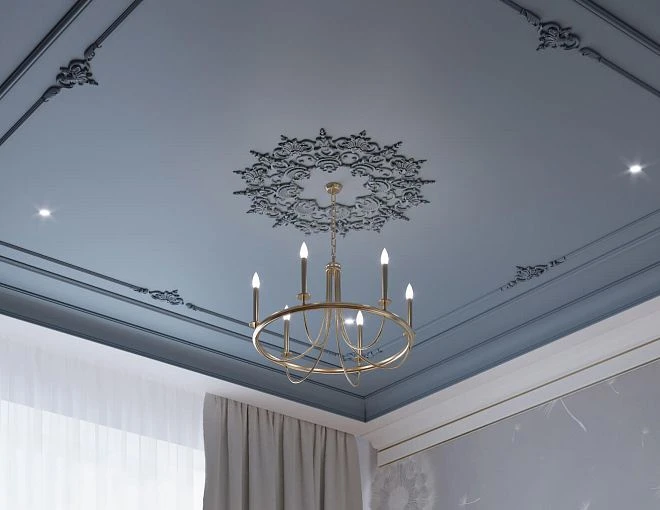
First scenario: the slatted ceiling does not occupy the entire plane. For example, in a living room, a slatted ceiling is installed only over the sofa area — as a local accent with a lowered level. The rest of the ceiling is a classic plastered surface. On this main partceiling moldingpolyurethane molding works to its full potential: a cornice around the perimeter, a rosette above the central chandelier. And the slatted accent is a separate local zone that contrasts with the classic base.
In this scenario, the two materials do not compete: they occupy different areas of the ceiling and perform different tasks. Molding — on the classic plastered part. Slatted ceiling — on the local accent area.
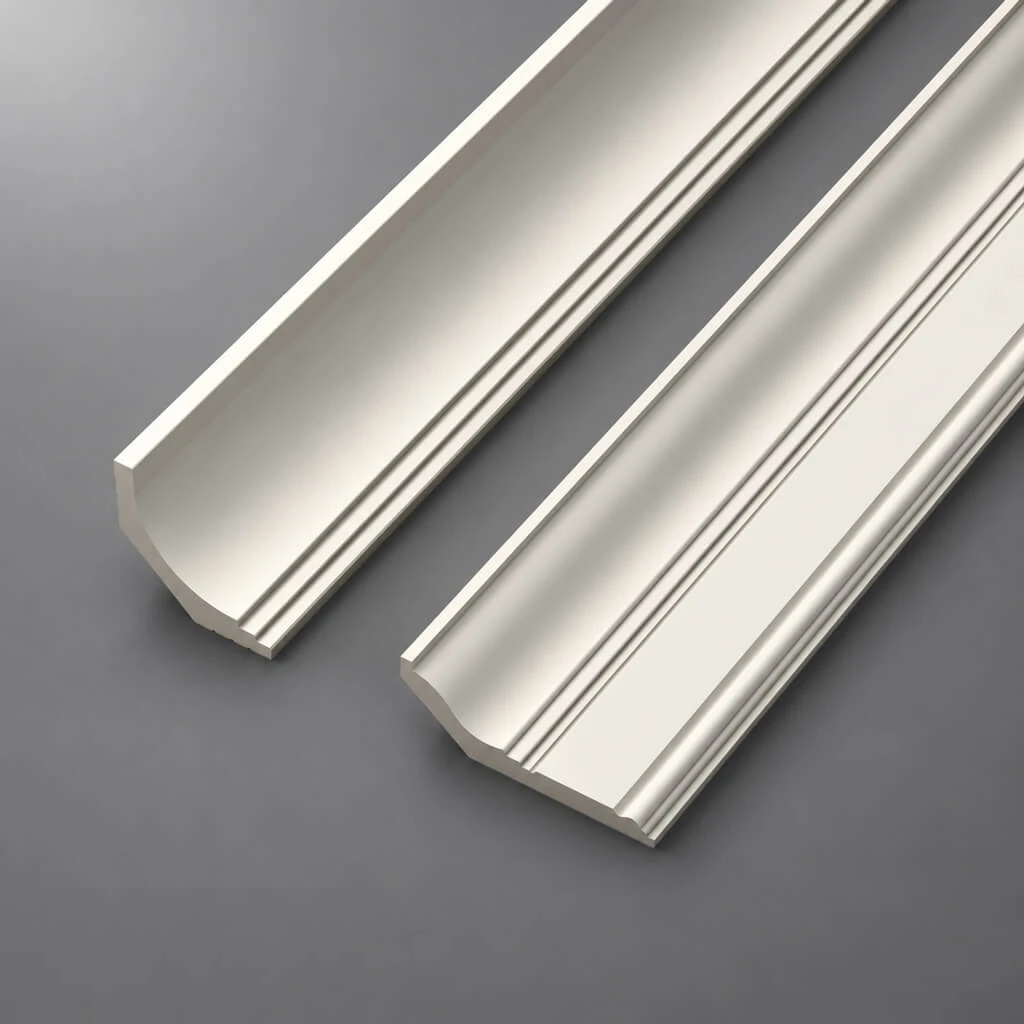
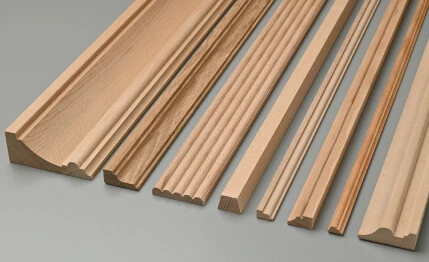
Second scenario: a slatted ceiling made of wood or MDF + a simple cornice. If the slatted panel is wood orMDF slatted panelFor painting, and if the cornice's task is only to frame the wall-ceiling transition, not to create a complex decorative system, then a simple polyurethane cornice with a minimal profile works organically. This is not 'molding' in the full sense—it is an architectural cornice that completes the upper boundary of the space.
Third scenario: ceiling rosette on a small area without battens. In the center of the batten ceiling is a small 'island' of smooth surface, on which a polyurethane ceiling rosette for a chandelier is placed. The battens wrap around this island. The rosette exists in its own 'pocket' of smooth surface and does not come into direct contact with the batten rhythm. This works, although it requires precise design calculation.
When stucco with a batten ceiling doesn't work
Ornamental cornice flush against batten panels. A rich classical profile with ions, acanthus, or egg-and-dart elements touches the batten surface directly. Two elements of different natures end up in direct proximity: the rhythmic industrial pattern of the battens and the historical ornamentation of a classical cornice. Neither wins—both lose.
Ceiling rosette in the center of a batten ceiling without a dedicated zone. The rosette is glued directly onto the battens. It sits on the rhythmic surface and visually 'sinks' into it: the rhythm of the battens overwhelms the rosette's relief. Furthermore, this is technically incorrect: adhesive holds worse to a batten surface than to a solid one.
Stucco as 'added value' to a budget PVC ceiling. This has already been discussed in the context of other materials—and the principle remains: rich decor on a poor base does not improve the base. It only creates a contrast in which the base looks even poorer.
Technical ceiling vs. decorative ceiling: a fundamental difference
This difference is the key to proper ceiling node design. And it is not always obvious.
A technical ceiling is a ceiling whose primary function is engineering: to conceal utilities, create space for ventilation, ensure acoustics, provide moisture protection. A batten ceiling made of PVC or aluminum in a bathroom, in a kitchen work area, in a technical room—this is a technical ceiling. It has an aesthetic form but a functional nature.
On a technical ceiling, the connectors of batten ceiling panels are simply fastening elements. Their task is to hold the structure.Polyurethane ceiling decorOn a technical ceiling—an exception, not the rule. At most, what is appropriate: a simple cove cornice to close the gap between the ceiling and the wall.
A decorative ceiling is a ceiling whose primary function is aesthetic. It organizes the space above, creates the visual character of the room, and shapes the perception of height and scale.Batten panels for ceilingsA wooden ceiling in the living room is a decorative ceiling. Wooden slats in the bedroom are a decorative ceiling. Here, both connectors and moldings work differently: they are part of the artistic concept.
Mixing logics is the main mistake. A technical ceiling to which decorative moldings are attempted to be applied. A decorative ceiling where connectors hang like random technical details. Each of these mixtures creates a sense of incompleteness and mismatch.
Light panels for slatted ceilings: another complex variable
Light panels are transparent or matte inserts in a slatted ceiling, behind which a light source is placed. They create uniform diffused lighting across the entire ceiling surface or part of it. This is a functionally valuable and visually effective element — provided it is applied correctly.
A light panel for a slatted ceiling creates its own visual accent: a luminous surface in the rhythm of dark or wooden slats. This is a powerful effect. That is precisely why it requires discipline: if the ceiling already has connectors and moldings — the light panel adds a third competing element.
Rule: in one ceiling space — one accent element. Either light panels, or moldings, or decorative connectors. Not all at once.
Light panels work well:
-
on a wooden slatted ceiling above the kitchen work area — as functional lighting without a chandelier;
-
in a corridor with a slatted ceiling — as uniform lighting without spotlights;
-
In the bathroom — as a moisture-protected source of diffused light.
In each of these cases, the light panel is the only decorative accent on the ceiling. Everything else is neutral.
How not to overload the upper plane: a system of principles
This is not a list of rules to follow formally. It is a thinking system that helps make decisions before installation — while something can still be changed without losses.
Principle of a single accent
On each separate ceiling plane — one main element. This could be the slatted rhythm itself. This could be molding on a smooth surface. This could be a light insert. But not all three at once.
If you want both molding and a slatted ceiling — divide the plane. Let the slatted ceiling be on one section, and the molding on another. Then each element works in its own space.
Principle of material compatibility
Wooden slat panelsSolid oak creates a 'warm' space with a natural character. Classical-style ceiling molding appeals to an architectural tradition with a different temperature — cold geometry, historical relief. These are different codes. To combine them, a transitional element is needed: a neutral smooth surface between the slatted section and the molded cornice. Without an adapter — conflict.
Principle of connector visibility
If the panel connector of a slatted ceiling is visible, it should be conceived as a decorative element. If it is not conceived as decorative, it should not be visible. This seems obvious but is constantly violated: the connector is chosen based on availability in the store, not on design intent.
Before installation, always answer the question: will this connector be visible or not? If visible, select one that will be organic to the overall system. If not visible, ensure it is truly not visible in the final finish.
Principle of uniform detailing scale
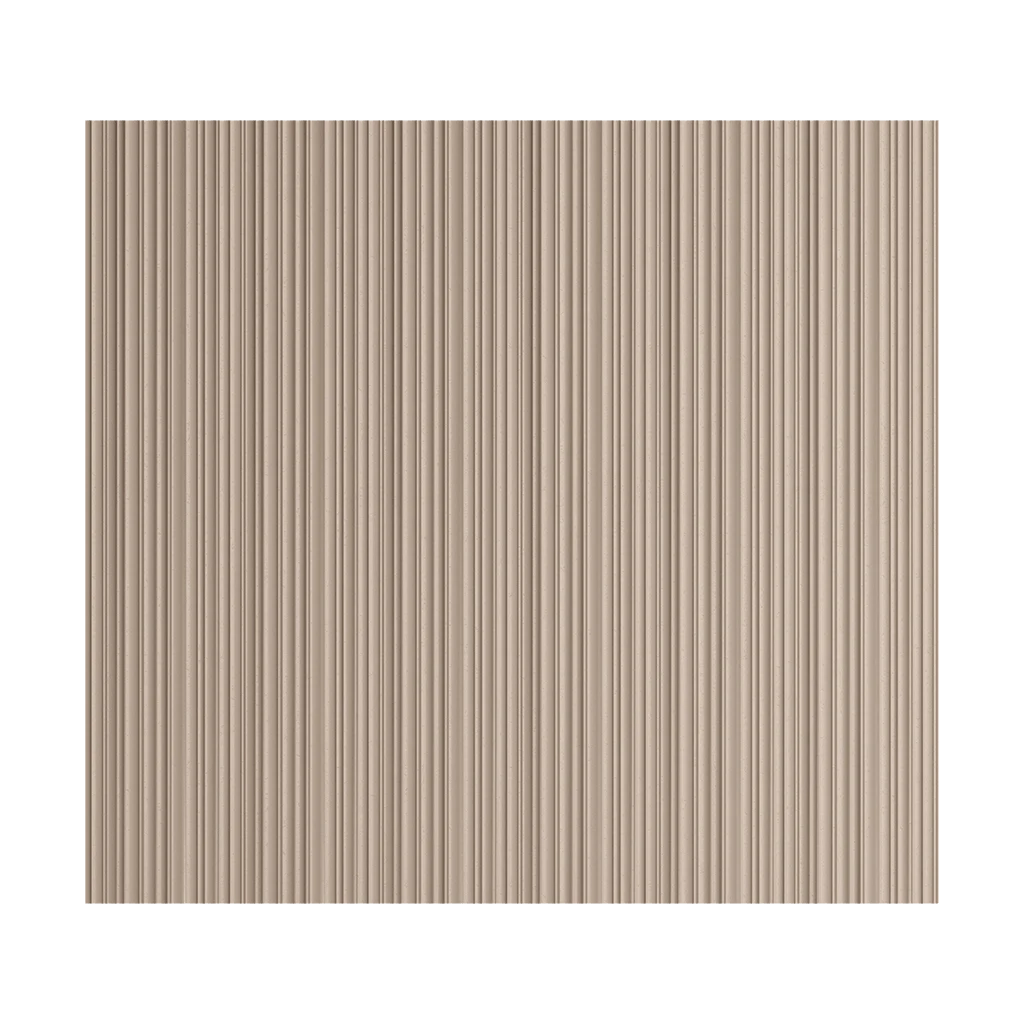
This is a subtle but very important principle. If the slatted panels are a simple profile with a fine pitch, the ceiling detailing is high, and the pattern is dense. Moldings against such a background should be either very simple (so as not to compete) or very large (to dominate). Medium-scale moldings on a fine slatted rhythm create a neutral zone where no element 'stands out.'
If the slatted panels have a wide pitch and a large profile, the detailing is less, and the pattern is more spacious. Here, medium-scale moldings work better: they are comparable in scale to the slat spacing and do not get lost in them.
Practical scenarios: ceilings in different rooms
Living room with a two-level ceiling
This is one of the most common scenarios where a slatted ceiling and moldings can coexist. The lower level of the ceiling is slatted: wood orMDF slatted panelpainted. The upper level is a plaster surface with a polyurethane ceiling cornice along the perimeter of the upper plane.
Two levels — two different materials. Each exists in its own plane. The transition between them is the vertical edge of the niche, which is finished neutrally: paint or a thin profile. Molding is on the upper level, slatted surface is on the lower level. No conflict.
Connectors for slatted ceiling panels are only needed here if the slatted section is wider than the standard panel length. With internal connectors — they are invisible. If a transverse division of the section is necessary — a special transverse slat acts as a decorative belt and intentionally finishes the joint.
Bedroom with a wooden ceiling above the bed
slatted panels in the bedroomin the form of a local wooden 'canopy' over the bed area — an intimate, cozy solution. The main ceiling plane is white plaster. Around the perimeter of the white ceiling — a simple polyurethane ceiling cornice.
The slatted zone and the cornice do not meet: between them is the white surface of plaster. Each element exists separately. The eye can rest on the white plane and focus alternately on the cornice or the wooden zone — but does not receive both signals simultaneously.
Connectors in such a small area are generally not needed: the dimensions of the ceiling above the bed rarely exceed 3 meters.
Kitchen with a slatted ceiling and molding in the dining area
Slatted panels in the kitchenabove the work zone — a utilitarian ceiling: easy to clean, protected from steam, practical. Above the dining area — a stretch or plaster ceiling with a polyurethane ceiling rosette for a pendant chandelier.
The two ceiling sections are separated — literally and visually. The boundary between them is finished with molding or a simple transverse cornice. Each zone has its own logic: utilitarian — above the work surface, decorative — above the dining table.
This is a correct combination where neither the slatted ceiling nor the molding compete. Each occupies its own place.
Corridor with a long slatted ceiling
In a corridor longer than 3 meters, connectors for slatted ceiling panels are inevitable. Here, the choice of connector type is especially important: a corridor is a narrow space where the gaze moves along it, and every transverse element 'stops' this gaze.
An internal invisible connector is the optimal choice. If a transverse element is inevitable—let it be intentional: a decorative transverse slat of a different color or width that divides the corridor into sections. This is not a joint, but a rhythmic accent.
ceiling moldingA cornice in a corridor with a slatted ceiling is unnecessary. The corridor is too small for full-fledged decor, and adding a cornice here will only reduce the perceived height. Exception: if the corridor is formal, wide (more than 2 meters), with a ceiling height of more than 3 meters—here a ceiling cornice of a simple profile is justified.
Slatted ceiling in interior and the place of molding: correspondence table
For clarity—a summary logic of correspondences:
| Room Type | Slatted ceiling | Molding | Connectors |
|---|---|---|---|
| Living room (accent zone) | Wooden, on the section | On the main plane | Internal, invisible |
| Bedroom (above the bed) | Wooden, locally | On the main ceiling | Not needed |
| Kitchen (work area) | PVC or wood | Not recommended | Technical |
| Kitchen (dining area) | Not recommended | Socket, cornice | — |
| Long corridor | Wood or MDF | Not recommended | Internal |
| Bathroom | PVC | Simple cornice | Technical |
This table is not a strict prohibition. It's a working tool for initial orientation.
Errors in ceiling node design: what to avoid
Let's examine the most common errors — those that turn a well-conceived ceiling into an overloaded one.
First error: decisions are made piecemeal
Connectors are chosen separately, molding is chosen separately, light panels are chosen separately. Each decision seems correct in isolation — and turns out wrong in combination. The ceiling node should be designed as a single object. All elements — simultaneously, in conjunction.
Second error: ignoring room height
A ceiling 2.5 meters high is a delicate plane. Every additional element physically reduces the perceived height. 80 mm molding plus a suspended ceiling lowered by 10 cm plus connecting strips — and the space 'sinks'. In rooms with standard height, the rule is one: fewer details on the ceiling.
Mistake three: focusing on the secondary
Panel connectors for slatted ceilings draw attention—and the eye goes to them instead of perceiving the ceiling as a whole. This is a hierarchy error: a secondary technical element has taken the place of the primary one. Solution: make the connector invisible or turn it into an intentional decorative element that is part of the design.
Mistake four: molding without a base
Polyurethane ceiling decoris glued directly onto the slatted surface. This is technically incorrect (adhesion to the slatted surface without special preparation is weak) and visually wrong (molding without a proper base looks 'glued on,' not organic). Molding requires a solid surface—plaster or drywall.
Mistake five: mixing styles without a transitional element
Classical molding and a Scandinavian-style slatted ceiling are two different stylistic codes. They can coexist in one space only if there is a neutral 'buffer' zone: a white smooth plane that separates them and allows each to exist in its own system. Without a buffer—direct stylistic conflict.
Mistake six: adding details after completed installation
The slatted ceiling is installed, connectors are in place, everything is painted. And then the desire arises to add molding. This is possible—but only if there is a suitable base for the molding. Adding molding directly onto the slats is not allowed. Changing the concept after installation is complete is expensive and technically difficult.
The conclusion from all six mistakes is one: the ceiling assembly is designed before installation begins, not during the process.
Choosing one strong element instead of several weak ones
There's an old design principle that goes something like this: better one strong accent than five weak ones. Applied to ceilings, this means the following.
If you haveWooden slat panelsoak with beautiful texture and warm hue — that's a strong accent. You don't need to 'enhance' it with moldings, connecting strips, and light inserts. Let it work on its own. Keep the ceiling clean, and then the wood will speak at full volume.
If you havePolyurethane Ceiling Moldingswith rich relief on a white surface — that's a strong accent. You don't need to add a slatted rhythm that will compete with the cornice relief. Let the molding exist on a clean white field.
One strong element is high-level interior thinking. Several weak elements is an attempt to solve all problems at once, which ultimately solves none completely.
STAVROS: ceiling moldings and decor — for those who know why
STAVROS is a manufacturer for whomCeiling moldingpolyurethane is not a random product, but the result of understanding how decor works in space. Cornices, rosettes, moldings, and coffers made of dense cast polyurethane are products designed for use in the right context: on a solid prepared surface, in a space with appropriate scale, in an interior with coordinated styling.
STAVROS offersPolyurethane ceiling decorin coordinated lines — from minimalist beads to rich classical cornices. Each profile is designed for use with specific architectural conditions. This is not universal decor 'for everything' — it's a precise tool for precise tasks.
If your task is a beautiful, finished ceiling without visual noise, STAVROS will help you choose the element that's needed right here. No more, no less. That's exactly what professionalism is — knowing not only what to add, but also when to stop.
FAQ: Answers to Popular Questions
Are connectors needed for slatted ceiling panels if the panel length matches the room width?
No. If one panel spans the distance from wall to wall without a gap, connectors are not needed. They are used only when the room length exceeds the standard panel length and the slat needs to be extended.
Can a polyurethane ceiling rosette be glued onto a slatted ceiling?
Technically — using a special adhesion primer for the slat surface. But visually, this is undesirable: the rosette 'sinks' into the slatted rhythm. The correct solution is to allocate an area of smooth surface in the center of the slatted ceiling for the rosette (a small 'island' of smooth MDF or plaster).
What type of polyurethane cornice should be chosen for a wooden slatted ceiling?
For a wooden slatted ceiling — a cornice with a minimal or simple geometric profile. Complex ornamental relief creates a stylistic conflict with the natural character of wood. The cornice height should be proportionate to the step of the slatted rhythm.
How to calculate where to place the connector for slatted ceiling panels?
The connection point is determined by two factors: the length of the available panels and the layout of the frame elements. The connector must align exactly with a load-bearing element of the lathing. Therefore, first calculate the frame with the required spacing, then determine the connection points — where they fall on a transverse element of the lathing.
Does the type of connector affect the acoustics of a slatted ceiling?
Slightly, but yes. A rigid metal connector transmits vibrations better than a plastic one. In rooms with acoustic requirements (home theater, recording studio), plastic connectors or special vibration-isolating pads between the connector and the frame are recommended.
Can light panels be used for a slatted ceiling together with molding?
Yes, provided the principle of spatial separation is observed. Light panels go in the slatted zone, molding on a separate smooth plane. Direct adjacency of a light panel and a molding cornice creates competition of accents and visual noise.