































































Article Contents:
- Wide floor skirting in Moscow: when it is truly the right choice
- What wide floor skirting can be bought in Moscow
- Wooden skirting boards made of oak and beech
- Wide MDF skirting for painting
- Moisture-resistant wide skirting HI WOOD
- Straight and shaped wide profiles
- How to choose a wide skirting by height
- 80 mm — a transitional format between medium and wide
- 100 mm — a universal wide skirting
- 120 mm — for prestigious and high-ceilinged rooms
- When a profile taller than 120 mm is needed
- How to choose a wide skirting board by material
- When wood is better
- When MDF is better
- When a Moisture-Resistant Option is Needed
- What to choose for an apartment and what for a public interior
- How to choose a wide skirting board by profile and style
- Straight profile for a modern interior
- Chamfered Profile
- Figurative profile for classic style
- White wide skirting board for painting
- Wide wooden skirting board in natural finish
- How to choose a wide skirting board to match the floor covering
- Under parquet
- For engineered board
- Under laminate
- For quartz vinyl
- Under tile and combined coverings
- Wide skirting board for apartment, house and different rooms
- living room
- for the bedroom
- For the hallway
- For Kitchen
- For Office
- For commercial interiors
- What to combine wide skirting board with in interior
- With doors and architraves
- With wall moldings
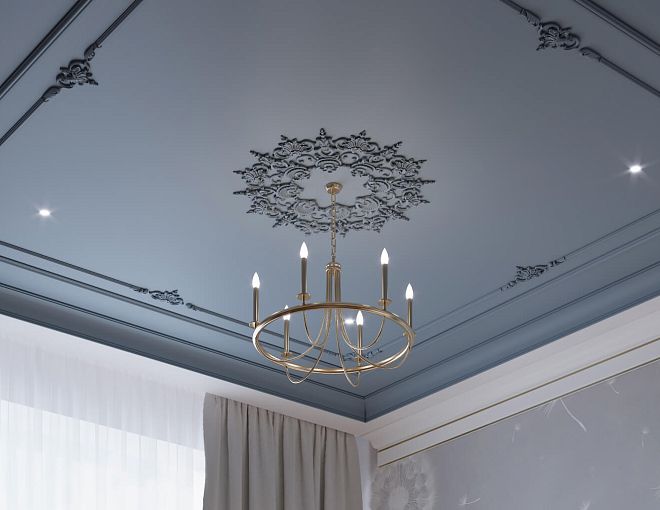
- With Ceiling Cornices
- With slatted panels
- With decorative elements in the same style
- Comparison table of wide skirting boards by material
- Where to buy wide floor skirting board in Moscow
- Common mistakes when choosing wide skirting board
- Too wide profile for low room
- Color error
- Wrong material for operating conditions
- No connection with doors and wall decor
- Conclusion
- About the Company STAVROS
- Frequently Asked Questions

A wide floor skirting board is not a trend for the sake of a trend. It is an architectural solution with clear logic: the larger the room, the more substantial its horizontal lines should be. A narrow 40–50 mm strip at the base of a wall in a living room with 3.0-meter ceilings looks as if the renovation was not finished. A wide 100–120 mm profile is a statement. It is an architectural frame that defines the lower contour of the space and simultaneously creates a system together with doors, moldings, and the ceiling cornice.
If you are looking for whereBuy wide floor skirting boardIn Moscow — with an understanding of the material, profile, height, and correct application — this material will give you a complete frame of reference. No fluff, no advertising clichés, with specific solutions.




Wide floor skirting board in Moscow: when it is truly the right choice
Let's clarify right away: 'wide' is a relative concept. For 2.5-meter ceilings, 80–90 mm is considered wide. For a Stalin-era apartment with 3.2-meter ceilings — 80 mm is the norm, and 'wide' becomes 120–160 mm.
The right choice is not choosing the widest one available. It is choosing a proportionally correct profile for a specific room.
Three scenarios where a wide skirting board is the only correct solution:
-
Ceilings 2.9 meters and higher: a narrow profile gets lost, the space seems unfinished
-
Classical, neoclassical, or art deco interior: architectural details must have weight and scale
-
Spacious open-plan layouts: a large area requires a noticeable horizontal line at the floor
Wide floor skirting board in Moscow— an existing cluster with scenario breakdowns by room type, material, and height. Study it in parallel—together they provide a comprehensive picture.




What wide floor skirting boards can be bought in Moscow?
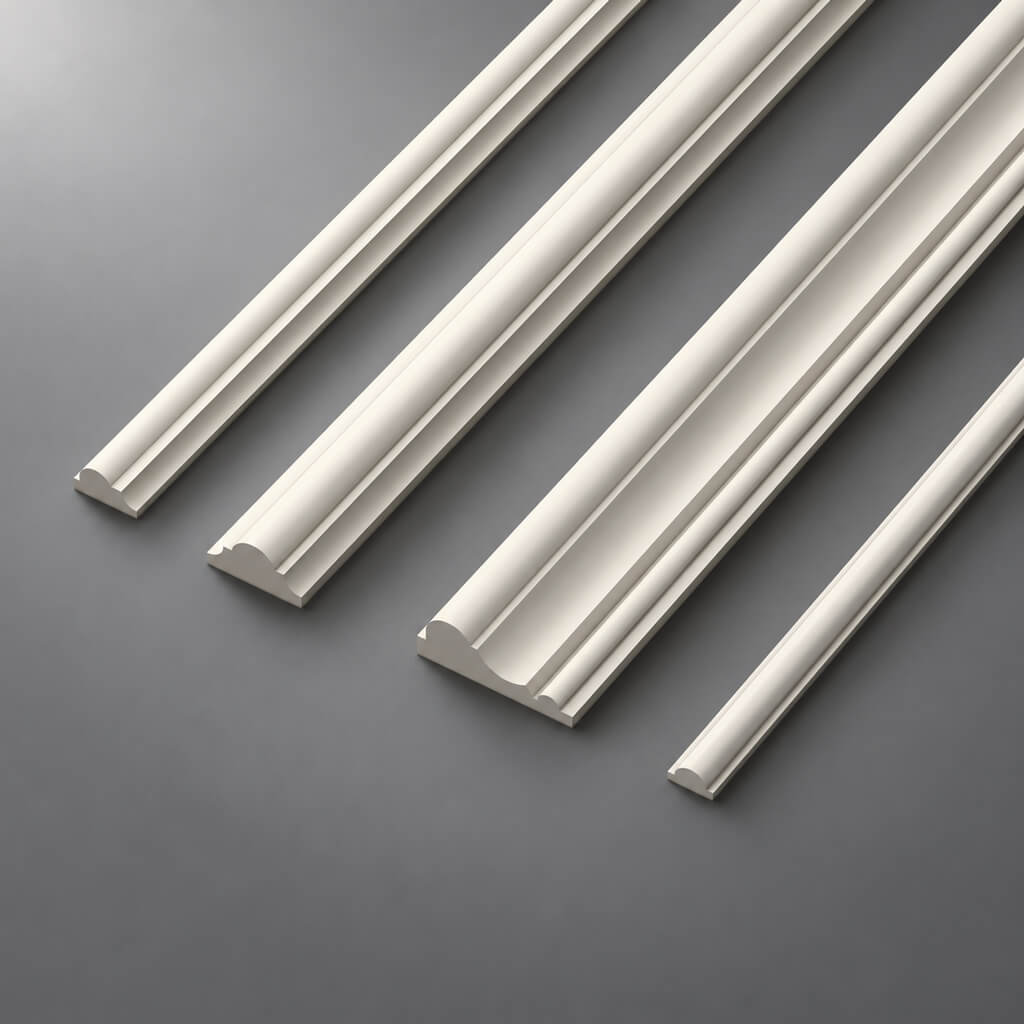
The Moscow market today offers four real categories of wide floor skirting boards. Each occupies its own niche—by material, price, and application area.
Our factory also produces:


Wooden skirting boards made of oak and beech
Natural oak or beech in the form of a wide floor skirting board is the highest category of floor molding.Wooden wide floor skirting boardcarries what no polymer material can imitate: the living texture of the fiber, the warmth of natural wood, the tactile authenticity that is noticed even without looking at the floor.
Oak is the most in-demand species for wide floor skirting boards in Moscow interiors. Density 650–750 kg/m³, high surface hardness, expressive structure with large straight grain and characteristic rays. An oak profile of 100–120 mm is a product that lasts for decades without losing its geometry.
Beech is an alternative to oak with a finer and more uniform texture, a soft warm tone, and high density. Beech skirting board is ideal for interiors with a light Scandinavian or Provence note: the texture is delicate, without the overwhelming 'power' of oak.
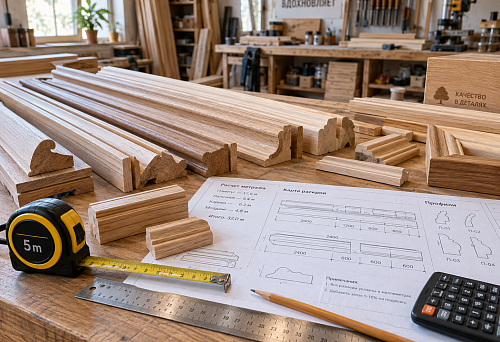
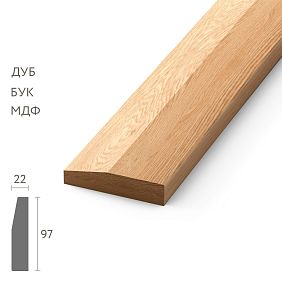
Technical parameters of STAVROS wooden skirting boards: heights 60, 70, 80, 100, 120 mm, plank length 2400–2500 mm, surface sanded for varnish, oil, or painting. In the catalogwooden and MDF skirting boards— full range with characteristics by height, profile, and material.
Get Consultation
Wide MDF skirting boards for painting
Wide-format MDF skirting board offers precise geometry over long lengths and a perfectly smooth surface that no natural material can provide. The dense MDF core (750–800 kg/m³) maintains its shape over long spans without sagging or deformation.
Buy wide white MDF skirting board for painting — for those who want a flawless horizontal line, identical in color to door architraves and ceiling cornices. After installation, the skirting board is painted to match the entire wooden interior trim — no variation in 'white' shades.
Wide MDF skirting board 100–120 mm white — one of the most sought-after formats in Moscow business-class projects, where the interior is built on a system of white trim: architraves, skirting boards, cornices — all in a single tone and uniform profile.
Moisture-resistant wide skirting boards HI WOOD
Moisture-resistant skirting board HI WOOD— a separate category for high-humidity areas. Material: high-density polystyrene, 100% water-repellent, does not swell upon contact with water, even when fully submerged.
The HI WOOD range covers heights from 58 to 140 mm — including both compact formats and full-width profiles of 80, 100, 120, and 140 mm. Surface is ready for painting or available in pre-finished white.
Applications: bathrooms, toilets, saunas and hammams, kitchens near the sink area, swimming pools, laundries, commercial spaces with wet cleaning. Where wooden or MDF skirting boards would inevitably swell and deform — HI WOOD performs stably for years.
Straight and shaped wide profiles
Two fundamentally different visual languages — straight and shaped — are present in all material categories of wide skirting boards.
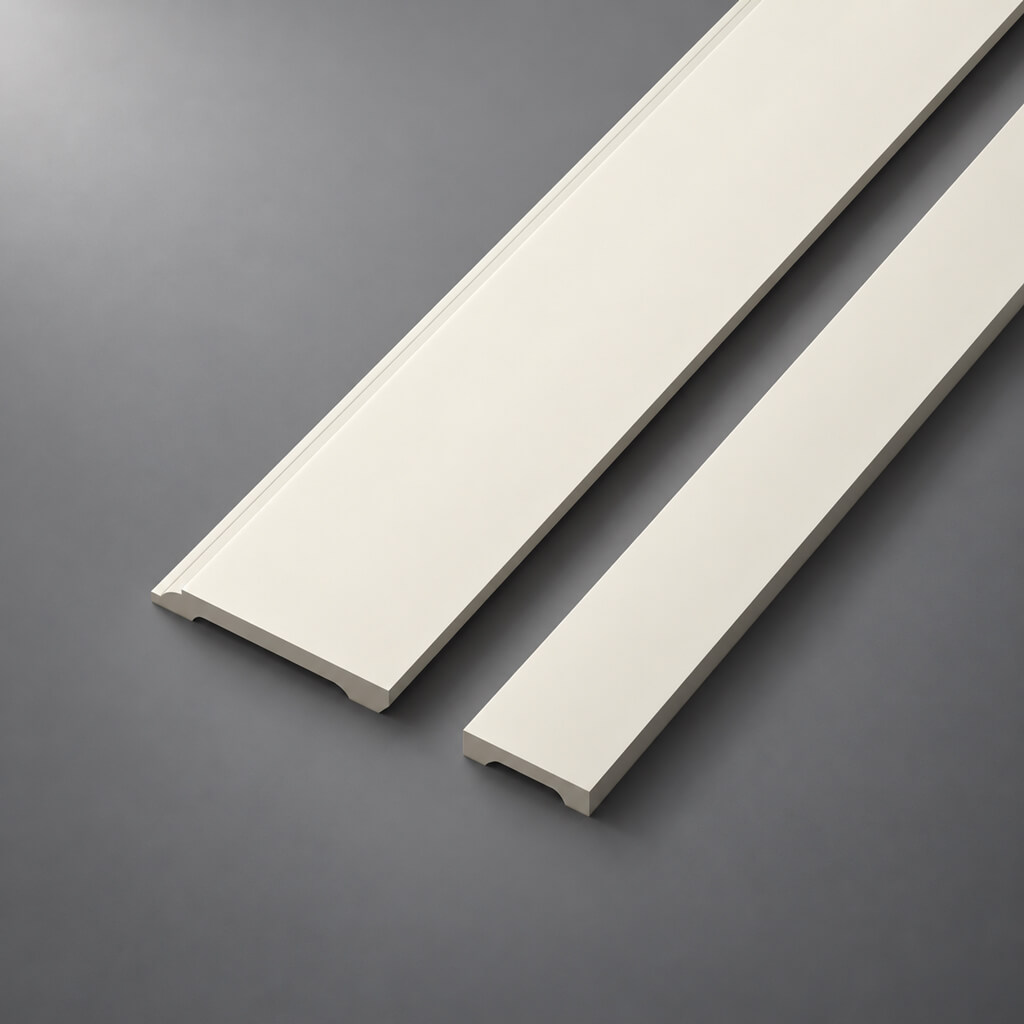
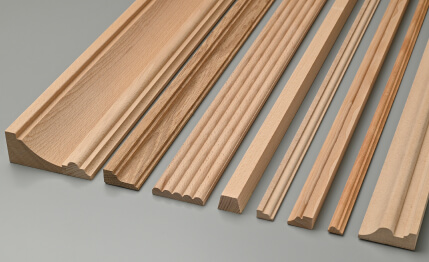
Straight profile: rectangular cross-section without relief. Strict horizontality, conciseness, modernity. For Scandinavian, minimalist, and contemporary interiors.
Figural profile: relief transitions, beads, decorative steps. The classic vocabulary of architectural decoration — for neoclassical, classical, and art deco styles. In the collectionof MDF Classic skirting boards— precisely figural profiles with refined proportions.
How to choose a wide skirting board by height
Height is a parameter determined before browsing the catalog. It is not adjusted after installation.
80 mm — a transitional format between medium and wide
80 mm — the boundary between standard and wide. For ceilings 2.6–2.9 meters, this is a full-fledged universal format that looks confident, does not aim to dominate, but provides a noticeable horizontal line at the base of the wall.
Buying an 80 mm wide skirting board is the right choice for standard new-build Moscow apartments: most new constructions and renovated buildings have exactly this ceiling height range.
Practical detail: 80 mm with a margin covers all standard installation gaps of floating coverings (parquet, laminate, engineered board — gap 8–12 mm). For non-standard installation situations with a gap of 15–18 mm, a height of at least 90–100 mm is required.
100 mm — universal wide skirting board
100 mm — optimum for ceilings 2.8–3.1 meters. This is a true wide profile: it gives weight to the lower contour of the wall, is clearly visible from any angle, and with the correct profile becomes a full-fledged architectural element.
Buy high skirting board 100 mm — in wood or MDF for living spaces, in HI WOOD for wet areas. Exactly 100 mm is the standard for classic and neoclassical interiors of business-class Moscow apartments, for country houses with wooden structures, for offices and libraries.
The rule of proportion confirms this choice: with a ceiling of 3.0 meters, the optimal skirting board height (1/30 of the height) is 100 mm. Exact match.
120 mm — for prestigious and high rooms
120 mm — format for representative spaces. Stalinist apartments with ceilings 3.2–3.5 meters, country houses with high ceilings, luxury commercial interiors. Skirting board 120 mm is perceived as an architectural base: powerful, clear, proportionate to the height of the room.
To buy a wide skirting board 120 mm means to make a statement. Paired withmoldings and cornicesfrom a unified system, the 120 mm skirting board completes the full architectural contour of the room: base, belt, and crown.
When a profile above 120 mm is needed
Profiles 140–160 mm and above — for historical interiors of Stalinist architecture, for mansions and villas, for public spaces with ceilings 4.0 meters and above. This is a custom solution that requires careful analysis of proportions and coordination with the overall architectural concept.
The HI WOOD line includes skirting boards up to 140 mm: the maximum size in the moisture-resistant series, suitable for spaces where other materials are not applicable.
How to choose a wide skirting board based on material
The material determines three things: durability, suitability for a specific room, and its place in the interior hierarchy.
When wood is better
Natural oak or beech are for living spaces with normal humidity, where the interior is built on the principle of material authenticity. Oak parquet or engineered oak flooring plus a wide oak skirting board is not just decor. It's a system where one material complements the other.
Buying a wide solid wood skirting board means choosing durability and natural texture. A 100 mm oak profile lasts 20–30 years without losing its shape, accepts any finish (varnish, oil, wax, paint), and can be restored by sanding if needed.
The limitation of wood: moisture. Systematic exposure to water or steam damages wood—causing warping, swelling, and mold. The kitchen near the sink, bathroom, and toilet—for these areas, a wide wooden skirting board is not used without special oil-wax impregnation and on the condition that any spilled water is immediately removed.
When MDF is better
MDF excels where precise geometry over large spans and a perfect surface for painting are needed. Open-plan spaces of 30–50 sq. m, long corridors, public areas—MDF profiles maintain a straight line without sagging or deformation.
Buying a 100 mm wide MDF skirting board for painting is for interiors where all wooden elements are painted in a uniform white. This achieves complete color consistency: skirting boards, trims, cornices—all in the same tone and texture.
When a moisture-resistant option is needed
Polystyrene HI WOOD is the only material that works where moisture is systematic. Bathroom, toilet, sauna, swimming pool—neither wood nor MDF can withstand these conditions without significant damage.
HI WOOD 80–140 mm—a wide-format moisture-resistant skirting board for those who want a bold horizontal line at floor level even in wet areas. The material is water-resistant, can be painted with regular water-based paint, and is installed using liquid nails.
What to choose for an apartment and what for a public interior
For a residential apartment: wood in living rooms, MDF as an alternative or addition, HI WOOD for bathrooms and toilets.
For commercial interiors (office, restaurant, hotel, SPA): MDF and HI WOOD — by zones. In administrative and meeting areas — MDF 100–120 mm white. In wet and technical areas — HI WOOD. In executive meeting rooms with parquet — a wide wooden oak skirting board as a sign of the material status of the space.
How to choose a wide skirting board by profile and style
Straight profile for a modern interior
A rectangular cross-section without relief is absolute neutrality in the world of profiles. Such a skirting board does not claim to be a decoration: it simply exists, it is precise, it is correct. It is this quality that makes it ideal for modern interiors, where decor is consciously chosen minimalism.
A wide straight white 100 mm skirting board in a Scandinavian interior with an open layout and wooden accents is one of the most convincing modern interior solutions. A clean white horizontal line at the floor emphasizes the color of the parquet without drawing attention to itself.
Chamfered profile
A chamfer is a beveled top edge of a skirting board at a 45° angle. It is a compromise between a straight and a figured profile: slightly more expressive than a simple rectangle, but without heavy relief details. A profile with a chamfer is appropriate in transitional styles — modern with a light classical note, in restrained neoclassicism.
Buy a wide skirting board with a chamfer — for interiors where a profile 'with character' is needed, but without excessive decorativeness. The chamfer creates a play of shadows along the top edge of the skirting board, giving it additional visual volume.
Figured profile for classic
A figured wide skirting board is a classic in the literal sense of the word. Relief transitions, a bead along the top edge, decorative steps, and coves—all of this is an architectural vocabulary derived from the European tradition of order decoration.
Classic MDF Skirting Boards— a collection with precisely proportioned figured profiles for classical and neoclassical interiors. The relief is designed for coordinated heights: each profile in the collection is scaled to a specific skirting board height—80, 100, or 120 mm.
White wide skirting board for painting
A white wide skirting board for painting offers maximum freedom in choosing the final color. Tint it to match the exact shade of doors, architraves, and ceiling cornices—and achieve a system with perfect color unity.
Important: 'white for painting' means a primed or sanded surface of MDF or polystyrene, ready for paint application. Do not paint unsealed MDF—first apply primer, then paint in 2–3 coats.
Wide wooden skirting board in a natural finish
A wide wooden skirting board in a natural finish—oil, wax, or clear varnish—showcases the material. The wood is not concealed but displayed: the texture, tone, and play of grain across a width of 100–120 mm function as a horizontal work of material art at the base of the wall.
Buy a wide oak skirting board in a natural oil finish—for interiors with wooden structures, wooden furniture, parquet made from the same wood species. The unity of material from floor to ceiling creates a sensation that cannot be achieved in the polymer segment.
How to choose a wide skirting board to match the floor covering
Under parquet
Parquet is the most 'demanding' context. Natural wood at the floor sets a high standard for all other trim.
A wide wooden skirting board made from the same species as the parquet is the absolute ideal. Oak to oak, beech to beech: the texture and tone echo each other, giving the space material consistency.
If a wooden skirting board isn't in the budget or doesn't fit the style—white MDF 100–120 mm. But avoid laminated skirting boards 'imitation oak' next to real parquet: the difference in texture and tone is noticeable every day.
For engineered board
Engineered board with a natural wood veneer is visually close to parquet but has greater stability. The principle for selecting a wide skirting board is similar: either a wooden skirting board matching the veneer color or neutral white MDF.
Buying a wide beech skirting board for an engineered board with beech veneer creates a system where the wood species for the floor and wall base is unified. The eye, gliding from the floor to the wall base, isn't interrupted: the material continues.
Under laminate
Laminate is a floating floor covering with a mandatory expansion gap. A wide skirting board 80–120 mm with a margin covers any installation gap and doesn't require additional sealing profiles.
For laminate flooring, the principle is: don't look for a skirting board 'matching the decor'—look for a skirting board matching the door color. White doors—white skirting board. Oak-colored doors—skirting board in oak color or white, depending on the overall concept.
A wide MDF skirting board for laminate flooring is the optimal choice: it doesn't pretend to imitate wood, but it provides precise color and flawless geometry.
For quartz vinyl
Quartz vinyl is a versatile modern flooring that has captured a huge share of the Moscow renovation market over the past five years. Its designs are diverse: wood, stone, concrete, abstract patterns.
Wide skirting board for quartz vinyl: if the design is 'wood-look'—white MDF or HI WOOD (if it's a bathroom or kitchen). If the design is 'concrete-look' or 'stone-look'—gray or white skirting board.
Buying HI WOOD 80–120 mm for quartz vinyl in a bathroom or kitchen is a practical and durable solution. 100% moisture resistance, the surface can be painted any shade, durability unlimited by moisture.
For tile and combined floorings
In tiled areas (kitchen, bathroom, toilet, hallway), wooden and MDF skirting boards create problems at the junction: tile is a rigid flooring that does not allow for expansion gaps, while organic materials behave differently.
For tiled areas: HI WOOD 58–140 mm — a skirting board designed for these conditions. Installed with adhesive, does not swell, deform, or peel.
Wide skirting board for apartments, houses, and various rooms
For the living room
Living room — the main room of the apartment from an interior declaration perspective. This is where the skirting board works most noticeably and most responsibly. A wide skirting board 100–120 mm in a living room with ceilings 2.9–3.2 meters high is not an exaggeration, it's a proportion.
For a living room with oak parquet — a wide 100 mm wooden skirting board made of oak. For a living room with laminate and white walls — white MDF 100 mm straight or with moderate relief. For a classic living room with high ceilings — profiled MDF 120 mm paired withmoldingsand a ceiling cornice.
For the bedroom
Bedroom — a delicate context. Here, a wide skirting board should not 'shout'. For a bedroom with ceilings 2.8–3.0 meters high — 80–100 mm straight in white or wall color. For a bedroom with high ceilings — 100–120 mm.
A special interior technique for the bedroom: a wide skirting board in the wall color. If the bedroom walls are painted in dusty blue, pink-beige, or gray-green — a skirting board of the same color creates a feeling of space 'wrapped' in material. Cozy, deep, without unnecessary boundaries.
For the hallway
The hallway in a Moscow apartment — the first and last impression. At the same time, it is an area with intensive traffic, contact with shoes, and regular cleaning. A wide skirting board for the hallway must be mechanically resistant.
MDF 80–100 mm in laminated finish is a reliable choice for the hallway. Lamination protects the edges and surface during floor washing. If the hallway is combined with a kitchen or bathroom area — HI WOOD 80–100 mm.
For Kitchen
The kitchen area near the sink and stove is a risk zone for any organic material. The wide HI WOOD 80–100 mm skirting board is the only technically correct solution for the entire kitchen perimeter, including areas near the sink and dishwasher.
In the area of the kitchen island or dining part, away from water — MDF is acceptable. But if the entire kitchen perimeter has one skirting board — choose HI WOOD based on the most demanding operating condition.
For an office
A home office is a space of status and concentration. Here, a wide wooden skirting board 100–120 mm made of oak is appropriate like in no other room: library shelves, a desk, books — all this is an architectural context in which natural wood at the base of the wall looks organic and substantial.
For commercial interiors
Office, restaurant, hotel, medical center — commercial spaces require skirting boards with high mechanical strength and ease of maintenance. MDF 100–120 mm white is the standard for office and representative areas. HI WOOD 100–140 mm — for areas with wet cleaning, restaurant kitchens, medical premises.
Buy wide skirting board for commercial interior — with calculation of linear footage for all rooms as a single order. Batch consistency is important: skirting boards from different batches may slightly differ in shade.
What to combine a wide skirting board with in the interior
With doors and architraves
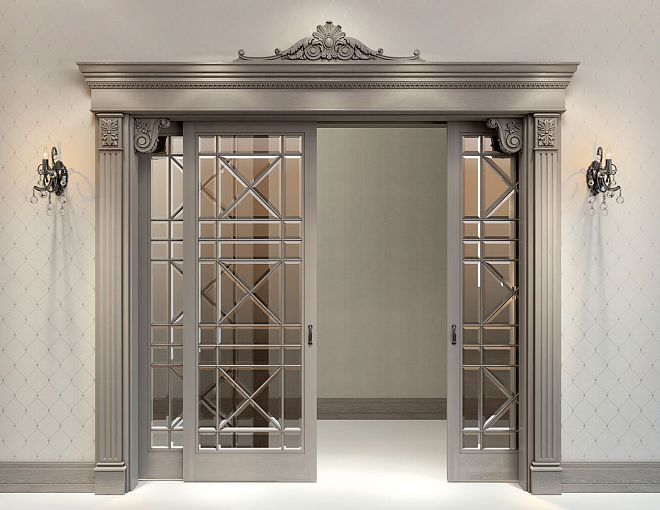
Door architrave and floor skirting board are the vertical and horizontal lines of one system. When they match in profile and color — the interior is perceived as a cohesive architectural object. When they don't match — the eye notices the discrepancy every time you look at the doorway.
Practical rule: buy architraves and skirting boards from the same collection from one manufacturer. Then the profile is coordinated, the thickness matches, and there are no gaps or steps at the junction of the architrave and skirting board.
With wall moldings
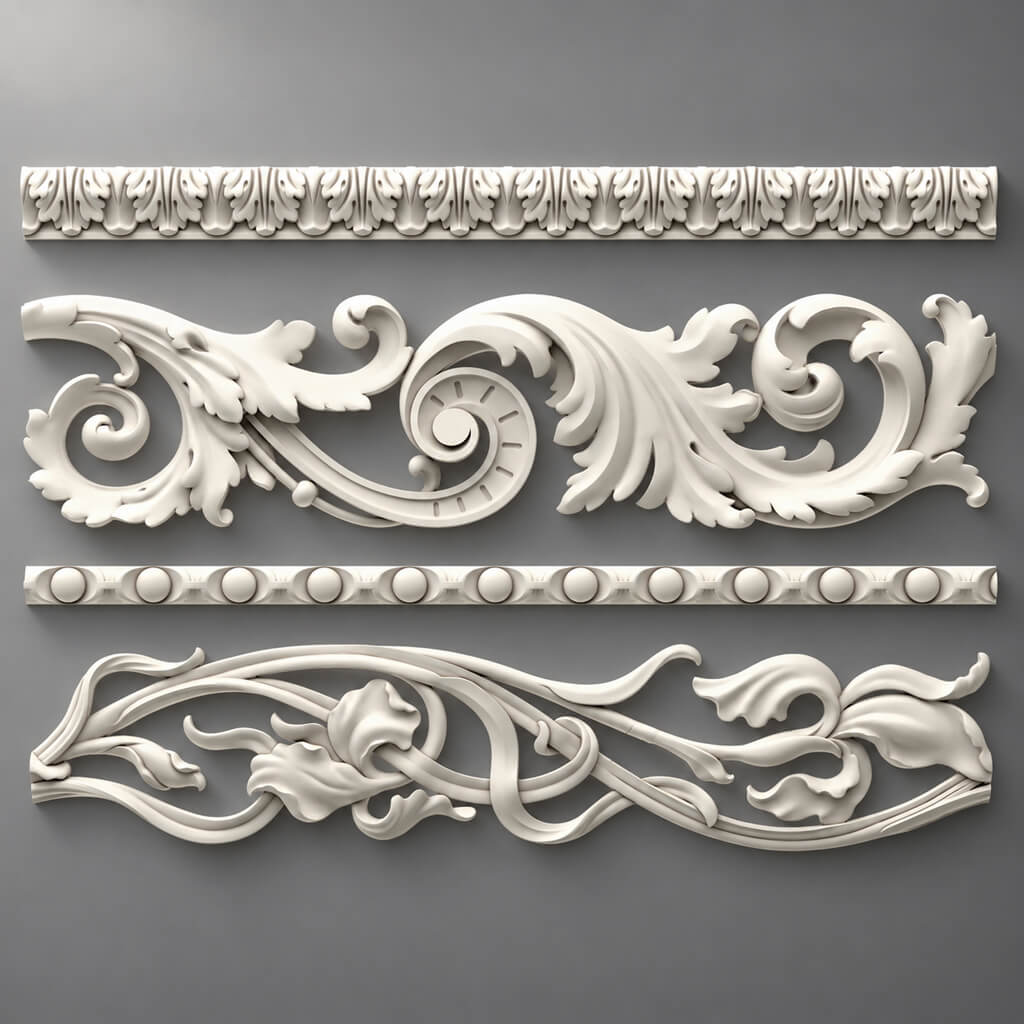
Moldings — horizontal belts on walls, vertical frames around openings and niches. A wide skirting board is the lower base of this system: it 'holds' the entire decorative field of the wall from below.
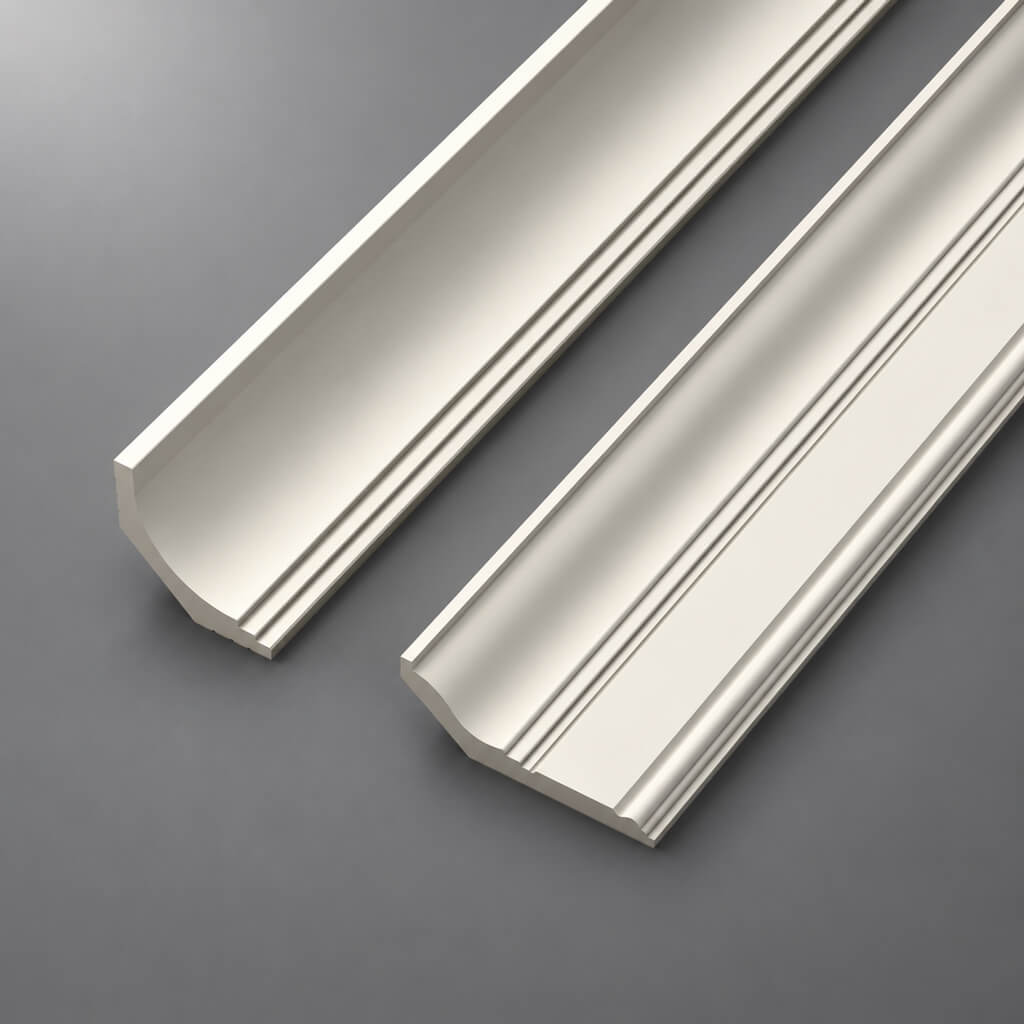
Moldings and cornicesFrom the same collection as the skirting board is a must for classical and neoclassical interiors. A molding belt at a height of 90–100 cm from the floor next to a wide 120 mm skirting board divides the wall into a lower 'field' and an upper 'sky' — a classic architectural technique that works in any era.
With cornices at the ceiling
A wide skirting board at the floor and a ceiling cornice at the ceiling are the two edges of a single architectural 'screen' which is the wall. Their coordination in profile, tone, and weight determines how much the wall looks like a complete architectural statement.
Principle: the skirting board and cornice should be 'commensurate' — not necessarily identical, but proportionally balanced. A wide 120 mm skirting board + an 80–100 mm cornice at the ceiling is a stable system. A 100 mm skirting board + a modest 40 mm fillet is a visual imbalance: the bottom is heavy, the top is weightless.
With slatted panels
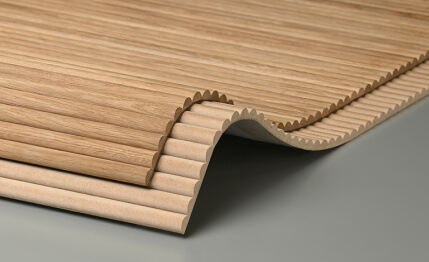
Rafter panels— vertical wooden decor on walls. Next to a wide skirting board, they create a system: vertical slats start from the skirting board and go upward — and the wide skirting board becomes their lower architectural foundation.
A wide 100 mm wooden skirting board + slatted panels from the same wood species is the most organic system option. The wood at the bottom flows in a horizontal stripe into vertical slats of the same texture and tone. The space gets a living wooden outline without artificiality.
With decorative elements in the same style
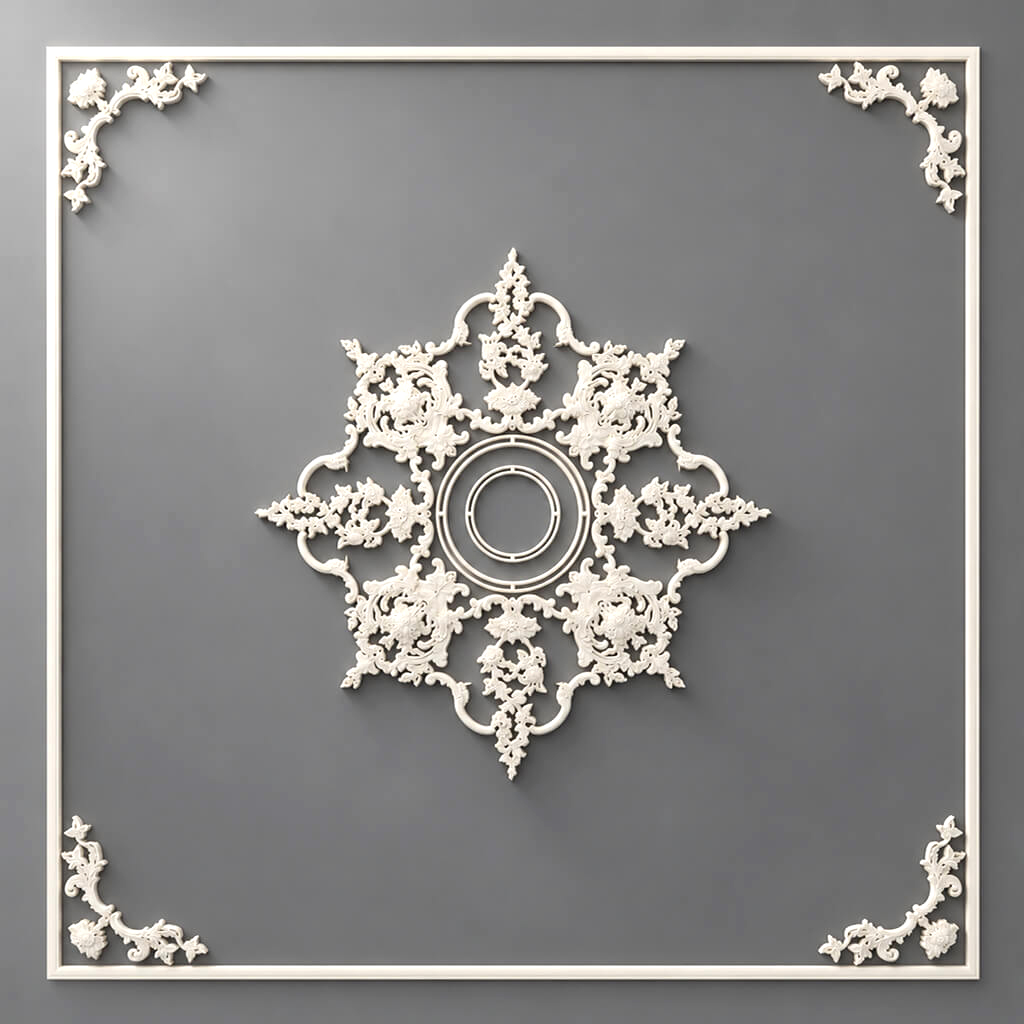
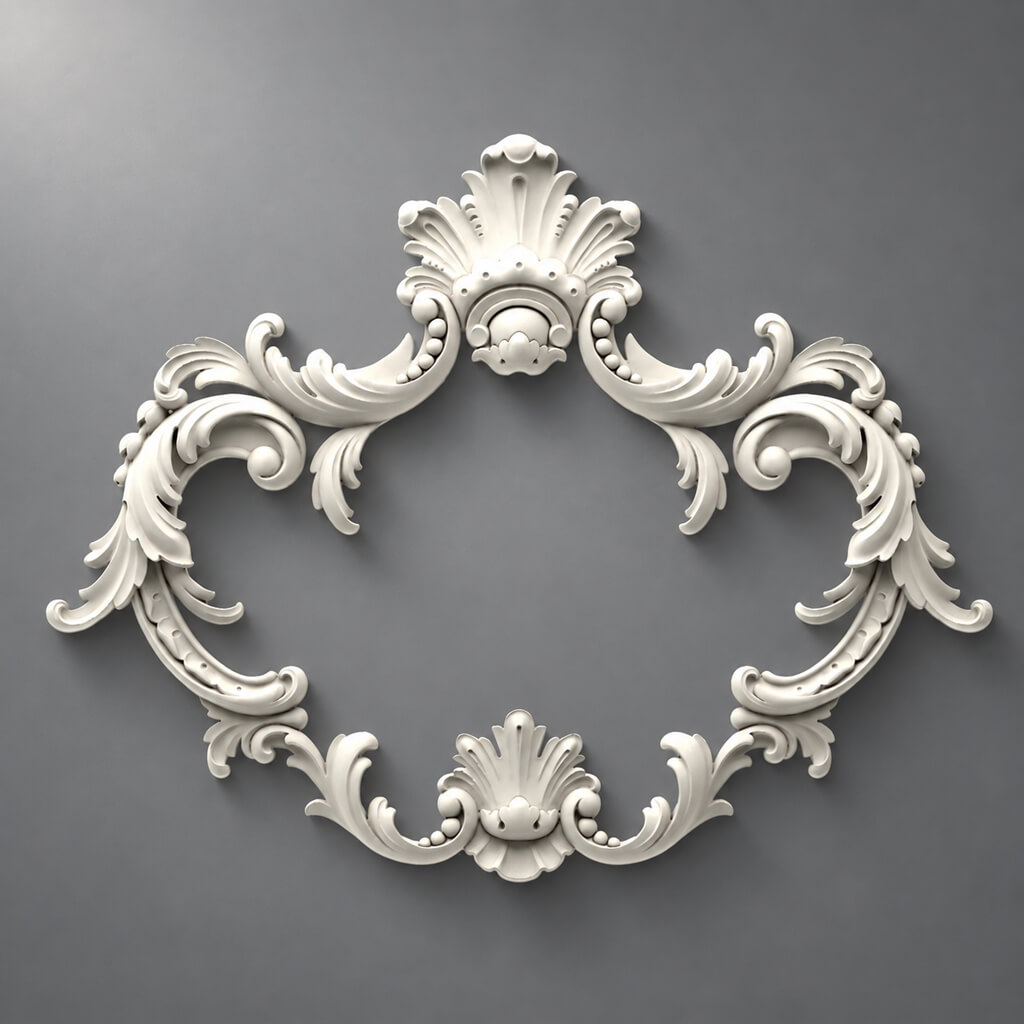
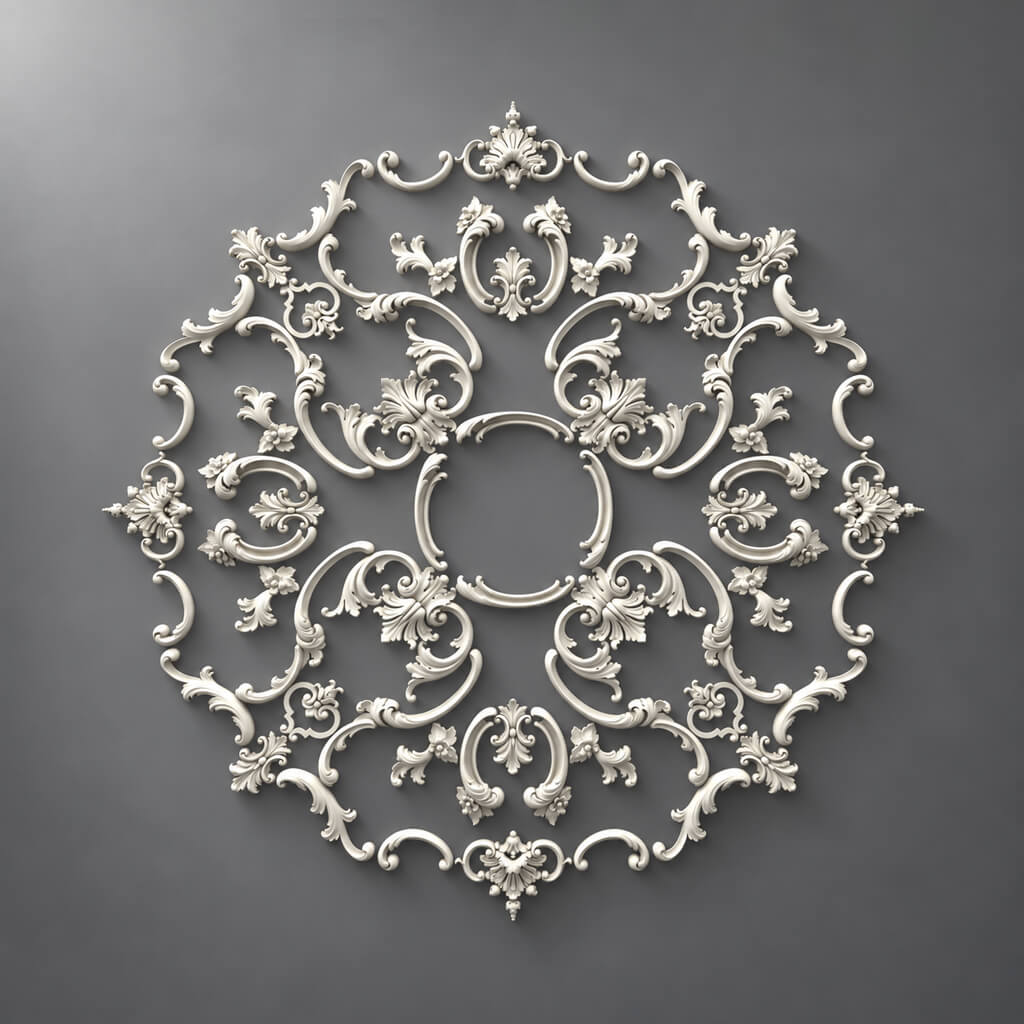
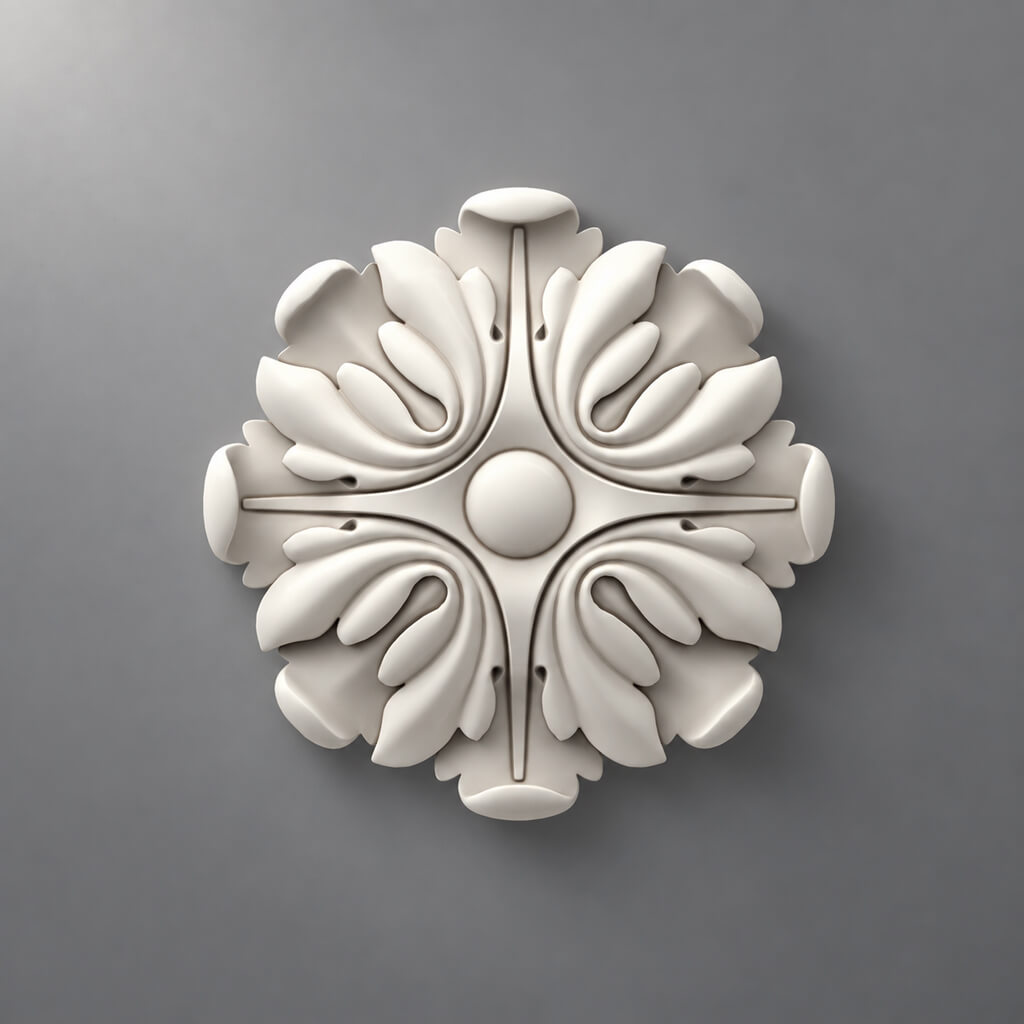
Corner rosettes, decorative inserts, brackets — these details connect the skirting board, moldings, and cornices into a single system. In a classical interior, it's difficult without them: a molding in the corner is joined either by a 45° miter cut or via a corner insert. An insert is faster, more precise, and with the correct profile gives a better result than a manual miter cut.
Comparative table of wide skirting boards by material
| Parameter | Oak / Beech | MDF | HI WOOD |
|---|---|---|---|
| Naturalness | Complete | No | No |
| Moisture resistance | Low without special treatment | Medium | 100% |
| Heights | 60–120 mm | 60–120 mm | 58–140 mm |
| Painting | Yes (lacquer, oil, paint) | Yes | Yes |
| For bathroom/kitchen | No | Partially | Yes |
| Durability | 20–30 years | 10–15 years | 15–20+ years |
| Status/prestige | High | Medium | Medium |
Where to buy wide floor skirting boards in Moscow
The right supplier of wide skirting boards in Moscow is not the one with the lowest price. It's the one who keeps the entire range in stock, ensures timely delivery, and allows you to compare samples in person.
What to check when purchasing:
-
Availability of the full height range in stock: 80, 100, 120 mm in the required material and profile
-
Ability to receive a sample before ordering the full batch — compare with parquet, with architrave, in daylight
-
One manufacturer for skirting boards and coordinated millwork — architraves, moldings, cornices
-
Professional delivery of long-length products with end protection
wooden and MDF baseboards— catalog with full range of heights, profiles, and materials. Wood 60–120 mm, MDF 60–120 mm, straight and shaped, natural and paintable.
Moisture-resistant skirting board HI WOOD— from 58 to 140 mm, white and paintable, for wet and technical areas.
Pickup from the Moscow showroom or delivery within Moscow in 1–2 business days.
Common mistakes when choosing a wide baseboard
Too wide a profile for a low room
A wide 120 mm baseboard in a room with 2.5-meter ceilings visually 'eats up' the height. The lower contour of the wall becomes too heavy, making the room seem lower and more cramped. For ceilings up to 2.6 meters — maximum 70–80 mm.
Simple test: cut a strip of cardboard to the desired height and place it against the wall at the floor. Look from a distance of 3–4 meters. If it looks heavy — choose a narrower one.
Color mistake
Buying a 'white' baseboard in a store without comparing it to door casings and doors. The result is three different shades of white — one warm, one cool, one with a yellow undertone — visible in the same interior.
Solution: either all white elements from one manufacturer from the same collection, or a paintable baseboard with paint tinted to match the door casing sample.
Incorrect material for the operating conditions
A wide wooden baseboard in the bathroom or MDF by the kitchen sink is a mistake discovered after six months to a year: swollen ends, peeling coating, mold stains. For wet areas — only HI WOOD. No exceptions.
No connection with doors and wall decor
A wide baseboard is chosen in isolation from the rest of the trim. The result: baseboard from one collection, door frames from another, moldings from a third. Profiles are 'roughly similar' but don't match — and it shows.
Systematic approach:Trimming Itemsfrom a single collection for baseboards, moldings, and cornices — guarantees consistency of the entire vertical-horizontal contour of the room.
Conclusion
A wide floor baseboard is an architectural choice, not just a finishing detail. Properly selected in height, material, and profile, it transforms the base of the wall from a technical joint into a horizontal line that holds the entire interior together.
Start by measuring ceiling height and determining the flooring. Then — choose the material: wood for living areas with parquet, MDF for modern white interiors, HI WOOD for wet zones. After — profile: straight for modernity, shaped for classic.
Go to the catalogwooden and MDF skirting boards— all heights from 60 to 120 mm. For moisture-resistant solutions —HI WOODfrom 58 to 140 mm. For a systematic approach —moldings, cornicesandRafter panelsfrom a single collection.
About the company STAVROS
STAVROS is a Russian manufacturer of architectural decor made from natural wood and modern materials. The product line covers the entire interior contour: oak, beech, and MDF floor skirting boards with heights of 60–120 mm, moisture-resistant HI WOOD skirting boards from 58 to 140 mm, moldings, cornices, architraves, and slatted panels.
All STAVROS products are developed as a unified architectural system: the profiles of skirting boards, moldings, and cornices are coordinated in proportion and relief. This allows assembling a complete vertical-horizontal decorative contour of a room—from floor to ceiling—without the risk of part mismatch.
STAVROS works with private clients, designers, and architects. Warehouse, showroom, and production are in Russia. Delivery in Moscow and across Russia.
Frequently asked questions
What wide skirting board should I choose for a living room with 3-meter ceilings?
Optimum is 100 mm. This is a proportionally correct choice: for a 3.0-meter ceiling, the 1/30 rule gives 100 mm. For a classic interior with moldings—120 mm.
Can I glue a wide wooden skirting board without nails?
With even walls—yes, using high-quality mounting adhesive. With a gap of more than 3–4 mm between the skirting board and the wall—nails or clamps are necessary: adhesive will not hold the profile with such a gap.
Can I use a wide MDF skirting board in the kitchen?
In areas away from the sink and stove—yes. In areas of systematic contact with water—no. For the entire kitchen perimeter, it is more reliable to choose HI WOOD.
How to calculate the amount of wide skirting board for an apartment?
Sum up the perimeters of all rooms, subtract door openings (width of opening × quantity), add 12–15% for cutting. Purchase in one batch.
What is the visual difference between a wide oak skirting board and an MDF one?
Oak has a living grain that changes under different lighting. MDF is a uniform surface with zero texture. With the same color and profile, the difference is noticeable only upon close inspection; from a distance of 2–3 meters, both options provide a similar silhouette of a horizontal line.
Is a gap needed between a wide skirting board and the floor?
No. The skirting board is mounted to the wall and pressed against the floor — there should be no gap. The gap that the skirting board covers is the gap between the floor covering and the wall, which remains hidden behind the skirting board.