Article Contents:
- Why the width of a slatted panel changes the entire interior
- Three components of wall rhythm
- Narrow slats: where they work and where they don't
- The nature of narrow slats
- Where narrow slatted panels are appropriate
- Where narrow slats don't work
- Medium slats: the workhorse of design
- Why medium slats are so popular
- Application of medium battens
- Wide battens: scale and monumentality
- Character of wide battens
- Where wide battens work
- Where wide battens are dangerous
- Polyurethane moldings: why they are needed on a batten wall
- What happens when there are no moldings
- Functions of moldings in a batten wall system
- How moldings help compose the wall
- First technique: molding as a horizontal divider
- Technique two: molding frames as structure over battens
- Technique three: molding as a boundary between styles
- Technique four: vertical molding as a pilaster
- When to combine vertical rhythm of battens and frame geometry of moldings
- Dominance principle
- Direction coordination principle
- Table of combinations for batten width and molding profiles
- Selection for small and large rooms
- Small room: 8–14 sq.m., ceiling up to 2.5 m
- Medium room: 15–25 sq.m., ceiling 2.5–2.7 m
- Large room: over 25 sq.m., ceiling 3 m and higher
- Errors in overloaded wall compositions
- First error: moldings over slats
- Second error: three or more types of moldings in one room
- Third error: different slat widths on one wall without logic
- Fourth error: moldings of the wrong style
- Fifth error: too many accents
- Special applications: modular slatted wall panel and moldings
- About the Company STAVROS
- FAQ: Answers to Popular Questions

A wall is not just a vertical plane between the floor and ceiling. It is an architectural statement. When done correctly, a person in the room feels harmony without understanding its cause. When incorrect, a feeling of discomfort is constantly present, but its source is not obvious. In most cases, the reason is incorrectwidth of slatted panelsrelative to the scale of the room, or the absence of structuring elements—of polyurethane moldingsthat assemble the wall into a complete composition. This is covered in detail, systematically, with specific numbers and practical examples.



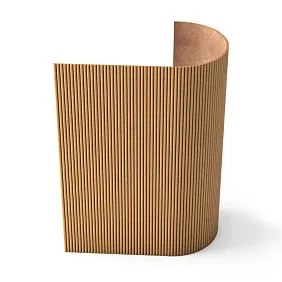
Why the width of a slatted panel changes the entire interior
Let's start with a fundamental question: why does the width of the slat matter at all? After all, it might seem—it's just the size of an individual element.
The answer is simple but requires understanding: each slat on the wall is a unit of visual rhythm. A wall with slats is not a decorated surface, but a system of repeating elements that the eye perceives as a unified whole. And it is precisely the frequency of this rhythm—how often the slat repeats—that determines the character of the space.
A fast rhythm (narrow slats with a small gap) creates a sense of dynamism, richness, sometimes—tension. A slow rhythm (wide slats with a wide gap)—monumentality, calmness, representativeness. A medium one—a balance between expressiveness and neutrality.
Now let's add space to this. Rhythm is not perceived abstractly—it is perceived on the specific walls of a specific room. A fast rhythm in a small room—fragmentation, claustrophobia. A slow rhythm in the same space—monumentality that overwhelms. The same slow rhythm in a large room—architectural power.
Exactly thereforethe size of slatted panels—is the first decision made when designing a wall. Not color, not material, not style. First—scale.




Three components of wall rhythm
When we talk about the rhythm of a slatted wall, three interrelated parameters come into play:
Slat width is the primary visual element. The eye perceives precisely this: a dark or light stripe, material, three-dimensional.
Gap width is the space between slats. The gap can be filled with a background surface of a different color or material, and then it becomes an equal element of the rhythm. Or it can be minimal and perceived as a shadow—a line, not a plane.
The ratio of slat width to gap width is the 'density' of the rhythm. An 80 mm slat and a 10 mm gap create a dense rhythm where the slat dominates. An 80 mm slat and a 40 mm gap create an open rhythm where the gap and slat are equal.
Changing any of these parameters alters the character of the entire wall. It's important to understand this before ordering materials.
Our factory also produces:




Narrow slats: where they work and where they don't
Let's move on to specific formats. We'll start with narrow slats—these range from 20 to 55 mm in width.
Get Consultation
The nature of a narrow slat
A narrow slat is about delicacy. A thin vertical line, repeated with a small gap, creates an almost textile-like effect on the wall: the wall looks not like a set of wooden planks, but like a unified textured canvas. With good side lighting, shadows in the gaps create a shimmer—a liveliness of the surface that cannot be achieved with paint or wallpaper.
Narrow slats work especially well in fabric-based acoustic panels: felt, wool, acoustic fleece. Here, thin slats—15–25 mm—are combined with a soft base, and the result is both functional (acoustics) and aesthetic (delicate texture).
Where narrow slatted panels are appropriate
Bedroom. A narrow slatted rhythm in the bedroom creates an atmosphere of coziness and tranquility. Vertical slats 25–40 mm in neutral tones serve as a headboard wall, giving the space depth without aggression.
Meeting room or office. A dense, fine rhythm creates focus and concentration. Acoustic slat panels with narrow slats work here on two levels: they improve acoustics and create a visual context for serious business work.
Corridor or hallway. In narrow, elongated spaces, thin vertical slats are the best technique for creating an illusion of width and height. The thinner the slat and the tighter its rhythm, the stronger the effect of a textured canvas that doesn't feel oppressive.
Children's room. Light, narrow slats in a child's room create a soft, unobtrusive rhythm. It doesn't overload the space and easily combines with diverse decor.
Where narrow slats don't work
In rooms with high ceilings (from 3.5 m) and large areas (from 25–30 sq.m.), narrow slats are perceived as a fine texture—but not as an architectural rhythm. The wall 'disintegrates' into small elements, losing monumentality. Slats of a different scale are needed here.
Medium slats: the workhorse of design
The medium range—from 60 to 110 mm—is the most universal and in-demand category. This is where the majority of residential interior projects are concentrated.
Why medium slats are so popular
Because they work in a wide range of conditions. An 80 mm slat with a 2.7 m ceiling is a proportionally calibrated element that reads equally well in a 12 sq.m. room and in a 30 sq.m. space. It doesn't appear too fine or oppressive.
With vertical orientation, 80–100 mm slats elongate the space upward without aggression. With horizontal orientation—they widen it.Width of slatted ceiling panel80–100 mm — also a standard choice for slatted ceiling systems in residential spaces.
Use of medium slats
Living room. The main space of an apartment or house. 70–100 mm slats on an accent wall create a striking architectural accent without overwhelming. Combined withpolyurethane wall moldingsat the top edge of the panel or along the ceiling perimeter — this is a complete designer concept.
Dining room. Medium slats in the dining room bring warmth and rhythm. In the dining table area, a slatted wall panel creates a background that simultaneously 'gathers' the space around the table and adds texture to an otherwise neutral interior.
Bathroom. Slatted panels in the bathroom in the 60–80 mm format are the optimal choice: they are large enough to be expressive in a small space, yet delicate enough not to overwhelm it.
Office spaces. In meeting rooms, executive offices, and reception areas, 80–100 mm slats create business seriousness without cold anonymity.
Wide slats: scale and monumentality
Wide slats — from 120 mm and above — are a separate architectural story. Different rules apply here.
Character of wide slats
A wide slat is perceived not as part of a pattern, but as an independent element. This is no longer a texture—it's an architectural detail. A 150 mm slat with a 25–30 mm gap is a sculptural surface where each plank has its own weight and presence.
The play of light on wide slats is more pronounced: shadows in the deep gaps create contrast that changes throughout the day. Such a wall lives—in the morning it is one thing, in the evening with side lighting it is another.
Wooden slat panelsWide-format solid oak slats are a special class: the natural wood grain reveals its full beauty at a large slat width, with each plank showcasing an individual fiber pattern.
Where wide slats work
High ceilings (from 3 m). This is the main condition. In a room with a ceiling of 3.2–4 m, a wide slat of 140–200 mm creates a monumental yet not oppressive rhythm. There is enough space for the wide elements to 'breathe.'
Large areas (from 25–30 sq.m.). Wide slats require spaciousness. In spacious living rooms, halls, and atriums, they create a representative expressiveness.
Commercial interiors with high ceilings. Restaurants, hotel lobbies, exhibition spaces—where architectural power is needed, not delicate decoration.
Facades.Slatted Façade PanelsWide-format slats on external building walls are one of the leading trends in contemporary architecture. Here, the scale of the building corresponds to the wide spacing of the slats.
Where wide slats are dangerous
In rooms with ceilings up to 2.7 m and an area of up to 18–20 sq.m., slats from 130 mm begin to press and compress the space. Wide horizontal slats are especially dangerous in small rooms—they visually lower the ceiling and reduce the height to a critically uncomfortable level.
Polyurethane moldings: why they are needed on a wall with slats
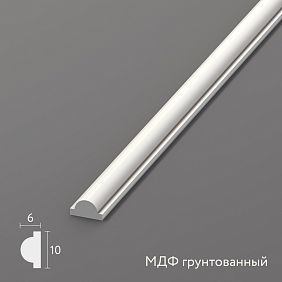
Now—the second part of the topic. A slatted panel creates rhythm. But rhythm alone is not a finished wall. Structure is needed: an upper border, a lower border, side framing. It is preciselyMoldings made of polyurethanethat perform this structuring role.
Imagine a painting without a frame. There is a painting—but it hangs as a random object, not integrated into the wall's architecture. The frame assembles the painting, defines its place, creates a boundary between the artwork and the background. Moldings do the same with a slatted panel: they turn a set of planks into an architectural element with clear boundaries and a finished appearance.
What happens when there are no moldings
A slatted panel without moldings is a common mistake, especially in budget projects. The panel is installed, the slats are even, the finish is beautiful. But:
-
The top edge of the panel abuts the wall or ceiling without any finishing. The boundary looks random.
-
The bottom edge similarly—the joint with the baseboard or floor is not elaborated.
-
The side edges of the panel (if it doesn't span the entire wall width) are cut and protrude without finishing.
As a result, the panel looks not like an architectural element, but like a glued-on fragment. Moldings completely eliminate this problem.
Functions of moldings in a slat wall system
Upper boundary. A horizontal molding or cornice that covers the top end of the panel and creates a transition to the ceiling or the upper part of the wall. This is a necessary element in any interior, regardless of style.
Lower boundary. A baseboard or lower molding that finishes the joint between the panel and the floor. The molding must account for the thickness of the panel's underlayment — if the panel protrudes from the wall, the baseboard should overlap its lower end.
Vertical framing. If the panel doesn't span the entire wall width — vertical moldings on the sides frame it as an independent field. This turns the fragment of slat finishing into an architectural rectangle with clear boundaries.
Ceiling cornice. A molding along the ceiling perimeter above the slat wall creates a common frame for the space, uniting the walls and ceiling into a single architectural system.
How moldings help compose the wall structurally
Let's move on to specific design techniques. This is no longer theory — this is practice that works in real projects.
First technique: molding as a horizontal divider
The slatted panel occupies the lower half of the wall (up to 1.2–1.4 m), the upper part is plastered and painted. At the border between these zones is a horizontal polyurethane molding: a shelf profile or a profile with a bead.
This molding serves several functions simultaneously: it conceals the top edge of the panel, creates a clear dividing line on the wall, and forms a small horizontal 'shelf' (often used for displaying small decorative objects). In classic interiors and modern neoclassicism, this is one of the fundamental techniques.
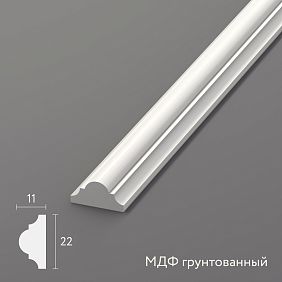
Wide polyurethane moldingsA shelf profile with a width of 80–120 mm is the optimal choice for this technique when using slats 80–100 mm wide. Proportional scaling is essential.
Second technique: molding frames as a structure over the slats
A more complex and expensive technique: rectangular frames made of moldings, applied over the plastered part of the wall (or over a neutral background surface), create a coffered effect. The slatted panels occupy one part of the wall, while the molding frames occupy another.
This is a typical neoclassical technique: the lower field of the wall is slatted or smooth, the upper field features molding frames. The wall gains architectural hierarchy: there is structure, detail, and rhythm.
Third technique: molding as a boundary between styles
When wooden slatted panels in an interior transition to another material—tile, plaster, decorative stone—the molding at the boundary acts as an architectural mediator. It creates visual 'breathing space' between two different surfaces, preventing them from competing.
The molding at such a boundary should be stylistically neutral and coordinated in color with at least one of the adjacent materials.
Fourth technique: vertical molding as a pilaster
A vertical molding mounted on a wall with slatted panels is an imitation of a pilaster. It creates a vertical accent that complements the horizontal molding and forms a framing structure for the entire wall.
In interiors with high ceilings, a pair of vertical moldings that frame the slatted field on the sides, along with a horizontal molding at the top, create the effect of a niche or architectural portal. This is a powerful technique that requires precise calculation of proportions.
When to combine the vertical rhythm of slats and the framed geometry of moldings
This is perhaps the most subtle question in the topic. The vertical rhythm of slats and the horizontal framed geometry of moldings are two different visual principles. How to combine them without creating conflict?
The principle of dominance
In any wall composition, one element should dominate, while the others should be subordinate. If the slats dominate (they occupy most of the wall, are expressive in color or material), the moldings should be restrained, serving a functional role without drawing attention to themselves.
If the framed system of moldings dominates (large panels on the upper part of the wall), the slatted panel occupies the lower zone and follows the overall framing logic.
When both elements compete for equal attention, it creates competition and visual noise.
The principle of aligning directions
Vertical slats + vertical pilaster moldings = a unified vertical vector. This creates dynamism and height.
Vertical battens + horizontal molding belts = constructive counterpoint. The horizontal restrains the vertical impulse of the battens, creating stability. This is a classic architectural technique.
Vertical battens + frame moldings (horizontals + verticals) = complex structure requiring an experienced eye for proper execution.
Table of combinations for batten width and molding profiles
| Batten width | Recommended molding width | Molding style | Note |
|---|---|---|---|
| 20–40 mm | 30–50 mm | Simple rectangular | Delicacy, minimalism |
| 40–70 mm | 50–80 mm | Rectangular or with a roundover | Universal option |
| 70–100 mm | 80–120 mm | Profiled, medium relief | Modern Classic |
| 100–140 mm | 100–150 mm | Expressive profile | Neoclassical, classic |
| 140–200 mm | 130–180 mm | Large profile | High ceilings |
Selection for small and large rooms
Practical block — about specific solutions for specific room formats.
Small room: 8–14 sq.m., ceiling up to 2.5 m
This is the most challenging context. Every element in a small space affects the perception of area and height. A wrong choice — and the room becomes a cage.
Battens: narrow, 30–55 mm, vertical. Create a textural effect without fragmenting the space.
Gap: 8–12 mm. Dense rhythm, the batten dominates, the gap is a thin shadow line.
Panel height: either full (from floor to ceiling — maximum upward stretching effect), or up to 1.0–1.2 m.
Molding: narrow, 30–50 mm, simple profile. Should not visually lower the ceiling. Ceiling cornice — minimal, 50–70 mm.
Color: light shades of slats (white, light gray, bleached wood). Dark slats in a small room are only permissible on one accent wall—a light neutral background should be maintained on the other surfaces.
What to avoid: wide horizontal slats (they lower the ceiling), dark tones on all walls, moldings with large relief (they 'eat up' space).
Medium room: 15–25 sq.m., ceiling 2.5–2.7 m
The most common format. Here the choice is wider.
Slats: 60–90 mm, vertical on an accent wall or horizontal on a long wall to expand.
Gap: 12–18 mm. Balanced rhythm.
Panel height: full or up to 1.4–1.6 m (panel field).
Molding: 70–100 mm, profile with a round or shelf type. Ceiling cornice 80–100 mm.
Color: medium tones: oak, ash, warm beige, gray. One accent tone—darker or more saturated—is possible on one wall.
Additional technique: a molding frame in the upper part of the accent wall (above the slatted panel field) creates a coffered effect, making the interior richer.
Large room: over 25 sq.m., ceiling 3 m and above
Here — complete freedom. Scale limitations are removed, and the primary task shifts from 'not overloading' to 'not leaving empty'.
Slats: 100–180 mm and above. Large rhythm corresponding to the scale of the space.
Gap: 20–40 mm. Open rhythm, the background surface participates in perception.
Panel height: full. On walls 3–4 m high, a slatted panel at full height is a monumental solution.
Molding: large, 120–180 mm, expressive profile. Ceiling cornice 140–200 mm. Pilasters are possible, dividing the slatted field into vertical sections.
Color: any — from light to dark. In tall, large rooms, dark slats create a powerful dramatic image without being oppressive.
Additional technique: zoning with slatted panels of different heights or different directions in one space — creates functional division without partitions.
Mistakes in overloaded wall compositions
Overload is when the wall has everything: slats, moldings, decorative overlays, mirrors, niche lighting, photo wallpaper in the gaps. Each element is beautiful on its own. Together — chaos. Let's analyze specific mistakes.
First mistake: moldings over battens
This is literal overload: a horizontal molding crosses a batten field over the battens. A conflict arises between two rhythmic systems—vertical (battens) and horizontal (molding). Unless this is a deliberate design technique with clear logic—it's chaos.
Correct: the molding is placed in an area free of battens—above or below the batten field, on an adjacent plane.
Second mistake: three or more types of moldings in one room
A ceiling cornice of one profile, a wall molding of another, a baseboard of a third, and door casing of a fourth—four different profiles in one room. The space loses stylistic unity. The standard for a living space: no more than two or three types of moldings, united by a common profile style.
Third mistake: different batten widths on one wall without logic
Alternating 60 mm, 80 mm, and 100 mm battens on one wall without a system—this is not an 'interesting rhythm,' it's randomness. Rhythmic alternation is acceptable, but it must follow the rule: the pattern repeats, the system is obvious at a glance. Chaotic alternation is a mistake.
Fourth mistake: moldings of the wrong style
slatted wall panels for interior finishingIn a minimalist style—thin dark MDF battens in a loft style, and suddenly—a cornice with a baroque ornament made of polyurethane. This is not 'interesting' or 'bold.' This is a stylistic contradiction that reads as ignorance of styles.
The style of the molding is determined by the style of the interior as a whole. Loft, high-tech, and minimalism require geometrically strict moldings without ornamentation. Neoclassicism—profile moldings with moderate relief. Classic—complex profiles with ornamentation.
Mistake five: too many accents
An accent slat wall - plus decorative overlays on the adjacent wall, molding frames on the third, and textured wallpaper on the fourth. A room should have one main accent. The other walls are a neutral background that supports the main accent, not competes with it.
Special applications:slatted modular wall paneland moldings
Modular slat panels are a special format: fixed-size panels (typically 600×2400 mm or 300×2400 mm) that are mounted flush or with a gap. The slat width in modular panels is fixed by the manufacturer and usually ranges from 20–50 mm.
When working with modular panels, moldings serve a specific function: they cover the joints between modules (if the joint is undesirable), frame the perimeter of the modular field, and create transitions between adjacent surfaces. The molding at the joint of modular panels must be wide enough to overlap the joint with a margin - at least 15–20 mm on each side.
How to install slatted panelsmodular type and properly integrating moldings into the system is an important installation technology question that needs to be resolved at the design stage.
About the company STAVROS
Precise proportions begin with precise materials. STAVROS manufactures slatted panels from solid wood and MDF with a wide selection of slat formats—from thin decorative to large architectural. The company's catalog features Moldings made of polyurethaneover 200 profiles - from minimalist rectangular to classic with expressive relief. This allows for selecting scale-coordinated solutions for any room and any style.
STAVROS - proprietary Russian production, European raw materials, control of geometric precision for each product. For architects, designers, and discerning private clients, the company provides professional consultations on selecting proportions, styles, and installation solutions.
A proper wall is not an accident. It's knowledge and the right material. STAVROS helps you get both.
FAQ: Answers to popular questions
How to visually increase ceiling height using slatted panels?
Vertical orientation of slats, narrow slats (30–60 mm), light tones, a panel covering the entire wall height from floor to ceiling. This is a classic technique that works flawlessly in rooms with ceilings up to 2.7 m.
Are moldings needed if a slatted panel covers the entire wall from edge to edge?
Yes. Even with full wall coverage by slats, you need: a ceiling cornice (wall-ceiling transition), a baseboard (wall-floor transition), and, preferably, a molding or decorative casing on doorways.
Which molding profile to choose for a minimalist interior?
Rectangular or with a thin bevel — without ornament, without complex relief. The molding width is minimal, functional. Color — matching the wall or matching the slats.
Can wide moldings be used in a small room?
With caution. A wide ceiling cornice in a room with a 2.5 m ceiling visually lowers the ceiling. Exception: a cornice with a recess for LED lighting — it 'raises' the ceiling due to the lighting effect, compensating for its own width.
How to match the color of the molding to the slatted panels?
Three options: molding matching the slats (unified system), molding matching the wall (invisible molding, only structure), molding in a contrasting tone (accent). A fourth random color is always a mistake.
Slatted panels on all four walls — is that overkill?
Depends on the width of the slats and the ceiling height. Narrow slats in neutral tones on all walls in a tall room create a cocoon, warm and enveloping. In a low, small room, the same technique creates a cage. Rule: the smaller the room, the fewer slatted surfaces and the more neutral the background.
Which moldings are better — wide or narrow?
Neither is inherently better. What's better is proportional. The molding should correspond to the scale of the slatted panels, the ceiling height, and the area of the room. The only criterion for the correct choice is proportional correspondence to the system, not an abstract 'looks nice'.