










































Article Contents:
- Flexible wall slats: what they are and where they are truly needed
- When a flexible format is indispensable
- How flexible wall slats differ from rigid slat panels
- Where flexible slats are used: application scenarios by surface
- Flexible wall slats for columns
- Flexible wall slats for arches
- Flexible wall slats for niches
- Flexible wall slats for rounded corners
- For a radius wall
- Flexible slats for furniture
- TV zone, headboard, accent wall
- Commercial spaces
- What types of flexible slats exist: materials, construction, and formats
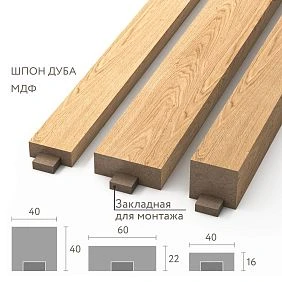
- MDF flexible wall slats
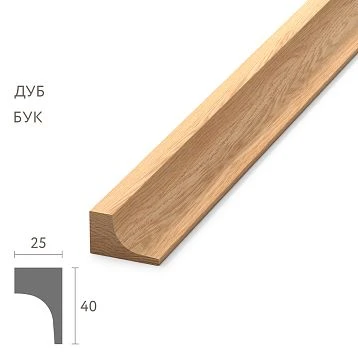
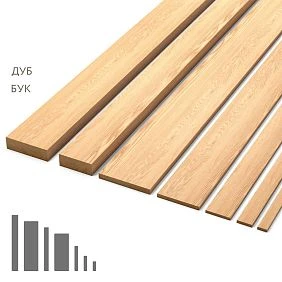
- Oak flexible wall slats
- Beech flexible wall slats
- Flexible wall slats for painting
- Fabric-based flexible slats
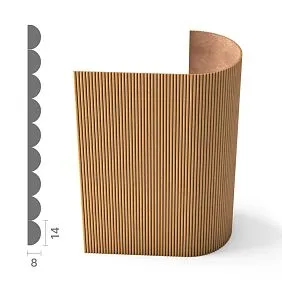
- Slat profile: rectangular or semicircular
- How to choose flexible slats based on interior design tasks
- How to choose flexible slats by surface type: technical analysis
- For a flat wall
- For a column
- For an arch
- For niches with rounded transitions
- For rounded corners
- For a curved furniture facade
- What to look for before buying: a complete checklist
- Installing flexible slats on the wall: what to consider before buying
- Surface Preparation
- Dry fitting
- Adhesive Selection
- Mounting on curved surfaces
- Module joining
- Final finishing
- Typical installation mistakes
- What determines the price of flexible slats for walls
- Mistakes when choosing flexible slats for walls
- Flexible slats on the wall and lighting: how to combine correctly
- Flexible slats on the wall in different styles: a practical guide
- Flexible slats on the wall for B2B: working with professionals
- Flexible slats and acoustics
- FAQ: answers to the most frequently asked questions
- Conclusion
- About the Company STAVROS
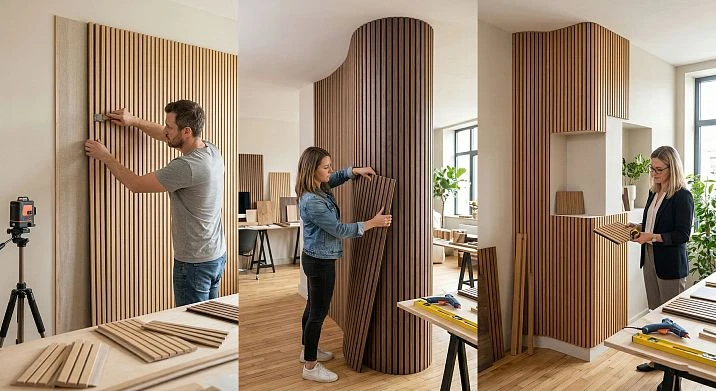
That's exactly when the search appears. And that's exactly where it's important to provide not an abstract overview, but a practical answer: what to choose, why, how to check before buying, and how to avoid mistakes during installation.
Flexible slats on the wall— is a slatted solution that physically takes the form of a surface. This article provides a complete breakdown: construction, differences from rigid panels, application scenarios, materials, selection criteria, installation, price, common mistakes, and FAQ.
Flexible Slats for Walls: What They Are and Where They Are Truly Needed
Let's start with the design — without understanding this, the choice becomes intuitive, and intuition in technical matters often fails.
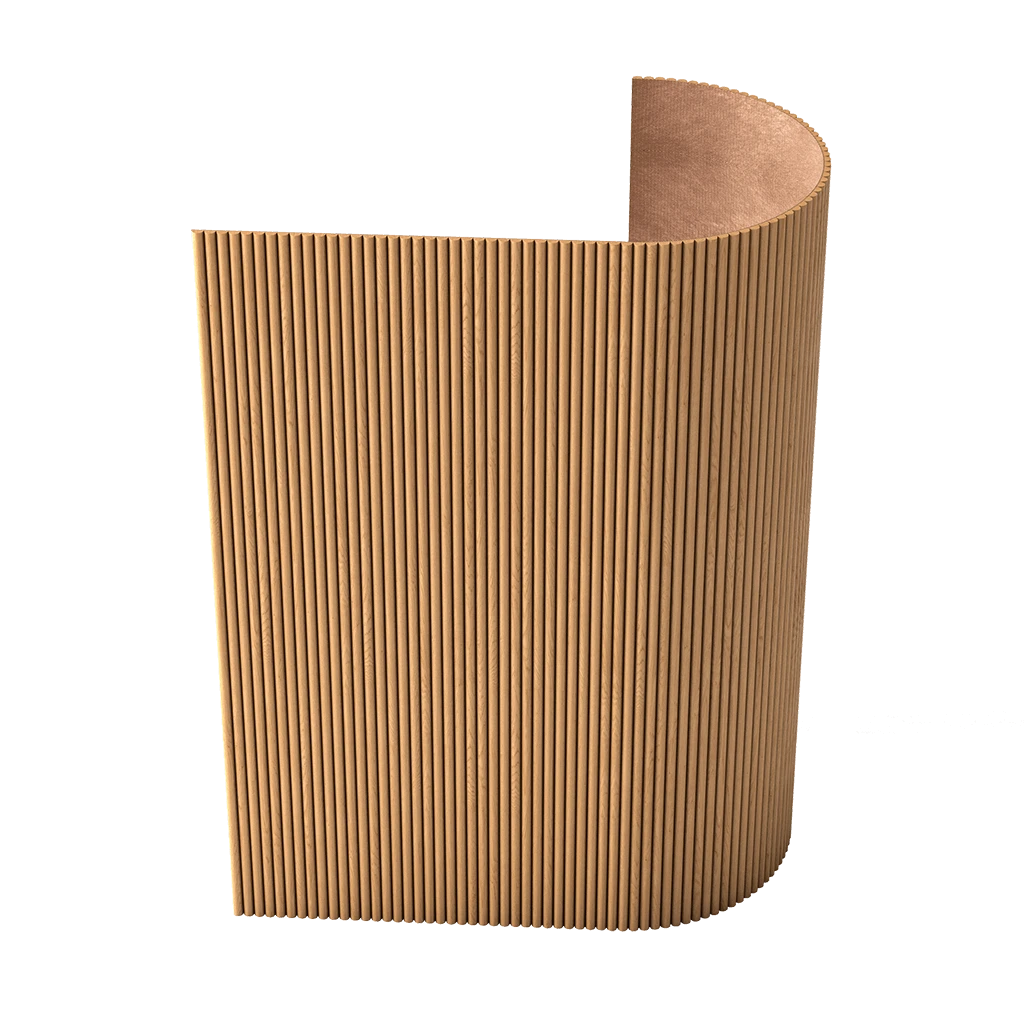
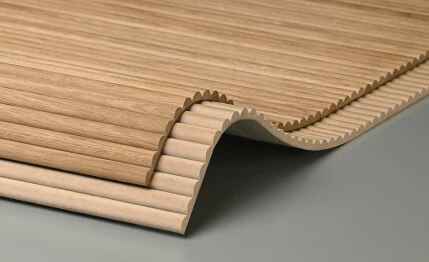
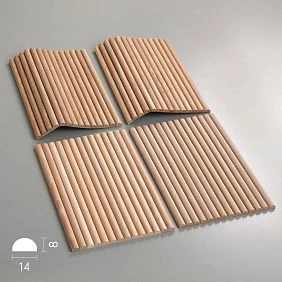
A flexible wall slat is a structural module: several wooden or MDF profiles, fixed at equal intervals on an elastic fabric backing. The fabric base is not just a load-bearing material. It performs three functions simultaneously: it holds the slats at a fixed distance, allows the structure to bend across the longitudinal axis of the slats, and creates a plane for applying adhesive during installation.
The word 'across' is key here. The panel bends precisely perpendicular to the direction of the slats — this means that the slatted rhythm, spacing, and visual rhythm of the surface are preserved at any bend radius. Whether it's a straight wall or a cylindrical column — the pattern remains the same.
This is a fundamental difference from decorative slats, which are installed individually. Individual slats require manual layout, precise marking, and maintaining spacing. On a straight wall — this is tolerable. On a column, in an arch, along a rounded corner — this is hours of work with questionable results.



When a Flexible Format is Essential
A rigid slatted panel works perfectly where the surface is absolutely flat. But as soon as one of the following conditions appears — the rigid format either requires manual cutting with inevitable joints, or is completely inapplicable:
-
a column of any diameter;
-
an arched opening or an arched vault;
-
radius wall along a smooth or steep arc;
-
rounded corner between two planes;
-
Niche with rounded transitions;
-
furniture front with a curve — cabinet, island, rounded shelving unit.
If at least one of these elements is present in your project — that is a direct argument in favor of the flexible format, at a minimum for this specific element.
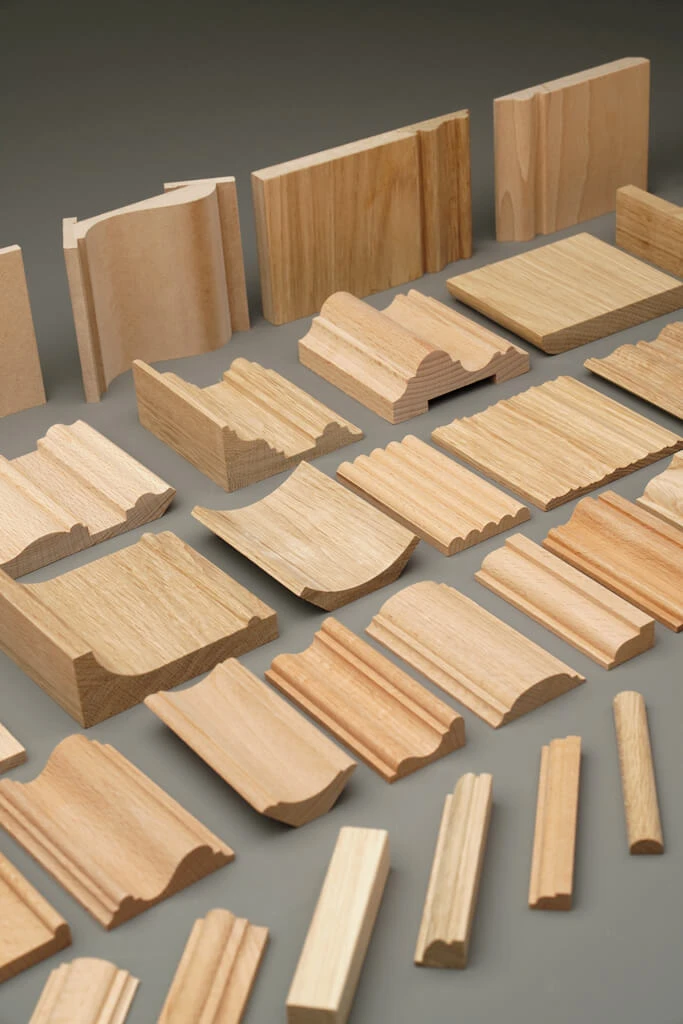
Our factory also produces:







How flexible wall slats differ from rigid slatted panels
This distinction is important not only theoretically, but also practically — because a mistake at the selection stage costs money and time.
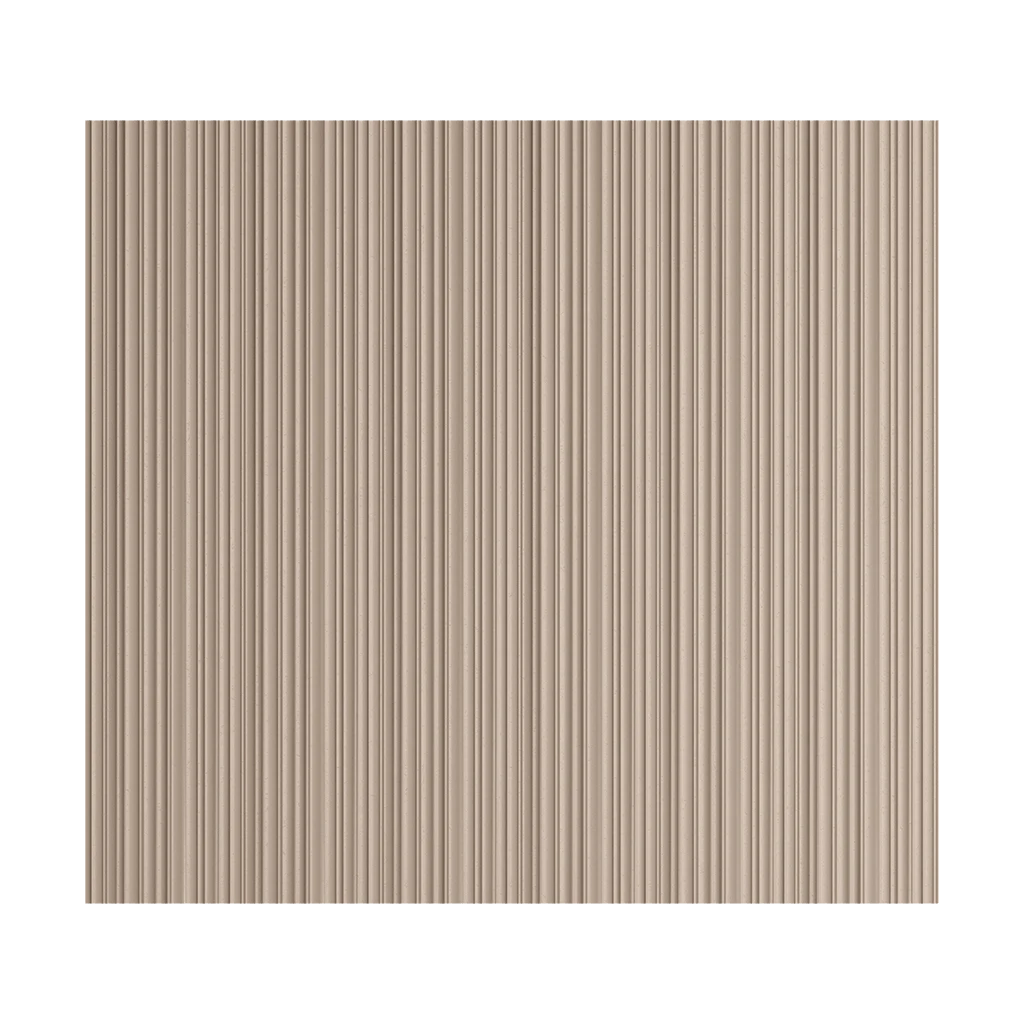
A rigid slatted panel is built on an MDF board: the slats are glued onto a solid base, which serves as the rigid frame of the entire structure. The advantages on a flat surface are obvious: perfect row evenness, maximum stability, rigid adherence to the wall plane. For a TV zone, headboard, accent wall without curves — an excellent choice.
There is one drawback, but a fundamental one: the MDF board does not bend. When attempting to bend it along a radius, it cracks, the slats detach from the base, and the structure is destroyed. No compromises.
The fabric base is a different engineering logic. It is initially designed for bending. The elastic fabric smoothly takes the required shape, the slats remain in their places, and the rhythm is preserved. No cracks, no deformations.
| Parameter | Rigid MDF panel | Flexible slat on fabric backing |
|---|---|---|
| Straight wall | Excellent | Good |
| Radius wall | Not applicable | Excellent |
| Cylindrical column | Not applicable | Excellent |
| Arched vault | Not applicable | Excellent |
| Rounded corner | Limited | Excellent |
| Straight furniture front | Preferable | Good |
| Curved furniture front | Not applicable | Excellent |
| Slat row evenness | Maximum | High |
| Installation difficulty on curves | High | Medium |
The optimal strategy for most projects is to combine both formats. Flat planes — rigid panels. Transitions, arches, columns — flexible slats. With identical spacing and slat width, the transition between formats is visually indistinguishable.
Get Consultation
Where flexible slats are used: application scenarios by surface
Before choosing a material — you need to understand the scenario. The surface dictates the requirements.
Flexible wall slat for a column
A column is the absolute limit for a rigid panel. A closed cylindrical surface. Even the most careful cutting of a rigid module into narrow strips will leave noticeable seams under any lighting.
A flexible slat wraps around the column along the entire perimeter as a single continuous module. One technical seam is hidden in the least noticeable point — typically on the side concealed from the main viewing angle. The slat rhythm closes into a ring, and what was once an architectural flaw becomes a full-fledged decorative accent.
Before ordering, be sure to clarify the minimum working bending radius of the specific model and compare it with the actual radius of your column.
Flexible wall slats for an arch
An arched opening with slat cladding is one of the most impressive and technically complex scenarios. The slats follow the curve of the vault, maintaining an even pitch, and smoothly transition onto the adjacent straight walls.
The transition point is critical: the slat rhythm must continue through the arch/straight point without the slightest shift in pitch. For this, a dry fitting with a cardboard template before installation is mandatory.
Flexible wall slats for a niche
A straight niche with right angles is a task for the rigid format. A niche with rounded transitions is exclusively for the flexible one. A feature: in a niche, any joint defect is more visible than on an open wall. Here, the requirements for end precision are maximum.
A practical rule for a niche: start the layout from the center — this ensures the symmetry of the slat pattern relative to the niche axis.
Flexible wall slats for a rounded corner
A smooth transition between two walls via a rounded corner is a modern architectural technique that creates a sense of 'flowing' space. A unified slat rhythm through this transition is only possible with the flexible format.
For a radius wall
A smooth wall arc along its entire length is the minimum working radius, but the maximum area. The flexible slat lays along the arc in one pass, without cutting into segments, without gaps at the joints.
Flexible slats for furniture
Radius cabinet, curved kitchen island, rounded cabinet sections —flexible slats for furniture frontsreplace manual carpentry work from individually cut slats. One module takes the shape of the front — without fitting, without visible seams.
TV area, headboard, accent wall
On flat surfaces, flexible slats compete with rigid ones. The flexible format is chosen when the same material is used on adjacent curved elements—such as an arch next to the TV area, a rounded corner in the hallway, or a column in the living room.
Commercial spaces
Reception with a radius counter, restaurant hall with columns, hotel lobby with arched passages — commercial architecture much more often involves non-standard geometry than standard housing.Flexible wall slatsare a standard tool for the design and construction team here.
What flexible slats are available: materials, construction and formats
Different materials — different scenarios. Understand them before, not after ordering.
Flexible MDF wall slats
MDF is a fine-dispersed, pressed wood mass with a uniform, smooth surface lacking a natural grain. This makes it an ideal material where precise, controlled color is important. Any shade from RAL, NCS, or Pantone. Uniform batch without color variation. Can be repainted without disassembly.
The PAN-002 series model in the STAVROS catalog is a primed MDF slat on a fabric base, ready for applying the finish coating directly on-site.
Flexible oak wall slats
Oak — a living texture, the warmth of natural fiber, the unique pattern of each slat. Oak density of 700–750 kg/m³ ensures durability in high-traffic commercial spaces.
Under transparent oil, oak reveals a warm golden tone. Tinting oil provides a range from light Scandinavian to rich dark — for any color concept. No MDF reproduces the natural tactility and character of oak fiber.
Flexible beech wall slats
Beech — a light, dense wood with a uniform fine-grained texture. Slightly more neutral in pattern than oak, takes tinting well. Resistant to mechanical load.
Flexible wall slats for painting
Primed MDF panels are a separate category. The surface is already prepared for paint application: primer is applied at the factory, ensuring uniform adhesion of the topcoat. Ready for painting without additional processing.
Flexible battens on a fabric base
The fabric base is not just a structural element; it's a key quality indicator. Dense, durable fabric holds the battens at a fixed distance, doesn't tear when bent, and ensures stable adhesion to the surface during adhesive installation.
A loose or poor-quality base leads to deformation when bent, shifting of battens, tearing during installation on a tight radius. Check the fabric base on a sample: pull it diagonally, bend it to the intended working radius.
Batten profile: rectangular or semicircular
The batten profile determines the character of the shadow in the gaps—and thus the visual mood of the entire surface:
-
Rectangular—clear edges, sharp shadow, architectural character. For minimalist and modern interiors.
-
Semicircular (bead)—smooth transition, soft chiaroscuro, natural, warm character. For Scandinavian, Japandi, organic interiors.
This is a design decision, not a technical one. But it must be made before ordering, not after.
How to choose flexible battens for your interior design task
The space imposes specific requirements. Let's break it down by scenarios.
Apartment, living room. Accent wall, TV zone, rounded niches — all of this requires a flexible format where there is a curve. MDF for painting — when precise color is important. Oak — when a natural atmosphere and the warmth of a living material are needed.
Bedroom. Headboard — often a flat plane, here a rigid format will work. But if the headboard is built into a niche with rounded transitions — only a flexible solution will maintain a unified slatted rhythm across the entire surface.
Hallway. A classic candidate for flexible slats: arched openings, rounded transitions, non-standard geometry of the entrance area are encountered significantly more often than in other rooms of the apartment.Flexible wall slats for the hallwaycreate a continuous slatted rhythm from the entrance through the arch into the main space.
Office and meeting room. Representativeness, durability, precise color. Oak with dark tinting — a classic for meeting rooms. MDF for painting in corporate colors — for work zones. Flexible format — if there are columns or non-standard geometry.
Reception, restaurant, hotel. High traffic, visual focus, complex geometry. Solid oak — for strength and aesthetics. Flexible format — for the geometry of the reception desk, columns, arched transitions.
Design project. A professional values predictability: consistent batch tone, precise end geometry, possibility of non-standard sizes and custom tinting. All of this needs to be clarified at the stage of choosing a manufacturer.
Furniture production. Flexible wooden slats for curved facades — an alternative to manual carpentry. Serial deliveries for the production cycle.
How to choose flexible slats by surface type: technical breakdown
For a flat wall
Both formats compete on a flat plane. If the project has at least one curved element, choose flexible for everything to ensure material unity.
For a column
Selection algorithm:
-
Measure the column diameter at its widest point;
-
Calculate the radius: diameter ÷ 2;
-
Check with the manufacturer for the minimum working bending radius of the selected model;
-
The panel's working radius must be equal to or less than the column radius.
Don't assume — verify. Different models have different flexibility limits.
For arch
Ensure sufficient flexibility margin for the intended vault radius. Pay special attention to transition points: slats must continue seamlessly from the arch to the straight wall without shifting the pattern. A dry fit with a cardboard template is mandatory.
For a niche with rounded transitions
Start the layout from the center of the niche. Verify the accuracy of end cuts on samples before ordering: joints are more noticeable in a niche than on an open wall.
For a rounded corner
Ensure the working radius. Accuracy of end cuts for joining with adjacent straight panels is a mandatory requirement.
For a curved furniture front
Installation on a vertical surface requires structural adhesive with high initial adhesion. If necessary — additional fastening with micro-pins through the fabric backing in the gaps. This method is directly recommended for model PAN-001 in the STAVROS catalog.
What to check before purchase: complete checklist
System check before ordering prevents most errors. Go through each item.
1. Surface type. Is there a curve? If yes — specify the radius when requesting.
2. Minimum working bending radius. Specify for the specific model. Compare with the actual surface radius.
3. Slat material. MDF or solid wood — determined by the priority between precise color and natural texture.
4. Slat profile. Rectangular or semi-circular — determined by interior style and the desired character of light and shadow.
5. Slat width and gap spacing. Narrow slats with frequent spacing — dense, detailed rhythm for small spaces. Wide slats with increased spacing — large-scale rhythm for spacious halls.
6. Quality of fabric backing. Dense, without deformation when bent. Check on a sample.
7. Accuracy of end cuts. Place two samples end-to-end: slat to slat without a gap. Precise joint — an indicator of quality production.
8. Finish coating. Uncoated, primed, tinted, oiled — specify when ordering.
9. Module length. Standard or custom. Long modules create fewer joints on extended surfaces.
10. Volume calculation. Surface area + 8–12% for cutting. On columns and arches — 12–15%. Entire volume — from a single production batch.
Installing flexible slats on walls: what to consider before purchase
Installation begins not at the construction site, but when selecting the material. A panel with imprecise ends will not yield a seamless result regardless of skill level.
Surface preparation
The base must be:
-
Clean — free of dust, grease, remnants of old coatings, and primers based on incompatible compounds;
-
Dry — after puttying, priming, or any wet work — complete drying. Residual moisture destroys adhesive bond;
-
Strong — loose, crumbling surfaces are primed with deep-penetration compounds;
-
Level — variations exceeding 5 mm per linear meter are eliminated before installation. Not 'after' and not 'it's not visible under the panel'.
Neglecting preparation means facing peeling in a few months. This costs more than the 2–3 hours needed for proper preparation.
Dry fitting
This step is often skipped—and wrongly so. Lay out the panels without adhesive, check the layout, ensure symmetry, mark joint locations. On arches and columns—verify radius conformity. A dry fit takes 30–40 minutes and saves hours of rework.
Adhesive selection
For installing flexible slats, the following are used:
-
contact mounting adhesive—applied to both surfaces (fabric backing and wall), allowed to set until 'non-tacky to the touch,' then surfaces are joined;
-
structural adhesive with high initial adhesion—applied to the fabric backing, installed with immediate fixation.
Requirements for any chosen compound: high initial grab (panel does not slide before full curing on vertical surfaces), absence of aggressive solvents (do not damage fabric backing), compatibility with substrate type.
Installation on curved surfaces
Work in stages. On a column: secure from one starting point, smoothly wrapping around the perimeter. On an arch: from lower points to the vault's apex. Press in sections, holding each for 5–10 seconds. Do not attempt to fix the entire panel in one motion—this causes air bubbles and uneven adhesion.
If needed—additional fastening with micro-pins through the fabric backing in gaps between slats. Pins are invisible on the finished surface.
Module Joining
Slat to slat, end to end, without gaps or overlaps. After fixing each module, check level and horizontal—deviations accumulate. While the adhesive is not set, position can be adjusted effortlessly.
Final finishing
MDF for painting: priming if necessary + two coats of finish paint. Ends are sealed with the same coating.
Oak: applying oil in two passes with intermediate light sanding. The ends are treated separately—especially critical on arches and columns where the end is visible at an angle.
Typical installation errors
-
Installation on a wet or poorly prepared surface—delamination after 2–4 months;
-
Excess adhesive—seeps into gaps and stains the slats. Removing it after curing is extremely inconvenient;
-
Attempting to sharply bend a panel without checking the working radius—deformation of the fabric base, displacement of slats;
-
Ignoring a dry fit on an arch—asymmetrical layout that cannot be corrected after fixing;
-
Different production batches in one project—natural color variation between oak batches is noticeable even to the naked eye.
What determines the price of flexible wall slats
The price range is wide. Understanding the pricing logic means not overpaying and not buying an obviously unsuitable solution.
Material. A key factor. MDF—more affordable. Solid oak or beech—significantly more expensive. The difference is justified by the real difference in durability, aesthetics, and tactile feel.
Profile and non-standard sizes. Standard formats—standard price. Non-standard profile or non-standard slat width—additional charge for production outside the standard series.
Finish coating. No coating — base. Primed MDF — slightly higher. Oak with factory tinting — significantly more expensive. Custom color or non-standard tinting — additional charge for color sample and tinting.
Module length. Standard length — serial price. Modules for a specific object size — cost of custom production.
Order volume. Large batches for B2B clients — wholesale terms. Design studios, furniture manufacturers, developers work under different conditions than retail customers.
Availability or custom production. Standard items — shipped from warehouse. Custom — production takes 5–10 business days. Factor this timeline into your project plan.
Delivery. Within Moscow and to regions via transport companies. Cost depends on volume and destination.
Current prices and cost factors — in the sectionslatted panels for wallson the STAVROS website.
Mistakes when choosing flexible slats for walls
Honest list — no softening.
1. Confusing flexible slats with ordinary rigid panels.
"Flexible slat" is not a marketing phrase, but a structural characteristic. Fabric base, ability to bend to a specified radius, modular joining — all these are specific technical parameters. Clarify them when ordering.
2. Not checking the minimum working bending radius.
"Flexible" does not mean "without limitations." Each model has its own technical limit. Buying a panel without checking this parameter for a specific column is a direct risk.
3. Choosing based only on photos.
A photo shows color and rhythm. It does not convey the density of the fabric base, the precision of the end cuts, the actual rigidity of the slat, or the surface quality under accent lighting. Request a sample before placing a large order.
4. Not checking the joint on samples.
Place two samples end-to-end. This is the only way to check the actual quality of the joint. An imprecise end cut creates a gap that cannot be eliminated by any installation adjustment.
5. They do not calculate the allowance for cutting.
8–12% for flat surfaces. 12–15% for arches and columns. Without a material allowance, you run out in the middle of the job — and sourcing from another batch means risking color variation.
6. Ordering from different batches.
Critical for oak. Natural color variation between production batches is noticeable even in a solid stain. Order the entire volume in one batch.
7. Underestimating installation on curved surfaces.
Installation on a column or arch is more complex than on a flat wall. If you lack confirmed experience working with flexible panels — involve a specialist.
Flexible slats on walls and lighting: how to combine them correctly
A slatted surface without thoughtful lighting is only half the potential result. With the right light, it comes to life.
Directional spotlight at an acute angle to the surface. Shadows from the slats create maximum relief. The surface gains three-dimensionality, depth, and visual volume. For living rooms, meeting rooms, reception areas — the most expressive option.
LED strip, hidden in the gaps. Delicate glow from within the slatted surface. An almost meditative effect. The cable route must be planned before installation — there is no access afterwards.
Backlighting behind the panel — when installed on a frame with an air gap. Diffused ambient light seeps through the gaps between the slats. On a column with such lighting, the effect becomes especially expressive: the column glows from within.
One rule: lighting and flexible slats are planned simultaneously, not sequentially.
Flexible wall slats in different styles: a practical guide
Minimalism. Rectangular profile, neutral white or warm off-white, paintable MDF. The slat as a subtle architectural accent — you don't notice it immediately, but you feel it right away.
Scandinavian style. Oak with transparent oil, semi-circular profile, airiness. Natural warmth rhymes with linen, raw ceramics, wooden floors. Soft light in the gaps is a mandatory component.
Japandi. Narrow slats with minimal gaps, dark restrained tint or whitewashed oak finish. The rhythm is fine and uniform — meditative, without excess.
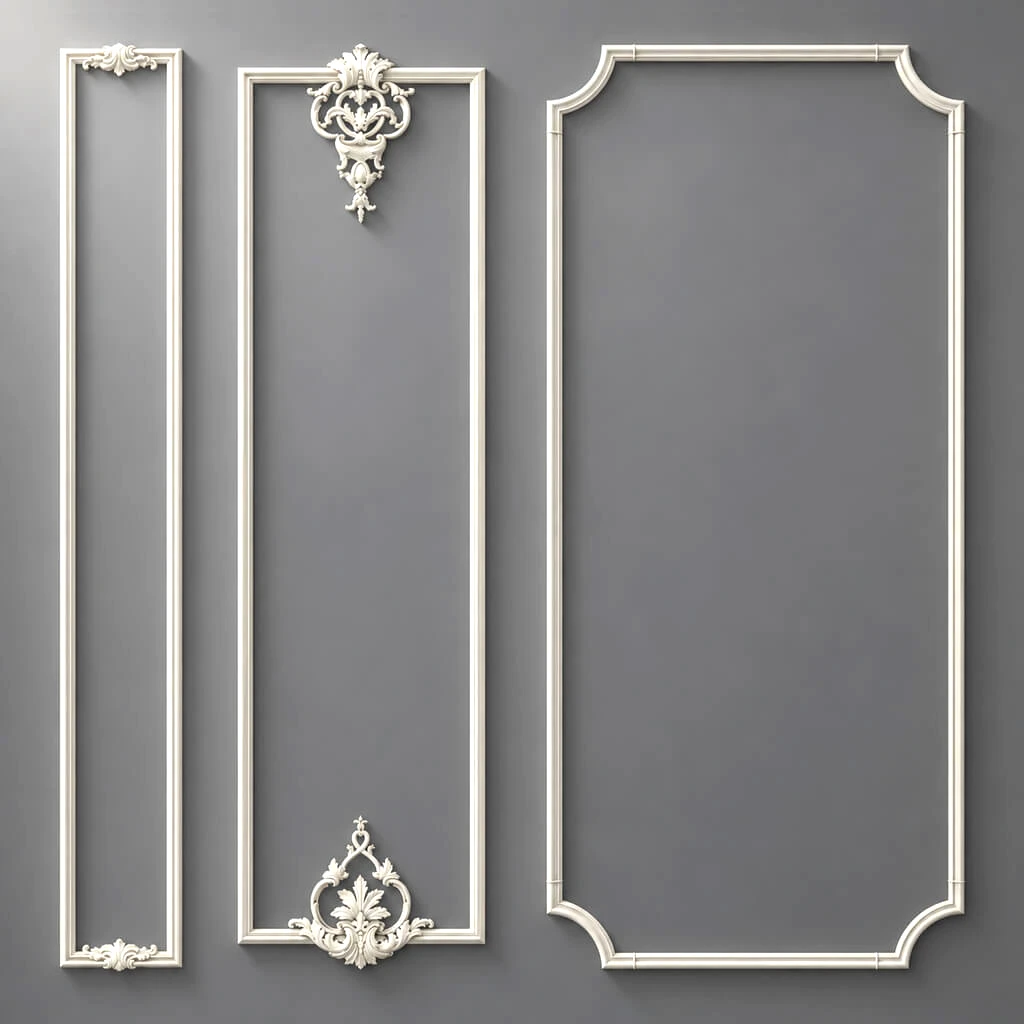
Neoclassical. A slat belt in the lower third of the wall as an architectural frieze. Oak with dark tint, wide slats, strict proportions. Combines withdecorative panels and moldingsin a unified finishing system.
Loft and industrial. Wide slats, dark paint — anthracite, deep blue, olive. Adjacent to concrete, exposed utilities, metal. The warm slatted surface as a counterpoint to cold materials.
Natural interior, eco. Natural oak with oil is the central material, not an accent. Natural fiber texture in dialogue with equally natural stone, linen, rough ceramics.
Flexible wall slats for B2B: features of working with professionals
Designers, architects, furniture manufacturers, developers — a professional client has different requirements than a retail buyer.
Designers and architects value material predictability: precise end geometry, stable batch tone, availability of samples for client presentation, ability to coordinate non-standard sizes and custom tinting.Slat panels for columns, arches, and radius walls— a standard tool in their practice.
Furniture manufacturers need serial supplies for the production cycle. Flexible slats for curved facades save on manual joinery when producing radius cabinets, kitchen islands, rounded sections.
Developers use slat panels in finishing premium-class apartments and lobbies. Here, volume, deadlines, and supply stability are important.
Restaurants, hotels, retail facilities — commercial interiors with high requirements for material strength and execution precision.
For B2B inquiries, clarify volume conditions, non-standard sizes, custom tinting, and individual production timelines.
Flexible slats and acoustics
Slatted surfaces are not just decorative. Vertical slats with gaps scatter sound waves, reducing direct reflection from the wall plane. This decreases reverberation—that very 'echo' that makes large spaces uncomfortable for speech and music.
The effect is noticeable in spaces dominated by hard reflective surfaces: meeting rooms, restaurants, hotel lobbies, coworking spaces. When installed on a frame with an air gap and with acoustic absorber placement (mineral wool, acoustic foam) behind the panel, the decorative finish transforms into a functional acoustic system.
FAQ: answers to the most frequently asked questions
Can flexible slats be installed on a column?
Yes—this is one of the key application scenarios. The panel wraps around a cylindrical column along the entire perimeter. Before ordering, be sure to clarify the minimum working bending radius of the specific model and compare it with the actual radius of your column.
Are flexible slats suitable for an arch?
Yes. The panel follows the curve of the arched vault, maintaining uniform slat spacing. The transition to adjacent straight walls occurs without disrupting the rhythm. A dry fitting with a template is mandatory.
Can flexible slats be painted?
Yes—MDF slats for painting are created specifically for this. Primer + two coats of finish paint in any RAL or NCS shade. Repainting without dismantling is possible. Solid oak is only painted with special tinting oils or opaque coatings.
Can flexible slats be used on furniture?
Yes. Installation on vertical furniture fronts is a standard scenario. Use structural adhesive with high initial adhesion, supplementing with micro-pins through the fabric backing if necessary.
Which material is better—MDF or wood?
Depends on the task. MDF — when precise color, limited budget, or future repainting is planned. Oak or beech — when natural texture, durability in commercial use, or the tactility of a living material is needed.
How are flexible slat modules joined?
End to end, slat to slat, without gaps or overlaps. With precise end geometry, the joint visually disappears — the surface is perceived as a single continuous one.
How to calculate the number of panels?
Area of surfaces to be finished (m²) plus 8–12% waste for cutting. On curved surfaces — columns, arches — 12–15%. Order the entire volume from a single production batch.
Can it be installed by oneself?
On flat surfaces — yes, with basic skills in working with mounting adhesives. On columns and arches, an experienced installer is recommended. Dry fitting, precise marking, correct adhesive — three conditions that are mandatory regardless of experience.
How to care for flexible slats on the wall?
MDF for painting: wipe with a damp (wrung out) cloth, no solvents. Oiled oak: soft dry or slightly damp cloth. Every 1–2 years — renew the oil coating on the surface without dismantling. In high-humidity areas — more frequent maintenance and a high-quality moisture-resistant compound.
Can flexible and rigid panels be combined in one interior?
Yes, and this is the optimal tactic for most projects: rigid — on flat planes, flexible — on transitions and curved surfaces. With identical spacing and slat profile, the transition is visually unnoticeable.
Conclusion
Flexible wall slats solve a problem that rigid formats cannot: they follow the surface, not resist it. Columns, arches, radius walls, rounded corners, curved furniture fronts — that is their natural habitat.
On a flat wall, they perform as well as rigid panels. On complex geometry — they are the only correct choice.
Systematic approach to purchasing: determine the surface type, clarify the working bending radius, choose the material for the task, request samples, check the accuracy of the end cuts, calculate the volume with a margin. That's the entire algorithm — nothing extra.
About the company STAVROS
When a task requires a slatted solution for non-standard geometry, professionals know where to turn. STAVROS is a Russian manufacturer of MDF, oak, and beech slatted panels for interior finishing, including flexible fabric-based modules for working with columns, arches, radius walls, and curved furniture fronts.
STAVROS's production program includes: standard formats for residential and commercial interiors, custom sizes and profiles for individual projects, custom solid wood tinting, and B2B supplies for design studios, architectural bureaus, furniture manufacturers, and developers. Available in Moscow and St. Petersburg, with Contact us to confirm shipping to your destination. via transport companies; average production time for custom orders is 5–10 business days.
Precise end geometry, durable fabric base, uniform batch, and readiness for finishing coating—this is the STAVROS standard.
Full catalog, technical parameters, and consultation for your project—in the section Flexible slats on the wall on the official website.