Article Contents:
- What is a handle-bracket and how it differs from other types
- Quick guide: which bracket size to choose
- Where furniture handle-brackets are used
- Handle-bracket for kitchen
- Handle-bracket for cabinet
- Handle-bracket for chest of drawers
- Handle-bracket for bedside table
- Handle-bracket for drawer
- Bracket handle for swing facade
- How to choose the size of a bracket handle: a complete breakdown
- Center distance and overall length: what's the difference
- 64 mm — for small facades
- 96 mm — for cabinets and small drawers
- 128 mm — universal standard
- 160 mm — for wide facades and kitchens
- 192–224 mm — for large drawers and facades
- 300–320 mm — for wardrobes and long facades
- 128 mm bracket handle: the most popular choice
- 160 mm handle bracket: confidence in details
- Long handle brackets for cabinets: from bracket to design
- How to choose the color of a handle bracket: a complete breakdown of coatings
- Black matte handle bracket
- Chrome handle bracket
- Gold handle bracket
- Bronze handle bracket
- Brass handle bracket
- White handle bracket
- Matte nickel
- With or without coating: how to choose
- Coated handles
- Uncoated handles
- For facades under enamel and painting
- How a pull handle differs from other types of furniture handles
- How a pull handle pairs with other hardware
- Handle material: why solid wood is better
- Mistakes when choosing a pull handle: an honest breakdown
- Mistake 1: Choosing only by color
- Mistake 2: Not checking the center-to-center distance
- Mistake 3: Putting a small handle on a heavy facade
- Mistake 4: Choosing a handle that is too massive for a small door
- Error 5: Not accounting for handle protrusion in a narrow passage
- Error 6: Not matching the color with all the hardware
- How to buy a wooden arch pull handle
- FAQ: answers to popular questions about arch pull handles
- Which arch pull handle is the most versatile?
- What is better for the kitchen: a 128 or 160 mm arch pull handle?
- Which arch pull handles to choose for a cabinet?
- Which arch pull handle is better: black, chrome, gold, or bronze?
- How is an arch pull handle different from a knob handle?
- How to choose an arch pull handle based on the center-to-center distance?
- Which pull handles are suitable for enamel facades?
- Can I buy pull handles for the entire kitchen at once?
- Are wooden pull handles practical or just beautiful?
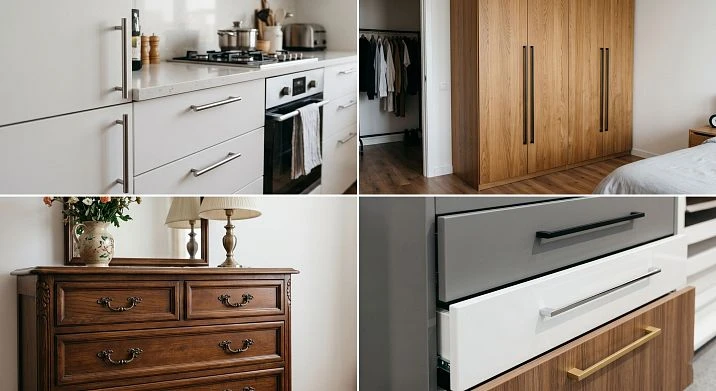
Among the wide variety of furniture fittings Bracket Handle occupies a special place — it combines ergonomics, durability, and versatility. It is installed on kitchens, cabinets, chests of drawers, bedside tables, pull-out drawers, and massive swing facades. And it's no wonder: it is the pull handle that provides that confident, reliable grip that no other type of handle can replicate with the same completeness.
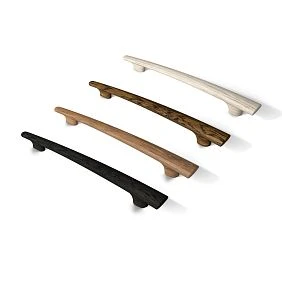
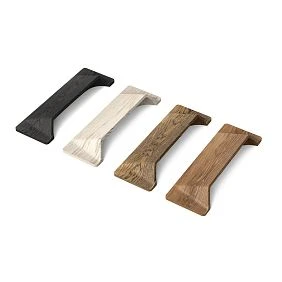
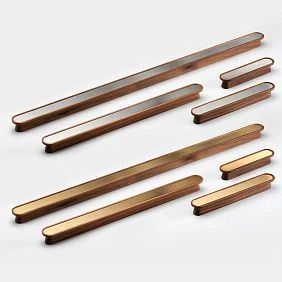
What is a pull handle and how is it different from other types
Let's start with the simplest — the definition. Furniture hinge handle is a fitting with two attachment points and a bridge between them, which the hand grips. The design is simple, but it is this simplicity that makes it so effective.
Two mounting bolts securely fix the handle to the facade, distributing the load evenly — without warping, without loosening. The arc or straight bridge provides a grip with the whole palm or several fingers — depending on the diameter and shape of the rod. This fundamentally distinguishes the pull handle from handle-buttons, which has only one attachment point, and from recessed handle, which does not protrude beyond the plane of the facade at all.
The shape of the bracket can be very diverse: a classic arc, a square ring, a rectangular contour, angular geometry, rounded edges with a thin rod — each option carries its own aesthetic. The bracket can be thin and light — for delicate interiors, or massive and expressive — for accent hardware. You can choose furniture bracket handle with a minimalist straight arc, or with a rounded and warm, almost sculptural shape.
It is this combination of functionality and variety of shapes that makes the furniture bracket handle the most widely produced type of hardware on the market.




Quick guide: which bracket size to choose
Before diving into the details, here's a quick answer for those who already know they want a bracket but haven't decided on the size.
| Furniture and facade type | Recommended center distance |
|---|---|
| Small drawer, nightstand | 64–96 mm |
| Standard kitchen facade | 128 мм |
| Wide kitchen facade, drawer | 160–192 mm |
| Large drawer, side panel | 224–300 mm |
| Tall cabinet, facade from 60 cm | 320 mm and longer |
| Full-height cabinet | Long vertical bracket |
This is the starting point. Next, we will analyze each use case in detail and honestly.
Our factory also produces:
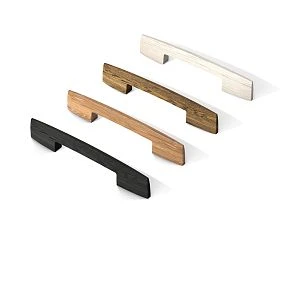
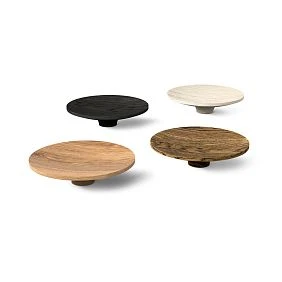
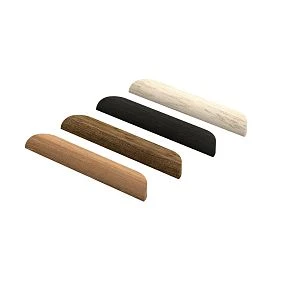
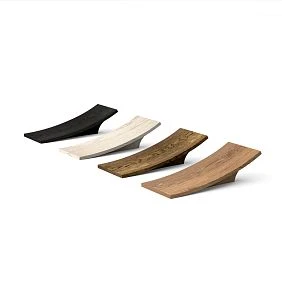
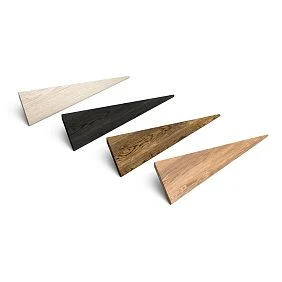
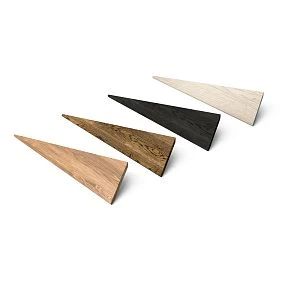
Where furniture bracket handles are used
Get Consultation
Bracket handle for kitchen
The kitchen is where the handle works most intensively. Facades are opened dozens of times a day, hands can be wet, greasy, or occupied. That is why handle bracket for kitchen it is a choice not only based on aesthetics but also on common sense.
Grabbing with two points allows you to open a facade with one motion, almost without looking. This is especially valuable when one hand is holding a pot and the other needs to quickly open a lower cabinet. The bracket is a handle that you can catch with the edge of your palm, wrist, or several fingers — it will still open.
For kitchen facades 300–400 mm wide, the optimal size is with a center distance of 128 mm. For facades 450–500 mm — 160 mm. For a facade for a built-in refrigerator or oven (600 mm and wider) — 192–224 mm.
handle bracket for kitchen made of solid wood — a successful solution for kitchen sets with wooden, veneered, painted, and MDF facades. Wood is tactilely pleasant, does not cool the hand in a cool room, does not slip, and requires no additional care — just wipe occasionally with a damp cloth.
Modern kitchen design trends actively use brackets in black matte color on white or gray facades — this is a contrast that works flawlessly. handles for kitchen Wood with a bronze or matte gold finish adds warmth and looks organic on facades in ivory, walnut, and boiled milk colors.
Cabinet pull handle
A cabinet is a different type of load. It is opened less often, but the facades are typically larger and heavier. For a hinged cabinet 200–220 cm high, a handle that is comfortable to grip at different heights is important — including for children and the elderly. Cabinet pull handle with a center-to-center distance of 160–224 mm handles this task confidently.
For a tall facade with a horizontally positioned handle, its length is important — it should not get lost on the large door panel. The principle: the handle should occupy from one-third to half the width of the facade. For a 600 mm wide cabinet, a 192–224 mm pull is optimal; for a 450 mm cabinet, 160 mm is sufficient.
Pull handles are not used for sliding wardrobes — they have a different opening mechanism. But for hinged cabinets in the hallway, dressing room, bedroom, and kitchen — the pull remains the best solution in terms of convenience and reliability.
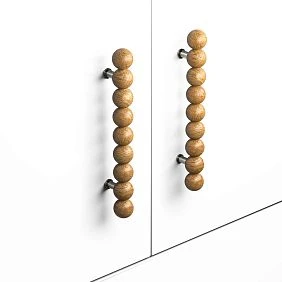
If you want expressiveness and an unconventional approach, consider a long cabinet handle in the form of a vertical pull or profile spanning the full height of the door. This is an architectural gesture that turns an ordinary cabinet into a designer object.
Bracket handle for a dresser
A dresser is furniture with compact fronts and several rows of drawers. Here, not only the ease of grip is important, but also the visual rhythm: handles arranged in a row create a horizontal line that visually unifies the entire piece of furniture into a single whole.
For a dresser, brackets sized 96–128 mm are most often chosen. Larger sizes are suitable for wide cabinets with horizontally arranged drawers. The shape of the bracket here can be more decorative — with a rounded rod, with a thin elegant curve. They look especially good on a dresser Handles with Finish in bronze, brass, or matte gold — they give the furniture nobility and completeness.
Bracket handle for a cabinet
A bedside table, a TV cabinet, a shoe cabinet in the hallway — all these items have small fronts, and the rule here is simple: do not overload. A handle that is too large on a small front looks cartoonish. For a cabinet, brackets with a center-to-center distance of 64–96 mm are optimal. They are delicate, do not take up much space in front of the front, but at the same time provide a comfortable grip.
An uncoated wooden bracket on a solid wood cabinet is a tactile and visual unity that is hard to overestimate. The hand literally feels that the furniture is made of real wood.
Bracket handle for a drawer
A drawer is subjected to the most intense load — it is opened and closed more often than any other furniture element. It is here that the quality of the handle is fully felt: a loose button or a low-quality bracket becomes noticeable within a few months.
furniture bracket handle made of solid wood on a drawer — this is reliability that does not need to be checked for years. Wood does not loosen in the mounting holes as quickly as metal with plastic inserts. With proper tightening of the bolts, the bracket lasts for decades.
For kitchen pull-out drawers, the standard is 128 mm center-to-center. For internal drawers in wardrobes or cabinets, it's 96 mm.
Pull handle for hinged front
A special note about hinged fronts — doors that open sideways on hinges. The heavier the door, the more important a wide grip and secure fastening become. Furniture pull handle on a hinged front ensures even force when opening: the hand grips the middle between two attachment points, and the load does not create a twisting moment — the front opens smoothly, without jerks.
For heavy fronts made of MDF or solid wood with a thickness of 19–22 mm, a pull handle with a wide center-to-center distance — from 160 mm — is recommended. The taller the front, the larger the handle should be.
How to choose the size of a pull handle: a complete guide
Size is not just about aesthetics. It's about function. The wrong size means either an uncomfortable grip, visual imbalance, or mismatch with existing holes in the front.
Center-to-center distance and overall length: what's the difference
First of all — a key point that many miss. Center-to-center distance (also called center distance) is the distance between the centers of two holes for mounting bolts. This is not the overall length of the handle. The overall length is always larger — due to the posts (ears) that extend beyond the mounting points.
For example, furniture handle bracket 128 mm center distance is 128 mm, and the total length can be 140–160 mm depending on the model. It is the center distance that needs to be measured when replacing old handles — this guarantees that the new one will fit without additional drilling.
64 mm — for small facades
Handle bracket 64 mm — the most compact option in the series. It is used on small cabinet doors, bedside tables, and chest of drawers with a facade width of up to 200 mm. This is a delicate accent that does not overwhelm a small surface. It works well for children's rooms, bathrooms, and auxiliary cabinets in the hallway.
96 mm — for bedside tables and small drawers
Handle bracket 96 mm — standard for bedside tables, small chest of drawers, and wall cabinets in the kitchen and bathroom. This is the sweet spot between compactness and convenience: the palm fits comfortably, and the handle does not look bulky on a small facade.
If you install handles on a row of identical drawers — the 96 mm center distance creates a neat, clear visual rhythm. This is especially effective on a chest of drawers with 4–5 rows of drawers.
128 mm — universal standard
The 128 mm handle bracket is the most popular size on the market. This is no coincidence: it matches the standard hole spacing on most industrially produced kitchen fronts. When replacing old handles, 128 mm is most often the required size.
Furniture handle bracket 128 mm works well on kitchen fronts 300–450 mm wide, on dresser drawers, on cabinets, and wall-mounted cupboards. It is large enough for a secure grip and compact enough not to overwhelm a small front.
This size offers the greatest variety of shapes and finishes — here you can find both a strict straight bracket with a thin rod, a rounded classic arch, and an angular modern shape.
160 mm — for wide fronts and kitchens
The 160 mm handle bracket is the next step up in scale. It is chosen where 128 mm seems a bit small: for kitchen fronts 450–500 mm, for wide drawers, for lower cabinets with large fronts.
Furniture handle bracket 160 mm provides a more secure grip — the hand spreads wider, and opening a heavy front requires less effort. This is especially valuable for deep lower cabinets loaded with dishes and appliances.
Visually, the 160 mm handle looks more substantial and serious — it emphasizes the scale of the furniture and gives it a sense of status. For a modern-style kitchen, this is often the right choice.
192–224 mm — for large drawers and fronts
In this range, solutions for heavy and wide fronts begin. The 192 mm handle bracket fits well on fronts from 500 mm and is especially suitable for lower kitchen drawers, wide oven doors, and panels with large storage compartments.
The 224 mm handle is already a pronounced design accent. On a 600 mm facade, such a handle occupies a third of the width and sets the scale for the entire kitchen front. It looks especially expressive paired with horizontal pulls — it creates the feel of a professionally designed interior.
300–320 mm — for cabinets and long facades
Bracket handle 320 mm — this is already a transition zone between a handle and a profile. Such a handle is installed on tall cabinets, large hinged doors, panel facades with a wide surface. It ensures even opening of a heavy facade while being an independent design element.
The 300 mm handle works well on cabinets in the hallway and living room — where the door is tall, the surface is wide, and hardware that doesn't get lost on a large area is needed.
128 mm handle: the most popular choice
Let's talk about this size in more detail — it deserves it. Why exactly Handle bracket 128 mm has it become the de facto standard for furniture hardware?
Firstly, this size matches most standard kitchen facades of European and Russian production. Factory mounting holes are drilled specifically for 128 mm — and any replacement of hardware in a standard kitchen starts with this size.
Secondly, 128 mm is the ideal length for one hand. Four fingers rest on the crossbar evenly, without crowding or dangling. The grip is confident and natural.
Thirdly, this size offers the maximum variety of shapes and colors. It is the 128 mm handle in matte black, chrome, and gold that is available in the widest range — because it is the most demanded size among customers.
If you're not sure which size to choose — start with 128 mm. In most situations, that's the right answer.
160 mm pull handle: confidence in details
Where 128 mm falls just short — in scale, in grip comfort, in proportions with the facade — it's time for 160 mm pull handles.
This size is slightly less common in standard factory-made kitchen sets, but it's chosen deliberately — as an upgrade, as a more substantial solution. Furniture handle bracket 160 mm looks impressive, opening the facade feels smooth and controlled.
For wide lower drawers in the kitchen — this is a choice that's appreciated immediately, from the very first use. The hand doesn't search for the handle — it simply finds it where it should be.
Long pull handles for cabinets: from handle to design
There's a separate category that can't be overlooked — long handles for cabinets. These are handles with a center-to-center distance of 320 mm and above, vertically oriented on a tall facade. They span the entire height of the door or a significant part of it — and that's precisely what creates a strong visual impression.
Long furniture handle — it's not just a functional element. It's an architectural touch that transforms a cabinet from an ordinary storage item into a full-fledged interior element. A long vertical handle emphasizes the height of the room, giving the furniture strictness and definition.
Long handle for cabinet Convenient and pragmatic: you can grab it at any height. An adult grabs it at chest level, a child lower, an elderly person where the hand rests most naturally. This is an inclusive ergonomic solution, thought out to the smallest detail.
long wardrobe handle Made of solid wood — it's tactile warmth at the entrance to the cabinet. Every time you open the door, your hand feels a living material, not cold metal. It's a small thing — but it works on the feeling of quality every day.
How to choose the color of a pull handle: a complete breakdown of finishes
The color of the handle is not the final touch, but part of the interior concept. A poorly chosen finish can ruin even the most beautiful furniture. The right one can put the finishing touch on it, completing the look.
Black matte pull handle
A black pull handle is one of the strongest trends of recent years that is not going away. The black matte color works on contrast and gives any interior modernity and character.
On a white kitchen black matte pull handle — a foolproof choice. On gray facades — an even more restrained and elegant effect. On wooden and veneered facades — an unexpectedly fresh and modern contrast. Black matte does not glare, fingerprints are not visible on it, it is practical and durable.
Black matte furniture pull handle is a versatile choice for kitchens in loft, minimalist, modern classic, Scandinavian, and neo-industrial styles.
Chrome handle bracket
Chrome handle bracket — a classic that never loses its appeal. The chrome surface reflects light, making the space visually brighter and airier. Glossy chrome handle bracket offers mirror-like shine and brilliance, a striking accent. Matte chrome handle bracket is a more restrained, neutral option that works well in light modern kitchens.
Chrome pairs well with white, gray, and silver facades. On wooden and warm facades, chrome appears cooler — this can be an intentional contrast or a dissonance, depending on the design intent.
Gold handle bracket
Gold handle bracket — boldness and luxury. Gold hardware on furniture is currently experiencing a resurgence: after a long period of minimalism and neutral colors, interiors are once again turning to warmth, shine, and expressiveness.
Gold furniture handle bracket looks especially good on white and milky kitchens — here, gold literally glows. An interesting effect comes from combining a gold bracket with dark facades — anthracite, graphite, deep blue. This is luxury in a modern interpretation.
Matte gold is a more restrained version that works in neoclassical, Scandinavian, and transitional interiors. It is warmer than chrome but less intrusive than glossy gold.
Bronze handle bracket
Bronze handle bracket — a choice for those who value depth and history in the interior. Bronze is a warm brown-gold shade with a slight "aged" effect. It is ideal for classic kitchen sets, bedroom dressers, library cabinets, and furniture in rustic and Provence styles.
Furniture pull handle with a bronze finish on wooden facades made of oak, walnut, or cherry — this is a noble combination of warm materials that is hard to improve upon. Bronze emphasizes the naturalness of wood and adds that "expensive" touch to the interior, which is difficult to describe in words but instantly felt.
Brass pull handle
Brass pull handle — close to bronze, but lighter and more rigid in tone. Brass is colder than gold and warmer than chrome. It fits perfectly into interiors that seek a balance between modernity and tradition.
Handles with Finish Brass finish — a popular choice for kitchens in scandi, eco, and Japanese minimalist styles. On light oak or ash facades, a brass pull creates a sense of natural unity — warm, lively, and organic.
White pull handle
White pull handle — for those who want to preserve the purity and simplicity of light interiors. A white handle "melts" on a white or cream facade, barely standing out — and this is a deliberate design technique. The furniture is perceived as a monolithic volume without unnecessary accents.
handles without coating Made from solid wood, it can be painted white independently — and precisely matched to the shade of the facade. This is maximum precision in details, valued in design projects.
Matte nickel
Matte nickel pull handle — a neutral silver-gray shade that does not contrast or accentuate, but delicately complements. It works well on gray, white, bluish, and neutral facades. This is hardware for those who do not want the handle to attract attention — but appreciate quality and understated elegance.
With or without coating: how to choose
This question arises regularly — especially when furniture is created for a specific project or during restoration of existing pieces.
Handles with coating
furniture handles with finish — this is a ready-made solution with a specific finish: black matte, chrome, gold, bronze, brass, champagne, nickel. You buy it and install it immediately. No additional preparation needed.
This is the right choice when you know the exact color of the interior and want a specific coating. Also, handles with coating are the best option for serial furniture production and for standard projects where there is no need for individual color adaptation.
Important: the quality of the coating determines the durability of the handle. Cheap coatings peel, scratch, and fade. Coating based on high-quality paints and varnishes lasts for decades — especially if the base material (solid wood) is properly prepared.
Handles without coating
uncoated furniture handles — these are blanks for further finishing. They are made of solid wood and have a clean, untreated or slightly sanded surface. Such handles can be painted in any RAL color, coated with oil, wax, varnish, stain — it all depends on your design.
handles without coating — this is the choice of designers who work with custom furniture and want a perfect match between the handle color and the facade. It is also the choice for restorers — when you need to recreate a historical shade or coat the handle with the same paint as the entire piece of furniture.
Another scenario: solid wood handles without coating are installed on facades before they are painted — and are painted together with the facade in one pass. This achieves absolute unity of color and texture.
For facades under enamel and painting
If you are working with facades for painting — handles without coating this is the basic option for self-painting to match the facade. But you can also choose a ready-made coating — contrasting or harmonious — and install a handle with an already finished finish.
Key rule: do not put cheap metal handles on expensive facades under enamel. Wood and enamel are one story of tactile perception, metal on enamel is another. Wooden Handles for kitchen furniture for painting, they fit perfectly into the logic of such facades.
How does a pull handle differ from other types of furniture handles
A small comparison block — for those who haven't made a final decision yet:
| Handle type | When to choose |
|---|---|
| Bracket | Need a comfortable grip, versatility, reliability on any facade |
| Button | Small drawers, decorative accent, lightweight facades |
| profile | Modern smooth facades, built-in furniture, minimalism |
| Recessed | Concealed installation, maximum minimalism |
| Overlay | Quick installation, expressive shape without routing |
The pull handle wins in versatility. It works almost everywhere, provides a comfortable grip, is easy to replace, and is available in the widest range of sizes. Other types are specialized solutions for specific tasks.
How does a pull handle combine with other hardware
Choosing a handle doesn't end with the handle itself. In a good interior, hardware works as a system: handles, hinges, legs, holders, rails, faucets — all of these should be coordinated in color and style.
If you choose bronze-finished pull handles, make sure the hinges on the cabinets are at least a neutral color (most modern hinges are steel or nickel-colored, which pairs well with warm bronze). If it's a kitchen, a faucet, baskets, rails, and other hardware in the same color scheme will create a sense of a well-thought-out design solution.
A black matte handle requires all metal in the kitchen to be black — otherwise it looks like an accident. Chrome is neutral and compatible with most metal accessories. Gold and brass require a harmonious environment, otherwise they look like an out-of-place element.
Handle material: why solid wood is better
Most furniture handles on the market are metal, plastic, or combined. So why should you pay attention to handles made of solid wood?
First — tactile sensation. Wood doesn't chill your hand, isn't slippery, and provides that pleasant natural contact that no other material can replicate. You feel it every time you open a cabinet — and it works in favor of the overall perception of the furniture.
Second — durability. Solid wood, with proper care, lasts for decades. It doesn't rust, delaminate, or crack from impacts like plastic. A wooden handle made from hardwoods — oak, ash, beech — will withstand thousands of openings without the slightest sign of wear.
Third — repairability. If a wooden handle is scratched or worn, it can be sanded and repainted. A metal handle with damaged coating is usually easier to throw away.
Fourth — eco-friendliness. Solid wood is a renewable natural material. For those who think about the composition of their home, this is an important argument.
Mistakes when choosing a handle-bracket: an honest analysis
Even experienced buyers make typical mistakes. Let's break down the most common ones — so you don't repeat them.
Mistake 1: Choosing only by color
Color is the last criterion, not the first. First determine the type of handle, then the size, then the material, and only then — the color and finish. If you mix up the sequence, you might buy a beautiful bronze bracket of the wrong size — and only discover it during installation.
Mistake 2: Not checking the center distance
The most common practical mistake — especially when replacing old handles. Before ordering new bracket handles, measure the distance between the centers of the existing holes. If it's 128 mm — buy a handle with a center distance of 128 mm, not a total length of 128 mm. There is a difference, and it's fundamental.
Mistake 3: Putting a small handle on a heavy facade
A 64 or 96 mm bracket on a heavy cabinet door is inconvenient. A small handle doesn't provide the necessary leverage, the hand has to apply more force, and the installation itself experiences increased load. For heavy facades — 160 mm and above.
Mistake 4: Choosing a too massive handle for a small door
The opposite mistake is to put a large 192–224 mm bracket on a small 200–300 mm facade. The handle will take up almost the entire width of the facade and look cartoonish. Proportion is the key principle: the handle should not take up more than two-thirds of the facade's width.
Error 5: Not accounting for the handle protrusion in a narrow passage
In a narrow kitchen or hallway, a handle with a high arch creates real inconvenience: clothes catch on it, and hips bump into it when passing. In such cases, it's better to choose a handle with a low arch or consider a recessed handle, which does not protrude beyond the plane of the facade.
Error 6: Not coordinating the color with all the hardware
Gold handles against chrome hinges and silver rails create a stylistic dissonance. Before purchasing, you need to look at the entire "metal ensemble" of the kitchen or room and decide: either change everything to one color, or choose a neutral tone compatible with the existing hardware.
How to buy a solid wood handle
If you have already decided on the type, size, and color, it's time to move on to choosing a specific model. On stavros.ru, a wide range of handle-hinges solid wood handles is available: from compact 64 mm to long models for cabinets.
All handles are made from natural wood — without the use of plastic inserts or cheap substitutes. There are models without a finish — for self-painting, and models with ready-made coating in popular colors. There are long handles for cabinets and standard sizes for the kitchen. The entire range furniture handles is available for online ordering.
Buy a pull handle with delivery — simply choose the right model in the catalog, specify the required quantity, and place your order. For large projects and wholesale purchases, individual terms are available.
FAQ: answers to popular questions about pull handles
Which pull handle is the most versatile?
The most versatile option is Bracket Handle with a center distance of 128 mm. It fits most standard kitchen fronts, cabinets, dressers, and wardrobes. This size is the most common and is available in the widest range of shapes and colors.
What is better for a kitchen: a 128 mm or 160 mm pull handle?
For standard kitchen fronts up to 400 mm wide, 128 mm is usually sufficient. For wide drawers, fronts 450–500 mm, and lower cabinets, 160 mm is more convenient — the grip is more secure, and opening heavy drawers is more comfortable. If in doubt, measure the width of the front and choose a handle that takes up a third of that width.
Which pull handles to choose for a wardrobe?
For a hinged wardrobe, it is better to choose handles from 160 mm and above. Long vertical handles look good on tall wardrobe fronts — Long furniture handle gives the wardrobe architectural rigor and provides a comfortable grip at any height.
Which pull handle is better: black, chrome, gold, or bronze?
This depends on the interior style. Black matte — for modern, minimalist, loft interiors, especially on white and gray fronts. Chrome — neutral and versatile, for light modern kitchens. Gold — for accent hardware, white and dark fronts with a luxurious effect. Bronze and brass — for classic, wood, neoclassical, and warm interiors.
How is a pull handle different from a knob?
Button Handle is mounted at a single point and is suitable for light, small fronts. Bracket Handle has two mounting bolts and provides a secure full-palm grip — it is more convenient for frequent opening, more reliable on heavy facades, and less prone to loosening under intensive use.
How to choose a pull handle based on the center-to-center distance?
Measure the distance between the centers of the existing holes in the facade. This is the required center-to-center distance for the new handle. Standard values: 64, 96, 128, 160, 192, 224, 300, 320 mm. If you are making new holes, choose the center-to-center distance based on the facade width: the handle should occupy approximately one-third of its width.
Which pull handles are suitable for enamel facades?
The best choice would be handles without coating solid wood handles, which can be painted to match or contrast with the facade. If you prefer a ready-made solution, choose Handles with Finish in a color that harmonizes with the facade enamel.
Can I buy pull handles for the entire kitchen at once?
Yes. Before ordering, measure all kitchen facades, determine the required center-to-center distances, and choose a single model in the needed quantity. This ensures visual unity of the entire set. If necessary, order several models for different zones: for example, 128 mm for wall cabinets and 160 mm for lower drawers.
Are wooden pull handles practical or just decorative?
It is both practical and beautiful. Solid wood is a durable material that does not rust, does not delaminate, is easy to refinish, and is pleasant to the touch. Furniture hinge handle made of solid wood will last for decades with minimal care — and all this time it will look decent and feel natural.