Article Contents:
- What is a furniture knob
- Design and installation
- How a knob differs from other handles
- Quick guide: when to choose a knob
- Where to use knobs: scenarios and logic
- Knob for kitchen cabinets
- Knob for a dresser
- Knob for a nightstand
- Push-button handle for drawer
- Push-button handle for display case and buffet
- Push-button handle for classic furniture
- Push-button handle for enamel furniture
- When a push-button handle is better than a pull
- Small facade
- Need a decorative accent
- Furniture in Classic Style
- Need to avoid visual overload of the facade
- Combination of knobs and pulls on one piece of furniture
- When it's better to choose a pull rather than a knob
- Colors and coatings of knob handles: from matte black to ceramic
- Matte black knob handle
- Bronze knob handle
- Gold knob handle
- Chrome knob handle
- Knob handle with ceramic cap
- Knob handle for kitchen: detailed breakdown
- On which facades a knob is appropriate
- Knob in kitchens of different styles
- Knob and railings
- Cabinet knob: nuances and limitations
- Wall-mounted cabinet in the bedroom or hallway
- Built-in wardrobe in the bedroom
- Cabinet with mirrored inserts
- How to combine knobs and pull handles
- By furniture zones
- By color and material
- By furniture style
- Knob materials: wood, metal, ceramic
- Wooden Buttons
- Metal Buttons
- Ceramic knobs
- Mistakes when choosing a knob: an honest analysis
- Place a small button on a heavy facade
- Choosing Based Only on Appearance
- Not considering grip comfort
- Mixing coatings without logic
- Not checking the thickness of the facade
- Putting a decorative knob on a minimalist kitchen
- Not coordinating knobs with the rest of the hardware
- How to buy wooden knob handles
- FAQ: answers to popular questions about knob handles
- What is a knob handle?
- Where is it best to use knob handles?
- What is better: a knob handle or a pull handle?
- Which knob handles to choose for the kitchen?
- Can you combine knob handles and pulls?
- What size head should I choose for a knob?
- Knobs with or without coating: which to choose?
- Wood or metal knob handle?
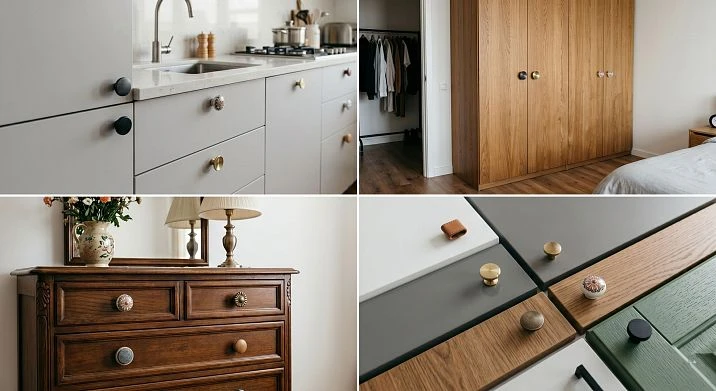
There are details that don't catch the eye — but they determine how furniture feels from the inside. A knob handle is one such detail. Small, compact, sometimes almost invisible — and yet capable of becoming a true decoration for a dresser, nightstand, or kitchen wall cabinet. Let's be honest: when is a knob handle the best choice, where does it work brilliantly, and where does it give way to other types of hardware?
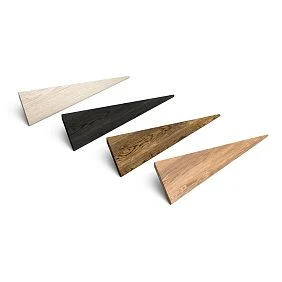
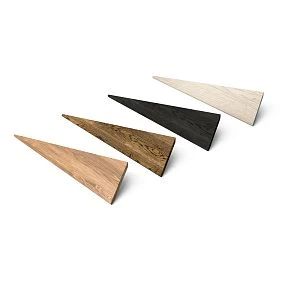
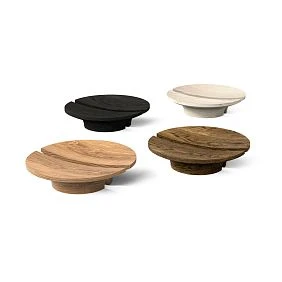
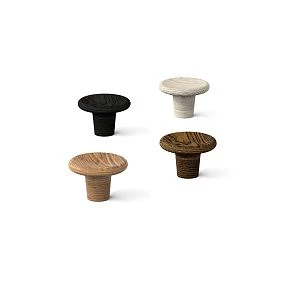
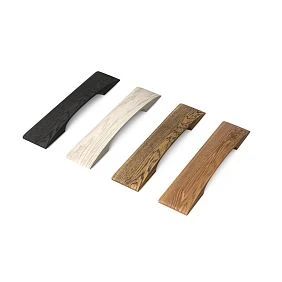
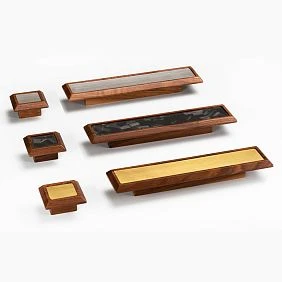
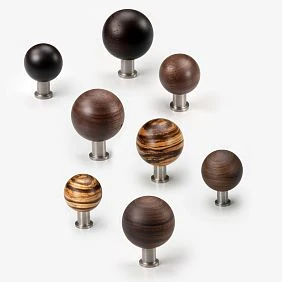
What is a furniture knob handle
Furniture knob — it is compact hardware with a single attachment point. Unlike handle-eyes, which attaches at two points and provides a full palm grip, a knob is one hole, one bolt, one point of contact with the facade.
Shape furniture knob handles can be very diverse: a round "head," teardrop-shaped, cylindrical, square, diamond-shaped, with a faceted cut or decorative texture. It is this freedom of form that makes the knob one of the most artistically rich categories of furniture hardware — especially in classic, rustic, and decorative interiors.
Knob handle does not claim to be the main accent — it modestly and precisely performs its function. But in the right context, it can say more about the interior than any large detail.




Design and installation
Installing the knob is extremely simple: one through hole in the facade, a bolt from the inside, the knob itself on the outside. Tightening is done by hand or with a screwdriver. This requires no special skills and takes literally two minutes per facade.
The diameter of the hole for the bolt is standard, most often 5 mm. The seating depth depends on the thickness of the facade: standard knobs are designed for facades with a thickness of 16–22 mm, which corresponds to most kitchen and cabinet panels. Before purchasing, it is important to clarify the bolt length — for non-standard facades, a bolt of a different length will be required.
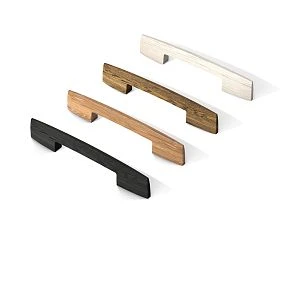
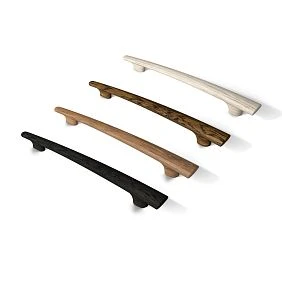
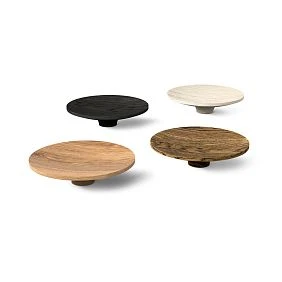
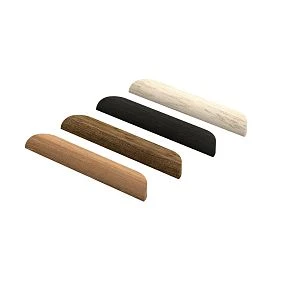
Our factory also produces:
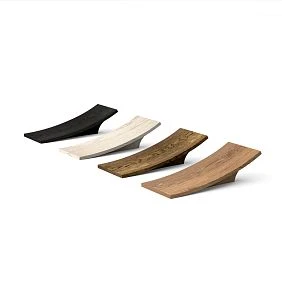
How the knob differs from other handles
The main difference is in the number of support points. A pull handle has two points, providing an even grip. Profile Handle — several points along the length. Inset handle — no protrusion at all. The knob has one point, one contact, minimal presence on the surface.
This also determines its area of application: small facades, lightweight doors, decorative furniture, where a strong grip is not needed, but neatness and visual delicacy are important.
Get Consultation
Quick guide: when to choose a knob
| Situation | Does the button fit? |
|---|---|
| Small drawer of a cabinet or chest | Yes, perfect |
| Upper wall cabinets of the kitchen | Yes |
| Small door of a sideboard or display cabinet | Yes |
| Front 200–350 mm wide | Yes |
| Heavy door of a wardrobe | No, a bracket is better |
| Lower kitchen drawers with frequent opening | No, a bracket is preferred |
| Classic dresser or vanity | Yes, great |
| Minimalist kitchen set | Careful, better profile |
Where to use knob handles: scenarios and logic
Knob handle for kitchen cabinets
In the kitchen knob handle for kitchen furniture most often found on upper wall cabinets. Why? Because upper fronts are generally smaller than lower ones: standard wall cabinet height is 720 mm, and width ranges from 300 to 600 mm. On such a front, a 128 mm pull looks normal, but a knob is more elegant and lighter.
Kitchen knobs are also good because they don't catch on clothing when moving along the set. In a small kitchen where space is limited, this is a real practical advantage. The knob protrudes minimally from the front plane — sometimes only 15–20 mm. It is much harder to bump into it while passing by than to hit a pull.
handles for kitchen wooden knobs — tactile warmth on every front. The hand habitually finds the knob, fingers grasp it with a natural pinch — and the door opens easily, without effort.
Popular scenario: lower kitchen drawers — staples 128–160 mm, upper cabinets — knobs in the same color and material. This creates unity amid diversity of forms — a design-wise and visually interesting solution.
Knob handle for a chest of drawers
If there is a place where Furniture knob it truly shines — it is the chest of drawers. Row after row, identical drawers, a steady rhythm of knobs centered on each front — this is an aesthetic hard to replicate with other types of handles.
A chest of drawers with multiple rows of drawers requires hardware that does not overwhelm the surface. Knobs are the ideal solution: they are present just enough to perform their function, and not a millimeter more. If the chest is in a classic style — bronze or brass knobs with a rounded shape will add nobility and completeness.
For a chest of drawers in Scandinavian or eco-style — wooden handles without coating knobs create a natural unity of materials. Wood on wood is not repetition, but harmony.
Knob size for a chest of drawers: head diameter typically from 30 to 50 mm. A large 50 mm knob on a wide drawer from 400 mm — an excellent accent. A small 30–35 mm knob on a narrow drawer — a delicate, almost jewelry-like detail.
Knob handle for a cabinet
Bedside table, shoe cabinet in the hallway, vanity cabinet in the bathroom — small pieces of furniture with compact fronts. Button handle for a bedside table — it's a perfect fit in scale. A bracket on a small bedside table looks disproportionate, a profile is excessive, but a button is exactly what's needed.
For a bedside table, the shape of the button is especially important: round or teardrop-shaped looks softer and more appropriate in the bedroom, angular geometric — in a modern interior of a men's or guest bedroom. A button with a matte gold finish on a white bedside table is one of the most beautiful and well-considered combinations in modern interior design.
Button handle for a drawer
For a small drawer — in a bedside table, chest of drawers, vanity table — a button is functionally sufficient. The drawer is light, opens without significant effort, and one point of contact is enough for comfortable use.
An important caveat: for deep drawers with heavy contents — for example, a drawer with dishes or a drawer with tools — it's better to choose a bracket. A button will work here but will require more effort, and over time the mounting bolt may start to loosen.
Button handle for a display cabinet and sideboard
Sideboards, display cabinets, open cabinets with glass doors — this is a special story. Here the button is not just a function but also decoration. It is visible through the glass or next to it and becomes part of the visual picture of the interior.
Furniture knob handle on a glass door of a sideboard in Provence style — it's a little masterpiece. Especially if you choose a button with a fine surface texture or an aged bronze finish. The door opens gently, almost silently — and each time it's a small pleasure.
Button handle for classic furniture
This is where Button Handle it gets a truly strong argument in its favor. Classic, neoclassical, French, Baroque furniture — it's all about details. About the shape of the legs, about the carving on the facades, about the delicacy of the hardware.
A staple on a classic dresser is acceptable. A knob is organic. A bronze knob with a rounded, slightly convex head, with a fine relief along the edge — this is exactly what completes the look of classic furniture, giving it historical authenticity.
Handles with Finish in bronze, gold, or aged brass in a knob format — the best choice for classic sets in the bedroom, study, living room, and dining room.
Knob handle for furniture under enamel
Enameled facades are about clean lines and surface uniformity. Here, the knob works in two ways: either it completely blends into the facade (if chosen in the same tone), or it creates a point accent (if a contrasting color is chosen).
handles without coating made of solid wood, painted together with the facade, is a way to achieve a perfect match of color and matteness. The hand feels the tactile difference in material (wood is softer than enamel), but visually the handle becomes an extension of the facade.
When a knob handle is better than a staple
There are several situations when Knob handle is not a compromise, but a consciously better choice.
Small facade
Proportions are the law. A facade 200–300 mm wide visually cannot "pull" a 128 mm handle. The handle takes up too large a share of the surface and makes the facade look like a miniature version of a large door. A knob precisely marks the center of the facade and does not disrupt its proportions.
A decorative accent is needed
Button Handle — it is a small sculpture on the furniture surface. Unlike a handle, which is primarily read as a functional element, a knob can carry a decorative load: shape, texture, finish, color — all of this works more strongly on a compact object.
A knob with a matte gold finish on a dark graphite facade is not a function, it is a statement. Such a detail turns an ordinary cabinet into a work of art.
Furniture in classic style
We have already discussed this — but it is worth repeating: for classic style, a knob is more organic than a handle. This is a historically correct choice. Furniture in the Louis style, English cabinet, Italian classic — everywhere knobs, not handles.
Visual overload of the facade must be avoided
There are facades with decorative carving, relief, inserts — already saturated with details. A handle on such a facade adds another complex element and creates noise. A knob is a quiet point that indicates where to grip but does not distract from the facade itself.
Combination of knobs and handles on the same furniture
This is a separate technique that deserves attention. On one kitchen set, both types of hardware can be organically combined: handle-eyes on the lower drawers — where a secure grip is needed, and buttons on the upper cabinets — where lightness and visual delicacy are important. The main condition: a unified coating and consistent shape.
When it's better to choose a handle instead of a button
An honest discussion about the limits of application. Furniture knob handle — is not a universal tool. There are situations where its limitations are literally felt in the hand.
Heavy facade. A swing cabinet door made of solid wood or 22 mm MDF with a height of 2000 mm is a significant weight. The button provides one point of support, and when opening such a door, the hand creates lateral force on the mounting bolt. After some time, the bolt will loosen, and the facade will "wobble" when opening. Bracket Handle with two attachment points distributes the load and holds much more reliably.
A wide drawer with heavy contents. A drawer with pots, dishes, or work tools — each time requires effort when opening. One button point gives a feeling of instability. A handle provides confidence.
Frequent intensive use. Kitchen drawers opened 20–30 times a day require reliable two-point fixation. The button will handle it, but it will wear out faster.
A tall cabinet where you grab at different heights. A long vertical handle or long wardrobe handle — here the button physically does not provide the necessary ergonomics.
Colors and coatings of knob handles: from matte black to ceramic
The color range of knobs is one of the richest in furniture fittings. This is where the greatest variety of decorative solutions is concentrated.
Matte black knob handle
A black knob handle is minimalism and modernity in one small dot. The matte black color contrasts with white, light gray, and cream facades — and it works flawlessly every time.
Matte black furniture knob handle — this is a choice for kitchens in loft, Scandinavian minimalism, and modern classic styles. It is practical: fingerprints are almost invisible on the matte surface, the coating does not glare or distract attention.
On dark facades — anthracite, graphite, dark walnut — a black knob creates a monochrome monolith: the handle is there but almost invisible. This is a maximally restrained solution valued in designer interiors.
On white facades black knob handle — this is a focal point. Small, expressive, distinct. The interior gains character without extra effort.
Bronze knob handle
Bronze knob — it's warmth, depth, and a historical touch in the interior. Bronze doesn't shout about itself, but it's impossible not to notice. The warm brown-gold hue with a slight patina effect is exactly what makes the bronze knob ideal for classic furniture, solid wood furniture, and interiors in Provence, country, and neoclassical styles.
Bronze furniture knob on a dark walnut chest of drawers — it's nobility that needs no explanation. Two materials — wood and patinated metal — complement each other in the language of tactile sensation and visual warmth.
Bronze knobs work well in pairs with other bronze hardware: bronze hinges, bronze locks, bronze handles — the entire ensemble speaks the same language.
Gold knob
Gold knob — boldness and luxury without apology. Gold in modern interiors is experiencing a renaissance: not pompous and heavy, but light, matte, refined — it returns to spaces where chrome once ruled.
Gold furniture knob works great on white kitchens and bedroom dressers. A gold dot on a white facade is a small flash of light that makes furniture come alive. On dark blue, emerald, and deep green facades, gold creates a luxurious effect — rich but not overwhelming.
Matte gold is a more modern interpretation that works in a wider range of interiors. Glossy gold is more traditional, for classic and baroque spaces.
Chrome knob
The chrome knob handle is a neutrality that never fails. Chrome is compatible with almost any style, facade color, and type of furniture. It doesn't compete with other details and performs its role flawlessly.
The matte chrome knob handle is understated modernity. For kitchens in light tones, for bathroom furniture, for neutral bedroom sets. Glossy chrome is brighter, more reflective, and suitable on glossy facades where the shine of the handle rhymes with the shine of the material.
Cabinet handles In a chrome finish in a knob format, it's a good solution for built-in furniture where there is no clear stylistic accent, but quality hardware is needed.
Knob handle with a ceramic cap
A separate story is knobs with a ceramic insert. This is hardware for interiors where details matter: Provence, country, boho, Mediterranean style, decorative vintage spaces.
A ceramic knob is handmade, with a living texture and a unique pattern. A blue knob with an ornament on a white kitchen cabinet in a Mediterranean village style is not just hardware, it's a story told in one detail.
In practice: ceramic knobs are most often used as an accent detail on individual furniture elements—for example, on a decorative sideboard or on one open cabinet that stands out from the rest.
Knob handle for the kitchen: a detailed breakdown
The kitchen is the most demanding space for hardware. Everything matters here: convenience, durability, aesthetics, compatibility.
On which facades is a knob appropriate
Button handle for kitchen Suitable for wall cabinets: standard height 720 mm or 360 mm (double row), width from 300 to 600 mm. These are small fronts that do not require a strong grip. Another scenario is a decorative sideboard or display cabinet as part of a kitchen set.
On lower cabinets 400–600 mm wide, the button is borderline: the front is large, the contents of lower drawers are heavier. If you open lower drawers often and under load, it is better to choose pull handle.
Button in different kitchen styles
Classic style kitchen — bronze or gold buttons with a rounded shape. This is a historically correct choice.
Scandinavian style kitchen — wooden buttons without a finish or with a thin oil finish. Naturalness and warmth.
Loft style kitchen — matte black buttons. A sharp point accent in an industrial spirit.
Modern kitchen in neutral style — matte chrome or champagne. Neutrality that does not interfere.
A kitchen with dark wooden fronts — brass or bronze. A single warm tone.
Push-to-open mechanism and rail systems
If the kitchen has a rail system (rods, holders, hooks), the hardware on the fronts should match it in color. This also applies to push-to-open mechanisms: chrome push-to-open mechanisms next to chrome rails form a unified system. Bronze push-to-open mechanisms next to silver rails create dissonance.
Push-to-open handle for cabinets: nuances and limitations
A cabinet is a more complex case. Much depends on its type and size.
Wall-mounted cabinet in a bedroom or hallway
A small wall-mounted cabinet with doors 400–500 mm wide — cabinet knob this works perfectly. The front is compact, the door is light, one attachment point is sufficient.
Built-in wardrobe in the bedroom
160–224 mm or Bracket Handle A standard hinged cabinet with a front height of 2100–2300 mm and a door width of 450–600 mm is a different story. The front is large, the door is heavy. A push-to-open mechanism as the sole attachment type is not optimal here. The best choice is Long handle for cabinet.
However, if the cabinet is low (up to 1800 mm) and the door is not too wide (up to 450 mm), a knob can be a compromise solution, especially in a classic or decorative interior.
Cabinet with mirror inserts
Cabinets with glass or mirror inserts in the doors are a classic area for using knobs. On such a door, a large handle looks rough, while a small knob looks organic. A bronze or brass knob next to a thin mirror frame creates a boudoir atmosphere or evokes a nostalgic feeling.
How to combine knob handles and pull handles
A competent combination of two types of hardware on one piece of furniture is not a compromise, but a design solution. Let's break down the logic.
By furniture zones
The most common scenario is upper kitchen cabinets with knobs, lower drawers with pulls. The logic: upper fronts are smaller and lighter, lower ones are larger and used more intensively. Knob on top + pull on bottom = functionally correct and visually interesting.
On a chest of drawers, you can use different types of handles for different drawers: narrow drawers — knobs, wide lower drawers — pulls. This creates rhythm and emphasizes the structure of the piece.
By color and material
The main rule: knobs and pulls on the same piece of furniture should be the same color or from the same collection. Bronze knobs plus bronze pulls is a system. Bronze knobs plus chrome pulls is chaos.
If the handles are from the same line, the shape may vary slightly (round knob + straight bracket in the same color), but the color must match exactly.
By furniture style
For a classic set, it's better to stick to one type of hardware — only knobs or only brackets with a similar classic shape. Mixing types in classic style should be done carefully — it's a style that requires consistency.
For a modern set or a transitional-style kitchen, mixing knobs and brackets is acceptable and often looks lively and non-template.
Knob handle materials: wood, metal, ceramic
Wooden buttons
uncoated furniture handles In knob format, these are wooden caps made of solid oak, ash, beech, or birch. They are warm to the touch, natural in feel, and pair perfectly with wooden facades.
Wooden knob without a finish — this is maximum freedom for the designer: it can be painted any color, coated with oil, wax, or varnish. For projects with custom colors, this is an indispensable tool.
Wooden knobs with a bronze or gold finish are a special product: the warmth of wood as a base and the nobility of a metallic finish as an outer layer. This combination gives a very lively and pleasant feel in the hand.
Metal buttons
Metal is the most common material for knobs. Zinc casting, aluminum, stainless steel — different bases with different characteristics. The key parameter is the quality of the applied coating: the durability of the appearance depends on it.
Handles with Finish Made of solid wood treated to look like metal — this is a separate category. Here, the wooden base is coated with metallic paints or thin sprays, creating a visual effect of metal with the tactile feel of wood.
Ceramic knobs
Ceramics — for decorative and historical interiors. It's handmade, unique, with a lively pattern. A ceramic knob is a one-of-a-kind item that cannot be replicated without losing its character.
It is fragile — you need to understand this when choosing. On furniture that is used intensively, ceramics may get damaged over time. But in a display case, on a decorative sideboard, in a bedroom or living room — it is absolutely appropriate.
Mistakes when choosing a knob: an honest breakdown
Installing a small button on a heavy facade
The most common and sensitive mistake. A knob on a heavy door is an inconvenience that grows over time. The bolt gradually loosens, the handle starts to "play", opening requires extra effort. Rule: for facades heavier than 8–10 kg, choose a pull.
Choosing based only on appearance
A beautiful bronze knob looks attractive in hand. But buyers often forget to measure the thickness of the facade and compare it with the length of the handle bolt. If the bolt is shorter — the handle won't tighten. If longer — it will protrude from the back. Always check the bolt length against your facade thickness.
Not considering grip comfort
Knobs come in different head shapes: flat, hemispherical, cylindrical. A flat head with a small protrusion — beautiful, but uncomfortable. A hemisphere with a diameter of 40–45 mm — a comfortable three-finger grip. Before buying, think not only about how the knob looks, but also how it feels in the hand.
Mixing finishes without logic
Gold, chrome, bronze, and black on the same piece of furniture — that's not variety, it's clutter. Even if each knob is beautiful on its own, together they create visual noise. Stick to one finish for the entire set or at least for a single piece of furniture.
Do not check the facade thickness
Standard button bolts are designed for facades with a thickness of 16–20 mm. If your facade is 22 mm or non-standard, specify the bolt length when ordering.
Place a decorative button on a minimalist kitchen
A ceramic button with an ornament or a button with a figured cap on a strict high-tech kitchen is an aesthetic conflict. Minimalism requires either a simple geometric button or abandoning the button in favor of a profile handle or recessed.
Do not coordinate buttons with other hardware
Hinges, locks, rails, holders — all metal in the interior should speak the same language. Bronze buttons next to silver hinges are not neutrality, it's inconsistency. Whenever possible, choose hardware of the same color or at least the same temperature: warm tones (gold, bronze, brass) separately, cool tones (chrome, nickel, black) separately.
How to buy wooden knob handles
stavros.ru offers a full range furniture handles, including handle-buttons made from solid wood.
Models without a finish — for self-painting to match any facade color. Models with a finish — in ready colors: matte black, bronze, gold, chrome, brass, champagne. Also available handle-eyes, profile handles и T-bar handles — to create a unified hardware system in the kitchen or wardrobe.
Buy furniture knob handle — select the desired model in the catalog, specify the quantity, place the order. Contact us to confirm shipping to your destination.
FAQ: answers to popular questions about knob handles
What is a knob handle?
This is a compact furniture handle with a single mounting point — one screw that is screwed into the facade from the back. The button head protrudes 15–30 mm above the facade surface, allowing a three-finger grip. Used on small facades, drawers, cabinets, chests of drawers, and classic furniture.
Where is it best to use knob handles?
The best context for handle-buttons — small facades up to 400 mm wide, upper wall-mounted kitchen cabinets, chest and cabinet drawers, display cabinets and sideboards, classic and decorative furniture. Where compactness and delicacy of hardware are important.
What is better: a knob handle or a pull handle?
It depends on the facade and the task. Button compact, decorative, and ideal for small facades. bracket more convenient for heavy and wide facades, providing a reliable two-point grip. Often both types are used on the same set — knobs on top, pulls on the bottom.
Which knob handles to choose for the kitchen?
For a modern style kitchen — matte black or chrome knobs. For a classic kitchen — bronze or brass. For a Scandinavian style — uncoated wooden knobs. For white facades with an accent — matte gold. The main thing is consistency with the rest of the kitchen hardware.
Can you combine knob handles and pull handles?
Yes, and this is a common practice. Knobs are placed on smaller and lighter facades (upper cabinets), pulls on large and heavy ones (lower drawers). Condition: a single coating and a coordinated shape. Then the combination looks thoughtful, not random.
What size of the knob head should I choose?
For narrow drawers and small facades — diameter 30–35 mm. For standard dresser or wall cabinet facades — 35–45 mm. For larger facades where an accent element is needed — 45–55 mm. Proportion is important: the knob should not take up more than 15–20% of the facade width.
Knobs with coating or without: what to choose for a knob?
Handles with Finish — for those who want a ready-made color solution. handles without coating — for those who want to paint the handle to match the exact color of the facade or implement a custom project. Both options are equal in quality — the choice is determined by the task.
Knob handle made of wood or metal?
A wooden knob is tactually warmer, lighter, more organic on wooden furniture, and better accepts paint. A metal knob is harder, heavier to the touch, and more often used with decorative coatings. A wooden knob made of solid wood without a finish — a choice for eco-friendly projects and custom painting. Wooden with coating — for a ready-made design solution while preserving the tactile warmth of wood.