







































Article Contents:
- Why MDF for painting is the right solution when color matters more than texture
- When the interior is built on an exact shade
- Why MDF is more convenient than solid wood for enamel
- How relief is preserved even when painted to match the wall color
- What are primed slatted panels and how they differ from regular ones
- The panel is already prepared for finishing
- Two layers of polyurethane-based primer-isolator
- High adhesion and readiness for painting after installation
- Why it's convenient for designers, furniture makers, and private clients
- What tasks are MDF slatted panels for painting suitable for
- For walls in residential interiors
- For furniture fronts
- For kitchen islands, cabinets, and wardrobes
- For columns and curved surfaces
- For ceiling and accent compositions
- How to choose a panel to match the interior color
- Matching the wall tone — if a calm monochrome is needed
- Matching the furniture color — if it's important to create a unified volume
- Contrast panel — if an accent is needed
- Matte, satin, or semi-gloss surface
- When is it better to paint in white, gray, graphite, black, or a complex shade
- What to choose under enamel: PAN-002 or PAN-004
- PAN-002 — for a more delicate rhythm
- PAN-004 — for more pronounced relief
- Which option is better for walls
- Which option is better for furniture
- Which option is better for a project with a radius
- Which paints and coatings are suitable for primed panels
- For furniture — polyurethane and acrylic enamels
- For interiors — acrylic and latex paints
- What to choose for wet cleaning
- Is additional priming necessary
- Where is it better to paint: on-site or in a paint booth
- Installation of primed slatted panels
- Foundation Preparation
- Installation on contact adhesive
- Additional fixation with micro-pins
- Module joining
- Painting after installation
- What to consider during transportation and storage
- Mistakes when choosing slatted panels for painting
- FAQ: answers to common questions
- About the Company STAVROS
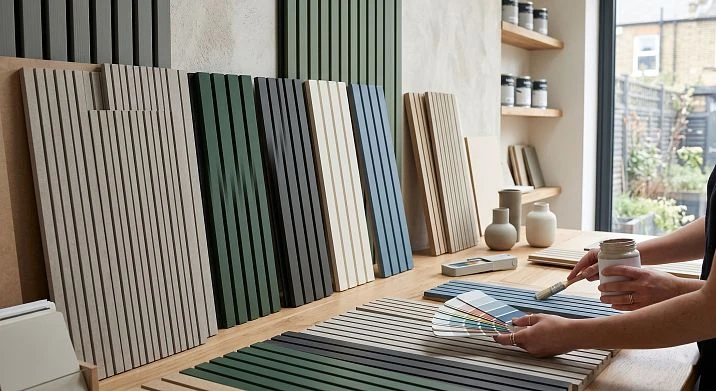
There is a type of interior that immediately stands out from the rest. Not by the richness of details, not by the quantity of materials — but by the precision of color. When the gray ceiling matches the gray facade of the wardrobe, when the slats on the wall repeat the shade of the kitchen island's sides, when everything is tied together in a single color note — this is working with the palette as the main tool of spatial architecture. It is in such projects that the question of choosing a decorative material is posed differently: not 'which texture is more beautiful,' but 'which material will precisely match the color.'
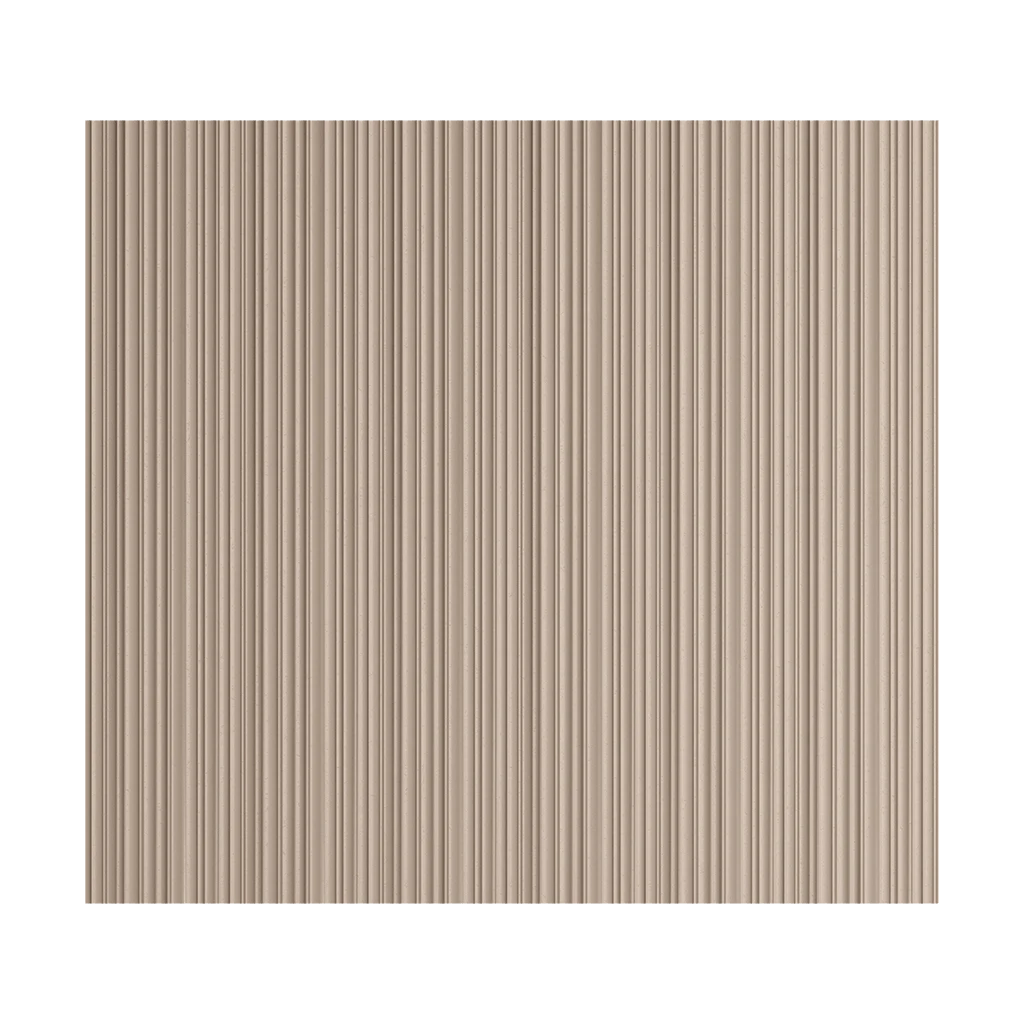
Painted MDF plank panels— this is the answer for those who work with color as a system, not as a finishing touch. STAVROS offers primed models PAN-002 and PAN-004: MDF slatted panels on a fabric base, whose surface has already undergone factory preparation — two layers of polyurethane insulating primer, high adhesion, ready for finishing without any additional operations. This is a standard that is equally important for the designer, furniture maker, and private client.
Why MDF for painting is the right solution when color is more important than texture
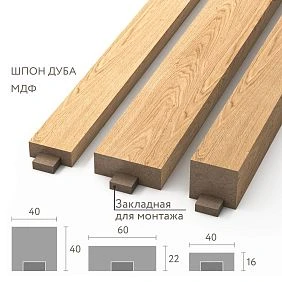
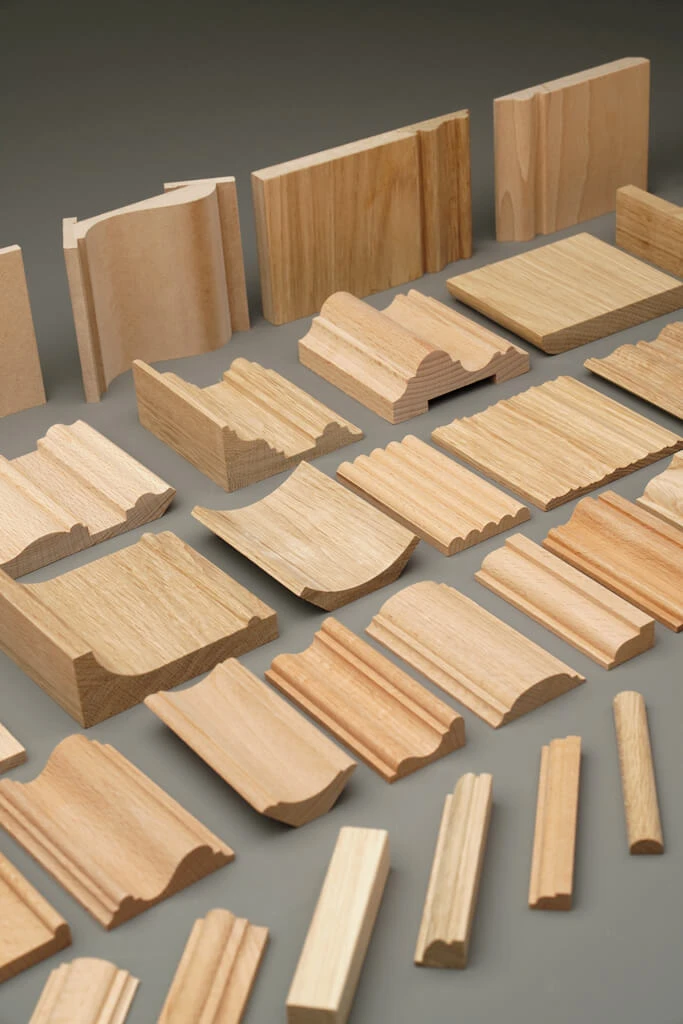
Before talking about specific models, it's worth understanding the logic of material selection. Slatted panels are produced in several versions: solid oak and beech — for those who need live texture and tinting; MDF — for those who need precise color. This is not a question of price. It's a question of the task.


When an interior is built on an exact shade
Natural wood is beautiful. But it is uncontrollable in terms of color: oak texture always shows through the tinting coating, and opaque enamel on solid wood never provides that perfect uniformity that MDF ensures. Every fiber, every knot is a potential variation in coating density. And even if the difference is minimal — for a designer working with precise color, it is noticeable.
MDF is a different story. A uniform structure without pores, knots, or resin channels. The surface absorbs primer, paint, and enamel equally across the entire area — without stains, without darker or lighter zones. That is precisely whyMDF panels for enamel— are a standard tool in projects where color is not a detail, but an architectural decision.
Our factory also produces:




Why MDF is more convenient than solid wood for enamel
In addition to surface uniformity, MDF has another key advantage over solid wood when working with opaque coatings: geometric stability. Solid wood breathes — it expands with increased humidity, contracts with dry air. For rooms with central heating, where humidity drops to 20–25% in winter, this means a risk of cracks in the coating at joints and ends. MDF with a density of 750–850 kg/m³ does not react to these changes: the geometry of the slats remains unchanged, the coating does not crack, the spacing between slats is not disrupted.
Forfurniture facadesUnder the enamel, this is especially crucial: a cabinet or chest with slatted decor on MDF won't 'live' alongside seasonal climate changes in the apartment. It's durability without surprises.
Get Consultation
How the relief is preserved even when painted to match the wall color
One of the most beautiful techniques when working with slatted panels is painting them to match the wall color. The panel and adjacent surface are covered in the same color: the relief doesn't 'shout,' doesn't stand out with contrast, yet it doesn't disappear. It's perceived through chiaroscuro—shadows between the slats emphasize the vertical rhythm, which under directed lighting looks like architectural relief, and under diffused lighting like a subtle texture.
This effect is achieved only with an exact match of the panel and wall shades. Withprimed slatted panelsthis is achievable without any special technologies: the same paint, the same batch—and a monochrome slatted wall is ready.
What are primed slatted panels and how do they differ from regular ones
The difference between a primed and a regular slatted panel is the difference between 'ready to work' and 'requires preparation.' For a professional, it's a matter of time and predictability. For a private customer, it's a matter of whether the desired result can be achieved independently.
The panel is already prepared for finishing
A regular slatted panel made of MDF, purchased without primer, requires preparation before painting: dust removal, primer application, curing, matting, re-treatment. For slats with a semi-circular profile, this is a manual operation over the entire surface—including the side edges of each batten and the recesses between them. It's time-consuming, requires care, and the correct choice of primer composition.
Primed batten panel PAN-002Eliminates all of this cycle. The surface is already processed: you can mount and paint immediately. Not a single extra step.
Two layers of polyurethane-based insulating primer
PAN-002 and PAN-004 glazing beads are coated with two layers of white polyurethane-based insulating primer. The polyurethane primer is not a random choice. It creates a hard, dense film that: seals the pores of the MDF and evens out the surface's absorbency; provides high adhesion for any topcoat — acrylic, polyurethane, or latex enamel; isolates the surface from moisture during transportation and storage before the topcoat is applied; creates a neutral white tone that does not affect the color of the topcoat even with thin layers of paint.
Two layers are not 'double reliability for marketing.' It is the minimum necessary amount to completely seal the MDF pores and obtain a uniform white base. One layer allows the relief of the material's structure to show through the coating; two layers do not.
High adhesion and readiness for painting after installation
A fundamental point:MDF panels for painting for walls and furnitureYou can mount them and paint after installation. This is technologically convenient: all joints, end cuts, and areas of additional fastening with micro-pins are filled, sanded, and painted together with the entire surface — in one painting cycle. The result is a uniformly painted surface without visible traces of installation.
An alternative option — painting before installation — is also possible. It is used in cases where panels are painted in a spray booth with professional spraying, which ensures the most uniform and high-quality result. In this option, joints after installation are neatly touched up by hand.
Why this is convenient for designers, furniture makers, and private clients
For a designer and architect, a primed panel means predictability of the result. You can approve a sample with the client at the design project stage, choose an exact RAL or NCS color, confirm it on a test swatch, and be confident that the finished surface will be exactly that. No variables related to primer quality.
For furniture production, primedMDF panel for enamel for furniture frontsreduces the production cycle. The preparatory stage has already been done by the manufacturer. All that remains is to cut, assemble, and paint.
For a private customer who is doing renovations on their own or with a small team, a primed panel eliminates the risk of improper surface preparation. It's insurance against mistakes, which is especially important when it comes to a decorative element of a wall or furniture that will be lived with for many years.
What tasks are suitable for slatted MDF panels for painting
The range of applications is wider than it seems at first glance. Primed panels PAN-002 and PAN-004 are used where slatted relief plus precise color is needed—whether it's a wall, furniture, or a curved surface.
For walls in residential interiors
Accent wall in the living room, wall behind the bed headboard, hallway design, TV area, work wall in the office—a classic scenario for slattedwall panels for painting. The vertical rhythm of slats on the wall creates three effects simultaneously: adds visual depth to a flat surface; optically elongates the room in height; creates a play of light and shadow that changes depending on the light source and angle.
When painted in a neutral color — white, cream, gray — the panel creates a 'background with character': the wall is not empty, yet not overwhelming. With a dark accent color — anthracite, deep blue, swamp green — the slatted wall becomes the main visual focal point of the room, around which everything else is arranged.
For furniture fronts
Slatted decor on furniture fronts is a powerful design solution that transforms an ordinary cabinet or dresser into an architectural object. An entryway cabinet with slatted fronts in the wall color creates a built-in effect: the furniture blends into the interior, leaving only the textured rhythm.
MDF panels for painting, for furniture fronts— the choice when you need a monochrome kitchen, walk-in closet, or shelving system with slatted elements in a single color. PAN-002 and PAN-004 allow you to paint the front in any RAL or NCS shade — exactly matching the one used on adjacent walls or fronts without slatted decor.
For kitchen islands, cabinets, and dressers
A kitchen island with slatted side panels or a front section, painted to match the color of the upper cabinets or countertop, is one of the most commercially compelling applications. The slatted decor visually lightens the heavy island carcass and adds architectural interest without complicating the construction.
For cabinets and dressers, a primed slatted panel for painting allows the piece to be integrated into a specific interior without the slightest color compromise. A bedroom dresser in the wall color is not 'neutral'—it's a precise design solution that demands exactly this kind of material.
For columns and curved surfaces
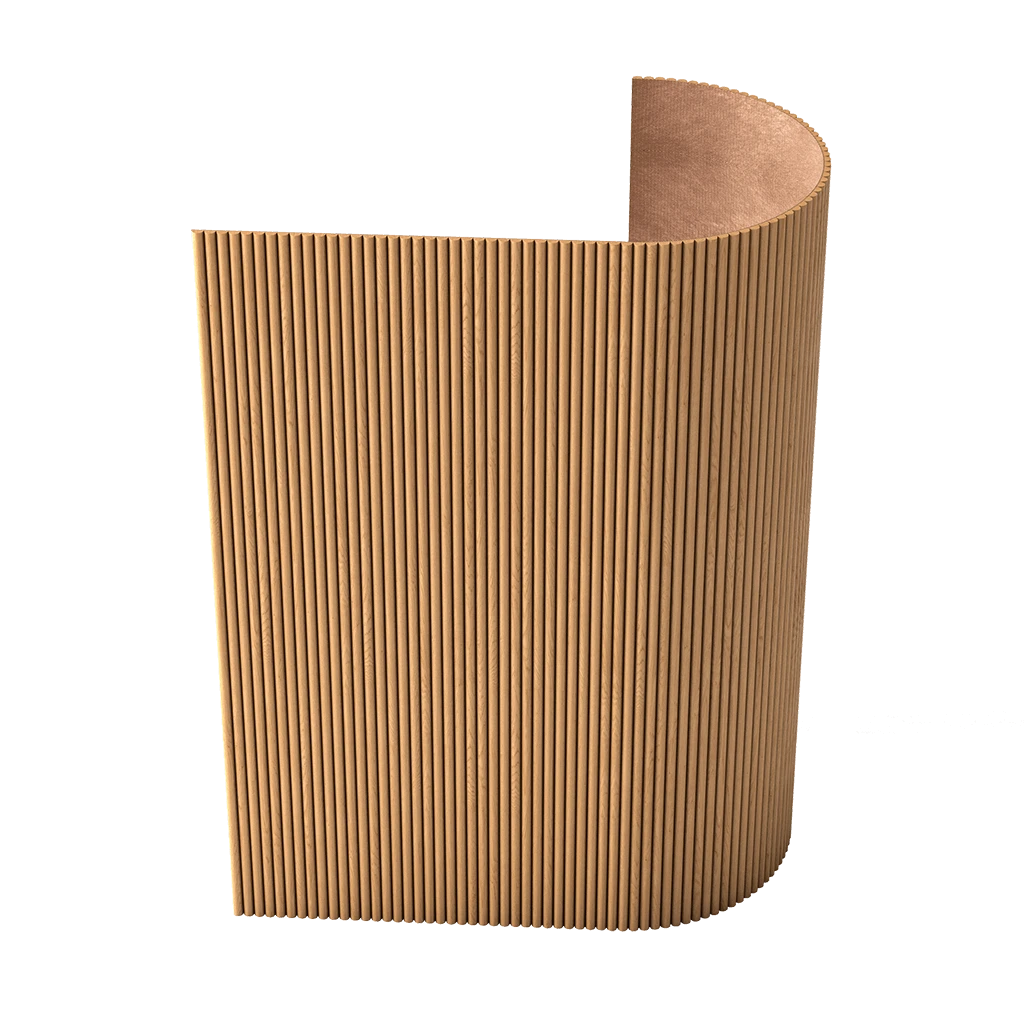
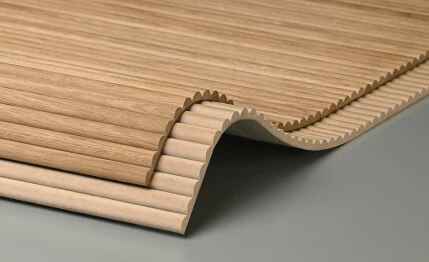
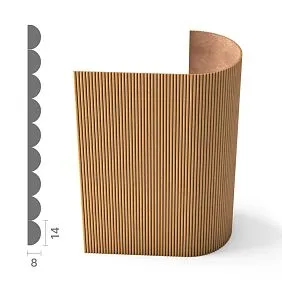
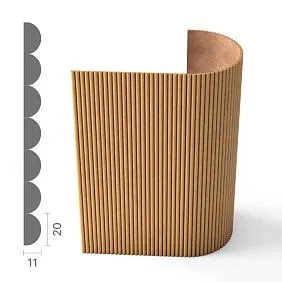
The fabric backing of PAN-002 and PAN-004 allows the panels to be mounted on curved surfaces — columns, arches, radiused niches. The panel wraps around the curve without deforming the slats or visible creases on the backing. This opens up applications for columns in living rooms and hallways, for arched openings, for rounded furniture corners, and decorative partitions.
When used on a column, the primedPaint-ready panel for curved surfacesIt is painted the same color as the adjacent walls — and the column becomes part of the overall plane, rather than standing out as a separate element.
For ceiling and accent compositions
A separate scenario — ceiling and accent niches. A paint-ready slatted panel on a ceiling bulkhead or in a niche above the TV creates the effect of a built-in architectural detail. When the niche and slats are painted the same tone as the ceiling — it looks like a design element, not like applied decor.
How to choose a panel to match the interior color
This is the main design question on which everything else depends. There is no universal answer — but there is a clear logic of choice that works in most projects.
To match the wall tone — if a calm monochrome is needed
Painting the panel the color of the adjacent wall means obtaining a surface that seems part of the architecture, not an applied decor. The relief is perceived only through light and shadow: during the day with side lighting, the slats cast thin shadows; in the evening with spotlights — more pronounced ones. This effect is often called 'invisible luxury': the wall simply seems very beautiful, and the mechanism of this beauty is not obvious at first glance.
For a monochrome solution, choose a matte finish: it enhances the readability of the relief. Gloss or satin smooth out shadows and 'soften' the slatted rhythm — this is also acceptable, but the effect will be less pronounced.
To match the furniture color — if it's important to create a unified volume
When the wardrobe, island, cabinet, and slatted wall insert next to them are painted the same color, the space is perceived as designed and cohesive. This is the result that distinguishes a professional design project from a 'pieced-together' interior. PrimedMDF panels in the exact color— a tool that allows achieving this without complications.
For such a solution, it is especially important that all surfaces are painted with the same composition at the same time: then the paint batch will be uniform, and there will be no color variation. This is why designers often paint furniture fronts and slatted panels simultaneously in a paint booth.
Contrast panel — if an accent is needed
A dark slatted panel on a light wall is a bold statement. Anthracite, deep blue, dark green, or black on the wall behind a sofa or bed — such a technique works as a focal point in the interior. Everything else in the room is perceived relative to this dark surface.
A contrasting accent is especially effective when combined with directional lighting: lighting along the slatted wall from below or above creates an effect of glowing relief, which is impossible to achieve with a smooth surface.
Matte, satin, or semi-gloss surface
The choice of sheen level affects the perception of the slatted relief. A matte surface — maximum shadow contrast, maximum rhythm expressiveness, maximum 'luxury' aesthetic. For residential interiors, this is the standard choice in 2024–2026.
Satin surface — a soft, subtle sheen. Shadows are slightly 'softer' than matte, the relief is perceived differently — not contrasty, but subtly. Works well in interiors with lots of soft fabrics and natural materials.
Semi-gloss surface – a more elegant option, with softened shadows. Used less frequently, more often in classic or baroque interiors. For slatted panels in modern projects, it is not a priority choice.
When it's better to paint in white, gray, graphite, black, or a complex shade
White and cream – for interiors where airiness and maximum light perception are important. A white slatted panel on a white wall is a delicate relief accent that works well in bedrooms and children's rooms.
Gray – a neutral basic choice. Works in combination with any furniture and any floor. Warm grays (beige-gray, sandy) – for cozy, 'warm' interiors. Cool grays – for strict modern solutions.
Graphite and anthracite – accent dark colors with character. For living rooms and studies where 'weightiness' of the surface is needed. In combination with brass or brushed gold – one of the most advantageous options.
Black – a radical solution for those who are not afraid of drama. Requires balancing: many light surfaces nearby, good lighting, laconic furniture without complex shapes.
Complex shades – smoky blue, warm browns, deep greens – this is the highest level of working with color. They require precise selection and a specific color assignment: RAL 6007, NCS S 5020-G10Y, Farrow & Ball Mole's Breath. It is for such tasks that primed panels for the exact interior color are indispensable.
What to choose for enamel: PAN-002 or PAN-004
This is the key commercial choice of the article. Both models are primed MDF on a fabric base, both are ready for final painting, both work on straight and curved surfaces. The difference is in the character of the relief.
PAN-002 – for a more delicate rhythm
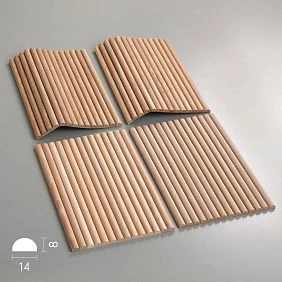
Primed batten panel PAN-002— profile 1010 × 8 mm. Delicate, restrained rhythm. The slats create a subtle texture: shadows are soft, the relief is perceived as an exquisite surface, not as active decor. This is a choice for interiors where sophistication is important, not monumentality.
PAN-002 works better in relatively small spaces where too pronounced relief would be excessive. Bedroom, study, hallway, small living room — a delicate rhythm is preferable here. PAN-002 is also suitable for furniture fronts on medium-sized items: cabinets, dressers, built-in wardrobe fronts.
PAN-004 — for more pronounced relief
Primed slatted panel PAN-004— profile 1000 × 11 mm. Wider slats give deeper and more expressive shadows. With directional lighting, the surface looks voluminous and architectural — the relief is clearly visible from a distance of 3–5 meters, which is critical for large living rooms and open-plan layouts.
PAN-004 — the choice for large surfaces and big items. Accent wall in a spacious living room, kitchen island with a side height of 90 cm, partition wardrobe in a studio — here the pronounced relief works at full power.
Which option is better for walls
For walls, the choice depends on the scale of the room and the desired intensity of the relief. In rooms up to 20 sq. m, PAN-002 with a delicate rhythm is preferable: it does not 'overwhelm' the space. In rooms from 25–30 sq. m and in high-ceilinged rooms, PAN-004 with pronounced relief creates the necessary scaled 'weightiness'.
When choosing for a monochrome interior (panel matching the wall color), the difference between the models is less critical: shadows on both are soft and delicate due to the color match. With contrasting coloring (dark panel on a light wall), the difference is more significant: PAN-004 gives a more pronounced, 'cinematic' relief.
Which option is better for furniture
For furniture fronts, product size is a key parameter. Small cabinets, dressers, standard-height cabinet fronts (220 cm) — PAN-002. Large kitchen islands, bar counters, big sliding wardrobes — PAN-004.
It's also important to consider adjacent surfaces: if there is a stone countertop, metal details, or other active textures next to the slatted front — the delicate rhythm of PAN-002 creates the best balance. If the furniture is surrounded by neutral smooth surfaces — the more pronounced relief of PAN-004 is organic.
Which option is better for a project with a radius
Both options work on curved surfaces — the fabric base ensures this. On small radii (less than 200 mm), the delicate profile PAN-002 behaves more softly: narrow slats do not create visible step expansion when bent. On large radii, the difference is insignificant — both options provide an even rhythm on the bend.
| Parameter | PAN-002 | PAN-004 |
|---|---|---|
| Profile | 1010 × 8 mm | 1000 × 11 mm |
| Character of relief | Delicate | Pronounced |
| Best application for walls | Rooms up to 20 sq. m | Rooms from 25 sq. m |
| Best use for furniture | Chests of drawers, dressers, cabinets | Islands, counters, large cabinets |
| Working on a radius | Yes, especially good on small ones | Yes, optimal on large ones |
| Primer | Polyurethane, 2 layers | Polyurethane, 2 layers |
| Ready for painting | No additional preparation | No additional preparation |
Which paints and coatings are suitable for primed panels
The choice of finish determines the durability and practicality of the result. STAVROS on PAN-002 and PAN-004 cards provides clear recommendations — and they should be taken seriously, as they are based on real-world application experience.
For furniture — polyurethane and acrylic enamels
Furniturefacades for enamelThey experience real load: they are touched by hands, wiped with a damp cloth, sometimes bumped by corners of objects. Regular interior paint is not suitable here — it is not designed for such mechanical stress and quickly wears away at contact points.
Polyurethane enamel with hardener is the optimal choice for furniture slatted facades. It forms a hard two-component film with high resistance to abrasion, wet cleaning, temperature fluctuations, and household stains. The coating hardness on the Buchholz scale is 80–100 units, which meets professional furniture standards. The film does not yellow over time (when using aliphatic isocyanate hardeners) and retains color for 10–15 years.
Acrylic enamels are an alternative to polyurethane for less intensively loaded furniture. They dry quickly, are eco-friendly water-based, and provide a soft film of medium hardness. For bedroom cabinets, shelves, and living room wardrobes — sufficient. For a kitchen island or work furniture — polyurethane is better.
Both categories of enamels are perfectly compatible with polyurethane primer applied to PAN-002 and PAN-004. Adhesion is ensured without any additional steps.
For interiors — acrylic and latex paints
Wall slatted panels are loaded significantly less than furniture facades. Acrylic or latex water-based paints are sufficient for them — the same compositions used to paint adjacent walls. This is a key practical convenience: there is no need to buy a separate furniture composition for a wall panel — the same can used for the walls is enough.
Latex paints have several advantages for interior application: they have no strong solvent odor, are eco-friendly for living spaces, dry quickly, allow wet cleaning after drying, and can be repainted easily without removing the previous layer.
Acrylic water-based paints are a similar option with good coverage and resistance to fading. For accent walls with rich dark shades, it is important to choose paint with high pigment saturation — it provides even color in 1–2 coats without streaks.
What to choose for wet cleaning
If regular wet cleaning is expected in the room — hallway, children's room, kitchen area — wall slatted panels should be painted with washable paint or enamel marked "washable" or "extra durable." Washable class latex paints and semi-gloss acrylic compositions withstand wet cleaning without damaging the film.
For bathrooms and rooms with high humidity — only polyurethane enamels or special moisture-resistant acrylic compositions with antifungal additives.
Is additional priming necessary
No. This is the fundamental answer to the most frequent question.Primed slatted panelsPAN-002 and PAN-004 are completely ready for applying the finish coating without any additional operations. The factory double polyurethane primer seals all MDF pores and ensures adhesion. Additional priming is a waste of material and time that does not improve the result.
The only exception: if the panel end was trimmed on site — the exposed MDF cut is primed manually before painting. This operation takes a few minutes and does not require special tools.
Where is it better to paint: on site or in a paint booth
For furniture fronts, where professional quality without roller or brush marks is needed — only a paint booth with pneumatic or airless spraying. This ensures a perfectly even layer without drips, streaks, and unpainted areas in the recesses between the slats.
For wall panels — painting on-site after installation, using a spray gun or a short-nap roller (4–6 mm). The short nap fits well into the inter-slat gaps and ensures even coverage without empty strips in the recesses. Using a brush is not recommended: it leaves marks in the narrow gaps between the slats.
Installation of primed slatted panels
Installation is the final stage, which determines the quality of the entire result. Primed panels are installed in the same way as all STAVROS slatted panels, taking into account several features that are important to know in advance.
Foundation Preparation
The base for the slatted panel must be clean, dry, and flat. The permissible deviation from flatness is no more than 2–3 mm over a 2-meter slat. If the wall is more uneven — frame installation on a metal profile or wooden slats, leveled with a spirit level, is required.
On MDF or chipboard furniture carcasses, preparation is usually not required: the surface is already flat. If the carcass is coated with varnish or film — the surface is sanded with 120-grit sandpaper to create mechanical adhesion for the adhesive.
Installation with contact adhesive
Contact adhesive is applied to the back of the panel and to the base — in a 'snake' pattern with a spacing of 10–15 cm. After application, both surfaces are left to air dry for 5–7 minutes (until slightly hardened), then the panel is applied to the base and pressed. Contact adhesive sets immediately upon pressing — without prolonged holding.
On curved surfaces — columns, radius furniture fronts — the adhesive is applied more densely, the panel is applied according to the bend shape and fixed with painter's tape or bandage tape until the adhesive fully polymerizes (24 hours).
Additional fixation with micro-pins
For reliable fastening on vertical furniture fronts, additional fixation with micro-pins using a pneumatic gun is recommended. The pins are driven into the base of the panel with a spacing of 15–20 cm — they do not go through the slats but fix the fabric backing. The pin insertion points, if necessary, are filled with putty, sanded, and painted together with the main surface.
Module Joining
Joining several panels into a single surface is a key moment requiring precision. Adjacent modules are joined butt-to-butt, slat to slat: the pitch of the last slat of one module and the first slat of the next must match the pitch of the slats inside the module. For this, layout is performed before installation: the placement of all modules is marked on the wall or front, and the joint points are calculated.
All modules are ordered from a single production batch: this guarantees matching geometry of the slats and shade of the primer. Different batches may have slight dimensional variations, which will become noticeable at the joints.
Painting after installation
After installing all panels, filling and sanding the fixation points, final painting is performed. On wall panels — using a spray gun or a short-nap roller. On furniture fronts — ideally with a spray gun for uniform coverage of the entire relief.
The first layer is applied thinly—it will reveal all areas with insufficient coverage. After drying (2–4 hours for acrylic compounds), apply the second layer. This is sufficient for an even, dense color on a primed surface.
What to consider during transportation and storage
Primed panels PAN-002 and PAN-004 are supplied rolled into compact rolls. Rolls should be stored in a dry room at a temperature from +10 to +30°C — these are standard conditions for any warehouse or construction site. It is recommended to unroll the rolls before installation in advance (12–24 hours) in a horizontal position: this relieves internal stresses from rolled storage and facilitates installation.
The primed surface is resistant to mechanical damage during transportation in a roll, however sharp bends and compression should be avoided: this may lead to micro-cracks in the primer on the sharp edges of the slats.
Mistakes when choosing slatted panels for painting
Knowing typical mistakes saves time, money, and nerves. Let's consider the main ones — those encountered most often.
Choosing an unprimed panel when a quick project start is needed. If the renovation or project handover deadlines are tight — an unprimed panel creates an extra step in the work. Surface preparation: sanding, priming, curing, matting — this is at least one additional day. The primed panel PAN-002 or PAN-004 eliminates this stage.
Using interior paint on furniture fronts. This is a very common mistake. Water-based wall paints are not designed for the mechanical load of furniture fronts. After six months, wear marks, stains, and peeling appear in areas of contact. For furniture — only furniture enamels.
Choosing PAN-004 for small rooms or small furniture. The pronounced relief of PAN-004 requires scale. On a small wall or a small cabinet, it looks overloaded: the texture 'overpowers' the form. For small spaces and products — the delicate rhythm of PAN-002.
Painting without an exact color specification. 'Gray' is a thousand shades. 'Gray like the wall' is a specific code. Before painting, you always need an exact color code: RAL, NCS, or the paint manufacturer's proprietary code. Only this way can you guarantee the color match of the panel with adjacent surfaces.
Not planning for material surplus. Standard surplus is 10–15%. For curved surfaces and complex cuts — 15–20%. Buying exactly the same batch later is difficult: minor production differences between batches can cause a slight but noticeable color mismatch at the joint.
Not considering joints and edges. An open edge of a slatted panel without a cap or profile looks unfinished. Joints with the ceiling, floor, adjacent surfaces, and corners require a solution already at the design stage: molding, corner profile, or decorative overlay. Forwall panelsand furniture fronts, this issue is solved differently, but in any case — in advance, not during installation.
FAQ: answers to frequently asked questions
Which MDF slatted panels are better for painting?
Primed models PAN-002 and PAN-004 are the best choice for painting. The surface is already prepared with two layers of polyurethane primer-isolator, completely ready for applying the final enamel or paint without additional processing.
What is better for enamel: regular MDF or a primed panel?
A primed panel is significantly more convenient. Regular MDF requires its own preparation: sanding, applying primer, curing, matting. This is additional time and risk of uneven preparation. A primed panel eliminates all these steps.
Can panels be painted after installation?
Yes, and this is the recommended option for wall panels. Install, putty and sand the fastening areas—then paint the entire surface including the joints. The result is a uniform, smooth surface without installation marks.
Are panels suitable for furniture fronts?
Yes. PAN-002 and PAN-004 are directly positioned as solutions for furniture decoration and interior design. For furniture, polyurethane and acrylic enamels are recommended—they form a wear-resistant coating that withstands operational loads.
Can they be used on curved surfaces?
Yes. The fabric base of both models provides flexibility: the panel wraps around columns, arches, and curved furniture fronts without deforming the slats or visible folds in the backing.
Which panels to choose if an exact color is needed for an interior project?
PAN-002 or PAN-004 depending on the surface scale and desired relief character. Both models provide an ideal base for an exact RAL/NCS color: the white polyurethane primer ensures a neutral foundation that does not affect the final shade even with thin paint layers.
What to paint panels with for wet cleaning?
For rooms with wet cleaning (kitchen, hallway, children's room)—latex washable paint for wall panels or polyurethane enamel for furniture fronts. Both coating categories withstand regular wiping with a damp cloth without color loss or adhesion failure to the primer.
How many coats of paint should be applied?
Two coats of finish with intermediate drying. On a primed surface, this is sufficient for an even, dense color. The first coat is thin—it reveals all under-painted areas. The second is the main finish.
About the company STAVROS
Behind the primed slatted panels PAN-002 and PAN-004 stands a manufacturer with a specific history and proven quality. STAVROS is a Russian enterprise for manufacturing decorative products from wood and MDF, founded in 2002. Over more than twenty years of operation, the company has participated in the restoration of the Konstantinovsky Palace in Strelna, worked on sites of the Hermitage, Alexander Palace, Trinity-Izmailovsky Cathedral, and other significant cultural heritage sites.
This is not marketing background. This is context that explains the attitude towards geometric precision, surface treatment quality, and compliance with stated characteristics. An enterprise that has worked with palace interiors does not produce items with uneven milling or inconsistent primer.
STAVROS showrooms are located in Saint Petersburg and Moscow. Production is in Saint Petersburg. Delivery across all of Russia via transport companies SDEK and DPD. Production time for custom orders is 5–10 business days.
If you are looking forPainted MDF plank panelswith a finished surface for the precise interior color—PAN-002 and PAN-004 from STAVROS fully address this task: from the nature of the relief and material choice to paint and installation recommendations. BrowseFull catalog of slatted panelsand choose a solution that will exactly match your color and project.