Article Contents:
- What Are Slatted Panels and How Do They Differ from Regular Wall Panels
- MDF Slatted Panels for Walls: The Material from the Inside
- What is MDF and How is it Produced
- Types of MDF Slatted Panel Coatings
- Advantages of MDF Slatted Panels
- Disadvantages of MDF Slatted Panels
- PVC Slatted Panels for Walls: The Material from the Inside
- What is PVC and How Panels are Produced
- Types of PVC slatted panels
- Advantages of PVC slatted panels
- Disadvantages of PVC slatted panels
- Comparison of MDF and PVC slatted panels by 10 key criteria
- 1. Moisture resistance
- 2. Strength and impact resistance
- 3. Ecological and safety
- 4. Fire safety
- 5. Appearance and design potential
- 6. Price: MDF or PVC slatted panels — which is cheaper
- 7. Ease of installation
- 8. Sound and Thermal Insulation
- 9. Durability and Service Life
- 10. Care and Maintenance
- Summary Table: MDF or PVC — Which is Better for Walls
- Which Slatted Panels are Better for Different Rooms
- For the Kitchen — MDF or PVC?
- For the Bathroom
- For hallway and corridor
- For the Bedroom and Living Room
- For the Balcony and Loggia
- For Children's Room
- For the Office and Meeting Room
- Installation of MDF and PVC slatted panels: is there a difference
- Mounting methods
- Features of MDF installation
- Features of PVC installation
- How to cut panels and properly fit them
- Cost of wall finishing with slatted panels: calculation example
- Tips for choosing slatted panels for walls
- Common mistakes when choosing and installing slatted panels
- About the Company STAVROS
- Frequently Asked Questions
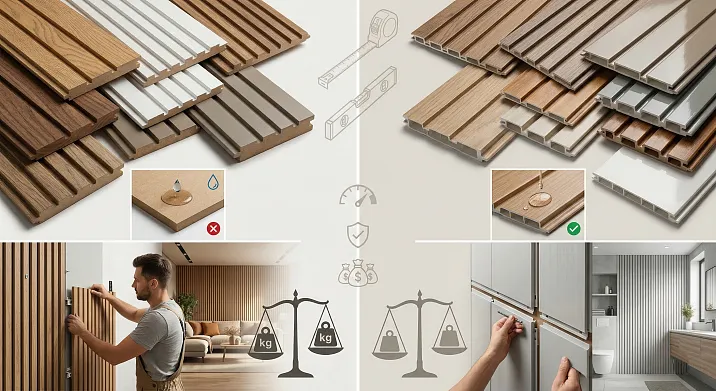
The question "MDF or PVC slatted panels — which is better for walls" is asked by thousands of people choosing finishes for apartments, houses, or offices. And this is not an idle question: behind outwardly similar products lie two fundamentally different materials with different physics, different aesthetics, different lifespans, and different fates in each specific space. One is warm, dense, "alive," with a natural texture. The other is lightweight, moisture-resistant, budget-friendly, practical. And the goal of this article is not to declare a winner, but to help you make an informed choice.
Here is an exhaustive comparison across ten key criteria, recommendations for each room, cost calculation, installation tips, and a section with answers to the most popular questions. Read carefully: properly chosenslatted panels for wallswill serve you for 15–25 years and bring joy every day.


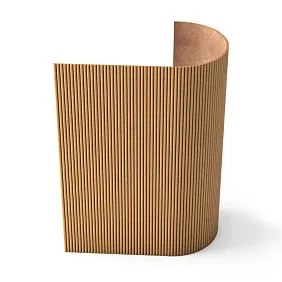
What are slatted panels and how do they differ from regular wall panels?
Before comparing materials, it's worth understanding the construction. A slatted panel is not a sheet board or tile. It is a system of narrow, elongated slats (laths) fixed at uniform intervals on a common backing or mounted individually onto a frame. It is this rhythm of parallel lines that creates a distinct relief pattern, changing the perception of the wall—it ceases to be flat and becomes an architectural object.
Standard parameters of slatted panels:
-
Module length: 2400–3000 mm
-
Backing width: 120–600 mm
-
Slat width: 15–120 mm
-
Spacing between slats: 5–30 mm
-
Thickness: from 8 mm (PVC) to 18–22 mm (MDF, solid wood)
Vertical slats visually elongate a room in height—a particularly valuable technique for apartments with 2.5 m ceilings. Horizontal ones expand the space in narrow corridors. The slatted format is used on accent walls in the living room, behind the bed headboard in the bedroom, in the TV area, in the hallway, kitchen, bathroom, and on the ceiling—anywhere an expressive architectural element is needed, not just a covered surface.




MDF slatted panels for walls: the material from the inside
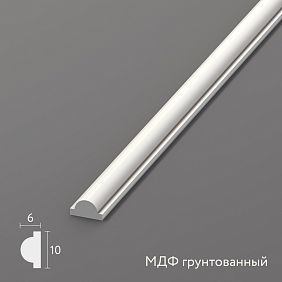
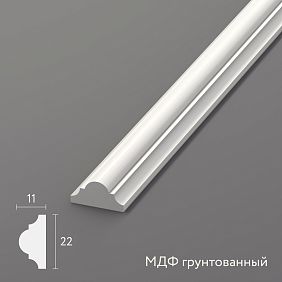
Our factory also produces:


What is MDF and how is it produced
MDF (medium density fiberboard) is produced by hot-pressing fine wood fibers with the addition of lignin and urea-formaldehyde or formaldehyde-free resins. The density of the finished material is 600–850 kg/m³. It is precisely this high density that gives MDF its main advantages: strength, precise geometry, and a uniform surface without knots or cracks. This fundamentally distinguishes it from particleboard, which has a loose, layered structure.
MDF board is essentially 'refined' wood: a natural base without the defects of solid wood. MDF slatted panels are milled from such boards, obtaining an accurate lamella profile with perfect edges.
Get Consultation
Types of coatings for MDF slatted panels
The appearance of an MDF panel is entirely determined by its coating:
-
Laminated — the surface is covered with a melamine film or PVC film with a printed pattern (wood, marble, solid color). The most common option.
-
Veneered — a thin layer of natural wood (oak, walnut, ash, maple) is glued onto an MDF base. Provides a lively, unique texture.
-
Primed for painting — pure, primed MDF without decorative coating; painted with acrylic or alkyd enamel in any RAL shade. This is precisely the option that serves as the basis for monochrome designer interiors.
-
Capped — the pattern is transferred by pressure capping; more resistant to mechanical stress than film.
Advantages of MDF slatted panels
Why has MDF become the standard for residential interiors? Because it combines the properties that are important to the majority of consumers:
-
High density and strength. MDF withstands impacts, does not dent, and does not crack from accidental contact. This is critical in hallways, corridors, and children's rooms.
-
Natural appearance. Veneered and painted panels are visually indistinguishable from solid wood. In a bedroom or living room, MDF creates the feeling of a high-quality, 'living' material.
-
Repaintability. This is a unique advantage over PVC: if you get tired of the color, you can prime and repaint it without dismantling.
-
Good sound insulation. The dense structure of MDF absorbs sound. In combination with an acoustic felt base, we getacoustic slat panelsfull-fledged noise suppression.
-
Eco-friendliness. MDF with emission class E1 is safe for living spaces, children's rooms, and bedrooms. Class E0 is the maximum safety option.
-
Rich choice of decors. Hundreds of shades, textures, and slat profiles — from strict minimalism to complex relief surfaces.
Disadvantages of MDF slat panels
Honesty obliges us to also talk about the drawbacks:
-
Sensitivity to moisture — standard MDF swells with constant contact with water. Moisture-resistant MDF (HMR) solves this problem but is more expensive.
-
Weight — MDF panels are significantly heavier than PVC, requiring reliable lathing and two pairs of hands for installation.
-
Price — MDF is 1.5–3 times more expensive than PVC, especially veneered and painted series.
-
Processing difficulty — without a sharp fine-toothed blade, chips appear on the edges; dust during sawing requires respiratory protection.
PVC slat panels for walls: material from the inside
What is PVC and how panels are produced
PVC — polyvinyl chloride — is a synthetic polymer of petrochemical origin. PVC slat panels for walls have a characteristic cellular structure: inside — hollow longitudinal channels separated by stiffening ribs. It is this 'honeycomb' construction that provides lightness (0.5–1.8 kg/m²) with acceptable rigidity.
The coating is applied by co-extrusion or thermal transfer. Cheap series — solid color or simple printing. Quality ones — embossed stamping with imitation of wood texture, stone, concrete with a depth of 0.2–0.8 mm.
Types of PVC slat panels
-
Solid matte and glossy
-
With photo printing under wood (oak, pine, walnut)
-
Embossed (relief imitation)
-
Satin — silky surface without glare
-
Structured 3D — surface relief embossing
Advantages of PVC slat panels
PVC is a material with its own clear niche. Where its characteristics are in demand, it has no competitors in its price category:
-
Absolute moisture resistance. PVC does not absorb water at all. Under any conditions. For bathrooms, toilets, showers — this is an unbeatable advantage.
-
Light weight. 0.5–1.5 kg/m² compared to 4–8 kg/m² for MDF. Can be installed by one person.
-
Low price. In the budget segment, PVC panels are 1.5–3 times cheaper than MDF.
-
Easy installation and cutting. Can be cut with a hacksaw, metal shears, or a regular utility knife. Joins with a tongue-and-groove system. No special tools required.
-
Do not rot or mold. Fungus does not develop on PVC.
-
Easy maintenance. Can be cleaned with any household products; the surface does not absorb dirt or odors.
-
Self-extinguishing. In the absence of an open flame, PVC stops burning on its own—a formal advantage over MDF in this regard.
Disadvantages of PVC slat panels
It's important to speak plainly here—specifically about what is often left unsaid:
-
Fragility. PVC is easily dented, punctured by sharp objects, or damaged by impact. In a hallway with children or pets, this is a real issue.
-
Synthetic tactile feel. When touched, PVC feels like plastic: cold, lightweight, and slightly 'hollow' when tapped. In a living room or bedroom, where surface quality is subconsciously perceived, this is a drawback.
-
Visual imitation vs. naturalness. Even the highest-quality printed pattern on PVC doesn't deceive the eye up close—the pattern repeats at a certain interval, and the highlights don't match a natural texture.
-
Toxicity when burning. When heated above +50°C, PVC deforms; when burning, it releases hydrogen chloride. For children's rooms and bedrooms, this is a serious argument against it.
-
Low sound insulation. The hollow structure of PVC resonates sound rather than absorbing it.
-
Static electricity. PVC becomes electrically charged and attracts dust—panels need to be wiped more frequently.
-
Fading. Cheap series under sunlight lose color in 3–5 years.
-
Thermal expansion. PVC expands significantly more than MDF when heated: in a wall panel 2700 mm long with a 20°C temperature difference — up to 4 mm. Without compensation gaps during installation, the panels warp.
Comparison of MDF and PVC slatted panels by 10 key criteria
1. Moisture resistance
PVC is the absolute leader by this criterion. Polyvinyl chloride does not absorb water structurally, does not swell, and does not deform under constant contact with steam and condensation. Standard MDF swells and delaminates with prolonged moisture exposure. Moisture-resistant MDF of HMR grade with lamination or special enamel is already sufficiently stable for kitchens and even for bathrooms with good ventilation, but requires proper edge treatment.
Conclusion: PVC wins unconditionally.
2. Strength and impact resistance
MDF with a density of 750–850 kg/m³ withstands significantly greater mechanical loads than PVC with its hollow honeycomb structure. Try pressing your thumb on a PVC panel between the stiffening ribs — it will bend. MDF of the same thickness will not. In hallways, where walls regularly get hit by bags and umbrellas, or in children's rooms — this is a critical parameter.
Conclusion: MDF wins significantly.
3. Eco-friendliness and safety
E1 and especially E0 MDF contain minimal amounts of formaldehyde—within safe limits for residential spaces. Its natural wood fiber base fundamentally distinguishes it from petrochemical PVC. Plasticizers in PVC (phthalates) are released into the air when heated—in well-ventilated rooms, the concentration is negligible, but for children's rooms and bedrooms, E0 MDF is incomparably safer.
Conclusion: MDF is more eco-friendly.
4. Fire Safety
Here, both materials have their 'buts'. MDF is a combustible material (group G3–G4), but when burning, it primarily releases CO₂ and water vapor. PVC is formally self-extinguishing in the absence of an open flame, but when burning, it actively releases hydrogen chloride—an aggressive toxic gas dangerous to the lungs. For this reason, PVC is categorically not recommended for children's rooms, bedrooms, and evacuation corridors.
Conclusion: a conditional tie with an advantage to MDF in terms of toxicity of combustion products.
5. Appearance and Design Potential
Here, everything is clear-cut. MDF for painting—complete color freedom. MDF with veneer—the living texture of wood.MDF Plank PanelsThey create a sense of materiality, density, and quality in the interior. PVC, no matter how high-quality the wood imitation is, always reads as 'plastic' upon close inspection—the pattern repeats, the highlights are synthetic, and the tactile value is zero.
Conclusion: MDF wins in aesthetics unconditionally.
6. Price: MDF or PVC Slatted Panels—Which is Cheaper
The cost of slatted panels depends on the manufacturer, series, and finish, but the general proportions are stable:
| Material | Price per m² (approximate) |
|---|---|
| PVC budget | from 300–500 rub. |
| PVC mid-range/quality | 600–1200 rub. |
| Laminated MDF | 900–2500 rub. |
| MDF for painting | 800–2000 rub. |
| MDF veneered | 3000–7000 rub. |
| Oak solid wood | from 5000 rub. |
When calculating the total finishing cost, you need to add lathing, fasteners, and installation (500–1500 rub./m²). The gap between PVC and MDF narrows with the full budget, but PVC remains cheaper.
Conclusion: PVC is 1.5–3 times cheaper.
7. Ease of installation
PVC panels are a comfort for beginners. Lightweight (easy for one person to hold), they can be cut with any tool, and join via a tongue-and-groove system without gaps. When installing on a flat wall, you can get by with liquid nails without any lathing at all. MDF is heavier, requires precise cutting (a miter saw with a fine-toothed blade), reliable lathing, and preferably two people when installing large-format sheets.
Conclusion: PVC is easier to install.
8. Sound and thermal insulation
The dense monolithic structure of MDF absorbs sound waves. This is especially noticeable in combination with an acoustic felt backing — such panels genuinely reduce reverberation in a room. Hollow PVC, on the contrary, resonates: when tapped, a characteristic 'drum-like' echo is heard. In terms of thermal resistance, MDF also surpasses PVC due to its higher density and natural wood base.
Conclusion: MDF is significantly better for sound and thermal insulation.
9. Durability and service life
MDF with a quality coating, when properly used (without systematic moisture), lasts 15–25 years. Veneered panels made from solid wood — up to 40–50 years. PVC with careful handling — 8–15 years; with mechanical loads, impacts, UV exposure (cheap series) — significantly less. An important detail: MDF can be sanded and repainted; PVC — cannot, only complete replacement.
Conclusion: MDF is more durable.
10. Care and Maintenance
PVC is an absolutely low-maintenance material in operation. Any household cleaning agents, a damp cloth, a brush—all are acceptable. The surface does not absorb dirt or odors. MDF requires more delicate care: a damp cloth without aggressive chemicals, without soaking. Veneered panels—only dry or slightly damp cleaning.
Conclusion: PVC is easier to care for.
Summary Table: MDF or PVC—Which is Better for Walls
| Criterion | MDF | PVC |
|---|---|---|
| Moisture resistance | ★★★ (HMR — ★★★★) | ★★★★★ |
| Strength | ★★★★★ | ★★ |
| Ecological | ★★★★★ | ★★★ |
| Fire safety | ★★★ | ★★★ |
| Appearance | ★★★★★ | ★★★ |
| Price | ★★★ | ★★★★★ |
| Ease of Installation | ★★★ | ★★★★★ |
| Sound Insulation | ★★★★ | ★★ |
| Durability | ★★★★★ | ★★★ |
| Care | ★★★ | ★★★★★ |
Which Slatted Panels are Better for Different Rooms
For the Kitchen—MDF or PVC?
The kitchen is a room with two zones and two different requirements. The zone near the stove and sink—constant grease, steam, splashes, intense humidity. Here, PVC or moisture-resistant MDF with a protective coating wins. The dining area, side walls, accent wall behind the bar counter—here aesthetics and atmosphere are primary. MDF in wood-like decor or for painting creates a kitchen space of a completely different level than plastic.
Recommendation: in the work zone—PVC or moisture-resistant MDF with lamination; on accent walls—MDF.
For the Bathroom
The bathroom is unequivocally PVC (or aluminum) territory. Constant steam, condensation, direct water splashes, and temperature fluctuations—standard MDF will start to delaminate under these conditions within 1–2 years. Moisture-resistant MDF (HMR) with sealed edges and a high-quality lacquer coating is an acceptable solution in a well-ventilated bathroom, but it requires additional processing costs. PVC can be installed in the bathroom without any restrictions.
Recommendation: PVC is the optimal choice. Moisture-resistant HMR MDF—if aesthetics are important and there is good ventilation.
For the hallway and corridor
The hallway is the zone of maximum mechanical loads. Bags, umbrellas, children's bicycles, coats on hooks—all of these regularly come into contact with the walls. PVC in such an area will quickly get dents and cracks. MDF is dense, durable, and withstands impacts—it is clearly preferable here. Moreover, it is in the hallway that the appearance of the panels is 'read' by guests first: PVC creates a budget impression, MDF—a solid one.
Recommendation: MDF—unquestionably for the hallway and corridor.
For the bedroom and living room
In living rooms, the eco-friendliness, tactile value, and visual depth of the material come to the forefront. It is here that PVC loses to MDF on all key points: a 'plastic' look, synthetic feel, and resonating sound. MDF for painting or veneeredWooden slat panelscreates an atmosphere that is impossible to achieve with polyvinyl chloride.
Recommendation: MDF (or solid wood) is the only correct choice for the bedroom and living room.
For the balcony and loggia
An unheated balcony is a zone with temperature fluctuations from -20°C to +40°C, condensation, and UV radiation. Standard MDF is not used here. PVC on the balcony is acceptable, but you should choose high-quality series with a UV stabilizer (otherwise it fades). An insulated, heated loggia is a full-fledged room where MDF is also possible.
Recommendation: for an open/unheated balcony — PVC or DPC; for an insulated loggia — MDF or PVC as preferred.
For a child's room
In a child's room — eco-friendliness and durability are more important than anything else. PVC is not recommended for a child's room: brittleness (a child will inevitably puncture or dent it), safety concerns when heated, toxicity when burning. MDF class E0 is the correct, safe solution.
Recommendation: MDF class E0 — only this option for a child's room.
For office and meeting room
In an office, acoustics come to the forefront. Open spaces with parallel walls create an uncomfortable sound background. Acoustic slatted panels based on MDF with felt backing reduce reverberation, improve speech intelligibility, and reduce auditory fatigue among employees. PVC in office meeting rooms is inappropriate both aesthetically and acoustically.
Recommendation: MDF, acoustic panels — for office and meeting rooms.
Installation of MDF and PVC slatted panels: is there a difference
Both materials are installed using three main methods. But the details differ fundamentally.
Methods of mounting
-
On a wooden lath frame made of battens — a universal method for both materials
-
On a metal frame made of profiles — for uneven walls and when sound/thermal insulation is needed in the air gap
-
On adhesive (liquid nails) — only on perfectly flat walls; for PVC — acceptable, for MDF — additional fixing with clips is recommended
MDF installation features
The main rule is a reliable lathing. Batten spacing: 40–50 cm. MDF is heavier than PVC — each module must be securely held during fixing. Cutting — with a miter saw using a 60–80 tooth blade; when sawing — rails down (fewer chips). Clips or self-tapping screws with plugs — depending on the panel type. Expansion gap at the floor and ceiling — 3–5 mm for the skirting board.
Step-by-step MDF installation scheme:
-
Wall preparation: cleaning, priming, marking
-
Installing lathing according to level
-
Cutting panels to height
-
Fixing the first panel strictly according to level
-
Sequential joining of panels
-
Cutting the last panel at the corner/opening
-
Installation of decorative corners and skirting boards
-
Installation of LED strip (if lighting is present)
Features of PVC installation
PVC slat panels for walls are installed faster and easier — often one person can handle an entire room in a day. They are cut with a hacksaw or metal shears — without dust or chips. The tongue-and-groove joint ensures precise spacing. Critically important: during PVC installation, expansion gaps at the ends are mandatory — 2–4 mm on each side, as the thermal expansion of PVC with temperature fluctuations is 3–4 mm per 2700 mm of length. Without gaps, the panels warp during warm periods.
What to cut panels with and how to fit them correctly
The right tool is not just about convenience, it's about cut quality and material preservation.
For MDF:
-
Miter saw (best option): blade with 60–80 teeth, maximum rotation speed
-
Circular saw: same blade, guided by a straightedge
-
Before cutting — apply painter's tape along the cut line (prevents laminate chipping)
-
Sawing direction: decorative side down when using a jigsaw (blade pulls upward—chips on the bottom), decorative side up when cutting with a miter saw
For PVC:
-
Metal hacksaw with fine teeth
-
Metal shears (for thin panels)
-
Utility knife (score several times and snap)
-
Jigsaw with plastic-cutting blade
Corner finishing:
-
External corner: L-shaped decorative profile made of MDF or PVC (matching panel color)
-
Internal corner: panel ends cut at 45° (warm joint) or F-shaped profile
-
Adjacency to ceiling and floor: ceiling and floor skirting boards
Cost of wall finishing with slatted panels: calculation example
Imagine a typical task: finishing an accent wall in a living room measuring 4.0 × 2.7 m = 10.8 m².
Option 1: MDF slatted panels (laminated, wood-look)
| Position | Quantity | Price | Total |
|---|---|---|---|
| MDF panels | 11 m² (+10% reserve) | 1500 rub./m² | 16,500 rub. |
| 40×40 timber, battens | 15 linear m | 60 rub./m | 900 rub. |
| Dowels, screws, clips | kit | — | 600 rub. |
| Corner profiles | 5.4 lin.m | 150 rub./m | 810 rub. |
| TOTAL materials | ~18,810 rub. | ||
| Installation (master) | 11 m² | 800 rub./m² | 8,800 RUB |
| Total turnkey | ~27,600 RUB |
Option 2: PVC slatted panels
| Position | Quantity | Price | Total |
|---|---|---|---|
| PVC panels | 11 m² (+10%) | 700 RUB/m² | 7,700 RUB |
| PVC profile, lathing | kit | — | 1,200 RUB |
| Fastening | kit | — | 400 rub. |
| TOTAL materials | ~9,300 rub. | ||
| Installation (master) | 11 m² | 500 rub./m² | 5,500 rub. |
| Total turnkey | ~14,800 rub. |
The difference on one wall is about 12,800 rubles. Significant. But over a 15–20 year horizon: MDF will not require replacement (considering possible repainting), PVC in a living room will require complete replacement in 10–12 years. Factoring in re-finishing, the cost of the PVC solution over 20 years may equal or exceed that of MDF.
Tips for choosing slatted wall panels
Before making a final decision, go through this checklist:
-
Determine the operating conditions. Constant humidity above 70% — only PVC or aluminum. Dry living space — MDF is optimal.
-
Set a budget. If the budget is limited — PVC will get the job done. If long-term results are important — MDF is more cost-effective in the long run.
-
Assess wall evenness. Variations exceeding 10 mm require battens for both materials — factor this into your budget.
-
Check the MDF emission class. Request a certificate from the seller: E1 is standard, E0 is the best choice for bedrooms and children's rooms.
-
Look at the PVC thickness. Less than 8 mm is undesirable; 10–12 mm is optimal. Thin panels sag between stiffening ribs.
-
Choose panels from the same batch. The shade may differ between batches — purchase an extra 10–15% from a single shipment.
-
Request samples. The color on screen and the color in hand are different things. Especially important for paintable MDF.
-
Consider the installation direction. Vertical slats visually raise the ceiling; horizontal ones expand the room. Decide before purchasing.
Common mistakes when choosing and installing slatted panels
Mistakes that are repeated again and again — and are easily avoidable:
-
Installing standard MDF in the bathroom. After a year — swelling, delamination, deformation. Only HMR-MDF with sealed edges.
-
Cheap thin PVC panels in the hallway. 6–8 mm PVC in an impact zone means deformation within a few months.
-
Installation without battens on uneven walls. Waviness on the wall after installation is a consequence of saving on leveling. Battens solve this.
-
Absence of expansion gaps for PVC. During summer heating, panels will 'creep' and deform — this guarantees rework.
-
Horizontal slats in a low room. They enhance the 'grounded' feel of the space. In low rooms — only vertical.
-
Ignoring the ventilation gap. Panels mounted flush against the wall without a gap, in conditions of condensation, promote mold on the substrate.
About the company STAVROS
Choosing the right material is half the job. The other half is finding a manufacturer you can trust.
STAVROS is a Russian company with a full production cycle of solid wood and MDF products. In the catalogSTAVROS slatted panels— rigid and flexible modules for flat and radius surfaces, MDF for painting with perfect factory geometry, veneered and solid oak wood slats. Production is carried out in a strictly controlled microclimate: temperature 20–24°C, humidity not less than 40% — this ensures dimensional stability and absence of internal stress in the products.
STAVROS produces over 4000 models in 39 product groups, shipping — from 1 piece. If you want to get slatted panels with professional geometry, natural base and guaranteed quality — this is the right address.
View STAVROS slatted panels catalog
Frequently asked questions
How do MDF slatted panels differ from PVC?
MDF is compressed wood fibers: dense, durable, eco-friendly, with a natural base. PVC is hollow plastic: lightweight, moisture-resistant, cheap, but synthetic. Both are available in slat format but have fundamentally different physical properties and applications.
Which panels are better for walls — MDF or PVC?
It depends on the room. For dry living rooms (living room, bedroom, hallway, children's room) — MDF is better in all key parameters. For wet areas (bathroom, balcony, utility rooms) — PVC is the optimal solution.
Can MDF panels be used in a bathroom?
Standard MDF — no: it will swell and delaminate. Moisture-resistant MDF labeled HMR with sealed edges and protective coating — acceptable in a well-ventilated bathroom. For full protection, quality ventilation and treatment of edges with moisture-resistant varnish are needed.
Which slat panels are better for a kitchen?
Work area — PVC or moisture-resistant MDF. Accent wall in the dining area — MDF in wood-grain decor or for painting: aesthetically much more interesting.
What is cheaper — MDF or PVC panels?
PVC is 1.5–3 times cheaper in material cost. But when calculating the full budget (battens, fasteners, installation, fittings) the gap narrows. And if considering service life (MDF — up to 25 years, PVC — 8–12 years in a living space), the total cost of ownership may turn out to be similar.
Which panels are more eco-friendly — MDF or PVC?
MDF of class E0 or E1 is more eco-friendly: natural wood base, minimal binders. PVC contains plasticizers (phthalates) that release into the air when heated. For children's rooms and bedrooms, MDF is fundamentally preferable.
How long will MDF and PVC slatted panels last?
MDF with quality coating — 15–25 years, veneer or solid wood — up to 40–50 years (with proper care). PVC — 8–15 years; with mechanical stress, UV exposure, and high temperatures — less.
Which slatted panels are easier to install yourself?
PVC — lighter in weight, cuts with any tool, joins with tongue-and-groove. A beginner can handle it in one day. MDF requires precise cutting, reliable battens, and preferably two people. But the result with MDF is fundamentally higher quality.
Can MDF slatted panels be painted?
Yes, and this is one of MDF's main advantages. Primer + acrylic enamel — and the panels get any color from the RAL or NCS system. If you want to refresh the interior — repainting without dismantling.
Which panels better retain heat and sound?
MDF is significantly better in both parameters. Dense monolithic structure absorbs sound (especially with acoustic underlay) and provides additional thermal resistance. Hollow PVC resonates and practically does not insulate.
Do PVC panels burn?
PVC self-extinguishes in the absence of an open flame, which is a formal advantage. However, when burning, it releases hydrogen chloride—a toxic gas that is dangerous to life. For this reason, PVC is not recommended for children's rooms, bedrooms, and evacuation corridors.
Which slatted panels look more expensive?
MDF for painting in a monochrome finish and veneered panels made of natural wood. Natural texture, tactile density, surface depth—all of this creates a sense of quality that cannot be reproduced on PVC.
Is a lathing needed for slatted panels?
For most cases—yes. The lathing evens out uneven walls and creates an air gap where sound insulation can be installed if necessary. On perfectly even walls, lightweight PVC panels can be mounted with adhesive, but lathing provides a more reliable and durable result for both materials.