

























Article Contents:
- When the facade and interior should speak the same language
- Three situations where unity is critical
- How interior and facade scenarios differ
- Climate as the main design factor
- Interior slats: what transfers and what doesn't
- Which polyurethane decor elements work with slatted rhythm
- Facade cornice: the horizontal axis completing the vertical
- Pilasters and corner pilasters: vertical frame of the slatted field
- Window trims and opening surrounds: slat rhythm beautifully interrupted
- Brackets: decorative and structural
- How to design an entrance group, terrace, facade accents
- Entrance group: the house's first statement
- Terrace: the boundary between 'inside' and 'outside'
- Pediment: an architectural statement at sky level
- What to consider regarding materials and climate
- Fasteners and adhesion
- Primer and painting
- Joints to wooden slats
- Wooden Slats for Facades: The Correct Technology
- Stylistic Solutions: From Scandinavian House to Neoclassical Mansion
- Scandinavian Country House
- Modern Neoclassicism
- Loft Villa
- Mistakes That Make a Facade Look Artificial
- First Mistake: Too Many Different Elements on One Facade
- Second Mistake: Thin Decor on a Large Volume
- Third Mistake: Different 'Temperatures' of Wood and Decor Tones
- Fourth Mistake: Wooden Slats Without a Ventilation Gap
- Fifth Mistake: Polyurethane Not Designed for Facades
- Mistake Six: Zero Coordination with the Interior
- Three Practical Scenarios for a Private House
- Scenario: 'Warm Scandinavian'
- Scenario: 'Warm Neoclassical'
- Scenario: 'Dark Brutalist'
- FAQ: Answers to Popular Questions
- About the Company STAVROS
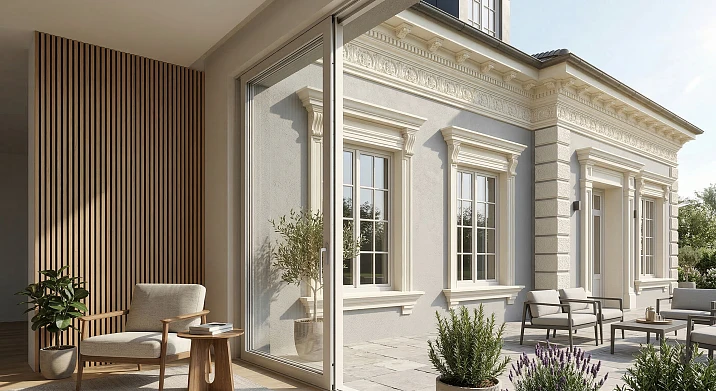
A house begins from the outside. This is a banal truth that most people only understand when they see a mismatch: inside — a thoughtful, warm, architecturally convincing interior with wooden slats, laconic cornices, and natural textures. And outside — a faceless plastered box without a single coherent architectural statement. A house with two faces. One — facing inward, alive and expressive. The other — facing the street, mute.
It shouldn't be this way.
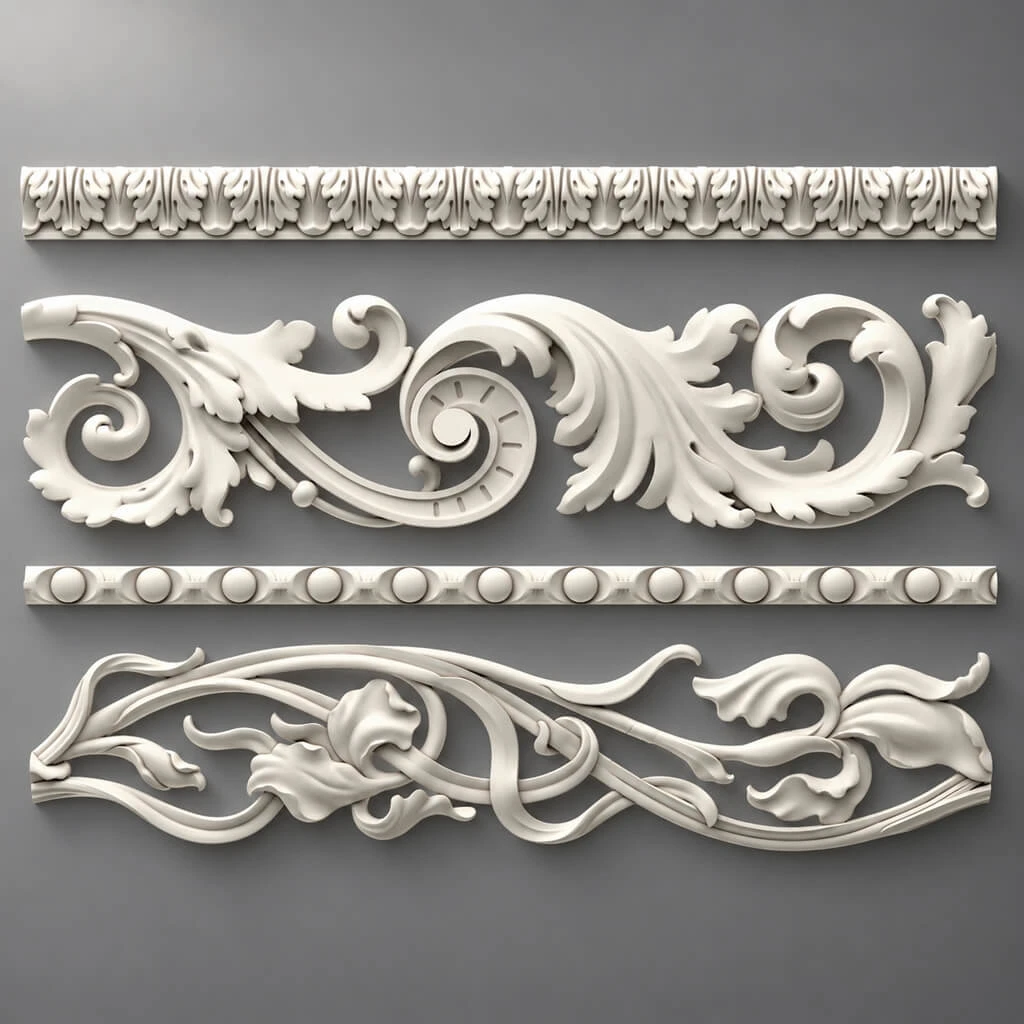
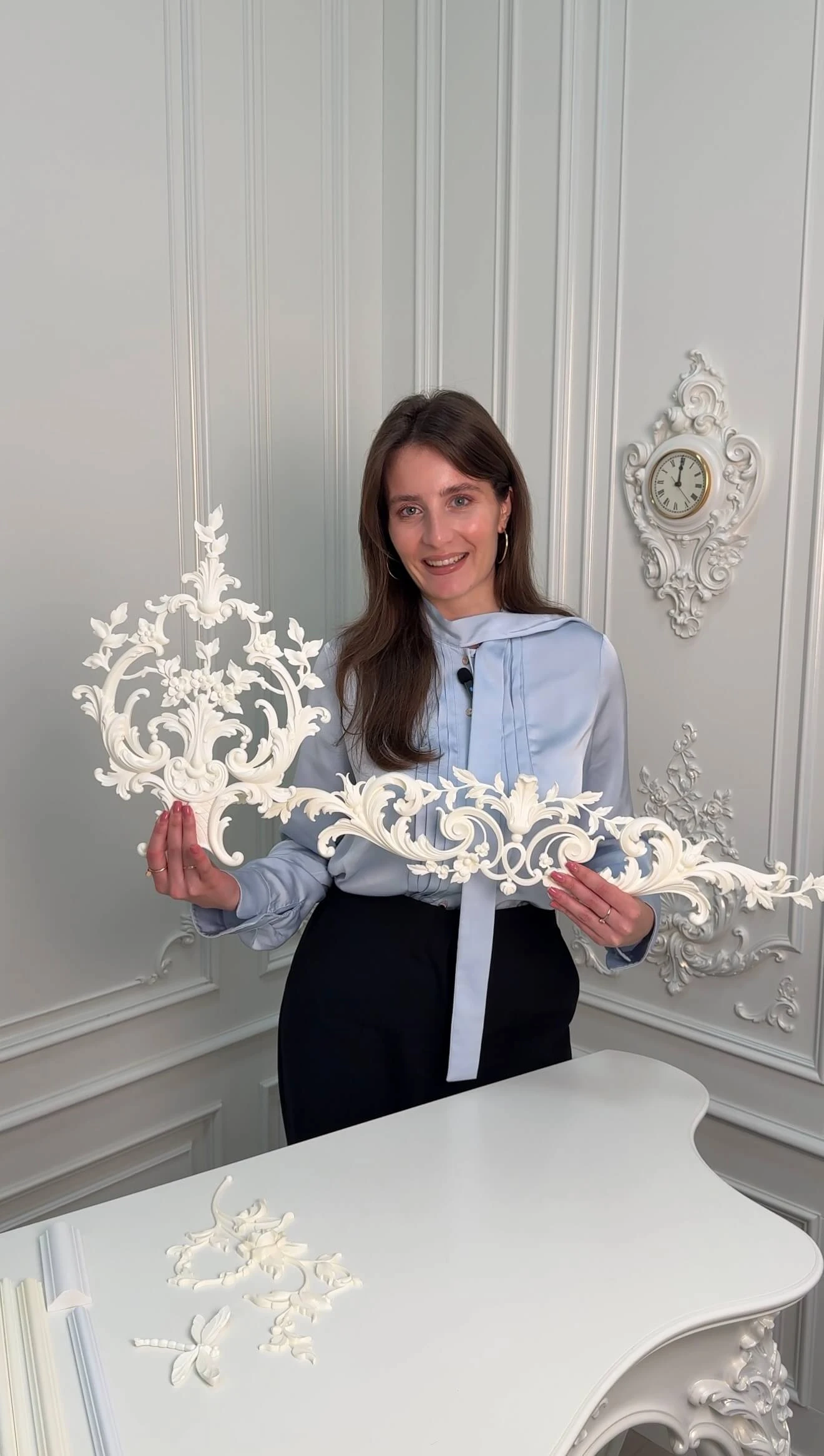
Rafter panels— one of the most popular tools in modern interior design — can become part of the facade system if the design is approached consistently: from interior to exterior, from the internal language to the external.Facade decoration made of polyurethane— cornices, pilasters, architraves, brackets, pediments — are architectural tools that create the same structuredness on the facade as moldings and cornices do inside the house.
Together, these two elements make it possible to build an architectural dialogue between the interior and exterior — when the house is recognizable from the outside just as it is from the inside. When the facade is not a mask, but a continuation.
When the facade and interior should speak the same language
The need for unity between 'outside and inside' does not arise in every home. In a city apartment in a multi-story building, the facade is shared and uncontrollable. But in a private country house, a townhouse, or a house where the design of the entrance group and terrace is provided, this need is absolutely real and practically achievable.

Three situations where unity is critical
First: new construction, where the interior and facade are designed simultaneously. Here, there is an opportunity from the very beginning to build a consistent design language: a slat theme in interior spaces + wooden or slat cladding on the veranda and entrance group outside + polyurethane decor on cornices, architraves, and pediment. All together — a unified architectural concept.
Second: house reconstruction, where the interior has already been redesigned in a modern style with slats and natural materials, but the facade remains in its former 'Soviet' appearance. Here, facade decor made of polyurethane and wooden slat elements on open architectural parts become a way to 'bring up' the exterior to the level of the interior.
Third: designing separate zones — entrance group, terrace, veranda, gazebo — where the interior and exterior literally transition into each other. Here, unity of language is simply necessary: the terrace continues the living room, the gazebo continues the kitchen. A break in material and style at this boundary destroys the sense of space.
Our factory also produces:

How interior and facade scenarios differ
Before transferring interior solutions to the facade, it is necessary to clearly understand: operating conditions differ fundamentally. What works perfectly inside may require a different approach to materials, fasteners, and coatings outside.
Get Consultation
Climate as the main design factor
The facade is subjected to impacts that the interior never experiences: temperature fluctuations from -30 to +40°C in the climatic zones of Russia, atmospheric moisture, UV radiation, wind, snow. All of this is an aggressive environment that will destroy material not designed for outdoor use in 2–3 seasons.
Polyurethane molding allows creating a stylish and presentable exterior of a house, while the material retains its qualities in any weather conditions.Unlike gypsum or polystyrene counterparts, it possesses resistance to moisture, frost, and UV radiation, making it one of the most durable materials for exterior decor. The closed-cell structure of polyurethane does not absorb water—there is no risk of freezing and cracking in cold weather. This is a critical advantage over gypsum, which deteriorates on a facade within 5–10 years.
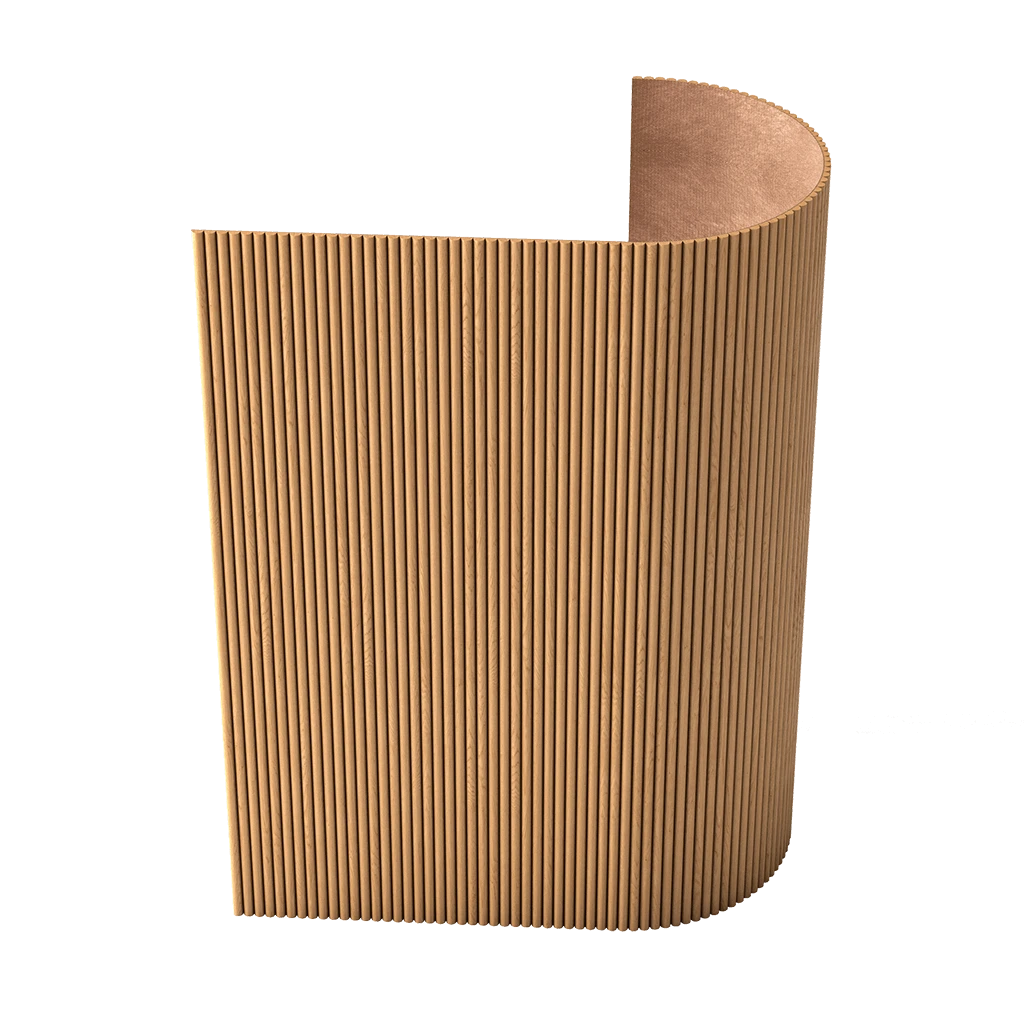
Slatted panels on the facade (open verandas, canopies, entrance groups with a canopy) are natural wood with mandatory treatment using exterior oils or varnishes designed for outdoor use. The ends of the slats are sealed to prevent water absorption. The fastener spacing is reduced compared to interior installation (to account for thermal expansion of the wood).
Interior slats: what transfers and what doesn't
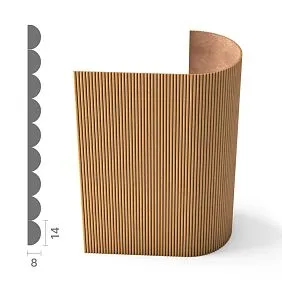
From interior to exterior, primarily the principle of rhythm and geometry transfers: the same slat width, the same spacing, the same orientation—vertical or horizontal. This creates a visual rhyme between the interior and exterior.
What does not transfer without adaptation:
-
Open oil on slats (only exterior impregnations);
-
MDF for painting—MDF is not suitable for exterior use in a humid climate;
-
Thin fasteners without accounting for thermal expansion.
For the facade, the correct material for slatted rhythm is solid oak, larch, or thermally modified wood with professional exterior treatment.
Which elements of polyurethane decor work with slatted rhythm
Facade molding for a houseMade of polyurethane — a wide catalog of architectural forms. But not all of them are compatible with the slatted theme. Let's break it down specifically: what works, how it works, and why.
Facade cornice: the horizontal axis that completes the vertical
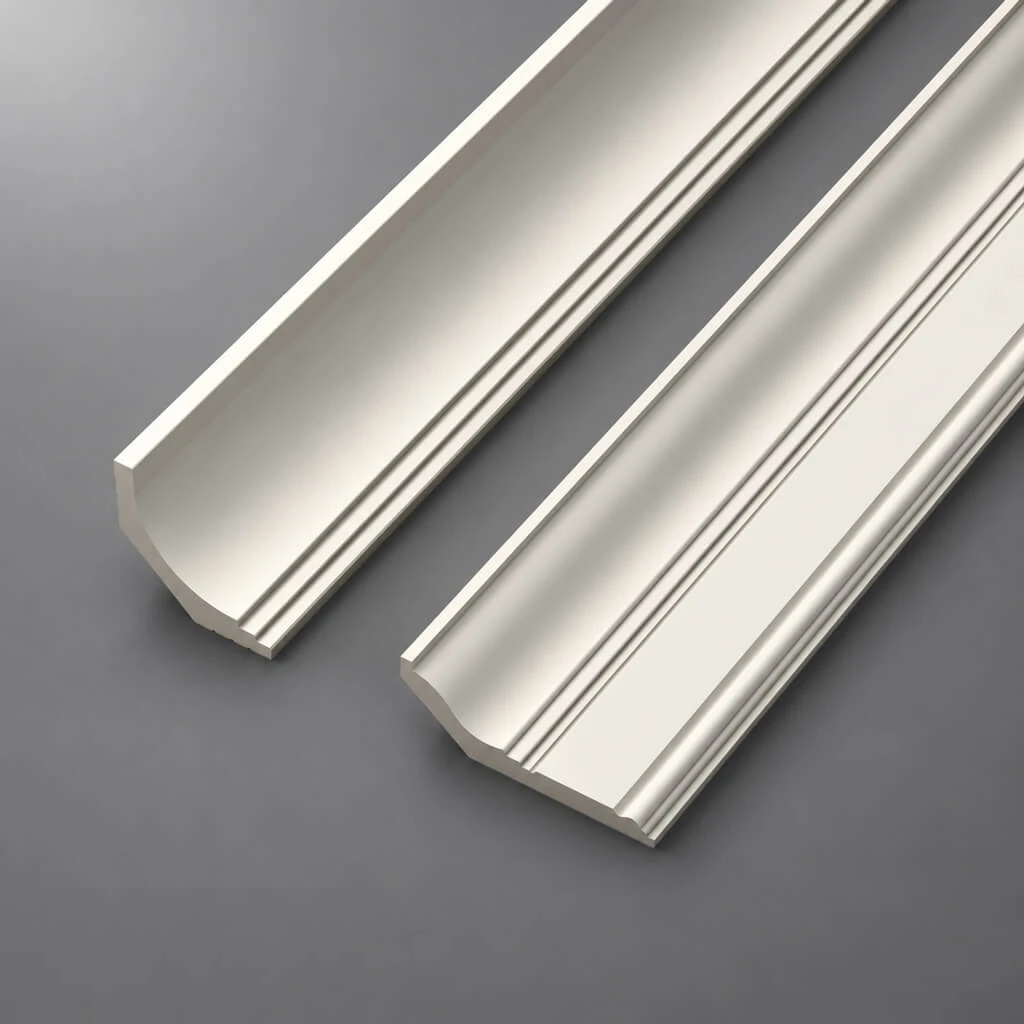
A cornice is a horizontal architectural element that separates the plane of the wall from the plane of the roof or ceiling. On a facade with wooden vertical slats, a polyurethane cornice performs the same function as a ceiling cornice inside: it completes the vertical field from above, creating a readable horizontal line.
A polyurethane facade cornice is installed:
-
Under the roof overhang — as a crowning cornice of the entire volume;
-
Above window openings — as a window cornice;
-
At the level of the first and second floors — as an interfloor profile belt.
The profile of a cornice for a facade with a slatted rhythm is laconic, without excessive ornamentation. A stepped rectangular profile or 'cavetto + fillet' is sufficient for modern architecture. Complex Baroque profiles are appropriate only in buildings where this corresponds to the overall style.
Pilasters and corner pilasters: the vertical frame of the slatted field
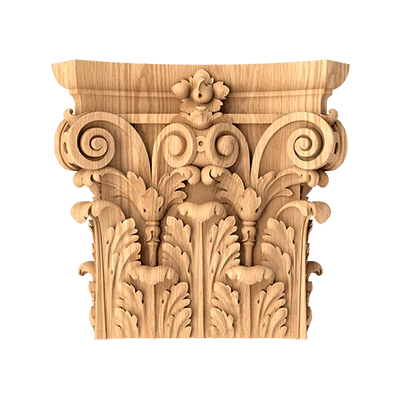
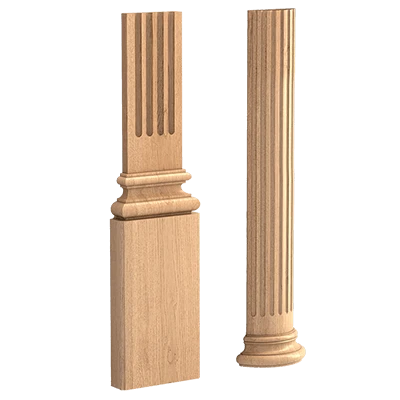
Polyurethane facade decoration for the houseIn the form of flat pilasters — vertical elements framing the corner parts of the building and the spaces between windows — creates the same architectural logic on the facade as pilasters inside: it denotes vertical accents, forms a 'frame' for the slatted fields between the spaces.
A polyurethane corner pilaster at the corners of a house is a neat architectural finish that 'closes' the corner and provides the viewer with an orientation point when perceiving the facade as a whole.
Window trims and opening surrounds: the slat rhythm is beautifully interrupted
A polyurethane window trim is one of the most in-demand elements.facade decorationOn a facade with a slat rhythm, the trim acts as a 'pause'—a place where the rhythm of the slats is interrupted by the opening of the window. To make this break look architectural rather than accidental, the trim 'frames' the interruption and creates an architectural event instead of a hole in the slats.
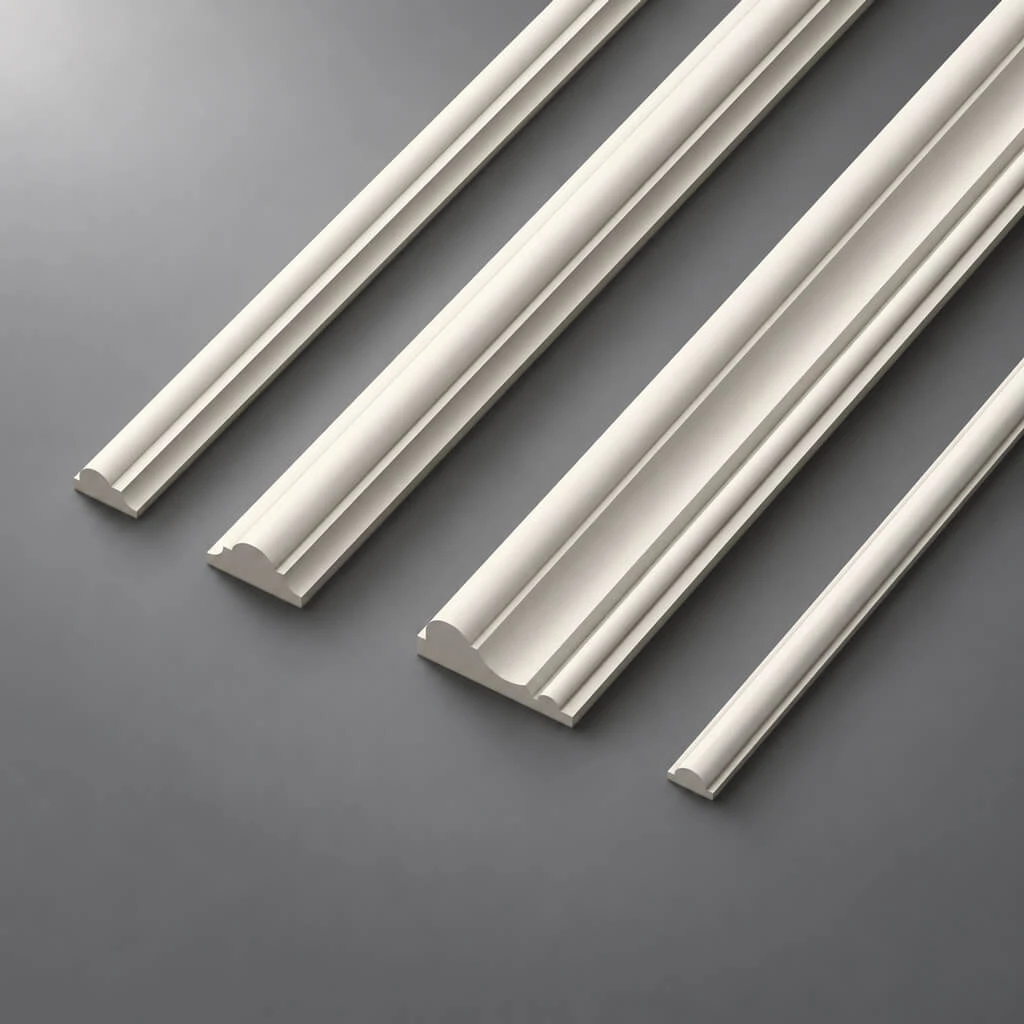
Choosing a trim profile: for a minimalist facade with thin slats—a rectangular frame with minimal relief. For a more classical appearance—a trim with ears, a keystone, and a profiled frame.
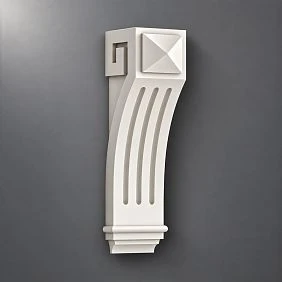
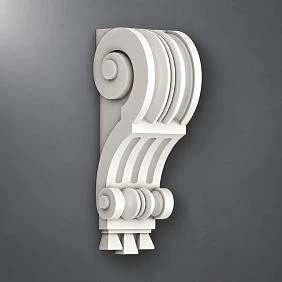
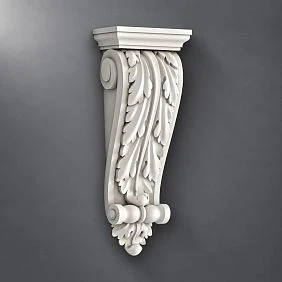
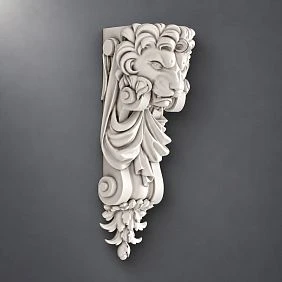
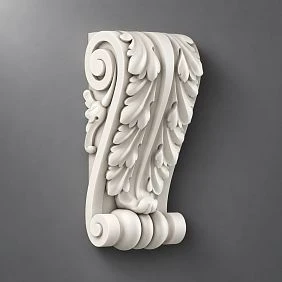
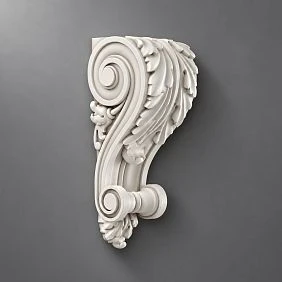
Brackets: decorative and structural
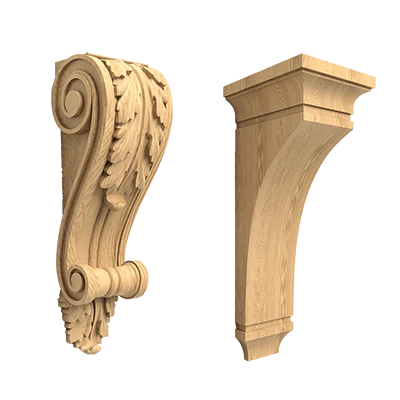
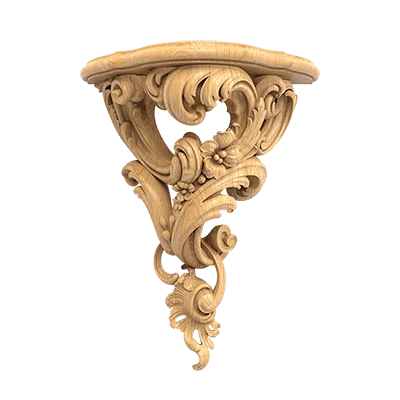
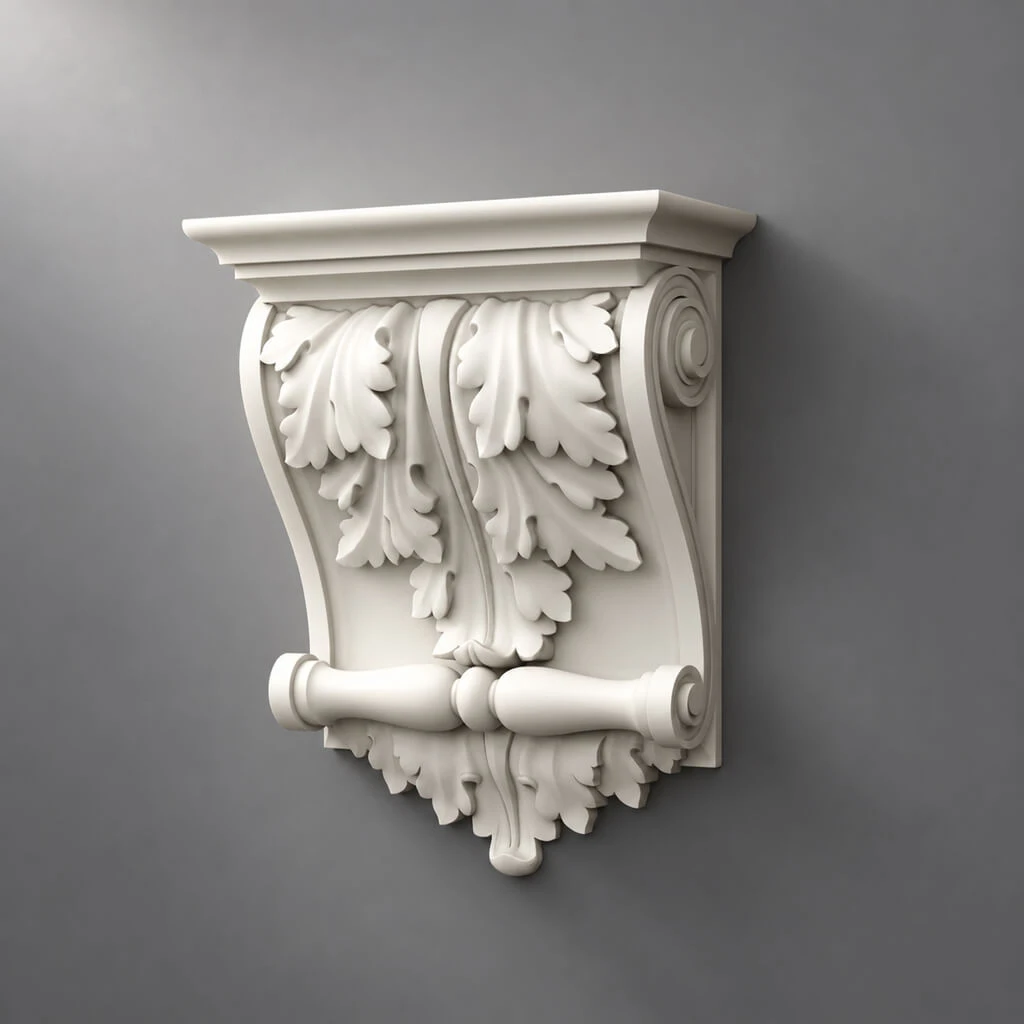
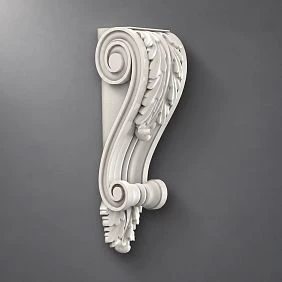
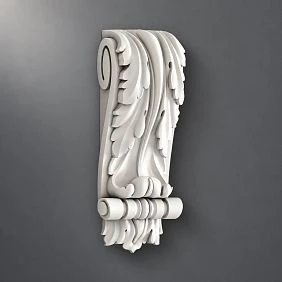
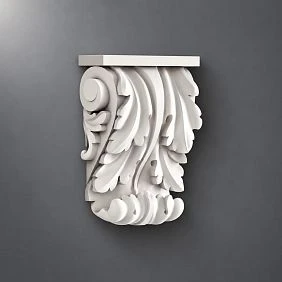
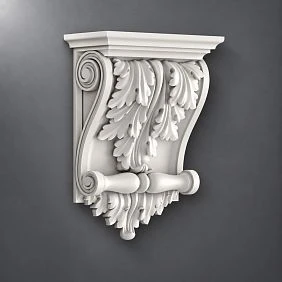
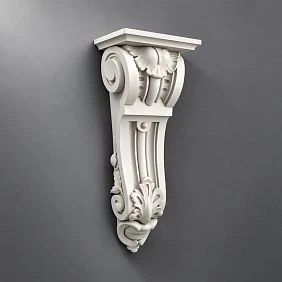
Polyurethane brackets—console elements that mimic the load-bearing brackets of historical architecture. On the facade, they are placed:
-
Under overhanging roof elements—visually 'supporting' the overhang;
-
Under balconies and canopies;
-
As part of an entablature (cornice + brackets + frieze).
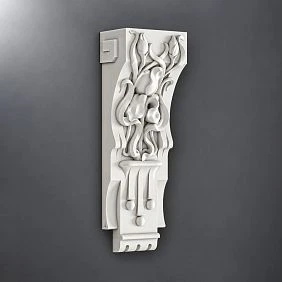
Polyurethane brackets for outdoor use — lightweight, not creating load on the structure, resistant to climatic influences. Mounted with specialized polyurethane adhesive and mechanical fasteners (dowel-screw).
How to design an entrance group, terrace, facade accents
Three key zones of the house where interior style most organically meets facade architecture.
Entrance group: the house's first statement
The entrance group — door, canopy, porch, side walls — is the 'loudest' architectural accent of the facade. It is here that the house speaks directly to the guest, even before the person crosses the threshold.
Slatted cladding of the entrance group's side walls made of larch or thermally modified wood — creates a theme of natural material outside, which continues with wooden slats in the hallway or corridor inside. The transition through the door does not break the space — it continues it.
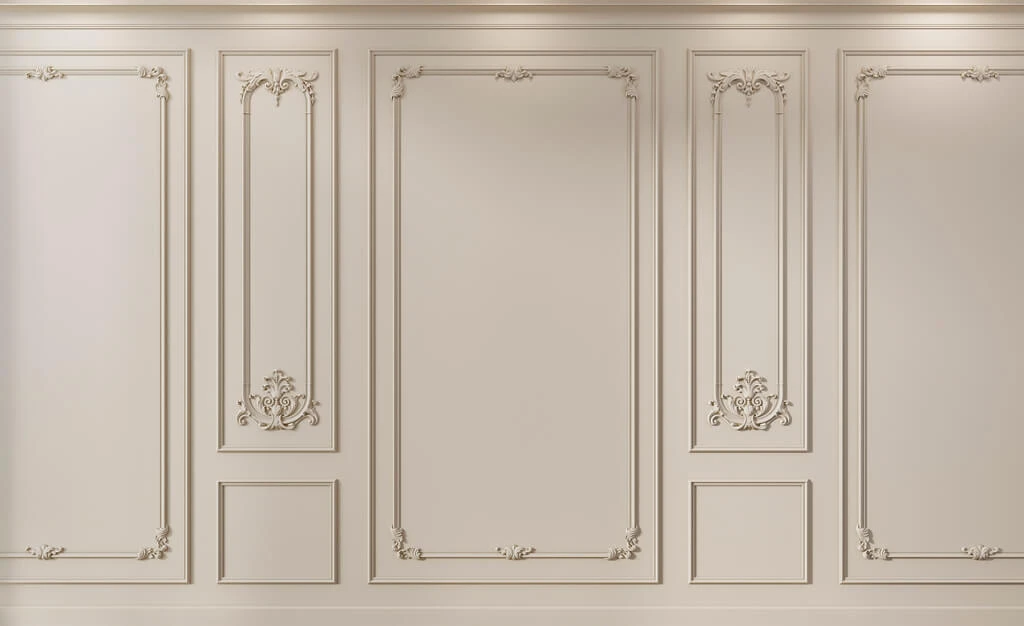
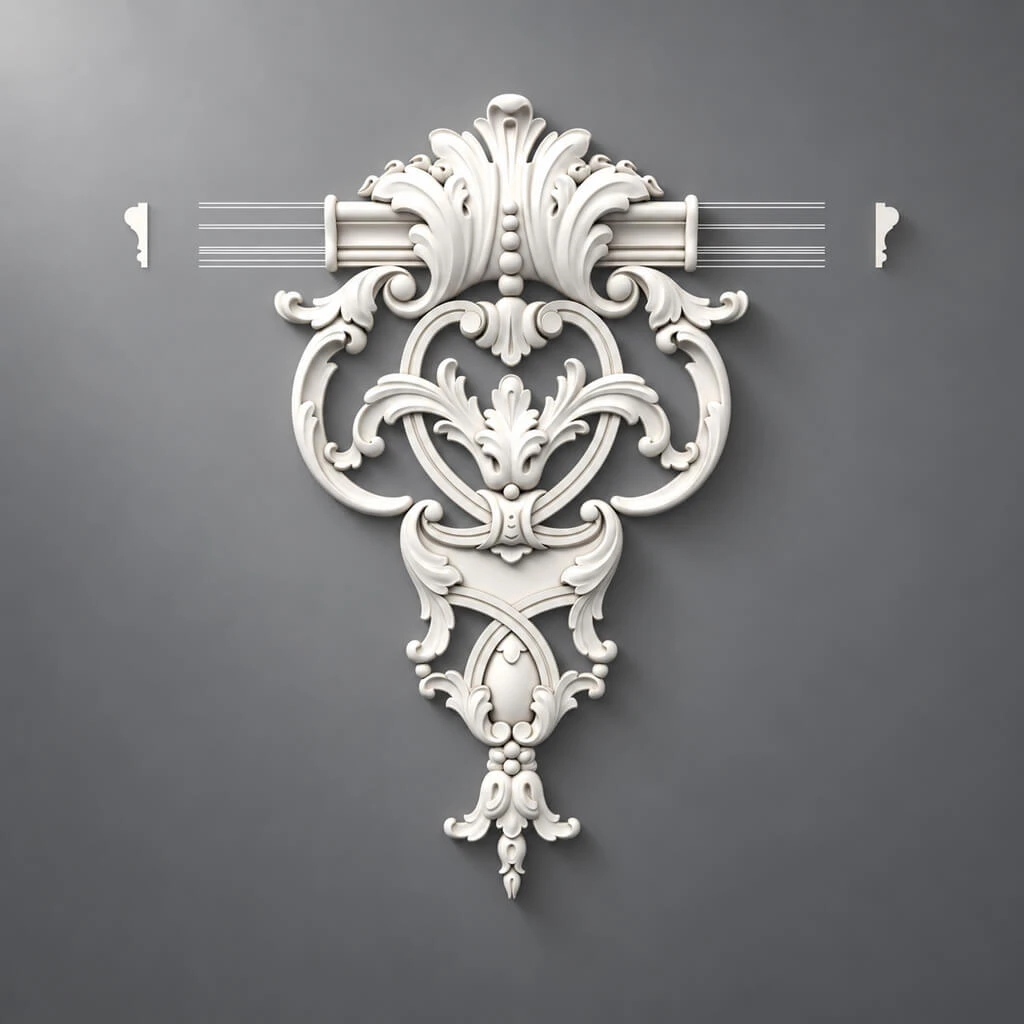
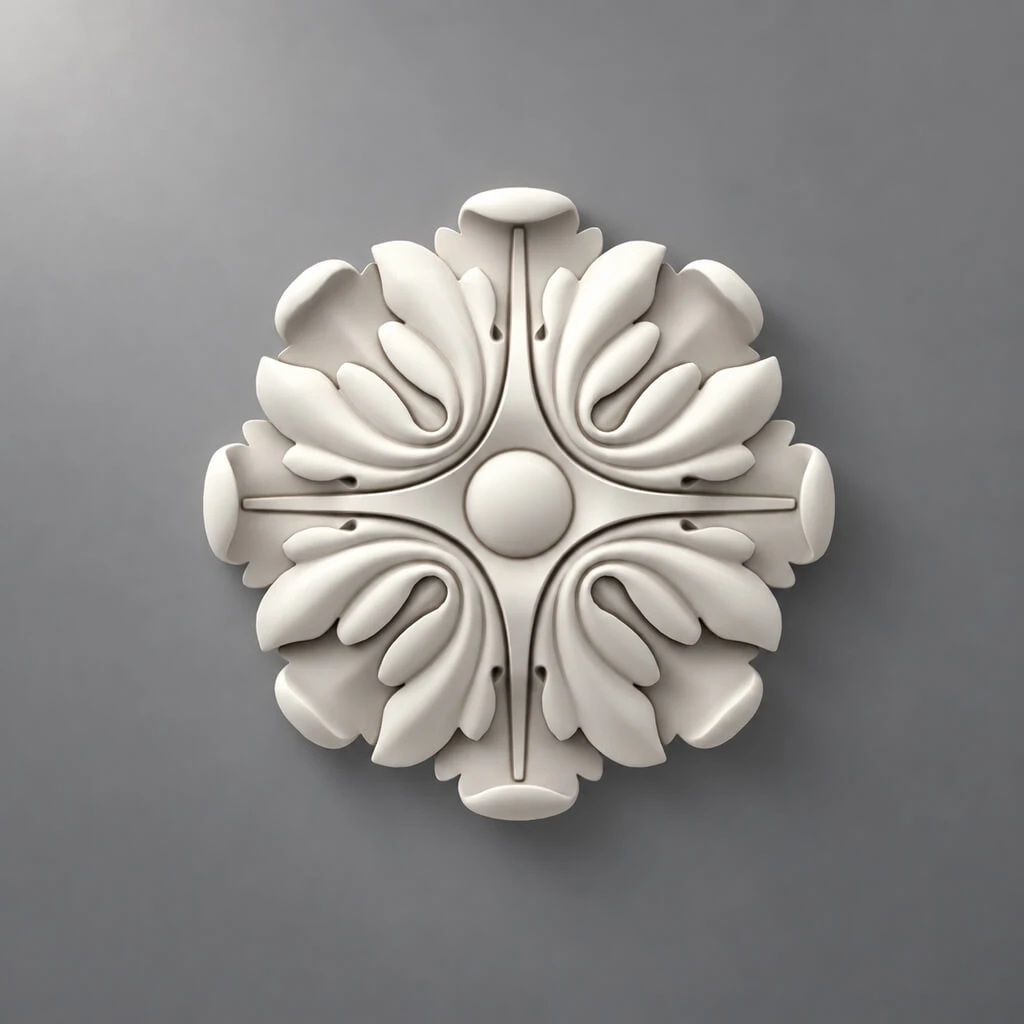
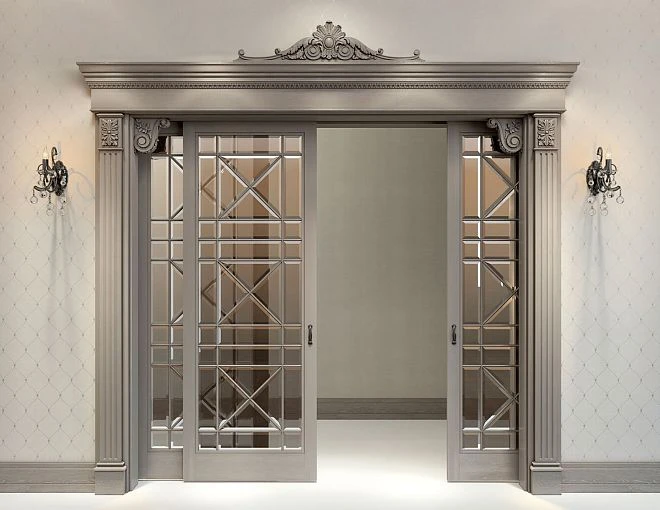
Stucco on the FacadeIn the form of a cornice above the entrance, polyurethane door frame trim, pilasters on the sides of the entrance — create an architectural 'portal' that enhances the importance of the entrance and sets the style of the entire facade. A cornice above the entrance in white or cream tone against dark slats — a strong, readable visual accent.
Options for designing an entrance group for different styles:
| House style | Slatted element | Polyurethane decor |
|---|---|---|
| Scandinavian | Thermowood slats, light tone | Rectangular cornice, minimalist trim |
| Neoclassical | Oak slats, warm tint | Pilasters, profiled cornice, keystone |
| Modern | MDF slats for painting (RAL) | Stepped cornice, rectangular framing |
| Loft/brutalist | Dark larch slats | Metal bracket + dark tone polyurethane cornice |
Terrace: the boundary between 'inside' and 'outside'
The terrace is a mediating space. It is physically located outside, but visually and functionally belongs to the interior. Here, the boundary between the house and the garden should be fluid, not sharp.
The slatted cladding on the wall facing the terrace—both outside and inside made from the same material—is a literal extension of the living room onto the terrace. The wooden slats on the exterior wall are visible through the glass doors or through the open doorway—and the gaze encounters no material break.
Polyurethane facade decorOn the terrace: a cornice along the perimeter of the canopy, pilasters at the corner posts, a decorative balustrade. All in a tone coordinated with the interior.
Pediment: an architectural statement at the sky level
The pediment—a triangular or rectangular completion of the facade above the cornice—is one of the places on the house where architectural decor is most noticeable. Slatted pediment cladding made of thermally modified wood or larch plus polyurethane cornice-friezes along the base of the pediment—this is a technique characteristic of Scandinavian and country architecture.
On a pediment with slatted cladding, polyurethane decor plays the role of a 'frame': a cornice belt at the bottom, corner pilasters on the sides. Inside this frame—the rhythm of the slats. An architecturally clean solution with a pronounced character.
What to consider regarding materials and climate
High-quality installation of polyurethane facade decor requires strict adherence to several technical conditions.
Fastening and adhesion
Mounting adhesive for polyurethane on the facade is specialized, designed for outdoor use. The adhesive must withstand temperature fluctuations from -30 to +50°C without loss of adhesion. Additional mechanical fastening (screws with dowels) is mandatory for all elements installed at a height exceeding 2 meters.
Priming and painting
FacadePolyurethane DecorBefore painting, prime with acrylic primer for exterior work. Finish paint is facade acrylic or silicate, UV-resistant. Glossy enamels on the facade are not recommended: they highlight any unevenness at joints and yellow faster under ultraviolet light.
Color matching: the color of the facade polyurethane decor must be coordinated with the wall color and the tone of the wooden slat elements. A unified warm or cool tone temperature is a mandatory requirement.
Joints with wooden slats
At the junction of wooden slat cladding and polyurethane decor, install an exterior sealant compatible with wood and polyurethane. The seam must compensate for thermal expansion of both materials—without rigid fixation, allowing for wood movement.
Wooden slats for the facade: correct technology
Solid oak or larch for facade application is treated:
-
With antiseptic impregnation in a vacuum chamber or by autoclaving method;
-
With exterior oil or varnish for end grains (particularly vulnerable areas);
-
Colored exterior oil or glaze — for tinting with UV protection.
Ventilation gap step behind the battens: 20–40 mm to ensure ventilation behind the wooden cladding — a mandatory condition to prevent rotting at the wall junction.
Style solutions: from Scandinavian house to neoclassical mansion
Scandinavian country house
Vertical batten cladding of the facade made of thermowood with gray tinting — and polyurethane cornices 60–80 mm of rectangular profile in white under the roof overhang. Casings of rectangular section 40 mm. Entrance group: battens on side panels, white cornice above the door, black metal handles. Inside: the same battens, the same tone — the hallway continues outside.
Character: natural, restrained, Nordic. Facade and interior — one story.
Modern neoclassicism
Batten panels on the facade — in the lower zone of the first floor (plinth and first belt), warm oak tone. Polyurethane pilasters between windows, cornice with 'heel + shelf' profile 90–110 mm, window cornices with keystone. Pediment — polyurethane triangular, with cornice belt along the base.
Inside: wooden battens in the living room, polyurethane cornices, frame moldings. Architectural vocabulary — unified from the porch to the fireplace.
Loft villa
Facade: dark battens made of larch with charcoal tinting, vertical, entire volume. Polyurethane elements — minimal: rectangular dark cornice at the roof overhang, massive rectangular brackets under cantilevered beams, metal details.
Inside: dark slatted accents, exposed concrete, black metal hardware. The facade is a continuation of the same brutalist language.
Mistakes that make a facade look artificial
First mistake: too many different elements on one facade
Slatted cladding + cornices + pilasters + brackets + architraves + balustrade + stucco medallions — all at once. The facade ceases to be readable as an architectural object and turns into a catalog of decorative elements. The principle is the same as inside: three to four types of elements maximum. Cornice + pilasters + architraves — a complete system. Adding brackets and pediment decor to this is already an overload for an ordinary private house.
Second mistake: thin decor on a large volume
Decorative polyurethane elements must be proportionate to the scale of the house. A 40 mm cornice on a two-story house is invisible. Pilasters 80 mm wide on a 12-meter facade are random dots without architectural meaning. Facade decor must be scaled: cornices 80–120 mm, pilasters 100–150 mm, brackets 200–300 mm projection.
Third mistake: different 'temperatures' of wood and decor tones
Warm wooden slats (amber oak) + cool gray polyurethane cornice — a temperature conflict visible even from a distance. On a facade, where everything is illuminated by natural light, this conflict is even more obvious than in an interior. Warm slats — warm (cream, beige, light brown) decor. Dark tinted slats — dark or neutral decor.
Fourth mistake: wooden slats without a ventilation gap
Slats mounted flush against the wall without an air gap rot at the junction with the base within 3–5 years. This is not an aesthetic problem — it is a structural error. Battens with a 20–40 mm gap are a mandatory structural element of a facade slatted system.
Mistake five: polyurethane not designed for facades
Interior polyurethane decor with a softer density formula is not intended for exterior use. It becomes brittle in frost and yellows under UV radiation.Polyurethane molding allows creating a stylish and presentable exterior of a house, while the material retains its qualities in any weather conditions.STAVROS is manufactured considering climatic loads: closed-cell structure, resistance to moisture and temperature fluctuations are specific technical characteristics, not marketing words.
Mistake six: zero coordination with the interior
A beautiful, well-designed facade with polyurethane decor in itself — and a complete lack of connection with what's inside. Different tones, different profiles, different style solutions. In this case, there is no unity of 'outside — inside', and the house still remains with two unconnected faces.
Three practical scenarios for a private house
Scenario 'Warm Scandinavian'
-
Facade: thermowood slats, 'Scandinavian gray' tint, 40 mm width, vertical
-
Facade decor: white polyurethane cornice 70 mm rectangular at the eaves; white window casings 40 mm
-
Entrance group: slatted side panel + white framing cornice above the door
-
Interior: ash slats, white oil finish; 60 mm polyurethane cornice, white
-
Connection: gray outside — white accent; whitewashed wood inside — white accent. Temperature register — cool neutral
Scenario "Warm Neoclassicism"
-
Facade: lower zone of the first floor — oak slats, "cognac" tint, horizontal
-
Facade decor: 100–120 mm cornice with profile, interfloor belt, pilasters — all in cream tone
-
Window cornices: with keystone
-
Interior: vertical oak slats "tobacco" + 90–100 mm polyurethane cornice + moldings
-
Connection: warm wood outside and inside; cream architectural decor on both levels
Scenario "Dark Brutal"
-
Facade: larch slats, "charcoal" tint, vertical, entire volume
-
Facade decor: dark gray 80 mm rectangular cornice; rectangular architraves, 'anthracite' tone; metal brackets
-
Entrance group: slatted panel at entrance + dark polyurethane cornice above door
-
Interior: dark slatted accents, exposed concrete, metal
-
Connection: unified dark material language — wood, polyurethane, metal
FAQ: Answers to popular questions
Can regular interior polyurethane be used for facades?
No. Interior polyurethane is not designed for temperature fluctuations, moisture, and UV radiation. For facades, specializedFacade decoration made of polyurethanewith closed-cell structure and UV-resistant coating is required.
Which slatted materials are suitable for facades?
Larch solid wood — the most stable domestic species for exterior use. Thermowood (thermally treated pine, oak) — increased bio-resistance and moisture resistance. Oak solid wood with exterior treatment — acceptable when fully shielded from direct precipitation (under canopy, on veranda). MDF — for interior use only.
How to coordinate decor tone with slatted panels?
Determine the temperature register (warm / cool) and maintain it on both levels — outside and inside. For warm wood tones — cream, beige, or warm white decor. For cool — neutral white or gray.
Is primer needed before installing facade polyurethane?
Absolutely. Acrylic primer for exterior work improves the adhesion of the adhesive and the finish paint. Without primer, the paint may start peeling within 1–2 seasons.
At what distance from each other should brackets be installed on the facade?
Brackets under the cornice belt are placed with a spacing of 80–150 cm depending on the cornice profile and the bracket overhang length. Exact recommendations — based on the specific cornice article and bracket overhang.
How to protect the joint between wooden slats and polyurethane on the facade?
Elastic weather-resistant sealant (silicone or polyurethane) in the color of the decor or wood. The seam must allow for wood movement due to temperature changes.
About the company STAVROS
A private house is not just a building. It is an architectural statement about the character of its owner. And when this statement is consistent — outside and inside, in the details of the facade and in the living room finish, in the cornice decor and in the door handle — the house acquires that dignity which cannot be achieved by random decisions.
STAVROS manufactures all the elements necessary for building this dialogue.Slatted panels made of solid oak and MDF— for interiors with natural rhythm and precise geometry.Polyurethane Items— cornices, pilasters, brackets, architraves, pediment decor — for architectural structure and completeness. Interior and facade elements from a single catalog with coordinated profiles and finishes.
Over 4000 items. Own production. Contact us to confirm shipping to your destination. Free design consultation for the system — from profile selection to tone coordination. STAVROS — for those who build a house as a cohesive architecture, not as an assembly of separate beautiful solutions.