






































Article Contents:
- Why slat panels have become part of modern interior finishing
- Slat panels not alone: how they work in combination with other finishing elements
- When slat panels for interior wall finishing are truly appropriate
- What tasks do slat panels solve inside a room besides decoration
- Material as a strategy: MDF or solid oak
- When MDF is the right strategy
- When solid oak is the only correct answer
- How the interior changes depending on the profile, spacing, and direction of the slats
- Where is it best to use slatted panels indoors
- Flexible and rigid solutions: how to choose according to the geometry of the object
- How not to ruin the interior with slatted panels
- How to integrate slatted panels into a cohesive interior finish
- Slatted panels for interior finishing: on pricing and the practicality of choice
- Where to buy slatted panels for interior wall finishing
- FAQ: Answers to Popular Questions
- About the Company STAVROS
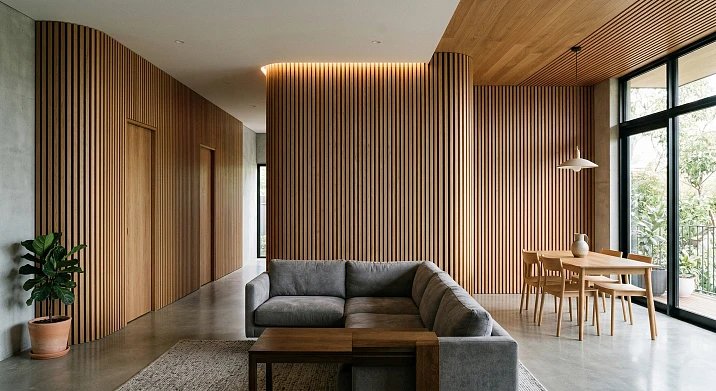
There is one fundamental question that most articles about slatted panels avoid. The question is not 'what is it' and not 'how to install,' but a different one: why does one interior with a slatted wall look like a designer project, while another looks like a bunch of sticks glued to plaster? Both use the same panels. The difference is not in the material or the color. The difference lies in understanding: a good result is not given by the panels themselves—it is given by the system into which they are integrated.
slatted panels for interior wall finishing— is not an independent object that is simply hung on the wall. It is an element of the interior architecture of a room: one of the layers that is connected to the floor, ceiling, moldings, furniture, lighting, and the logic of the entire space. When this connection exists, the interior comes together into a unified image. When it is absent, the panels hang separately from everything, like a random detail in someone else's text.
This article is about the system. About how wall slatted panels work in interior finishing not as decor, but as an architectural tool. About the logic of choice, about connections with other elements, about where they enhance the interior and where they destroy its visual integrity.
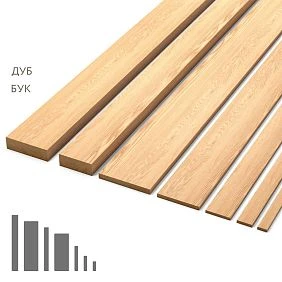
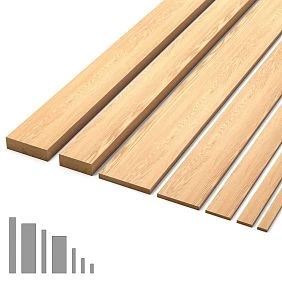
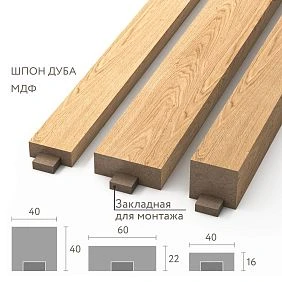
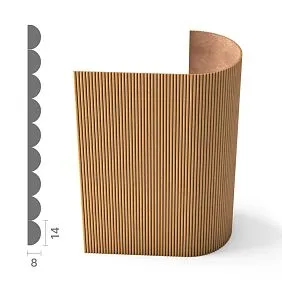
Why slatted panels have become part of modern interior finishing
To answer this question honestly, one needs to take a step back and look at what has happened with interior wall finishing over the last twenty years.
For a long time, the concept of a 'neutral shell' dominated: walls were painted in light colors, the ceiling was white, the floor was smooth—and all attention was given to furniture and decor. The wall did not exist as an object. It was a background. But gradually it became clear that this neutrality turns most interiors into indistinguishable spaces without character. Expensive furniture on flat painted walls looks like a store showroom, not a designed home.
The demand for architectural depth of walls arose naturally. People stopped wanting just 'clean'—they wanted 'interesting.' Interesting means texture, rhythm, play of light and shadow. This is where interior wall finishing with slatted panels found its permanent role. Not as a fashionable trend, but as a response to a real design request: give the wall character without excessive decorativeness.
Slatted surfaces work through one basic mechanism—repetitive rhythm. Regular parallel lines create a structured pattern that the brain reads as a sign of intentionality and order. The wall ceases to be a random plane—it becomes part of the architectural concept. At the same time, it doesn't shout, doesn't overload—it organizes. And it is this organizing role that made slatted panels for interior finishing a permanent element of professional projects—from apartments to restaurants and hotels.


Slatted panels are not standalone: how they work in conjunction with other finishing elements
This is the very block that distinguishes a professional approach from an amateur one. A slatted panel installed in isolation from the rest of the interior is a half-speaking element. It adds something but doesn't complete the picture. A full-fledged result occurs only when the panel is part of a system of connections with other elements.
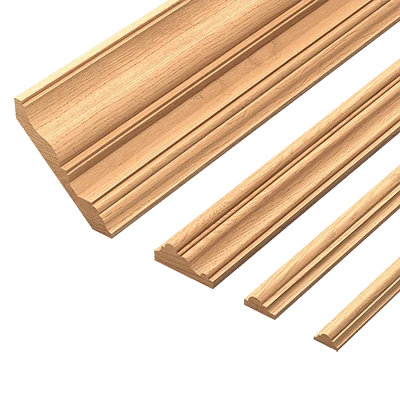
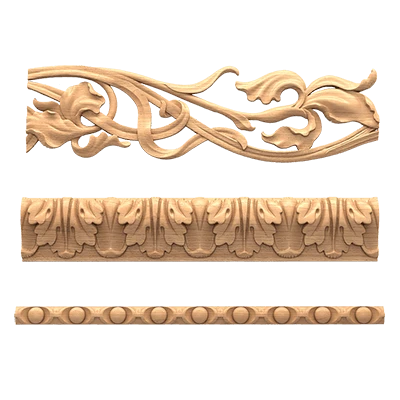
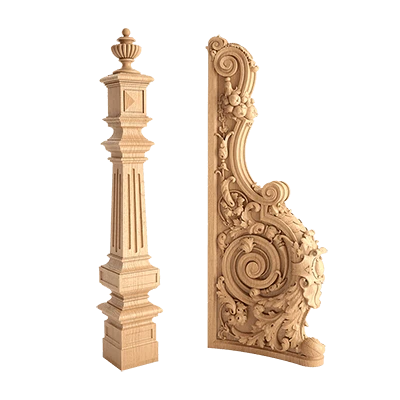
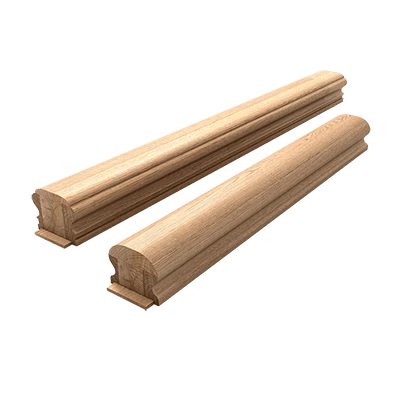
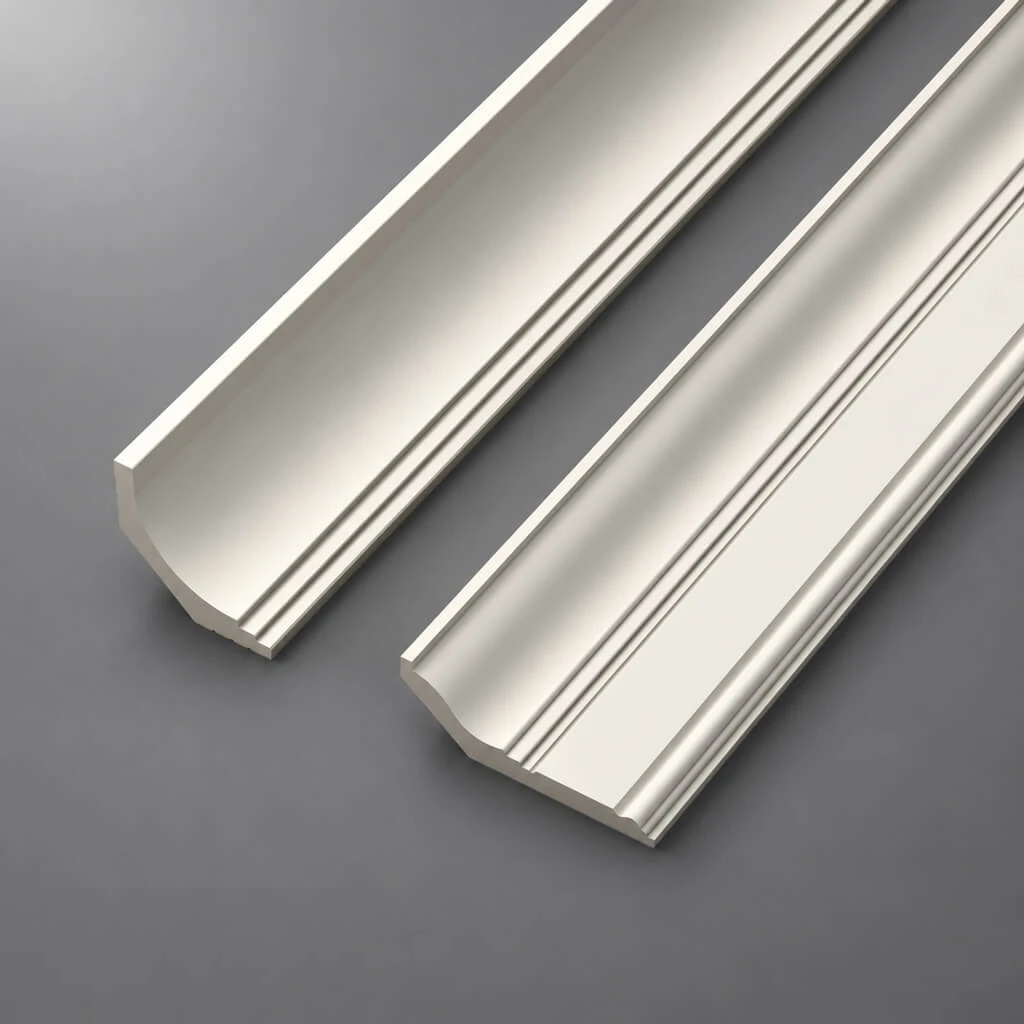
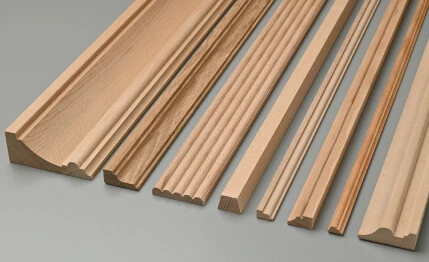
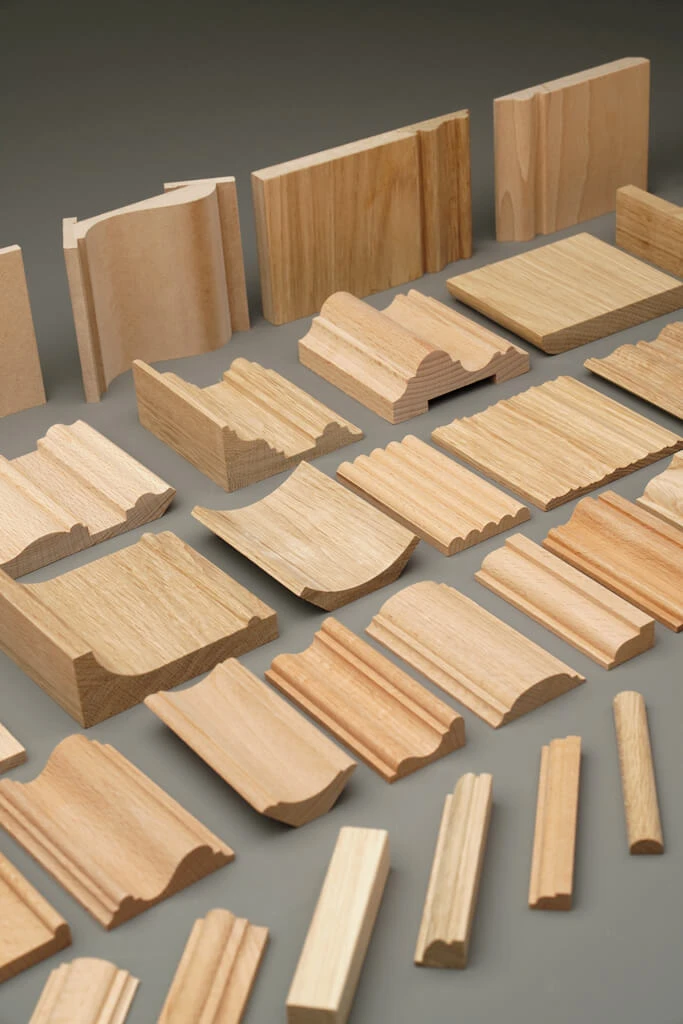
Let's start with the baseboard. The baseboard is where the wall meets the floor. If a slatted panel goes down to the floor without a finishing element or with a baseboard of a different type and style—it creates a sense of incompleteness. The correct solution: a baseboard made of the same material as the panel, or a neutral wooden baseboard that picks up the tone of the slats without competing with them.solid wood trim pieces—baseboards, moldings, cornices made of oak or beech in a unified style—turn a slatted wall from a separate fragment into part of a single architectural shell.
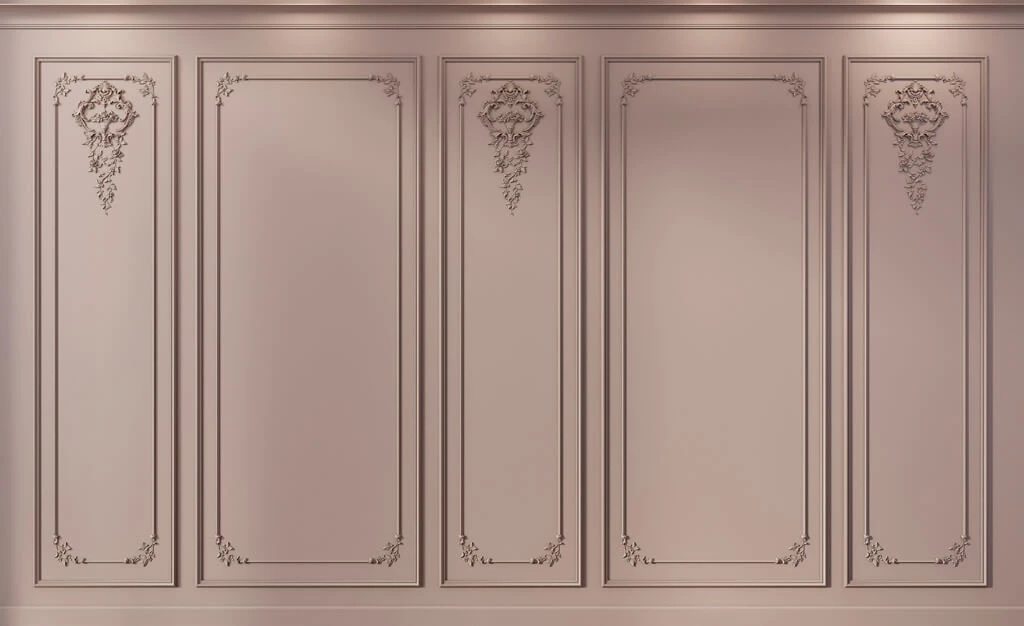
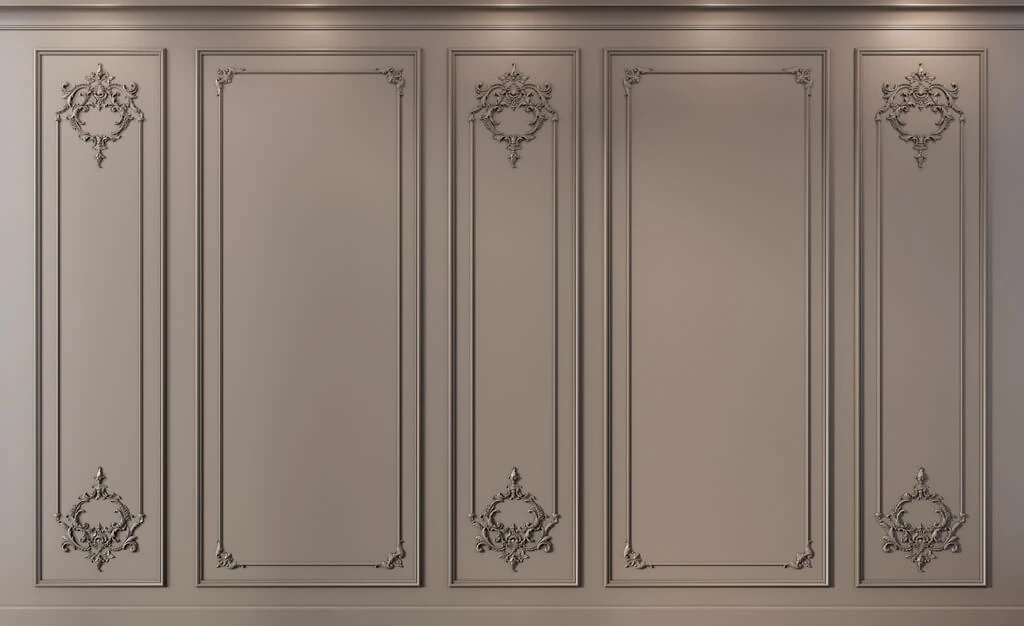
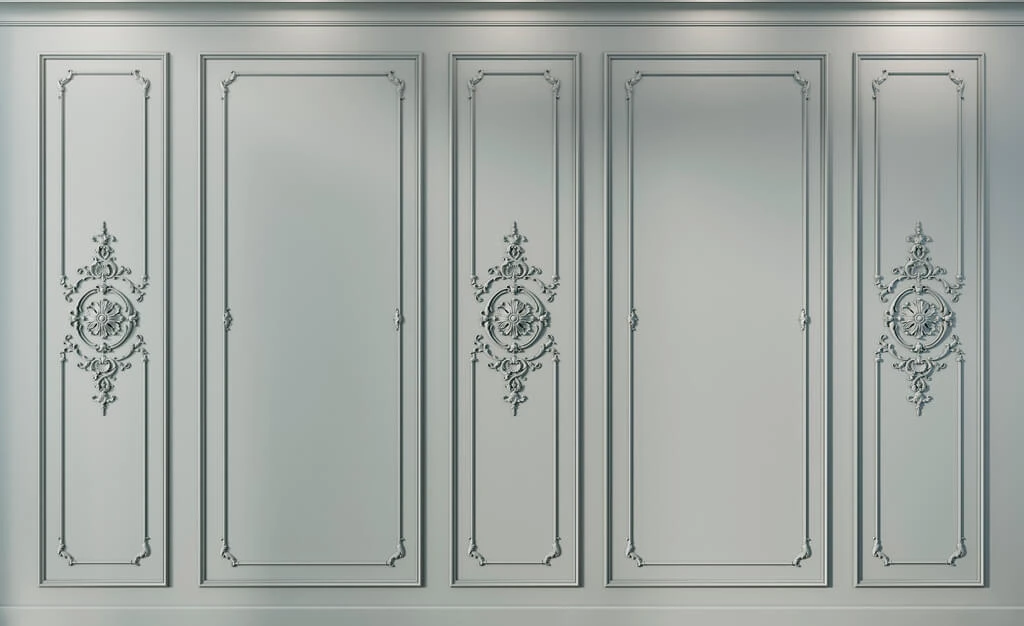
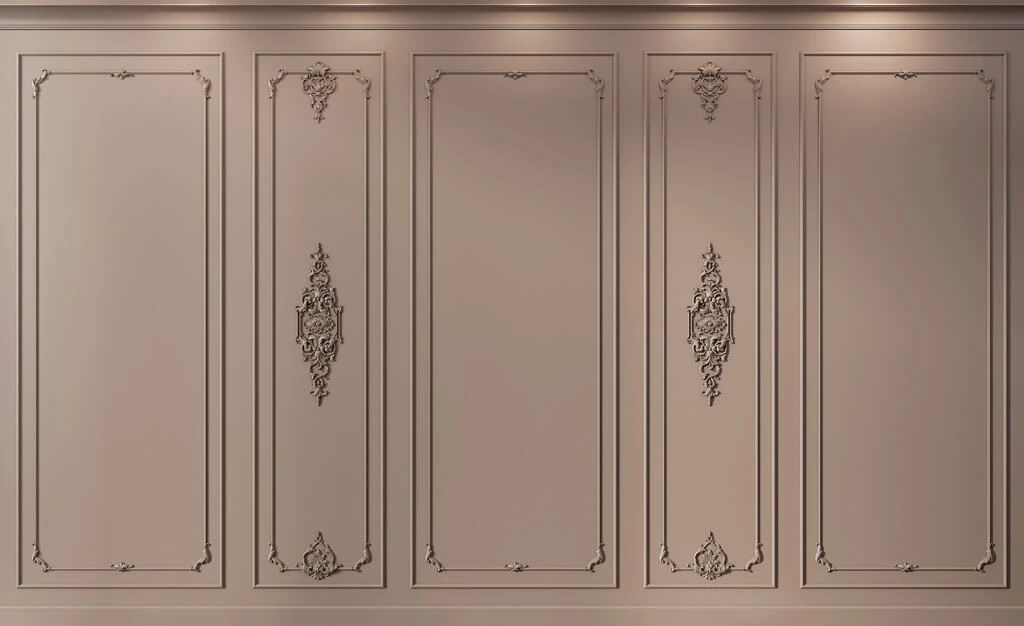
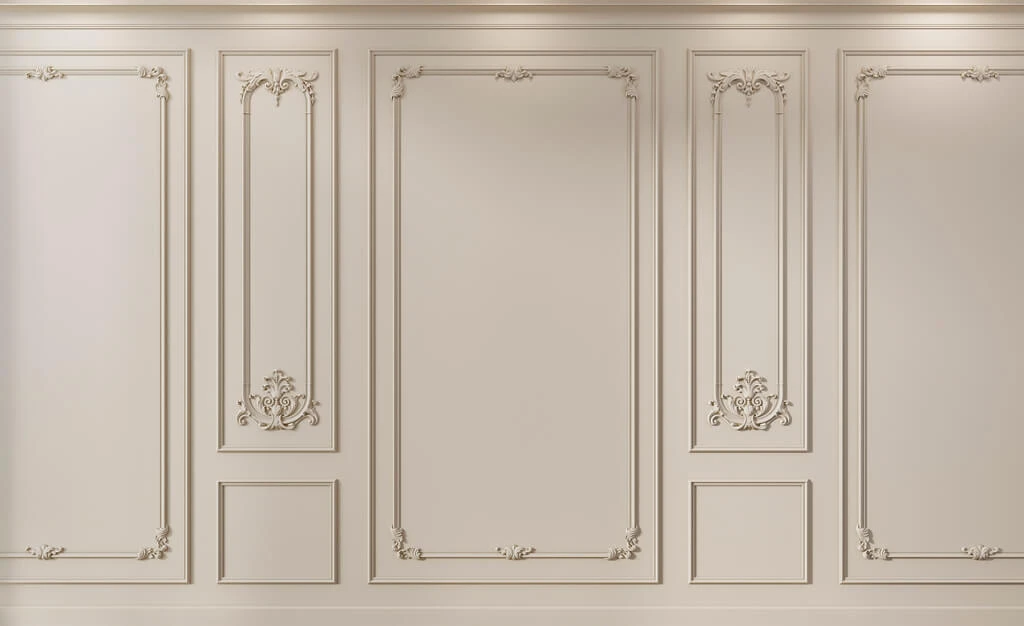
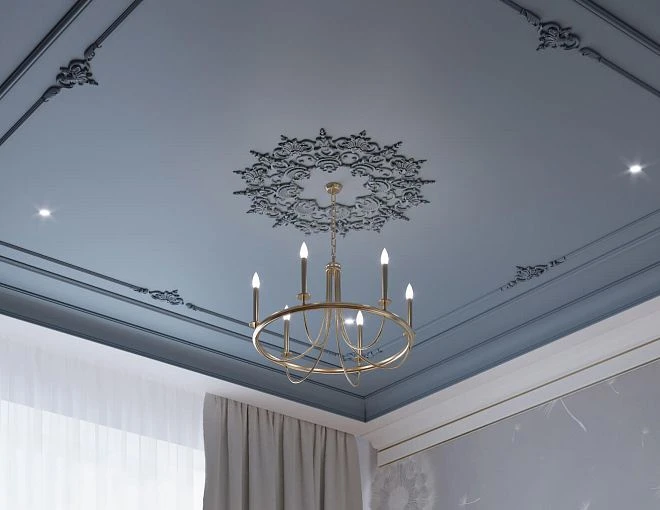
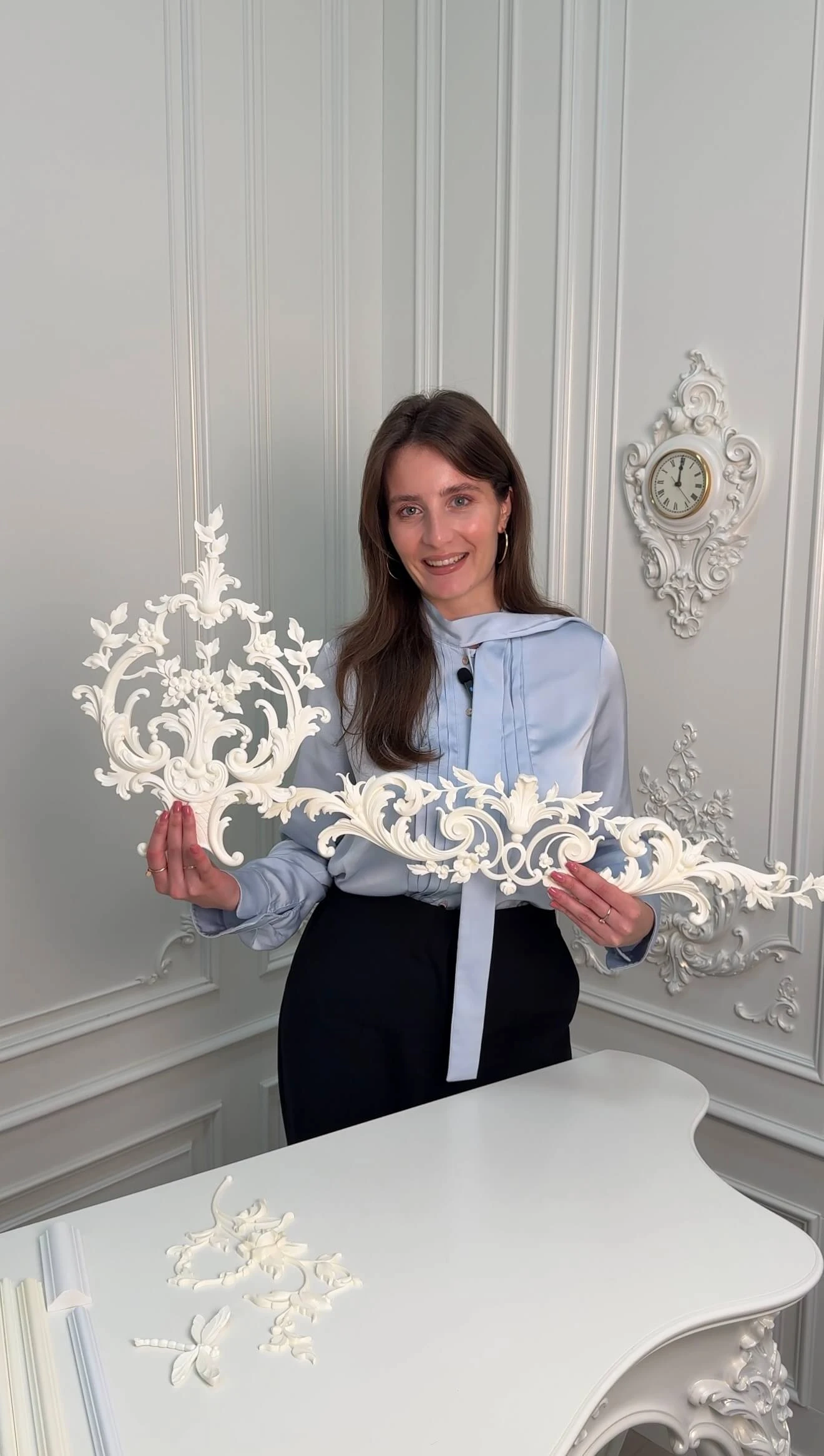
Moldings and cornices—the top finishing of the panel. A slatted structure without upper framing at the junction with the wall or ceiling looks like a truncated text: there is rhythm, but no finale. A cornice or molding fixes the upper boundary of the panel, covers the technical gap, and creates visual completeness. In neoclassical and classical interiors, this technique is mandatory. In minimalist ones, more laconic options are used: a thin finishing slat or a hidden gap with lighting.
Wall planes adjacent to the slatted surface—the next element of the system. When a slatted panel occupies only part of the wall, and next to it is a painted plane, the color solution becomes critical. Three working options: the panel in the same tone as the wall (there is texture, no color break); the panel in a darker tone (soft contrast, the accent remains); the panel in natural oak against a warm neutral wall (natural dialogue of materials). What works poorly: a screaming contrast between dark slats and a snow-white wall in a small room—the 'fence' effect is guaranteed.
Furniture fronts and door planes—another level of connection. In modern interiors, slatted panels often transition from the main wall to the fronts of cabinets, wardrobes, niches, or built-in structures. This creates continuity of rhythm: the wall and furniture become part of a single architectural statement. TV zones look especially impressive, where the slatted plane of the wall smoothly transitions into the side walls of the cabinet or the framing of the niche for equipment.
Architectural lighting is the final and most subtle element of the system. A slatted panel loses half its potential without proper lighting. The texture only comes alive in light: side spot lighting or directional tracks create sharp shadows in the gaps and highlight the protruding surfaces of the slats. LED strips integrated into the gaps add depth, turning the wall into a source of soft, diffused light. Without these tools, the panel only works under direct lighting—and significantly less effectively.
Our factory also produces:


When are slatted panels for interior wall cladding truly appropriate
The honest answer is: slatted panels are appropriate where a space has a clear purpose, and the wall has a distinct role in fulfilling it. This does not mean 'everywhere.' It means 'where they work, not just exist.'
The first condition for appropriateness is the need for an accent wall. If a room lacks a visual center, a point where the eye naturally falls upon entry—a slatted wall creates that center. A living room without an accent wall is just furniture in a room. A living room with a slatted surface behind the sofa is an interior with logic and focus.
The second condition is a large, empty space that needs to be 'pulled together.' Open floor plans, high ceilings, loft spaces—all suffer from the same issue: visual sparseness. Slatted panels for interior cladding of large walls create a structure that organizes the emptiness without physically filling it.
The third condition is vertical or horizontal dynamics that the space lacks. If the ceiling feels oppressive—vertical slats elongate the room. If the room is narrow—a horizontal rhythm expands it. This is not a metaphor; it's a real optical effect.
The fourth condition is a boring, characterless plane that needs to be activated. A blank wall in a hallway, the end wall of a living room, a side wall in a bedroom—all look simply like 'a wall' without treatment. With a slatted surface, they become part of the room's architectural image.
The fifth condition is the need to highlight a functional zone without a physical partition. Zoning through finishes is a professional technique that allows dividing space by changing the material or surface rhythm, without resorting to walls or partitions.
Get Consultation
What tasks do slatted panels solve indoors besides decoration
This question is asked by those who approach renovation thoughtfully. The decorative function is obvious. But the real value of panels for interior cladding is broader—and knowing these functions changes the approach to selection.
Zoning the space is the first and most practical task.slatted panels for zoningThey work as an architectural marker: they mark the boundary between zones by changing the finish. Living room-dining room, bedroom-dressing room, work area in a living room — in all these cases, a fragment of a slatted wall clearly communicates: here the space changes. At the same time, there is no loss of light, no feeling of confinement.
Visual correction of proportions is a subtle tool used by professionals. Vertical slats raise the ceiling in rooms with a height of up to 2.7 meters. Horizontal installation expands narrow spaces. A fine slat spacing creates an impression of greater area. A sparse spacing — air and lightness. All this works through the laws of visual perception and does not require construction intervention.
Surface rhythm is a concept that defies simple definition but is easily read intuitively. A wall with rhythmic relief is perceived as organized, intentional, designed. This feeling of 'expensive, well-thought-out space' is a direct consequence of rhythm, not the price of the material.
Working with light and shadow is what slatted walls are most valued for by those with a discerning eye. Each slat protrusion casts a thin shadow into the gap under side lighting — and the wall literally comes to life. In the morning under natural light, it's one thing. In the evening with track lighting — it's another. This is a property that no flat finishing material possesses.
Acoustic comfort is an underrated function. Flat walls in rooms with high ceilings and hard floors create uncomfortable echo: sound reflects off every surface. Acoustic slatted panels for interior finishing with a relief surface scatter sound waves, breaking them into many small reflections. When sound-absorbing material is laid behind the panels, an absorption effect is added — the room becomes quieter and more comfortable. For meeting rooms, home theaters, studies, and restaurant halls, this is not a bonus but a necessity.
Masking defects and utilities is a purely pragmatic function. Installation on a frame allows hiding any wall irregularities, concealing pipes, cables, and internet wiring. The wall after installation is geometrically perfect regardless of the actual condition of the base. This is especially important in old buildings.
Material as a strategy: MDF or solid oak
Choosing a material is not a question of budget. It's a question of the task. MDF and oak are two fundamentally different products with different design potential. Understanding the difference between them means making half the right choice.
When MDF is the right strategy
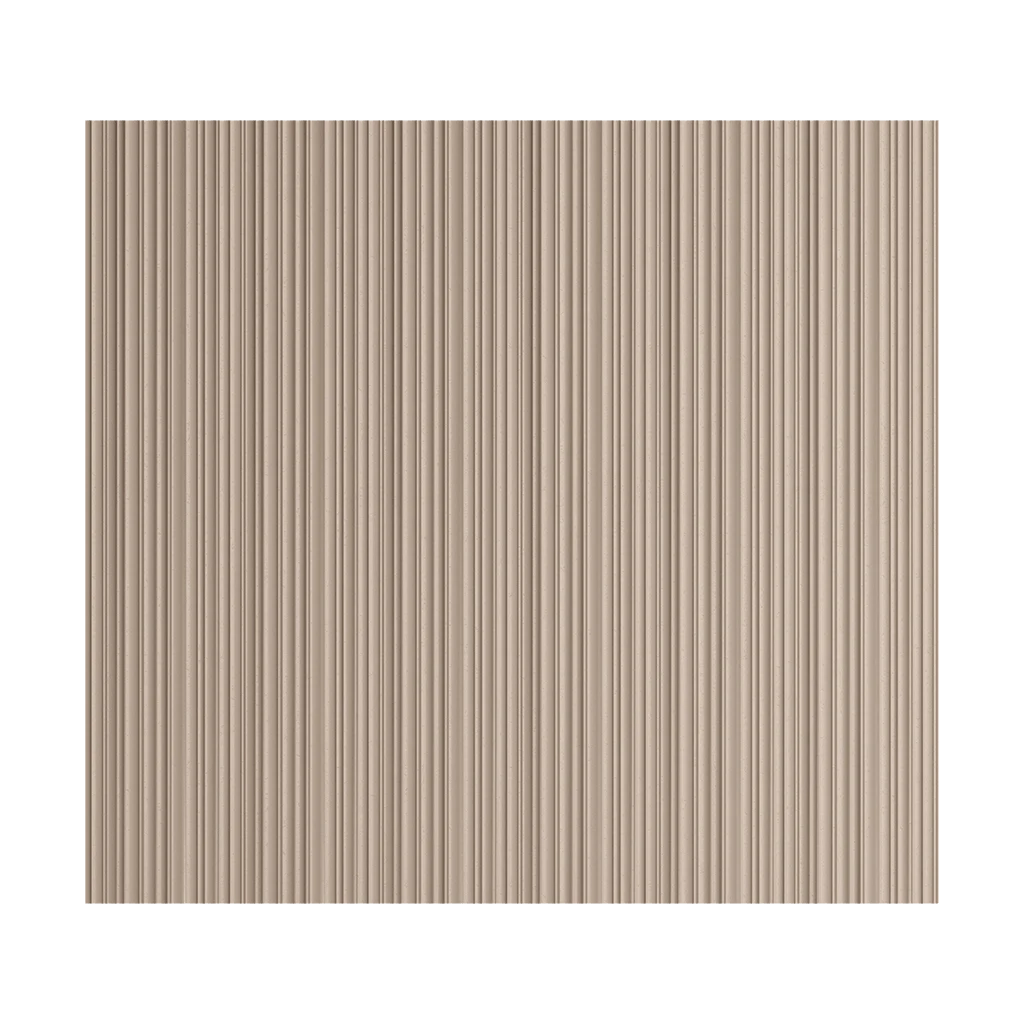
MDF is chosen when the priority is color and geometry. MDF slat panels for interior finishing are made from fine-dispersed pressed mass: the surface is perfectly smooth, uniform, without a textured pattern. Paint applies evenly, precisely in tone—no base texture affecting the finish.
If monochrome is needed—slats the same color as the wall—MDF is indispensable. This is a professional designer technique: relief is present, color doesn't change, the wall 'breathes' with form. Such a result is impossible with wood: the texture will always introduce tonal variation.
MDF works in minimalism, neoclassicism, modern classic, contemporary. Where the wall should be a pure architectural statement without the natural expressiveness of the material—paintable MDF is the only correct choice. In combination withMDF moldings and cornicesa unified finishing system creates an absolutely cohesive, complete interior.
Another advantage of MDF is stability. Under normal operating conditions, the material does not warp, crack, or lose the precise geometry of the profile. For commercial interiors with climate control, this is especially important.
When solid oak is the only correct answer
Wooden slat panels for interior finishing made from solid oak are a natural material with its own voice. Each slat carries a unique grain pattern, density variations, tactile roughness. It is precisely this that creates the feeling of a handcrafted, expensive surface, which no synthetic material can imitate.
Oak is chosen when natural expressiveness is needed. In Scandinavian interiors, Japandi, loft, eco-style—everywhere where natural material is part of the concept, not just a finish. Open pores under oil coating—a living surface you want to touch. Dense varnish—elegance. Brushed texture—brutal expressiveness.
Solid oak slat panelsThey are renewable: sanding, changing oil tone, new varnish coating—and the wall gets a different character without dismantling. No other finishing material has this flexibility. Oak lives in the interior for decades, acquiring a noble patinated shade over time.
Oak works organically in tandem withwooden molding— baseboards and cornices made from the same wood species. A unified material environment where the slatted wall, baseboard, and door framing are all crafted from the same oak — this is precisely the result that distinguishes an interior with architectural thought from one assembled on the principle of 'liked individually'.
How the interior changes depending on the profile, spacing, and direction of the slats
This section is one of the most practically valuable. Because this is where most mistakes happen. People choose the material correctly, but the profile and spacing — by guesswork. The result is not what was expected.
The profile of the slat determines the character of light and shadow. A rectangular profile — clear edges, sharp shadows, strict architectural graphics. A semicircular profile — light flows smoothly over the convexity, shadows are soft, the surface is plastic and delicate. Trapezoidal — an intermediate option: it has both clarity and a soft transition. The choice of profile determines the 'temperature' of the interior: rectangle — stricter, semicircle — warmer.
The width of the slat sets the scale of the surface. Thin slats — an airy, graphic pattern. Wide slats — a solid, calm rhythm. In small rooms, wide spacing of slats overloads the wall and visually shrinks the room. A thin profile with small spacing is the right choice for limited space.
The spacing between slats is the interval that determines the density of the rhythm. Tight spacing (gap smaller than the slat width) — rich texture, a feeling of a rich, dense surface. Wide spacing (gap wider than the slat) — lightness, air, a delicate rhythm. Neither option is inherently 'correct' — each works for its own task.
The installation direction is perhaps the most significant parameter of all. Vertical installation creates upward movement: the eye follows the lines from bottom to top, the ceiling is visually raised. Horizontal installation — movement to the sides: the wall expands, the room feels wider. Diagonal installation — dynamics and tension: the diagonal introduces movement and energy but requires careful work with corners and joints.
Mixing installation directions within one room is a risky technique. Vertical slats on one wall and horizontal on another create a visual conflict. Exception: an intentional change of rhythm as an architectural technique — but this is a task for an experienced designer, not for DIY.
Where is it best to use slatted panels inside a room
Zone breakdown — not as a boring enumeration, but through understanding the interior task of each space.
In the living room, the main task of the slatted wall is to create an architectural center. It is here that the accent surface behind the sofa or TV area forms the basis of the entire spatial composition. Without it, an open-plan living room falls apart into separate zones. With it — it comes together. Full-height vertical oak slats, dark or in a neutral oil tone, with integrated top lighting — this is the level that most above-average projects strive for.
In the bedroom, slatted panels for interior finishing work to create atmosphere. The wall behind the headboard is the focal point of the entire room. Panels made of half-round battens are especially appropriate here: their soft chiaroscuro creates a delicate, enveloping background. Thin oak slats with a neutral oil finish combined with hidden LED strips along the top perimeter give that very 'hotel effect' that people are willing to pay extra for.
In the hallway, slatted paneling solves three problems at once. The first is the first impression: a narrow corridor with vertical slats visually elongates and gains character. The second is a protective function: the lower part of the wall up to 120 cm high with slatted paneling is significantly more resistant to mechanical impact than any paint. The third is integration with the mirror and lighting: the slatted surface as a background behind the mirror creates depth, which multiplies the space.
In the corridor, the principle of visual length correction works. A too long corridor with vertical slats on the end wall 'stops' the perspective and makes the space more proportionate. An accent on the end of the corridor is one of the basic designer techniques for working with elongated spaces.
In the study, slatted panels create a work context: the structured rhythm of lines psychologically organizes the space and sets the mood for concentration. The wall behind the desk is the ideal place for an accent slatted surface. An added bonus: the texture diffuses sound, reducing echo in the room, which is critical for working with video calls.
In the meeting room, slatted panels for the office work on both aesthetics and acoustics. A corporate interior with a slatted wall conveys status and thoughtfulness. Simultaneously — the acoustic function reduces reverberation in a room with hard reflective surfaces. This is not decoration for decoration's sake, but a functional solution with measurable results.
In restaurants and showrooms, slatted panels are an established professional standard. Slatted panels for restaurants work on atmosphere: they set the character of the establishment, manage the acoustics of a large hall, and zone the space without solid partitions. Slatted panels for showrooms create a high-quality 'expensive' background that favorably showcases any product — from furniture to clothing.
Flexible and rigid solutions: how to choose based on the object's geometry
Structural choice is not a technical nuance, but a starting point. An incorrect structural choice leads to even the highest quality material yielding unsatisfactory results.
Rigid slatted panels on MDF backing are the basic and most common solution for interior finishing. The slats are fixed to a rigid MDF base with precise factory spacing. The module geometry is stable and unchanging. Rigid panels are ideal for flat, straight surfaces: main walls, accent fragments, TV zones, corridors, ceilings, furniture fronts. Installation is fast and precise—factory geometry eliminates the need for manual alignment of each element.
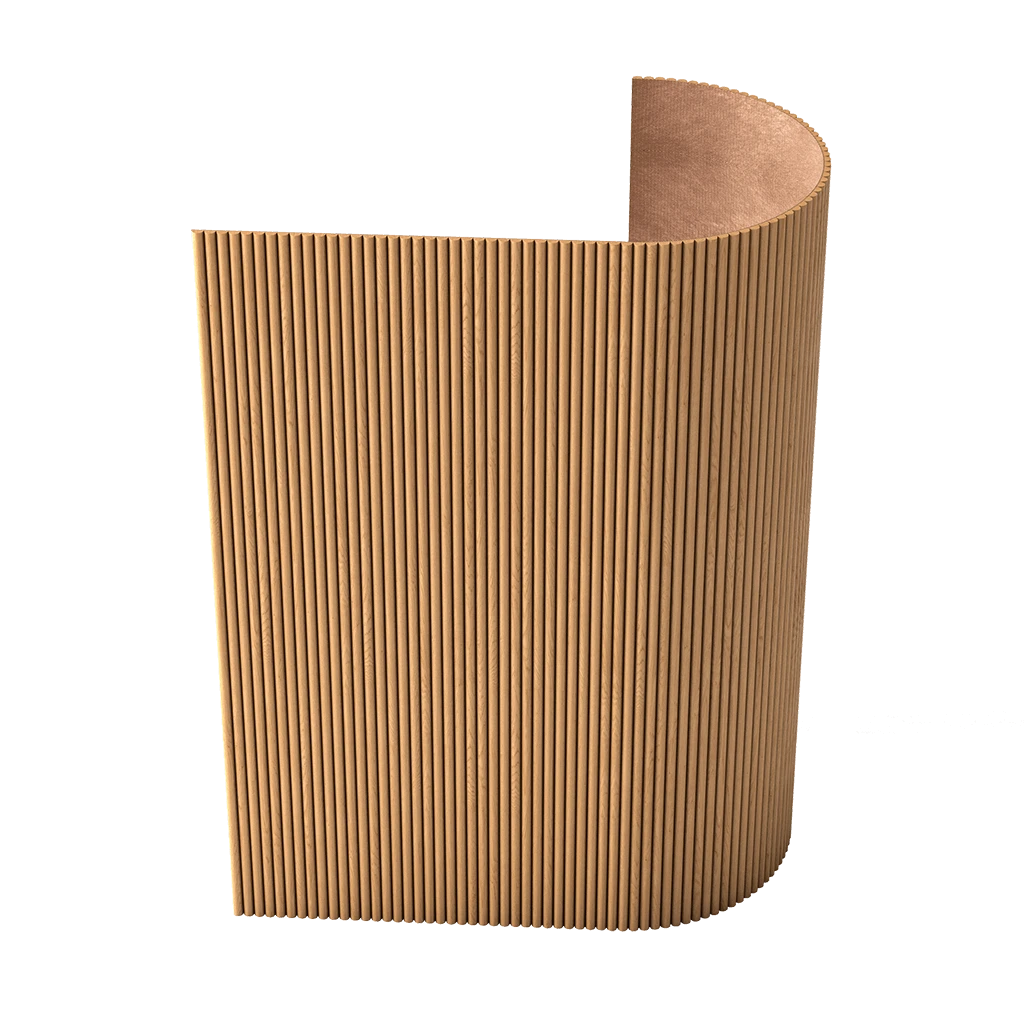
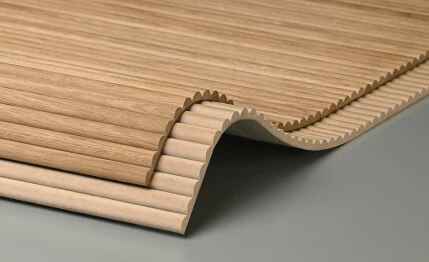
However, rigidity has its limitation: a straight construction does not adapt to curved surfaces. Attempting to mount a rigid panel on a column or arch leads to cracks, deformation, and loss of pattern. For such surfaces, there is only one correct choice—Flexible slatted panelson a fabric base.
Flexible construction: slats are fixed to a fabric backing with gaps sufficient for bending. The panel smoothly and continuously wraps around a column, arch, or radius corner—the slat pattern does not break or deform. The result looks like expensive custom fabrication, though in fact, it's a standard product applied intelligently. For non-standard architecture, flexible slatted panels for interior finishing open up possibilities unattainable with rigid construction.
Panels made of half-round battens complement both constructions in terms of profile: their rounded cross-section creates a fundamentally different light pattern—soft, delicate, warm. Combined with a rigid or flexible backing, this is not a question of construction but of visual solution: how strict the surface rhythm should be.
How Not to Ruin an Interior with Slatted Panels
This section is written not to intimidate, but for honesty. Because mistakes with slatted panels in interior finishing are real—and, frustratingly, are often made with good intentions.
Slats everywhere is the most common mistake. An accent works only through contrast. If slatted panels are on all walls, the ceiling, and even on furniture—they cease to be an accent and turn into a background. Moreover, an overloaded, aggressive background. One well-chosen wall with slatted finishing is always more convincing than total application.
Ignoring side lighting. A slatted surface without side or directional lighting is half its potential. In a room with only central overhead lighting, the relief is practically unreadable. If you choose slatted panels for an accent wall—simultaneously plan for track or recessed lights with side directionality.
Texture conflict. A slatted wall of oak + brickwork + wooden furniture + wooden floor is not 'lots of warmth and naturalness,' it's visual chaos. Solid wood slatted panels work in an environment where they have space: neutral walls, a solid-color floor, laconic furniture.
Wrong scale in a small room. Large slats with wide spacing in a 12–14 sq.m. room overload the space. For small rooms — thin profile, small spacing, light tone.
Installation without systematic logic. A panel cut off in the middle of a wall without finishing, without a top molding, without a baseboard at the bottom — looks like an unfinished renovation. A slatted surface requires clear framing: top finishing, bottom baseboard, side connections to adjacent planes.
Skipping samples. Panels look one way on screen, another in the actual room. The lighting environment of each apartment is unique. Always request samples and view them in the actual light of your specific space — both in natural daylight and artificial evening light.
How to integrate slatted panels into a cohesive interior finish
This is the final and most important block. Everything discussed above comes together here.
A cohesive interior finish is not 'everything nicely matched.' It is a system where each element has a connection to neighboring ones: material, color, rhythmic. A slatted panel must have such connections with all elements of the interior shell of the room.
Baseboard and cornice are mandatory finishing elements. Their absence or mismatch with the panel style disrupts cohesion. A baseboard made of the same oak as the slats, or a neutral painted MDF baseboard in a unified tone with the wall — both options work. A baseboard of a different wood species, different tone, and different scale — conflict.
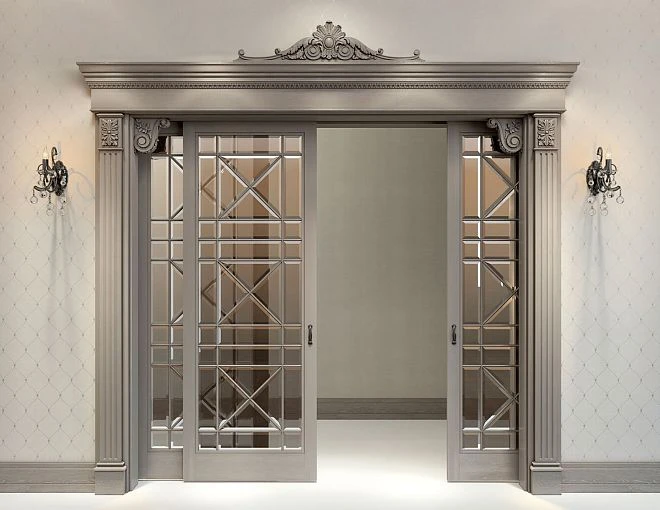
Door and window framing is another important junction. If the doors in the room are concealed-mounted — the slatted panel can run through them continuously, creating a monolithic plane effect. If doors have casings — the casings should echo the material or tone of the slatted panels.
Furniture and facades — the final level of the system. Slatted wall panels combined with smooth matte furniture facades — a classic texture contrast that works unfailingly. A slatted wall plus slatted cabinet facades — the rhythm continues, the space reads as a single volume.
Light as the final element of the system. Slatted interior wall finish fully reveals itself only with properly organized lighting. Track lights directed at the slatted plane — a basic solution. Hidden LED strips in the gaps — a more delicate technique. A combination of both — maximum expressiveness in any lighting scenario.
Slatted panels for interior finishing: on pricing and practical choice
A conversation about slatted panels is impossible without a pragmatic block. Because beautiful solutions must be implementable.
The cost of interior wall finishing with slatted panels consists of several components: panel material, cost of installation work, accompanying elements — skirting boards, moldings, frame, fasteners, lighting. With self-installation on a flat wall without complex geometry, labor costs are reduced to zero — and this is realistic with basic skills and precise marking. With professional installation including frame, utilities, and lighting, labor can constitute a significant portion of the budget.
Practical durability: MDF panels under normal use in residential premises last 15–20 years without the need for renewal. Oak panels — for decades with periodic refreshment of the oil coating every 1–2 years. Both materials are long-term investments in the interior, not consumables.
Where to buy slatted panels for interior wall finishing
Choosing a supplier is no less important a decision than choosing the material. Slatted panels are a product where geometric precision is of fundamental importance. A 1–2 mm error in the slat spacing, unnoticeable on a sample, on a wall area of 6–8 sq.m. turns into a 'shaky' uneven pattern. The quality of the substrate determines how long the panel will hold its shape. The cleanliness of the cut on the ends affects how the joints look in the final result.
slatted panels for wallsIn the STAVROS assortment — these are MDF for painting with a perfectly smooth uniform surface, solid oak with natural texture and the possibility of any finishing treatment, rigid constructions on an MDF substrate for flat surfaces and flexible panels on a fabric base for radius forms and non-standard architecture. The assortment covers all formats — from an accent wall in an apartment to comprehensive design of a commercial object.
FAQ: Answers to popular questions
Do slatted panels need to be removed during renovation?
No. MDF panels are repainted right in place after installation — it is enough to prepare the surface and apply a new layer of paint. Oak panels are sanded and refreshed with oil without dismantling.
Can slatted panels be installed in the bathroom?
For areas with direct exposure to moisture — no. For dry zones in the bathroom (wall opposite the shower, vanity area) — when choosing MDF with moisture-resistant impregnation and proper ventilation — possible. Oak is not recommended for wet zones.
What adhesive should be used for installing slatted panels?
Mounting adhesive on a polyurethane or acrylate base. Adhesive such as 'liquid nails' — depending on the composition and substrate. The adhesive is applied in a zigzag pattern on the panel backing with spot application around the perimeter for a secure bond.
Slatted panels and underfloor heating — are they compatible?
Not directly related: underfloor heating is in the floor covering, slatted panels are on the walls. When installing on a frame with a gap from the floor — there is no conflict.
Can slatted panels be used on the ceiling?
Yes. Horizontal slats on the ceiling are one of the most effective techniques. They hide utilities, create an additional decorative layer, and allow for integrated lighting. Installation is professional only — with proper calculation of the structure's weight and a reliable frame.
How often should oak panels be maintained?
Painted MDF — only wet cleaning. Oiled oak — renewal of the oil layer every 1–2 years. Varnished oak — standard wet cleaning, without abrasives.
Are slatted panels suitable for low ceilings?
Yes, vertical slats are one of the best techniques for working with low ceilings. They literally lift the space visually. A thin profile and small spacing enhance the effect.
How to choose the height of slatted panels: full wall or partial?
For maximum visual impact — full height. Partial height (up to 120–150 cm) is a more classic technique, reminiscent of traditional interior wooden wall panels. Both options work, the choice is determined by the style and height of the room.
About the company STAVROS
Concluding this article, it is impossible to avoid the question of the manufacturer — because behind every good product there is a production culture, which either exists or it doesn't.
STAVROS is a Russian manufacturer of solid wood and MDF products for interior finishing. The company specializes in slatted panels, moldings, trims, and decorative elements, forming the assortment as a unified system of materials for interior finishing — not as a set of disparate products.
In STAVROS production, precision is not a slogan, but a working standard. Profile geometry, uniformity of spacing, quality of MDF substrate, cleanliness of edge processing — all this is checked at every stage. This is exactly what distinguishes STAVROS panels from mass-market products, where inaccuracies are visible already at the stage of laying the first plane.
The STAVROS assortment covers the full range of solutions for interior wall finishing: MDF for painting in any color, solid oak with the possibility of any finish treatment, rigid and flexible constructions, panels made of semi-round battens, as well as accompanying wooden moldings to create a unified finishing system. This is not just a manufacturer of slatted panels — it is a partner in creating interior space architecture.