








































Article Contents:
- Which materials can really withstand the bathroom
- Enemies of bathroom finishing
- What works
- Where slatted panels are appropriate in the bathroom
- Zoning by humidity level
- The wall opposite the shower is the ideal entry point
- Niche with a slatted screen
- Slatted panels on the bathroom ceiling
- Polyurethane Decor in Wet Areas: What's Acceptable
- Why Polyurethane Works in Bathrooms
- Where Exactly to Use Polyurethane Decor in the Bathroom
- Installation, Sealing, and Maintenance: The Technology That Solves Everything
- Surface Preparation
- Sealing is a Mandatory Step
- Protective Coating for Wood in the Bathroom
- Care for polyurethane decor
- What Looks Expensive and What Looks Like a Fail
- Solutions That Create a Sense of Class
- What Looks Like a Fail
- How Not to Confuse Interior Material with Decorative Props
- Three Criteria of a Genuine Material
- How to Distinguish a Bathroom Slatted Panel from a Regular Interior Panel
- Design Scenarios: How to Combine Slats and Polyurethane in the Bathroom
- First Scenario: Scandinavian Bathroom
- Second Scenario: Modern Classic
- Third Scenario: Loft with a Natural Accent
- Fourth Scenario: Bathroom with an Open Shelf
- Installation of Slatted Panels in the Bathroom: Step-by-Step Logic
- Sequence of work
- Ventilation as a Mandatory Condition
- Technical Specifications: What You Need to Know Before Buying
- Common mistakes when decorating a bathroom with slatted panels and polyurethane
- About the Company STAVROS
- FAQ: Answers to Popular Questions

The bathroom is a room that imposes strict requirements on finishing: constant humidity, temperature fluctuations, contact with water and steam. At the same time, it is here that one increasingly wants to see an interior at the level of a spa hotel, not just practical tile cladding. The question is acute: is it possible to useslatted panels for the bathroomandPolyurethane Decorin a humid environment — or is this a beautiful illusion that will fall apart in six months? An answer exists. But it requires an honest and detailed conversation.


Which materials really withstand the bathroom
Before talking about specific solutions, we need to understand the fundamental question: what exactly destroys finishing materials in a humid room. The bathroom is not just a 'wet place'. It is an environment with constant relative air humidity of 70–95%, periodic direct contact with water, steam attacks when taking a hot shower or bath, and daily temperature fluctuations from +18 to +35°C.




Enemies of bathroom finishing
Three main destructive factors:
-
Moisture in the air. It penetrates the pores of the material, accumulates, deforms, and provokes the formation of mold and fungus.
-
Direct contact with water. Splashes near the sink, shower cabin, bathtub — this is no longer humid air, but regular local wetting of surfaces.
-
Thermal expansion. Materials expand when heated and contract when cooled. If this cycle repeats daily, it destroys adhesive seams, causes substrates to swell, and deforms improperly protected coverings.
Based on these factors, it becomes clear: not every material that looks beautiful in a dry room is capable of performing in a bathroom. Standard MDF — no. Untreated solid wood without special protection — no. Gypsum decor — absolutely not. So what then?
Our factory also produces:

What works
The first and main rule for bathroom finishing: the material must either not absorb moisture in principle, or be so reliably protected that moisture simply cannot access the sensitive structure.
In this contextPolyurethane Itemsoccupy a special place. Polyurethane as a chemical polymer does not absorb water — its structure is closed, with no pores. Moldings, cornices, and decorative plasterwork made of polyurethane are resistant to moisture, do not deform under temperature fluctuations, and do not lose shape under steam exposure. This is not an advertising claim, but a physical property of the material.
For slatted panels, the situation is more complex, but also solvable. Standard panels made of MDF and untreated solid oak cannot be used in the bathroom — that's a straightforward fact. However, there are two viable scenarios: moisture-resistant HMR-MDF with proper protective treatment and oak with an appropriate moisture-resistant varnish coating. When technology is followed and proper zoning is applied — these solutions work for years without losing their appearance.
Get Consultation
Where slatted panels are appropriate in the bathroom
The bathroom is not uniform in terms of moisture loads. This is the most important principle that allows for the intelligent use ofslatted panels in the bathroomwhere it is justified, and avoid them where the risk is too high.
Zoning by humidity level
The bathroom is divided into three functional zones:
The wet zone is directly the shower cabin, the area around the bathtub, the area around the sink in the zone of constant splashes. Here, direct contact with water is inevitable. For slatted panels, even in moisture-resistant versions, this is a risk zone. If a slatted structure is used here, it is only in versions made of materials with absolute waterproofing and with perfect sealing of all joints.
The semi-humid zone is the walls adjacent to the wet zone but not experiencing direct splashes. The space above the bathtub at a distance of more than 50 cm, the side walls in the shower cabin area behind the glass. Here, the constant air humidity is high, but there is no direct contact with water. This is the optimal place for decorative slatted wall panels in the bathroom with proper protective treatment.
The dry zone is the walls near the door, the opposite wall from the shower, the area near the vanity. The humidity here is no higher than in the hallway with the door open. Here you can applyslatted wall panels for interior finishingpractically any moisture-resistant version with minimal restrictions.
The wall opposite the shower is the ideal entry point
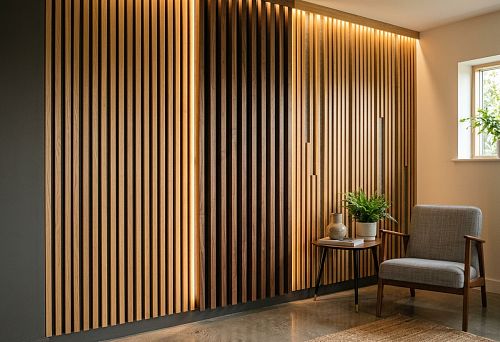
The strongest design solution for a bathroom with slatted panels is an accent wall located opposite the shower area. It is this wall that you see when you take a shower. It is this wall that forms the visual focus of the space. Here, vertical slats made of moisture-resistant MDF or solid oak with a protective coating create an effect that cannot be reproduced with either tiles or decorative plaster.
Why does this work aesthetically? The linear rhythm of the slats in a vertical orientation visually stretches the space upward—in a standard bathroom with a 2.5 m ceiling, this is fundamentally important. The play of light and shadow with directed lighting turns a flat wall into a sculptural object. Natural or natural-imitating material against the background of cold tiles creates that very contrast of warmth and functionality that makes the bathroom a space for relaxation, not just a restroom.
Niche with slatted screen
Another powerful technique is a slatted screen for a sink niche or open shelving. The slats serve as a decorative grille that visually organizes open storage, maintaining an airy feel while creating a clear structure. In the dry area of a bathroom, this solution is completely organic and technically safe.
Slatted panels on the bathroom ceiling
The bathroom ceiling is traditionally the most overlooked surface. Meanwhile,Batten panels for ceilingscreate a fundamentally different perception of space. A wooden slatted ceiling in the bathroom evokes the image of a Scandinavian sauna or Japanese bathhouse, where natural materials and water exist in harmony. With proper treatment of the wood with a water-repellent compound and proper ventilation, this solution is functional, durable, and exceptionally beautiful.
Key condition: effective exhaust ventilation that prevents moist steam from stagnating under the slatted ceiling. Without this condition, no coating will help—neither on wood nor on MDF.
Polyurethane decor in the wet zone: what is permissible
Now, aboutpolyurethane decor for interiorin the context of a bathroom. Here, polyurethane has a fundamental competitive advantage over other decorative materials.
Why polyurethane works in the bathroom
Classical plaster stucco in the bathroom is a common mistake. Plaster deteriorates under constant exposure to humid air: it loses strength, cracks, crumbles, and becomes a breeding ground for mold. Plaster moldings on the bathroom ceiling look visually beautiful at first, but become a disaster after two or three years.
Polyurethane is a fundamentally different material. It has no pores, does not absorb water, does not swell, and does not crack under temperature fluctuations.Polyurethane moldings and cornicesdemonstrate stable geometry under high humidity conditions for many years. This makes polyurethane stucco decor not just acceptable, but a recommended material for bathroom design.
Where specifically to use polyurethane decor in the bathroom
Ceiling moldings around the perimeter. The transition from wall to ceiling in the bathroom using polyurethane molding is both aesthetic and functional. The molding conceals uneven joints, creates a finished architectural outline, and with lighting, forms a soft glow around the ceiling perimeter. In the bathroom, this creates an atmosphere that is hard to describe in words but easy to feel.
Decorative cornices above the mirror. The mirror area in the bathroom is the most 'visible' part of the space. Framing the mirror with polyurethane moldings or a cornice turns a utilitarian object into an architectural element. This works especially well in bathrooms styled as classic, art deco, or modern neoclassical.
Stucco overlays as accents. Small decorativePolyurethane Items— rosettes, corner elements, flat ornaments — when placed correctly, transform the bathroom from a functional room into a space with character. In the dry area of the bathroom, any polyurethane decorative elements can be used without any restrictions.
Polyurethane baseboards. The baseboard is the junction area between the floor and wall, which in the bathroom experiences increased moisture load. Unlike wooden baseboards, polyurethane baseboards do not swell, do not develop mold in the joints, and maintain their geometry. When the joints are sealed with waterproof silicone, this is a reliable solution even in semi-wet areas.
Installation, Sealing, and Maintenance: The Technology That Solves Everything
Even the highest quality material in a bathroom will not last long without proper installation and sealing. It is the installation technology that is the main factor determining the success or failure of any decorative solution in a wet room.
Surface preparation
Before installing any panels or decorative elements in the bathroom, the substrate must be perfectly prepared. No traces of old peeling paint, no untreated cracks, no untreated plaster without waterproofing impregnation. Especially in the semi-wet zone: the wall must be primed with antiseptic and waterproofing primer — this is the first barrier against moisture.
For slatted panels in the bathroom, frame installation with an air gap between the wall and the panel backing is recommended. The gap provides ventilation for the back surface: even if condensation penetrates behind the panel, it has the opportunity to evaporate rather than accumulate. A metal profile frame is preferable to a wooden one in the bathroom — metal is not afraid of moisture.
Sealing is a mandatory step
All joints between slatted panels, with tiles, with moldings, and with doorways must be sealed with waterproof silicone sealant. This is not an optional step — it is a mandatory condition for durability. Silicone seals microscopic gaps through which moisture penetrates to the sensitive substrate.
The same rule applies to polyurethane decor. The joint between the molding and the ceiling/wall is sealed with sanitary silicone, which retains elasticity during thermal deformations. Ordinary acrylic sealant is not suitable for bathrooms: it cracks under constant thermal expansion.
Protective coating for wood in the bathroom
If solid oak slatted panels are chosen for the dry or semi-wet zone of the bathroom, the correct coating is critical. Several rules:
-
Waterproof polyurethane-based varnish — at least two coats, including the ends of the slats and the back surface of the backing.
-
Bathroom oil is an alternative to varnish that preserves the tactile feel of natural wood. The oil penetrates deep into the wood structure and creates a hydrophobic barrier from within.
-
Refinishing is required every 2–3 years, depending on the intensity of use and ventilation quality.
With proper care, oakWooden slat panelsin the bathroom lasts for decades, becoming more beautiful each year—like wooden floors in old Finnish saunas.
Care for polyurethane decor
Polyurethane decor in the bathroom requires almost no special maintenance. Damp cleaning with a soft cloth and occasional use of neutral, non-abrasive detergents is all that's needed. No special impregnations, no refinishing. This is one of the practical advantages of polyurethane over plaster and wood in bathroom conditions.
The only thing to watch for is the condition of the silicone seams. After 5–7 years, sanitary silicone may lose elasticity and crack. Replacing it is a simple operation that doesn't require removing the decor and takes a few hours.
What Looks Expensive and What Looks Like a Fail
The bathroom is a space where the difference between 'expensive' and 'budget' is felt especially sharply. Yet, expensive isn't always about price. It's about the right choices and the right combination of materials.
Choices That Create a Sense of Class
Slatted accent wall + contrasting tile. Combining vertical wooden slats (or moisture-resistant MDF slats) on one wall with classic or large-format tile on the other surfaces is a look that never fails. The contrast between warm natural material and cold mineral creates that very layering which distinguishes a high-end interior from a standard renovation.
Ceiling molding made of polyurethane with built-in lighting. A polyurethane cornice along the perimeter of the ceiling with an LED strip inside is a technically simple solution that visually transforms a bathroom into a luxurious space. The soft glow along the ceiling contour works as an architectural technique used by expensive designers in business-class projects.
Mirror in a polyurethane frame. A frameless mirror or one in a standard thin frame is a utilitarian object. A mirror framed with polyurethane molding is an accent, a focal point, the central element of a wall. The choice of molding profile defines the style: a strict rectangular one for neoclassicism and minimalism, a figured one for classicism and art deco.
Slatted screen under the sink or bathtub. The open space under a sink or acrylic bathtub often looks unfinished. A slatted screen made of moisture-resistant material serves both a function (hiding pipes) and an aesthetic purpose (creating a finished look for the furniture group). Vertical slats on the screen, matching the rest of the bathroom finish, unite the space into a single architectural system.
What looks like a failure
Cheap PVC panels imitating wood. This is one of the most common 'killers' of a bathroom interior. PVC panels with photo printing 'like oak' or 'like pine' are an imitation that cannot be taken seriously. After a year or two, the plastic fades, deforms at the joints, and yellows near heat sources. No polyurethane decor, no competent lighting solutions will save a bathroom whose walls are covered with low-quality PVC.
Mixing incompatible styles. Baroque-style polyurethane stucco decor plus minimalist plumbing and modern tiles is an eclecticism that reads as random and incoherent. Decorative elements should support a unified stylistic language for the space.
Slatted panels in the wet area without proper protection. Wooden slats in a shower without waterproofing look beautiful only until the first complete soaking. After that: swelling, deformation, darkening, mold. This is not a question of material quality—it's a question of material mismatch with the application conditions.
Violation of proportions. Slatted panels with very wide spacing between slats in a small bathroom of 4–5 sq.m. overload the space and feel oppressive. For small bathrooms: thin slats with moderate gaps, vertical orientation. This creates a sense of lightness and height, not heavy architectural pressure.
How not to confuse interior material with decorative props
This is perhaps the most important question for those choosing bathroom finishes for the first time or after an unsuccessful experience. The market is saturated with imitations, and the bathroom is the space where the difference between a real material and a fake becomes obvious the fastest.
Three Criteria for Genuine Material
First criterion: composition, not appearance. Genuine polyurethane is a polymer with a closed-cell structure, no pores, no water absorption. Pseudo-polyurethane, found in the budget segment, is polystyrene foam or foamed PVC with a thin coating. The difference is almost imperceptible to the touch. But in bathroom conditions, the difference becomes apparent after a year: genuine polyurethane retains its shape, pseudo-materials deform.
How to check? Ask the manufacturer for technical specifications: material density, production method (injection molding vs. foaming), water absorption according to GOST. An honest manufacturer provides this data without evasive answers.
Second criterion: geometry and precision. A qualityPolyurethane decor for interiorshas precise dimensions, strict angles, clear relief without dents or casting artifacts. Counterfeit products often have inaccurate geometry, blurred patterns, uneven edges. In the bathroom, this becomes especially noticeable: the silicone sealant on an uneven molding edge doesn't hold, allowing constant moisture penetration.
Third criterion: coating. Quality polyurethane decor already has a primer layer or base coating. This is not just cosmetics—it's material protection during transportation and storage, and a base for the final paint. Cheap products are often sold without primer and with a surface that poorly holds paint.
How to distinguish a bathroom slatted panel from a regular interior one
If a seller offers you 'bathroom slatted panels' without specifying the exact material of the substrate and slats, what protective treatment is applied, and what humidity level the panel withstands—this is a warning sign. Genuine panels for wet rooms have clear technical specifications.
Moisture-resistant HMR-MDF differs from standard: it has a characteristic greenish tint in the cross-section, which is a marker of moisture-resistant impregnation. If you see standard brown MDF in the cross-section—it's not a moisture-resistant material, and using it in the bathroom is a mistake.
For solid oak: request a certificate or technical description of the protective coating. Varnish for bathroom premises has high Shore hardness and a specific composition ensuring water resistance. Regular interior varnish will lose adhesion in a humid environment within 1–2 years.
Design Scenarios: How to Combine Slats and Polyurethane in the Bathroom
Let's move from theory to specific looks. Several bathroom design scenarios that work in practice.
Scenario One: Scandinavian Bathroom
White or light gray walls, large-format light tiles, brass plumbing. The accent wall behind the bathtub features vertical slatted panels made of solid oak in a light 'Scandinavian gray' or 'whitewashed oak' finish. A ceiling molding made of polyurethane with a simple, concise profile. No excess—only clean lines, natural materials, and proper lighting.
This scenario works for bathrooms with an area of 5 sq.m. or more. Vertical slats visually elongate the space upward, and the oak adds warmth to the otherwise cold environment of tiles and chrome plumbing.
Scenario Two: Modern Classic
Marble or marble-look tiles, a wall-hung vanity, integrated lighting. Above the mirror—a classic polyurethane cornice with a simple relief. Around the ceiling perimeter—a molding with an LED strip. On the end wall—slatted panels made of moisture-resistant MDF in a powder pink or warm beige tone. This is a space that looks like a five-star hotel but is assembled from accessible solutions.
Scenario Three: Loft with a Natural Accent
Gray concrete or 'cement-look' tiles, black plumbing, rough metal elements. On one wall—vertical oak slats in a dark 'wenge' or 'tobacco' finish. This is the only warm element in the cold, harsh space—and it works as an anchor, preventing the interior from becoming too austere. Polyurethane decor is used minimally here: a simple rectangular baseboard and a hidden corner molding.
Scenario Four: Bathroom with an Open Shelf
A small bathroom, a limited budget, a desire for maximum effect. Instead of a full slatted panel—a slatted screen-facade under the sink and a slatted shelf on the wall.Wall finishing with slatted panelsHere it is limited to one element, but that is enough: there is a focal point, there is character, the material lives in the correct zone without risks. A polyurethane molding on the mirror completes the look.
Installation of slatted panels in the bathroom: step-by-step logic
Understanding the installation process helps avoid costly mistakes even at the planning stage.How to install slatted panelsIn the bathroom—this is not just a mechanical question, it is a question of the strategy of the entire renovation.
Work sequence
-
Wall waterproofing. Wet and semi-wet zones are treated with coating waterproofing or waterproofing impregnation. This is done before installing any finishing materials.
-
Frame installation. A metal profile is mounted on the wall with a 30–50 mm offset from the base. The level is strictly checked—the final plane of the panels is determined by the accuracy of the frame.
-
Vapor barrier installation. A vapor barrier film is placed in the gap between the frame and the wall if necessary.
-
Panel installation. Slats are fastened to the guides. In the bathroom, hidden fasteners are recommended—stainless steel or galvanized metal clips (not ordinary steel, which rusts in a humid environment).
-
Sealing all joints. Sanitary silicone sealant is applied to all junctions: panel-tile, panel-ceiling, panel-floor, corner joints.
-
Finishing. If necessary, apply a final coat of water-resistant varnish or oil to the battens on-site after installation.
Ventilation as a mandatory requirement
None of the above works without proper ventilation. An exhaust fan in the bathroom is not a luxury but a technical requirement for the durability of any finishing materials, including ceramic tiles. For bathrooms with batten panels and wooden decor, fans with a timer or humidity sensor are recommended: they continue to operate for another 15–20 minutes after a person leaves the bathroom, removing residual steam.
Technical specifications: what you need to know before buying
Clear technical parameters are the foundation of an informed choice. Not 'will this work for the bathroom,' but 'here are the specific characteristics, here are the specific conditions of use.'
| Parameter | Standard MDF | Moisture-resistant HMR-MDF | Solid oak + varnish | Polyurethane |
|---|---|---|---|---|
| Water absorption | High | Low (≤8%) | Low when coated | Zero |
| Permissible bathroom zone | Dry only | Dry and semi-moist | Dry and semi-moist | Any zone |
| Steam resistance | Low | Medium | Medium | High |
| Mold resistance | Low | Medium | Medium (when processed) | High |
| Repairability | Repainting | Repainting | Sanding + relacquering | Repainting |
| Bathroom durability | 1–3 years | 5–10 years | 7–15 years | 15+ years |
This table is not an advertisement or anti-advertisement. It is honest data that helps make the right decision for a specific situation.
Common mistakes when finishing bathrooms with slatted panels and polyurethane
Experience shows: most mistakes are made not due to ignorance of materials, but from skipping one or several key steps. Let's list the most common ones.
First mistake: lack of ventilation. The most frequent and most destructive. Even perfectly installed panels in a room without ventilation will begin to degrade. Condensation accumulating behind the panels leads to rot, mold, and deterioration of the substrate.
Second mistake: using standard MDF in wet areas. This happens when the buyer doesn't clarify material specifications when ordering. Beautiful slats made of standard MDF, installed in a semi-wet bathroom area, swell within a few months.
Third mistake: ignoring sealing. Even moisture-resistant material loses its protective properties without sealing the joints. Water finds any unsealed gap.
Fourth mistake: gypsum decorative molding instead of polyurethane. Gypsum and constant humidity are incompatible. After 2–3 years, gypsum molding in the bathroom begins to crumble, darken, and become covered with mold in hard-to-reach cleaning areas.
Fifth mistake: slatted panels in direct splash zones without additional waterproofing. Even moisture-resistant panels in direct splash zones (by a shower without a glass enclosure, by a bathtub) require additional protection — water-repellent impregnation of the finish coating and thorough sealing of all joints.
About the company STAVROS
Quality interior begins with quality materials. STAVROS is a Russian manufacturer of solid wood and MDF products for interior finishing, as well aspolyurethane decor for interiors. The company's catalog presents a complete range for creating a unified finishing system:slatted panels for bathroomsand any other rooms, moldings and cornices, polyurethane stucco decor, skirting boards and trim products.
STAVROS produces solutions that work in real operating conditions, not just look good in renders. Each product features precise geometric parameters, honest technical characteristics, and real production culture that distinguishes professional material from imitation.
If you are planning to decorate a bathroom with slatted panels and polyurethane decor — start with a consultation from STAVROS specialists. This will help you choose the right material for specific conditions, avoid costly mistakes, and get an interior that will last for years without losing quality and appearance.
FAQ: Answers to popular questions
Can MDF slatted panels be used in a bathroom?
Standard MDF — no. Only moisture-resistant HMR-MDF with protective treatment, and only in dry or semi-wet zones. In the direct splash zone, even moisture-resistant MDF requires special caution and reliable sealing.
Will polyurethane decor withstand constant humidity in the bathroom?
Yes. Polyurethane does not absorb water, does not deform under temperature fluctuations, and is not a breeding ground for mold. It is one of the best decorative materials specifically for wet rooms.
Which bathroom zone is best to decorate with slatted panels?
Optimally — an accent wall opposite the shower area (dry or semi-wet zone), as well as the ceiling if there is effective ventilation. The wet zone (direct splashes) — only with maximally protected materials and perfect sealing.
Is ventilation needed if I use moisture-resistant materials?
Absolutely. No material compensates for the lack of ventilation. Moist steam accumulating in a room without an exhaust fan destroys even the highest quality finish.
How long will polyurethane moldings last in the bathroom?
With proper installation and maintenance (periodic replacement of silicone seams) — 15 years or more without loss of shape and appearance.
How to combine slatted panels and polyurethane decor in the bathroom?
A unified stylistic language is the key rule. Concise moldings with a clear profile combine with rectangular slats in a minimalist interior. Figurative polyurethane decor requires a classical or neoclassical context. Mixing styles without designer logic is not recommended.
Can slatted panels be installed by yourself in the bathroom?
Yes, with basic construction skills. However, in the bathroom, unlike living spaces, installation mistakes are more costly — rework requires complete dismantling. If you are not confident in your own experience, it is better to entrust the installation to specialists.
Which slatted panels are suitable for radius walls in the bathroom?
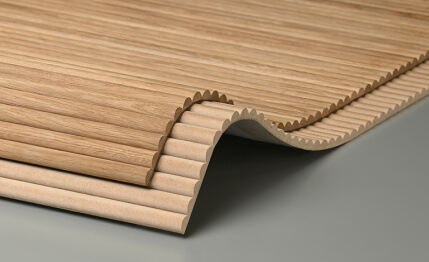
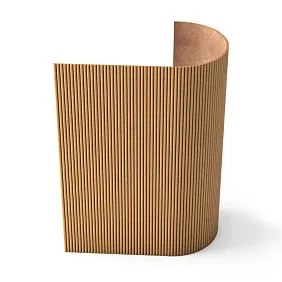
Flexible panels on a fabric base. Only they provide a continuous slat pattern through the bend without deformation and tears.soft slat panels— the right solution for non-standard bathroom geometry.