








































Article Contents:
- What is facade decor and why is it needed
- Which facade decor elements are most commonly used
- Carved window casings and window framing
- Pediments and decorative roof design
- Facade Cornices
- Moldings, linear elements, and decorative strips
- Pilasters, columns, capitals, and the entrance group
- What materials to choose for facade decor
- Wooden facade decor
- Polyurethane facade decor
- Combined Solutions
- How to choose facade decor to match your home style
- Classic facade
- Russian style and wooden architecture
- Modern facade
- Neoclassicism
- How to calculate the number of elements for a facade
- Where to buy facade decor
- Common mistakes when choosing facade decor
- STAVROS facade decor: solutions for an expressive home
- Popular elements: quick navigator by tasks
- Comparison of materials: wood or polyurethane
- FAQ: answers to popular questions about facade decor
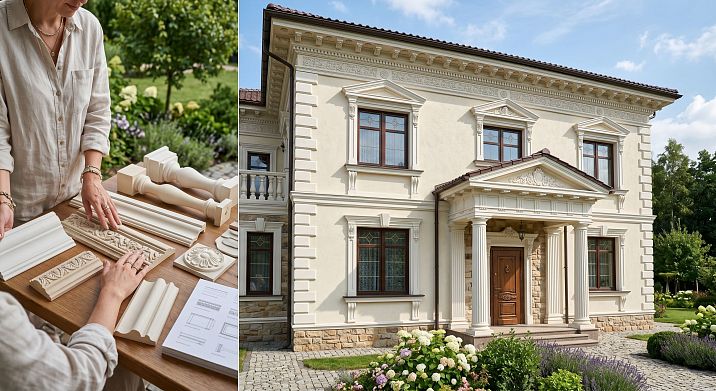
The facade of a house is the first thing people see. Not the interior, not the layout, not the ceiling finishes, but exactly what faces the street: bare walls, unadorned windows without frames, a roof without a cornice line — all of this makes even a well-built house faceless. A goodFacade Decoration changes this radically: it brings the architectural image of the building together into a cohesive whole, makes the facade expressive, and the house recognizable. In the STAVROS catalog, you can buy facade decor made of wood and polyurethane for any style: from Russian wooden architecture to strict neoclassicism. Decorative elements for the facade are selected here for a specific project — by material, shape, purpose, and scale of the building.
Why are so many people now looking for how to design a facade? Because the suburban construction market has grown, and there are more people among those who think not only about how to build a house, but also about how to make it beautiful on the outside. Facade decor for a house is no longer a luxury, but a conscious choice of the owner who understands: architecture works not only from the inside.


What is facade decor and why is it needed
In simple terms, architectural facade decor is a set of decorative elements that are attached to the external walls of a building and shape its visual appearance. Cornices, architraves, moldings, pilasters, rosettes, pediments, overlays, brackets — all of this constitutes a system of house facade decor that, with a competent approach, turns an ordinary rectangle of walls into an architectural statement.
Why is this needed? There are several reasons, and each one is more significant than the last.
Firstly, house facade decor creates completeness. Bare walls are an unfinished story. Even the simplest cornice line above windows or the framing of the entrance group immediately gives the building a polished look. It is the details that show the house has been thought through to the end.
Secondly, facade decor elements emphasize the architecture of the building. Pilasters accentuate vertical axes, cornices break the facade into horizontal tiers, architraves frame windows and form the rhythm of the facade plane. This is not just decoration — it is work with proportions and visual balance.
Thirdly, decorating the facade of a house with wooden or polyurethane elements increases the visual value of the property. Realtors know well: a house with a beautiful facade sells for more and faster. This is not poetry, but market reality.
Fourthly, facade decor helps connect the external appearance with the interior style. If the inside is classic, the outside should have cornices, moldings, stucco. If it is a wooden log or timber house, carved architraves and wooden trim will create an organic look.
And finally, high-quality decorative facade of a private house protects structural joints — places above windows, under the roof, along corners — from direct moisture, wind, and debris. This is aesthetics combined with function.




Which facade decorative elements are used most often
Our factory also produces:


Carved architraves and window framing
Windows are the main "eyes" of the house. How they look on the facade largely determines the character of the entire building. Bare window openings without framing look like holes in the wall. That is whyCarved Mouldingshave been and remain one of the most sought-after elements of facade decor.
STAVROS manufactures wooden architraves for the facade from glued furniture board based on pine — a material that combines the natural beauty of texture with technical stability. CNC milling allows reproducing ornaments of any complexity: from traditional plant motifs to geometric patterns and custom designs. Window decor on the facade using carved architraves is both a tradition and modern precision of execution.
Facade window decor solves several tasks: visually enlarges the window opening, adds shadows and volume to the wall plane, creates a decorative accent. For wooden houses, cottages, timber houses, and bathhouses —wooden facade decorationin the form of architraves with carving is an absolutely organic solution that works both aesthetically and stylistically.
Framing windows with carved architraves can be done as a complete set: side posts, top apron with decor, window sill board. This gives the windows a finished, professional look. This solution looks especially advantageous on houses with wooden clapboard, imitation timber, block house, and any other wooden siding.
Get Consultation
Gables and decorative roof design
A pediment — a triangular completion of a facade under a gable roof — is one of the most prominent features in a house's architecture. An empty pediment looks unfinished, especially in houses with a high roof. A carved pediment, on the other hand, immediately transforms the building into something unique and recognizable.
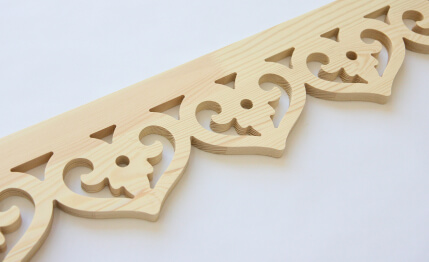
Wooden facade decor for pediments includes sawn carving, overlay elements with ornamentation, wind boards with shaped edges, and soffit boards. All these details visually "complete" the roof, emphasize its silhouette, and give the house character. On the pagefacade decor ideasSTAVROS you can see examples of pediment designs for houses of different styles.
Decorating a house pediment with carved decor is especially relevant for:
-
houses in Russian style and wooden architecture;
-
cottages with gable or hip roofs;
-
bathhouses and guest houses made of logs or timber;
-
country houses where you want to create a cozy rural look.
Carved facade decor in the pediment area is mounted on both wooden and other bases with proper surface preparation. It is important to determine the pattern and scale of the ornament in advance — the decor must be proportionate to the pediment area, otherwise the effect will be the opposite.
Facade cornices
The cornice line is a horizontal decorative strip that runs along the perimeter of a building at the roof level or between floors — it is one of the main tools of architectural facade decoration. It is the cornices that set the scale, create shadow, and visually structure the facade plane.
Polyurethane Crown Moldingfrom STAVROS is an excellent solution for facade work. Polyurethane cornices for the facade are easy to install, require no complex preparation, withstand temperature fluctuations well, are resistant to mechanical damage, and can be painted in any color to match the overall facade design. This is important: a decorative facade cornice should be not only beautiful but also practical.
Polyurethane cornices for the facade are available in a wide range of profiles: from minimalist flat shelves to complex multi-tiered moldings with ornaments. For classical and neoclassical facades, large profile cornices with dentils and egg-and-dart motifs are suitable. For modern houses, laconic straight moldings that merely indicate the roof line are appropriate.
A carved wooden cornice for the facade is a separate story. It fits perfectly into the style of wooden house construction when the entire facade is made of a single material. STAVROS manufactures decorative carved cornices along the roof overhangs to individual sizes — taking into account the span length, profile height, and carving pattern.
The cornice for the facade of a house performs three functions at once: it protects the upper part of the wall from water flowing off the roof; it creates a decorative line that visually 'closes' the building from above; and it serves as a transition between the roof structure and the facade plane. Without a cornice, the facade looks cut off.
Moldings, trim, and decorative strips
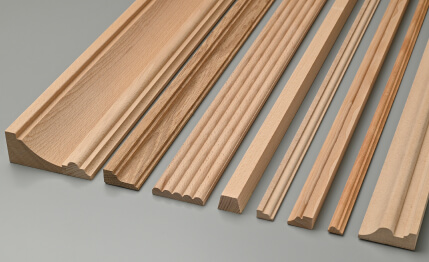
Facade moldingsare long profile elements that are mounted horizontally or vertically on the wall surface. They break up the plane, create frames around decorative panels, mark interfloor belts, and form frame decor around windows and doors.
Facade moldings made of polyurethane are a universal solution that looks equally good on both classical and modern facades.Polyurethane Decoris distinguished by its precise profile, smooth surface suitable for painting, and long service life in outdoor conditions.
Trim for the facade is a broader concept that includes all types of extended profiles: casing boards, cladding strips, trims, fillets, corner profiles. Decorative strips for the facade are used to accentuate horizontal and vertical lines, which is especially important when working with long facades with many identical windows.
Stucco decor for the facade in the form of moldings creates structure where the wall seems empty. Even one interfloor belt made of polyurethane molding can visually "cut" a two-story facade into two independent tiers and make the building proportionally more interesting.
Pilasters, columns, capitals, and the entrance group
The entrance group is the face of the house in the literal sense. It is here that the maximum decor is concentrated, and it is from here that the architectural impression of the building begins. Columns and pilasters for the facade, capitals, brackets, decorative consoles — all these are components of the entrance group that, when properly combined, create an impressive accent.
Facade decoration made of polyurethanein the form of pilasters and columns — lightweight, technologically advanced, and durable. Polyurethane pilasters for the facade are mounted directly onto the wall without additional load-bearing structures. They hold their geometry well, do not warp from moisture, and do not require annual painting with proper initial treatment.
Decorative facade capitals complete columns and pilasters, adding a classic or neoclassical feel to them. Designing the entrance group of a house using columns, pilasters, and brackets is technically simple but visually very expressive work. STAVROS offersBrackets and Consolesmade of polyurethane, which can be used as elements of the entrance portal, decorative supports for the canopy, or accents in the porch area.
The decor of the entrance group also includes the framing of the doorway: architraves, pilasters on the sides, a sandrik on top, a stepped cornice above the portal. Together, this creates that very feeling of a "grand entrance" that distinguishes an ordinary house from a house with character.
What materials to choose for facade decor
Wooden facade decor
Wood is a living material with history. Wooden facade decor is not just elements made from panels or solid wood; it is a whole aesthetic system rooted in the traditions of Russian wooden architecture. Wood carving for the facade has been an integral part of folk architecture for centuries, and today it is experiencing a true revival.
STAVROS manufactureswooden facade decorationfrom glued pine furniture board. This is a technically more stable material compared to solid wood: the board is less prone to deformation, cracking, and warping under the influence of moisture and temperature changes. At the same time, it fully retains the natural texture and warm tone of pine wood.
Carved wooden facade decor is produced on CNC equipment — this guarantees precision in reproducing the ornament, clarity of contours, and perfect size consistency in serial products. Each trim, each strip of the carved cornice will be exactly the same as the previous one — without manual variation or errors.
Who is wooden facade decor suitable for?
-
For houses made of logs, timber, frame houses with wooden cladding;
-
for bathhouses, gazebos, guest houses in rustic or Russian style;
-
for cottages where you want to create a cozy natural look;
-
for objects in Scandinavian, country, or ethno-style;
-
for restoration of historical wooden buildings.
Carved wooden facade elements require proper preparation and protective coating: priming, painting, or impregnation with a weather-resistant compound is mandatory before installation. If this condition is met, wooden facade decor will last for many years, preserving its shape and color.
Polyurethane facade decor
In the last decade, polyurethane has become the main competitor of plaster and wood in the field of architectural decor. Why? Because it combines lightness, detail, moisture resistance, and ease of installation.Polyurethane molding for facades— this is not a compromise, but a conscious choice.
Main advantages of polyurethane facade decor:
-
Lightness. Polyurethane elements are several times lighter than plaster counterparts, which reduces the load on the structure and simplifies installation.
-
Moisture resistance. Polyurethane does not absorb water, does not delaminate, and does not lose its shape under the influence of rain, snow, and humid climates.
-
Resistance to temperature fluctuations. The material maintains its geometry under significant temperature changes — this is critically important for outdoor use.
-
Detail. Polyurethane allows reproducing complex ornaments with high precision — reliefs, acanthus leaves, ionics, meanders, coffers.
-
Possibility of painting.Polyurethane facade stuccocan be painted in any color with facade paints, allowing it to fit into any color scheme.
-
Easy installation. Elements are attached with special glue and, if necessary, additionally secured mechanically.
Buying polyurethane facade decor from STAVROS means getting elements that are already optimized for outdoor use during production. In the sectionstucco decorationa wide range is presented: cornices, moldings, brackets, pilasters, rosettes, and other architectural elements.
It makes sense to buy polyurethane facade decor when you need to:
-
design a classic or neoclassical facade with an abundance of stucco details;
-
install interfloor belts, cornice rods, and window frames without involving plasterers;
-
get a finished result quickly, without long drying and finishing;
-
ensure the durability of the decor in a variable climate.
Combined Solutions
One of the most professional approaches to facade design is the combination of wooden and polyurethane elements. This combination allows you to use the advantages of each material where it works best.
How does this look in practice? Wooden facade decor — carved window casings, wind boards, fronton soffits — organically combines with polyurethane cornice rods, interfloor belts, and decorative rosettes. Wood creates warmth and naturalness, polyurethane ensures profile precision and moisture resistance in areas of greatest load.
Facade decor for a classic-style cottage is a particularly rich field for combining. Classics love details: brackets under the cornice, rosettes in the piers, pilasters at the corners, frames above door and window openings. Here, polyurethane stucco works as a base, while carved wooden elements add individuality.
How to choose facade decor for a house style with combined materials? Start by defining the style: if it's a Russian or Scandinavian wooden house, focus on carving. If it's classic or neoclassical on brick or plaster, polyurethane will be the base, wood the accent. Decorating a facade with wooden and polyurethane elements is not a mix of styles, but a professional use of tools.
How to choose facade decor for a house style
Classic facade
Classic facade decor is symmetry, strict proportions, richness of details. Cornice rods, pilasters, sandriks, medallions, classic facade stucco — all work in an ensemble. Classic facades feature white or cream decor on a light gray, beige, or ochre wall.
Decorating a facade in a classic style requires a systematic approach: elements must be linked by a unified scale and rhythm. The cornice sets the horizontal, pilasters the vertical, window frames the accent. It's best to buy facade stucco for such a project as a set, rather than a mix of profiles from different lines.
Russian style and wooden architecture
Russian carving for the facade is a separate aesthetic universe. Roosters on the ridge, openwork soffits, blind carving on architraves, saw-cut ornaments on wind boards. All this creates that very image of a "painted" wooden house, familiar from childhood.
Carved Door Casings for WindowsSTAVROS are made in traditional motifs using modern technologies: CNC reproduces the ornament accurately and in series, allowing all windows of the house to be decorated in a single pattern. Wooden facade decor in the Russian style is not only beauty, it is also cultural continuity: such houses become part of the landscape, rather than sticking out as a foreign body among nature.
Carved facade decor for houses in the Russian style includes: architraves with an upper apron, side posts with carved brackets, window sills with decor, a cornice frieze along the eaves, decorative "towel" bars under the roof. Together, this gives a complex, rich facade surface that looks lively and festive.
Modern facade
Modern facade decor is minimalism with a detail. Lush stucco and carved fretwork are not needed here: one clear molding framing the window opening or a thin cornice marking the roofline is enough. Laconic facade decor works through precise proportions and contrast — light decor on a dark facade, matte profile on a glossy wall.
Polyurethane moldings for a modern facade are flat, with clear geometry, without historical motifs. They create the facade structure without overloading it with details. This is especially relevant for houses in minimalist, contemporary, high-tech, and Scandinavian styles.
Neoclassicism
Neoclassical facade decor is a synthesis of classical motifs and modern restraint. Pilasters for the facade are present here, but in a lighter version. Cornices for the house facade are clear, without excessive pomp. Stucco is present, but it does not dominate.
Neoclassical facade stucco is primarily window frames with a geometric keystone at the top, an interfloor belt made of molding, a cornice with dentils, and corner pilasters. All this creates a modern classical image — strict but not cold.Relief DecorationSTAVROS provides ample opportunities for such design.
How to calculate the number of elements for the facade
This is a practical question that is often put off — and in vain. Incorrect calculation of facade decor leads either to a shortage of material or unnecessary leftovers. How to choose facade decor and calculate the set?
Start with measurements:
Windows. Count all the windows you plan to decorate. For each, you need: two side jambs (height of the opening + overlap into the quarter), a top drip cap (width of the opening + overhang beyond the jambs), a window sill (width + overhang). Multiply by the number of windows.
Cornice line. Measure the perimeter of the building along the roof overhang or the top of the wall. The cornice runs as a continuous line with an overlap at the corners — allow for trimming and corner joints: about 10–15% of the total length.
Gable. Measure the total length of wind boards and soffit boards. For decoration along the gable contour, calculate the length along the roof slopes with allowance for joints.
Belt between floors. If an interfloor molding is planned — the perimeter of the building plus 10–15% for waste.
Entrance group. Height and width of the doorway, presence of pilasters on the sides, canopy, stepped cornice above the portal.
Repeating elements. Rosettes, medallions, overlays — count individually.
It is important to include an allowance for cutting and installation — especially for linear products. Professional recommendation: take at least 10% above the calculated quantity for straight sections and at least 15–20% for corner joints.
Order facade decor and correctly calculate the set with the help of a STAVROS specialist: send the facade dimensions, number of windows, building height — and get professional advice on selecting elements and calculating material.
Where to buy facade decor
Today, you can buy facade decor in various places — construction markets, furniture centers, online stores. But the question is not just where to buy, but where to buy correctly: with material quality guarantee, dimensional accuracy, the ability to select a set, and get professional advice.
At STAVROS, you can buy decorative elements for the facade for different tasks: from a single trim to a complete decor set for a cottage. The catalog is structured by material and purpose:
-
catalog of facade decoration — all product categories in one place;
-
molded decoration made of polyurethane— cornices, moldings, pilasters, rosettes, brackets for the facade;
-
Carved Mouldings— wooden window decor, house carving, carved cornices;
-
Ideas for facade decor— ready-made solutions with application examples for windows, gables, entrance groups.
Facade decor online store STAVROS is an opportunity to select products by filters, view sizes, compare styles, and order with delivery. For those unsure of their choice, consultation is available: specialists will help select elements for a specific project and calculate the quantity.
Buying facade stucco molding from STAVROS means getting a product that is initially designed for outdoor use. This is not decor 'from an interior store' adapted for the street, but professional facade solutions considering operating conditions.
Common mistakes when choosing facade decor
Even experienced builders and designers sometimes make mistakes when choosing facade decor elements for a house. Here are the most typical ones — and how to avoid them.
1. Buying individual elements without an overall composition
Trim separately, cornice separately, molding from another collection — as a result, the facade looks like a patchwork quilt. How to choose facade decor correctly? Start with an overall concept: define the style, choose a basic line of profiles, and stick to it for all elements.
2. They don't consider the style of the house
Polyurethane lush stucco on a log house looks strange. A minimalist molding on a "baroque" mansion does too. Decorating the facade with decorative elements requires stylistic consistency.
3. They choose too small decor for a large facade
A small trim on a huge two-meter window will get lost. The scale of elements should match the scale of the facade. Large houses need large profiles.
4. They don't align cornices and frames in a single line
If the cornice is interrupted by a downspout or doesn't reach the corner, it's a workmanship defect. The cornice line should be continuous or have well-thought-out breaks in logical places.
5. They don't check the material for outdoor use
Interior polyurethane and exterior polyurethane are different things. For the facade, you need material with UV protection, moisture resistance, and frost resistance.Facade decoration made of polyurethaneSTAVROS is designed specifically for outdoor use — this is important to clarify when purchasing at any store.
6. They don't consider painting, installation, and maintenance
Wooden facade decor of a private house requires a protective coating before installation — otherwise, the ends and attachment points will remain unprotected. Polyurethane elements must be painted with facade paints: they protect the material from UV degradation. Maintenance of facade decor is minimal, but preparation is mandatory.
7. Ignore installation gaps and expansion joints
Long cornice strips are installed with minimal gaps to compensate for thermal expansion. This is especially relevant for regions with sharp temperature fluctuations.
8. Forget about the entrance group
Decorating all windows with beautiful trim but leaving the doorway empty is a classic mistake. The decor of the entrance group should be part of the overall concept and, as a rule, more elaborate than on regular windows.
STAVROS facade decor: solutions for an expressive home
STAVROS is a manufacturer and supplier of decorative elements for facades, interiors, and landscapes, working with professional tasks. The assortment covers the entire range of needs: from simple linear moldings to complex carved ensembles for gables and entrance portals.
What distinguishes the STAVROS approach to facade decor?
Wide choice of materials. The catalog includes products made of wood and polyurethane — two main materials for exterior decor, each with its own strengths. Wood — for naturalness and Russian style. Polyurethane — for detail, moisture resistance, and modern solutions.
Precision manufacturing. Wooden products are made on CNC equipment, ensuring accurate dimensions and clear ornamentation. This is especially important for serial production: all trim pieces will be identical.
Ready-made application ideas. In the section facade decor ideasexamples of designs for different types of facades are collected: wooden houses with carved windows, classic facades with polyurethane stucco molding, gables with decorative cornices. This helps not to guess, but to see the result before purchase.
Integrated approach. STAVROS specialists will help you select elements not individually, but systematically — so that trims, cornices, moldings, and overlays work as a single ensemble.
Decorative overlays for individual accents — another category in the catalog.Decorative Insertsmade of solid wood are used as point elements: in piers, above doors, in gable corners, in decorative panels on the facade. They add detail without overloading the main plane.
Check out ready-made Ideas for facade decorSTAVROS or go to the Catalogto select elements for your project. Consultation on selection and calculation is free.
Popular elements: quick navigator by tasks
To simplify the selection, focus on the task:
For windows:
Carved Mouldings made of wood — for wooden houses, classics, and Russian style. Polyurethane frames — for modern and classic facades on plaster.
For the gable:
Wooden carved decor — soffits, wind boards, carved strips. Go to section house carving.
For the cornice line:
Polyurethane Crown Molding — for classics and neoclassics. Wooden carved cornice — for wooden houses.
For the interfloor belt and moldings:
Facade moldings made of polyurethane — lightweight, precise, moisture-resistant.
For the entrance group:
Brackets and Consoles for the canopy, pilasters on the sides of the doorway, a pediment above the portal.
For decorative accents:
Decorative Inserts made of solid wood — in piers, corners, above windows.
Material comparison: wood or polyurethane
| Parameter | Wood | Polyurethane |
|---|---|---|
| Naturalness | High | Synthetic material |
| Moisture resistance | Requires treatment | High |
| Weight | Medium | Lightweight |
| Ornament detailing | High (CNC) | Very High |
| Installation | Medium complexity | Simple |
| Painting | Varnishes, impregnations, paints | Facade paints |
| Style | Russian, wooden, country | Classic, neoclassical, modern |
| Service life | Long-lasting with care | Long-lasting without special care |
| Temperature resistance | Moderate | High |
| Price | Medium | Medium–high |
Both materials work professionally on the facade with proper selection and installation. The choice depends on the building style, climate, budget, and your maintenance preferences.
FAQ: answers to popular questions about facade decor
What is included in facade decor?
Facade decor is the entire set of decorative architectural elements that are attached to the exterior walls of a building. This includes: carved window casings, facade cornices, moldings, interfloor belts, pilasters, columns, capitals, decorative overlays, rosettes, brackets, gable elements, and entrance group framing. All these elements together form the architectural image of the building.
Which facade decor is best for a private house?
It depends on the style and material of the house itself. For wooden houses made of logs, timber, or frame houses, wooden facade decor is best: carved casings, wooden cornices, and carvings on the gable. For houses made of brick, aerated concrete, or plastered facades in classical or neoclassical style —Polyurethane molding for facadesin the form of cornices, moldings, and pilasters.
Can polyurethane decor be used on a facade?
Yes, provided that the elements are designed specifically for outdoor use. Polyurethane stucco for the facade must be moisture-resistant and frost-resistant. After installation, painting with facade paints is mandatory — this protects the material from UV degradation. STAVROS offers polyurethane facade elements adapted for outdoor use.
Where to buy facade decor for a house?
inStavros catalogyou can choose decorative elements for the facade by material, style, and purpose: carved casings, cornices, moldings, pilasters, brackets, and overlays. The entire assortment is structured by categories and available with descriptions and dimensions.
How to choose facade decor according to the size of the house?
You need to consider: the width and height of window openings (for casings), the length of the cornice line along the roof perimeter (for cornices), the height of the facade (for selecting the profile scale), the area of the gable (for decorating the roof triangle), and the presence and dimensions of the entrance group. We recommend calculating with a 10–15% margin for trimming and installation. STAVROS specialists will help with the calculation if measurements are available.
Is special facade preparation required before installing decor?
Yes. The surface must be level, clean, and dry. Wooden elements must be treated with an antiseptic and coated with primer or paint before installation, paying special attention to the ends. Polyurethane elements are mounted using special adhesive; after installation, they are painted with facade paints. On painted facades, the decor is attached after the main wall painting is completed.
How long does wooden facade decor last?
With proper preparation, installation, and regular maintenance, wooden facade decor made of pine lasts from 15 to 30 years or more. Key conditions: high-quality protective impregnation or painting before installation, repainting every 5–7 years depending on the climate, and proper installation ensuring ventilation behind the decor.
Can I order facade decor in custom sizes?
Yes. STAVROS manufactures carved window trims and wooden facade decor in custom sizes and patterns using CNC equipment. This is especially relevant for non-standard window openings or when working with complex custom designs.
Facade design is the final chord in house construction. It is decor that turns a building into architecture and a house into a place with character. Check out Ideas for facade decor STAVROS, select elements in catalog or contact specialists for a kit calculation. A beautiful facade is not an accident. It is a choice.