








































Article Contents:
- Where slatted panels are appropriate in the kitchen
- Dining area: the perfect place for a slatted accent
- Living area in a kitchen-living room: zoning without walls
- TV and multimedia zone: slats as a natural backdrop
- Work zone: with caution and only with the right material
- Why the floor and lower wall cannot be left without logic
- What happens without the correct skirting
- Wooden skirting as the finishing element of the system
- How to combine facades, backsplash, panels, and skirting
- White kitchen set — warm wooden slats: a classic contrast
- Dark kitchen set — light slats: the contrast reversed
- Wood-look kitchen set — slats and skirting in a unified tone
- Which wood species and shades work best
- Oak: a versatile choice with natural strength
- Ash: lighter, softer, more 'Scandinavian'
- Beech: even tone, ideal for painting
- MDF skirting: stability and color flexibility
- Skirting height: a proportional choice
- When wood is appropriate and when another scenario is needed
- When wood in the kitchen is the right choice
- When it's better to choose MDF
- Batten Orientation: Vertical or Horizontal
- Material system: from ceiling to floor
- Vertical system for the kitchen
- Care and operation mistakes
- First mistake: open oil in active zones
- Second mistake: aggressive cleaning agents
- Third mistake: ignoring skirting board ends
- Fourth mistake: skirting board without expansion gap for the floor
- Mistake five: slatted panels without an exhaust fan of sufficient power
- Mistake six: incorrect skirting board installation in corners
- Lighting as part of a wooden system
- Directional lighting on a slatted wall
- Recessed lighting in the gaps between slats
- Mistakes in selecting and arranging wooden elements in the kitchen
- Slats and skirting board in different wood tones without a connecting element
- Too wide slats in a small kitchen
- Skirting board from a different 'world' than everything else
- Practical scenarios: three working solutions
- Scenario "Scandinavian Kitchen"
- Scenario "Dark Neoclassicism"
- Scenario "Monochromatic Minimalism"
- FAQ: Answers to Popular Questions
- About the Company STAVROS

The kitchen does not forgive random decisions. It is the only room in the house where aesthetics and functionality must be in absolute harmony — because every day, several times a day, a person is present here. They cook, chop, socialize, eat, sometimes work. And all this time — they look at the walls, the floor, at how the interior details converge or diverge from each other.
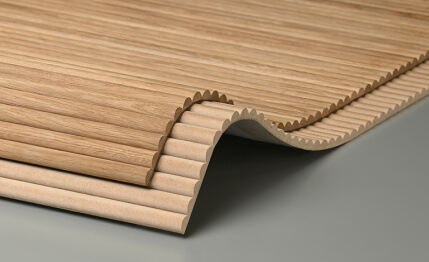
Slatted panels in the kitchen— is one of the most thoughtful answers to the question of wall finishing: they provide architectural rhythm without excess, natural warmth without complexity in maintenance, visual depth without cluttering details. AndFloor wooden skirtingcompletes this system from below — where the wall meets the floor, where the detail is unnoticeable until it's done incorrectly, and then immediately catches the eye.
About all this — in detail, honestly, and without generalities. Where battens are appropriate and where they are not. Why a baseboard is not a technical element, but a design decision. How wood on the wall and wood at the floor form a unified warm system, in which the kitchen ceases to be just a kitchen and becomes a space with character.






Where batten panels are appropriate in the kitchen
The kitchen is a territory of zones. And the attitude towardsbatten panels in kitchen interiorsIt all starts with understanding which of these zones they will work in. The location determines the material, coating, orientation of the slats, and maintenance requirements.




Dining area: the perfect spot for a slatted accent
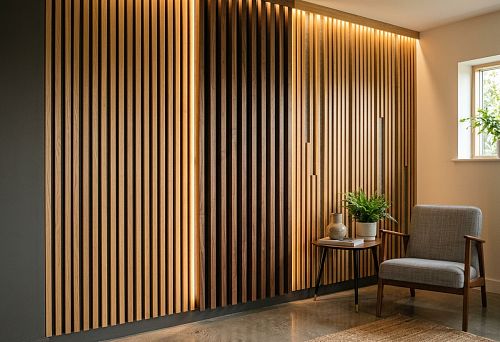
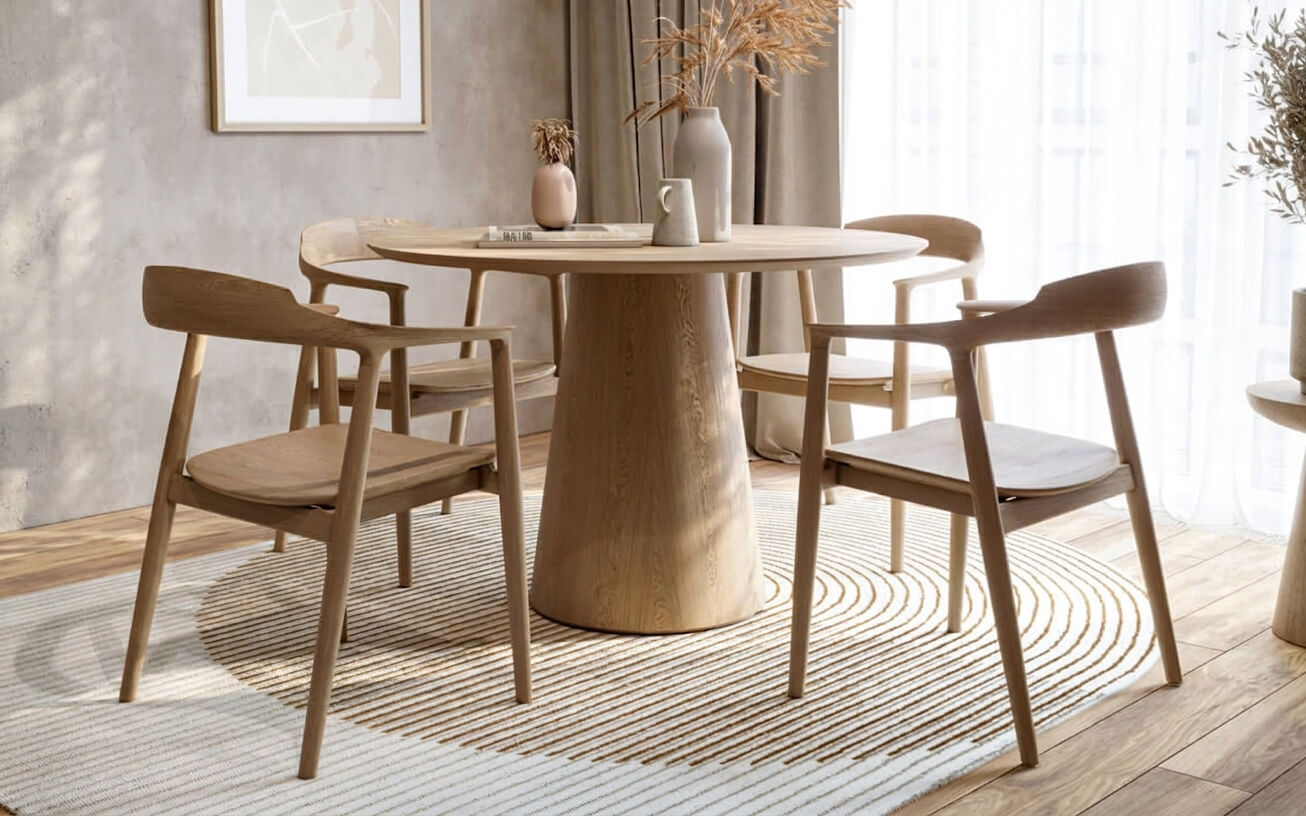
The wall behind the dining table is the best place for wooden slatted panels in the kitchen, no question. There's no steam, no grease splatters, no high temperatures. Here, the slats can fully showcase their decorative power: they create a backdrop for the table, foster an intimate dining atmosphere, and provide a natural focal point. Oak with a warm tint, light ash, or paintable MDF—you can choose any material here without compromising on practicality.
Important detail: the dining area is often by a window or opposite one. A slatted wall in daylight or evening side lighting 'reveals' the wood grain texture—each slat comes to life. This is exactly the case where a solution that looks like 'just wooden planks' in the warehouse transforms into something more in the interior.
Our factory also produces:



Living area in a kitchen-living room: zoning without walls
Open floor plans have long been the norm in modern apartments. The kitchen, dining area, and living room are one space that needs to be divided into zones without physical partitions. Slatted panels handle this task better than most other tools.
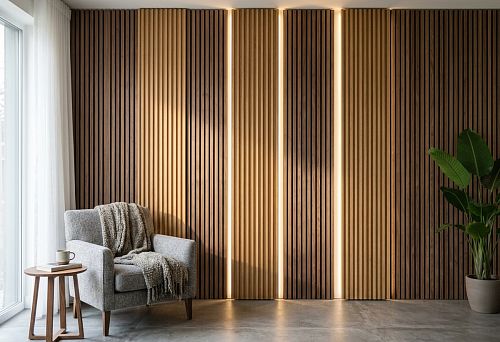
A slatted wall behind the sofa or by the TV in the living area creates a visual boundary for the relaxation zone. The kitchen space remains open, with air and light flowing freely, but the zones are clearly defined. At the same time, the slats—wooden and warm—create exactly that cozy atmosphere in the living area that is often missing in open kitchens.
Get Consultation
TV and media zone: slats as a natural backdrop
A TV in the kitchen or kitchen-living room always creates the same problem: the black rectangle of the screen looks out of place against any background. A slatted wall solves this elegantly: dark slats (anthracite, graphite, dark walnut) 'absorb' the screen visually—it stops being a blot and becomes part of a dark accent field. Warm-toned oak slats create a natural 'backdrop' that makes electronics fit even in a warm, wooden interior.
Work zone: with caution and only with the right material
This is the most controversial issue. The kitchen work area is a source of steam, grease, splashes, and high temperatures. Directly at the stove and sink, a traditional kitchen backsplash made of tile, tempered glass, or metal is the only correct solution in terms of durability.
But in a work area located 40–60 cm away from the stove and sink—for example, at a cutting table or work counter—MDF slatted panels with closed polyurethane varnish or moisture-resistant coating are acceptable. The main condition: the surface must be completely sealed, without open pores or gaps where grease condensation can penetrate. And—a good hood over the stove as the primary 'protection' for any wall surfaces in the kitchen.
Why the floor and lower wall cannot be left without logic
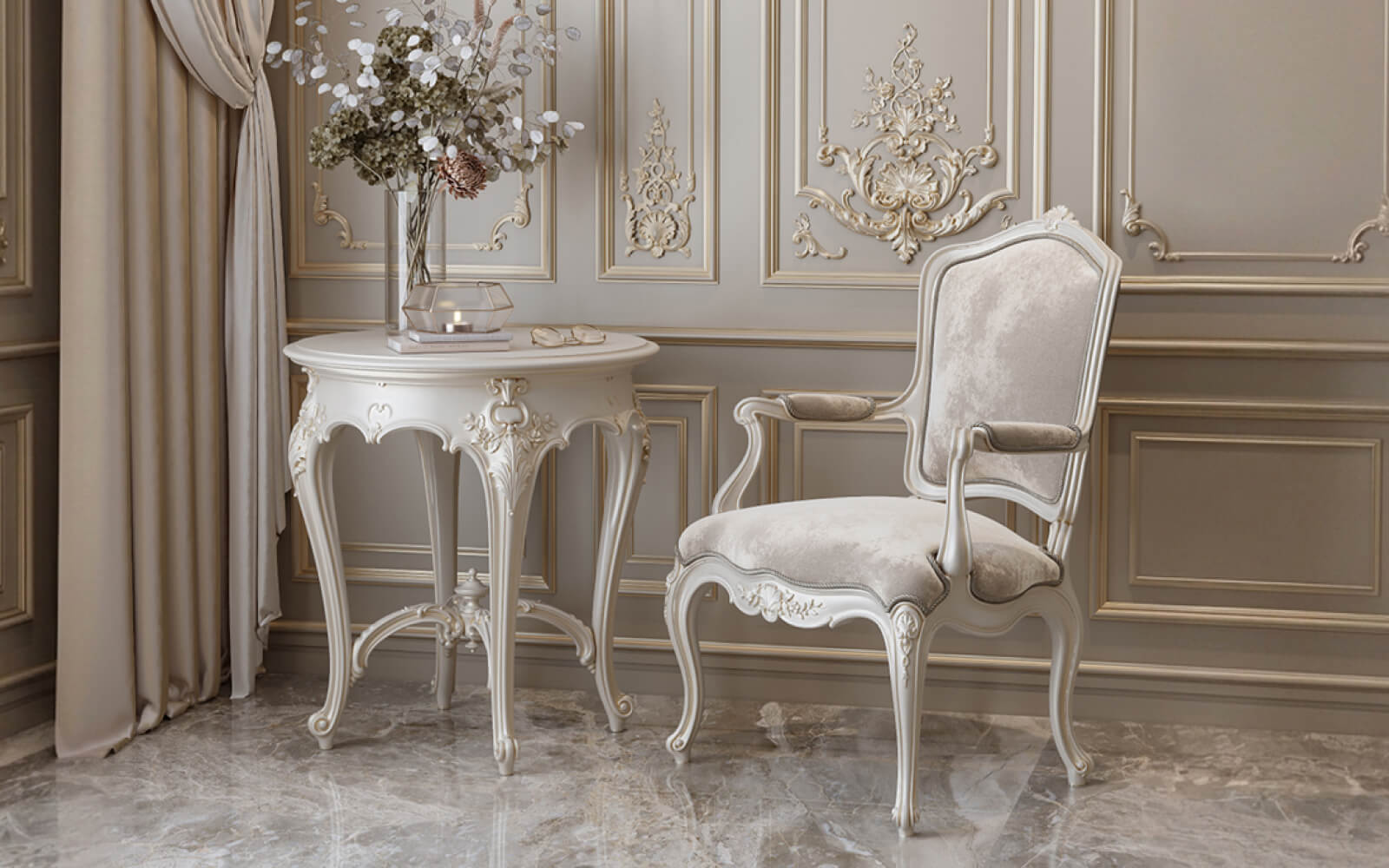
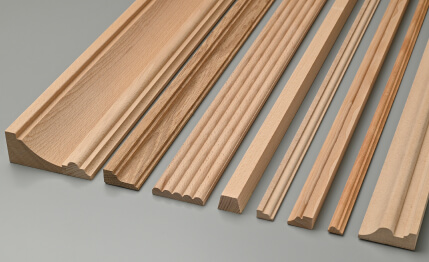
Here's what is rarely discussed when designing a kitchen: the transition from wall to floor is not a technical joint. It is the visual 'horizon line' of the space. It is precisely this that determines whether the interior is perceived as finished or as 'almost ready.' And it is here thatwith a classic profile creates a sense of solidity, reliability.from the STAVROS collection fulfills its main function—not to hide the gap between the floor and the wall, but to design the transition as an architectural event.
What happens without the correct baseboard
A kitchen with wooden slatted panels on the wall and a plastic baseboard at the floor is a conflict. The natural, expensive wall material and the faceless synthetic semi-column at the baseboard destroy the unity of the system. The eye registers the mismatch, even if a person cannot articulate it: 'something is off.'
Similarly—a kitchen with wooden slats and a complete absence of a baseboard. An open gap at the base of the wall or, worse, an uneven, unfinished edge—this is incompleteness that devalues all the other work.
Wooden baseboard as the finishing element of the system
Floor wooden skirtingmade of oak or beech in the same or a similar tone as the wall's slatted panels—this creates a unified vertical system: slats at the top, baseboard at the bottom, connected by material and tone in the middle. The kitchen space acquires that finished, 'put-together' look that distinguishes a well-thought-out interior from a collection of separate beautiful details.
How to combine cabinet fronts, backsplash, panels, and baseboard
The kitchen is a system of several surfaces competing for attention: cabinet fronts, backsplash, floor, ceiling, walls. Wood slat panels and wooden baseboard should integrate into this system, not add another random element to it.
White cabinets — warm wooden slats: a classic contrast
One of the most tried-and-true and effective scenarios. White matte kitchen cabinet fronts + warm-toned oak slat panels + wooden baseboard in the same oak tone. Three elements: neutral white, natural warm, natural warm. The balance of neutral and natural — it's precisely this combination that creates that 'Scandinavian' or 'biophilic' kitchen look that's in demand now.
The backsplash in this scheme: white subway tile, light stone, or matte glass. Not 'wood-look' — that would be an overload of naturalness. A neutral one that supports the white cabinets and doesn't interfere with the wooden slats.
Dark cabinets — light slats: the contrast is reversed
Dark green, anthracite, or chocolate cabinets + slat panels made of light ash or birch with whitewashed oil + baseboard in a light tone or paintable. This is the reverse contrast scheme — dark furniture against a light natural background.
wooden baseboards for flooringThe baseboard in a light tone here closes the system from below and 'holds' the light halo near the floor. The entire system — a dark center (cabinets) in a light natural frame (slats, baseboard, ceiling).
Wood-look cabinets — slats and baseboard in a unified finish
If the cabinets themselves feature a wood-grain texture (veneer or wood-look laminate), then the slat panels should either be in strictly the same finish (a monochrome system) or in a noticeably different tone — 2–3 shades lighter or darker. The intermediate option — where the tones 'almost match, but not quite' — looks random.
Wooden skirting in this system: matching the tone of the battens or the floor. If the floor is wood or wood-look — the skirting matches the floor. If the floor is tile or concrete — the skirting matches the battens.
Which species and shades work best
Oak: a universal choice with natural strength
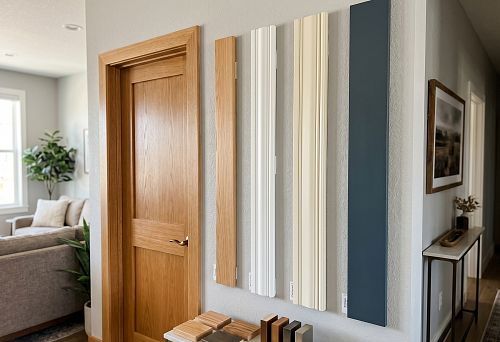
Oak is the first choice for a kitchen with wooden battens and a wooden skirting. Its large, expressive grain pattern is clearly visible even on a narrow batten. Its natural density and hardness make it resistant to mechanical impact. Oak finishes — from light 'honey' to rich 'tobacco' and cool 'grey mocha' — cover the entire modern stylistic range.
Technically important:oak wood baseboard undergoes special drying to 8–10% moisture content, which guarantees geometric stability. In a kitchen with temperature and humidity fluctuations, this is a critical parameter: 'green' oak near the floor will develop cracks at the joints within six months.
Ash: lighter, softer, 'more Scandinavian'
Ash is a lighter, more delicate species with fine, straight grain. White oil on ash creates that very 'Scandinavian' look: almost white wood with a slight natural sheen. Batten panels made of ash in a Scandinavian or minimalist kitchen are an organic choice that doesn't overwhelm the space with naturalness but subtly hints at it.
An ash skirting with white oil or matching the panels completes this light system at the floor. A narrow 60–70 mm profile is sufficient for this style.
Beech: even tone, ideal for painting
Beech has a fine-pored, homogeneous structure with a uniform light tone and no pronounced grain. This is precisely whywooden skirting board for paintingbeech is the ideal material for monochrome systems: paint applies evenly, and the tone is reproduced accurately. If the slatted panels are made of paintable MDF, a beech skirting board painted in the same RAL color creates perfect material unity through color harmony.
MDF skirting board: stability and color flexibility
MDF Skirting Boardis an engineered material with perfect geometry and a wide color palette. For a kitchen with paintable MDF slatted panels, an MDF skirting board painted in the same tone creates a monolithic system where 'transitions' between materials are invisible. This is the cleanest solution for monochrome kitchens.
White MDF skirting board 80 mm is the most in-demand format for modern kitchens. It is delicate, versatile, and pairs well with any cabinetry and any slatted walls.
Skirting board height: a proportional choice
Skirting board height is not an aesthetic detail, but a design decision. It depends on ceiling height, furniture scale, and the nature of the wall finish.
| Ceiling Height | Recommended skirting board height | Character |
|---|---|---|
| up to 2.6 m | 60 мм | Compact, delicate |
| 2.6–2.8 m | 70–80 mm | Universal, modern |
| 2.8–3.0 m | 80–100 mm | Expressive, status |
| Over 3.0 m | 100–120 mm | Monumental, classic |
For a standard-height kitchen of 2.7 m with slatted panels, a 70–80 mm skirting board is optimal. It is noticeable but does not overload the lower zone and creates the correct proportion between the slatted wall and the floor contour.
Wide skirting boards of 100–120 mm in a kitchen with low ceilings (up to 2.6 m) visually 'cut off' the space from below — the proportion is disrupted. Narrow skirting boards of 40–50 mm in a tall kitchen with pronounced slatted walls look random and insignificant.
When wood is appropriate and when a different scenario is needed
An honest conversation about wood in the kitchen is impossible without acknowledging its limitations. Wood is a living material. It reacts to heat, humidity, and mechanical impact. In the kitchen, this means special requirements for treatment and placement.
When wood in the kitchen is the right choice
Wood is appropriate in a kitchen where the following conditions are met:
-
The placement zones for slats and skirting boards are removed from direct exposure to steam and splashes;
-
The surface is covered with high-quality varnish or moisture-resistant coating (not open oil in work zones);
-
The range hood above the stove has sufficient capacity (at least 600 m³/h for a standard kitchen);
-
Dry room humidity: 45–60% is the norm for wooden elements without risk of deformation.
Under these conditions, wooden battens and wooden skirting boards in the kitchen are durable, stable, aesthetically flawless elements. Oak PLT-001 withstands decades of active use with proper care.
When is it better to choose MDF
Painting-grade MDF or MDF skirting board is the optimal choice for:
-
Kitchens with high humidity (rooms without proper ventilation);
-
Monochromatic color systems where precise tone reproducibility is important;
-
Budget projects without compromise in geometry and surface cleanliness;
-
Work zones with moderate soiling where a maximally easy-to-clean surface is needed.
An 80 mm MDF skirting board for painting in the same RAL as the MDF batten wall panels is an absolutely practical and aesthetically correct system with no weak points.
Slat orientation: vertical or horizontal
This decision is made depending on the specific tasks of a particular space.
Vertical slats are a classic and the most versatile choice. The vertical rhythm raises the ceiling, making the wall appear 'taller'. For standard kitchens with a 2.7 m ceiling, this is always the preferred choice.
Horizontal slats create a panoramic effect, visually 'widening' the wall. They work well in narrow kitchens where width is more important than height. However, horizontal slats at the baseboard create a conflict of directions with the vertical profile of the baseboard—this junction needs to be considered: either finish it with a separate transition molding or use a horizontal border baseboard instead of a standard vertical one.
Material system: from ceiling to floor
The maximum effectiveness of wooden elements in a kitchen is achieved when they form a vertical system: from the ceiling cornice through slatted wall panels to the floor baseboard—all in one material and tone.
Vertical system for the kitchen
Ceiling and transition to the wall: polyurethane cornice from the catalogpolyurethane productsin the tone of the slatted panels or in neutral white. It finishes the ceiling part and creates an upper frame for the slatted wall.
Wall slats: the main decorative field. Vertical rhythm, warm oak tone or MDF for painting. Height—from the baseboard to the cornice or to the limitation zone (border molding at the 120 cm level).
Transition molding: if the slats occupy only the lower zone of the wall (up to 100–120 cm), the boundary between the slatted field and the smooth upper part is finished with a horizontal molding fromsolid wood trimin the tone of the battens. This is a clean architectural transition, not a rough break in material.
Floor skirting:Wooden baseboardmade of oak to match the batten panels. Completes the vertical system at the floor. Height — proportional to the ceiling height.
This system works in all styles: from Scandinavian to neoclassical, from loft to modern classic. Tones and profiles change, but the principle of a unified vertical system remains.
Care and maintenance mistakes
Wooden elements in the kitchen require proper care — not complicated, but specific. Let's examine the key mistakes.
First mistake: open oil in active zones
Open oil or wax are excellent finishes for wooden battens and skirting boards in the bedroom or living room. In the kitchen — in areas close to food preparation — this is a mistake. Fat particles penetrate the pores of the open surface, oil does not create a barrier against grease, the surface darkens and becomes dull after 6–12 months. For the kitchen — only closed finishes: varnish, PU coating, polymer enamel.
Second mistake: aggressive cleaning agents
Chlorine-containing, acidic, or abrasive compounds damage the varnish finish of wooden battens and skirting. After several treatments, the surface loses protection, and the wood begins to absorb moisture. The rule: neutral pH cleaning agent + soft cotton cloth. This is sufficient for regular care.
Mistake three: ignoring skirting board ends
The ends of wooden skirting boards at joints and corners are the most vulnerable spots. An end not treated with sealant or paint absorbs moisture from the floor during cleaning. All ends and joints of the skirting board must be coated with wood-tone sealant or specialized MDF end paint.
Mistake four: skirting board without expansion gap for the floor
Wooden or engineered flooring expands with changes in humidity. A skirting board tightly fixed to the floor (not to the wall) will 'move' with the floor, pulling away from the wall. Correct technique: the skirting board is attached to the wall, not the floor. A 2–3 mm gap is left between the bottom edge of the skirting board and the floor to compensate for floor covering movement.
Mistake five: slatted panels without adequate extractor hood power
The extractor hood above the stove is the primary tool for protecting the kitchen's wooden surfaces from grease condensation. Without sufficient extraction, slats in any area of the kitchen—even in the 'safe' dining area—will become coated with a film of grease condensation. Minimum extractor hood power for a kitchen with wooden elements: 600 m³/h for rooms up to 15 sq.m.
Mistake six: incorrect skirting board installation in corners
Room corners are rarely exactly 90°. A skirting board cut to a standard 45° without measuring the actual angle results in an unsightly gap at the joint. Correct technique: use an angle finder, divide the actual angle in half, cut to the precise angle. For wooden skirting boards—a miter saw with angle adjustment function. Gap after cutting—fill with tone-matching sealant.
Lighting as part of the wooden system
Wooden slats without lighting are half their potential. The texture of oak grain, shadows in the gaps between slats, the relief of the skirting board profile—all of this is only visible with properly directed light.
Directional light on a slatted wall
Track spotlights or wall sconces with directional flow, installed at a 30–45° angle to the slatted wall, create deep shadows in the gaps and reveal the wood texture. This is how a wooden wall transforms from a 'background surface' into a three-dimensional architectural element.
Built-in light in the gaps between slats
LED strip placed in the gaps between slats on a substrate is one of the most effective lighting techniques for a kitchen. Light from the gaps creates soft, diffused illumination without shadows. In the dining area, warm 2700 K creates an atmospheric 'homely' light. Above the work counter, 4000 K provides comfortable task lighting without harsh shadows.
Mistakes in selecting and arranging wooden elements in the kitchen
Several systemic errors that undermine the integrity of the kitchen interior.
Slats and baseboard in different wood tones without connection
Oak slatted panels in 'cognac' and a pine baseboard in a natural tone create a temperature and tonal conflict. Pine is yellower and softer. Oak is more amber and stricter. Together, they create neither solidity nor intentional contrast—only randomness. Wooden baseboards and slatted panels should be either from the same wood species or from species whose tones belong to the same tonal range.
Too wide slats in a small kitchen
Slats 60–80 mm wide in a kitchen of 8–10 sq.m create visual overload. A small kitchen 'shrinks.' Narrow slats 15–25 mm with wide gaps visually expand the space. Rule: the smaller the room, the thinner the slat and the wider the gap.
A baseboard from a different 'world' than everything else
A plastic baseboard in a kitchen with wooden slats is a mismatch that instantly devalues the quality of everything else.Wooden baseboardor an MDF baseboard for painting is an essential part of a wooden kitchen system, not 'saving on small things.'
Practical scenarios: three working solutions
Scenario 'Scandinavian Kitchen'
Slats: ash with white oil, width 20 mm, vertical, in the dining area.
Cabinetry: white matte.
Backsplash: white subway tile.
Skirting board:wooden floor PLT-001made of oak with white oil, height 70 mm.
Floor: ash parquet or light laminate.
Cornice: thin polyurethane, 40–50 mm, in white.
Character: light, bright, naturally neutral.
Scenario: 'Dark Neoclassicism'
Slats: oak with 'mocha' or 'tobacco' stain, 40 mm width, vertical, covering the entire accent wall.
Kitchen set: dark green or anthracite, with brass hardware.
Backsplash: dark natural stone or dark tile.
Baseboard: wooden oak with the same 'mocha' stain, 80 mm height, shaped profile.
Floor: dark parquet or engineered wood.
Cornice: classic polyurethane profile, wall color.
Character: status, warm, deep.
Scenario "Monochromatic Minimalism"
Reiki: MDF for painting RAL 9010 (warm white), width 25 mm, vertical.
Kitchen set: white or cream, without handles.
Apron: white matte glass.
Skirting board: MDF skirting board for painting RAL 9010, height 60 mm, straight profile.
Floor: white or light beige.
Cornice: absent or minimal 30–40 mm in white.
Character: absolute purity, silence, space.
FAQ: Answers to popular questions
Can wooden slatted panels be installed directly next to the stove?
No. Above the cooktop, there is high temperature and grease splatter. A traditional kitchen backsplash made of tile, glass, or metal is needed here. Wooden slats are for the dining area and relaxation zone, at a distance of at least 50 cm from the stove.
Which wooden baseboard to choose for a kitchen with laminate flooring?
Wooden baseboard made of oak or beech, tone — coordinated with the laminate by temperature (warm to warm, cool to cool). Height: 70–80 mm for standard ceiling height. Installation to the wall, not to the laminate — mandatory with an expansion gap.
How often should the coating of wooden slat panels in the kitchen be renewed?
With sealed varnish — every 7–10 years under normal use. Local damage is repaired with spot restoration without complete recoating. With open oil in delicate areas — annual treatment with protective oil to renew the coating.
Is a gap needed between a wooden baseboard and a wooden floor?
Mandatory: 2–3 mm to compensate for thermal and moisture expansion of the flooring. The baseboard is attached to the wall. The gap at the bottom is sealed with color-matched caulk or left open when laying a rug.
Can a wooden baseboard be painted to match the wall color?
Yes. A wooden baseboard made of beech with proper preparation (sanding, primer) takes paint perfectly. When painted to match slatted MDF panels, a monochrome system is created where the baseboard visually 'dissolves' at the floor.
Which baseboard profile to choose for slatted panels with a vertical rhythm?
A straight profile with a bevel or soft rounding of the top edge is for modern minimalist and Scandinavian kitchens. A shaped profile with a bead is for neoclassical or classic kitchens with a pronounced wooden theme.
Is a 120 mm wooden skirting board suitable for a standard kitchen?
No. A wide skirting board of 100–120 mm is for rooms with ceilings higher than 3.0 meters. In a standard kitchen with a 2.7 m ceiling, a wide skirting board creates a proportional imbalance: the bottom of the wall becomes 'heavier,' and the ceiling appears visually lower. The optimum for a standard kitchen is 70–80 mm.
About the company STAVROS
A wooden kitchen in the best sense of the word is not an abundance of carving or intrusive 'rusticity.' It is the intelligent use of natural material in the right zones, with the right finish, in the right system. Slatted panels where wood works for the atmosphere. Wooden skirting where it completes the system. And all of this — in coordinated tones, made from high-quality material designed for years of kitchen use.
STAVROS is a full-cycle Russian manufacturer, in whose catalog all the listed elements are produced as a unified system.Slatted panels in the kitchenmade from solid oak and ash with professional stains and finishes.Floor wooden skirtingPLT-001 and PLT-003 made from oak and beech with heights from 60 to 120 mm — with kiln drying to 8±2%, precise profiling, and compatible stains.cornices and moldingsmade from polyurethane to complete the system from above.
All elements are developed with compatibility in mind: the stains of the slats, skirting, and moldings are coordinated within one collection. This means you get not a set of random materials from different sources, but an architectural system that works as a single whole.
Over 4000 items. 39 product groups. Delivery across all of Russia. Free consultation on system selection. STAVROS — for those who build a kitchen as a space with character, not just as a place for cooking food.