

































































Article Contents:
- Why corridors are most often poorly designed
- Three main visual problems of a corridor
- Slatted panel in the corridor: rules for working with narrow spaces
- Vertical orientation is the main principle
- What slat width is suitable for a corridor
- What material to choose for slatted panels in a corridor
- Zoning a corridor with slatted panels
- Wall molding decor in the corridor: structure where there is none
- Why stucco in the hallway: functional and aesthetic role
- Which elements of stucco decor work in a corridor
- Polyurethane wall stucco: why this material
- How light, mirrors, and vertical lines work together
- Hallway lighting with slatted panels
- Mirrors and slatted panels: how to combine them
- Vertical lines as the main tool for expansion
- Color solutions for a hallway with slatted panels
- Light tones: maximum expansion
- Dark accents: depth and expressiveness
- Monochromatic solution: a single color for walls, panels, moldings, and ceiling
- Common mistakes that make a hallway appear lower, narrower, and heavier
- First mistake: wide horizontal slats
- Second mistake: a dark ceiling without special design consideration
- Third mistake: heavy molding in a small hallway
- Fourth mistake: lack of lighting along the walls
- Fifth mistake: overloading with decor
- Sixth mistake: molding in the wrong style
- Seventh mistake: a mirror without a frame
- Practical solutions for different types of hallways
- Narrow corridor up to 100 cm wide
- Corridor 110–140 cm wide
- Wide corridor and hall from 150 cm wide
- Work sequence: from concept to finish
- Sequence of installation work in the corridor
- About the Company STAVROS
- FAQ: Answers to Popular Questions

The corridor is the most honest space in an apartment. Honest — because here you can't hide behind beautiful furniture, you can't distract the eye with a large window overlooking a park. Bare walls, a narrow passage, sometimes — a complete lack of natural light. That's why the corridor either works as an architectural link that sets the tone for the entire interior, or exists as 'a place you need to pass through.' More often — the latter. But this is a choice, not a sentence.Slatted panels for the corridorin combination with a well-chosenplaster wall decorcan transform a passageway into a full-fledged architectural element — expressive, cohesive, visually spacious. Let's explore exactly how.





Why hallways are most often poorly designed
This is not a rhetorical question. The answer is quite specific: hallways are designed on a leftover principle. The budget goes to the living room and kitchen. Time is spent on the bedroom and bathroom. The hallway gets what's left: a piece of wallpaper hastily pasted 'to match', baseboards from the nearest hardware store, and spotlights placed 'as it turned out'.
As a result, the hallway looks exactly as it was treated—randomly. Different planes exist independently of each other. The walls are not connected to the ceiling. The floor does not communicate with the walls. Decor is absent altogether—or present in the form of a single mirror nailed 'where space was found'.
Meanwhile, the hallway is the first thing a person sees when entering an apartment. It is the entry point that forms the first impression of the entire home. And it is here—with the right approach—that you can achieve maximum visual effect with relatively modest investments. The elongated shape of the hallway, which everyone perceives as a drawback, is actually an architectural opportunity. A narrow, long space responds wonderfully to vertical lines, rhythmic elements, and structuring decor.




Three main visual problems of a hallway
Before talking about solutions, let's name the problems precisely:
First—horizontal compression. A hallway width of 90–120 cm feels cramped. The gaze rests against the walls on both sides, making the space seem even narrower than it actually is.
Second—vertical lowering. With a standard ceiling height of 2.5 m and a width of 1 m, the proportions of the hallway resemble a well rather than an elongated hall. The ceiling feels oppressive.
Third—lack of rhythm. Homogeneous walls without structure give the eye no point of support. The space seems monotonous and endless—in a bad sense.
All three problems are solved with an integrated approach: slatted panels that create vertical rhythm, and wall molding decor that structures the space horizontally.
Our factory also produces:


Slatted panel in the corridor: laws of working with narrow space
Not every slatted panel works the same in a corridor. This is not a space where you can experiment randomly. A narrow, long corridor requires specific solutions.
Get Consultation
Vertical orientation is the main principle
Let's start with the basics. Vertical slats in a corridor always work. This is a technique tested for decades: vertical lines draw the eye upward, create an illusion of greater height, and expand the sense of space on the sides. Psychologically, vertical stripes are associated with columns—and columns are perceived as an element of a large hall, not a cramped passage.
Horizontal slats in a corridor are a risky experiment. Horizontal lines visually lower the ceiling and further compress an already tight space. The only case where horizontal orientation is acceptable is a special designer technique with wide horizontal panels in the lower third of the wall (up to 0.9–1.0 m), imitating a traditional panel field in a classic style. But this is not 'just horizontal'—it is a thoughtful system with clear horizontal moldings above.
What slat width is suitable for a corridor
Slatted panel for the hallwayand corridor is chosen within a narrow range. Too wide a slat overloads the cramped space. Too narrow—creates a fine texture without architectural effect. Optimal parameters:
-
Slat width: 30–70 mm. This is the working range for a corridor with a ceiling up to 2.7 m.
-
Gap between slats: 8–15 mm. A dense rhythm creates a textural effect, the wall looks like a unified textured canvas.
-
Panel height: up to the ceiling (with a 2.5 m ceiling, this provides the maximum effect of vertical thrust) or up to 1.2–1.4 m (classic panel field) with a neutral light upper register.
Slats 80–100 mm wide already create a sense of heaviness in a narrow hallway — they are used only in hallways with a width of 140–150 cm and ceilings from 2.8 m.
Which material of slatted panels to choose for the hallway
The hallway is a high-traffic area with mechanical impacts. This imposes restrictions on material selection.
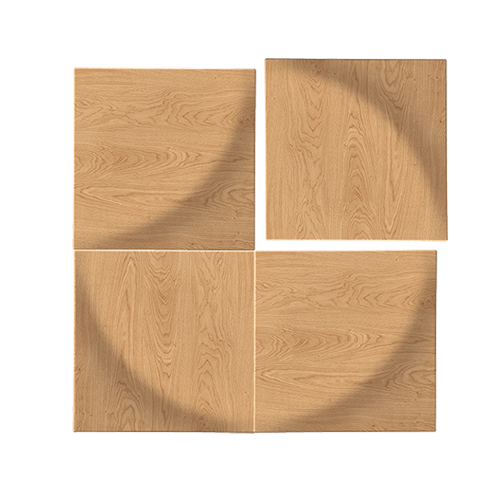
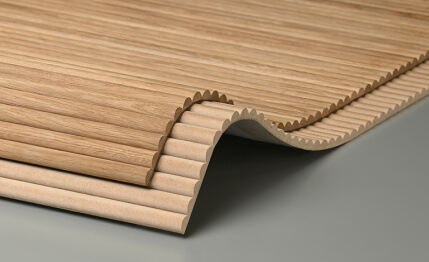
MDF panels are the optimal choice for most hallways. Stable geometry, good resistance to mechanical impacts, painting in any color, affordable price.Slatted panel for the wall made of MDFin the hallway — the most common professional solution.
Solid wood panels — higher aesthetics (natural texture and warm tone), but require protective coating against scratches and moisture. In hallways with high humidity (combined entryways with access to the street) — only with a quality varnish or oil finish.
Acoustic slatted panels on fabric or felt backing — not critical for hallways with good acoustics, but in long spaces echo can be a problem. Here, an acoustic panel solves both decorative and functional tasks. However, in a hallway with high mechanical load (constant passage, wall contact), the soft backing is vulnerable.
Decorative slatted wall panels on a rigid backing — the ideal balance between aesthetics, protection, and functionality for most hallways.
Zoning the hallway with slatted panels
A long corridor is not just a passageway. It consists of several zones: the entrance zone (foyer), the transition zone, and the area in front of the rooms. Slatted panels allow for visually breaking up the monotonous corridor into meaningful sections.
Batten panel in the corridorfunctions as a zoning tool in several ways:
-
Changing the color of the slats in different zones (while keeping the width and spacing unchanged) — a subtle, almost unnoticeable zoning technique.
-
Changing the panel height — in the entrance zone, the panel is full height; in the transition zone, only the lower third. This creates a rhythm for the space itself, not just the wall.
-
Changing the material — wooden slats in the entrance zone, painted MDF panels in the transition zone. The boundary between zones is defined by a vertical molding-pilaster.
Plaster wall decor in the corridor: structure where there is none
Now — on to the second topic.wall moldingin the corridor is not a luxury or an excess. It is a tool for architectural structuring of a space that inherently lacks structure.
Why plasterwork in the corridor: functional and aesthetic role
A corridor wall without decoration is an extended plane that does not stop the gaze. The eye glides along it — and the feeling of tightness intensifies. Plaster decor creates 'events' on the wall: focal points, pauses in the rhythm, architectural elements that stop the gaze and give the space structure.
The practical function is no less important: moldings and cornices protect the upper and lower edges of walls, horizontal belt moldings conceal material joints, corner elements frame interior and exterior corners of the hallway—and there are many of these in long hallways.
Which elements of stucco decor work in a hallway
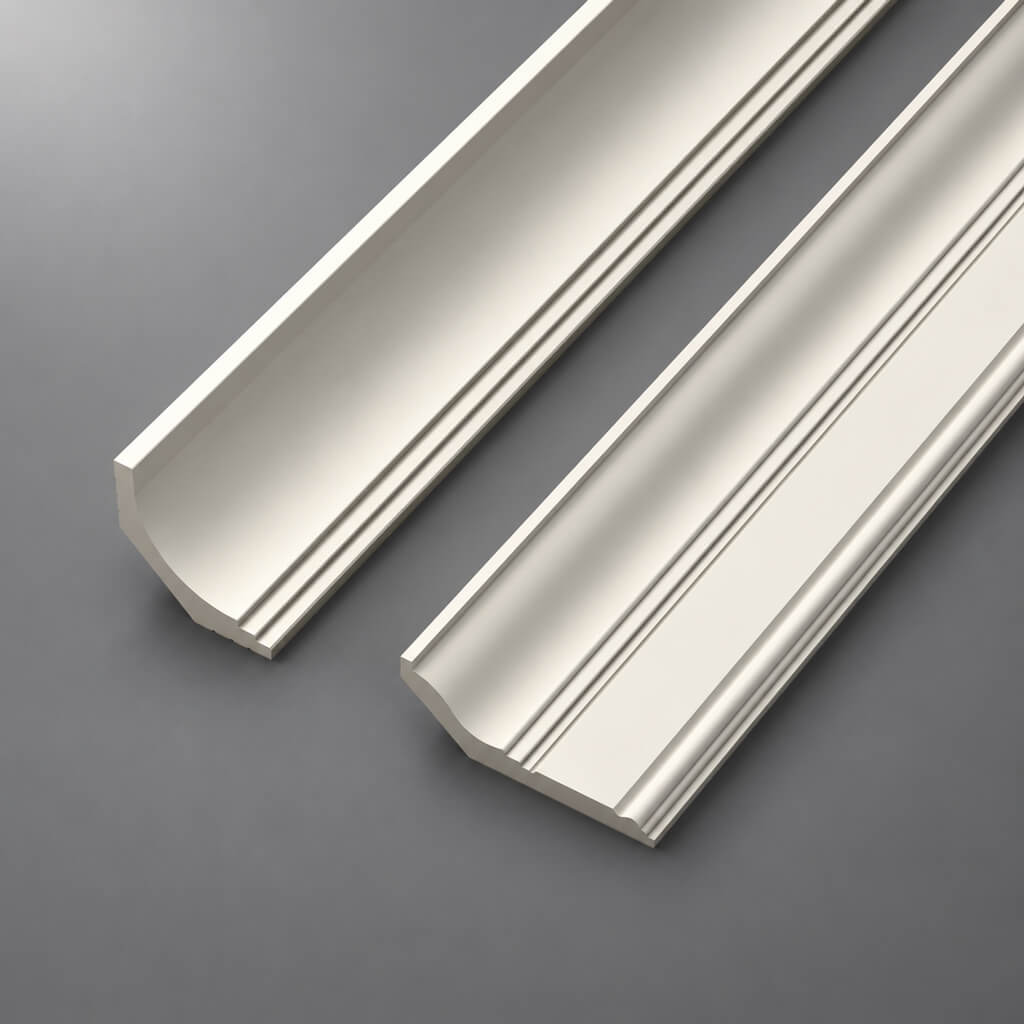
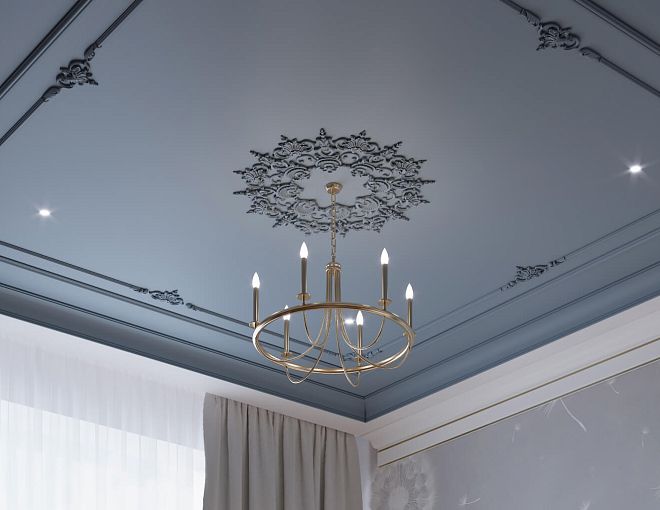
Ceiling cornice. A basic element that should be in any hallway. The wall-to-ceiling transition without a cornice looks unfinished. In a hallway with a low ceiling (2.5 m), choose a narrow cornice: 50–70 mm in a simple profile. In a hallway with a ceiling of 2.7–3 m—a cornice of 80–100 mm with moderate relief.
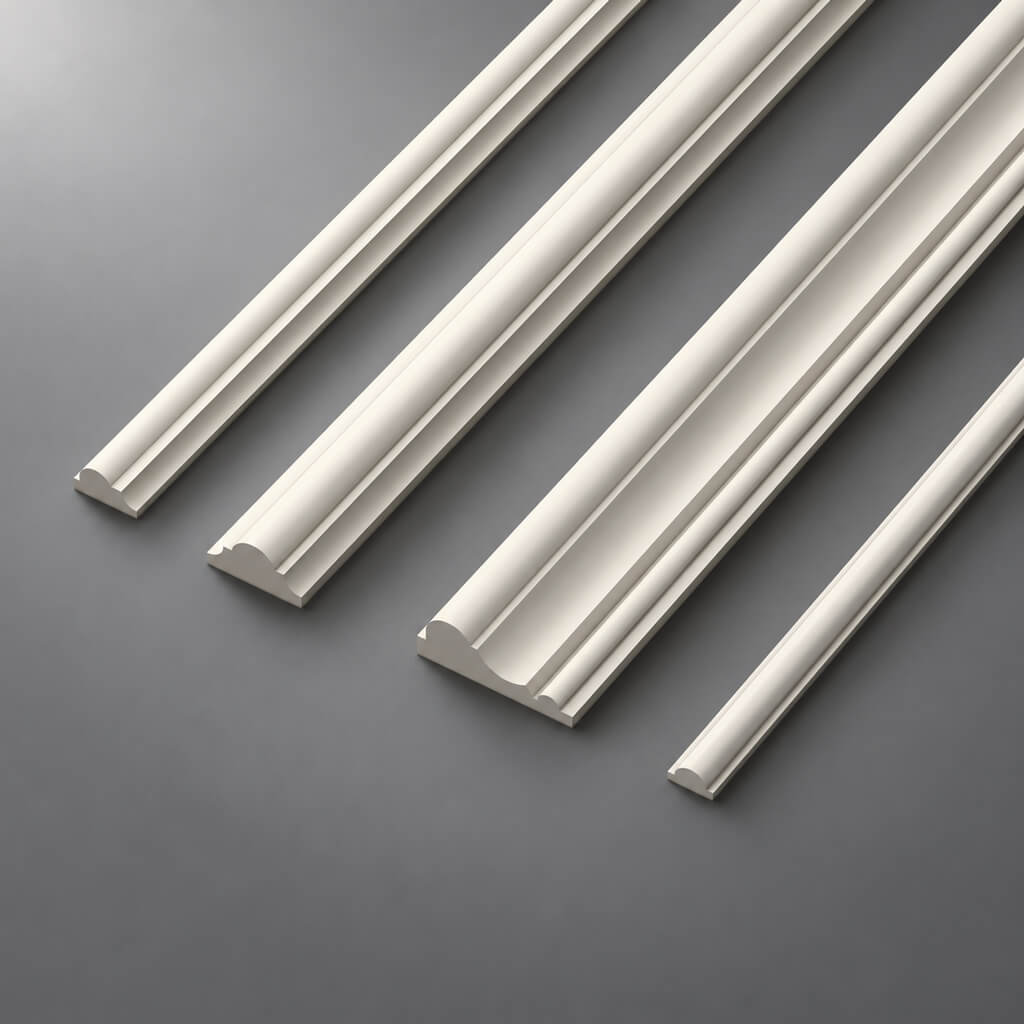
Horizontal belt molding. A narrow horizontal profile (30–50 mm) running along the walls at a height of 1.0–1.2 m. Divides the wall into two registers—lower (paneled or painted) and upper (neutral). Creates an architectural horizontal line that, paradoxically, does not lower the ceiling—on the contrary, it sets the scale of the wall and makes the ceiling appear 'farther away'.
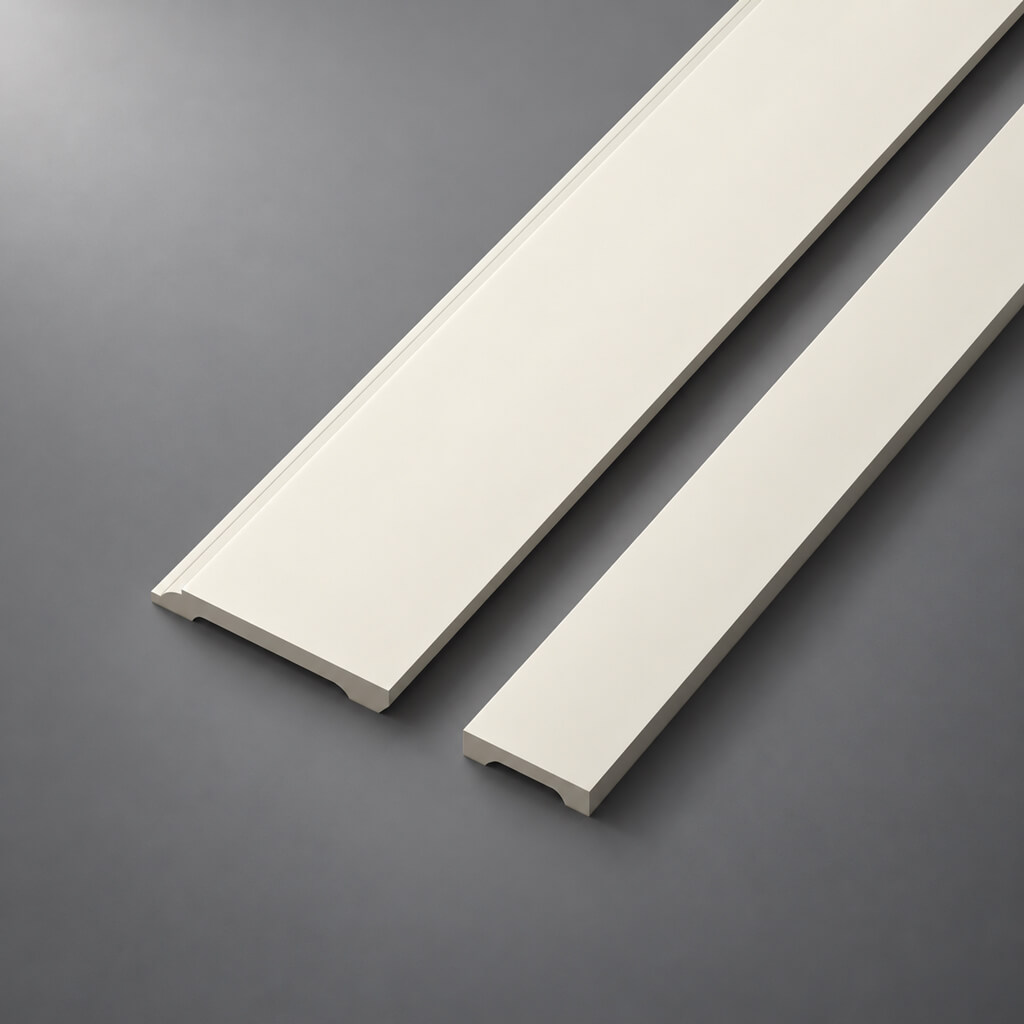
Floor baseboard. Finishes the lower wall-to-floor transition. In a hallway with paneling, the baseboard must account for the thickness of the panel backing—if the panel protrudes from the wall, the baseboard should cover the lower end without a gap.
Vertical pilaster molding. In a long hallway, vertical moldings installed at equal intervals along the wall create rhythmic division. This turns a monotonous hallway into a 'gallery' with a clear structure. Distance between pilasters—80–120 cm. Pilasters 40–60 mm wide with a simple profile—for a minimalist style. Pilasters 60–80 mm with a profile—for modern classic.
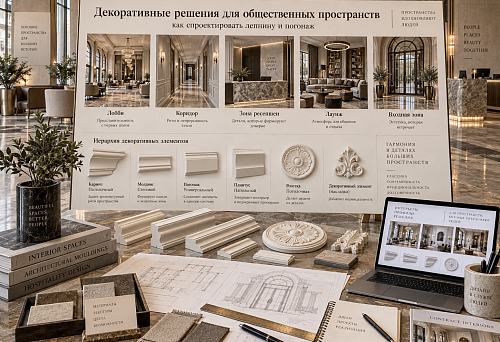
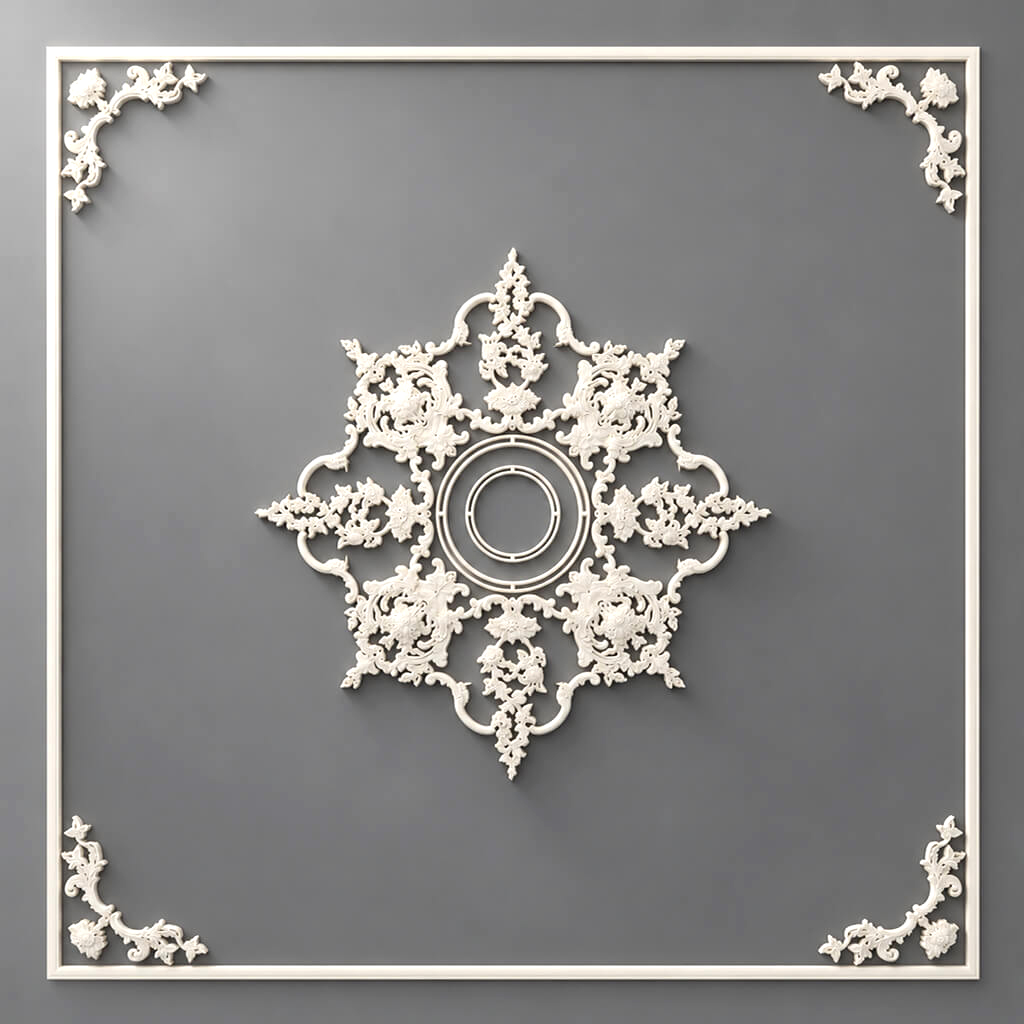
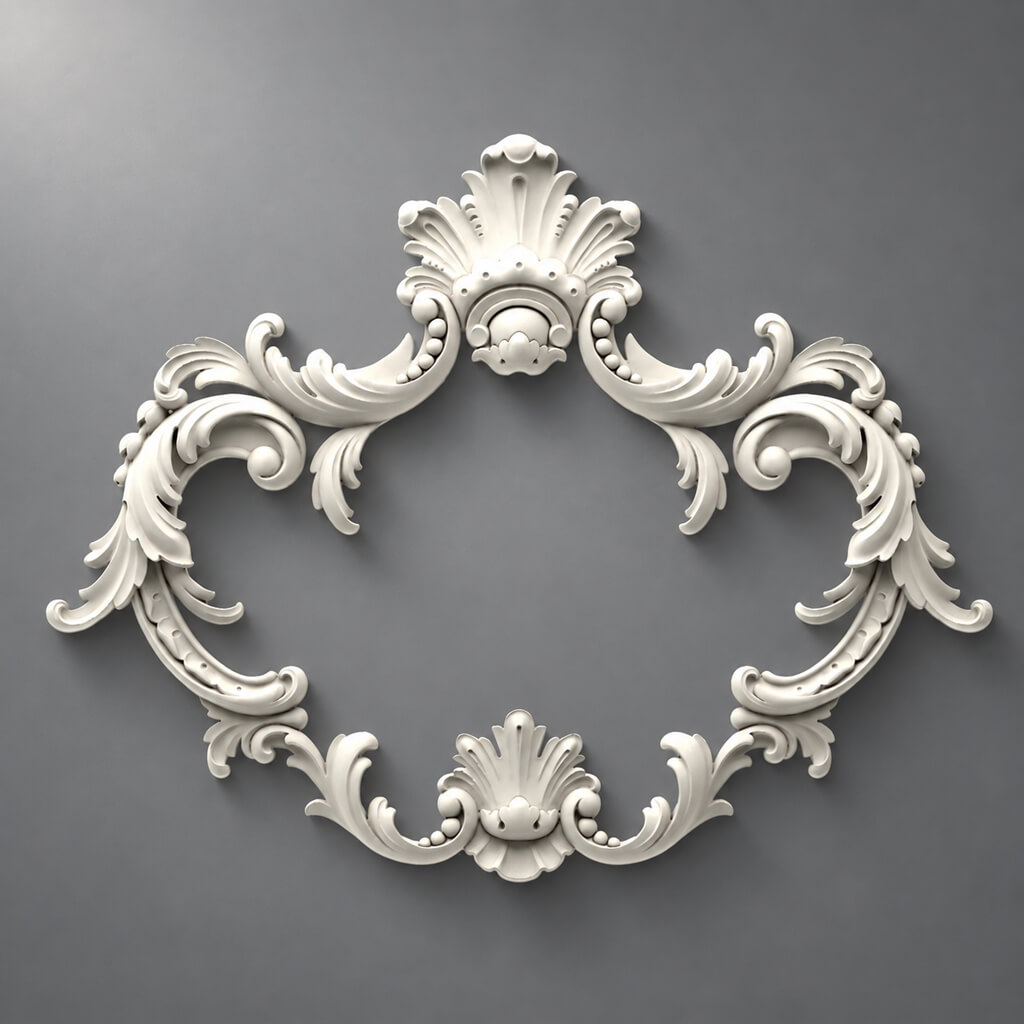
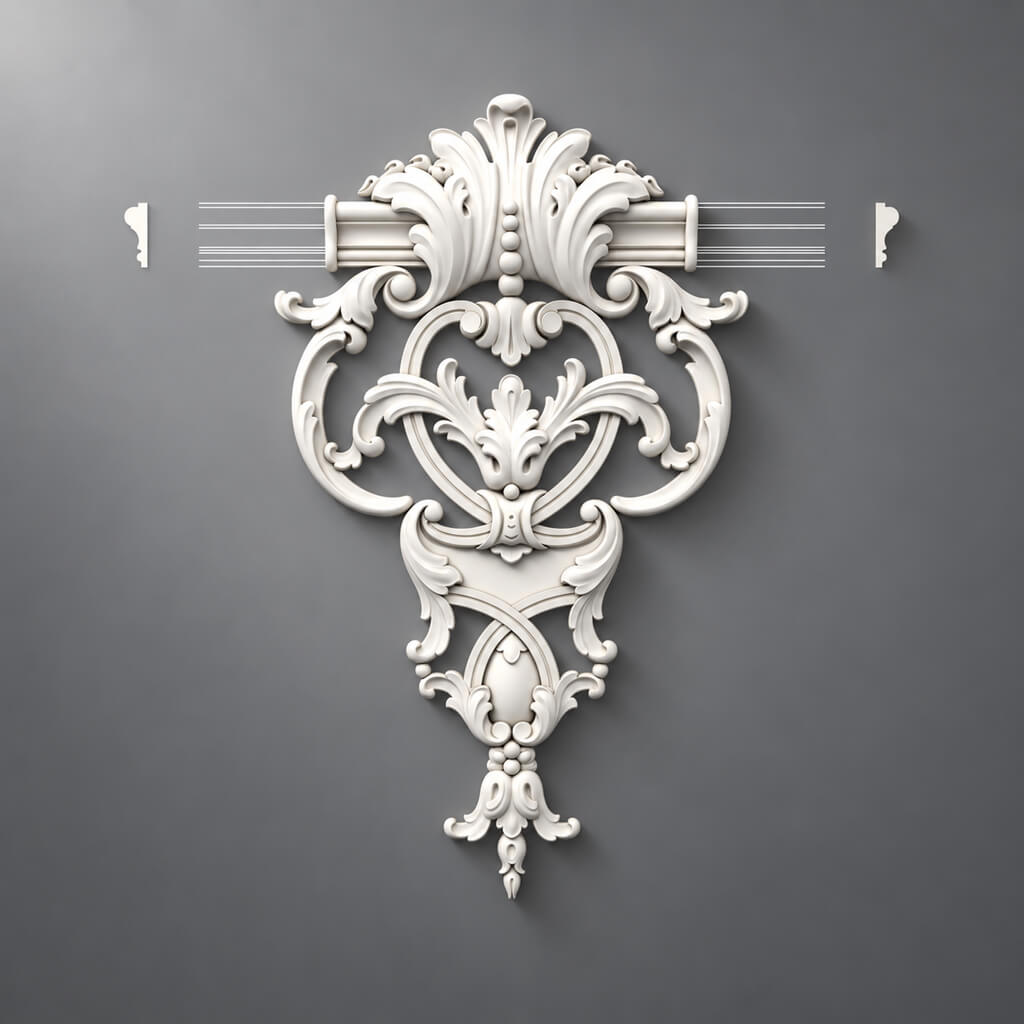
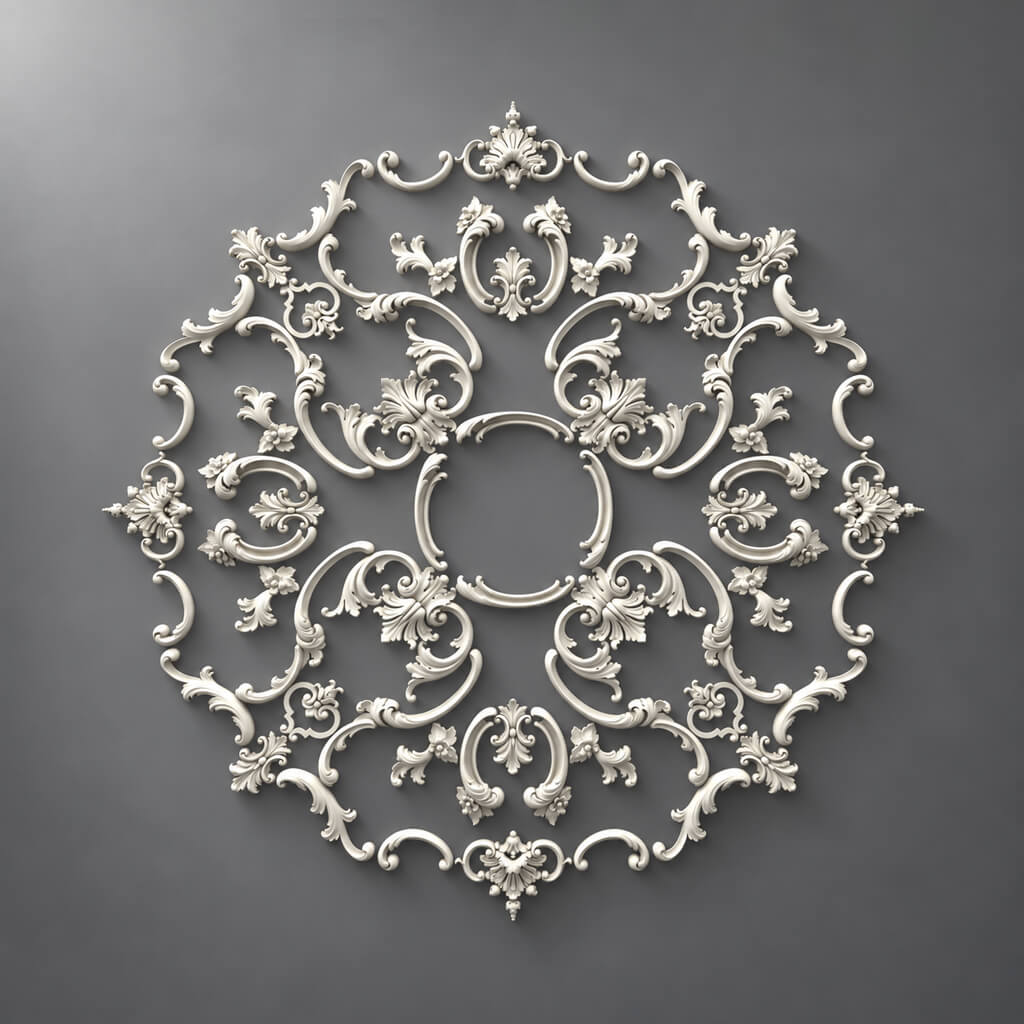
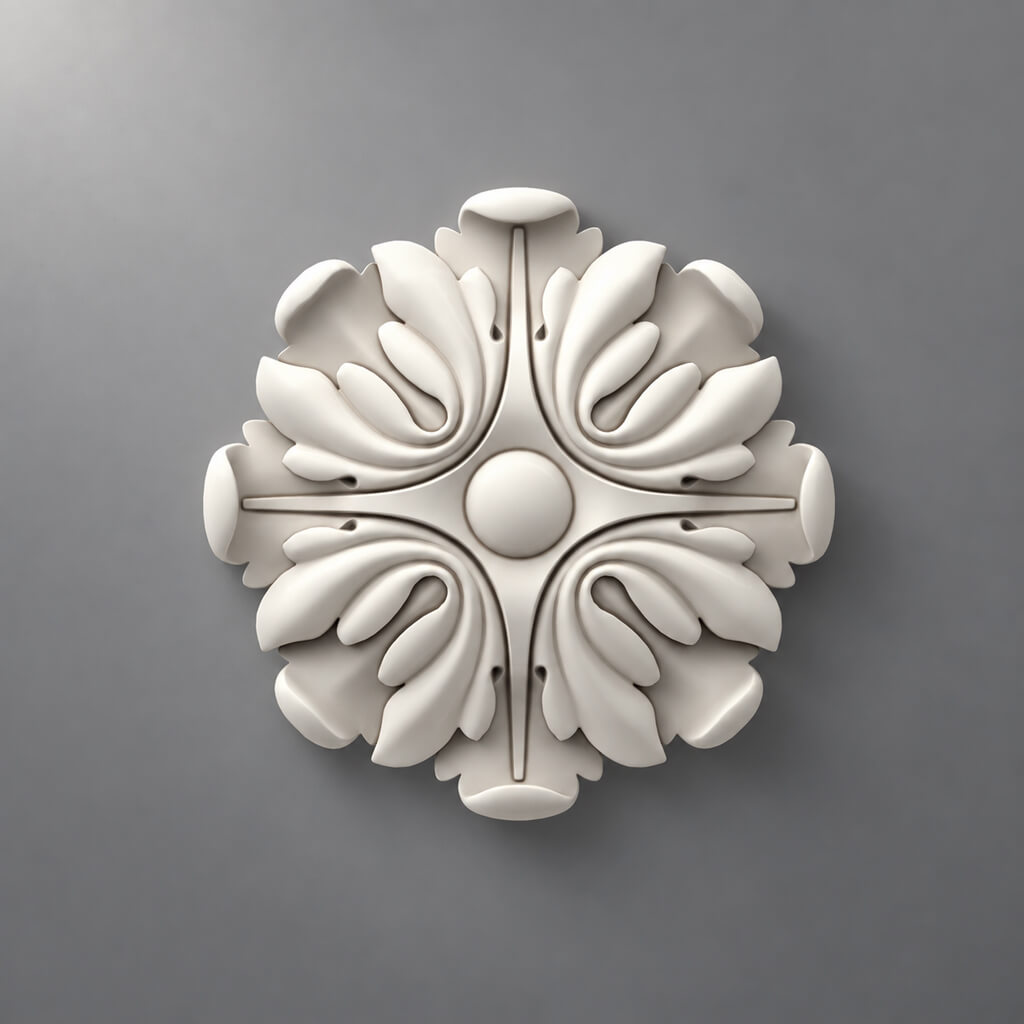
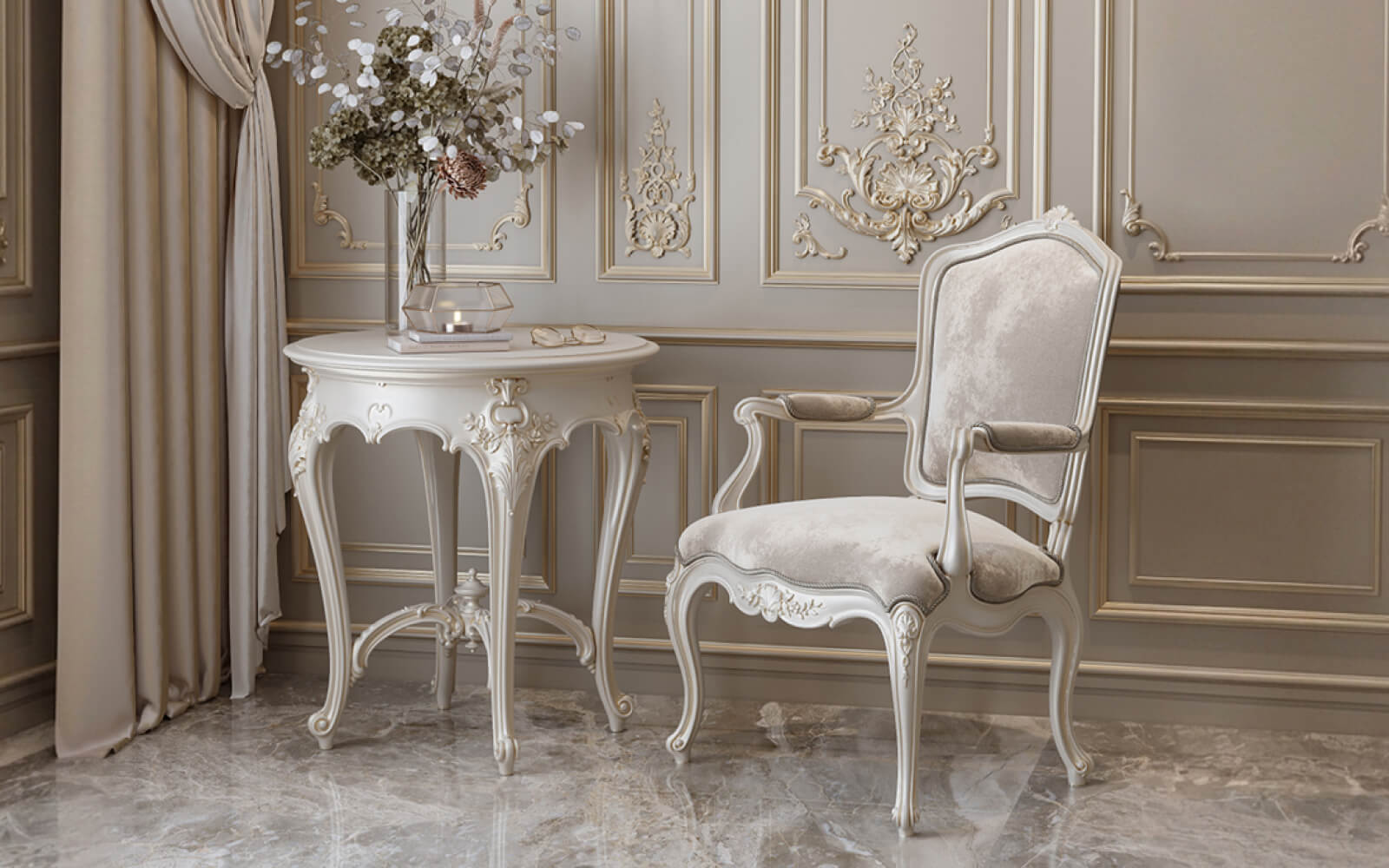
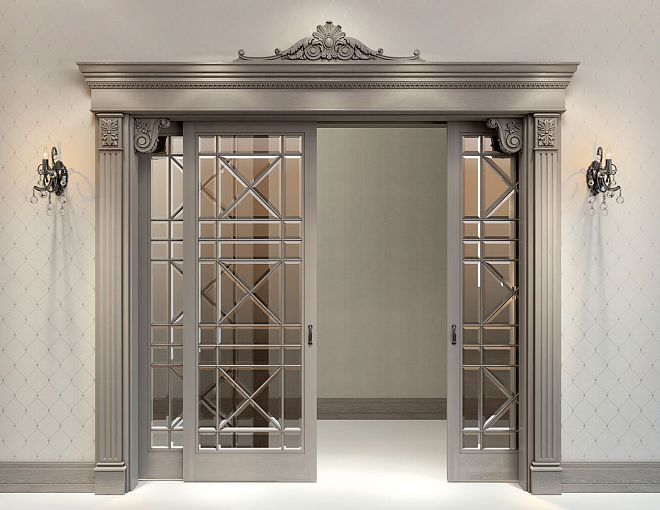
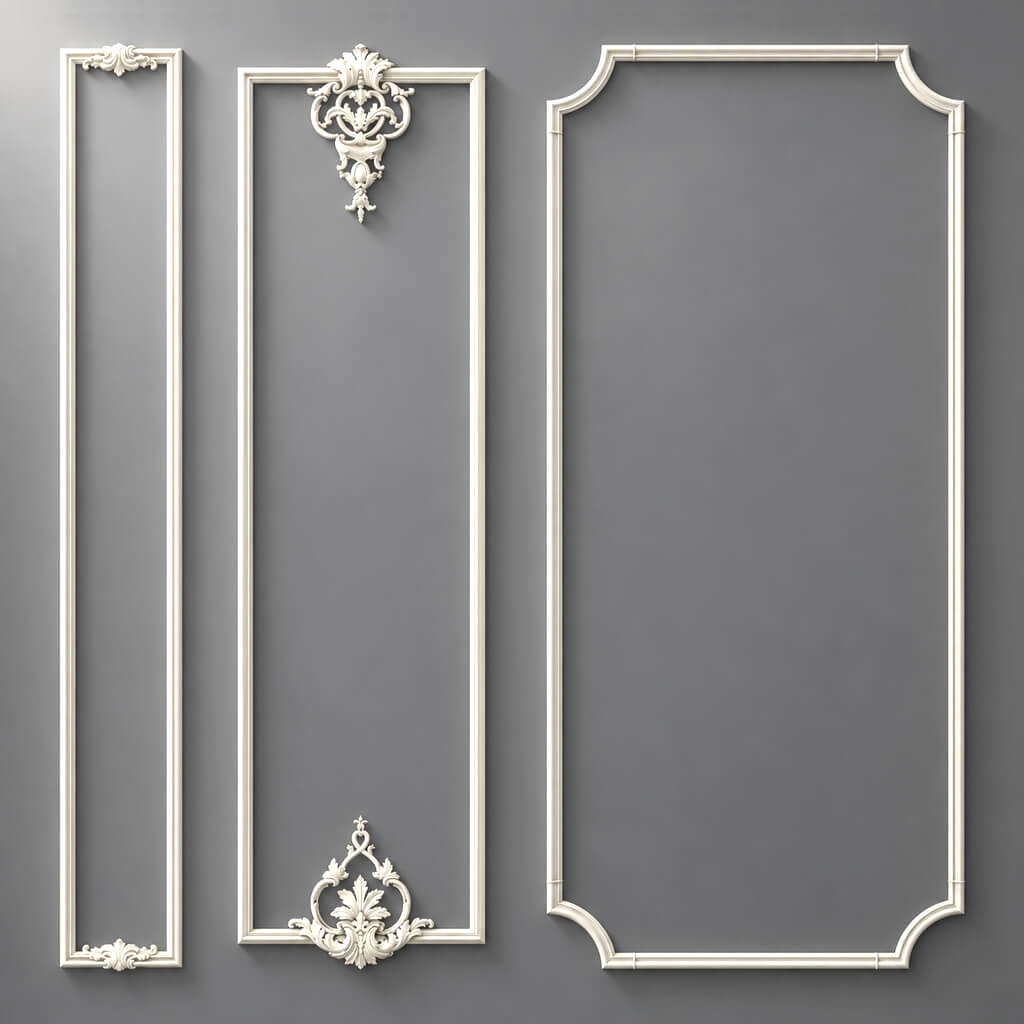
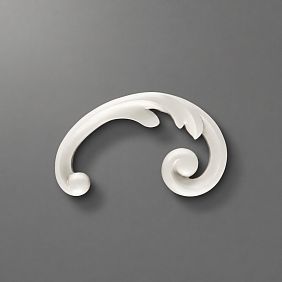
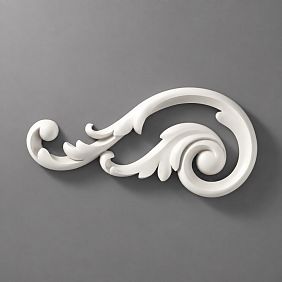
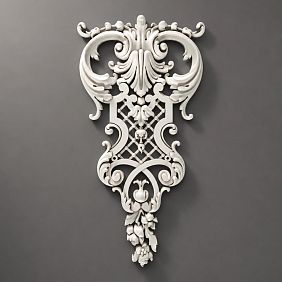
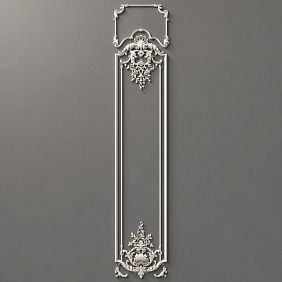
Decorative overlay elements.Polyurethane wall decorsuch as medallions, rosettes, cartouches—are accent elements used in specific spots: at the end of the hallway, above doorways, in niches. One or two such elements set the theme for the entire hallway.
Polyurethane wall stucco: why this material
Polyurethane wall moldingis the optimal choice for a hallway for several reasons. First, lightness: polyurethane decor is many times lighter than plaster, which is critical for adhesive installation on walls without additional fasteners. Second, flexibility: some polyurethane profiles allow slight bending—this is useful in hallways with uneven walls, which are rarely perfectly flat. Third, paintability: polyurethane decor can be painted with acrylic paints in any color, including tinted compositions and metallics.
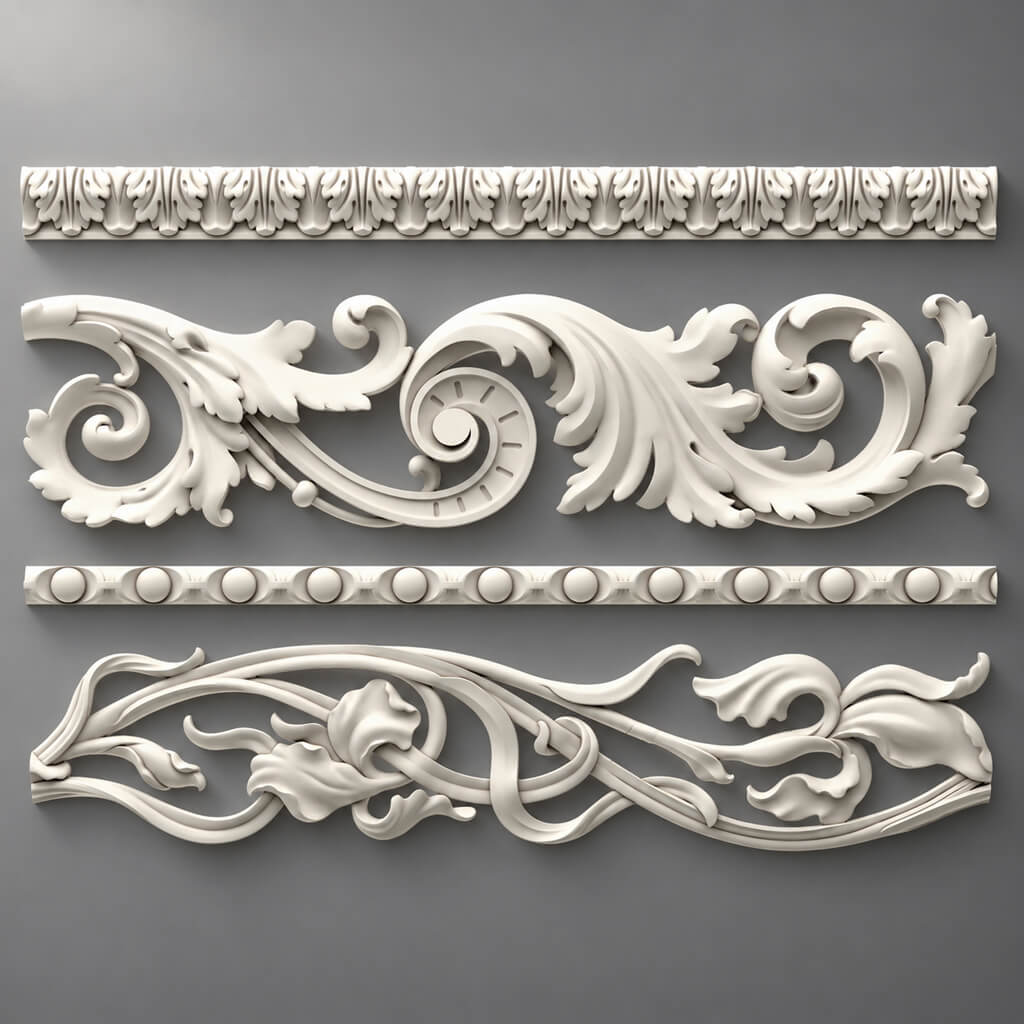
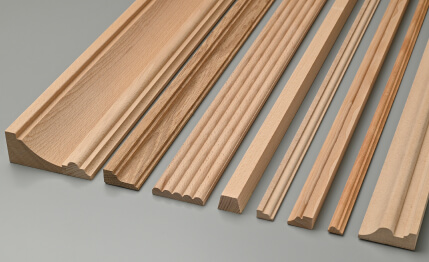
Polyurethane trim — moldings, cornices, baseboards in linear format — is produced in standard lengths of 2 m and more, which is convenient for long corridor walls: fewer joints, less cutting.
How light, mirrors, and vertical lines work together
Slatted panels and molded decor are architecture. But architecture lives in light. Without proper lighting, even the most well-thought-out system of panels and moldings loses half its effect.
Lighting a corridor with slatted panels
Side lighting is the best friend of a slatted wall. When the light source is positioned to the side of the slatted panel (rather than directly opposite), the shadows in the gaps between the slats become deep and expressive. The wall gains relief and depth that are absent in direct (frontal) lighting.
Practical options for side lighting in a corridor:
-
Wall sconces. Mounted at a height of 1.5–1.8 m along one or both corridor walls. A shade directed upward and downward creates a 'fountain' of light — a bright spot near the wall and soft diffusion along it.
-
Floor lamp in a niche or at the end of the corridor. A point source of warm light at the end of the corridor 'draws' the gaze forward, making the space visually longer.
-
Recessed ceiling lights offset toward the wall. If ceiling lights are not placed along the corridor axis but are offset toward the slatted wall — they create oblique lighting that emphasizes the relief of the slats.
-
Cornice cove lighting. An LED strip behind a ceiling cornice creates soft, diffused light along the entire ceiling perimeter. In a corridor, this gives a feeling of a 'floating' ceiling — especially effective with dark-toned panels.
Mirrors and Slatted Panels: How to Combine Them
A mirror in the hallway is a classic technique for visual expansion. But how to properly combine a mirror with slatted panels?
A mirror integrated into a slatted system is about integration. The slats run on both sides of the mirror, and the mirror occupies the gap between two slatted sections. This creates a feeling that the mirror is part of the wall's architecture, not just a 'nailed-on object'.
A mirror in a molding frame on a slatted wall is a more classic option. The molding frame highlights the mirror as an independent element, creating its framing. The molding of the frame should match the style and scale of the overall decorative system.
A mirror on the end wall of a hallway is a radical solution that literally 'opens up' the hallway: it seems there is a continuation behind the wall. Combined with slatted panels along the side walls, this creates a powerful architectural effect.
Vertical lines as the main tool for expansion
Let's combine everything said into one principle: the hallway expands with vertical lines. Vertical slats, vertical molding-pilasters, vertical stripes on wallpaper, vertical mirrors — each of these elements draws the eye upward, and the space feels wider.
This principle is confirmed by the physiology of vision: when the eye moves vertically, the horizontal width of space is perceived as larger. This is not an illusion — it's the work of peripheral vision, which, with a vertical direction of the main gaze, covers the horizontal plane more broadly.
Color solutions for a hallway with slatted panels
Color is a powerful tool for working with space, which cannot be ignored even within the 'material' theme of panels and moldings.
Light tones: maximum expansion
Light slats (white, light gray, bleached ash, ivory) in a narrow corridor work to expand the space. The light surface reflects light, making the area seem slightly more spacious. This is especially important when there is a lack of natural lighting.
Light moldings on light walls create a delicate relief—decoration is present but doesn't shout. The shadow from the molding is visible with side lighting and practically disappears with direct light. This is the perfect subtlety for a corridor, where 'quiet' decor is preferable to 'loud'.
Dark accents: depth and expressiveness
Dark slats in a corridor are a bold choice. They require good lighting and proper balance: dark slats only on one wall (accent), with the opposite wall and ceiling being light. Then the dark slatted wall creates depth without feeling oppressive.
Especially effective: dark slats in stained oak tone, a light ceiling with a thin white cornice, and a light floor. The space gains drama and style—without narrowing, if the lighting is set up correctly.
Monochromatic solution: a single color for walls, panels, moldings, and ceiling
This is a professional technique that works flawlessly. When slatted panels, moldings, and walls are painted in the same tone, all their boundaries blur. The corridor turns into a single sculptural shell with relief, rather than a collection of disparate elements. Especially effective in white or light gray monochrome: decoration is present as shadow, not color.
Typical mistakes that make a corridor lower, narrower, and heavier
This section is the most practical. Because mistakes in corridors are common and repeated from project to project.
First mistake: wide horizontal slats
It has been mentioned before, but it's worth repeating as a major mistake. Horizontal slats 80–100 mm wide running the full height of a narrow corridor wall create a horizontal rhythm that literally 'presses' the ceiling down to the floor. The space appears lower, not wider—this is the physiology of vision, and there's no arguing with it.
Second mistake: a dark ceiling without a specific designer's calculation
A dark ceiling in a corridor lowers it visually. Without built-in lighting that 'lifts' the ceiling and without a specific designer's rationale, this solution turns the corridor into a cave.
Third mistake: heavy molding in a small corridor
A massive 150–180 mm cornice in a corridor with a 2.5 m ceiling is an overload. The cornice literally visually lowers the ceiling. In a corridor, only light, delicate profiles work: no more than 60–80 mm for a 2.5 m ceiling.
Fourth mistake: lack of lighting along the walls
Slatted panels without side lighting lose their main visual effect—the play of shadows in the gaps. A wall with slats under direct ceiling light looks almost flat. A wall with slats under side light from a sconce or floor lamp is lively, three-dimensional, deep.
Fifth mistake: overloading with decor
Slatted panels on all walls + heavy moldings around the entire perimeter + decorative overlays every 50 cm—this is chaos, not design. In a corridor, the principle of minimalism in decor with maximum quality is especially important. One accent slatted wall, delicate moldings around the perimeter, one or two accent decorative elements—this is enough to create a strong image.
Mistake six: molding of the wrong style
Modern minimalist slatted panels made of dark MDF + a baroque cornice with ornamentation — this is not an 'interesting contrast'. This is a stylistic error. The style of molding is determined by the style of the interior. For minimalism and loft — rectangular profiles without ornamentation. For modern classic — profiles with moderate relief.
Mistake seven: mirror without framing
A mirror attached to a slatted wall without a frame and without molding framing looks like a construction oversight — 'they put in a mirror just to have one'. Any mirror in a hallway with slatted panels requires architectural integration: either a molding frame or integration into the slatted system.
Practical solutions for different types of hallways
Let's move from principles to specific schemes for specific conditions.
Narrow hallway up to 100 cm wide
This is the most difficult case. Any mistake here is especially noticeable.
Slatted panels: narrow slats 25–45 mm, vertical orientation, one wall (the longest). The second wall — neutral light.
Molded decor: ceiling cornice 50 mm maximum, baseboard 60–70 mm. No horizontal moldings — only perimeter ones.
Color: light slats. Ceiling — white or light gray.
Lighting: sconces along the slatted wall.
Mirror: on the end wall, full-height or large vertical.
Corridor 110–140 cm wide
Standard for most apartments. More space for maneuvering here.
Slatted panels: slats 40–70 mm, vertical orientation, one or both walls (with two-sided slatted finish — slats of different colors on opposite walls create depth).
Molding decor: ceiling cornice 60–80 mm, horizontal molding belt at a height of 1.0–1.2 m (when finishing the lower part of the wall), baseboard 80 mm.
Vertical molding pilasters along long walls every 90–100 cm — for corridor length from 4 m.
Lighting: combined lighting — recessed ceiling lights + sconces.
Wide corridor and hall from 150 cm wide
This is no longer a narrow corridor—it's a hall. Bolder solutions are possible here.
Slatted panels: slats 60–100 mm, full height, one accent wall or decorative slatted sections alternate with niches.
Molding decor: cornice 80–120 mm, horizontal moldings create a full panel field, vertical pilasters divide walls into architectural sections, decorative overlays above doors.
Lighting: chandelier in the center of the hall (with high ceilings) + sconces + recessed lights.
Workflow: from concept to finish
The correct sequence in a corridor is the same as in any other room, but adjusted for the confined space.
Sequence of installation work in a corridor
-
Wall preparation—leveling, priming.
-
Marking—horizontal lines for cornices and moldings, axes for vertical pilasters, marking the frame for slatted panels.
-
Installation of the frame for slatted panels (if required).
-
Installation of slatted panels with expansion gaps at the ceiling and floor.
-
Installation of ceiling cornice — after panels, covering the ceiling gap.
-
Installation of horizontal molding belts — after panels.
-
Installation of vertical molding pilasters — after horizontal ones.
-
Installation of baseboard — last, covering the lower end of panels.
-
Sealing all joints with acrylic putty.
-
Sanding and painting.
Violation of sequence — source of most problems. Especially: moldings are installed after panels, not before them.
About the company STAVROS
A corridor deserves the same attention as a living room. STAVROS produces slatted panels from solid wood and MDF across the entire width range — from delicate narrow slats for tight spaces to large architectural formats for halls and vestibules. The company's assortment includes a full set of decorative elements made of polyurethane: cornices, moldings, baseboards, millwork, decorative wall and ceiling overlays. All — with precise geometry, coordinated profile styles, and ready base coating for painting.
STAVROS — Russian production with European raw materials and consistent quality of every product. Company specialists consult on selecting solutions for complex spaces: narrow corridors, low ceilings, non-standard formats. Because a beautiful corridor is not an accident. It's the correctly chosen material and understanding of architectural laws of space.
FAQ: Answers to popular questions
Can slatted panels be used in a dark, windowless hallway?
Yes, but with conditions. In a hallway without natural light, light-colored slats and well-placed sconces are the mandatory minimum. Dark slats in a dark, windowless hallway create a tunnel effect. Light-colored ones work to reflect artificial light and make the space visually more open.
What is the optimal height for a slatted panel in a hallway with a 2.5 m ceiling?
Full height—from floor to ceiling. This provides the maximum effect of vertical elongation. If a panel field is preferred according to the design concept—no higher than 1.2 m with a mandatory molding at the top border.
Is a frame needed for installing slatted panels in a hallway?
It depends on the condition of the walls. With variations of more than 5 mm over 2 m—a frame is mandatory. In hallways with even walls, lightweight MDF panels can be mounted with adhesive or direct mounting. A frame is also necessary if you need to hide utilities or integrate LED lighting.
What kind of cornice should be chosen for a hallway with a 2.5 m ceiling?
Width no more than 60–70 mm, a simple profile without complex ornamentation. The cornice in the hallway should be light so as not to visually lower the ceiling.
Can polyurethane decor be glued directly onto slatted panels?
No. Molded decor is mounted only on stationary bases—plaster, drywall, concrete. Slatted panels are not a suitable surface for adhesive mounting of decor.
How to correctly combine the color of slatted panels and moldings in a hallway?
Three proven options: a unified color (panels and moldings in the same tone — a monochrome system), white moldings with any panel color (a neutral option that always works), moldings matching the wall tone with contrasting slats (moldings blend into the background, with emphasis only on the slats).
How durable are slatted panels in a high-traffic hallway?
MDF panels with high-quality varnish or enamel coating withstand high mechanical loads. The key factor is the coating: matte enamel hides scratches better than glossy. The lower part of the wall (up to 0.9–1.0 m) is the zone of maximum contact, where coating quality is especially important.