Article Contents:
- A crystal chandelier is already a statement. What does this mean for the rosette?
- Rosette diameter for a crystal chandelier: how to avoid mistakes with size
- Why diameter is more important than relief
- Chandelier size as a starting point
- Ceiling height and proportions
- Room area
- Multiple tiers of the chandelier
- Rosette relief: the principle of "reverse activity"
- Crystal chandelier is active — rosette is calm
- The crystal chandelier is laconic — the rosette can be richer
- Relief and painting: how to soften an active ornament
- Rosette shape: why the circle is not the only answer
- Round rosette — classic and versatility
- When other shapes are appropriate
- Rosette style and interior style: how not to make a mistake with the ornament
- Classicism and Baroque
- Neoclassicism
- Modern classicism
- Art Deco
- Rosette and ceiling system: cornice, moldings, stucco
- Ornament coordination
- Polyurethane moldings around the rosette
- Ceiling stucco as part of a unified system
- Symmetry as the foundation of the system
- How to assess if the ceiling is not "overloaded"
- Painting a ceiling rose for a crystal chandelier: three options
- White to match the ceiling — classic without mistakes
- White base with gilded details — a coordinated accent
- Cream or "aged" white — for an atmospheric interior
- Installing a ceiling rose for a crystal chandelier: what needs to be done correctly
- Centering
- Evenness of fit
- Joint treatment
- Central Hole
- What to buy together with a ceiling rose for a crystal chandelier
- Essential minimum
- Extended kit for a full ceiling system
- Five real-life scenarios: a ceiling rose for a crystal chandelier in specific spaces
- Three mistakes that are easy to avoid
- Frequently Asked Questions
- About the Company STAVROS
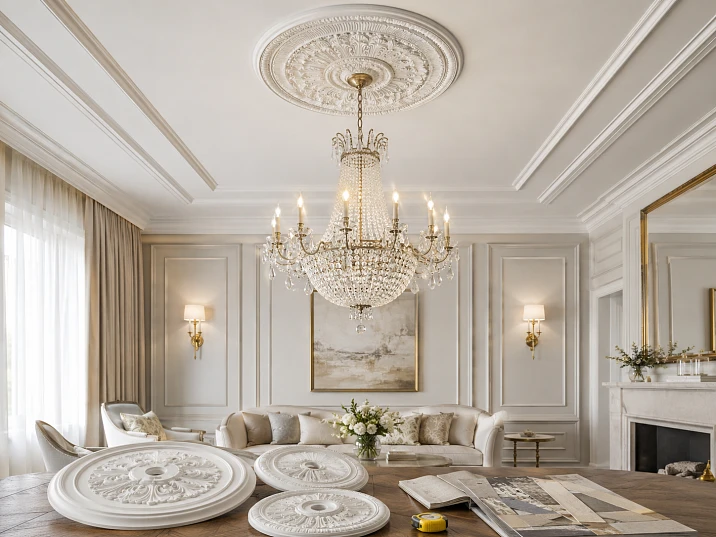
There are things you can't choose in a hurry. A crystal chandelier is one of them. A ceiling rose for a crystal chandelier is another. And when these two elements meet on the same ceiling, either a dialogue arises between them, or a war. Dialogue gives birth to what is commonly called an 'expensive interior.' War gives birth to an overloaded ceiling, where the eye doesn't know where to look.
A polyurethane ceiling rose for a crystal chandelier should support the scale of the light fixture without competing with it: the right diameter, soft relief, painting in the ceiling color, and matching with the cornice help make the ceiling look expensive rather than overloaded. This is exactly what we discuss in detail, with examples and specific recommendations.
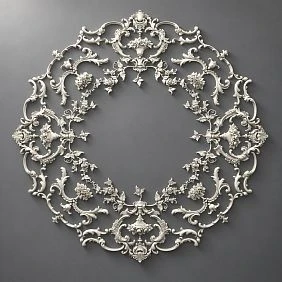
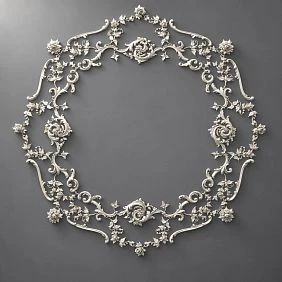
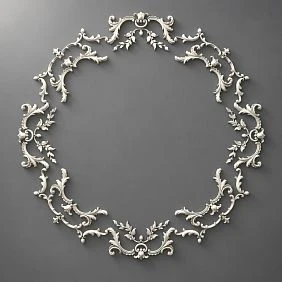
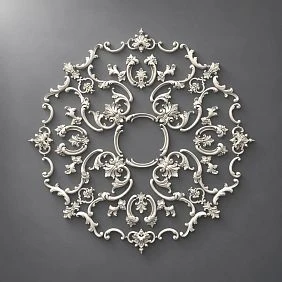
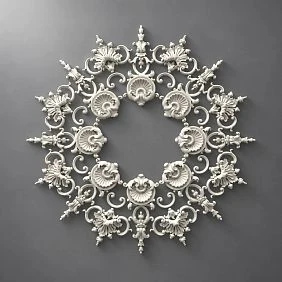
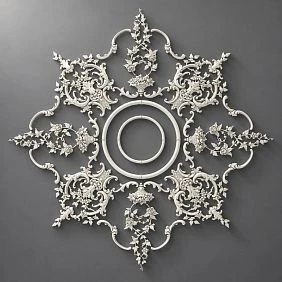
A crystal chandelier is already a statement. What does this mean for the rose?
A crystal chandelier holds a special place in room decor. It doesn't just illuminate—it shapes the mood of the space, sets its tone. Crystal catches light, refracts it, scatters it across walls and ceiling. A crystal chandelier has volume, mass, complexity—even if it is relatively small.
That is why a ceiling rose for a crystal chandelier requires a special logic of selection. A rose for a minimalist pendant light can be actively embossed—because the light is 'silent' and the rose can 'speak.' With a crystal chandelier, the situation is the opposite: the chandelier is already speaking. Loudly, expressively, brilliantly. The rose should not interrupt—it should support.
What does 'support' mean?
It means being noticeable enough not to get lost under the chandelier's base. Calm enough not to create a competing ornamental center. Scaled enough to match the light fixture's size. And stylish enough to fit into an interior that has chosen a crystal chandelier as its main accent.




Diameter of the socket for a crystal chandelier: how not to make a mistake with the size
Let's start with the most specific thing — the diameter. This is the first and main parameter that determines everything else.
Our factory also produces:
Why diameter is more important than relief
Relief can be corrected with paint — a rich ornament in the tone of the ceiling becomes delicate. Diameter cannot be corrected by anything. A small socket under a large chandelier is always a "miss" that is immediately visible. And vice versa: a huge socket under a small chandelier creates a disproportion that weighs on the space.
Get Consultation
Chandelier size as a starting point
The main reference point is the diameter (or "span") of the crystal chandelier. If the chandelier is 50–60 cm in diameter, a socket with a diameter of 300–380 mm creates the correct ratio: it frames the base without "hiding" under it or extending far beyond its limits. For a chandelier of 70–90 cm — a socket of 400–480 mm. For large chandeliers with a diameter of more than a meter — 500–600 mm and above.
But this is an approximate scale. The final size is influenced by several other factors.
Ceiling height and proportions
The higher the ceiling, the larger the socket is appropriate. With a ceiling of 2.7 m, a socket with a diameter of 420 mm under a large crystal chandelier may feel oppressive. With a ceiling of 3.2 m, the same socket will look proportionate.
The rule is simple: for every additional 25–30 cm of ceiling height, you can add 50–70 mm to the socket diameter without the risk of disproportion.
Room area
A 30 m² living room can accommodate a large chandelier. A 14 m² bedroom with the same chandelier would be overloaded — the chandelier and socket together would take up too much of the ceiling space.
| Situation | Socket diameter |
|---|---|
| Compact crystal chandelier, bedroom | 240–320 mm |
| Medium chandelier, living room 20–25 m² | 340–440 mm |
| Large chandelier, living room 25–35 m² | 440–540 mm |
| Large formal chandelier, high ceiling | 500–650 mm |
| Multi-tier chandelier, hall | from 550 mm |
Several tiers of chandelier
A multi-tiered crystal chandelier is a special case. It has vertical volume and "spread." In this case, the rosette works not as a frame for the lampshade, but as the architectural base of the entire structure. The diameter is chosen based on the upper tier — or slightly larger.
Rosette relief: the principle of "reverse activity"
Here, the principle that professional designers call "reverse activity" applies. The more active one element is, the calmer the other should be. The more complex the light fixture, the simpler the rosette. And vice versa.
Crystal chandelier is active — rosette is calm
If the chandelier is decorated with multi-level pendants, crystal arms, rich fittings — the rosette should be relatively calm. Not necessarily smooth, but without a duplicating ornament.
Good options:
-
Rosette with profile rings without ornament.
-
Soft laurel wreath or delicate leaves — in a single layer.
-
Geometric belt without rich acanthus relief.
These polyurethane rosettes support the scale of the chandelier, create a "base," but do not create a competing decorative pole.
The crystal chandelier is laconic — the rosette can be richer
If the chandelier is more "elegant" than "rich" — a crystal shade, minimal hardware, delicate shape — the rosette can take on more. A rich acanthus relief, multi-level ornament, expressive profile.
In this case, the rosette does not argue with the chandelier, but creates a worthy context for it — a "stucco throne" that makes even a modest crystal chandelier part of a classic interior.
Relief and painting: how to soften an active ornament
If the rosette has a rich relief and the chandelier is bright — they can be "reconciled" by painting. The relief ceiling rose made of polyurethane, painted in the color of the ceiling, visually "calms down": the ornament is only readable in oblique light, loses its decorative aggression. The rosette is present — but does not dominate.
This is a professional technique that allows you to use a rich model where, it would seem, a restrained one is needed.
Rosette shape: why the circle is not the only answer
Round rosette — classic and versatility
Under a crystal chandelier located in the center of the room, a round rosette is the historically and aesthetically correct choice. The circle is neutral: it does not set a direction, does not create geometric tension, and gently focuses the eye on the central point of the ceiling.
For most crystal chandeliers — classic, neoclassical, multi-tiered — it is the round one that Ceiling rosette for chandelier delivers an impeccable result.
When other shapes are appropriate
A square rosette is appropriate in interiors with rectilinear geometry: strict classicism, Empire style, interiors with clear molding frames on the ceiling. A rectangular crystal chandelier or one with a square base works well with a square rosette.
An oval rosette is for elongated spaces. If a crystal chandelier hangs above a dining table in an elongated living-dining room, the oval rosette emphasizes the longitudinal axis and "binds" the space.
A figured rosette is for formal interiors with rich decor, where every element of the ceiling is part of a unified architectural program.
Socket style and interior style: how not to make a mistake with the ornament
A crystal chandelier is always a stylistic statement. And the rosette must speak the same language.
Classical and Baroque
A Baroque-style crystal chandelier — multi-tiered, with an abundance of pendants, gilded fittings, and arms — requires a rosette in the same spirit. Acanthus relief, rich ornamentation, expressive profiles. Buy a polyurethane ceiling rosette with a deep classical relief means creating a worthy frame for such a lamp.
Painting: white base with gilding of details to match the chandelier's hardware. This creates a color bridge between the rosette and the lamp.
Neoclassicism
A neoclassical chandelier is more restrained than a Baroque one. Crystal is present but without excess. The hardware can be matte gold, silver, or nickel. The rosette should be proportionate with moderate relief, a laurel wreath, or delicate leaves, without Baroque heaviness.
Painting: white or cream to match the ceiling. Delicate gilding when the chandelier has gold hardware.
Modern classic
If a crystal chandelier is chosen as a single classic accent in a modern interior, the rosette should support this accent but not create a feeling of an overdressed apartment. A smooth or softly relief rosette should be delicate, clean, and match the ceiling.
No Baroque leaves, no gilding. Just form, just white, and that is enough.
Art Deco
An Art Deco crystal chandelier is geometric with faceted crystal and clear lines. The rosette should be geometric: concentric rings, straight profile bands, no organic ornaments.
Rosette and ceiling system: cornice, moldings, stucco
A crystal chandelier rarely works in an empty ceiling space. It is often part of a broader ceiling system with a perimeter cornice, molding frames, and decorative stucco.
Ornament coordination
The main principle: the rosette ornament and the cornice ornament must speak the same language. An acanthus cornice — an acanthus or laurel rosette. A geometric cornice — a geometric rosette. A smooth profile cornice — a smooth or softly embossed rosette.
Mismatched ornaments on the same ceiling create 'noise' — when the eye cannot perceive the space as a single whole.
Moldings made of polyurethane around the rosette
Decorative molding frames around the central rosette are a classic technique. A square or rectangular molding frame around a round rosette creates a 'picture' on the ceiling: the chandelier is in a picture frame. This is an architectural solution that makes the ceiling mature and well-thought-out.
With this solution, the diameter of the rosette can be slightly smaller — the molding frame 'expands' the area, creating a total decorative size.
Ceiling molding as part of a unified system
If the room already has or is planned to have ceiling stucco — cornice, coffers, decorative beams — the rosette should fit into this system. Check:
-
The relief of the cornice: its depth and richness are a guide for the depth of the rosette's relief.
-
The width of the cornice: a narrow cornice pairs with a more compact rosette.
-
The distance from the rosette to the cornice: with a large rosette and a narrow room, this distance can be small — the ceiling 'fills up'.
Symmetry as the foundation of the system
A ceiling system with a crystal chandelier is built on symmetry. The rosette is in the absolute center. The molding frame is concentrically around it. The cornice is along the perimeter. The chandelier is in the center of the rosette. If at least one element is shifted or disproportionate, the system collapses.
How to assess whether the ceiling is "overloaded"
Overload is a subjective feeling, but it has quite objective signs. The ceiling is overloaded if:
-
Decorative elements occupy more than 40% of the ceiling area.
-
The relief of the rosette and the relief of the cornice compete in richness.
-
The diameter of the rosette exceeds the diameter of the chandelier itself by more than 1.5 times.
-
The color of the rosette contrasts with the ceiling, creating another "color" pole besides the chandelier.
-
Molding frames are located too close to the perimeter cornice.
How to avoid overload?
Rule one: a ceiling rose matching the ceiling color always reduces "decorative pressure," even with rich relief.
Rule two: one zone of rich relief — either the cornice or the rose, but not both. If the cornice is ornate, choose a simpler rose. If the cornice is profiled without ornament, the rose can have more relief.
Rule three: empty space between the rose and the cornice is not a flaw, but breathing. The ceiling must "breathe."
Painting a ceiling rose for a crystal chandelier: three options
White to match the ceiling — a classic without mistakes
A white rose on a white ceiling is a historically accurate, eternally relevant solution. The crystal chandelier itself creates sparkle and color play. The white rose is a quiet, confident foundation. The relief is only read in the play of shadows.
For most crystal chandeliers — classic, neoclassical, modern — this is the right choice.
White base with gilded details — a coordinated accent
If the chandelier has gold fittings, gilding the relief details of the rose creates a "connection" between the light fixture and the ceiling decor. The rose ceases to be just an overlay — it becomes part of the interior's color language.
Important: the gilding should be delicate. A thin brush, one layer, only on the protruding relief elements — bands, leaves, profile rings. Not "flooded" gold, but a "hint" of gold.
Cream or "aged" white — for an atmospheric interior
If the interior is built on warm tones — cream walls, parquet, warm marble — a cream rosette creates an organic connection with the overall palette. This is not contrast, it's a nuance.
A crystal chandelier in a warm interior with a cream rosette looks "homey" and alive — as opposed to the cold, exhibition-like strictness of white.
Installing a rosette for a crystal chandelier: what needs to be done correctly
Even a perfectly chosen rosette can disappoint if the installation is done carelessly. A few key points.
Centering
The rosette must be installed exactly in the center of the mounting hole. A shift of 5–10 mm — and the asymmetrical position relative to the chandelier will be noticeable. Before installation, mark the center and check it in several projections.
Flatness of fit
The rosette must fit flush against the ceiling without gaps along the entire perimeter. If the ceiling is uneven — the glue points should be selected considering the irregularities to avoid creating "humps" on the back surface.
Joint treatment
The seam between the rosette and the ceiling — with acrylic sealant. Smooth, even, without bumps. After drying — primer and painting together with the ceiling. The seam disappears, the rosette "grows" out of the ceiling. A detailed algorithm of the entire installation process is described in the guide on installing polyurethane molding.
Central hole
Hole in the socket for cable outlet and mounting hook. Standard diameter is 60–80 mm. If the mounting element is larger, the polyurethane can be easily trimmed with a sharp knife to the required diameter.
What to buy together with the socket for a crystal chandelier
The socket is the central element of the ceiling kit. But a complete result requires the entire set.
Mandatory minimum
-
Ceiling socket made of polyurethane of the required diameter and relief.
-
Glue for polyurethane molding.
-
Acrylic sealant (white).
-
Acrylic primer.
-
Water-based paint in the color of the ceiling.
-
For gilding — metallic paint (gold or bronze).
Extended kit for a complete ceiling system
-
Moldings made of polyurethane — for the frame contour around the socket.
-
Perimeter cornice from the section Ceiling molding — for perimeter decoration.
-
Decorative Inserts — corner elements for molding frames.
| Task | What to buy |
|---|---|
| Design a crystal chandelier | Ceiling socket of suitable diameter |
| Support a large multi-tier chandelier | Large relief rosette 500+ mm |
| Do not overload the ceiling | Rosette with moderate relief + painting to match the ceiling |
| Connect the rosette to the chandelier's reinforcement | White rosette + gilding of details |
| Create a complete ceiling system | Rosette + cornice + moldings + unified painting |
| Buy without mistakes | After assessing the chandelier diameter, ceiling height, and style |
Five real scenarios: rosette for a crystal chandelier in specific spaces
Scenario one: classic living room 28 m², ceiling 3.0 m, multi-tier chandelier with a diameter of 80 cm with gold fittings.
Round rosette with a diameter of 480 mm, acanthus relief of medium saturation. White with gilding of profile belts — matching the chandelier fittings. Molding frame around — white, same ornament. Perimeter cornice — with moderate relief. Result: a mature, coordinated ceiling system where the crystal chandelier is the main character, and the rosette is its worthy frame.
Scenario two: bedroom 18 m², ceiling 2.7 m, elegant crystal chandelier with nickel fittings.
Round rosette with a diameter of 320 mm, delicate laurel wreath. White, without metallic accents. No molding frames. Perimeter cornice — smooth profile. Result: a light, romantic ceiling accent. The chandelier looks more expensive thanks to the delicate framing.
Scenario three: hall 4 × 5 m, ceiling 3.2 m, grand crystal chandelier with a diameter of 100 cm.
Round rosette with a diameter of 560 mm, rich acanthus relief. White. Wide perimeter cornice with floral ornament. Distance from rosette to cornice — at least 60 cm. Result: a grand hall with a monumental ceiling system that "holds" the large chandelier.
Scenario four: living-dining room 22 m², crystal chandelier above the dining table, not in the center of the room.
Oval rosette with a long axis of 420 mm. Moderate relief. White. Positioned exactly at the center of the mounting point. Molding frame along the contour — rectangular. Result: an architecturally justified ceiling zone above the dining group.
Scenario five: modern apartment with one "classic" accent — a crystal chandelier.
Round smooth rosette with a diameter of 360 mm with one profile ring. White, without ornament. No cornice, no moldings. Result: a laconic, stylistically honest accent. The rosette "holds" the chandelier without disrupting the modern character of the interior.
Three mistakes that are easy to avoid
Mistake one: too small a rosette.
A 220 mm diameter rosette under a 70 cm diameter crystal chandelier looks like a 'spot' — it literally gets lost under the base of the light fixture. The diameter of the rosette should be comparable to the diameter of the chandelier base or slightly larger.
Mistake two: too rich a relief with an active chandelier.
A rich acanthus ornament under a multi-tiered crystal chandelier creates 'visual noise'. The rule of inverse activity: an active chandelier — a calm rosette.
Mistake three: contrasting painting of the rosette with a complex chandelier.
A contrasting rosette creates a second decorative pole — and the ceiling is 'torn' between two centers. If the chandelier is active — paint the rosette to match the ceiling. Always.
Frequently asked questions
Which ceiling rosette is suitable for a crystal chandelier?
Most often — round, with moderate or rich relief, with a diameter corresponding to the size of the chandelier. For classic chandeliers — acanthus or laurel ornament. For modern crystal light fixtures — smooth or geometrically relief.
Is a large rosette needed under a large crystal chandelier?
Yes. A small rosette under a large chandelier looks disproportionate. The diameter of the rosette should be commensurate with the size of the fixture — equal or slightly smaller. buy polyurethane rosettes of the required diameter can be found in the STAVROS catalog.
Will a relief rosette "compete" with crystal?
Only if the relief is chosen too active for this chandelier. Painting the relief rosette in the color of the ceiling completely eliminates competition — the ornament is present but does not overwhelm.
Is a cornice needed together with a rosette under a crystal chandelier?
Not necessarily, but desirable. The cornice and rosette together create a complete ceiling system. For a classic and neoclassical living room, this is the right solution. Full range ceiling moldings — in the STAVROS catalog.
How to choose the color of a rosette for a crystal chandelier with gold fittings?
A white base with delicate gilding of relief details is a classic and effective technique. The gold on the rosette "rhymes" with the gold of the fittings and creates a stylistic connection.
What to buy together with the rosette?
Glue, sealant, primer, paint. If necessary — Moldings, cornice, decorative molding. The entire range polyurethane products — in the STAVROS catalog.
Can you install the rosette yourself?
Yes. A polyurethane rosette is glued without special tools. Glue, sealant, primer, paint — and a professional result is available to anyone. A detailed installation algorithm is in the guide on installing moldings.
About the company STAVROS
STAVROS — professional manufacturer and supplier polyurethane products for interior solutions of any complexity. The company's catalog includes ceiling rosettes for any chandeliers and styles: round, oval, square, with delicate and rich relief, small and large diameters. Also — Polyurethane moldings and cornices, Ceiling molding и Decorative Inserts for creating complete ceiling systems. STAVROS works with private customers and professional finishing teams across Russia — with delivery, consultations, and full support at all stages of selection and installation.