












































































Article Contents:
- Introduction: how a unified style is formed from within and outside
- Ceiling moldings in interior design
- Cornices as architectural horizontals
- Rosettes as central compositions
- Moldings and coffered ceilings
- Beams and decorative elements
- Sundrinks and door frames on the facade
- Sundrink as an architectural dominant
- Entrance door frame as a signature
- Window frames and facade rhythm
- Horizontal Facade Divisions
- Corner elements and their role in design
- Rusticated corners on the facade
- Corner pilasters and columns
- Internal corners and their treatment
- Plane junctions and transitions
- Decorative appliqués in furniture and joinery
- Conclusion: the overall appearance of the house
- Principles of stylistic unity
- Scale and proportions
- Material unity
- Color Palette
- Functional perfection
- FAQ: popular questions about facade and interior decoration
- Should ceiling moldings exactly match facade decoration?
- What materials are better to use for facade decoration?
- Can different styles be combined in facade and interior design?
- How to choose the scale of decorative elements?
- Is symmetry required in the placement of decorative elements?
- How to care for facade decoration?
- Can corner elements be used for purposes other than their intended function?
- Does decoration affect the house's selling price?
- Conclusion: the art of creating a cohesive space

Introduction: how a unified style is formed from within and outside
Architecture is the language in which a building tells its story to the world. Each house has its own character, its own soul, which is not only expressed in the luxury of interior spaces, but also in the grandeur of the facade. True harmony arises where the exterior and interior spaces become a unified whole, whereCeiling moldingthe living room echoes withthe architectural corniceabove the entrance door, andCorner decorative elementscreate visual connections between rooms and the facade.
Imagine a classic mansion, where elegant cornices on the ceiling repeat the architectural motifs of the exterior finish, where the rhythm of decorative elements inside continues outside. Such harmony is not accidental—it is the result of a thoughtful design approach, when the architect thinks of the building as a single organism. In the Renaissance, great masters created palaces where every detail—from the ceiling rosette to the facade cornice—was part of a unified symphony of forms and lines.
Modern approaches to architectural decoration require the same attention to detail and understanding of the interrelation between interior and exterior finishes. When a guest approaches the house and sees a majestic facade with expressivedoorway framingthey expect to see an equally thoughtfully designed interior. Conversely, luxurious interiors require a worthy exterior framing; otherwise, a dissonance arises, destroying the perception of unity.
The foundation of creating a unified style lies in several key principles. The first is consistency in selecting decorative motifs. If classical orders are used inside, it is logical to apply corresponding architectural details outside. The second principle is proportionality. The scale of decorative elements must correspond to the size of the building and rooms, creating harmonious relationships. The third principle is material unity. Modern technologies allow using both natural materials and their high-tech analogs, but it is important that visually they form a single palette.
Color harmony also plays a crucial role in creating a cohesive image. The tones of the facade should echo the interior palette, creating smooth transitions and visual connections. A snowyCeiling moldinginside may find its reflection in light facade elements, while warm tones of wooden interior details—reflect in natural shades of exterior finishes.




Ceiling moldings in interior design
The ceiling is often called the fifth wall, and this definition accurately reflects its significance in shaping space.Ceiling moldingIt transforms a flat surface into an architectural work, creating volume, depth, and character of the room. In the context of a unified building style, ceiling decoration sets the tone for all interior design and links it to the exterior appearance.
Our factory also produces:



Cornices as architectural horizontals
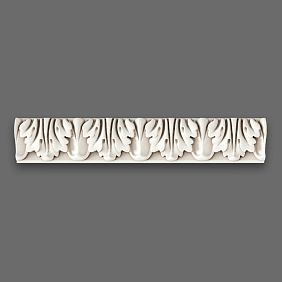
Ceiling cornices serve as a visual transition between wall and ceiling, creating a clear architectural structure of space. In classical interiors, cornices repeat the profiles of facade elements, creating a recognizable architectural style of the building. Complex multi-tiered cornices with ornamentation refer to the traditions of Baroque and Rococo, where each element was part of a unified decorative system.
ModernCeiling moldingThey are made from high-tech materials—polyurethane, plaster, composites—that allow recreating historical profiles with perfect accuracy. The lightness of modern materials simplifies installation, while durability ensures that cornices retain their original appearance for decades. The ability to paint in any color allows adapting classical forms to modern interiors.
Cornices can be not only decorative but also functional elements. Wide profiles with hidden niches allow placing LED lighting, creating a floating ceiling effect. Such a solution is especially relevant in modern neoclassical interiors, where traditional forms combine with innovative lighting technologies.
Get Consultation
Rosettes as central compositions
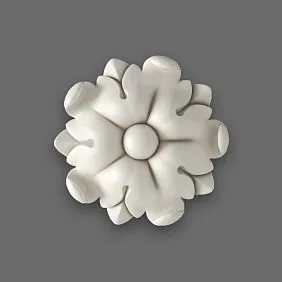
Ceiling rosettes are a classic decorative element that frames the central chandelier and creates a focal point in the room. In historical architecture, rosettes often repeated motifs used in facade decoration — vegetal ornamentation, geometric patterns, classical meanders. This repetition created a visual connection between interior and exterior spaces.
The size and complexity of the rosette must correspond to the scale of the room and chandelier. In high, grand halls, large, ornate rosettes with diameters up to 1.5–2 meters are appropriate. In more intimate rooms—living rooms, bedrooms—medium-sized rosettes of 50–80 centimeters are used. It is important that the rosette does not overwhelm the space with its scale, but harmoniously fits into the overall composition.
Stylistic diversity of rosettes allows selecting a solution for any interior. Classical rosettes with acanthus leaves and volutes suit palace interiors. Geometric rosettes with clear lines and symmetrical patterns are ideal for Art Deco interiors. Minimalist rosettes with simple relief naturally fit into modern spaces.
Moldings and coffered ceilings
Moldings are decorative overlays used to create compositions on the ceiling, zone space, frame individual areas. Using moldings, one can create coffered ceilings—complex multi-level structures that add architectural expressiveness and depth to a room.
Coffered ceilings have an ancient history—they were used in ancient temples, where they served not only as decorative but also as structural elements. In modern interiors, coffers are created usingceiling moldingsmoldings that form a regular grid of rectangular or square cells. Within each cell, additional decoration can be placed—a rosette, ornament, or color accent.
The rhythm and proportions of coffers must correspond to the architecture of the building and furniture composition. In rectangular rooms, coffers are arranged according to the proportions of the room, emphasizing or correcting the geometry of space. In square rooms, a central composition with an accent in the center is created.
Beams and decorative elements
Ceiling beams can imitate structural elements or be purely decorative. In interiors styled as country, Provence, or Mediterranean, beams create a sense of authenticity and connection to traditional architecture. In neoclassical interiors, beams may be adorned with carving, gilding, or ornamentation, becoming independent decorative objects.
The connection between ceiling decoration and facade architecture is manifested in the repetition of motifs, proportions, and rhythmic structures. If pilasters of a certain order are used on the facade, it is logical to apply corresponding cornices and moldings inside. If the facade is adorned withsashings with architectural pediments, then similar forms can be used in the design of doorways and niches.
Sashings and door frames on the facade
The facade of a building is its face, the first impression it makes on the observer. Decorative facade elements not only adorn the building but also perform important functional tasks — protecting structures from precipitation, emphasizing architectural composition, creating rhythm and structure.Cornice in architectureandDoor Frame Installation— these are key elements that form the character of the facade and link it to interior design.
Sash as an architectural dominant
A sash is a small cornice or overhang above a window or door, serving a dual function: practical — diverting rainwater from the opening, and aesthetic — emphasizing horizontal divisions of the facade.Cornice in architectureIt can be a simple profiled protrusion or a complex composition with a pediment supported by brackets or pilasters.
In classical architecture, sashings were used as elements of the order system, repeating in miniature the structure of the entablature — with architrave, frieze, and cornice. The richness of decoration of a sash indicated the status of the building and its owner. In baroque palaces, sashings were adorned with volutes, cartouches, sculptural masks. In classicist mansions, strict triangular or arched pediments with minimal decoration prevailed.
Modern application of sashings requires attention to proportions and stylistic consistency. The size of the sashing must correspond to the scale of the opening and the entire facade. An overly large sashing on a small window will look inappropriate, while an overly small one at a grand entrance will not create the desired accent. The profile and decoration of the sashing must correspond to other facade elements — cornices, rustication, pilasters.
and pilasters.
Materials for manufacturing sashings vary from traditional stone and wood to modern composite materials and polyurethane. Stone sashings — marble, granite, limestone — possess monumentality and durability, but require a strong foundation due to their weight. Polyurethane sashings are lightweight, moisture-resistant, not susceptible to damage from frost, easy to install, and can be painted in any color or imitate natural materials.
Door frame as a business card
The entrance door is the boundary between the external world and private space, and its design has special significance.Door Frame InstallationOn the facade, it creates a grand portal that invites entry while simultaneously demonstrating the status of the house. Classical framing includes side moldings around the opening, a sashing above, sometimes — a pediment, pilasters, or columns.
In Palladian architecture, doorways became the central element of facade composition, attracting attention through size, decoration, and expressive forms. The portal could be designed as an order composition with columns supporting the entablature and triangular pediment. In more modest buildings, simplified versions were used — flat pilasters, simple moldings, a minimalist sashing.
The connection between facade door framing and interior is manifested in several aspects. First, the material and color of the exterior door should correspond to the materials and palette of interior finishes. Second, the stylistic decoration — molding profiles, ornamentation character — should be repeated inside. Third, the proportions of the opening and its framing set the scale of the entire building, which continues inside through ceiling height, opening sizes, and division rhythm.
Window framing and facade rhythm
Windows constitute a significant part of the facade, and their framing plays a key role in creating the architectural image of the building. The system of moldings, sills, and sashings forms a rhythmic structure of the facade, creating vertical and horizontal divisions, emphasizing the building's floors.
In classical architecture, windows on different floors could have different treatments, reflecting the hierarchy of spaces. The main floor — the belvedere — was distinguished by more ornate window decoration, tall openings, complex sashings. The ground floor — the plinth — could have simpler rectangular windows. Upper floors were also treated more modestly.
The modern approach to window framing is more flexible, but the principle of proportionality and consistency remains important. All windows on the facade usually have uniform framing, creating an orderly composition. Individual windows may be highlighted with more complex decoration, creating accent points on the facade.
Horizontal divisions of the facade
In addition to framing individual openings, the facade is structured using horizontal elements — interfloor cornices, friezes, plinth ties, and crowning cornices. These elements create a horizontal rhythm that corresponds to the rhythm of ceiling cornices inside the building.
The crowning cornice on the facade is analogous to the ceiling cornice inside, only extended outward and scaled up. Its profile often repeats or varies the profiles of internal cornices, creating stylistic unity. In classical buildings, the crowning cornice could extend significantly — up to a meter or more — creating a striking shadow and protecting walls from precipitation.
Interfloor cornices — friezes — horizontally divide the facade, separating one floor from another. They can be simple profiled ledges or more complex compositions with dentils, modillions, ornamental friezes. The rhythm of these horizontals creates a musical quality of the facade, which should be reflected in the rhythm of interior spaces.
Corner elements and their role in design
Corners are the points in architecture where planes meet, where transitions from one direction to another occur. Proper corner treatment is critically important for both the exterior and interior appearance of the building.Corner decorative elementsThey create visual completion of planes, protect vulnerable areas from damage, and serve as connecting elements in the overall composition.
Rusticated corners on the facade
Rustication is the treatment of a building's corner or entire wall surface using relief stones or stone masonry imitation. Rusticated corners visually reinforce the building, creating a sense of monumentality and strength. In classical architecture, rustication of the ground floor and corners was a mandatory element, emphasizing the building's structural logic.
There are several types of rustication — rough, with significant relief and deliberately unpolished stone surfaces; brilliant, with faceted projecting blocks; smooth, where relief is created only by deep joints between stones. The choice of rustication type depends on the building's style and desired effect.
Modern technologies allow creating imitation rustication from lightweight materials — polystyrene with protective coating, polyurethane, fiber concrete. These materials are significantly lighter than natural stone, easier to install, do not create excessive load on structures, but visually indistinguishable from traditional stone rustication.
Corner pilasters and columns
Pilasters and columns placed at building or room corners play an important role in creating vertical rhythm and architectural structure. On the facade, corner pilasters visually fix the building's volume, emphasize its geometry, and create an order system. In interiors, corner pilasters can frame openings, niches, or highlight functional zones.
Order system — Doric, Ionic, Corinthian, Tuscan, Composite orders — implies strict proportional relationships between elements. The base, shaft, and capital of a column or pilaster must conform to the canons of the chosen order. Such a system creates architectural correctness and harmony, perceived intuitively.
In modern architecture, simplified, stylized versions of classical orders are often used, adapted to contemporary scales and materials. It is important to preserve proportional relationships, even if decoration is simplified.Corner decorative elementsIn the form of capitals, bases, and appliqués, they help create a convincing order system from modern materials.
Internal corners and their treatment
In interior spaces, corners also require decorative attention.Corner decorative elementsThey are used to decorate wall junctions, frame fireplaces, highlight columns and pilasters, and create decorative panels. Wooden corner appliqués add warmth of natural material to interiors, protect corners from damage, and conceal junctions of different materials.
In classical interiors, corners were often decorated with corner pilasters featuring bases and capitals, creating frames for wall panels. In the Baroque style, corners could be adorned with complex carved appliqués featuring vegetal motifs, volutes, and cartouches. In minimalist interiors, simple geometric appliqués are used, emphasizing the clarity of lines and angles.
External corners of furniture and built-in structures require special attention.Corner decorative elementsMade from solid wood, they protect vulnerable edges from chipping and abrasion while simultaneously serving as decorative accents. Carved appliqués on cabinet corners, fireplace surrounds, and panels create rhythmic structure and visually enrich surfaces.
Junctions of planes and transitions
In complex volumetric compositions — both on facades and in interiors — numerous junctions of differently oriented planes arise. These zones require special attention, as poorly executed junctions destroy the perception of unity.Corner decorative elementsThey help beautifully finish these transitions, creating smoothness or, conversely, emphasizing the contrast between planes.
On the facade, special attention is required for junctions between the main building volume and additions, bay windows, balconies. These zones are treated using pilasters, appliqués, and cornices, visually integrating different volumes into a unified composition. In interiors, junctions between walls and ceilings, between walls, and between walls and floors are treated with moldings, baseboards, and cornices, creating completeness and neatness.
Decorative appliqués in furniture and joinery
Corner decorative elementsThey find wide application in furniture manufacturing and joinery. Carved appliqués on cabinet, chest, and buffet corners transform simple furniture into decorative art. Appliqués can be symmetrical or asymmetrical, vegetal or geometric, large accent pieces or small filler pieces.
In historical furniture, each era had its characteristic set of corner decorative elements. Baroque preferred large, dynamic appliqués with volutes and acanthus. Rococo used asymmetrical, elegant motifs with shells and scrolls. Classicism leaned toward symmetrical, geometrically precise rosettes and medallions.
Modern productioncorner decorative elementsThey use both traditional hand-carving methods and high-tech CNC machines. This allows reproducing historical samples with museum precision or creating new, original forms. Materials include valuable hardwoods — oak, beech, walnut, ash — which are coated with protective finishes, stained, and patinated after processing.
Outcomes: the unified appearance of the house
Creating an architecturally unified house requires a comprehensive approach, where every detail — from the cornice on the facade to the ceiling rosette in the bedroom — is part of a single concept. Harmony between exterior and interior spaces is achieved through consistent application of the chosen style, repetition of decorative motifs, adherence to proportional relationships, material and color unity.
Principles of stylistic unity
Choosing an architectural style is a fundamental decision that determines all subsequent steps. Classical styles — Baroque, Rococo, Classicism, Empire — have strict canons that must be followed both on the facade and in interiors.Ceiling moldingIn the Baroque style, with its opulence and dynamism, requires corresponding facade decoration with broken pediments, volutes, and sculptural elements.
Neoclassical styles provide more freedom for interpretation, but the main principles—symmetry, proportionality, use of the order system—must be preserved. ModernCeiling moldingin neoclassical style may be more laconic, with simplified decoration, but profiles and proportions must correspond to classical models.
Modern styles—minimalism, high-tech, eco—tend toward simplicity of form and minimal decoration, but here too, consistency between interior and exterior design is important. Laconic facades with clear geometric lines require equally restrained interiors, where decorative elements are used sparingly as architectural accents.
Scale and proportions
The correct proportion of decorative elements' sizes to the scale of the building and rooms is a key factor in achieving harmonious perception. Large elements on a small building look inappropriate, while small details on a large facade become lost and fail to create the desired effect.Cornice in architectureAbove the entrance, it must be proportionate to the height and width of the opening, as well as the overall scale of the facade.
Inside the building, the scale of decoration is determined by ceiling height, room area, and furniture size. In high, grand halls, large cornices, massive moldings, and wide moldings are appropriate. In more intimate rooms—bedrooms, offices—more delicate elements are used. It is important that the scale of interior decoration corresponds to the scale of the facade—this creates a sense of architectural unity.
Material Unity
The choice of materials for decorative elements affects the overall perception of the building. Traditional materials—stone on the facade, wood and plaster in interiors—create a classical, respectable impression. Modern materials—polyurethane, composites, fiber concrete—allow achieving visual identity with traditional materials while offering significantly better performance characteristics.
Door Frame InstallationOn the facade and in interior spaces, decorative elements may be executed in different materials, but visual consistency is crucial—identical profiles, comparable surface textures, harmonized color palettes. Modern coloring and patination technologies allow creating an illusion of a single material, even when different bases are actually used.
Color palette
Color plays a crucial role in creating a cohesive image of the building. The classical facade palette—light pastel tones on walls combined with white decoration—finds continuation in interiors, where walls are painted in delicate shades, andCeiling moldingremains snow-white. Such a solution creates a bright, airy space, visually enlarging rooms.
Alternative approach—using saturated colors to create dramatic effects. Dark facades with contrasting light decorative elements create expressive graphicness, which can be continued indoors with dark walls and ceiling moldings painted in contrasting tones. It is important that the color concept is consistent and covers all spaces.
Functional perfection
Decorative elements must be not only beautiful, but also functional.Cornice in architectureprotects openings from precipitation,Corner decorative elementsprotects corners from damage, ceiling cornices can conceal utilities and accommodate lighting. Harmony of form and function is a hallmark of mature architecture, where beauty does not contradict practicality.
The longevity of decorative elements is ensured by proper material selection and quality installation. On facades, frost-resistant, moisture-resistant materials resistant to ultraviolet radiation are used. In interiors, material selection is determined by the specific conditions of use in individual rooms. Quality installation guarantees that elements will serve for decades without losing their appearance or functionality.
FAQ: Popular questions about facade and interior decoration
Should ceiling moldings exactly replicate facade decoration?
Exact replication is not necessary; in fact, it may appear overly literal. What matters more is stylistic unity, using profiles and ornaments of comparable character, adhering to the overall proportional system.Ceiling moldingmay vary the motifs used on the facade, adapting them to the scale of the interior and the function of the rooms.
What materials are best for facade decoration?
Material selection depends on climatic conditions, architectural style, and project budget. Traditional materials—natural stone, architectural concrete—are durable and prestigious, but expensive and require a strong foundation. Modern solutions—polyurethane with protective coating, fiber concrete, composites—are lighter, more affordable, easier to install, and visually indistinguishable from traditional materials.
Can different styles be combined in facade and interior design?
Theoretically possible, but requires high professionalism and a refined sense of proportion. Eclecticism—intentional mixing of styles—can be an interesting solution, but the risk of creating a chaotic, disharmonious space is great. It is safer to adhere to a single style or use modern interpretations of classicism, which allow greater freedom.
How to choose the scale of decorative elements?
Scale is determined by building size, floor height, and opening dimensions. On the facade of a two-story house, elements should be proportionally smaller than on a four-story mansion.Door Frame InstallationTypically constitutes 10–15 percent of the opening height. Ceiling cornices in rooms 3 meters high have a width of 10–15 centimeters, and at 4–5 meters—15–25 centimeters.
Is symmetry required in the placement of decorative elements?
In classical architecture, symmetry is a fundamental principle of composition. The facade is usually symmetrical relative to a central axis passing through the main entrance. In grand interior spaces, symmetry is also maintained. However, modern architecture allows for asymmetrical solutions, especially in functional spaces and buildings with complex configurations.
How to care for facade decoration?
Decorative elements on the facade require periodic cleaning from dirt, dust, and biological growths.Cornice in architectureOther protruding elements should be inspected after winter for damage. Painted elements require repainting every 5-10 years. Polyurethane elements require almost no maintenance, just annual washing.
Can corner elements be used for purposes other than intended?
Corner decorative elementsThey are versatile and can be used creatively. Besides their primary purpose — decorating corners — they are used as central rosettes on flat surfaces, mirror and panel frames, furniture decoration. It is important to maintain proportions and stylistic harmony.
Does decoration affect the home's value when selling?
Quality architectural decoration increases the property's market value by 10-20 percent. Buyers appreciate individuality, quality finishes, and stylistic coherence. A home with thoughtful decoration stands out on the market, sells faster, and attracts more financially capable buyers. Investments in decoration pay off upon sale and provide aesthetic pleasure during use.
Conclusion: the art of creating a cohesive space
Architecture is frozen music, where every note matters, where rhythm, melody, harmony are created through proportions, lines, and forms. Creating a cohesive architectural image, where the facade and interior form a single work, requires knowledge, taste, and attention to detail.Ceiling moldingin the living room,Cornice in architectureabove the entrance,Door Frame Installation, Corner decorative elementsall these details must work together, creating a symphony of forms.
Modern materials and technologies make classical beauty accessible, allowing reproduction of historical samples or creation of new forms with perfect precision. Polyurethane, composites, high-tech coatings have excellent performance characteristics, not inferior to traditional materials in aesthetics. This expands the possibilities for architects and designers, enabling the realization of the most daring concepts.
The path to creating an architecturally perfect home begins with choosing a concept and style that will be consistently embodied in all elements. Classicism, neoclassicism, modernity — each direction has its own laws that must be understood and respected. Professional help — from architects, designers, craftsmen — is invaluable on this path; their experience and knowledge help avoid mistakes and achieve harmony.
The result is a home that delights the eye, creates a sense of completeness and perfection, where every detail is in its place, where exterior and interior spaces blend into one another, forming a unified whole. Such a home becomes not just a place of residence, but a source of inspiration, pride, and aesthetic enjoyment for owners and admiration for guests.
For many years, the company STAVROS has created decorative elements for facades and interiors, helping architects and homeowners realize the most ambitious projects. A wide range of products made from solid wood, modern composite materials, and polyurethane covers all necessary elements for creating cohesive architectural ensembles. Ceiling cornices and rosettes, moldings and beams, facade sashings and frames, corner overlays and decorative panels — all of this can be found in STAVROS collections.
In-house production guarantees stable product quality, the ability to fulfill custom orders based on client sketches, and the creation of unique elements for exclusive projects. Experienced craftsmen are skilled in both traditional hand-carving and molding techniques and modern machine processing technologies, allowing them to combine the uniqueness of handcrafted work with the precision of industrial production.
STAVROS provides a full spectrum of services — from consultations on selecting elements and developing decorative concepts to delivery and technical support during installation. Professional consultants help select optimal solutions, taking into account the project's style, building characteristics, and budget constraints. Technical documentation, installation instructions, and care recommendations ensure the longevity and preservation of decorative elements.
Choosing STAVROS means choosing quality proven over time, professionalism accumulated through years of work, and an individual approach to every project. Create homes that become works of architectural art, where every detail is thoughtfully designed, every element is in its place, where beauty serves as a daily source of joy and inspiration.


