Article Contents:
- How a dining table base differs from regular legs
- What to check before buying: quick table
- How to choose a base for the kitchen and dining room
- Stability: the main criterion for a family dining table
- Which base doesn't get in the way of legs
- Underframe for round dining table
- Metal or wooden base: what to choose for the kitchen and dining room
- Base for a kitchen table: what to consider separately
- Loft, designer, and classic base: how to choose a style
- Underframe for a large dining table
- What to buy together with the table base
- How not to confuse an underframe with similar solutions
- Practical selection for different situations
- Need a table for everyday family use
- Need a compact table for a small kitchen
- Need a large table for a dining room
- Need a round table for a kitchen-living room
- Need a table in loft style
- Need a classic table for a country house
- Need a table for a cafe or showroom
- How to choose a table base for a dining table?
- Which table base is best for the kitchen?
- Which table base to choose for a family table?
- What is more important for a dining table — shape or stability?
- How to match a table base to a kitchen countertop?
- Which table base doesn't get in the way of legs?
- Which is better for a dining table: a metal or wooden base?
- How to choose a base for a round dining table?
- Which base to choose for a large dining table?
- Is a loft-style base suitable for a kitchen?
- Can you buy an underframe separately from the tabletop?
- Where to buy a base for a dining table?
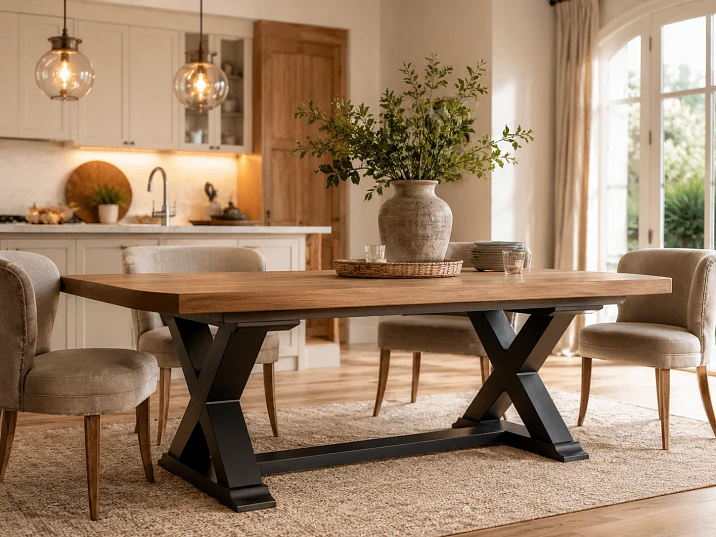
A dining table base is not bought for the sake of one beautiful detail, but for a finished table that will be comfortable to sit at every day. In the kitchen, such a table withstands breakfasts, dinners, children's activities, dishes, accidental loads on the edge, and constant movement of chairs. In the dining room, it becomes the center of the room: the family gathers around it, guests, the interior composition, the light fixture, the chairs, and the entire dining group.
Therefore, the question 'which base to choose' cannot be decided just by looking at photos. The base may look impressive but turn out to be too narrow, get in the way of legs, not suit the weight of the tabletop, or disrupt seating. This is especially noticeable on large dining tables, round tabletops, kitchen tables against the wall, and family tables for six to eight people.
A good base should hold the tabletop, maintain stability, match the height, not interfere with chairs, and support the interior style. For the kitchen, practicality and compactness are important. For the dining room, scale, expressiveness, and comfort matter. For a large family, reliability and a margin of stability are key. For a round table, proper balance and symmetry are essential.
If you need to go straight to selecting a base, you can buy a table base for a dining table in the STAVROS furniture frames section. And before buying, it's worth understanding how a dining table base differs from regular legs, what shape to choose for the kitchen and dining room, what's more important — style or stability, and what mistakes most often lead to an uncomfortable table.
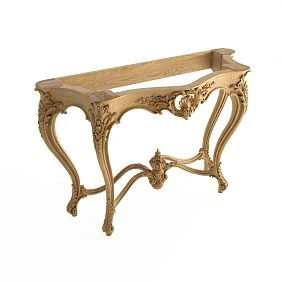


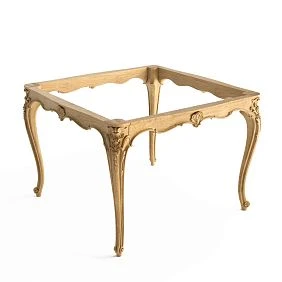
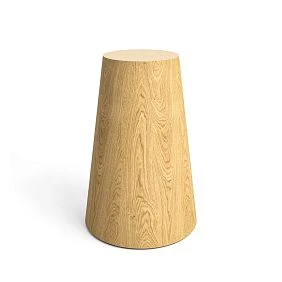
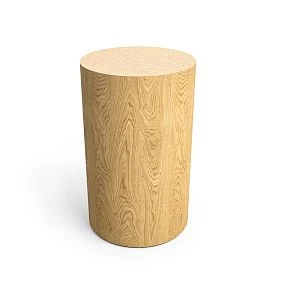
How a dining table base differs from regular legs
Regular legs are perceived as four separate support points. For a small, light table, this is sometimes enough. But a dining table is a more complex structure. It has a tabletop, seating positions, edge overhangs, load on the ends, chair movement, and daily use. Here, the base should work not just as a decorative support, but as a load-bearing part of the furniture.
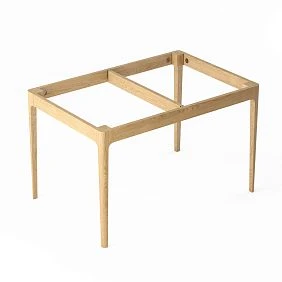
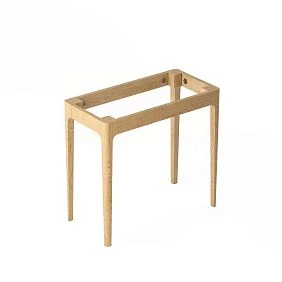
A dining table base usually provides more integral support. It can be a frame, a central support, two side supports, a U-shape, an X-shape, or another design. What matters is not the name of the shape, but how it distributes the load, holds the tabletop, and affects seating.
Individual legs have a weak point: they may not tie the table into a single rigid system. If the tabletop is long or heavy, the structure can start to wobble. A table base helps reduce this risk because the base works as a more unified support. This is especially important for large rectangular tables and massive wooden tabletops.
Another difference is the impact on comfort. Legs at the corners can interfere with those sitting at the ends or limit chair arrangement. A central or properly designed frame base can free up more legroom. But the opposite can also happen: a complex decorative design looks nice in photos but hinders seating. Therefore, the shape should be evaluated not just visually, but through actual use.
For a dining table, rigidity is important. People sit at it, lean on it, place dishes on the edge, and children might accidentally bump the tabletop. If the base is weak, the table will wobble. If it's too narrow, there's a risk of instability. If it's too massive, it will be uncomfortable to sit. A good table base lies between these extremes: it holds the table confidently but doesn't turn the dining area into a heavy structure.




What to check before buying: a quick table
Before choosing a beautiful base, you need to gather initial data. This doesn't complicate the purchase; on the contrary, it saves time. When the tabletop dimensions, number of seats, and usage scenario are known, selecting a table base becomes much easier.
| Parameter | What to Check | Why this is important |
|---|---|---|
| Table Purpose | Kitchen, dining room, living room, family dining area, cafe, or showroom | The load, size, and stability requirements depend on the scenario |
| Tabletop shape | Round, rectangular, square, oval, custom | The shape determines the placement of supports and seating comfort |
| Tabletop size | Length, width, diameter, thickness | The larger the tabletop, the more important the width and rigidity of the base |
| Tabletop weight | Especially for solid wood, stone, marble, porcelain stoneware, glass | A weak base under a heavy surface will quickly create problems |
| Number of seats | 4, 6, 8 people or more | The underframe should not interfere with chairs and legs |
| Height of the finished table | Base height plus tabletop thickness | A mistake in height makes the table uncomfortable |
| Support placement | Central support, side supports, frame, cross base | Affects stability and seating |
| Base material | Wood, metal, or other confirmed material | Material affects style, durability, and care |
| Interior style | Classic, loft, modern interior, neoclassical, country house | The underframe must support the tabletop and surrounding furniture |
| Product card | Dimensions, material, configuration, purpose | Current parameters should be verified before ordering |
This table helps avoid buying a base blindly. Even if the base seems suitable in style, before ordering you need to check dimensions, height, material, construction, and compatibility with the tabletop. If data is missing, it's better to clarify with a STAVROS manager.
Our factory also produces:


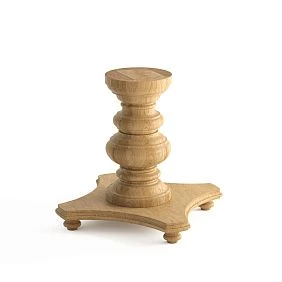
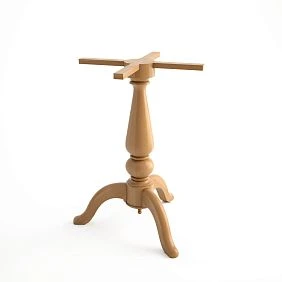
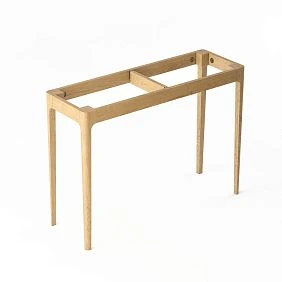
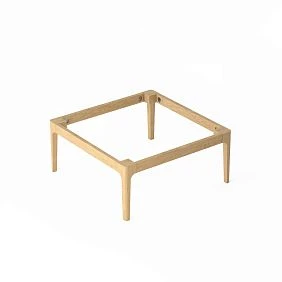
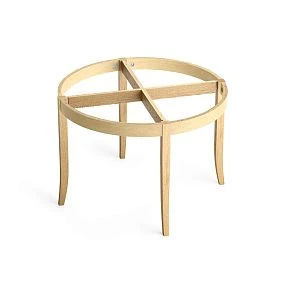
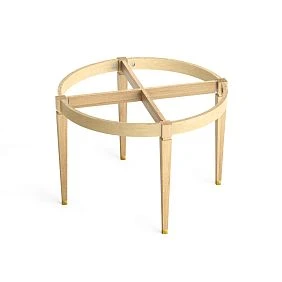
How to choose a base for the kitchen and dining room
Kitchen and dining room are similar only at first glance. In both cases, a table for eating is needed, but the usage conditions differ. In the kitchen, the table is often in a limited space, next to cabinets, walkways, walls, refrigerator, sink, and work area. In the dining room, the table usually occupies a more prominent place and acts as the center of the interior.
The table base for a kitchen table should be stable, compact, and practical. It should not obstruct passage, cabinet opening, chair sliding, or daily cleaning. In a small kitchen, a too massive structure quickly becomes a problem: visually overloads the space and interferes with legs. In a spacious kitchen-living room, you can choose a more expressive base, but even there it's important to maintain seating comfort.
For the dining room, scale is more important. A large table under a light fixture, next to a sideboard, display cabinet, or wooden furniture should look confident. A weak, thin base under a massive tabletop will seem out of place. But a too heavy underframe can also spoil the impression, especially if the chairs are light and the interior is built on airiness and calm lines.
The number of seats is one of the main parameters. A table for four allows for a more compact base. A table for six or eight requires greater longitudinal stability and proper placement of supports. You need to check if it's comfortable to sit on the long sides and at the ends. A common mistake is choosing a beautiful side support that interferes with the end seats.
The shape of the tabletop also changes the approach. A rectangular surface requires control of length and edge overhang. A round one requires stability under load on the edge. A square one requires balance along two axes. An oval one requires a combination of longitudinal support and comfortable seating around the table.
If you are deciding which underframe to choose for a kitchen table, start not with style, but with the dimensions of the room and seating. How many people will sit every day? Where are the chairs placed? Can you walk past freely? Does the support interfere with legs? Does the final height match the chosen chairs? After these questions, you can choose the material and appearance.
For the kitchen and dining room, it's better to look at table bases as part of the future dining group, rather than as a separate detail. Then it's easier to choose a base for the tabletop, chairs, and overall interior.
Get Consultation
Stability: the main criterion for a family dining table
A family table receives a lot of load. People eat, talk, do homework, assemble puzzles, put pots, plates, kettles, and laptops on it. Someone leans on the edge with an elbow, a child may reach across the table, a chair accidentally hits the base. Therefore, the base for a large dining table must have a margin of stability.
Stability depends not only on the material. A metal base can be weak if it is too narrow. A wooden one can be confident if it has the right design and sufficient cross-section. It's more important to look at the shape, width, placement of supports, contact area with the floor, and correspondence to the size of the tabletop.
A narrow underframe under a large tabletop is a common mistake. Visually, such a structure may seem light and modern, but when weight is placed on the edge, the table becomes unstable. This is especially dangerous for round and long rectangular tables. If a person sits at the edge, leans on it, or places a heavy object, the base must maintain balance.
For a rectangular table, longitudinal balance is important. If the supports are too close to the center, the ends have a large overhang. If the supports are too close to the edges, sitting at the ends is uncomfortable. You need to find a point where the table is stable and seating remains free.
For a large family, it's better to imagine the table in reality beforehand. Not an empty beautiful item in a catalog, but a dining group with chairs, people, dishes, and movement. If the underframe interferes with legs, prevents chairs from being pushed in, or seems weak for the tabletop size, it's better to choose another option.
The underframe for a large dining table must be designed for daily life. Beauty is important, but stability is more important. A table that wobbles cannot be comfortable, even if it looks good.
Which underframe does not interfere with legs
Seating comfort often becomes decisive only after purchase. In photos, the base looks beautiful, the tabletop matches, the color fits. But when people sit at the table, it turns out that the support interferes with knees, the crossbar hits legs, the end seat is uncomfortable, and the chair cannot be placed where planned.
A central base is convenient because it frees up the perimeter. It is often chosen for round and small dining tables. It is easier to seat people at such a table: there are no legs at the corners, chairs can be moved more freely. But the central underframe must be sufficiently stable. If the base is small and the tabletop is large, there is a risk of tipping when weight is applied to the edge.
Two supports at the edges work well with rectangular tables. They provide an expressive silhouette and can free up space along the long sides. But it's important to check seating at the ends. If the supports are too close to the edges, the end seats become uncomfortable or even decorative.
U-shaped structures are often perceived as modern and straightforward. They provide stability in width, pair well with a rectangular tabletop, and can look concise. But when choosing, you need to see where the crossbars are and whether they interfere with legs.
X-shaped bases look expressive and often become a focal point. They can hold the table well but require checking seating. Diagonal elements sometimes interfere with those sitting close to the center. For a large table, this may not be critical, but for a compact kitchen table, it's noticeable.
Crossbars and stretchers are also important. Sometimes the base is comfortable in height, but the lower or upper crossbar interferes with the chair, knees, or feet. Before buying, it's worth mentally seating people at the table: where the legs will be, how far the chairs slide in, whether it's comfortable to sit on the side and at the end.
The answer to the question "which table base doesn't interfere with legs" depends on the table shape. For a round table, a central or symmetrical base is often convenient. For a rectangular one, supports positioned to preserve end seating. For a kitchen, a compact design without unnecessary protruding parts. For a large dining room, a stable base with a well-planned tabletop overhang.
Underframe for a round dining table
A round tabletop requires special stability. At a rectangular table, a person usually sits on the obvious sides, but at a round table, the load can come from any point. Someone leans on the edge, a child reaches for a cup, a guest places a dish closer to themselves — the base must hold the table without risk.
The base for a round dining table should be symmetrical by logic. This doesn't mean it has to be simple. But visually and structurally, it should support the circle. A central support, cross base, or evenly distributed supports often work better than a random rectangular structure under a round surface.
A central base frees up legroom well. For a round table, this is especially valuable: people sit around the circumference, and legs at the edges could get in the way. But the central support must have sufficient area at the bottom. A small base under a large circle looks light but can be unstable.
A cross base helps distribute the load. It can be wooden, metal, or combined in nature, but the main thing is matching the diameter and weight of the tabletop. The larger the circle, the more carefully you need to check the balance.
For a round kitchen table, compactness is important. Often such a table is placed in a small area, by a window or in a corner of the kitchen. The underframe should not interfere with the passage and chairs. For a round table in the dining room, scale is more important: the base should look worthy under an expressive tabletop and be beautiful from all sides.
If the tabletop is glass, the base is especially visible. If it is wooden, the underframe supports the texture and thickness. If it is stone or heavy, load-bearing capacity comes first. In any case, the base for a round dining table should be chosen based on diameter, weight, height, and seating, not just style.
Metal or wooden base: what to choose for the kitchen and dining room
The base material affects the strength, style, care, and feel of the furniture. The same wooden top will look different on a metal base versus a wooden base. In the first case, the table can become modern and graphic; in the second, warm and furniture-like.
| Criterion | Metal table base | Wooden table base |
|---|---|---|
| Visual style | Loft, minimalism, modern interior | Classic, neoclassical, natural interior, country house |
| Perception in the kitchen | Graphic, practical, contrasting | Warm, soft, furniture-related |
| Durability | High with proper construction | Depends on cross-section, shape, and assembly |
| Combination with a massive tabletop | Well emphasizes the thickness and texture of the wood | Creates a cohesive wooden look |
| Care | Usually perceived as a practical option for an active area | Requires attention to coating and usage conditions |
| Interior effect | Makes the table visually lighter or stricter | Makes the table more furniture-like and substantial |
| When to choose | Modern kitchen, loft, contrast with wood, heavy tabletop | Dining room, classic, wooden furniture, cozy interior |
A metal underframe for a dining table is often chosen for modern kitchens, loft dining rooms, interiors with black details, graphic lighting, and minimalist furniture. It can pair well with a wooden tabletop because it creates contrast: a warm surface and a strict support.
But metal itself does not guarantee stability. It is important to look at the construction. The metal base for a dining table must match the size and weight of the tabletop. A too thin or narrow structure may look stylish but fail to provide the necessary stability.
A wooden base for a dining table is appropriate where a cohesive furniture line is needed. It looks good in a dining room, country house, classic interior, neoclassical style, kitchen with wooden facades or soft natural finishes. Wood makes the table warmer and closer to traditional furniture.
A wooden base for a dining table is especially well complemented by other wooden elements. If the room has baseboards, panels, carved decor, facades, frames, or other Solid Wood Items, the base can support the overall material and not look out of place.
For the kitchen, the choice of material depends on load and maintenance. If the table is used actively, it is important to clarify the coating, resistance to household conditions, and maintenance features. If it is a dining room where appearance and atmosphere matter, more attention can be paid to texture, shape, and combination with other furniture.
Table base for a kitchen table: what to consider separately
The kitchen is not a showroom. Here the table is used frequently and sometimes roughly. Plates, pots, groceries, children's cups, laptops, shopping bags are placed on it. Chairs are constantly moved, the area under the table is cleaned, people walk nearby. Therefore, you should only buy a base for a kitchen table after checking practical details.
The first parameter is compactness. In a small kitchen, the base should not take up more space than necessary. Wide side supports can obstruct passage. A massive central base can make seating difficult. Crossbars can catch legs. Therefore, a beautiful design should be checked against the room layout.
The second parameter is stability. A kitchen table often stands against a wall or in a corner, but that does not mean the base can be weak. On the contrary, in a limited space, the table is more often bumped, moved, and used as an additional surface. A narrow base under a heavy tabletop will quickly show its shortcomings.
The third parameter is combination with facades. A kitchen table is almost always located next to the kitchen set. If the facades are smooth and modern, a loft-style base or a minimalist metal base can support the style. If the facades are wooden, paneled, or classic, a wooden base may look more natural.
The fourth parameter is cleaning. A complex decorative structure in the kitchen can be beautiful but inconvenient to maintain. The more hard-to-reach places, the harder it is to keep clean. For everyday kitchen use, a simple shape without unnecessary protrusions often works better.
The fifth parameter is seating. A kitchen table is often used quickly: sit down, stand up, push in a chair, walk past. The base should not hinder these movements. If children, elderly people, or guests sit at the table, convenience becomes even more important.
If you need Kitchen Base, it's better to measure the tabletop in advance, check the height of the chairs, evaluate the passages, and only then choose the material and style.
Loft, designer, and classic table bases: how to choose a style
The style of the table base should support the tabletop and the interior, not live separately. A dining table is always noticeable. Even if it stands in the kitchen, a furniture group gathers around it. In the dining room, it becomes the main item. Therefore, the base should not just be beautiful, but appropriate.
A loft table base for a dining table pairs well with a wooden tabletop, brick, concrete, dark hardware, metal lamps, and a modern kitchen. It can be strict, graphic, contrasting. But loft should not turn into roughness. If the tabletop is thin or the room is small, a too-heavy support will overload the interior.
A designer table base for a dining table can become an accent. This is appropriate in a spacious dining room, kitchen-living room, showroom, restaurant, or an interior where the table really should attract attention. But an accent shape requires discipline: chairs, lamps, and neighboring furniture should not conflict with the base.
A classic wooden table base works well in warm interiors. It supports a massive tabletop, wooden facades, carved elements, and natural finishes. If the interior is built on soft lines, metal can look too cold, while wood feels natural and calm.
A white table base for a dining table is suitable for a light kitchen, neoclassicism, Scandinavian style, and light dining areas. But a white base needs to be evaluated in terms of maintenance. In the kitchen, it will show marks, dust, and everyday use more noticeably.
A wrought iron table base for a dining table can be appropriate in a country house, classic interior, or dining room with a massive wooden tabletop. But the wrought iron form should match the scale of the room. In a small kitchen, it can look too heavy.
A beautiful table base for a dining table is not one that looks most impressive on its own. It is one that makes the entire table convincing: it supports the tabletop, doesn't interfere with legs, matches in height, suits the chairs, and doesn't clash with the interior.
Underframe for a large dining table
A large table is not just an enlarged version of a small one. It has a different load, different seating, and a different role in the interior. The table base for a large dining table must hold the length, prevent the edges from wobbling, support the weight of the tabletop, and maintain comfort for all seating positions.
For a table for six people, you need to check the long sides and ends. It is often convenient when two or three people sit along the long sides, and space remains at the ends for hosts or guests. If the supports interfere with the ends, part of the seating is lost. If the base is too narrow, the table seems unstable.
For a table for eight people, the requirements are higher. A long tabletop requires longitudinal support. Here, a weak base can give a feeling of wobbling. You need to be especially careful when choosing a table base for solid wood, a slab, or a heavy tabletop.
The width of the table is also important. At a large dining table, dishes are often placed in the center. People reach across the surface, lean on the edge, and move dishes. The base must withstand such household dynamics.
Visually, a large table should look confident. A too-thin base under a massive tabletop creates a feeling of temporariness. A too-massive base can make the table heavy and uncomfortable. A good option maintains proportion: the base is noticeable but does not prevent the tabletop from being the main element.
For a large dining room, it is worth thinking in advance not only about the underframe but also about the chairs, light fixture, rug, distance to walls, and walkways. A large table requires space around it. If the base is chosen without considering seating, the problem will appear immediately.
What to buy with a table base
A table base is rarely bought in isolation. Usually, the buyer assembles a dining group or kitchen table: base, tabletop, chairs, fasteners, finish, adjacent wooden elements. The earlier all this is thought out, the lower the risk of mismatches.
The first thing to connect with the underframe is the tabletop. Its shape, thickness, weight, and size determine the base design. You cannot choose an underframe separately and then hope that any tabletop will fit. This is especially important for round, large, and heavy surfaces.
The second is chairs. The base may be stable and beautiful, but if it interferes with the chairs, the dining area will be uncomfortable. You need to check the height, seating depth, chair width, and distance between supports.
Third is the style of the adjacent furniture. If the kitchen or dining room is already finished with wood, it's worth looking wooden bases and match them with facades, baseboards, frames, and decorative elements. If the project is modern, you can choose a more graphic base.
| What to add to the purchase | Why this is needed | Which scenario it suits | Link |
|---|---|---|---|
| Tabletop | Determines the size, weight, shape, and final height of the table | Any dining or kitchen table | The link depends on the selected tabletop |
| furniture frames | Help select the base for the tabletop | Kitchen, dining room, dining group | Furniture bases section |
| Chairs | Check seating and leg comfort | Dining, kitchen, large family table | Link not provided in source data |
| Fastening | Needed to connect the base and the tabletop | Self-assembly or installation by a professional | Selected based on the tabletop material |
| Finishing products | Help visually connect the base and the tabletop | Wooden projects for painting, varnish, or oil | Depends on material |
| Solid Wood Items | Support the wooden style of furniture and interior | Classic, neoclassical, country house | Solid wood products section |
| Decorative elements near the table | Help connect the table with the rest of the interior | Dining room, kitchen-living room, study | The link is placed only if a verified URL is available |
A comprehensive approach is especially important for the dining room. There, the table rarely exists on its own. It is connected to chairs, lighting, sideboard, wall finishes, doors, baseboards, and the overall interior material. The underframe should support this connection.
How not to confuse a table base with similar solutions
The underframe can be confused with legs, decorative supports, a random frame, or a blank. The mistake seems small until the table is assembled. Then it turns out that the part cannot withstand the load, does not fit in height, or interferes with seating.
Legs are separate support points. They may work for a lightweight tabletop, small furniture, or a specific design. But a large dining table often requires a more solid base. If the tabletop is long, heavy, or designed for many seats, it is better to look specifically at a table base or furniture frame.
A decorative support may look sturdy but have a different purpose. It might be used for a facade, console, decorative element, or separate furniture part. If the product card does not confirm that the item is suitable for a tabletop, using it as a base for a dining table is risky.
A random blank is appealing because it seems universal. But then you have to adjust the height, reinforce the fastening, level the structure, and figure out how it will look in the interior. A ready-made table base is more convenient because it is chosen for a specific furniture task.
Furniture frames are a broader group. They may include different bases and structures. The buyer needs to look at the purpose, dimensions, material, height, and compatibility. If you need a base for a dining table, it is important to choose an option that is suitable for that role.
To avoid mistakes, look at five features: purpose, stability, height, dimensions, and fastening. If at least one parameter is unclear, it is better to clarify it before purchasing.
Practical selection for different situations
Need a table for everyday family use
The main thing is stability and seating comfort. The base should not wobble, get in the way of children, catch chairs, or limit seating spaces. For a family table, it is better to choose a design with a margin of strength and clear geometry.
Need a compact table for a small kitchen
The main thing is not to overload the space. The underframe should be stable but not too massive. You need to check the passages, the ability to push in chairs, the distance to the wall and the kitchen set.
Need a large table for a dining room
The main thing is scale and longitudinal support. The base should match the length of the tabletop and not interfere with the end seats. For heavy surfaces, the design and fastening are especially important.
Need a round table for the kitchen-living room
The main thing is balance. A central or symmetrical support is often convenient, but it must match the diameter of the tabletop. The larger the circle, the more carefully you need to check the risk of tipping.
Need a table in loft style
The main thing is not to confuse expressiveness with roughness. A loft dining table underframe looks good with a wooden tabletop, but the design should be comfortable for legs and fit the scale of the room.
Need a classic table for a country house
The main thing is material and integrity. A wooden base can support a warm interior, especially if there are other solid wood items nearby. It is important not to forget about stability and height.
Need a table for a cafe or showroom
The main thing is load and appearance from all sides. In a commercial space, the table is used more often than at home. The base should be stable, practical, and neat from any angle.
Installation, height, and preparation for assembly
Before assembly, you need to check if the base and tabletop match in purpose. The base may be suitable in style but not fit in height or mounting. This is especially important if the tabletop has already been purchased.
The height of the finished table is the sum of the base height and the tabletop thickness. For dining seating, they usually focus on the comfortable height of the finished table, not just the base height. A thick wooden tabletop can add a few centimeters and change the seating.
It's better to do the marking before fastening. The tabletop should be placed on a flat surface, mark the position of the base, and check the edge overhang. For a round table, it's important to hit the center. For a rectangular one, maintain a convenient overhang in length and width.
The fasteners must match the material of the tabletop and base. Random fastenings cannot be used if the tabletop is heavy. Special care should be taken with solid wood, stone, glass, and porcelain stoneware. If in doubt, it is better to entrust the installation to a specialist.
After assembly, the table should be checked not only visually. You need to place chairs, sit on different sides, check the end seats, and lightly load the edge. If the table wobbles or interferes with your legs, the error will become apparent immediately.
Mistakes when choosing a table base for a dining table
The first mistake is choosing only by photo. In the image, the base may look beautiful, but the photo does not show stability, tabletop weight, leg comfort, or real proportions in the room.
The second mistake is not considering the weight of the tabletop. Solid wood, slab, stone, marble, glass, and porcelain stoneware require a more careful choice of base. A light decorative structure under a heavy surface may turn out to be weak.
The third mistake is buying a base that is too narrow. This is especially risky for round and large rectangular tables. Too much overhang of the tabletop beyond the support creates instability.
The fourth mistake is forgetting about height. The dining table should be comfortable with chairs. If the base and tabletop together make the table too high or too low, it will be unpleasant to use.
The fifth mistake is not checking legroom. Crossbars, wide frames, diagonals, and massive supports can interfere with seating. It is especially important to check the end seats.
The sixth mistake is choosing a shape without considering the tabletop. A base for a round surface and a base for a rectangular one work differently. You cannot automatically transfer one solution to another table.
The seventh mistake is not considering the kitchen as an active zone. For the kitchen, passages, cleaning, chair movement, and proximity to the kitchen set are important. A beautiful but inconvenient base will quickly start to irritate.
The eighth mistake is not checking the product card. Dimensions, material, finish, purpose, and configuration should be clear before ordering. If parameters are missing, it is better to clarify them in advance.
Who would benefit from a separate table base, and who should choose a different option
A separate table base is suitable for those who want to assemble a table for their own tabletop, interior, and room dimensions. It is a good choice for a kitchen, dining room, living room, country house, cafe, showroom, and a large family dining area.
This option is especially useful if the tabletop has already been chosen. For example, there is a wooden slab, a round surface, a massive rectangular tabletop, or a non-standard size. The base allows you to select a foundation based on the actual shape and weight, rather than being limited to ready-made tables.
A separate base is suitable for those who want to control the style. You can assemble a table with a loft character, choose a warmer wooden solution, support a classic style, or create a modern minimalist dining group.
But there are cases when a ready-made table is simpler. If the buyer does not want to calculate dimensions, select fasteners, check height, and think about compatibility, a ready-made model may be more convenient. If the tabletop is too heavy, non-standard, or there is no exact weight data, buying a base without consultation is risky.
A separate table base reveals its advantages when the buyer is ready to choose consciously: by size, shape, height, load, material, and seating.
Where to buy a table base for a dining table
It is best to start the purchase with a task. First, determine where the table will be placed: in the kitchen, dining room, living room, cafe, or country house. Then, decide how many people should sit at it daily. After that, measure the tabletop or choose its shape: round, rectangular, square, oval.
on the Stavros website you can buy a table base for a dining table and choose a base for the kitchen, dining room, or dining set. In the product card, you need to check the dimensions, material, height, construction, purpose, and compatibility with the tabletop.
If you need a wider selection of bases and constructions, you should look at furniture frames. If the interior is built around wooden furniture, you can additionally evaluate Solid Wood Itemsso that the table doesn't look random next to other details.
Before ordering, it's useful to ask yourself a few questions. Is the base suitable for the weight of the tabletop? Will it interfere with legs? Does the height match the chairs? Is it stable enough for the family? Does the style fit the kitchen or dining room? If any answer is not obvious, it's better to clarify the parameters before purchasing.
FAQ
How to choose a table base for a dining table?
You need to consider the size of the tabletop, its weight, shape, height of the finished table, number of seats, and legroom. For a family table, stability and proper placement of supports are especially important.
Which table base is best for the kitchen?
For the kitchen, it is better to choose a stable, practical, and not too bulky base. It should not interfere with passage, cleaning, opening cabinets, or pushing in chairs.
Which table base should you choose for a family table?
For a family table, a sturdy construction with good stability is needed. It is better to avoid overly narrow decorative bases if the tabletop is large or heavy.
What is more important for a dining table — shape or stability?
Stability is more important. The shape should support the style and seating comfort, but if the table wobbles or gets in the way of legs, it will be uncomfortable to use.
How to choose a table base for a kitchen tabletop?
You need to know the size, thickness, shape, and weight of the tabletop. Then, the table base is selected based on height, width, attachment points, leg placement, and seating comfort.
Which table base does not interfere with legs?
Central bases, U-shaped structures, or legs positioned to save space for chairs are often convenient. But it all depends on the shape of the tabletop and the number of seats.
Is a metal or wooden table base better for a dining table?
A metal base is well-suited for modern and loft interiors. A wooden base better supports a classic, natural, and warm interior. The choice depends on the tabletop, load, and room style.
How to choose a table base for a round dining table?
For a round table, symmetry and stability under edge load are important. Central or cross bases are often suitable, but their size must match the tabletop diameter.
Which table base to choose for a large dining table?
For a large table, a structure with good longitudinal stability is needed. The base should not be too narrow, and the supports should not interfere with end seating positions.
Is a loft base suitable for a kitchen?
Yes, if the kitchen is designed in a modern, industrial, or minimalist style. But you need to check whether the base overloads the space and whether it's comfortable to sit at.
Can you buy a table base separately from the tabletop?
Yes, this is a common option. The main thing is to know the dimensions, weight, and shape of the tabletop in advance to select the base by height, stability, and mounting.
Where can I buy a table base for a dining table?
Suitable options can be viewed in the section buy a table base for a dining table on the STAVROS website. Before ordering, you should check the dimensions, material, purpose, and compatibility with your tabletop.
Result: a stable table base makes the dining table comfortable
A dining table should not only be beautiful. It must withstand daily use, not wobble, not interfere with legs, match the height, align with chairs, and support the style of the kitchen or dining room. All of this depends on the table base.
For a kitchen, compactness, practicality, and ease of passage are important. For a dining room — scale, proportions, and expressiveness. For a large family table — stability and load capacity reserve. For a round tabletop — symmetry and balance. For a loft interior — a graphic shape, for classic and country homes — a warm wooden base.
At STAVROS you can select a table base for a dining or kitchen table, check the parameters in the product card, and assemble a foundation for a specific tabletop. This approach helps you buy not a random beautiful support, but a stable base that makes the table comfortable every day.