








































Article Contents:
- Which baseboards are best for an apartment: the first selection matrix
- Classic Interior
- Modern and minimalist interior
- High-traffic areas
- Apartment with an emphasis on naturalness
- MDF baseboard or wooden baseboard: what to choose for an apartment
- Appearance
- Strength
- Moisture Resistance
- Paintability
- Geometric Stability
- Suitability in styles
- Project entry cost
- Feeling of 'premium' quality
- How to choose the height of a baseboard for an apartment
- Low baseboard: up to 5 cm
- Medium baseboard: 5–8 cm
- High baseboard: 8–12 cm and above
- Baseboard as an accent element
- How to choose a baseboard by room
- Baseboard for an apartment hallway
- Baseboard for an apartment kitchen
- Baseboard for an apartment bedroom
- Baseboard for an apartment living room
- Baseboard for apartment hallway
- Baseboard for studio apartment
- How to match baseboard with floor, doors and walls
- Skirting board matching floor color
- Skirting board matching wall color
- Baseboard for door casings
- Baseboard for interior doors
- Baseboard for natural wood
- When slatted panels are appropriate along with baseboard in an apartment
- When it works
- How to organically integrate slatted panels into the logic of a baseboard article
- Where to buy baseboard for an apartment
- Don't just look at the price
- System catalog is important
- Why it's more convenient to buy from the manufacturer
- How to select together with moldings and panels
- Common mistakes when choosing baseboards for an apartment
- Mistake 1: Too low baseboard in a high room
- Mistake 2: Too complex profile in a minimalist interior
- Mistake 3: Inconsistency with doors
- Mistake 4: Wrong material for specific load
- Mistake 5: Random color choice 'to match the floor'
- Error 6: Lack of connection with overall wall finishing
- Error 7: Ignoring installation quality
- Baseboard for apartments under laminate, parquet, quartz vinyl and tile
- Baseboard for laminate
- Baseboard for parquet
- Baseboard for quartz vinyl
- Baseboard for tile
- How to properly match baseboard with solid wood products
- Conclusion: which baseboard to choose for an apartment
- About the Company STAVROS
- Frequently asked questions about skirting boards for apartments

Baseboard is not just a plank at the base of the wall. It is that final touch that can either bring the entire apartment interior together or stand out as an awkward dissonance. A goodbaseboard for an apartmentIt solves several tasks simultaneously: it closes the technological gap between the floor and the wall, visually 'completes' the room, helps establish the room's style, and directly affects the durability of the finish. That's why choosing a baseboard should be approached as thoroughly as choosing flooring or doors. A mistake here is not just an aesthetic misstep; it's redoing work after renovation, extra costs, and disappointment with the result.
This article is a practical guide to choosingbaseboards for an apartment. There's no fluff or generalities here. Only specifics: materials, heights, room scenarios, combinations with floors and doors, analysis of mistakes, and the final route to the right purchase.





Which baseboards are best for an apartment: the first selection matrix
Before diving into details, it's important to understand one key thing: there is no 'best baseboard for all apartments.' There is the best baseboard for a specific interior, specific style, and specific task. Therefore, the right question is not 'what's popular,' but 'what suits my apartment specifically.'




Classic interior
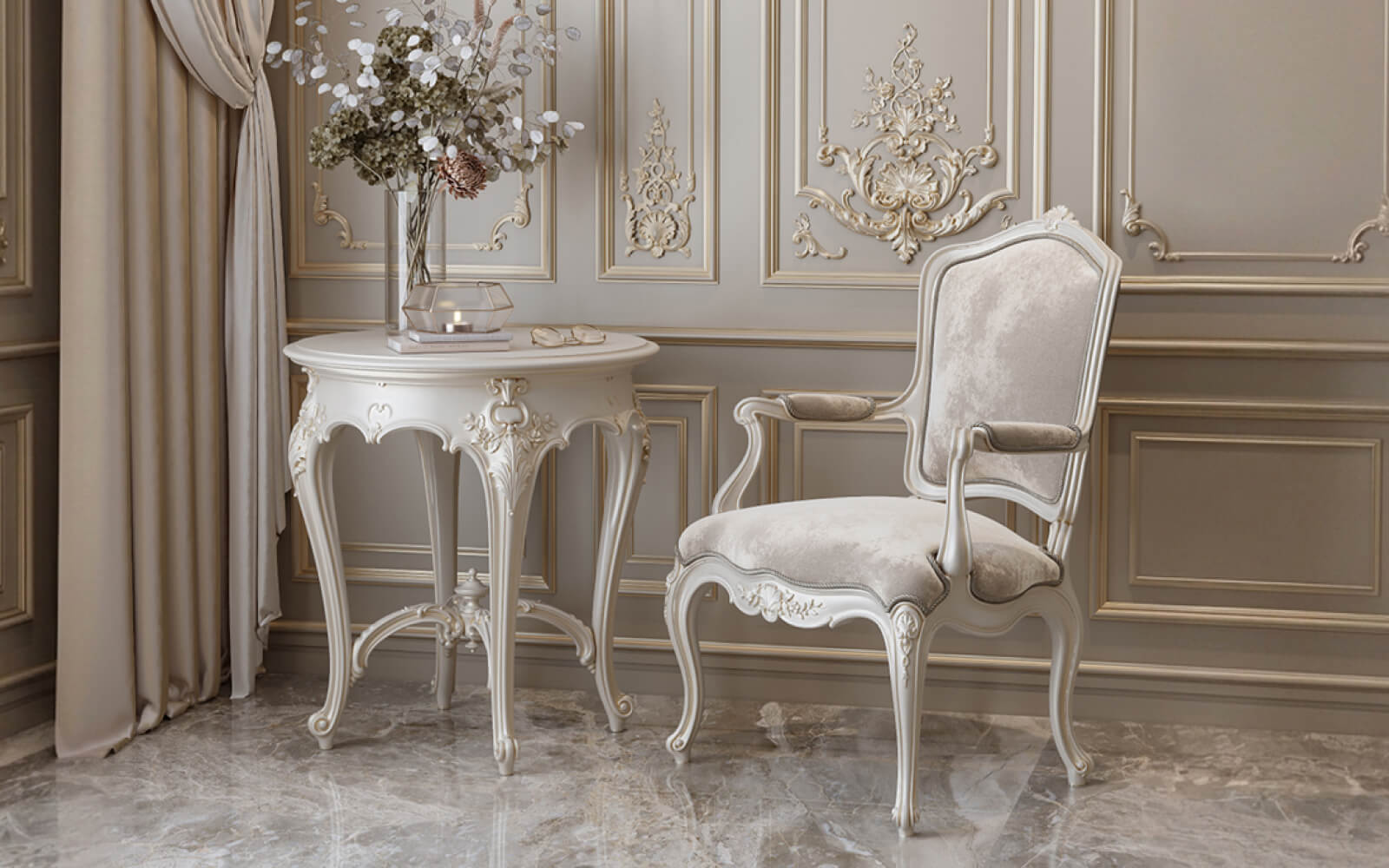
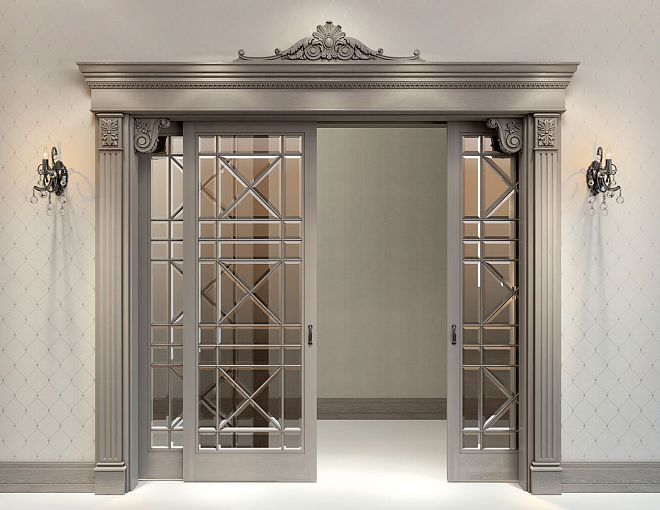
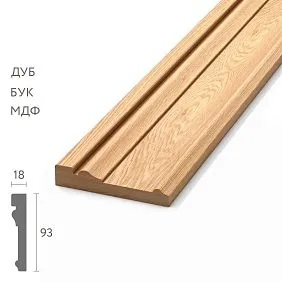
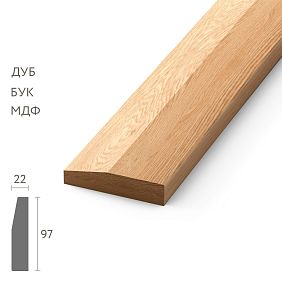
If the apartment has classic doors with profiled casings, stucco or carved elements, parquet flooring — onlyWooden baseboardwith an expressive profile is appropriate here. Wood in classic style is not a whim; it's the norm. It is solid wood that creates that very heavy, warm, breathing texture that cannot be faked with an artificial material. A relief profile, rounded edges, the possibility of painting in any shade — all this makes a wooden baseboard indispensable in classic and neoclassical solutions.
Our factory also produces:



Modern and minimalist interior
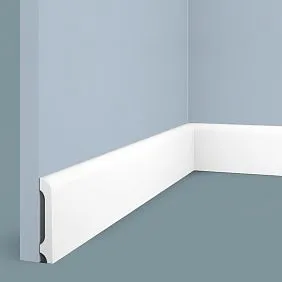
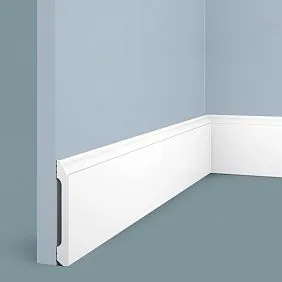
Here the situation is different. For an apartment in a minimalist, Scandinavian, contemporary, or modern classic style — laconic profiles without complex relief work best. A white MDF baseboard with straight edges or a wooden baseboard of simple geometry — both options are appropriate. The main criterion is the purity of the line and the correct height.
Get Consultation
High-traffic areas
Entryways, hallways, and children's rooms are zones where baseboards regularly experience mechanical impact. Here, resistance to impact, the ability to wipe with a damp cloth without damaging the surface, and reliable fastening are valued.Skirting made of solid woodWith proper surface treatment—varnish or enamel—it handles this task well: the wood holds its shape, does not deform from accidental impacts, and the surface is easy to refresh.
Apartment with an emphasis on naturalness
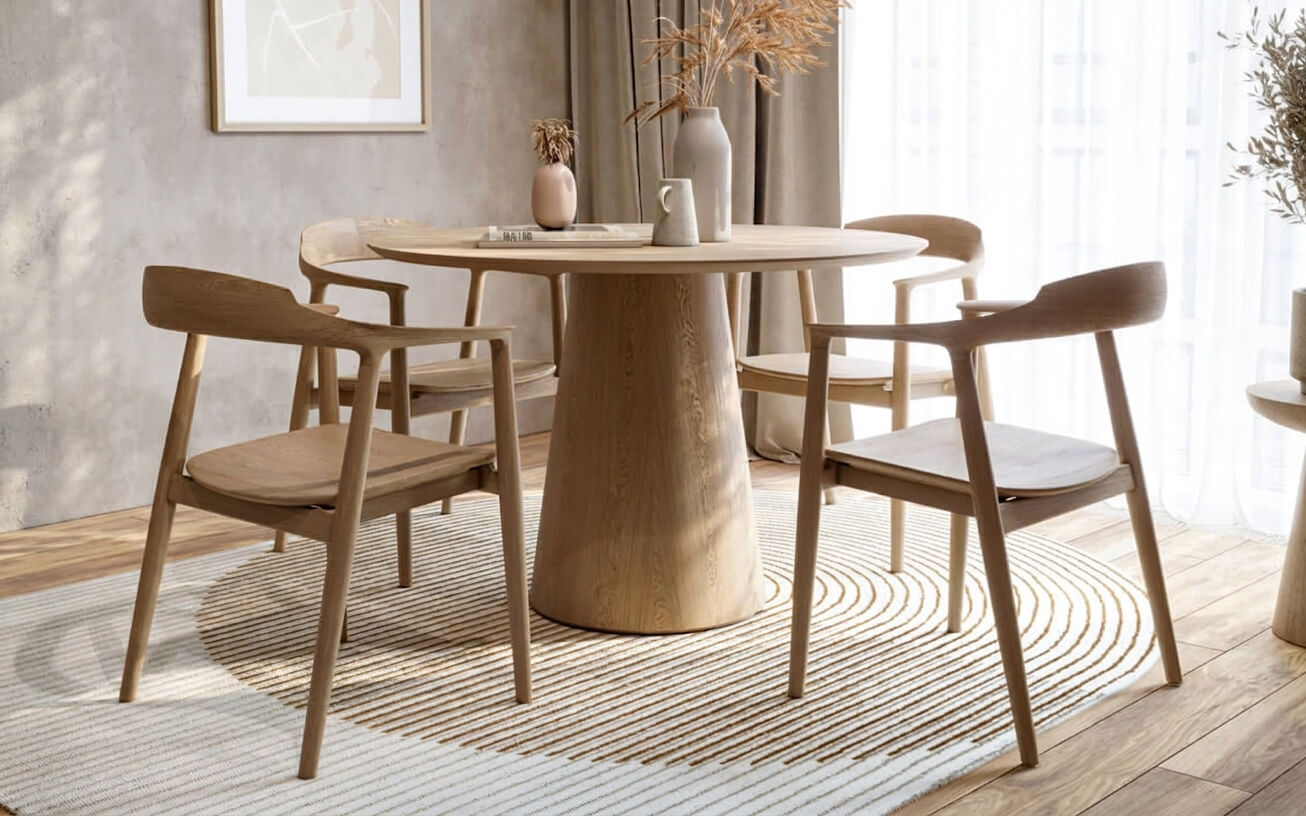
If the interior is built around natural materials—wooden floors, concrete, brick, natural textiles—wooden baseboard for an apartmentbecomes an organic continuation of this concept. It does not contrast or 'jump out' of the overall context but fits into it as a natural element.
MDF baseboard or wooden baseboard: what to choose for an apartment
This question is one of the most common, and the answer is not straightforward. Both categories have their strengths. The main thing is to understand which is suitable for which scenario.
Appearance
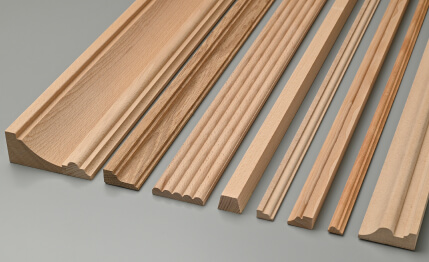
Wooden baseboard for an apartmentpossesses a living texture, warmth, and depth of natural material. Each piece is slightly unique—the grain pattern, shade, reaction to light. This is not a flaw; it's character.MDF Skirting Board— perfectly even, uniform, stable. For painting, it provides an impeccably smooth surface without knots or pores.
Strength
Solid wood is a dense material. Well processedwooden floor skirting boardwill last for decades. MDF is slightly less resistant to point impacts, but under normal operating conditions, the difference is insignificant.
Moisture Resistance
Here, standard MDF falls short. In wet areas — kitchen, bathroom — a skirting board with moisture-resistant treatment or natural wood with a varnish coating is preferable.
Paintability
Both materials can be painted. ButPaintable skirting boardMDF does not require surface priming — it is initially even and dense. Wood is puttied and sanded before painting — this yields a deeper, richer result but takes more time.
Geometric Stability
Wood is a living material. With sharp fluctuations in humidity and temperature, it may slightly deform. This is taken into account during installation: a small technological gap is left. MDF is more stable in this regard, less sensitive to storage and installation conditions.
Appropriateness in styles
| Interior style | Wooden skirting board | MDF skirting board |
|---|---|---|
| Classic | ✓ Perfect | Acceptable |
| Neoclassical | ✓ Very good | ✓ Good |
| Minimalism | Simple profile | ✓ Excellent |
| Scandinavian | ✓ Good | ✓ Good |
| Contemporary | Possible | ✓ Good |
| Eco-style | ✓ Perfect | Not recommended |
| Loft | Rough profile | Not typical |
Project entry price
to buy wooden baseboard— means investing in long-term results. Solid wood is more expensive than MDF, but it also serves differently: it can be sanded, repainted, restored.Floor MDF skirting board— an affordable option with a good visual result in a modern interior.
A sense of 'premium'
This is perhaps the most subjective, but also the most significant. A wooden skirting board in an apartment gives a feeling of a lived-in, solid space. The hand feels the solid wood, the eye reads the texture. This cannot be emulated with an imitation. If the goal is to create an interior where quality is evident — the choice is in favor of wood.
How to choose the height of a skirting board for an apartment
Skirting board height is one of the most underestimated parameters when choosing. Yet, it is precisely what determines the visual proportions of a room, the 'weight' of the interior, and the degree of its completeness.
Low skirting board: up to 5 cm
Suitable for small apartments with low ceilings — up to 2.6 m. A narrow skirting board does not 'eat up' the vertical, visually does not weigh down the lower zone of the wall. Appropriate in a minimalist interior, where it is important to free up space as much as possible.
However, a low skirting board has a limitation: it poorly conceals irregularities at the joint between the floor and wall, especially if the walls are not perfectly even. In this case, even small level differences become a noticeable problem.
Medium skirting board: 5–8 cm
This is a universal range that suits most apartments. With ceiling heights of 2.6–2.8 m, a medium skirting board looks proportional, does not overload the lower zone, but reliably covers all technological gaps. This height is most often chosen for bedrooms, living rooms, and modern interiors.
Tall skirting board: 8–12 cm and above
Tall skirting board for an apartment— is an element that itself becomes part of the interior statement. With ceilings from 2.8 m and above, a tall skirting board visually 'grounds' the space, creating a sense of architectural solidity. In a classic interior, it is mandatory: without it, the room seems unfinished.
Wide skirting board for an apartmentwith a rich relief profile — is a full-fledged decorative element. It is chosen when one wants to add architectural character, a pronounced classical note to the interior.
Skirting board as an accent element
In a number of design solutions, the skirting board is deliberately chosen to be of non-standard height — 12–15 cm — to create a visual sense of an 'architectural base of the wall'. This works especially effectively in combination withplank panelson the walls and moldings around the perimeter of the ceiling: then all elements form a unified vertical finishing system.
How to choose a skirting board by rooms
Different areas of the apartment impose different requirements on the skirting board. Let's consider each separately.
Baseboard for the hallway in an apartment
The hallway is the first thing a person sees when entering an apartment. Here, the baseboard should be reliable and resistant to mechanical impacts: shoes, bags, suitcases — all of these regularly 'meet' the lower wall area. The optimal choice iswith a classic profile creates a sense of solidity, reliability.with a varnish or enamel coating: such a surface is easy to wipe clean and does not lose its appearance from accidental impacts.
At the same time, in the hallway, the baseboard should visually 'open up' the space, not compress it. If the hallway is narrow — choose vertically accentuated forms. If possible — combine the baseboard withplank panelson the walls: this creates a sense of height and structure even in a small space.
Baseboard for the kitchen in an apartment
The kitchen is an area with increased requirements for moisture resistance. Water, grease, and hot droplets often get on the floor here. The baseboard must hold the coating, not swell, not darken. A wooden baseboard with moisture-resistant treatment is a practical solution, especially if the kitchen is done in a natural style. Important: a gap between the baseboard and the floor is undesirable — moisture and dirt get in there. A tight fit is a mandatory condition.
Baseboard for the bedroom in an apartment
The bedroom is a space of tranquility, and the baseboard here should 'not interfere'. A calm profile, a neutral or warm shade, medium height.White wooden baseboard for an apartmentFor light-colored walls or a skirting board matching the floor covering — both options are organic. In the bedroom, avoid choosing a skirting board with an overly complex profile: this will create visual noise where tranquility is needed.
Skirting board for the living room in an apartment
The living room is the showcase of the apartment. Here, the skirting board can and should 'work' as part of the design. A tall wooden skirting board with an expressive profile, a laconic wide white MDF one — both options are appropriate depending on the style. In the living room, the combination works well: skirting board + decorativeslatted panels for wallsin the TV zone or on an accent wall. This elevates the interior level without significant costs.
Skirting board for the hallway in an apartment
The hallway is a transit zone. Here, durability, ease of maintenance, and visual lightness are important. A dark skirting board matching the floor color will make the hallway more finished, a light one will visually expand the space. If the hallway connects several rooms with different interiors — use the same skirting board throughout the apartment: this creates a sense of unity and spatial coherence.
Skirting board for a studio apartment
A studio is a special case. Here, all zones flow into one another, and the skirting board should work to unify, not separate. A singleFloor skirting board for apartmentaround the entire perimeter is the correct solution. Avoid changing skirting boards in different zones of the studio: this fragments the space. The optimal height for a studio is 6–8 cm, the profile — laconic.
How to combine skirting board with floor, doors, and walls
This is the block that is read especially carefully—and rightly so. Because it is the inconsistency of the baseboard with the other elements that most often 'breaks' the interior.
Baseboard matching the floor color
A classic and fail-safe solution. The baseboard is chosen to match the floor covering: dark floor—dark baseboard, light floor—light baseboard. This 'hides' the lower line of the room, making the space visually more spacious.
Nuance: 'matching' does not mean 'exactly the same.' It is enough for the baseboard to be from the same color group. A difference of 1–2 tones is acceptable and even desirable—it adds depth.
Baseboard matching the wall color
The opposite strategy. White baseboard with white walls is an almost universal solution. It does not stand out, does not accentuate the lower boundary, and creates a feeling of cleanliness and airiness. That is precisely whywhite baseboard for an apartment—is the most popular choice in modern interiors.
Baseboard matching door trims
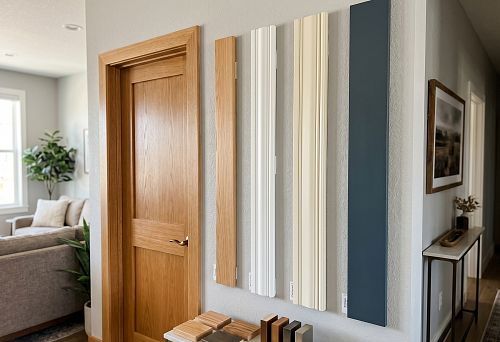
The ideal situation is whenWooden baseboardbaseboards, trims, and interior doors are made from the same material or in the same color group. This creates a sense of architectural consistency—the finishing elements look like a unified system, not a set of random details.
If the doors are light—the baseboard is white or light tones. If the doors are dark wood—the baseboard is dark or tinted to match the same shade. A mismatch here is a common mistake that catches the eye.
Baseboard for interior doors
When choosing a baseboard, look not only at the color but also at the profile of the door casing. If the casing has a figured relief, the baseboard should also have a "related" profile. This is called coordination of details. In classic interiors, this principle is one of the key ones. That's why we haveMoldings for walls— they help tie all elements into a unified whole.
Baseboard for natural wood
If the apartment has parquet, wooden stairs, wooden furniture —solid wood baseboard for the apartmentwill be the only correct choice. Natural wood to natural wood — this is the principle of organic unity. Important: the wood species and shade of the solid wood do not have to exactly match the floor. The main thing is that they "speak the same language."
When a slatted panel is appropriate in an apartment along with baseboards
In recent years, designers have increasingly stopped viewing baseboards as an isolated element. Instead, they build a holistic system of vertical rhythm, where the baseboard, wall finish, and ceiling cornice form an architectural ensemble.
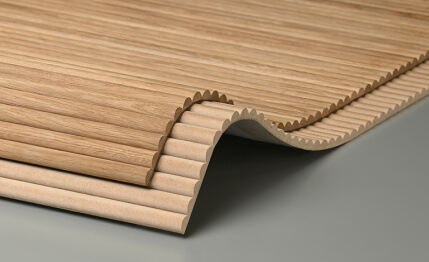
This is whereRack panel— and appears organically, without strain.
When it works
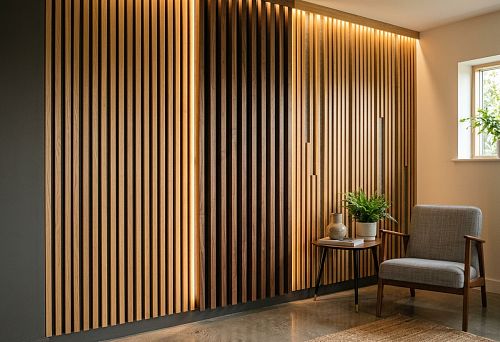
TV zone in the living room. An accent wall for the TV with decorative slatted panels creates depth and structure. The skirting board at the bottom of this zone should be of the same material or the same color group — then the entire wall reads as a single element, not a collection of separate details.
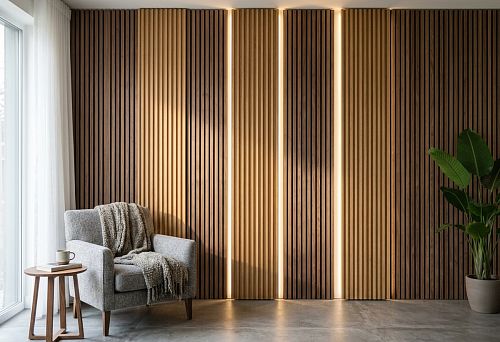
Hallway with vertical rhythm. A small space can be visually elevated by using slatted panels for walls from floor to ceiling. In this case, the skirting board serves as the 'foundation' of the entire composition — the vertical rhythm starts from it, and it 'grounds' it.
Bedroom with a panel headboard. An accent wall behind the bed made of slatted panels plus a tall wooden skirting board — this is a premium-class solution that, when executed correctly, looks expensive and more mature than any wallpaper.
Study or library. In these spaces, buy slatted panels combined with a wooden skirting board means creating a work environment with a rich, serious character. Here, wood is not a decoration, but the philosophy of the space.
How to organically integrate slatted panels into the logic of an article about skirting boards
In modern apartments, baseboards are increasingly chosen not separately, but together with the accent wall finish. This is especially appropriateRack panelin the living room, hallway, and bedroom — in areas where you want to create vertical rhythm and visual depth.
Properly selected a wall slat panelhelps to tie the baseboard, floor, and furniture into a unified rhythm. If the goal is to create a cohesive interior, it's worth considering not onlywooden skirting board purchasebut also selecting slatted panels in the same style and shade to match it.
For those who want maximum interior effect — we recommend paying attention toskirting board for slatted panels: special profiles designed specifically for finishing wall panel systems.
Where to buy baseboards for an apartment
Choosing where to buy is no less important than choosing the baseboard itself. And here there are several key principles.
Don't just look at the price
Price is an important parameter, but not the only one. Two baseboards at a similar price may differ in profile (and thus visual result), material density (and thus strength and durability), and plank geometry (and thus installation complexity and joint quality).
Before purchasing, ensure: the skirting board is straight, without warping, the surface is even, the profile is clear, and the edges are not chipped.
System catalog is important
If you want to select skirting boards together with moldings, trims, panels, and other finishing elements — choose a supplier with a systematic assortment. This allows you to immediately see how the skirting board will look in combination with other products from the same line and avoid mismatches in color and material.
Why it's more convenient to buy from the manufacturer
A manufacturer with its own production and a wide catalog always has stable availability, the possibility of ordering for a specific project, and consultation on combinations and system solutions. This is not an advertisement, it's logic: when one supplier hasSkirting made of solid wood, moldings, panels, and decorative finishes — you get a cohesive interior solution, not a set of unrelated parts.
How to select together with moldings and panels
If the apartment plans includeMoldings for walls— select the skirting board simultaneously with them. Moldings and skirting boards are 'relatives' in the world of finishing. They form the vertical frame of the space: skirting board at the bottom, moldings on the walls, cornice at the top. When all three elements are from the same line — the apartment looks as if designed by an architect, not assembled from different stores.
And, of course,buy slatted panelsIt should be done in advance — before the final wall finishing, to correctly calculate the junctions with the floor and baseboard.
Common mistakes when choosing baseboards for an apartment
Let's break down the most common mistakes. They are made regularly — even by experienced builders who 'know everything' about baseboards.
Mistake 1: Too low a baseboard in a high-ceilinged room
With ceilings of 2.8 m and higher, a baseboard with a height of 4 cm looks unnoticeable, lost. The lower zone of the wall does not receive the necessary 'foundation'. The interior seems unfinished — like a painting without a frame. The rule is simple: the higher the ceiling, the higher the baseboard should be.
Mistake 2: Too complex a profile in a minimalist interior
A rich Baroque profile in a white minimalist space — this is a clash of two aesthetic systems. It does not create an 'interesting contrast' — it creates visual chaos. For minimalism — only clean, geometrically simple profiles.
Mistake 3: Lack of coordination with doors
A baseboard of a dark walnut shade with white doors and white casings — a heavy design decision requiring justification. Random lack of coordination reads as a mistake. Before purchasing, always look at the baseboard next to a sample of the door casing.
Mistake 4: Incorrect material for the specific load
A wooden skirting board without moisture-resistant treatment in the kitchen or bathroom is a skirting board that will start to darken and deform within six months.Moisture-resistant skirting board for an apartmentIn wet areas, it's not an option, it's a requirement.
Mistake 5: Randomly choosing a color 'to match the floor'
'I'm picking something similar in color' is a typical approach that leads to an 'almost right' result. 'Almost' in interior design is worse than 'intentionally contrasting.' Either a precise match in tone or a deliberate contrast. An intermediate option—'apartment skirting board to match the floor color' in a curated, not random, combination—delivers the best result.
Mistake 6: Lack of connection with the overall wall finish
If the apartment plans includedecorative slatted panelsWallpaper with texture or wall panels—the skirting board should be chosen with these solutions in mind. You can't buy the skirting board first and then choose the panels. It's better to view everything as a system.
Mistake 7: Ignoring installation quality
Even the most beautifulWooden baseboardwill ruin the impression if installed with gaps, waves, and crooked joints in the corners. Installing skirting boards is a separate skill. Especially in apartments with uneven walls: this requires a professional experienced in working with natural materials.
Baseboard for apartments under laminate, parquet, quartz vinyl, and tile
Another important topic often overlooked when choosing. The type of flooring directly affects what the baseboard should be.
Baseboard for laminate
Laminate is a democratic material. Both wooden and MDF baseboards are suitable for it. The main rule: the baseboard is attached to the wall, not to the laminate—otherwise, the flooring won't be able to 'breathe' (expand and contract). The gap between the baseboard and the laminate surface should be minimal but present.Baseboard for apartments under laminateIt's better to choose in the same tone as the flooring itself.
Baseboard for parquet
Parquet is a status material. Here, a solid wood baseboard becomes the only appropriate choice. A plastic or inexpensive baseboard next to parquet is like a cheap frame for an expensive painting.Baseboard for apartments under parquetIt is selected to match the wood species of the floor or within a unified color system.
Skirting board for quartz vinyl
Quartz vinyl is popular in modern apartments: practical, moisture-resistant, diverse in textures.Skirting board for an apartment under quartz vinylis chosen according to the same principle as under laminate: matching or intentionally contrasting. Technically — attached to the wall, not to the flooring.
Skirting board under tile
In rooms with tiled floors — kitchen, bathroom, hallway with tile — the skirting board is selected based on the style of the room. Under tile, white or neutral skirting boards are often chosen to avoid competing with the tile pattern. Moisture resistance is a mandatory requirement.
How to correctly combine skirting board withitems from the solid wood
Skirting board is just one element in a broad system of natural wood finishing. When an apartment usesSolid Wood Items— moldings, cornices, balusters, slatted panels — it is important to maintain a unified language.
Wood of the same species or the same shade in all finishing elements creates a sense of thoughtful, cohesive space. Wood of different species and shades, mixed without a system — creates chaos. Therefore, when planning apartment finishing, it is recommended to first determine the 'leading' wood species and shade, and then select all elements to match it.
This is especially important if the apartment is planned to havebaseboards for panels— a special profile that completes wall panel systems from below. Here, material consistency is critical.
Conclusion: which baseboard to choose for an apartment
It's time to bring everything to final conclusions — clear and practical.
If the apartment has natural materials, a classic or neoclassical interior — your choice is clear:Wooden baseboard for an apartmentsolid wood baseboard with a profile coordinated with door casings. This is a long-term solution that ages beautifully.
If the apartment is in a modern, minimalist, or Scandinavian style — a conciseMDF Skirting Boardor wooden baseboard with a simple profile. White color is a universal option.
If the apartment is planned to have accent wall finishes — look at the baseboard together withplank panels. A systematic approach will save you time and deliver a qualitatively different result.
If durability is important—buy wooden skirting board—solid wood means making an investment that will pay off with years of service life and the possibility of restoration.
If the budget is limited but you want a good result—Floor skirting board for apartment—MDF for painting in the right profile will provide a decent visual effect at reasonable cost.
Final advice: never choose a baseboard in isolation from the other finishing elements. Look at it next to samples of the floor, doors, and walls. These five minutes of time eliminate costly rework.
About the company STAVROS
STAVROS is a Russian manufacturer of products made from solid natural wood: baseboards, moldings, cornices, slatted panels, balusters, and a wide range of decorative elements for apartments, houses, and commercial interiors.
Production operates on its own equipment with strict quality control at every stage: from raw material selection to surface finishing. The entire range is a system in which baseboards, moldings, panels, and cornices are coordinated with each other in profile, material, and shade. This is not a random set of SKUs—it is a well-thought-out line of interior solutions.
STAVROS works with both private buyers and designers, construction companies, and interior studios. A wide range, stable stock availability, and the possibility of selecting a comprehensive solution—from baseboard to slatted panels—make the company a reliable partner for any interior project.
Frequently asked questions about skirting boards for apartments
Which baseboard is best suited for an apartment in 2025–2026?
Current trends: solid wood baseboard for apartments with natural materials, white MDF for modern interiors, high profile (8–12 cm) for rooms with ceilings from 2.8 m. A systematic approach—baseboard plus slatted panels—remains a trend in the premium and middle+ segments.
What is the difference between a wooden skirting board and MDF?
Wood is a natural material with a living texture, high strength, and the possibility of restoration. MDF is more affordable, perfectly smooth, and takes paint well. The choice depends on interior style, budget, and durability requirements.
What is the optimal skirting board height for an apartment?
For ceilings up to 2.6 m — 4–6 cm. For ceilings 2.6–2.8 m — 6–8 cm. For ceilings above 2.8 m — from 8 cm and above. In a classic interior, the skirting board height can reach 12–15 cm.
Should you choose a skirting board to match the floor color or the wall color?
Both approaches are correct — depending on the goal. A skirting board matching the floor 'hides' the lower boundary of the room. A skirting board matching the walls (white) makes the space visually lighter. The main thing is a conscious choice, not a random one.
Can a wooden skirting board be used in the kitchen?
Yes, provided the skirting board has a moisture-resistant coating — varnish or enamel. The skirting board must be tightly pressed to the floor without gaps.
How to coordinate a skirting board with slatted panels?
The skirting board and slatted panels are selected within the same color system and from the same material. The skirting board 'grounds' the wall panel composition from below. It is recommended to use a special skirting board for slatted panels — it has a profile specifically designed for this type of finish.
Where is the best place to buy a skirting board for an apartment in Moscow?
A manufacturer with a system catalog that includes skirting boards, moldings, and panels. This eliminates material mismatches and allows you to select all finishing elements in one place. This is exactly the approach offered by STAVROS.
What is a paintable skirting board and when should you choose it?
This is a skirting board without a finish coating, with a smooth surface ready for painting in any color. It is chosen when a non-standard shade or an exact match to the interior color scheme is needed. Most often, this is a solid wood or MDF skirting board.