Article Contents:
- Why MDF skirting board has become the standard of modern renovation
- Which MDF skirting board profile to choose
- Straight MDF baseboard
- Flat MDF baseboard
- Wide MDF skirting board
- Shaped Profile
- How to choose correctly: short table
- Which MDF skirting board height to choose
- 60–70 mm: modest and functional
- 80 mm: universal standard
- 100 mm: expressiveness and expensive look
- 120 mm and above: for high ceilings and classic interiors
- Which color of MDF baseboard to choose
- White MDF baseboard
- Paint-Ready MDF Skirting Board
- MDF baseboard with wood finish
- Gray and neutral shades
- Price of MDF baseboard in Moscow: what really affects the cost
- What determines the final price
- How to calculate the budget correctly
- How to calculate the amount of MDF baseboard before ordering
- Calculation formula
- Example calculation for an apartment
- Features of multi-angle rooms
- Calculation considering all rooms of the apartment
- What to clarify before buying: a checklist
- Checklist before buying MDF baseboard in Moscow
- Mistakes when buying MDF baseboard for an apartment
- They choose by price, not by profile
- They don't calculate the perimeter
- They buy white baseboard without comparing with doors
- They choose a profile that is too low for high ceilings
- They forget about fasteners
- They don't plan the junction with architraves
- They buy baseboard and order moldings separately from different places
- MDF or solid wood: when to choose what
- When an MDF baseboard is the right choice
- When to consider a solid wood baseboard
- What to buy together with MDF baseboard: a systematic approach
- Fasteners and mounting materials
- Elements of the finishing system
- Final checklist before ordering: five questions
- FAQ: popular questions about buying MDF baseboards in Moscow
- Where to buy MDF baseboards in Moscow?
- How much does an MDF baseboard cost per meter in Moscow?
- Which MDF baseboard is best to buy for an apartment?
- What is better: MDF baseboard or wooden baseboard?
- Do I need to buy fasteners together with the skirting board?
- How to choose a skirting board to match doors and architraves?
- How to calculate the skirting board for the entire apartment?
- Can MDF skirting board be repainted?
- About the Company STAVROS

Moscow is a city where renovations are done quickly, expensively, and with a claim to results. And it is here that people most often encounter a situation where the skirting board is chosen hastily: by the first height they come across, by a price that seems 'okay', and without understanding how it will look next to the door, floor, and walls. The result is a beautiful renovation with an awkward detail in the lower contour of every room.
This article is written for those who want to figure it out once and for all: which MDF Skirting Board to buy in Moscow, how to choose the profile, color, height, calculate the required quantity, and not overpay for installation mistakes.
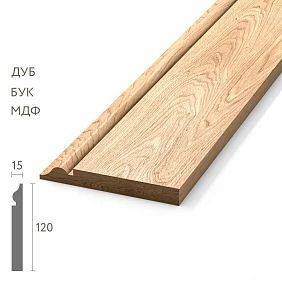
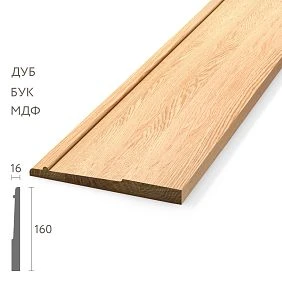
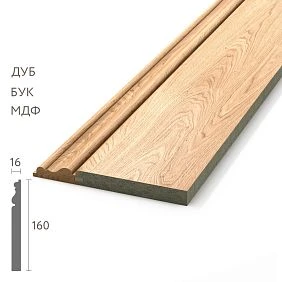
Why MDF skirting board has become the standard of modern renovation
Twenty years ago, most Moscow apartments had Soviet-era wooden skirting boards with chipped paint — or plastic profiles that would start yellowing and cracking after a year. MDF skirting board took this niche for a reason: it landed exactly in the space between cheap plastic and expensive solid wood.
What makes MDF skirting board a rational choice for a modern apartment?
Geometry stability. MDF — a pressed wood fiber board — does not warp or shift with temperature and humidity changes like solid wood. This means that a year after installation, the baseboard will remain exactly where it was, without gaps or deformations.
Ready for any coating. White MDF baseboard can be repainted. Baseboard for painting — paint in any shade from the catalog. Baseboard with wood texture — leave as is. This is flexibility that neither plastic nor inexpensive wooden profiles offer.
Visual quality. With a properly selected profile and careful installation, MDF baseboard looks significantly more expensive than its price. This is important for business-class apartments, penthouses, offices, and commercial spaces where every detail contributes to the overall impression.
Wide assortment. Straight, flat, shaped, with a floor overlap, with a decorative chamfer, height from 60 to 120 mm — the choice of profiles allows you to find the exact solution for any style and any room geometry.
Compatibility. MDF baseboard organically fits into the finishing system alongside wooden casings on doors, wooden moldings on the walls and decorative wooden slats in interior zones. A unified material system is what distinguishes a well-thought-out renovation from a set of random elements.




Which MDF baseboard profile to choose
The profile is the cross-sectional shape of the baseboard. And it determines how the lower contour of the room will look: strict, soft, architectural, modern, or classic. Let's break down each option without unnecessary words.
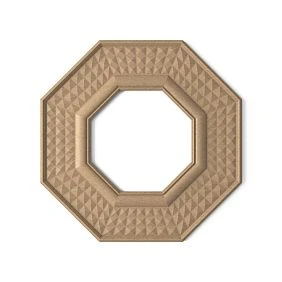
Our factory also produces:
Straight MDF skirting board
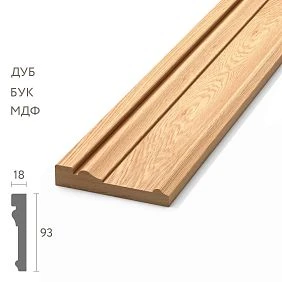
Straight MDF baseboard is a profile with a rectangular cross-section, without rounding, chamfers, or decorative elements. It fits perfectly into modern interiors: minimalism, contemporary, high-tech, scandi. The straight line at the floor creates a clear, architectural lower contour — the wall seems to "stand" on its base.
Important nuance: a straight profile requires high-quality installation. Any slight deviation in the even horizontal top line of the baseboard will be noticeable. However, with good wall geometry and professional installation, the result is flawless.
Get Consultation
Flat MDF skirting board
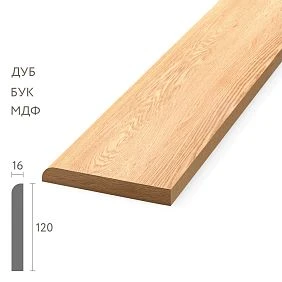
Flat MDF baseboard — a thin, elongated strip with minimal projection from the wall. This is the quietest profile: it doesn't claim an architectural role, just neatly marks the transition from wall to floor. It's especially good in small rooms where a massive profile would create a feeling of tightness.
Wide MDF baseboard
Wide MDF baseboard — a profile with a height of 100 mm or more. It's a tool for creating an expensive, substantial interior. A wide baseboard visually "raises" the ceiling: the eye perceives the room height as greater because the lower part of the wall is clearly framed by a massive horizontal element.
For rooms with ceilings of 2.7–3.5 meters, this is the right and beautiful choice. Wide Baseboard MDF paired with a high with wooden cornices creates a horizontal frame of the space — top and bottom — within which everything else looks cohesive and expensive.
Shaped profile
Shaped MDF baseboard — for classic, neoclassical, art deco, interiors with stucco and decorative elements. Its profile includes radius transitions, heels, shelves — elements that give the strip an architectural character.
The shaped profile pairs well with wooden moldings on the walls and an MDF cornice: they form a unified system of horizontal elements in the space.
How to choose correctly: short table
| Interior style | Recommended profile |
|---|---|
| Minimalism, high-tech | Straight or flat |
| Scandi, contemporary | Straight, 80–100 mm |
| Classic, neoclassic | Shaped, 100–120 mm |
| Modern Classic | Straight wide or shaped 100 mm |
| Loft | Straight, possibly dark color |
Which MDF skirting board height to choose
Height is the second most important parameter after profile. It affects both aesthetics and how much of the lower wall is covered.
60–70 mm: modest and functional
A low baseboard works discreetly — it's there but doesn't dominate. It's the right choice for small rooms with ceilings up to 2.5 meters, where a tall profile would visually "weigh down" the space. For a calm renovation in a studio, children's room, or bathroom, it's a perfectly adequate option.
On the downside: it covers a smaller area of the lower wall, which matters if there are minor unevenness or unpainted strips.
80 mm: универсальный стандарт
An 80 mm MDF baseboard is the most popular size for Moscow apartments. It's expressive enough to be read as an architectural element, but not so large as to overwhelm a standard room. It works in a living room, bedroom, hallway, kitchen-dining room, office — practically everywhere.
It's the 80 mm baseboard that is most often chosen for turnkey renovations: it requires no special justification, looks good in photos, and delivers a neat final result.
100 mm: expressiveness and a luxurious look
A 100 mm MDF baseboard is already a statement. It's a profile that is visible, that reads as a design solution, not just a functional element. In a room with a ceiling of 2.7–3 meters, it looks organic and rich.
For business-class apartments, penthouses, spacious living rooms, and grand hallways, a 100 mm baseboard is the right choice. Together with a wide wooden baseboard in areas where natural solid wood is used, it forms a unified high-class finishing system.
120 mm and above: for high ceilings and classic interiors
A skirting board with a height of 120 mm or more is almost an architectural frieze. It is intended for rooms with ceilings from 3 meters: country houses, lofts, historical buildings with non-standard heights. In such spaces, a standard 80 mm skirting board simply gets lost.
In a classic interior with high ceilings, a 120+ mm skirting board paired with a correspondingly scaled cornice creates a full horizontal wall decoration system.
What color of MDF skirting board to choose
The color of the skirting board is an issue that is put off until later and then regretted. Because an incorrectly chosen shade can ruin even a technically flawless installation.
White MDF skirting board
Buying a white MDF skirting board is the most common request. And it's no surprise: a white skirting board is universal, it works in light Scandinavian interiors, in modern classics with white doors, in minimalist studios with white walls.
But white skirting boards have an important nuance — shades of white. White can be warm (slightly yellowish), cold (with a bluish tint), and neutral. If your doors are 'white silk' and the skirting board is 'super white', the joint between the trim and the skirting board will look ugly: the difference in shades will be noticeable even without special attention.
The rule is simple: before buying a white skirting board, compare it with the trims and door frames under real lighting conditions.
MDF skirting board for painting
Buying an MDF skirting board for painting is a strategically correct solution for those who want a perfect color match. You take a profile with a primed or prepared surface and paint it in the exact shade of the wall, door, or any other interior element.
This is especially important in the following cases:
-
walls are painted in a non-standard designer shade;
-
want a baseboard in the color of the wall to minimize the visibility of joints and gaps;
-
plan to change the color scheme in a year or two and want to repaint the baseboard along with the walls;
-
are working with a color project where each shade is coordinated and specified by RAL or NCS code.
Painting technology: light sanding with 240-grit abrasive, primer-isolator, double coat of acrylic interior enamel. The result is a surface indistinguishable from the factory coating of the desired shade.
MDF baseboard with wood finish
MDF baseboard with wood texture — for interiors with parquet, laminate, wooden doors, or solid wood furniture. In this case, the baseboard visually "belongs" to the floor covering: it is perceived as its continuation, not as an independent element.
Wood textures can be very different: light oak, dark walnut, wenge, ash, birch. When choosing, it is important to compare the shade of the baseboard with a real sample of parquet or laminate under the same lighting. What looks identical on the screen may turn out to be noticeably different in a real interior.
If you want complete unity of materials, consider Solid oak skirting board or special positions MDF skirting board oak — they will give an identical texture to parquet made of the same material.
Gray and neutral shades
Gray baseboard, gray oak, smoky ash — shades that are actively gaining popularity in Moscow interiors in recent years. They work with concrete-look porcelain stoneware, graphite doors, dark accent walls, and furniture in a modern minimalist style.
Gray baseboard is a neutral mediator: it does not conflict with either warm or cold shades of the main surfaces of the room.
Price of MDF baseboard in Moscow: what really affects the cost
The issue of price here is fundamental — not because you need to save money, but because you need to plan the budget correctly. MDF baseboard price per meter is only one component of the real project cost.
What determines the final price
Profile height. This is the main cost factor: the higher the profile, the more material per linear meter. A 80 mm baseboard and a 120 mm baseboard are fundamentally different price points. The difference can be 30–60% depending on the manufacturer.
Coating and finish type. White enamel, primer for painting, textured wood print — each option has its own production cost. As a rule, a ready-made white coating is cheaper than a textured one imitating valuable wood species. A baseboard for hand painting with detailed surface treatment is more expensive than a standard one.
Profile complexity. A straight profile is technologically simpler than a multi-step shaped one with radius transitions. Accordingly, the cost of the mold and production differs.
Plank length. Standard length is 2.4–3 meters. Longer planks are more convenient to install (fewer joints), but require more care during transportation.
Number of corners in the room. This is not the cost of the strip, but the actual material consumption: at each internal corner, 40–80 mm is lost on each side. If the apartment has 8 rooms and each has four corners, this is a significant expense that needs to be included in the budget.
Allowance for trimming and defects. Standard is 7–10% of the calculated quantity. Neglecting this allowance means that at the end of the work you will have to buy one or two strips with the risk of a batch difference.
Fasteners and installation materials. Clips, mounting strips, dowels, screws, acrylic sealant — all of this costs money. A good installer always calculates the estimate including consumables.
Delivery. If you order from St. Petersburg to Moscow, transportation costs are calculated separately. STAVROS delivers throughout Russia, so for Moscow projects this is a standard ordering format.
How to calculate the budget correctly
Do not calculate by individual strips. Calculate by linear meters with allowance, considering corners, fasteners, and accompanying moldings. Example:
Apartment 65 sq. m, three rooms plus hallway and kitchen. Average perimeter of one room is 14–16 m. Total perimeter of the entire apartment is about 60–70 linear meters minus doorways. With a 10% allowance — 66–77 linear meters of baseboard. This is the real figure for calculation.
How to calculate the quantity of MDF baseboard before ordering
The calculation takes five minutes but makes the order accurate and eliminates the need for double delivery.
Calculation formula
Number of linear meters = Room perimeter − Width of doorways + Reserve 7–10%
Perimeter is the sum of all four walls (or more if the room is non-standard). Subtract the width of each doorway from it: baseboard is not installed there. Increase the resulting number by 7–10% — allowance for trimming at corners, in case of chipping, and for final adjustment.
Example calculation for an apartment
Living room 5×4 meters with one door 0.9 meters wide:
-
Perimeter = (5+4) × 2 = 18 meters
-
Minus door: 18 − 0.9 = 17.1 meters
-
Plus 10% reserve: 17.1 × 1.1 = 18.8 meters → order 19 linear meters
This means about 7 planks of 2.7 meters or 7 planks of 3 meters. When ordering 3-meter planks, the offcuts can be used in other rooms.
Features of multi-corner rooms
If the room is L-shaped, T-shaped, or has built-in niches, the number of internal and external corners increases. Each corner consumes an additional piece of material. In such cases, it is better to take a reserve of 12–15% instead of 7%.
Calculation considering all rooms of the apartment
If you are renovating the entire apartment at once, calculate the total perimeter. This allows:
-
Order everything in one batch from a single production run — important for color consistency;
-
Get the best terms based on order volume;
-
Avoid buying later 'on the fly' with the risk of a different shade in the new batch.
What to clarify before purchasing: a checklist
An experienced designer or builder asks themselves these questions even before opening the catalog. Go through them — and your order will be precise.
Checklist before buying MDF baseboard in Moscow
-
What is the ceiling height? — Choose the baseboard height proportional to the room height.
-
What color are the doors? — White baseboard for white doors, dark for dark ones. Mismatched shades are a common mistake.
-
What is the floor like? — The baseboard texture should match or harmonize with the flooring.
-
What color are the walls? — If you want the baseboard to match the wall color, choose one for painting and paint it the same shade.
-
Are the walls level? — If not, consider the mounting plate and fasteners, not just the glue.
-
What interior style? — Straight or flat profile for modern styles, shaped for classic.
-
Do you need corners, connectors, end caps? — All of these are ordered together with the skirting board.
-
What about the architraves? — If already selected Wooden casings, the skirting board should be matched in thickness and color so the joint is neat.
-
Is there a reserve for trimming? — Minimum 7%, preferably 10%.
-
Is delivery needed? — STAVROS ships from the factory in Saint Petersburg across Russia, including Moscow.
Mistakes when buying MDF skirting boards for an apartment
This is not a theoretical list — these are real situations that occur regularly.
Choosing by price, not by profile
The cheapest baseboard in the right color is a understandable temptation. But if the profile doesn't match the interior style, the result looks disjointed. Saving 200–300 rubles per linear meter leads to dissatisfaction with the outcome.
They don't calculate the perimeter
"I'll buy with a margin" — and they buy either too much or too little. Five minutes with a tape measure and calculator isn't hard. But then you won't have to go back for one strip or throw away four extras.
They buy white baseboard without comparing it to the doors
White can be very different. "Vanilla" doors, "Arctic white" baseboard — in a real interior, these are two different colors next to each other. Always compare samples in person under real lighting.
They choose a profile that's too low for high ceilings
A 60 mm baseboard under a three-meter ceiling gets lost and looks random. The height of the baseboard should be proportional to the scale of the room — this is a rule of proportions that works without exception.
They forget about the fasteners
They bought the baseboard, the installer arrived — it turns out there are no clips or mounting strips. A separate trip to the store, a lost day. Everything needed for installation is ordered at the same time as the baseboard.
They don't plan the junction with the architraves
If the door casing protrudes 12 mm from the wall and the baseboard protrudes 16 mm, the end of the baseboard will extend beyond the casing, creating an unsightly step. This detail is checked before purchase, not after.
They buy the baseboard and order the moldings separately — from different places.
If the baseboard and Wooden moldings the wall panels are ordered from different manufacturers — the shades of "white" may differ. A unified finishing system is ordered from a single source.
MDF or solid wood: when to choose which
This question arises for everyone who takes the selection seriously. MDF is a good material, but not the only one.
When an MDF baseboard is the right choice
-
the budget is limited, but a good visual result is needed;
-
renovation in an apartment for rent or sale;
-
the interior style is modern, minimalist, functional;
-
The skirting board is planned to be painted in a non-standard shade;
-
Maximum geometric stability during humidity fluctuations is important.
When to consider solid wood skirting boards
If the budget allows and the interior aspires to a class — Wooden baseboard made of oak or beech wood will provide what MDF fundamentally cannot: natural texture, depth of color, the possibility of repeated restoration, and the feel of real wood underfoot.
Skirting made of solid wood — is a long-term investment in the interior. It can be sanded and repainted after 10–15 years without replacement. MDF does not offer this possibility.
A mixed solution is also practiced: solid wood in main living rooms, MDF in the hallway, kitchen, and bathrooms. This is a reasonable compromise between budget and quality.
What to buy together with an MDF skirting board: a systematic approach
A good interior is built on the logical interconnection of all finishing elements. Buying only the skirting board and forgetting about the rest means buying the rest in a hurry later, without the ability to precisely match the color and material.
Fasteners and installation materials
-
Mounting rail — for professional concealed fastening.
-
Clips — for profiles with a snap-on fixation system.
-
Screws and wall plugs — for direct fastening through the baseboard body.
-
Acrylic sealant — for filling corner and end joints.
-
Mounting adhesive — as an auxiliary element on flat surfaces.
Finishing system elements
Wooden casings — framing of doorways. Selected by color and thickness to match the baseboard, ensuring a neat and seamless joint.
Wooden moldings — for creating wall panels, niches, horizontal accent lines. Together with the baseboard, they form a unified system of horizontal wall design.
Decorative wooden lamination — for vertical accent walls. The baseboard covers the lower end of the slatted structure — it is important that they match in color or harmonize in tone.
wooden cornice or MDF Crown — a ceiling element that, together with the baseboard, forms a horizontal frame for the entire space. In classic interiors, it is a mandatory element.
wood trim items — a broader category that includes all linear wood for finishing: slats, architraves, baseboards, cornices, moldings. Ordering from one place is more convenient and correct from the perspective of material consistency.
Wooden planks — if the project includes slatted walls, partitions, or decorative zones. The baseboard under the slats must be from the same material system.
Final checklist before ordering: five questions
If you are ready to place an order, check yourself against this short list.
1. Profile defined? Straight, flat, wide, or shaped — for your interior style.
2. Height chosen? Considering ceilings, room scale, and proportions.
3. Color coordinated? With doors, floor, and walls — under real lighting conditions.
4. Quantity calculated? Perimeter minus openings plus 10% reserve.
5. Accompanying elements included in the order? Architraves, moldings, fasteners, corner elements.
If all five questions have answers — you can place the order. buy MDF skirting board with delivery to Moscow and throughout Russia, with detailed consultation on profile, color, and fasteners selection in the STAVROS catalog.
FAQ: popular questions about buying MDF skirting boards in Moscow
Where to buy MDF skirting boards in Moscow?
It's better to choose not only by availability and proximity of the point of sale, but also by profile, height, color, coating quality, and the ability to select accompanying elements in a single system: architraves, moldings, slats, and linear products. STAVROS produces MDF Skirting Board in Saint Petersburg with Contact us to confirm shipping to your destination., including Moscow — shipment from one piece.
How much does MDF baseboard cost per meter in Moscow?
The specific price depends on the height, type of coating, profile complexity, and order volume. It's more accurate to calculate the budget not per meter, but by the total volume: the apartment's perimeter with a margin, plus fasteners, plus related trim. Current prices are in the STAVROS catalog and are updated regularly.
Which MDF baseboard is best to buy for an apartment?
For most Moscow apartments, a straight or flat profile with a height of 80–100 mm is optimal. White — for white doors and light walls. For painting — if an exact color match is needed. Wood-look — if there is parquet, laminate, or wooden doors.
Which is better: MDF baseboard or wooden baseboard?
MDF is more stable in geometry, cheaper, and holds paint well. Wooden baseboard Solid wood is more expensive, with a natural texture, the possibility of restoration, and the feel of real wood. For budget renovations — MDF. For high-end interiors — solid wood. A mixed option is also a working approach.
Do I need to buy fasteners together with the baseboard?
Yes, definitely. The fastening method is determined before installation, not during. Clips, mounting rail, dowels, sealant — all of this needs to be on site by the start of work. It's better to order everything in one place to avoid additional trips.
How to choose a skirting board for doors and architraves?
Three parameters: color or shade, thickness (so the end of the skirting board does not protrude beyond the architrave), material. For complete unity — the skirting board and Casings from the same catalog, the same manufacturer. This guarantees matching shades and consistent profiles.
How to calculate the skirting board for the entire apartment?
Measure each room along the perimeter, subtract door openings, add up all values and add 10% reserve. This is the total linear meters. Convert to the number of planks considering their length (2.4 or 3 meters).
Can MDF skirting boards be repainted?
Yes. — is a horizontal element that frames the room at the bottom of the walls where the wall meets the floor. Skirting boards perform several functions: they hide the technological gap between the wall and floor covering (necessary for thermal expansion), protect the lower part of the wall from mechanical damage, create visual completion, and may conceal wiring. painted with acrylic interior enamel in any shade. With proper surface preparation — light sanding, primer, two coats of enamel — the result is indistinguishable from the factory finish.
About the company STAVROS
When you are looking for where to buy MDF skirting boards in Moscow and get not just moldings but a finishing system — it is important to understand who you are working with.
The company STAVROS was founded in 2002 in St. Petersburg. It started as a workshop of artist-carvers who were invited to the reconstruction of the Konstantinovsky Palace in Strelna. Over more than twenty years, the company has become one of the leading manufacturers of decorative moldings and finishing elements from solid wood in Russia — with participation in the restoration of the Hermitage, the Alexander Palace, the Trinity-Izmailovsky Cathedral, and dozens of high-end private projects.
Today STAVROS is a full-cycle production facility with showrooms in St. Petersburg and Moscow, a warehouse of finished products, and well-established logistics across the country. The assortment includes MDF Skirting Board, Skirting made of solid wood, Wooden casings, Moldings, rails, Crown Molding and a full range wood trim.
Over 264 reviews with a rating of 5.0. Shipping from one piece. Delivery to Moscow and throughout Russia. Free consultation on selecting the profile, color, and finishing system.
STAVROS is a manufacturer where the skirting board in the catalog is not just a strip, but an element of a well-thought-out finishing system, in which every detail is coordinated with the others.