




































































Article Contents:
- Why baseboard in the living room works differently than in any other room
- Which materials are suitable for baseboard in the living room
- MDF baseboard for the living room
- Wooden baseboard for the living room
- Polyurethane baseboard for the living room
- Baseboard height in the living room: how not to make a mistake
- Low baseboard for a small living room (40–60 mm)
- Medium height (65–80 mm)
- Tall skirting board for the hall (80–120 mm)
- When a tall skirting board truly makes the hall look more expensive
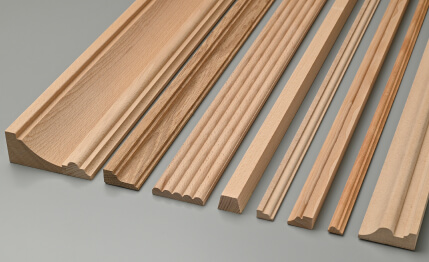
- Which skirting board profile is better for the living room
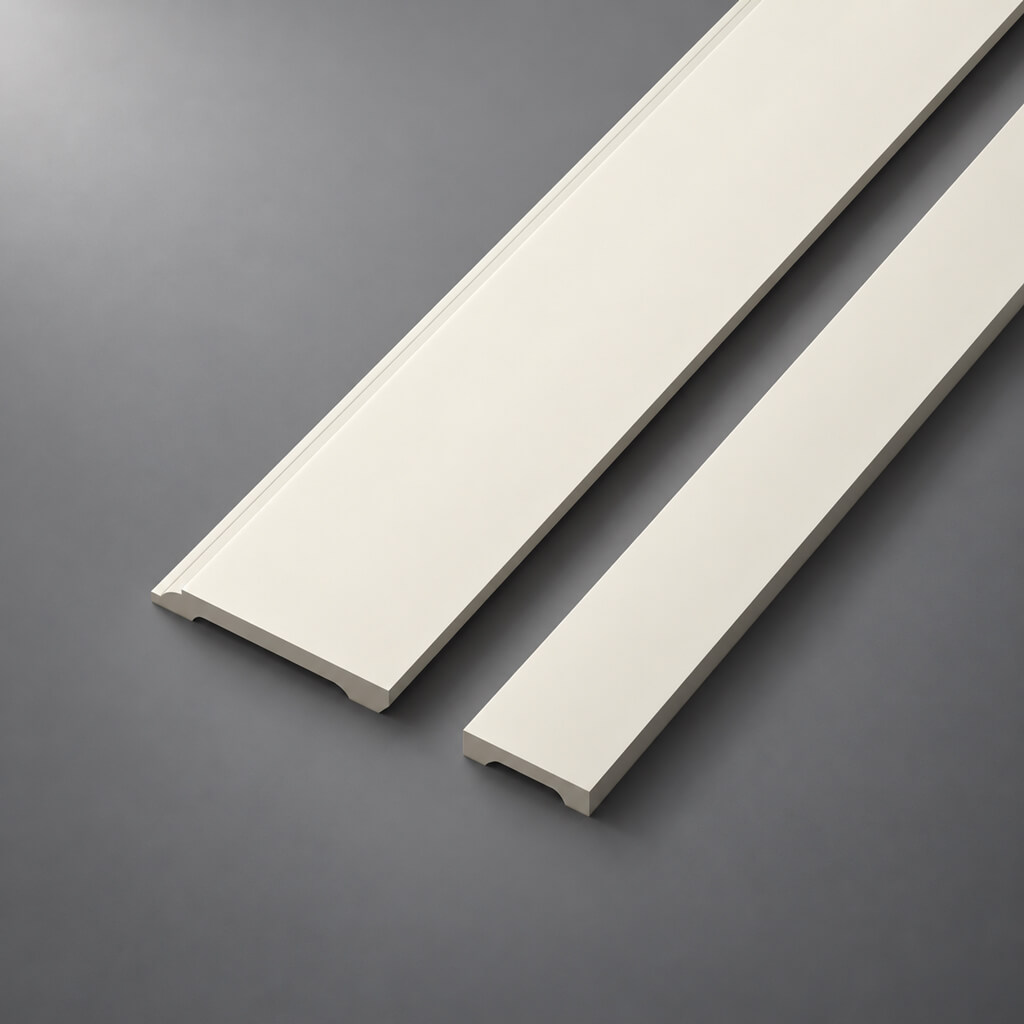
- Straight Profile
- Flat profile
- Minimalist smooth profile
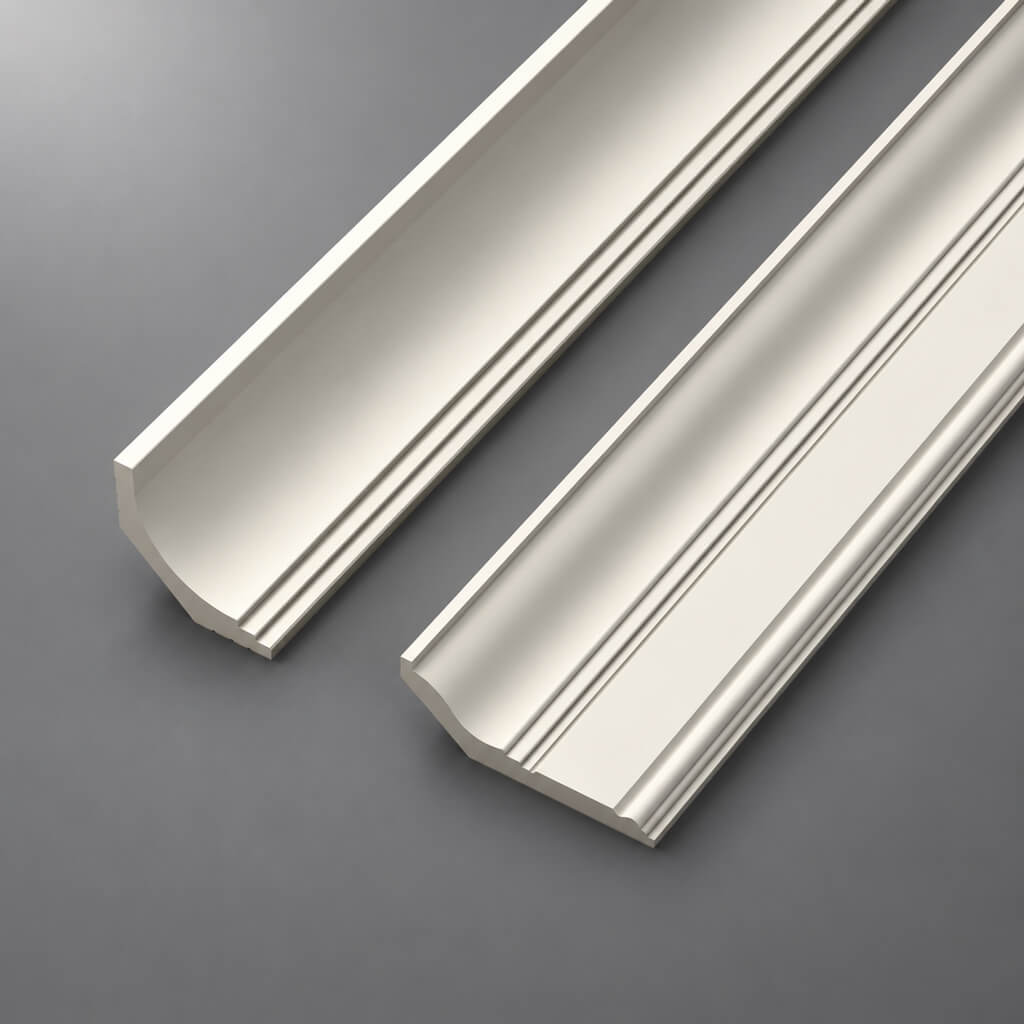
- Classic figured profile
- Narrow profile for a modern hall
- How to choose a skirting board to match the hall style
- For a modern hall
- For a classical hall
- For neoclassical style
- For a hall with natural wood
- Hall skirting board color: seven scenarios
- White skirting board for the hall
- Matching the wall color
- Matching the floor color
- Contrasting skirting board
- Wood-look
- For painting in a custom color
- Gray and black skirting board
- Skirting board for the hall for different floor coverings
- For laminate in the hall
- For quartz vinyl
- For parquet in the living room
- For engineered board
- For porcelain stoneware and tiles in the hall
- MDF or wooden skirting board for the hall: comparison without compromises
- How to match skirting board with other hall elements
- Baseboards and doors
- Skirting and wall slat panels
- Skirting boards and cornices
- Skirting boards and TV area
- How to buy skirting boards for the living room without mistakes: a complete checklist
- What STAVROS offers for the living room
- FAQ: answers to popular questions about skirting boards for the living room

The living room is not just another room in the apartment. It's its face. The space by which the interior as a whole is judged, where guests are welcomed, where evenings are spent, where the most important visual experience of the home is concentrated. And it is here that every detail works with double load—as a functional element and as part of the image.
Floor skirting boards for the living room are from that category of details that are unnoticeable with the right choice and painfully obvious with a mistake. A tall oak profile in a classic living room creates a sense of solidity and style. Cheap white plastic under dark wood parquet—a feeling of randomness and incompleteness. The difference lies in a conscious choice.
This article is about how to make this choice correctly. Without unnecessary words, with specific recommendations, with an honest analysis of each option.
Go to the STAVROS catalog:
-
MDF skirting boards for the living room— straight and classic profiles, white and paintable
-
Wooden skirting board for the living room— made of solid oak and beech for parquet and engineered board
-
All floor skirting boards— full range for any hall


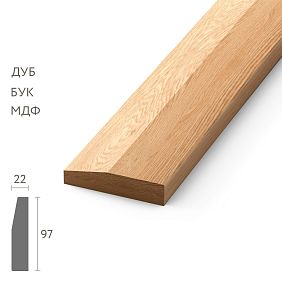


Why skirting boards in the hall work differently than in any other room
Ask yourself: where in your apartment does your gaze most often slide along the lower line of the walls? In the hallway—briefly, in the bedroom—in semi-darkness, in the kitchen—no time for that. In the hall—constantly. A sofa against the wall, a TV zone, a low coffee table, open shelves—all of this directs attention to the lower third of the space. And the skirting board in this area is always noticeable.
Second point: scale. The living room is typically the largest room. A perimeter of 12–16 linear meters, often more. This means that the skirting board here is a long, continuous horizontal line that literally sets the tone for the lower part of the interior. A mistake in choice is multiplied by this footage.
Third: status. Guests come to the hall. The hall is a showcase of your taste. Here, it is appropriate and correct to choose a more expressive, 'polished,' interior-accented option than in technical spaces.
That is why the approach to skirting boards for the hall is different: here, it is part of the image, not just a functional element.




What materials are suitable for baseboards in the living room?
Our factory also produces:


MDF baseboard for the living room
MDF skirting boards for the living room— the most versatile and in-demand choice. It combines precise geometry, stability, and rich painting possibilities.
What makes MDF optimal for the living room?
First — dimensional stability. MDF is pressed under pressure and does not react to changes in room humidity. In a large living room, this is especially important: long runs along walls of 5–7 m should not create gaps at the joints.MDF baseboard for the living room maintains a straight line year after year.
Second — painting in any color.MDF baseboard for painting in the living room— is the way to achieve an exact color match: white walls, gray, warm beige, anthracite, dusty blue. A large living room with a carefully considered color scheme deserves precisely this kind of accuracy.
Third — variety of heights and profiles.High MDF skirting board for the living room90–100 mm with a straight profile is a modern, architecturally significant solution. It creates a lower accent belt in the living room, which a modest 60 mm cannot provide.
Get Consultation
Wooden skirting board for the living room
Wooden skirting board for the living room— that's a different level. A different material, a different feel, a different story in the interior.
When the parquet is made of dark oak, the furniture is made of natural wood, the doors are made of solid wood —Wooden skirting board for the living roomthe same species and the same tinting make the lower zone of the space organic. It's not just a color match — it's a unity of the material environment that creates a sense of an expensive, well-thought-out interior.
Solid wood in the living room is the choice of those who understand the difference between imitation and the original. The texture of oak under the oblique light of a floor lamp in the evening is something that no printed decor on laminated MDF can reproduce.
Buy wooden skirting board for the living roomMade of oak or beech — means investing in an interior solution that will last 25–30 years and allows for complete restoration without replacement.
Polyurethane skirting board for the living room
Polyurethane skirting board— a specialized option. In the living room, its niche is limited: white decorative contour, easy installation, neutral white line without claims to expressiveness.
Where it is justified in the living room: under quartz vinyl in a light interior with minimal requirements for service life and the status of the finish. For a parquet living room, for a classic living room with wooden furniture — not that level.
Skirting board height in the living room: how not to make a mistake
This is the most frequent source of regret: 'we took one that was too low, now we want a higher one.' The height of the skirting board in the living room affects the perception of space more than in any other room — precisely because of the scale and openness of the living room.
Low skirting board for a small living room (40–60 mm)
For a living room of 15–18 sq. m with ceilings of 2.4–2.6 m — a compact option. Covers the gap, does not weigh down the space.Narrow skirting board for the living room55 mm in white — a neutral bottom line that works quietly, without being intrusive.
But it's important to understand here: if the room is small but aims for style, a narrow baseboard won't add solidity. It simply won't ruin it.
Medium height (65–80 mm)
The golden mean for most city apartments. For laminate, engineered wood, quartz vinyl — covers the gap with a margin. In a room with 2.7 m ceilings —MDF baseboard for the living room70–75 mm is the optimal format. Creates a noticeable bottom line, reads as an interior element, doesn't overload.
Tall baseboard for the living room (80–120 mm)
This is where real work with space begins.Tall baseboard for the living room90–100 mm is already an architectural touch. In a living room of 25–30 sq. m with ceilings 2.8–3 m, it creates a lower horizontal belt that sets the scale for the entire space.
A high profile paired with oak parquet and solid wood furniture is what's called a 'luxury interior.' Not because of the price — because of the proportions and thoughtfulness.
Important nuance: if the living room ceilings are only 2.4–2.5 m, a tall 100 mm baseboard will feel oppressive. The proportion will be disrupted. Baseboard height is approximately 1/28–1/30 of the ceiling height.
When a tall baseboard truly makes a hall look more expensive
Three conditions under which a tallfloor baseboard for a halltransforms the perception:
-
Ceilings from 2.7 m — there is space for proportion
-
Baseboard and trim of the same color and material — a unified framing system
-
Profile supports the style — straight for modern, shaped for classic
When all three conditions are met, a hall with a 90 mm tall baseboard looks on a fundamentally different level than the same hall with a standard 70 mm one.
Which baseboard profile is better for a living room
Profile is not a technical detail. It is the language of interior. The wrong profile in a living room is like a tie at the beach or shorts at a formal reception.
Straight profile
Strict rectangle. Front surface is vertical, without bevels, fillets, or relief.Straight skirting board for the living room— this is a modern language: minimalism, Scandinavian style, Japanese interior, contemporary. In a living room with white walls, light quartz vinyl, and furniture of simple shapes — a straight skirting board 70–80 mm in white or light gray finishes the space cleanly and professionally.
Flat profile
Minimal protrusion from the wall. The skirting board fits as tightly as possible — no deep shadow at the floor, no overhang.Flat skirting board for the living room— for living rooms with furniture against the walls: sofas, dressers, TV stands — all without gaps, without trimming, without problems.
Minimalist smooth profile
Without relief, without milled details. Perfectly smooth surface. Easy to clean, doesn't collect dust in recesses.MDF baseboard for the living roomwith a smooth front plane in a dark color — one of the strongest modern techniques for a living room with contrasting design.
Classical shaped profile
Soft cove molding, stepped section, shelves. A traditional profile that recalls the architecture of historical interiors.Wooden skirting board for the living roomwith a classic section paired with parquet, cornices, and wooden casings—a complete architectural shell for a classic living room.
Narrow profile for a modern hall
CompactNarrow skirting board for the living room50–60 mm—for living rooms in Nordic, japonisme, wabi-sabi styles. Where the interior speaks in a whisper, the baseboard should also be silent—present but not shouting.
How to choose a baseboard to match the hall style
For a modern hall
Keywords: purity, geometry, neutrality.Straight MDF baseboard for the hall70–80 mm in white or wall color—a universal solution. No relief, no shaped sections.
In a modern room with quartz vinyl flooring, light walls, and minimalist furniture, a 75 mm white MDF skirting board with a factory finish looks as if it was designed together with the room.
Additional move:— is a horizontal element that frames the room at the bottom of the walls where the wall meets the floor. Skirting boards perform several functions: they hide the technological gap between the wall and floor covering (necessary for thermal expansion), protect the lower part of the wall from mechanical damage, create visual completion, and may conceal wiring.in the exact shade of the walls — the skirting board 'dissolves,' and the space is perceived as monolithic. A professional designer's technique.
For a classic hall
Classicism requires expressiveness and material honesty.Wooden skirting board for a classic hall90–100 mm with a soft classic profile for varnish or enamel — this is the lower architectural belt of the living room, creating a sense of a designed, not just renovated space.
Paired withwooden cornicesalong the ceiling andwooden moldings on walls— a full-fledged classic boiserie. A level that is immediately visible.
For neoclassical style
Neoclassicism is a modern response to classicism. Clean lines with a nod to traditional proportions.Tall white MDF skirting board for the living room85–100 mm with a soft chamfer — a neat lower border without baroque overload.— is a horizontal element that frames the room at the bottom of the walls where the wall meets the floor. Skirting boards perform several functions: they hide the technological gap between the wall and floor covering (necessary for thermal expansion), protect the lower part of the wall from mechanical damage, create visual completion, and may conceal wiring.in white — a precise match for the neutral lower element of a neoclassical living room.
For a living room with natural wood
Oak parquet, wooden furniture, wall panels or slats — a space where wood is the main material solution.Solid wood skirting board for the living roomfrom the same wood species — the only correct choice. Everything else will look like a mismatch.
Woodenwooden skirting board for the living roomtinted to match the parquet — a lower frame that is an extension of the floor. The space from the flooring to the skirting board — a single material, a single tone.
Skirting board color in the living room: seven scenarios
The color of the baseboard is a strategic decision. Each option creates a specific effect in the space, and the hall is where this effect is most noticeable.
White baseboard for the hall
White baseboard for the hall— is the most popular choice, and for good reason. It works with any wall color, any flooring, and any style. In a dark living room with dark walls, it creates a light strip at the floor that 'lifts' the space. In a light one, it's a neutral boundary, almost invisible.
Important nuance: white MDF with factory enamel is a specific shade of white (usually RAL 9003 or 9016). If the walls are painted a different white, there will be a mismatch. Solution:— is a horizontal element that frames the room at the bottom of the walls where the wall meets the floor. Skirting boards perform several functions: they hide the technological gap between the wall and floor covering (necessary for thermal expansion), protect the lower part of the wall from mechanical damage, create visual completion, and may conceal wiring.to match the exact wall color.
Matching the wall color
The 'invisible baseboard' strategy. The wall visually extends to the floor, making the transition unnoticeable. In the hall, this creates a sense of monolithic space. Especially effective if the walls are painted in a colored or dark tone—the baseboard in the same color disappears.
Matching the floor color
The reverse effect: the floor visually 'rises' to the wall. The space appears more spacious.Wooden skirting board for the living roomin a parquet-matching tint is the classic version of this technique.
Contrasting baseboard
A dark baseboard on a light floor or a light one on a dark floor. This is a deliberate bottom line that 'outlines' the geometry of the living room.— is a horizontal element that frames the room at the bottom of the walls where the wall meets the floor. Skirting boards perform several functions: they hide the technological gap between the wall and floor covering (necessary for thermal expansion), protect the lower part of the wall from mechanical damage, create visual completion, and may conceal wiring.Into graphite, anthracite, or dark walnut under light quartz vinyl — that's what's called a 'designer solution.' Bold, modern, memorable.
Wood-look
Wooden skirting board for the living roomIn its natural state under clear varnish or oil — a warm, living tone. In living rooms with natural materials, in interiors with an ecological concept — wood under varnish at the base of the wall creates a warm lower accent.
For painting in a custom color
Personalized living room with a refined color scheme.Skirting board for painting in the hall— dusty green, terracotta, warm gray-blue. An exact RAL system color, matched to curtains, sofa cushions, or an accent wall.
Gray and black skirting board
A growing trend. A dark skirting board in a light hall creates an 'outline' of the space — like a frame on a painting.Straight MDF baseboard for the hallIn dark gray or anthracite under light quartz vinyl — this is a professional move that is immediately noticeable and looks expensive.
Skirting board for the hall under different floor coverings
Under laminate for the living room
Laminate is laid using a floating method with a 10–15 mm expansion gap.Skirting board for the living room under laminate— MDF from 70 mm, installation only to the wall, not to the laminate. The flooring must freely expand and contract — the skirting board should not clamp it.
For quartz vinyl
Quartz vinyl expands minimally, gap 5–8 mm. Optimalskirting board for the living room under quartz vinyl— MDF 65–75 mm in white or paintable. A modern living room with light-toned quartz vinyl and a straight white skirting board — a relevant and clean combination.
Under parquet for the living room
Solid wood parquet — large expansion gap up to 20 mm.Skirting board for the living room under parquet— wooden from the same species, 75–100 mm. A unified material for the floor and skirting board is a fundamental design principle in a parquet living room. Goodfloor baseboard for a hallunder parquet is not a compromise, but a system.
For engineered board
Gap 8–12 mm.Wooden skirting board for the living roomunder the top layer of engineered board species or MDF painted in a wood-like color. An engineered board in the living room is already a high-level flooring; the skirting board must match.
Under porcelain stoneware and tile in the hall
In halls with tile flooring (relevant for Mediterranean-style homes, open-plan layouts) —MDF Skirting Boardin a dark or light tone to match the tile color, 70–80 mm. Installation with sealant along the bottom edge.
MDF or Wooden Skirting Board for the Hall: A Comparison Without Compromises
This choice is one of the key ones. We answer systematically.
| Parameter | MDF Skirting Board for the Hall | Wooden skirting board for the hall |
|---|---|---|
| Appearance | Neat, even, modern | Live texture, organic, depth |
| For painting | Perfect without limitations | Good (beech), requires primer (oak) |
| Under parquet | Good | Excellent — unified system |
| Stability | High, does not react to humidity | Requires acclimatization |
| Restoration | No (replacement only) | Yes — sanding and repainting |
| Service life | 15–20 years | 25–35 years |
| Status/prestige | Medium–high | High |
| Price | Below | Higher |
Conclusion for the hall:
-
Modern living room with quartz vinyl or laminate →MDF Skirting Board75–85 mm in white or paintable
-
Classic living room with parquet →Wooden baseboardmade of oak or beech 90–100 mm
-
Hall with designer interior → selection by wood species, profile, and color for a specific project
-
Budget solution with white line →Polyurethane skirting board
How to match skirting boards with other hall elements
Skirting board is not an isolated detail. In the living room, it exists in context: walls, doors, furniture, decor. A well-thought-out system of 'connections' is a sign of a professional approach.
Baseboard and Doors
Door casing is typically 70–80 mm wide. The skirting board should not exceed this width, otherwise the proportion is disrupted. Ideally, use the same material and finish.— is a horizontal element that frames the room at the bottom of the walls where the wall meets the floor. Skirting boards perform several functions: they hide the technological gap between the wall and floor covering (necessary for thermal expansion), protect the lower part of the wall from mechanical damage, create visual completion, and may conceal wiring.+ MDF casings of the same color — a unified white system.Wooden skirting board for the living roomWooden architraves — a unified wooden casing.
Baseboard and wall paneling
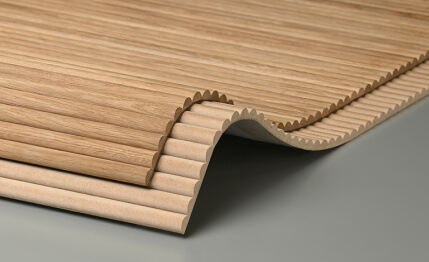
slatted panels for wallsIn the living room — one of the most popular modern decorative techniques. Vertical slats create rhythm and depth. The skirting board serves as the lower horizontal finishing point of this system. Slatted panel in the living room + straight skirting board of the same tint at the base = a complete design solution for the wall area of the living room.
Visually: the slats 'ascend' upward, the skirting board holds the lower line. The space between them is an organized plane that defines the character of the wall.
Skirting board and cornices
Wooden ceiling cornicesPaired with a wooden floor skirting board, they form the upper and lower frames of the living room. This is an architectural technique used in classical and neoclassical interiors. The wall between them is the 'field' that lives by its own rules.
The material and tint of the ceiling cornice and floor skirting board must match: oak with oak, white MDF with white MDF.
Skirting board and TV area
In living rooms with a large TV area and a low cabinet — a high skirting board of 80–90 mm behind the cabinet is often partially hidden. This is normal. But if the cabinet is flush against the wall — check that the high profile does not interfere with its installation.Flat skirting board for the living roomWith minimal projection — the right choice for areas with furniture placed flush against the wall.
How to buy skirting boards for the living room without mistakes: a complete checklist
Go through these points before placing your order — and no question will remain unanswered.
-
Living room style: determine — modern, classic, neoclassical, Scandinavian, natural. This determines the profile type.
-
Floor covering: laminate → MDF 70–80 mm; parquet → wood 80–100 mm; quartz vinyl → MDF 65–75 mm
-
Ceiling height: up to 2.6 m → no higher than 70 mm; 2.7–3 m → 70–90 mm; from 3 m → 90–120 mm
-
Material: modern apartment → MDF; parquet living room → wood; budget → polyurethane
-
Profile: straight (modern), shaped (classic), flat (furniture against walls)
-
Color: white (universal), wall color (integration), floor color (expansion), contrast (accent)
-
Finish: factory enamel (quick), paintable (exact color), natural varnish (wood)
-
Extra footage: living room perimeter + 15% for corner and joint trimming
-
Components: internal and external corner inserts, end caps, transition strips
-
Installation: to the wall (not to the flooring!); for heavy profiles — self-tapping screws + liquid nails
What STAVROS offers for the living room
When the question arises aboutbuy skirting board for the living room— it's not just a question of 'what', but also 'from whom'. Because the difference between mass-produced items with unknown quality control and manufacturing with precise tolerances — is the difference in how the skirting board will fit along its 15 linear meters of the living room perimeter.
STAVROS producesMDF floor skirting boardsandsolid wood skirting boardsof oak and beech. Controlled humidity 8–12%, four-sided planing with a tolerance of ±0.1 mm, wide range of profiles — from compact 50 mm to representative 100 mm.
For a modern living room:
-
Straight MDF skirting boards70–85 mm with white factory enamel — installation immediately upon receipt
-
MDF for Paintingwith primed surface — for custom color solutions
For classic and parquet halls:
-
Oak wooden skirting boardswith classic and straight profile — for varnish, oil, or enamel
-
Beech skirting board for painting white — perfectly smooth surface
For complete hall finishing:
-
slatted panels for wallsin unified system with skirting board
-
Wooden cornicesfor ceiling from the same wood species
-
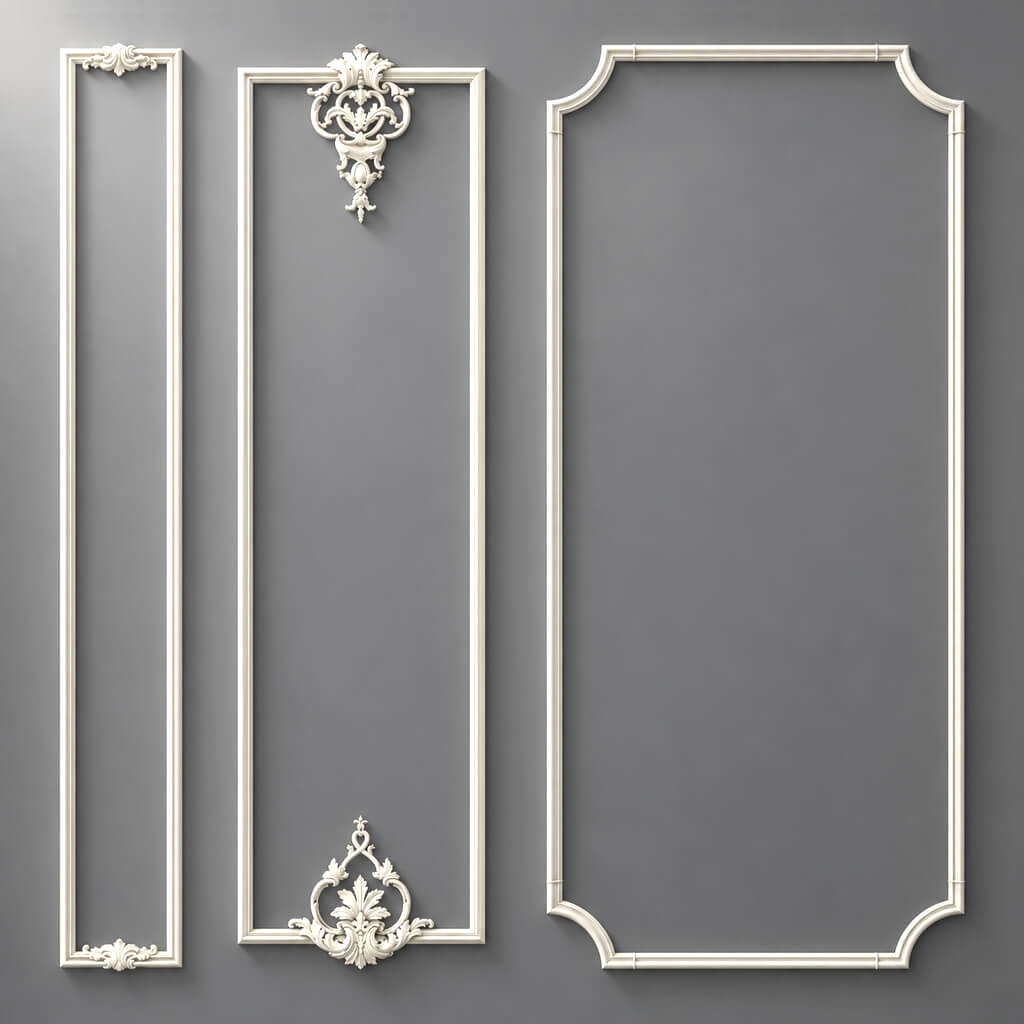
Moldingsfor wall panels and door trims
FAQ: answers to popular questions about hall skirting boards
Which skirting board is best for the living room?
Depends on the style and flooring. For a modern living room with vinyl plank —MDF 70–80 mm in white. For a classic one with parquet —wooden oak 90–100 mm.
High or low skirting board for the living room?
For a living room with ceilings from 2.7 m — high 80–100 mm creates a more prestigious and finished look. For a small living room with ceilings up to 2.6 m — 60–70 mm.
Which skirting board to choose for a living room in a modern style?
Straight or flat MDF 70–80 mm. White or paintable to match the wall color. Without relief and decorative elements.
MDF or wooden skirting board for the hall?
For laminate, quartz vinyl, linoleum — MDF. For parquet and engineered wood flooring — wooden from the same species. In a classic interior with any flooring — wooden will give a more premium result.
Which skirting board is better for laminate in the hall?
MDF skirting board 70–80 mmwith wall mounting. Do not clamp the laminate — the flooring must expand freely.
Which skirting board for parquet in the living room?
Wooden skirting board made of oak or beech80–100 mm tinted to match the parquet. Same species, same color — this is the basic principle for working with a parquet hall.
White skirting board for the hall — is it worth it?
Absolutely worth it.A white MDF baseboard creates visual continuity with white door casings, white ceiling cornices, and white window frames. When all architectural details are executed in the same color, they form a unified system, a spatial framework that connects disparate elements — floor, walls, ceiling, furniture — into an integral composition. This technique is fundamental to Scandinavian design, where white architectural decor creates a light shell within which the most diverse colors and textures can coexist.Works in any room, regardless of wall or floor color. The safest and most professional solution.
Which skirting board profile looks more expensive?
In a modern interior — a straight, tall 85–100 mm profile with a smooth surface. In a classic interior — wooden with a soft classic profile. A tall skirting board of any profile looks more expensive than a low one when made of the same material.
Can I choose a skirting board for painting?
Yes.— is a horizontal element that frames the room at the bottom of the walls where the wall meets the floor. Skirting boards perform several functions: they hide the technological gap between the wall and floor covering (necessary for thermal expansion), protect the lower part of the wall from mechanical damage, create visual completion, and may conceal wiring.Allows you to match the exact color of the interior — from snow white to dark green. This is the best choice for a room with a carefully curated color scheme.
How to calculate the amount of skirting board needed for a room?
Perimeter of the room in linear meters minus the total width of door openings + 15% for cutting. Standard length is 2.5 m. Always buy with a surplus — it’s easier to adjust on-site using excess material.
What color skirting board to choose for a light-colored room?
White — neutral and always correct. Matching the color of the light floor — expands the space. Dark contrast — a modern accent for a light room with dark furniture.
What is better: a tall skirting board or a cornice for a room?
These are different products. Floor skirting is the lower boundary of the wall at the floor.Cornice— the upper boundary at the ceiling. Both are needed in a classic hall. In a modern one — one or both are minimalist.
How to combine hall skirting with slatted panels?
Rafter panelson the wall + skirting at the base made of the same material and tinting — a unified system. The skirting serves as the horizontal lower point of completion for the vertical slats.
The hall is a space where details speak louder than in any other room.Skirting for the hall— that very detail by which the level of the entire renovation is judged. Correctly chosen — it is unnoticeable in the best sense: perceived as part of the whole. Incorrect — stands out and requires explanations.
The company STAVROS manufacturesfloor skirting boards— MDF and solid oak and beech — with precise geometry and a full range of profiles for any style and any hall. White, paintable, varnished, straight, tall, classic — everything needed for the living room to look as you envisioned. STAVROS — where the final line of the interior is drawn precisely.