


























Article Contents:
- What is a wooden ceiling skirting board: understanding the concept
- How wooden ceiling skirting board differs from floor skirting board
- When to choose exactly wooden ceiling skirting board
- Interior with natural materials
- Wooden House
- Classical and Neoclassical Interior
- Premium modern interior
- When you need to create a unified 'floor - walls - ceiling' system
- Wooden skirting board or polyurethane, MDF and polystyrene: honest comparison
- What types of wood are suitable for ceiling skirting board
- Oak for ceiling skirting board
- Beech for ceiling skirting board
- Pine for ceiling skirting board
- What is better for varnish, for enamel, for oil
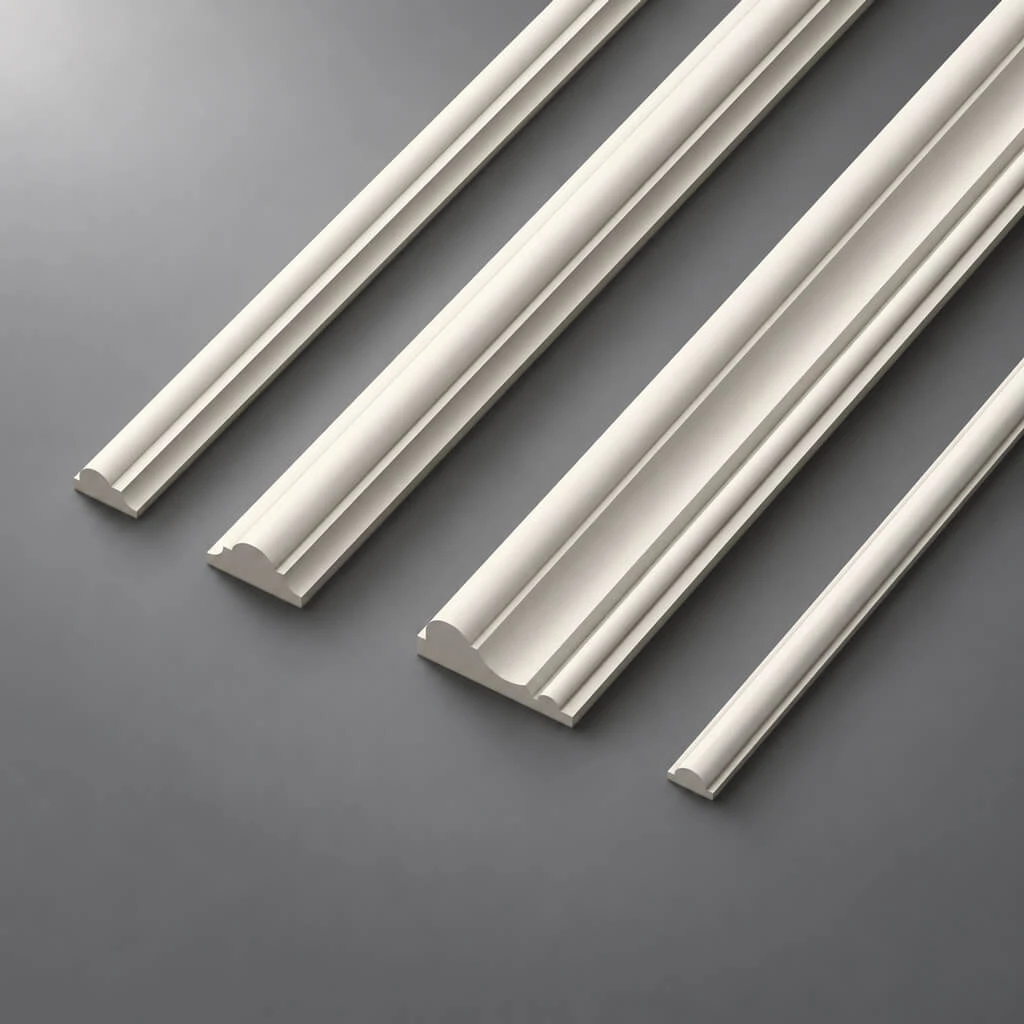
- Profiles of wooden ceiling skirting board: from cove to cornice
- Wooden ceiling cove molding
- Smooth straight profile
- Classic figured profile
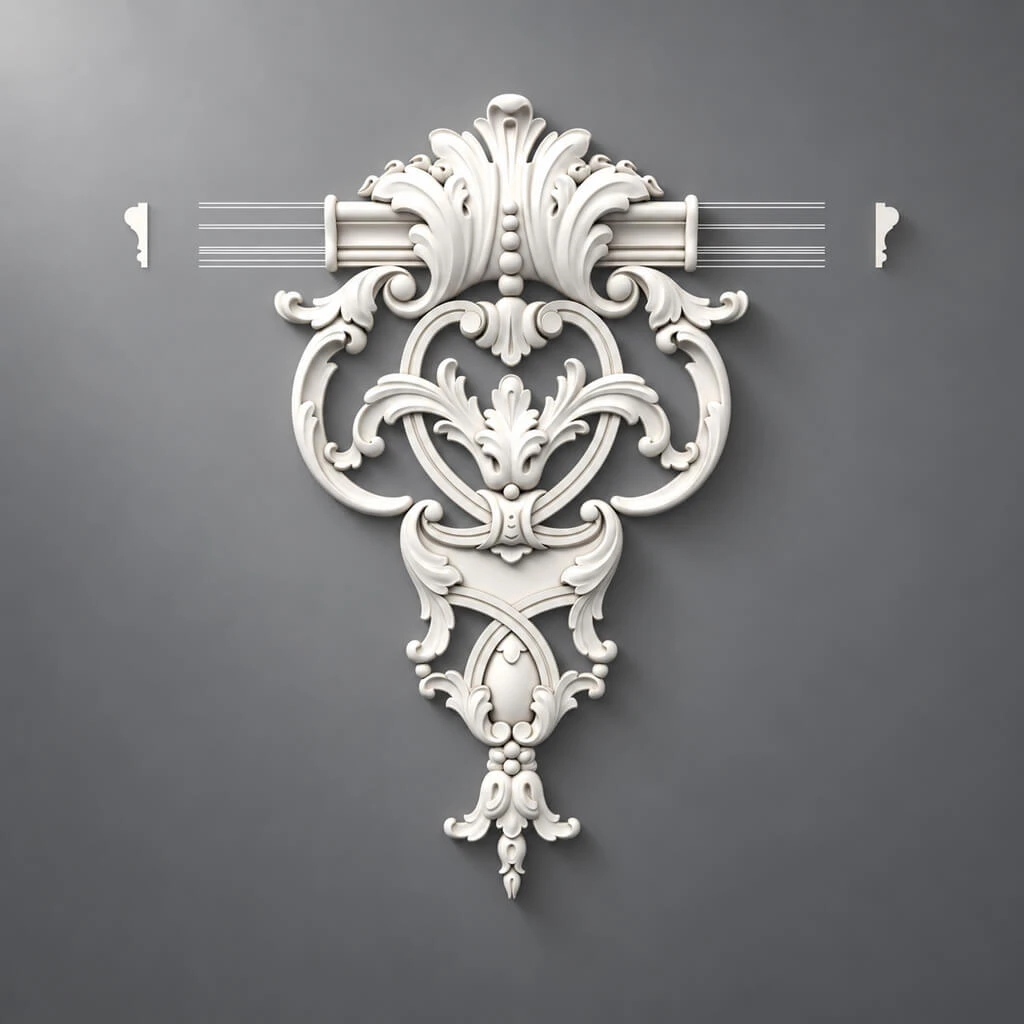
- Cornice profile with decorative elements
- Wooden Ceiling Skirting Board Sizes: Practical Calculation
- For small rooms and apartments with low ceilings (up to 2.7 m)
- For standard apartments with ceilings 2.7–3.0 m
- For spacious rooms with ceilings 3.0–3.5 m
- For formal interiors with ceiling heights from 3.6 m
- Proportion Rule
- Color and finish of wooden ceiling skirting: seven options
- Natural wood under clear varnish
- For tinting (stain)
- For oil-wax
- White wooden ceiling skirting
- In ceiling color
- In door, window, and wooden element color
- Ready for painting — custom color
- Where wooden ceiling skirting is used: rooms and scenarios
- Living Room
- Bedroom
- Office
- Kitchen
- Entry Hall
- Wooden house and country interior
- How to combine wooden ceiling skirting with interior elements
- With wooden floor skirting
- With door and window trims
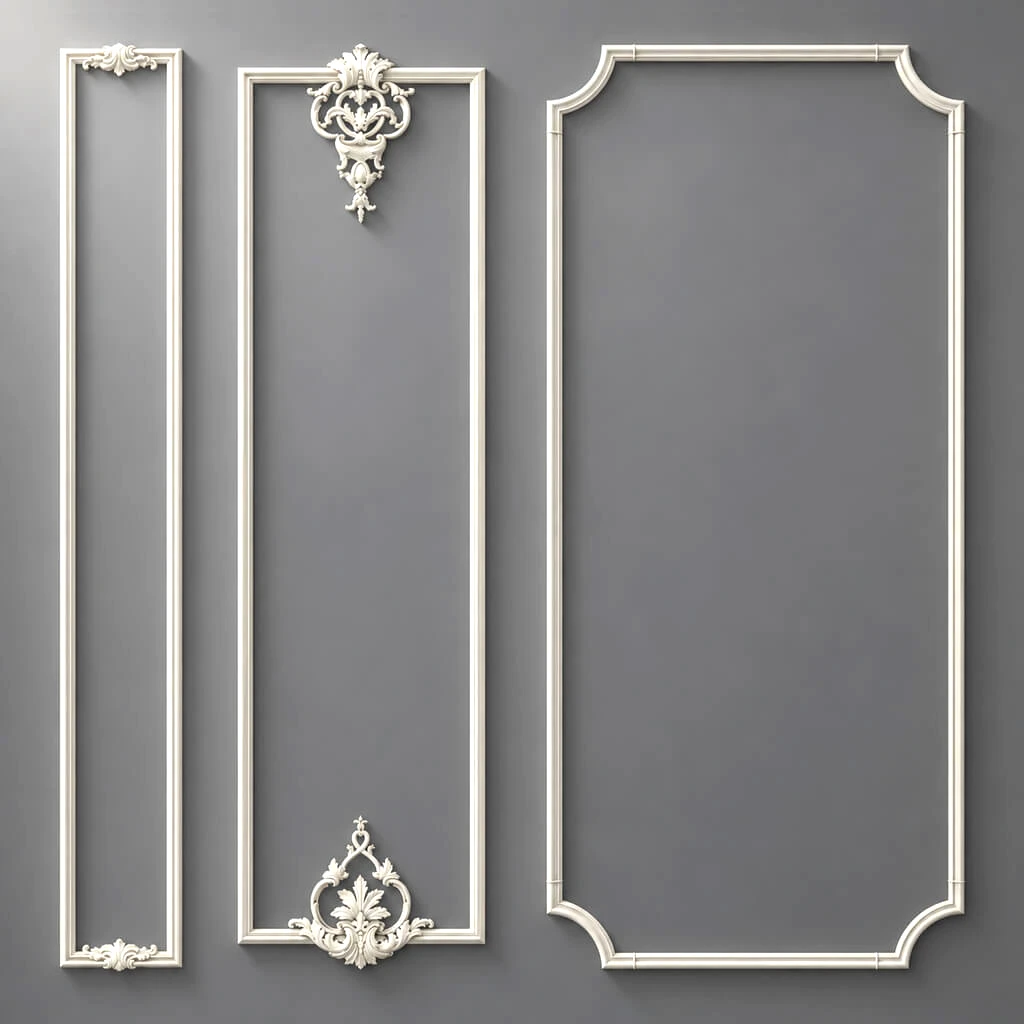
- With moldings and wooden wall panels
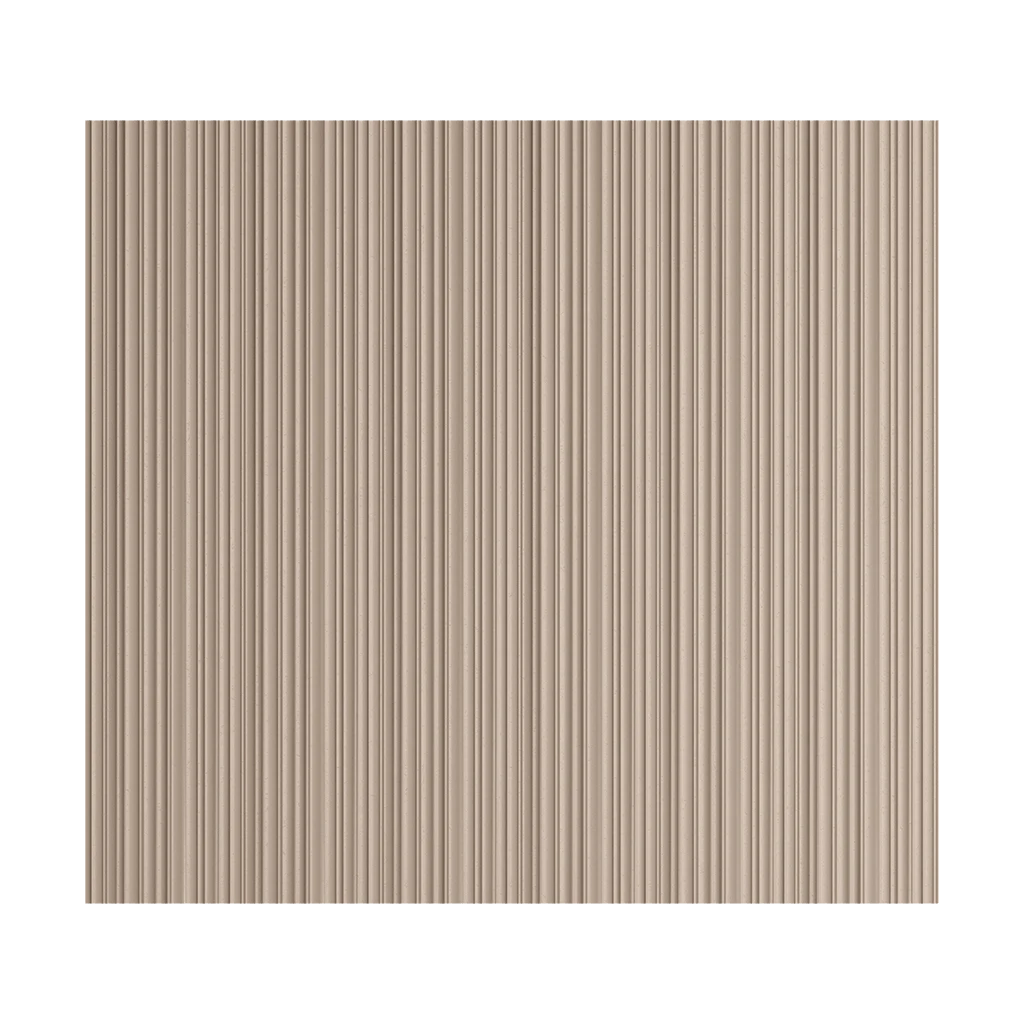
- With slatted panels
- With wooden ceiling beams
- How to choose wooden ceiling skirting without mistakes: complete checklist
- What STAVROS offers: solid wood ceiling skirting and cornices
- FAQ: Answers to Common Questions About Wooden Ceiling Skirting Boards
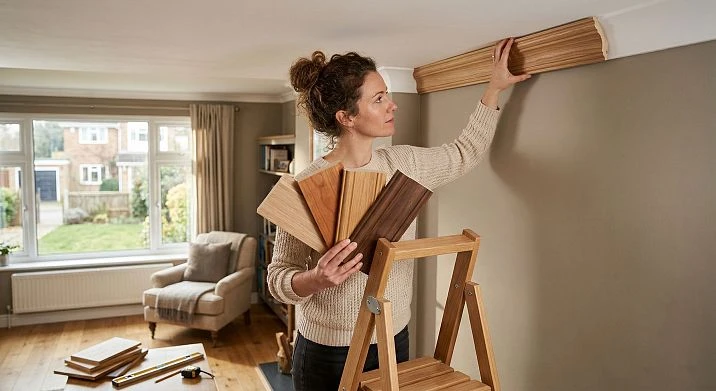
There is a detail in interior design that everyone notices, but few truly understand. The gaze glides over the walls, the ceiling, the floor—and suddenly fixes on the transition. Where the wall meets the ceiling. If this transition is resolved skillfully, the space is perceived as a whole. If not—something subtly bothers, jars the eye, prevents relaxation.
Wooden ceiling baseboard— is precisely the solution that transforms the joint between wall and ceiling into an architectural stroke. Not just a decorative strip. It is the character of the space. It is the warmth of natural material at the very top boundary of the room. It is the choice of people who understand that wood is not just beautiful. It is forever.
This article is for those who want to understand: what exactly to choose, from which wood species, which profile, which size, and for which interior. And most importantly—where to find what is truly well-made.
Choose a wooden ceiling skirting board and cornice in the STAVROS catalog:
-
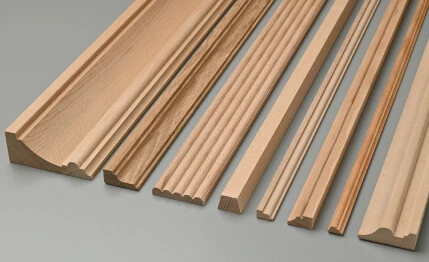
Wooden Cornices and Skirting Boards for Ceilings— complete collection from solid wood
-
Wooden moldings— decorative profiles for ceilings and walls
-
Skirting made of solid wood— flooring solutions in a unified system with ceiling cornices
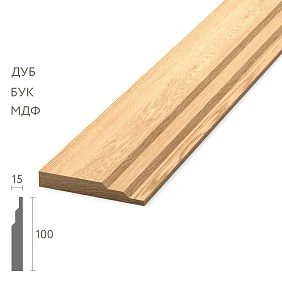
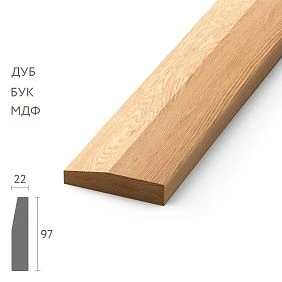
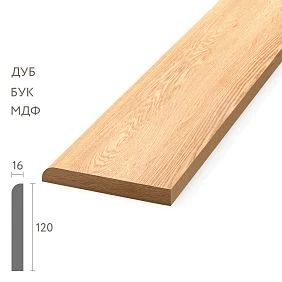
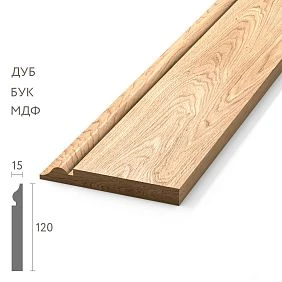
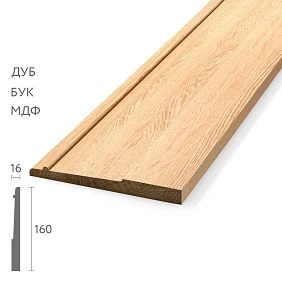
What is a Wooden Ceiling Skirting Board: Understanding the Concept
A wooden ceiling skirting board is a profiled solid wood strip installed around the perimeter of a room at the junction of the wall and ceiling. In function, it is the same element as a floor skirting: to conceal the joint, straighten the line, and give the space a finished look. But in character, it is a completely different product.
Floor skirting lives at the bottom, practically at ground level. Its task is technical: to cover the expansion gap, hide wires, and protect the lower edge of the wall from dust and impacts. Ceiling skirting lives at eye level and above. It forms the upper frame of the room and largely defines its architectural character.
A wooden ceiling skirting board has several established synonyms used in design and construction practice:
-
Cove molding — a small profile with a rounded cross-section, the simplest form of ceiling skirting; wooden ceiling cove molding is traditionally used in classic and country interiors.
-
Cornice or wooden ceiling cornice — a more massive and decorative option with an elaborate profile; it is called this when the cross-sectional shape is more complex than a simple cove molding.
-
Wooden ceiling profile — a neutral technical term.
-
Wooden frieze — in the classical sense, the upper horizontal band beneath the cornice.
All these terms describe the same group of products:wooden ceiling cornices and skirting boards. And all of them are in demand in interiors where natural material, living texture, durability, and genuine architectural expressiveness of the upper boundary of the space are important.
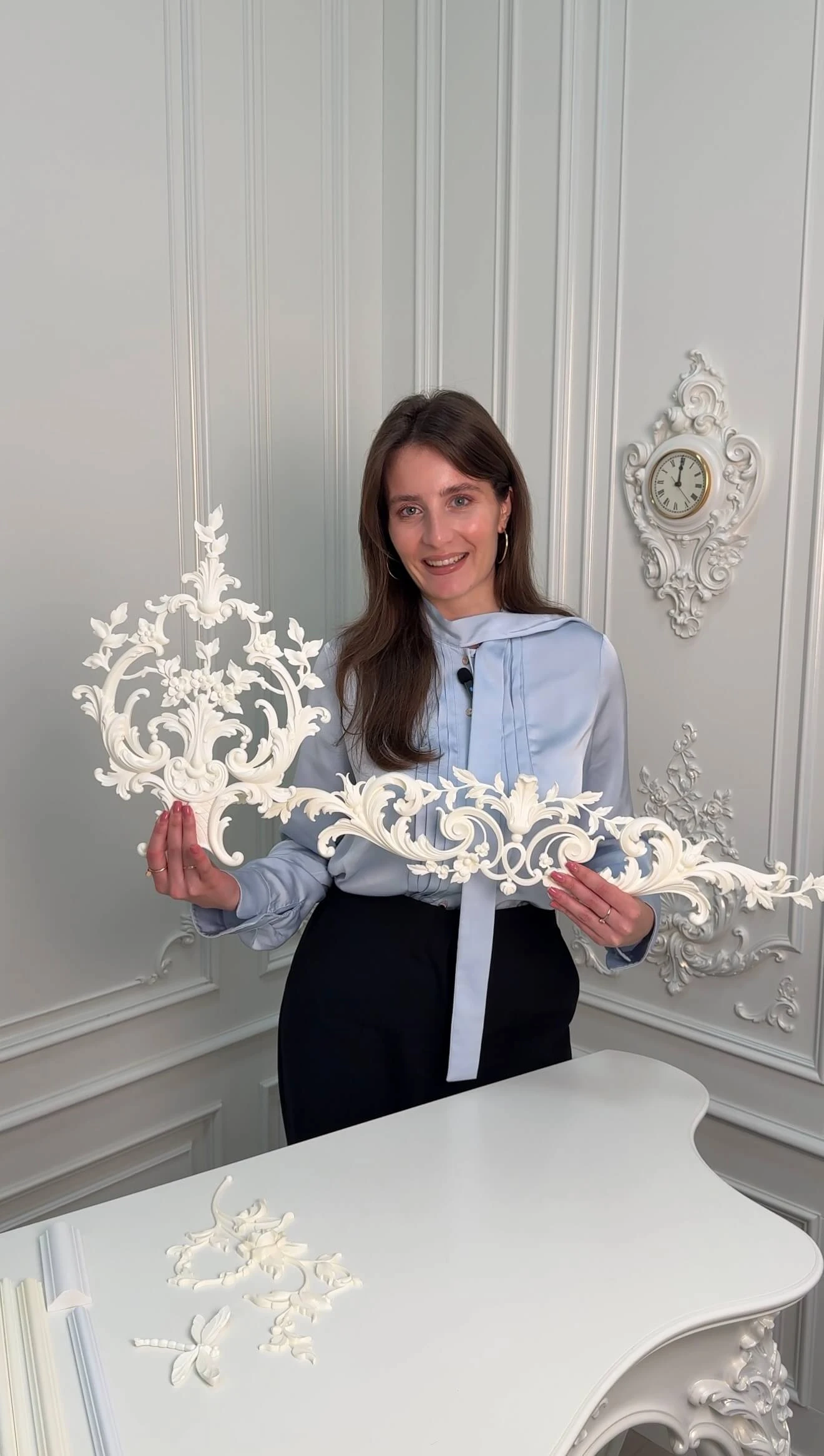
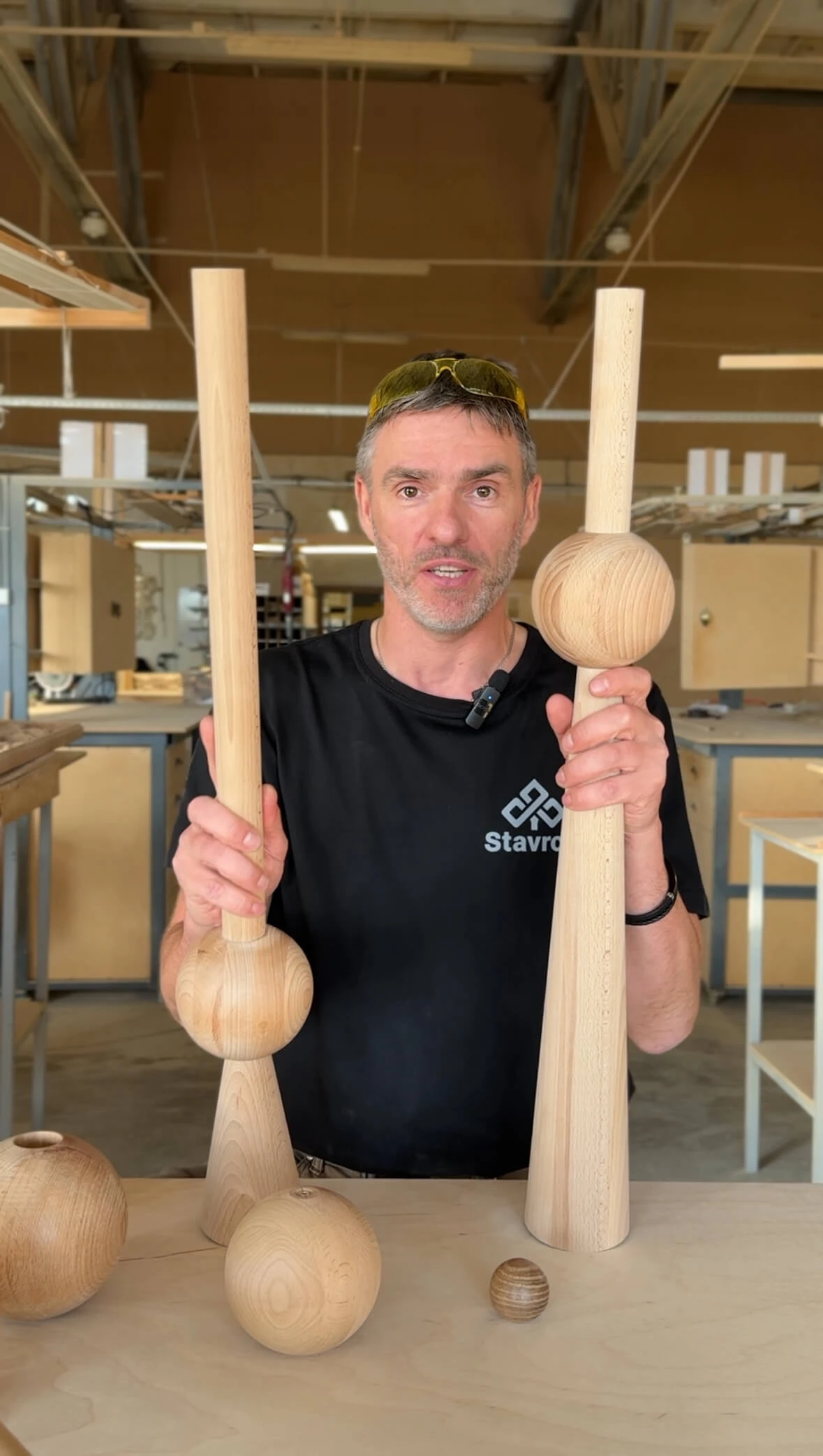
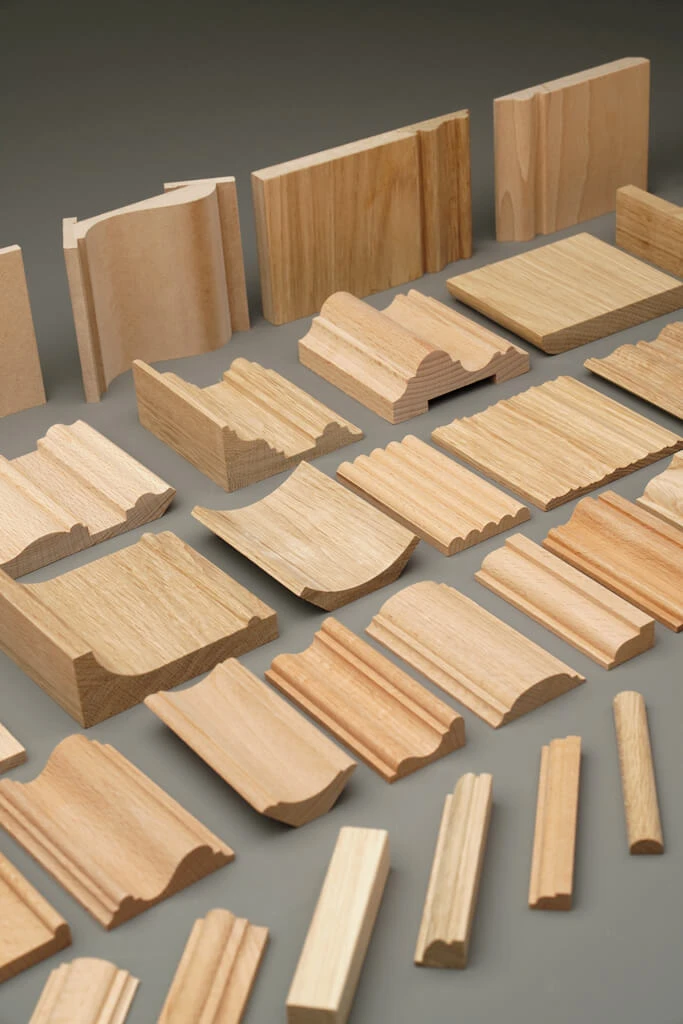

How does a wooden ceiling skirting board differ from a floor one?
The first difference is the cross-sectional shape. A floor skirting board has a sole that rests on the floor and a vertical front part. A ceiling one has a cross-section at a 45° angle, allowing it to simultaneously touch both the wall and the ceiling. This geometry ensures a proper fit angle and a clean line at the junction.
The second difference is weight and mounting. A wooden ceiling skirting board is installed from bottom to top, meaning it works against gravity. This imposes requirements both on the material itself (it must not be too heavy for adhesive mounting) and on the installation technology.
The third is the visual purpose. A floor skirting board is modest. A ceiling one is visible. It is at eye level, its texture and profile are clearly discernible. This is precisely why wood works especially expressively here: the annual rings of oak, the velvety surface of beech, the living warmth of pine — all this is seen and felt to the fullest.
Our factory also produces:


When it's worth choosing a wooden ceiling skirting board specifically
A wooden ceiling cornice is not the right choice for every interior or every situation. There are scenarios where it works flawlessly, and there are those where it's wiser to consider other options. Let's break it down honestly.
Get Consultation
Interior with natural materials
If the room has oak parquet, wooden doors, solid wood furniture —a wooden ceiling skirting board made of oakcompletes the logic of the material environment. The space from floor to ceiling speaks the same language. This cannot be reproduced with polyurethane — no imitator creates this feeling of unity.
Wooden house
In a wooden house, a ceiling cornice made of wood is not just a solution, but the norm. Log walls, timber, living ceilings — here wood is organic everywhere.Wooden ceiling skirting for a wooden houseis perceived as a given: from the same environment, the same material, the same nature.
Classic and neoclassical interior
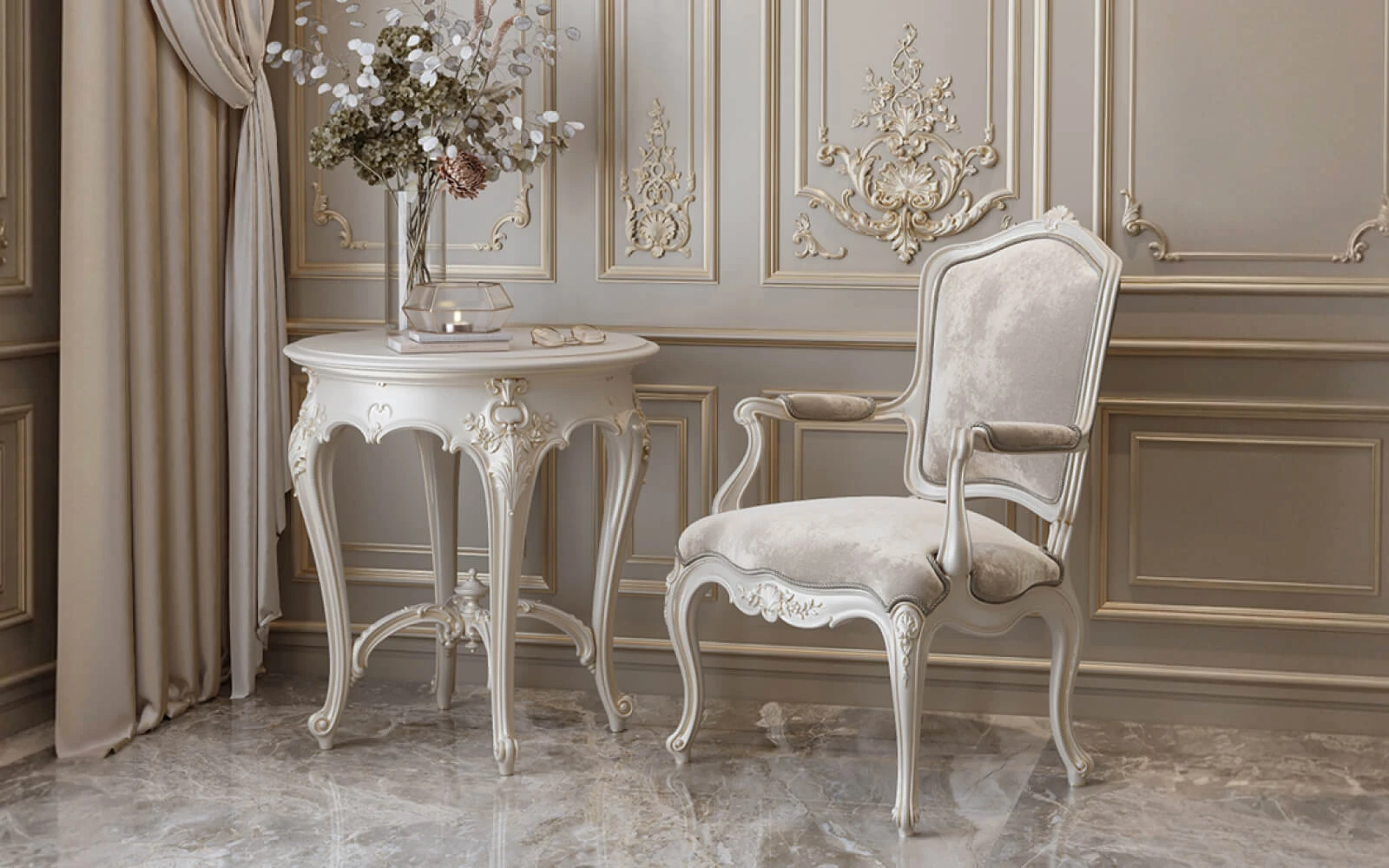
In classic design, a ceiling cornice is a full-fledged architectural element. A rich profile, soft relief, white enamel or natural varnish — this is not a background detail, but one of the main accents. It is the wooden ceiling cornice that provides that volume and textural depth which polyurethane can only imitate.
Premium modern interior
There is a growing demand: modern minimalism with natural wood. Clean walls, simple geometry, but — natural materials. Straight or smoothWooden ceiling baseboard60–80 mm oak under clear varnish works as a precise authorial touch in such a room.
When it's necessary to create a unified 'floor — walls — ceiling' system
the wooden floor baseboard+ ceiling cornice from the same wood species +wooden wall moldings— this is a full-fledged wooden architectural shell of the space. In such an interior, there are no random details: everything is in dialogue. This is the level of a professional design project, accessible to those who know what and where to look for.
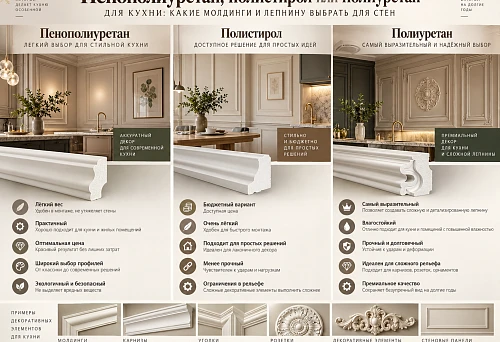
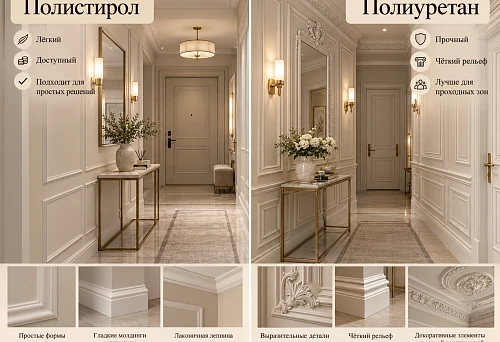
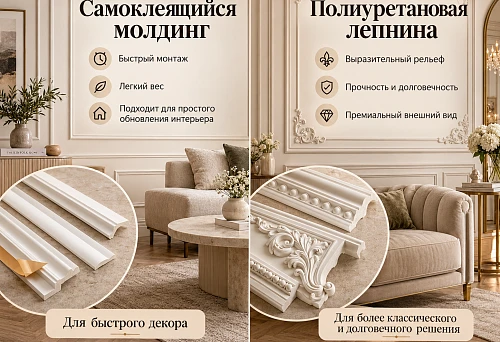
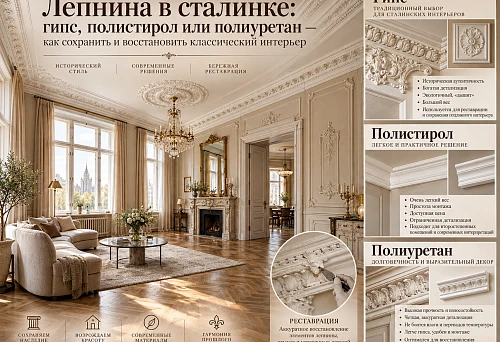
Wooden skirting board or polyurethane, MDF and polystyrene: an honest comparison
Every second person asks this question. We answer specifically.
| Parameter | Wood (solid wood) | MDF | Polyurethane | Polystyrene |
|---|---|---|---|---|
| Naturalness | 100% natural | Wood fiber + resin | Synthetic | Synthetic |
| Texture | Living, unique | Imitation (film/enamel) | Imitation | No |
| Painting | Excellent (after priming) | Ideally | Acceptable | Poor (yellows) |
| Mass | Medium | Medium | Lightweight | Very light |
| Service life | 30–50 years | 10–15 years | 10–20 years | 5–8 years |
| Restoration | Yes (sanding, repainting) | No | No | No |
| Price | Higher | Medium | Medium | Low |
| Ecology | Absolutely clean | E1 class | Synthetic | Synthetic |
Where wood wins unconditionally:
-
In classic and neoclassical interiors
-
In interiors with natural materials
-
In wooden houses
-
In spaces where service life and the possibility of restoration are important
-
In premium projects where synthetics are unacceptable
Where other materials are more rational:
-
Budget renovation — polystyrene or polyurethane
-
Complex profile in large volume — MDF is more economical
-
Wet rooms without special treatment — polyurethane
Which wood species are suitable for ceiling skirting
Choosing a wood species isn't just about aesthetics. It's physics: density, stability, behavior under finish. Let's break down the main options.
Oak for ceiling skirting
Oak is the king among species for architectural decor. Density 650–750 kg/m³, expressive texture with clear annual rings, natural resistance to moisture and biological effects.
a wooden ceiling skirting board made of oakunder clear varnish is a visually dense, status material. Tangential cut gives a wavy pattern, radial cut gives strict parallel lines of medullary rays. Both options are expressive and beautiful.
Oak under enamel is a classic technique. A white wooden ceiling skirting made of oak in a properly lit room gives a bit more depth than MDF: the profile relief reads richer due to the material's density.
Limitation: oak is heavy and dense. For very wide profiles over 150 mm, installation requires reliable mechanical fastening, not just adhesive.
Beech for ceiling skirting
Beech is a universal material with a more uniform and neutral structure. Density 620–680 kg/m³. The main advantage: a fine-pored, uniform surface perfectly accepts any finish.
Wooden ceiling skirting made of beechfor painting in white, light gray, or pastel tones results in an even, velvety finish without pores or stains. Paint applies perfectly in two coats after priming.
Beech is well-suited for milling complex profiles. Curvilinear cornices for bay windows, arches, and radius walls—beech bends without fiber breakage after steaming.
Beech ceiling cornice for painting white—an optimal choice for classic interiors where an expensive white profile with a clean surface is important.
Pine for ceiling skirting board
Pine is a traditional choice for country and wooden interiors. Light, soft, warm in color. Under clear varnish or oil—a natural shade from pale yellow to golden, which fits organically into rustic, Scandinavian, or country style.
Limitations of pine: softness (it is inferior to oak and beech in resistance to mechanical loads), presence of resin pockets that may show through thin coatings. For ceiling skirting boards in living rooms with high-quality finishes—oak or beech is recommended.
Application area for pine: country house, dacha, sauna, wooden interior in country style.
What is better under varnish, under enamel, under oil
-
Under clear varnish: oak—maximally expressive texture. Beech—neutral warm tone
-
Under tinting varnish or stain: oak enriches, darkens organically; beech accepts tinting evenly
-
Under enamel (white or colored): beech—ideal surface without pores. Oak—good, but requires isolating primer from tannins
-
For oil-wax finish: oak is a classic. Oil enhances the texture, giving the surface a matte and lively appearance
-
For saunas and humid areas: oak with multiple layers of oil or special varnish is optimal
Wooden ceiling skirting profiles: from cove to cornice
Profile is the cross-sectional shape. It's the profile that defines the character of the product: whether it's a modest finish or an architectural accent.
Wooden ceiling cove
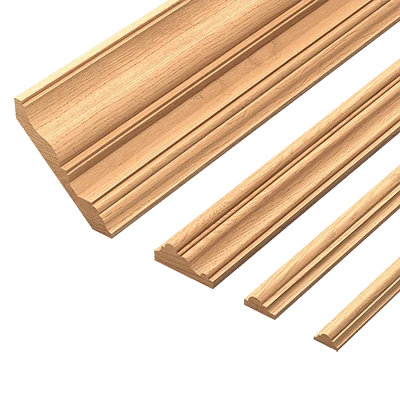
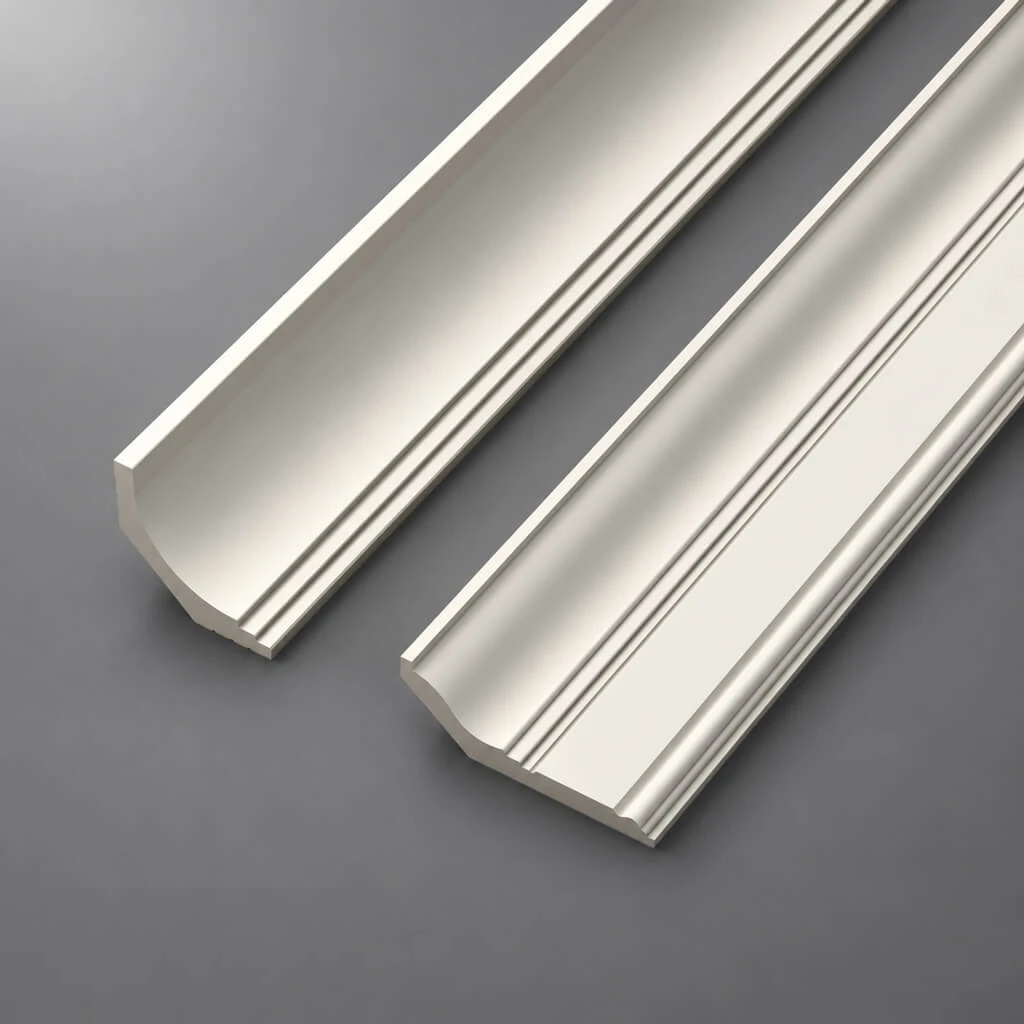
Cove is the simplest form of wooden ceiling profile. Small cross-section with rounded outer surface, 45° angle to wall and ceiling. Cove width is typically 25–40 mm.
Wooden ceiling cove— a minimalist and neat solution. It doesn't draw attention to itself but covers the joint and creates a clean line around the perimeter. Perfect for Scandinavian interiors, Japanese minimalism, modern lofts with natural wood.
Beech or oak cove with clear varnish — a precise, clean stroke. Without excessive decorativeness, without pretensions to a central role.
Smooth straight profile
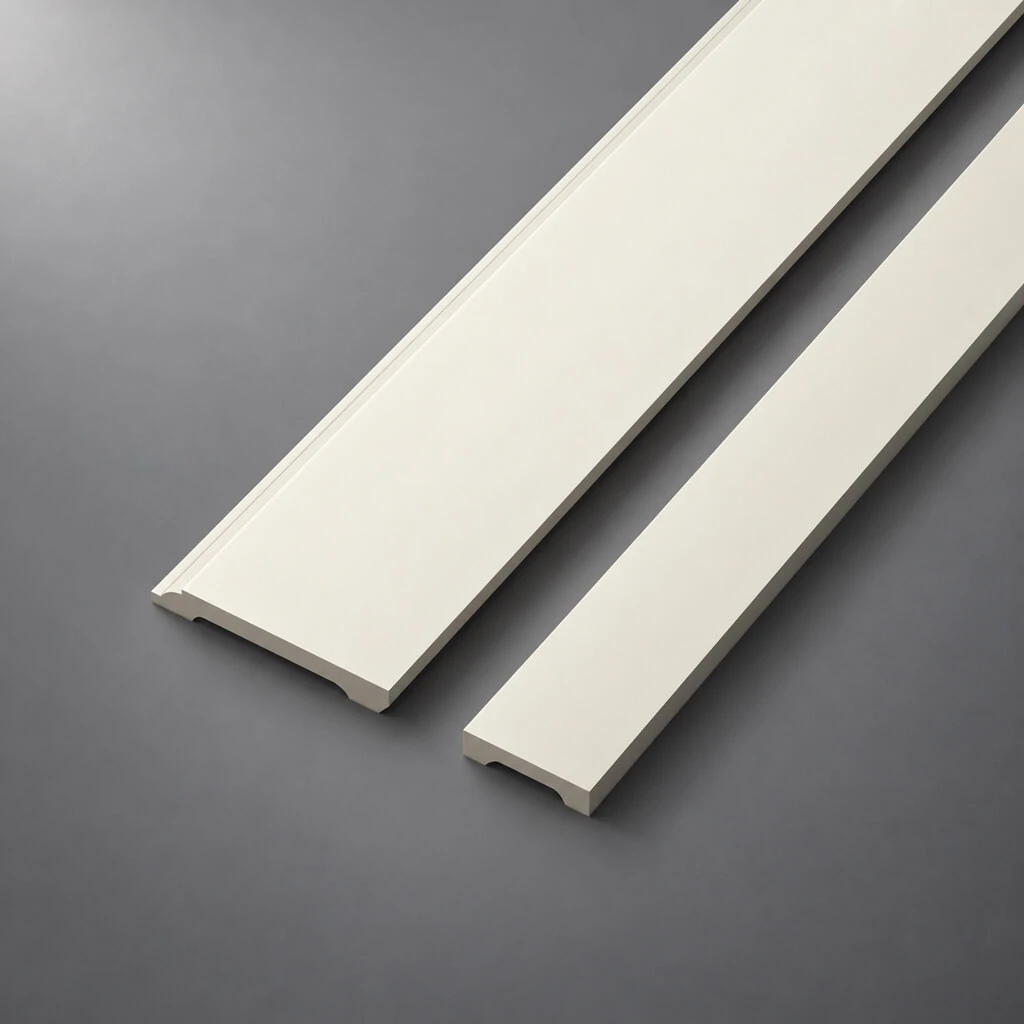
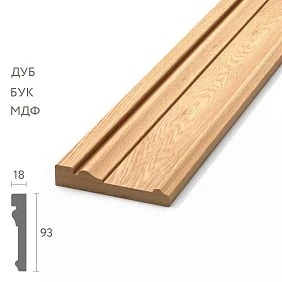
Rectangular section with smooth edges. Minimum width 40–60 mm. Modern minimalist language: no relief, no fillets, no rounding—only a clean straight line at the joint.
Smooth wooden ceiling skirting 50–60 mm in oak, tinted to match the wall color.of slatted panels—a modern designer move that turns the upper zone of the room into an architecturally finished element.
Classical shaped profile
Complex section with soft curves, shelves, protrusions. This is a traditional cornice profile—wide (80–150 mm), developed, decoratively rich. A classic wooden ceiling skirting with a shaped section—for a living room in classic or neoclassical style with high ceilings.
The width of such a profile and its projection from the wall create a noticeable shadow near the ceiling—a volume that visually adds scale and solemnity to the room.
Cornice profile with decorative elements
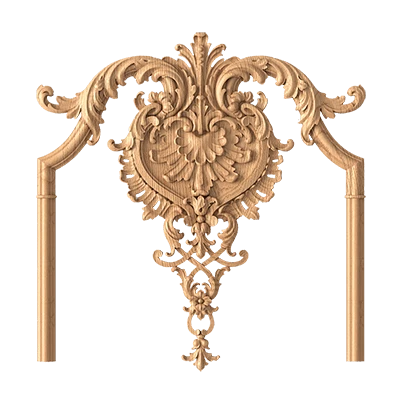
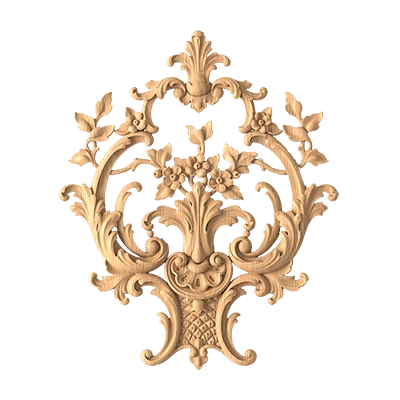
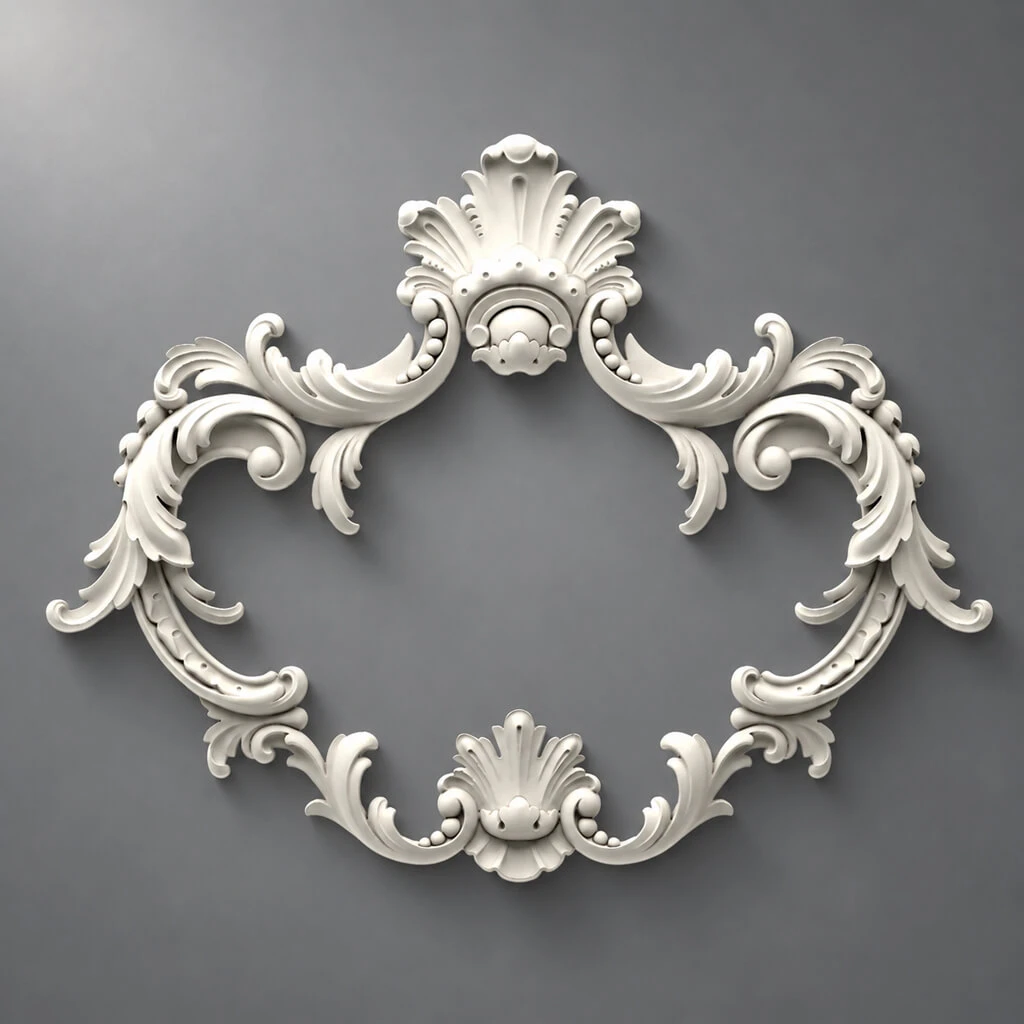
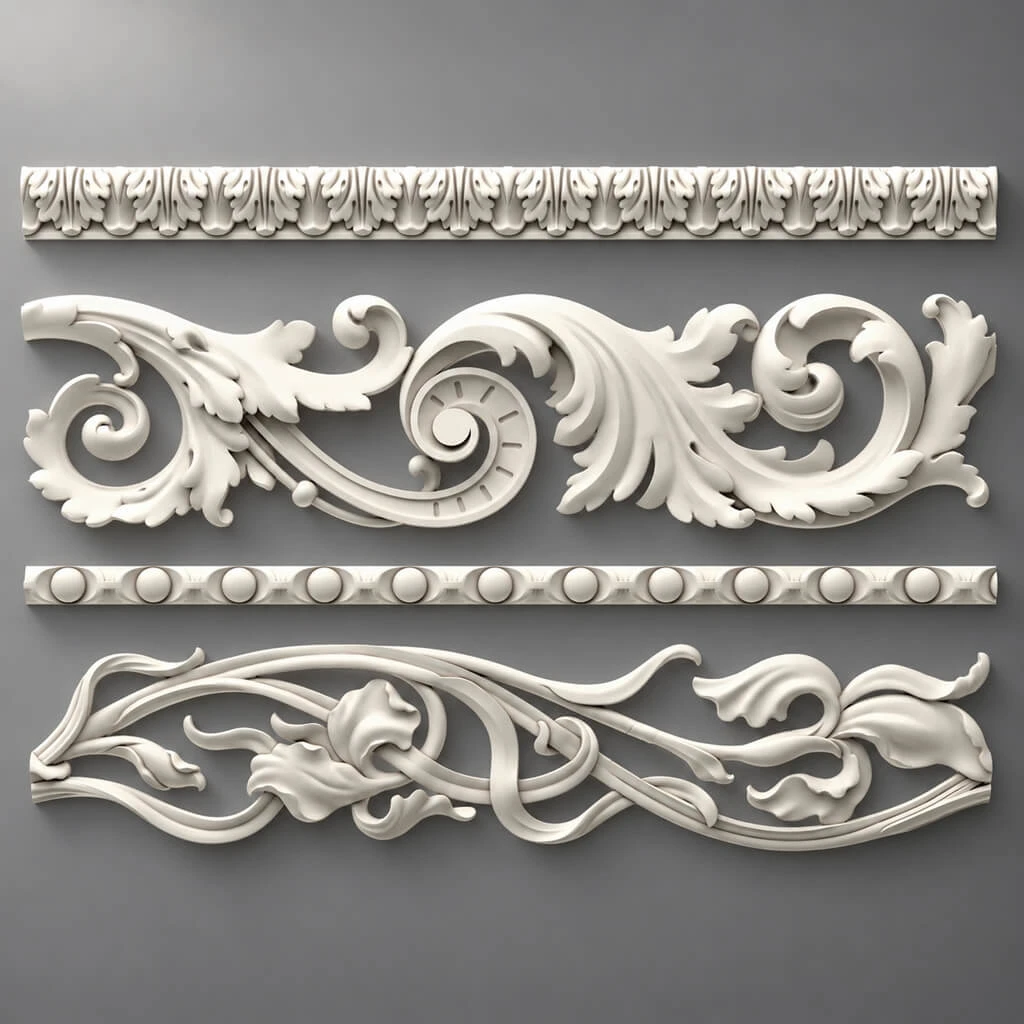
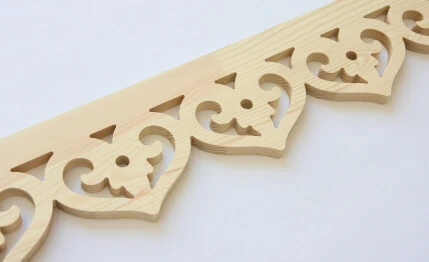
wooden cornice for the ceilingwith decorative treatment—this is no longer just a profile, but an architectural detail. Relief lines, acanthus, stepped elements—all this creates an independent decorative accent. Application area: interiors with a claim to historicism, classicism, empire, baroque.
Sizes of wooden ceiling skirting: practical calculation
How to choose the right size—a question that is solved in conjunction with three parameters: ceiling height, room area, interior style.
For small rooms and apartments with low ceilings (up to 2.7 m)
A wooden cornice or a narrow smooth profile 30–50 mm. The small cross-section does not 'eat up' height and does not create a feeling of pressure.Narrow wooden ceiling skirting boardmade of beech 40 mm for white enamel — a neat neutral line that completes the room without being intrusive.
For standard apartments with ceilings 2.7–3.0 m
Smooth or classic profile 60–90 mm. The golden mean: the skirting board is noticeable, creates rhythm, but does not dominate.Wooden ceiling skirting board for an apartment70–80 mm — the most common size.
For spacious rooms with ceilings 3.0–3.5 m
Classic figured profile 100–150 mm. Here, volume is already justified.Wide wooden ceiling skirting boardwith a developed cross-section on ceilings 3 m and higher forms the lower architectural boundary of the ceiling zone — as in classic mansions.
For formal interiors with ceiling heights from 3.6 m
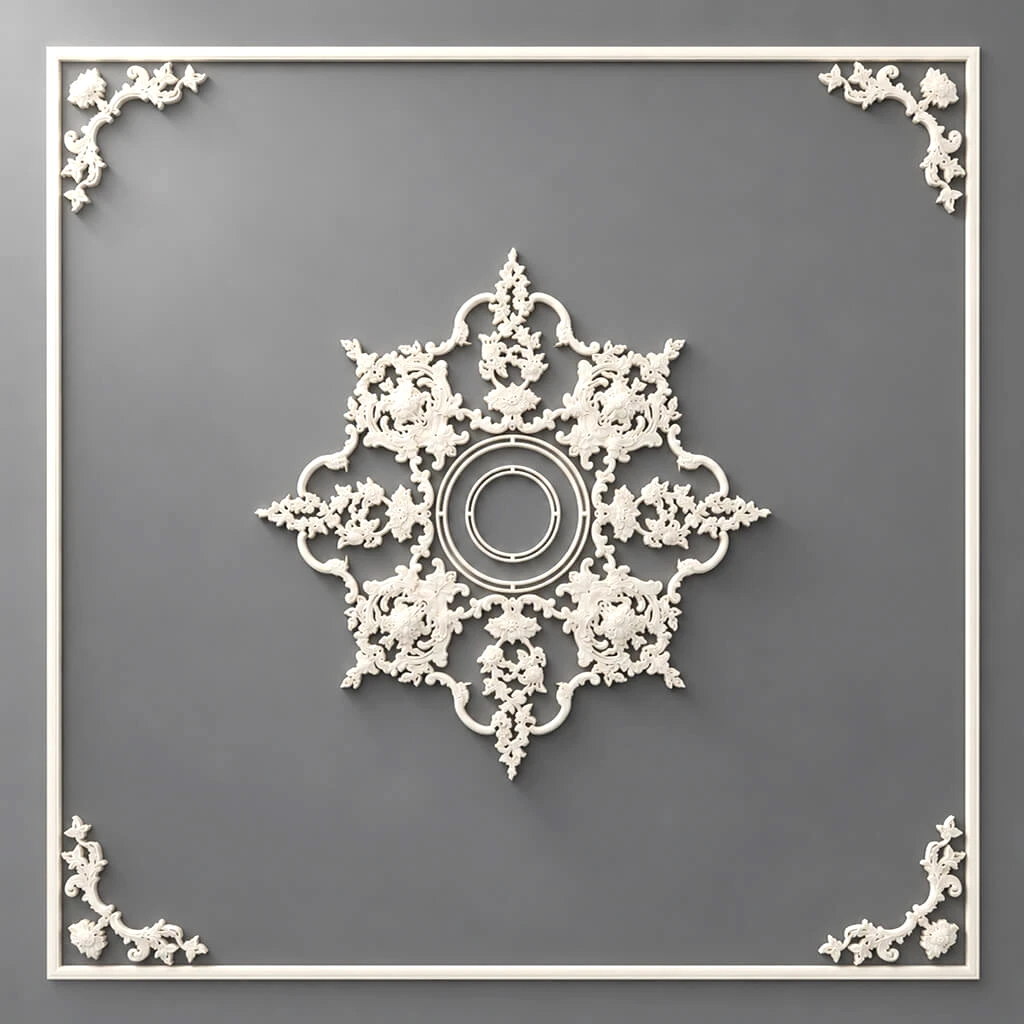
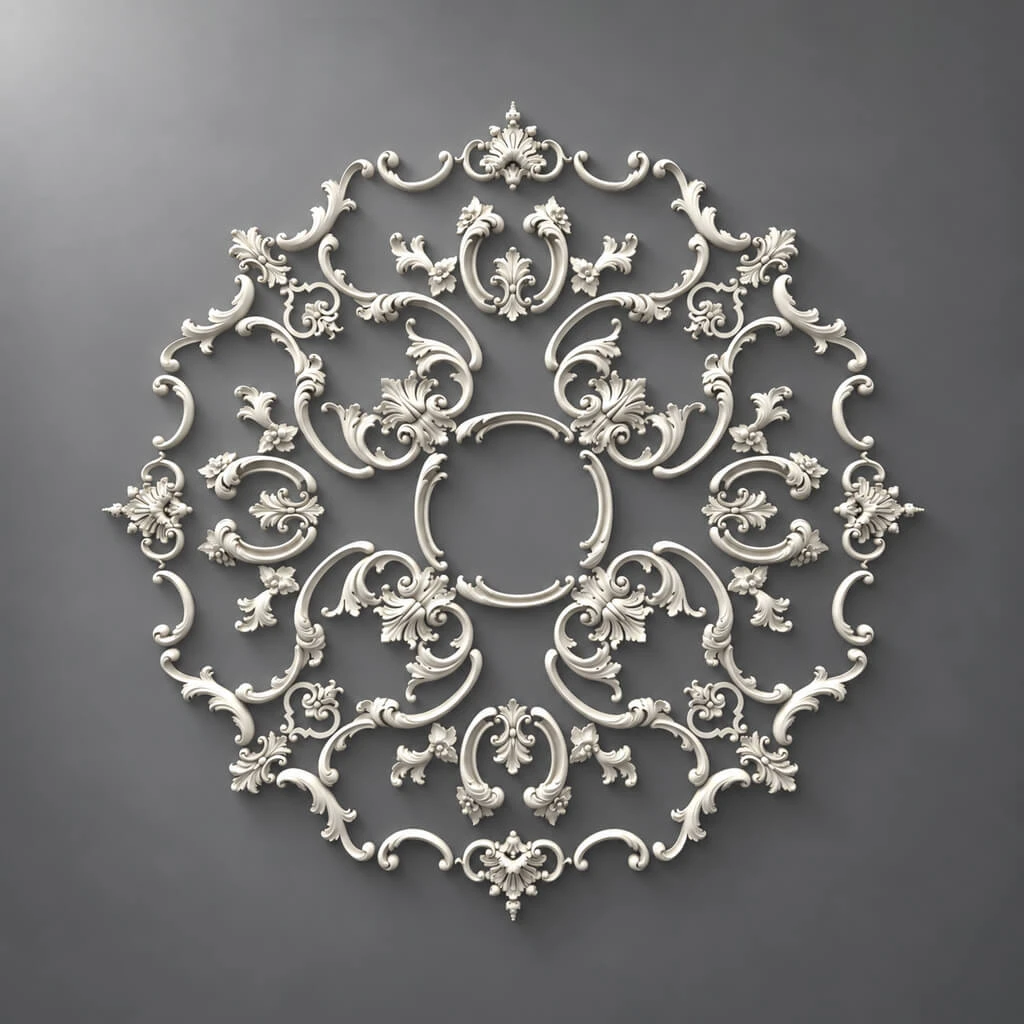
A representative cornice 160–200 mm is already an architectural scale.Cornices with a decorative friezein combination with ceiling rosettes, pilasters, columns — a unified classical system.
Proportion Rule
Height of wooden ceiling skirting board — approximately 1/30–1/25 of the ceiling height. For ceilings 2.7 m: 90–108 mm. For ceilings 3.2 m: 107–128 mm. This is a guideline, not a strict rule — interior style can justify deviation in both directions.
Color and finish of wooden ceiling skirting board: seven options
Natural wood under clear varnish
Living texture of oak or beech. Maximum organicity and expressiveness of the material.Wooden ceiling skirting for varnish— for interiors where the honesty of the material is valued. Wood means wood.
For tinting (stain)
A darker or warmer shade of the same wood. Tintedwooden cornice for the ceilingin the color of the wooden floor or furniture — creates the feeling that the entire space is designed with a unified material solution.
For oil-wax
A matte, slightly rough surface. The oil penetrates the wood structure without creating a film — the surface "breathes." A wooden ceiling skirting with oil-wax looks especially organic in Scandinavian interiors, in a wooden house, or in a study with natural wood.
White wooden ceiling skirting
White wooden ceiling skirtingunder white enamel — the most versatile option. Suitable for any wall and ceiling color, in any style from classic to modern minimalism. An important nuance: a white wooden cornice looks visually richer than a polystyrene one of the same shape — the relief is perceived more deeply due to the density of the material.
Beech ceiling skirting for painting in white — perfectly smooth surface without pores. Oak for white enamel — slightly more expressive relief under grazing light.
In ceiling color
The skirting 'disappears' into the ceiling. Walls visually appear higher. The effect is especially noticeable in rooms with low ceilings. Wooden ceiling skirting in the color of the ceiling surface — under good lighting creates a sense of architectural completeness without excessive decorativeness.
In the color of doors, windows, and wooden elements
If doors,Casingsand window frames are of the same wood species and tinting — a wooden ceiling cornice from the same system creates a unified wooden framing of the space. Floor, doors, cornice — a unified material dialogue.
For painting — custom color
Wooden ceiling skirting for paintingallows painting it in an exact shade according to RAL or NCS. Dusty sage, graphite gray, soft blue — authorial interiors with a pronounced color scheme.
Where wooden ceiling skirting is used: rooms and scenarios
Living Room
This is the main room — this is where the wooden ceiling cornice has maximum effect. A living room with oak parquet and a wooden ceiling cornice of the same species — this is an interior that leaves an impression.Buy a wooden ceiling cornice for the living room100–150 mm with a developed profile — the right solution for a room with ceilings from 2.8 m.
In a modern living room with quartz vinyl and white walls — a wooden smooth profile 60–70 mm made of beech in white enamel or light tinting. A strict line at the top completes the space.
Bedroom
The wooden ceiling skirting board in the bedroom should be calm. A small smooth or classic profile 50–70 mm. Under a transparent varnish of warm shades or in white.Wooden ceiling skirting board for the bedroom— a quiet warm note that adds coziness and naturalness.
Office
A study with wooden furniture and parquet flooring — a space where natural materials are maximally appropriate.Wooden ceiling cornicein a tint matching the furniture color — an architectural detail that makes the study cohesive and professional.
Kitchen
In the kitchen, a wooden ceiling skirting board — provided it has a varnish or oil coating in several layers. A smooth profile without relief: fewer places for grease buildup.Wooden ceiling skirting board for kitchen— organically, if the kitchen is done in natural tones with wooden fronts.
Entryway
Small wooden cornice made of beech or oak under white enamel 40–60 mm. Neat, practical, sufficient. In the hallway, the wooden ceiling skirting board works as a continuation of the general finishing system of the hallway: paired with architraves andwith a wooden floor skirting board.
Wooden house and country interior
Here wood is everywhere — walls, ceiling, floor. Wooden ceiling cove made of pine or beech 30–50 mm — a natural detail that does not disrupt the character of the space. Under clear varnish or without coating — depending on the style.
How to combine wooden ceiling skirting board with interior elements
This is one of the most valuable practical sections. Wooden skirting board for ceiling — not an isolated element. It is part of the system.
With wooden floor skirting board
solid wood skirtingand wooden ceiling cornice from the same wood species — these are the upper and lower frames of the room. The space between them — the walls — is perceived as a 'field' enclosed in a wooden architectural contour. A powerful professional technique.
Tip: if the wood species are different (for example, oak on the floor, beech on top) — equalize them with toning. A unified tone unites.
With door and window architraves
Wooden casingsfrom the same species as the ceiling cornice — a unified decorative shell for the room. All wooden details in one color and profile system — this is what designers call 'total wood' and what makes an unforgettable impression on visitors.
With moldings and wooden wall panels
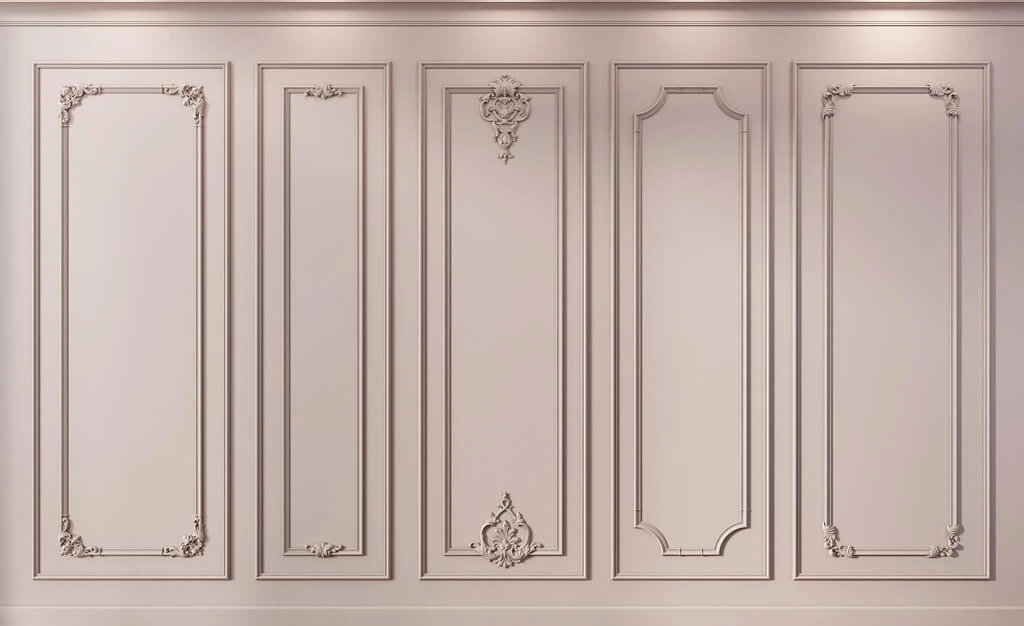
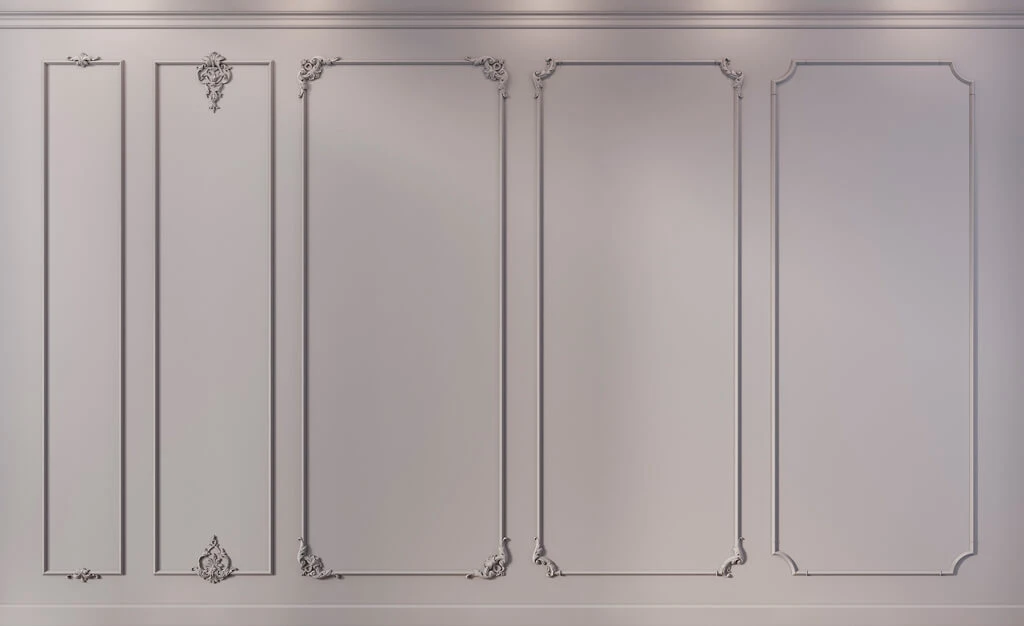
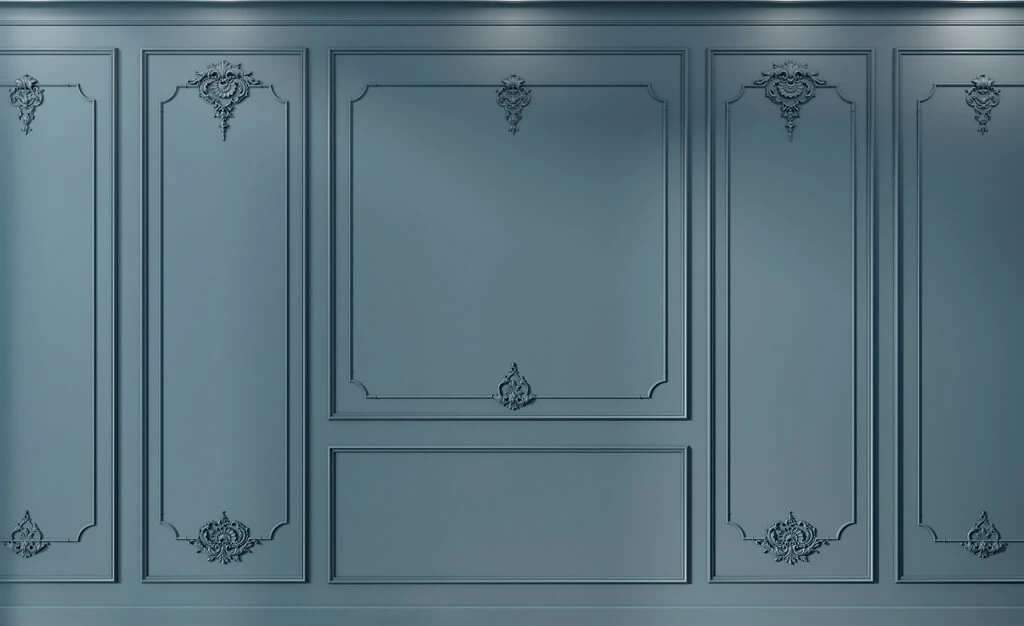
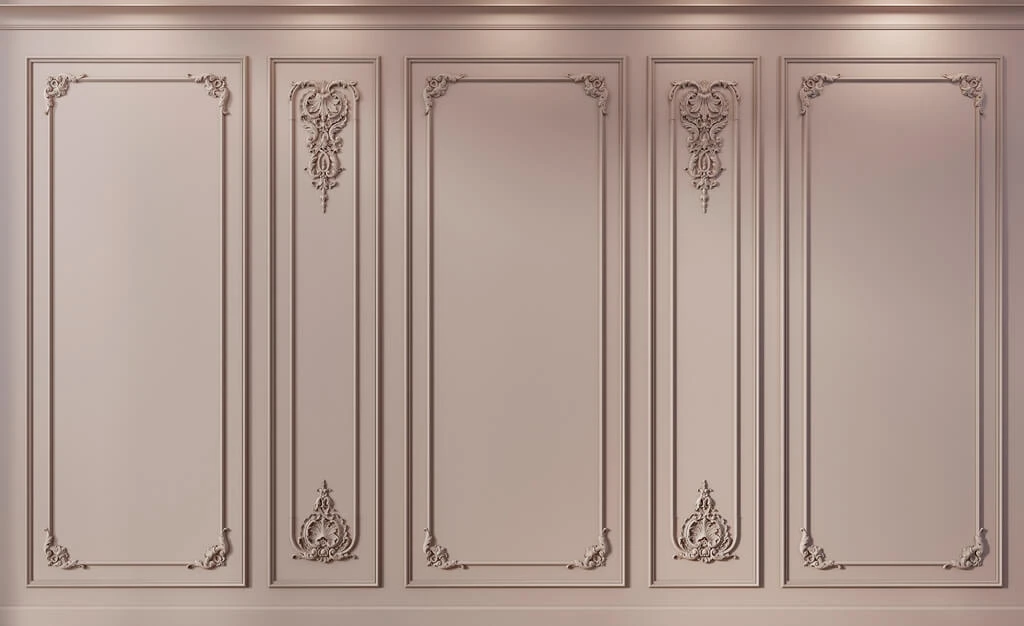
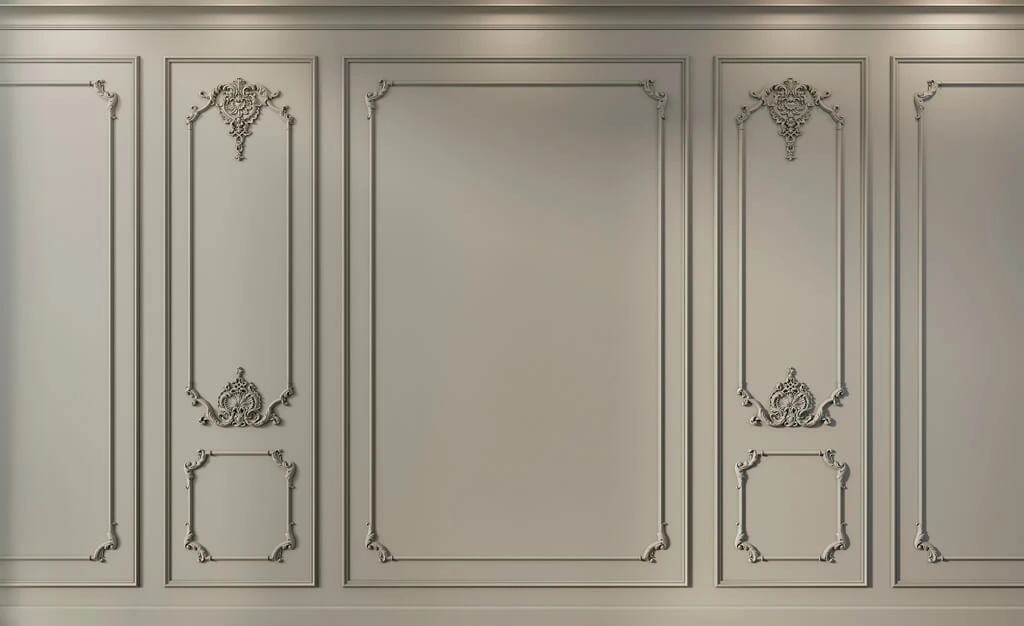
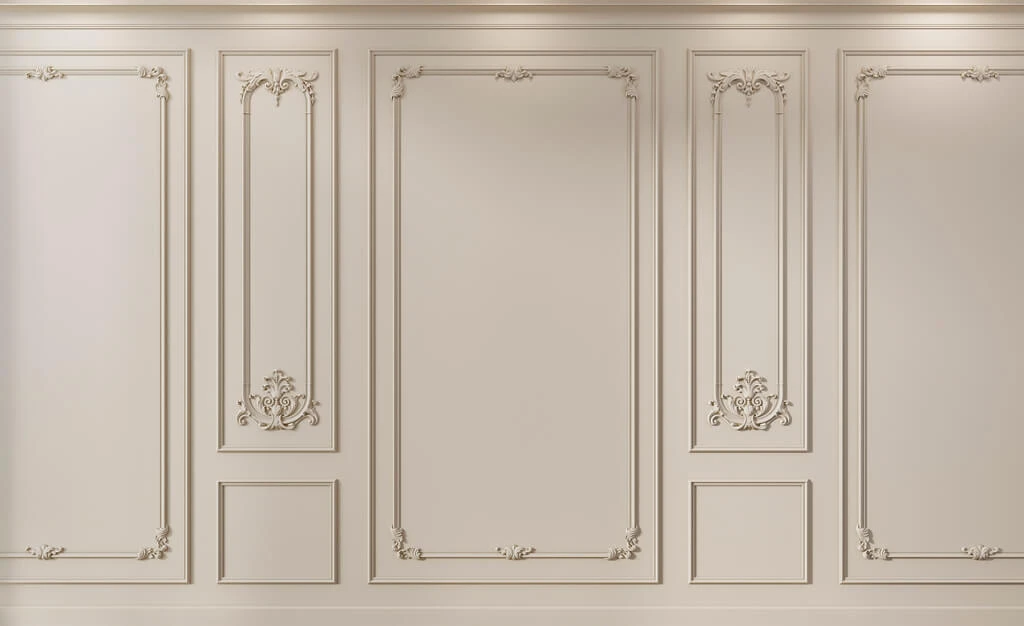
wooden wall moldings— horizontal and vertical slats creating a panel system — work in tandem with the ceiling cornice as the finishing upper element. Classic boiserie: wooden panels from floor to ceiling, framed by moldings, with a cornice along the top.
With slatted panels
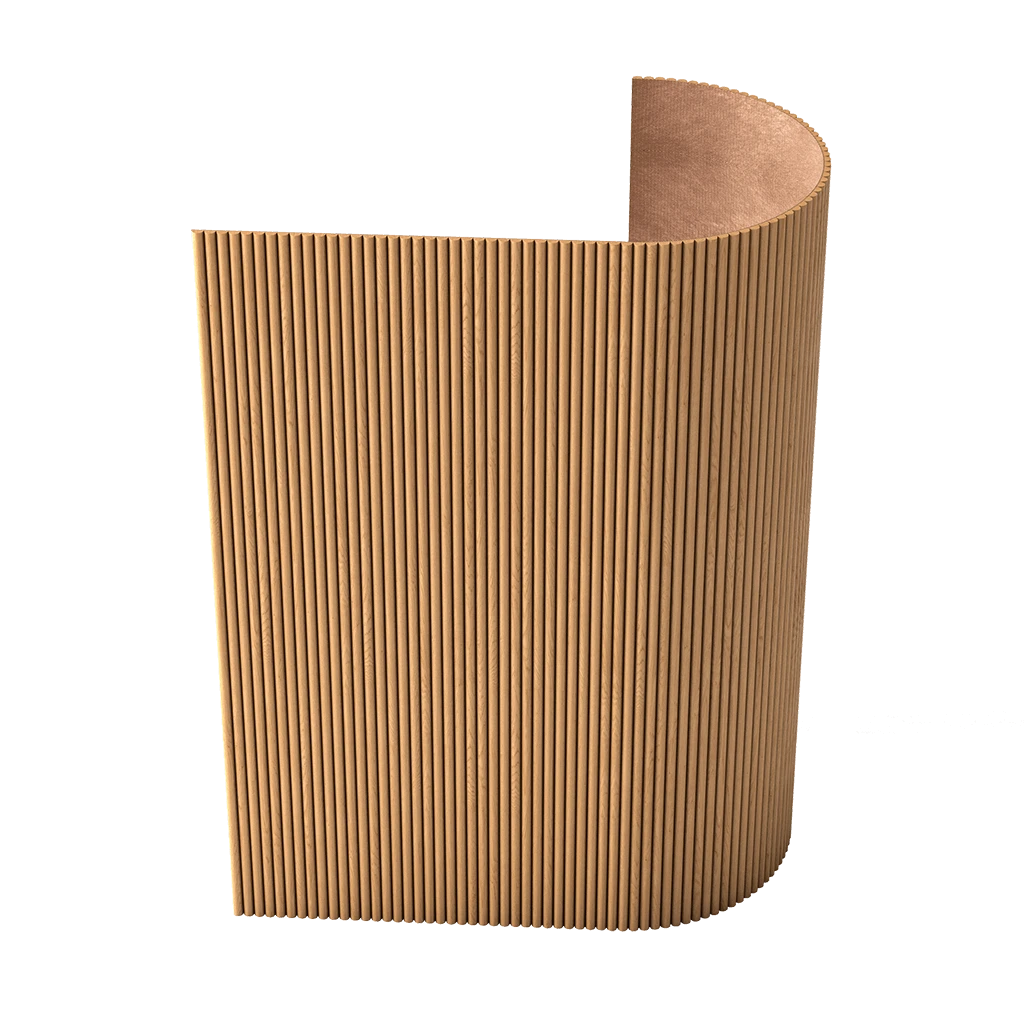
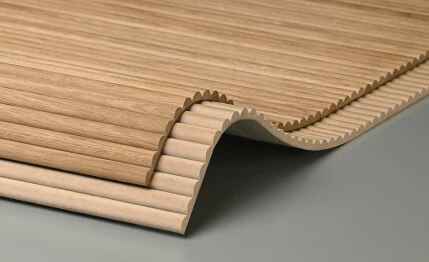
vertical wooden slatson the wall and a wooden ceiling cornice along its top is a modern approach. The battens run vertically, the cornice is the horizontal finishing point. Visually, the ceiling 'rises'.
With wooden beams on the ceiling
A wooden ceiling cornice along the walls + wooden beams on the ceiling — a system characteristic of country houses, interiors in the style of a Tuscan villa, French classicism, Provence. Uniform species and uniform finish are mandatory conditions.
How to choose a wooden ceiling skirting board without mistakes: a complete checklist
Answer these questions before buying — and it will be impossible to make a mistake.
-
Material: oak — for strength and texture; beech — for painting and complex profiles; pine — for a country interior
-
Grade: Premium grade (knot-free) for smooth painting; First grade (minor knots allowed) for a natural lacquered look
-
Geometry: Correct, without twisting or propeller effect; check profile straightness over a long run
-
Moisture: 8–12% — working moisture for living spaces; over-dried (below 6%) — risk of swelling after installation
-
Profile: cove molding — minimalism; smooth straight — modern interior; classic figured — classic, neoclassical
-
Size: guideline 1/30–1/25 of ceiling height
-
Finish: Under lacquer, under enamel, or blank for painting — decide before purchase
-
Interior style: Profile should match the language of the space
-
Installation method: Liquid nails + mechanical fasteners for heavy profiles; adhesive for light cove
-
Linear footage reserve: Room perimeter + 10–15% for corner trimming
What STAVROS offers: Wooden ceiling skirting boards and cornices made of solid wood
When it comes to where toBuy wooden baseboard for ceiling— it's important to understand: the difference between a seller and a manufacturer is huge. A seller resells. A manufacturer is responsible for every millimeter of the profile.
The company STAVROS manufactureswooden cornices and ceiling skirting boardsmade from solid oak and beech. Controlled drying to 8–12%, four-sided planing with a tolerance of ±0.1 mm, high-precision profile milling — this is a production standard, not a marketing claim.
STAVROS assortment for ceiling design:
-
Wooden cornices KZ— from the compact KZ-016 to the representative KZ-001 with decorative inserts; width from 45 to 200 mm
-
Wooden moldings MLD— for wall panels, frames, ceiling rosettes; over 40 profiles
-
Solid wood skirting board PLT— for the floor in a system with a ceiling cornice; same wood species, same finish
-
Rafter panels— for walls paired with a wooden ceiling cornice
Each product is supplied primed for painting or with a natural varnish finish to choose from. Custom manufacturing from individual profiles is possible from 50 linear meters.
The result is a wooden ceiling skirting board that will look the same after 30 years as on the day of installation. And if not — it can be sanded and refinished. No polystyrene and no polyurethane promise this.
FAQ: answers to common questions about wooden ceiling skirting boards
Which wooden skirting board is best for the ceiling?
Depends on the interior. For classic —wooden cornice with a figured profile80–150 mm in beech for enamel or oak for varnish. For modern minimalism — a smooth cove or straight profile 40–70 mm. For a wooden house — pine or beech under clear varnish.
What is better: wood or polyurethane for ceiling skirting boards?
For a natural, premium, long-lasting result — wood. For a budget renovation in an apartment with even walls — polyurethane. Wood lasts 30–50 years, can be restored, and has a living texture. Polyurethane — 10–15 years and replacement.
Can you paint a wooden ceiling skirting board?
Yes, and this is one of the main advantages.Wooden ceiling skirting for painting— made of beech, it perfectly accepts enamel. Made of oak — requires an isolating primer (shellac) before painting in a light color, so that tannins do not show through.
Which profile to choose for a wooden ceiling skirting board?
Cove — for minimalism and Scandinavian style. Smooth straight — for modern interiors. Classic figured — for classic and neoclassical. Width: for ceilings 2.4–2.7 m — 30–60 mm; for 2.7–3.0 m — 60–90 mm; from 3 m — 100–150 mm.
What width of wooden ceiling skirting board is best?
Rule: width = 1/30–1/25 of the ceiling height. For ceilings 2.8 m — about 90–110 mm. Also consider the style: minimalism — narrower, classic — wider.
Is a wooden ceiling skirting board suitable for an apartment?
Perfectly suitable.Wooden skirting board for the ceiling in an apartment— optimal for the living room, bedroom, study. For the kitchen — with a reliable lacquer coating. For the bathroom — only with good ventilation and special protective treatment.
Is it suitable for a wooden house?
This is the natural environment for a wooden ceiling skirting board. A wooden house — wood everywhere. A ceiling coving or cornice made of beech, pine, oak — an organic continuation of the material environment.
How to combine a wooden ceiling cornice with a floor skirting board?
The same wood species and the same finish.Oak floor skirting board+ oak ceiling cornice of the same tint — the upper and lower frames of the room.
What is a wooden coving and how does it differ from a cornice?
Coving — the simplest ceiling wooden profile, a small cross-section with a rounding of 25–40 mm. Cornice — a more developed decorative profile with a rich cross-section, width from 60 to 200 mm. Coving — minimalism. Cornice — an architectural accent.
Where to buy a wooden ceiling skirting board?
In the catalogSTAVROS wooden cornices and skirting boards— a manufacturer with its own woodworking production, humidity control, precise profile milling, and a range from beading to representative architectural cornices.
How is a wooden ceiling skirting board installed?
Light profiles (beading, smooth skirting up to 50 mm) — liquid nails or special wood glue. Heavy cornices (wide, with developed cross-section) — mandatory mechanical fasteners (screws or dowels) plus glue for tight adhesion.
Is acclimatization needed for a wooden ceiling skirting board?
Yes. Before installation — 48–72 hours in the room with the same humidity and temperature in which it will be used. This prevents deformation after installation.
Can a wooden ceiling skirting board be used in a sauna?
Yes, with mandatory coating using a special protective composition for saunas (oil, impregnation). Pine and beech are traditional wood species for saunas. Oak is more durable but more expensive.
Which wooden ceiling skirting board is suitable for a classic interior?
wooden cornice with a figured profile100–160 mm made of beech under white enamel or oak under 'walnut' tinting. Paired with wooden wall moldings and wooden architraves — a complete classic system.
A wooden ceiling skirting board is a detail that is always visible. It lives in the field of vision, sets the character of the upper zone of the space, and defines its overall tone: strictness or softness, classic or minimalism, naturalness or neutrality. Choosing it correctly means not just covering the joint between the wall and ceiling, but doing so precisely, beautifully, and for the long term.
The company STAVROS manufactureswooden skirting boards and cornices for the ceilingmade from solid oak and beech—with precise geometry, optimal humidity, and a full range of profiles for any style and any scale. Full catalog, real samples, production in Russia. Where every upper line of the room must be flawless—STAVROS.