








































































Article Contents:
- Floor Skirting in Moscow: Which Option to Choose for Your Interior
- What Floor Skirting Can Be Bought in Moscow
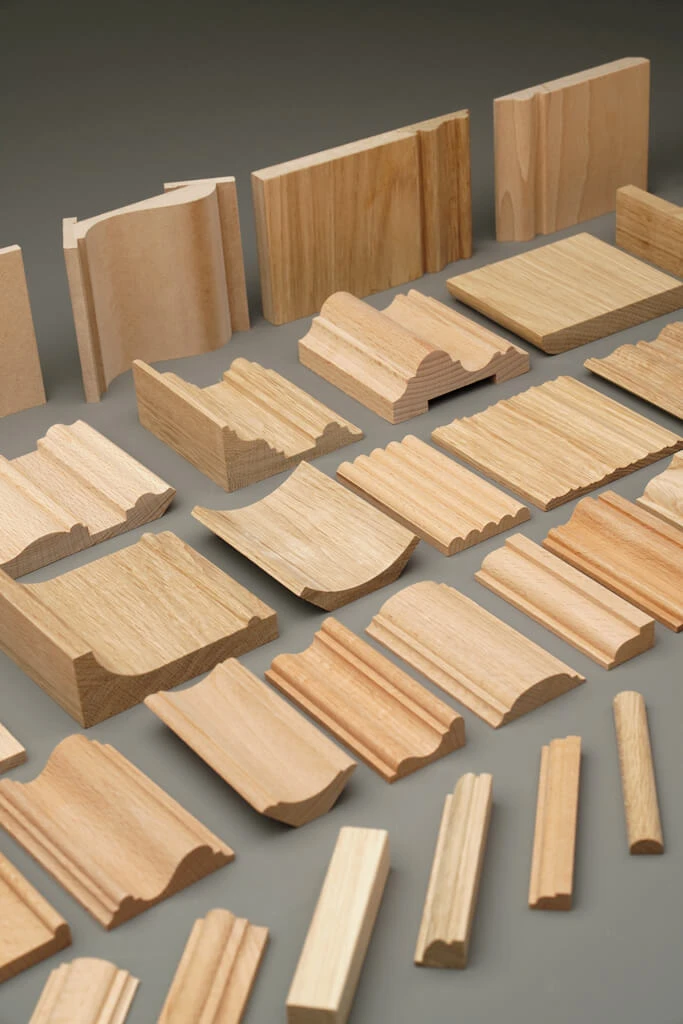
- Wooden skirting boards
- Solid wood skirting boards
- MDF skirting boards
- Polystyrene and Phytopolymer Skirting Boards
- How to Choose Floor Skirting by Material
- When wood is better
- When MDF is more convenient
- When a Moisture-Resistant Option is Needed
- How to choose a skirting board by height and profile
- Low skirting board
- Medium height
- High skirting board
- Wide skirting board
- White or Matching Floor Color
- How to choose a baseboard for your flooring
- Under laminate
- For quartz vinyl
- Under parquet
- For engineered board
- For tile and porcelain stoneware
- How to choose a baseboard to match your interior style
- Modern Interior
- Classic
- Neoclassicism
- Commercial interiors
- What to Buy Together with Floor Skirting
- Moldings and Cornices
- Slatted panels
- Decorative elements
- Door Trims and Related Moldings
- Where to Buy Floor Skirting in Moscow
- What to look for when choosing a supplier
- Availability and delivery in Moscow
- Selection by material and height
- Go to catalog
- Common mistakes when choosing floor skirting boards
- Too low a baseboard for high walls
- Unsuitable material in wet areas
- Conflict with doors and moldings
- Choosing only by photo without considering the floor covering
- Ignoring the cable channel
- Frequently asked questions about floor skirting boards
- Conclusion

Buying floor skirting boards in Moscow today means choosing from several fundamentally different materials, formats, heights, and profiles. Wood or MDF? Tall or modest? For painting or with a parquet-like tint? For a living room with natural boards or for an entryway with tiles?
This article is a practical guide that leaves no questions. Read with a pencil: by the end, you'll know exactly which floor skirting board to buy for your space.
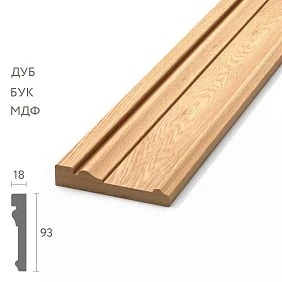
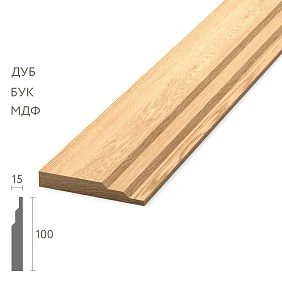
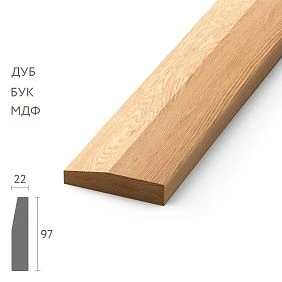
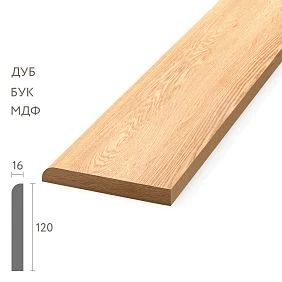
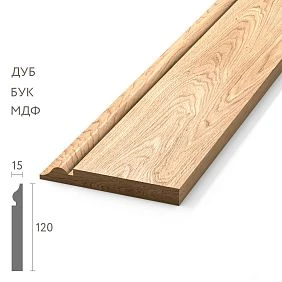
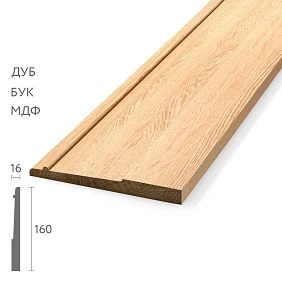
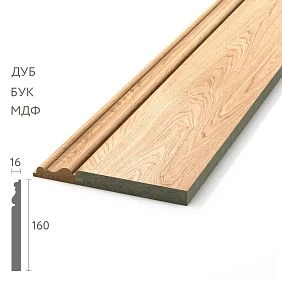
Floor Skirting in Moscow: Which Option to Choose for Your Interior
The market for floor skirting in Moscow is diverse—from thin plastic profiles to wide 120 mm high oak strips. And it is precisely this variety that confuses buyers: where to start first?
The answer—start with three questions:
1. What is the floor covering? Parquet, laminate, quartz vinyl, tile—each dictates its own requirements for the material and installation method of the skirting.
2. What is the interior style? Classic requires a high-profile skirting. Modern minimalism—thin and modest. Scandinavian style—white MDF matching the wall color.
3. What are the operating conditions? Dry bedroom or living room—wood and MDF without restrictions. Hallway, kitchen, bathroom—a moisture-resistant option is needed.
baseboard for floor—is not a technical element at the end of a renovation. It is a full-fledged interior detail that either works within the system or disrupts it. The three questions above—three steps to the right choice.
What floor skirting can be bought in Moscow
Four main materials—four different tools. Each has its own area of application, its own advantages, and its own limitations.
Our factory also produces:
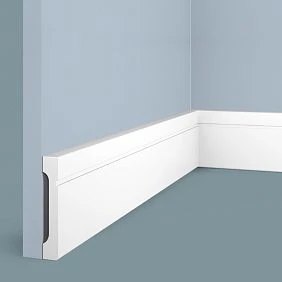
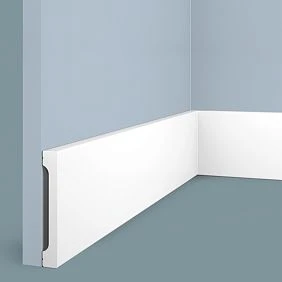
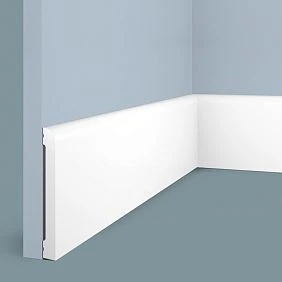
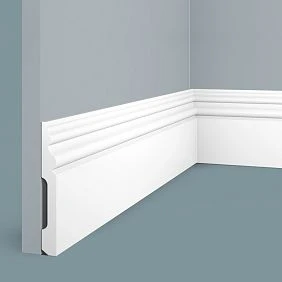
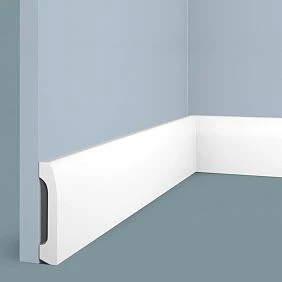


Wooden baseboards
Wood is a material that needs no explanation. Buying a wooden floor skirting means choosing a living, warm surface with a natural texture that only becomes richer over the years.
Wooden skirting boards are made from various species — oak, beech, pine, birch, ash. Each species has its own grain pattern, density, and reaction to staining. Oak is dense, slow-growing, with an expressive grain. Beech is uniform, takes stain well, and is slightly softer than oak. Pine is lightweight and budget-friendly, with a characteristic resinous texture.
Wooden skirting boards are a natural choice when:
-
the floor is made of natural plank, parquet, or engineered board of the same wood
-
the interior is classic, neoclassical, or a 'warm' Scandinavian style
-
the skirting board should preserve its texture when stained with oil or wax
-
the room is dry with constant temperature and moderate humidity
Get Consultation
Solid wood skirting boards
Skirting made of solid wood— this is the highest category of wooden skirting board. Not veneer, not MDF with coating — solid wood from surface to core.
How solid skirting boards fundamentally differ from others:
-
Depth of staining — oil or stain penetrates the structure evenly, without a superficial 'painted' effect
-
Durability — solid wood can be sanded and re-stained multiple times without changing the profile itself
-
Repairability – a scratch on solid wood is fixed by sanding, not by replacing the entire plank
-
Material 'honesty' – in interiors with natural materials, solid wood is not perceived as a compromise
Solid wood skirting board – the right choice for interiors where the naturalness of the material is essential. A tall oak skirting board, 100–120 mm, next to a parquet board made from the same wood species – this is not just a 'skirting board'. It is the completion of a natural system.
MDF skirting boards
MDF – pressed wood with a uniform, dense structure. No knots, no pores, no variation in tone. It is precisely this uniformity that makesMDF Skirting Boardit an ideal object for painting.
MDF skirting board – this is the right choice when:
-
the final finish is painting in white or any other color
-
mathematically precise geometry is needed without random differences in tone
-
the interior is Scandinavian, modern, minimalist – white walls, white ceiling, white skirting board
-
a large volume of linear meters – the cost of MDF skirting board is lower than that of solid wood
-
dry room, without constant contact with moisture
White MDF skirting boards for painting in modern Moscow apartments are one of the most enduring trends in recent years. A monochrome interior with a skirting board that matches the wall color creates a sense of thoughtful, architectural space—without unnecessary accents at the base of the wall.
Important limitation: MDF does not tolerate regular contact with moisture. Swelling of the lower edge is a real risk in hallways with outdoor shoes and in kitchens.
Polystyrene and phytopolymer skirting boards
Skirting board made of polyurethane and polystyrene— this is a separate category with fundamentally different properties. The material does not rot, does not deform from moisture, does not crack from temperature fluctuations, and costs less than natural wood with the same profile height.
Key advantages:
-
Moisture resistance—suitable for kitchen, bathroom, hallway, country house with seasonal heating
-
Easy installation—cut with a regular hacksaw, glued with liquid nails
-
Variety of profiles—height from 40 to 140 mm, smooth and textured options
-
Availability of complex shapes—a high skirting board for the floor with a shaped cross-section in polystyrene costs many times less than a wooden counterpart
To buy a phytopolymer skirting board means to choose a new-generation material that combines the durability of polymer with visual characteristics close to natural wood. Phytopolymer skirting board is suitable for rooms with variable humidity—without the risk of deformation.
How to choose a floor skirting board by material
Three selection options—three clear logics.
When wood is better
Choose to buy a wooden floor skirting board if:
-
the floor is made of natural or engineered board of the same wood species, and a unified material environment is needed
-
the tinting should preserve the wood grain pattern—oil, wax, stain with transparency
-
the interior is designed for 15–20 years without fundamental renovation—solid wood lasts exactly that long
-
the house already has wooden doors, window sills, stairs—and the skirting board must be 'in the system'
Wooden floor skirting boards are a 'once and for all' choice. They do not require replacement—only periodic renewal of tinting or polishing.
When MDF is more convenient
It is advisable to buy an MDF skirting board if:
-
apartment with finished decoration 'ready for painting' — skirting board is part of the overall white system
-
laminate or quartz vinyl with a solid light or neutral color
-
Modern, Scandinavian, minimalist interior
-
large area — the footage of skirting board is significant, and the price/quality ratio of MDF is convincing
-
dry room — living room, bedroom, study
MDF is a technological, predictable material. With proper preparation and high-quality acrylic paint, it is visually difficult to distinguish from plaster or lime profile — especially in white interiors.
When a moisture-resistant option is needed
Moisture-resistant skirting boardmade of polyurethane or phytopolymer — the right choice for:
-
Entrance hall — contact with street moisture, snow on shoe soles, cleaning with water
-
Kitchen — regular splashes, steam, floor washing
-
Bathroom — constant humidity
-
Country house — seasonal fluctuations in temperature and humidity with irregular heating
-
Commercial premises — regular wet cleaning
Moisture-resistant skirting is not a compromise. In the height range from 60 to 140 mm, polyurethane and phytopolymer profiles offer a wide selection of shapes, including figured and architecturally expressive options.
How to choose skirting by height and profile
Skirting height is not just about aesthetics. It's a matter of proportions: the skirting must correspond to the ceiling height and the scale of the space.
Low skirting board
Height up to 60 mm. A delicate, almost invisible skirting. Works in modern interiors where decoration at the base of the wall is intentionally minimized. Low skirting says: 'space matters here, not details.'
Recommended for: small rooms, apartments with ceilings up to 2.6 m, modern and Scandinavian interiors, laminate floors in light shades.
Note: low skirting makes it harder to hide cables — for electrical wiring under the skirting, a profile with an internal channel of at least 15×15 mm is needed.
Medium height
70–80 mm. The most in-demand range. Clearly visible, not overwhelming, suitable for most styles and room formats. High enough to reliably hide a cable channel. Modest enough not to compete with wall finishes.
For standard Moscow apartments with ceilings of 2.7–3 m, skirting with a height of 70–80 mm is the optimal solution. It professionally completes the space without architectural pretensions.
High baseboard
100–120 mm. This is already a decorative element with a pronounced character. Buying a high skirting for the floor means making a conscious design choice.
Such skirting is appropriate in:
-
classical interiors with high ceilings
-
spacious living rooms and halls
-
neoclassical and art deco spaces
-
studies with dark wooden floors
High floor skirting boardsets the scale — it visually 'lifts' the wall plane from the floor, creating a sense of greater height. Paradoxically, a high skirting board makes a space feel more spacious, not heavier.
Wide skirting board
Profile width (depth of projection from the wall) — from 15 to 30 mm.wide floor skirting boardwith a pronounced cross-section creates additional volume at the base of the wall. This is especially effective with side lighting: a wide profile casts a soft shadow that adds depth to the wall.
A wide solid wood profile paired with parquet flooring from the same wood species is a classic solution for high-end interiors.
White or matching the floor color
Two approaches to skirting board color — two different visual effects:
Skirting board matching the floor color — visually expands the room. The boundary between floor and wall softens: the floor 'grows' into the wall, making the room appear wider. Suitable for small rooms and modern interiors.
Skirting board matching the wall color — a similar effect, but vertically: the wall extends all the way down to the floor. This is a trendy technique for monochrome Scandinavian interiors.
White skirting board on a dark floor — a classic contrast that works in any style. A crisp white horizontal line at the base of the wall structures the space.
Skirting board matching the door and trim color — a professional technique for a unified wood system. All wooden elements in the same shade — and the interior gains integrity.
| Combination | Effect | Recommended style |
|---|---|---|
| Skirting board = floor color | Expands the room | Modern, Scandinavian |
| White baseboard + dark floor | Clear contrast | Classic, neoclassic |
| Skirting board = wall color | Monolithic wall | Monochromatic modern |
| Skirting board = door tone | Unified wooden system | Neoclassical, classic |
How to choose a baseboard for flooring
Flooring is the first guideline when choosing a baseboard. The logic is simple: the baseboard should 'finish' the floor, not exist separately from it.
Under laminate
Laminate is the most common flooring in Moscow apartments. Buying a baseboard for laminate means considering several technical nuances.
Laminate is installed using a 'floating' method: without rigid fixation to the subfloor, with a 10–15 mm expansion gap at the walls. This gap is covered by the baseboard. Therefore:
-
the baseboard is mounted only to the wall — not to the laminate
-
the laminate must move freely under the baseboard during thermal expansion
-
the lower edge of the baseboard covers the gap but does not press down on the laminate
Material: MDF baseboard in the color of the laminate — or in white if the overall concept features white walls. For laminate 'under dark oak' — a wooden baseboard made of stained pine or beech.
For quartz vinyl
Quartz vinyl tile (LVT) is a rapidly growing segment. It is installed similarly to laminate with an expansion gap, so the technical requirements for the baseboard are the same.
A feature of quartz vinyl is that it imitates wood, stone, concrete with very high accuracy. Buying a baseboard for quartz vinyl means selecting a profile that continues the imitation without a visible 'seam' between the floor and wall. For quartz vinyl 'under wood' — a wooden or MDF baseboard in a close shade. For quartz vinyl 'under concrete' — a gray or anthracite baseboard.
Under parquet
Parquet is solid wood. And the logic for a baseboard under parquet is obvious: a wooden baseboard made of the same or a similar species, with the same finish. Oak parquet — oak baseboard. Ash parquet — ash or beech baseboard.
Skirting made of solid woodUnder parquet — the only solution that doesn't create material dissonance. Solid wood next to solid wood — it's one natural environment. Plastic or MDF next to natural parquet — it's always a visible compromise.
For engineered board
Engineered board — a parquet panel with a top layer of natural veneer. Visually similar to parquet, but more stable against humidity. Buying a skirting board for engineered board follows the same logic as for parquet: wooden, matching the color of the top veneer layer.
Wooden floor skirting board for engineered board — the perfect choice for modern apartments with high-quality flooring. Toning to match the veneer color creates a unified 'floor — skirting board' system that looks expensive and complete.
For tile and porcelain stoneware
Tile and porcelain stoneware — areas with high humidity: kitchen, hallway, bathroom. Buying a skirting board for tile means choosing a moisture-resistant material.
Options:
-
Porcelain stoneware skirting board — an extension of the covering vertically, perfect for the kitchen and bathroom.
-
Moisture-resistant skirting board made of polyurethane or phytopolymer — for the kitchen and hallway, next to tile of any color.
-
Decorative MDF skirting board with protective coating — only in relatively dry areas with tile.
For a hallway with tile —Polyurethane baseboardwith the ability to paint in any color: choose to match the tile or in white — depends on the overall concept.
How to choose a skirting board to match the interior style
Modern interior
Modernity in interior design is about precision and 'less is more'. A floor skirting board in a modern interior should be modest: thin, smooth, in the color of the wall or floor.
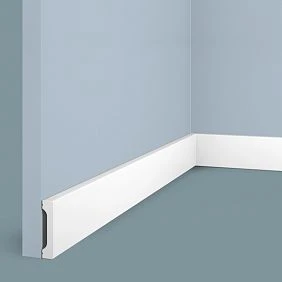
White MDF skirting board 60–70 mm high with sharp edges and a smooth surface is the benchmark solution for a modern apartment. It solves the technical problem (gap, cables) without design pretensions.
For an 'industrial' modern interior with concrete walls and a dark floor — an anthracite or dark gray moisture-resistant polyurethane skirting board.
Classic
Classicism requires scale and detailing. A wooden floor skirting board for a classic interior is tall, with a pronounced profile section. Height from 100 mm, shape — with one or two steps in the section.
Material: dark oak with matte varnish or wax — next to dark parquet, oak doors, and wooden wall moldings. This system works at first glance: solid, rich, historically convincing.
A skirting board in a classic interior is part of a unified wooden system. Therefore, in classic style, along with the skirting board, it's worth consideringMoldings and cornicesfrom the same line and the same material.
Neoclassicism
Neoclassicism is a balance between historicity and modernity. A skirting board for neoclassicism: moderately tall (80–100 mm), with one ledge in the profile, without baroque richness. Material — wooden in a light tone or MDF for painting.
An important technique for neoclassicism: the skirting board in the same tone as the door architraves and window slopes. This creates a 'white system' of wooden details that concisely frames the space.
For neoclassical living rooms in Moscow apartments — floor skirting boards in Moscow made of MDF, 80–100 mm high, in white primer for painting. Painted in the desired shade, they create a professional white system with doors, moldings, and cornices.
Commercial interiors
Offices, restaurants, clinics, showrooms — commercial real estate imposes special requirements on floor skirting boards: wear resistance, moisture resistance, ease of replacement, compatibility with various coverings.
For commercial interiors —skirting board made of polyurethane and phytopolymerresistance to wet cleaning, impact from cleaning equipment, and mechanical loads. At the same time — a wide selection of heights and profiles for any design task.
What to buy together with floor skirting board
Skirting board is a link in the system. Buying only skirting board without considering adjacent elements is a path to a fragmented interior where details do not communicate with each other.
Moldings and cornices
Moldings and cornices made of solid wood and MDFfrom the same line as the skirting board — this is a unified wooden system from floor to ceiling. Skirting board finishes the wall from below. Cornice finishes it from above. Molding creates a framing structure in the middle.
This approach is not an excess. It is a professional standard for interiors where integrity is desired, not a set of separate beautiful details. One manufacturer, one line, one wood species — and everything comes together as intended.
Rack panels
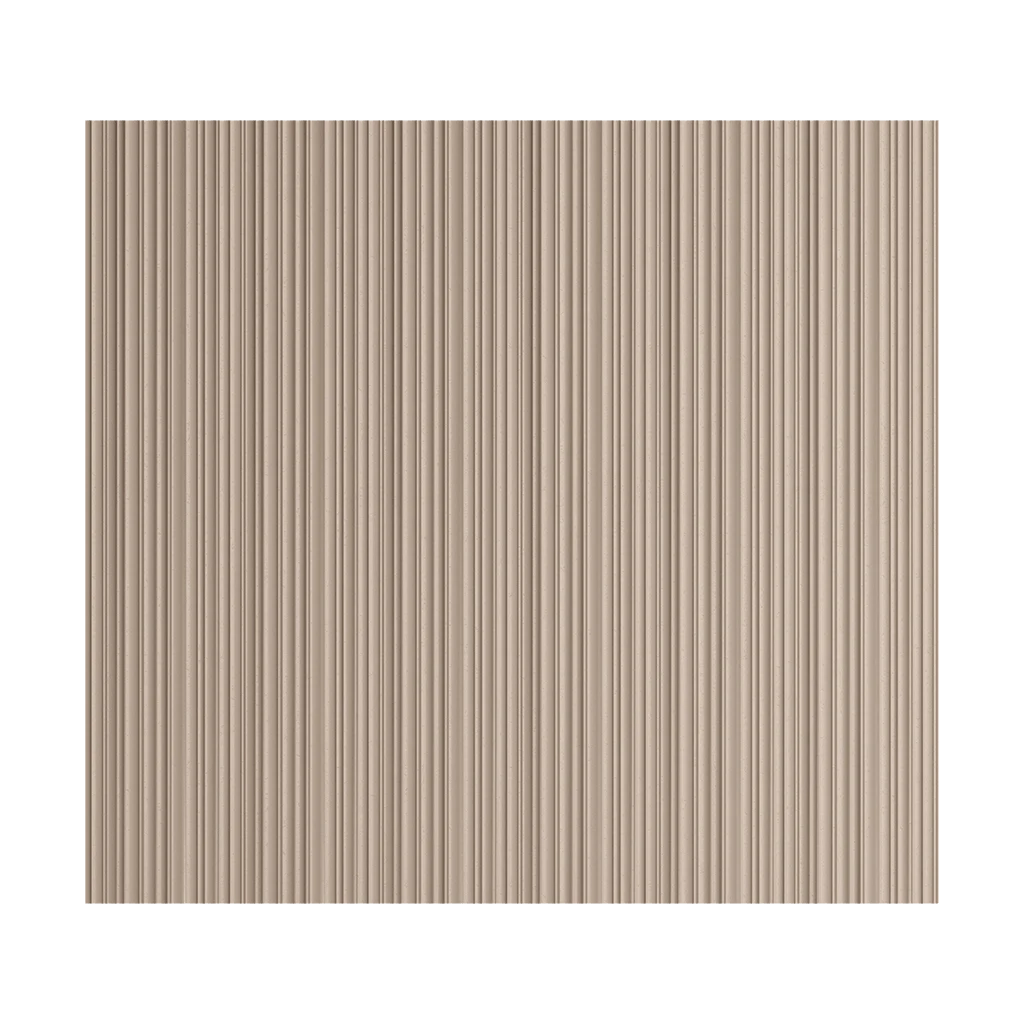
Rafter panels— one of the most relevant requests in the Moscow interior decor market. Vertical wooden slats on the wall create a rhythmic textured background that combines organically with skirting board from the same wood species.
Slatted panels + wooden skirting board at the base = a complete wooden system. Floor, skirting board, slats on the wall — three levels of one material. This solution is simultaneously modern and natural: it meets the demand for 'living' materials in urban interiors.
Decorative elements
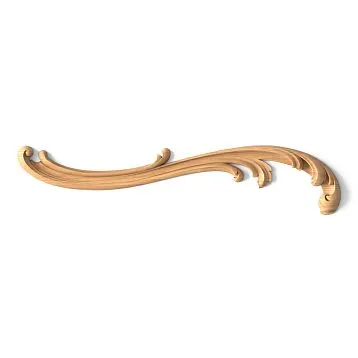
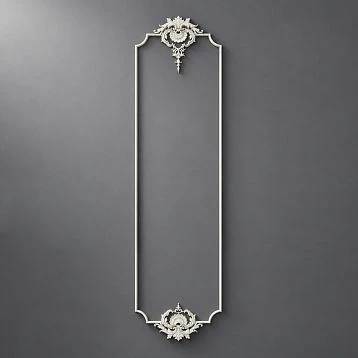
Decor for Molding— corner blocks, central overlays, connectors — complement the molding system on the walls. If skirting board is purchased as a single set with moldings, decorative elements are the mandatory third component of the system.
Door trims and related moldings
Door trim is the closest 'neighbor' to floor skirting. They meet at the base of the doorway, and it's at this point that the systematic choice is visible: the same profile, one material, one tint.
Purchasing floor skirting from the same line as trims and cornices is a professional approach that distinguishes a finished interior from one 'assembled from whatever was available'.
Where to buy floor skirting in Moscow
The main practical question is where to go and what to pay attention to when purchasing.
What to look for when choosing a supplier
Four criteria that separate a quality supplier from a marketplace intermediary:
1. Stock availability. Long-length moldings—skirting boards, cornices, panel strips—are not stored 'live' by most online stores. Check the availability of a specific item before placing an order. Reworking installation due to mismatched shade or profile is an expensive hassle.
2. Ability to order samples. Skirting is a material you need to see next to the floor and doors before making a final choice. A supplier that sends samples is a supplier you can trust.
3. Unified molding line. Skirting, cornice, molding, trim—from one line, from one manufacturer. Only then does the system work as a unified whole.
4. Damage-free delivery. Long-length trim is prone to breakage during transportation. Professional packaging is not an option, but the standard.
Availability and delivery in Moscow
buy floor skirting board in Moscowwith city delivery — if in stock, the timeframe is 1–3 business days. For non-standard profiles and large volumes — please check the production lead time.
Floor skirting boards in Moscow— delivery is carried out in special packaging that prevents damage to long-length profiles. Please check the terms when placing your order.
Selection by material and height
Professional consultation on selection — this is real savings. Not time spent studying catalogs, but money on redoing installation due to incorrect choice.
For a consultation on skirting boards, prepare:
-
Photo of the flooring and doors
-
Room height
-
Wall material (drywall, brick, concrete — affects installation)
-
Interior style
-
Color of walls and ceiling
With this data, selecting and buying a floor skirting board is a task for one short consultation.
Go to catalog
Common mistakes when choosing floor skirting
Experience working with Moscow buyers provides a stable list of predictable errors. Read — and avoid.
Too low a skirting board for high walls
A 40 mm high skirting board with a 3.2 m ceiling is almost an invisible detail. Visually, it creates a feeling of 'unfinished': there is a border between the floor and the wall, but it is too thin for the scale of the space.
Proportion rule: skirting height — approximately 1/40–1/50 of the ceiling height. With a 3 m ceiling — at least 60–75 mm. With a 3.5 m ceiling and higher — from 100 mm.
Unsuitable material in a wet area
MDF skirting in the hallway — this is a chronic problem that reveals itself after one Moscow October: swollen bottom edge, paint bubbles, profile deformation. The hallway is a wet zone without exceptions.
Moisture-resistant polyurethane skirting board for hallway, kitchen and bathroom is not a recommendation, but a condition for normal operation.
Conflict with doors and moldings
Pine skirting board + oak door + white MDF cornice on the ceiling — these are three different materials, three different shades, three different profiles. They don't explicitly conflict, but create 'invisible tension' in the space: a feeling that everything was bought separately and installed in one room by coincidence.
A unified wooden system — skirting board, architrave, cornice from one product line — solves this task once and for all.
Choosing only by photo without considering the floor covering
Photos in the catalog are specific interiors with specific lighting. The same skirting board in your room with different flooring and different lighting looks different. This especially applies to wood tint shades: 'light oak' on screen and 'light oak' in your hallway under evening lighting are different things.
Request samples and place them against your flooring and door leaf before finalizing the order.
Ignoring the cable channel
Skirting board with cable channel — an option that gets ignored until the moment you realize: where to run the wires for the TV, floor lamp, and charging stations?
If there are any plans for electrical wiring along the skirting board — choose a profile with an internal channel. Later, redoing an installed skirting board for cables is expensive and unsightly.
Frequently asked questions about floor skirting boards
Which baseboard is better — wood or MDF?
Depends on the task. Wooden — for natural interiors with parquet or engineered wood, long-lasting and repairable. MDF — for painting white or any other color, for modern interiors with laminate. Each material is correct in its place.
What height of skirting board to choose for an apartment with a 2.8 m ceiling?
Optimally 70–80 mm. For a modern interior — 60 mm. For neoclassical or classic — 100 mm.
Can you glue skirting board without fastening it to the floor?
Yes, if the skirting board is mounted only to the wall (which is correct for floating floors — laminate, quartz vinyl). Fixing only to the wall with glue or fasteners is standard professional installation.
What skirting board is suitable for an entrance hall?
Moisture-resistant: polyurethane or phytopolymer. MDF in an entrance hall with regular moisture will deform in one season.
How to match a baseboard to laminate flooring?
Three options: matching the laminate (unified system), matching the wall color (monolithic wall), white (classic contrast). Request a sample and apply it to the end of the laminate board.
MDF skirting board — what to paint it with?
Acrylic paint on a pre-primed surface. Primer is mandatory: without it, the paint adheres with uneven absorption and will show an uneven tone after a year.
How to hide wires behind a skirting board?
Choose a profile with an internal cable channel. Most wooden and MDF skirting boards with a height of 70 mm or more have an internal groove of 15×15–20×20 mm, sufficient for one or two cables.
How much skirting board is needed for a room?
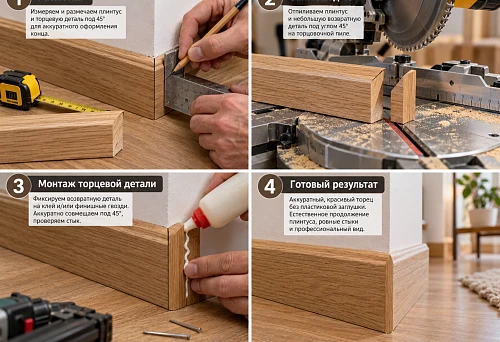
Perimeter of the room minus the width of door openings, plus 10% for cutting and joints. Use corner caps in corners — they simplify installation and eliminate the need for precise 45° cuts.
Wooden skirting board — which wood species to choose?
For dark parquet — oak or beech with dark tinting. For light flooring — ash, birch, pine in a natural shade. Oak is denser and more expensive, pine is more budget-friendly and easier to install.
How to choose a skirting board for quartz vinyl under stone or concrete?
For quartz vinyl 'under concrete' or 'under stone' — gray, anthracite, or white skirting board. Moisture-resistant polyurethane profile can be painted in any desired color.
Which skirting board is suitable for a country house?
Moisture-resistant and thermally stable. With seasonal temperature and humidity fluctuations, untreated wood and MDF deform. Polyurethane or phytopolymer skirting board is the optimal choice.
Conclusion
Floor skirting board is the final detail that either puts a finishing touch on the interior or leaves it in a state of 'almost ready.' The right choice is simple when the logic is clear: material according to operating conditions, height according to room proportions, tinting in harmony with the floor and doors.
Three materials — three purposes:
-
Solid wood — for natural interiors with parquet, durable and repairable
-
MDF — for painting white or any desired color, for modern and Scandinavian spaces
-
Polyurethane and phytopolymer — for wet areas, complex profiles, commercial interiors
And one principle of systematicity: baseboard in a unified line with moldings, cornices, and architraves — this is not a designer's whim, but a working method for creating a cohesive interior.
Go to the catalog and select:
STAVROS company — a Russian manufacturer of decorative interior products made from natural wood, MDF, and polyurethane. The STAVROS catalog covers floor baseboards made of oak, beech, and MDF with heights from 60 to 120 mm, moisture-resistant baseboards made of polyurethane and phytopolymer, moldings, cornices, paneling, door architraves, and decorative elements — a complete trim system for any style and any room.
STAVROS works with private customers, architects, interior designers, construction companies, and developers. Delivery to Moscow, St. Petersburg, and throughout Russia in professional packaging that prevents damage to long-length trim. Selection of baseboard for specific flooring, style, and room — free upon request. Material samples — upon request.
Buy floor baseboard in Moscow with quality guarantee, a system of compatible trim, and professional support — STAVROS.