











































































Article Contents:
- Skirting for panels in Moscow: which profile to choose for neat finishing
- What tasks require skirting for panels
- Close the bottom end of the panel
- Design the junction with the floor
- Make a neat joint with adjacent finishing
- Emphasize the boundary of the panel zone
- Complete an accent wall
- What profiles for panels can be bought in Moscow
- Skirting for wall panels
- Skirting for slatted panels
- Skirting strip for wall panel
- Framing and finishing profile
- How to choose skirting for panels by material
- For solid wood panels
- For MDF panels
- For paintable solutions
- When polyurethane profile is appropriate
- How to choose profile by type of panel wall
- For a solid wall panel
- For slatted panel
- For an accent wall
- For TV zone
- For a hallway panel
- How to choose a profile based on interior style
- Modern Interior
- Neoclassicism
- Classic Interior
- Interior with wooden architectural moldings
- Baseboard for panels, moldings, or slat panels: what and when to combine
- When a bottom profile is specifically needed
- When moldings are needed around a panel
- When it's better to assemble a wall using slats
- How to assemble a system in one style
- What to buy together with a baseboard for panels
- Moldings and Cornices
- Decor for moldings
- Slatted panels
- Skirting board in a unified finishing line
- Where to buy skirting board for panels in Moscow
- Common mistakes when choosing skirting board for panels
- Incorrect profile for the panel material
- Visually too weak base for a heavy panel wall
- Mismatch in tone and texture
- Lack of connection with moldings and cornices
- Profile is attached to the floor, not to the wall
- Frequently Asked Questions
- Conclusion
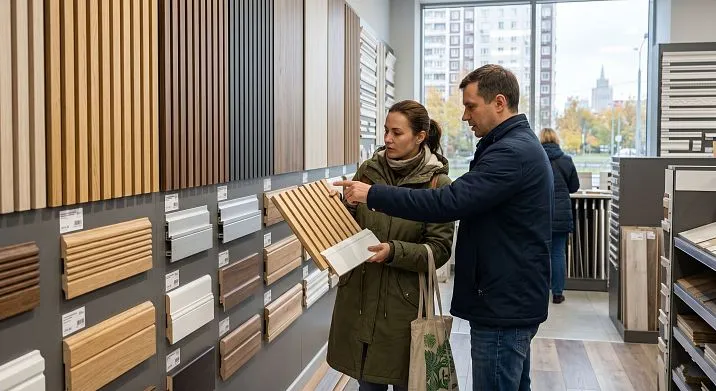
This is exactly what exists forbaseboards for panels— a profile that finishes the bottom edge of a panel wall, decorates the joint with the floor, creates a neat transition between the panel and adjacent finishing. Not a decorative trifle — a functional and visual completion of the entire system.
Buying a skirting board for panels in Moscow is a task where it's important to understand: we're not talking about an ordinary floor skirting board. We're talking about a special profile selected for a specific type of panel, its material, thickness, and installation method. MDF wall panels, solid oak slat panels, paintable boards — each type requires its own profile. This is exactly what we'll break down in order.




Skirting board for panels in Moscow: which profile to choose for neat finishing
Moscow is a market with high demands for interior design. Business-class renovations are done here, designers with European-level taste work here, and buyers here see the difference between 'just done' and 'done right.'
A profile for panels is a detail that a professional eye notices immediately. Buying a correctly chosen skirting board for wall panels in Moscow means ensuring precise geometry of the bottom edge of the panel system, material honesty (a profile made from the same wood as the panels), and visual completeness of the entire wall.
What determines the choice of profile for panels:
-
Type of panel: slatted or solid wall panel
-
Panel material: solid oak, MDF, veneered board
-
Panel thickness: determines the width of the groove or shelf of the profile
-
Panel installation method: floating, adhesive, mechanical fastening
-
Interior style: classic, neoclassical, modern, Scandinavian
-
Joint type: with floor, with adjacent finish, with another panel
Only after answering all six questions — proceed to selecting a specific profile.
Buy baseboards for panelsWith a full-cycle manufacturer — means getting consultation, samples, compatibility of the profile with panels from the same line. This approach precisely eliminates the situation with the 'hanging end' described at the beginning.




What tasks require a skirting board for panels
Before talking about specific products — about the tasks. Because a profile for panels solves several practical problems simultaneously, and the type of profile chosen depends on understanding the task.
Our factory also produces:


Close the lower end of the panel
Any wall or slat panel has a lower end. If the panel is mounted not from the finished floor, but with a technological gap — this end is open. It is visible. And it looks unfinished.
Skirting strip for wall panelCloses this end from below — like a 'frame' for the lower edge. A profile with a groove or shelf receives the panel's end and visually secures it.
For slatted panels — a profile with a horizontal shelf that covers the lower ends of all slats at once. One strip — a neat finish for the entire slatted system.
Get Consultation
Finish the floor junction
The joint between the panel and the floor is an area where two different materials and two different levels meet. Without a profile, this joint looks random. With a profile — intentional and finished.
The profile for joining panels to the floor acts as a horizontal adapter: it simultaneously closes the expansion gap and creates a decorative line at the base of the panel wall.
Create a neat joint with adjacent finishes
The panel does not always cover the entire wall. Often it occupies the lower zone — up to a height of 90–120 cm — while the upper part of the wall is painted or wallpapered. At the horizontal boundary between the panel and the upper zone — there is a joint.
Profile for panel joints: a horizontal strip that covers the upper end of the panel and simultaneously serves as a decorative horizontal line. Without it, the upper edge of the panel is a technical cut that needs to be hidden.
Baseboard for finishingas a horizontal framing element — a classic technique for finishing lower wall panels in classic and neoclassical interiors.
Emphasize the boundary of the panel zone
The panel zone boundary is a horizontal line dividing the wall into a lower 'panel' part and an upper 'clean' part. This line can be a technical joint or a decorative accent.
A decorative profile at the panel zone boundary is a horizontal band that turns a random joint into an architectural element. It is this technique that makes classic wall panels truly classic.
Finish the accent wall
An accent wall—the area behind a sofa, bed, or TV—needs finishing. Slatted panels on an accent wall without a bottom profile are an incomplete thought. A profile at the bottom and a profile at the top create a frame within which the panels work as a unified composition.
For an accent wall, the profile for wall panels serves an aesthetic role: it closes the system and gives it a finished look.
What profiles for panels can be bought in Moscow
Baseboard for wall panels
Wall panels are solid slabs mounted vertically. MDF, veneered slabs, panels for painting. They require a profile with a groove or a shelf that receives the lower end of the slab.
Profiles for wall panels are produced in two main types:
-
With a groove: the lower end of the panel fits into the profile groove—fixation is precise, without gaps. Requires matching the groove depth and panel thickness.
-
With a shelf: the profile covers the lower end of the panel from the outside—mounted on top, without inserting the end into a groove. More flexible: suitable for panels of varying thickness.
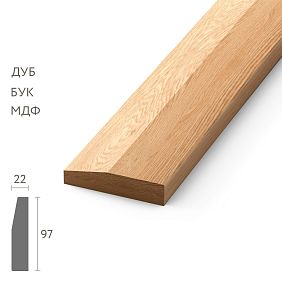
Material: solid wood (oak, beech), MDF for painting. Profile width: 40–80 mm. Toning matches the panels—from the same batch.
Baseboard for slatted panels
Slatted panels—a different construction: several separate vertical slats mounted with equal spacing. The lower end of each slat is a separate element. Without a finishing profile at the bottom—the ends of all slats are visible in turn.
The profile for slatted panels acts as a horizontal baseboard-like underlay: one continuous plank covers all the lower ends of the slats. The slats visually 'stand' on this plank—even if they are physically attached to the wall higher up.
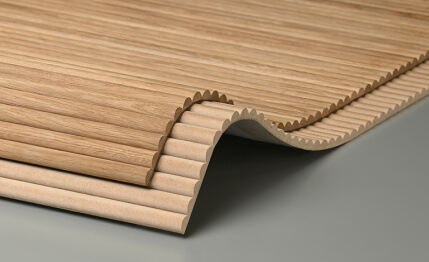
Rafter panelsmade of solid oak from STAVROS—come with a profile made of the same material. One manufacturer: oak of the slats and oak of the profile from the same batch, toning is identical.
Plank-baseboard for wall panel
Skirting strip for wall panel—a wider and more noticeable profile than the technical profile for slatted panels. It is not just an end cover, but also a decorative horizontal accent.
Constructively: a wide horizontal plank (60–100 mm) with a shaped or smooth profile, installed at the base of a wall panel. At the bottom—it joins with the floor or floor baseboard. At the top—it receives the lower end of the panel.
It is the plank-baseboard that creates the 'plinth' character of the lower part of the wall: in classic interiors, this is a mandatory element of the wall system.
Framing and finishing profile
In addition to the bottom profile, a panel wall needs framing around the entire perimeter—especially if the panel does not cover the entire wall, but only a part of it.
Top finishing profile: covers the top end, frames the horizontal boundary of the panel zone. In design—the same as a horizontal baseboard, but serving as the top frame.
Side profile: on the vertical edges of the panel zone—by the doorway, at the corner, at the junction with another wall. Without it, the vertical edges of the panel are exposed.
Complete framing system: bottom profile + top profile + side profiles = panel in a frame. This is no longer just a finishing material, but an architectural interior detail.
How to choose a baseboard for panels by material
For solid wood panels
Wall panels and wooden baseboards—a pair where the material determines everything. Solid oak panels require a profile made from the same solid wood. Not 'similar', not 'from the same species by another manufacturer'—from the same batch, with the same tinting, from the same supplier.
Wooden profile for solid wood panels is:
-
Fiber texture match: oak to oak, beech to beech
-
Toning match: one batch of oil or stain
-
Uniform reaction to humidity: wood "breathes," and different batches may cause gap discrepancies
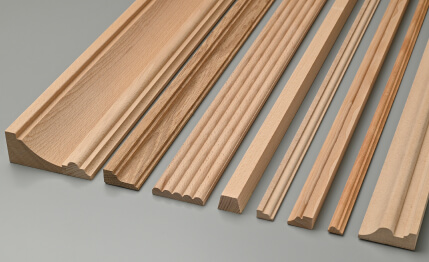
Trim products made of oak, beech, and MDF— complete line for building a "panel + profile" system from a single source.
Wooden skirting for solid wood panels — available in widths 40–80 mm. Rectangular cross-section profile for a minimalist solution, with chamfer or roundover for a more classic character.
For MDF panels
MDF panels — homogeneous surface, precise geometry, perfect white for painting. For them — MDF profile with the same surface characteristics.
Buy MDF profile for panels — smooth profile with white primer for painting. Acrylic enamel in the desired shade — and the profile literally "merges" with the panels or contrasts with them according to the designer's intent.
For MDF panels for painting: MDF profile + painting in a unified color = system without visible transitions. The eye does not "stumble" over the joint between profile and panel.
MDF limitation for profile: as with floor skirting, the lower end of the profile in contact with the floor requires sealing or priming.
For paintable solutions
Paintable solutions — a system where both the panel and the profile are painted in a unified color. Here, the material nature of the profile is less important than the surface quality.
Buy a skirting board for panels for painting: MDF with factory primer. Two coats of acrylic enamel in the desired NCS/RAL shade — and the entire system reads as a solid painted plane.
For paintable solutions in Moscow — a popular choice in modern interiors, where wall panel + profile form a monochrome 'block' of an accent wall.
When polyurethane profile is appropriate
Polyurethane — for classic and neoclassical interiors, where the lower boundary of the panel zone should carry rich relief. A wide polyurethane skirting board with belts, meander, or molding — a decorative accent at the base of the wall panel.
In a classic interior, a polyurethane profile at wall panels is an architectural detail of the 'second plan': it does not draw attention to itself, but its absence is noticed immediately.
How to choose a profile by type of panel wall
For a solid wall panel
Solid panel — MDF or veneered board — requires a profile with a groove exactly matching its thickness. Standard wall panel thicknesses: 12 mm, 16 mm, 18 mm. A profile with a 12 mm groove for a 12 mm panel — precise fit without gaps.
For non-standard panel thickness — a flanged profile: covers the top end, does not require groove alignment. A universal option that works with any panel from 10 to 20 mm.
For a solid panel, a baseboard strip at the base — a more decorative option: a wide horizontal element that clearly separates the lower panel zone from the floor.
For slatted panel
Wooden slatted panels and moldings— a system where several elements work together. The profile for slatted panels is a horizontal base strip that covers the lower ends of all slats.
Width of this strip: 40–60 mm. It should be noticeable as an element but not draw attention away from the slatted rhythm. Material: made from the same oak as the slats, with the same finish.
For slatted panels, the top profile is also important: it finishes the slats from above, framing the slatted composition into a rectangular frame.
For an accent wall
Accent wall — the zone of maximum attention. Here, the panel profile serves two roles: technical (covers ends) and decorative (frames the wall as a finished unit).
For an accent wall with slatted panels: lower profile + upper profile made from the same oak. The slats are enclosed in horizontal frames at the bottom and top — visually, this is a 'picture in a frame' on the wall.
For an accent wall with solid panels: a wide baseboard strip at the base + a horizontal molding at the top. A complete frame for the accent zone.
For the TV zone
TV zone — the accent wall behind the television. Oak slatted panels are often used: their vertical rhythm creates a background, making the TV not 'float in the air' but integrated into the wall structure.
The profile for wall panels in the TV area should be strict: without unnecessary relief, without excessive decorativeness. A rectangular oak profile in the panel tinting is a clean architectural solution.
An additional nuance: the profile for the TV area is often mounted not from the floor, but at a height of 10–20 cm from it — with a separate floor skirting board. Then the profile for the panel is the lower frame of the panel zone specifically, not the full base of the wall.
For a panel in the hallway
The hallway is a contact zone. Hallway walls take hits from clothing, bags, umbrellas, doors. Wall panels in the hallway are both protection and decor.
Buy a skirting board for panels in the hallway — considering operating conditions: varnished or oiled wood coating (not open solid wood), tight installation without gaps at the floor.
Profile width for the hallway: 50–70 mm. Material: oak with varnish or MDF under acrylic enamel — both options withstand mechanical contact.
How to choose a profile by interior style
Style determines not only the visual form of the profile but also its 'weight' in the system. A delicate thin profile in minimalism and a rich wide belt in classicism are two different tools for two different tasks.
Modern interior
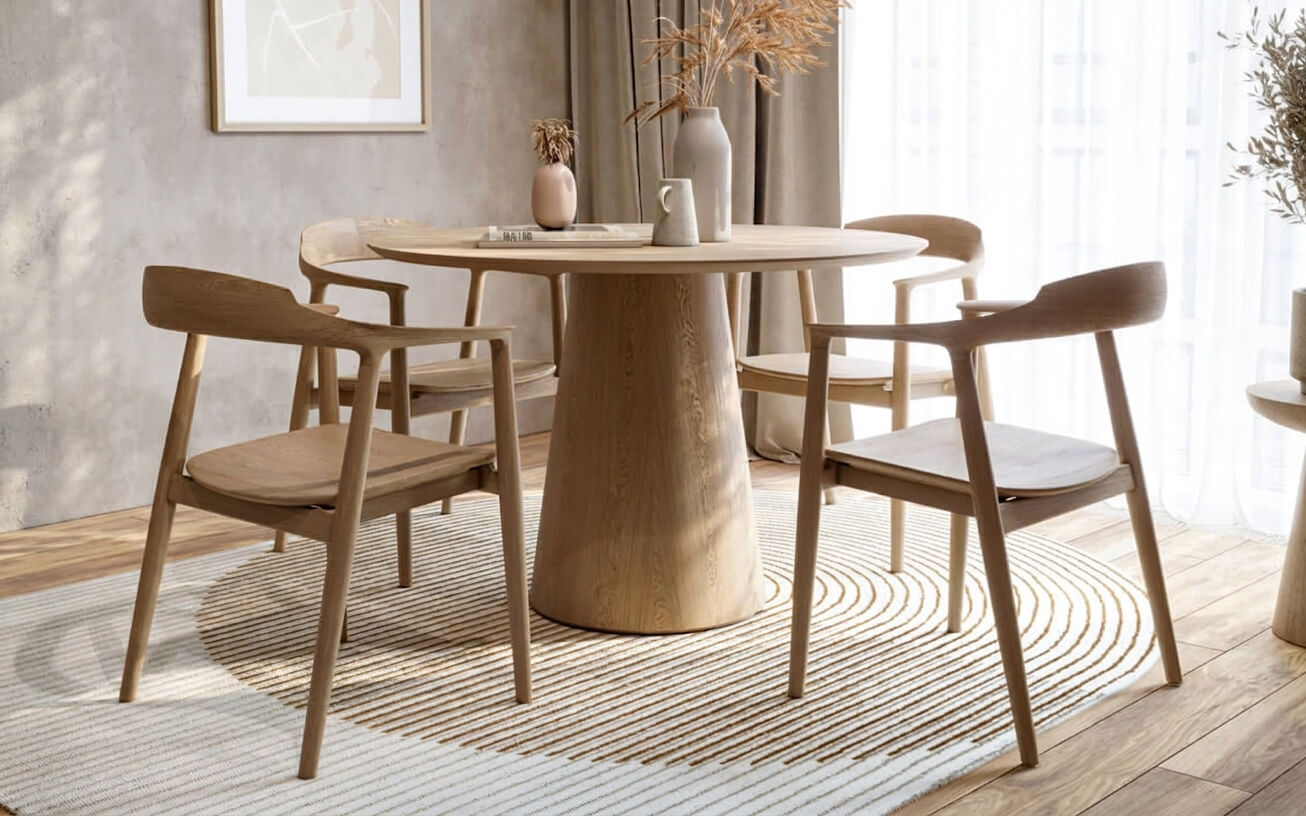
Modern interior: neutral colors, straight lines, minimal decor. The profile for panels here is thin, rectangular, without relief. Width 30–45 mm. MDF for painting to match the panels or flooring.
For slatted panels in a modern interior: profile from the same oak, straight section without a chamfer. Tinting: natural oak, whitewashed oak, graphite — depends on the overall palette.
Neoclassicism
Neoclassicism is a contemporary interpretation of classical architectural forms. The profile for panels here is richer than in 'pure' modern style: with a bevel, a slight setback, and clearly defined relief.
Width: 50–80 mm. Material: solid wood in white or warm tones, MDF with white enamel. The profile frames the panel zone as an intentional architectural detail—but without Baroque overload.
Classic interior
Classicism means symmetry, rich relief, natural materials. The baseboard for panels in a classic interior is a wide decorative plank, 70–100 mm, with several setbacks or a rounded molding.
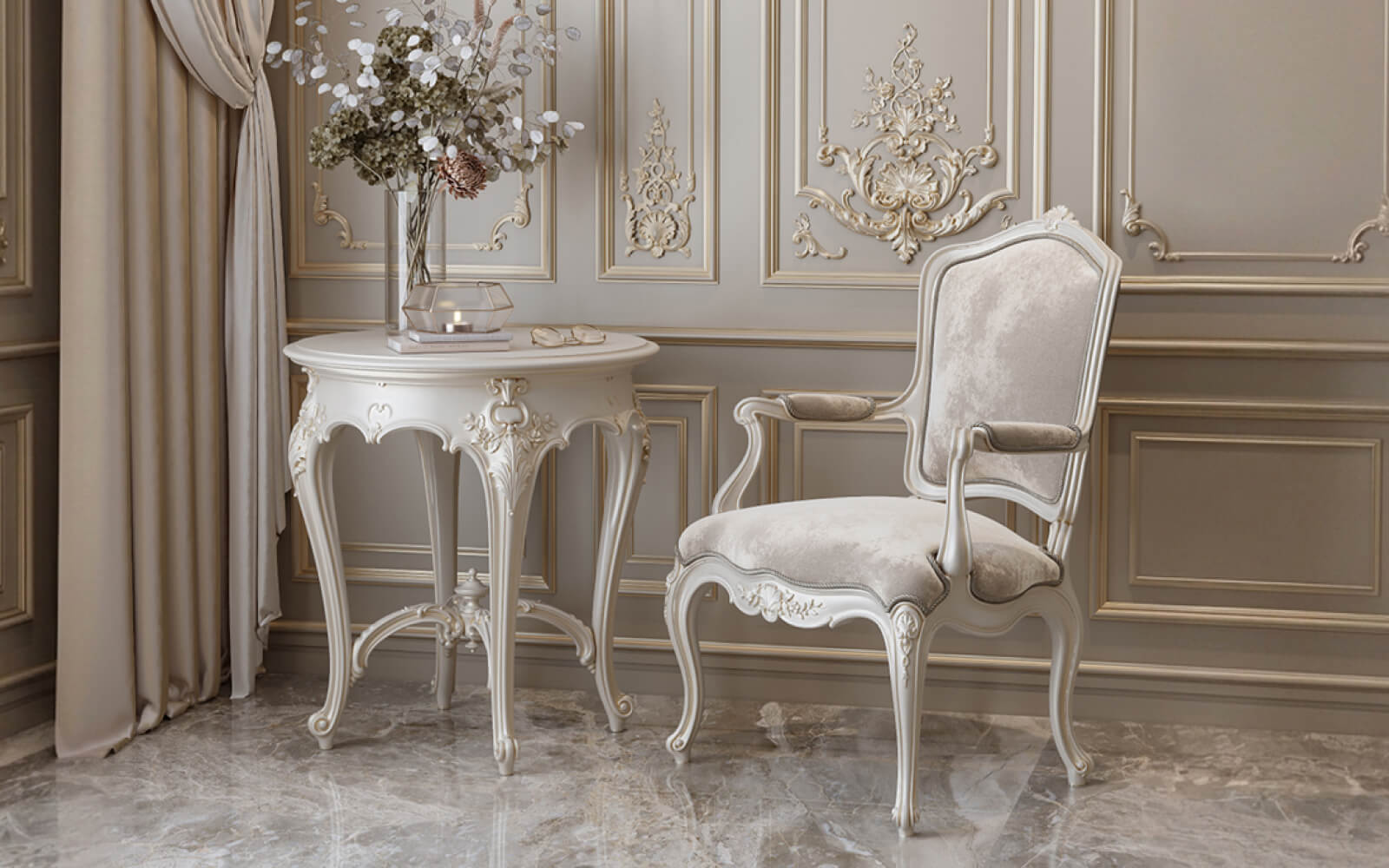
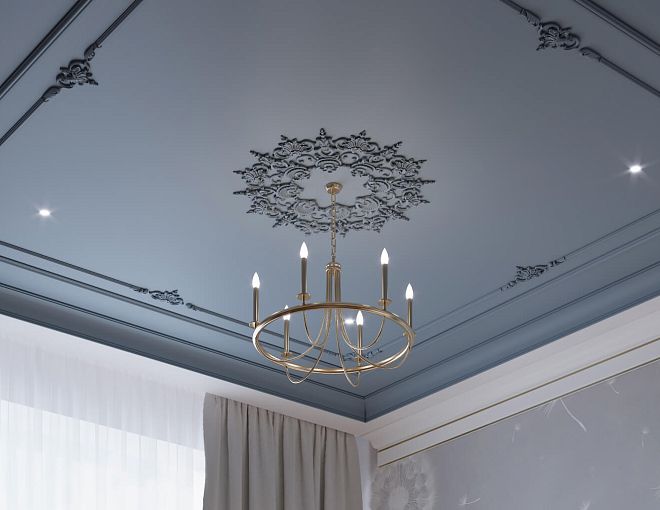
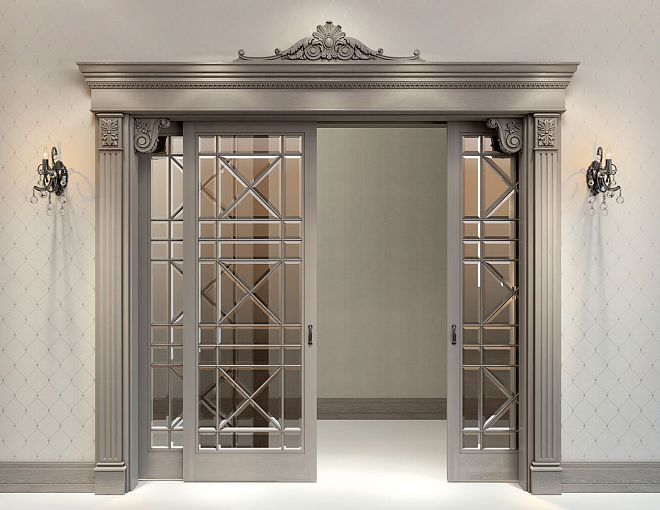
A wooden profile made of oak in a warm finish alongside wall wooden panels is a historically accurate solution. Paired withwooden cornices, moldings, and baseboardsfrom the same collection, this forms a complete classical system.
Interior with wooden architectural trim
'Wooden interior' refers to when wood serves as a continuous material motif: parquet, doors, window surrounds, cornices, moldings, slatted panels. Here, the profile for panels is one element of a larger wooden system.
A unified rule: one wood species, one finish, one supplier. The trim profile for panels made from the same oak as the parquet and moldings creates a seamless system.
This is precisely the approach implemented bywall skirtingas part of a unified wooden trim: from floor to ceiling — a continuous wooden frame.
Baseboard for panels, moldings, or slatted panels: what to combine and when
The most frequently asked question when designing wall finishes. Let's break down the logic — without theory, with specific scenarios.
When a bottom profile is specifically needed
Bottom profile (baseboard for panels) — always. Any paneled wall requires covering the bottom edge. This is the technical minimum. Without it — an incompleteness that is immediately visible.
The bottom profile does not replace moldings and does not compete with slatted panels. It complements both as an essential finishing element.
When moldings are needed around the panel
Wooden cornices, moldings, and baseboardsaround the paneled area — for classic and neoclassical interiors. Moldings frame the paneled area along the entire perimeter: at the bottom — baseboard, at the top — horizontal molding, on the sides — vertical moldings.
Such a frame turns the finished wall section into an architectural detail with historical character. This exact technique was used in European interiors of the 17th–19th centuries — and it is precisely this that is returning to modern classic projects.
Buy a profile for panels and moldings from the same line as a set — do it right from the start.
When it's better to assemble a wall using battens
Batten panels are a self-contained system. They do not require molding framing. For a modern interior, batten panels + bottom profile + top profile = a complete system without additional parts.
buy slatted panelsand a profile for them as a set — STAVROS offers a system solution: battens, bottom and top profiles, from the same wood species, same finish.
Combining moldings and batten panels is possible but requires attention to the 'level of decoration': an ornate molding next to a minimalist batten system can create a style conflict.
How to assemble a system in one style
A 'one-style' system is built on several rules:
One material. The profile for panels, moldings, floor skirting — from the same line, same wood species. Wood + wood = system. Wood + MDF + polyurethane without a unified finish = chaos.
One level of richness. A complex relief molding + a simple thin profile for panels = mismatch. Either everything is decorative, or everything is minimalist.
One manufacturer.Wooden slatted panels and moldingsFrom a single supplier — guarantee of tint compatibility.
What to buy together with panel skirting
Panel skirting — the starting point. A complete wall finishing system consists of several elements, and it's better to purchase them as a set.
Moldings and cornices
Trim products made of oak, beech, and MDF— a line that includes moldings, cornices, skirting boards, battens. For a classic wall system: panel skirting at the bottom + horizontal molding-belt at the top + cornice at the ceiling.
Purchasing from one line: tint matches without a sample. Profile geometry is coordinated. One order — a complete system.
Decor for moldings
Corner blocks, rosettes, decorative inserts for molding frames. In a classic interior, corner blocks complete the frames, forming a classic 'picture'.
Panel profile + molding frames + decorative corner blocks = a complete classic wall finishing system.
Rack panels
Rafter panelsSolid oak battens — the main element for which the bottom profile serves as the finishing. Battens + profile from the same oak = a system.
Batten width, spacing between them, tint — all parameters are determined at the project stage. The panel profile is selected to match the battens, not the other way around.
Skirting in a unified finishing line
Baseboard for finishing— floor skirting as part of a unified system with panel profiles. Floor skirting + wall panel profile + moldings + cornices from one collection — this creates an architectural frame for the entire space.
Where to buy panel skirting in Moscow
Direct answer: from a specialized manufacturer of wooden interior decor with a full range of millwork and the possibility of a systematic purchase.
The Moscow market offers a wide selection of millwork profiles. But most of them are floor skirting and ceiling cornices. Profiles specifically for wall and slatted panels are a narrower niche that requires a specialized manufacturer.
What is important when choosing a supplier:
Availability of profiles specifically for panels. Not 'skirting that can be used for panels,' but a specialized profile with a groove or shelf for a specific panel thickness.
Compatibility with slatted panels. If slatted panels and their profile are from the same manufacturer, the toning will match. If from different sources, the risk of mismatch is high.
Samples. Wood toning cannot be reproduced on a monitor. A profile sample next to a panel sample under daylight is the only reliable check.
Systematic consultation. Selecting skirting for panels is not about choosing 'what you like.' It's a calculation: panel thickness, profile width, joint type, mounting height. A good manufacturer provides free consultation.
Delivery in Moscow. Millwork is long-length material (2.5–3 m). Professional packaging and delivery without deformation.
Quick navigation catalog:
Common Mistakes When Choosing a Skirting Board for Panels
Incorrect Profile for the Panel Material
Buying a profile with a groove for 12 mm and installing a 16 mm panel. The groove doesn't accept the panel, installation is compromised. Or - a profile made of natural-toned oak for a white MDF panel. The material contrast is not by design, but by mistake.
Solution: first, the thickness and material of the panel are fixed - then the profile is selected. Not the other way around.
A Visually Too Weak Base for a Heavy Panel Wall
A tall, solid wall panel 1.5 m high is a visually 'heavy' element. A 20-25 mm bottom profile underneath it is a mismatch. A thin profile doesn't 'hold' such a panel visually - it seems to 'float' above the floor.
Rule: the higher and visually heavier the panel - the wider and more substantial the bottom profile should be. For a 120-150 cm panel - the profile should be no narrower than 60-70 mm.
Mismatch in Tone and Texture
A profile from a batch six months old next to panels from a new batch — the tints may differ. Natural wood has color variation even within the same species. Different batches — greater variation.
Solution: the profile and panels are from one order, one batch, one supplier.
No connection with moldings and cornices
The profile for the panels is selected. Moldings — from a different line. Cornices — from a third manufacturer. Result: three different 'oaks' in one room, none of which match each other.
System purchasing is the only way to avoid this mistake.
The profile is attached to the floor, not to the wall
A common installer mistake: the profile for the panel is fixed to the floor or to the lower end of the panel itself. Correctly: the profile is attached to the wall, not to the floor — this ensures the independence of floating panels and compensates for thermal expansion.
Frequently asked questions
How does a skirting for panels differ from a regular floor skirting?
A floor skirting covers the joint between the floor and the wall. A skirting for panels covers the lower end of a wall or slat panel and finishes the joint of the panel with the floor or with the floor skirting. These are different functions: a floor skirting works with the wall, a profile for panels works with the panel itself.
Can a regular floor skirting be used instead of a profile for panels?
Sometimes — yes, if the thickness of the floor skirting board and the height of its upper edge match the lower end of the panel. But this is a compromise. A special profile with a groove or shelf for the panel provides precise fitting without gaps.
How to calculate the footage of profile for panels?
Length of the panel section along the perimeter × 1.15 (allowance for trimming and joints). For a 4 m accent wall — 4.6 m of profile. With a plank length of 2.5 m — 2 planks.
Can wooden profile for panels be painted white?
Yes. Wooden profile made of oak or beech accepts white acrylic enamel after priming. With white MDF panels, white wooden profile is an organic combination. But if you want to completely hide the texture — MDF profile will give a more uniform white.
What is the minimum width of profile for slatted panels?
40 mm — minimum working width. A narrower profile does not cover the lower ends of the slats confidently enough. For a slatted panel with slat spacing of 20–30 mm — profile width of 45–60 mm.
How to properly secure profile for a wall panel?
Profile is attached to the wall — not to the floor. Special wood glue (or liquid nails) + finishing nails into the wall. The lower edge of the profile only touches the floor (or the upper edge of the floor skirting board), not being fixed to it.
Is a top profile needed if the panels reach the ceiling?
If the panels meet the ceiling cornice, no top profile is needed: the cornice takes on the function of the upper finish. If the panels end below the ceiling cornice, a horizontal profile in the form of a top frame for the panel zone is required.
Where can I buy skirting for panels in Moscow with delivery?
STAVROS is a manufacturer with a warehouse in Moscow. Wooden profiles for wall and slatted panels, millwork products made of oak, beech, and MDF. Delivery in Moscow within 1–3 business days.
Conclusion
Skirting for panels in Moscow is a detail that determines whether the wall finish looks professional or 'almost done'. Choosing a profile based on panel type, material, thickness, and interior style is not theory, but the practice of several parameters that need to be fixed before purchase.
System approach: profile for panels, moldings, cornices, slatted panels — from one line, one manufacturer, one tint.
Proceed to selection:
STAVROS is a Russian manufacturer of interior decor made from natural wood, MDF, and polyurethane. The full STAVROS range for wall systems: profiles for wall and slatted panels, skirting for finishing, wooden millwork products made from solid oak and beech, moldings, cornices, slatted panels, decor for moldings.
STAVROS works with designers, architects, construction contractors, and private customers throughout Russia. Warehouse in Moscow, delivery within the city in 1–3 business days in protective packaging. Professional consultation on selecting a profile for a specific panel type, interior, and task — free of charge.