








































Article Contents:
- Skirting Board for Finishing: Broader Than You Think
- For Floor Finishing
- For Ceiling Finishing
- For Wall Finishing
- For Decorative Transitions
- For Interior Decorative Design
- What Types of Finishing Skirting Boards Exist: A Complete Overview by Material
- Wooden Skirting Board for Finishing
- Solid Wood Skirting Board: Finishing with a Claim to Eternity
- MDF Skirting Board: Precision and Ease of Use
- Polyurethane skirting boards and profiles for decorative finishing
- How to choose a skirting board for a specific finishing task
- For Floor Finishing
- For Ceiling Finishing
- For Wall Finishing
- For finishing with moldings
- For finishing with slatted panels
- For an apartment in Moscow
- For private house
- How to choose a skirting board for finishing according to interior style
- Classic interior: architectural fullness
- Neoclassical: measure and elegance
- Modern interior: purity of lines
- Interior with wooden finishing
- How to choose the size and shape of finishing skirting board
- Low profile (40–60 mm)
- Medium universal (70–90 mm)
- High (100–120 mm)
- Wide (150 mm and more)
- Straight vs. classic profile
- How height affects the perception of finishing
- Where to buy skirting board for finishing in Moscow
- What determines the price of skirting board for finishing
- Material
- Height and thickness
- Profile type
- Finish
- Solid wood, MDF or polyurethane
- What to combine skirting board with in finishing: a systematic view
- With Mouldings
- With cornices
- With slatted panels
- With Ceiling Decor
- With Door Frames and Doors
- with decorative elements
- Common mistakes when choosing a finishing skirting board
- Choosing based only on price
- Unsuitable profile for the finishing style
- Skirting board height too small
- Conflict between skirting board, doors, and walls
- Mixing different decorative systems
- FAQ: Popular questions about skirting boards for finishing in Moscow
- Skirting board for finishing — an element that brings everything together
- About the company: STAVROS — manufacturer of solid wood finishing profiles
Imagine an interior where everything is correct: the floor is level, the walls are painted perfectly, the doors are matched in tone, the furniture is arranged wisely. But something is missing. Something unnoticeable but subtly disrupts the feeling of completeness. Most often, it's the skirting board that's to blame — or rather, its absence or poor choice.
A skirting board for finishing is not a technical consumable that 'covers gaps.' It's the final phrase in the interior text. A line that holds the entire space: sets the lower and upper horizon of the room, designs transitions between surfaces, creates a decorative structure where there would otherwise be emptiness.
Buying skirting boards for finishing in Moscow today is not difficult. But choosing—that's the challenge. The query 'skirting board for finishing' covers completely different products: floor and ceiling, wooden and MDF, solid wood and polyurethane, for painting and with ready-made finishes. This is both the richness of choice and the main difficulty.
This page covers everything you need to avoid mistakes: types of decorative profiles for finishing, selection logic for the task, materials, sizes, styles, combinations, and links to the catalog.
What you'll find on the page:
-
All types of finishing skirting boards—floor, ceiling, wall, decorative
-
Selection logic by material, profile, purpose, and style
-
How to choose a decorative profile for an apartment and a private house
-
Mistakes to avoid
-
Answers to popular questions and direct links to the catalog
Ready to choose—go to skirting board catalogor watchSolid wood moldings, cornices, and baseboards.
Why choose here:
-
Wooden skirting, solid wood, MDF, polyurethane — all in one catalog
-
Range for any finishing task: floor, ceiling, walls
-
Delivery in Moscow and across Russia
-
Selection for interior projects




Skirting for finishing: broader than you think
The first thing to realize: 'skirting for finishing' is not one specific product. It's a whole group of decorative profiles, each with its own role in the space. Let's put everything in its place.




For Floor Finishing
Floor finishing skirting is the most well-known and common option. It covers the technological gap between the floor covering and the wall, creating the lower horizontal line of the room. The choice of material and profile here determines not only the function but also the character of the entire interior.
with a classic profile creates a sense of solidity, reliability.— a classic and most prestigious solution.Baseboard MDF— a practical and easy-to-install option for modern interiors. Both types are available in a wide range.
Our factory also produces:


For ceiling finishing
ceiling wooden skirting— a cornice that finishes the wall at the top and creates a decorative transition to the ceiling plane. Especially relevant for classic, neoclassical, and rustic interiors. Without it, a room with high ceilings looks incomplete—the wall/ceiling boundary remains sharp and untreated.
Get Consultation
For Wall Finishing
This is a less obvious but no less important category. Wall finishing profiles are used as decorative horizontal strips on walls—dividers of finishing zones (e.g., between a lower panel and the upper part of a wall), framing openings, and designing transitions between different finishing materials.
Here, most commonly used areMoldings from solid woodand decorative profiles—they form frames, panels, horizontal belts, giving walls architectural expressiveness.
For decorative transitions
Finishing modern interiors often involves combining materials: wood and plaster, tile and panel, paint and wallpaper. At joints, a transition profile is needed to make the connection neat and decorative. This is precisely why there is an extensive category of finishing profiles.
For interior decorative design
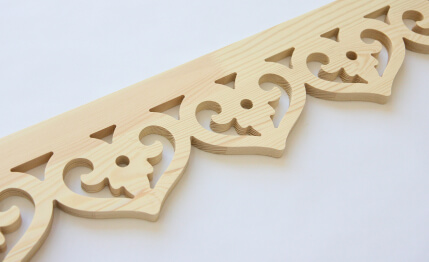
A separate topic is decorative baseboards as independent architectural elements. Such profiles create frames on walls, design panels, and form horizontal rhythm in space. This is no longer just 'covering a joint' but a full-fledged design tool.
What types of finishing skirting boards exist: a complete overview of materials
Wooden skirting board for finishing
Wood is a material with character. It cannot be faked: neither in appearance, nor in tactile sensation, nor in how it "works" in space. A wooden finishing profile is always a statement of naturalness, quality, and conscious material choice.
For floor applications — oak, beech, coniferous species. Oak — dense, with expressive medullary ray texture, resistant to loads. Beech — homogeneous, with fine fibers, ideal for painting. Coniferous — affordable, easy to process, suitable for country houses, saunas, technical rooms.
Wooden finishing skirting board pairs well with parquet, engineered wood, plank flooring. Works well in classical and neoclassical interiors, in Scandinavian style, in biophilic solutions with an emphasis on naturalness.
Solid wood skirting board: finishing with a claim to eternity
Solid wood skirting boards— this is the highest tier in the category of wooden finishing profiles. Solid, non-glued wood without fillers or binders. Oak or beech, kiln-dried, processed to precise profile geometry.
Repairability — complete. Sanding removes scratches. Repainting refreshes the color. Under normal operating conditions, a solid wood skirting board lasts 40–80 years — longer than most renovation elements. This is the choice of those who build an interior once and for a long time.
MDF skirting board: precision and convenience in work
MDF is high-density pressed wood fiber. Its main advantage is stability. MDF skirting board does not warp, maintains precise geometry, and takes paint well. Installation is simple, the profile is predictable.
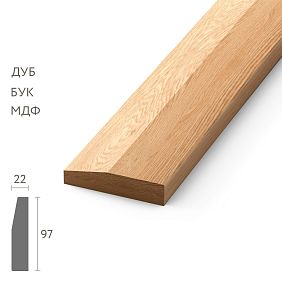
For finishing modern apartments — one of the best options. White MDF for enamel, a laconic straight profile, height 70–80 mm — a formula that works in most light-colored Moscow interiors. More details in the article.Baseboard MDF.
Polyurethane skirting boards and profiles for decorative finishing
Polyurethane products for finishing— a special category that is often underestimated. Polyurethane is a synthetic material with amazing capabilities: it can reproduce complex molded relief, is not afraid of moisture, lightweight, easy to cut and glue.
Polyurethane moldings, cornices, and skirting boards— an indispensable choice for projects with decorative molding, complex cornice profiles, relief ceiling coves. They weigh significantly less than plaster, easier to install and are not afraid of water — relevant for kitchens, bathrooms, rooms with high humidity.
How to choose a skirting board for a specific finishing task
This is the most important section. Not 'which is prettier', but 'which suits your task'.
For Floor Finishing
Key factors for choosing a floor finishing skirting board:
-
Type of floor covering: parquet and engineered board — wooden skirting. Laminate — wood or MDF. Tile — MDF or polyurethane.
-
Ceiling height: up to 2.6 m — 45–70 mm. 2.6–3.0 m — 70–100 mm. Above 3 m — 100–150 mm and more.
-
Interior style: classic — solid wood with developed profile. Modern — MDF or wood with straight, laconic profile.
Our factory also produces:
For ceiling finishing
Ceiling skirting — coving — frames the upper perimeter of the room. Purpose: to soften the wall/ceiling transition, create a decorative contour, add architectural expressiveness.
For classic interiors — wooden coving with a pronounced profile or polyurethane coving with molded relief. For modern — a small, neutral coving or a concealed cornice without a profile. Wooden ceiling skirting is especially appropriate in saunas, wooden houses, interiors with wooden beams and slats.
Get Consultation
For Wall Finishing
Wall decorative profile is used in several scenarios:
-
Horizontal belt at a height of 90–120 cm from the floor (frieze wall division)
-
Decorative frame around a wallpaper zone, niche, panel
-
Profile-divider between two types of finishing materials
Here, Moldings from solid woodandDecor for Molding work best — they create complete panel solutions.
For finishing with moldings
Moldings and baseboards are an inseparable pair in systematic finishing. Moldings form a decorative grid on the wall: horizontal belts, frames, panels. The floor baseboard is the lower completion of this system. The ceiling baseboard is the upper one. All three elements must be coordinated in profile and material.
For finishing with slatted panels
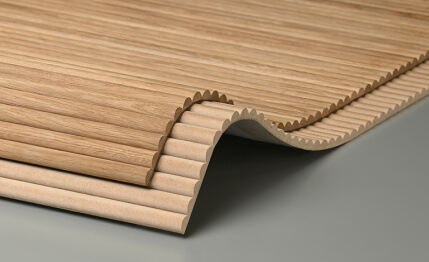
slatted panels for walls— one of the most relevant trends in interior finishing. Vertical wooden slats create rhythm, texture, warmth. Paired with a floor baseboard made from the same wood species, they form a single vertical line: floor → baseboard → wall → slats. This solution looks expensive, thoughtful, and organic.
For an apartment in Moscow
Moscow apartments typically have standard ceilings of 2.6–2.8 m, light walls, laminate or engineered wood flooring. The optimal formula: a wooden or MDF baseboard 70–80 mm high with a straight or moderately classic profile, white or matching the natural shade of the floor.
Pay special attention to coordination with doors. If the doors are white — the baseboard is white. If the doors are oak — the baseboard is oak or a similar tone.
For a private house
A country house offers more freedom in scale. High ceilings allow and require a taller profile — 100–150 mm. A solid wood finishing baseboard in a house with plank flooring, wooden doors, and a staircase is an organic and cohesive solution. Systematicity is important here:Pogonazh iz massivaallows you to select all profiles — baseboards, casings, cornices — from a single product line.
How to choose a baseboard for finishing according to interior style
Style is the main frame of reference when choosing a profile. A decorative baseboard for finishing should 'speak the same language' as the entire interior.
Classical interior: architectural completeness
In classical design, the baseboard is part of a complete architectural system: floor baseboard → molding → wall → cornice → ceiling. A break in this chain is perceived as an error. Requirements: height from 100 mm, expressive profile with fillets and roundings, finish under varnish or matching enamel tone.
For classical interiors, it is especially important to viewSolid wood moldings, cornices, and baseboardsas a unified ensemble — to select profiles from the same collection or at least coordinate them by the character of their cross-section.
Neoclassical: measure and elegance
Neoclassicism is a style of balance. There is enough decor for the space to read as structured, but not so much that it becomes overloaded. Baseboard for neoclassical finishing: moderate relief, one or two roundings, white or cream color. Height 80–100 mm.
Pairs with neutralpolyurethane moldings and cornices— they provide the necessary relief without installation complexity.
Modern interior: purity of lines
Minimalism, Scandinavian style, Japanese zen — all these trends require one thing from the skirting board: not to attract unnecessary attention. Straight profile, neutral color (white, gray, wall tone), height 60–80 mm. The skirting board should 'disappear,' creating a clean line, not a decorative accent.
MDF for enamel or beech wooden skirting board for painting — both options are equally suitable for modern finishing.
Interior with wooden finishing
When wood is actively used in the interior —Rafter panels, wooden doors, solid wood furniture — a skirting board made from the same wood species becomes a natural continuation of this theme. Oak → oak. Pine → pine. Material unity is one of the main signs of an expensive, conscious interior.
How to choose the size and shape of the skirting board
Size is an architectural proportion, not just centimeters. A mistake here creates an imbalance that cannot be corrected by wall color or furniture arrangement.
Low profile (40–60 mm)
For small spaces, studio apartments, Scandinavian interiors, rooms with ceilings up to 2.5 m. Creates lightness — the wall visually 'grows.' Works with neutral colors and minimalist profiles.
Medium universal (70–90 mm)
The most popular format for Moscow apartments with ceilings 2.6–2.8 m. Universal in style, reads well in space, does not dominate. Suitable for wooden, MDF, and polyurethane profiles.
Tall (100–120 mm)
For rooms with ceilings from 2.8–3.0 m, country houses, classic and neoclassical interiors. Creates a sense of monumentality, adds weight to the interior.
Wide (150 mm and more)
Wide Wooden Skirting Board— an architectural accent, not just a finishing element. Suitable for large living rooms, country houses, classic studies. Creates a powerful lower horizon of the wall, visually 'places' the space on a foundation.
Straight vs. classic profile
Straight profile — strict geometry, minimal relief. For modern and Scandinavian interiors. Takes paint well, creates a clear line.
Classic profile — roundings, covings, stepped transitions. For traditional, classic, neoclassical solutions. Readable from a distance, works as an architectural element.
How height affects the perception of finishing
Few consciously notice this — but everyone feels it at the level of perception. Low baseboard raises the floor — the room seems taller. Tall 'presses down' the wall — the space becomes more substantial, more solemn. Wide creates a horizontal rhythm — the room reads as designed, not just finished.
Practical rule: baseboard height for finishing — 1/30–1/40 of the room height. Ceiling 2.6 m → baseboard 65–87 mm. Ceiling 3.2 m → baseboard 80–107 mm.
Where to buy skirting board for finishing in Moscow
You can buy decorative skirting board for interior finishing in Moscow in different ways. But there is a fundamental difference between 'buying something similar' and 'finding the right solution for a specific task'.
Checklist before purchase:
Material. Clarify the wood species (for wood), density (for MDF), type of polyurethane. The moisture content of solid wood should be no more than 10–12%.
Height and profile. First decide on the proportion (ceiling → skirting board height). Then — on the profile style (interior style → type of cross-section).
Finish. Unfinished — if you plan to paint it yourself. With oil or varnish — if you need a natural wood shade. With ready-made enamel — if you want a white or colored skirting board 'turnkey'.
Compatibility with the interior. Skirting board is not an isolated element. It must coordinate with the floor, doors, door frames, moldings. It's not about 'having to like it', it's about 'working together'.
Availability and volume. Before a large order, clarify the actual warehouse stock. For non-standard volumes — the possibility of a reorder.
Delivery in Moscow. Long profiles (2–2.5 m) require special transport. Clarify the conditions in advance.
Selection for the project. If it's about comprehensive finishing — skirting boards, moldings, cornices, paneling — it's better to choose from a single source. This eliminates stylistic conflicts and simplifies logistics.
Go to skirting board catalog — there you'll find the current range with descriptions. The full section of finishing profiles — Solid wood moldings, cornices, and baseboards.
What determines the price of a skirting board for finishing
The price range for finishing skirting boards is wide. Understanding exactly what you're paying for means making a smart choice.
Material
Softwood skirting board — the most affordable. Oak and beech — more expensive due to density, processing complexity, and cost of the blank. MDF — an intermediate position: cheaper than oak, more expensive than softwood. Polyurethane — varies: simple profiles are cheap, complex molded ones are expensive due to molds.
Height and thickness
Direct dependence: more material — higher price. A 50×15 mm skirting board and a 150×22 mm skirting board from the same wood species differ in price by 2–3 times.
Profile Type
Simple straight — minimal milling cost. Classic with several transitions — more complex, more expensive. Decorative with beads and carved elements — maximum labor intensity, maximum price.
Finish
Without coating — base price. With oil-wax — 15–25% more expensive. With varnish — similarly. With applied white enamel in several layers — the most expensive option, but the buyer gets a profile ready for installation.
Solid wood, MDF, or polyurethane
Solid wood — the most expensive, all else being equal. MDF — cheaper with the same profile. Polyurethane — depends on the complexity of the shape: a simple bead is cheaper than wooden, complex molding — more expensive.
Current prices — in the catalog.Buy skirting board for finishing in Moscowwith current prices — in the catalog of floor skirting boards.Decorative skirting board for finishing— in the section of moldings and cornices.
What to combine skirting board with in finishing: a systematic view
Skirting board for finishing is not an independent object. It is part of a system. Let's consider what it works in tandem with.
With moldings
Moldings from solid woodcreate horizontal and vertical decorative elements on walls: belts, frames, panels. In combination with floor skirting board, they form a full-fledged panel finishing system. Profiles must be coordinated — a unified character of roundings, a unified finish.
Decor for Molding— additional overlay elements for corner zones and central accents of panels. Work in tandem with skirting board and molding as the final decorative level.
With cornices
Cornice at the ceiling — a symmetrical partner of the floor skirting board. Together they create the upper and lower horizons of the space — a 'frame' for the walls. The more precisely the profiles of the skirting board and cornice are coordinated, the more complete the room looks.
With slatted panels
slatted panels for walls— wooden vertical slats that create a textural accent. A floor skirting board made from the same wood species is a logical lower completion of the slat theme. This solution is popular in modern interiors with wood — studies, living rooms, bedrooms.
With ceiling decor
When the ceiling has decorative finishing — stucco, coffers, profile cornices — the floor skirting board should support this level of decoration. A simple, thin skirting board next to a rich ceiling creates dissonance.Polyurethane products for finishing— stucco, moldings, cornices — allow you to create a unified decorative system from floor to ceiling.
With architraves and doors
Door architraves and floor skirting boards should 'speak' the same language. The profiles should be coordinated, the color — in the same palette. Often, architraves and skirting boards are chosen from the same trim line — this guarantees compatibility. SeePogonazh iz massiva— all finishing profiles are collected there in a unified line.
With decorative elements
In classic interiors, the skirting board has 'neighbors': corner blocks (internal and external), decorative inserts at profile joints, overlay elements for finishing corners. Without them, the installation loses neatness. All of this is part of the finishing profile system, which is convenient to choose from one catalog, from one source.
Common mistakes when choosing finishing skirting boards
These mistakes occur in every second renovation. Knowing about them in advance means not making them.
Choosing based on price alone
'The cheapest' does not mean 'good enough'. A skirting board with uneven geometry, a crooked end, or made from a soft wood species will result in gaps in corners, unsightly joints, and rapid wear. Redoing it will cost more than making the right choice the first time.
Profile unsuitable for the finishing style
A decorative molding profile in an apartment with minimalist renovation is not 'luxurious,' it's 'excessive.' And vice versa: a thin, straight baseboard in a classic interior with rich moldings is a dissonance. The profile of the finishing baseboard should match the style, not just be liked 'out of context.'
Baseboard height is too low
A 40 mm high baseboard in a room with 3.2 m ceilings is an invisible element that doesn't hold the space at all. Baseboard height is about proportion, not a random choice.
Conflict between baseboard, doors, and walls
Three different shades in one room—dark floor, beige doors, white baseboard—is chaos without logic. There needs to be at least one common axis: baseboard matching the doors or matching the floor.
Mixing different decorative systems
Wooden baseboard with a classic profile + polyurethane cornice with baroque relief + straight MDF moldings—three different decorative 'languages' in one room. The finish should speak one language—otherwise, the space reads as a hodgepodge.
FAQ: Popular questions about baseboard for finishing in Moscow
What is baseboard for finishing and how is it different from regular baseboard?
Baseboard for finishing is a collective term that includes floor, ceiling, and wall decorative profiles for interior finishing of rooms. 'Regular' floor baseboard is one type in this category. A finishing profile can be used on the floor, near the ceiling, or on the wall as a decorative divider or frame.
Which skirting board is better for interior finishing of an apartment?
For a standard Moscow apartment — a wooden or MDF skirting board 70–80 mm high with a straight or moderately classic profile. White, paintable beech — for light, modern interiors. Lacquered oak — for interiors with wooden floors and doors.
Is a ceiling skirting board necessary?
Not mandatory — but desirable. In classical and neoclassical interiors, without it, the ceiling 'hangs' without decorative finishing. In modern interiors — optional.ceiling wooden skirtingespecially good for saunas, wooden houses, interiors with beams.
Which skirting board material is better for finishing?
Depends on the task. For parquet and solid wood floors — wood or solid wood. For laminate — MDF or wood. For ceilings in classical interiors — wood or polyurethane. For rooms with humidity — polyurethane. There is no single correct answer — there is correct suitability for the task.
Can wooden skirting board be used for wall finishing?
Yes, wooden profiles are also used on walls — as horizontal decorative belts, frames, trims. This is especially characteristic of classical and neoclassical interiors with panel wall finishing.
How to calculate the amount of skirting board for finishing?
For floor: perimeter of all rooms minus the width of door openings, plus 10–15% for cutting. Divide by the length of one plank (usually 2 or 2.5 m). For ceiling — similarly. For decorative wall profiles — according to the actual perimeter of the finishing zones.
Where to buy decorative skirting for finishing in Moscow with delivery?
In the catalog — wooden, MDF, and polyurethane profiles are available with delivery in Moscow. Long-length items (2–2.5 m) require special transport.Skirting for interior finishing in Moscow— wide selection of formats in stock.
How much does skirting for finishing cost in Moscow?
The range is wide. Solid wood skirting — from 1600–2000 rubles per piece of standard length. Wide and decorative models — from 3000 rubles and above. MDF — somewhat cheaper. Polyurethane profiles — depend on the complexity of the relief. Current prices — inskirting board catalog.
How to choose finishing skirting for paneling?
From the same wood species, with the same finish. Oak panels → oak skirting with oil or varnish. Panels for painting → beech skirting for the same paint. Unity of material is the main principle.
Skirting for finishing — an element that brings everything together
There are interiors that look complete even on a modest budget. And there are spaces where the investment is obvious—but something subtly disrupts the sense of wholeness. The difference, as a rule, lies in the details. In that very decorative line at the floor. In the horizon at the ceiling. In the profile that connects walls, floor, and doors into a single whole.
Baseboard for finishing is not the last item on the estimate, chosen as an afterthought. It is a conscious decision made together with the choice of flooring, doors, and stylistic concept. That is when you achieve a result you're not ashamed to show.
Buy skirting board for finishing in Moscow— go to the catalog and choose the suitable format.
Select a decorative profile for finishing— moldings, cornices, solid wood baseboards in a single section.
AllSolid Wood Items— one catalog, one manufacturer, a unified system of profiles for comprehensive interior finishing.
About the company: STAVROS — a manufacturer of solid wood finishing profiles
Behind every item in the catalog is specific production, real quality control at every stage, and a wide range that allows covering the entire finishing perimeter from a single source.
STAVROS is a Russian manufacturer of products made from solid oak and beech. Own production, chamber drying of wood, stable warehouse. The assortment includes: floor baseboards, ceiling cornices, moldings, paneling, millwork, decor for moldings, furniture profiles, and much more—everything needed for professional decorative finishing of space from floor to ceiling.
Over 4000 models, 20,000 modifications, 39 product groups. Orders from a single piece. Delivery across Moscow and Russia. Possibility of project-specific kits—when all profiles must be from the same wood species, with the same finish, and coordinated cross-sections.
If you need not just a baseboard, but a complete system of finishing profiles — STAVROS knows how to do it.