
































Article Contents:
- What is a wooden wall slat panel: definition through essence
- Wood species for wall slat panels: from oak to thermowood
- Oak: the aristocrat and long-liver
- Ash: elasticity and expressive grain
- Alder: softness and uniformity
- Thermowood: stability as a principle
- Pine and spruce: affordability and aromatherapy
- Walnut: luxury without pretense
- Wooden wall slat panel coatings: chemistry and aesthetics
- Hard wax oil
- UV-cured varnish
- Toning oils and glazes
- Matte wood enamel
- Wooden slat panel production: from log to finished slat
- Wooden wall slat panels: five application formats
- Accent wall: one surface — all the character
- Panel scheme: lower wall belt
- Full height from floor to ceiling
- Niche with slatted framing
- Ceiling integration
- Wooden wall slatted panel in various interior styles
- Scandinavian minimalism
- Japandi: Japanese minimalism through wood
- Eco-interior: naturalness as a philosophy
- Modern classicism
- Loft and Industrial Style
- Rustic and chalet
- Wooden slatted panel parameters: selection table
- Where wooden wall slatted panel is applied: room by room
- Living Room
- Bedroom
- Children's room
- Hallway and corridor
- Office and Library
- Bathroom
- Installation of wooden slatted panels: from preparation to finish
- Acclimatization is not a recommendation, but a requirement
- Battens: The Foundation of Everything
- Load-bearing base
- Fastening Wooden Slats
- Finishing elements
- Caring for Wooden Slat Panels: How to Preserve Their Vibrancy
- Wooden Slat Panel vs MDF: An Honest Comparison
- Wooden Slat Panel and Related Products: An Architectural System
- Where to Buy Wooden Wall Slat Panels: Supplier Selection Criteria
- Prices for Wooden Wall Slat Panels
- FAQ: Everything Asked About Wooden Wall Slat Panels
- About the Company STAVROS
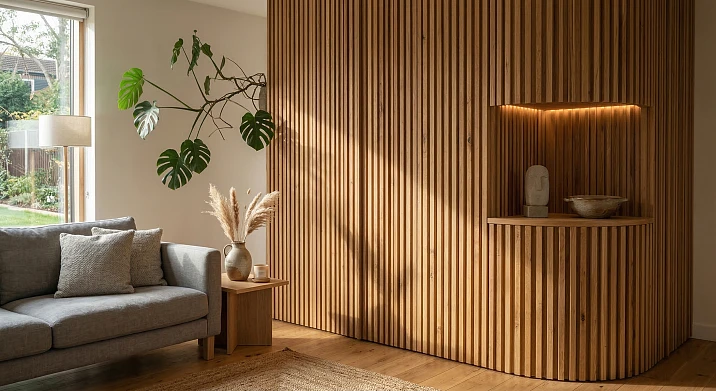
There are things that cannot be truly faked. You can print a wood grain pattern on PVC film and get an imitation that's convincing from three meters away. You can apply a textured roller to plaster and get a 'feeling' of texture. But a wooden wall slat panel made from real wood is a different story. It's a living material with a unique grain pattern in every slat, with a tactile warmth you can feel with your hand, with a scent that cannot be reproduced by synthetics, with a character that does not age.
This is precisely why wooden slat panels are experiencing a steady renaissance in modern interiors. Not as a tribute to fashion—fashion passes. As a conscious return to a material that has what no synthetic substitute has: authenticity.Wooden slat panels— is a surface that literally speaks to the space: it changes under different lighting, ages beautifully, responds to touch and time.
This article is a complete, professional, and honest guide to wooden wall slat panels: from the nature of the material to the technical details of installation, from choosing the wood species to stylistic concepts of application. Read like a professional—even if you're doing it for the first time.
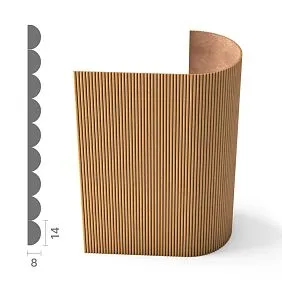
What is a wooden wall slat panel: a definition through its essence
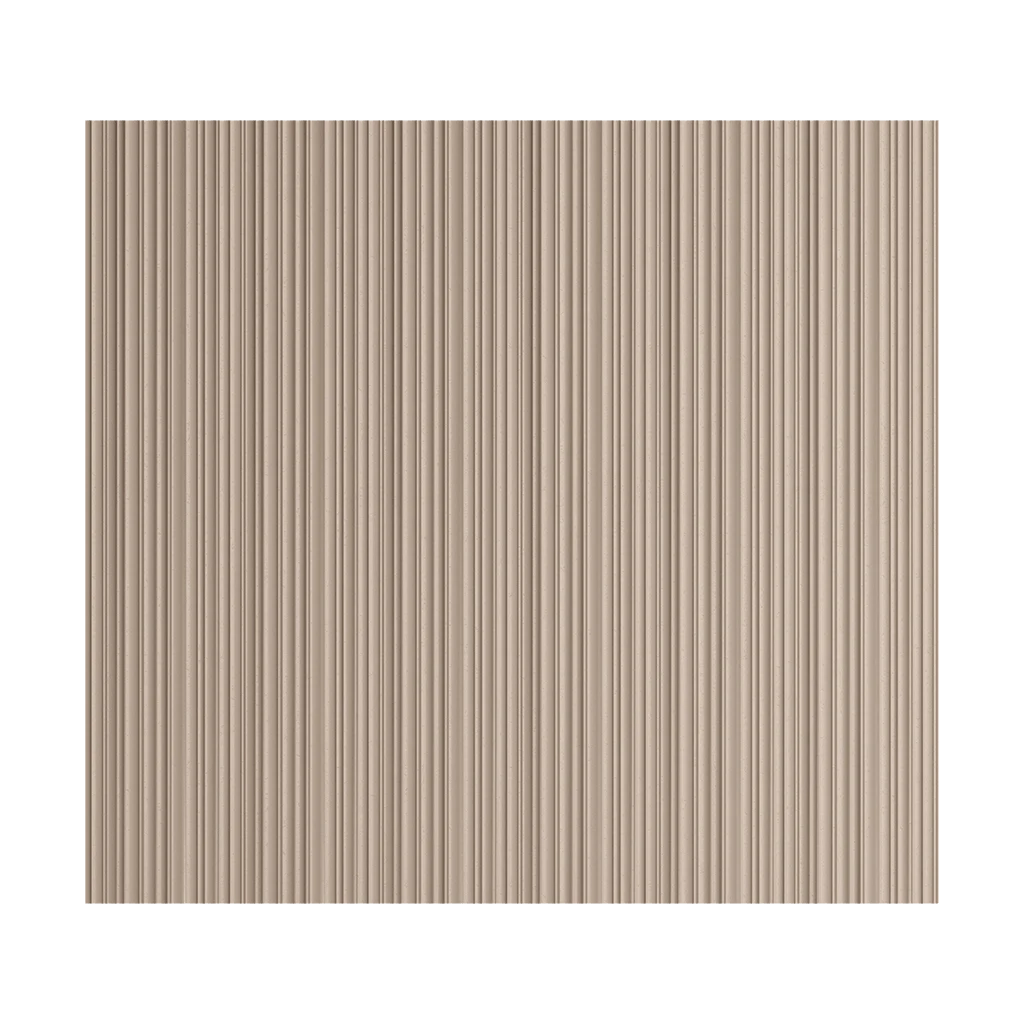
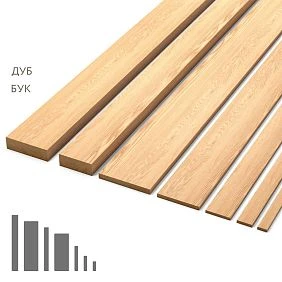
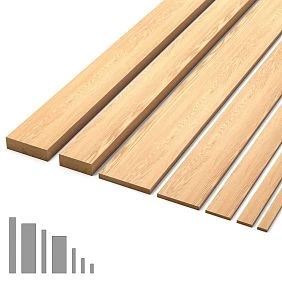
A wooden wall slat panel is a structural system in which longitudinal wooden slats (battens) are fixed to a supporting base with regular gaps, creating a textured, rhythmic surface with a pronounced play of shadows.
This is not just a board on the wall. It is an architectural element that works on several levels simultaneously:
-
Visual: the rhythm of vertical or horizontal lines structures the space, creates depth, and controls the perception of the room's dimensions.
-
Tactile: the natural wooden surface under your fingers—warmth, texture, liveliness.
-
Acoustic: the textured surface scatters sound waves, reducing reverberation.
-
Emotional: wood as a material creates a sense of naturalness, calm, and connection to something authentic.
The fundamental difference between a wooden slat panel and any synthetic counterpart is its uniqueness. Two slats from the same board will never be identical. Every knot, every fiber branch, every tonal transition within a single slat is unique. This is not a defect; it is what people pay for and choose it for.
Wood species for wall slat panels: from oak to thermowood
Choosing the species is the first and fundamental decision. Wood is a living organism, and each species carries its own physics, its own aesthetics, its own character.
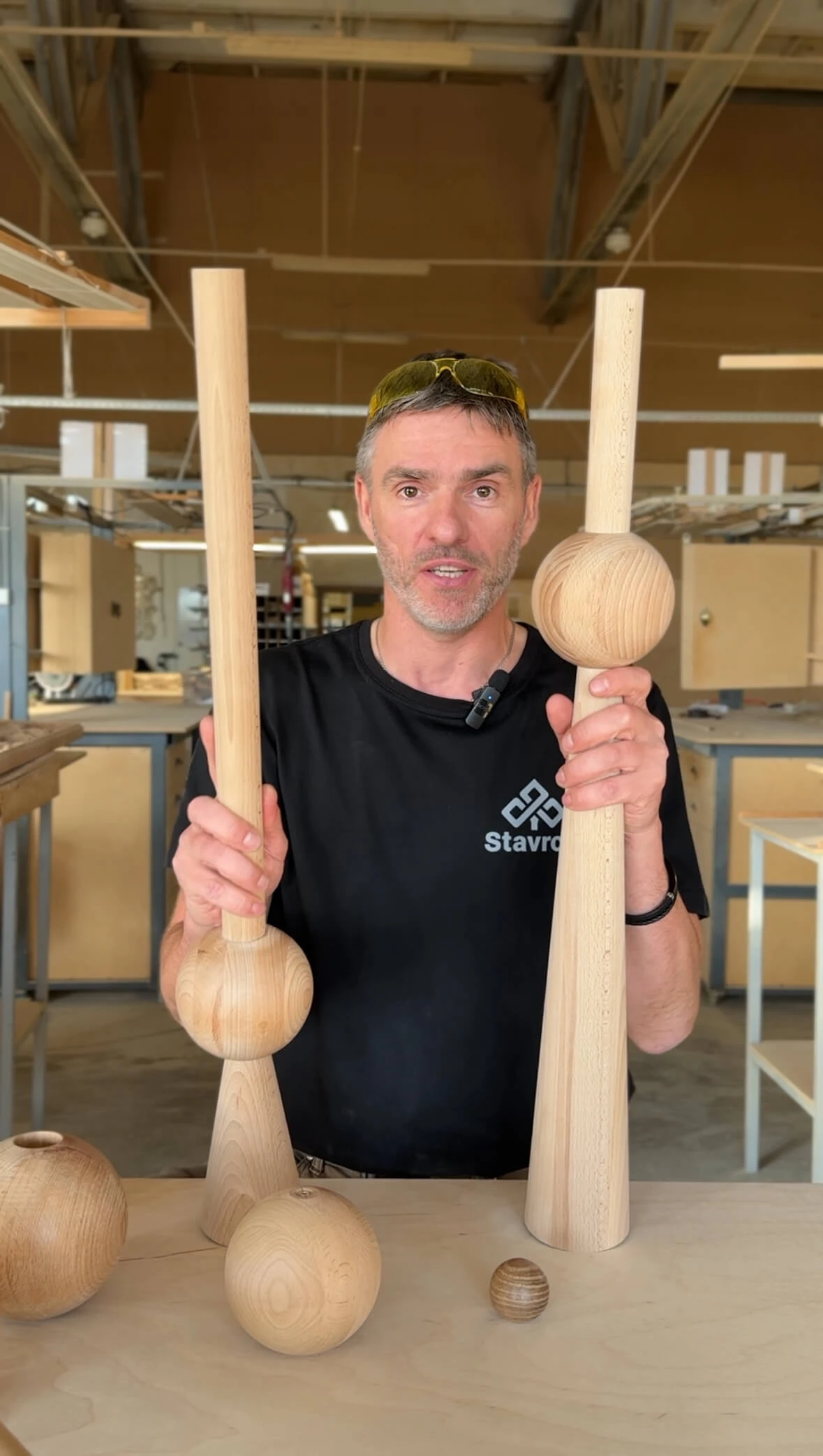
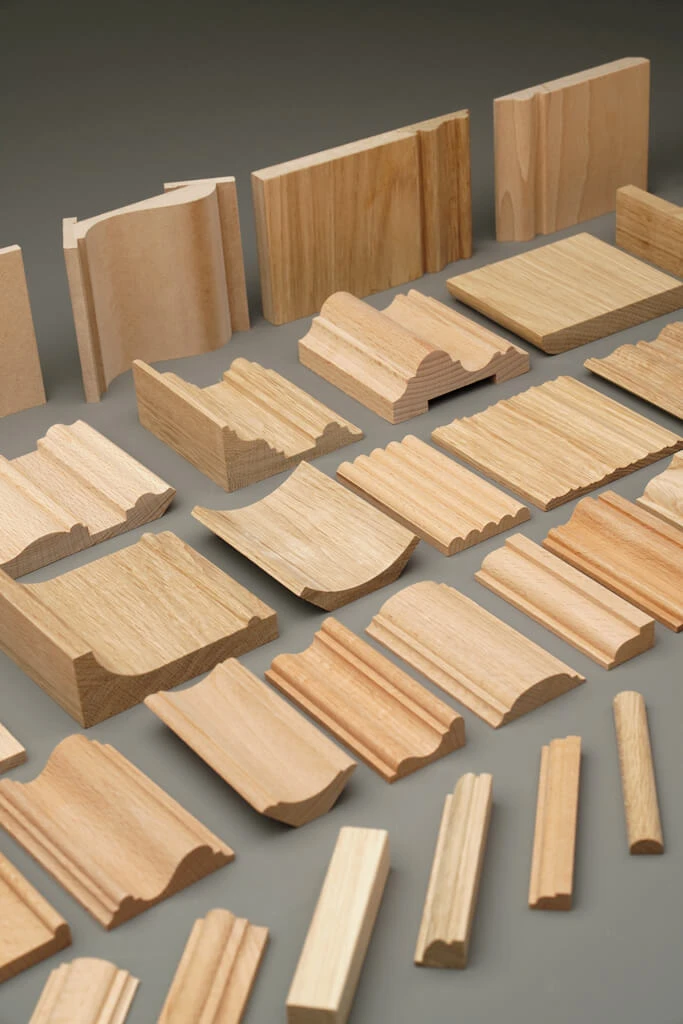
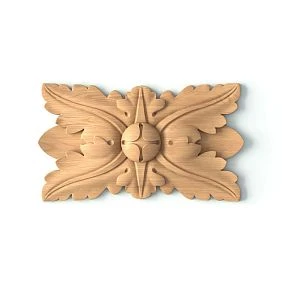
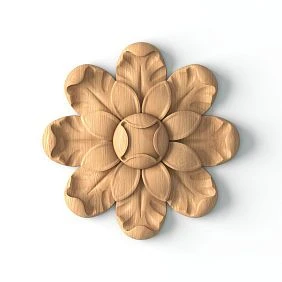
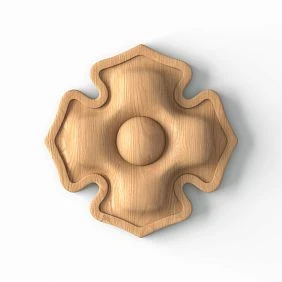
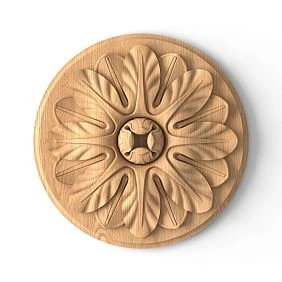
Our factory also produces:
Oak: the aristocrat and long-liver
Oak Slat Panel— the most popular choice in the category of wooden slat panels. And there are exhaustive reasons for this.
Oak is a hardwood: Brinell hardness 3.7–4.0 HB. This means resistance to scratches, dents, and mechanical damage, which are inevitable in living spaces with real use. A wall slat panel made of oak in an entrance hall will survive several generations of residents without losing structural integrity.
The visual character of oak: a pronounced medullary ray figure ('silk' on a radial cut), clear annual rings on a tangential cut. Color ranges from light wheat in young wood to deep amber in mature wood. When treated with tinted oil, it obediently accepts any tone from Scandinavian white to dark wenge.
Parameters for a slat panel: slat width 30–150 mm, thickness 14–22 mm, length 2000–3000 mm. Moisture content at shipment is 8–12%, which requires acclimatization before installation.
Get Consultation
Ash: elasticity and expressive grain
Ash is an undeservedly underrated species forslatted wall panels. Hardness is close to oak (3.8–4.1 HB), but the grain is fundamentally different: ash yields a more open, large, 'sporty' fiber texture. The tone is lighter than oak, cooler, with a pearlescent hue.
Ash is ideal for Scandinavian and minimalist styles: white tinting on ash creates a milky-matte surface with a barely discernible texture—restrained, dignified, and not loud.
Alder: softness and uniformity
Alder is a soft wood species (1.8–2.2 HB) but with unique properties: a uniform tone without a pronounced grain, a pinkish-orange fresh cut that darkens to a warm brown when dried. Alder is easy to work with, takes stain well—and tints evenly without the 'stripiness' characteristic of woods with sharp contrast between early and late wood.
For wooden slatted panels in children's rooms and bedrooms, alder is optimal: its softness reduces the risk of injury from accidental contact, and its low emission of natural resins makes it environmentally impeccable.
Thermowood: stability as a principle
Thermally modified wood is regular solid wood that has undergone heat treatment at 185–230°C in an oxygen-free environment. As a result of this process:
-
Water absorption decreases by 2–5 times
-
Bio-resistance class increases to 1–2 according to the European classification
-
Geometric stability under humidity fluctuations is fundamentally higher
-
The tone changes from golden (160–180°C) to dark brown (220–230°C) without stain
Wooden wall slat panelThermowood — the choice for rooms with unstable humidity: hallways, bathrooms, country houses with seasonal heating. The dark, rich, 'burnt' tone of thermowood carries its own aesthetic — without additional tinting.
Pine and spruce: affordability and aromatherapy
Coniferous species are the most affordable option in the category of wooden slat panels. Soft (0.8–1.5 HB), aromatic, light-colored. Pine with a lively resinous scent — for country houses in chalet or rustic style. Spruce — whiter, softer, without a pronounced odor.
Limitation of conifers: low hardness makes them vulnerable in areas with intensive tactile contact. For living rooms and bedrooms, where the surface does not experience mechanical impacts — quite sufficient. For hallways and kitchens — risky.
Walnut: luxury without pretense
Walnut is a dark, chocolate-colored, noble material with the finest grain pattern. A wooden wall slat panel made of walnut is a solution for luxury-class projects, where every material is chosen with an understanding of its cost and character. Hardness — 3.5–4.0 HB; stability — high. Price — 3–5 times higher than oak.
Coatings for wooden wall slat panels: chemistry and aesthetics
The coating for a wooden slat panel is not just protection. It is the final decision that determines 80% of the visual result.
Hard wax oil
The most authentic type of finish for wooden slat panels. Consists of natural or synthetic oils (linseed, tung, soybean) and wax (carnauba, candelilla). Penetrates the wood fiber — does not create a film on the surface.
Result: a surface that 'breathes'. The wood texture is fully perceptible — the hand feels the fiber relief, not the smoothness of a film. Tone — from transparent to rich tinted.
Practice: with household use, oil renewal every 1–2 years. For mechanical damage — local restoration without redoing the entire surface. Coating durability — conditionally infinite with regular care.
UV-cured varnish
A two-component varnish, cured by ultraviolet radiation in industrial conditions. Creates a hard, chemically resistant film on the slat surface. Hardness — 2H–3H on the pencil scale.
For wooden slat panels in high-traffic areas (entryways, hallways) — UV varnish provides maximum mechanical protection. Matte version (gloss 5–15%) — preserves the natural look of wood; glossy — enhances decorativeness but highlights every scratch.
Tinting oils and glazes
Oils with a pigment component allow control over the tone of the wooden surface while maintaining texture visibility. White tint — Scandinavian coolness. Dark walnut — classic nobility. Gray — urban restraint.
The fundamental difference between tinting oil and opaque enamel: the wood texture always shows through. Under paint — hidden nature; under tinting oil — open.
Matte enamel for wood
Forof paintable wall panel slatsFrom wood — matte acrylic or alkyd enamel. Completely covers the texture; the slat becomes a purely architectural element without material emphasis. For projects where the form of relief is important, not the natural character of wood.
Color update: sanding, priming, repainting. Without dismantling — easier than it seems.
Production of wooden slatted panel: from log to finished slat
Understanding the production process helps assess product quality at the purchase stage.
Drying. All wooden slats undergo chamber drying to a moisture content of 8–12%. Under-dried material (moisture 14%+) — warps after installation when the room's microclimate changes. Over-dried (moisture below 6%) — cracks. Check: request a moisture meter when receiving the material.
Planing and milling. On CNC machines, four-sided planing provides precise cross-sectional geometry — uniform width and thickness along the entire length of the slat. Deviation no more than ±0.3 mm — quality standard. Greater deviation — uneven gaps during installation.
Sorting. Slats are sorted by the presence and size of defects: knots, resin pockets, cracks. Grade 'Extra' — knot-free, uniform tone. Grade 'A' — allows fused knots up to 8 mm. Grade 'B' — live and partially falling out knots.
For slatted panels in interiors — grades 'Extra' and 'A' provide the most predictable visual result. Grade 'B' — for an intentional 'rustic' or rural character.
Coating application. In factory conditions: spraying or roller application of oil or varnish, UV-curing. Industrial coating is more uniform than manual on-site application — and, as a rule, more durable.
Wall slatted panels made of wood: five application formats
Wall finishing with slatted panelsNatural wood — this is not just one scenario, but a whole spectrum of formats.
Accent wall: one surface — all the character
One accent is stronger than four identical walls. A wooden slatted wall behind the sofa in the living room, at the head of the bed in the bedroom, opposite the entrance in the hallway — this is an architectural statement that changes the perception of the entire room, while occupying only part of its perimeter.
Slatted panels in interior designas an accent element work on the principle of contrast: the neutral flat surfaces of the other walls enhance the expressiveness of the slatted one.
Panel scheme: the lower belt of the wall
Wooden slats at a height of 1.0–1.4 m from the floor — a tradition with a century-old history. In a modern interpretation: slats with a gap instead of solid paneling. The top of the wall — plaster or paint. A horizontal molding shelf separates the zones.
This is a practical scheme for hallways, corridors, children's rooms: the zone of intensive mechanical contact is protected by wood, the upper zone is in a more budget-friendly material.
Full height from floor to ceiling
With ceilings of 2.8 m and higher — the full height of the slatted structure creates a monumental vertical rhythm. In rooms with ceilings of 3.0–3.5 m (Stalin-era buildings, pre-revolutionary stock) — this solution turns the room into an architectural event.
Niche with slatted framing
Wall niche — TV zone, wardrobe niche, decorative alcove — lined with wooden slats inside. The slats create depth and warmth within the niche, making it an architecturally significant detail, not a technical solution.
Ceiling integration
Batten panels for ceilingsWood — extension of the wooden wall system onto the horizontal plane. Wall and ceiling in a single material — this is architectural continuity, creating a sense of a 'wooden volume' around a person.
Wooden slatted wall panel in various interior styles
Wood is a universal material. But in each style, it resonates differently.
Scandinavian minimalism
Ash or birch with white tinting — milky, cool, mathematically precise. Slats 40–60 mm, gap 12–15 mm, vertical orientation. No decorative elements — only form and rhythm.Wall slat panels in interiorScandinavian style — honesty of material and purity of geometry.
Japandi: Japanese minimalism through wood
Japandi — a synthesis of Japanese and Scandinavian aesthetics. Dark ash or oak with gray-brown tinting ('wabi-sabi' colors). Slats wide — 80–120 mm, gap narrow — 10–12 mm. The supporting base — in a dark tone. Silence, dignity, nothing superfluous.
Eco-interior: naturalness as a philosophy
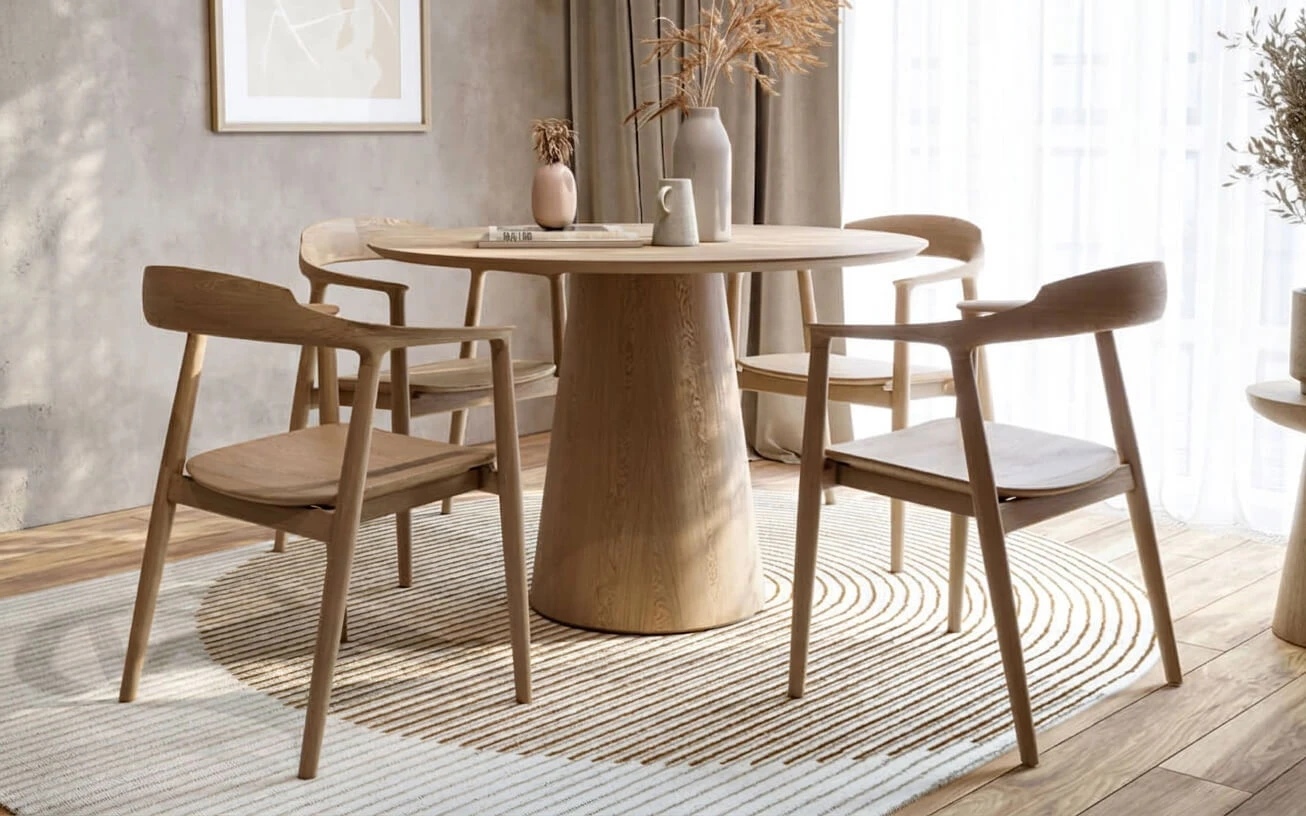
Oak with transparent oil — honey-colored, amber, vibrant. Wooden floorboards of the same tone. Linen textiles. Ceramic vases. Plants. A wooden slatted wall in this context is not an accent, but part of a unified organic world of natural materials.
For an eco-interior, consistency is key: the wood on the wall should be of the same character as the wood on the floor. It doesn't have to be the same species, but a unified tonal and textural language.
Modern classic
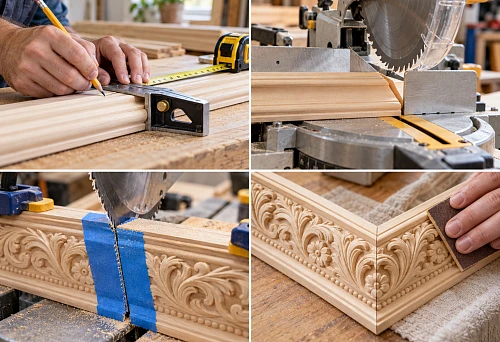
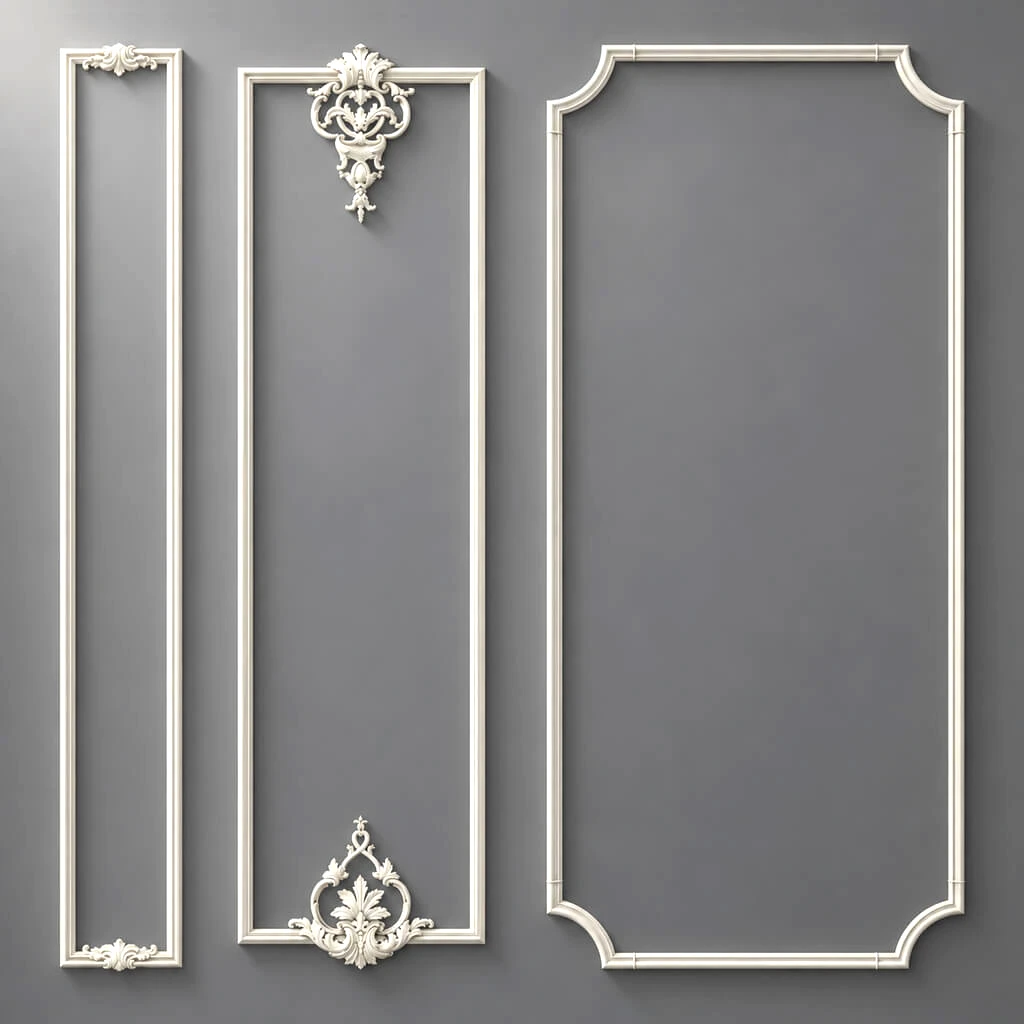
decorative slatted panelsWood with a chamfer (bevel on the edge of the slat) — a classic, dignified profile. Slats 60–80 mm in matte enamel on wood in a neutral tone: warm white, gray-beige, cream. Molded framing fromsolid wood trim.
Loft and industrial style
Thermowood in a dark tone or oak with black tinting on a metal load-bearing base made of exposed black profile. Wide slats, open gap. No finishing of joints — only honest industrial installation. Roughness that is an aesthetic choice, not a result of carelessness.
Rustic and chalet
Pine or spruce with pronounced knots, unplaned with a 'live' edge. Uneven tone. Water-based oil, slightly tinted toward darkening. In a country house, a wooden wall slatted panel in a rustic execution — it's the feeling of a log cabin, reinterpreted in a modern key.
Parameters of wooden slatted panel: selection table
| Parameter | Small values | Medium | Large |
|---|---|---|---|
| Slat width | 20–40 mm — frequent rhythm, 'active' texture | 40–80 mm — versatile, texture is legible | 80–150 mm — monumental, large scale |
| Gap | 8–12 mm — compact, cozy | 14–20 mm — expressive balance | 20–35 mm — airy, graphic |
| Thickness | 14–16 mm — for residential interiors | 16–20 mm — increased load | 20–25 mm — commercial, high traffic |
| Structure height | up to 1.2 m — panel scheme | 1.2–2.1 m — partial height | from floor to ceiling — full height |
| Direction | Vertical — raises the ceiling | Horizontal — expands the space | Diagonal — dynamics |
Where wooden wall slat panel is applied: room by room
Living Room
Living room — the main stage of the wooden slat panel. The wall behind the sofa or near the TV. Oak with transparent oil to match the parquet — this unity of floor and wall material turns the living room into a holistic architectural space.
Addition: integrated 2700K LED lighting behind the slats. In the evening, the wooden wall 'glows' from within—and the living room takes on a completely different character. Wood under warm artificial light is amber, honey-colored, alive.
Bedroom
The bed headboard is the area you see last before sleep and first upon waking. Wooden slats here are a soft, living, warm surface. Narrow 30–50 mm ash slats with white tinting or oak with oil finish create a delicate rhythm—not active, not pushy, but calming.
Children's room
Wood in a child's room is ecology and softness. Alder or 'Extra' grade birch with water-based E0 oil finish. A light, joyful tone. Panel height 1.0–1.5 m: the zone of tactile contact for a child.
Important: slats without sharp edges—chamfering or rounding of ends is mandatory for children's rooms.
Hallway and corridor
The hallway is a testing ground for any material. Oak or ash with a hard oil finish—there's no point in compromises here. Slat thickness 18–20 mm. Finish with two-component UV varnish or hard wax oil in several layers.
Correctly chosen Wooden wall slat panel in the hallway is an element that creates the first impression of the home and withstands twenty years of intensive use.
Office and library
Wood in the study is an environment for concentration. Dark oak with matte varnish or walnut—serious, dignified, without excess. Full-height slatted panel on the wall opposite the desk is an architectural backdrop for mental work.
Slatted panels in the kitchen in the dining area made of wooden slats with oil finish—a warm backdrop for family evenings. Not in the backsplash zone—in the dining table area, where there is no direct steam exposure.
Bathroom
Thermowood or oak treated with special hydrophobic oil for wet rooms—provided there is good forced ventilation. Dark thermowood on white tile—a contrasting, expressive technique. Requires strict adherence: slats must not stand in puddles of water; slot ventilation behind the structure is necessary.
Installation of Wooden Slat Panels: From Preparation to Finish
installation of slatted panelsWood has its own specifics, determined by the nature of the material: wood lives, breathes, and reacts to humidity and temperature.
Acclimatization is not a recommendation, but a requirement
Wooden slats, brought from the warehouse to the installation room, must be acclimatized for 5–7 days in a horizontal position at room temperature. During this time, the wood reaches equilibrium moisture content with the surrounding environment. Installation without acclimatization guarantees warping of the slats after fastening.
Battens: The Foundation of Everything
Antiseptic timber 40×50 mm or metal profile 60×27 mm. Batten spacing: 400–600 mm depending on the width and thickness of the slat. All batten elements must be strictly in the same plane (checked with a laser level or a stretched cord). Ventilation gap between the wall and the battens — 15–20 mm.
Load-bearing base
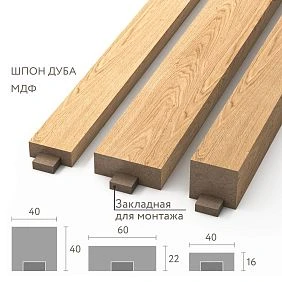
For wooden slat panels, the load-bearing base is an MDF or HDF sheet 8–12 mm thick, fixed to the battens. The load-bearing base provides: a plane for attaching the slats, acoustic separation, and aesthetic gap (the base color is visible through the gap).
The color of the load-bearing base is a fundamental design decision. A black base with light slats — maximum depth and airiness. A base matching the color of the slats — a monolithic soft surface. A contrasting base — graphics and impact.
Fastening Wooden Slats
Finish nails at an angle (toenailing): the nail is driven through the side edge of the slat into the load-bearing base at a 45–60° angle. Hidden fastening — the front surface remains clean. Requires practice: a beginner often splits the slat with the first blows.
Stainless steel cleats: spring fasteners that lock into the groove on the side edge of the slat. Suitable for slats with a milled groove. Completely hidden, allows slats to be removed without damage for replacement or maintenance.
Countersunk head screws: through the front surface of the slat with subsequent filling of the hole with a wooden plug. Visually - dots on the surface; for rustic style - organic; for minimalism - undesirable.
How to install slatted panelsWooden slats with expansion gaps: solid wood expands across the grain with increased humidity. For a 60 mm wide slat - expansion gap of 1.0–1.5 mm on each side. For a 100 mm slat - 2.0 mm. Ignoring expansion - slats buckling or cracking when drying.
Finishing Elements
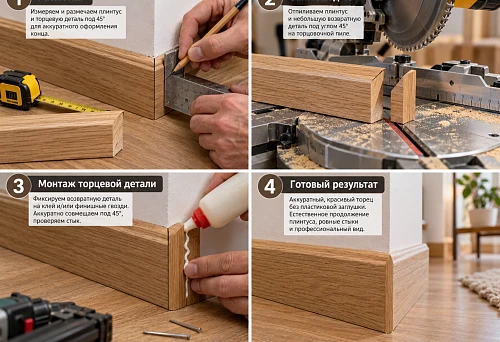
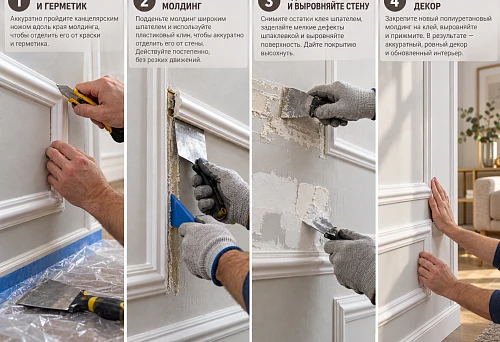
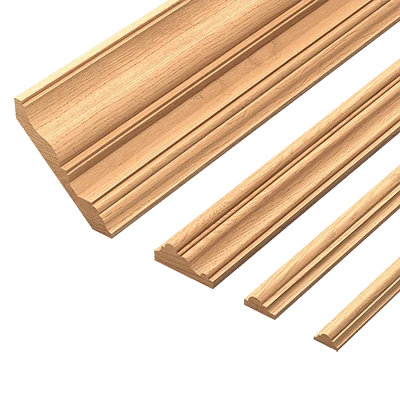
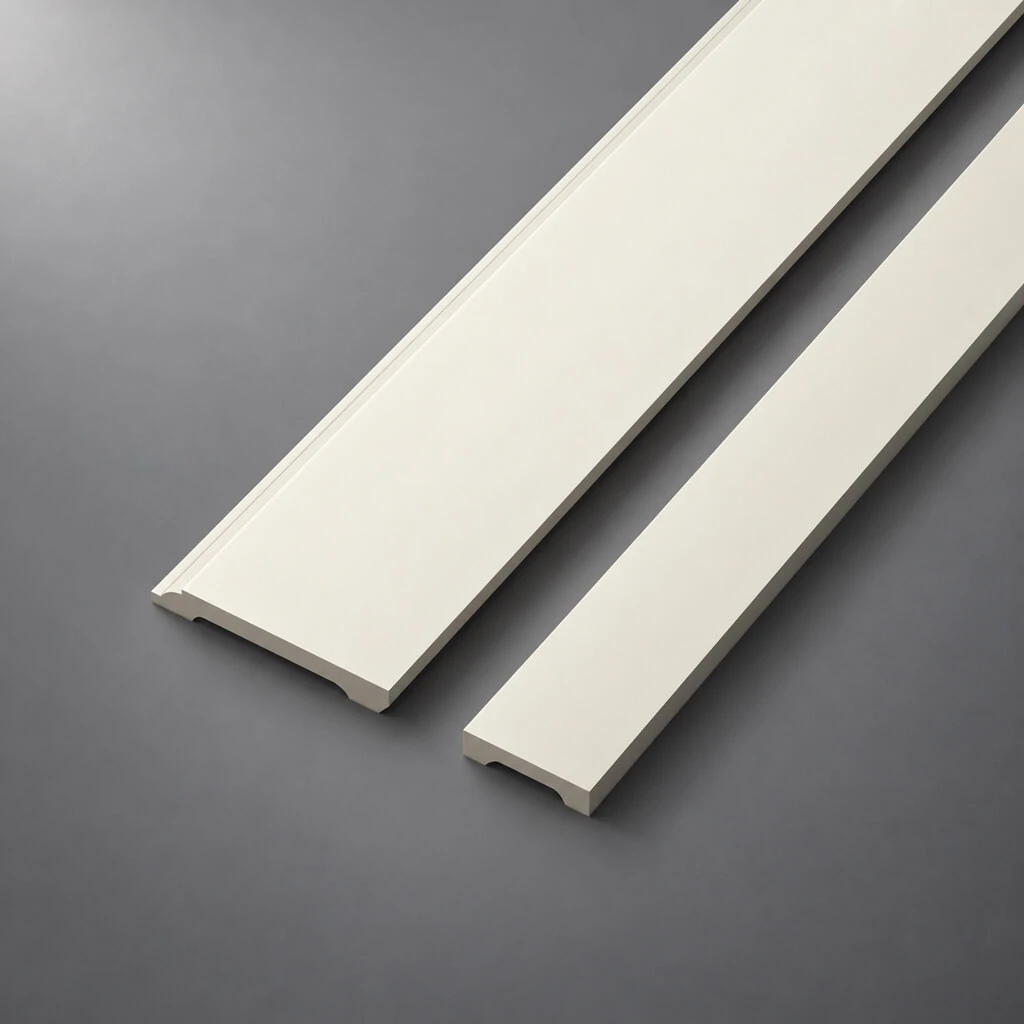
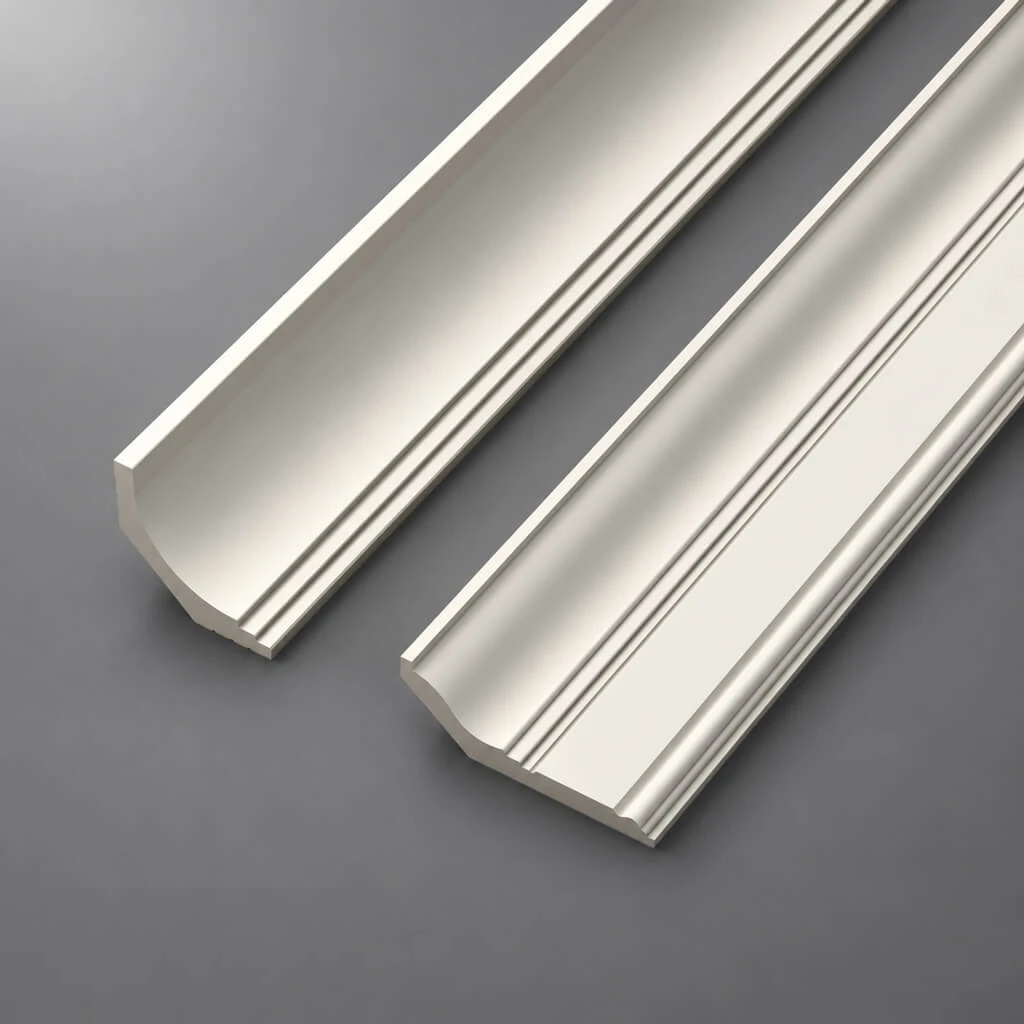
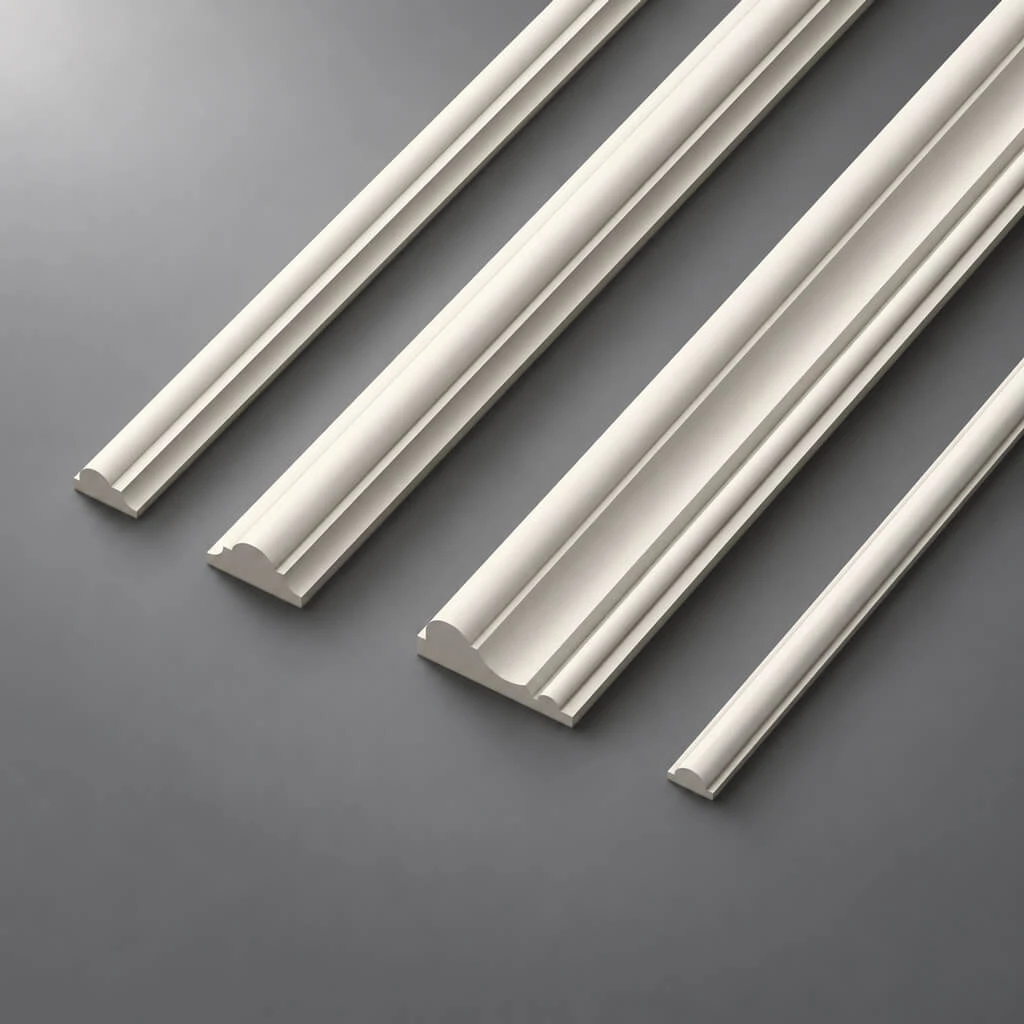
Baseboard made of the same wood to match the slats - at the bottom. Cornice or molding made ofsolid wood trim- at the top. End caps on the outer slats - cover the side cut of the structure. All joints - sealant or silicone in the base color.
DIY slatted panelWooden slat installation when following all steps - a realistic task for a craftsman with basic construction skills. Main thing: don't skimp on tools (laser level is mandatory) and don't skip acclimatization.
Care for wooden slat panels: how to maintain vibrancy
Wood is a material that requires attention. Not much - but regularly.
Daily/routine care: dry or slightly damp microfiber cloth. Do not wet the wooden surface - wipe moisture immediately. Neutral pH-7 cleaning agent for wooden surfaces.
Oil coating: every 1–2 years - applying a thin layer of fresh oil to a cleaned surface. Process: degrease, apply oil, let sit 15–20 minutes, remove residue. This restores the surface's fresh appearance and enhances protection.
UV lacquer coating: does not require periodic renewal in the absence of mechanical damage. For deep scratches — local restoration: sand, degrease, apply one coat of lacquer.
Mold and fungus: upon detection of dark spots — immediate treatment with an antiseptic solution (3% hydrogen peroxide or a special biocide composition). Mold on wooden slats is a sign of ventilation system failure.
What not to use: aggressive alkaline cleaning agents (pH > 9) destroy the oil coating. Chlorine-containing bleaches — discolor the wood. Steam mops — steam exposure raises the nap and destroys the oil film.
Wooden slatted panel vs MDF: an honest comparison
| Parameter | Wood (solid/veneer) | MDF with coating |
|---|---|---|
| Authenticity | Maximum: unique pattern of each slat | Imitation with veneer; factory tone with enamel |
| Geometric Stability | Medium: reacts to humidity | High: stable |
| Mechanical strength | High (hardwood species) | High (780+ kg/m³) |
| Durability with care | 30–50+ years | 15–25 years |
| Restoration possibility | Full: sanding, re-oiling | Limited: repainting only |
| Tactile sensations | Living warmth of wood | Pleasant, but 'different' |
| Price | 5000–18000+ RUB/m² | 1800–6500 RUB/m² |
| Ecological | E0 by nature | E0–E1 under control |
Conclusion from the table: for a project emphasizing naturalness, durability, and tactile authenticity — wood. For a project with a limited budget or requiring precise color reproduction — MDF.slatted MDF panel— a full-fledged product with its own merits; wood is a different product, not a better one.
Wooden slat panel and related products: architectural system
A wooden slat wall works in context. This context is formed by related products made from the same material.
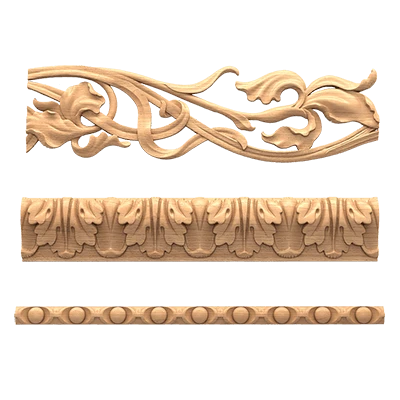
Wooden baseboard— made of oak — the base of the slat structure and a connecting element between the floor and wall. In a proper project: a baseboard from the same wood species as the slats, with the same oil tint — material continuity from bottom to top.
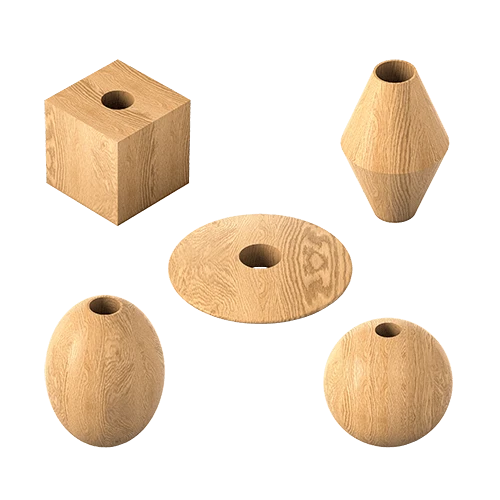
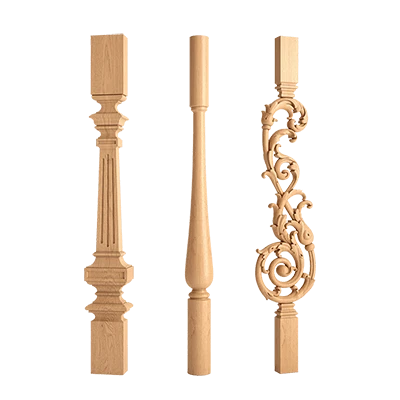
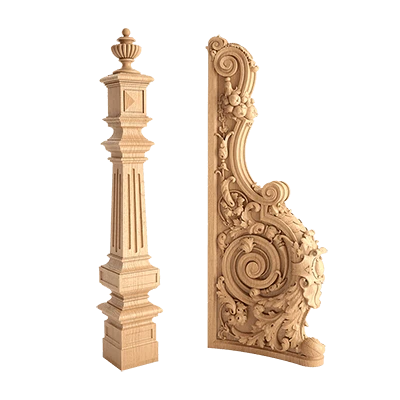
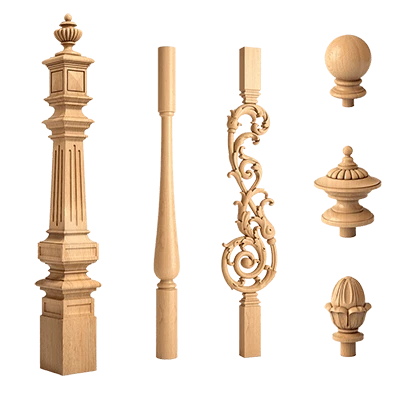
balusters for staircases— made of solid oak in a two-story house — a vertical accent from the same wood. Wooden slat wall on the first floor + wooden staircase balusters + wooden slat wall on the second — a unified wooden world of the house.
Furniture Handles— made of wood on built-in cabinets — a tactile detail linking the furniture with the slat wall through a unified material language. These are details not everyone notices — but whose absence is felt on an intuitive level.
slatted modular wall panel— an alternative to piece-by-piece slat installation. Factory assembly of a module with slats on a load-bearing base speeds up installation by 2–3 times. For large commercial projects with wooden slats — an optimal solution.
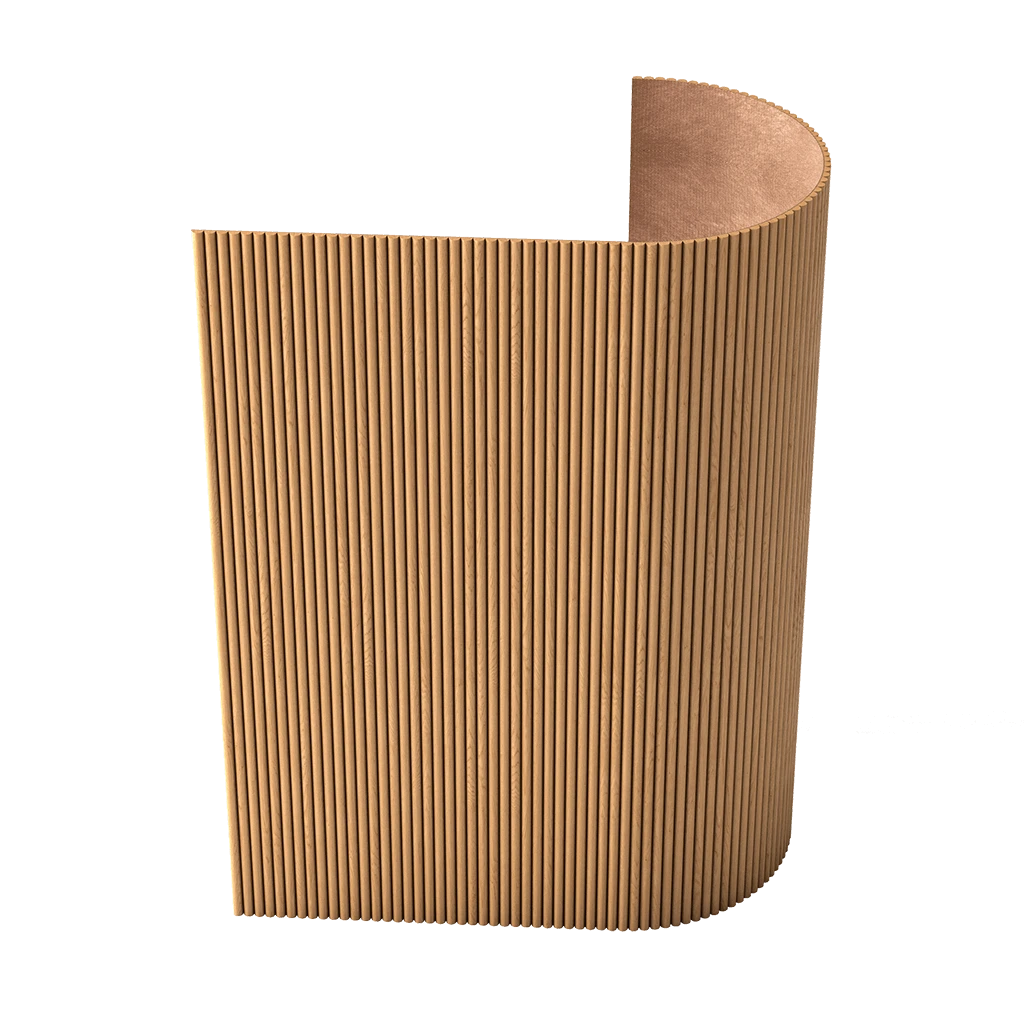
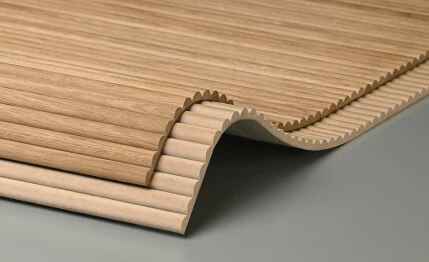
soft slat panels— made of a flexible base with wooden slats — for cladding arches, columns, niches with rounded ends. Expands the application of the wooden slat system beyond straight-line surfaces.
Where to Buy Wooden Wall Slat Panels: Supplier Selection Criteria
The market for wooden slat panels is heterogeneous. An attractive price often hides under-dried material, unstable geometry, or a finish that 'eats away' the wood texture. Supplier evaluation criteria:
Moisture control: the supplier must indicate the material's moisture content at shipment. Standard: 8–12%. Verification: use an electronic moisture meter upon receipt.
Geometric accuracy: width deviation — no more than ±0.3 mm. Check several slats with a caliper at three points along the length.
Documentation: declaration of conformity indicating wood species, moisture content, coating emission class. Mandatory for children's rooms.
Samples: a serious supplier provides finish samples. Evaluate the sample under the room's actual lighting — not in a showroom with professional lighting.
Acclimatization: the supplier should recommend acclimatization conditions. If the seller says 'install immediately' — that's a warning sign.
buy slatted panelsBuying wooden panels directly from the manufacturer is the most reliable path. The manufacturer controls the full cycle from drying to finishing and bears direct responsibility for quality.
Prices for Wooden Wall Slat Panels
| Species | Finish | Cost per m² | Note |
|---|---|---|---|
| Spruce, pine | Oil or varnish | 2500–4500 RUB | Budget segment |
| Alder, birch | Water-based oil | 3500–5500 RUB | Optimal for children's rooms |
| Oak, ash | Oil or UV varnish | 5000–12000 RUB | Main segment |
| Oak veneer on MDF | Oil or varnish | 3500–8000 RUB | Compromise |
| Thermowood | Oil | 7000–15000 RUB | Wet areas, facades |
| Walnut, exotic wood | Oil | 12000–25000+ RUB | Premium |
Installation by a professional team: 1500–4000 RUB/m² depending on complexity and region.
FAQ: everything you ask about wooden wall slat panels
Can wooden slatted panels be installed in a bathroom?
Yes — thermowood or oak with hydrophobic oil for wet rooms with forced ventilation of at least 8 air changes per hour. Without ventilation — wood in a bathroom will last 2–3 years.
Is acclimatization needed?
Mandatory: 5–7 days in a horizontal position in the installation room. Without acclimatization — warping is guaranteed.
Which wood species to choose for the hallway?
Oak or ash with UV varnish or hard wax oil. Minimum wood hardness — 3.5 HB on the Brinell scale.
Solid wood slat or veneered MDF — which is better?
Depends on the task. Solid wood — authenticity, restorability, durability. Veneer on MDF — geometric stability, lower price, no risk of warping. For high humidity — veneer on MR-MDF is preferable.
How to calculate material quantity?
Wall area × (slat width / (slat width + gap)) + 12% margin for cutting and defects.
Can wooden slatted panels be installed independently?
Yes, with a miter saw, laser level, and basic construction skills. The main things are acclimatization, expansion gaps, and hidden fasteners.
Is wood in the interior too 'warm' for a modern style?
Tonal and format solutions fully control the character. Dark thermo-wood — brutal and cool. White ash — neutral and modern. Wood is not a 'style', but a material that adapts to any concept.
Are wooden slatted panels flammable?
Yes. In high fire risk areas (behind the stove, near fireplaces) wooden slats are not permissible. If desired, treatment with a fire-retardant composition (flame retardant) reduces the flammability class from G3–G4 to G1–G2.
How long will a wooden slatted panel last?
With proper care: oak with oil finish — 30–50 years. This is not an exaggeration: wooden floors and panels from 100 years ago in historical buildings are in excellent condition.
About the company STAVROS
If you are looking for a wooden wall slatted panel that won't need redoing in five years — STAVROS creates exactly such products.
STAVROS is a Russian manufacturer of architectural wooden elements for interiors. Full production cycle: own drying, CNC processing, application of finishes in factory conditions. Strict control of humidity, geometry, and finish quality at every stage.
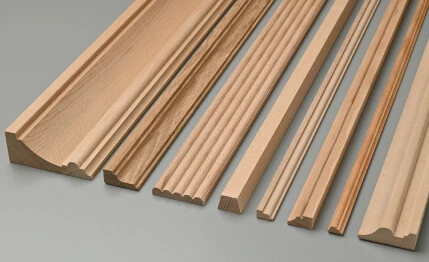
In the STAVROS catalog for your project:Wooden slat panelsmade of oak, ash, alder — with oil and varnish finishes;Slatted wall panelsin the full range of parameters;slatted modular wall panelfor commercial projects;soft slat panelsfor curved surfaces;Slatted Façade Panelsmade of thermally modified wood for exterior;Wooden baseboardfrom solid wood, matching the panels in tone;Pogonazh iz massiva— moldings, cornices, trims;Furniture Handlesmade from natural wood;balusters for staircaseshandcrafted from solid wood.
STAVROS works with private clients, designers, and architects across Russia. Samples of wood species and finishes, professional consultation on parameter selection, accurate production timelines, delivery. Wood is an honest material. STAVROS is an honest manufacturer. Choose with confidence.