
























Article Contents:
- What decorative polyurethane elements are used on walls
- Decorative appliqués
- Recessed Outlets
- Corner Elements
- Ornamental inserts and fragments
- Elements for moldings
- Stucco decor for wall compositions
- Decorative wall overlays: when they are needed
- For creating an accent wall
- For classical and neoclassical interiors
- For decorating piers
- For the area behind the sofa
- For the bedroom and headboard
- For symmetrical wall compositions
- Polyurethane rosettes and ornaments in wall decor
- Where the rosette works best on the wall
- Ornamental elements as a rhythmic pattern
- Ornaments combined with moldings
- How to combine decorative elements with moldings
- Three-level system
- Symmetry, scale, and rhythm
- How to select elements as a unified system
- Where to use decorative wall elements
- Living Room
- Bedroom
- TV Area
- Hallway and corridor
- How to choose decorative elements for your interior style
- Classic: ornament, depth, symmetry
- Neoclassical: calm and geometry
- Art Deco: geometry and contrast
- Modern classic: conciseness without losing richness
- Japandi and minimalism: barely noticeable trace
- Mistakes when choosing decorative wall elements
- Where to buy polyurethane decorative wall elements
- FAQ: popular questions about decorative wall elements
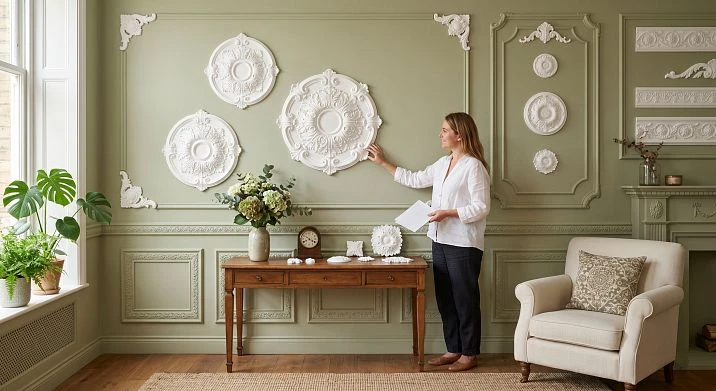
Consider this: when you enter a room and feel that it's "good" — what exactly creates that feeling? Almost never the furniture. Almost never the curtains or the lamp. It's the walls. More precisely — what's done on them. The relief. The structure. The details that don't catch the eye, but without which the interior would be just a set of things in a box.
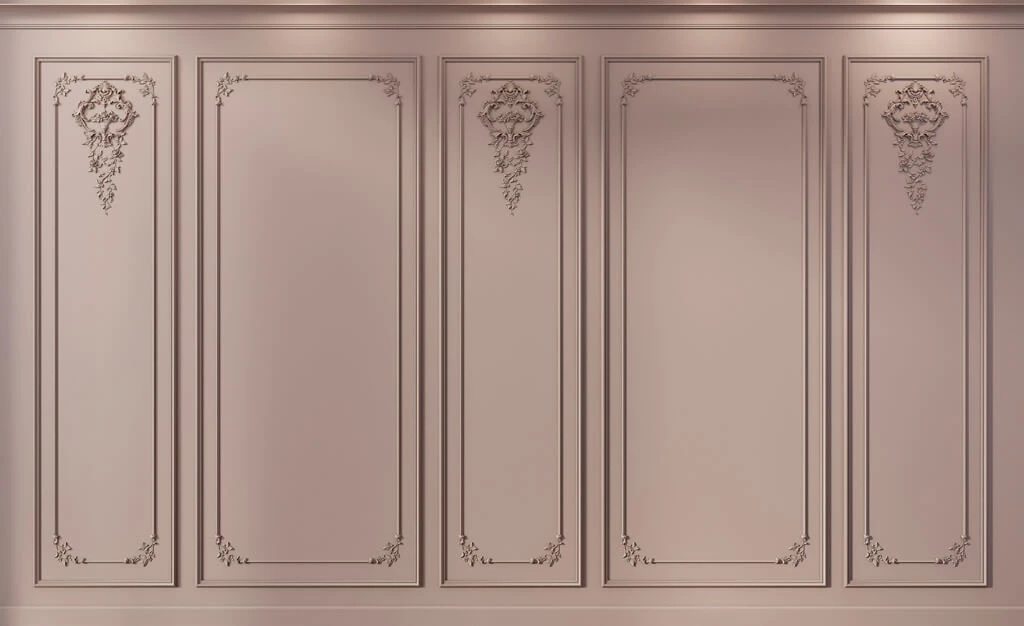
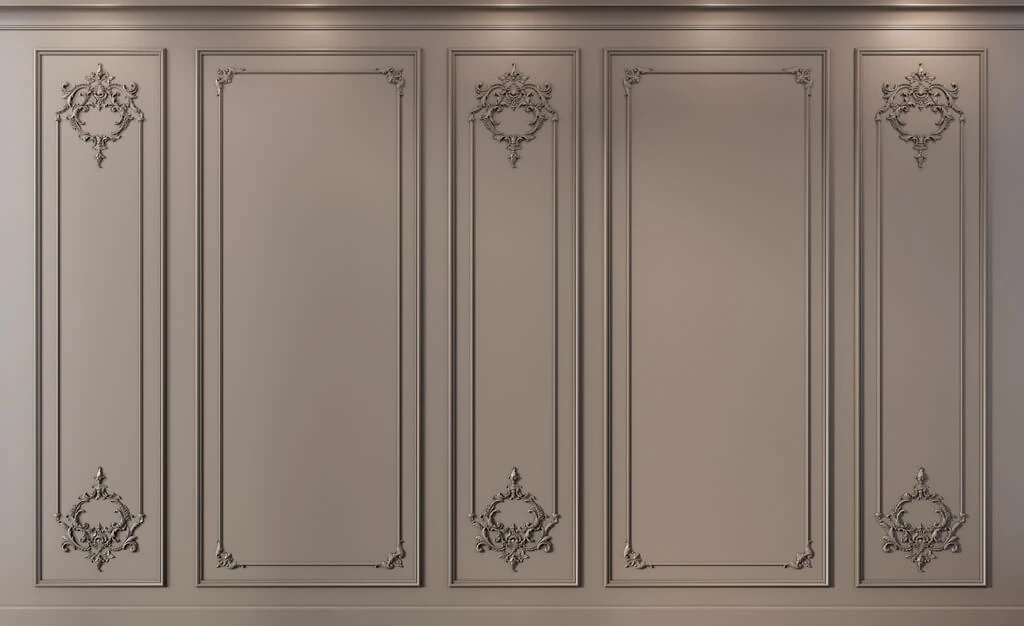
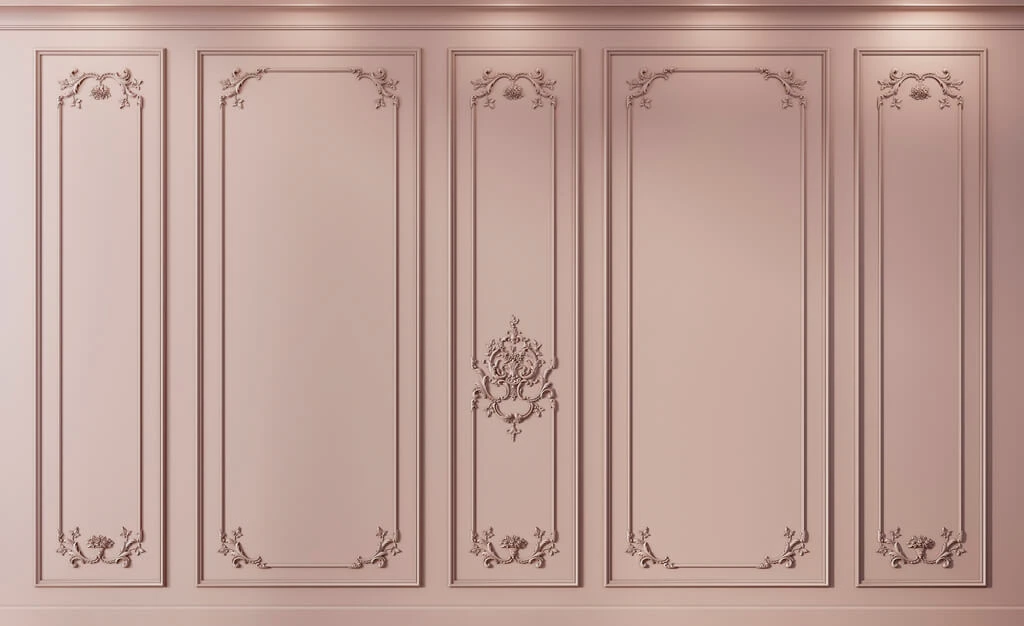
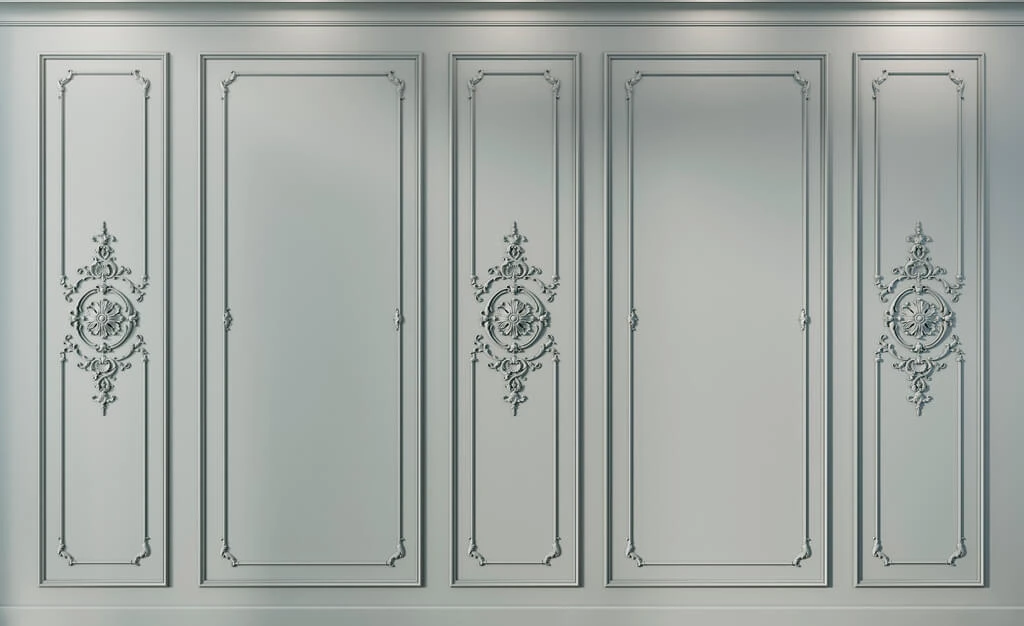
Decorative elements for the wall made of polyurethane — this is exactly what turns a "box" into a space. Overlays, sockets, corner inserts, ornamental fragments, stucco accents — each of these elements solves a specific task: adds relief where the wall is flat; places an accent where the eye has nothing to catch; completes a molding frame where without a corner insert there would be just a joint.
polyurethane wall decor in this sense — is the most precise and most flexible tool in the interior decor arsenal. Not the pencil line of molding, not the large-scale frame system, but precisely the details — those elements that are visible only when you look closely, but it is they that create the impression.
This article is a discussion about Polyurethane wall decor in terms of overlays, sockets, ornamental elements, and stucco decor: what it is, how it works, where it is appropriate, and how not to make a mistake when choosing.
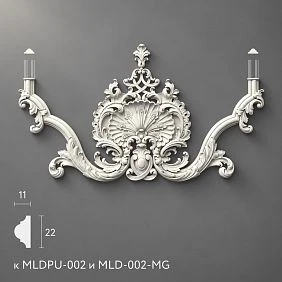
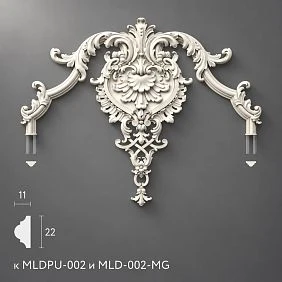
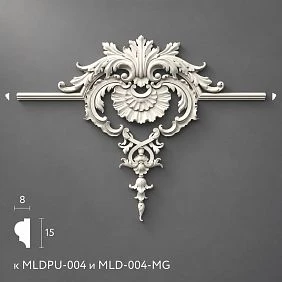
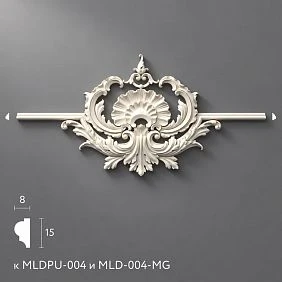
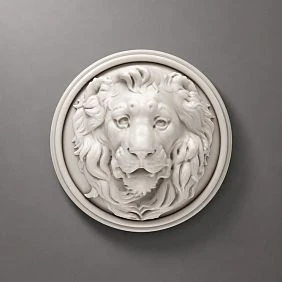
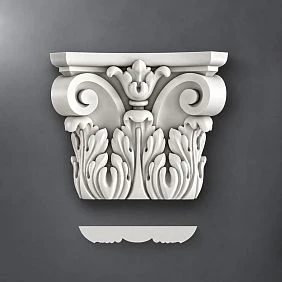
What decorative polyurethane elements are used on walls
The first question that starts any conversation about this topic: what exactly falls into the category of "decorative wall elements"? The term is broad, and behind it are several fundamentally different types of products.
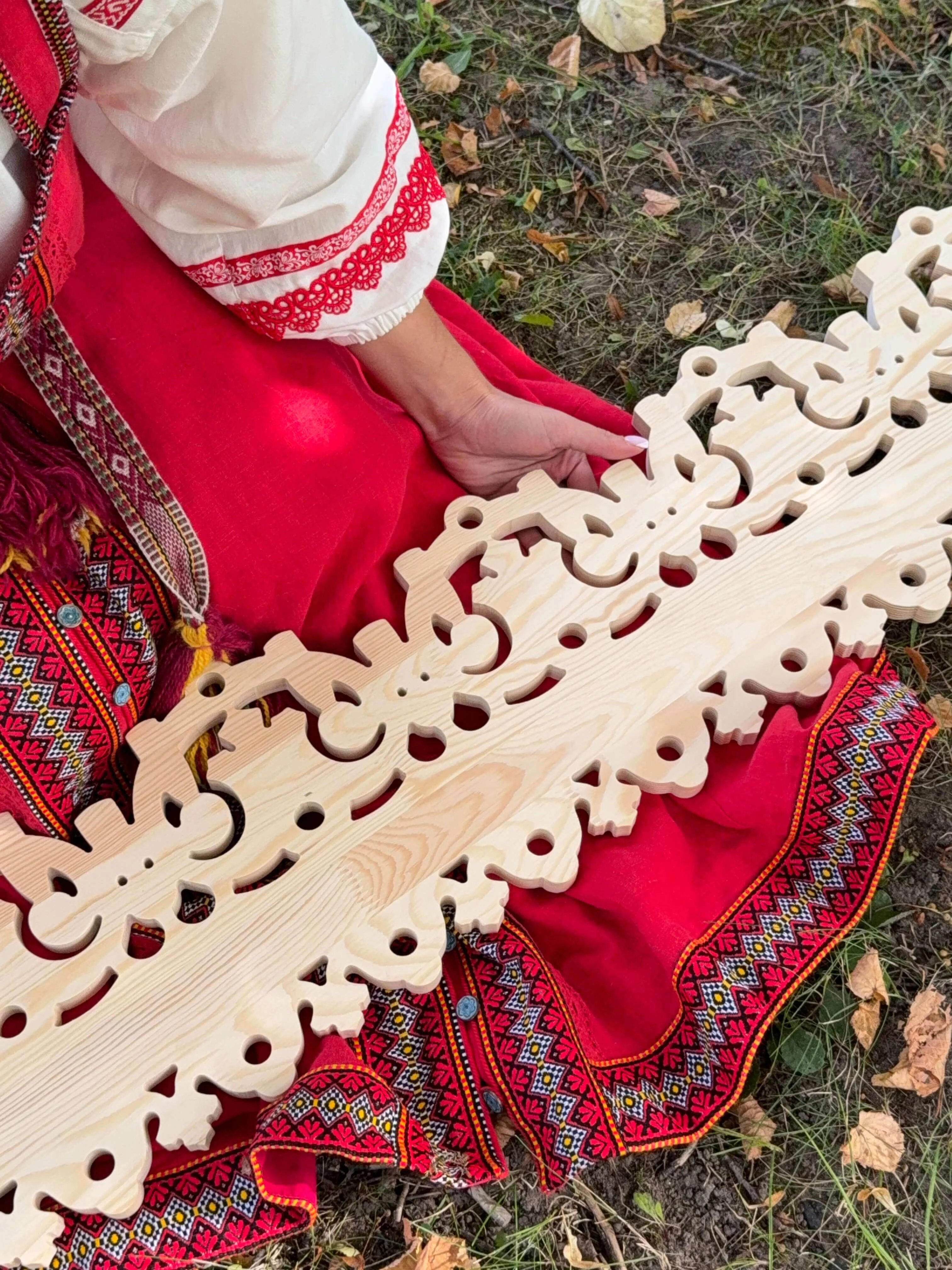
Decorative appliqués
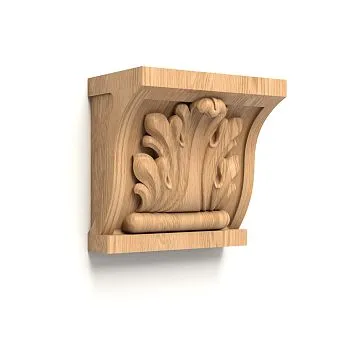
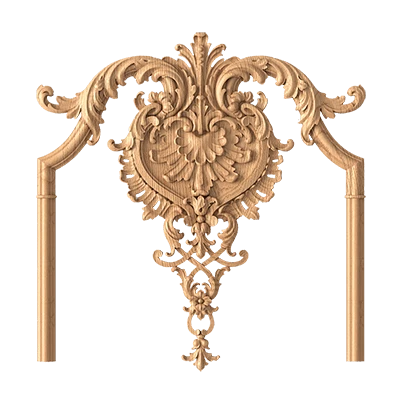
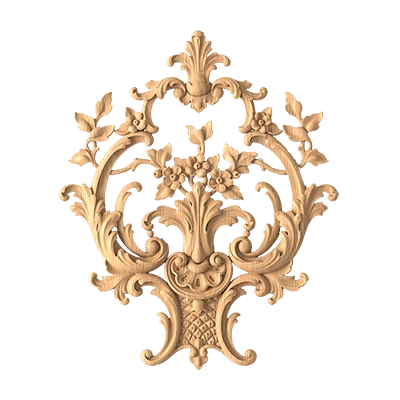
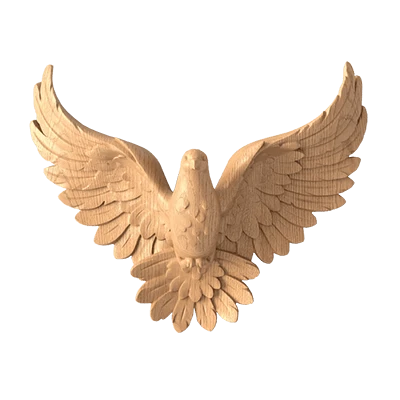
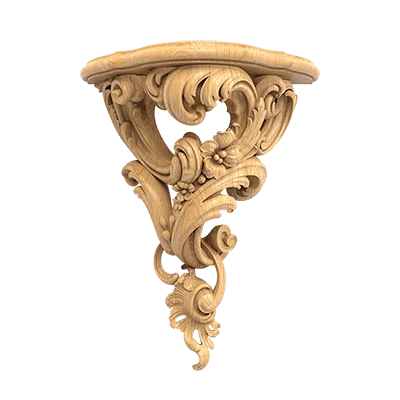
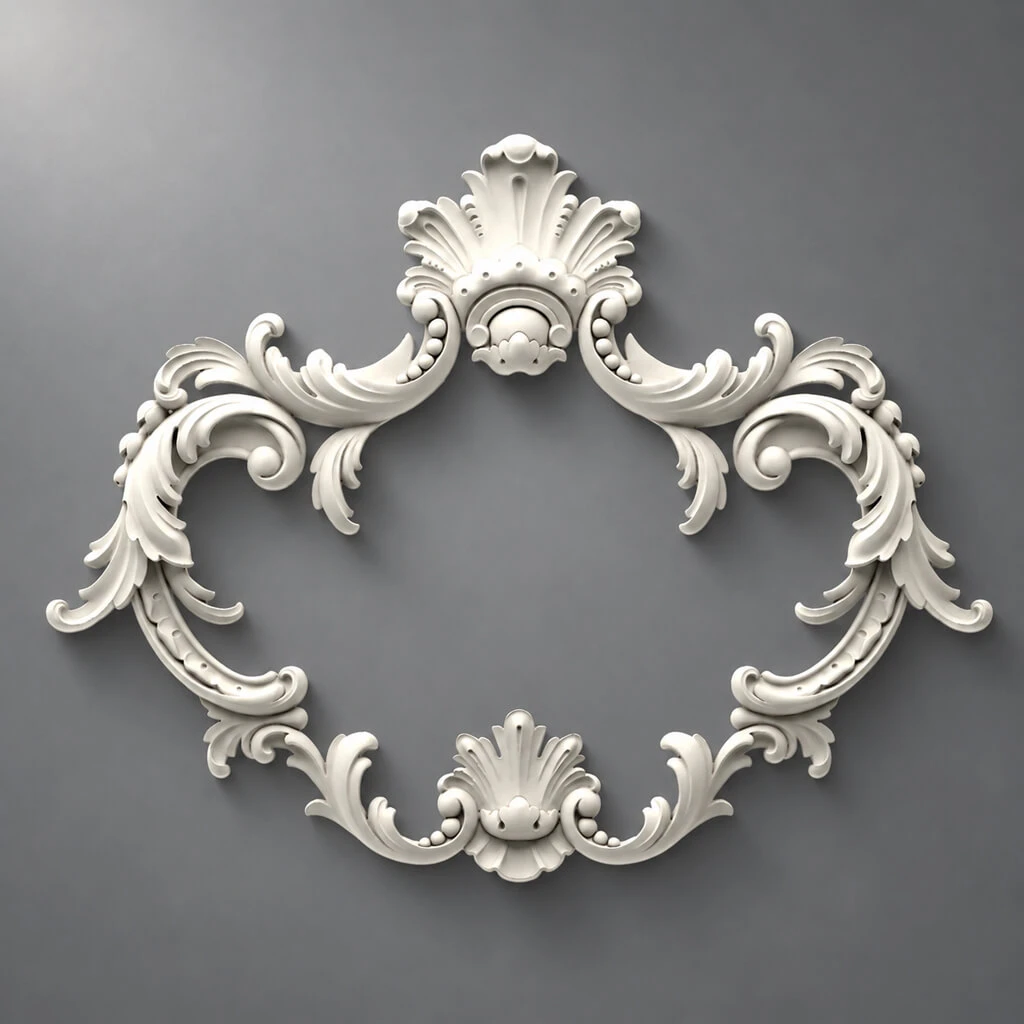
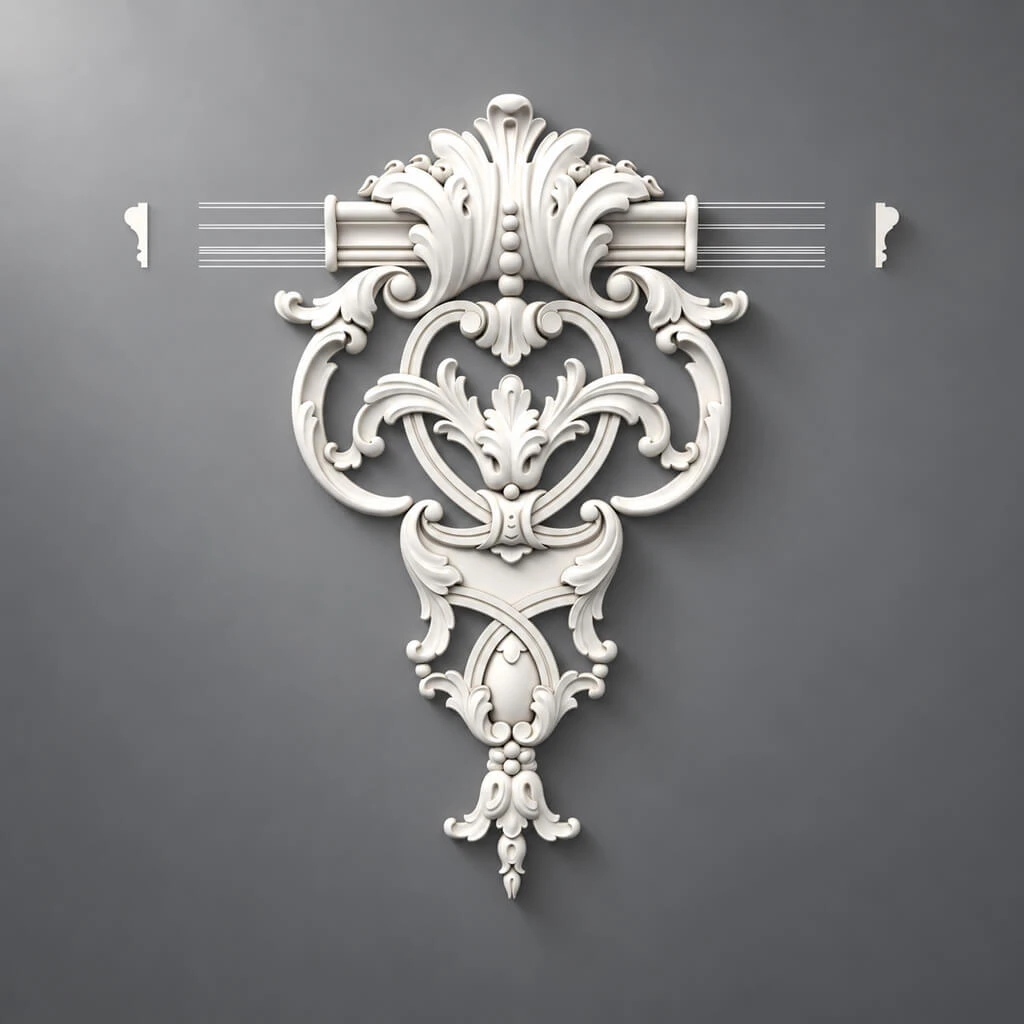
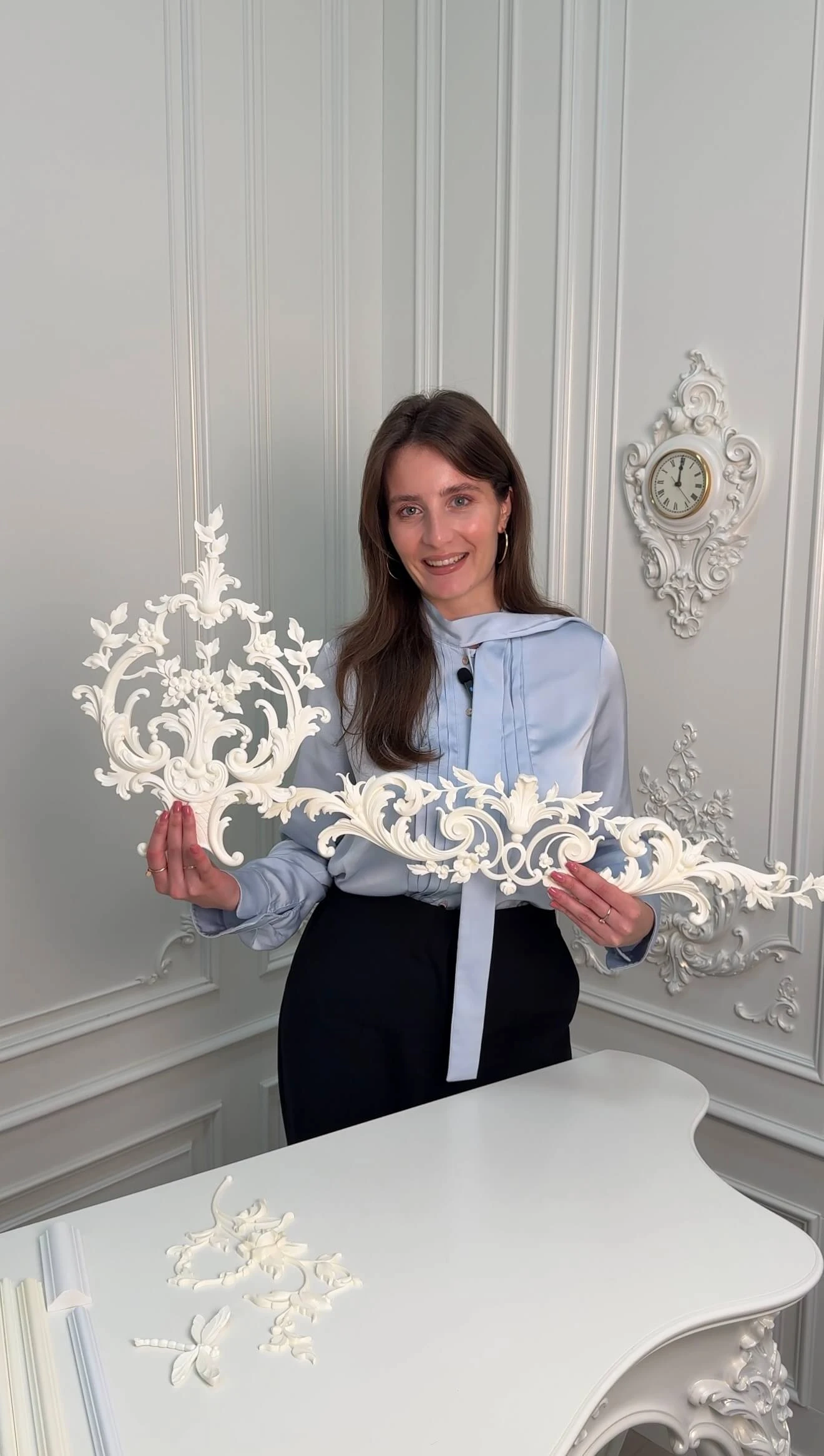
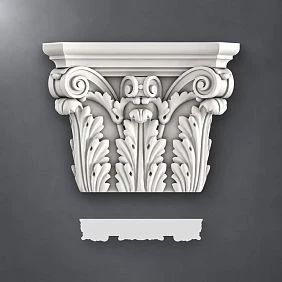
An overlay is a three-dimensional relief element that is mounted on a flat wall surface and creates a relief accent. By shape, overlays are:
-
Ornamental — with plant ornament: acanthus leaves, grape clusters, rosette motifs, flower garlands;
-
Geometric — diamonds, meanders, volutes, cartouches;
-
Figurative — mascaron (decorative masks), putti (cupid figures), relief animal heads;
-
Abstract — modern laconic forms without historical ornamental motifs.
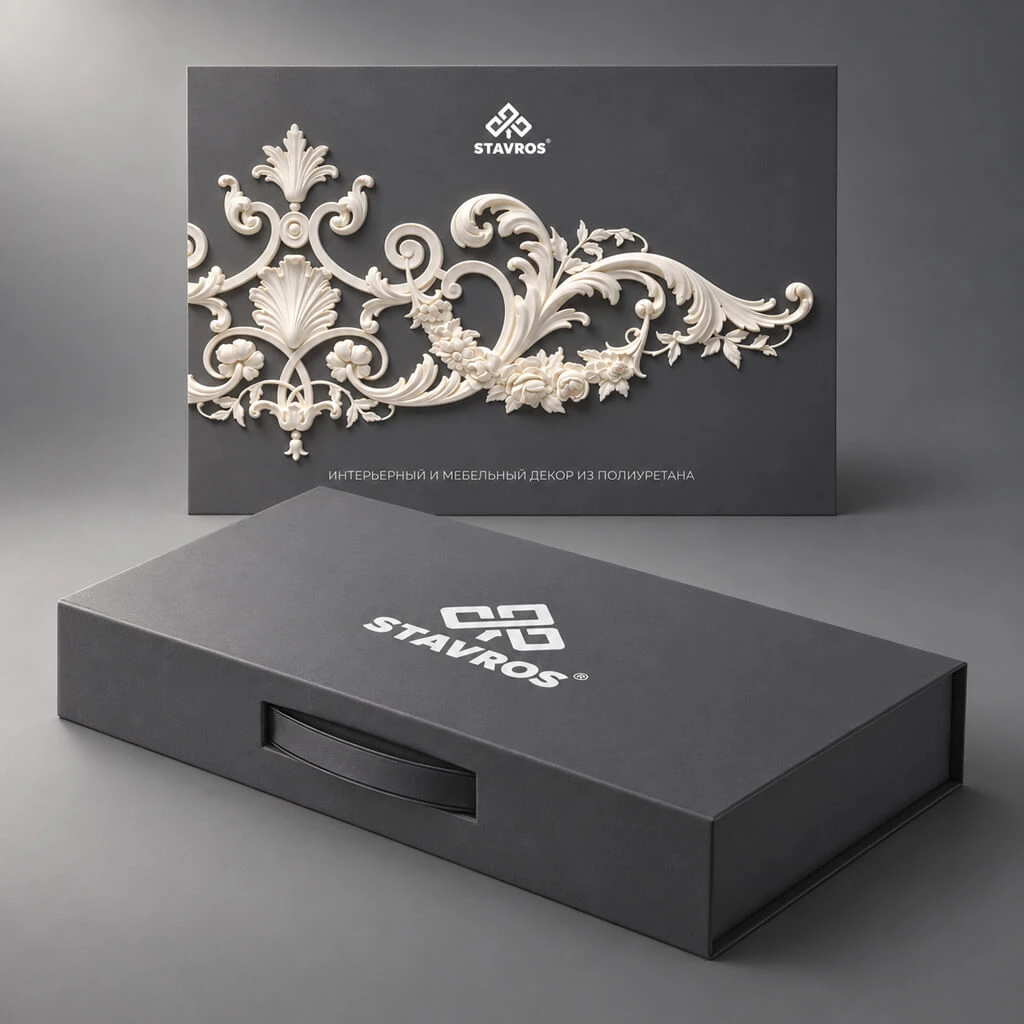
decorative polyurethane elementsSTAVROS covers all these types — from classic ornamental overlays with deep relief to modern laconic forms for neoclassical and minimalist interiors.
Our factory also produces:
Rosettes
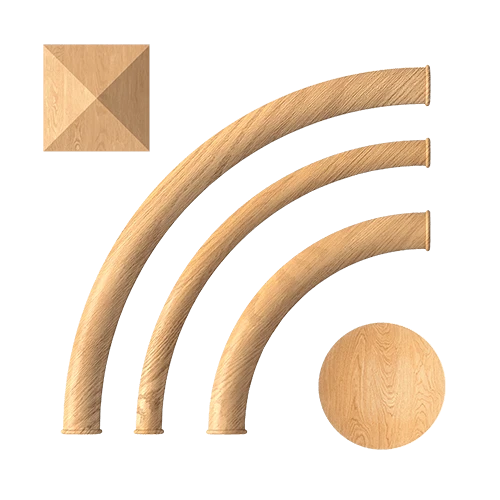
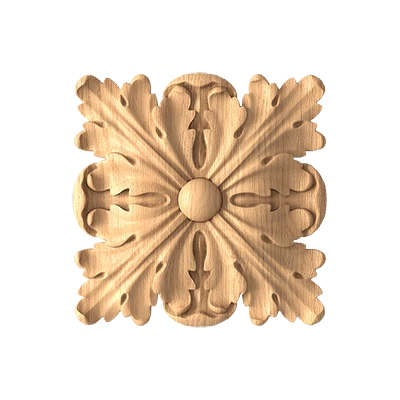
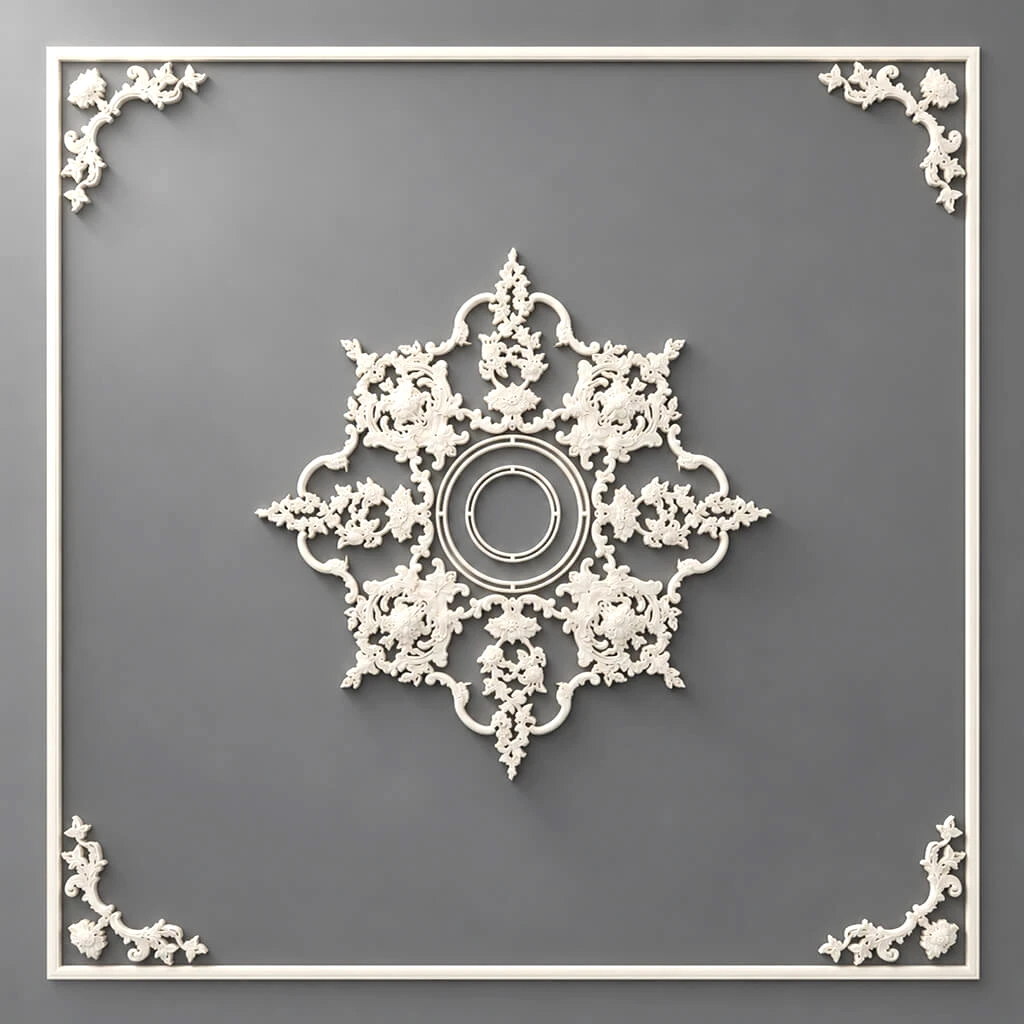
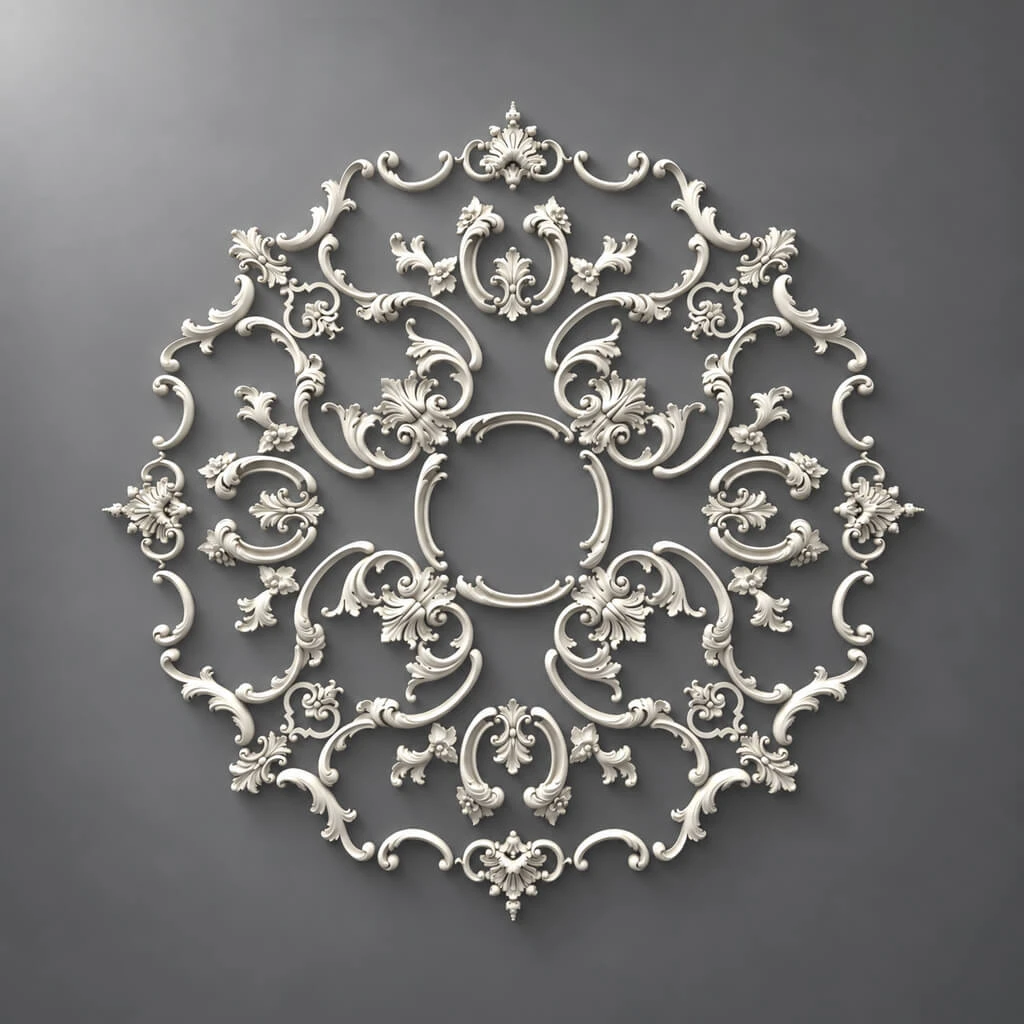
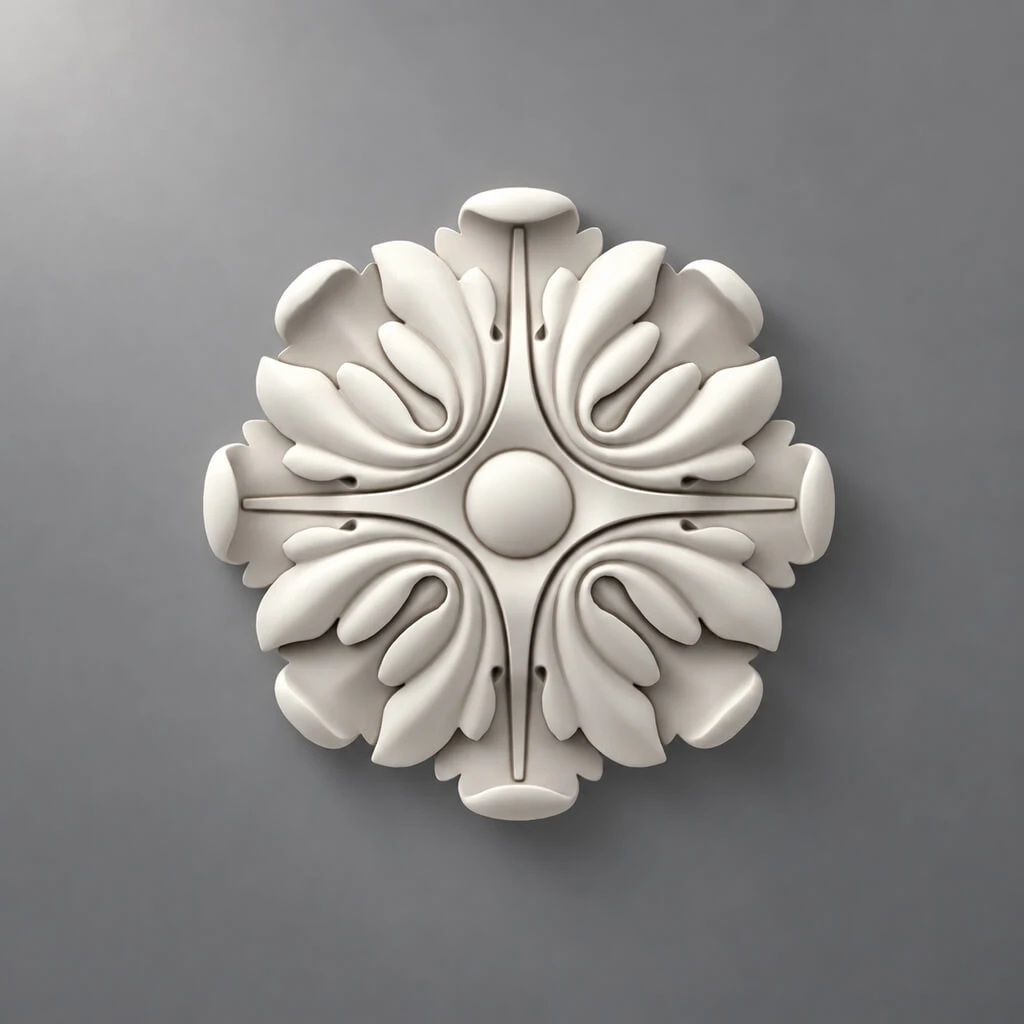
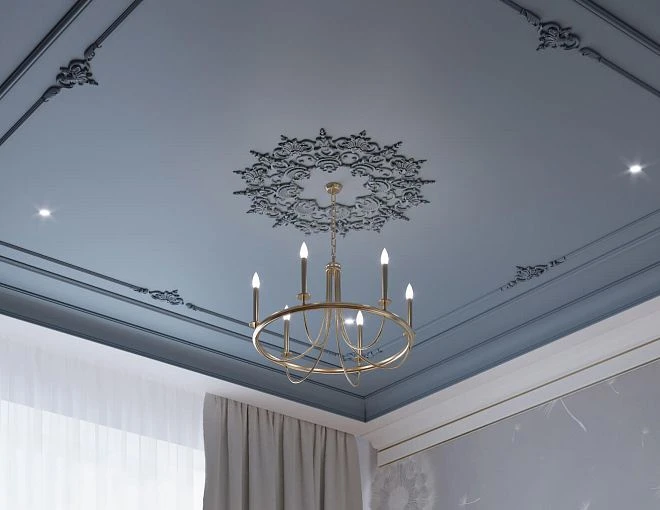
A rosette is a symmetrical round or polygonal decorative element with a central relief motif. Most people associate rosettes exclusively with the ceiling — there they traditionally frame the chandelier. Butpolyurethane rosettesthey also work great on walls: as a central accent of a frame composition, as a focal point above a sofa or bed, as an ornamental element in the middle of a wide horizontal band.
The diameter of wall rosettes is selected based on the wall scale: 150–200 mm — for small accents and corner inserts; 250–350 mm — for central points of medium wall frames; 400 mm and more — for grand large walls in a classic interior.
Get Consultation
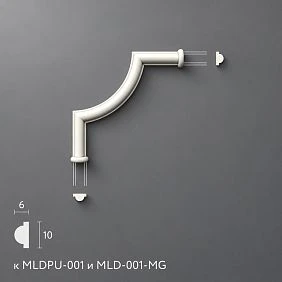
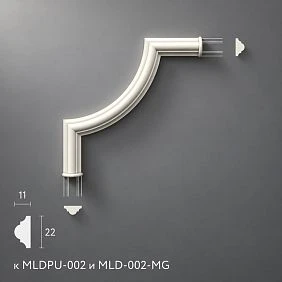
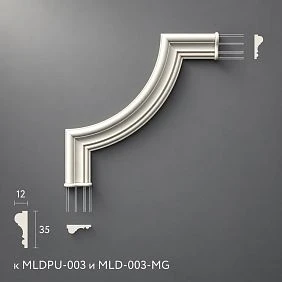
Corner elements
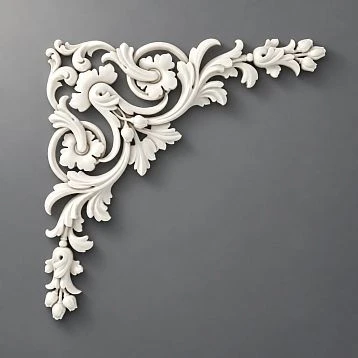
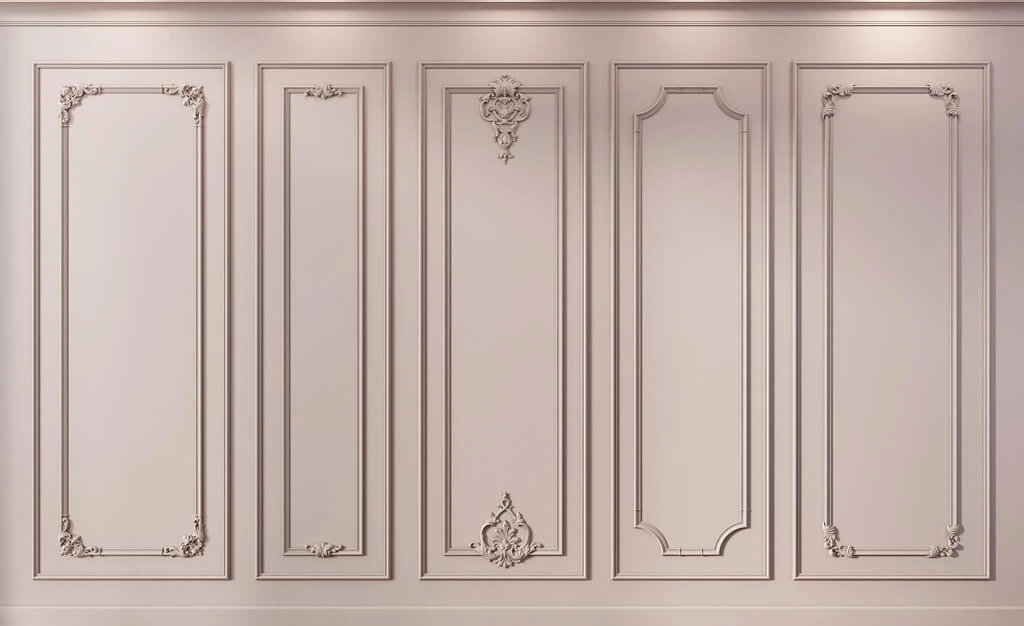
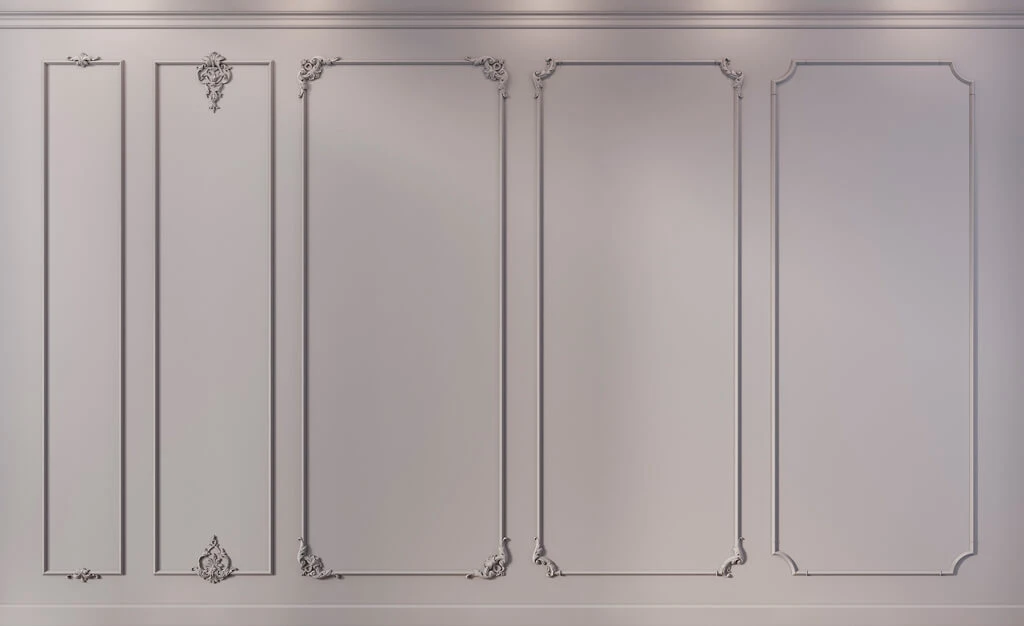
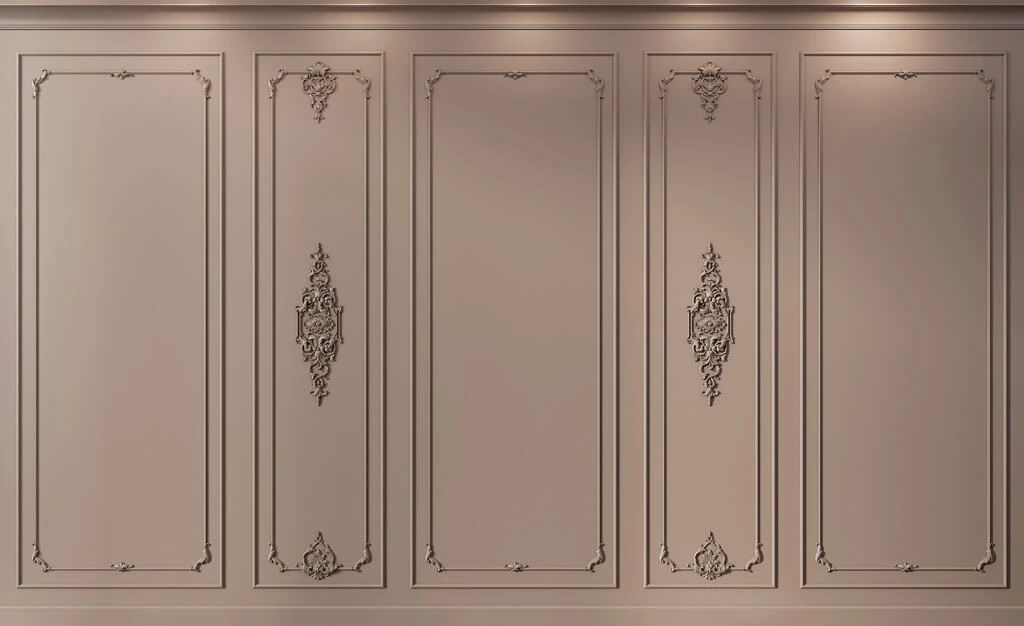
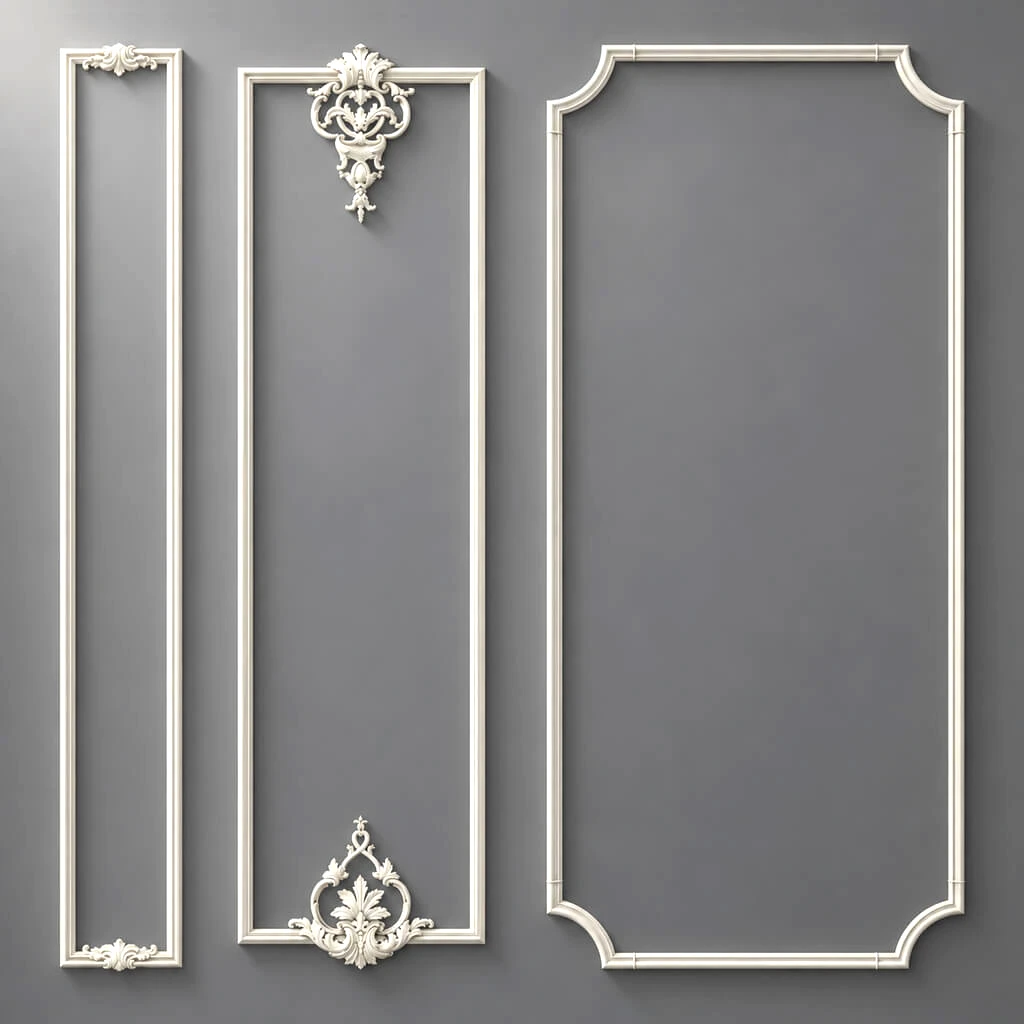
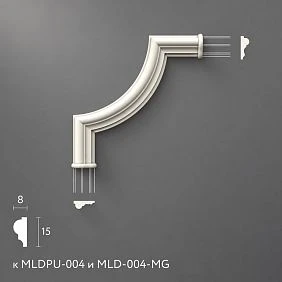
Corner inserts are decorative elements installed at the intersection of moldings at a right angle. Small in size (typically 80–150 mm), they serve a dual function: mask the molding joint and create an ornamental node at the intersection point.
Without corner inserts, a frame of moldings is just four planks. With corner inserts, it is an architectural element. The difference between "plausible" and "convincing."
Ornamental inserts and fragments
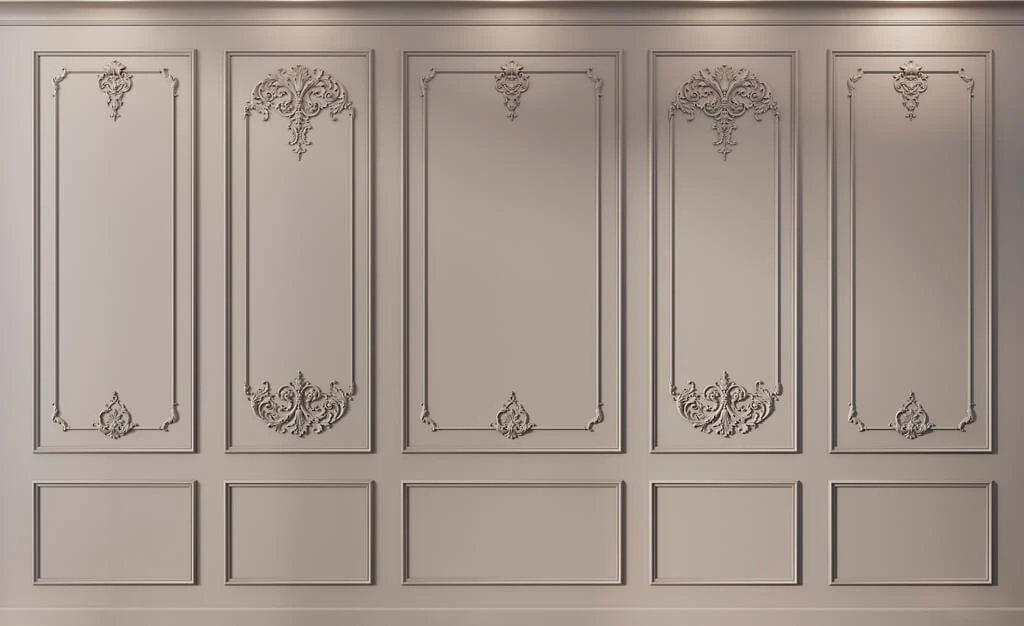
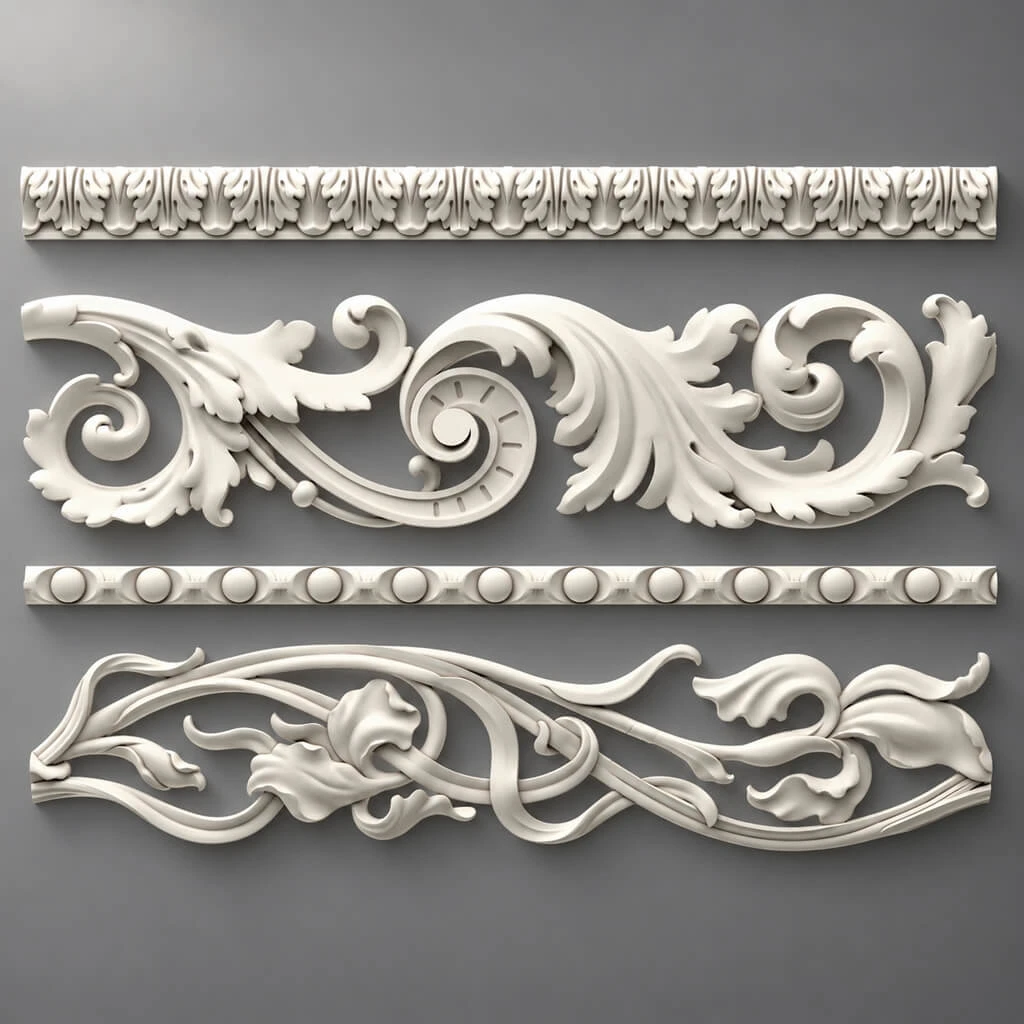
Intermediate ornamental inserts — elements placed in the center of long straight sections of molding bands. On a wide wall with a horizontal molding band 4–5 meters long, an intermediate overlay in the center creates rhythm and eliminates the monotony of a continuous horizontal line.
Fragmentary ornamental elements — relief "patches" of ornament that can be mounted as independent accents at arbitrary points on the wall. Often used in paired symmetrical groups — two identical elements on either side of the central axis.
Elements for moldings
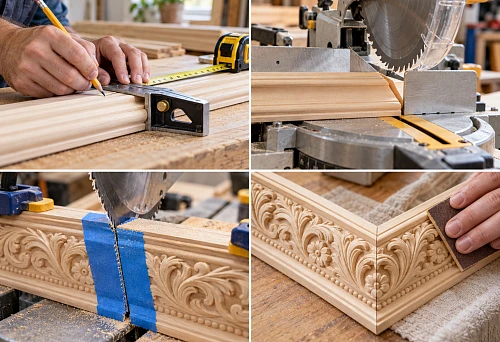
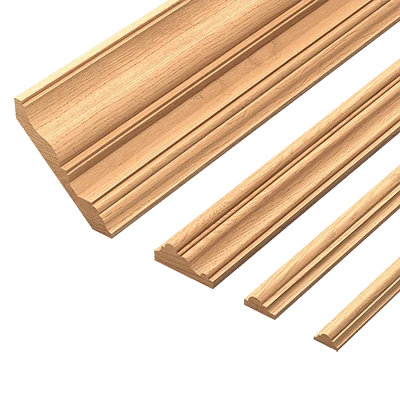
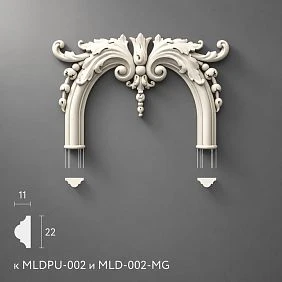
Decor for Molding— a specialized category of elements created for integration into molding systems. These are corner decorative rosettes, intermediate overlays, and central accents designed with specific profiles in mind. Unlike universal overlays, these elements perfectly mate with a specific line of moldings in terms of height, profile depth, and ornament style.
Stucco decor for wall compositions
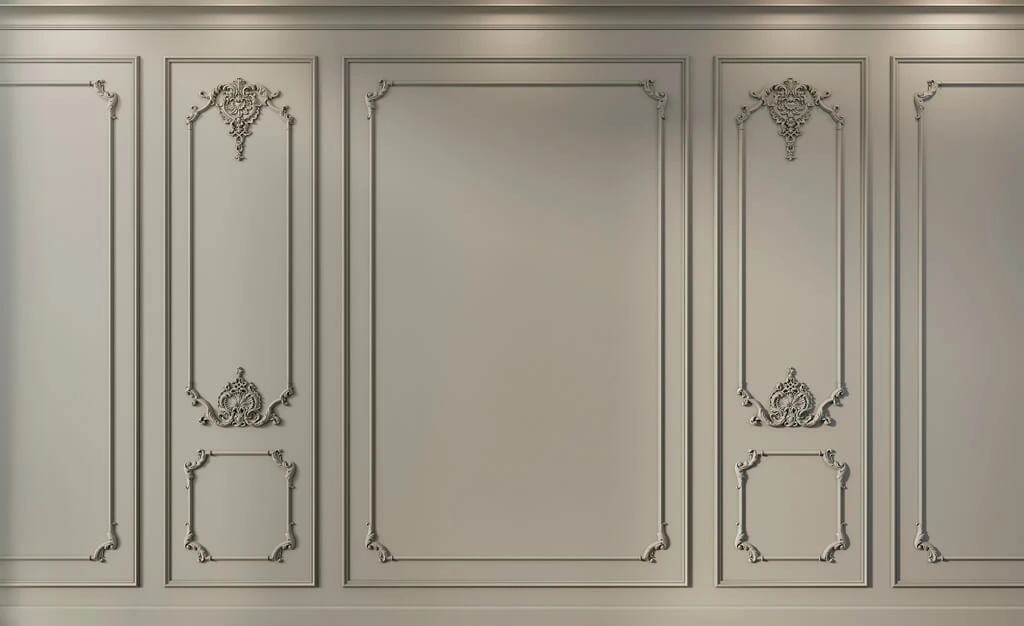
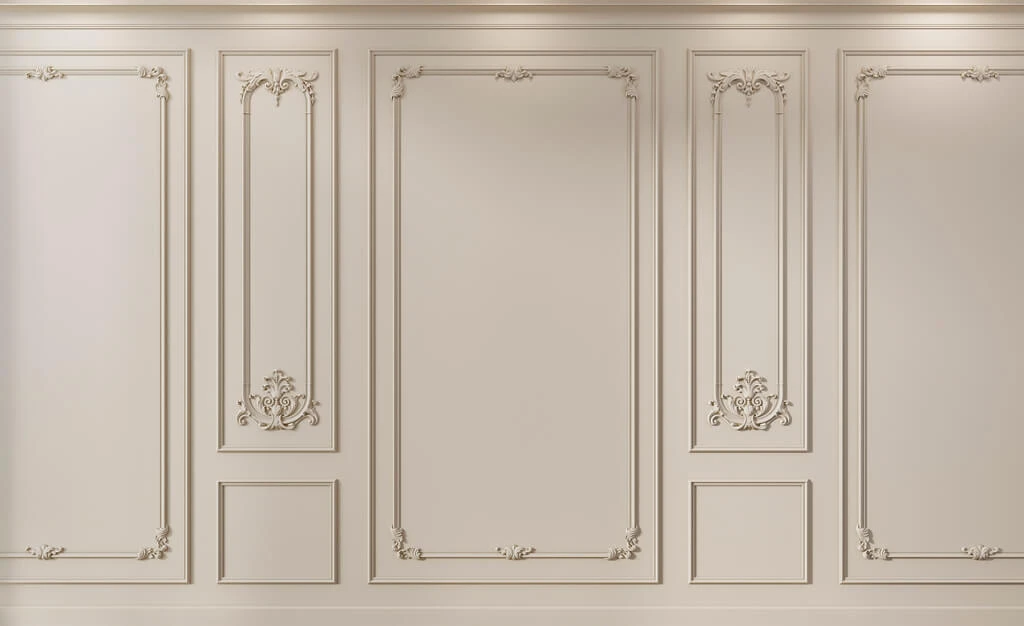
molded decoration made of polyurethanein a broad sense — these are all relief overlay elements that create rich decorative compositions on walls. A complete classical wall system includes: molding frames, ornamental horizontal bands, corner elements, central medallions, decorative overlays within the frame field. All these "layers" constitute stucco wall decor in its full form.
polyurethane decorative elementsSTAVROS are structured by collections — "Versailles", "Peterhof", "Neoclassic", "Japandi" and others — precisely so that all elements within a single interior are stylistically and proportionally coordinated.
Decorative wall overlays: when they are needed
An overlay is not always "stucco in a classic interior." It is a point tool that is appropriate in a variety of situations. When exactly does an overlay solve the problem?
To create an accent wall
An accent wall is a wall that "weighs" more than the others in a visual sense. It is created in different ways: with a different color, a different texture, a different material.polyurethane wall decorin the form of decorative overlays adds relief to this wall — a third dimension that paint or wallpaper lacks.
An accent wall with one large ornamental overlay in the center is a minimalist but very powerful solution. No overload. One element in the right place — and the wall "speaks."
For classic and neoclassical interiors
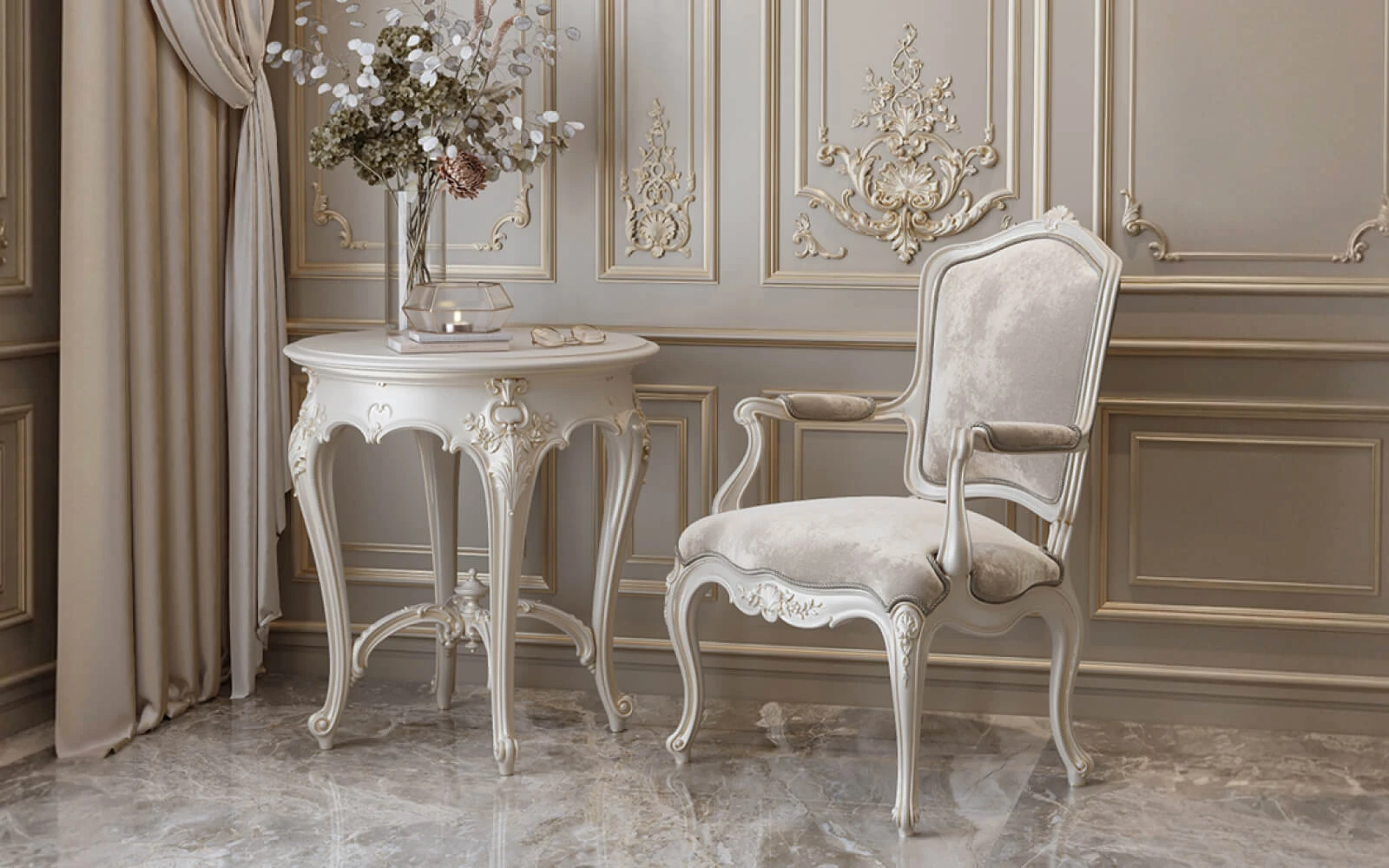
A classic or neoclassical interior without stucco decoration is like a tailcoat without cufflinks. Technically correct, but essentially unfinished.Polyurethane decorative appliquesin a classic interior, it is a way to add "layers" of decor without involving stucco sculptors and without construction work.
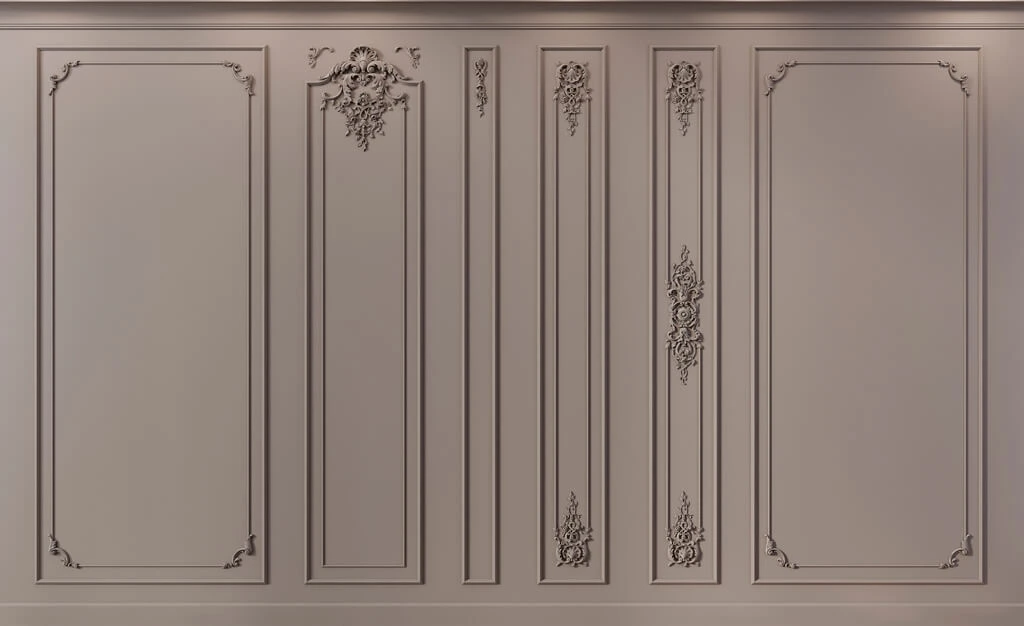
Symmetrical pairs of overlays on either side of the central axis of the wall. Ornamental fragments in the upper corners of frame fields. Relief medallions in the center of the horizontal belt. All these techniques make the interior rich — without flashiness and without excess.
For decorating piers
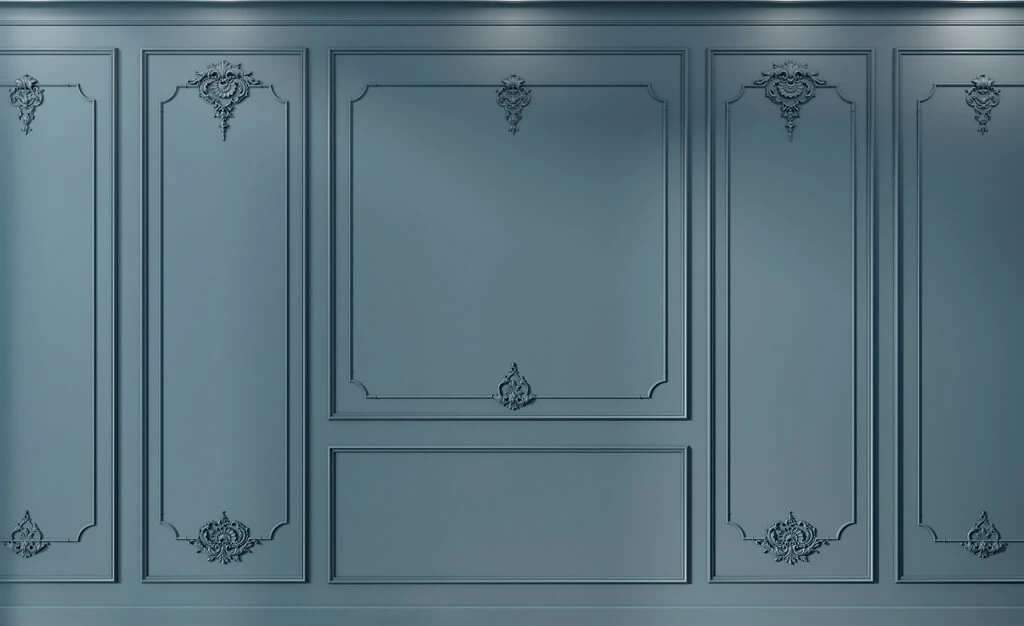
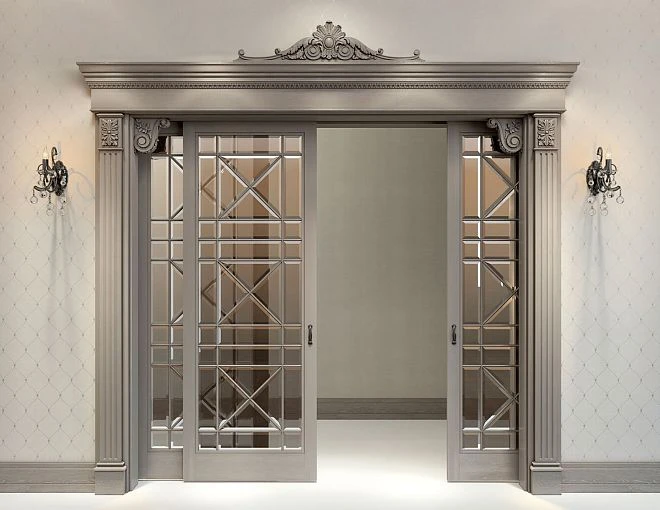
A pier is a vertical strip of wall between two windows or between a window and a door. Usually, it is unused space that simply "exists."Wall Decorative Elementson the pier turns it into a decorative field: a vertical frame of moldings + a central overlay inside the frame. The pier becomes an architectural element of the room.
For the area behind the sofa
Decorating the wall behind the sofa using overlays is one of the most effective techniques. The molding frame provides the outline. The overlays inside the frame (corner elements, central medallion) provide detail. Together — an architectural panel that visually "holds" the sofa and creates a focal point in the living room.
It is fundamentally important: the overlays in the area behind the sofa are mounted strictly symmetrically. The axis of symmetry is the vertical line through the center of the sofa. All elements are symmetrical relative to this axis.
For the bedroom and the headboard of the bed
Wall decor in the bedroom with overlays is a delicate technique. One small ornamental overlay in the center of the upper horizontal of the frame above the bed. Or two symmetrical overlays on the sides of the frame. More than that is already too much for the bedroom.
molded decoration made of polyurethanein the bedroom is chosen with a softer and more delicate ornament than in the living room: floral motifs, calm geometric patterns — without mascaron and deep cartouches.
For symmetrical wall compositions
A symmetrical paired composition — two identical elements placed mirror-like relative to a vertical axis — is the most universal technique in wall decoration. Two ornamental fragments on the sides of a central accent. Four corner overlays in the corners of one large frame. Twelve corner inserts in a system of three frames — four for each.
Symmetry is not boring. Symmetry is order that is perceived as beauty.
Polyurethane rosettes and ornaments in wall decor
A rosette on the wall is a non-trivial but very effective solution. Most people are used to seeing rosettes on the ceiling. Moving a rosette to the wall is a design solution with a strong visual effect that does not require complex installation or special tools.
Where the rosette works best on the wall
In the center of the main wall of the living room. One largepolyurethane rosettewith a diameter of 350–500 mm in the center of the accent wall — this is not stucco "for beauty." This is the focal point of the entire space. Everything around it (molding frames, furniture, decor) is organized around this center.
Above the fireplace or TV. A rosette above the fireplace is a classic technique. The fireplace is the vertical dominant of the room, the rosette enhances this dominant, giving the eye a target point at the top.
As the center of a molding frame. Inside a molding frame, the rosette is mounted strictly in the center. Frame + rosette = decorative panel with a clear focus. This works in any interior — from classic to neoclassical.
In the piers. A small rosette with a diameter of 150–200 mm in the center of a vertical pier is a delicate, almost imperceptible accent that, nevertheless, creates a sense of completeness.
Ornamental elements as a rhythmic pattern
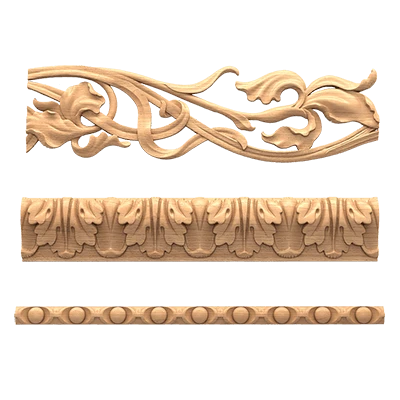
Decorative stucco on walls in the form of ornamental fragments works on the principle of rhythm: a repeating motif at equal intervals creates a pattern that is perceived as part of the architecture.
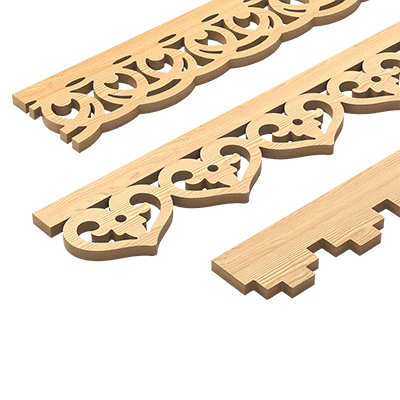
A horizontal ornamental band — a strip of repeating ornament along the horizontal of the wall — is visually similar to an architectural frieze. It can run along the top of the wall under the ceiling (replacing the traditional frieze), along the center of a horizontal molding belt, or as an independent horizontal accent at a height of 170–180 cm.
wall moldingin the form of ornamental bands is especially appropriate in Art Deco: a geometric repeating ornament with clear edges creates that very "rhythmic tension" which is the hallmark of this style.
Ornaments in combination with moldings
Decor for Molding — this is a special category of elements designed to work inside molding systems. Ornamental corner inserts are installed at the intersection points of molding profiles. Intermediate overlays are placed in the center of long horizontal rods.
The feature ofdecoration for moldings STAVROS: all elements are developed within specific collections and proportionally coordinated with molding profiles of the same collection. This means that a corner insert from the Neoclassic collection will fit perfectly into the corner of the Neoclassic molding without trimming or gaps.
What does this mean in practice? Installation speed. Precision of the result. No need to "adjust" elements to each other.
How to combine decorative elements with moldings
Moldings and decorative elements are not competing categories, but complementary parts of a single system. The molding creates a line and a frame. The decorative element creates an accent within this system. Understanding the logic of their interaction means learning how to design wall decor.
Three-level system
A professional approach to comprehensive wall decor is built on three levels:
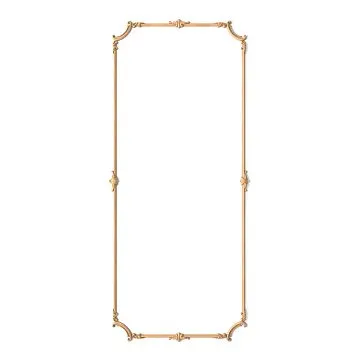
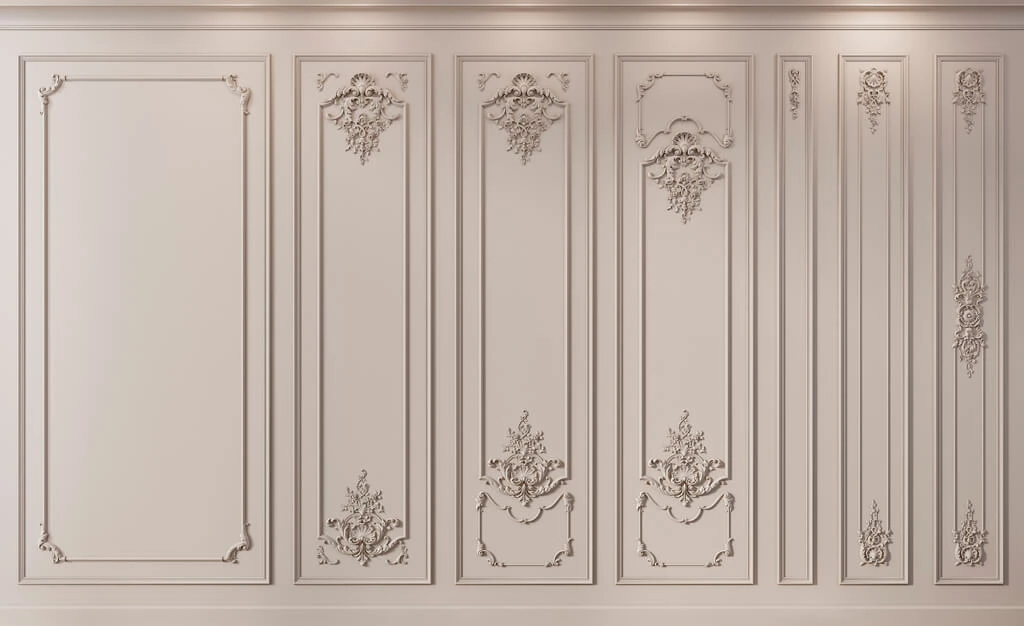
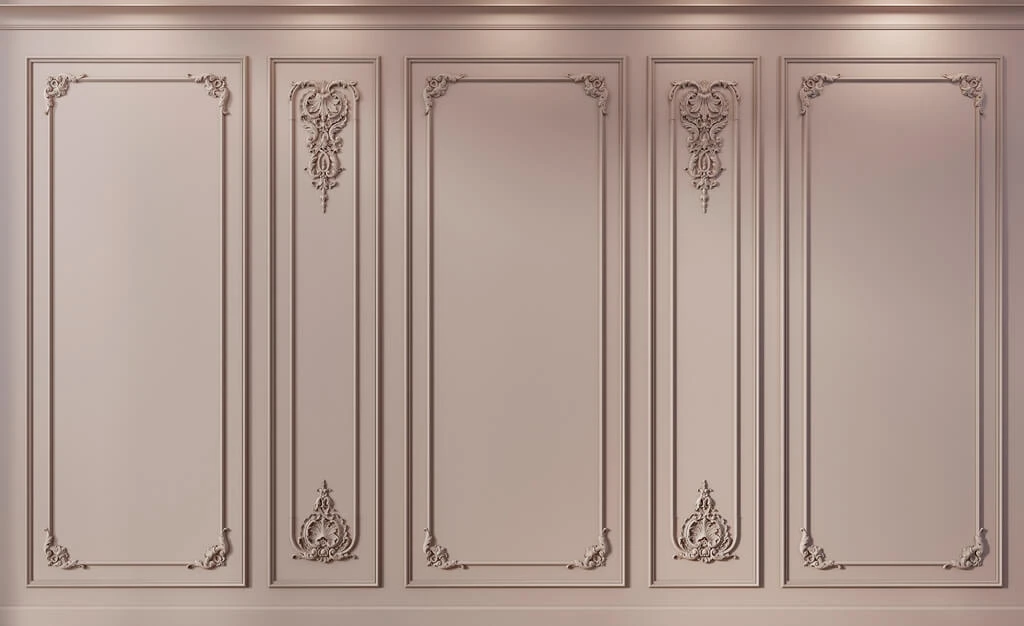
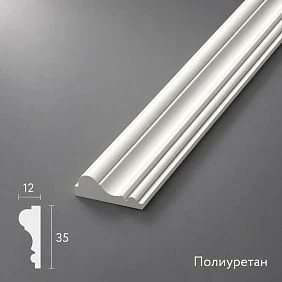
First level — the frame.polyurethane wall moldings: horizontal belts, vertical rods, frame rectangles. This is the structure of the wall.
Second level — nodes.Decor for Molding: corner inserts, intermediate ornamental overlays on rods. These are the "joints" of the frame — points where lines meet.
The third level is accents.decorative polyurethane elements: rosettes in the center of frames, ornamental overlays across the field of frame panels, symmetrical pairs of overlays along the edges of frames. This is the "content" — what makes the wall interesting.
The three levels work together. A frame without nodes is incomplete. A frame without accents is boring. Accents without a frame are chaotic. Only a complete three-level system delivers the effect for which decorative wall design is sought.
Symmetry, scale, and rhythm
Three laws of wall decor that must not be broken:
Symmetry. All decorative elements on one wall must be symmetrical relative to the vertical axis. This does not mean the decor must be identical on the left and right — it can be different, but its "weight" must be balanced.
Scale. The size of a decorative element must correspond to the size of the wall and the frame. A small rosette with a diameter of 120 mm in the center of an 80×120 cm frame looks lost. A rosette with a diameter of 300 mm in the center of the same frame overwhelms it. Rule: the diameter of the rosette ≈ 25–35% of the smaller dimension of the frame.
Rhythm. If there are several frames on a wall, the decorative elements in them must follow a single rhythm: identical corner inserts in all corners, identical central accents in the center of each frame. Breaking the rhythm is a decorative mistake that cannot be "explained by style."
How to select elements as a unified system
Rule one: all Wall Decorative Elements moldings in one room must come from the same collection. This is not advice — it's a condition for a normal result.
STAVROS collections are designed with this logic: each collection is a complete set of compatible elements, designed as a system. "Versailles", "Peterhof", "Neoclassic", "Japandi" — these are not just names. They are complete sets: moldings, corner inserts, overlays, rosettes, cornices, baseboards — everything is proportionally coordinated within each collection.
Polyurethane ItemsSTAVROS allow you to choose a complete set for any style — from laconic modern neoclassicism to formal palace-type classics.
Where to use decorative elements on the wall
Each room has its own logic for applying decorative elements. Let's break it down specifically.
Living Room
The living room is the main "showcase" room. This is where decor works at full strength. Wall decor in the living room is built on hierarchy: the main wall gets the maximum, the rest get the minimum or nothing.
The wall behind the sofa is priority number one.Decorative elements on the wall in the living room here: a system of molding frames + corner inserts + a central medallion or rosette. The three levels described above — in full composition.
TV wall is the second priority. The decor of the wall behind the sofa and the decor of the TV wall are often handled differently: the wall behind the sofa has a richer design, while the TV wall has a more laconic molding frame. This creates the correct hierarchy: the main wall is more important than the functional one.
Piers between windows are the third level. Small decorative inserts, symmetrical on both sides of the windows, create a sense of a detailed interior.
In a living room with a high ceiling (3 m and higher)Decorative wall molding may also include horizontal ornamental bands — friezes under the ceiling, above the molding frame. This creates a complete architectural wall system.
Bedroom
In the bedroom, decorative elements play a different role: not representation, but coziness. Not 'show off wealth,' but 'create peace.'
Wall decor in the bedroom is built on one main technique — a frame system behind the bed. Corner inserts in the four corners of the frame. One delicate overlay in the center of the top horizontal line — and that's enough. This is the complete set for a bedroom. No more is needed.
polyurethane wall decor for the bedroom is chosen from more laconic collections — 'Neoclassic Light,' 'Japandi' — or from more classic ones, but with a lower density of ornament. Rule: in the bedroom, there should be half as much decor as you want.
Wall decor at the headboard is an architectural 'headboard' that does not require a physical bed back. A frame of moldings + corner inserts + a central overlay = architectural completion of the bed area.
TV area
Decorating the TV zone with polyurethane is a hot topic. A TV on a blank white wall is technically 'there,' but design-wise 'not there.' Decorative elements for the TV zone create that very architectural framing that turns the screen from a household appliance into part of the interior.
Scheme: a molding frame around the perimeter of the TV zone + a horizontal molding strip under the TV + corner inserts in all four corners. The central overlay is usually not placed in this zone — the TV itself is the central visual element.
Stucco wall decor under the TV is a delicate topic. Too rich an ornament competes with the screen. Rule: the ornament on the TV wall is minimal, the frame is clear, all attention is on the screen.
Hallway and corridor
Decorative elements for walls in the hallway are primarily framing functional objects: mirrors, coat racks, key holders.
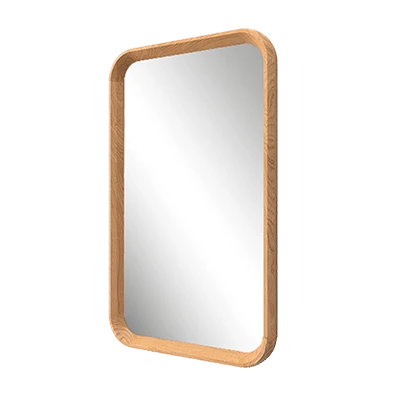
A molding frame around the mirror + one small overlay above it is a classic and elegant solution for the hallway. The accent above the mirror (a small ornamental overlay or rosette) creates a "crown" — a very French-inspired technique.
Wall decor for the corridor is a horizontal molding belt at a height of 90–100 cm along the entire length + possibly frame fields above the belt. Decorative overlays in the corridor are minimal. One or two — no more. A narrow space cannot tolerate overload.
Polyurethane wall decor in the hallway is completed with the correct floor plinth from the same collection: plinth + molding belt + ceiling cornice — a complete vertical system that even in a small hallway creates a sense of a well-thought-out space.
How to choose decorative elements for the interior style
Choosing a style is choosing a system. Each style dictates its own set of permissible ornaments, proportions, and solutions.
Classic: ornament, depth, symmetry
Full classic — Baroque, Empire, Rococo — is the maximum density of decor while maintaining symmetry and proportions. Ornamental overlays with deep relief: acanthus leaves, cartouches with floral filling, rosettes with multi-level ornament. Horizontal friezes with a repeating ornamental motif. Corner elements with rich detailing.
Polyurethane wall decorIn the classic style, it is selected from collections with the highest density of ornament: "Versailles", "Peterhof", "Tsarskoye Selo", "Pavlovsk". These are not metaphors — these are specific collections with historical ornamental systems adapted for modern polyurethane production.
Neoclassicism: calm and geometry
Neoclassicism is classicism filtered through modernity. Overlays are present here, but laconic. Rosettes are present, but with simplified ornamentation. Corner inserts are present, but without Baroque overload.
Wall Decorative ElementsIn neoclassicism, elements are chosen from the "Neoclassic" collection: simple geometric corner pieces, laconic intermediate overlays, rosettes with clean chamfers without complex leaf ornamentation.
The color of decor in neoclassicism: white or cream on light walls. No patination, no gold — only the pure whiteness of the relief.
Art Deco: geometry and contrast
Art Deco is a style built on geometry, rhythm, and contrast.polyurethane decorative elementsFor Art Deco — geometric patterns: diamonds, zigzags, stepped motifs, repeating meanders. No plant forms, no putti. Only geometry.
Color in Art Deco: contrasting. Black or gold overlays on a white wall. White overlays on an emerald or dark blue wall. It is contrast that creates Art Deco.
Modern classic: conciseness without losing richness
Modern classic is a style that wants to be both rich and contemporary at the same time. Decorative overlays here are calm in ornamentation but with high-quality relief. No mascaron or putti. Simple rosettes with a neat geometric pattern. Corner inserts without overload.
polyurethane wall decorfor modern classics — from the Neoclassic or Petersburg collection (a more restrained version of classics). Proportions are larger than in full minimalism, but significantly calmer than in baroque.
Japandi and minimalism: a barely noticeable trace
In Japandi, there are virtually no decorative elements. But 'virtually' doesn't mean 'none at all.' One thin overlay in the corner of a frame. Or a small rosette with a very flat relief in the center of a wall section. This is the principle of Japanese design: an element exists not to be noticed, but for its absence to be noticeable.
Polyurethane wall decorin a minimalist interior — from the Japandi or Neoclassic Light collection: minimal relief, neutral forms, nothing extra.
Mistakes when choosing decorative elements for the wall
Mistakes in this topic are almost always the same. And almost always their source is one problem: buying without a plan.
Too many small elements. Ten small overlays scattered across the wall without a system is not richness, it's decorative clutter. The principle 'less is more, but in the right spots' works. One rosette in the right place is more effective than ten overlays in random order.
Mismatch between decor style and interior. Classic ornamental overlays with deep relief in a modern loft — a conflict. Laconic geometric inserts in a formal classic hall — poverty. The decor style must match the interior style. This is non-negotiable.
Lack of a layout scheme. The most costly mistake: starting installation without a pre-developed scheme. What goes where, how many pieces, what size, with what spacing. All of this must be documented on paper or in a program before purchasing.
Random combination of moldings, overlays, and rosettes from different collections. Three different ornamental 'languages' on one wall — a visual conflict. One collection — a rule without exceptions.
Incorrect scale of elements. A small overlay on a large wall gets lost. A large overlay in a small frame overwhelms. The scale of an element should be 25–35% of the smallest dimension of the field it is placed in.
Different rhythm on adjacent walls. One wall with three frames, the adjacent one with one. One wall with rich decor, the adjacent one bare. This destroys the sense of a unified space. Decor must be coordinated throughout the entire perimeter of the room.
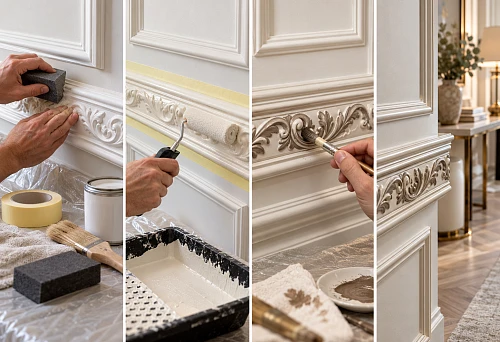
Installation without surface preparation. A dusty, damp, loose wall or an unprimed surface guarantees that elements will start to come off in a few months. Preparation: cleaning, dust removal, priming. Details on the technology are in articles aboutinstallation of polyurethane moldingandinstalling polyurethane molding.
Where to buy decorative polyurethane wall elements
STAVROS — full catalogpolyurethane productsfor interiors: moldings, overlays, rosettes, cornices, baseboards, decor for moldings, collection sets.
Buy decorative polyurethane elements— in the section of overlays and stucco decor: ornamental overlays, corner inserts, medallions, central accents for frame systems.
Buy polyurethane wall decor— collection sets with already coordinated elements for neoclassicism, classicism, modern interior, and minimalist styles.
Buy Polyurethane Molded Decoration— full range of relief overlay elements with filtering by size, ornament type, and collection.
polyurethane rosettes— for wall and ceiling applications. Diameters from 120 mm to 600 mm. Collections from minimalist to rich classic.
Decor for Molding— corner and intermediate inserts designed for specific STAVROS molding profiles.
FAQ: popular questions about decorative wall elements
Can decorative overlays be installed without moldings, on your own?
Yes. The overlay can be a standalone accent without a molding frame — simply placed at a specific point on the wall. The main condition: symmetry relative to furniture or the wall axis and a properly prepared surface.
How to secure a polyurethane decorative overlay?
Mounting adhesive on a polyurethane base (liquid nails for plastic). The element is pressed against the wall for 1–2 minutes, after complete drying (24 hours), if necessary, secured with thin self-tapping screws followed by puttying.
Do polyurethane overlays need to be painted?
Yes. All products are supplied white and require final painting. Before painting — adhesion primer. Paint: acrylic or alkyd.
How to choose the size of a corner insert for a molding?
The corner insert should overlap the molding joint with a margin of 3–5 mm on each side. If the molding width is 50 mm, the corner insert should have "tabs" 50–55 mm wide.
Can polyurethane rosettes be used in the bathroom?
Yes. Polyurethane is moisture resistant. Important: only paint with moisture-resistant paint and seal all joints with silicone acrylic sealant.
How to calculate the number of corner inserts for a wall?
One corner insert for each corner of the frame. A rectangular frame = 4 corner inserts. A system of 3 frames = 12 corner inserts. Plus a 10% reserve for installation errors.
What is "molding decor" and how is it different from overlays?
Molding decor refers to specialized elements designed for specific profiles: they are installed directly on the molding at intersection points or in the middle of long sections. Universal overlays are mounted directly on the wall, independent of the moldings.
How to avoid mistakes when selecting decor for already purchased moldings?
Choose moldings and decorative elements from the same STAVROS collection. All elements of the collection are designed as a compatible system — proportions, ornaments, and profiles within a single collection are coordinated with each other.