Article Contents:
- Architecture on the plane: how moldings change the room's geometry
- Styles in which moldings feel at home
- Materials: from plaster to high-tech polyurethane
- How to properly choose profile and width
- Schemes and compositions: how to place moldings on the wall
- Mistakes That Ruin Beauty
- Color: white and not only
- Playing with texture and surface
- Installation: from marking to finish
- Professionals' secrets
- Moldings in different rooms: where and how
- Combinations with other decorative elements
- Cost and calculation: what will the beauty cost
- Where to buy and how not to make a mistake
- Maintenance and Durability
- Repair and replacement
- Trends and the future of moldings
- Personalization and uniqueness
- Psychology of perception: why moldings work
- Status and cultural code
- Moldings by yourself: is it possible?
- Tools and Materials
- Finishing options: from modest to luxurious
- Wall finishing in an apartment vs. in a house
- Moldings and wallpaper: classic combination
- Moldings and paint
- Moldings in interior: from past to future
- The future belongs to personalization
- FAQ: Answers to Popular Questions
- Conclusion: art accessible to everyone

The space has spoken. Walls are no longer just a backdrop — they have become canvases on which architectural drama unfolds. Moldings on walls today are not a fashion statement, but a language through which the interior speaks of taste, status, and the owner’s individuality. These dimensional strips, profiles, and frames create rhythm, set the mood, guide the gaze — and do so naturally, as if they have always been there.
Why are we returning to decorative elements that seemed forgotten? Because minimalism has run its course. Bare walls no longer impress — they have become dull. Andwall moldings decorationthey return depth, volume, and character to the interior without overloading it with details.


Architecture on the plane: how moldings change the room's geometry
Have you ever noticed how the perception of a space changes when relief lines appear on a smooth wall? The room seems to grow, becoming higher, wider, or, conversely, more intimate — depending on how the elements are arranged. This is not magic, but a well-executed work with proportions.
Horizontal moldings visually push walls apart. If placed at a height of 90–120 cm from the floor, creating a classic division, the room acquires nobility. Vertical compositions, however, stretch the space upward, making ceilings appear higher. Andframes made from moldings on wallsform a kind of 'picture gallery', within which you can play with color, texture, wallpaper, or decorative plaster.
Zoning is another ace. In studios and open floor plans, moldings work as invisible partitions. They mark the boundaries between the living room and dining room, the bedroom zone and office, without taking away even a single square centimeter of useful space. Just a line — and suddenly two different worlds in one room.




Styles in which moldings feel at home
Classic, of course, is unbeatable. Here, moldings are not just decoration, but an essential element of architectural language. Wide, with elegant curves, sometimes with ornamentation, they emphasize symmetry and create a sense of grandeur. In such interiors, grandeur is important, andSculptural decorationsfor walls become part of this theatrical splendor.
Neoclassicism is more restrained, but no less expressive. Here, moldings are thinner, lines are cleaner, and white is the dominant color. Often, they are painted to match the walls to create an effect of subtle relief playing with light. It doesn't shout, it whispers — but in such a way that you cannot help but hear it.
Amazingly, moldings have also found a place in modern styles. Minimalism has learned to use them as graphic elements. Thin, strict, without unnecessary details — they create structure without disrupting the overall minimalism. And in industrial lofts, moldings made of dark wood or metal add brutality and simultaneously refinement.
Scandinavian interiors have also found a use for them. Narrow white moldings against light walls form subtle graphics. It's like lines on a sheet of paper — simple, yet organizing space. And even Provence, with its romantic carelessness, uses moldings — painted in pastel tones, slightly aged, they emphasize rustic charm.
Our factory also produces:


Materials: from plaster to high-tech polyurethane
What are these architectural wonders made of? The choice of material determines not only the appearance, but also durability, ease of installation, and cost. Let's consider the main options.
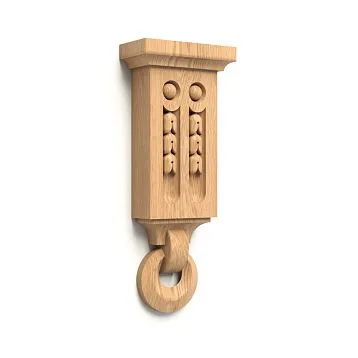
Wood — noble, warm, alive.Wooden wall claddingUsing solid wood moldings — this is always about status and eco-friendliness. Oak, ash, walnut, beech — each species has its own texture and character. Such moldings can be stained, varnished, or patinated. But there are downsides: wood reacts to humidity, may deform, requires maintenance. And it is expensive.
Plaster — the classic material for stucco. It allows creating complex shapes, carved patterns, true works of art. Plaster moldings are heavy, installation requires professionalism. But the result is impressive. This is the choice for those who want real, authentic luxury.Plaster wall finishingIt creates the feeling of old mansions, where every detail is significant.
Polyurethane — a modern favorite. Lightweight, strong, moisture-resistant, it doesn't fear temperature fluctuations and doesn't deform.Polyurethane wall claddingThis is practicality without sacrificing aesthetics. Polyurethane moldings imitate both wood and plaster, but they are cheaper and easier to install. They can be painted any color, do not absorb moisture, and are ideal for kitchens and bathrooms.
MDF — an affordable solution for those who want results immediately. Such moldings are often already painted, covered with film, or veneered. Lightweight and easy to install, they are good for temporary repairs or rental housing. But they are less durable than other materials.
Polystyrene — the most affordable option. Moldings made from it are practically weightless, stick to regular glue. But they look accordingly: simpler, less expressive. This is the choice for those who want to try molding decoration without significant expenses.
Get Consultation
How to choose the profile and width correctly
The width of the molding is not only an aesthetic question, but also a matter of spatial mathematics. In a room with ceilings 2.5-2.7 meters high, wide moldings (10-15 cm) will look heavy and 'eat' the height. Here, elements 3-7 cm wide are appropriate. But in rooms with ceilings over 3 meters, you can confidently use bold profiles — they will emphasize the scale and add monumentality.
The profile also matters. Smooth, minimalist moldings suit modern interiors. Ornate, with relief — for classic and neoclassic styles. There are moldings with grooves (vertical channels), curves, and floral ornamentation. Each profile sets its own mood.
And one more point: compatibility. If the room already hasDecorative interior elements— cornices, baseboards, outlets — moldings must harmonize with them in style and material. Dissonance kills the overall unity.
Schemes and compositions: how to place moldings on the wall
Here begins the most interesting part. Because moldings are a constructor for adults. From the same planks, you can assemble completely different pictures.
Classic layout — rectangular or square frames arranged symmetrically. Usually, this is three or four frames vertically or horizontally. Inside them — patterned wallpaper, contrasting paint, decorative plaster. Such a scheme visually structures the wall, creates rhythm. It is good for bedrooms, living rooms, offices.
Panel division — when the lower part of the wall (about one-third of the height) is framed by moldings and painted in another color or finished with another material. This is a reference to English interiors of the 18th-19th centuries. Today, this technique is used to visually lower a high ceiling or simply add nobility to the interior.Internal decorative wall claddingIn the form of boiserie — this is exactly such a layout.
Accent wall — one surface is completely covered with moldings in the form of a geometric pattern. Rhombuses, hexagons, asymmetrical shapes. This is a modern approach that works both in minimalism and eclecticism. The key is not to overdo it, so the wall does not turn into a riddle.
Frame functional zones — TV, bed, fireplace, mirror. Molding here acts as a frame, highlighting important objects. This looks especially effective in large rooms, where you need to create focal points.
Vertical lines — molding runs from floor to ceiling, creating the effect of columns or pilasters. This visually raises the ceiling and adds grandeur to the room. Ideal for hallways, corridors, and living rooms.
Mistakes that ruin the appearance
Incorrect height placement — the first and most common problem. If you place horizontal molding too low (at 60-70 cm), the room will appear low-ceilinged. Too high (above 150 cm) — it disrupts proportion harmony. The golden middle — 90-120 cm from the floor for classic division.
Mismatched scale. Large moldings in a small room create a feeling of confinement. Small moldings in a large space disappear and look insignificant. Always match the size of elements to the size of the room.
Chaotic composition. When moldings are placed without a system, the interior looks messy. Symmetry, rhythm, repetition — these create order. Even in asymmetrical compositions, there should be internal logic.
Poor joints. Angles cut “by eye,” gaps between elements, unevenness — all of this is noticeable and spoils the impression. Installation requires precision and patience.
Color: white and not only
White — a universal choice. It suits any walls, any styles. White moldings create a clear contrast on dark backgrounds and a subtle relief on light ones. But don’t think this is the only option.
Wall color matching — a modern approach when moldings blend into the surface as one whole. Only the play of light and shadow on the relief remains. This creates a 3D graphic effect, very stylish and restrained.
Contrasting color — a bold solution. Dark moldings on light walls or vice versa. This works well in eclectic, designer interiors where expressiveness matters.
Gilding, silvering, patination — classic for luxurious interiors. Such moldings become ornaments on their own, requiring no additional decor.
Colored moldings — pastel or bright — are rare, but in the right context, they can become a standout feature. For example, in children’s rooms, Provence style, or retro interiors.
Play with texture and finish
wall finishing materialsToday they are so diverse that you can create multi-layered compositions. Moldings frame areas with wallpaper, leather, fabric, wooden panels, decorative plaster. Each zone gets its own texture, but the molding unifies them into a harmonious picture.
especially look effective in combination with3D wall finishThree-dimensional panels, relief wallpaper within molding frames create an impression of depth and multidimensionality. It’s like a painting in a frame, but scaled to the wall.
Installation: from marking to finishing
Everything starts with an idea. Draw a plan, think through the placement of each element. Measure the walls, calculate the amount of molding with allowance for trimming. Only then purchase the material.
Surface preparation is critically important. The wall must be flat, clean, and dry. If there are imperfections, the molding will highlight them, not hide them. Therefore, first leveling and priming — then installation.
Marking. Use a laser level or long ruler. Mark the locations of moldings with a pencil. Check symmetry and distances. An error at this stage will cost dearly.
Cutting. For straight joints, a regular saw will suffice. For corners, you need a miter box — a tool that allows cutting at a precise 45-degree angle. Polyurethane cuts easily, wood requires more effort.
Adhesive. For polyurethane and polystyrene moldings, use special mounting adhesives or "liquid nails." Wooden moldings can be attached with adhesive and additionally secured with small nails.石膏 moldings — with gypsum plaster.
Apply adhesive to the back of the molding, press it against the wall, hold for a few seconds. Wipe away excess adhesive immediately with a damp cloth. Joints must be tight, without gaps.
Final finishing. After the adhesive dries, fill joints and gaps with putty, sand them. If moldings are to be painted, prime and paint them.Wall cladding for painting— an excellent option for those who love changing interiors.
Secrets of professionals
Material acclimatization. Remove moldings from packaging and leave them in the room for a day before installation. This is especially important for wood and polyurethane — they must "get used to" the temperature and humidity.
Pre-laying on the floor. Lay out the elements as they will be arranged on the wall. Number them to avoid confusion. This saves time and nerves.
Painting before installation. Some masters prefer to paint moldings before attaching them to the wall. This is easier, no need to protect wallpaper or walls. But joints will still need to be touched up after installation.
Use sealant. After installation, run acrylic sealant along all joints — between moldings, between molding and walls, molding and ceiling. This creates a perfectly smooth surface.
Moldings in different rooms: where and how
The living room is the main stage. Here, moldings work at full capacity: classic frames, accent walls, fireplace or TV framing.Wall finishing photoImplemented projects demonstrate how diverse the solutions can be.
The bedroom requires a more subdued approach. Symmetrical compositions, bed headboard framing, panel divisions are appropriate. Colors — restrained, shapes — smooth.
Hallway and corridor — areas where moldings can visually expand narrow spaces. Vertical lines, light tones, minimal details.Decorative corridor wall finishingThis is a balance between functionality and aesthetics.
Kitchen and bathroom — high-humidity zones. Here, moisture-resistant materials are needed. Polyurethane — ideal choice. Moldings can frame backsplashes, mirrors, or zone spaces.
Children's room — room for imagination. Colorful moldings, unusual shapes, geometric play. Main thing — safety: no sharp corners or protrusions.
Office — strictness and formality. Classic layout, dark wood or white color, symmetry. Moldings here emphasize seriousness of intent.
Combination with other decorative elements
Moldings rarely live alone. Most often, they are part of a set.Plaster ornament for walls and ceilingsIncludes cornices, moldings, brackets, pilasters, door and window casings. All these elements must be consistent in style.
Combining with wallpaper — genre classic. Moldings frame patterned areas, creating a panel effect. Especially striking with damasks, stripes, geometric prints.
Combination with wooden panels.wall finishing with lathsCombined with wallpaper and moldings, it creates a textured, dimensional surface. This is a popular solution for modern interiors.
Moldings and lighting. Recessed lighting behind moldings or within frames creates a dramatic effect. Light plays on the relief, highlighting volume.
Cost and calculation: what will the beauty cost?
Price depends on material, profile complexity, and manufacturer. Polystyrene moldings — cheapest, from 50 rubles per linear meter. Polyurethane — from 200 to 1500 rubles. MDF — 150–600 rubles. Wooden — from 500 to 3000 rubles and more. Gypsum moldings can cost several thousand rubles per meter, especially if handmade.
Don't forget about adhesive, putty, paint, tools. And about the labor if you don't plan to install it yourself. Professional installation may increase the budget by 1.5–2 times.
Calculating quantity. Measure the perimeter of walls or length of areas you plan to decorate. Add 10–15% for trimming and possible defects. Remember that precise joints at corners are necessary, meaning material loss is inevitable.
Where to buy and how to avoid mistakes
Specialized stores for moldings and decor — first choice. Wide selection, consultants, opportunity to view samples.Buy internal wall claddingAvailable both in retail stores and online.
Construction hypermarkets — budget option. Less luxurious selection, but main items are available. Plus — you can buy everything for renovation in one place.
Online stores — convenient if you know exactly what you need. Check reviews, confirm dimensions, study photos. Minus — you won't see the product in person before purchase.
Direct deliveries from manufacturers. If volume is large, it makes sense to contact directly. This is cheaper, plus you can order non-standard profiles.
Care and longevity
Polyurethane moldings require almost no maintenance. Wipe them with a damp cloth once a month — and they will look new for decades. They don't absorb dust, don't deform, don't fade.
Wooden moldings need periodic reapplication of varnish or oil, especially if uncolored. Monitor room humidity — sudden changes may cause cracks.
Gypsum moldings — most fragile. Cannot be washed with aggressive cleaners; mechanical impact may cause chips. But with careful handling, they last for centuries — proof is in historic mansions.
MDF and polystyrene fear moisture and impacts. If planning to use them in humid areas, choose moisture-resistant modifications.
Repair and Replacement
Polyurethane is easy to repair. Small scratches are filled and painted over. A broken element can be replaced without touching adjacent parts.
Wood is also susceptible to restoration. Chips are filled with wood putty, the surface is sanded and re-coated.
Gypsum is more complex. Here, a professional skilled in stucco work is needed. But the restored element will look like the original.
Trends and the future of moldings
What's in style now? Large geometric shapes — rhombuses, hexagons, asymmetry.Relief wall finishingcreates the impression of a sculptural surface.
Painting in wall color — minimalism in all its glory. No contrast, only play of volume.
Combined with planks.Plank wall claddingCombined with moldings — this is a modern interpretation of classic division.
Ecological aspects. Demand for wooden and gypsum moldings is growing. People want natural materials, even if they are more expensive and more complex to install.
Digital technologies. Moldings created using 3D printing are already appearing. Currently, this is experimental, but in a few years such solutions may become mainstream.
Personalization and uniqueness
Standard profiles are available to everyone, but more and more people want something special. Custom moldings created according to an individual sketch — a service offered by many manufacturers. This is more expensive, but the result is a unique interior that no one else has.
Hand-painted finishes, gilding, patination — these techniques transform an ordinary molding into a work of art. Especially valued is the work of masters who master traditional techniques.
Psychology of perception: why moldings work
The human brain loves structure. When space is organized, we feel calmer. Moldings create this structure visually. They divide walls into zones, establish rhythm, create order. It's like a book page with margins and paragraphs — easier to read than a solid block of text.
Volume and relief add dynamism. A flat wall is static — it simply exists. A wall with moldings is alive — it changes depending on lighting, time of day, viewing angle. Different in the morning, different in the evening.
Moldings create a sense of completion. An interior without them may look unfinished, as if something is missing. With moldings — everything is in its place, everything is thought out.
Status and cultural code
Historically, stucco and moldings were attributes of wealth. Palaces, mansions, residences — everywhere there was an abundance of decorative elements. Today, this is no longer exclusively a sign of financial status, but the cultural code remains. Moldings speak of taste, education, respect for traditions.
In this senseClassic finishing— it's not just a style, it's a manifesto. A person choosing moldings demonstrates that they value quality, history, craftsmanship.
Moldings made by hand: is it possible?
Yes, if your hands are where they should be and your head is full of determination. Installing polyurethane moldings is a medium-complexity task. You need tools: a miter saw, hacksaw, tape measure, level, adhesive, putty knife. And patience.
DIY decorative wall finishing— it's a creative process. Start with a simple scheme: rectangular frames, symmetrical placement. Once you've gained experience, move on to complex compositions.
The main enemies of DIY installation are haste and carelessness. Measure seven times, cut once — a rule that works here 100%. Every millimeter matters, especially at corners.
If you're unsure — call a professional at least for marking and cutting angles. But you can already glue them yourself. This is a compromise between cost savings and quality.
Tools and materials
Miter saw — essential. Without it, you can't make square corners. There are simple plastic ones for a few hundred rubles, and professional ones with adjustable angles — for several thousand. A simple one will suffice for a one-time repair.
Hacksaw with fine teeth. For polyurethane, a standard wood hacksaw will do. For wood — better to use a specialized miter saw, if possible.
Adhesive. Check the manufacturer's recommendations for moldings. Most often, this is polyurethane adhesive or "liquid nails" on an acrylic base.
Acrylic putty. For filling joints and minor defects.
Paint and brushes. If moldings require painting.
Tape, pencil, level — basic set, without which nowhere.
Finishing options: from modest to luxurious
Budget option: polystyrene moldings, simple layout, painted white. Cost — from 5,000 rubles per medium-sized room. Looks modest, but neat.Wall cladding optionsIn the economy segment, such solutions are often included.
Mid-range: polyurethane moldings, classic or modern layout, possible wall-color or contrasting paint. Cost — 15,000–40,000 rubles depending on complexity. Result is already substantial, the interior acquires character.
Premium: wooden or plaster moldings, complex composition, handcrafted, patina or gold leaf. Cost — from 50,000 rubles and up to infinity. This is already art, handmade work.
Wall finishing in an apartment vs. in a house
Wall cladding in an apartmentOften limited by ceiling height and room size. Here, restraint and precise proportion calculation are needed. Wide moldings may 'overwhelm', turning the room into a box.
Wall finishing in a houseOffers more freedom. High ceilings, large areas, possibility to create complex, multi-level compositions. Here, moldings can be powerful and expressive.
Wall finishing in a private houseWooden moldings — a separate story. Moldings here must harmonize with the texture of log or beam construction. Often, wooden elements are used, tinted to match the main wall material.
Moldings and wallpaper: classic combination
Wallpaper with pattern, framed by moldings — this is a panel you don’t need to buy. You create it yourself. Damask, geometry, botanical motifs — all work.
Solid-color wallpaper and contrasting moldings — graphic, strict solution. Good for offices, minimalist bedrooms.
Combination of different wallpapers. Inside molding frames — one variant, outside — another. This allows zoning space without using partitions.
Wall finishing photos in apartmentsShow how diverse combinations can be. From classic to avant-garde.
Moldings and paint
Painted walls — ideal background for moldings. You can experiment with color: one shade inside the frame, another outside. Or a gradient, flowing from one tone to another.
Moldings the same color as walls create monochromatic elegance. This is a trend of recent years — no contrast, only volume.
Two-tone walls with horizontal molding division — classic of English interiors. Lower part darker, upper part lighter, molding in the middle. Or vice versa. This visually changes the room’s proportions.
Moldings in interior: from past to future
The history of moldings — it’s the history of architecture. From ancient temples with their strict profiles to baroque palaces with lavish decoration. From modernism with its flowing lines to Soviet 'Stalinist' buildings, where moldings were a mandatory element.
Today, moldings are experiencing a second birth. But this is not copying the past, but reinterpreting. We take the form, but fill it with new content. We use modern materials, simplify or, conversely, complicate compositions.
Wall Finishing ElementsThey become tools of self-expression. Moldings are not just decoration, but a way to tell about yourself, your values, your vision of beauty.
The future is in personalization
The mass market offers hundreds of options, but people want uniqueness. Services are emerging where you can design a molding online and get it manufactured to order. 3D modeling allows you to see how the wall will look before starting work.
Artificial intelligence begins to assist in selecting compositions. Upload a photo of the room — you get dozens of molding layout options with visualization.
Eco-friendly materials, recycling, reuse — trends that will affect the molding market. Already, elements made from recycled plastic and biodegradable composites are appearing.
FAQ: Answers to popular questions
Technically possible, but not recommended. The molding will adhere to the wallpaper, not the wall. If the wallpaper peels off, the molding will come off with it. Moreover, on textured wallpaper, the molding will not fit tightly, creating gaps. It’s better to install the molding on a prepared painted wall, and then apply wallpaper, or use wallpaper only within decorative panels.
It’s possible if wallpaper holds firmly. But better to install moldings first, then wallpaper — this is more reliable and neat.
What adhesive to use for polyurethane moldings?
Special polyurethane adhesive or acrylic-based 'liquid nails'. Do not use solvent-based adhesives — they will eat through the material.
Use a saw. A 45-degree angle for standard room corners. Start by practicing on scraps.
Yes, if it is polyurethane or plastic. Wood and MDF are not recommended, plaster also fears moisture.
Can moldings be painted?
Yes, polyurethane, MDF, and wooden moldings paint beautifully. Use acrylic or latex paints. Polystyrene can also be painted, but with caution — some paints dissolve it.
How long does installation take?
In a medium-sized room with simple layout — one to two days. With complex composition — up to a week, including all finishing stages.
Do you need to level walls for moldings?
Absolutely. Irregularities will be visible, and the molding will emphasize them, not hide them.
Can moldings be used in wet areas?
Yes, if it is polyurethane or plastic. Wood and MDF are not recommended, plaster also fears moisture.
How to care for moldings?
Wipe with a damp cloth as needed. Polyurethane can be washed with cleaning agents, wood — only with slightly damp cloth.
Do moldings visually enlarge or reduce a room?
It depends on placement. Horizontal moldings expand the space, vertical ones raise the ceiling. But excessive decoration may 'eat' space.
Can moldings be removed without damaging walls?
It depends on the mounting method. Moldings glued with quality adhesive are hard to remove and may damage the finish. Those glued with weak adhesive or secured with nails are easier to remove.
Conclusion: art accessible to everyone
Wall finishing with moldingsIt is not caprice or luxury. It is a way to transform standard housing into a space with character. It is the opportunity to create an interior that will delight for years, one that will never bore you because it has depth and meaning.
decorative wall finishingAvailable in both budget and premium segments. The key is understanding proportions, sense of style, and willingness to invest time in planning.
Wall finishing and decorationIt is a process that requires attention to detail. Moldings are one of those elements where details decide everything. The right profile, precisely calculated height, neat installation — and the result exceeds expectations.
STAVROS company offers a wide range of solutions for those who value quality and beauty. From simple polyurethane profiles to exclusive handcrafted wooden elements. Here you can find everything needed to create your dream interior:Plaster ornaments for walls, decorative elements for finishing, rails for interior wall finishing, panels, cornices. Professional consultants will help choose the optimal solution for any project, and the quality of materials guarantees the longevity of the result.
Moldings are the bridge between past and present, between classic and modern. They prove that beauty does not go out of fashion, only changes its form. And that you can create it yourself — you just need to decide.